2027 Top MBA Programs that Don’t Require GMAT: Costs & Opportunities

Co-Founder and Chief Data Scientist
Choosing an MBA no longer always means spending months preparing for the GMAT. Since 2020, many business schools have made the GMAT and GRE optional, waived them for qualified applicants, or removed them from admissions review entirely. That shift matters for working professionals, career changers, and applicants with strong experience who want to be evaluated on leadership, academic record, career progress, recommendations, and goals rather than one standardized test score.
This guide explains how MBA programs that do not require the GMAT work, what they cost, how they compare with test-required programs, and how to decide whether this path fits your career plan. You will also find a 2027 list of MBA programs without GMAT requirements, common admissions expectations, concentration options, career outcomes, salary data, and practical questions to ask before applying.
Quick Answer: Are MBA Programs Without the GMAT Worth Considering?
Yes. An MBA program that does not require the GMAT can be a strong option if the school is properly accredited, the curriculum matches your career goals, and the admissions process still evaluates applicants rigorously through work experience, transcripts, essays, recommendations, and interviews. The lack of a GMAT requirement does not automatically make a program easier or weaker; it means the school uses other evidence to assess readiness for graduate business study.
Key benefits of an MBA that does not require the GMAT
- Management occupations are projected to grow 8% by 2031, with about 883,900 new roles expected in the US, making advanced business training relevant for professionals seeking leadership positions.
- GMAC reports that MBA graduates have a median starting salary of $115,000, although individual outcomes depend on school reputation, experience, industry, location, and role.
- An MBA remains one of the most widely recognized graduate business credentials, with more than 250,000 students enrolled worldwide and nearly 156,000 in the US.
What Should You Expect From an MBA Program That Does Not Require the GMAT?
A Master of Business Administration is a graduate-level business degree designed to build management, leadership, analytical, and strategic decision-making skills. Most MBA curricula cover subjects such as finance, accounting, operations, marketing, organizational behavior, business law, ethics, data analysis, and strategy. The MBA is considered a professional terminal degree and remains one of the most common graduate credentials for people pursuing management and executive roles.
GMAT-free MBA programs generally use a broader admissions review. Instead of relying on a test score as a major screening tool, admissions committees may place more weight on career progression, undergraduate performance, quantitative coursework, leadership experience, essays, recommendation letters, interviews, and professional certifications.
Some schools still accept GRE or GMAT scores even when they are not required. Submitting a strong score may help if your undergraduate GPA is lower, your transcript has limited quantitative coursework, or you are applying to a competitive program with a limited number of seats. However, applicants with substantial work experience, strong academic records, or advanced credentials may be competitive without testing.
Where Can You Work With an MBA That Does Not Require the GMAT?
The career value of an MBA depends on the program’s quality and your professional background, not on whether you submitted a GMAT score. Graduates commonly pursue roles in finance, consulting, operations, business analytics, marketing, healthcare administration, technology management, entrepreneurship, human resources, and general management.
The US Bureau of Labor Statistics projected an 8% increase in management occupations by 2031. That projection represents about 883,900 new management jobs in the US over the decade.
MBA graduates may also use the degree to move into internal leadership tracks, change industries, launch a company, or qualify for roles that require broader business knowledge. The best-fit career path often depends on your pre-MBA experience. For example, a nurse may use an MBA to move into healthcare operations, while an engineer may apply the degree to product management, supply chain leadership, or technology strategy.
How Much Can You Earn With an MBA That Does Not Require the GMAT?
GMAC reported a median starting salary of $115,000 for MBA graduates. That figure is higher than the reported median starting salary for direct-from-industry hires, $75,000, and business bachelor’s degree holders, $65,000.
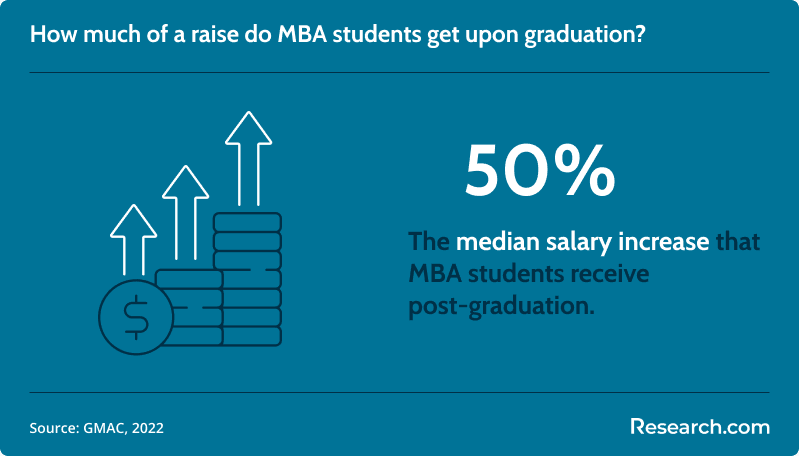
GMAC also reported that MBA students saw a 50% rise in median salary from before the MBA to after graduation, with many moving from $80,000 to $120,000 after completing the degree.
Starting salaries for MBA graduates are reported to be 22% to 40% higher than those of bachelor’s degree holders. In addition, 71% of recruiters said MBA graduates often earn more than other employees, and 32% of employers provide student loan repayment assistance alongside compensation. These figures are useful benchmarks, but they should not be treated as guaranteed outcomes. Salary depends heavily on industry, geography, prior experience, school network, and job function.
MBA Programs That Don’t Require GMAT: Table of Contents
- 2027 ranking of MBA programs without GMAT requirements
- Typical completion time for a GMAT-free MBA
- GMAT-free MBA vs. MBA that requires test scores
- Average cost of MBA programs without the GMAT
- Financial aid options for GMAT-free MBA students
- Admissions requirements for MBA programs without the GMAT
- Common MBA courses in programs without GMAT requirements
- MBA concentrations available without the GMAT
- How to choose the right GMAT-free MBA program
- How to decide whether a GMAT-free MBA fits your goals
- How accelerated MBA programs can shorten your timeline
- Career paths for MBA graduates from no-GMAT programs
- How to evaluate whether a no-GMAT MBA is cost-effectiveMBA career outcomes
- When a dual degree can strengthen an MBA
- Job market outlook for MBA graduates
- How certifications can complement a GMAT-free MBA
- Post-graduation career support to look for
- How to use networking opportunities during your MBA
- Main advantages of a GMAT-free MBA
- Potential drawbacks and risks to consider
- Whether non-business majors should consider no-GMAT MBA programs
- How to balance work, school, and personal responsibilitiesAdvantagesNetworkingCareersFAQ
2027 List of the Best MBA Programs That Don’t Require GMAT
How Research.com Ranked These Schools
Research.com created this ranking to help prospective MBA students compare no-GMAT options using transparent, decision-relevant criteria. The goal is not simply to list schools, but to help applicants understand which programs may fit their academic profile, schedule, budget, and career direction.
Our ranking methodology for MBA programs without GMAT requirements used publicly available data sources, including:
The evaluation considered graduation rates, retention rates, alumni satisfaction, affordability, and accessibility. Applicants should still verify current admissions policies, tuition, format, and waiver rules directly with each school before applying.
1. University of Illinois Urbana-Champaign MBA
The Gies College of Business at the University of Illinois Urbana-Champaign offers graduate business programs across accounting, finance, management, and business analytics. Students can choose online or campus-based study, including a 72-unit online MBA. The curriculum combines core business coursework, leadership development, and applied learning. Applicants with an undergraduate GPA of 3.0 or higher and at least five years of professional work experience may qualify for a GMAT or GRE waiver, along with other criteria.
- Program Length: One to two years
- Tracks/concentrations: Accounting, Business Analytics, Finance, Management
- Cost per Credit: $320
- Required Credits to Graduate: 72
- Accreditation: Association to Advance Collegiate Schools of Business (AACSB)
2. University of North Carolina at Chapel Hill MBA
The University of North Carolina at Chapel Hill offers MBA formats for different student needs, including full-time, executive, part-time, and online study. The program emphasizes 12 core business skills and includes options in areas such as entrepreneurship, marketing, consulting, and family enterprise. Applicants may receive a GMAT or GRE waiver if they meet qualifying standards, such as a minimum undergraduate GPA of 3.2, a US CFA or CPA credential, and at least five years of professional experience.
- Program Length: Two years
- Tracks/concentrations: Business Analytics and Management Science, Capital Markets and Investments, Consulting, Corporate Finance, Energy, Entrepreneurship, Healthcare, Marketing, Operations Management, Real Estate, Sustainable Enterprise, Technology and Innovation Management
- Cost per Credit: $863.74 (in-state); $1,151 (out-of-state)
- Required Credits to Graduate: 62
- Accreditation: AACSB
3. Arizona State University MBA
Arizona State University’s W.P. Carey School of Business provides MBA options in full-time, executive, part-time, and online formats. Students can pursue concentrations such as entrepreneurship, finance, and supply chain management while building leadership and analytical skills. Applicants seeking a GMAT or GRE waiver must submit an essay and show at least three years of professional experience or hold a graduate degree in a related field.
- Program Length: 21 months
- Tracks/concentrations: Business Analytics, Consulting, Entrepreneurship, Finance, Information Management, Marketing, Supply Chain Management
- Cost per Credit: $1,059.53 (in-state); $1,752.33 (out-of-state); $1,842.30 (international)
- Required Credits to Graduate: 57
- Accreditation: AACSB
4. Kansas State University MBA
The MBA at Kansas State University is designed to build management knowledge, entrepreneurial thinking, and practical problem-solving skills for modern organizations. Applicants with strong academic records, analytical ability, and evidence of likely graduate success may be eligible for a GMAT waiver. Applicants with a GPA of 3.5 or higher also receive an application fee waiver.
- Program Length: One and a half to two years (full-time); four years (part-time)
- Tracks/concentrations: Accounting, Data Analytics, Finance, Management, Marketing, Technology Entrepreneurship
- Cost per Credit: $833
- Required Credits to Graduate: 36
- Accreditation: AACSB
5. University of Wisconsin MBA
The University of Wisconsin offers a 36-credit general MBA for students who want broad business training rather than a narrow concentration. The curriculum includes four credits of business essentials, 22 credits of core coursework, and 10 elective credits. GMAT scores are generally not required, though the program accepts them for review.
- Program Length: Two and a half to three years
- Tracks/concentrations: None
- Cost per Credit: $825
- Required Credits to Graduate: 36
- Accreditation: AACSB
6. University of Maryland MBA
The University of Maryland MBA includes contemporary business topics such as AI, climate change, and entrepreneurship. Students receive applied learning, networking opportunities, and goal-setting support aimed at preparing them for leadership in changing business environments. The program waives GMAT and GRE requirements.
- Program Length: Two years
- Tracks/concentrations: AI and Business Strategy, Entrepreneurship and Innovation, Finance, Marketing, Sustainability, Consulting
- Cost per Credit: $1,733
- Required Credits to Graduate: 54
- Accreditation: Middle States Commission on Higher Education
7. Rochester Institute of Technology MBA
The MBA at Rochester Institute of Technology prepares students for leadership roles across business, industry, nonprofit organizations, and government. Core courses develop transferable management skills, while electives allow students to tailor the degree to their goals. GMAT and GRE scores are not usually required, but the school accepts them for consideration.
- Program Length: Two years
- Tracks/concentrations: None
- Cost per Credit: $1,660
- Required Credits to Graduate: 48
- Accreditation: AACSB
8. University of Arizona MBA
The University of Arizona Eller College is notable for dual degree pathways that allow students to pair an MBA with another master’s degree. Combining a STEM master’s with an MBA can be useful for students targeting technology, analytics, operations, or innovation-focused roles. The full-time MBA is structured around corporate career preparation and can be completed in 21 months, including 18 months of coursework and a three-month summer internship. GMAT scores are accepted but not required.
- Program Length: 21 months
- Tracks/concentrations: Entrepreneurship, Finance, Healthcare Management, Management Information Systems, Marketing
- Cost per Credit: $1,250
- Required Credits to Graduate: 48
- Accreditation: AACSB
9. University of Florida MBA
The University of Florida MBA provides flexible study options while giving students access to faculty, applied learning, enrichment activities, Global Immersion Experiences, and career coaching. The program supports career preparation through advising and professional development. GMAT and GRE scores are not used for admissions decisions.
- Program Length: Two years
- Tracks/concentrations: Finance, Human Capital, Marketing, Strategy, Supply Chain, Real Estate, Business Analytics
- Cost per Credit: $1,208
- Required Credits to Graduate: 48
- Accreditation: AACSB
10. University of Southern California MBA
The MBA at the University of Southern California focuses on leadership, collaboration, inclusion, business fundamentals, analytical reasoning, and team-based problem solving. The program is designed to help students identify their strengths and apply business knowledge in complex organizational settings. GMAT and GRE scores are not required for admissions consideration.
- Program Length: Two years
- Tracks/concentrations: Marketing, Management, Business Analytics, Economics, Entrepreneurship, Finance, Healthcare Advisory Services, Investment Management, Communication, Supply Chain Management
- Cost per Credit: $2,307
- Required Credits to Graduate: 63
- Accreditation: AACSB
Program Comparison at a Glance
| School | Program Length | Required Credits | Cost per Credit | Accreditation Listed |
| University of Illinois Urbana-Champaign | One to two years | 72 | $320 | AACSB |
| University of North Carolina at Chapel Hill | Two years | 62 | $863.74 (in-state); $1,151 (out-of-state) | AACSB |
| Arizona State University | 21 months | 57 | $1,059.53 (in-state); $1,752.33 (out-of-state); $1,842.30 (international) | AACSB |
| Kansas State University | One and a half to two years (full-time); four years (part-time) | 36 | $833 | AACSB |
| University of Wisconsin | Two and a half to three years | 36 | $825 | AACSB |
| University of Maryland | Two years | 54 | $1,733 | Middle States Commission on Higher Education |
| Rochester Institute of Technology | Two years | 48 | $1,660 | AACSB |
| University of Arizona | 21 months | 48 | $1,250 | AACSB |
| University of Florida | Two years | 48 | $1,208 | AACSB |
| University of Southern California | Two years | 63 | $2,307 | AACSB |
Key Findings About MBA Programs That Don’t Require GMAT
- Average annual tuition for MBA programs ranges from $14,160 to $50,926 for in-state students and $13,379 to $55,900 for out-of-state students. Total MBA costs can range from $52,550 to more than $200,000.
- Students may use several funding sources, including FAFSA, employer tuition support, scholarships, and grants. Grants are commonly tied to financial need, academic merit, or both.
- Typical no-GMAT MBA applications still require strong materials, including a resume, official transcripts, recommendation letters, essays, and sometimes interviews.
- Most MBA programs include core coursework in management, accounting, marketing, finance, analytics, leadership, and operations.
- Graduates of MBA programs without GMAT requirements may pursue roles such as business development manager, financial manager, operations manager, IT manager, or CEO. Reported median annual salaries for these roles range from $90,000 to $400,000.
- Business and financial occupations are projected to grow 7% by 2031, with roughly 715,100 new jobs expected in the US.
How Long Does It Take to Complete an MBA Degree Program That Does Not Require GMAT?
Most MBA programs take about two years to complete, but the exact timeline depends on program format, credit load, transfer policies, internship requirements, and whether you study full time or part time. Some online and accelerated MBA programs can be completed in as little as one year, while part-time students may take several years.
The University of Florida’s Warrington College of Business offers two no-GMAT MBA pathways, including an accelerated one-year option and a two-year option. The University of Wisconsin MBA Consortium and Kansas State University College of Business Administration also offer no-GMAT MBA options that can be completed within two years of full-time study or up to four years of part-time study.
| Program Format | Best For | Typical Trade-Off |
| Accelerated MBA | Professionals who can handle an intensive schedule and want faster completion | Less time for internships, networking, or career exploration |
| Full-time MBA | Students who can pause or reduce work to focus on school | Higher opportunity cost if you leave full-time employment |
| Part-time MBA | Working professionals who need schedule flexibility | Longer time to graduation |
| Online MBA | Students who need location flexibility or asynchronous coursework | Requires strong self-direction and careful evaluation of career support |
| Executive MBA | Experienced managers seeking senior leadership development | May cost more and may require employer support or travel |
How Does an MBA Program That Does Not Require GMAT Compare to One That Does?
Some MBA programs still use GMAT or GRE scores as part of admissions review, especially when evaluating quantitative readiness. No-GMAT programs take a different approach by using other indicators of graduate-level preparedness.
Comparison: GMAT-Free MBA vs. Test-Required MBA
| Factor | GMAT-Free MBA | MBA That Requires GMAT or GRE |
| Admissions focus | Work experience, academic record, essays, recommendations, interviews, leadership evidence | Test scores plus academic and professional credentials |
| Best-fit applicant | Experienced professionals, applicants with strong career progression, candidates who can prove readiness without testing | Applicants with strong test scores or those who want a score to offset weaker parts of the application |
| Application timeline | May be faster because test preparation is not required | May require additional months for test prep and score reporting |
| Quantitative proof | May need evidence through transcripts, work experience, certifications, or prior coursework | GMAT or GRE can provide a standardized quantitative benchmark |
| Program quality signal | Depends on accreditation, curriculum, faculty, outcomes, and employer recognition | Also depends on accreditation, curriculum, faculty, outcomes, and employer recognition |
Holistic Admissions Can Help Experienced Applicants
No-GMAT programs often evaluate the whole applicant. A strong resume, promotions, supervisory experience, technical expertise, client-facing work, or measurable business impact can provide evidence of readiness that a test score may not capture.
Diverse Cohorts Can Improve Classroom Discussion
Removing a standardized-test barrier can attract students from varied academic and professional backgrounds. That can be useful in MBA classrooms, where peer learning, case discussions, group projects, and cross-industry perspectives are part of the value.
Applied Learning Often Matters More Than Test Performance
Many MBA programs emphasize case studies, simulations, consulting projects, presentations, and capstones. These experiences help students practice decision-making, communication, leadership, and problem solving in business scenarios.
Skipping the GMAT Can Save Time and Money
Applicants who do not need to prepare for the GMAT can redirect time toward essays, school research, financial planning, and career positioning. However, they should not assume that “no GMAT” means “low selectivity.” Strong programs still expect convincing evidence of academic and professional readiness.
What Is the Average Cost of an MBA Program That Does Not Require a GMAT?
College Tuition Compare data shows average annual tuition of $14,160 for in-state MBA students and $50,926 for out-of-state MBA students. For online and campus executive MBA programs, average annual tuition is $13,379 for in-state students and $55,900 for out-of-state students.
College Ave Student Loans reported that the average annual total cost of MBA programs ranges from $52,550 to $155,022. Across the full program, students may pay between $70,000 and more than $200,000.
Applying to graduate school can involve more than tuition. Students should also budget for fees, books, technology, travel, residencies, lost income, relocation, and interest on borrowed funds. The table below summarizes the average MBA tuition figures cited above.
| In-State | Out-of-State | |
| MBA Program | $14,160 | $50,926 |
| Executive MBA Program | $13,379 | $55,900 |
Cost Factors to Compare Before Applying
- Total program price: Multiply credits by cost per credit and add required fees.
- Residency rules: Public universities may charge different rates for in-state and out-of-state students.
- Format costs: Online programs may reduce relocation costs, but some require residencies or travel.
- Opportunity cost: Full-time study can reduce or pause earnings.
- Employer support: Tuition reimbursement can dramatically change the net cost.
- Scholarships and grants: Institutional aid can vary widely by school and applicant profile.
What Financial Aid Options Are Available for Students in MBA Programs That Do Not Require GMAT?
Financial aid for GMAT-free MBA programs is generally similar to aid for other graduate business programs. Common options include:
- Free Application for Federal Student Aid (FAFSA). Eligible graduate students can use the FAFSA to apply for federal aid, including loans and other forms of need-based support.
- Employer reimbursement or tuition assistance. Some employers help pay for MBA coursework when the degree supports the employee’s role or leadership development plan.
- Scholarships and grants. MBA students may qualify for awards from schools, states, professional organizations, foundations, or outside scholarship providers. Awards may be based on academic merit, financial need, professional background, industry, or demographic criteria.
Grants are especially valuable because they usually do not need to be repaid. Students with strong academic performance, clear goals, and compelling application materials may be more competitive for merit-based awards.
What Are the Prerequisites for Enrolling in an MBA Program That Does Not Require GMAT?
Common Admissions Requirements
- Resume. MBA admissions teams use resumes to evaluate professional growth, leadership, internships, technical skills, promotions, and business impact.
- Official transcripts. Transcripts show prior academic performance. Some institutions look for a minimum cumulative GPA of 3.5 from previous business schools and postsecondary institutions.
- Letters of recommendation. Recommendations from supervisors, employers, professors, mentors, or clients help verify leadership ability, work ethic, judgment, and potential.
- Essays or statements of purpose. Essays allow applicants to explain career goals, program fit, leadership experience, and reasons for pursuing an MBA.
- Optional test scores. Even when not required, a strong score, such as a GMAT score of 660 or above, may strengthen an application for candidates with limited work experience or weaker academic records.
No-GMAT does not mean no preparation. Application windows can be short, and competitive applicants should begin gathering transcripts, recommendations, essays, and financial documents well before deadlines.
Skills That Help Students Succeed
- Communication. MBA students need to write clearly, present ideas persuasively, and work with classmates, clients, faculty, and managers.
- Leadership. Managers must motivate teams, handle conflict, and guide people through change.
- Decision-making. MBA coursework often requires students to evaluate incomplete information and recommend practical strategies.
- Problem-solving. Students learn to apply business frameworks to operational, financial, strategic, and human challenges.
- Time management. Professionals in business administration careers often balance multiple priorities, and MBA students must do the same with work, school, and personal obligations.
What Courses Are Typically Included in an MBA Program That Does Not Require GMAT?
The admissions policy does not usually change the academic foundation of an MBA. Students in GMAT-free programs should expect core business coursework similar to test-required MBA programs.
- Management. Courses cover organizational behavior, strategic management, planning, team leadership, and decision-making.
- Accounting. Students learn financial reporting, budgeting, managerial accounting, and how accounting information supports business decisions.
- Human resource management. Coursework examines hiring, training, performance management, compensation, employee relations, and organizational development.
- Marketing. Students study market research, consumer behavior, branding, advertising, digital marketing, and campaign strategy.
- Business law. Courses introduce contracts, employment law, intellectual property, regulatory compliance, and legal risk in business operations.
- Finance. Finance coursework addresses corporate finance, investment analysis, financial markets, risk management, and capital allocation.
- International business. Students examine global markets, cross-cultural management, international trade, and market entry strategy.
- Business analytics. Courses teach students how to use data to evaluate performance, identify trends, and support decisions.
- Supply chain management. Students learn logistics, procurement, inventory control, operations planning, and process improvement.
- Leadership. Leadership courses develop communication, ethical judgment, conflict resolution, team building, and change management.
Programs may also include simulations, consulting projects, internships, residencies, capstones, or global immersion experiences. These applied components are especially important if you plan to use the MBA to change roles or industries.
What Types of Specializations Are Available in MBA Programs That Do Not Require GMAT?
Many MBA programs without GMAT requirements offer concentrations that let students align coursework with a target industry or function. Common options include:
- Entrepreneurship. Students study venture creation, business planning, innovation, entrepreneurial finance, and funding strategies.
- Finance. An MBA in finance typically focuses on financial analysis, investment management, corporate finance, risk management, and strategic financial decisions.
- Marketing. Students learn market research, customer behavior, brand strategy, digital marketing, and campaign development.
- Human resources. This concentration covers workforce planning, recruiting, training, performance management, employee relations, and organizational culture.
- Healthcare management. Coursework addresses healthcare policy, economics, operations, quality management, and administration.
- Information technology. Students focus on IT strategy, project management, analytics, cybersecurity, and technology-enabled business improvement.
- Information systems management. This path examines enterprise systems, databases, IT governance, infrastructure, and the alignment of systems with business goals.
- International business. Students study global competition, cross-cultural leadership, trade rules, and international market expansion.
- Sustainability. Coursework may cover corporate social responsibility, ESG principles, sustainable supply chains, green finance, and long-term stakeholder value.
- Nonprofit management. Students prepare for leadership in mission-driven organizations through courses in governance, fundraising, grant writing, and nonprofit strategy.
How to Pick a Concentration
| If Your Goal Is... | Consider This MBA Focus | Why It May Fit |
| Move into investment, corporate finance, or financial planning | Finance | Builds technical finance, analysis, and risk skills |
| Lead teams in hospitals, clinics, or health systems | Healthcare Management | Combines business operations with healthcare industry knowledge |
| Work in product, systems, data, or digital transformation | Information Technology or Information Systems Management | Connects technical decisions with business strategy |
| Start or grow a company | Entrepreneurship | Emphasizes venture planning, innovation, and funding |
| Advance in brand, growth, or customer strategy roles | Marketing | Develops market analysis, positioning, and campaign skills |
| Lead people strategy or organizational change | Human Resources | Focuses on talent, performance, culture, and workforce planning |
How Should You Choose the Best MBA Program That Does Not Require a GMAT?
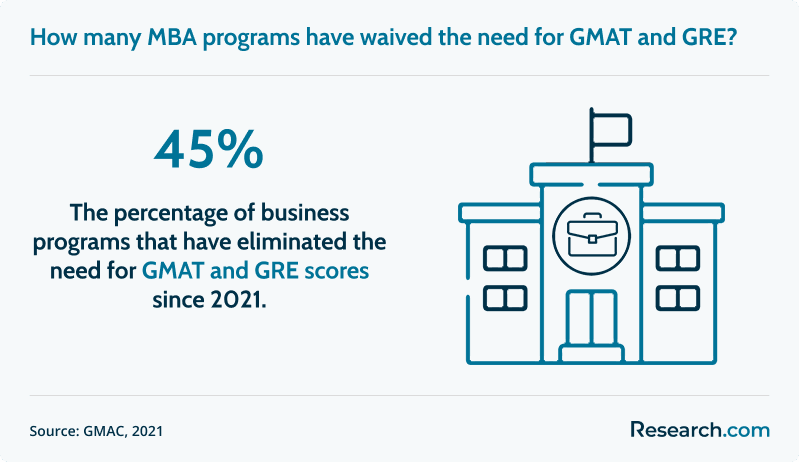
Many MBA programs have waived GMAT and GRE requirements, and 45% of business programs have used this approach since 2021. That creates more options, but it also makes careful comparison more important. Do not choose a program only because it is test-optional. Evaluate whether it has the academic quality, employer recognition, flexibility, cost structure, and career support you need.
Start With Career Fit
Identify the role, industry, or promotion you want after graduation. Then compare each program’s concentrations, electives, employer connections, alumni outcomes, internships, capstones, and career coaching against that goal.
Verify Accreditation
MBA programs may hold business accreditation from AACSB, the International Accreditation Council for Business Education or IACBE, or the Accreditation Council for Business Schools and Programs or ACBSP. Schools may also have broader institutional accreditation or other forms of business school accreditation. Accreditation helps signal that a program meets defined academic standards, but applicants should still review curriculum, faculty, outcomes, and student support.
Review Class Size and Student Support
Student-to-teacher ratios in MBA programs range from 0.05% to 19.64%, with an average ratio of 2.58%. Smaller cohorts may support more faculty interaction, stronger peer relationships, and more personalized advising, although program design matters as much as the ratio itself.
Ask the Right Questions Before You Apply
- Is the program accredited by a recognized institutional or business accreditor?
- Is the GMAT truly not required, or is a waiver needed?
- What evidence does the school use to assess quantitative readiness?
- What is the total program cost after fees, residencies, technology charges, and travel?
- How many students receive scholarships, grants, or employer-supported funding?
- What career services are available to online, part-time, and executive MBA students?
- Does the curriculum include applied projects, internships, consulting work, or capstones?
- Are alumni active in the industries or cities where you want to work?
- Can you transfer credits or waive prerequisites?
- How flexible is the schedule during busy work seasons?
Is a GMAT-Free MBA the Right Fit for Your Career Goals?
A GMAT-free MBA is most likely to fit if you already have meaningful professional experience, a clear reason for pursuing graduate business education, and evidence that you can handle quantitative and analytical coursework. It can be especially practical for working professionals who want to avoid test preparation delays and apply based on career accomplishments.
It may be less ideal if your academic record is weak, you have limited work experience, or you are applying to highly quantitative fields where a strong test score could help prove readiness. If you are still defining your goals, review what you can do with an MBA before committing to a program.
How Can an Accelerated MBA Program Expedite Career Advancement?
An accelerated MBA program can help students finish sooner and apply new management skills faster. This route works best for focused professionals who can manage an intensive pace and already know how the degree fits their next career move.
The trade-off is workload. Condensed programs can leave less time for internships, extracurricular leadership roles, networking, and reflection. Before choosing an accelerated format, confirm that the schedule is realistic with your job, family responsibilities, and career development needs.
What Career Paths Are Available for Graduates of MBA Programs That Do Not Require GMAT?
Graduates from MBA programs without GMAT requirements can pursue many of the same MBA career paths and salary outcomes as graduates from test-required programs. The strongest outcomes usually come when the student’s prior experience, MBA concentration, school network, and job search strategy align.
- Business development manager. These professionals identify growth opportunities, expand client relationships, support sales strategy, and help organizations enter new markets.
- Financial manager. Financial managers oversee budgets, financial reporting, investments, compliance, forecasting, and finance teams.
- Operations manager. Operations managers improve processes, manage workflows, coordinate resources, and use systems to increase efficiency.
- IT manager. IT managers lead technology teams, evaluate systems, plan technology investments, and align IT strategy with business goals.
- Chief executive officer (CEO). CEOs set strategy, guide organizational policy, oversee operations, represent the organization, and work with stakeholders to drive performance.
Glassdoor reported an average annual salary of $94,770 for business managers and about $140,485 per year for business development managers. Operations managers earn an average of $111,693 annually.
Senior leadership roles can pay substantially more. For example, US CEOs earn about $406,678 annually. The chart below summarizes these compensation figures.
Is a GMAT-Free MBA a Cost-Effective Investment?
A GMAT-free MBA can be cost-effective when the program’s net cost is reasonable, the schedule allows you to keep earning income, and the degree supports a realistic career move. Skipping the GMAT may reduce test preparation costs and shorten the time to application, but those savings are small compared with tuition, fees, opportunity cost, and loan interest.
To evaluate return on investment, compare your current compensation, target roles, likely salary range, total program cost, employer tuition benefits, and how quickly you expect to use the degree. For additional cost context, review the cost of an online MBA degree.
Can Combining an MBA With Another Advanced Degree Improve Career Prospects?
A dual degree can make sense when your career goal requires both management training and specialized professional knowledge. For example, healthcare professionals may benefit from pairing business skills with clinical or administrative expertise. Programs such as online MSN MBA dual degree programs may support leadership goals in healthcare management, operations, and executive administration.
However, dual degrees usually require more time, planning, and financial commitment. Choose this route only if both credentials are clearly connected to your target role.
What Is the Job Market for Graduates of MBA Programs That Do Not Require GMAT?
Business and financial occupations are projected to grow 7% by 2031, with about 715,100 new jobs expected in the US. That rate is above the 5% average projected for all occupations in the US.
MBA graduates may be competitive when they combine business training with practical skills in areas such as financial forecasting, data analysis, social media management, brand storytelling, operations, strategy, and people leadership. Employers still value experience, measurable results, communication ability, and industry knowledge, so the MBA should be part of a broader career strategy rather than the only credential you rely on.
Can Complementary Certifications Boost a GMAT-Free MBA?
Industry certifications can strengthen an MBA when they add role-specific credibility. For example, a finance-focused student may benefit from a recognized finance credential, while a healthcare professional may need clinical or administrative credentials in addition to business training. Nursing professionals who plan to move toward management may also evaluate pathways such as the easiest RN to BSN degrees to obtain if they need a stronger clinical education foundation.
The key is relevance. A certification should support your target role, be recognized by employers in your field, and fill a skill gap that the MBA alone does not address.
What Post-Graduation Career Support Should You Expect From a GMAT-Free MBA Program?
Strong career support can be one of the biggest differences between MBA programs. Look for career coaching, resume reviews, mock interviews, alumni mentoring, employer events, job boards, leadership workshops, and support for career changers. Online and part-time students should ask whether they receive the same services as full-time campus students.
If you are comparing programs for experienced professionals, review options such as an online executive MBA and ask how each school supports advancement after graduation.
How Can You Leverage Networking Opportunities in a GMAT-Free MBA Program?
Networking is a core part of MBA value. Even in online or no-GMAT programs, students can build relationships with classmates, faculty, alumni, guest speakers, and employers if they approach networking intentionally.
- Use alumni networks early. Attend alumni panels, request informational interviews, and ask graduates how the MBA helped them move into specific industries or roles.
- Join events and conferences. Speaker sessions, employer presentations, and industry events can help you understand market expectations and make contacts before graduation.
- Participate in clubs and professional groups. Finance, consulting, entrepreneurship, healthcare, and analytics clubs can connect you with peers who share your goals.
- Build a professional online presence. LinkedIn can help you follow employers, join industry conversations, connect with classmates, and share credible insights from your MBA work.
- Take applied projects seriously. Internships, consulting projects, capstones, and employer-sponsored assignments can lead to referrals, recommendations, or job offers.
Why AACSB Accreditation Matters for No-GMAT MBA Programs
AACSB accreditation is widely recognized in business education and signals that a school has met standards related to faculty qualifications, curriculum quality, learning outcomes, and continuous improvement. For applicants comparing no-GMAT options, AACSB accreditation can be a useful quality marker, especially when evaluating online or flexible programs.
Students who want an accredited program while controlling cost may compare the cheapest AACSB online MBA options. Accreditation should not be the only factor, but it can help narrow the field before you compare concentrations, schedule, faculty, employer connections, and total cost.
What Are the Advantages of Choosing a GMAT-Free MBA Program?
The biggest advantage is access. Applicants who have strong professional histories but limited time for test preparation can apply based on experience, leadership, academic performance, and career goals. This can be especially useful for mid-career professionals, military students, entrepreneurs, and career changers.
GMAT-free admissions may also shorten the application timeline. Without waiting for test dates, prep courses, practice exams, and score reports, applicants can focus on building stronger essays, choosing recommenders, comparing programs, and planning finances.
Flexibility is another benefit. Many no-GMAT programs are designed for working adults and may offer online, part-time, weekend, executive, or accelerated formats. Students seeking a fast completion route may compare the best 1 year online MBA programs in USA to see whether an intensive schedule fits their goals.
What Challenges Might You Face in a GMAT-Free MBA Program?
No-GMAT programs still require academic discipline. Students who have been away from school for several years may need to refresh quantitative, writing, accounting, or statistics skills before beginning core coursework. Applicants should also be prepared to prove readiness through transcripts, experience, certifications, or prerequisite coursework.
Program quality can vary. Some schools offer strong curricula, respected accreditation, and active career services; others may provide less support. If you are evaluating flexible executive programs, compare options such as the best online executive MBA programs and review accreditation, student outcomes, and employer recognition carefully.
Common Mistakes to Avoid
| Mistake | Why It Can Hurt You | Better Approach |
| Choosing a program only because it has no GMAT requirement | You may overlook quality, fit, cost, or outcomes | Compare accreditation, curriculum, career services, faculty, and alumni network |
| Looking only at tuition | Fees, travel, books, lost income, and loan interest can change the real cost | Calculate total program cost before applying |
| Assuming all online MBA programs offer equal support | Some online students receive limited access to networking or career coaching | Ask whether online students receive the same services as campus students |
| Ignoring quantitative readiness | MBA coursework may include accounting, finance, statistics, and analytics | Take refresher courses or submit evidence of quantitative work if needed |
| Relying only on rankings | A highly ranked program may not fit your schedule, budget, or career goal | Use rankings as one input, not the final decision |
| Assuming salary outcomes are guaranteed | MBA salaries vary by experience, role, location, industry, and school network | Compare outcomes for students with backgrounds similar to yours |
Are GMAT-Free MBA Programs Suitable for Professionals From Non-Business Backgrounds?
Yes, many GMAT-free MBA programs are designed for students from fields outside business, including healthcare, engineering, technology, education, public service, and the sciences. These students often bring valuable industry knowledge, but they may need foundational support in accounting, economics, statistics, or finance.
Professionals from healthcare backgrounds, including those who explored pathways such as easy nursing schools, may use an MBA to move into administration, operations, consulting, or executive roles. The strongest programs for non-business students offer bridge courses, tutoring, faculty access, mentoring, and applied projects that help translate prior experience into management capability.
Tips for Balancing Work and Study in a GMAT-Free MBA Program
Working while completing an MBA requires planning before the first course starts. Review the academic calendar, estimate weekly study hours, identify busy work seasons, and decide when you will complete readings, group work, projects, and exams.
Talk with your employer early if your MBA is related to your role. You may be able to request schedule flexibility, tuition support, project alignment, or lighter responsibilities during capstones or exams. Some employers see MBA coursework as beneficial when it immediately improves job performance.
Use the flexibility of online or part-time formats strategically. Asynchronous courses can help working students, but they also require self-discipline. If cost is a major concern, compare affordable online MBA programs that combine flexible schedules with lower tuition.
Create a study environment, protect weekly study blocks, and build peer support early. Group projects, discussion boards, and cohort relationships can become valuable accountability tools. The goal is not just to finish the degree, but to perform well while maintaining your professional reputation and personal responsibilities.
Other Things You Should Know About MBA Programs That Don’t Require GMAT
How Do I Get My GMAT Waived?
A strong waiver request should explain why your academic record, professional background, quantitative experience, leadership achievements, or advanced credentials already demonstrate readiness for MBA coursework. Use specific evidence, such as promotions, analytical responsibilities, prior graduate study, strong grades, or relevant certifications.
Are GMAT-Free MBA Programs as Valuable as Traditional MBA Programs?
They can be, but value depends on the school and program. A no-GMAT MBA from an accredited institution with a rigorous curriculum, strong faculty, relevant concentrations, good career support, and an active alumni network can be valuable. A weak or poorly supported program is risky regardless of its admissions policy.
Who Should Consider Applying to a GMAT-Free MBA Program?
Good candidates include professionals with strong work experience, leadership responsibilities, clear goals, solid academic records, or industry expertise who do not want to spend time and money on standardized testing. Applicants with limited work experience or weak quantitative backgrounds may still benefit from submitting a strong test score if the school accepts one.
How Can I Prepare for a GMAT-Free MBA Interview?
Research the program thoroughly, connect your experience to the curriculum, prepare examples of leadership and problem solving, and explain why the MBA is the right next step. Be ready to discuss career goals, teamwork, ethical judgment, quantitative readiness, and how you will contribute to the cohort.
What Are Alternatives to the GMAT for MBA Programs in the U.S.?
- Some MBA programs accept the GRE or executive assessment exams instead of the GMAT.
- Some schools waive testing for applicants with significant professional experience or strong academic records.
- Many no-GMAT MBA programs emphasize resumes, essays, recommendation letters, interviews, and transcripts.
- Holistic review allows schools to assess leadership potential, career direction, communication skills, and program fit.
How Can a High GMAT Score Strengthen an MBA Application?
A high GMAT score can help demonstrate analytical, quantitative, and critical thinking ability. It may be especially useful for applicants targeting finance, analytics, consulting, or other quantitatively demanding fields. A strong score can also help offset a lower GPA, limited quantitative coursework, or a nontraditional academic background, and it may support scholarship consideration at some schools.
What Criteria Do Schools Use to Evaluate Applicants for an MBA Program Without the GMAT?
Schools commonly review undergraduate transcripts, GPA, professional experience, leadership record, essays, recommendation letters, interviews, career goals, certifications, quantitative coursework, and evidence of communication ability. Some programs also consider industry background, international experience, military service, entrepreneurship, community leadership, and fit with the school’s mission.
Key Insights
- A GMAT-free MBA can be a strong choice when the school is accredited, academically rigorous, affordable for your situation, and aligned with your target career path.
- No-GMAT admissions usually shift the burden of proof to your resume, transcripts, essays, recommendations, and interview. Your application must clearly show readiness for graduate business study.
- Cost varies widely. Compare total program cost, not just tuition, and factor in fees, time away from work, travel, financial aid, and employer support.
- Program format matters. Accelerated, online, part-time, full-time, and executive MBA options serve different types of students and career goals.
- Career outcomes depend on more than the MBA title. Your prior experience, concentration, networking, internships, career services, location, and industry all shape salary and advancement.
- Do not choose a program only because it waives the GMAT. Use the waiver as one convenience, then evaluate quality, accreditation, curriculum, support, and return on investment.
References:
- Byrne, J. (2022, April 27). By The Numbers: How Rare Is Your MBA Degree? Poets & Quants
- Byrne, J. (2022, January 27). GMAT Test Taking Volume Plunges To A Historic Low. Poets & Quants
- College Ave Student Loans (2022, November 22). How Much Does the Average MBA Cost? College Ave Student Loans
- College Tuition Compare (2023). Executive MBA (EMBA) colleges 2023 Tuition Comparison. College Tuition Compare
- College Tuition Compare (2022). Best Master of Business Administration (MBA) Colleges Tuition Comparison. College Tuition Compare
- Comparably (2023, January). Bureau of Labor Statistics Business Development Manager Salary. Comparably
- GBC Roundtable (2022). Test-Optional Admission Policies And The Impact On Graduate Management Education (2022). GBC Roundtable
- Glassdoor (2022, September 15). How much does a Business Manager make? Glassdoor
- Glassdoor (2022, September 15). How much does a Chief Executive Officer make? Glassdoor
- GMAC (2022). Corporate Recruiters Survey 2022 Summary Report. GMAC
- GMAC (2022). Enrolled Students Survey 2022 Summary Report. GMAC
- GMAC (2021, November). The Global Demand for Graduate Management Education Application Trends Survey 2021. GMAC
- Salary.com (2023, January 26). Operations Manager Salary in the United States. Salary.com
- US Bureau of Labor Statistics. (2022, September 8). Business and Financial Occupations. BLS
- US Bureau of Labor Statistics. (2022, September 8). Management Occupations. BLS
Other Things You Should Know About MBA Programs That Don’t Require GMAT
Most GMAT-free MBA applications require a bachelor’s degree, official transcripts, a résumé, two recommendations, a personal statement, and proof of English proficiency such as TOEFL or IELTS if needed. Some programs also ask for 2 to 5 years of work experience and an interview before admission.
In 2027, MBA programs not requiring the GMAT often assess an applicant's academic history, work experience, leadership potential, and personal statements. Some schools may also consider alternative tests or certificates such as the GRE or work-based assessments to evaluate candidates.
In 2027, regions including Europe, Australia, and parts of Asia offer reputable MBA programs without the GMAT requirement. Institutions in these areas often emphasize work experience and other qualifications instead of standardized test scores for admissions.
Scholarships are available for MBA programs not requiring the GMAT in 2027. These are often merit-based, requiring a strong academic record or professional achievements. Students should consult individual programs for specific scholarship opportunities and eligibility requirements.