2027 Best Online MBA in Nonprofit Management Programs

Co-Founder and Chief Data Scientist
Choosing an online MBA in nonprofit management is usually a career decision, not just an academic one. The right program can help you move from program delivery, fundraising, operations, public service, or community work into higher-level leadership roles where budgeting, governance, strategy, donor relations, and impact measurement matter every day. This guide explains what these programs teach, how long they take, what they cost, which schools offer notable options, and how to compare programs based on accreditation, flexibility, curriculum, career outcomes, and return on investment.
Quick Answer: Is an Online MBA in Nonprofit Management Worth Considering?
An online MBA in nonprofit management can be a strong fit for working professionals who want business leadership training with a mission-driven focus. Programs typically combine core MBA coursework in finance, accounting, marketing, operations, and strategy with nonprofit-specific topics such as fundraising, grant development, board governance, program evaluation, advocacy, and social enterprise. The degree is most useful for students seeking leadership roles in nonprofits, foundations, government-adjacent organizations, schools, hospitals, charities, advocacy groups, and consulting firms that serve mission-based organizations.
What are the benefits of getting an online MBA in nonprofit management?
- Flexible study format: Online MBA programs are often designed for professionals who need to continue working while completing graduate coursework.
- Leadership-focused curriculum: Students build skills in budgeting, strategy, governance, communication, fundraising, and organizational decision-making.
- Broad career relevance: Graduates may pursue management roles in charities, government institutions, schools, hospitals, foundations, advocacy organizations, and social enterprises.
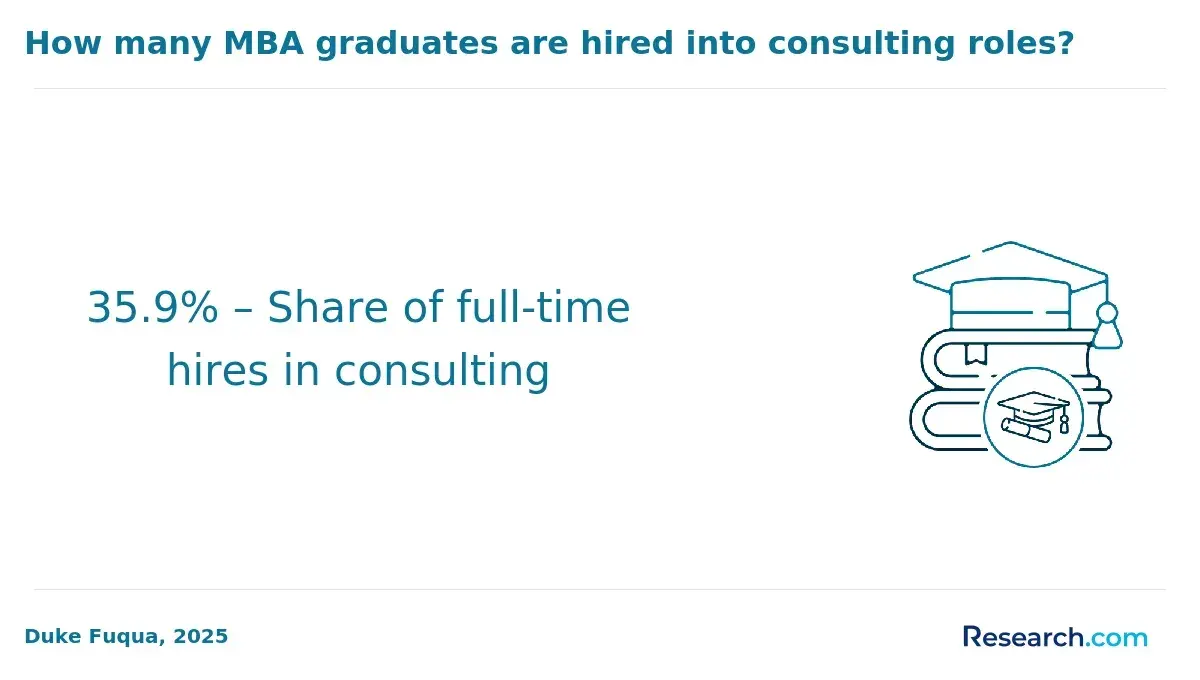
- Transferable business value: MBA training can also support roles outside the nonprofit sector. In one cited MBA employment report, 35.9% of MBA graduates are hired in the consulting industry, reflecting employer demand for graduate-level business skills.
What can I expect from an online MBA in a nonprofit management program?
An online MBA in nonprofit management usually teaches students how to run mission-driven organizations with the same financial discipline and strategic thinking expected in the private sector. The difference is that nonprofit leaders must also manage donor expectations, public accountability, community impact, volunteer teams, board oversight, compliance requirements, and limited or restricted funding.
Most programs include core MBA courses in accounting, finance, economics, marketing, operations, organizational behavior, and strategic management. The nonprofit concentration then adds specialized coursework in areas such as fundraising, grant writing, nonprofit law and ethics, board governance, advocacy, program assessment, social entrepreneurship, and community engagement.
| Program Component | What You Learn | Why It Matters in Nonprofit Work |
| Core MBA coursework | Finance, accounting, economics, marketing, operations, and strategy | Builds the business foundation needed to manage budgets, people, programs, and long-term plans |
| Nonprofit leadership courses | Governance, fundraising, advocacy, program evaluation, and stakeholder engagement | Prepares students for the realities of managing mission-based organizations |
| Applied projects | Case studies, capstones, simulations, consulting projects, or virtual internships | Helps students practice solving real nonprofit challenges before graduation |
| Networking and mentorship | Faculty guidance, alumni connections, peer collaboration, and industry events | Can support career movement into leadership, fundraising, consulting, or policy roles |
Where can I work with an online MBA in nonprofit management?
Graduates can work in organizations where business leadership and social impact overlap. Common employers include nonprofit agencies, philanthropic foundations, hospitals, schools, universities, religious organizations, advocacy groups, public policy organizations, government contractors, consulting firms, and social enterprises.
- Nonprofit executive director or CEO
- Program manager or program director
- Development director or fundraising manager
- Policy analyst or advocacy manager
- Social entrepreneur or nonprofit consultant
How much can I make with an online MBA in nonprofit management?
Pay varies widely because nonprofit compensation depends on role, organization size, funding model, location, budget, and years of experience. Based on the figures cited in this guide, nonprofit executive directors earn about $120,983, program managers earn about $149,897, and public policy analysts earn an average of $109,377. These figures should be treated as benchmarks rather than guarantees because compensation in mission-driven organizations can be affected by restricted grants, donor funding, public contracts, and broader economic conditions.
- 2027 best online MBA in nonprofit management programs
- How long does an online MBA in nonprofit management take?
- Online vs. on-campus MBA in nonprofit management: which is better?
- How much does an online MBA in nonprofit management cost?
- What financial aid is available for online MBA students?
- What are the admission requirements?
- What courses are included?
- What nonprofit management specializations are available?
- How should you choose the best online MBA in nonprofit management?
- What jobs can graduates pursue?
- Why does accreditation matter?
- How can working professionals balance school and work?
- Does the degree offer a competitive ROI?
- Is a one-year MBA realistic for nonprofit professionals?
- What trends are shaping nonprofit management education?
- How do online programs support networking and mentorship?
- What is the job market for nonprofit management MBA graduates?
- What compensation trends should students understand?
- How can this MBA support social entrepreneurship?
- How can students find affordable online MBA options?
- How do online programs use experiential learning?
- What should students know about career outcomes and placement?
- Online MBA in nonprofit leadership: strategy, people, and social impact
2027 List of the Best Online MBA in Nonprofit Management Programs
How do we rank schools?
Research.com evaluates programs to help students compare schools more efficiently and make choices that match their academic needs, budget, schedule, and career goals. Our rankings rely on our methodology and use established education data sources during the review process, including:
- IPEDS database
- Peterson's database, including their Distance Learning Licensed Data Set
- College Scorecard database
- National Center for Education Statistics
1. Liberty University
Liberty University offers an online MBA in nonprofit leadership and management for students who want broad business preparation with a nonprofit leadership focus. The program includes training in business law, strategic marketing, operations management, and other administrative areas that nonprofit managers commonly use when overseeing staff, budgets, programs, and organizational growth.
- Program Length: Two Years
- Tracks/concentrations: N/A
- Cost per credit: $565 (full-time), $615 (part-time), and $275 (military graduate).
- Required Credits to Graduate: 45
- Accreditation: Southern Association of Colleges and Schools Commission on Colleges (SACSCOC)
2. Calvin University
Calvin University’s online MBA with a nonprofit management concentration combines general MBA study with courses designed for mission-centered leadership. Students complete nine core MBA courses and three nonprofit management courses covering topics such as executive leadership, financial management, grant proposals, communication, and strategic decision-making in nonprofit settings.
- Program Length: 24 months
- Tracks/concentrations: $660
- Cost per credit: N/A
- Required Credits to Graduate: 36
- Accreditation: The Higher Learning Commission (HLC)
3. Johnson and Wales University
Johnson and Wales University provides an online MBA in nonprofit management that emphasizes strategic decision-making, communication, ethical leadership, and organizational analysis. Students examine how executive choices affect nonprofit performance and learn to approach management challenges across functions, cultures, and stakeholder groups.
- Program Length: Two Years
- Tracks/concentrations: N/A
- Cost per credit: $842
- Required Credits to Graduate: 36 to 42
- Accreditation: New England Commission of Higher Education
4. Springfield College
Springfield College offers an MBA in nonprofit management designed to connect business theory with applied management practice. Coursework includes finance, marketing, accounting, economics, and management, giving students a practical foundation for leadership roles in nonprofit and business environments.
- Program Length: One Year
- Tracks/concentrations: N/A
- Cost per credit: $745
- Required Credits to Graduate: 30
- Accreditation: International Accreditation Council for Business Education (IACBE)
5. Tuoro University Worldwide
Tuoro University Worldwide offers a nonprofit management MBA online for students seeking management, leadership, and organizational strategy skills. The curriculum focuses on modern leadership principles and prepares working professionals to manage nonprofit operations, teams, and long-term organizational priorities.
- Program Length: One Year
- Tracks/concentrations: N/A
- Cost per credit: $500
- Required Credits to Graduate: 36
- Accreditation: WASC Senior College and University Commission (WSCUC)
6. Concordia University, Wisconsin
Concordia University’s online MBA in nonprofit management and public administration blends general MBA training with topics relevant to nonprofits and public agencies. Students study public relations, program evaluation, volunteer recruitment, board governance, and organizational leadership.
- Program Length: Two Years
- Tracks/concentrations: N/A
- Cost per credit: $699
- Required Credits to Graduate: 36
- Accreditation: IACBE
7. Lakeland University
Lakeland University offers MBA specialization options, including nonprofit leadership. The program uses coursework, case analysis, and applied learning to help students understand business and economic issues in a global workplace.
- Program Length: One to two years
- Tracks/concentrations: accounting, finance, project management, nonprofit leadership, supply chain management, and more.
- Cost per credit: $708
- Required Credits to Graduate: 36
- Accreditation: HLC
8. Trevecca Nazarene University
Trevecca Nazarene University’s MBA programs include nonprofit leadership and management among several concentration choices. Students may study online or on campus and can choose a 15-month accelerated path or a 20-month traditional path. The accelerated format allows students to take two online courses at a time. TNU also does not require an application fee or GMAT scores.
- Program Length: 15 to 20 months
- Tracks/concentrations: nonprofit leadership and management, data analytics, project management, human resources, healthcare administration, and more.
- Cost per credit: $590
- Required Credits to Graduate: 36
- Accreditation: SACSCOC
9. Johnson University
Johnson University offers an online MBA concentration in nonprofit management along with other MBA concentration options. Students study social entrepreneurship, nonprofit resource development, and project design management, including risk, cost, scope, and quality considerations.
- Program Length: Two Years
- Tracks/concentrations: entrepreneurship, nonprofit management, leadership, healthcare management, and more.
- Cost per credit: $580
- Required Credits to Graduate: 36
- Accredation: SACSCOC
10. Hope International University
Hope International University offers an MBA in nonprofit management that develops advanced leadership, management, and critical thinking skills. The curriculum includes financial analysis, information technology, environmental economics, and ethics-based instruction from faculty with strong academic credentials.
- Program Length: Two Years
- Tracks/concentrations: general management, nonprofit management, marketing management, and more.
- Cost per credit: $675
- Required Credits to Graduate: 36
- Accreditation: Western Association of Schools and Colleges Senior College and University Commission
What graduates say about online MBA programs in nonprofit management
"My online MBA in nonprofit management helped me move into a larger leadership role. I could keep working and managing family responsibilities while learning more about strategy, planning, and organizational leadership.” - Oscar
"The online format made it possible to learn with classmates from different locations and professional backgrounds. The case-based assignments gave me practical tools I could bring back to my nonprofit right away.” - Carlos
"Studying online let me move through the program in a way that fit my schedule. The coursework helped me apply new leadership and outreach strategies directly to my current organization.” - Kelly
Key Findings
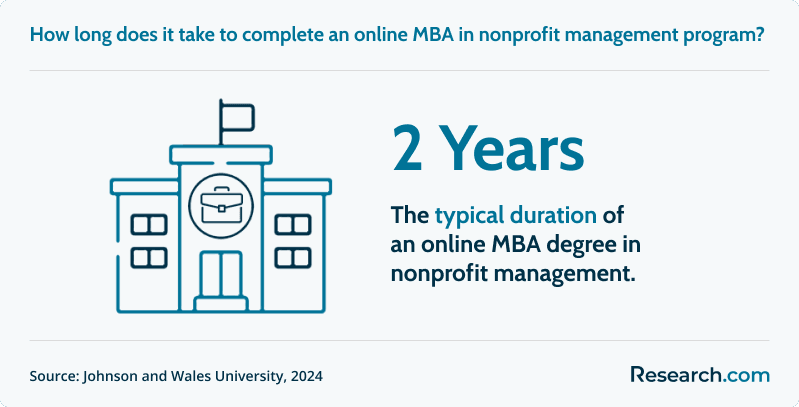
- Many online MBA programs in nonprofit management take about two years, though accelerated and part-time formats can change the timeline.
- The degree can support careers in nonprofit leadership, fundraising, program management, policy, consulting, healthcare, education, and social enterprise.
- Accreditation is one of the most important quality checks because employers and graduate-level partners often pay close attention to institutional credibility.
- A master’s degree can improve access to leadership opportunities, but salary outcomes depend on role, location, organization size, funding, and experience.
- Common nonprofit MBA focus areas include fundraising, project management, healthcare management, public policy, governance, and human resources.
How long does it take to complete an online MBA in nonprofit management program?
Based on our research, online MBA programs generally require around 36 to 54 credit hours. Full-time students may finish in one and a half to two years, while part-time students may need three to four years or longer depending on course load and scheduling. Some schools also offer accelerated formats for students who can manage a heavier pace.
| Study Format | Typical Timeline | Best For |
| Accelerated | As little as one year in some programs | Students with strong time management skills who want to finish quickly |
| Full-time | One and a half to two years | Students who can handle a steady graduate course load |
| Part-time | Three to four years or longer | Working professionals balancing school with full-time employment or family responsibilities |
How does an online MBA in nonprofit management program compare to an on-campus program?
Online and campus-based MBA programs can lead to similar academic outcomes when they are properly accredited and well designed. The better choice depends on your schedule, learning style, networking preferences, and budget.
| Factor | Online MBA in Nonprofit Management | On-Campus MBA in Nonprofit Management |
| Accessibility | Allows students to complete coursework remotely, which is helpful for working professionals and students who do not live near campus | Requires regular campus attendance, which may be better for students who want a traditional classroom environment |
| Learning style | Works well for self-directed learners who can manage deadlines independently | Provides more scheduled face-to-face interaction and classroom structure |
| Networking | Often uses virtual events, discussion boards, group projects, alumni platforms, and live sessions | May offer easier access to in-person events, campus speakers, and local employer connections |
| Affordability | May reduce relocation, commuting, and campus-related expenses, though tuition varies by school | May involve additional costs for housing, transportation, and schedule disruption |
What is the average cost of an online MBA in a nonprofit management program?
The total cost of an online MBA in nonprofit management depends on tuition per credit, required credits, fees, course load, transfer policies, and whether students qualify for scholarships, employer support, or military benefits. For example, an online MBA in nonprofit management at LU can cost about $25,425 for full-time study and $27,675 for part-time study. Military graduates may qualify for a lower total of about $12,375 for the same program.
Students comparing graduate programs should look beyond tuition alone. Technology fees, textbooks, residency requirements, proctoring fees, graduation fees, and the opportunity cost of reducing work hours can all affect the real price of the degree. Military education benefits may also apply to other programs, including some of the most affordable online software engineering degrees or nursing programs.
What are the financial aid options for students enrolling in an online MBA in a nonprofit management program?
Online MBA students may be eligible for several forms of financial support. Eligibility depends on the school, enrollment status, citizenship or residency status, employer policies, military status, and academic profile.
- Federal Financial Aid: Students can submit the Free Application for Federal Student Aid (FAFSA) to be considered for federal loans, grants, and work-study programs. Grants do not require repayment, while loans must be repaid with interest.
- Scholarships: Universities and outside organizations may offer awards for MBA students, nonprofit professionals, public service workers, or students with specific academic or career goals.
- Grants: Grant funding may come from federal, state, institutional, or private sources and generally does not need to be repaid.
- Employer Tuition Assistance: Some employers reimburse or directly support graduate study when the degree aligns with the employee’s role or advancement plan.
- Military Benefits: Veterans and active-duty military personnel may qualify for programs such as the GI Bill, which can help cover tuition and other education-related expenses.
What are the prerequisites for enrolling in an online MBA in nonprofit management program?
Admissions requirements vary by institution, but most online MBA programs ask applicants to show that they are academically prepared for graduate-level business study and have the professional maturity needed for leadership coursework.
- Bachelor’s Degree: Most schools require a bachelor’s degree from an accredited institution. A business major may help, but many programs admit students from other fields. Even in MBA programs under 10k, a bachelor’s degree is still commonly required.
- GMAT/GRE Scores: Some schools request GMAT or GRE scores, while many online MBA programs waive testing based on work experience, academic history, or program policy.
- Work Experience: Many MBA programs prefer or require professional experience, often ranging from 2 to 5 years, because classroom discussions frequently draw on workplace examples.
- Letters of Recommendation: Applicants may need two to three letters from supervisors, professors, or professional contacts who can evaluate their readiness for graduate business study.
- Resume/CV: Schools typically request a current resume or CV showing employment history, education, skills, leadership experience, and accomplishments.
What courses are typically in an online MBA in a nonprofit management program?
Most programs combine standard MBA courses with nonprofit-focused electives or concentration courses. The goal is to prepare students to make sound management decisions while understanding mission, community impact, donor accountability, and nonprofit governance.
- Financial Accounting: Covers accounting principles, financial statements, and the interpretation of financial information.
- Managerial Accounting: Focuses on using accounting data to support internal planning, budgeting, and management decisions.
- Marketing Management: Explores how organizations communicate value, reach audiences, and promote services or campaigns.
- Organizational Behavior: Examines leadership, motivation, team dynamics, communication, and workplace culture.
- Operations Management: Teaches students how to improve processes, manage resources, and oversee service delivery.
- Strategic Management: Develops skills in planning, competitive analysis, implementation, and organizational direction.
- Financial Management: Introduces finance concepts such as investment decisions, capital structure, working capital, and financial planning. Similar finance-related coursework can appear in accounting programs, including some of the most affordable online master's in accounting programs.
- Economics for Managers: Applies microeconomic and macroeconomic ideas to leadership and business decision-making.
What types of specializations are available in an online MBA in a nonprofit management program?
Specializations help students align the MBA with a specific career direction. Before choosing one, consider whether you want to lead an entire organization, manage programs, raise funds, shape policy, oversee people, or launch a social venture.
| Specialization | Main Focus | Good Fit For |
| Fundraising and Development | Donor relations, grant writing, major gifts, planned giving, campaigns, and stewardship | Students aiming for development director, fundraising manager, or advancement roles |
| Social Entrepreneurship | Mission-driven ventures, impact investing, innovation, and sustainable business models | Students who want to launch or scale a social enterprise |
| Nonprofit Leadership and Governance | Board relations, executive leadership, ethics, and strategic governance | Students seeking executive director, CEO, or senior leadership roles |
| Public Policy and Advocacy | Policy analysis, lobbying, community organizing, and systems change | Students interested in advocacy organizations, public affairs, or government-adjacent work |
| Program Management and Evaluation | Program design, project management, assessment, and performance measurement | Students who want to manage services, grants, initiatives, or community programs |
| Human Resources Management in Nonprofits | Staff development, volunteer management, HR strategy, and workforce planning | Students focused on people operations in mission-based organizations |
Students interested in nonprofit workforce management can also compare nonprofit MBA options with online master's in human resources programs. Industry context matters as well. According to statistics cited in this guide, the top industries contributing to nonprofit employment are healthcare and social assistance (66.51%), educational services (16.04%), arts, entertainment, and recreation (2.85%), and other services (6.72%). All remaining industries account for about 7.89% of employment statistics. The chart below shows how nonprofit employment is distributed in the U.S.:
How do I choose the best online MBA in nonprofit management program?
The best program is not always the highest-ranked or the fastest. It is the one that fits your career goal, budget, schedule, learning style, and required level of support. Use the following criteria before applying.
- Accreditation: Confirm that the institution and program are accredited by recognized bodies. Business-specific accreditation, such as AACSB or ACBSP, can also signal quality, though not every good program has the same accreditor.
- Curriculum: Look for a balance of core MBA training and nonprofit-specific coursework in leadership, fundraising, finance, governance, advocacy, and program evaluation.
- Faculty: Review whether instructors have academic credentials, nonprofit leadership experience, fundraising expertise, consulting backgrounds, or policy experience.
- Cost and Financial Aid: Compare tuition, fees, credits required, scholarships, grants, employer support, and military benefits. Consider the full cost, not just the advertised tuition rate.
- Career Services and Networking: Evaluate job search support, alumni access, mentorship, employer connections, resume reviews, interview preparation, and nonprofit-specific networking opportunities.
| Question to Ask | Why It Matters |
| Is the school institutionally accredited? | Accreditation affects credibility, financial aid access, transferability, and employer confidence. |
| Does the curriculum include nonprofit-specific leadership courses? | A general MBA may not cover fundraising, governance, grant management, or program evaluation in enough depth. |
| Can I complete the program while working full time? | Scheduling, course pacing, and synchronous requirements can affect whether the program is realistic. |
| What career outcomes does the school report? | Graduate employment data, alumni roles, and employer connections help you judge practical value. |
| What is the total cost after aid? | Net price is more useful than tuition alone when evaluating ROI. |
What career paths are available for graduates of an online MBA in nonprofit management programs?
An MBA in nonprofit management can support both direct nonprofit roles and adjacent leadership positions in healthcare, education, philanthropy, consulting, public policy, and social enterprise. Common paths include:
- Executive Director/CEO: Leads overall strategy, fundraising, operations, staff management, board relations, and mission execution. Students who specifically want executive-level business training may also compare affordable executive MBA programs.
- Development Director/Fundraising Manager: Builds donor relationships, manages campaigns, writes or oversees grants, plans events, and develops revenue strategies.
- Program Director/Manager: Plans, implements, monitors, and evaluates services or initiatives to ensure they support organizational goals and community needs.
- Policy Analyst/Advocacy Manager: Researches laws and regulations, analyzes policy proposals, develops advocacy strategies, and supports public-facing campaigns.
- Healthcare Program Director: Manages nonprofit healthcare programs such as community health initiatives, disease prevention programs, and mental health services. Students focused on healthcare leadership may also review affordable MHA programs.
- Nonprofit Consultant: Advises organizations on strategic planning, governance, fundraising, operations, restructuring, and program evaluation.
- Social Entrepreneur: Creates and manages mission-driven ventures that address community, environmental, or social challenges.
- Community Outreach Coordinator:Builds partnerships, coordinates engagement activities, increases awareness, and connects programs with the communities they serve.
How does accreditation impact the quality and outcomes of online MBA programs in nonprofit management?
Accreditation is one of the clearest signals that a school has met recognized academic and administrative standards. For online MBA students, accreditation can affect financial aid eligibility, transfer credit acceptance, employer perception, doctoral study options, and overall confidence in program quality. When comparing programs, check both institutional accreditation and business-related accreditation where available.
Students comparing price and quality together can also review broader affordable online MBA programs to see how nonprofit management options compare with other MBA pathways.
How can working professionals effectively balance career and online MBA studies in nonprofit management?
Online MBA programs are often built for professionals, but flexibility does not mean the work is easy. Students should expect weekly reading, discussions, assignments, group projects, exams, and applied work. Asynchronous classes can help students study around work hours, while live sessions may provide more structure and connection.
- Block recurring study time before each term begins.
- Choose a part-time pace if your job includes travel, night shifts, grant deadlines, or seasonal fundraising demands.
- Tell supervisors early if you plan to use employer tuition assistance or need schedule predictability.
- Use coursework strategically by applying projects to real nonprofit problems at work when allowed.
- Review how long an MBA takes before choosing an accelerated, full-time, or part-time format.
Does an online MBA in nonprofit management offer a competitive return on investment?
ROI depends on your tuition cost, time to completion, current salary, target role, employer support, and whether the credential helps you move into higher-responsibility work. The degree may be worthwhile if it helps you qualify for executive leadership, development leadership, program management, consulting, or social enterprise roles. It may be less compelling if you already hold a relevant graduate degree, do not need business training, or would need to borrow heavily for a modest expected salary change.
Students trying to shorten the payback period may want to compare standard programs with accelerated online MBA programs, while still checking workload, accreditation, and support services.
Is a One-Year MBA Program a Viable Option for Nonprofit Management Professionals?
A one-year MBA can be realistic for nonprofit professionals who have strong time management skills, prior business exposure, employer support, and the ability to handle an intensive schedule. The trade-off is workload. Accelerated formats may reduce time away from career advancement, but they can also compress assignments, group work, exams, and capstone projects into a demanding calendar.
Before choosing a 1 yr MBA, ask whether you can maintain your job performance, protect personal time, complete group assignments on schedule, and absorb advanced business concepts quickly.
What are the trends and emerging innovations in nonprofit management education?
Nonprofit management education is changing as organizations use more digital tools, data systems, remote collaboration, and evidence-based reporting. Online MBA programs increasingly emphasize data-informed decision-making, digital donor engagement, program evaluation, impact reporting, and the responsible use of artificial intelligence in organizational operations.
Another important shift is the global scope of nonprofit work. Programs may include international case studies, cross-cultural collaboration, virtual consulting projects, or global nonprofit examples to prepare students for organizations working across borders or with diverse communities.
Experiential learning is also becoming more important. Virtual internships, consulting-style projects, simulations, and capstones can help students practice budgeting, stakeholder communication, donor strategy, and program evaluation before moving into senior roles. Students who want a shorter path can compare the structure of the best accelerated MBA online options while making sure the program still includes enough applied nonprofit content.
How do online MBA programs in nonprofit management enhance networking and mentorship opportunities?
Strong online MBA programs do more than post lectures. They create structured opportunities for students to meet faculty, alumni, nonprofit executives, fundraisers, consultants, and peers. These connections may happen through live webinars, virtual panels, collaborative projects, alumni groups, mentoring programs, discussion forums, and career events.
Students considering shorter programs should ask whether networking is built into the compressed schedule. Some online one year MBA programs may offer concentrated networking opportunities, but students should confirm how much access they will have to alumni, faculty, and nonprofit employers.
What is the job market for graduates with an online MBA in nonprofit management degree?
Nonprofit organizations need leaders who can manage budgets, direct teams, build partnerships, measure outcomes, and raise funds while staying focused on mission. Demand can come from social service agencies, housing organizations, food security programs, mental health providers, global NGOs, schools, hospitals, foundations, and consulting firms serving nonprofit clients.
Consulting is another path for MBA graduates with nonprofit expertise. In the consulting industry, 99% of employers express confidence in graduate management education, which helps explain why MBA graduates may be attractive for roles involving strategy, capacity building, organizational restructuring, and performance improvement.
What are the compensation trends for online MBA graduates in nonprofit management?
Compensation in nonprofit management can differ sharply from compensation in corporate management because nonprofit budgets, funding restrictions, donor expectations, and public accountability shape pay structures. Larger organizations, healthcare-related nonprofits, universities, foundations, and national organizations may offer different compensation than small community-based nonprofits.
Students should compare nonprofit salary expectations with broader business roles, including information on business management and administration salary, before deciding whether the degree matches their financial goals. The right comparison is not only salary; it is salary plus mission fit, advancement potential, debt level, work-life expectations, and long-term leadership opportunities.
How can an MBA in nonprofit management support entrepreneurial ventures focused on social impact?
An MBA in nonprofit management can help aspiring social entrepreneurs turn a mission idea into a financially sustainable organization. Students learn how to design a model, attract funding, measure outcomes, manage compliance, and communicate value to donors, investors, partners, and communities.
- Strategic Planning and Business Development: Students learn how to analyze markets, define a mission, build operating models, and create plans for sustainable growth.
- Fundraising and Financial Management: Coursework can help students understand grants, donations, impact investments, budgets, cash flow, and responsible financial stewardship.
- Impact Measurement and Evaluation: Students learn how to set goals, track outcomes, report results, and demonstrate accountability to funders and stakeholders.
- Networking Opportunities and Mentorship: MBA programs may connect students with faculty, alumni, nonprofit leaders, funders, consultants, and peers who can support venture development.
- Legal and Ethical Considerations: Students examine compliance, governance, reporting, and ethical decision-making, which are especially important for mission-driven ventures.
What are the most affordable options for pursuing an online MBA in nonprofit management?
Affordability matters because many nonprofit professionals work in sectors where salaries may not rise as quickly as tuition costs. To reduce financial pressure, compare programs carefully and calculate total cost after aid.
- Consider programs with no GMAT requirements: Test waivers can save time and application expenses. Students can compare online MBA no GMAT options when looking for accessible programs.
- Apply for scholarships and tuition discounts: Look for awards for nonprofit workers, public service professionals, military students, graduate business students, and students with financial need.
- Compare accelerated and part-time formats: Accelerated programs may reduce time in school, while part-time enrollment can make tuition payments easier to manage over several years.
- Check employer support: Some nonprofits, hospitals, schools, and public-service organizations may offer tuition reimbursement or professional development funding.
- Calculate net cost: Include fees, textbooks, technology charges, travel, lost work hours, and loan interest before deciding.
How do online MBA programs in nonprofit management integrate experiential learning?
Experiential learning helps students move from theory to practice. Online MBA programs may use case studies, simulations, consulting projects, virtual internships, group projects, and capstones based on real nonprofit challenges. These assignments can help students practice stakeholder management, budgeting, outreach planning, donor communication, and program evaluation.
Students who want deeper project-management training may also compare nonprofit MBA coursework with the most affordable online MBA programs in project management, especially if they plan to oversee grants, community initiatives, or multi-site programs.
What are the career outcomes and job placement rates for online MBA graduates in nonprofit management?
Before enrolling, ask each school for evidence of graduate outcomes. Useful information includes employment rates, job titles, employer types, alumni career paths, time to employment, internship or project partners, and career coaching availability. If a school does not publish placement rates, ask an admissions counselor or program director how graduates commonly use the degree.
Students comparing cost and career flexibility may also review an affordable online business degree to decide whether an MBA, specialized master’s degree, or broader business program is the better investment.
Online MBA in Nonprofit Leadership: Combining Strategic Management and Social Impact
Nonprofit leadership requires more than passion for a mission. Leaders must align programs with strategy, manage limited resources, build trust with donors and communities, guide staff and volunteers, work with boards, and prove impact. An online MBA in leadership with a nonprofit management focus can help professionals strengthen both business judgment and people-centered leadership.
What Makes Leadership Training Essential in Nonprofit Management?
- Aligning strategy with mission. Nonprofit leaders must decide which programs to grow, adjust, fund, or sunset based on mission fit, financial sustainability, and community impact.
- Managing teams and volunteers. Many nonprofits rely on a mix of paid employees, volunteers, contractors, and board members, which makes communication and motivation especially important.
- Building stakeholder trust. Leaders regularly work with donors, government agencies, foundations, board members, clients, community partners, and the public.
Students who want to focus more deeply on people, teams, and organizational change may compare nonprofit management programs with an online MBA in leadership.
Common Mistakes to Avoid When Choosing an Online MBA in Nonprofit Management
- Choosing without checking accreditation: Always verify institutional accreditation before applying or borrowing money.
- Looking only at tuition per credit: Total cost also includes fees, books, required credits, loan interest, and time away from work.
- Assuming every MBA covers nonprofit needs: A general MBA may not include fundraising, governance, grant management, or impact evaluation.
- Ignoring schedule demands: Accelerated programs can be efficient, but they may be difficult for students with heavy work or family responsibilities.
- Relying only on rankings: Rankings can help you start a list, but curriculum fit, faculty, support services, cost, and outcomes matter more for your individual decision.
- Expecting guaranteed salary increases: Graduate education can improve opportunity, but pay depends on role, location, organization size, funding, and experience.
Key Insights
- An online MBA in nonprofit management is best for students who want business leadership training for mission-driven organizations, not just a general management credential.
- Strong programs combine MBA fundamentals with nonprofit-specific training in fundraising, governance, advocacy, program evaluation, and social impact strategy.
- Most programs require around 36 to 54 credit hours, with timelines ranging from one-year accelerated options to part-time formats lasting three to four years or longer.
- Accreditation, total cost, curriculum fit, faculty experience, and career support should carry more weight than rankings alone.
- ROI depends on your current role, target position, debt level, employer support, and whether the degree helps you reach leadership, consulting, fundraising, policy, healthcare, education, or social enterprise goals.
- Before enrolling, ask schools for graduate outcome data, net cost estimates, course schedules, accreditation details, and examples of applied nonprofit projects.
Resources:
- Duke University (2025). daytime mba EMPLOYMENT REPORT. https://www.fuqua.duke.edu/sites/default/files/media/programs/daytime/duke-mba-employment-2025.pdf
- Graduate Management Admission Council (2025). Corporate Recruiters Survey 2025 Report. https://www.gmac.com/-/media/files/gmac/research/employment-outlook/2025-corporate-recruiters-survey/summary-report.pdf?rev=90517bad744b47959c7f593937f8f1d7
- Liberty University. (n.d.). MBA in Nonprofit Leadership and Management. https://www.liberty.edu/online/business/masters/mba/nonprofit-leadership-and-management
- Salary.com. (2026). Nonprofit Executive Director Salary. https://www.salary.com/research/salary/posting/nonprofit-executive-director-salary
- U.S. Bureau of Labor Statistics. (2024). Nonprofits: a look at national trends in establishment size and employment. https://www.bls.gov/opub/mlr/2024/article/nonprofits-a-look-at-national-trends-in-establishment-size-and-employment.htm
- U.S. Bureau of Labor Statistics. (2025). Social Workers. https://www.bls.gov/ooh/community-and-social-service/social-workers.htm
Other Things You Should Know About Online MBA in Nonprofit Management Programs
Yes. Many nonprofit management online MBA programs are housed in AACSB-accredited business schools, and the MBA itself is accredited at the school level, not by a separate nonprofit-management body. AACSB accreditation is the main business-school quality marker employers and applicants look for in 2027.
In 2027, top online MBA programs in nonprofit management typically require a bachelor's degree from an accredited institution, a competitive GPA, and relevant work experience. Additionally, applicants may need to submit GMAT or GRE scores, a personal statement, letters of recommendation, and potentially undergo an interview process.