2027 Most Affordable Online Software Engineering Degrees

Co-Founder and Chief Data Scientist
An affordable online software engineering degree can be a practical route into software development, but the best choice depends on more than tuition. You need to compare accreditation, curriculum depth, transfer credit rules, project experience, career support, and whether the program teaches skills employers actually screen for, such as programming, databases, software design, testing, cloud tools, security, and collaborative development workflows.
This guide is for students, working adults, career changers, and current IT professionals who want a flexible bachelor’s-level pathway into software engineering or related computer occupations. It explains what online software engineering programs include, how much they may cost, how long they take, what jobs they can lead to, and how to choose a program without overpaying or enrolling in a degree that does not match your career goals.
Quick Answer: Is an Affordable Online Software Engineering Degree Worth Considering?
Yes, an affordable online software engineering degree can be worth considering if the program is accredited, includes substantial hands-on coding and project work, and fits your budget and schedule. A computer-related degree can support careers across technology, healthcare, finance, manufacturing, retail, education, and other industries that rely on software systems.
| Key Question | Short Answer |
| What can the degree prepare you for? | Entry-level roles in software development, web development, quality assurance, database work, systems analysis, and related computer occupations. |
| What makes online study useful? | Online formats can help students balance coursework with employment, family obligations, or location constraints. |
| What salary range does the article cite? | The U.S. Bureau of Labor Statistics reports an average annual salary of $108,100 for computer occupations and $124,940 for software and web developers, programmers, and testers. |
| What does an online software engineering program cost? | Programs cited in this guide may average between $37,000 to $91,000, depending on tuition, fees, transfer credits, residency status, and aid. |
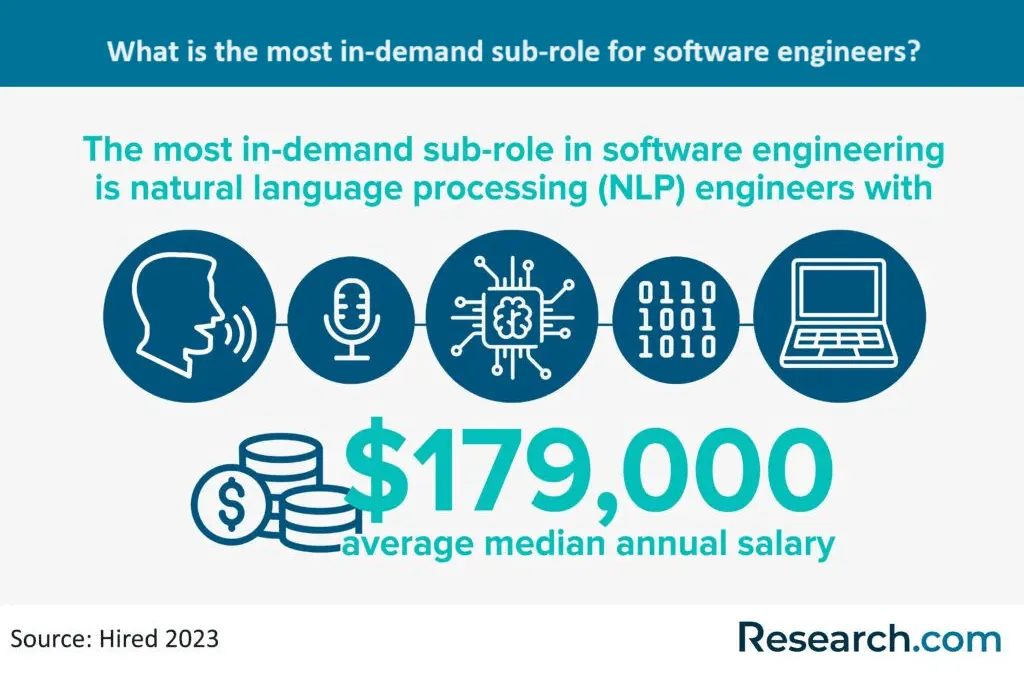
| Which high-paying sub-role is highlighted? | A natural language processing engineer is cited as the most in-demand and highest-paid sub-role at $179,000 average annual salary. |
- A computer-related bachelor’s degree can qualify graduates for software roles in many industries, not only traditional technology companies.
- Software and web developers can earn over $124,000 annually, based on the salary figures cited in this guide.
- Online software engineering programs can offer scheduling flexibility for learners who cannot relocate or attend campus full time.
- Program affordability should be judged by total cost, not tuition alone. Fees, books, technology, transfer credits, and aid can change the real price.
- Software engineering includes many subfields, including web development, mobile development, cloud computing, DevOps, security, data-oriented development, and natural language processing.
What Should You Expect From an Affordable Online Software Engineering Degree?
An online software engineering degree is designed to build the technical foundation needed to design, create, test, maintain, and improve software systems. Most programs teach programming, software architecture, databases, operating systems, algorithms, software testing, and development methods used by professional teams.
Because many software engineering degrees are online, students should expect a learning format that relies on recorded lectures, coding labs, virtual discussions, remote collaboration, project submissions, and online assessments. Some courses may be asynchronous, while others may require scheduled meetings, group projects, or instructor check-ins.
A strong program should give students repeated opportunities to build working software rather than only study theory. Look for coursework that includes code reviews, Git or other version control systems, Agile or Scrum-based project work, testing and quality assurance, cloud or deployment experience, and a capstone project that can be shown to employers.
After completing the program, graduates typically receive a bachelor’s degree in software engineering or a closely related field such as computer science, information technology, or software development. That credential may support entry-level employment or provide a foundation for graduate study in software engineering, computer science, data science, artificial intelligence, cybersecurity, or technology management.
Where Can Graduates Work With an Affordable Online Software Engineering Degree?
Software engineering graduates are not limited to software companies. Any organization that builds, maintains, secures, analyzes, or improves digital systems may need software talent.
- Technology companies: Large firms such as Google, Amazon, and Microsoft, along with smaller startups, hire developers for web applications, mobile applications, cloud services, enterprise platforms, developer tools, and internal systems.
- Remote-first employers: Companies built around distributed teams may hire software professionals who can contribute through online collaboration tools, version control platforms, asynchronous communication, and remote project workflows.
- Financial services: Banks, investment organizations, insurance companies, and fintech firms use software engineers to support secure applications, trading tools, analytics platforms, payment systems, and online banking systems.
- Healthcare organizations: Hospitals, health technology companies, insurers, and medical device firms need software professionals for electronic health records, patient portals, clinical systems, data tools, and device-related software.
- Non-technology industries: Retailers, manufacturers, schools, logistics companies, government agencies, and nonprofits often employ software professionals to build internal tools, e-commerce platforms, reporting systems, automation workflows, and customer-facing applications.
How Much Can You Make With an Affordable Online Software Engineering Degree?
Earnings vary by role, employer, region, industry, portfolio quality, internships, technical stack, and years of experience. A degree alone does not guarantee a specific salary, but it can help students qualify for roles where employers expect formal training in computing, software design, and problem-solving.
According to the United States Bureau of Labor Statistics figures cited in this guide, computer occupations have an average annual salary of $108,100. Software and web developers, programmers, and testers earn an average of $124,940 a year.
- Affordable Online Software Engineering Degrees to Compare
- How long does it take to complete an online software engineering degree program?
- How does an online software engineering degree compare to an on-campus program?
- What is the average cost of an online software engineering degree program?
- What are the prerequisites for enrolling in an online software engineering degree program?
- What courses are typically included in an online software engineering degree program?
- What career paths are available for graduates of online software engineering programs?
- How do you choose the best affordable online software engineering degree programs?
- What is the job market for software engineering graduates?
- Strategies for Building a Competitive Portfolio in Online Software Engineering Programs
- What are the financial aid options for students enrolling in an online software engineering degree program?
- What types of specializations are available in online software engineering programs?
- Can an Accelerated Computer Science Path Elevate Your Software Engineering Career?
- What soft skills are essential for success in software engineering?
- Can online software engineering degrees prepare students for careers in game development?
- How do affordable online software engineering programs prepare students for remote and global collaboration?
- What challenges might learners face in affordable online software engineering programs?
- What is the return on investment for an affordable online software engineering degree?
- Emerging Trends in Software Engineering and Their Impact on Career Opportunities
- Internships, Capstone Projects, and Real-World Experience in Online Software Engineering Programs
- What advanced educational pathways can further boost career prospects in software engineering?
- How can software engineering skills open doors to interdisciplinary career opportunities?
- What career support services are available in affordable online software engineering programs?
2027 Affordable Online Software Engineering Degrees to Compare
How Research.com Evaluates Schools
A software engineering degree requires a major commitment of money, time, and sustained effort. To help students compare programs more carefully, Research.com applies its methodology and reviews factors related to affordability, accessibility, academic quality, and student outcomes. The ranking also uses information from the IPEDS database, maintained by the National Center for Education Statistics, along with Peterson's database, including the Distance Learning Licensed Data Set, and College Scorecard.
| School | Program | Program Length | Credits | Tuition or Cost Listed |
| Saint Leo University | BS in Software Engineering | 4 years | 120 | $27,880 annual tuition |
| Southern New Hampshire University | BS in Computer Science - Software Engineering | 4 years | 120 | $330 per credit |
| Purdue Global | BS in Information Technology | 4 years | 180 | $371 per credit |
| University of Arizona | BS in Software Engineering | 4 years | 120 | $600 per credit |
| ECPI University | BS in Software Development | 2.5 years | 120 | $8,712 per semester |
| DeVry University | BS in Software Development | 4 years | 120 | $514 per credit hour |
| Western Governors University | BS in Software Engineering | 2-4 years | Not listed | $34,680 total program cost |
| Penn State World Campus | BS in Software Engineering | 4 years | 126 | $626 per credit residents; $671 per credit non-residents |
| University of Minnesota - Crookston | BS in Software Engineering | 4 years | 120 | $441.50 per credit |
| St. Cloud State University | BS in Software Engineering | 4 years | 122 | $350 per credit hour |
1. Saint Leo University
Saint Leo University offers an online Bachelor of Science in Software Engineering for students who want preparation for IT roles involving complex software products. The curriculum includes applied work in computer hardware, databases, networks, and software architecture. The university reports tuition that is significantly lower than the average private college tuition, and 98% of students receive some type of financial aid.
- Location: St. Leo, FL
- School type: Private Nonprofit
- Program offered: Bachelor of Science in Software Engineering
- Program length: 4 years
- Required credits to graduate: 120
- Annual tuition: $27,880
- Accreditation: Southern Association of Colleges and Schools Commission on Colleges
2. Southern New Hampshire University
Southern New Hampshire University provides an online Bachelor of Science in Computer Science - Software Engineering. The program focuses on core software engineering principles and the use of software to solve practical problems. Students study areas such as UI/UX design and development, secure coding, reverse engineering, systems architecture, and current software engineering practices.
- Location: Manchester, NH
- School type: Private nonprofit
- Program offered: Bachelor of Science in Computer Science - Software Engineering
- Program length: 4 years
- Required credits to graduate: 120
- Tuition: $330 per credit
- Accreditation: New England Commission of Higher Education
3. Purdue Global
Purdue Global offers an online Bachelor of Science in Information Technology that teaches IT concepts, tools, methods, and technologies used to design information systems. Students can choose from nine concentrations, including software development using C#, Java, Python, and web languages. The program’s ABET accreditation is an important quality marker for students comparing computing-related degrees.
- Location: Indianapolis, IN
- School type: Public
- Program offered: Bachelor of Science in Information Technology
- Program length: 4 years
- Required credits to graduate: 180
- Tuition: $371 per credit
- Accreditation: Higher Learning Commission, Computing Accreditation Commission of ABET.
4. University of Arizona
University of Arizona offers an online Bachelor of Science in Software Engineering that combines engineering methods with software development practices across the software life cycle. The curriculum draws from software engineering, systems engineering, and electrical and computer engineering. Students encounter methods such as Agile development, automated testing through continuous integration, and Software DevOps.
- Location: Tucson, AZ
- School type: Public
- Program offered: Bachelor of Science in Software Engineering
- Program length: 4 years
- Required credits to graduate: 120
- Tuition: $600 per credit
5. ECPI University
ECPI University offers an online Bachelor of Science in Software Development that covers Java, C#, Python, HTML5/CSS, Android, jQuery, Cloud providers, and MongoDB. The online format uses simulation software and multiple communication channels to create interactive learning activities that resemble elements of a classroom experience.
The program is also designed for students who want to finish faster through a year-round accelerated schedule.
- Location: (multiple locations)
- School type: For Profit
- Program offered: Bachelor of Science in Software Development
- Program length: 2.5 years
- Required credits to graduate: 120
- Tuition: $8,712 per semester
- Accreditation: Southern Association of Colleges and Schools Commission on Colleges (SACSCOC)
6. DeVry University
DeVry University offers an online Bachelor of Science in Software Development focused on techniques and tools used to build software applications. Its technology core includes interdisciplinary content intended to support work in data management and analysis for the Internet of Things (IoT) economy. Students can choose from three specializations: Software Design and Programming, Big Data and Analytics, and Web and Mobile Application Development.
- Location: (multiple locations)
- School type: For Profit
- Program offered: Bachelor of Science in Software Development
- Program length: 4 years
- Required credits to graduate: 120
- Tuition: $514 per credit hour
- Accreditation: Commission of Higher Education
7. Western Governors University
Western Governors University offers an online Bachelor of Science in Software Engineering that covers scripting, web development, mobile application development, user experience design, and software quality assurance. Students choose either a Java track or a C# track.
- Location: Millcreek, UT
- School type: Private nonprofit
- Program offered: Bachelor of Science in Software Engineering
- Program length: 2-4 years
- Total program cost: $34,680
- Accreditation: Northwest Commission on Colleges and Universities, Higher Learning Commission of the North Central Association of Colleges and Schools, Accrediting Commission for Community and Junior Colleges of the Western Association of Schools and Colleges, and the Accrediting Commission for Senior Colleges and Universities of the Western Association of Schools and Colleges.
8. Penn State World Campus
Penn State World Campus offers a 100% online Bachelor of Science in Software Engineering accredited by ABET. The program is built for students interested in coding, mathematics, physics, chemistry, and software systems. Students learn to create, maintain, improve, plan, manage, and implement software systems using current technologies across multiple industries.
- Location: University Park, PA
- School type: Public
- Program offered: Bachelor of Science in Software Engineering
- Program length: 4 years
- Required credits to graduate: 126
- Tuition: $626 per credit (residents), $671 per credit (non-residents)
- Accreditation: Engineering Commission of ABET
9. University of Minnesota - Crookston
The University of Minnesota - Crookston offers software engineering as an online major. Students can study software applications, game design, virtual reality, visualization, and computer graphics. The program is intended to prepare graduates for a range of software-related opportunities, including roles with major technology employers.
- Location: Crookston, MN
- School type: Public
- Program offered: Bachelor of Science in Software Engineering
- Program length: 4 years
- Required credits to graduate: 120
- Tuition: $441.50 per credit
- Accreditation: Higher Learning Commission
10. St. Cloud State University
St. Cloud State University offers an online Bachelor of Science in Software Engineering that teaches students to develop quality software for clients and organizations using Agile techniques. Students work with the software life cycle, engineering tools, database management, 3D simulation and visualization, agile development, and human-computer interaction. The curriculum emphasizes communication and project-based learning, and the program is maintained with input from industry subject matter experts.
- Location: St. Cloud, MN
- School type: Public
- Program offered: Bachelor of Science in Software Engineering
- Program length: 4 years
- Required credits to graduate: 122
- Tuition: $350 per credit hour
- Accreditation: Higher Learning Commission
What Online Software Engineering Graduates Often Value
The strongest online programs are not limited to recorded lectures. Students may benefit from interactive assignments, instructor access, virtual collaboration, and group software projects that mirror professional development teams. - Ross
For students balancing work and family, online study can make a bachelor’s degree possible without leaving a job or relocating. The trade-off is that success requires discipline, weekly planning, and consistent progress. - Sheryl
Some learners find online engineering coursework less intimidating because they can review lectures, pause difficult material, and spend extra time researching complex concepts before submitting work. - Louise
How Long Does It Take to Complete an Affordable Online Software Engineering Degree Program?
The completion timeline for an online software engineering degree depends on enrollment status, course load, transfer credits, start dates, and the program’s pacing model. Some online programs use fixed weekly deadlines, while others rely more heavily on asynchronous study. Similar flexibility can be found in other technology programs, including some of the cheapest cyber security degree online options.
A full-time student following a traditional schedule can often finish in four years, a timeline similar to many bachelor’s programs such as the cheapest online criminal justice degree options. Part-time students may need six years or more, especially if they take lighter course loads while working.
| Path | Best For | Typical Consideration |
| Full-time online study | Students who can prioritize school and move quickly through a standard course sequence | Can support a four-year timeline when credits are completed on schedule |
| Part-time online study | Working adults, parents, and students with major outside obligations | May extend completion to six years or more |
| Accelerated online study | Highly motivated learners with strong time management and fewer scheduling conflicts | Can reduce time in school but may require heavier workloads year-round |
| Transfer-friendly path | Students with prior college credits, associate degrees, or military/technical training | Can lower total cost and shorten time to completion if credits are accepted |
How Does an Affordable Online Software Engineering Degree Compare to an On-Campus Program?
Online and campus-based software engineering degrees can lead to similar career paths when the institution is properly accredited and the curriculum is rigorous. The better option depends on how you learn, how much structure you need, your budget, and whether you want in-person networking or maximum flexibility.
| Factor | Online Degree | On-Campus Degree |
| Schedule | Often more flexible, with access to course materials from anywhere with reliable internet | Usually follows set class times and campus attendance requirements |
| Learning style | Works best for self-directed students who can manage deadlines independently | Better for students who want face-to-face lectures, immediate feedback, and structured routines |
| Cost structure | May reduce commuting and housing costs, but students should budget for technology and online fees | May include higher living and transportation costs, depending on location and residency |
| Interaction | Uses discussion boards, video meetings, chats, group tools, and virtual events | Offers more in-person contact with classmates, professors, clubs, and campus employers |
| Career impact | An accredited online credential is generally accepted by employers when skills and projects are strong | May provide easier access to campus recruiting, labs, student groups, and in-person networking |
Students comparing the career paths for computer science majors should focus less on delivery format and more on outcomes: projects completed, internships available, alumni support, employer connections, and the technical depth of the degree.
What Is the Average Cost of an Affordable Online Software Engineering Degree Program?
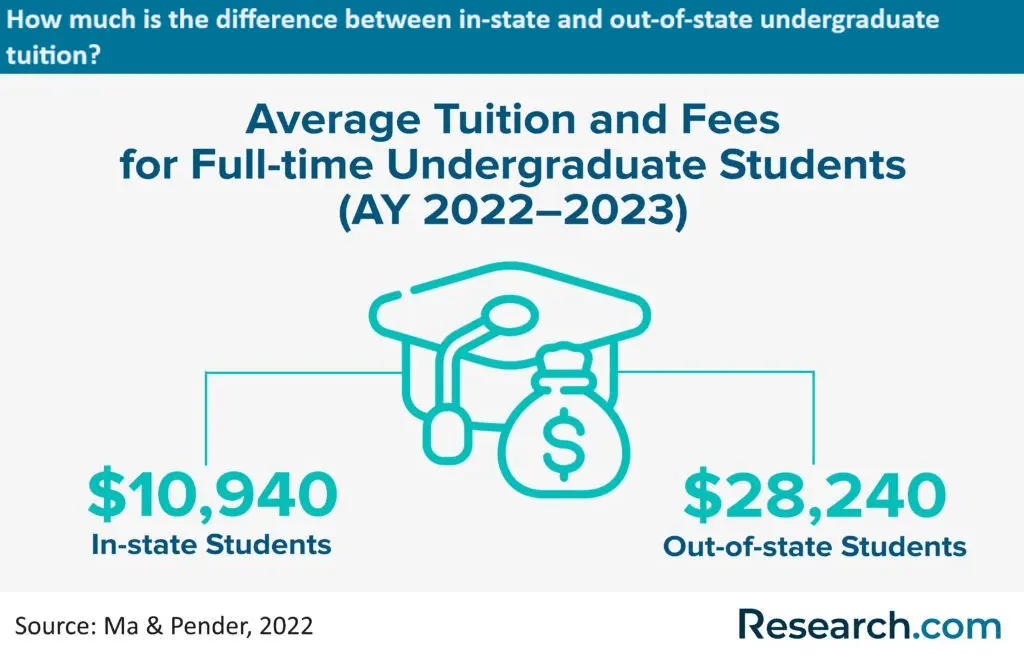
The cost of an online bachelor’s degree in software engineering depends on the school, tuition model, fees, transfer credits, residency status, and financial aid. Public colleges may be less expensive than private institutions, while out-of-state rates can increase costs for some programs. Part-time enrollment can also affect the total amount paid over time if fees repeat each term.
Financial aid can significantly change the final cost. Grants, scholarships, employer tuition benefits, military education benefits, and accepted transfer credits may lower out-of-pocket expenses.
The programs discussed in this guide show per-credit prices ranging from $320 to $720. Based on those figures, total tuition may range from $37,000 to $91,000. These are broad estimates, and actual costs may be lower or higher depending on the student and institution.
The image below illustrates average savings associated with in-state study compared with out-of-state enrollment.
What Are the Prerequisites for Enrolling in an Affordable Online Software Engineering Degree Program?
Admission requirements vary by institution, but software engineering and related computer programs usually expect students to meet standard undergraduate admissions criteria. This is also common across other computing pathways, including a management information systems or MIS major.
- High school diploma or GED: Bachelor’s programs generally require a high school diploma or equivalent credential.
- Math readiness: Students may need a foundation in algebra and, in some cases, trigonometry. Placement exams may be used to determine whether remedial or preparatory math is needed.
Some programs may also ask for or recommend additional preparation:
- Basic programming exposure: Beginner-friendly programs may teach coding from the start, but others may expect familiarity with concepts such as variables, functions, loops, data structures, algorithms, Python, or Java.
- Introductory computer science coursework: Transfer students may need prior courses in programming fundamentals, computer organization, or discrete mathematics.
- Bridge or preparatory courses: Some schools offer short online courses for students who need to strengthen programming or math skills before beginning the major sequence.
What Courses Are Typically Included in an Affordable Online Software Engineering Degree Program?
Curricula differ by school, but most online software engineering degrees combine computing theory with applied software development. A strong curriculum should help students understand not only how to write code, but also how to design software that can be tested, maintained, secured, and improved.
- Programming languages: Students commonly learn languages such as Python, Java, JavaScript, or other languages used in object-oriented, web, or systems development.
- Data structures and algorithms: These courses teach efficient ways to organize information and solve computing problems.
- Software design principles: Students study design patterns, maintainability, reusability, scalability, and structured approaches to building software.
- Front-end development: Coursework may include HTML, CSS, JavaScript, and frameworks used to build user interfaces for websites and web applications.
- Back-end development: Students learn server-side programming, application logic, database connections, and performance considerations.
- Full-stack development: Some programs combine front-end and back-end training so students can build complete applications.
- Software testing and quality assurance: Students learn to detect bugs, design tests, verify functionality, and improve software reliability.
- Version control systems: Tools such as Git help students manage code changes, collaborate with others, and maintain project history.
- Software development methodologies: Courses may cover Agile, Scrum, Kanban, iterative development, and team-based project management.
- Databases: Students learn database design, SQL, data storage, retrieval, and the role databases play in software systems.
- Computer architecture and operating systems: These courses explain how hardware, operating systems, memory, and software interact.
- Mathematics: Programs may include calculus, discrete mathematics, and linear algebra to strengthen analytical reasoning and algorithmic thinking.
Electives may allow students to focus on mobile development, cloud computing, cybersecurity, artificial intelligence, data science, game development, or other areas tied to specific career goals.
What Career Paths Are Available for Graduates of Affordable Online Software Engineering Programs?
Students asking what can you do with a computer science degree, software engineering degree, or IT degree should think in terms of skills and job functions. Software engineering graduates can pursue development, testing, data, infrastructure, security, and systems roles, depending on their coursework and portfolio.
| Career Path | What the Role Often Involves |
| Software Developer | Writing, testing, improving, and maintaining code for applications and systems |
| Web Developer | Building websites and web applications, often with front-end, back-end, or full-stack responsibilities |
| Mobile App Developer | Creating applications for smartphones and tablets |
| Backend Developer | Developing server-side logic, APIs, databases, security functions, and scalable application services |
| Frontend Developer | Designing and implementing user interfaces and user experiences for web or mobile products |
| DevOps Engineer | Supporting deployment, automation, monitoring, infrastructure, and collaboration between development and operations teams |
| Software Tester | Finding defects, documenting issues, validating software behavior, and supporting quality assurance |
| Data Scientist | Using programming and analytical methods to extract insights from large datasets |
| Security Engineer | Designing and protecting software systems against vulnerabilities and attacks |
| Systems Engineer | Designing, implementing, and managing complex computing systems and networks |
Software engineers may also move into specialized sub-roles. According to Hired, Natural Language Processing engineers were the most in-demand software engineer sub-role by salary, with average annual salary growing 10% to $175,000 in 2022. Blockchain engineers followed at an average of $173,000 annually, and security engineers at $172,000.
Students who want to combine software development with analytics may consider cheap MS in data science courses in USA schools after completing a bachelor’s degree. Pairing programming with data science can support roles that require both software development and analytical modeling skills.
Graduates interested in management, product leadership, consulting, or executive technology roles may later pursue graduate study, including an MBA Information Technology. Those who want to continue into doctoral-level business education may compare cheapest DBA online programs as a longer-term leadership pathway.
How Do You Choose the Best Affordable Online Software Engineering Degree Program?
The best affordable program is not automatically the cheapest. It is the program that provides a recognized credential, relevant software engineering coursework, enough project experience, strong support, and a total cost you can manage.
1. Start With Your Career Target
Identify whether you want to become a software developer, web developer, mobile developer, DevOps engineer, QA analyst, security-focused developer, or data-oriented technologist. Then review whether each program’s courses and electives match that goal.
2. Check Accreditation Before Comparing Price
Verify institutional accreditation and, when relevant, programmatic accreditation such as ABET. Accreditation can affect credit transfer, financial aid eligibility, graduate school options, and employer confidence.
3. Compare Total Cost, Not Just Tuition
Look at tuition, mandatory fees, course materials, software or hardware requirements, proctoring fees, graduation fees, and how transfer credits affect remaining credits. A lower per-credit rate may not produce the lowest total cost if the program accepts fewer prior credits.
4. Review the Curriculum for Hands-On Software Work
Prioritize programs with programming labs, testing, version control, database projects, Agile teamwork, cloud or deployment experience, and a capstone. A degree without meaningful projects may leave you underprepared for technical interviews.
5. Evaluate Online Student Support
Ask about tutoring, academic advising, technical support hours, career services, instructor availability, online library access, and support for internships or remote projects.
6. Use Rankings Carefully
Rankings can help create a shortlist, but they should not make the decision for you. Review university websites, tuition calculators, course catalogs, transfer policies, student support details, and outcomes data before enrolling.
| Question to Ask | Why It Matters |
| Is the school accredited? | Accreditation affects credibility, financial aid, transferability, and graduate study options. |
| How many credits will I need after transfer evaluation? | Accepted credits can reduce time and cost substantially. |
| Does the program include a capstone or portfolio-ready projects? | Employers often want evidence of practical coding ability. |
| Are classes asynchronous, synchronous, or mixed? | The format determines whether the program fits your schedule. |
| What career support is available to online students? | Resume reviews, mock interviews, and employer connections can help during the job search. |
| What technologies are taught? | Programming languages, frameworks, testing tools, databases, and cloud exposure should align with your goals. |
What Is the Job Market for Software Engineering Graduates?
The labor market for software engineering graduates is strong in several areas, but not every computer occupation is growing at the same rate. Students should review occupation-specific data instead of assuming every programming-related job has identical demand. For a broader discussion, see this software engineer outlook.
- The U.S. Bureau of Labor Statistics projects overall employment of software developers, quality assurance analysts, and testers to grow 25% from 2022 to 2032, with about 153,000 projected job openings each year over that period.
- Employment of computer programmers is projected to decline by 11% from 2022 to 2032, although about 6,700 openings are still expected each year during the period.
- Employment for database administrators and architects is projected to grow 8% from 2022 to 2032, with about 10,200 openings expected each year.
| Occupation | Projected Job Growth (2022-2032) | Projected Annual Job Openings (2022-2032) | Median Annual Salary |
| Software developers, quality assurance analysts, and testers | 25% | 153,000 | $124,200 |
| Computer programmers | -11% | 6,700 | $97,800 |
| Database administrators and architects | 8% | 10,200 | $112,120 |
| Network and Computer Systems Administrators | 2% | 19,800 | $90,520 |
| Web Developers and Digital Designers | 16% | 19,000 | $80,730 |
| Computer Network Architects | 4% | 10,200 | $126,900 |
| Computer Systems Analysts | 10% | 37,600 | $102,240 |
Strategies for Building a Competitive Portfolio in Online Software Engineering Programs
A portfolio matters because it shows employers what you can build. For online students, a strong portfolio can also demonstrate independence, collaboration, documentation skills, and the ability to complete real software projects outside a traditional classroom.
- Build personal projects: Create applications that solve practical problems, such as a budgeting tool, scheduling app, portfolio website, API-backed dashboard, mobile app, or small game. Employers should be able to understand what the project does and what technical choices you made.
- Contribute to open source: Open-source work shows that you can read existing code, follow contribution guidelines, communicate with maintainers, and collaborate in a shared codebase.
- Use capstone and internship work strategically: If your program includes an internship or capstone, treat it as a professional sample. Document the problem, tools used, your role, constraints, and final outcome.
- Add focused certifications or short courses when useful: Additional study in cloud computing, cybersecurity, data structures, or specific development tools can strengthen a portfolio when it fills a clear skill gap.
- Show collaboration and UX thinking: Team projects, UI/UX improvements, documentation, issue tracking, and user-centered design can make a technical portfolio more credible.
Students comparing cost-conscious engineering options can also review engineering degrees online to understand how software engineering fits within broader engineering-related online study.
What Are the Financial Aid Options for Students Enrolling in an Affordable Online Software Engineering Program?
Online students may qualify for several forms of aid, depending on the institution, enrollment status, citizenship or residency rules, military status, employer benefits, and financial need.
- Federal financial aid: Eligible undergraduate students may qualify for Federal Pell Grants, Federal Direct Subsidized Loans, and Federal Direct Unsubsidized Loans. Subsidized loans are tied to financial need, while unsubsidized loans are not need-based and may have different interest implications.
- State grants: Some states offer grant programs that may apply to online learners, depending on residency and school eligibility.
- Scholarships: Scholarships may come from universities, private foundations, professional associations, technology companies, or community organizations.
- Employer assistance: Some employers reimburse tuition or provide education benefits when the degree relates to the employee’s work or advancement path.
- Military tuition assistance: Active duty service members, veterans, and eligible family members may be able to use GI Bill benefits or other military education programs.
What Types of Specializations Are Available in Affordable Online Software Engineering Programs?
Specializations help students align a general software engineering degree with a specific career direction. Not every program offers every concentration, so review electives and project requirements carefully.
| Specialization Area | Common Focus Options | Good Fit For |
| Web Development | Front-End Development, Back-End Development, Full-Stack Development | Students who want to build websites, web apps, APIs, and user-facing platforms |
| Mobile Development | Android Development, iOS Development, Cross-Platform Development | Students interested in smartphone and tablet applications |
| Emerging Technologies | Cloud Computing, Data Science, Artificial Intelligence (AI) and Machine Learning (ML) | Students who want to work with scalable infrastructure, analytics, automation, or intelligent systems |
| Security Engineering | Cybersecurity, Application Security | Students interested in secure coding, vulnerability prevention, and software protection |
Can an Accelerated Computer Science Path Elevate Your Software Engineering Career?
An accelerated path can help motivated students move through foundational computing and software coursework more quickly, but it is not the right fit for everyone. These programs often require heavy weekly commitment, strong organization, and comfort with fast-paced technical learning. A computer science fast track degree may be useful for students who already have some preparation, want to change careers quickly, or can dedicate substantial time to hands-on projects and technical practice.
What Soft Skills Are Essential for Success in Software Engineering?
Technical knowledge gets candidates considered, but soft skills often determine whether they succeed on real development teams. Software engineers rarely work in isolation; they discuss requirements, review code, explain trade-offs, estimate effort, and respond to changing priorities.
- Problem-solving: Engineers need to break complex issues into smaller parts, identify root causes, and test possible solutions.
- Communication: Clear writing and speaking help developers explain technical decisions to teammates, managers, clients, and nontechnical stakeholders.
- Adaptability: Tools, frameworks, languages, and workflows change quickly, so continuous learning is part of the job.
- Time management: Developers must balance coding, debugging, meetings, documentation, and deadlines without losing track of project priorities.
Can Online Software Engineering Degrees Prepare Students for Careers in Game Development?
An online software engineering degree can support a path into game development when students choose the right electives and projects. Game-related preparation may include interactive design, simulation programming, graphics, physics, mobile development, and real-time systems. Students who want a dedicated game curriculum may compare the best online game development degree programs with broader software engineering options before deciding.
How Do Affordable Online Software Engineering Programs Prepare Students for Remote and Global Collaboration?
Online software engineering programs can mirror parts of modern remote software work. Students may use shared repositories, project boards, video meetings, chat tools, peer review, and collaborative documentation. These activities help learners practice asynchronous communication, cross-time-zone teamwork, and structured project management.
Some programs also expose students to interdisciplinary or emerging technology content, including areas connected to AI degree programs. That combination can help graduates prepare for distributed teams working across software, data, automation, and product development.
What Challenges Might Learners Face in Affordable Online Software Engineering Programs?
Online software engineering programs can be flexible, but they are not easy. Students often struggle when they underestimate the time required for coding assignments, debugging, group work, and math-heavy courses. Limited in-person interaction can also make it harder to build study habits and peer networks.
- Self-discipline: Without a campus routine, students must create their own study schedule and stick to it.
- Technical frustration: Coding errors, environment setup problems, and debugging can take longer than expected.
- Isolation: Online learners may need to actively join study groups, discussion boards, and virtual office hours.
- Work-school balance: Students with jobs or caregiving duties should avoid overloading their first term.
Students interested in flexible technical study in interdisciplinary fields may also look at affordable bioinformatics master's programs online, especially if they want to connect computing with life sciences.
What Is the Return on Investment for an Affordable Online Software Engineering Degree?
Return on investment depends on total program cost, time to graduation, debt, aid received, prior credits accepted, job market conditions, and the graduate’s ability to demonstrate job-ready skills. A lower-cost degree may have strong ROI if it leads to relevant experience and employment without excessive borrowing. A more expensive program may still be worthwhile if it offers stronger career support, better transfer policies, stronger projects, or valuable accreditation.
Students should compare expected costs with the salary and job outlook data in this guide, but they should not treat salary figures as guarantees. Career outcomes depend on portfolio quality, internships, location, interviewing ability, technical specialization, and employer demand. Students who want to add emerging technology skills may later consider an accelerated artificial intelligence degree online or other targeted credentials.
Emerging Trends in Software Engineering and Their Impact on Career Opportunities
Software engineering changes quickly. Students choosing a degree should look for programs that teach durable foundations while also exposing learners to current tools and development practices.
1. Artificial Intelligence and Machine Learning Integration
AI and machine learning are influencing how applications are designed, tested, analyzed, and personalized. Software engineers with programming, data, and model-integration skills may find opportunities in AI-enabled products and data-intensive systems. Students interested in this direction may pair software engineering with data analytics degrees or related analytics coursework.
2. Blockchain Technology
Blockchain is used beyond cryptocurrency in areas such as finance, healthcare, identity systems, and supply chains. Software engineers working in this area often need knowledge of distributed systems, cryptography, security, and transaction-based application design.
3. Cloud Computing and DevOps
Many software systems now run on cloud infrastructure. DevOps practices, continuous integration, continuous deployment, monitoring, automation, and collaboration between development and operations teams are central to modern software delivery. Experience with platforms such as AWS, Azure, or Google Cloud can strengthen a graduate’s technical profile.
Internships, Capstone Projects, and Real-World Experience in Online Software Engineering Programs
Hands-on experience helps students turn coursework into employable skills. Online programs may not provide a traditional campus lab environment, but strong programs still create opportunities for applied learning through internships, capstones, simulations, hackathons, and team projects.
- Internships: Some programs maintain employer partnerships or help students locate internships. Remote internships can be especially useful for online learners who cannot relocate.
- Capstone projects: Capstones require students to build a software product or solve a real problem using skills developed throughout the program. Similar project-based expectations may appear in advanced programs such as the cheapest online masters in artificial intelligence.
- Simulated professional work: Hackathons, client-style assignments, team sprints, and external collaborations can help students practice deadlines, communication, documentation, and problem-solving under realistic constraints.
What Advanced Educational Pathways Can Further Boost Career Prospects in Software Engineering?
A bachelor’s degree can prepare students for entry-level software roles, but advanced study may support specialization, research, leadership, or a transition into adjacent fields. Graduate programs may cover software architecture, AI, data analytics, cybersecurity, project management, or technology strategy. Professionals comparing efficient graduate options can review easy master's degrees that pay well while still checking rigor, accreditation, and relevance to their target role.
How Can Software Engineering Skills Open Doors to Interdisciplinary Career Opportunities?
Software engineering skills are increasingly useful in fields that are not labeled “tech.” Healthcare, biotechnology, finance, manufacturing, education, public policy, and environmental science all depend on software systems, analytics tools, automation, and secure digital infrastructure.
For example, software development combined with life science knowledge can support work in bioinformatics, digital health, laboratory automation, and health data systems. Students interested in applying computing skills beyond traditional software companies may explore careers in biotechnology and consider certifications or electives that connect software engineering with another field.
What Career Support Services Are Available in Affordable Online Software Engineering Programs?
Career support can make a major difference, especially for online learners who may not have easy access to campus recruiting. Before enrolling, ask whether online students receive the same services as campus students.
- One-on-one career advising
- Resume and LinkedIn profile reviews
- Portfolio and GitHub feedback
- Mock technical and behavioral interviews
- Employer information sessions and virtual career fairs
- Internship search support
- Alumni mentoring and networking opportunities
- Guidance on personal branding and job search strategy
Students who want a broader program comparison can review this guide to an online software engineering degree and use it alongside school websites, accreditation records, transfer evaluations, and financial aid estimates.
Common Mistakes to Avoid When Choosing an Online Software Engineering Degree
| Mistake | Better Approach |
| Choosing the lowest tuition without checking accreditation | Confirm institutional accreditation first, then compare total cost and curriculum quality. |
| Assuming all online programs teach the same skills | Review course descriptions for programming, algorithms, databases, testing, software design, and project work. |
| Ignoring transfer credit policies | Request an official transfer evaluation before estimating cost or graduation date. |
| Overlooking portfolio development | Choose a program with capstones, labs, team projects, or internship support. |
| Relying only on rankings | Use rankings as a starting point, then verify fit, cost, support, and outcomes yourself. |
| Assuming salary outcomes are guaranteed | Treat salary data as a benchmark, not a promise. Build skills, projects, and interview readiness. |
Key Insights
- An affordable online software engineering degree can be a strong option when it is accredited, project-based, and aligned with your target role.
- The cheapest program is not always the best value. Total cost, accepted transfer credits, career support, curriculum quality, and portfolio opportunities matter.
- Most students should look for coursework in programming, algorithms, databases, software design, testing, version control, Agile methods, and a capstone project.
- Online study is best for self-directed learners who can manage deadlines, troubleshoot technical problems, and stay engaged without daily campus structure.
- Software engineering graduates can work in technology, finance, healthcare, retail, education, manufacturing, and other industries that depend on digital systems.
- Career outcomes vary. Use salary and job outlook data to understand the market, but build a portfolio, pursue internships, and practice interviews to improve competitiveness.
- Before enrolling, ask about accreditation, total cost, transfer credits, online student support, hands-on projects, internship access, and whether career services are available to distance learners.
References:
- United States Bureau of Labor Statistics. (2023, April 25). May 2022 National Occupational Employment and Wage Estimates. BLS.
- United States Bureau of Labor Statistics. (2023, September 6). Occupational Outlook Handbook: Software Developers, Quality Assurance Analysts, and Testers. BLS.
- United States Bureau of Labor Statistics. (2023, September 6). Occupational Outlook Handbook: Computer Programmers. BLS.
- United States Bureau of Labor Statistics. (2023, September 6). Occupational Outlook Handbook: Database Administrators and Architects. BLS.
- United States Bureau of Labor Statistics. (2023, September 6). Occupational Outlook Handbook: Computer and Information Technology Occupations. BLS.
- Hired. (2023). Big Transitions in the Tech Industry: Hired’s 2023 State of Software Engineers. Hired.
Other Things You Should Know About Affordable Online Software Engineering Degrees
When choosing the most affordable online software engineering degree in 2027, consider factors like tuition fees, availability of financial aid or scholarships, program accreditation, course offerings, and flexibility of class schedules. It's also important to evaluate the school's reputation and job placement rate upon graduation.
In 2027, admission requirements for the most affordable online software engineering degrees typically include a high school diploma or GED, transcripts, and standardized test scores like the SAT or ACT. Some programs may require a personal statement or letters of recommendation, emphasizing a strong foundational knowledge in mathematics and science.
Yes. Many affordable online software engineering degrees require a capstone in the final term, usually worth 3 to 6 credit hours. Students complete a software design, testing, or deployment project and often present documented code, a report, and demo results before graduation.