
2027 What Can You Do with a Data Analytics Degree? Costs & Job Opportunities

Co-Founder and Chief Data Scientist
Choosing a data analytics degree is not just a question of picking a school with “data” in the program title. The better question is whether the program will help you build the technical, statistical, business, and communication skills employers actually expect. That matters because organizations in finance, healthcare, manufacturing, insurance, professional services, sports, media, and government increasingly rely on analysts who can turn messy information into usable decisions.
The field is also expanding quickly. The data analytics market is projected to grow from $69.54 billion in 2024 to $302.01 billion in 2030, making program choice especially important for students who want a degree that can remain useful as tools, employer expectations, and AI-assisted analytics continue to change.
This guide explains what to expect from a data analytics degree, how long programs take, what they cost, how online and campus formats compare, which courses and specializations are common, and what career paths may be available after graduation. It also includes a ranked program list, decision checklists, common mistakes to avoid, and practical questions to ask before enrolling.
Quick answer: Is a data analytics degree worth considering?
A data analytics degree can be a strong option if you want a career that combines statistics, programming, business problem-solving, and communication. Graduates may qualify for roles such as data analyst, business intelligence analyst, financial analyst, economist, or data scientist, depending on the degree level, coursework, portfolio, and work experience.
The degree is most useful when the curriculum includes statistics, SQL, Python or R, data visualization, database management, machine learning fundamentals, and applied projects. It is less useful if the program is mostly theoretical, lacks hands-on datasets, or does not help students build a portfolio that demonstrates practical skills.
What are the benefits of getting a degree in data analytics?
- A data analytics degree can support employment in industries that rely heavily on data, including finance and insurance, manufacturing, healthcare, and professional services.
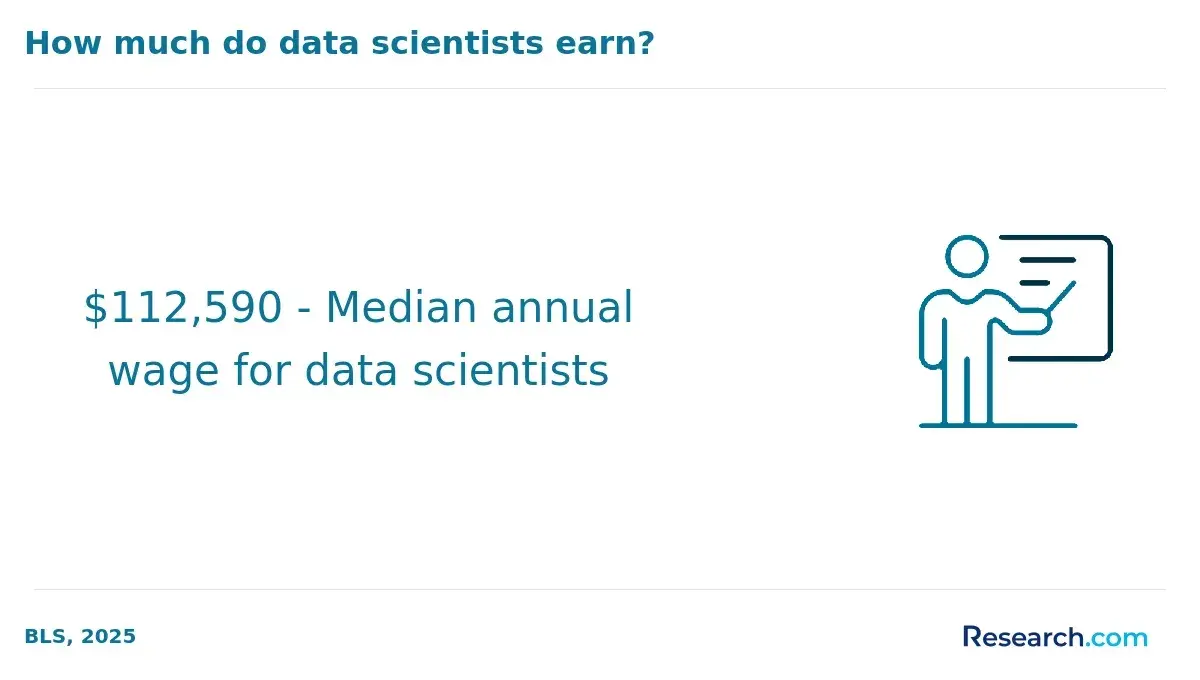
- The median annual wage for data scientists is $112,590.
- Online data analytics programs can connect students with instructors, classmates, and project teams beyond their local area.
What can I expect from a data analytics degree?
A data analytics degree teaches students how to collect, clean, analyze, interpret, visualize, and communicate data. Strong programs combine mathematics, statistics, programming, databases, business context, and ethics. The goal is not only to run software tools but also to explain what the results mean and how decision-makers should use them.
- Graduates can apply data skills in many fields, including manufacturing, media, education, finance, healthcare, and technology.
- A bachelor’s degree in data analytics typically takes four years to complete.
- At public institutions, undergraduate data analytics programs cost between $8,434 and $13,968 annually for resident students and between $13,666 and $16,238 annually for non-residents.
- Typical coursework covers mathematics, statistics, programming languages, databases, data visualization, machine learning, and analytical methods.
- Students are also expected to strengthen critical thinking, problem-solving, written and oral communication, and attention to detail.
Who is a data analytics degree best for?
This degree is a good fit for students who enjoy working with numbers, patterns, software tools, and real-world business or organizational problems. It can also suit career changers who want a structured path into analytics instead of relying only on short courses or self-study.
| Student goal | Why data analytics may fit | What to check before enrolling |
| Start an analytics career | The degree can build core skills in statistics, SQL, programming, and visualization. | Look for portfolio projects, internships, and career services tied to analytics roles. |
| Move from business into technical work | Analytics connects business decisions with data tools and reporting. | Confirm that the curriculum goes beyond dashboards and includes databases and coding. |
| Prepare for data science later | Many programs introduce machine learning, probability, and programming foundations. | Check whether the program has enough math, Python or R, and advanced statistics. |
| Work in a specific industry | Specializations can connect analytics with finance, healthcare, business, or big data. | Review electives, capstones, and faculty experience in your target industry. |
Where can I work with a data analytics degree?
A data analytics degree can lead to roles in organizations that need to make evidence-based decisions. Common paths include data scientist, financial analyst, economist, data analyst, business intelligence analyst, reporting analyst, and operations analyst.
Because large datasets are now used across nearly every sector, graduates may find opportunities in settings such as:
- Finance
- Insurance
- Manufacturing
- Healthcare
- Professional services
- Research and development
- Social media
- Sports
- Entertainment
How much can I make with a data analytics degree?
Data analytics salaries vary by role, degree level, industry, location, experience, and technical depth. The strongest outcomes usually go to candidates who can combine analytical reasoning with SQL, programming, visualization, domain knowledge, and clear communication.
- Data analysts can earn an annual income of $76,230.
- The median annual wage for economists was $113,940.
- Data scientists earned $103,500.
- Financial analysts earned $96,220.
| Role | Reported annual wage | How a data analytics degree supports the role |
| Data analyst | $76,230 | Builds skills in SQL, reporting, data cleaning, visualization, and business interpretation. |
| Economist | $113,940 | Supports quantitative analysis, statistical reasoning, and interpretation of economic patterns. |
| Data scientist | $103,500 | Provides a foundation in programming, statistics, modeling, and large-scale data work. |
| Financial analyst | $96,220 | Connects data analysis with forecasting, performance measurement, and financial decision support. |
- Best data analytics programs for 2027
- How long does it take to complete a data analytics program?
- How does an online data analytics program compare to an on-campus program?
- What is the average cost of a data analytics program?
- What financial aid options are available for data analytics students?
- What are the prerequisites for enrolling in a data analytics program?
- What courses are typically in a data analytics program?
- What specializations are available in data analytics programs?
- How should I choose the best data analytics program?
- Should I pursue an MBA to complement my data analytics skills?
- What are employers looking for in data analytics graduates?
- How can an accelerated computer science program complement a data analytics degree?
- Can complementary certifications expand my career opportunities in data analytics?
- How are data privacy and ethics addressed in data analytics programs?
- Can integrating artificial intelligence elevate a data analytics career?
- How can interdisciplinary programs complement a data analytics degree?
- How can I integrate data analytics with healthcare informatics?
- What career paths are available for data analytics graduates?
- What is the job market for graduates of a data analytics program?
- How important are programming skills in a data analytics degree?
- What are the differences between data analytics and data science programs?
- How does a data analytics degree prepare students for emerging fields?
Best Data Analytics Programs for 2027
How do we rank schools?
To identify data analytics programs, I reviewed information from the IPEDS database, Peterson’s database, the College Scorecard database, and the National Center for Education Statistics (NCES). Because a degree is a major financial decision, our ranking process follows a transparent Research.com methodology and emphasizes available, comparable program information.
1. Bentley University BS in Data Analytics
Bentley University offers a hybrid BS in Data Analytics that blends mathematics, statistics, and computing. The program includes applied training in Python, R, and SQL.
Students complete coursework in calculus, statistics, and data mining, while electives in mathematics and business allow them to connect analytics with areas that match their career goals.
- Program Length: 4 years
- Estimated Cost: $58,150
- Required Credits to Graduate: 122
- Accreditation: New England Commission on Higher Education (NECHE)
2. Bryan College-Dayton BS in Data Analytics
Bryan College-Dayton provides an on-campus BS in Data Analytics with a focus on mathematics, programming, and research. The curriculum combines computer science and statistics while giving students room to use electives in areas such as psychology, finance, or business.
- Program Length: 4 years
- Cost per Credit: $395
- Required Credits to Graduate: 120
- Accreditation: Southern Association of Colleges and Schools Commission on Colleges (SACSCC)
3. CUNY New York City College of Technology BS in Data Analytics/Economics
The New York City College of Technology offers a dual data analytics and economics program designed to prepare students for entry-level work in fields such as healthcare, finance, and public policy. Students complete either a research project or a semester-long internship as part of the traditional degree structure.
- Program Length: 4 years
- Cost per Credit: $305 (resident); $620 (non-resident)
- Required Credits to Graduate: 120
- Accreditation: Middle States Commission on Higher Education
4. Drake University BS in Data Analytics
Drake University offers an online + in-person BS in Data Analytics in partnership with the Zimpleman College of Business. Students may pursue data analytics as a major within the Bachelor of Science in Business Administration, applying analytics to finance, marketing, or other business areas. Drake also offers a data analytics major through the College of Arts and Sciences, where the curriculum is grounded in computer science and statistics.
- Program Length: 4 years
- Cost Per Semester: $24,733
- Required Credits to Graduate: 120
- Accreditation: Higher Learning Commission (HLC)
5. Lynn University BS in Data Analytics
Lynn University offers a traditional BS in Data Analytics that combines information technology, mathematics, and business. The program emphasizes data mining, programming, and visualization for students preparing for roles in the IT sector.
- Program Length: 4 years
- Tuition: $41,200/year
- Required Credits to Graduate: 120
- Accreditation: SACSCC
6. University of Illinois at Urbana-Champaign Master of Computer Science in Data Science
The University of Illinois at Urbana-Champaign offers a 100% online master’s program in data science. Students study areas such as machine learning, cloud computing, statistics, and information science.
- Program Length: No information available
- Cost Per Credit: $686
- Required Credits: 32
- Accreditation: HLC
7. University of Wisconsin MS in Data Science
The University of Wisconsin offers a hybrid MS in Data Science through a joint program between the Statistics and Computer Sciences Department. Coursework includes statistical theory and methods, computer systems, algorithms, machine learning, and electives.
- Program Length: No information available
- Cost Per Credit: $1,600
- Required Credits:30
- Accreditation: HLC
8. Johns Hopkins Engineering for Professionals MS in Data Science
Johns Hopkins University offers a master’s program in data science through Engineering for Professionals. The program has no GRE requirement and includes coursework in computer science and applied mathematics. Students may pursue either a master’s degree or a post-master’s certificate.
- Program Length: No information available
- Cost Per Credit: $2,013
- Required Credits: 30
- Accreditation: Middle States Commission on Higher Education
9. Colorado State University PhD in Systems Engineering
Colorado State University offers an online PhD in Systems Engineering for students interested in complex, multidisciplinary problem-solving. The program draws from fields such as control systems, operations research, software engineering, networking, and security.
- Program Length: Varies based on intensity of study and previous coursework
- Cost Per Credit: $1,152
- Required Credits: 72
- Accreditation: HLC
10. University of Virginia PhD in Data Science
The University of Virginia offers a PhD in Data Science for students preparing for advanced research and specialist roles. The program emphasizes applied training and the discovery of knowledge from complex data.
- Program Length: 5-6 years
- Tuition: starts at $15,786
- Required Credits: No information available
- Accreditation: SACSCC
What graduates say about studying data analytics online
- Raul: "An online data analytics program gave me the flexibility to keep working while building practical skills. The projects and case studies helped me move from theory to real workplace problems, and the schedule made it possible to balance classes with professional responsibilities. That experience gave me the confidence to analyze raw data and turn it into useful recommendations in my current analyst role."
- Mei: "The program combined analytics theory with applied work in a way that felt relevant to my job goals. Virtual group projects exposed me to classmates with different professional backgrounds, which reflected the collaboration I now use in data science work. Webinars and online networking sessions also helped me begin building industry connections before graduation."
- Aisha: "Earning the degree online required discipline, but it also made the transition into a data engineering role more realistic for me. The curriculum focused on real applications, and the instructors provided steady guidance while we worked with current tools. Remote learning fit my work schedule and helped me become more adaptable in a changing data environment."
Key Findings
Data analytics degrees can vary widely. Some are business-oriented, some are heavily technical, and others sit between computer science, statistics, economics, and applied decision-making. The best choice depends on your target role, preferred learning format, budget, and whether you need undergraduate preparation, graduate specialization, or doctoral-level research training.
How long does it take to complete a data analytics program?
An associate degree in data analytics usually takes two years and may serve as an entry point into a bachelor’s program in data analytics, computer science, or a related field. A bachelor’s degree typically takes four years and provides broader general education plus deeper technical coursework.
Graduate study is usually designed for students seeking advanced technical, analytical, research, or leadership roles. A master’s degree and/or doctoral degree in data analytics may take four to five years, depending on the program structure, enrollment status, research requirements, and prior coursework.
Data analytics sits at the intersection of business, information technology, statistics, and engineering. Among the 2.1 million bachelor’s programs conferred in the US, business and engineering remained among the most common degrees granted, which helps explain why many analytics programs draw from both fields.
| Degree level | Typical time frame stated | Best for |
| Associate degree | Two years | Students seeking an entry point or transfer path into a bachelor’s degree. |
| Bachelor’s degree | Four years | Students preparing for entry-level analyst, reporting, business intelligence, or related roles. |
| Master’s or doctoral degree | Four to five years | Professionals seeking advanced analytics, research, leadership, or specialized technical roles. |
How does an online data analytics program compare to an on-campus program?
Online data analytics programs are often built for students who need flexibility. They may be especially useful for working professionals, parents, military students, or learners who cannot relocate. Online courses commonly use learning platforms, virtual labs, recorded lectures, discussion boards, and remote collaboration tools.
On-campus programs provide more face-to-face interaction, immediate classroom discussion, and easier access to campus facilities such as labs, libraries, tutoring centers, and in-person networking events. Some students also prefer the structure of scheduled class meetings.
The core curriculum can be similar in both formats. The main differences are delivery, schedule, interaction style, and access to physical resources. The better choice depends on your learning habits, work schedule, need for flexibility, and whether the program offers strong project support in your chosen format.
| Factor | Online data analytics program | On-campus data analytics program |
| Schedule | Often better for students balancing work, family, or location limits. | Usually follows a more fixed academic schedule. |
| Interaction | Uses virtual meetings, discussion boards, and online collaboration tools. | Offers in-person discussion, office hours, and campus networking. |
| Resources | May provide digital libraries, software access, and remote support. | May include physical labs, libraries, tutoring offices, and campus events. |
| Best fit | Self-directed students who can manage time independently. | Students who benefit from structure and face-to-face accountability. |
What is the average cost of a data analytics program?
Costs depend on degree level, school type, residency status, format, fees, and transfer credits. Tuition is only one part of the total price; students should also account for technology fees, books, software, travel, housing, and the opportunity cost of reducing work hours.
Private institutions offering online associate degrees in data analytics charge an estimated $9,600 to $14,820 per year. On-campus associate options at private universities cost about $11,970 per year. Public universities are lower in the available estimates, at about $6,840 to $8,550 per year.
For bachelor’s programs, private institutions offer online options for about $9,637 to $15,454.8 per year and on-campus options for an estimated $16,500 to $54,980 per year. Public universities offer in-person bachelor’s options between $8,434 and $13,968 per year for in-state students and between $13,666 and $16,238 per year for out-of-state students.
For master’s and doctorate degrees, private universities offer online and on-campus programs at an estimated $62,556 for the entire program. Public institutions charge an estimated $32,060 to $36,000 for the entire program for in-state students and an estimated $32,060 to $39,000 for the entire program for out-of-state students.
| Program level and institution type | Estimated cost stated |
| Online associate degree at private institutions | $9,600 to $14,820 per year |
| On-campus associate degree at private universities | About $11,970 per year |
| Associate degree at public universities | About $6,840 to $8,550 per year |
| Online bachelor’s degree at private institutions | About $9,637 to $15,454.8 per year |
| On-campus bachelor’s degree at private institutions | Estimated $16,500 to $54,980 per year |
| On-campus bachelor’s degree at public universities, in-state | $8,434 to $13,968 per year |
| On-campus bachelor’s degree at public universities, out-of-state | $13,666 to $16,238 per year |
| Master’s and doctorate degrees at private universities | Estimated $62,556 for the entire program |
| Master’s and doctorate degrees at public institutions, in-state | Estimated $32,060 to $36,000 for the entire program |
| Master’s and doctorate degrees at public institutions, out-of-state | Estimated $32,060 to $39,000 for the entire program |
What are the financial aid options for students enrolling in a data analytics program?
Students should start with institutional aid, federal aid eligibility, employer tuition support, state grants, and scholarships for STEM, statistics, data science, and underrepresented groups. Program-specific aid may be limited, so it is worth applying broadly and comparing net cost instead of sticker price.
- Acxiom Diversity Scholarship. This award supports bachelor’s and graduate students studying data science. It prioritizes students from underrepresented groups and selects up to 10 candidates.
- Milliman Opportunity Scholarship Fund. This scholarship supports current or future bachelor’s students in data science, actuarial science, and statistics. It is administered by Scholarship America and awards 15 to 25 scholarships every year.
- AIGC Science Post-Graduate Scholarship. This scholarship funds training opportunities in science and mathematics fields. Award amounts range from $1,200-$10,000.
- ASA Pride Scholarship. Offered by the American Statistical Association (ASA), this scholarship supports LGBTQIA+ data scientists, statisticians, and allies. Applicants must be enrolled in a graduate program in data science or statistics or have earned their degree within five years of the award date.
What are the prerequisites for enrolling in a data analytics program?
Admission requirements vary by school and degree level, but most undergraduate programs expect proof of prior education, academic records, and sometimes standardized test scores or supplemental materials. Graduate programs may also review previous quantitative coursework, professional experience, recommendation letters, essays, and prerequisite programming or statistics knowledge.
Admission Requirements
- Proof of Graduation. Undergraduate applicants usually need to show that they completed high school or an equivalent credential, such as a high school diploma, GED transcript, or certificate of completion.
- Transcripts. Transcripts help admissions teams evaluate academic preparation, course history, and overall performance.
- SAT or ACT score. Some institutions may request standardized test scores. The minimum required SAT score for admission is between 1160 and 2300, while the minimum ACT score is 25.
- Other requirements. Essays, recommendation letters, resumes, or personal statements may be required by some schools. These materials can help admissions officers evaluate motivation, communication ability, and fit for the program.
Skill Requirements
- Presentation Skills. Analysts must explain findings clearly to people who may not have technical backgrounds. Strong data presentation skills can help organizations make better decisions about resources, operations, products, and services.
- Rational-thinking Skills. Data analytics requires logical reasoning, evidence-based conclusions, and the ability to separate relevant information from noise.
- Computer Literacy. Students do not need to be expert programmers before beginning every program, but they should be comfortable learning software, working with files, using spreadsheets, and adapting to technical tools.
What courses are typically in a data analytics program?
Data analytics curricula vary, but most reputable programs include technical, mathematical, and applied courses. The strongest programs also require projects where students work with real or realistic datasets and explain results to an audience.
- Introduction to Data Analytics. This course introduces the major concepts, methods, and tools used to analyze data. Students learn how analytics supports decisions and problem-solving across industries.
- Statistics and Probability. This course covers core statistical ideas used to interpret data, including probability distributions, hypothesis testing, regression analysis, and uncertainty.
- Programming for Data Analysis. Students learn programming languages such as Python or R and apply them to data cleaning, analysis, automation, and visualization.
- Database Management and SQL. This course introduces database concepts and Structured Query Language (SQL). Students learn to retrieve, modify, organize, and analyze data stored in databases.
What types of specializations are available in data analytics programs?
Specializations help students connect analytics skills with specific industries or technical areas. Common options include business analytics, healthcare analytics, big data analytics, and financial analytics. These concentrations can make a program more relevant if you already know the type of work environment you want after graduation. Students comparing data analytics with other information technology degrees should review whether the curriculum leans more toward business decisions, programming, systems, or statistical modeling.
- Business Analytics. This specialization focuses on using data to support business strategy, performance measurement, forecasting, and operational decisions.
- Healthcare Analytics. This path applies analytics to medical, clinical, and administrative data. Students may study healthcare data management, predictive analytics, and data-supported approaches to patient care and operations.
- Big Data Analytics. This specialization focuses on working with large, complex datasets and the technologies used to process, store, and interpret them.
- Financial Analytics. This concentration applies analytics to finance, investment, risk management, forecasting, algorithmic trading, and economic trends.
How to choose the best data analytics program?
The best data analytics program is the one that matches your career target, budget, schedule, learning style, and current skill level. Because any college degree type requires time and money, compare programs carefully before committing.
- Accreditation and Reputation. Choose an accredited institution and review whether employers, alumni, and graduate schools recognize the program. Accreditation helps confirm that the school meets formal quality standards.
- Flexibility: Online vs. On-Campus. Online study may be better if you need schedule flexibility, while campus-based learning may be better if you want in-person access to faculty, classmates, and facilities.
- Student-to-teacher Ratio. Class size can affect feedback, support, and engagement. Some U.S. institutions offering data analytics degrees have a student-to-teacher ratio of around 17:1.
- Alumni Network. Review where graduates work, what roles they enter, and whether the school provides mentoring, networking, internships, or employer connections.
Questions to ask before enrolling
- Is the institution accredited, and is the program recognized by employers in your target field?
- Does the curriculum include SQL, Python or R, statistics, databases, visualization, and applied projects?
- Will you graduate with portfolio work that you can show employers?
- Are internships, capstones, employer projects, or research opportunities available?
- What is the total cost after aid, fees, software, books, and living expenses?
- Can transfer credits reduce your time and cost?
- Does the online version provide the same academic support as the campus version?
- Are career services familiar with analytics roles and hiring expectations?
Common mistakes when choosing a data analytics program
| Mistake | Why it can hurt you | Better approach |
| Choosing only by school name | A recognized institution does not guarantee the analytics curriculum fits your goals. | Compare courses, projects, faculty expertise, and career outcomes. |
| Ignoring accreditation | Unaccredited schools may create problems with transfer credits, graduate admission, or employer recognition. | Verify institutional accreditation before applying. |
| Focusing only on tuition | Fees, software, housing, transportation, and lost work time can change the real cost. | Calculate total cost of attendance and expected debt. |
| Assuming online means easier | Online analytics courses still require time, coding practice, math work, and project deadlines. | Choose online study only if you can manage independent learning. |
| Skipping portfolio development | Employers often want proof that you can solve practical data problems. | Select a program with capstones, applied datasets, and project-based assignments. |
| Confusing analytics with data science | The programs overlap, but data science may require more advanced programming, modeling, and math. | Match the degree title and curriculum to the roles you want. |
Should I pursue an MBA to complement my data analytics skills?
An MBA can be useful if your goal is to move from technical analysis into management, strategy, operations, consulting, or executive decision support. Data analytics helps you interpret information; business training can help you connect those insights to budgets, teams, markets, and organizational priorities.
This path makes the most sense for students who want leadership responsibility or who already work in business functions where analytics informs strategy. If you want a lower-cost business-focused option, compare programs such as an affordable online MBA in data analytics with analytics master’s degrees and certificates before deciding.
What are employers looking for in data analytics graduates?
Employers usually want more than tool familiarity. Competitive graduates can define a problem, find and clean relevant data, choose an appropriate method, interpret results, and explain limitations clearly. Technical skills matter, but so do judgment, curiosity, communication, and the ability to work with nontechnical teams.
Project experience can be especially important. Candidates who can show dashboards, SQL queries, Python or R notebooks, case studies, or capstone projects often make their skills easier to evaluate. Some professionals also strengthen their profiles with interdisciplinary study, such as online masters in biotechnology, when they want to apply analytics in scientific, healthcare, or life sciences environments.
How can an accelerated computer science program complement your data analytics degree?
Computer science training can make an analytics graduate more technically versatile. A computer science accelerated program may help students build stronger skills in algorithms, systems, software design, and advanced programming. This can be valuable for analytics roles that require data pipelines, automation, machine learning implementation, or collaboration with engineering teams.
Can complementary certifications expand my career opportunities in data analytics?
Complementary credentials can help when they add skills that are clearly connected to your target role. For example, cybersecurity knowledge can be useful for analysts who work with sensitive data, risk reporting, fraud detection, governance, or regulated environments. Students who want a deeper credential in that area may compare analytics training with an affordable online cyber security degree.
The key is alignment. A credential should strengthen your career direction, not simply add another line to a resume. Before pursuing any additional program, confirm that it teaches skills employers request in the roles you want.
How are data privacy and ethics addressed in data analytics programs?
Modern data analytics programs increasingly include privacy, ethics, bias, transparency, and regulatory compliance. These topics matter because analysts may work with personal, financial, health, behavioral, or proprietary data. Poor data handling can harm individuals, expose organizations to risk, and produce misleading conclusions.
Strong programs teach students to question how data was collected, whether it represents the population fairly, how sensitive information should be protected, and what limitations should be disclosed. Interdisciplinary study can also strengthen ethical and contextual reasoning. For example, a student interested in built environments and spatial analysis may explore a cheap online masters in architecture degree alongside analytics-related goals if the combination supports a clear professional direction.
Can integrating artificial intelligence elevate your data analytics career?
Artificial intelligence can expand what analysts are able to do, especially in prediction, pattern detection, automation, natural language processing, and decision support. However, AI does not replace the need for statistical reasoning, data quality checks, domain knowledge, or ethical judgment. Analysts who understand both traditional analytics and AI-assisted methods may be better prepared for evolving roles.
Professionals who want deeper AI preparation may consider a focused graduate pathway such as a fastest master's degree in artificial intelligence online. This type of study is most useful when paired with a clear goal, such as machine learning applications, advanced modeling, or analytics leadership.
How can interdisciplinary programs complement a data analytics degree?
Analytics becomes more powerful when combined with subject-matter expertise. A student who understands a specific field can ask better questions, interpret results more accurately, and communicate findings in language that decision-makers understand.
For example, pairing analytics with an online bioinformatics masters degree may support work involving biological data, healthcare research, biotechnology, or computational life sciences. The right interdisciplinary choice depends on the industry where you want to use data.
How can I integrate data analytics with healthcare informatics?
Healthcare informatics is a practical extension of data analytics for students interested in patient outcomes, clinical systems, hospital operations, public health, and health information technology. Analysts in this area may work with medical records, operational data, quality metrics, or predictive models that support care delivery.
Students aiming for this path may compare data analytics programs with healthcare informatics online programs. The best option depends on whether you want a broader analytics foundation or a healthcare-specific curriculum centered on clinical information systems.
What career paths are available for graduates of data analytics programs?
Data analytics graduates can pursue technical, business, financial, economic, and industry-specific roles. The exact title depends on the degree level, portfolio, tools learned, internships, and prior work experience.
- Data Scientist. Data scientists design algorithms and models to process and analyze large amounts of data. Their work can help organizations identify trends, improve customer or market understanding, strengthen data security, and assess financial performance.
- Economist. Economists use data to study large-scale and small-scale economic behavior, from national financial conditions to household-level patterns. Their analysis can help organizations and governments understand risks, trends, and policy effects.
- Financial Analyst. Financial analysts collect and interpret data to evaluate organizational performance, forecast outcomes, control costs, improve operations, and identify revenue opportunities.
What is the job market for graduates of data analytics programs?
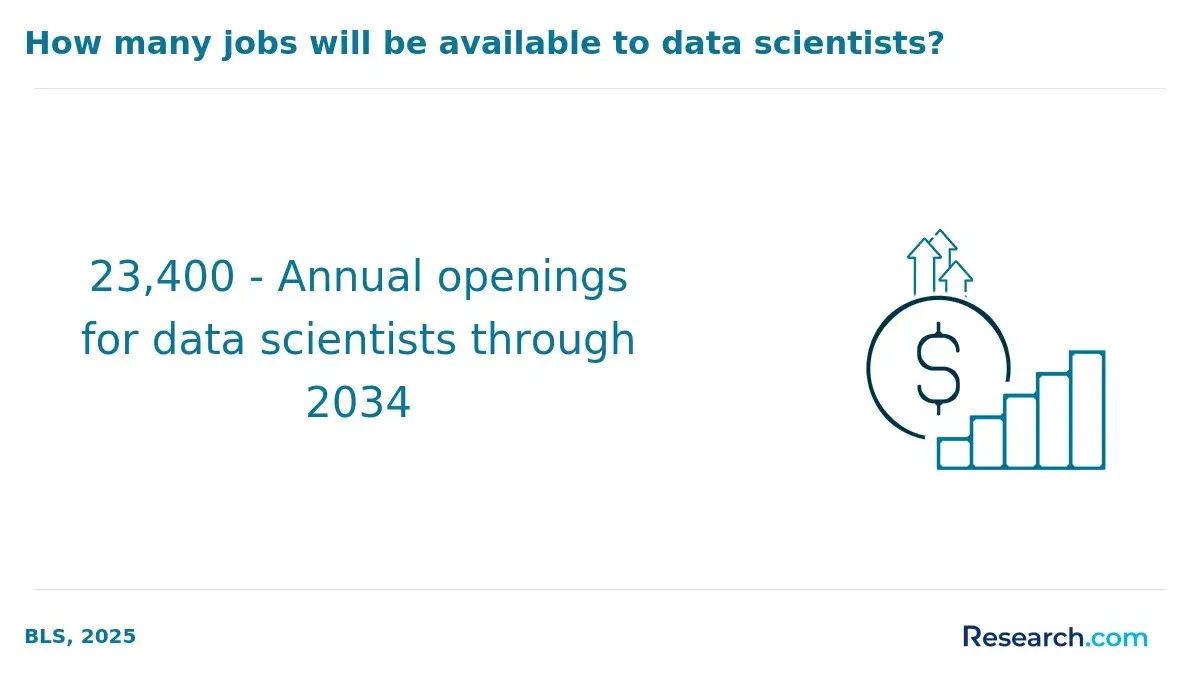
Organizations continue to generate and store a vast amount of data, which supports demand for professionals who can interpret it responsibly. Employment for data scientists, a role that many workers reach after starting in analyst positions, is expected to increase by 34% between 2024 and 2034, according to data from the United States Bureau of Labor Statistics (BLS).
Demand is spread across multiple industries. BLS data shows that the Computer Systems Design and Related Services industry employed 21,440 data scientists last year. Other industries with high levels of employment in data scientists are shown in the chart below.
How important are programming skills in a data analytics degree?
Programming is highly important in data analytics because it allows analysts to work efficiently with larger, messier, and more complex datasets. Not every analyst role requires advanced software engineering, but most competitive graduates benefit from SQL plus at least one programming language such as Python or R.
- Data Manipulation and Cleaning: Python and R help analysts clean, reshape, merge, and prepare datasets for analysis. Without code, this work can become slow and error-prone.
- Automation of Repetitive Tasks: Scripts can automate recurring reports, data checks, file processing, and transformations, improving consistency and saving time.
- Advanced Data Analysis: Programming makes it possible to run statistical tests, build predictive models, and explore machine learning methods.
- Database Management: SQL is essential for retrieving, filtering, joining, and analyzing data stored in relational databases.
- Visualization Tools Integration: Code can prepare data for tools such as Tableau or Power BI and support custom visualizations when standard charts are not enough.
What are the differences between data analytics and data science programs?
Data analytics and data science overlap, but they are not identical. Data analytics programs usually focus on interpreting existing data to support decisions. Data science programs often go deeper into algorithm development, advanced modeling, machine learning, and computational methods.
- Focus on Data: Data analytics emphasizes interpreting existing data and identifying actionable trends. Data science more often includes building models and algorithms to uncover patterns in complex datasets.
- Skill Development: Analytics programs commonly teach Excel, SQL, Tableau, Python, R, and reporting methods. Data science programs usually require stronger programming, statistics, and machine learning foundations.
- Career Opportunities: Analytics graduates often pursue data analyst, reporting analyst, or business intelligence roles. Data science graduates may pursue data scientist, machine learning engineer, or research-oriented positions.
- Program Length and Depth: Both fields are available at undergraduate and graduate levels, but data science programs, including options such as a cheapest online data science masters, often involve more advanced math, programming, and statistical modeling.
- Data Tools and Techniques: Analytics programs often emphasize established tools and decision-focused analysis, while data science programs may require students to create custom models or algorithms.
How does a data analytics degree prepare you for a career in emerging fields?
A data analytics degree can prepare students for emerging work because the core skills are transferable: data cleaning, statistical reasoning, programming, visualization, communication, and ethical interpretation. These skills are useful in new and changing fields where organizations need evidence-based decisions.
- Artificial Intelligence and Machine Learning: Students build foundations in programming, statistics, and data preparation, which support later work with AI and machine learning methods.
- Healthcare Analytics: Analytics training can help students interpret medical and operational data to support patient outcomes, resource planning, and health system improvement.
- Sustainability and Environmental Data: Organizations can use analytics to measure environmental impact, track resource use, and support sustainability strategies.
- E-commerce and Personalization: Data analytics helps organizations study consumer behavior, evaluate engagement, and support personalization efforts.
- Cybersecurity Analytics: Analysts can apply data skills to anomaly detection, risk assessment, fraud patterns, and protection of sensitive information.
Students interested in more advanced analytics roles can also review how to become a data scientist to understand the skills, education, and experience often associated with that path.
Practical steps before applying to a data analytics program
- Define your target role. Decide whether you want business analytics, data analysis, financial analytics, healthcare analytics, data science, or research-focused work.
- Audit your current skills. Identify gaps in algebra, statistics, spreadsheets, SQL, programming, and communication.
- Compare curricula course by course. Do not rely only on the program title. Review required courses, electives, projects, and software tools.
- Check accreditation and transfer policies. Accreditation matters for credibility, and transfer credits can reduce both time and cost.
- Calculate total cost. Include tuition, fees, books, software, housing, transportation, and potential lost income.
- Look for applied learning. Prioritize programs with internships, capstones, research projects, labs, or employer-connected assignments.
- Review student support. Ask about tutoring, faculty access, online technical support, career coaching, and alumni networks.
- Build a portfolio while enrolled. Save polished projects that show your ability to clean data, analyze it, visualize it, and explain business or research implications.
References
- Arizona State University. Business Data Analytics. ASU.
- Grand View Research (2026). Data Analytics Market (2025 - 2030). Grand View Research.
- Ohio State University. (n.d.). Specializations in the major. Data Analytics Major. OSU.
- U.S. Bureau of Labor Statistics. (n.d.). Data scientists. BLS.
- National Center for Education Statistics. (2024). Projections of Education Statistics. NCES.
Key Insights
- A data analytics degree is most valuable when it combines statistics, SQL, programming, visualization, databases, ethics, and applied projects.
- The right program depends on your goal: business analytics, technical analytics, healthcare analytics, finance, data science preparation, or research.
- Online programs can be just as academically useful as campus programs when they provide strong faculty access, software support, project work, and career services.
- Cost varies widely by degree level, institution type, residency, and format, so compare total cost rather than tuition alone.
- Employers look for proof of skill. A portfolio with clean code, clear visualizations, and well-explained insights can be as important as the degree title.
- Do not choose a program without checking accreditation, curriculum depth, transfer policies, career support, and whether the coursework matches the roles you want.
- AI is changing analytics work, but it does not remove the need for human judgment, data ethics, statistical reasoning, and clear communication.
Other Things You Should Know About Data Analytics Programs
In 2027, a data analytics degree can lead to roles such as Data Analyst, Business Intelligence Analyst, Data Scientist, or Operations Analyst. These roles are crucial across industries like finance, healthcare, and technology, each requiring the ability to interpret data to drive strategic decisions.
In 2027, tuition for a data analytics degree varies widely, typically ranging from $10,000 to $50,000 annually. Many institutions offer online and in-person programs with financial aid options, making it possible for students to find affordable educational paths based on their financial situation.
A data analytics degree significantly enhances job prospects in 2027 by equipping graduates with in-demand technical skills. Industries like finance, healthcare, and technology are actively seeking data analysts to optimize operations and decision-making. Graduates can expect diverse opportunities and competitive salaries as data-driven strategies continue to grow in importance.


