2027 Most Affordable Online Master’s in Architecture Programs

Co-Founder and Chief Data Scientist
An online master’s in architecture is a serious investment: it can help you move toward licensure, specialize in areas such as sustainable design or digital fabrication, or qualify for more advanced design and project leadership roles. It can also be expensive, technically demanding, and highly dependent on accreditation rules. Before enrolling, you need to know whether the degree fits your background, schedule, licensure goals, and expected return on investment.
This guide is for working design professionals, architecture graduates, career changers, and students comparing affordable online architecture master’s programs. You will learn what these programs cover, how online studio learning works, what costs to expect, which programs are among the more affordable options, how licensure and NAAB accreditation affect your decision, and what career paths may be available after graduation.
Quick Answer: Is an Online Master’s in Architecture Worth It?
An online master’s in architecture can be worth it if the program matches your professional goals, especially if you need a flexible route to advanced architecture training while continuing to work. Students seeking architect licensure should pay close attention to whether the program is accredited by the National Architectural Accrediting Board (NAAB), because licensure requirements often depend on an accredited professional degree, supervised experience, and exams. Students who do not need licensure may still benefit from a master’s program focused on sustainability, urban design, digital design, historic preservation, or architectural technology.
What are the main benefits of an online Master’s in Architecture?
- Career flexibility: Graduates may pursue roles such as licensed architect, urban planner, sustainability consultant, construction manager, design technologist, or architectural visualization specialist, depending on their credentials and experience.
- Salary potential: According to the latest data from the U.S. Bureau of Labor Statistics (BLS), the median salary for architects is around $93,000 per year. The article also cites 2025 BLS data showing a median annual salary of $96,690 for architects.
- Work-school balance: Online delivery can make graduate study more realistic for students who cannot relocate or pause their careers, although many programs still require studio work, software access, and sometimes short in-person sessions.
- Specialized technical training: Many online architecture programs include BIM, CAD, digital modeling, environmental design, research, and virtual studio collaboration.
- Access to broader networks: Online cohorts may include students from different regions and professional backgrounds, which can expand peer learning and design perspectives.
What can I expect from an Online Master’s in Architecture?
An online master’s in architecture provides graduate-level preparation in design thinking, building systems, architectural technology, sustainability, research, and professional practice. The exact experience depends on the degree type. A professional Master of Architecture, often called an MArch, is typically more relevant for students pursuing licensure, while MA or MS architecture programs may focus more on research, design studies, digital media, or specialized areas of the built environment.
- Studio-based learning: Students complete design projects, critiques, presentations, and portfolio work through virtual studio platforms, video meetings, and collaborative software.
- Technical coursework: Programs commonly include CAD, BIM, 3D modeling, building systems, environmental performance, and digital fabrication concepts.
- Design theory and research: Graduate courses often connect design decisions to history, community needs, climate, urban systems, accessibility, and cultural context.
- Different entry routes: Some programs are designed for students with a previous architecture degree, while others provide longer tracks for students from unrelated undergraduate majors.
- Possible in-person requirements: Even online programs may include campus visits, workshops, reviews, intensives, or residencies, so students should confirm travel expectations before enrolling.
Where can I work with an Online Master’s in Architecture?
Graduates may work in architecture firms, planning agencies, construction companies, real estate development firms, sustainability consultancies, government offices, engineering firms, higher education, and design technology companies. The right workplace depends on whether the graduate is pursuing licensure, already licensed, or using the degree for a related design or planning career.
| Work setting | Common responsibilities | Best fit for |
| Architecture firms | Building design, client presentations, technical drawings, construction documentation, project coordination | Students seeking traditional architectural practice or licensure-aligned experience |
| Urban planning or government agencies | Zoning analysis, community planning, infrastructure coordination, public-space design, redevelopment work | Students interested in city-scale design and policy-influenced work |
| Construction and development companies | Project management, design review, scheduling, contractor coordination, building technology evaluation | Professionals who want to connect design with delivery, budgets, and construction operations |
| Sustainability consulting | Energy-conscious design, green building strategies, material evaluation, building performance analysis | Students focused on environmental architecture and resilient design |
| Design technology and visualization | BIM coordination, computational modeling, VR environments, digital fabrication, 3D renderings | Students with strong software, modeling, and visual communication skills |
How much can I make with an Online Master’s in Architecture?
Architecture salaries vary by role, location, licensure status, experience, firm size, specialization, and market conditions. According to 2025 data from the U.S. Bureau of Labor Statistics, the median annual salary for architects is $96,690.
Professionals who move into specialized design, sustainable architecture, computational design, project management, or firm leadership may earn more than entry-level staff, but a degree alone does not guarantee a specific salary. Licensure, portfolio quality, project experience, software expertise, and client-facing skills all matter.
The following top-paying states for architects and corresponding annual mean wages were reported by BLS:
- California - $120,780
- District of Columbia - $115,230
- Wyoming - $114,810
- Alaska - $111,150
- Nevada - $110,780
- Most Affordable Online Master’s in Architecture Programs for 2027
- How long does it take to complete an online Master’s in Architecture program?
- How does an online Master’s in Architecture compare to an on-campus program?
- What is the average cost of an online Master’s in Architecture program?
- What are the financial aid options for students enrolling in an online Master’s in Architecture program?
- What are the prerequisites for enrolling in an online Master’s in Architecture program?
- What courses are typically in an online Master’s in Architecture program?
- What types of specializations are available in online Master’s in Architecture programs?
- How to choose the best online Master’s in Architecture program?
- Do online Master’s in Architecture programs meet licensure and accreditation standards?
- What are the challenges unique to online Master’s in Architecture programs?
- Does the Return on Investment Justify the Cost of an Online Master’s in Architecture?
- What career paths are available for graduates of online Master’s in Architecture programs?
- What is the job market for graduates with an online Master’s in Architecture?
- How Can You Maximize Practical Experience and Industry Connections in an Online Master’s in Architecture Program?
Most Affordable Online Master’s in Architecture Programs for 2027
How do we rank schools?
Affordability matters in architecture because graduate programs can require not only tuition, but also design software, high-performance hardware, printing, models, travel for residencies, and studio materials. To identify more affordable online options, our team reviewed data from sources such as the College Scorecard database, the IPEDS database, the National Center for Education Statistics (NCES), and Peterson’s database, including its Distance Learning Licensed Data Set. You can read more about the Research.com ranking methodology for additional context.
Use this list as a starting point, not as your only decision tool. For architecture, the best program is not always the cheapest one. Students should compare accreditation, licensure alignment, studio structure, software requirements, faculty expertise, and whether the program fits their undergraduate background.
| School | Program length | Cost per credit | Required credits | Accreditation listed |
| Southern Illinois University - Carbondale | 16 months | $469.50 | 42 credits | National Architectural Accrediting Board (NAAB) |
| Arizona State University | Two to three years | $576 | 48 credits | National Architectural Accrediting Board (NAAB) |
| University of Missouri | Approximately two years | $824.30 | 30 credits | Higher Learning Commission (HLC) |
| Rochester Institute of Technology | Two or three years | $1,403 | 63 credits for the Advanced Standing track and 90 credits for the Standard track | National Architectural Accrediting Board (NAAB) |
| Academy of Art University | Approximately two or three years | $1,407 for domestic students and $1,615 for international students | 63 credits for Track 1 and 87 credits for Track 2 | National Architectural Accrediting Board (NAAB) |
1. Southern Illinois University - Carbondale
Southern Illinois University - Carbondale is a public research university and the flagship campus of the Southern Illinois University system. Its cohort-based online Master of Architecture program uses Zoom or Teams for virtual class meetings and requires limited campus visits. Students complete two in-person studio visits twice a semester at the Edwardsville campus and attend Final Presentations at the Carbondale campus. Enrollment is available in the fall and summer semesters.
- Program Length: 16 months
- Tracks/concentrations: Master of Architecture
- Cost per Credit: $469.50
- Required Credits to Graduate: 42 credits
- Accreditation: National Architectural Accrediting Board (NAAB)
2. Arizona State University
Arizona State University offers an online Master of Architecture that combines architectural theory, research, studio work, and professional practice. The program is notable because it includes a route for students whose bachelor’s degree is not in architecture. Courses are delivered fully online in 7.5-week sessions.
- Program Length: Two to three years
- Tracks/concentrations:
- Two-year track Master of Architecture
- Three-year track Master of Architecture
- Cost per Credit: $576
- Required Credits to Graduate: 48 credits
- Accreditation: National Architectural Accrediting Board (NAAB)
3. University of Missouri
The University of Missouri offers online graduate study in architecture through MA and MS options. The format blends asynchronous and synchronous learning with semester-based and self-paced components. The program is fully online, although students are encouraged to attend campus workshops and seminars when possible for networking and community building.
- Program Length: Approximately two years
- Tracks/concentrations:
- Design with Digital Media
- Environment and Behavior
- Cost per Credit: $824.30
- Required Credits to Graduate: 30 credits
- Accreditation: Higher Learning Commission (HLC)
4. Rochester Institute of Technology
Rochester Institute of Technology offers an online Master of Architecture with one route for students who already have a bachelor’s degree in architecture or a related field and another for students from other academic backgrounds. The curriculum emphasizes sustainable architecture and includes in-person immersions, professional co-op experience, global experience, studio work, and a thesis project.
- Program Length: Two or three years (depending on the track)
- Tracks/concentrations:
- Master of Architecture Advanced Standing track
- Master of Architecture Standard track
- Cost per Credit: $1,403
- Required Credits to Graduate: 63 credits for the Advanced Standing track and 90 credits for the Standard track
- Accreditation: National Architectural Accrediting Board (NAAB)
5. Academy of Art University
The Academy of Art University offers a Master of Architecture online and on campus. Track 1 is designed for students with a bachelor’s in architecture, while Track 2 serves students whose undergraduate degree is in another field. The curriculum includes advanced design, architectural theory, building and making, technical development, and a thesis.
- Program Length: Approximately two or three years
- Tracks/concentrations:
- Master of Architecture Track 1
- Master of Architecture Track 2
- Cost per Credit: $1,407 for domestic students and $1,615 for international students
- Required Credits to Graduate: 63 credits for Track 1 and 87 credits for Track 2
- Accreditation: National Architectural Accrediting Board (NAAB)
How long does it take to complete an online Master’s in Architecture program?
Most online master’s in architecture programs take about two to three years, but the timeline depends heavily on your academic background, enrollment pace, transfer credits, and whether the program is a professional MArch or a research-focused MA or MS.
| Student background | Typical timeline | What affects completion time |
| Architecture bachelor’s or related undergraduate preparation | Often around 16 months to two years in accelerated or advanced-standing formats | Studio sequencing, accepted prerequisites, cohort structure, and required residencies |
| Non-architecture bachelor’s degree | Often around three years | Foundation studios, design prerequisites, technical coursework, and professional degree requirements |
| Part-time working student | Three to five years or longer, depending on program policy | Course load, studio availability, employer demands, and maximum completion limits |
| Student with approved prior graduate coursework | May finish faster if credits transfer | Transfer credit rules, course equivalencies, and residency requirements |
Before enrolling, ask whether studios must be taken in a fixed order. Architecture programs are often more sequenced than other online degrees, so skipping or delaying one studio can push graduation back by a semester or more.
Graduate architecture study remains a significant part of the professional education pipeline. According to NCARB, there were 33,000 students enrolled in NAAB-accredited programs. The chart below details the most common college majors for architects.
How does an online Master’s in Architecture compare to an on-campus program?
An online master’s in architecture can cover the same academic content as a campus program, but the learning experience is not identical. The biggest differences are studio access, collaboration style, feedback rhythm, networking, and how students handle physical materials or fabrication work.
| Factor | Online Master’s in Architecture | On-campus Master’s in Architecture |
| Flexibility | Better for working students, caregivers, and students who cannot relocate | More fixed schedule and location-dependent |
| Studio experience | Uses virtual critiques, collaborative platforms, and digital submissions | Offers immediate access to physical studios, pinups, labs, and peer interaction |
| Technology | Requires students to manage software, hardware, internet access, and file sharing independently | May provide stronger on-campus lab support and equipment access |
| Networking | Can connect students across regions, but requires more proactive outreach | Often provides easier access to faculty, guest critics, events, and local firms |
| Best for | Self-directed students who need flexibility and are comfortable with digital collaboration | Students who want intensive studio culture, physical model-making access, and daily in-person feedback |
Choose online study if flexibility is essential and you are prepared for a high level of independent work. Choose campus study if you learn best through constant in-person critique, shop access, physical making, and informal studio collaboration.
What is the average cost of an online Master’s in Architecture program?
Based on research of various online Master’s in Architecture programs in the United States, the total cost of an online MArch program can range from approximately $20,000 to $120,000 or even higher. Tuition is only one part of the full cost.
College Board reports that the average tuition and fee price for a master’s degree from a public four-year institution was $9,560 per academic year in 2024-2025. At a private nonprofit school, it was $31,930 per academic year. Compared with many other graduate fields, architecture can become more expensive because students may need specialized technology, design materials, and occasional travel.
Among the more affordable programs reviewed in this guide, tuition ranges from $400 to $1,400 per credit. Students should still calculate the full cost of attendance, not just the posted tuition rate.
| Cost category | Why it matters |
| Tuition per credit | The largest direct program expense and the easiest number to compare across schools |
| University and online fees | Can raise the total cost even when tuition looks affordable |
| Software and hardware | Architecture students may need CAD, BIM, rendering, modeling, and high-performance computing tools |
| Printing, models, and materials | Studio work may require physical or digital presentation expenses |
| Residency or campus travel | Hybrid or low-residency programs may require transportation, lodging, and meals |
Southern Illinois University provides an example of extra program expenses: books ($340), assorted materials ($240), printing and 3D modeling ($360), thesis book printing and binding ($160), and laptop and specialized software ($2,160). These costs show why even the cheapest online graduate programs should be evaluated using total cost, not tuition alone.
What are the financial aid options for students enrolling in an online Master’s in Architecture program?
Students in eligible online master’s in architecture programs may use a mix of federal aid, institutional awards, employer assistance, and industry scholarships. The best starting point is the program’s financial aid office, because eligibility depends on accreditation, enrollment status, degree type, and school policy.
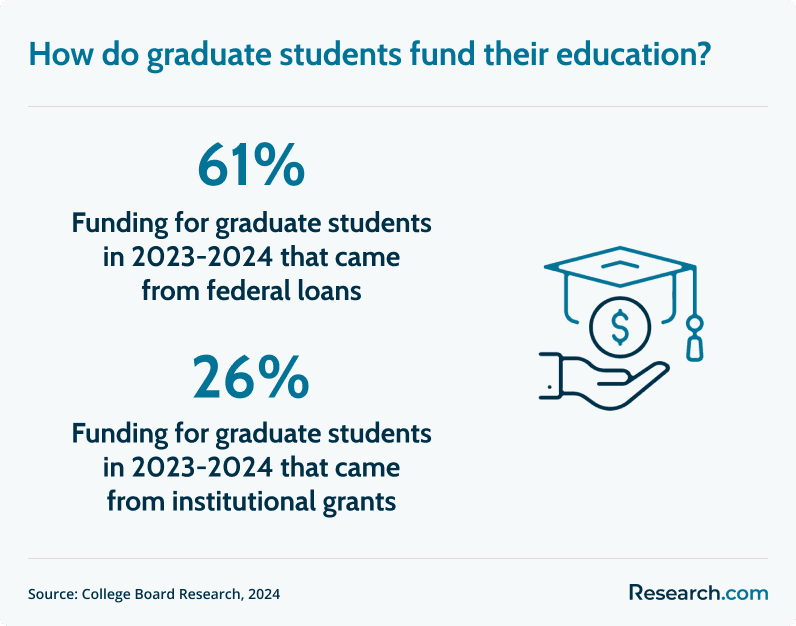
- Federal financial aid: Many accredited online programs allow students to submit the Free Application for Federal Student Aid (FAFSA). College Board reports that 61% of total funding for graduate students in 2024 was from federal loans.
- School-based scholarships and discounts: Some top online colleges provide institutional scholarships or online student tuition discounts. Southern Illinois University offers the Legacy tuition rate for children of SIU Carbondale graduates, giving eligible students 20% off their regular tuition rate.
- Architecture scholarships: Students may find awards from organizations such as the American Institute of Architects (AIA) and the Association of Collegiate Schools of Architecture (ACSA).
- Specialization-focused funding: Private foundations and professional organizations may support students focused on sustainable design, urban planning, or historic preservation.
- Employer tuition reimbursement: Firms may help cover costs when the degree supports professional advancement or licensure preparation.
Ask each school whether online students qualify for the same scholarships as campus students, whether assistantships are available remotely, and whether reducing your course load affects aid eligibility.
What are the prerequisites for enrolling in an online Master’s in Architecture program?
Admission requirements vary by school and track. Some programs expect prior architecture education, while others are built for students from other undergraduate backgrounds. Review the specific admissions page carefully before assuming you qualify.
- Bachelor’s degree: Many programs prefer or require a Bachelor of Architecture (BArch) or a related undergraduate field. Programs for career changers may require additional foundational design, drafting, or building technology coursework.
- Portfolio: Most applicants submit a portfolio showing design ability, technical skill, visual communication, and creative thinking. Applicants without architecture backgrounds may be allowed to submit related creative or analytical work.
- GPA and testing: A minimum GPA, often 3.0 or higher, is common. Some programs may request GRE scores, although many graduate programs have become test-optional.
- Recommendations and statement: Schools usually ask for two to three letters of recommendation and a statement explaining the applicant’s goals, preparation, and reasons for pursuing architecture.
- Technology readiness: Online architecture students may need a high-performance computer, reliable internet, and access to CAD, BIM, rendering, and 3D modeling software.
Students coming from nontraditional pathways, including competency based degree programs, should ask admissions staff how prior coursework will be evaluated and whether bridge courses are required.
What courses are typically in an online Master’s in Architecture program?
Online architecture master’s programs usually combine design studio, technical systems, software training, research, history, theory, and professional practice. Course names vary, but the following areas are common.
Core Courses
- Architectural Theory and History: Studies major design movements, historical precedents, cultural context, and theoretical frameworks.
- Advanced Architectural Design: Builds complex design solutions that balance function, aesthetics, sustainability, site conditions, and user needs.
- Building Systems and Technology: Covers structural systems, construction methods, materials, and technical coordination.
- Sustainable and Environmental Design: Examines energy use, climate-responsive design, green building strategies, and environmental performance.
- Urban Planning and Design: Connects building design to infrastructure, density, public space, transportation, and community development.
Technical and Software Training
- Building Information Modeling: Introduces BIM workflows for 3D coordination, documentation, and project management.
- Computer-Aided Design: Develops drafting and drawing skills using tools such as AutoCAD.
- Parametric and Computational Design: Explores algorithmic modeling, generative design, and advanced digital workflows.
Most programs also include a thesis, capstone, or final studio project. This final requirement is important because it can become a centerpiece of your professional portfolio.
What types of specializations are available in online Master’s in Architecture programs?
Specializations help students connect graduate study to a more focused professional direction. Availability varies by university, and some programs offer formal concentrations while others allow students to shape a focus through electives, studio topics, research, or a thesis.
| Specialization | What it focuses on | Good fit for students interested in |
| Sustainable and Green Architecture | Energy-conscious design, environmental impact, carbon reduction, and Leadership in Energy and Environmental Design (LEED) concepts | Climate-responsive buildings and sustainable practice |
| Urban Design/Urban Planning | Public space, transportation, density, infrastructure, regulations, and community engagement | City-scale design and public-sector or development work |
| Digital Fabrication/Computational Design | Parametric modeling, algorithmic design, robotic fabrication, 3D printing, and digital workflows | Design technology, advanced modeling, and fabrication innovation |
| Historic Preservation | Conservation, restoration, adaptive reuse, materials, history, and preservation regulations | Existing buildings, heritage sites, and cultural resource work |
| Healthcare Design | Hospitals, clinics, assisted living spaces, patient experience, infection control, and healthcare regulations | Specialized facility design and evidence-informed environments |
| Architectural Technology/Building Performance | HVAC, electrical, plumbing, structural principles, codes, simulation, and building analysis | Technical design coordination and performance optimization |
| Management in Architecture/Architectural Practice | Project management, firm operations, budgets, contracts, and legal considerations | Leadership, practice management, or firm ownership |
| Adaptive Reuse and Regeneration | Transforming existing buildings and sites for new use while supporting sustainability and revitalization | Reuse, redevelopment, and urban regeneration |
Some students also combine architecture electives with related certificates. If you are comparing certificate options alongside a graduate degree, confirm whether the program is eligible for federal aid; Research.com also maintains information on FAFSA-approved online certificate programs.
Specialization should be strategic. According to BLS, the specialized design services sector is the third top employer of architects, while residential building construction comes second. The chart below provides additional information.
How to choose the best online Master’s in Architecture program?
The best online master’s in architecture is the one that aligns with your licensure needs, background, budget, learning style, and career target. Do not choose solely based on ranking position or tuition.
- Start with licensure and accreditation: If your goal is to become a licensed architect, confirm whether the degree is NAAB-accredited and whether it meets the education requirement in the state where you plan to practice.
- Match the track to your background: Students with architecture undergraduate degrees may qualify for shorter tracks; career changers should look for programs with clear foundation coursework.
- Review studio delivery: Ask how critiques, team projects, presentations, and faculty feedback work online. Studio quality is central to architecture education.
- Check software and technology expectations: Confirm whether you need Revit, AutoCAD, Rhino, rendering tools, BIM platforms, or specialized hardware before classes begin.
- Evaluate faculty expertise: Look for faculty whose professional work connects to your interests, such as sustainability, computational design, urbanism, preservation, or practice management.
- Compare flexibility honestly: Some online programs are asynchronous, while others require scheduled critiques and live studio sessions. Programs built for working adults, including college programs for moms, dads, and employed students, may provide more adaptable pacing.
- Assess networking and support: A 2024 survey from Statista shows that joining a learning community or interacting with professors and classmates is a top concern for online students in the United States. Ask how the program builds community online.
- Look for career services: Strong programs should help with portfolios, internship or co-op preparation, licensure advising, alumni connections, and employer networking.
Questions to ask before enrolling
- Is the program NAAB-accredited, and does it support licensure in my intended state?
- How many campus visits, residencies, or in-person reviews are required?
- What software, hardware, and materials will I need beyond tuition?
- Can I study part time, and how will that affect studio sequencing?
- Are online students eligible for the same scholarships and career services as campus students?
- What percentage of students complete the program, and what kinds of roles do graduates pursue?
- Will my previous coursework shorten the program or reduce the cost?
Do online Master’s in Architecture programs meet licensure and accreditation standards?
Some online master’s in architecture programs are designed to meet professional accreditation standards, but students should verify this directly. For licensure-focused students, NAAB accreditation is a critical factor because many licensing boards require a professional degree from a NAAB-accredited program, along with supervised experience and examination requirements.
Do not assume that every online architecture master’s leads to licensure. A Master of Architecture may be structured as a professional degree, while an MA or MS in architecture may be more research-oriented and may not satisfy the same professional education requirement. If your goal is licensure, ask the program and your state licensing board to confirm the pathway before you enroll.
Students comparing advanced online programs in other fields can also review related graduate options such as online doctor of education programs, but architecture has field-specific accreditation and licensure considerations that should be checked separately.
What are the challenges unique to online Master’s in Architecture programs?
Online architecture study can be flexible, but it is not easy. Architecture is studio-intensive, feedback-driven, and technology-heavy. Students need strong self-management and must be comfortable presenting, revising, and defending design work in digital environments.
| Challenge | Why it matters | How to reduce the risk |
| Limited physical studio culture | Students may miss informal peer learning, live pinups, and immediate critique | Join critique groups, attend optional reviews, and schedule regular peer feedback sessions |
| Software and hardware demands | Design files, rendering, BIM, and modeling tools can be expensive and technically demanding | Confirm requirements early and budget for a capable laptop and software access |
| Time-intensive projects | Studio work can be difficult to balance with full-time employment | Choose a realistic course load and protect weekly design time |
| Reduced access to fabrication spaces | Students may have fewer opportunities for model shops, labs, and physical prototyping | Use local maker spaces, attend residencies, or select programs with strong digital fabrication alternatives |
| Networking requires more effort | Online students may not naturally meet local firms, critics, and alumni | Participate in guest lectures, conferences, portfolio reviews, and professional associations |
Although some fields offer comparatively straightforward online options, such as the cheapest online master's degree in education, architecture programs must reproduce studio critique, technical documentation, and professional design expectations in a remote format.
Does the Return on Investment Justify the Cost of an Online Master’s in Architecture?
The return on investment depends on your starting point. For a student who needs a professional degree for licensure, an accredited online MArch may be a practical way to continue working while completing a major credential. For a licensed architect seeking specialization, the ROI may depend on whether the degree helps move into higher-value project types, management, sustainability consulting, technology leadership, or teaching. For students who do not need licensure, a shorter certificate or targeted technical training may sometimes be more cost-effective.
| Student goal | When the degree may be worth it | When to consider another option |
| Architect licensure | The program is NAAB-accredited and accepted for your intended licensing path | The program is not professionally accredited or does not meet your state’s education requirement |
| Career change into architecture | The school offers a clear three-year or foundation track for non-architecture majors | You are unsure about studio workload, licensure requirements, or long-term commitment |
| Specialization | The curriculum directly supports sustainable design, computational design, preservation, healthcare design, or another target niche | A certificate, portfolio course, or employer-sponsored training would meet the same goal faster |
| Leadership advancement | The program includes project management, practice, research, and advanced design work relevant to promotion | Your employer values licensure, project experience, or management credentials more than another degree |
When comparing ROI across graduate paths, students may also look at other advanced online options such as cheap online doctor of education programs. However, architecture decisions should be evaluated through accreditation, portfolio outcomes, licensure eligibility, and professional experience requirements.
What career paths are available for graduates of online Master’s in Architecture programs?
Graduates can pursue multiple paths across architecture, planning, construction, visualization, sustainability, and education. Some roles require licensure or additional credentials, while others value design training, software skills, portfolio quality, and project experience.
- Project Architect: Coordinates design development, documentation, consultant communication, client meetings, and construction administration.
- Historic Preservation Architect: Works on conservation, restoration, adaptive reuse, and evaluation of existing or historic buildings.
- Architectural Visualization Specialist: Produces renderings, animations, 3D models, and virtual reality experiences that communicate design ideas.
- Urban Planner: Supports public agencies, private developers, or planning organizations in shaping communities, land use, and infrastructure.
- Landscape Architect: Designs outdoor environments such as parks, campuses, plazas, and public landscapes, often with an emphasis on ecology and usability.
- Construction Manager: Oversees project delivery, budgets, schedules, teams, and contractors; some architecture graduates move into this area after gaining field experience.
- Academia: With further qualifications, graduates may pursue teaching, research, or studio instruction in architecture education.
- Consultant: Provides specialized expertise in sustainability, code compliance, building performance, digital workflows, or project management.
Architecture is also included among college majors that make the most money, although individual earnings depend on role, location, licensure, and experience.
Based on 2025 BLS data cited for related professions, annual median wages include:
- Architectural and Engineering Managers - $167,740
- Construction Mangers - $106,980
- Postsecondary Architecture Teachers - $ 114,900
- Urban and Regional Planners - $83,720
- Landscape Architects - $79,660
What is the job market for graduates with an online Master’s in Architecture?
The job market for architecture graduates is shaped by construction cycles, real estate investment, public infrastructure needs, sustainability priorities, and demand for digital design expertise. According to the U.S. Bureau of Labor Statistics, employment for architects is projected to grow by 4% from 2024 to 2034.
- Sustainability and resilience: Green building, climate adaptation, energy performance, and reuse of existing buildings continue to influence design priorities.
- Digital design expectations: Employers increasingly value BIM, computational design, visualization, and coordinated digital workflows.
- Urban redevelopment: Infill, adaptive reuse, housing, transportation, and mixed-use development can create opportunities for architects and planners.
- Economic sensitivity: Architecture hiring often follows construction and development activity. Strong markets can increase demand, while downturns can slow hiring.
- Firm compensation trends: Current reports indicate significant improvements in the compensation and benefits for architects who work in firms.
Using the most current BLS data cited in the original article, the following chart shows annual wages of architects by percentile:
How Can You Maximize Practical Experience and Industry Connections in an Online Master’s in Architecture Program?
Online students need to be deliberate about building a portfolio, gaining feedback, and forming professional relationships. The degree provides structure, but your results will depend on how actively you use studios, faculty access, alumni networks, and outside opportunities.
- Treat every studio as portfolio development: Save process work, diagrams, revisions, final boards, models, and written design explanations.
- Ask for critique beyond required reviews: Meet with faculty, peers, alumni, and practicing architects to improve design reasoning and presentation quality.
- Join competitions and charrettes: Virtual design competitions can help demonstrate initiative and expose you to real-world constraints.
- Use residencies strategically: If the program offers in-person workshops or reviews, use them to meet faculty, classmates, visiting critics, and potential mentors.
- Build software depth: Employers may expect more than basic drafting. Develop evidence of BIM, rendering, modeling, visualization, and digital workflow skills.
- Connect with professional organizations: Attend webinars, portfolio reviews, lectures, and networking events connected to architecture, planning, sustainability, or design technology.
- Document applied experience: Keep a record of internships, co-ops, freelance work, research assistantships, and professional projects that may support career or licensure goals.
Students comparing online learning formats across fields can also review Research.com’s guide to the cheapest online political science bachelor's degree, but architecture students should prioritize studio quality, accreditation, software expectations, and portfolio outcomes.
Common Mistakes to Avoid When Choosing an Online Architecture Master’s
- Assuming every architecture master’s leads to licensure: Confirm NAAB accreditation and state licensing rules before enrolling.
- Comparing tuition only: Include software, hardware, travel, materials, fees, and lost work time in your cost estimate.
- Ignoring in-person requirements: Some “online” programs still require campus visits, reviews, workshops, or residencies.
- Choosing a program that does not fit your background: A short track may not be appropriate for career changers, while a three-year track may be unnecessary for students with prior architecture preparation.
- Underestimating studio workload: Online architecture study still requires long design hours, critique preparation, revisions, and presentations.
- Relying only on rankings: Rankings can help you discover schools, but accreditation, curriculum fit, portfolio development, faculty expertise, and cost matter more.
- Not checking transfer credit policies: Accepted credits can affect cost and completion time, but policies vary widely.
Key Insights
- An online master’s in architecture is most valuable when it clearly supports your goal: licensure, specialization, career change, leadership, or technical design advancement.
- NAAB accreditation is a major decision factor for students pursuing architect licensure. Do not assume that every online architecture graduate degree meets professional licensure requirements.
- Program length commonly depends on your background. Students with prior architecture education may find shorter tracks, while non-architecture majors often need longer foundation-based pathways.
- Architecture costs extend beyond tuition. Software, hardware, printing, modeling, materials, travel, and fees can significantly change the real price of attendance.
- Online study offers flexibility, but it demands discipline. Studio work, critiques, software management, and portfolio development remain intensive even when delivered remotely.
- Career outcomes vary by licensure, experience, specialization, portfolio strength, and location. The cited BLS data lists a median annual salary of $96,690 for architects and projected employment growth of 4% from 2024 to 2034.
- The best program is the one that fits your licensing path, schedule, budget, technical readiness, and career target—not simply the one with the lowest per-credit cost.
References:
- Ma, J. et al. (2024). Trends in College Pricing and Student Aid 2024. College Board. https://research.collegeboard.org/media/pdf/Trends-in-College-Pricing-and-Student-Aid-2024-ADA.pdf
- National Architectural Accrediting Board (2024). 2023 NAAB Annual Report on Architecture Education. https://higherlogicdownload.s3.amazonaws.com/NAAB/21e8eae7-e532-47c0-bff1-4111ca0d4fb0/UploadedImages/PDFs/2023_NAAB_Annual_Report.pdf
- O*NET OnLine (n.d.). O*NET OnLine Help. https://www.onetonline.org/help/online/find_occ Data Retrieved on March 2025
- Southern Illinois University (n.d.). Online Degree Path. https://academics.siu.edu/design/architecture/masters/online.php
- U.S. Bureau of Labor Statistics (April 2024). Occupational Employment and Wages, May 2023, 17-1011 Architects, Except Landscape and Naval. https://www.bls.gov/ooh/architecture-and-engineering/architects.htm
- U.S. Bureau of Labor Statistics (August 2024). Architects. https://www.bls.gov/ooh/architecture-and-engineering/architects.htm
Other Things You Need to Know About Online Master’s in Architecture Degrees
Prerequisites usually include a bachelor's degree in architecture or a related field, a portfolio showcasing design work, and letters of recommendation. Some programs may require a minimum GPA or completion of specific courses, such as architectural history or design principles.
Most affordable online Master’s in Architecture programs require 30 to 60 graduate credits. Design-intensive or NAAB-aligned tracks may require closer to 60 credits, while advanced post-professional options are often shorter. Students should also check whether studio courses, capstones, or a thesis are included.