
2027 Best Biological Science Degree Programs

Co-Founder and Chief Data Scientist
Choosing a biological science degree is not just a decision about studying biology. It is a decision about which scientific problems you want to work on, what level of education you are willing to complete, and whether your long-term goal is healthcare, research, biotechnology, conservation, public health, agriculture, education, or a related field. The degree can be flexible, but that flexibility also makes program choice important.
A biological science degree can lead to far more than academic research or medical school. Graduates may work in laboratories, hospitals, environmental agencies, forensic units, biotechnology companies, food safety organizations, agricultural firms, government offices, and science communication roles. In the U.S., over 61,000 biological scientists are employed and earn an average salary of $99,060. Healthcare-related leadership roles can pay even more, with medical and health services managers reporting median salaries exceeding $110,000. Specialized scientific paths such as biostatistics, microbiology, and medical science can also provide strong earning potential for graduates with the right training.
This guide explains how biological science degree programs work, what they cost, how long they take, which schools stand out, and how to compare options based on accreditation, research access, specialization, career outcomes, and return on investment. It is designed for prospective undergraduates, transfer students, working adults considering online study, and students planning for graduate or professional school.
Quick Answer: Is a Biological Science Degree Worth It?
A biological science degree can be worth it for students who enjoy laboratory work, scientific problem-solving, data analysis, and studying living systems. It is especially useful for students considering healthcare, biotechnology, environmental science, food science, public health, research, or graduate study. The degree offers broad career flexibility, but many higher-paying or more specialized roles require additional experience, certifications, a master’s degree, a Ph.D., or professional education.
The strongest return usually comes from choosing an accredited program, gaining lab or field experience before graduation, selecting a specialization connected to hiring demand, and planning early for whether you need graduate school, healthcare credentials, or technical skills such as statistics, coding, regulatory compliance, or bioinformatics.
What are the benefits of getting a biological science degree?
- Many career directions: Biological science graduates can pursue work in healthcare, environmental science, biotechnology, forensic science, food safety, agriculture, education, and research. Common roles include medical scientist, microbiologist, biostatistician, wildlife biologist, laboratory technician, and environmental scientist.
- Competitive earning potential in specialized roles: The median salary for biological scientists is $99,060. Related specialized occupations can also pay well, with medical scientists earning around $100,890 and biostatisticians earning approximately $104,860.
- Growth in several science occupations: Demand varies by occupation, but multiple biology-related fields show positive projections. Between 2022 and 2032, employment is projected to grow by 27% for epidemiologists, 8% for food scientists, 7% for biochemists, and 6% for both environmental scientists and animal scientists.
- Strong preparation for graduate and professional school: Biology majors often complete prerequisites for medical school, dental school, veterinary school, pharmacy programs, physician assistant programs, genetic counseling, public health, and research-focused graduate degrees.
- Transferable scientific skills: Students learn experimental design, data interpretation, scientific writing, laboratory safety, critical thinking, and quantitative reasoning—skills that are useful beyond traditional biology roles.
What can I expect from a biological science degree?
A biological science degree teaches students how living systems function at the molecular, cellular, organismal, and ecosystem levels. Most programs combine lectures, laboratory courses, research assignments, statistics, and writing-intensive science coursework. Students commonly study genetics, molecular biology, microbiology, ecology, evolution, neurobiology, organic chemistry, and biochemistry. Chemistry is often recommended early because it supports later coursework in cell biology, metabolism, molecular processes, and lab methods.
Students should expect a demanding course sequence. Many biology programs require multi-hour labs, group projects, research papers, quantitative assignments, and cumulative exams. Depending on the school, students may also complete a capstone project, faculty-supervised research, fieldwork, internships, or required research hours. These experiences matter because employers and graduate programs often look for practical evidence that a student can work safely, accurately, and independently in scientific settings.
Cost varies widely by institution. In-state public universities average $7,070 per year, while private universities range from $25,000 to $50,000 annually. Online options may be available for some courses or full programs, but students should carefully check how lab requirements are delivered and whether online coursework meets graduate school, professional school, or employer expectations.
Typical biological science degree experience
| Program component | What students should expect | Why it matters |
| Core science courses | Biology, chemistry, physics, genetics, microbiology, ecology, and cell biology | Builds the foundation needed for advanced study and entry-level science work |
| Laboratory training | Hands-on experiments, lab safety, sample handling, microscopy, data collection, and technical writing | Helps students qualify for research, clinical, biotechnology, and quality control roles |
| Math and statistics | Quantitative analysis, probability, experimental design, and data interpretation | Supports careers in biostatistics, epidemiology, bioinformatics, and research |
| Research or capstone work | Independent or faculty-guided projects, literature reviews, and presentations | Strengthens graduate school applications and provides evidence of applied scientific ability |
| Specialization courses | Focused study in areas such as molecular biology, ecology, neuroscience, biotechnology, or marine biology | Connects the degree to specific career paths and graduate programs |
Where can I work with a biological science degree?
Biological science graduates can work in healthcare, government, private industry, education, environmental protection, agriculture, biotechnology, public health, and nonprofit organizations. The best fit depends on the student’s specialization, technical skills, internship experience, and willingness to complete additional training.
For example, biochemists study chemical processes in living organisms and may support drug development, agricultural products, or disease research. Genetic counselors evaluate hereditary risks and help patients understand genetic testing results. Environmental scientists analyze ecosystems, pollution, resource use, and conservation strategies. Food scientists work on food safety, quality, processing, and production. Biology graduates can also move into medical sales, laboratory research, health education, regulatory affairs, science writing, and public policy.
How much can I make with a biological science degree?
Earnings depend heavily on job title, education level, industry, location, and experience. Biological science graduates may see salaries around $45,000 in entry-level positions, while experienced professionals in specialized fields can earn over $120,000. Biological technicians typically start at $52,713 per year, while senior roles in biotechnology, healthcare, and research may reach six figures.
Advanced education can change salary potential. A student who stops at the bachelor’s level may qualify for technician, quality assurance, environmental, sales, education, or entry-level research roles. A graduate who completes a master’s degree, Ph.D., clinical credential, or professional degree may qualify for higher-level roles in medical science, biotechnology, healthcare leadership, public health, or academic research. For example, medical scientists with a Ph.D. can earn over $100,000 annually.
- Best Biological Science Degree Programs for 2027
- How long does a biological science degree take?
- How much does a biological science degree cost?
- What financial aid is available for biological science students?
- What are the admission requirements for biological science programs?
- What courses will I take in a biological science degree?
- What biological science specializations can I choose?
- How do I choose the best biological science degree program?
- What jobs can I get with a biological science degree?
- What is the return on investment of a biological science degree?
- What is the job market for biological science graduates?
- What career trends are changing biological sciences?
- Which certifications can improve biological science career options?
- Should I pursue an advanced doctorate after a biological science degree?
- Should I add healthcare certifications to a biology background?
- Can biology lead to kinesiology and human performance careers?
- Can a biological science degree lead to nutrition careers?
- Are affordable online biology degrees a practical option?
List of the Best Biological Science Degree Programs for 2027
How do we rank the programs?
Because a biology degree can lead to very different outcomes depending on program quality, cost, research access, and career preparation, rankings should be used as a starting point rather than the only deciding factor. Our evaluation uses transparent data sources including the IPEDS database, Peterson's database, the College Scorecard database, and The National Center for Education Statistics. These sources help compare affordability, institutional quality, student outcomes, and bachelor’s-level biological science program data. More information is available on Research.com’s methodology page.
Program comparison snapshot
| School | Credits or units required | Published cost | Accreditation |
| Columbia University | Varies by concentration | $66,139 per academic year | Middle States Commission on Higher Education (MSCHE) |
| Purdue University | 120 | $9,992 per academic year (in-state), $28,794 (out-of-state) | Higher Learning Commission (HLC) |
| Harvard University | 128 | $59,967 per academic year | New England Commission of Higher Education (NECHE) |
| Massachusetts Institute of Technology (MIT) | 180 units | $57,590 per academic year | New England Commission of Higher Education (NECHE) |
| Stanford University | 180 quarter units | $64,260 per academic year | WASC Senior College and University Commission (WSCUC) |
| University of California, Berkeley | 120 | $14,395 per academic year (in-state), $44,467 (out-of-state) | WASC Senior College and University Commission (WSCUC) |
| Johns Hopkins University | 120 | $63,340 per academic year | Middle States Commission on Higher Education (MSCHE) |
| University of Washington | 180 quarter credits | $12,643 per academic year (in-state), $41,997 (out-of-state) | Northwest Commission on Colleges and Universities (NWCCU) |
| Arizona State University | 120 | $11,618 per academic year (in-state), $30,592 (out-of-state) | Higher Learning Commission (HLC) |
| Auburn University | 120 | $11,826 per academic year (in-state), $31,986 (out-of-state) | Southern Association of Colleges and Schools Commission on Colleges (SACSCOC) |
1. Columbia University
The biological sciences program at Columbia University is well suited for students considering medicine, public health, biotechnology, or research-intensive graduate study. Its flexible structure allows students to shape their coursework around different concentrations while building laboratory, analytical, and interdisciplinary skills. Advising is especially important here because concentration requirements can differ.
Required Credits to Graduate: Varies by concentration
Cost: $66,139 per academic year
Accreditation: Middle States Commission on Higher Education (MSCHE)
2. Purdue University
Purdue University has one of the country’s largest biological sciences departments, making it a strong option for students who want breadth and research variety. Students can choose from ten major areas of study and explore subjects such as molecular biology, ecosystem science, cancer modeling, host-pathogen relationships, and behavioral ecology.
Required Credits to Graduate: 120
Cost: $9,992 per academic year (in-state), $28,794 (out-of-state)
Accreditation: Higher Learning Commission (HLC)
3. Harvard University
Harvard offers a biology pathway for students who want rigorous scientific training and access to broad research opportunities. Available areas include Molecular and Cellular Biology, Chemical and Physical Biology, and Human Developmental and Regenerative Biology. The program is particularly relevant for students preparing for research, medicine, biotechnology, or graduate-level scientific work.
Required Credits to Graduate: 128
Cost: $59,967 per academic year
Accreditation: New England Commission of Higher Education (NECHE)
4. Massachusetts Institute of Technology (MIT)
MIT is a strong fit for students who want biology with a quantitative, technological, or research-heavy focus. The department supports paths in biotechnology, academic research, medicine, biochemistry, and computational biology. Students should expect intensive problem-solving, laboratory work, and exposure to modern biological research methods.
Required Credits to Graduate: 180 units
Cost: $57,590 per academic year
Accreditation: New England Commission of Higher Education (NECHE)
5. Stanford University
The biology program at Stanford gives students a broad base in life sciences before allowing them to move into focused areas such as genetics, microbiology, ecology, and molecular biology. Its quarter-unit structure and research environment can benefit students who want interdisciplinary projects, faculty-guided inquiry, and preparation for graduate or professional school.
Required Credits to Graduate: 180 quarter units
Cost: $64,260 per academic year
Accreditation: WASC Senior College and University Commission (WSCUC)
6. University of California, Berkeley
UC Berkeley offers a rigorous biological sciences education with strong coverage of molecular biology, evolution, ecology, and ecosystem dynamics. The program can serve students aiming for healthcare, environmental science, research, biotechnology, or graduate study, especially those who want a research university setting.
Required Credits to Graduate: 120
Cost: $14,395 per academic year (in-state), $44,467 (out-of-state)
Accreditation: WASC Senior College and University Commission (WSCUC)
7. Johns Hopkins University
Johns Hopkins is a compelling option for students interested in biomedical research, healthcare, and advanced study. Biology students have access to 27 research laboratories, and the school offers a five-year combined Bachelor’s and Master’s degree option for students who want to move quickly into graduate-level preparation.
Required Credits to Graduate: 120
Cost: $63,340 per academic year
Accreditation: Middle States Commission on Higher Education (MSCHE)
8. University of Washington
The University of Washington emphasizes interdisciplinary biology through classroom study, laboratory work, field experience, and faculty-led research. It is a practical choice for students who want a large research university with opportunities to connect biological science to environmental, medical, and data-driven fields.
Required Credits to Graduate: 180 quarter credits
Cost: $12,643 per academic year (in-state), $41,997 (out-of-state)
Accreditation: Northwest Commission on Colleges and Universities (NWCCU)
9. Arizona State University
Arizona State University offers a Biological Sciences program at the Tempe campus that covers life from molecular processes to ecosystem interactions. Students can build experience through laboratory research and applied fieldwork, making it relevant for careers in healthcare, genetics, conservation, and research support.
Required Credits to Graduate: 120
Cost: $11,618 per academic year (in-state), $30,592 (out-of-state)
Accreditation: Higher Learning Commission (HLC)
10. Auburn University
Auburn University offers a Biological and Agricultural Technology Management (BATM) program for students who want to apply biology to agriculture, environmental systems, biotechnology, and management problems. The program is a strong match for students interested in applied science, technology implementation, sustainability, and industry-facing roles.
Required Credits to Graduate: 120
Cost: $11,826 per academic year (in-state), $31,986 (out-of-state)
Accreditation: Southern Association of Colleges and Schools Commission on Colleges (SACSCOC)
How long does it take to complete a biological science degree program?
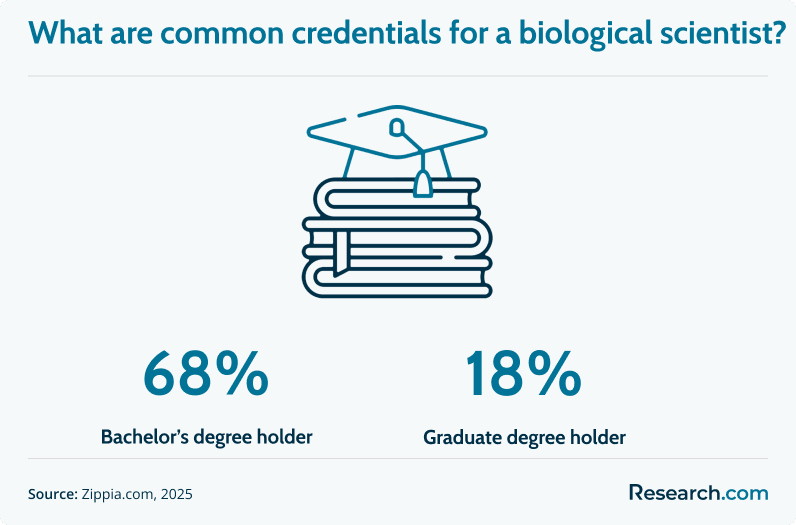
A bachelor’s degree in biological science typically takes four years of full-time study. The timeline can change if a student transfers credits, enrolls part time, chooses an accelerated pathway, changes majors, adds pre-health prerequisites, completes a double major, or pursues research-intensive honors work.
Undergraduate degree timeline
- A full-time bachelor’s degree in biological science usually requires four years.
- Students complete biology, chemistry, physics, microbiology, mathematics, laboratory, and general education requirements.
- Accelerated programs may shorten the timeline, while part-time enrollment may extend it.
- Students planning for medical, dental, veterinary, pharmacy, or physician assistant programs should map prerequisites early because professional school requirements may not perfectly match the biology major.
Graduate and advanced degree timeline
- Master’s degree: Usually takes 1-2 years and can support careers in research, education, environmental science, biotechnology, public health, or specialized technical fields.
- Ph.D. in biological science: Commonly requires 4-6 years or more, depending on research area, dissertation progress, funding, and specialization. Working professionals interested in flexible doctoral study can compare part time PhD options.
| Path | Typical length | Best for |
| Bachelor’s degree | Four years full time | Entry-level laboratory, environmental, healthcare support, sales, education, and graduate school preparation |
| Master’s degree | 1-2 years | Specialized research, teaching, public health, biotechnology, environmental analysis, and technical leadership |
| Ph.D. | 4-6 years or more | Independent research, academic roles, advanced scientific leadership, and specialized research careers |
| Professional school | Varies by profession | Medicine, dentistry, veterinary medicine, pharmacy, physician assistant practice, and other licensed healthcare paths |
What is the average cost of a biological science degree program?
The cost of a biological science degree depends on the type of institution, residency status, housing, fees, books, lab supplies, transportation, and whether the student attends online, on campus, full time, or part time. Tuition alone ranges from $15,000 to $53,000 per year, and total yearly expenses—including books, housing, and supplies—average $38,270 for U.S. college students.
Tuition costs by institution type
- Public universities for in-state students: Tuition averages $9,750 per year, with total costs reaching $27,146 for on-campus students.
- Public universities for out-of-state students: Tuition increases to $28,386 annually.
- Private universities: Average tuition is $38,421, with total yearly costs reaching $58,628 for students living on campus.
College prices have more than doubled in the 21st century, with tuition increasing at an annual rate of 4.04%. Public, four-year universities remain a common route for biology students, with over 63,000 degrees awarded in 2022. Students planning for medicine or another healthcare career should remember that a bachelor’s degree may be only the first stage of training. Reviewing the highest paying medical jobs can help pre-health students understand how later career options may relate to the cost of additional education.
Cost factors students often overlook
| Cost factor | Why it matters for biology majors | Question to ask |
| Lab fees and materials | Biology, chemistry, and microbiology courses may include additional fees or required equipment | Are lab fees included in tuition estimates? |
| Summer courses | Students may use summer terms to complete prerequisites or stay on track | What is the per-credit cost during summer sessions? |
| Research participation | Some opportunities are unpaid but valuable for graduate school and employment | Are paid research assistant roles available? |
| Internship location | Fieldwork, hospital experience, or biotech internships may require travel or relocation | Does the department help students find local placements? |
| Graduate school preparation | Test prep, application fees, interviews, and prerequisite courses can add costs | Does the school offer pre-health or graduate advising? |
What are the financial aid options for students enrolling in a biological science degree program?
Biological science students can use several funding sources, including scholarships, federal grants, student loans, work-study, institutional aid, departmental awards, and research assistant positions. The best strategy is to combine aid types rather than relying on one source.
Scholarships
Scholarships may be offered by universities, biology departments, nonprofit organizations, science associations, private foundations, and local community groups. Awards may be based on academic performance, financial need, research interests, identity-based eligibility, community service, or intended career path. Students can also review outside scholarship databases; this website provides lists of scholarships across many fields.
Federal financial aid
Students should complete the federal financial aid process if they want to be considered for need-based aid, federal loans, and work-study. Common options include:
- Pell Grants: Need-based grants that do not have to be repaid.
- Federal Direct Student Loans: Loans that can help cover tuition, fees, books, and living costs.
- Work-Study Programs: Part-time jobs that allow eligible students to earn money while enrolled.
University and departmental aid
Biology departments may offer scholarships, paid lab assistant jobs, teaching support roles, summer research stipends, travel funding for conferences, and awards for high-performing majors. Students should check both the central financial aid office and the biology department, because some opportunities are not advertised in the same place.
Ways to reduce total cost
- Start at a lower-cost accredited institution and transfer credits carefully.
- Compare total cost of attendance, not tuition alone.
- Ask whether required labs can be completed online, on campus, or through approved local sites.
- Look for paid research, internship, or work-study roles related to biology.
- Avoid taking unnecessary electives if they delay graduation.
- Confirm whether scholarships renew automatically or require a minimum GPA.
What are the prerequisites for enrolling in a biological science degree program?
Admission requirements vary by college, but successful biological science students usually enter with strong preparation in science, math, reading, and writing. Competitive programs may also look for evidence of curiosity, academic discipline, laboratory exposure, research interest, or healthcare-related experience.
Recommended high school coursework
Science: Biology and chemistry are commonly expected, and physics may be recommended or required by some programs.
Math: Algebra, geometry, and trigonometry help students prepare for statistics, chemistry, physics, and quantitative biology.
English: Scientific careers require clear reading, writing, and communication skills, especially for lab reports, research papers, grant writing, and patient or public communication.
College admissions requirements
GPA: Selective universities and competitive science programs often expect strong academic performance in high school.
Standardized tests: Some schools may request SAT or ACT scores, depending on current admissions policy.
Application essays: Many institutions ask students to explain their academic interests, scientific motivation, career goals, or preparation for a rigorous STEM major.
Transfer and international student considerations
Transfer credits: Transfer students should confirm whether biology, chemistry, and lab courses will count toward the major, not just general electives.
English proficiency: International applicants may need to submit English proficiency results, depending on university policy.
Program-specific prerequisites: Some schools have additional requirements for entry into upper-division biology, pre-health advising tracks, research programs, or specialized concentrations.
Students interested in combining biology with environmental policy or law may also want to understand related career directions. For example, learning about environmental lawyer salary information can help students evaluate how biology, environmental protection, and legal advocacy may intersect later in their careers.
What courses are typically in a biological science degree program?
Biological science programs usually begin with broad foundational coursework and then move into advanced topics, laboratories, electives, and specialization courses. The exact curriculum differs by institution, but most programs are designed to help students understand life at multiple levels—from molecules and cells to organisms, populations, and ecosystems.
Core courses
- General Biology: Introduces cell structure, genetics, evolution, physiology, and ecosystems.
- Cell Biology: Examines organelles, membranes, signaling, cell division, and cellular processes.
- Genetics: Covers DNA, inheritance, gene expression, variation, and molecular mechanisms.
- Evolution: Explores natural selection, adaptation, speciation, and biological diversity over time.
- Chemistry and Organic Chemistry: Builds the chemical foundation needed for biochemistry, molecular biology, and laboratory work.
- Statistics or Quantitative Methods: Helps students analyze biological data and interpret research findings.
Advanced and specialized courses
- Biochemistry: Focuses on the chemical reactions and molecular systems that support life.
- Microbiology: Studies bacteria, viruses, fungi, and other microorganisms in medical, environmental, and industrial contexts.
- Ecology: Analyzes relationships among organisms, populations, communities, and environments.
- Molecular Biology: Investigates DNA, RNA, proteins, gene regulation, and laboratory methods used in modern biology.
- Physiology: Explains how organs and body systems function in humans, animals, or other organisms.
As biology becomes more data-driven, some programs include computational biology, bioinformatics, or coding-related coursework. Students who want to combine biology with technology may benefit from exploring career comparisons in a computer science jobs list and salary, especially if they are considering bioinformatics, health data, biotechnology software, or computational research.
Students interested in workplace safety, environmental risk, or regulatory roles may also benefit from coursework in ecology, toxicology, microbiology, and environmental health. Understanding the environmental health and safety manager career path can help biology majors evaluate whether they need additional training in compliance, safety systems, or occupational health.
What types of specializations are available in a biological science degree program?
Specializations allow biology students to connect a broad science degree to a more specific academic or career goal. Some concentrations prepare students for healthcare and graduate research, while others support environmental, agricultural, marine, computational, or biotechnology careers.
Common biological science specializations
| Specialization | Focus | Potential career direction |
| Microbiology | Bacteria, viruses, fungi, pathogens, immune interactions, and microbial systems | Public health, clinical labs, biotechnology, food safety, infectious disease research |
| Neurobiology | Brain function, neural systems, behavior, and neurological disorders | Neuroscience research, healthcare preparation, pharmaceutical research, graduate study |
| Biochemistry | Chemical reactions, proteins, enzymes, metabolism, and molecular pathways | Pharmacology, molecular biology, medicine, biotechnology, laboratory research |
| Genetics | DNA, inheritance, gene expression, genetic variation, and genomics | Genetic counseling preparation, research, biotechnology, personalized medicine |
| Marine Biology | Ocean organisms, marine ecosystems, conservation, and aquatic environments | Conservation, marine research, environmental consulting, education |
| Ecology | Organisms, populations, ecosystems, biodiversity, and environmental change | Wildlife biology, conservation, environmental science, climate-related research |
Interdisciplinary paths
Some biology concentrations blend life science with technology, health, aging, business, law, or public policy. Biotechnology applies biological systems to medical, industrial, and agricultural innovation. Bioinformatics combines biology with computing and data analysis. Gerontology connects biology with aging, health services, and social needs. Students interested in aging services, long-term care coordination, or aging research may find it useful to review gerontology salary information.
Biology can also support careers where science communication and cross-cultural education matter. Students who enjoy teaching, outreach, or global public health may benefit from understanding how to become an ESL teacher, particularly if they want to work in international education, community health, or multilingual science communication.
How to Choose the Best Biological Science Degree Program
The best biological science degree program is not automatically the most famous or the most expensive. The right choice depends on your career goal, budget, preferred learning format, access to labs, research opportunities, faculty expertise, advising quality, and whether the program prepares you for employment, graduate school, or professional licensure where relevant.
Start with accreditation
Choose an institution accredited by a recognized accrediting body. Accreditation affects credit transfer, graduate school eligibility, employer confidence, and access to federal financial aid. Students should also check whether specialized tracks, online courses, or affiliated certificates meet external requirements for their intended career.
Match the curriculum to your career goal
A student interested in medical school needs a different course plan from a student focused on wildlife biology, biotechnology, or food safety. Review upper-division electives, lab sequences, research opportunities, and advising resources. For example, students exploring environmental science and infrastructure-related work may want to understand environmental engineer qualifications and choose a program with strong environmental science, chemistry, sustainability, and quantitative coursework.
Prioritize hands-on experience
Biology is an applied science. Look for programs with faculty research labs, undergraduate research funding, fieldwork, internships, hospital or biotech partnerships, senior projects, and opportunities to present findings. Practical experience can be the difference between graduating with a degree and graduating with a competitive resume.
Compare flexibility and total cost
Online, hybrid, part-time, and accelerated options can help some students reduce costs or continue working. However, biology requires labs, and not every online format is equally useful for every goal. Compare tuition, fees, housing, lab requirements, financial aid, transfer policies, graduation rates, and likely next-step costs such as graduate school applications or certification exams.
Questions to ask before choosing a program
| Question | Why it matters |
| Is the institution accredited? | Accreditation affects financial aid, transfer credit, graduate admissions, and employer trust. |
| How are labs delivered? | Biology students need credible lab experience for many jobs and graduate programs. |
| Can undergraduates join faculty research? | Research experience strengthens resumes and graduate school applications. |
| Does the program support my specialization? | Not every biology department is equally strong in marine biology, genetics, ecology, neuroscience, or biotechnology. |
| What advising is available for pre-health or graduate school? | Students pursuing medicine, pharmacy, dentistry, veterinary medicine, or graduate research need careful course planning. |
| What are the total costs after financial aid? | The listed tuition may not reflect housing, fees, books, transportation, or lab expenses. |
| Where do graduates work or study next? | Career and graduate placement outcomes help evaluate practical value. |
Common mistakes to avoid
- Choosing a school based only on reputation without checking the strength of the biology department.
- Ignoring accreditation or assuming all credits will transfer.
- Choosing an online program without confirming how laboratory requirements work.
- Focusing only on tuition instead of total cost of attendance.
- Waiting until senior year to seek research, internships, or clinical exposure.
- Assuming a bachelor’s degree alone is enough for every biology-related career.
- Picking a specialization before understanding job requirements and graduate school expectations.
What career paths are available for graduates of a biological science degree program?
Biological science graduates can move into healthcare, business, research, education, environmental science, conservation, public health, biotechnology, and science communication. Some roles are available with a bachelor’s degree and experience, while others require certification, licensure, a master’s degree, a Ph.D., or professional school.
Business and industry
Biology graduates who understand scientific products and customer needs may work in pharmaceutical sales, medical device sales, biotechnology product support, regulatory affairs, quality control, or product management. Students who want to pair science with business operations may consider additional business training, such as an affordable online business associate's degree.
Healthcare and clinical pathways
Many students use biology as preparation for medical, dental, pharmacy, veterinary, physician assistant, genetic counseling, laboratory science, nursing, occupational therapy, and related healthcare careers. Biology can also support medical illustration, health education, clinical research coordination, and public health roles.
Environmental and conservation careers
Students interested in ecosystems, sustainability, climate issues, water quality, wildlife, or land use may pursue work as environmental scientists, hydrologists, marine biologists, wildlife biologists, conservation specialists, environmental consultants, or ecotourism professionals.
Education, communication, and policy
Graduates who enjoy explaining science may become biology teachers, museum educators, science writers, public information specialists, curriculum developers, or science communicators. Others may work in forensic science, public policy, environmental advocacy, or government agencies where scientific knowledge supports decision-making.
Career path comparison
| Career direction | Possible roles | Education or experience often needed |
| Laboratory and research | Biological technician, research assistant, quality control associate | Bachelor’s degree plus lab experience; advanced roles may require graduate study |
| Healthcare preparation | Physician, physician assistant, genetic counselor, clinical laboratory professional | Bachelor’s degree plus professional, graduate, or clinical training |
| Environmental science | Environmental scientist, wildlife biologist, conservation specialist | Bachelor’s degree for some roles; fieldwork, GIS, statistics, or graduate study may help |
| Biotechnology and pharmaceuticals | Biochemist, product specialist, regulatory affairs associate, medical sales representative | Science degree plus industry, lab, sales, compliance, or advanced technical skills |
| Education and communication | Teacher, science writer, museum educator, science communicator | Biology degree plus teaching credentials, writing portfolio, or communication experience |
What is the return on investment of a biological science degree?
The ROI of a biological science degree depends on total education cost, debt, time to graduation, career target, salary growth, and whether the student needs additional credentials after the bachelor’s degree. A low-cost program with strong research access and good advising may provide a better return than a higher-cost program that does not align with the student’s goals.
Students can improve ROI by selecting an affordable accredited program, graduating on time, gaining paid or credit-bearing research experience, building quantitative and technical skills, and choosing certifications only when they are directly relevant. For example, students who want an entry route into patient-facing healthcare may compare medical assistant certification programs as a short-term credential that can complement biology coursework. However, certifications should be evaluated carefully for accreditation, employer recognition, cost, clinical requirements, and connection to the student’s intended role.
When the ROI is strongest
- You attend an accredited program at a manageable cost.
- You use the degree as a clear pathway to a specific role, graduate program, or professional school.
- You gain research, lab, clinical, field, or internship experience before graduating.
- You build complementary skills in statistics, coding, data analysis, regulatory compliance, communication, or business.
- You understand whether your target career requires additional education.
When ROI may be weaker
- You borrow heavily without a defined career or graduate school plan.
- You graduate without hands-on experience.
- You choose a specialization with limited local opportunities and no plan to relocate.
- You assume all biology jobs pay the same or that salary outcomes are guaranteed.
- You pursue unrelated certificates that do not improve employability in your target field.
What is the job market for graduates with a biological science degree program?
The job market for biological science graduates is strongest for students who connect their degree to applied skills, technical experience, and a specific industry. Healthcare, biotechnology, environmental science, food safety, public health, and laboratory research continue to offer opportunities, but entry-level competition can be significant. Graduates who have internships, undergraduate research, data skills, certifications, or graduate training are often better positioned.
In-demand career paths and salary ranges
| Role | Salary range | What the role does |
| Biochemist | $51,000 – $120,000 per year | Studies chemical processes in living organisms and contributes to medicine, agriculture, biotechnology, or research. |
| Genetic Counselor | $52,000 – $98,000 per year | Assesses hereditary risk and helps patients understand genetic information and testing results. |
| Medical Sales Representative | $55,000 – $120,000 per year, plus commissions | Sells medical devices, pharmaceuticals, or biotechnology products to healthcare providers and organizations. |
| Environmental Scientist | $48,000 – $110,000 per year | Studies pollution, conservation, environmental risk, and climate-related data for agencies, firms, or nonprofits. |
| Radiology Technologist | $50,000 – $80,000 per year | Uses imaging technologies such as MRIs and X-rays to support medical diagnosis; additional training may be required. |
What are the emerging career trends in biological sciences?
Biological science is becoming more interdisciplinary. Employers increasingly value graduates who can combine biology with data analysis, technology, regulatory knowledge, communication, and applied problem-solving. Genomics, bioinformatics, personalized medicine, agricultural biotechnology, drug discovery, environmental monitoring, and health data are creating roles that require both scientific literacy and technical fluency.
Students who want to stay competitive should consider building skills in statistics, coding, laboratory automation, scientific databases, quality assurance, regulatory compliance, science writing, and project management. Healthcare-oriented students may also compare online healthcare certification programs if they need targeted credentials that support clinical, administrative, or healthcare operations roles.
Here’s What Graduates Have to Say About Their Biological Sciences Degree
-
: "
My biology degree gave me the lab foundation I needed, but the real turning point was getting involved in applied research. I now work in biotechnology, where I help develop sustainable agricultural solutions. — Jay
"
-
: "
The coursework was demanding, especially chemistry and physiology, but it prepared me for healthcare training. As a physician assistant, I use the biological concepts I learned every day when evaluating and treating patients. — Michael
"
-
: "
I wanted to explain science to people outside the lab. Studying biology helped me understand complex research well enough to turn it into clear public-facing content. — Lenny
"
What additional certifications can boost career prospects in biological sciences?
Certifications can be useful when they add a specific, employer-recognized skill that the biology degree does not fully cover. Strong options may relate to data analysis, regulatory compliance, laboratory safety, clinical research, healthcare administration, quality assurance, environmental health, or medical office systems. The key is alignment: a certificate should support the job you actually want.
For students interested in healthcare administration or clinical documentation roles, medical coding classes online may provide a practical bridge into healthcare settings. Before enrolling, students should check the credential’s reputation, cost, exam requirements, employer demand, and whether credits or training hours are transferable.
Should I Pursue an Advanced Doctorate to Accelerate My Biological Sciences Career?
An advanced doctorate can be valuable for students who want independent research roles, advanced clinical practice, academic careers, pharmaceutical research, or high-level scientific leadership. It is not necessary for every biology graduate, and it should not be pursued only because the next step feels unclear. Doctoral training requires time, focus, and a strong understanding of the career outcome it supports.
Students comparing doctorate options should evaluate accreditation, clinical or research requirements, faculty expertise, graduation outcomes, flexibility, funding, and total cost. Professionals interested in pharmacy-related advancement may want to compare options such as the cheapest online Pharm D degree, especially if they need a flexible pathway that fits work responsibilities.
Should I consider healthcare-related certifications to expand career opportunities?
Healthcare-related certifications can be helpful for biology graduates who want patient-facing experience, clinical support roles, medical office work, or a practical entry point into healthcare before applying to graduate or professional programs. They can also help students test whether they enjoy clinical environments before committing to longer and more expensive training.
For example, a medical assistant school online program may help biology graduates add practical healthcare competencies to their scientific background. Students should still verify whether the program includes any required hands-on components, whether employers in their area recognize the credential, and whether the training supports their long-term goal.
Can a Biological Science Degree Bridge the Gap to Kinesiology and Human Performance?
Yes. Biological science can provide a strong foundation for kinesiology, exercise science, rehabilitation, sports science, ergonomics, and human performance. Coursework in physiology, anatomy, biochemistry, metabolism, biomechanics-related biology, and molecular processes can help students understand how the body responds to movement, stress, injury, recovery, and training.
Students who want to move toward wellness, performance, rehabilitation, or sports-related careers may consider adding focused training through an online degree in kinesiology. This can be especially useful for students who want to combine biological science with applied human movement, coaching, therapy preparation, occupational wellness, or performance research.
Can a Biological Science Degree Lead to a Nutrition Career?
A biological science degree can support a nutrition-related career because it builds knowledge of physiology, metabolism, digestion, biochemistry, cellular function, and research interpretation. However, nutrition careers may have specific education, supervised practice, certification, or licensure requirements depending on the role and location.
Students interested in dietetics, clinical nutrition, public health nutrition, sports nutrition, or nutrition research should check the exact credential path before assuming a biology degree is sufficient. A helpful starting point is reviewing what education is needed to become a nutritionist so you can identify gaps between a biology curriculum and nutrition-specific requirements.
Are affordable online biology degree programs a viable option?
Affordable online biology degree programs can be a practical option for students who need flexibility, want to lower costs, or cannot relocate. They work best when the program is accredited, clearly explains lab requirements, offers strong advising, provides access to faculty support, and aligns with the student’s career or graduate school plans.
Online biology students should be especially careful about laboratory delivery. Some programs use virtual labs, at-home lab kits, short campus residencies, or approved local lab sites. Students planning for medical school, graduate research, clinical laboratory work, or other hands-on fields should confirm that online lab experiences will be accepted by their intended next step. To compare lower-cost options, review the cheapest online biology degree programs.
Key Insights
- A biological science degree is broad, but career outcomes depend on specialization, hands-on experience, technical skills, and whether additional credentials are required.
- A bachelor’s degree usually takes four years, while master’s and Ph.D. pathways can add 1-6 years or more depending on the goal.
- Total cost matters more than tuition alone. Annual costs average $38,270, with tuition ranging from $9,750 for public in-state students to $53,000 for private options.
- Core coursework usually includes genetics, microbiology, ecology, cell biology, chemistry, and laboratory science, while specializations can include biochemistry, marine biology, neurobiology, genetics, ecology, and biotechnology.
- Biology graduates can pursue roles such as biochemist, genetic counselor, environmental scientist, medical sales representative, radiology technologist, laboratory technician, and science communicator, with listed salary ranges from $48,000 to $120,000+ per year depending on role and experience.
- The best programs are accredited, affordable for your situation, strong in your intended specialization, and rich in research, fieldwork, internship, or clinical opportunities.
- Online biology degrees can work well for some students, but lab delivery, accreditation, graduate school acceptance, and employer expectations must be checked before enrolling.
- Do not assume the biology major alone guarantees a high salary. The strongest outcomes usually come from pairing the degree with research experience, internships, data skills, clinical exposure, certifications, graduate education, or industry-specific training.
References:
- Bureau of Labor Statistics, U.S. Department of Labor. (n.d.). Life, physical, and social science occupations. Occupational Outlook Handbook.
- Bureau of Labor Statistics, U.S. Department of Labor. (n.d.). Occupational employment and wage statistics: 19-1029 biological scientists, all other.
- Bureau of Labor Statistics, U.S. Department of Labor. (n.d.). Conservation scientists and foresters. Occupational Outlook Handbook.
- U.S. Department of Labor. (2024, March 8). Fast-growing science occupations.
- Indeed. (n.d.). Jobs in biological sciences.
- CollegeAdvisor. (n.d.). Best colleges for science.
- University of Nebraska Omaha. (n.d.). Biological sciences career pathways.
- Data USA. (n.d.). General biological sciences profile.
- EducationData.org. (n.d.). Average cost of college.
- Purdue University. (n.d.). What can I do with a major in biology?
Other Things You Should Know About a Biological Science Degree
Most biological science degree programs require students to complete lab safety training before their first laboratory course. This usually covers chemical handling, PPE use, waste disposal, and emergency procedures, and many schools require a short certification or quiz before access to teaching labs.
Graduates from 2027's top biological science degree programs often enjoy job placement rates of 85% to 95% within six months. These programs frequently partner with leading research institutions and biotech companies, providing a robust pathway to careers in biological sciences.
The University of California, San Diego, and Harvard University are renowned for offering exceptional research opportunities to undergraduates in their biological science programs. These schools provide hands-on experience in cutting-edge labs, fostering student engagement and advancement in the field.


