
2027 What Can You Do with a Physics Degree? Jobs, Salary & Career

Co-Founder and Chief Data Scientist
If you are considering a physics degree, the real question is not just whether the subject is difficult. It is whether the degree fits your goals, budget, and preferred career path. Physics can lead to research, engineering, data-heavy roles, finance, teaching, and technical work in emerging fields such as quantum technology and energy. This guide explains what a physics degree is, what it takes to earn one, what it may cost, what jobs it can lead to, and how to decide whether the path is worth it for you.
Physics is a strong choice for students who enjoy math, problem-solving, and abstract thinking. It is also a practical degree for anyone who wants flexible career options after graduation. In the sections below, you will find degree requirements, tuition ranges, career paths by education level, salary context, and decision tips that can help you compare physics with other majors.
Quick answer: A physics degree is best for learners who want a rigorous science education and a skill set that transfers well to many industries. A bachelor’s degree can support entry into technical and analytical careers, while graduate study is usually needed for research-heavy roles, university teaching, and some specialized science jobs. If you are choosing between school options, focus first on accreditation, lab access, research opportunities, cost, and whether the program aligns with your long-term career plans.
Physics Degree Table of Contents
- What is physics degree?
- Key Physics Degree Statistics
- What are the requirements to study physics?
- How much does it cost to study physics?
- Possible Careers for Physics Majors
- How much do physics majors earn?
- How does a physics degree compare to other disciplines in career preparation?
- Can a physics degree open doors to real estate and property development careers?
- Is an online physics degree a practical and affordable option?
- Can a physics degree enhance business leadership skills?
- Can you fast-track your physics degree?
- How can you leverage a physics degree in interdisciplinary fields?
- How Can Internships and Research Opportunities Accelerate a Physics Career?
- How Can an Accelerated Bachelor's Degree Enhance Your Physics Career Prospects?
- Can an accelerated master’s degree propel your career in physics?
- Emerging Trends and Future Opportunities for Physics Majors
- Famous People Who Studied Physics
- Are non-doctorate degrees in physics worth it?
- What certifications can further amplify a physics degree?
What is a physics degree?
A physics degree is an academic program focused on matter, energy, motion, and the laws that govern the universe. Students in this major learn how to reason quantitatively, design experiments, interpret data, and build mathematical models that explain physical systems. The field includes both theory and experimentation, so the coursework usually combines advanced math, laboratory work, and problem-solving.
Physics is often grouped into two broad areas. Classical physics covers topics such as mechanics, thermodynamics, optics, electromagnetism, acoustics, and astronomy. Modern physics focuses on areas such as relativity, quantum mechanics, atomic and nuclear physics, cosmology, and biophysics. Many programs also require programming, computational methods, and data analysis because employers increasingly expect physics graduates to work with software and simulation tools.
For students, the degree matters because it develops transferable skills that can be used far beyond a laboratory. That is why physics graduates often move into technology, engineering, analytics, finance, education, and applied research.
Key physics degree statistics
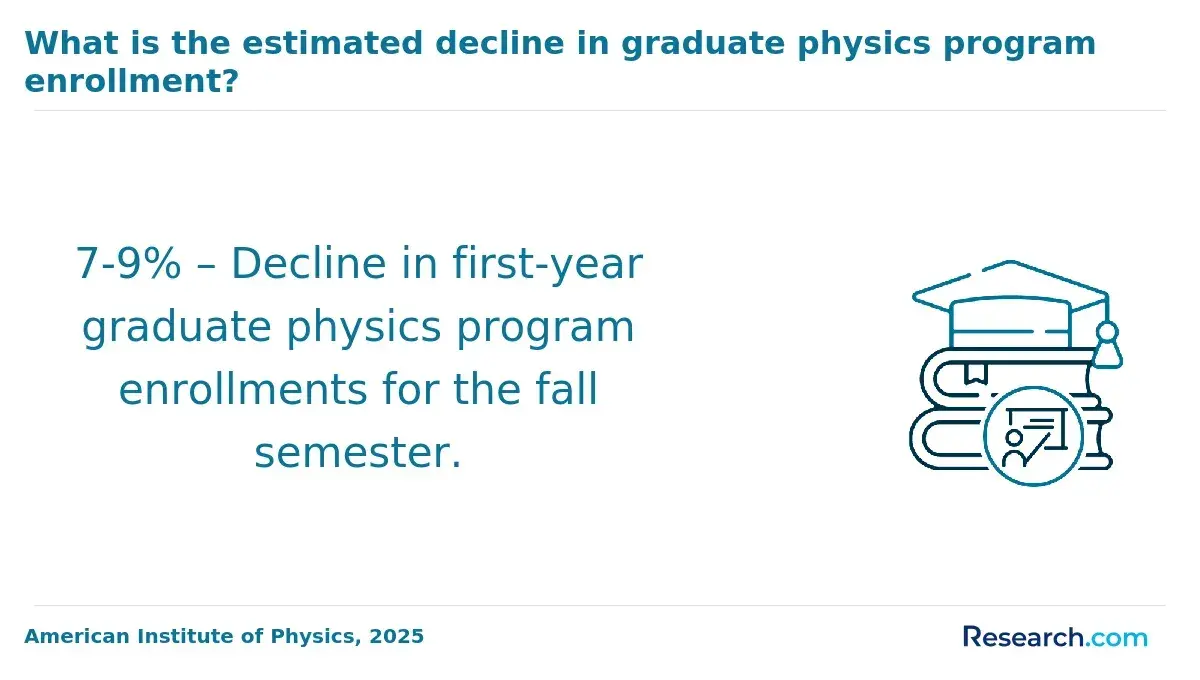
- There are 84 departments that grant astronomy bachelor’s degrees in the U.S. (AIP, 2025).
- 241 first-year graduate students were enrolled in graduate astronomy programs in the U.S. during the fall term (AIP, 2025).
- 60% of physics majors who pursued postgraduate degrees a year after graduation would choose physics or astronomy programs; 18% would choose engineering; the remaining 22% would choose other areas of focus such as computer science, mathematics, education, medicine, and more (American Institute of Physics, 2025).
- ~70% of PhD in physics graduates were employed in the private sector followed by physics education positions.
- The overall percentage of non-U.S. citizens enrolling in first-year physics and astronomy graduate programs in the U.S. has remained at approximately 42% (American Institute of Physics, 2026).
- Around 3,000 students were enrolled as first-year students in physics graduate programs in the U.S. for the 2024-25 academic year (AIP, 2025).
- 1 in 7 physics bachelor’s degree holders will choose to complete PhD in physics (AIP, 2025).
- The United States holds 94 Nobel Prize in physics, which makes the U.S. the country with the highest number of this award.
What are the requirements to study physics?
Physics programs exist at several academic levels, and the right entry point depends on your background and career goals. In general, the higher the role you want after graduation, the more education you will need. Research positions and university-level teaching usually require graduate study, while many technical and analytical jobs can begin with a bachelor’s degree.
| Degree level | Typical length | Common entry requirements | Best for |
| Associate degree | About 2 years | High school diploma or GED, plus math and science coursework | Students who want a lower-cost start or plan to transfer into a bachelor’s program |
| Bachelor’s degree | About 4 years | High school diploma or GED, strong math and science preparation | Students aiming for technical roles, graduate school, or broad job flexibility |
| Master’s degree | About 2 years | Bachelor’s degree, and sometimes GRE or Physics GRE scores depending on the school | Students who want specialized training, stronger research preparation, or advancement |
| PhD | About 4 to 5 years | Strong academic record; a master’s degree is not always required | Future researchers, professors, and physicists in advanced scientific roles |
An associate degree can help students complete foundational science coursework before transferring, but it is usually not enough for most physics careers on its own. A bachelor’s degree is the most common starting point for employment. A master’s degree can strengthen employability in applied science, teaching, and technical management. A PhD is the standard route for independent research and many specialized science careers.
How much does it cost to study physics?
The cost of a physics degree depends on whether the school is public or private, in-state or out-of-state, and whether you attend on campus or online. For undergraduate study, tuition can be as low as more or less $10,490 for in-state colleges and $40,253 for out-of-state institutions. According to recent data, the average tuition of colleges offering physics programs for 2025 is $39,169 for undergraduate programs. For context, undergraduate tuition at selective private institutions ranges from $36,090 at Boston College to $55,180 at Saint Joseph's University for the 2025-2026 academic year, with additional laboratory fees typically ranging from $260 to $360 per course.
Graduate pricing is more variable. A two-year master of science in physics degree can cost nearly $9,000 at California State University in Fullerton, more than $15,000 at California State University in Fresno, and can go as high as more than $20,000 at the University of Toledo in Ohio (Masters Portal, n.d.). PhD programs may appear expensive on paper, but many doctoral students receive funding through grants, assistantships, or scholarships. That does not mean a PhD is free in every case, but it is common for research-based programs to offset a large part of the cost.
If affordability is a major concern, compare tuition, fees, lab charges, transfer policies, and aid eligibility before applying. Title IV schools can be a useful starting point because they participate in federal financial aid programs.
Possible careers for physics majors
Physics majors are often hired for their analytical thinking, quantitative reasoning, and comfort with complex systems. In the private sector, many recent physics graduates work in engineering, computer and information systems, or other data-intensive fields. Others move into schools, colleges, government agencies, national laboratories, or military-related roles. The exact path often depends on the degree level, internship experience, and technical skills gained during school.
Many employers expect physics graduates to use tools such as simulation software, ELN software, lab inventory management platforms, and scientific data management systems. Programming and modeling skills are increasingly important, especially for students aiming at research, engineering, analytics, or technology jobs.
Here is a practical view of how career options often expand by credential level.
| Education level | Common roles | Typical advantage |
| Associate degree | Technical assembly worker, mechanical maintenance worker | Entry into hands-on technical work or a transfer pathway |
| Bachelor’s degree | Laboratory assistant, healthcare technician, mechanical professional | Broader access to technical and applied science roles |
| Master’s degree | Teaching assistant, high school physics teacher, staff scientist, project manager | Stronger specialization and improved advancement potential |
| PhD | Physicist, astronomer, postsecondary physics teacher, biophysicist, natural sciences manager, petroleum engineer, geophysicist | Preparation for research leadership and the most specialized careers |
Physics is not a one-track degree. Many graduates move into roles that are not labeled “physicist,” but still depend on the same core strengths: math, modeling, experimentation, and problem-solving.
How much do physics majors earn?
Earnings vary widely by job title, degree level, industry, and location. According to ZipRecruiter data from 2026, physics majors with a bachelor’s degree in the United States earn around $61,160 per year, or about $29.40 per hour on average. In that dataset, many salaries fall between roughly $46,000 and $80,000.
For physicists specifically, ZipRecruiter reports an average salary of approximately $94,805 annually, or around $45.58 an hour. Some specialized roles may pay well above six figures, particularly in research, engineering, and medical physics. These figures should be treated as market snapshots, not guarantees. Actual pay depends on your employer, region, experience, and specialization.
If you are comparing physics against other majors, the key point is this: the degree does not promise a fixed salary, but it can support strong earnings when paired with the right specialization and job market fit.
How does a physics degree compare to other disciplines in career preparation?
A physics degree is one of the most flexible science majors because it emphasizes underlying principles instead of training for only one job. That gives graduates a broad base for careers in engineering, analytics, finance, software, education, and research. The trade-off is that some career paths may require extra preparation, such as coding skills, internships, or a graduate degree.
Compared with more vocational majors, physics offers less direct job training but more long-term adaptability. Compared with highly specialized majors, it may provide a stronger foundation for switching fields later. This can be useful in markets where employers value problem-solving and quantitative reasoning more than a narrow subject label.
Physics also matches well with emerging fields that rely on modeling and computation, including artificial intelligence, renewable energy, and scientific computing. Students who want a degree with broad technical value often find physics attractive for that reason. If you are also comparing majors more generally, see college careers for other options that may fit different interests and timelines.
Can a physics degree open doors to real estate and property development careers?
Yes, but usually indirectly. Physics graduates bring analytical thinking, quantitative modeling, and systems analysis skills that can help in property valuation, risk analysis, sustainability planning, and energy-efficient design. Those strengths are useful in real estate development, especially when projects involve large budgets, technical constraints, or environmental performance goals.
That said, physics alone does not replace industry knowledge, licensing, or market experience. If property development interests you, pair your technical background with finance, planning, construction, or real estate coursework. A real estate degree online can make sense if you want to build more targeted knowledge for that field.
Is an online physics degree a practical and affordable option?
An online physics degree can be practical for the right student, but it is not automatically the best choice for every learner. Online study works best when the program includes strong academic support, clear lab requirements, and accreditation that fits your goals. It can also help students who need flexibility because of work, family, or location.
The main issue is not whether online learning is “real” enough. The important question is whether the program gives you the lab access, faculty interaction, research opportunities, and transfer or licensure compatibility you need. If affordability is your main concern, reviewing the cheapest online bachelor's degree options can help you compare costs without assuming lower price means lower quality.
| Format | Potential benefits | Possible limitations |
| Online | Flexible scheduling, easier to balance work and study, may reduce commuting costs | May limit lab access, networking, and hands-on research unless the program is well designed |
| Campus-based | More direct access to labs, faculty, research groups, and peer collaboration | Less flexible and sometimes more expensive once housing and commuting are included |
Can a physics degree enhance business leadership skills?
Yes. Physics students spend years solving complex problems, testing assumptions, and working with data. Those habits translate well to management, operations, strategy, and leadership roles where decisions must be based on evidence rather than guesswork.
Physics alone does not make someone a business leader, but it can create a strong analytical base. If you want to combine science training with management skills, finance, operations, or an MBA-style path may be a better complement than a doctoral route aimed only at research. For students specifically interested in advanced business leadership credentials, a shortest DBA program online may be worth comparing.
Can you fast-track your physics degree?
In some cases, yes. Accelerated physics pathways may shorten the time to graduation through year-round scheduling, heavier course loads, AP or dual-enrollment credit, transfer credit, or summer classes. These options can be helpful if you already have a strong math and science foundation and want to move quickly into graduate school or the job market.
Before choosing an accelerated route, check whether the program still offers enough lab work, advising, and research exposure. Speed should not come at the cost of weak preparation. If you want to compare faster routes across disciplines, review the quickest way to get a bachelor's degree.
How can you leverage a physics degree in interdisciplinary fields?
One of the strongest advantages of physics is that it can connect with other fields. If you enjoy solving problems but do not want to limit yourself to academia, pairing physics with another area can improve employability and open more career doors.
Physics and data science
Physics students are often well suited for analytics, modeling, and machine learning because they already work with quantitative reasoning and experimental data. Useful additions include Python, R, statistics, and visualization tools.
Physics and finance
Quantitative finance, risk analysis, and investment modeling all reward people who can work with numbers and uncertainty. Physics graduates may be competitive if they also learn financial modeling, Excel, and econometrics.
Physics and environmental science
Climate analysis, energy systems, and sustainability work often require the kind of systems thinking physics develops. This can be a strong path for students interested in clean energy, environmental consulting, or modeling.
Physics and creative media
Game design, animation, simulation, and virtual reality can also benefit from physics knowledge. Students interested in this area should build experience with 3D tools, graphics software, and physics engines such as Unity or Blender.
How can internships and research opportunities accelerate a physics career?
Internships and research matter because physics is not learned well through theory alone. Employers want graduates who can work with lab equipment, handle data, use software, and solve real-world problems. Research experience can also help you decide whether you want to continue to graduate school, move into industry, or specialize in a technical role.
Students who complete internships often gain clearer career direction and stronger résumés. Research assistants and lab workers also tend to build relationships with faculty, mentors, and employers, which can help later when applying for jobs or graduate programs. If you are still at an early stage and need an affordable starting point, the cheapest online college for associate's degree can be a practical way to begin building skills.
How can an accelerated bachelor's degree enhance your physics career prospects?
An accelerated bachelor’s degree can help you finish sooner, but it is most valuable when it still includes the same core science training as a traditional program. If you choose this route, make sure the school allows enough time for labs, math sequences, and internship or research opportunities.
An accelerated bachelor's degree may be useful if your goal is to enter the workforce faster, reduce total time in school, or prepare more quickly for graduate study. It is less useful if you need a slower pace to strengthen your foundation in calculus, programming, or laboratory work.
Can an accelerated master’s degree propel your career in physics?
An accelerated master’s program can be a smart choice for students who already know they want specialized training and a faster path to advancement. This is especially relevant for roles in applied research, engineering support, data-heavy work, and science leadership. The trade-off is that accelerated programs can be intense, so they suit disciplined students who can handle a fast workload.
If you are comparing options, look closely at whether the curriculum includes advanced lab work, thesis or project requirements, and direct career relevance. For shorter graduate pathways, you can explore 6 month masters programs as one possible starting point.
Emerging trends and future opportunities for physics majors
Physics graduates are benefiting from several current shifts in the labor market. Some of the most important are the growth of AI and automation, rising interest in quantum technologies, continued investment in renewable energy, and the increasing use of data-driven decision-making across industries. These changes favor people who can model systems, work with complex tools, and adapt across technical domains.
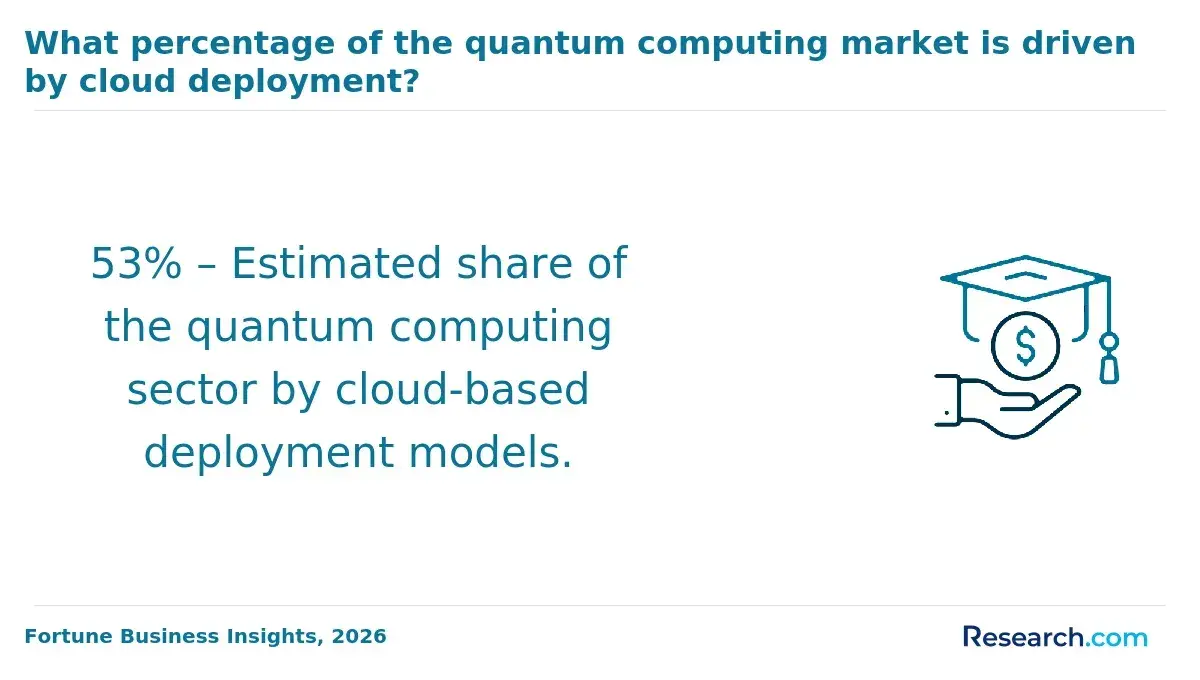
Quantum computing is one area attracting attention because it draws directly on physics concepts such as quantum mechanics and information theory. Renewable energy is another major opportunity, especially in solar, wind, storage, and energy optimization. Physics graduates also continue to find value in industries that need simulation, advanced instrumentation, materials analysis, and research support.
Another trend is the importance of combined skill sets. Employers often want physics knowledge plus coding, data analysis, or project management. That means students who build interdisciplinary abilities are usually better positioned than those who rely on physics coursework alone.
Entrepreneurship is also a realistic path for some graduates. Physics training can support product development, hardware innovation, clean-tech, med-tech, and research-based startups. If your goal is faster entry into a paid role while you build experience, reviewing quick degrees that pay well may help you compare time-saving options.
Famous people who studied physics
Some well-known public figures studied physics before moving into other fields. Their careers are a reminder that the degree can serve as a launchpad rather than a destination.
- Brian May. The Queen guitarist earned an undergraduate degree in physics and later completed a PhD in astrophysics at the Imperial College.
- Angela Merkel. Germany’s first female chancellor earned a bachelor’s degree in physics from the University of Leipzig, formerly Karl Marx University. She also received a doctorate from the Central Institute of Physical Chemistry of the Academy of Sciences in East Berlin for her quantum chemistry thesis.
- Elon Musk. He studied physics at the University of Pennsylvania while also pursuing business studies, and later gained admission to Stanford University’s physics PhD program before leaving.
- Jimmy Carter. While serving in the U.S. Navy, he completed graduate work in reactor technology and nuclear physics at Union College in Schenectady, New York (NobelPrize.org, n.d.).
- Dara Ó Briain. Before becoming a comedian and television host, he studied mathematics and theoretical physics at University College in Dublin, Ireland.
Are non-doctorate degrees in physics worth it?
Yes, for many students they are. A bachelor’s or master’s degree in physics can lead to meaningful work in industry, government, education, and technical roles without requiring a PhD. That matters because not every student wants or needs to spend several additional years in graduate school.
According to recent labor market analysis, employment for physicists and astronomers is projected to grow 4% through 2034, about as fast as the average for all occupations. Physics graduates can expect starting salaries between $46,000 and $58,000 per year, with some earning up to $64,000 annually. Those figures suggest that physics can be a worthwhile degree even without doctoral study, especially for students who plan carefully and build marketable skills.
A master’s degree may be a strong middle ground if you want better specialization without the full time commitment of a PhD. It can help with roles in data science, software, research and development, technical management, and education. The best choice depends on whether you want to enter the workforce quickly, pursue research, or keep your options broad.
What are the advantages of pairing a physics degree with a shorter healthcare program?
Physics and healthcare can work well together, especially in fields that use imaging, diagnostics, instrumentation, and medical technology. Students with strong quantitative skills may find that healthcare training gives them a more direct path to employment while still making use of their physics background.
Programs such as 2 year healthcare degrees can prepare students for careers in radiologic technology, medical laboratory science, and related applied roles. These paths may be especially appealing if you want a job-oriented credential with a faster route to the labor market.
This combination can also support careers involving MRI, CT scanning, nuclear medicine, and biomedical equipment. If you want a more applied career with clear patient-care relevance, healthcare may be a better complement than a second purely theoretical science path.
What certifications can further amplify a physics degree?
Certifications can help physics graduates narrow their focus and signal job readiness. The most useful ones depend on your target field, but common examples include data analytics, project management, programming, lab safety, instrumentation, and specialized technical credentials. These can strengthen a résumé when a degree alone is not enough to show practical capability.
If you are trying to move into a competitive field faster, an additional fastest online associate's degree may also be part of your planning, especially if you are building a multi-step educational path.
How to choose the right certification
- Match the certification to the job you want, not just the one that sounds impressive.
- Check whether employers in your target field recognize the credential.
- Look for programs that include hands-on practice, not only short quizzes.
- Avoid spending money on credentials that do not improve your specific career prospects.
How to decide whether a physics degree is the right choice
Before enrolling, ask yourself a few practical questions. Do you enjoy math enough to use it for years? Are you open to graduate school if your target job requires it? Do you want a broad scientific foundation, or do you prefer a degree that leads more directly into one profession? Can you afford the program you are considering, and does it offer research, lab, or internship opportunities that match your goals?
If you answer yes to most of those questions, physics may be a strong fit. If you want a degree with a quicker, more direct job path and less emphasis on abstract theory, another major may be a better match.
Common mistakes students make when choosing a physics program
- Choosing a school without checking accreditation.
- Focusing only on tuition and ignoring lab fees, housing, commuting, and materials.
- Assuming every online physics program fits research or licensure goals.
- Ignoring internship, research, and faculty mentoring opportunities.
- Assuming a degree automatically leads to a specific salary.
- Overlooking whether the program has strong math, coding, and data analysis training.
Questions to ask before enrolling
- Is the program accredited and recognized by employers or graduate schools?
- What lab work is required, and how is it delivered?
- Do students get research, internship, or assistantship opportunities?
- How many graduates enter physics-related jobs versus other fields?
- What support is available for tutoring, advising, and career placement?
- Can I transfer credit, and what is the school’s policy on prior learning?
Key Insights
- A physics degree is valuable because it builds transferable skills in math, modeling, experimentation, and problem-solving.
- Bachelor’s-level study can lead to technical and analytical jobs, while master’s and PhD paths open more specialized research and teaching roles.
- Cost varies widely, so students should compare tuition, lab fees, aid, and accreditation before enrolling.
- Physics graduates often move into engineering, data-related work, technology, education, healthcare, and applied science.
- Online and accelerated programs can work, but only if they still provide strong labs, faculty support, and career-relevant training.
- The most important decision is not just whether to study physics, but whether your chosen program matches your career goal, budget, and desired timeline.
References:
- American Institute of Physics. Physics Masters: One Year After Degree. https://www.aip.org/statistics/physics-masters-one-year-after-degree
- APS Careers. Find Your Success in Physics. https://www.aps.org/careers/advice/find-your-success
- Wayne State University, College of Liberal Arts and Sciences, Department of Physics and Astronomy. (n.d.). Career outlook. Retrieved from https://clas.wayne.edu/physics/programs/career-outlook
- Chen, S. (2025). Why a physics degree is so valuable in today's uncertain job market. Physics World. Retrieved from https://physicsworld.com/a/why-a-physics-degree-is-so-valuable-in-todays-uncertain-job-market/
- U.S. Bureau of Labor Statistics. (2025). Occupational Outlook Handbook: Physicists and Astronomers. https://www.bls.gov/ooh/life-physical-and-social-science/physicists-and-astronomers.htm
- Smith, A., & Zhao, L. (2025). Foundations of Contemporary Physical Sciences. Journal of Modern Theoretical Physics, 14(2), 112-128. https://doi.org/10.1016/j.jmtp.2025.01.004
- American Physical Society. (2025). History of physics and the classical-modern divide. https://www.aps.org/programs/outreach/history/index.cfm
- U.S. Bureau of Labor Statistics. Physicists and Astronomers. https://www.bls.gov/ooh/life-physical-and-social-science/physicists-and-astronomers.htm
Other Things You Should Know About a Physics Degree
A physics degree can lead to careers in various fields, including engineering, computer information systems, healthcare, education, and business. Physics graduates are also well-suited for roles in research, data analysis, project management, and technical consulting.
In 2027, non-doctorate degrees in physics are indeed worth it for many. They offer diverse career paths beyond academia, including roles in engineering, data analysis, and financial sectors. These degrees equip graduates with strong analytical and problem-solving skills, making them valuable in various industries.
The job outlook for physics majors is positive, with opportunities in academia, private sector industries, government research labs, and more. Physics majors are in demand for their analytical and problem-solving skills.
Salaries for physics majors vary by industry and job role. Generally, physics majors earn competitive salaries, with higher earnings for those with advanced degrees. For instance, physicists and astronomers can earn upwards of $100,000 annually, while roles in engineering and technology also offer high earning potential.
Pursuing a physics degree provides a deep understanding of fundamental scientific principles, enhances problem-solving and analytical skills, and offers diverse career opportunities with high earning potential. Additionally, physics graduates are well-prepared for advanced studies in various scientific and engineering disciplines.


