2027 Best Online Geoscience & Geology Degree Programs

Co-Founder and Chief Data Scientist
Choosing an online geoscience or geology degree is not just a question of convenience. You need a program that teaches field-based science well, offers credible lab or fieldwork experiences, fits your budget, and supports the kind of career you want—environmental consulting, GIS, resource management, energy, meteorology, government science, or graduate study.
This guide compares online geoscience and geology degree options for 2027 and explains how to evaluate them realistically. You will learn what these programs cover, how online field and lab requirements work, what tuition can look like, which schools stand out, what careers may be available, and how to avoid common mistakes before enrolling.
Quick answer: Is an online geoscience or geology degree worth it?
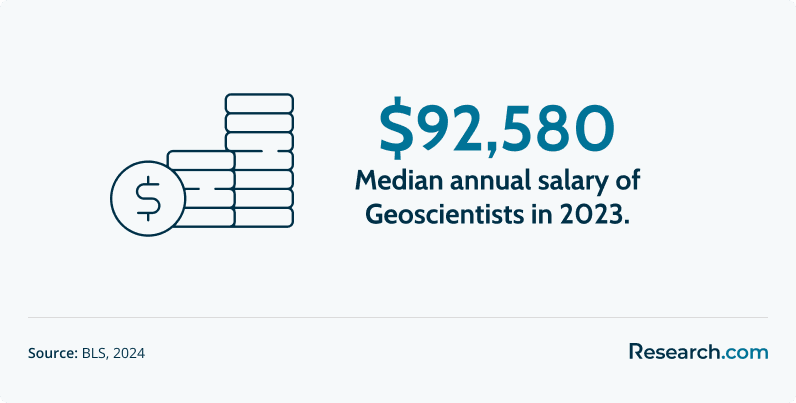
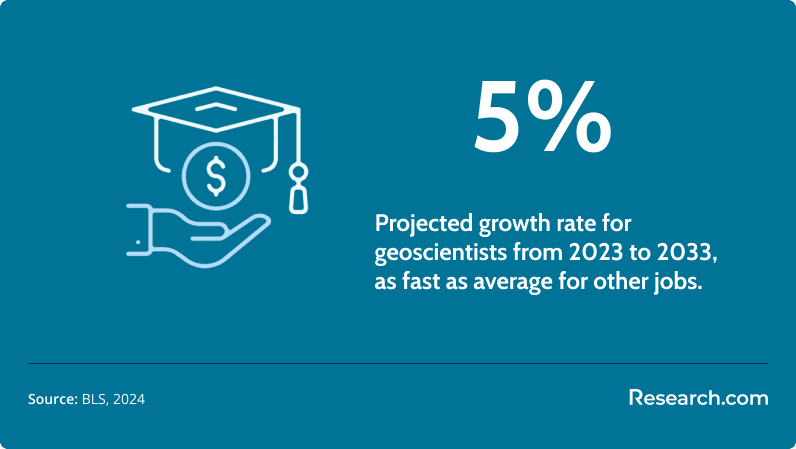
An online geoscience or geology degree can be worth it if the program is accredited, includes meaningful lab or field experiences, and matches your career goal. The field can lead to roles in environmental consulting, geospatial analysis, resource management, government agencies, energy, and sustainability. According to the U.S. Bureau of Labor Statistics, geoscientists earned a median annual wage of $92,580 in May 2023, and employment is projected to grow by 5 percent from 2023 to 2033, with about 2,200 openings each year.
- Best fit: Students who like science, data analysis, environmental systems, mapping, fieldwork, and solving real-world earth science problems.
- Use caution if: You want a fully online degree with no field or lab expectations; many strong geology programs still require hands-on components.
- Most important checks: Accreditation, fieldwork format, transfer credit policy, total cost, faculty expertise, GIS or technical training, and career support.
What should I expect from an online geoscience and geology degree?
An online geoscience or geology degree studies Earth’s materials, systems, history, hazards, resources, and environmental processes. Depending on the program, coursework may include mineralogy, sedimentology, geophysics, hydrology, climate science, GIS, remote sensing, environmental geology, and field methods.
Although lectures and assignments are commonly delivered online, geoscience is still an applied science. Strong programs usually include some combination of virtual labs, mapping projects, data analysis, field camp, internship work, capstone research, or short in-person requirements. Before enrolling, confirm exactly how the program handles lab safety, specimen analysis, field methods, and geospatial software access.
Costs vary widely by institution. Southern New Hampshire University charges $330 per credit, or $39,600 total for the listed 120-credit program. North Carolina Central University lists $185 per credit hour for in-state students and $727.67 per credit hour for non-residents. These figures do not always include fees, books, field travel, software, or technology costs, so compare total program price rather than tuition alone.
| Program feature | What to look for | Why it matters |
| Accreditation | Regional or recognized institutional accreditation; relevant specialized recognition when applicable | Supports credit transfer, financial aid eligibility, employer confidence, and graduate school options |
| Lab and fieldwork | Virtual labs, field camp, local field assignments, internships, or short campus sessions | Geology employers often value hands-on observation, sampling, mapping, and interpretation skills |
| Technical tools | GIS, remote sensing, spatial analysis, data visualization, and modeling software | Many current geoscience roles require strong digital and analytical skills |
| Career alignment | Tracks in geology, environmental science, GIS, sustainability, meteorology, or resource management | The best program depends on whether you want field geology, environmental work, mapping, weather, or policy roles |
| Total cost | Tuition, fees, books, equipment, software, travel, and field camp expenses | A lower tuition rate can become less affordable if required field or technology costs are high |
Where can I work with an online geoscience and geology degree?
Graduates may work in environmental consulting, engineering services, government agencies, energy, natural resources, geospatial technology, sustainability, conservation, hazard assessment, and research support. Job title and seniority depend on the degree level, specialization, technical skills, field experience, and state or employer requirements.
Industries with the highest employment levels for geoscientists include:
- Engineering Services: 45.96%
- Consulting Services (Management, Scientific, and Technical): 20.84%
- Government (Federal, State, Local) excluding Schools, Hospitals, and Postal Service: 11.78%
- State Government: 11.19%
- Oil and Gas Extraction: 10.23%
How much can I make with an online geoscience and geology degree?
Salary varies by role, industry, location, degree level, and experience. The U.S. Bureau of Labor Statistics reported a $92,580 median annual wage for geoscientists in May 2023. Higher-paying roles often require field experience, advanced technical skills, project leadership, or graduate education.
The highest-paying industries for geoscientists include:
- Company and Enterprise Management: $168,880
- Natural Gas Distribution: $157,340
- Oil and Gas Extraction: $156,580
- Machinery Manufacturing: $143,390
- Electric Power Generation and Distribution: $133,360
These figures should not be treated as guaranteed outcomes. A new graduate in an entry-level environmental, field, GIS, or laboratory role may earn less than experienced geoscientists in high-paying industries.
- Best Online Geoscience and Geology Degree Programs for 2027
- How long does an online geoscience or geology degree take?
- Online vs. campus geoscience degrees: what changes?
- How much does an online geoscience or geology degree cost?
- What financial aid is available?
- What are the admissions requirements?
- Why does accreditation matter?
- What support services should online students expect?
- How do online programs use technology for practical training?
- Can an associate degree help you start?
- What challenges should online geoscience students prepare for?
- What courses are common in online geoscience and geology programs?
- How should you evaluate return on investment?
- What specializations are available?
- How do you choose the right online geoscience or geology program?
- What careers can graduates pursue?
- Can certifications improve job prospects?
- What is the job market like?
Best Online Geoscience and Geology Degree Programs for 2027
How Research.com evaluates schools
A degree is a major financial and career decision, so rankings should be used as a starting point rather than the only basis for enrollment. Research.com considers data from established education sources, including the IPEDS database, Peterson's database, the College Scorecard database, and The National Center for Education Statistics. These sources help compare online geoscience and geology programs using available institutional and student outcome information. You can learn more on Research.com’s ranking methodology page.
| School | Online program | Credits | Listed cost | Best for |
| Southern New Hampshire University | B.S. in Geosciences | 120 | $330 per credit hour | Students seeking broad geoscience training with environmental and sustainability applications |
| University of North Dakota | B.S. in Geology | 125 | $611.75 per credit hour + $73.43 fees | Students who want a geology-focused degree with field-based learning |
| Mississippi State University | B.S. in Geosciences - Broadcast Meteorology | 124 | $419.00 per credit hour + $25.00 Instructional Support Fee per credit hour | Students interested in weather, forecasting, and broadcast communication |
| North Carolina Central University | B.S. in Environmental and Geographic Sciences - Geoscience | 120 | $185.00 per credit hour in-state; $727.67 per credit hour out-of-state | Students focused on environmental science, GIS, and geographic analysis |
| University of Arizona | B.S. in Geographic Information Systems Technology - Spatial Analysis, Remote Sensing, and Cartography | 120 | $525 per credit hour | Students who want a GIS-heavy program rather than a traditional geology degree |
| Kennesaw State University | B.S. in Geospatial Sciences | 120 | $27,618 in-state; $42,528 out-of-state | Students preparing for geospatial, mapping, and data-centered roles |
| Arizona State University | B.S. in Geographic Information Science | 120 | $3,868 per semester | Students interested in spatial data, cartography, and applied geospatial technology |
| Grand Canyon University | B.S. in Environmental Science | 120 | $485 per credit hour | Students pursuing environmental analysis, conservation, or compliance roles |
| Florida International University | B.A. in Sustainability and the Environment | 120 | $235.57 per credit in-state; $648.87 per credit out-of-state | Students interested in sustainability policy, resource management, and environmental stewardship |
| University of Florida | B.A. in Geology | 120 | $129.18 per credit hour in-state; $552.62 per credit hour out-of-state | Students seeking a broad geology foundation with online flexibility |
1. Southern New Hampshire University — B.S. in Geosciences
Southern New Hampshire University offers an online Bachelor of Science in Geosciences built around Earth systems, climate change, environmental sustainability, GIS, remote sensing, and applied science skills. It is a practical option for students who want geoscience training connected to environmental consulting, conservation, and resource management.
- Required credits to graduate: 120
- Cost: $330 per credit hour
- Accreditation: New England Commission of Higher Education (NECHE)
2. University of North Dakota — B.S. in Geology
The University of North Dakota offers an online Bachelor of Science in Geology with coursework in mineralogy, geophysics, hydrogeology, mapping, field methods, and scientific analysis. It is especially relevant for students who want a more traditional geology curriculum with applied field experience.
- Required credits to graduate: 125
- Cost: $611.75 per credit hour + $73.43 fees
- Accreditation: Higher Learning Commission (HLC)
3. Mississippi State University — B.S. in Geosciences - Broadcast Meteorology
Mississippi State University offers an online Bachelor of Science in Geosciences focused on Broadcast Meteorology. The curriculum blends atmospheric science, forecasting, climatology, geospatial technology, and communication, making it a focused choice for students interested in weather analysis and media-based meteorology careers.
- Required credits to graduate: 124
- Cost: $419.00 per credit hour + $25.00 Instructional Support Fee per credit hour
- Accreditation: Southern Association of Colleges and Schools Commission on Colleges (SACSCOC)
4. North Carolina Central University — B.S. in Environmental and Geographic Sciences - Geoscience
North Carolina Central University provides an online Bachelor of Science in Environmental and Geographic Sciences with a Geoscience concentration. Students study physical geography, environmental sustainability, remote sensing, GIS, and spatial data analysis for careers in environmental science, planning, and resource-related work.
- Required credits to graduate: 120
- Cost: $185.00 per credit hour in-state; $727.67 per credit hour out-of-state
- Accreditation: United States Geospatial Intelligence Foundation (USGIF)
5. University of Arizona — B.S. in Geographic Information Systems Technology
The University of Arizona offers an online Bachelor of Science in Geographic Information Systems Technology with emphasis on spatial analysis, remote sensing, and cartography. This program is not a traditional geology degree, but it can be highly relevant for students who want to work with geospatial data in environmental management, planning, mapping, or technology roles.
- Required credits to graduate: 120
- Cost: $525 per credit hour
- Accreditation: Higher Learning Commission (HLC)
6. Kennesaw State University — B.S. in Geospatial Sciences
Kennesaw State University offers an online Bachelor of Science in Geospatial Sciences that emphasizes GIS, spatial data, remote sensing, mapping, environmental applications, urban systems, disaster management, and geospatial intelligence. It is a strong fit for students who want a technical, data-driven path connected to Earth and place-based analysis.
- Required credits to graduate: 120
- Cost: $27,618 in-state; $42,528 out-of-state
- Accreditation: Southern Association of Colleges and Schools Commission on Colleges (SACSCOC)
7. Arizona State University — B.S. in Geographic Information Science
Arizona State University offers an online Bachelor of Science in Geographic Information Science focused on collecting, analyzing, interpreting, and visualizing spatial data. Coursework in cartography, remote sensing, and geospatial technology can prepare students for roles in environmental analysis, urban planning, emergency response, and mapping.
- Required credits to graduate: 120
- Cost: $3,868 per semester
- Accreditation: Higher Learning Commission (HLC)
8. Grand Canyon University — B.S. in Environmental Science
Grand Canyon University offers an online Environmental Science degree that emphasizes ecological systems, sustainability, environmental policy, scientific reasoning, and applied analysis. Students interested in conservation, compliance, environmental management, or resource-related work may find this option useful.
- Required credits to graduate: 120
- Cost: $485 per credit hour
- Accreditation: Higher Learning Commission (HLC)
9. Florida International University — B.A. in Sustainability and the Environment
Florida International University offers an online Bachelor of Arts in Sustainability and the Environment for students who want to study environmental challenges through policy, resource management, sustainability, and interdisciplinary problem-solving rather than through a strictly geology-based curriculum.
- Required credits to graduate: 120
- Cost: $235.57 per credit in-state; $648.87 per credit out-of-state
- Accreditation: Southern Association of Colleges and Schools Commission on Colleges (SACSCOC)
10. University of Florida — B.A. in Geology
The University of Florida offers an online Bachelor of Arts in Geology that introduces students to Earth systems, geologic processes, natural resources, environmental issues, data analysis, and scientific communication. It can support careers in education, policy, communication, and related environmental fields, while students seeking more technical field geology roles should review lab and field expectations carefully.
- Required credits to graduate: 120
- Cost: $129.18 per credit hour in-state; $552.62 per credit hour out-of-state
- Accreditation: Southern Association of Colleges and Schools Commission on Colleges (SACSCOC)
How long does it take to complete an online geoscience and geology degree program?
Most online bachelor’s degrees in geoscience or geology are designed for about four years of full-time study. The actual timeline can be shorter or longer depending on transfer credits, course load, prerequisites, field requirements, and whether the program uses accelerated terms.
- Full-time students: A typical bachelor’s path takes about four years when students follow the standard course sequence.
- Part-time students: Students balancing work, military service, caregiving, or other commitments may need more time.
- Transfer students: Accepted credits from community college or previous college enrollment can reduce time to completion.
- Accelerated formats: Some students compare accelerated online bachelor’s degree options if they want a faster route.
- Fieldwork timing: Required field camps, lab intensives, or site-based projects may affect when you can graduate.
Ask each school for a degree plan before enrolling. In geoscience, course sequencing matters because upper-level classes may depend on earlier geology, chemistry, physics, math, or GIS requirements.
How does an online geoscience and geology degree program compare to an on-campus program?
Online and on-campus geoscience programs can cover similar academic foundations, including Earth systems, geology, chemistry, physics, geography, mapping, and data analysis. The biggest differences usually involve lab delivery, fieldwork access, student networking, research opportunities, and scheduling flexibility.
| Factor | Online geoscience degree | On-campus geoscience degree |
| Flexibility | Often better for working adults, caregivers, military students, and students far from campus | Less flexible, but easier to attend labs, field trips, and campus events |
| Labs | May use virtual labs, mailed kits, remote analysis, or short in-person sessions | Usually offers direct access to lab facilities, specimens, equipment, and faculty supervision |
| Fieldwork | May require local assignments, field camp, short residencies, or approved site-based work | Often easier to participate in regular field trips, mapping exercises, and research outings |
| Networking | Requires more intentional effort through online events, faculty contact, alumni groups, and internships | More spontaneous peer, faculty, and research networking opportunities |
| Employer perception | Often acceptable when the institution is accredited and the transcript does not suggest a lower academic standard | Still familiar to many employers, especially for field-heavy geology roles |
Employer views of online education have improved. One cited survey reported that 61% of HR leaders consider online learning equal to or better than traditional education, and 100% of surveyed employers offered the same starting salaries to online and on-campus graduates. Even so, geoscience hiring often depends on proof of practical skill, so your portfolio, fieldwork, internships, GIS experience, and references matter.
What is the average cost of an online geoscience and geology degree program?
Online geoscience and geology degree costs vary by school type, residency status, credit requirements, fees, and required field experiences. For example, the University of North Dakota lists approximately $685.18 per credit for online tuition, or about $1,738.32 for a typical course. Southern New Hampshire University lists $330 per credit, totaling $39,600 for a 120-credit bachelor’s degree.
Online study may reduce housing and commuting expenses, but it does not eliminate all extra costs. Students may still pay for books, software, technology fees, lab fees, field equipment, travel to field camps, proctored exams, or embedded course fees. Programs in geoscience can be more expensive than expected if they require specialized tools or travel.
When comparing programs, calculate the full cost to graduation and compare it against your likely career path. Students researching broad academic value may also find Research.com’s guide to the best college majors to pursue useful for comparing geoscience with other fields.
What financial aid options are available for online geoscience and geology students?
Online geoscience students may qualify for federal aid, scholarships, grants, loans, work-study opportunities, military education benefits, and employer tuition assistance. The first practical step is completing the Free Application for Federal Student Aid (FAFSA) and confirming that the school participates in federal aid programs.
Common funding sources
- Federal grants and loans: Pell Grants and Direct Loans may be available depending on eligibility and enrollment status.
- Work-study: Some eligible students may access federally funded part-time work, though availability can vary for online learners.
- Private loans: Banks and private lenders can help cover gaps, but students should compare interest rates and repayment terms carefully.
- Scholarships: Geoscience students can look for awards through professional associations, departments, state programs, and local organizations.
- Employer tuition assistance: Workers in environmental, engineering, government, energy, or GIS-related roles should ask whether their employer reimburses job-related education.
Geoscience scholarship examples
- Geological Society of America: Offers grants and scholarships for students in geoscience fields.
- American Institute of Professional Geologists: The AIPG undergraduate scholarship supports geology majors.
- Association for Women Geoscientists: Provides awards and scholarships designed to support women in geoscience.
Apply early. Scholarship deadlines can arrive months before the academic term begins, and some awards require faculty recommendations, transcripts, essays, or proof of geoscience-related goals.
What are the prerequisites for enrolling in an online geoscience and geology degree program?
Admission requirements differ by school, but undergraduate online geoscience and geology programs generally require a high school diploma or GED. Some programs prefer or require a background in algebra, chemistry, biology, physics, environmental science, or other college-preparatory science courses.
- High school diploma or GED: This is the standard minimum requirement for bachelor’s programs.
- Math and science preparation: Algebra, chemistry, physics, or lab science coursework may be expected.
- Standardized tests: SAT or ACT scores may be required at some institutions, while others are test-optional.
- Minimum GPA: Some schools set a threshold, such as a minimum of 2.5 or higher.
- Transfer documentation: Transfer applicants usually need official transcripts and course descriptions for credit evaluation.
Students trying to reduce time to graduation can compare policies for transfer credits, prior learning, and fast-track online bachelor’s degree programs. If you are comparing geoscience with unrelated public service careers, Research.com also offers an ICE agent career guide.
How important is accreditation for an online geoscience and geology degree program?
Accreditation is one of the most important checks before choosing an online geoscience or geology degree. It indicates that an institution has gone through an external quality review and meets recognized academic standards. Accreditation can affect federal financial aid, credit transfer, graduate school admission, and employer confidence.
Students should verify institutional accreditation through the school, the accreditor, and recognized federal or education databases. Also check whether any specialized recognition matters for your specific goal, such as GIS, environmental science, teacher preparation, or professional geology licensure in your state.
If speed is one of your priorities, compare accelerated options carefully rather than choosing only by completion time. Research.com’s guide to quick degrees that can lead to strong pay can help you compare faster programs across fields.
What student support services do online geoscience and geology programs offer?
Good online programs do more than upload lectures. Look for academic advising, faculty office hours, virtual tutoring, writing support, technical help, library access, disability services, transfer advising, career coaching, and internship guidance. For geoscience students, support with GIS software, lab platforms, field placement, and capstone planning is especially important.
Students using federal aid should confirm whether the school is eligible for FAFSA-based assistance. Research.com’s list of online colleges that accept FAFSA can help students understand what to check before applying.
How do online geoscience programs use technology for real-world applications?
Online geoscience programs increasingly rely on digital tools to teach mapping, modeling, spatial analysis, remote sensing, and environmental interpretation. Students may use GIS platforms, interactive maps, virtual mineral or rock identification tools, simulation software, remote datasets, satellite imagery, and collaborative research platforms.
Technology can make online learning more practical, but it should not be a substitute for all hands-on learning in field-focused programs. Ask whether the curriculum includes field observation, data collection, mapping, field notes, lab interpretation, or internship work. Students who primarily want convenience may also compare geoscience with online degrees that are often considered easier to complete, while remembering that “easy” does not always mean better career fit.
Can an associate degree help you start a geoscience career path?
An associate degree can be a cost-conscious first step toward a bachelor’s degree in geoscience, geology, environmental science, or GIS. Community college coursework in geology, chemistry, biology, math, environmental science, and geography may transfer into a four-year program if the receiving institution accepts the credits.
This path works best when students choose courses with transfer in mind from the start. Before enrolling, ask the bachelor’s program for a transfer equivalency review. Students seeking a short, lower-cost starting point can compare options such as an online associate degree pathway, while confirming whether credits will apply to a geoscience bachelor’s program.
What challenges should students expect in an online geoscience and geology degree program?
Online geoscience students need strong time management, comfort with technology, and a plan for practical experience. The subject can be demanding because it combines science, math, spatial reasoning, software, writing, and field interpretation.
| Common challenge | Why it matters | Better strategy |
| Assuming the degree is fully virtual | Some programs require field camp, labs, travel, or local site work | Ask for a written list of all in-person requirements before enrolling |
| Underestimating math and science | Geology and geoscience may require chemistry, physics, statistics, or calculus-related work | Review prerequisites and use tutoring early |
| Ignoring field experience | Employers may expect evidence of field methods, mapping, sampling, or data collection | Seek internships, field camps, research projects, or local volunteer opportunities |
| Choosing only by low tuition | Fees, software, equipment, and travel can change total cost | Compare full cost to graduation, not just per-credit tuition |
| Limited networking | Online students may have fewer informal faculty and peer connections | Attend virtual office hours, join professional organizations, and contact alumni |
If affordability is your main concern, compare accredited programs against Research.com’s guide to affordable online bachelor’s degrees.
What courses are typically in an online geoscience and geology degree program?
Curriculum varies by program type. A traditional geology degree emphasizes Earth materials, structures, geologic time, field methods, and physical processes. A geoscience degree may be broader, combining geology with climate, hydrology, GIS, environmental systems, or sustainability.
Common core courses
- Earth System Science: Studies interactions among the atmosphere, hydrosphere, geosphere, and biosphere.
- Principles of Geology: Introduces rocks, minerals, plate tectonics, geologic structures, and Earth history.
- Mineralogy and Petrology: Covers minerals, rock formation, classification, and interpretation.
- Sedimentology and Stratigraphy: Examines sedimentary processes, layers, depositional environments, and geologic records.
- Geophysics: Applies physics to Earth structures and processes.
- Hydrology or Hydrogeology: Focuses on water movement, groundwater, watersheds, and related environmental concerns.
- GIS and Remote Sensing: Teaches spatial data analysis, mapping, satellite imagery, and visualization.
- Atmospheric Science: Explores weather, climate, and atmospheric processes.
Lab, fieldwork, and capstone expectations
Some online programs use virtual lab simulations and digital datasets, while others require field camps, local field assignments, internships, or campus visits. The University of North Dakota, for example, requires online students to attend a geology field camp for hands-on experience.
Most online bachelor’s degrees in geoscience require around 120 credit hours, although some programs require more. Students considering careers outside geoscience can also compare non-degree healthcare routes, including medical jobs that do not require a college degree.
What is the return on investment for an online geoscience and geology degree program?
Return on investment depends on total cost, time to completion, debt, transfer credits, field experience, technical skills, location, and the type of job you pursue. A lower-cost program with strong GIS training, internships, and fieldwork may offer better practical value than a more expensive program with limited career support.
To estimate ROI, compare tuition and required expenses against realistic entry-level roles, not only median wages for experienced geoscientists. The BLS median annual wage of $92,580 for geoscientists in May 2023 is useful context, but individual outcomes vary substantially.
Questions to ask before enrolling
- What is the full cost through graduation, including fees, books, software, field camp, travel, and equipment?
- How many of my transfer credits will apply to the major, not just electives?
- Does the program include GIS, remote sensing, coding, data analysis, or other marketable technical skills?
- What internships, capstone projects, or fieldwork experiences do online students complete?
- Where do graduates work, and what job titles do they typically hold?
- Will I need a master’s degree for my target career?
Some geoscience graduates pursue advanced study to move into research, higher-level technical work, or specialized fields. If graduate school is part of your plan, compare flexible options such as one-year online master’s programs and verify prerequisites early.
What types of specializations are available in an online geoscience and geology degree program?
Specializations help students connect the degree to a specific career path. Common online options include environmental geology, hydrogeology, geophysics, petroleum geology, Geographic Information Systems, remote sensing, cartography, sustainability, environmental science, and meteorology. The University of Houston, for example, offers an online Master of Science in Geology with a specialization in Petroleum Geology.
| Specialization | Best for students interested in | Possible career direction |
| Environmental geology | Pollution, land use, remediation, hazards, and compliance | Environmental consulting, regulatory support, site assessment |
| Hydrogeology | Groundwater, water quality, aquifers, and resource protection | Water resource analysis, environmental consulting, government work |
| GIS and remote sensing | Mapping, spatial data, satellite imagery, and visualization | GIS analyst, geospatial technician, planning support, environmental analysis |
| Petroleum geology | Energy resources, subsurface interpretation, and exploration | Oil and gas, resource evaluation, energy consulting |
| Meteorology | Weather, climate, forecasting, and communication | Broadcast meteorology, weather analysis, climate-related roles |
| Sustainability | Policy, resource management, climate adaptation, and stewardship | Corporate sustainability, nonprofit work, government programs |
Students who want a technical path that overlaps with geoscience may also compare affordable online engineering degree options.
How to choose the best online geoscience and geology degree program
The best program is the one that matches your goals, budget, schedule, and need for practical experience. Do not choose a school only because it is ranked, inexpensive, or convenient.
- Verify accreditation first. Confirm institutional accreditation and any specialized recognition relevant to your goal.
- Match the program type to your career. A geology degree, geoscience degree, GIS degree, environmental science degree, and sustainability degree can lead to different roles.
- Review field and lab requirements. Ask whether labs are virtual, in-person, local, or delivered through field camp.
- Compare total cost. Include tuition, fees, materials, field travel, software, and time away from work.
- Check transfer credit rules. A generous transfer policy can reduce both cost and time.
- Evaluate technical training. GIS, remote sensing, statistics, coding, modeling, and data visualization can improve employability.
- Ask about career outcomes. Request examples of internships, employers, graduate schools, and job titles for recent graduates.
- Consider flexibility carefully. If you need asynchronous study, compare options such as self-paced online colleges and courses.
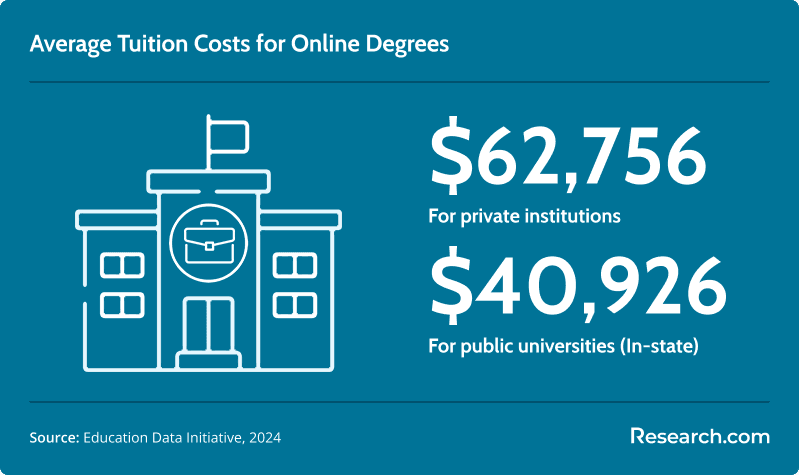
Online degrees at private institutions average $62,756, while in-person programs can cost up to $198,616. Use those figures as context, but always calculate the actual price of the specific program you are considering.
Common mistakes to avoid
- Choosing without checking accreditation: This can create problems with aid, transfer, employment, or graduate school.
- Assuming online means no fieldwork: Many credible geology programs still require hands-on components.
- Comparing only tuition: Fees, software, equipment, travel, and field camp can change affordability.
- Ignoring specialization: GIS, geology, sustainability, and environmental science are related but not interchangeable.
- Relying only on rankings: A ranked program may still be wrong for your schedule, state, career goal, or budget.
- Assuming salary outcomes are guaranteed: Median wage data does not predict your first job offer.
What career paths are available for graduates of an online geoscience and geology degree program?
Graduates can pursue entry-level and advanced roles in environmental consulting, engineering support, energy, GIS, government agencies, conservation, resource management, hazard assessment, and research support. Career options depend on whether your program emphasizes geology, environmental science, GIS, sustainability, meteorology, or another specialization.
Entry-level roles
- Environmental technician: Supports site assessments, sampling, monitoring, documentation, and compliance work.
- Geotechnical assistant: Helps engineers and geologists evaluate soil, rock, and subsurface conditions for construction or infrastructure projects.
- Field analyst: Collects field data, prepares notes, supports mapping, and assists with geological or environmental surveys.
- GIS technician: Builds maps, cleans spatial data, supports remote sensing projects, and prepares geospatial reports.
- Research assistant: Supports faculty, government, nonprofit, or private-sector projects involving Earth science data.
Roles that may require experience or graduate education
- Geologist: Interprets Earth materials, structures, processes, and field data for environmental, resource, engineering, or research purposes.
- Environmental consultant: Advises organizations on environmental risks, sustainability, remediation, and regulatory compliance.
- Hydrogeologist: Studies groundwater systems, aquifers, contamination, water supply, and related environmental concerns.
- Project manager: Coordinates geoscience, environmental, engineering, energy, or field-based projects.
- Senior geologist: Leads technical work, field studies, interpretation, reporting, and project decisions.
Some graduates continue into master’s or doctoral programs, especially if they want research, teaching, petroleum geology, hydrogeology, advanced geophysics, or senior technical roles. If you are comparing a completely different short-training career, Research.com also explains the steps to becoming a certified nursing assistant.
Can supplementary certifications boost my career prospects?
Certifications can help demonstrate specific technical skills, especially in areas where employers want practical proof of ability. For geoscience students, relevant add-ons may include GIS, remote sensing, environmental management, data analytics, safety training, project management, or software-specific credentials.
A certification does not replace a degree or field experience, but it can strengthen a resume when it matches the job you want. For example, GIS credentials may help students applying for mapping, planning, environmental analysis, or geospatial roles. Students comparing credentials across fields can review Research.com’s guide to online certifications associated with strong pay potential.
What is the job market for graduates with an online geoscience and geology degree program?
The labor market for geoscientists is projected to grow by 5% from 2023 to 2033, which is about as fast as the average for all occupations. Around 2,200 openings are expected each year during that period, largely from replacement needs and workforce movement.
Graduates may find opportunities in several sectors:
- Environmental industry: Regulatory compliance, site assessment, remediation support, sustainability analysis, and environmental reporting.
- Energy sector: Petroleum, natural gas, renewable energy, subsurface analysis, and resource evaluation roles.
- Government agencies: Scientific, mapping, environmental, hazard, and natural resource roles with organizations such as the U.S. Geological Survey and NASA.
- Engineering and consulting: Geotechnical support, infrastructure-related analysis, field data collection, and environmental consulting.
- Geospatial technology: GIS analysis, remote sensing, spatial data management, and mapping.
Location matters. Regions with energy activity, water resource concerns, environmental remediation work, construction, natural hazards, or government science agencies may offer more relevant opportunities. Students who are also comparing technology leadership careers may find Research.com’s information systems manager salary and career path guide helpful.
Current trends affecting online geoscience and geology degrees
- GIS and spatial data skills are increasingly important. Mapping, remote sensing, and data visualization now appear across environmental, planning, emergency management, natural resource, and infrastructure work.
- Online learning is more accepted, but practical experience still matters. Employers may accept online degrees from accredited institutions, but students should still build field, lab, internship, and project experience.
- Environmental and sustainability work remains a major pathway. Students interested in climate, land use, water, hazards, compliance, and conservation should compare geology, environmental science, geoscience, GIS, and sustainability programs carefully.
- Technology is changing how students train. Virtual labs, digital maps, satellite imagery, simulation tools, and collaborative software can improve access, but they do not fully replace real-world observation for every geology career.
Key Insights
- An online geoscience or geology degree can be a strong option if it is accredited and includes credible lab, field, GIS, or applied project work.
- The best program depends on your target career: traditional geology, environmental consulting, GIS, meteorology, sustainability, and resource management require different preparation.
- Do not compare tuition alone. Include fees, field camp costs, software, equipment, books, travel, and lost work time when estimating affordability.
- Geoscientists earned a median annual wage of $92,580 in May 2023, but entry-level pay varies by role, location, industry, and experience.
- Employment of geoscientists is projected to grow by 5 percent from 2023 to 2033, with about 2,200 openings each year.
- Hands-on evidence matters. Internships, fieldwork, GIS projects, capstones, research experience, and professional references can be just as important as the delivery format of the degree.
- Before enrolling, ask each school about accreditation, transfer credits, field requirements, total cost, software access, career services, and graduate outcomes.
References
- Geoscientists. Bureau of Labor Statistics. https://www.bls.gov/ooh/life-physical-and-social-science/geoscientists.htm
- Capstone Experience Guidelines - Geology. https://www.marshall.edu/geology/capstone
- Online Geosciences Degree. Southern New Hampshire University. https://www.snhu.edu/online-degrees/bachelors/bs-in-geosciences
- Tuition & Financial Aid, Geosciences Online Programs, Texas A&M University. https://geosonline.tamu.edu/tuition-finaid/index.html
- Geoscientists, except hydrologists and geographers. Bureau of Labor Statistics. https://www.bls.gov/oes/2023/may/oes192042.htm
- Geoscience jobs by sector. https://www.grow-geocareers.com/geojobsbysector
- Geoscientist salary for 2023-2024. Recruiter. https://www.recruiter.com/salaries/non-hydrologists-and-geographers-geoscientists-salary
- Accelerated Geology degree online or on campus. University of North Dakota. https://und.edu/programs/geology-bs-ma-ms/index.html
- Bachelor of Science in Geography + Master of Geoscience. https://artsci.tamu.edu/geography/academics/undergraduate/geography-bs-and-master-of-geoscience.html
- Environmental Geoscience Major online or on campus. University of North Dakota. https://und.edu/programs/environmental-geoscience-bs/index.html
- Employers’ perceptions of online university degrees. https://doi.org/10.2478/ngoe-2022-0016
- Employers see online degrees as comparable to in-person degrees. https://www.naceweb.org/talent-acquisition/candidate-selection/employers-see-online-degrees-as-comparable-to-in-person-degrees
- Tuition & Aid, Cost of Geology degree. University of North Dakota. https://und.edu/programs/geology-bs/cost.html
- Geology. Community College of Denver. https://www.ccd.edu/program/geology
- GSA grants and scholarships. https://www.geosociety.org/GSA/GSA/grants/home.aspx
- Association for Women Geoscientists awards and scholarships. https://www.awg.org/page/AWGchapterscholarships
- UF Online Geology Degree. https://ufonline.ufl.edu/degrees/undergraduate/geology
- Bachelor’s in Geology degree. University of North Dakota. https://und.edu/programs/geology-bs/index.html
- Master of Science in Geosciences with concentration in Environmental Geosciences, Mississippi State Online. https://www.online.msstate.edu/engs
- Online M.S. in Geology with a specialization in Petroleum Geology, University of Houston. https://uh.edu/nsm/earth-atmospheric/degree-plans/online-masters/ms-petroleum-geology
- Chadron State College Geoscience. https://www.csc.edu/academics/geoscience
- Cost of Online Education vs. Traditional Education. Education Data Initiative. https://educationdata.org/cost-of-online-education-vs-traditional-education
- Career Outlook, Penn State Department of Geosciences. https://www.geosc.psu.edu/why-geosciences/career-outlook
- Future demand for applied geoscientists. https://www.aegweb.org/index.php?category=students&id=10%3Awhat-does-the-future-demand-look-like-for-applied-geoscientists-&option=com_dailyplanetblog&view=entry
- Geoscience careers, Virginia Tech. https://geos.vt.edu/study-geosciences-here/geoscience-careers.html
- What Jobs Can I Get with a Geoscience Degree? https://thinkonward.com/resources/content-hub/what-jobs-can-i-get-with-a-geoscience-degree
- Geoscience Careers, University of Florida. https://geology.ufl.edu/programs/undergraduate-program/geoscience-careers
- What can I do with a degree in geology? https://geos.louisiana.edu/academic-programs/geology/what-can-i-do-degree-geology
- What do you do with a GES degree? https://earth.appstate.edu/jobs-internships-graduate-school/what-can-you-do-ges-degree
- Geology, Geophysics, Geoscience: What’s the difference? https://www.letschalkaboutit.blog/post/geology-geophysics-geoscience-what-s-the-difference
- The future of geotechnical engineering opportunities. https://www.certisaec.com/the-future-of-geotechnical-engineering-opportunities
- Highest paying geology jobs. https://www.scijournal.org/articles/highest-paying-geology-jobs
- High-earning careers in geology. https://rangefront.com/blog/high-earning-jobs-geology
Other Things You Should Know About a Degree in Geoscience and Geology Programs
Most online geoscience and geology programs require 1–3 credit hours of in-person or home-based lab work for core science courses, plus a field component such as a weekend geology camp or local mapping exercise. Programs with ACS-style lab standards usually list these requirements clearly in the curriculum.
Admission requirements for 2027 online geoscience & geology degree programs typically include a high school diploma or equivalent, a minimum GPA, and standardized test scores. Some programs may also require prerequisite science courses and letters of recommendation. Check each program's website for specific criteria.