
2027 Most Affordable Online Master's in Industrial Engineering Programs

Co-Founder and Chief Data Scientist
Choosing an affordable online master’s in industrial engineering is not just a tuition decision. It is a career and ROI decision for engineers, analysts, operations professionals, and technical managers who want to improve systems, reduce waste, lead process improvement projects, or move into higher-responsibility roles without leaving the workforce.
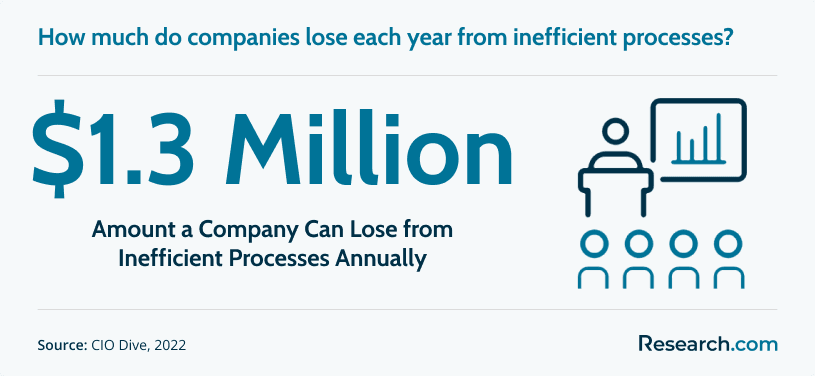
Industrial engineering matters because organizations lose real money when workflows, supply chains, staffing models, production systems, and data processes are poorly designed. Research cited in this guide notes that inefficient systems can cost companies around 20% to 30% of annual revenues, and another report found that inefficient processes can cost businesses up to $1.3 million annually. That is why employers continue to value professionals who can combine engineering, analytics, operations research, and business judgment.
This guide explains what to expect from an online master’s in industrial engineering, how affordable programs compare, what the degree may cost, which careers it can support, and how to decide whether the investment fits your goals. It is written for prospective graduate students who want a practical, accredited, lower-cost path into advanced industrial engineering roles.
Quick Answer: Is an Online Master’s in Industrial Engineering Worth It?
An online master’s in industrial engineering can be worth it for students who already have a STEM, engineering, operations, manufacturing, logistics, or analytics background and want to qualify for more advanced technical or leadership roles. The degree is especially useful if the program is accredited, affordable, flexible enough to complete while working, and aligned with a clear career target such as operations research, supply chain optimization, quality engineering, systems engineering, or engineering management.
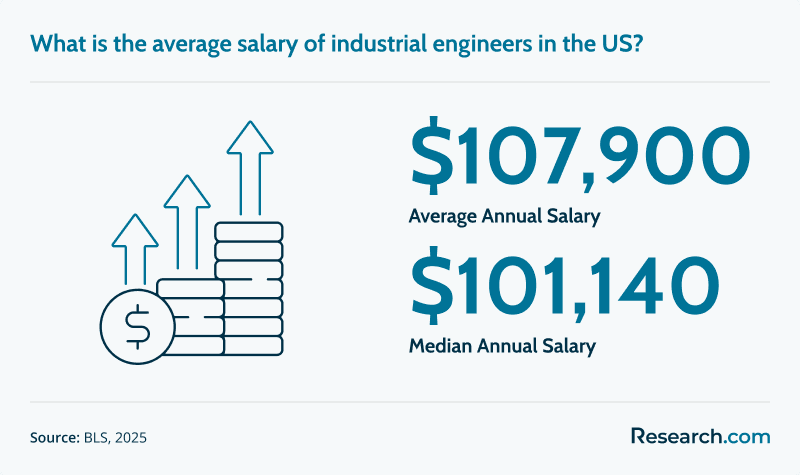
- The average annual salary of industrial engineers in the United States is $107,900, and the median annual salary is $101,140.
- Graduates may pursue roles such as industrial engineer, operations manager, supply chain analyst, quality control engineer, systems analyst, project manager, or consultant.
- Online programs are often a strong fit for working professionals because they usually provide flexible scheduling, remote access, and the ability to apply coursework to current workplace problems.
What can I expect from an online master's in industrial engineering?
An online master’s in industrial engineering is a graduate program focused on designing, measuring, and improving complex systems. Students study how people, machines, data, materials, money, and technology interact inside organizations. The goal is not only to make systems faster, but to make them safer, more reliable, more cost-effective, and easier to manage.
Most programs combine quantitative coursework with applied problem-solving. Common areas include operations research, systems engineering, supply chain management, simulation, quality control, engineering economics, data analytics, and process improvement. Depending on the school, students may complete a thesis, research project, capstone, or coursework-only path.
The online format typically uses recorded lectures, live virtual sessions, discussion boards, digital assignments, remote collaboration tools, and engineering software. Strong programs also include applied projects so students can connect theory to workplace problems such as reducing production delays, improving inventory systems, redesigning healthcare workflows, or modeling transportation bottlenecks.
| Program feature | What it means for students | Why it matters |
| Online delivery | Courses may be asynchronous, synchronous, or a mix of both. | Working students should confirm whether class meetings fit their schedule. |
| Thesis, project, or coursework-only track | Some programs require research, while others focus on professional coursework. | A thesis may help future doctoral applicants; a coursework-only option may suit career-focused professionals. |
| Technical electives | Students may choose topics such as logistics, manufacturing, analytics, or quality systems. | Electives should match the student’s target industry or role. |
| Capstone or applied project | Students solve a practical engineering or management problem. | Applied work can strengthen a portfolio and support promotion discussions. |
Where can I work with an online master's in industrial engineering?
Graduates can work anywhere organizations need better systems, stronger analytics, lower operating costs, safer workflows, or more reliable production and service delivery. The online delivery format does not make the degree less relevant if the program is credible and the student develops demonstrable skills.
| Work setting | How industrial engineers add value |
| Manufacturing and production | Improve production flow, reduce downtime, analyze defects, optimize staffing, and support lean or Six Sigma initiatives. |
| Healthcare systems | Improve patient flow, scheduling, resource allocation, supply management, and care delivery processes. |
| Logistics and supply chain companies | Design distribution systems, reduce inventory waste, model transportation routes, and improve fulfillment speed. |
| Technology and software firms | Use analytics, automation, and systems thinking to improve digital operations and service delivery. |
| Consulting firms | Advise clients on process improvement, risk reduction, operational performance, and implementation planning. |
| Government and public sector agencies | Support infrastructure planning, defense logistics, emergency response systems, and public service optimization. |
| Energy and utilities | Improve production, distribution, maintenance planning, sustainability processes, and resource use. |
| Retail and e-commerce | Optimize inventory, warehouse workflows, order fulfillment, customer service systems, and demand planning. |
How much can I make with an online master's in industrial engineering?
According to the United States Bureau of Labor Statistics (BLS), industrial engineers earn an average annual salary of $107,900 and a median annual salary of $101,140. This is considerably higher than the collective median annual pay of all jobs in the country, which is $49,500.
Reported pay for industrial engineers typically ranges from $70,000 to $157,140 per year. Actual earnings depend on experience, industry, geographic location, technical specialization, management responsibility, and the employer’s compensation structure. A graduate degree does not guarantee a specific salary, but it can help candidates compete for roles that require advanced analytical, systems, or leadership skills.
| Salary factor | How it can affect pay |
| Experience level | Entry-level professionals are more likely to earn near the lower end of the range, while experienced engineers and managers may earn above the median. |
| Industry | Some industries pay more for specialized optimization, analytics, and systems expertise. |
| Location | States and metro areas differ in demand, cost of living, and employer concentration. |
| Specialization | Skills in operations research, supply chain analytics, quality systems, automation, or engineering management may improve competitiveness. |
| Certifications | Relevant credentials may support employability and salary negotiations, depending on the employer and role. |
- Most Affordable Online Master's in Industrial Engineering for 2027
- How long does it take to complete an online master's in industrial engineering?
- How does an online master's in industrial engineering compare to an on-campus program?
- What is the average cost of an online master's in industrial engineering?
- What are the financial aid options for students enrolling in an online master's in industrial engineering?
- What are the prerequisites for enrolling in an online master's in industrial engineering?
- What courses are typically in an online master's in industrial engineering?
- What types of specializations are available in online master's in industrial engineering programs?
- What ensures the quality and credibility of online master's in industrial engineering programs?
- What future trends are shaping online industrial engineering education?
- What is the return on investment for an online master's in industrial engineering?
- How to choose the best online master's in industrial engineering?
- What are the potential challenges of pursuing an online master's in industrial engineering?
- What career paths are available for graduates of online master's in industrial engineering programs?
- What is the job market for graduates with an online master's in industrial engineering?
Most Affordable Online Master's in Industrial Engineering
How do we rank schools?
Affordable graduate programs still require a serious investment of time, tuition, and professional focus. To help readers compare options more clearly, this ranking uses transparent education data rather than promotional claims.
Research.com’s team reviewed information from sources including the IPEDS database, College Scorecard, Peterson's database, and the National Center for Education Statistics.
Readers can review the full process on our methodology page.
| Rank | School and program | Program length | Credits | Annual cost | Accreditation |
| 1 | Oklahoma State University — Master of Science in Industrial Engineering and Management | 2 years | 30 to 33 | $7,950 | Engineering Accreditation Commission of ABET |
| 2 | Mississippi State University — Master of Science in Industrial and Systems Engineering | 2 years | 30 | $8,377 | Accreditation Board of Engineering and Technology |
| 3 | Northern Illinois University — M.S. in Industrial and Systems Engineering with a Specialization in Engineering Management | 2 years | 30 | $8,396 | Accreditation Board of Engineering and Technology |
| 4 | Louisiana Tech University — M.S. in Engineering, Industrial Engineering Concentration Online | 2 years | 36 | $8,550 | Engineering Accreditation Commission of ABET |
| 5 | Arizona State University — Online Master of Science in Industrial Engineering | 2 years | 30 | $9,075 | Higher Learning Commission |
| 6 | Texas A&M University–Kingsville — Online Industrial Engineering Program | 2 years | 31 | $9,445 | Southern Association of Colleges and Schools Commission on Colleges |
| 7 | University of Tennessee-Knoxville — Online Master’s Degree in Industrial Engineering | 2 years | 32 | $11,424 | Engineering Accreditation Commission of ABET |
| 8 | Clemson University — Online Master of Engineering in IE Program | 2 to 3 years | Not specified in the provided program data | $11,928 | Southern Association of Colleges and Schools Commission on Colleges |
| 9 | Kansas State University — Master's in Industrial Engineering | 2 years | 30 | $12,612 | North Central Accrediting Association |
| 10 | North Carolina A&T State University — Master of Science in Industrial and Systems Engineering | 2 to 3 years | 30 | $13,155 | Southern Association of Colleges and Schools Commission on Colleges |
Program highlights to compare before applying
- Oklahoma State University: Offers thesis and non-thesis options, with specialty areas in General Industrial Engineering, Engineering Management, Operations Research, and Supply Chain & Logistics.
- Mississippi State University: Provides concentrations in Data Analytics, Industrial Systems, Manufacturing Systems, Management Systems Engineering, and Human Factors/Ergonomics, with thesis and non-thesis options.
- Northern Illinois University: Focuses on engineering management, project and risk management, continuous improvement, decision analysis, and a capstone project.
- Louisiana Tech University: Uses a quarter system and a coursework-only format with industrial engineering coursework in areas such as project management, Six Sigma, logistics, and simulation.
- Arizona State University: Emphasizes statistics, optimization, simulation, and advanced analytics, with elective flexibility and options such as a concurrent MBA or Lean Six Sigma Black Belt certificate.
- Texas A&M University–Kingsville: Allows students to choose course-only, research project, or thesis tracks and offers engineering management or manufacturing standards certificates that can be documented on transcripts.
- University of Tennessee-Knoxville: Includes asynchronous and synchronous options, start terms in fall, spring, or summer, and concentrations in Automotive Manufacturing and Systems Engineering.
- Clemson University: Delivers a fully asynchronous, 100% online program designed for working professionals interested in supply chain optimization and industrial process improvement.
- Kansas State University: Offers a 100% online curriculum but requires a one-time campus visit to Manhattan, Kansas, for a final oral examination.
- North Carolina A&T State University: Uses a coursework-only model with a required capstone project and emphasizes systems thinking, data analytics, Lean/Six Sigma, human-machine systems, and sustainability.
How long does it take to complete an online master's in industrial engineering?
An online master’s in industrial engineering commonly takes 1.5 to 3 years. Full-time students may finish in about 18 to 24 months, while part-time students who continue working may need closer to 2.5 to 3 years.
The timeline depends on credit requirements, term structure, course availability, and whether the student chooses a thesis, project, or coursework-only track. Most programs require 30–36 credit hours, although requirements vary by institution.
| Timeline factor | Shorter path | Longer path |
| Enrollment pace | Full-time study | Part-time study while working |
| Program design | Accelerated or flexible course sequencing | Traditional pacing with limited course rotations |
| Completion option | Coursework-only or capstone path | Thesis or research-heavy path |
| Prerequisites | Strong engineering or quantitative background | Additional foundation courses needed before advanced coursework |
College Board data shown in the chart below reports that 62.98% of industrial engineers in the United States hold a bachelor's degree, 15.81% have some college experience, 11.09% earned a master's degree, and 7.54% have a high school diploma or less.
Students who want a quantitative graduate path outside engineering can also compare affordable master's in mathematics programs.
How does an online master's in industrial engineering compare to an on-campus program?
An online master’s in industrial engineering can be academically comparable to an on-campus degree when it uses the same faculty standards, curriculum expectations, assessment methods, and institutional accreditation. The better question is not whether online is automatically easier or harder, but whether the format fits how you learn, work, network, and access technical resources.
| Comparison point | Online master’s | On-campus master’s |
| Flexibility | Often best for working professionals, caregivers, military students, and learners who cannot relocate. | Best for students who want a fixed schedule and regular in-person interaction. |
| Class delivery | May use recorded lectures, live virtual meetings, online discussions, and remote group work. | Uses in-person lectures, labs, seminars, and campus-based collaboration. |
| Networking | Requires more intentional effort through virtual groups, faculty meetings, alumni events, and professional associations. | Can provide easier face-to-face access to peers, faculty, labs, and industry events. |
| Hands-on resources | May rely on digital tools, simulation software, remote labs, and workplace-based projects. | May offer more direct access to physical labs and campus facilities. |
| Best fit | Self-directed learners who need schedule control. | Students who learn best through structured, in-person environments. |
If you are comparing online graduate formats in other professional fields, you may also find Research.com’s guide to affordable MSN in care coordination programs online useful for understanding how online programs support working practitioners.
What is the average cost of an online master's in industrial engineering?
The total cost of an online master’s in industrial engineering generally falls between $15,000 and $45,000. Costs vary by school type, residency policy, credit requirements, fees, and whether the institution is public or private.
Public universities are often less expensive, especially for students who qualify for in-state tuition, with tuition ranging from $400 to $1,000 per credit hour. Private universities often charge $1,000 to $1,500 per credit, which can push total program costs beyond $50,000.
Most programs require 30 to 36 credit hours, so the per-credit rate matters. Students should also budget for technology fees, course platform fees, exam proctoring, books, software licenses such as MATLAB or simulation tools, and possible travel costs if a program includes campus visits, residencies, exams, or in-person presentations.
| Cost category | What to check |
| Tuition | Compare total program cost, not only the per-credit rate. |
| Required credits | A lower per-credit price may not save money if the program requires more credits. |
| Student fees | Ask about online learning, technology, library, graduation, proctoring, and program fees. |
| Software and materials | Confirm whether engineering tools, textbooks, and simulations are included or billed separately. |
| Travel | Check for campus visits, final exams, labs, orientations, or presentations. |
| Opportunity cost | Online study may allow students to keep earning while enrolled, which can improve affordability. |
Students evaluating online graduate affordability in healthcare leadership may also compare affordable master's in clinical nurse leadership programs online.
Industrial engineering graduates may recoup educational costs more quickly if they move into higher-paying roles, although outcomes vary. The industries with the highest average annual salaries for industrial engineers include web search portals, libraries, and other information services ($191,600); accounting, tax preparation, and payroll services ($162,870); other pipeline transportation ($156,730); and oil and gas extraction ($156,480).
What are the financial aid options for students enrolling in an online master's in industrial engineering?
Graduate students in online industrial engineering programs may use several funding sources. The best approach is to combine aid types, compare net cost after awards, and ask each school which forms of aid apply to online students.
- Federal financial aid: Eligible students can submit the Free Application for Federal Student Aid (FAFSA) to be considered for federal aid options such as loans and other qualifying aid programs.
- Institutional scholarships and grants: Universities may offer graduate awards based on merit, financial need, academic department funding, or professional background.
- Employer tuition assistance: Many working professionals use tuition reimbursement or employer sponsorship, especially when the degree aligns with operations, manufacturing, supply chain, quality, or management needs.
- Military and veteran benefits: Active-duty service members, veterans, and eligible family members may be able to use education benefits such as the GI Bill at participating programs.
- Credit for prior learning: Some schools may reduce required coursework when students have qualifying graduate credits, professional learning, or relevant credentials.
- External scholarships and fellowships: Professional societies, foundations, and private organizations may support graduate engineering students, but deadlines can be early and competition can be strong.
Students who want to combine engineering with another discipline may also review dual masters program online options, although dual degrees usually require careful cost and time planning.
What are the prerequisites for enrolling in an online master's in industrial engineering?
Admission requirements vary, but most online master’s in industrial engineering programs expect applicants to show strong quantitative preparation. Students from engineering and STEM backgrounds often have the smoothest path, while applicants from other fields may need prerequisite coursework.
| Requirement | What applicants should expect |
| Bachelor’s degree | A degree from an accredited institution, often in industrial engineering, mechanical engineering, mathematics, or another STEM field. |
| Minimum GPA | Many programs look for about a 3.0 GPA on a 4.0 scale, though policies differ. |
| Prerequisite coursework | Applicants may need calculus, linear algebra, probability and statistics, or foundational engineering coursework. |
| GRE or other tests | Some programs require scores, while others waive or do not require them, especially for experienced applicants. |
| Professional experience | Often preferred, particularly for programs built around applied projects or engineering management. |
| Recommendations and statement | Most schools request letters of recommendation and a statement explaining academic preparation and career goals. |
If a program requires standardized testing, applicants comparing graduate exam options can review the difference between GRE and GMAT.
What courses are typically in an online master's in industrial engineering?
Coursework usually blends engineering analysis, mathematical modeling, business decision-making, and applied systems improvement. The strongest curriculum for you depends on whether your goal is technical specialization, management advancement, doctoral preparation, or a pivot into analytics, logistics, healthcare systems, or manufacturing leadership.
| Course area | What students learn | Career relevance |
| Operations Research | Mathematical modeling, optimization, and decision methods for complex engineering and business problems. | Useful for analytics, logistics, scheduling, and resource allocation roles. |
| Systems Engineering | How to design, evaluate, and manage complex systems across their life cycles. | Important in manufacturing, defense, technology, infrastructure, and large-scale operations. |
| Supply Chain Management | Planning, inventory, distribution, logistics, and supplier-customer flow. | Relevant for supply chain analyst, logistics manager, and operations roles. |
| Engineering Economics | Cost-benefit analysis, budgeting, project value, and financial trade-offs in engineering decisions. | Supports project justification, management, and capital planning. |
| Quality Engineering and Six Sigma | Statistical quality control, defect reduction, reliability, and process improvement methods. | Useful for quality engineer, process engineer, and continuous improvement positions. |
| Human Factors and Ergonomics | Designing systems around human capabilities, safety, workload, and performance. | Important in workplace safety, healthcare, aviation, manufacturing, and human-machine systems. |
| Data Analytics and Machine Learning | Data modeling, pattern recognition, predictive methods, and machine learning applications. | Supports analytics-heavy roles in operations, logistics, production, and technology. |
| Production and Inventory Control | Forecasting, production planning, materials flow, and inventory optimization. | Valuable in manufacturing, retail, e-commerce, and supply chain management. |
| Simulation Modeling | Building digital models to test processes, capacity, queues, and system performance under different scenarios. | Useful for redesigning production systems, healthcare workflows, transportation networks, and service operations. |
Students who want to focus more directly on analytics than engineering may compare the cheapest data analytics degree online.
What types of specializations are available in online master's in industrial engineering programs?
Specializations help students turn a broad engineering degree into a targeted career credential. Before choosing one, students should look at job descriptions for their desired roles and identify which technical tools, industry knowledge, and certifications employers request.
| Specialization | Best for students interested in | Typical focus |
| Supply Chain and Logistics Management | Distribution, procurement, transportation, fulfillment, and inventory planning. | Flow of goods, information, and resources from suppliers to customers. |
| Manufacturing Systems and Automation | Production environments, robotics, lean operations, and advanced manufacturing. | Productivity, process control, automation, and cost reduction. |
| Data Analytics and Optimization | Quantitative decision-making, operations analytics, machine learning, and modeling. | Data-driven problem-solving and mathematical optimization. |
| Quality Engineering and Six Sigma | Continuous improvement, reliability, defect reduction, and process control. | Statistical quality methods and structured improvement systems. |
| Human Factors and Ergonomics | Safety, usability, human-machine interaction, and workplace design. | Systems that fit human abilities and limitations. |
| Healthcare Systems Engineering | Hospitals, clinics, patient flow, care operations, and health system efficiency. | Resource allocation, scheduling, supply systems, and service quality. |
| Sustainability and Environmental Engineering | Waste reduction, energy efficiency, environmental performance, and sustainable operations. | Systems that reduce environmental impact and improve resource use. |
Students comparing online graduate specialization models in other disciplines can also review online psychology masters programs.
Industrial engineers who want to maximize earning potential should also consider geography and industry. The US states that offer the highest average annual salaries, as shown in the chart below, are Louisiana ($126,520), California ($120,960), and Hawaii ($120,150).
What ensures the quality and credibility of online master's in industrial engineering programs?
The most important quality signal is accreditation. Students should verify institutional accreditation and, when relevant, program-level engineering accreditation such as ABET recognition. Accreditation helps confirm that the school meets accepted academic standards and that employers, licensing bodies, and other institutions are more likely to recognize the degree.
Quality also depends on curriculum depth, faculty expertise, access to engineering software, applied projects, advising, career support, and industry engagement. A low-cost program is not a good value if it lacks the coursework, technical tools, or support needed for your career goals.
| Quality check | Question to ask before enrolling |
| Accreditation | Is the institution accredited, and does the program list any engineering-specific accreditation? |
| Curriculum relevance | Does the course plan include operations research, analytics, systems engineering, quality, simulation, or your target specialization? |
| Faculty background | Do instructors have research, industry, or applied experience in the areas you want to study? |
| Software and labs | Will you use current tools for modeling, statistics, simulation, optimization, or data analysis? |
| Student support | Are online students eligible for advising, tutoring, library access, career services, and technical support? |
| Employer relevance | Do alumni outcomes, capstones, certificates, or industry projects match your career direction? |
For a cross-field example of how online programs structure technical and industry-facing coursework, readers may compare the game design online degree.
What future trends are shaping online industrial engineering education?
Online industrial engineering programs are adapting as employers use more data, automation, connected systems, and simulation-based decision-making. Students should look for programs that teach both classic industrial engineering methods and modern digital tools.
- AI-assisted analytics: Engineers increasingly need to understand how data tools can support forecasting, scheduling, anomaly detection, and process improvement while still applying human judgment.
- Digital twin and simulation methods: Programs may place more emphasis on modeling real systems virtually before making expensive operational changes.
- Internet of Things (IoT) data: Connected machines and sensors generate operational data that industrial engineers can use to improve maintenance, quality, throughput, and safety.
- Automation and robotics: Manufacturing, warehousing, healthcare, and logistics employers need professionals who can evaluate automation from both technical and economic perspectives.
- Sustainability and resource efficiency: Organizations are looking for systems that reduce waste, energy use, and operational risk without sacrificing performance.
- Flexible online delivery: Working professionals increasingly need programs that combine asynchronous learning with applied projects, virtual collaboration, and digital access to faculty.
Readers interested in how technology is influencing other science programs can also explore a biochemistry degree online.
What is the return on investment for an online master's in industrial engineering?
ROI depends on how much you pay, whether you keep working while enrolled, how quickly you finish, and whether the degree helps you qualify for better-paid or more secure roles. The degree is more likely to pay off when students choose an affordable accredited program, avoid unnecessary debt, and select coursework tied directly to employer demand.
| ROI factor | Why it matters | How to evaluate it |
| Total program cost | Tuition, fees, software, books, and travel all affect payback time. | Request a complete cost estimate from each school. |
| Ability to keep working | Online study can reduce income loss compared with leaving a job for full-time campus study. | Check weekly workload, synchronous class times, and course pacing. |
| Career goal alignment | A degree has stronger value when it supports a specific role or promotion path. | Compare course outcomes with job postings in your target field. |
| Employer funding | Tuition assistance can sharply reduce out-of-pocket cost. | Ask HR about reimbursement rules, grade requirements, and retention obligations. |
| Credential stacking | Certificates in areas such as Lean Six Sigma, engineering management, or analytics may add value. | Confirm whether certificates are included, optional, or separately priced. |
Students comparing lower-cost management-focused engineering options can review the cheapest engineering management masters degree online.
How to choose the best online master's in industrial engineering?
The best online master’s in industrial engineering is the one that fits your career target, academic background, budget, schedule, and preferred learning style. A highly ranked program may not be the right choice if it lacks your specialization, requires campus travel you cannot manage, or costs more than your expected benefit.
- Start with your goal: Decide whether you want to become a senior industrial engineer, move into operations management, specialize in supply chain analytics, pursue quality engineering, or prepare for doctoral study.
- Verify accreditation: Confirm institutional accreditation and review any program-level engineering accreditation listed by the school.
- Compare curriculum maps: Look beyond program titles. Review required courses, electives, capstone or thesis options, and software tools.
- Calculate total cost: Include tuition, fees, books, software, travel, lost income, and potential employer reimbursement.
- Check delivery format: Make sure synchronous sessions, exams, group work, and project timelines fit your schedule.
- Review admission fit: Identify prerequisite gaps early so you are not surprised by bridge courses or delayed enrollment.
- Ask about career support: Online students should have access to advising, career services, networking opportunities, and alumni resources.
- Evaluate outcomes carefully: Do not assume salary growth is automatic. Ask how graduates use the degree and whether outcomes align with your market.
| Common mistake | Better approach |
| Choosing only the cheapest tuition rate | Compare total cost, credits, fees, software, and completion time. |
| Ignoring accreditation | Verify the school and program before applying. |
| Assuming all online formats are flexible | Check live class times, exam rules, group project expectations, and deadlines. |
| Overlooking prerequisites | Ask whether non-engineering or non-industrial engineering applicants need extra courses. |
| Picking a specialization without labor-market research | Review job postings and employer requirements before selecting electives. |
| Relying only on rankings | Use rankings as a starting point, then evaluate fit, curriculum, cost, and outcomes. |
Professionals comparing online leadership-focused healthcare degrees may also review affordable master's in health systems management programs online.
Strengthening credentials matters in this field because organizations pay close attention to applicants who can prove measurable process improvement skills. As noted earlier, one report found that companies can lose up to $1.3 million annually from inefficient processes.
What are the potential challenges of pursuing an online master's in industrial engineering?
Online graduate study can be convenient, but it is not automatically easy. Industrial engineering coursework is quantitative, software-driven, and project-heavy. Students should prepare for the academic and logistical demands before enrolling.
- Time management pressure: Working students must protect study time for problem sets, group projects, simulations, and exams.
- Less spontaneous networking: Online students may need to schedule faculty meetings, join professional groups, and participate actively in virtual discussions.
- Technical requirements: Courses may require specialized software, a reliable computer, strong internet access, and comfort with online platforms.
- Limited physical lab access: Some online programs rely on simulations or workplace-based projects instead of campus labs.
- Group project coordination: Collaborating across time zones and work schedules can be challenging.
- Self-direction: Students who need frequent in-person accountability may find online learning harder than expected.
To reduce these risks, ask each program about orientation, tutoring, software support, faculty availability, peer interaction, and career services. Students interested in another fast-moving technical online field can compare the best accelerated online master’s in health informatics programs.
What career paths are available for graduates of online master's in industrial engineering programs?
Graduates can use the degree in technical, analytical, managerial, and consulting roles. The strongest career path depends on prior experience, chosen specialization, software skills, certifications, and the industry targeted.
| Career path | What the role does | Useful graduate preparation |
| Industrial Engineer | Analyzes and improves systems, workflows, production processes, and resource use. | Operations research, simulation, quality engineering, data analysis, and systems design. |
| Operations Manager | Oversees daily operations, staffing, production or service delivery, and performance improvement. | Engineering economics, project management, process improvement, and leadership coursework. |
| Supply Chain Analyst | Uses data to improve inventory, logistics, forecasting, supplier flow, and distribution. | Supply chain management, optimization, analytics, and production control. |
| Quality Control Engineer | Designs and monitors quality systems to reduce defects and improve consistency. | Quality engineering, Six Sigma, statistics, reliability, and process control. |
| Systems Analyst | Evaluates business and technology systems and recommends improvements. | Systems engineering, data analytics, modeling, and workflow analysis. |
| Project Manager | Plans, coordinates, budgets, and leads projects to completion. | Engineering management, risk management, scheduling, economics, and communication. |
| Consultant | Advises organizations on cost reduction, process design, productivity, and operational change. | Broad systems knowledge, analytics, client communication, and applied project experience. |
Students specifically aiming for project leadership may also compare the most affordable online MBA programs in project management. Industrial engineers planning to move into leadership can also review the steps to become a manager.
What is the job market for graduates with an online master's in industrial engineering?
BLS projects that employment of industrial engineers in the United States will grow 12% from 2023 to 2033, which is three times higher than the national average of 4%. The number of industrial engineers is projected to rise from 336,600 in 2023 to 377,500 by 2033.
During that period, BLS expects about 25,200 openings each year for industrial engineering roles. Indeed currently lists more than 11,000 job openings for industrial engineers in the country.
The industries employing the most industrial engineers, as shown in the visual below, are architectural, engineering, and related services (23,280); aerospace product and parts manufacturing (22,360); and machinery manufacturing (19,350). The states with the highest employment levels are Michigan (27,470), California (24,640), and Texas (24,390).
Here's What Graduates Have to Say About Their Online Master's in Industrial Engineering
-
: "
"Online industrial engineering study let me build advanced skills without relocating or stepping away from work. The virtual labs and team projects helped me stay engaged, and the program made distance learning feel collaborative rather than isolated." - Oli
"
-
: "
"The online master’s route gave me room to deepen my knowledge of supply chain management and data analytics while keeping my personal and professional schedule intact. I now approach operational problems with a more structured, evidence-based mindset." - Simon
"
-
: "
"The program was demanding, but the flexibility made it possible. I gained stronger technical confidence and a clearer framework for solving complex industry problems from wherever I was working." - Santi
"
Key Insights
- An online master’s in industrial engineering is best suited for students who want advanced systems, analytics, operations, supply chain, quality, or engineering management skills without pausing their careers.
- Program affordability should be measured by total cost, not tuition alone. Include credits, fees, software, books, travel, and the ability to keep working while enrolled.
- The typical completion window is 1.5 to 3 years, with full-time students often finishing sooner and part-time working professionals taking longer.
- Industrial engineers earn an average annual salary of $107,900 and a median annual salary of $101,140, but individual salaries vary by role, location, experience, industry, and specialization.
- BLS projects 12% employment growth for industrial engineers from 2023 to 2033, with about 25,200 openings each year during that period.
- Accreditation, curriculum quality, technical tools, faculty support, and specialization fit are more important than choosing a program based only on ranking position.
- Common high-value specializations include supply chain and logistics, data analytics and optimization, quality engineering, manufacturing systems, human factors, healthcare systems, and sustainability.
- The highest-paying states listed in this guide are Louisiana ($126,520), California ($120,960), and Hawaii ($120,150), while the highest-employment states are Michigan (27,470), California (24,640), and Texas (24,390).
- Before applying, ask whether the program is accredited, whether online students receive equal support, whether the schedule fits your work life, and whether the coursework matches your target job postings.
References:
- BLS (2024, April 3). 17-2112 Industrial Engineers. BLS
- BLS (2025, April 18). Industrial Engineers. BLS
- BLS (2025, June 9). Industry: Cross-industry, Private, Federal, State, and Local Government Period: May 2024. BLS
- College Board. Industrial Engineers. College Board
- Reckon (2024, November 8). 3 efficiency drains that cost companies millions. Reckon
- Wilkinson, L. (2022, October 5). Businesses can lose up to $1.3M a year on inefficient processes, report says. CIO Dive
Other Things You Should Know About Online Master's in Industrial Engineering Programs
Most affordable online industrial engineering master’s programs require a minimum 3.0 GPA on a 4.0 scale. Some schools accept a 2.75 GPA if applicants submit strong GRE scores, recent quantitative coursework, or relevant engineering work experience.
Scholarships for 2027's affordable online master's in industrial engineering programs can include merit-based awards, employer-sponsored tuition assistance, and specific grants for engineering students. Each program may offer distinct scholarship opportunities, so candidates should inquire directly with their chosen schools.


