2027 Most Affordable Online MSN in Clinical Nurse Leadership Programs

Co-Founder and Chief Data Scientist
Choosing an online MSN in Clinical Nurse Leadership is usually a practical decision: you want to move beyond bedside task execution into care coordination, quality improvement, patient safety, and team leadership, but you may not want to pause your nursing career or take on unnecessary graduate debt. The Clinical Nurse Leader, or CNL, is an advanced generalist nursing role focused on improving care where patients actually receive it: units, clinics, care teams, transitions of care, and community settings.
This guide is written for licensed nurses comparing affordable online MSN-CNL programs, including BSN-prepared RNs, ADN-prepared nurses exploring bridge options, and working nurses who need a flexible pathway. You will find program options, cost and time expectations, admissions requirements, clinical hour considerations, salary context, career paths, and questions to ask before enrolling.
Quick answer: What is an affordable online MSN in Clinical Nurse Leadership?
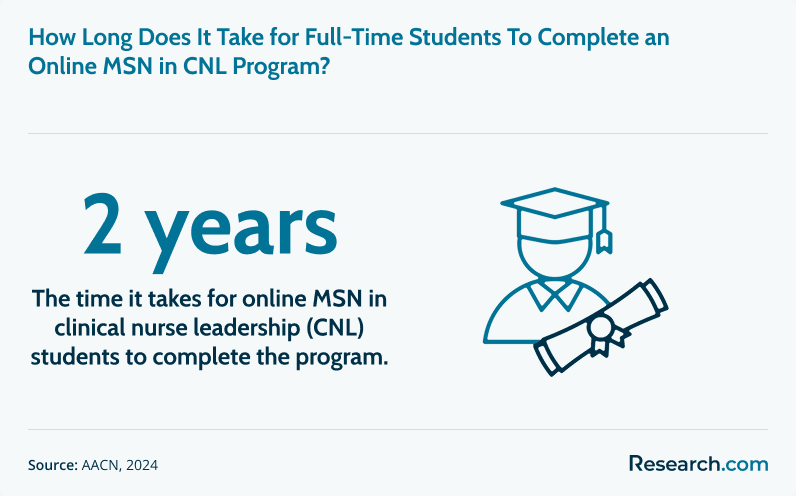
An affordable online MSN in Clinical Nurse Leadership is a graduate nursing program that prepares registered nurses to lead care coordination, improve patient outcomes, analyze clinical systems, and support evidence-based practice without requiring full-time campus attendance. Many programs can be completed in about two years by BSN-prepared nurses, include supervised practicum hours, and are designed for nurses who want leadership responsibilities without becoming nurse practitioners.
Why nurses choose this path
- An MSN in Clinical Nurse Leadership can prepare graduates for positions such as Clinical Nurse Leader, Nurse Manager, Care Coordinator, Quality Improvement Specialist, and Patient Safety Officer, depending on employer requirements and prior experience.
- Clinical Nurse Leaders may earn a median annual salary of around $92,000–$110,000, with pay varying by region, employer, role scope, certification, and years of nursing experience.
- Online delivery can reduce relocation and commuting costs while allowing working nurses to complete coursework around shifts and, in many cases, arrange clinical requirements near their home community.
What should you expect from an affordable online MSN in Clinical Nurse Leadership?
An affordable online MSN in clinical nurse leadership is designed to help registered nurses move into advanced generalist leadership roles. Rather than focusing on diagnosis and prescriptive authority like many nurse practitioner tracks, CNL programs emphasize care coordination, clinical outcomes, patient safety, evidence-based practice, and leadership at the point of care.
Most programs deliver didactic coursework online and require supervised clinical or practicum experiences. These experiences are important because CNL preparation is not only theoretical; students must demonstrate how they use data, communication, team leadership, and systems thinking to improve care delivery in real healthcare environments.
Accredited programs commonly cover healthcare systems, informatics, research translation, quality improvement, population health, ethics, policy, and interprofessional collaboration. Graduates often pursue roles that sit between direct clinical practice and administration, such as care coordination, unit-based leadership, patient safety, and quality improvement.
The affordability question should be evaluated carefully. A low per-credit tuition rate is helpful, but the better measure is total program cost, including credits required, clinical placement expenses, university fees, technology fees, travel requirements, and whether the school charges different rates for in-state and out-of-state students.
Where can graduates work after an online MSN in Clinical Nurse Leadership?
Graduates with CNL preparation can work in settings that need stronger coordination across patients, providers, units, and care transitions. Hospitals remain a common employment setting, especially in acute care, surgical units, emergency departments, intensive care units, and medical-surgical units where communication gaps and quality metrics directly affect patient outcomes.
CNL-trained nurses may also work in outpatient clinics, rehabilitation facilities, home health organizations, long-term care facilities, community health programs, and integrated delivery systems. The degree is especially relevant in organizations that are trying to reduce readmissions, improve safety, standardize evidence-based protocols, and strengthen interdisciplinary teamwork.
Possible nontraditional settings include:
- Public health departments, where nurses coordinate community-based care and prevention initiatives
- Insurance organizations, where clinical knowledge supports case management and quality analysis
- Healthcare consulting firms, where nurses contribute to workflow and process improvement
- Academic or staff development settings, where CNL-prepared nurses help train clinical teams
- Telehealth and health technology companies, where nurse leaders help design safer digital care processes
How much can you earn with an online MSN in Clinical Nurse Leadership?
Compensation for CNL-prepared nurses depends heavily on job title, employer type, geography, years of experience, unit complexity, leadership responsibilities, and whether the nurse holds relevant certification. The degree may support advancement into higher-responsibility roles, but salaries are not guaranteed by the credential alone.
According to Salary.com, as of 2025, the average base salary for Clinical Nurse Leaders in the U.S. is approximately $127,970, while average total compensation, including bonuses and incentives, is around $128,197 annually.
Reported entry-level pay for Clinical Nurse Leaders is about $71,000 per year, while experienced professionals may earn up to $166,000, depending on location, experience, and employer.
Regional differences can be significant. In California, average total compensation is approximately $141,588 per year, while in Florida, the average salary is around $120,680. These figures should be used as planning estimates, not promises, because individual outcomes vary.
- Most Affordable Online MSN in Clinical Nurse Leadership Programs for 2027
- How long does an affordable online MSN in Clinical Nurse Leadership take?
- Online vs. campus MSN-CNL programs: which format fits you?
- What does an affordable online MSN in Clinical Nurse Leadership cost?
- What financial aid can MSN-CNL students use?
- What are the admission requirements for online MSN-CNL programs?
- What courses are included in an MSN in Clinical Nurse Leadership?
- Are there specializations within Clinical Nurse Leadership programs?
- MSN-CNL vs. accelerated DNP programs
- Is an affordable online MSN in Clinical Nurse Leadership worth it?
- What student support services matter in online MSN-CNL programs?
- How to choose the best affordable online MSN-CNL program
- Common challenges in online MSN-CNL programs
- Career paths for MSN-CNL graduates
- Job market outlook for Clinical Nurse Leadership graduates
- Can additional certifications strengthen your clinical leadership profile?
Most Affordable Online MSN in Clinical Nurse Leadership Programs for 2027
How Research.com evaluates schools
An online MSN in Clinical Nurse Leadership can affect your finances, schedule, professional opportunities, and long-term nursing trajectory. Research.com ranks programs to help prospective students compare options using available education data rather than relying only on marketing claims.
This list is based on a transparent ranking methodology that uses sources such as the Integrated Postsecondary Education Data System (IPEDS), Peterson's databases, including the Distance Learning Licensed Data Set, and the College Scorecard from the National Center for Education Statistics. Students should still confirm current tuition, clinical placement policies, admission requirements, and state authorization directly with each school before applying.
| School | Program length | Credits | Cost information | Accreditation |
| Augusta University | 2 years | 60 credit hours | $484 to $1,185 per credit | Commission on Collegiate Nursing Education (CCNE) |
| Queens University of Charlotte | Average completion time is 24 months (2 years) | 36 credit hours | $700 per credit hour | Commission on Collegiate Nursing Education (CCNE) |
| University of Central Arkansas | 2 to 3 years | 35-37 credits | $243-$972 per credit | Commission on Collegiate Nursing Education (CCNE) |
| Central Methodist University | 2 years | 34 credit hours | $380 per credit hour | Commission on Collegiate Nursing Education (CCNE) |
| University of Louisiana at Monroe | 2 years | 38 credit hours | $885 per credit hour | Commission on Collegiate Nursing Education (CCNE) |
| University of South Alabama | 2-3 years | 35-40 credits plus 540 clinical hours | $594 per credit hour | Commission on Collegiate Nursing Education (CCNE) |
| Lander University | 1.5 to 2.5 years, must be completed within six years of initial enrollment | 30-40 credits | As low as $390 per credit hour | Commission on Collegiate Nursing Education (CCNE) |
| James Madison University | 2 years | 38 credit hours and 500 clinical practicum hours | $573 per credit | Commission on Collegiate Nursing Education (CCNE) |
| University of Massachusetts Amherst | 2 years | 39 academic credits | $28,870 total program cost | Commission on Collegiate Nursing Education (CCNE) |
| Creighton University | 2 years | 37 credit hours | $1,000 per credit hour | Commission on Collegiate Nursing Education (CCNE) |
1. Augusta University
Augusta University offers an online Master of Science in Nursing with a Clinical Nurse Leader major. The accelerated format is intended for students with a bachelor's degree in nursing or another field who want preparation in clinical decision-making, leadership, and advanced nursing practice. Graduates are prepared for the NCLEX-RN and CNL Certification exams. The program is fully online, offers part-time and full-time enrollment, and includes substantial clinical hour requirements.
- Program length: 2 years
- Track: Clinical Nurse Leader (CNL)
- Cost per credit: $484 to $1,185 per credit
- Credits required: 60 credit hours
- Accreditation: Commission on Collegiate Nursing Education (CCNE)
2. Queens University
Queens University of Charlotte provides an online MSN with a Clinical Nurse Leader specialization for registered nurses who want to improve care quality, safety, and patient outcomes in clinical environments. The program is entirely online and asynchronous, which can help working nurses manage graduate study around employment. Clinical Nurse Leader is one of the MSN specialization options, and students complete practicum hours as part of the curriculum.
- Program length: Average completion time is 24 months (2 years).
- Tracks/concentrations: Clinical Nurse Leader is a distinct specialization within their MSN program. They also offer optional add-on certificates.
- Cost per credit: $700 per credit hour.
- Credits required: 36 credit hours.
- Accreditation: Commission on Collegiate Nursing Education (CCNE).
3. University of Central Arkansas
The University of Central Arkansas offers an MSN with a Clinical Nurse Leader track that prepares nurses for integrated healthcare leadership, advanced clinical competencies, and systems-based management. The online program accommodates different nursing education backgrounds, including BSN and ADN to MSN pathways, and includes required practicum experiences.
- Program length: 2 to 3 years
- Tracks/concentrations: Clinical Nurse Leader is a track within their Master of Science in Nursing program
- Cost per credit: $243-$972 per credit
- Credits required: 35-37 credits
- Accreditation: Commission on Collegiate Nursing Education (CCNE)
4. Central Methodist University
Central Methodist University offers an online MSN with a Clinical Nurse Leader track for qualified BSN-prepared registered nurses. The curriculum emphasizes advanced nursing knowledge, ethical leadership, social responsibility, evidence-based practice, and clinical leadership across healthcare settings. Students enter the online program in cohorts.
- Program length: 2 years.
- Tracks/concentrations: Clinical Nurse Leader and Nurse Educator are the two tracks offered in their MSN program.
- Cost per credit: $380 per credit hour.
- Credits required: 34 credit hours.
- Accreditation: Commission on Collegiate Nursing Education (CCNE).
5. University of Louisiana
The University of Louisiana at Monroe (ULM) offers an online MSN with a Gerontological Clinical Nurse Leader concentration. The program is designed for BSN-prepared RNs who want advanced clinical leadership skills with emphasis on older adult care. Coursework is fully online, and students complete a minimum 400 clinical hours under an approved preceptor.
- Program length: 2 years
- Tracks/concentrations: Clinical Nurse Leader (CNL)
- Cost per credit: $885 per credit hour
- Credits required: 38 credit hours
- Accreditation: Commission on Collegiate Nursing Education (CCNE).
6. University of South Alabama
The University of South Alabama offers an online MSN with a Clinical Nurse Leader track for BSN-prepared RNs seeking to lead care teams and improve patient outcomes. The online CNL program was established by at least 2019, if not earlier. Students may study full time or part time and must complete 540 clinical hours.
- Program length: 2-3 years
- Tracks/concentrations: Clinical Nurse Leader (CNL)
- Cost per credit: $594 per credit hour
- Credits required: 35-40 credits plus 540 clinical hours
- Accreditation: Commission on Collegiate Nursing Education (CCNE)
7. Lander University
Lander University offers an online Master of Science in Nursing: Clinical Nurse Leader program for BSN-prepared registered nurses. The asynchronous format is built for flexibility, and clinical experiences are arranged in the student's geographic area. Students can complete the curriculum in four to seven semesters.
- Program length: 1.5 to 2.5 years, must be completed within six years of initial enrollment
- Tracks/concentrations: Clinical Nurse Leader (CNL) core curriculum, with options to add a Nurse Educator Concentration (NEC) or a Nursing Leadership and Administration Concentration (NLAC).
- Cost per credit: As low as $390 per credit hour.
- Credits required: 30-40 credits
- Accreditation: Commission on Collegiate Nursing Education (CCNE)
8. James Madison University
James Madison University offers an MSN with a Clinical Nurse Leader concentration that prepares nurses to improve patient outcomes, use evidence-based leadership strategies, and influence healthcare delivery. The program has fall and spring admission periods. It uses a hybrid structure with online and on-campus components, and students complete 500 clinical practicum hours.
- Program length: 2 years
- Tracks/concentrations: Clinical Nurse Leader (CNL)
- Cost per credit: $573 per credit
- Credits required: 38 credit hours. Students also complete 500 clinical practicum hours.
- Accreditation: Commission on Collegiate Nursing Education (CCNE).
9. University of Massachusetts
The University of Massachusetts Amherst offers an online MSN with a Clinical Nurse Leader concentration for registered nurses seeking advanced knowledge in comprehensive nursing services across the lifespan. The broader online MSN program was noted to be able to be completed in two years starting Summer 2026. The program is fully online and prepares nurses as Advanced Education Nurse Generalists.
- Program length: 2 years
- Tracks/concentrations: Clinical Nurse Leader (CNL)
- Cost per credit: $28,870 (total program cost)
- Credits required: 39 academic credits
- Accreditation: Commission on Collegiate Nursing Education (CCNE).
10. Creighton University
Creighton University offers an MSN with a Clinical Nurse Leader specialization for BSN-prepared RNs who want leadership roles centered on patient outcomes, evidence-based practice, and interdisciplinary collaboration. Creighton's online MSN has start dates in August, January, and May. The program is primarily online but considered hybrid because some campus visits are required.
- Program length: 2 years
- Tracks/concentrations: Clinical Nurse Leader (CNL)
- Cost per credit: $1,000 per credit hour
- Credits required: 37 credit hours
- Accreditation: Commission on Collegiate Nursing Education (CCNE)
How long does an affordable online MSN in Clinical Nurse Leadership take?
For BSN-prepared nurses, a full-time online MSN-CNL program commonly takes approximately two years, or 20-24 months. Some accelerated options may be finished in 12 to 18 months, while other programs run closer to 2.5 years depending on course sequencing, practicum timing, and whether the student attends year-round.
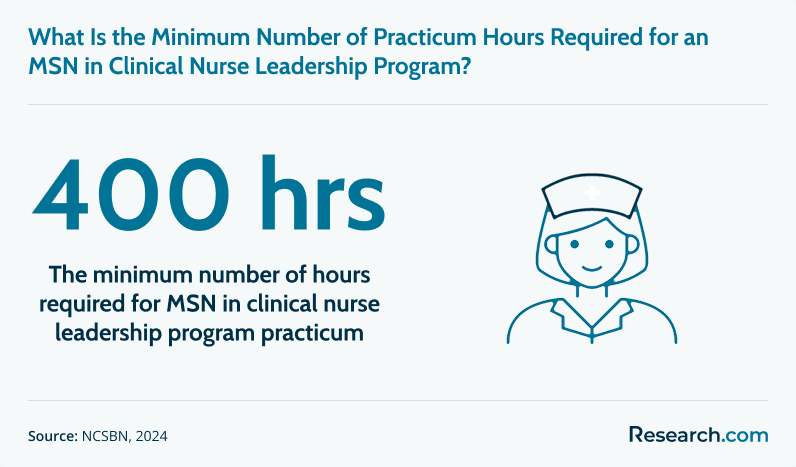
Credit requirements often fall around 30-45 credit hours, although individual programs may require more. CNL programs also include supervised clinical or practicum hours, usually ranging from 400 to 500 hours, because students must apply leadership, quality improvement, and outcomes management competencies in practice settings.
Part-time students should expect a longer timeline, often three years or more. Some schools describe part-time study as two years to 3.5 years or five to six semesters, but nurses working full time should look closely at weekly workload expectations before choosing an aggressive schedule.
Students entering through ADN-to-MSN pathways or with a bachelor's degree outside nursing often need additional bridge or foundational coursework. A full-time ADN-to-MSN route may take 30-36 months, and part-time enrollment can extend the timeline further. Nurses comparing bridge options should understand how hard is RN to BSN before committing to a graduate-level pathway.
| Student background | Typical timeline | What may extend the timeline |
| BSN-prepared RN, full time | Approximately two years (20-24 months) | Practicum scheduling, cohort sequencing, capstone requirements |
| BSN-prepared RN, accelerated | 12 to 18 months | High course load, limited breaks, intensive clinical expectations |
| BSN-prepared RN, part time | Three years or more | Work schedule, family responsibilities, limited course availability |
| ADN-to-MSN or non-nursing bachelor's pathway | 30-36 months full time or longer part time | Bridge courses, undergraduate prerequisites, clinical sequencing |
Online vs. campus MSN-CNL programs: which format fits you?
Online MSN in Clinical Nurse Leadership programs are often the better fit for working nurses who need schedule flexibility, want to avoid relocation, or live far from a campus offering the CNL track. Many online programs provide asynchronous coursework, recorded lectures, discussion boards, and digital assignments that can be completed around nursing shifts.
Cost can also favor online study, especially when students avoid commuting, housing changes, and campus-related expenses. This is one reason online graduate nursing options are often compared across specialties, including the cheapest MSN programs in health systems management online.
Campus programs may be better for students who want structured class meetings, in-person faculty access, stronger face-to-face networking, and a traditional academic environment. Students who learn best through live discussion, immediate feedback, and campus-based peer relationships may find on-campus or hybrid programs more supportive.
Clinical experiences are required in both formats. The key difference is placement support. Some online programs help students identify approved preceptors and sites, while others expect students to take the lead. Before enrolling, ask who is responsible for securing clinical placement, what happens if a site falls through, and whether your state is approved for distance education enrollment.
| Factor | Online MSN-CNL | On-campus MSN-CNL |
| Best for | Working nurses who need flexibility | Students who prefer structured, in-person learning |
| Schedule | Often asynchronous or blended | Usually fixed class times |
| Cost considerations | May reduce commuting and relocation costs | May include campus expenses and travel |
| Networking | Requires proactive virtual engagement | More frequent face-to-face interaction |
| Clinical placement | Often completed locally, depending on approval | May use established local partnerships |
What does an affordable online MSN in Clinical Nurse Leadership cost?
Affordable online MSN-CNL programs vary widely in price because tuition depends on institution type, residency status, credit requirements, fees, and whether tuition is charged per credit or by term. Some programs may cost as low as $10,000-$15,000 in total tuition, particularly at in-state public universities. Other programs that are still considered affordable within graduate nursing education may cost $25,000-$30,000 or more.
Across online MSN programs generally, reported costs range between $18,000 and $57,000, with a median around $37,500. Affordable MSN-CNL programs are typically found toward the lower end of this range. Similar cost differences appear in other advanced nursing specialties, such as the cheapest online master's degree in nurse midwifery.
Among registered nurses in 2024, 21% have a master's degree. That figure matters because graduate education is common enough to support career mobility, but not universal enough that applicants should treat an MSN as a casual expense. The best approach is to calculate total cost of completion, not just advertised tuition.
Registered nurses enter the profession through several academic routes, from associate degrees to doctorates. The chart below shows the highest education levels reported across the RN workforce.
Cost factors to compare before applying
- Total credits required: A lower tuition rate may not save money if the program requires significantly more credits.
- Mandatory fees: Ask about technology fees, clinical fees, graduation fees, background checks, drug screening, and liability insurance.
- Clinical travel: Local placement can save money, but travel may be required for campus intensives or approved sites.
- Residency pricing: Some public universities charge different rates for in-state and out-of-state students.
- Lost income: Accelerated programs may reduce work availability, which affects total affordability.
What financial aid can MSN-CNL students use?
Graduate nursing students in online MSN-CNL programs may use several forms of financial aid, including federal loans, scholarships, grants, employer tuition benefits, and payment plans. The best funding strategy usually combines multiple sources to reduce borrowing.
The first step is completing the Free Application for Federal Student Aid (FAFSA). Graduate students may qualify for Federal Direct Unsubsidized Loans and Graduate PLUS Loans. Unsubsidized loans begin accruing interest when funds are disbursed, while Graduate PLUS Loans can cover up to the cost of attendance minus other aid and require a credit check.
Nursing scholarships may be available through universities, professional associations, foundations, hospitals, and state workforce initiatives. Some awards are based on merit, financial need, service commitments, specialty interests, or applicant background.
Employer tuition assistance can be especially valuable for working nurses. Hospitals and health systems may reimburse part of tuition or provide upfront assistance in exchange for continued employment after graduation. This is common across nursing leadership and quality-focused pathways, including affordable online MSN in healthcare quality and patient safety programs.
| Funding option | Best use | Important question to ask |
| Federal Direct Unsubsidized Loans | Baseline graduate education financing | What will interest cost by graduation? |
| Graduate PLUS Loans | Covering remaining cost of attendance | Do I need this after scholarships and employer aid? |
| Scholarships | Reducing debt | Are there awards specifically for graduate nursing or leadership? |
| Employer reimbursement | Lowering out-of-pocket cost while employed | Is there a work commitment after graduation? |
| University payment plans | Spreading term costs over time | Are there fees or deadlines for enrollment? |
What are the admission requirements for online MSN-CNL programs?
Most online MSN in Clinical Nurse Leadership programs require applicants to hold an active, unencumbered Registered Nurse license. This confirms that the applicant is legally authorized to practice and has the professional foundation needed for graduate nursing work.
Many programs prefer or require a Bachelor of Science in Nursing from a regionally accredited institution and a nursing program accredited by a recognized agency such as the Commission on Collegiate Nursing Education (CCNE) or the Accreditation Commission for Education in Nursing (ACEN). Applicants from ADN or non-nursing bachelor's backgrounds may be considered through bridge or accelerated routes, but these pathways usually add coursework before MSN-level CNL study. Nurses should not assume that an RN to BSN without clinicals will automatically satisfy every CNL admission or practicum expectation.
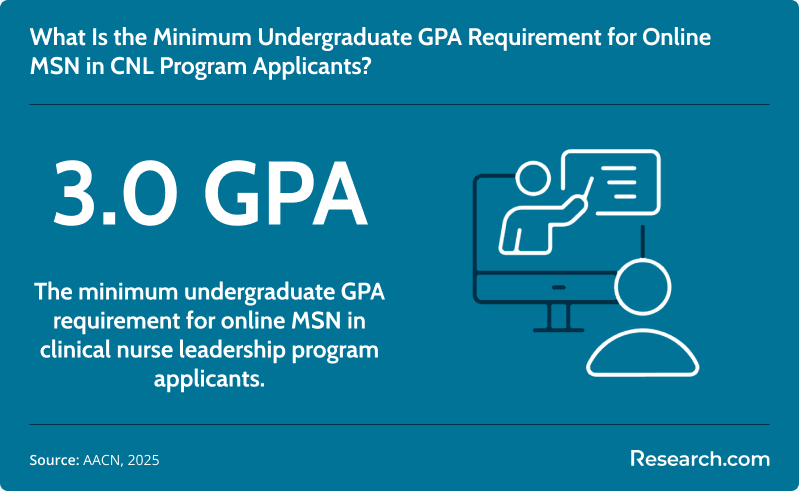
Programs commonly expect evidence of graduate academic readiness. A minimum undergraduate GPA around 3.0 on a 4.0 scale is common, although some schools may review applicants with lower GPAs if they show strong clinical experience, recommendations, or a compelling statement of purpose.
Additional requirements may include undergraduate statistics, nursing research, a professional resume or CV, letters of recommendation, a personal statement, and sometimes an interview. The GRE is often waived, but individual schools may still require it for certain applicants or academic profiles.
Questions to ask admissions before you apply
- Is my current RN license acceptable for enrollment and clinical placement?
- Does the program accept students from my state?
- Will my prior coursework satisfy statistics or research prerequisites?
- How many clinical hours are required, and who approves preceptors?
- Are GRE scores required for applicants below a certain GPA?
- Can ADN-prepared nurses apply directly, or is a BSN required first?
What courses are included in an MSN in Clinical Nurse Leadership?
An online MSN-CNL curriculum combines graduate nursing core courses with leadership, care coordination, quality improvement, and outcomes-focused coursework. Program details vary, but many curricula align with the AACN's CNL competencies.
Common MSN core subjects include:
- Advanced Pathophysiology: Study of disease processes, physiologic changes, and clinical implications across the lifespan.
- Advanced Pharmacology: Graduate-level review of drug classes, therapeutic use, mechanisms of action, safety considerations, and patient response.
- Advanced Health Assessment: Development of comprehensive assessment skills that include physical, psychosocial, cultural, and clinical reasoning components.
- Nursing Research and Evidence-Based Practice: Methods for evaluating research and translating evidence into improved care practices.
- Healthcare Policy and Ethics: Examination of laws, ethical issues, policy decisions, and their effects on nursing and patient care.
- Healthcare Informatics: Use of electronic health records, clinical data, information systems, and technology to support safer and more effective care.
CNL-focused coursework typically includes:
- Clinical Nurse Leader Role and Leadership Theories: Analysis of the CNL role, leadership approaches, team communication, and interdisciplinary collaboration.
- Quality Improvement and Patient Safety: Tools for identifying care problems, designing improvements, reducing risk, and measuring safety outcomes.
- Outcomes Management and Evaluation: Collection and interpretation of clinical outcomes data to guide decisions and evaluate interventions.
- Care Coordination and Transitions of Care: Strategies for improving continuity across settings, reducing readmissions, and supporting patients and families.
- Healthcare Economics and Finance: Introduction to budgeting, resource allocation, cost-effectiveness, and financial pressures in healthcare systems.
- Population Health and Epidemiology: Principles of prevention, population-level risk, and community health interventions. As of 2023, a total of 170 CNLs were employed in community and public health setting.
CNLs work across many care environments, applying leadership and advanced generalist nursing knowledge to improve outcomes. The following chart shows employment settings where CNLs contribute, from hospital units to community-based and outpatient care.
Are there specializations within Clinical Nurse Leadership programs?
Clinical Nurse Leadership is already a specialization within the Master of Science in Nursing. The clinical nurse leader role is generally defined as an advanced generalist role focused on improving patient care outcomes at the microsystem level.
Unlike nurse practitioner programs, which may divide into population tracks such as family practice, adult-gerontology, pediatrics, psychiatric mental health, or women's health, CNL programs usually do not offer multiple formal sub-specializations. The goal is broad preparation across care settings and patient populations, not preparation for one narrow population focus.
That said, programs may differ in emphasis. Some require 400 to 500 or more clinical practicum hours and may allow students to shape capstone projects or placements around interests such as safety, care transitions, informatics, gerontology, acute care, or population health.
Possible areas of emphasis may include:
- Healthcare quality and safety: Stronger focus on reducing harm, improving processes, and measuring quality indicators.
- Healthcare informatics: Greater use of data, technology, and clinical information systems to support decision-making.
- Leadership in care settings: Practicum or project work in acute care, community health, long-term care, or outpatient environments.
- Education or management exposure: Some curricula overlap with nurse educator or nurse leadership tracks, although CNL competencies remain the central focus.
When comparing programs, do not look only for the word “specialization.” Instead, review practicum options, capstone expectations, faculty expertise, and elective choices to see whether the program aligns with your preferred practice environment.
MSN-CNL vs. accelerated DNP programs
Affordable online MSN-CNL programs and accelerated DNP programs serve different goals. An MSN-CNL typically focuses on care coordination, clinical leadership, quality improvement, and systems thinking at the point of care. A DNP is a terminal practice doctorate that may involve broader preparation in advanced practice, organizational leadership, policy, and evidence translation.
| Decision factor | Online MSN-CNL | Accelerated DNP |
| Primary purpose | Advanced generalist leadership and care coordination | Doctoral-level practice leadership or advanced practice preparation |
| Best for | RNs who want leadership without necessarily becoming APRNs | Nurses seeking terminal practice preparation or broader organizational impact |
| Typical commitment | Often shorter than doctoral study | Usually more intensive and longer in scope |
| Career alignment | CNL, care coordination, quality improvement, patient safety, nurse management | Advanced practice, executive leadership, policy, systems-level change |
| Cost consideration | Often lower total tuition than doctoral routes | May require greater financial and time investment |
Is an affordable online MSN in Clinical Nurse Leadership worth it?
An affordable online MSN-CNL can be worth it for nurses who want to lead clinical improvement, coordinate complex care, and qualify for roles that require or prefer graduate nursing education. The strongest return is usually found when the degree aligns with a specific career goal, such as moving into CNL, quality, patient safety, care coordination, nurse management, or clinical education responsibilities.
The degree may be less worthwhile if you want independent diagnosis and treatment authority, because the CNL pathway is not the same as a nurse practitioner program. It may also be a poor fit if the school is not properly accredited, does not support clinical placement, or costs more than your expected career advancement can reasonably justify.
Students earlier in their nursing journey may need to compare MSN-CNL programs with other pathways, including an accelerated bachelor of science in nursing online if they do not yet have the nursing foundation required for graduate study.
Who should consider an online MSN-CNL?
- Experienced RNs who want to influence unit-level outcomes and care systems
- Nurses interested in quality improvement, patient safety, or care transitions
- Working nurses who need online coursework and local clinical options
- BSN-prepared RNs seeking leadership growth without choosing an NP track
Who may need a different path?
- Nurses who want prescriptive authority or primary care practice should compare nurse practitioner programs.
- Nurses aiming for top executive roles may eventually need doctoral or executive leadership preparation.
- Applicants without RN licensure should first complete an appropriate prelicensure nursing pathway.
- Students who need heavy in-person support may prefer campus-based or hybrid study.
What student support services matter in online MSN-CNL programs?
Support services can make a major difference in an online graduate nursing program, especially when clinical placement, practicum documentation, and demanding coursework overlap with full-time nursing work. Strong programs provide academic advising, technical support, library access, writing help, career services, and faculty communication standards that are clear before enrollment.
Clinical placement support deserves special attention. Ask whether the school finds sites, approves student-identified preceptors, provides affiliation agreements, or limits placement by state. Virtual simulation labs, digital databases, practicum coordinators, and peer mentoring can also improve the online learning experience.
Nurses still building their academic foundation may also compare bridge options such as affordable LPN to RN bridge programs online before pursuing graduate-level clinical leadership.
How to choose the best affordable online MSN-CNL program
Choosing an MSN-CNL program is not the same as choosing the fastest or lowest-priced option. It requires the same careful fit analysis used when comparing pathways such as the easiest RN to BSN program, but with additional graduate-level considerations around accreditation, practicum quality, faculty expertise, and career outcomes.
Use the following checklist before applying:
- Confirm accreditation: Verify institutional accreditation and nursing program accreditation through CCNE or ACEN. Accreditation matters for financial aid, employer recognition, certification preparation, and future academic pathways. The same principle applies when evaluating online FNP programs.
- Calculate total cost: Compare tuition, fees, clinical expenses, required travel, background checks, books, and lost work time. Do not choose solely on per-credit tuition.
- Review the curriculum: Look for strong coverage of CNL competencies, quality improvement, safety, informatics, outcomes management, finance, and care coordination.
- Understand course delivery: Ask whether classes are asynchronous, synchronous, or hybrid. Working nurses should know whether live sessions conflict with shifts.
- Investigate clinical placement: Determine who secures preceptors, how placements are approved, and whether the school has restrictions in your state.
- Check faculty qualifications: Look for faculty with CNL, leadership, quality improvement, informatics, or systems-level nursing expertise.
- Ask about outcomes: Request completion rates, certification preparation information, graduate employment support, and alumni career examples when available.
- Compare admissions fit: Confirm GPA, RN licensure, BSN or bridge requirements, work experience expectations, and prerequisite courses.
This kind of review is also useful when comparing other graduate nursing options, including affordable master's in public health nursing online programs, because the lowest-cost program is not always the best value.
Common challenges in online MSN-CNL programs
Online MSN-CNL programs can be flexible and affordable, but they are not easy. Students must manage graduate assignments, clinical hours, group work, discussion deadlines, and professional responsibilities. Nurses working rotating shifts may find asynchronous coursework helpful, but they still need protected study time.
Clinical placement can be the biggest obstacle. If a program requires students to locate their own preceptors, you may need to contact hospitals, clinics, managers, and potential mentors months before the practicum begins. Limited in-person networking can also make it harder to build relationships unless students actively participate in virtual discussions, professional organizations, and faculty office hours.
Applicants researching nursing pathways, including the easiest nursing school to get into, should remember that easier admission does not always mean better support, stronger clinical learning, or better career outcomes.
| Common mistake | Why it matters | Better approach |
| Choosing based only on tuition | Fees, credits, travel, and clinical costs can change the true price | Compare total cost of completion |
| Ignoring accreditation | Unaccredited programs may affect aid, employment, certification, or transfer options | Verify institutional and nursing accreditation before applying |
| Assuming clinical placement is guaranteed | Some programs expect students to find sites and preceptors | Ask for placement policies in writing |
| Overloading your schedule | Accelerated coursework plus nursing shifts can lead to burnout | Choose a realistic full-time or part-time plan |
| Assuming salary outcomes are automatic | Pay depends on role, location, employer, experience, and certification | Research local job postings and internal promotion requirements |
Career paths for MSN-CNL graduates
Graduates of affordable online MSN in Clinical Nurse Leadership programs are prepared for roles that connect direct care, quality improvement, team communication, and systems-level problem solving. The CNL is an advanced generalist, which means the role is broad rather than population-specific.
Common career options include:
- Clinical Nurse Leader: CNLs coordinate care for patient cohorts, support interdisciplinary teams, evaluate safety risks, lead evidence-based practice changes, educate staff and patients, and help improve communication across departments.
- Clinical Nurse Manager or Supervisor: Nurses with CNL preparation may move into unit leadership roles involving staffing, performance support, education, workflow coordination, and department-level quality goals.
- Care Coordinator, Clinical Liaison, or Clinical Navigator: These roles focus on transitions of care, patient advocacy, continuity across settings, and connection to resources. The nurse case manager career path overlaps with this type of work.
- Nurse Educator or Staff Development Specialist: CNL-trained nurses may support clinical education, onboarding, competency development, in-service training, and evidence-based practice adoption.
- Quality Improvement or Patient Safety Officer: These roles use data analysis, risk assessment, process redesign, and outcomes measurement to improve patient care and reduce preventable harm.
- Clinical Nurse Administrator: Administrative roles may involve department oversight, operational improvement, nursing workforce management, and coordination among nurse managers and clinical leaders.
Job market outlook for Clinical Nurse Leadership graduates
The job market for CNL-prepared nurses is supported by several healthcare pressures: complex patient needs, quality and safety expectations, care transition challenges, and the ongoing need for experienced nurse leaders. Healthcare employers continue to need nurses who can interpret evidence, coordinate teams, and improve outcomes at the point of care.
The job outlook for CNLs is projected to show a 28% to 32% increase in job opportunities from 2022 to 2032, which is substantially higher than the average growth rate for all occupations. Demand may be strongest in hospitals, outpatient care centers, government agencies, physician offices, and home health services where care coordination and safety initiatives are priorities.
Salary data varies by source and role definition. The average annual salary for a clinical nurse leader in the United States is approximately $89,949 as of May 2025, with a typical range between $71,000 and $104,500. Top earners can make upwards of $133,500 annually. Some data suggest an average of around $124,680 for those with an MSN.
Certification, location, employer type, years of experience, and job scope can all influence earnings. Nurses planning a long-term education ladder may begin with the cheapest RN to BSN online before moving into an MSN in Clinical Nurse Leadership.
Can additional certifications strengthen your clinical leadership profile?
Additional certifications can help nurses demonstrate focused expertise beyond the MSN-CNL curriculum. Depending on career goals, relevant credentials may support advancement in quality improvement, patient safety, informatics, case management, specialty nursing, or leadership. The best certification is the one that matches the role you want next, not simply the one with the most impressive title.
Some nurses also compare leadership-focused MSN pathways with more specialized clinical routes. For example, an accelerated MSN degree in womens health NP may make sense for nurses who want population-specific advanced practice preparation, while the CNL route is better aligned with systems-level care coordination and clinical leadership.
Key Insights
- An online MSN in Clinical Nurse Leadership is best for registered nurses who want to improve care coordination, patient safety, quality outcomes, and clinical team performance without necessarily pursuing a nurse practitioner role.
- BSN-prepared students can often complete a full-time online CNL program in approximately two years, or 20-24 months, while part-time, ADN-to-MSN, and non-nursing bachelor's pathways may take longer.
- Programs typically require around 30-45 credit hours and supervised clinical or practicum hours, usually ranging from 400 to 500 hours, so clinical placement support should be a major selection factor.
- Affordable online MSN programs may cost as low as $10,000-$15,000 in total tuition, while broader online MSN costs range between $18,000 and $57,000, with a median around $37,500.
- Do not choose a program based only on tuition. Accreditation, total cost, state authorization, clinical placement, faculty expertise, schedule flexibility, and employer recognition are just as important.
- The projected 28% to 32% increase in CNL job opportunities from 2022 to 2032 suggests strong demand, but salaries depend on location, role, experience, employer, and certification.
- The strongest return on investment comes when the MSN-CNL directly supports a realistic career move, such as care coordination, nurse management, quality improvement, patient safety, or unit-based clinical leadership.
References:
- American Association of Colleges of Nursing (AACN) & Commission on Nurse Certification (CNC). (2024). 2024 Clinical Nurse Leader (CNL) Job Analysis Final Report.
- Beauchesne, M. J., Clark, M. J. G., Johnson, J. M., Bickford, C. J., Mancino, D. J., Roe, E. A., Robichaux, C. A., Stout, P. B., & Rosseter, R. J. (2025). The future of nursing education: Responding to a changing healthcare landscape. Journal of Nursing Regulation, 25(1), 31–41.
- National Council of State Boards of Nursing (NCSBN). (n.d.). 2024 National Nursing Workforce Survey.
- National Council of State Boards of Nursing (NCSBN). (n.d.). Workforce.
- U.S. Bureau of Labor Statistics. (2024). Medical and health services managers. Occupational Outlook Handbook.
- U.S. Bureau of Labor Statistics. (2024). Registered nurses. Occupational Outlook Handbook.
- U.S. Census Bureau. (n.d.). National Sample Survey of Registered Nurses (NSSRN) Data. Retrieved June 3, 2025.
Other Things You Should Know About the Most Affordable Online MSN in Clinical Nurse Leadership Programs
When selecting an affordable online MSN in Clinical Nurse Leadership program in 2027, consider accreditation, faculty expertise, curriculum relevance, clinical placement opportunities, and student support services. Accreditation ensures program quality and eligibility for licensure, while a strong curriculum and robust support services enhance learning and career prospects.
In 2027, some of the most affordable online MSN in Clinical Nurse Leadership programs are offered by universities like Western Governors University, University of Texas at Tyler, and University of Central Florida. These institutions provide budget-friendly options without compromising educational quality, making them excellent choices for aspiring clinical nurse leaders.
Yes, affordable online MSN programs can absolutely offer the same quality as more expensive ones, provided they hold the proper accreditation. The key differentiator for quality in nursing education is programmatic accreditation from recognized bodies like the CCNE or ACEN, which ensures the curriculum meets national standards regardless of tuition cost. While higher tuition might sometimes indicate more extensive resources or a more prestigious university name, it doesn't automatically equate to a superior educational experience or better career outcomes.