2027 Most Affordable Online MSN in Public Health Nursing

Co-Founder and Chief Data Scientist
Choosing an online MSN in public health nursing is usually a career and cost decision at the same time. You may want to move beyond bedside care into community health, prevention, policy, outbreak response, or program leadership, but you also need a graduate program that fits around RN work schedules and does not create unnecessary debt.
This guide is designed for registered nurses comparing affordable online MSN in public health nursing programs for 2027. It explains what the degree covers, how online programs work, what they may cost, which schools offer lower-priced options, what admissions requirements to expect, and how to judge whether the investment fits your career goals.
You will also find practical decision tools, including program comparisons, cost questions, career options, common mistakes, and a step-by-step checklist for choosing a program that is accredited, affordable, and aligned with public health nursing work.
Quick answer: Is an affordable online MSN in public health nursing a good option?
An affordable online MSN in public health nursing can be a strong fit for licensed RNs who want to work in population health, community health leadership, disease prevention, health education, infection control, epidemiology support, or public health program management. It is especially useful for nurses who need online flexibility while continuing to work.
Salary estimates vary by source, role, employer, and location. This guide cites an average annual salary of around $78,437 for public health nurses, while some broader estimates place median earnings around $94,000 per year for professionals with this type of graduate preparation. Senior leadership and specialized roles may pay more, but no degree can guarantee a specific salary outcome.
What are the main benefits of an affordable online MSN in public health nursing?
- Broader career options: Graduates may pursue roles such as public health nurse, epidemiology nurse, community health program manager, health policy analyst, infection control nurse, or public health nursing director.
- Population-level impact: Instead of focusing only on individual patient encounters, public health nurses work on prevention, education, surveillance, policy, and programs that affect entire communities.
- Work-friendly scheduling: Online coursework can make graduate study more manageable for RNs balancing shifts, family responsibilities, and clinical obligations.
- Potential for advancement: Graduate-level preparation can support movement into leadership, administration, education, research support, and public-sector health roles.
- Cost control: Affordable online programs may reduce commuting, relocation, and housing costs, though students should still compare total tuition, fees, books, technology costs, and practicum expenses.
What can I expect from an affordable online MSN in public health nursing?
An online MSN in public health nursing is a graduate nursing degree for RNs who want to apply advanced nursing knowledge to communities, populations, and health systems. The curriculum usually combines advanced nursing theory with public health topics such as epidemiology, health promotion, disease prevention, social determinants of health, health policy, program planning, and quality improvement.
Most programs are built for working nurses. Lectures, discussions, assignments, and group projects may be delivered online, while practicum or field experiences are typically completed in approved community, healthcare, government, school, nonprofit, or public health settings. Even when a program is advertised as online, students should confirm whether any campus visits, live sessions, immersion experiences, or local practicum hours are required.
This degree is not the same as a nurse practitioner program. Public health nursing MSN programs usually prepare nurses for population health, leadership, education, coordination, surveillance, and program work rather than direct advanced practice diagnosis and prescribing. Nurses seeking APRN licensure should verify whether a different MSN track is required.
| Program feature | What it usually means for students | What to verify before enrolling |
| Online coursework | Most theory and discussion-based classes are completed remotely. | Whether classes are asynchronous, live, or a mix of both. |
| Public health focus | Courses emphasize population health, prevention, health equity, policy, and community assessment. | Whether the school offers a dedicated public health nursing track or only related electives. |
| Practicum requirement | Students apply public health skills in a real-world setting. | Who finds the site, whether local placements are allowed, and what approvals are needed. |
| Accreditation | Accreditation supports quality, financial aid eligibility, and employer recognition. | Whether the nursing program is accredited by CCNE or ACEN. |
Where can I work with an affordable online MSN in public health nursing?
Public health nursing graduates can work in many settings where the goal is to improve health outcomes beyond one patient at a time. Common employers include public agencies, nonprofit organizations, healthcare systems, universities, research groups, and community-based organizations.
- Local, state, and federal health departments: Nurses may coordinate immunization programs, emergency response, community education, maternal-child health services, chronic disease initiatives, or health equity projects.
- Nonprofits and NGOs: Graduates may lead programs related to underserved populations, global health, maternal health, homelessness, food access, chronic disease prevention, or community outreach.
- Hospitals and healthcare systems: Roles may include population health coordinator, infection prevention specialist, community benefit program lead, or public health liaison.
- Universities and research institutions: Nurses may support community-based research, public health studies, grant-funded projects, and student education.
- Government agencies such as the CDC or HRSA: Opportunities may involve health campaigns, data-informed policy work, workforce initiatives, outbreak response, or program evaluation.
The best setting depends on whether you prefer direct community contact, data and surveillance, policy, administration, education, emergency preparedness, or health systems improvement.
How much can I make with an affordable online MSN in public health nursing?
Graduates of online MSN in public health nursing programs in the U.S. typically earn an average annual salary of around $78,437. Entry-level professionals can expect to start at about $66,790 per year. Some senior positions may exceed $120,000 annually, particularly when the role involves leadership, specialized expertise, or responsibility for large programs.
Pay depends heavily on the job title, employer, years of experience, region, funding source, and whether the role is clinical, administrative, policy-focused, or program-based. Public health nurses in the District of Columbia, California, Massachusetts, New Jersey, and New York often earn above the national average, but location-specific pay should be checked before using salary as the main reason to enroll.
When evaluating return on investment, compare total program cost against realistic local job postings, not only national salary averages. A lower-cost program can be financially stronger than a higher-priced program if it has solid accreditation, strong practicum support, and good alignment with your target role.
- Most Affordable Online MSN in Public Health Nursing Programs for 2027
- How long does an affordable online MSN in public health nursing take?
- Online vs. on-campus MSN in public health nursing: what is different?
- What does an affordable online MSN in public health nursing cost?
- What financial aid can online MSN public health nursing students use?
- What are the admission requirements for an online MSN in public health nursing?
- What courses are included in an online MSN in public health nursing?
- What public health nursing specializations are available?
- What challenges should online MSN public health nursing students expect?
- How should you choose the best affordable program?
- What jobs can graduates pursue?
- What is the job market for MSN-prepared public health nurses?
- Is an affordable online MSN in public health nursing worth it?
- What support services help graduates succeed?
- Can LPNs move directly into an MSN in public health nursing?
- Can accelerated MSN programs shorten the path to public health nursing roles?
Most Affordable Online MSN in Public Health Nursing Programs for 2027
How do we rank schools?
Selecting an online MSN in public health nursing requires more than comparing advertised tuition. Students also need to consider accreditation, credit requirements, online delivery, practicum expectations, and whether a program’s curriculum truly supports public health nursing goals.
Research.com uses a transparent methodology to evaluate programs. The ranking draws from trusted education datasets, including the Integrated Postsecondary Education Data System (IPEDS), Peterson's databases and their Distance Learning Licensed Data Set, and the College Scorecard from the National Center for Education Statistics. These sources help compare programs using data points relevant to affordability, access, and academic quality.
1. Georgia College & State University
Georgia College & State University offers an online Master of Science in Nursing program designed for nurses preparing for advanced nursing and leadership responsibilities. Although a separate track titled “Public Health Nursing” may not be listed as a standalone option, the MSN curriculum includes concepts that support community health, population-based care, evidence-based practice, and the social factors that shape health outcomes. The online MSN has been available for several years, with online student handbook records dating back to 2017. Students should confirm any required campus immersion or in-person components before enrolling.
- Program Length: 2-3 years
- Tracks/concentrations: online MSN curriculum include foundational elements relevant to population health.
- Cost per Credit: $395 per credit hour
- Required Credits to Graduate: 39 credits
- Accreditation: Commission on Collegiate Nursing Education (CCNE)
2. Fort Hays State University
Fort Hays State University is known for low-cost online education and offers an online Master of Science in Nursing pathway that can support nurses interested in leadership, systems improvement, and population health. Public health nursing content may be embedded within broader graduate nursing or professional studies options rather than presented only as a named public health nursing MSN. Fort Hays State University has offered fully online degree programs through FHSU Online since 1997. Coursework is primarily online, while in-person field practicums are generally completed near the student’s location.
- Program Length: 16 months
- Tracks/concentrations: Master of Professional Studies with Public Health Administration option
- Cost per Credit: $250 per credit hour
- Required Credits to Graduate: 36 credits
- Accreditation: Commission on Collegiate Nursing Education (CCNE)
3. Herzing University
Herzing University offers an online MSN in Public Health Nursing for nurses who want to focus on community health, health education, disease prevention, and public health systems. The program includes pathways for nurses entering with ADN/ASN, BSN, or MSN preparation, and it is structured for online learners with multiple start dates. Herzing also promotes clinical placement support, which can be important for students who need help identifying approved practicum experiences.
- Program Length: 16 months
- Tracks/concentrations: online MSN in Public Health Nursing
- Cost per Credit: $625 per credit hour
- Required Credits to Graduate: 36 credits
- Accreditation: Commission on Collegiate Nursing Education (CCNE)
4. Baker University
Baker University provides an online Master of Science in Nursing that is commonly associated with Nursing Education and Nursing Administration concentrations. While public health nursing may not be the central standalone track, coursework in leadership, healthcare technology, advanced nursing practice, and systems thinking can be useful for nurses pursuing community or population health roles. Baker University received approval for its online MSN program in 2015, and the first cohort began in January 2016. Students should review practicum expectations carefully because some experiences are tied to teaching or administrative goals.
- Program Length: 2 years
- Tracks/concentrations: Nursing Education and Nursing Administration with Public Health
- Cost per Credit: $500 per credit hour
- Required Credits to Graduate: 36 credits
- Accreditation: Commission on Collegiate Nursing Education (CCNE)
5. Liberty University
Liberty University offers an online MSN with a Community Health Nursing specialization that emphasizes health promotion, prevention, community-based intervention, and public health advocacy. The curriculum includes content in biostatistics, epidemiology, environmental health, and population-focused nursing. Liberty University has offered distance education since 1985 and uses an online format with 8-week courses, multiple start dates, and a required practicum. This option may appeal to nurses who want a structured but flexible route into community health nursing leadership.
- Program Length: Accelerated 1-year track, involves 8-week courses.
- Tracks/concentrations: online MSN with a specialization in Community Health Nursing
- Cost per Credit: $275 per credit hour .
- Required Credits to Graduate: 36 credits
- Accreditation: Commission on Collegiate Nursing Education (CCNE)
6. University of Texas at Tyler
The University of Texas at Tyler offers an online MSN with tracks that may support public health-adjacent goals through coursework in leadership, policy, quality, safety, informatics, diverse settings, and population health. A dedicated “Public Health Nursing” specialization may not be clearly identified, so prospective students should compare course descriptions and practicum options against their career goals. The program is designed for RNs seeking advanced roles in leadership and healthcare improvement through a flexible online format.
- Program Length: 2 years
- Tracks/concentrations: Leadership in Diverse Settings (LeaDs)
- Cost per Credit: $570 per credit hour
- Required Credits to Graduate: 36 credits
- Accreditation: Commission on Collegiate Nursing Education (CCNE).
7. Troy University
Troy University offers online MSN options intended to prepare nurses for advanced nursing, leadership, and professional practice roles. Public health nursing content may appear within broader curricula rather than always being delivered as a single named specialization, so applicants should ask how community health, population health, and public health practice are incorporated. Troy University has a long history of online education, including graduate nursing delivery, and some concentrations may require limited on-campus visits or in-person experiences.
- Program Length: 2 years
- Tracks/concentrations: Public Health MSN
- Cost per Credit: $475 per credit hour
- Required Credits to Graduate: 47 credits
- Accreditation: Commission on Collegiate Nursing Education (CCNE).
8. The University of Alabama
The University of Alabama offers an online Master of Science in Nursing intended to build advanced nursing knowledge and professional leadership capacity. Although public health nursing may not be as visible as other graduate nursing pathways, MSN core coursework can include population health, healthcare systems, and policy-related topics. The online format is designed for RNs who need to balance graduate study with employment and personal responsibilities.
- Program Length: 2 years
- Tracks/concentrations: online MSN in Public Health Nursing
- Cost per Credit: $440 per credit hour
- Required Credits to Graduate: 35 credits
- Accreditation: Commission on Collegiate Nursing Education (CCNE)
9. University of North Carolina at Charlotte
The University of North Carolina at Charlotte offers an online MSN with a Community/Public Health Nursing specialization. This is one of the more directly aligned options for nurses who want leadership preparation in community assessment, intervention planning, population health, and health disparities. Specialty courses in Community/Public Health Nursing are delivered entirely online, core courses are also available online, and the program began offering online MSN Nurse Practitioner options in Fall 2025. Required clinical hours are part of the program.
- Program Length: 2 years
- Tracks/concentrations: online MSN with a specialization in Community/Public Health Nursing
- Cost per Credit: $288.82 per credit hour
- Required Credits to Graduate: 38 credits
- Accreditation: Commission on Collegiate Nursing Education (CCNE)
10. Walden University
Walden University offers an online MSN with a Public Health Nursing specialization focused on health education, disease prevention, underserved communities, and population-based intervention. Walden has long served working adult learners through online education and offers flexible study options, including Tempo Learning®, which may allow some students to set a personalized pace and manage costs. Applicants should verify total cost, practicum expectations, and whether the learning model fits their work schedule.
- Program Length: 16-24 months
- Tracks/concentrations: online MSN in Public Health Nursing
- Cost per Credit: $580 per credit hour
- Required Credits to Graduate: 38 credits
- Accreditation: Commission on Collegiate Nursing Education (CCNE).
| School | Listed public health-related option | Cost per credit | Credits | Best-fit consideration |
| Georgia College & State University | Population health elements in online MSN curriculum | $395 per credit hour | 39 credits | Good to review if you want broad MSN preparation with population health content. |
| Fort Hays State University | Master of Professional Studies with Public Health Administration option | $250 per credit hour | 36 credits | Strong cost-focused option for students interested in public health administration. |
| Herzing University | Online MSN in Public Health Nursing | $625 per credit hour | 36 credits | Direct public health nursing track with flexible entry pathways. |
| Liberty University | Community Health Nursing specialization | $275 per credit hour . | 36 credits | Accelerated structure may appeal to students ready for intensive pacing. |
| University of North Carolina at Charlotte | Community/Public Health Nursing specialization | $288.82 per credit hour | 38 credits | Directly aligned with community and public health nursing leadership. |
How long does it take to complete an affordable online MSN in public health nursing program?
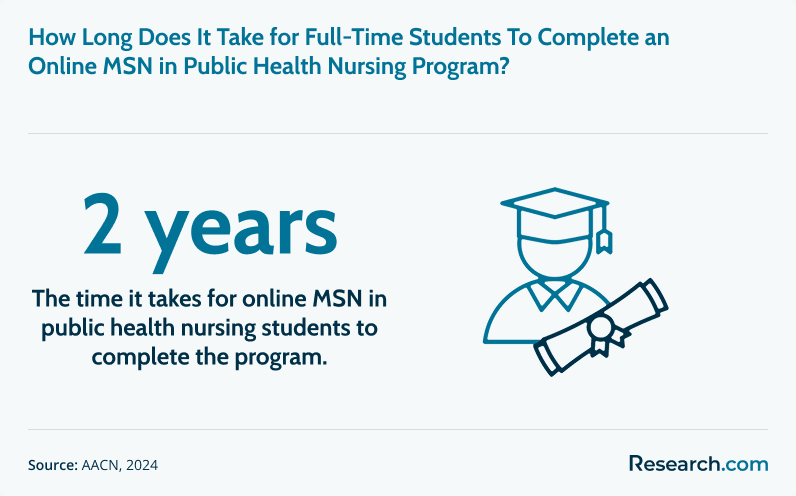
Most affordable online MSN in public health nursing programs take 2 to 3 years for part-time students, which is the common pace for working RNs. Full-time students may finish in 18 to 24 months if the curriculum is structured for accelerated progress and if no bridge coursework is needed.
The timeline depends on your entry point. A nurse with a BSN can usually enter directly into MSN coursework. An ADN-prepared RN may need an RN-to-MSN bridge, BSN-equivalent coursework, or additional prerequisites, which can extend the completion time. Nurses comparing career options may also want to review the nurse case manager career path if they are interested in coordination, utilization, and care management roles.
Practicum scheduling can also affect the pace. Even online programs usually require in-person fieldwork, and students may need time to secure site approvals, preceptors, background checks, immunizations, or agency onboarding.
| Student situation | Typical timeline | Main factor that can change the timeline |
| BSN-prepared RN, part-time | 2 to 3 years | Work schedule, course availability, and practicum timing. |
| BSN-prepared RN, full-time | 18 to 24 months | Whether the program allows accelerated sequencing. |
| ADN-prepared RN | Often longer than direct BSN-to-MSN routes | Bridge coursework or BSN-equivalent requirements. |
| Accelerated MSN student | May finish faster | Ability to handle condensed courses and practicum workload. |
How does an affordable online MSN in public health nursing program compare to an on-campus program?
An affordable online MSN in public health nursing usually covers the same graduate nursing and public health competencies as a campus-based program, but the learning experience is different. Online students often complete readings, lectures, discussions, and assignments remotely, while campus students may have more frequent in-person class meetings, labs, and informal faculty interaction.
Online delivery is often the better fit for nurses who cannot relocate or leave employment. It may also reduce commuting and housing costs. Students who are still completing earlier nursing pathways may compare flexible options such as the cheapest RN to BSN online before moving into graduate study.
Campus-based programs can be valuable for learners who prefer face-to-face discussion, structured schedules, immediate faculty access, and local networking. Both formats can require approved practicum placements. Online students should ask whether they are responsible for finding their own local sites or whether the school provides placement support.
| Factor | Online MSN in public health nursing | On-campus MSN in public health nursing |
| Schedule | Often more flexible, especially with asynchronous coursework. | Usually follows set class meeting times. |
| Cost | May reduce commuting, relocation, and housing expenses. | May involve campus fees, travel, or relocation costs. |
| Interaction | Depends on discussion boards, video meetings, faculty messaging, and virtual advising. | Offers more direct in-person contact with faculty and classmates. |
| Practicum | Often completed locally with school approval. | May use established regional partnerships near campus. |
| Best for | Working RNs who need flexibility and geographic access. | Students who want in-person learning and campus resources. |
What is the average cost of an affordable online MSN in public health nursing program?
The average cost of an affordable online MSN in public health nursing program typically ranges from $10,000 to $25,000 in total tuition. Actual cost depends on credit requirements, tuition rate, school type, residency policy, fees, books, technology charges, travel for any campus requirements, and practicum-related expenses. Many programs require between 33 and 50 credit hours.
Students exploring related low-cost academic routes may also compare affordable natural science programs online, especially if they are considering broader public health, environmental health, or science-based graduate options.
Public universities frequently offer strong value, particularly when online tuition is lower or does not vary by residency. Private universities can still be worthwhile if they offer strong placement support, flexible start dates, scholarships, employer partnerships, or an accelerated format that reduces time away from higher-level employment.
Demand for nurses with public health and population health skills is connected to healthcare systems’ emphasis on prevention, chronic disease management, and community-based care. Interest in graduate nursing pathways has also grown alongside programs such as the easiest RN to BSN program, which can help ADN-prepared nurses build toward future MSN admission.
The chart below highlights the top five states with the highest projected nursing shortage by 2030 and can help students think about where public health nursing opportunities may be strongest.
What are the financial aid options for students enrolling in an affordable online MSN in public health nursing program?
In 2024, 45% of the nursing workforce used federally assisted student loans. Loans can make graduate education possible, but they should be used carefully. Reducing borrowing through scholarships, employer reimbursement, lower-cost schools, and bridge planning can improve the long-term value of the degree. Nurses comparing lower-cost completion options may also review the RN to BSN without clinicals pathway when building toward graduate study.
Common funding options for online MSN public health nursing students include:
- Federal financial aid: Students in eligible accredited programs may use federal options such as Direct Unsubsidized Loans and the Graduate PLUS Loan. The usual starting point is completing the FAFSA.
- Scholarships and grants: Universities, nursing organizations, nonprofit groups, and public service organizations may offer awards for graduate nursing students, especially those focused on underserved communities, public health, leadership, or academic merit.
- Employer tuition assistance: Hospitals, public health departments, and healthcare systems may reimburse tuition for nurses pursuing advanced credentials that support workforce needs.
- Loan repayment and forgiveness: Graduates working in qualifying public service or underserved settings may explore Public Service Loan Forgiveness (PSLF) or NURSE Corps Loan Repayment options.
- Military and veterans benefits: Eligible students may use VA education benefits, including the Post-9/11 GI Bill, for tuition and approved education expenses.
| Funding source | Best for | Question to ask |
| Federal loans | Students who need predictable financing for accredited graduate study. | What will my monthly repayment look like after graduation? |
| Scholarships and grants | Students with academic strength, financial need, service goals, or public health interests. | Are awards renewable, and what GPA or enrollment status is required? |
| Employer reimbursement | Working nurses whose employers support advancement. | Do I need to remain employed for a set period after receiving funds? |
| Loan forgiveness or repayment | Nurses planning to work in qualifying public service or underserved settings. | Does my employer and loan type qualify? |
| Military or VA benefits | Eligible service members, veterans, and dependents. | Which tuition, fee, and housing costs are covered? |
What are the prerequisites for enrolling in an affordable online MSN in public health nursing program?
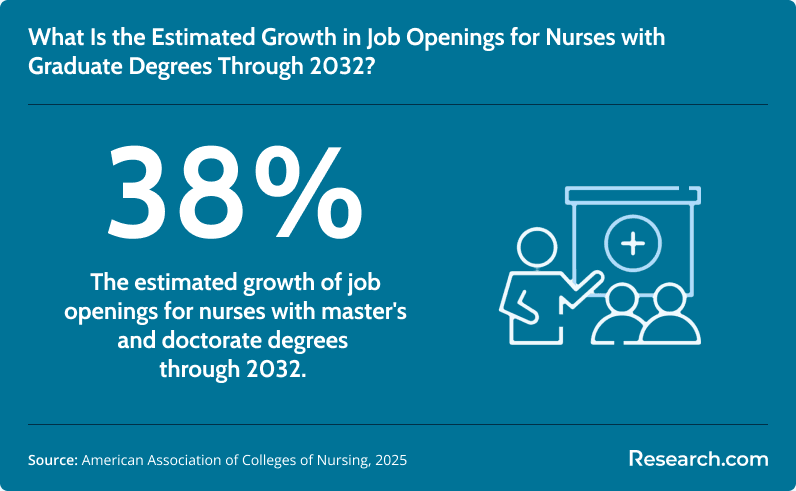
The AACN estimates that demand for nurses with master's and doctorate degrees will grow by 38% through 2032. For RNs who want to compete for leadership and specialized roles, meeting admission requirements early can make the application process smoother.
Most affordable online MSN in public health nursing programs require the following:
- Active RN license: Applicants generally need a current, unencumbered U.S. RN license, often in the state where practicum hours will be completed. RN licensure is also required for advanced clinical routes such as online FNP programs.
- Prior nursing degree: A BSN from an accredited school is the standard requirement for direct MSN admission. Some programs accept ADN-prepared nurses through RN-to-MSN or bridge pathways.
- Minimum GPA: Many schools expect at least a 3.0 undergraduate GPA, though some may review applicants with lower GPAs if they have strong nursing experience, recommendations, or other evidence of readiness.
- Professional experience: Some programs prefer at least one year of RN practice. Experience in public health, community health, case management, school nursing, home health, or underserved settings may strengthen an application.
- Application materials: Common requirements include official transcripts, a resume or CV, letters of recommendation, proof of licensure, and a personal statement explaining public health nursing goals.
Questions to ask admissions before applying
- Do you accept ADN-prepared RNs into a bridge pathway?
- Do I need a BSN from a CCNE- or ACEN-accredited program?
- Can I complete practicum hours in my state?
- Are there state authorization restrictions for online nursing students?
- Are GRE scores required, optional, or waived?
- What happens if my GPA is below 3.0 but I have strong nursing experience?
What courses are typically in an affordable online MSN in public health nursing program?
An affordable online MSN in public health nursing combines graduate nursing foundations with public health practice and leadership. It is not typically one of the quick online degrees, because the curriculum usually includes advanced coursework, applied projects, and supervised field experience.
Core MSN courses
- Advanced Health Assessment
- Pathophysiology and Pharmacology
- Nursing Theory and Research
- Health Policy and Ethics
- Evidence-Based Practice
Public health nursing courses
- Epidemiology and Population Health
- Community and Environmental Health
- Public Health Nursing Roles and Interventions
- Health Promotion and Disease Prevention
- Global Health and Social Determinants of Health
Leadership and systems courses
- Nursing Leadership and Administration
- Healthcare Systems and Quality Improvement
- Informatics in Healthcare
- Public Health Program Planning and Evaluation
Practice-based requirements
- Community Health Nursing Practicum
- Capstone Project or Final Synthesis Experience
Students should compare course titles and descriptions carefully. A program with “community health” in the title may focus heavily on outreach and education, while a program with “public health administration” may emphasize leadership, policy, and program operations.
What types of specializations are available in affordable online MSN in public health nursing programs?
As of 2024, 9% of public health nurses with master's degree they earn more than those without, at $78,437 annually. While that wording reflects the source data used in this guide, students should interpret salary comparisons carefully because pay is affected by job title, region, employer, and experience.
Affordable online MSN programs may offer formal public health nursing concentrations or allow students to shape electives and practicum work around public health goals. Common focus areas include:
- Community Health Nursing: Centers on outreach, education, prevention, and interventions for defined populations.
- Global Health: Prepares nurses to understand international health needs, cross-cultural care, infectious disease issues, and resource-limited settings.
- Health Policy and Advocacy: Focuses on policy analysis, legislation, public health ethics, and advocacy for communities with limited access to care.
- Environmental Health Nursing: Examines how air, water, housing, climate, workplace exposure, and pollution influence community health.
- Epidemiology: Builds skills in tracking disease patterns, interpreting public health data, supporting surveillance, and informing prevention efforts.
- Leadership and Administration: Prepares nurses to manage programs, supervise teams, coordinate budgets, and lead community or agency initiatives.
The chart below shows how educational attainment can relate to wage differences in public health nursing.
What challenges might you encounter in affordable online MSN in Public Health Nursing programs?
Online MSN programs can be flexible and cost-effective, but they require strong self-management. Students must stay organized across readings, discussions, writing assignments, group projects, practicum planning, and sometimes full-time RN work.
One of the biggest issues is clinical or practicum placement. Some schools provide active placement assistance, while others expect students to identify local sites and preceptors. Before enrolling, ask the program to explain its exact placement process, approval timeline, documentation requirements, and what happens if a site falls through.
Another challenge is professional connection. Online students may have fewer informal conversations with faculty and classmates, so mentoring, virtual networking, faculty access, and alumni communities matter. Nurses planning future doctoral study may also compare options such as the fastest online DNP programs if they want to understand longer-term advancement pathways.
| Common challenge | Why it matters | How to reduce the risk |
| Weak practicum support | Delayed placements can slow graduation. | Ask whether the school finds sites or only approves student-selected sites. |
| Unclear state authorization | Some online nursing programs cannot enroll students in every state. | Confirm eligibility for your state before applying. |
| Limited interaction | Online learners can feel disconnected from faculty and peers. | Look for live sessions, mentoring, cohort models, and active discussion expectations. |
| Underestimated workload | Graduate writing, data analysis, and practicum work can be demanding. | Ask current students or advisors how many hours per week are realistic. |
| Technology barriers | Online courses require reliable systems and fast communication. | Check technical support hours, platform requirements, and remote library access. |
How does one choose the best among the most affordable online MSN in public health nursing programs?
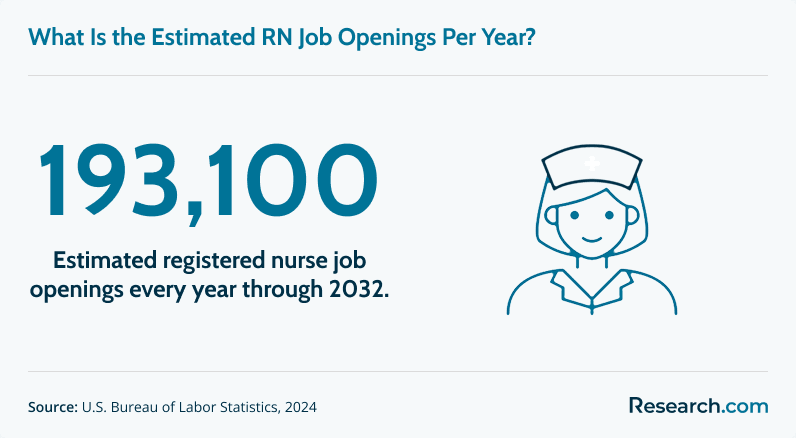
Through 2032, a total of 193,100 registered nurse openings are estimated every year. Even with strong demand, a graduate degree is most valuable when the program matches employer expectations, practicum needs, and your preferred public health role. Nurses comparing other graduate specialties can see how clinical programs, including the cheapest MSN pediatric nurse practitioner programs online, align curriculum and practice requirements with workforce standards.
1. Confirm accreditation first
Choose a program accredited by a recognized nursing accreditor such as the Commission on Collegiate Nursing Education (CCNE) or the Accreditation Commission for Education in Nursing (ACEN). Accreditation can affect financial aid eligibility, employer recognition, transfer options, and future academic plans.
2. Compare total cost, not only tuition per credit
A low per-credit rate is helpful, but it does not show the full price. Calculate tuition, required credits, fees, books, software, background checks, travel, campus visits, and practicum expenses. Also ask whether tuition changes by residency status.
3. Match the curriculum to your target job
If you want disease surveillance or outbreak response, look for epidemiology and data courses. If you want program leadership, prioritize planning, evaluation, budgeting, policy, and administration. If you want community outreach, review practicum options in public health departments, schools, nonprofits, or community agencies.
4. Investigate practicum support
Practicum support can determine whether an online program is manageable. Ask whether the school has placement coordinators, approved site lists, preceptor requirements, and backup plans.
5. Review outcomes and reputation carefully
Look beyond marketing claims. Ask for graduation rates, student support data, alumni outcomes, and employer partnerships when available. For undergraduate licensure context, students may also review NCLEX pass rates, though an MSN in public health nursing itself is not an NCLEX-preparation program.
6. Make sure you qualify before investing application fees
Check RN license rules, GPA minimums, BSN or bridge requirements, state authorization, technology requirements, and whether your location can support practicum placement.
| Decision factor | Strong sign | Warning sign |
| Accreditation | CCNE or ACEN accreditation is clearly stated. | The school is vague about nursing program accreditation. |
| Affordability | Total tuition and fees are transparent. | Only the per-credit rate is promoted, with fees hard to find. |
| Public health alignment | Courses include epidemiology, policy, population health, and program evaluation. | The program has a general MSN curriculum with little public health content. |
| Practicum support | The school explains placement responsibilities in writing. | Students must find sites with minimal guidance. |
| Flexibility | Course pacing fits working nurses. | Required live sessions or campus visits conflict with work obligations. |
What career paths are available for graduates of affordable online MSN in public health nursing programs?
Graduates can pursue roles that combine nursing expertise with public health strategy, education, prevention, leadership, and systems improvement. The right path depends on whether you prefer community-facing work, data-focused work, policy, administration, infection prevention, or global health.
Nurses interested in higher education leadership, academic administration, or executive public health roles may also compare cheapest online MSN to EdD programs after completing graduate nursing preparation.
- Public Health Nurse: Works with health departments, schools, community agencies, or nonprofits to assess needs, deliver education, support prevention, and connect populations with services.
- Community Health Program Manager: Designs, coordinates, and evaluates programs in areas such as chronic disease prevention, maternal-child health, vaccination, or health equity.
- Epidemiology Nurse: Supports surveillance, outbreak response, data collection, and evidence-based interventions.
- Health Policy Analyst or Advocate: Helps interpret policy, shape health legislation, support advocacy campaigns, or advise organizations on community health priorities.
- Infection Control Nurse: Develops and monitors infection prevention protocols in hospitals, long-term care facilities, public agencies, or healthcare systems.
- Director of Public Health Nursing: Oversees nursing teams, public health initiatives, budgets, staffing, and program strategy.
- Global Health Nurse: Supports international or cross-border health projects related to vaccination, sanitation, infectious disease, maternal-child health, or community education.
| Career path | Typical focus | Useful MSN preparation |
| Public Health Nurse | Community education, prevention, outreach, and assessment. | Community health, health promotion, social determinants of health. |
| Epidemiology Nurse | Disease surveillance, outbreak response, and data-informed interventions. | Epidemiology, biostatistics, informatics, evidence-based practice. |
| Program Manager | Planning, implementation, evaluation, and team coordination. | Leadership, budgeting, program planning, quality improvement. |
| Policy Analyst or Advocate | Public policy, legislation, health equity, and systems change. | Health policy, ethics, advocacy, population health. |
| Infection Control Nurse | Infection prevention protocols and compliance. | Epidemiology, quality improvement, healthcare systems. |
What is the job market like for graduates with affordable online MSN in public health nursing programs?
The job market for MSN-prepared public health nurses is supported by several healthcare trends: an aging population, chronic disease management needs, preventive care priorities, health equity initiatives, emergency preparedness, and the ongoing need for community-based nursing leadership.
Employment for registered nurses, including those who specialize in public health, is projected to grow by 6% from 2023 to 2033, which is faster than the average for all occupations. Public health nursing roles are available in government agencies, schools, nonprofits, healthcare systems, research organizations, and community programs.
The average salary for a public health nurse is approximately $78,437 per year, but job title and employer matter. A community outreach nurse, infection prevention specialist, public health program director, and policy-focused nurse may have very different pay ranges. Nurses considering academic or research-intensive advancement may explore affordable online MSN to PhD programs as a longer-term route into scholarship, faculty work, or high-level research leadership.
Because public health funding can depend on government budgets, grants, and local priorities, applicants should review real job postings in their target region before assuming demand will look the same everywhere.
Is the Investment in an Affordable Online MSN in Public Health Nursing Program Worth It?
An affordable online MSN in public health nursing may be worth it if the degree helps you qualify for roles you cannot realistically access with your current credential, and if the total cost is reasonable compared with your expected career path. The strongest return often comes when the program is accredited, low-cost, flexible enough to allow continued employment, and connected to practicum experiences that build public health credibility.
The degree may be less worthwhile if you want APRN prescribing authority, direct primary care practice, or a nurse practitioner role, because a public health nursing MSN may not meet those requirements. In that case, a clinical NP track may be a better match. Students still evaluating nursing entry and progression routes may also compare earlier pathways such as the easiest nursing schools to get into before committing to graduate study.
When the investment makes sense
- You want to move into community health, public health leadership, prevention, policy, or program management.
- You can keep working while enrolled, reducing lost income.
- The program is CCNE- or ACEN-accredited.
- Total tuition and fees fit your budget without excessive borrowing.
- The practicum can be completed in a setting that supports your target career.
When to consider another path
- You want to diagnose, treat, and prescribe as an APRN.
- You need a program with extensive in-person mentoring and do not learn well online.
- Your state is not authorized for the program’s online nursing enrollment.
- The school cannot clearly explain practicum placement support.
- The curriculum has limited public health, epidemiology, policy, or community health content.
What additional support services and career resources boost post-graduation success?
Support services can make a major difference in online graduate nursing programs. Strong programs usually provide academic advising, writing support, library access, technical help, faculty office hours, practicum coordination, career coaching, and alumni networking.
Career support is especially important because public health nursing roles vary widely by employer. A useful career office should help students translate nursing experience into resumes for health departments, nonprofits, hospitals, policy groups, and program management roles. Some schools also connect students to continuing education, certification preparation, or future academic pathways such as an accelerated BSN degree online for students advising others earlier in the nursing pipeline.
Support questions to ask before enrolling
- Will I have a dedicated advisor throughout the program?
- Who helps with practicum site approval and preceptor paperwork?
- Are online students eligible for the same career services as campus students?
- Does the program offer public health-focused networking or alumni connections?
- Are writing, statistics, and research support available remotely?
- What is the response time for technical support?
Can LPNs Transition Directly to an MSN in Public Health Nursing?
LPNs usually cannot move directly into an MSN in public health nursing without first becoming registered nurses. MSN programs generally require RN licensure, and most direct-entry graduate nursing pathways expect either a BSN or an approved bridge route.
A practical sequence for many LPNs is to complete an LPN-to-RN pathway, pass RN licensure requirements, gain nursing experience, and then move into a BSN, RN-to-MSN, or MSN bridge option. An affordable LPN to RN online program can be an early step, but students should verify accreditation, clinical requirements, state approval, and transfer compatibility with future graduate nursing goals.
Can accelerated MSN programs fast-track specialized career pathways in Public Health Nursing?
Accelerated MSN programs can shorten the timeline for nurses who are academically prepared, highly organized, and able to manage a demanding course load. These programs compress graduate coursework and practicum expectations into a faster schedule, which can help students reach public health nursing leadership roles sooner.
The trade-off is intensity. Accelerated formats may be difficult for nurses working long shifts, managing family responsibilities, or returning to school after a long break. Before choosing a fast track, confirm accreditation, practicum support, weekly workload, withdrawal policies, and whether the pace affects your ability to absorb advanced public health content. Nurses comparing accelerated specialty routes may also review accelerated MSN WHNP programs to understand how condensed graduate nursing pathways differ by specialty.
Common mistakes to avoid when choosing an affordable online MSN in public health nursing
| Mistake | Why it can hurt you | Better approach |
| Choosing only by lowest tuition | A cheap program may still have high fees, weak support, or limited public health coursework. | Compare total cost, accreditation, curriculum, practicum support, and student services. |
| Ignoring accreditation | Employers, financial aid, and future education options may depend on recognized accreditation. | Verify CCNE or ACEN accreditation before applying. |
| Assuming “online” means no in-person work | Most programs require local practicum hours and possibly campus visits. | Ask for all in-person requirements in writing. |
| Overlooking state authorization | Some schools cannot enroll online nursing students from every state. | Confirm your state is approved before paying application fees. |
| Confusing public health nursing with NP preparation | A public health MSN may not qualify you for APRN licensure. | Select the degree based on the job duties and credentials you actually want. |
| Relying only on rankings | A ranked program may not fit your schedule, state, budget, or career target. | Use rankings as a starting point, then evaluate personal fit. |
Here's What Graduates Have to Say About Their Affordable Online MSN in Public Health Nursing
- I did not think I could manage graduate school while working and caring for my family, but the online MSN format made it possible. I could study around my schedule and use new public health concepts right away in my nursing role. Elena
- My online program connected me with faculty and classmates from many different regions, which made the public health discussions more practical and diverse. The courses in data analysis and policy now shape how I approach my nonprofit work. Marcus
- Earning my MSN in Public Health online let me keep my full-time RN job while preparing for broader community health responsibilities. The coursework felt relevant, and I gained confidence applying population health strategies in real settings. Jasmine
Key Insights
- An affordable online MSN in public health nursing is best for RNs who want to work in prevention, community health, population health, program leadership, policy, epidemiology support, or infection control.
- Employment for registered nurses, including public health specialists, is expected to grow by 6% from 2023 to 2033.
- Healthcare employers are projected to have around 193,100 RN job openings each year through 2032, but job availability varies by location, setting, funding, and specialization.
- Public health nurses earn an average salary of about $78,437 annually, while some estimates for graduate-prepared public health nursing professionals cite around $94,000 per year; actual pay depends on role, employer, experience, and region.
- The AACN projects a 38% increase in demand for nurses with master’s or doctoral degrees through 2032, supporting the value of advanced nursing education for leadership-focused nurses.
- Most affordable online MSN in public health nursing programs take 2 to 3 years part-time, though accelerated options may take 16 months or 18 to 24 months depending on structure.
- Accreditation, practicum support, state authorization, total cost, and curriculum alignment matter more than tuition alone.
- This degree is not automatically an APRN or nurse practitioner pathway, so students should choose a clinical NP track if they want diagnosis, treatment, and prescribing authority.
References:
- American Association of Colleges of Nursing. (n.d.). Education impact fact sheet. https://www.aacnnursing.org/Portals/0/PDFs/Fact-Sheets/Education-Impact-Fact-Sheet.pdf
- American Association of Colleges of Nursing. (n.d.). Nursing shortage fact sheet.
- Health Resources and Services Administration. (2024). 2024 National Sample Survey of Registered Nurses: Key findings.
- Health Resources and Services Administration. (n.d.). Nursing workforce dashboards.
- International Council of Nurses. (2025). ICN NNA Presidents’ survey report.
- Zippia. (n.d.). Public health nurse demographics and statistics [2024].
Other Things You Should Know About the Most Affordable Online MSN in Public Health Nursing
To participate in 2027's most affordable online MSN programs in Public Health Nursing, students generally need a reliable computer, high-speed internet, and software compatible with online learning platforms like Blackboard or Zoom. Some programs may require specific applications for virtual simulations.
In 2027, most affordable online MSN programs in Public Health Nursing require a Bachelor of Science in Nursing (BSN) and an active RN license. Some programs may also ask for clinical experience and specific undergraduate coursework in health sciences or related fields.
Most affordable online MSN in Public Health Nursing programs require about 30 to 45 graduate credit hours. Students usually complete core nursing theory, population health, and public health leadership courses, plus supervised clinical or practicum work approved by a faculty adviser and an accredited practice site.