2027 Best Online MSN to EdD Bridge Programs

Co-Founder and Chief Data Scientist
Advancing from clinical nursing to educational leadership can feel overwhelming. Confusing program formats, unclear prerequisites, and time-consuming degree pathways often make it hard to know where to begin. Even those with strong MSN credentials struggle to identify flexible, accelerated programs that won’t disrupt their current careers.
With only 2% of nurses holding a doctoral degree in education, opportunities are wide open—but guidance is limited. This expert-prepared guide explores the best online MSN to EdD bridge programs for 2027, offering clear comparisons, trusted insights, and practical solutions to help qualified professionals move confidently toward leadership in nurse education.
What are the benefits of the best online MSN to EdD bridge programs?
- Qualifies graduates for high-impact roles such as director of nursing education, clinical training coordinator, or academic dean in nursing schools.
- Median annual salary for nurse educators with a doctoral degree is approximately $103,000, with leadership roles exceeding this benchmark.
- Online bridge programs offer flexible, accelerated pathways—allowing working nurses to earn a terminal degree without leaving their current roles or relocating.
What can I expect from the best online MSN to EdD bridge programs?
Online MSN to EdD bridge programs are designed to prepare advanced nurses for leadership in academic and clinical education. The core curriculum typically covers instructional design, curriculum development, nursing education policy, and organizational leadership. Most programs also include a capstone project that applies research to real-world challenges in nurse education.
Internship or practicum hours are often required and can usually be completed at approved sites near the student’s location. Tuition ranges from $18,000 to $45,000, depending on the school and program length.
Online courses are usually delivered asynchronously, allowing students to access lectures, readings, and assignments on their own schedule—ideal for working professionals seeking flexibility without sacrificing academic rigor.
Where can I work as a graduate of an online MSN to EdD bridge programs?
Graduates of online MSN to EdD bridge programs can pursue leadership roles across healthcare, education, and policy sectors. Many work as nursing school deans, clinical education directors, or healthcare training consultants. Others find opportunities in government agencies, nonprofit health organizations, or corporate healthcare systems.
Some graduates launch their own consulting firms or educational services. The degree also opens doors to faculty positions in universities and colleges, where demand for qualified nurse educators continues to grow.
According to the U.S. Bureau of Labor Statistics, employment of postsecondary nursing instructors is projected to grow 18% from 2022 to 2032, much faster than average. Strong skills in leadership, curriculum design, and critical thinking make these graduates valuable across many professional settings.
How much can I make as a graduate of an online MSN to EdD bridge programs?
Graduates of MSN to EdD bridge programs typically earn strong salaries, especially in leadership or academic roles. The average salary for nurse educators with a doctoral degree is around $103,000 per year, according to the U.S. Bureau of Labor Statistics.
Salaries vary based on experience, location, and industry. Entry-level roles in academic settings may start around $80,000, while experienced professionals in executive or consulting positions can earn $120,000 or more.
Those working in metropolitan areas or healthcare systems tend to see higher compensation. Holding an EdD also positions graduates for faster salary growth and greater job stability compared to those with only a master’s degree.
- List of the Best Online MSN to EdD Bridge Programs for 2027 List of Programs
- How long does it take to complete online MSN to EdD bridge programs? Program Length
- How does an online MSN to EdD bridge program compare to an on-campus program? How does an online MSN to EdD bridge program compare to an on-campus program?
- What is the average cost of online MSN to EdD bridge programs? Program Cost
- What are the financial aid options for students enrolling in online MSN to EdD bridge programs? What are the financial aid options for students enrolling in online MSN to EdD bridge programs?
- What are the prerequisites for enrolling in online MSN to EdD bridge programs? What are the prerequisites for enrolling in online MSN to EdD bridge programs?
- What courses are typically in online MSN to EdD bridge programs? What courses are typically in online MSN to EdD bridge programs?
- What types of specializations are available in online MSN to EdD bridge programs? What types of specializations are available in online MSN to EdD bridge programs?
- How to Choose the Best Online MSN to EdD Bridge Programs How to Choose the Best Online MSN to EdD Bridge Programs
- What is the Return on Investment for online MSN to EdD bridge programs? What is the Return on Investment for online MSN to EdD bridge programs?
- What career paths are available for graduates of online MSN to EdD bridge programs? Career Paths
- What is the job market like for graduates of online MSN to EdD bridge programs? Job Outlook
- How Do Online MSN to EdD Bridge Programs Maintain Academic Excellence? How Do Online MSN to EdD Bridge Programs Maintain Academic Excellence?
Best Online MSN to EdD Bridge Programs for 2027
An online MSN to EdD bridge program is designed for nurses who already hold a Master of Science in Nursing and want to move into higher-level roles in nursing education, academic leadership, healthcare training, curriculum design, or organizational change. The decision is not just about earning a doctorate. It is about choosing whether an education-focused doctoral pathway fits your career goals better than a PhD in Nursing, DNP, post-master’s certificate, or another leadership credential.
This guide explains how online MSN to EdD pathways work, how long they take, what they cost, what admissions requirements to expect, and which career paths they may support. It also compares online and campus formats, outlines common mistakes to avoid, and gives you a practical framework for evaluating programs before you apply.
Quick Answer: What Is the Best Online MSN to EdD Bridge Program?
The best online MSN to EdD bridge program is the one that matches your nursing background, leadership goals, schedule, budget, and preferred dissertation or capstone model. Most programs take 3 to 4 years, require roughly 54 to 65 credits, and are built for working nurses who want to lead in academic, clinical education, healthcare administration, policy, or organizational learning roles. Before enrolling, confirm institutional accreditation, total cost, residency requirements, dissertation expectations, and whether the curriculum directly supports nursing education or healthcare leadership.
How We Evaluate Online MSN to EdD Bridge Programs
A doctoral program is a major financial and professional commitment, so rankings should be based on more than name recognition. To assess online MSN to EdD bridge options, Research.com reviews information from established education data sources, including the IPEDS database, Peterson’s database, the College Scorecard, and the National Center for Education Statistics.
These sources help provide a consistent view of institutional quality, affordability, student outcomes, and program characteristics. You can read more about the ranking process on Research.com’s methodology page.
Important Note Before You Compare Programs
Many schools do not label these degrees as “MSN to EdD bridge programs.” Instead, they offer online EdD programs that may accept applicants with an MSN or another relevant master’s degree. Always verify admissions rules directly with the university, especially if you need a nursing-specific education track, practicum placement, or preparation for a faculty role.
| Program | Best Fit | Length | Credits | Cost per Credit | Accreditation |
| Vanderbilt University – Online EdD in Leadership and Learning in Organizations | Experienced professionals seeking organizational and learning leadership roles | 3 years | 54 | $2,246 | SACSCOC |
| Baylor University – EdD in Learning and Organizational Change | Nurse leaders interested in applied change, research, and ethical leadership | 36 months | 54 | $1,800 | SACSCOC |
| University of Southern California – EdD in Organizational Change and Leadership | Mid- to senior-level professionals focused on large-scale organizational change | 3 years | 60 | $2,137 | WSCUC |
| Johns Hopkins University – EdD in Education | Nursing professionals interested in policy, curriculum, evidence, and educational innovation | 3–4 years | 90 | $1,900 | MSCHE |
| University of Illinois Urbana-Champaign – EdD in Education Policy, Organization and Leadership | Healthcare educators and administrators seeking a flexible public-university option | 3–5 years | 64 | $680 | HLC |
| Drexel University – EdD in Educational Leadership and Management | Nurses who want customizable leadership, higher education, or HR development coursework | 3–5 years | 60.5 | $1,419 | MSCHE |
| Liberty University – EdD in Curriculum and Instruction | Nurse educators seeking curriculum-focused study in a Christian-based online format | 2.5 years | 54 | $595 | SACSCOC |
| University of the Cumberlands – EdD in Educational Leadership | Healthcare professionals looking for flexible educational leadership preparation | 3 years | 60 | $500 | SACSCOC |
| Northeastern University – EdD in Leadership | Healthcare professionals interested in experiential leadership and real-world problem solving | 3 years | 60 | $1,315 | NECHE |
| American College of Education – EdD in Leadership | Cost-conscious nurse educators and health training professionals | 3 years | 64 | $336 | HLC |
Vanderbilt University – Online EdD in Leadership and Learning in Organizations
Vanderbilt University offers an online EdD for professionals who want to lead learning, training, and organizational improvement initiatives. For nurses in education or healthcare leadership, the program may be useful when the goal is to influence systems, strengthen workforce learning, or solve organizational performance problems. Coursework includes applied study in data analysis, organizational theory, and learning systems, with a capstone tied to a practical workplace challenge.
- Program length: 3 years
- Cost per credit: $2,246
- Total credits: 54
- Accreditation: SACSCOC
Baylor University – EdD in Learning and Organizational Change
Baylor University provides an online EdD that emphasizes applied leadership, organizational improvement, and evidence-based change. Nurses who want to lead academic programs, staff development, or healthcare education initiatives may find the problem of practice dissertation especially relevant. The program includes asynchronous coursework, scheduled virtual engagement, and a values-based approach to ethical leadership.
- Program length: 36 months
- Cost per credit: $1,800
- Total credits: 54
- Accreditation: SACSCOC
University of Southern California – EdD in Organizational Change and Leadership
USC offers an online EdD intended for professionals who already have leadership experience and want to manage change across complex organizations. The curriculum covers leadership strategy, change management, and applied research. Students complete a dissertation in practice and attend two weekend residencies, making it a better fit for learners who can manage occasional in-person requirements.
- Program length: 3 years
- Cost per credit: $2,137
- Total credits: 60
- Accreditation: WSCUC
Johns Hopkins University – EdD in Education
Johns Hopkins University offers an online EdD suited to advanced nursing professionals interested in education systems, policy, equity, curriculum development, and instructional leadership. The program combines asynchronous online learning with synchronous seminars and uses a faculty advisory structure to support the doctoral capstone. It may appeal to nurses who want a research-informed education doctorate rather than a clinically focused doctoral pathway.
- Program length: 3–4 years
- Cost per credit: $1,900
- Total credits: 90
- Accreditation: MSCHE
University of Illinois Urbana-Champaign – EdD in Education Policy, Organization and Leadership
University of Illinois Urbana-Champaign offers a flexible online EdD for professionals interested in education policy, learning design, global education, and organizational leadership. For healthcare educators and administrators, this structure can support work in curriculum development, institutional leadership, and program improvement. The asynchronous format may be especially helpful for nurses managing unpredictable work schedules.
- Program length: 3–5 years
- Cost per credit: $680
- Total credits: 64
- Accreditation: HLC
Drexel University – EdD in Educational Leadership and Management
Drexel University delivers a 100% online EdD built around educational leadership, applied research, strategic planning, and management. Nurses pursuing academic administration, healthcare education leadership, or faculty development roles may benefit from the program’s customizable focus areas, including Human Resource Development and Higher Education. Optional campus residencies may be available for students who want added face-to-face engagement.
- Program length: 3–5 years
- Cost per credit: $1,419
- Total credits: 60.5
- Accreditation: MSCHE
Liberty University – EdD in Curriculum and Instruction
Liberty University offers an online EdD in Curriculum and Instruction for educators who want to strengthen teaching, assessment, and curriculum design skills. Nurse educators may use this pathway to develop stronger instructional methods for academic or clinical training environments. The program is delivered online, includes a Christian-based foundation, and incorporates practicum and capstone research components.
- Program length: 2.5 years
- Cost per credit: $595
- Total credits: 54
- Accreditation: SACSCOC
University of the Cumberlands – EdD in Educational Leadership
University of Cumberlands offers an online EdD in Educational Leadership that may work well for healthcare professionals moving toward academic leadership, instructional improvement, or organizational change roles. The program emphasizes leadership practice and culminates in a dissertation in practice focused on a real educational problem.
- Program length: 3 years
- Cost per credit: $500
- Total credits: 60
- Accreditation: SACSCOC
Northeastern University – EdD in Leadership
Northeastern University offers an EdD in Leadership for professionals who want to address complex education and organizational challenges. For nurses in health systems or academic settings, the program’s applied capstone can provide a structure for solving leadership problems tied to training, workforce development, or institutional change. The format blends online study with in-person residency experiences.
- Program length: 3 years
- Cost per credit: $1,315
- Total credits: 60
- Accreditation: NECHE
American College of Education – EdD in Leadership
American College of Education offers a fully online EdD in Leadership that may appeal to nurse educators, clinical trainers, and health education professionals looking for a lower-cost doctoral option. The curriculum focuses on ethical leadership, policy, data-informed decision-making, and a dissertation connected to professional practice.
- Program length: 3 years
- Cost per credit: $336
- Total credits: 64
- Accreditation: HLC
How Long Does an Online MSN to EdD Bridge Program Take?
Most online MSN to EdD bridge programs take 3 to 4 years to complete. That timeframe usually includes doctoral coursework, research preparation, a capstone or dissertation in practice, and any required practicum, internship, or applied fieldwork hours.
Because these programs are often built for working nurses, many offer flexible pacing. A full-time plan may allow completion in about 3 years, while part-time enrollment can extend the timeline to 4 years or longer. Accelerated options may reduce the total time, but they can be demanding for students working in clinical, teaching, or administrative roles.
| Factor | How It Can Affect Completion Time |
| Course load | Full-time enrollment generally supports faster completion, while part-time study may be more manageable for nurses with demanding work schedules. |
| Transfer credits | Some universities may accept prior graduate coursework, which can reduce the number of credits remaining. |
| Dissertation or capstone | The final research project often takes 6 to 12 months, depending on the topic, approval process, data collection, and faculty review timeline. |
| Practicum or internship requirements | Programs that require supervised fieldwork may take longer if placements must be arranged locally. |
| Residency requirements | Short campus visits, weekend residencies, or synchronous intensives can affect scheduling, travel, and time away from work. |
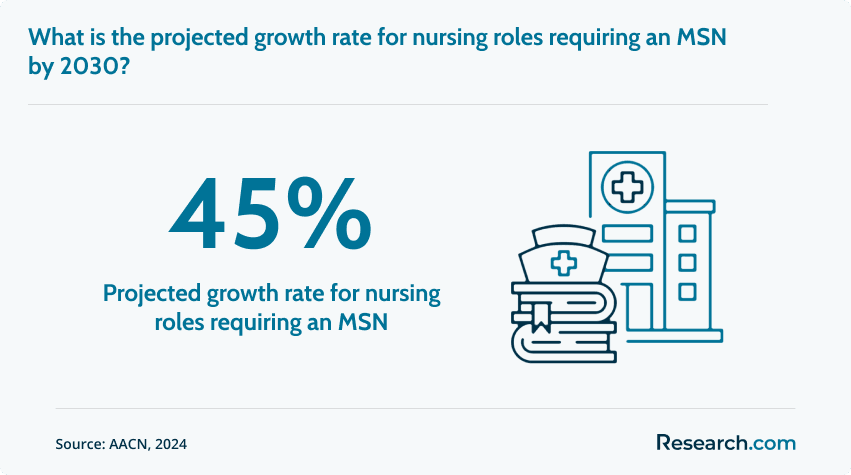
Online delivery can make doctoral study more realistic for nurses who cannot relocate or leave their jobs. That flexibility matters in a field where advanced nursing and education roles continue to be important. The projected growth rate for nursing roles requiring an MSN is 45% by 2030, which reinforces the need for qualified nurse educators and leaders.
When planning your timeline, think beyond graduation date. Compare the pacing of the EdD with your professional and financial goals, the same way you might compare healthcare career outcomes such as the typical medical administrative assistant salary when evaluating a broader career plan.
Online MSN to EdD Bridge Programs vs. On-Campus Programs
Online and on-campus MSN to EdD pathways can lead to the same doctoral credential, but the learning experience can be very different. The right format depends on your schedule, need for in-person interaction, access to campus resources, and ability to travel for residencies or practicum activities.
If you are still comparing healthcare education paths, it can also help to understand how role requirements differ across the field, such as the distinction between a medical assistant vs physician assistant.
| Feature | Online MSN to EdD | On-Campus MSN to EdD |
| Best for | Working nurses who need schedule flexibility and want to remain in their local area | Students who prefer in-person learning and regular campus access |
| Class format | Often asynchronous, sometimes with live virtual sessions | Usually scheduled in-person classes, seminars, or intensives |
| Faculty interaction | Virtual office hours, discussion boards, video meetings, and online advising | Face-to-face meetings, campus events, and direct access to faculty offices |
| Residencies | Some programs are fully online; others require short residencies | Campus attendance is built into the program structure |
| Practicum or project work | Often completed in the student’s local workplace or community | May use university partnerships or campus-affiliated placements |
| Cost considerations | May reduce commuting, relocation, and housing expenses | May include added travel, parking, housing, or relocation costs |
Flexibility for Working Nurses
Online programs are often the stronger option for nurses who work rotating shifts, teach part time, manage teams, or cannot attend daytime classes. Asynchronous coursework allows students to complete lectures, readings, and discussions around work obligations, although deadlines and group projects still require planning.
Interaction and Learning Style
Online doctoral students can still build meaningful relationships through video meetings, faculty mentoring, peer cohorts, and collaborative projects. However, students who learn best through face-to-face debate, informal campus conversations, and immediate classroom feedback may prefer an on-campus or hybrid model.
Practicum, Dissertation, and Applied Research Access
Both formats typically require a substantial final project, such as a dissertation in practice or capstone. Online students may be able to design projects around their current workplace, while campus-based students may have more direct access to university-affiliated placements or research communities.
The same format question appears across nursing graduate education. Whether you are comparing an MSN in public health nursing online or an MSN to EdD pathway, the best choice is the one that supports your learning style, schedule, clinical obligations, and long-term career plan.
How Much Do Online MSN to EdD Bridge Programs Cost?
The average cost of an online MSN to EdD bridge program typically ranges from $20,000 to $60,000. Actual cost depends on the university, credit requirement, per-credit tuition, fees, residency expenses, dissertation enrollment policies, and whether the school charges different rates for online, in-state, or out-of-state students. Similar cost factors apply when comparing other advanced nursing options, including nurse midwifery MSN programs online.
Cost per credit commonly falls between $500 and $1,500, and many programs require around 54 to 65 credits. However, the programs listed above show that tuition can fall below or above that range. A lower per-credit rate does not always mean the lowest total price if the program requires more credits or charges significant fees.
| Cost Item | Why It Matters |
| Tuition per credit | This is the base price, but it should be multiplied by the total credit requirement before you compare programs. |
| Total credits | A program with a lower tuition rate can still cost more if it requires substantially more credits. |
| Technology and online learning fees | Online programs may charge platform, course, or student service fees in addition to tuition. |
| Residency expenses | Travel, lodging, meals, and time away from work can add to the real cost of a program with in-person components. |
| Dissertation or continuation fees | Students who need extra time to complete the dissertation may face additional enrollment costs. |
| Lost income or reduced work hours | Even online students may need to reduce overtime, teaching loads, or administrative responsibilities during intense terms. |
Financial aid, scholarships, federal loans, employer tuition reimbursement, and military benefits may reduce out-of-pocket costs. Online study can also help students avoid relocation and commuting expenses while continuing to earn income.
According to national data, the average student loan debt for a Doctor of Education degree is $68,490. That compares with $199,220 for medical degree holders, $72,560 for research doctorates, and $64,780 for a Master of Science degree. These figures can help put EdD borrowing into context, but your personal debt will depend on tuition, aid, employer support, and how much you borrow.
Financial Aid Options for Online MSN to EdD Bridge Students
Students in accredited online MSN to EdD programs may qualify for many of the same funding options available to campus-based doctoral students. The key is to confirm that the institution is eligible for federal aid and that the specific program meets any requirements tied to scholarships, employer funding, or military benefits.
Understanding the administrative side of healthcare can also be useful when evaluating education costs and reimbursement policies. For example, knowing what medical billing and coding do can provide helpful context for how healthcare organizations manage documentation, compliance, and payment systems.
Common Funding Sources
- Federal Student Aid: Eligible students can complete the FAFSA to be considered for federal loans and certain aid options.
- University Scholarships and Grants: Some schools offer institutional funding for doctoral students, nursing educators, or students with financial need.
- Employer Tuition Reimbursement: Hospitals, health systems, universities, and government employers may help pay for education that supports leadership, faculty development, or workforce training roles.
- Graduate Assistantships: These are less common in fully online programs, but some schools may offer remote research, teaching, or administrative support opportunities.
- Private Education Loans: Private loans can fill funding gaps, but they may have higher interest rates, fewer protections, and less flexible repayment options than federal loans.
- Military and Veterans Benefits: Active-duty service members and veterans may be able to use GI Bill® benefits or other education assistance programs.
Questions to Ask About Financial Aid
- Is the program eligible for federal financial aid?
- Are online doctoral students eligible for the same scholarships as campus students?
- Does my employer require a minimum grade, service commitment, or approved program list for tuition reimbursement?
- Are residency travel costs included in the estimated cost of attendance?
- Will I be charged dissertation continuation fees if I need more time?
Admissions Requirements for Online MSN to EdD Bridge Programs
Admissions requirements vary, but most online MSN to EdD programs are intended for experienced nurses or healthcare professionals who already have graduate-level preparation. Because the EdD is a practice-focused doctorate, schools often look closely at leadership experience, writing ability, career goals, and readiness to complete applied research.
| Requirement | What Applicants Should Expect |
| MSN or relevant master’s degree | Applicants generally need an accredited MSN. Some schools may consider other healthcare-related master’s degrees. |
| Active RN license | Many programs require a current, unencumbered RN license, especially when the curriculum is designed for nursing professionals. |
| Professional experience | Programs often expect 1–3 years of nursing, teaching, leadership, or healthcare experience. |
| Graduate GPA | A minimum graduate GPA of 3.0 is commonly expected. |
| Recommendation letters | Applicants typically submit 2–3 letters from supervisors, faculty members, or professional mentors. |
| Personal statement | The essay usually explains career goals, leadership interests, and reasons for pursuing an EdD. |
| Resume or CV | Schools review clinical experience, teaching roles, leadership duties, publications, presentations, and service activities. |
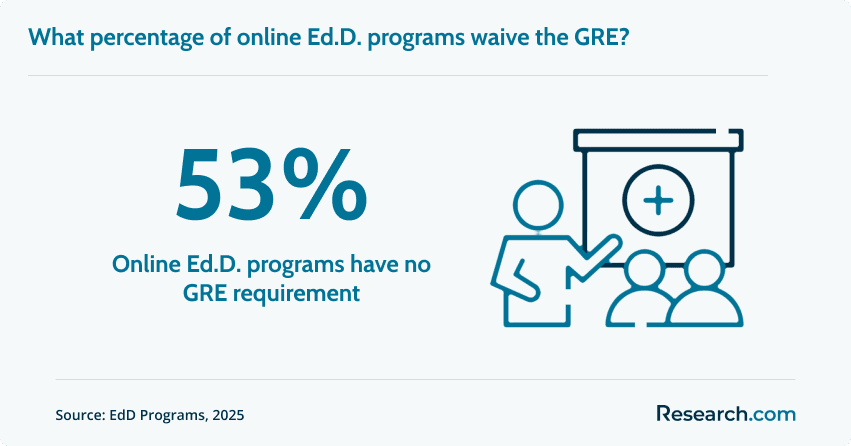
Some programs may also ask for an interview, writing sample, or proposed area of research interest. Standardized testing is becoming less common in this space: 53% of online EdD programs now waive the GRE, making admissions more accessible for working professionals.
If you are still mapping healthcare career options, it may help to compare work settings across roles. For example, many early-career healthcare workers ask where can a medical assistant work before choosing a long-term education path.
Common Courses in Online MSN to EdD Bridge Programs
Online MSN to EdD programs combine doctoral-level education theory, leadership preparation, research methods, and applied problem solving. While they usually do not replace clinical doctoral programs such as the DNP, they can be highly relevant for nurses who want to teach, lead academic programs, design curriculum, evaluate training, or improve healthcare learning systems.
| Course Area | What Students Learn |
| Foundations of Educational Leadership | Leadership theory, strategic planning, organizational change, and decision-making in educational settings |
| Curriculum Design and Evaluation | How to build, assess, revise, and improve nursing or healthcare education programs |
| Teaching and Learning Strategies in Nursing Education | Instructional methods for adult learners, clinical education, simulation, and professional training environments |
| Educational Research Methods | Quantitative and qualitative research design, data collection, analysis, and interpretation |
| Ethics and Policy in Education | Legal, ethical, and policy issues that impact healthcare education |
| Organizational Behavior in Healthcare | How culture, communication, leadership, and systems affect performance in healthcare and academic institutions |
| Dissertation or Capstone Seminar | Guided development of a final applied research project focused on a real educational or organizational problem |
Some programs also allow electives in instructional technology, global health education, diversity and inclusion in learning environments, higher education leadership, or interprofessional education.
Specializations in Online MSN to EdD Bridge Programs
Specializations allow students to align doctoral coursework with their intended career path. Some programs offer formal concentrations, while others let students tailor electives, practicum work, or dissertation topics toward nursing education, healthcare leadership, or organizational learning.
This structure is common across online graduate education. While an EdD is not the same as the fastest online counseling psychology degree, both types of programs may use flexible tracks to serve working professionals with focused career goals.
| Specialization | Best For |
| Nursing Education | Nurses who want to teach in academic programs, clinical education departments, or professional development settings |
| Healthcare Leadership | Professionals aiming for administrative, executive, or systems-level leadership roles in healthcare or education |
| Organizational Change and Development | Students interested in change management, workforce learning, strategic planning, and institutional improvement |
| Curriculum and Instruction | Educators focused on instructional design, assessment, faculty development, and program evaluation |
| Policy and Advocacy | Nurses who want to influence education reform, healthcare policy, ethics, or public-sector decision-making |
| Interprofessional Education | Healthcare educators building collaborative learning models across nursing, medicine, public health, and allied health |
Not every program offers a named concentration, so review the actual course list rather than relying on program titles. Some nurses may decide that another MSN pathway is a better fit before doctoral study. For example, an MSN PMHNP program online may make more sense for students whose primary goal is psychiatric mental health practice rather than education leadership.
Workforce demographics also matter. Recent data shows that the average age of doctorally prepared nurse faculty is 61.2 years for professors, 55.6 years for associate professors, and 49.6 years for assistant professors. This points to an ongoing need to prepare future nursing faculty and academic leaders.
How to Choose the Best Online MSN to EdD Bridge Program
The right program should fit your career target, not just your preferred tuition rate or the reputation of the university. Nurses comparing the fastest online MSN in care coordination programs can use many of the same evaluation principles when comparing doctoral options: accreditation, curriculum, flexibility, cost, faculty support, and alignment with professional goals.
1. Confirm Accreditation First
Choose a regionally accredited institution. Accreditation affects academic credibility, federal financial aid eligibility, transferability, employer recognition, and future teaching opportunities. If your goal is a nursing faculty role, also ask whether the program has nursing-specific components or partnerships that support nurse educator preparation.
2. Match the Curriculum to Your Career Goal
Do not assume every EdD prepares nurses for the same roles. A curriculum-heavy program may be best for future faculty or instructional designers, while an organizational leadership program may fit health system administrators or training executives. Students interested in teaching may also compare doctoral pathways with online MSN nursing education programs before deciding whether they need the EdD now.
3. Compare Total Cost, Not Just Tuition
Calculate the full price by multiplying tuition by required credits, then add fees, books, residency travel, dissertation continuation costs, and possible lost income. Ask whether tuition is locked for the cohort or may increase during the program.
4. Review the Dissertation or Capstone Model
A strong EdD should help students solve real problems in education or healthcare leadership. Ask when dissertation planning begins, how committee assignments work, what milestones are required, and how many students complete the final project on time.
5. Evaluate Faculty Expertise and Student Support
Look for faculty with backgrounds in nursing education, healthcare leadership, curriculum design, policy, or applied research. Strong online support matters, including library access, statistics help, writing support, career advising, and responsive dissertation mentoring.
6. Check Format Requirements Carefully
“Online” does not always mean fully remote or fully asynchronous. Confirm live class expectations, residency requirements, practicum hours, group project demands, and whether you can complete applied work in your local workplace.
7. Ask Employers What They Value
If your goal is promotion, faculty appointment, or a leadership transition, ask your current or target employer whether an EdD is preferred, required, or simply helpful. Some roles may value teaching experience, certification, publications, or administrative experience as much as the doctorate itself.
Doctoral study can be rewarding, but it can also be intense. When comparing programs, consider workload, support systems, and burnout risk along with academic reputation. The chart below provides additional context.
Is an Online MSN to EdD Bridge Program Worth It?
An online MSN to EdD bridge program may be worth it if your goal is to move into nursing education leadership, academic administration, faculty development, curriculum design, healthcare training, policy, or organizational change. It is less likely to be the best choice if your main goal is advanced clinical practice, because a practice-focused nursing doctorate may be more aligned with that outcome.
Return on investment depends on tuition, debt, employer support, current salary, future role, geographic market, and how quickly the degree helps you move into a higher-level position. Graduates may benefit from stronger leadership qualifications, broader academic opportunities, and increased credibility in education-focused roles, but salary gains are not guaranteed.
For nurses who entered the profession through pathways such as BSN accelerated online programs, an EdD can represent a later-career shift from clinical preparation toward teaching, policy, and organizational leadership.
| An MSN to EdD May Be Worth It If... | Consider Another Path If... |
| You want to teach, lead curriculum, or manage academic nursing programs. | You primarily want advanced clinical practice authority. |
| Your employer offers tuition reimbursement or advancement opportunities tied to doctoral education. | You would need to borrow heavily without a clear career plan. |
| You are interested in applied research and solving education or leadership problems. | You prefer laboratory research or a research-intensive academic career. |
| You need an online format to keep working while studying. | You require extensive in-person mentoring and campus-based research opportunities. |
Career Paths for Online MSN to EdD Bridge Graduates
Graduates of online MSN to EdD bridge programs can pursue advanced roles in academic, clinical, administrative, policy, and consulting settings. The degree is most useful when paired with nursing experience, teaching ability, leadership accomplishments, and a clear professional niche.
For nurses who started with one of the fastest online RN to MSN bridge programs, the MSN to EdD route can create a pathway from advanced nursing preparation into education and systems leadership.
| Career Path | Typical Focus |
| Nursing School Dean or Department Chair | Oversees faculty, curriculum, accreditation preparation, student outcomes, and program strategy |
| Director of Nursing Education | Leads education, onboarding, professional development, and training initiatives in healthcare organizations |
| Clinical Education Specialist | Designs and delivers training for nurses, clinical staff, and interprofessional healthcare teams |
| Health Policy Advisor | Supports policy development, advocacy, and education reform at organizational or governmental levels |
| Professor of Nursing | Teaches nursing students, mentors learners, contributes to curriculum, and may participate in scholarship |
| Curriculum Developer | Creates evidence-based courses, simulations, training materials, and assessment plans |
| Healthcare Education Consultant | Advises schools, healthcare systems, and organizations on accreditation, program design, evaluation, and faculty development |
Job Market Outlook for MSN to EdD Graduates
The job market for MSN to EdD graduates is shaped by demand for nurse educators, healthcare workforce training, leadership development, and academic program administration. The strongest opportunities are often available to candidates who combine doctoral education with practical teaching experience, clinical credibility, and leadership accomplishments.
Nursing Faculty Demand Remains a Key Driver
The United States continues to face a nursing faculty shortage. According to the American Association of Colleges of Nursing, over 80,000 qualified applicants were turned away from nursing programs in recent years due to limited faculty capacity. This creates a meaningful need for qualified nurse educators, especially those prepared for teaching, curriculum work, and academic leadership.
Healthcare Systems Need Education Leaders
Hospitals and health systems rely on clinical educators, training directors, and professional development leaders to support staff competency, onboarding, compliance, and patient care initiatives. EdD-prepared nurses may be well positioned for these roles when they have experience designing programs, measuring outcomes, and leading teams.
Salaries Vary by Role and Setting
Doctoral preparation can strengthen earning potential, but compensation depends on employer type, geography, rank, leadership responsibility, and prior experience. According to the U.S. Bureau of Labor Statistics, the median pay for postsecondary nursing instructors is about $103,000 per year. Administrative and leadership roles may pay differently based on institution and responsibility level.
Opportunities Extend Beyond Traditional Academia
Although many graduates pursue faculty or academic leadership positions, others work in government, nonprofit organizations, consulting, healthcare systems, accreditation, policy, or workforce development. The EdD’s applied leadership focus can be useful wherever organizations need to improve education systems and training outcomes.
What Graduates Say About Online MSN to EdD Bridge Programs
- Ronald: "I did not think I could handle doctoral study while working full time, but the online format made it possible. I stayed active in my nursing leadership role while learning how to shape education policy more effectively."
- Mina: "The online EdD connected me with faculty and classmates who understood the realities of nursing education. I now use evidence-based teaching strategies more confidently in both clinical and academic environments."
- Clayton: "The most valuable part of the program was the way it connected leadership concepts to actual healthcare problems. It changed how I approach education, change management, and organizational improvement."
How Online MSN to EdD Programs Maintain Academic Quality
Strong online MSN to EdD programs maintain quality through regional accreditation, structured doctoral milestones, qualified faculty, applied research expectations, and regular curriculum review. Online delivery should not mean lower academic standards. A credible program should provide rigorous coursework, meaningful faculty feedback, access to research tools, and a clear process for completing the dissertation or capstone.
Digital learning platforms also allow programs to use live seminars, discussion forums, recorded lectures, virtual advising, online library systems, and collaborative tools. These supports are especially important for doctoral students balancing work, research, and personal responsibilities. For nurses who are still building toward advanced credentials, easiest RN to BSN degree programs may offer an earlier step before graduate and doctoral study.
Common Mistakes to Avoid When Choosing an Online MSN to EdD Bridge Program
| Mistake | Better Approach |
| Choosing a program based only on the university name | Compare curriculum, faculty expertise, dissertation support, cost, and fit with your nursing education goals. |
| Looking only at tuition per credit | Calculate total credits, fees, residency costs, books, continuation fees, and potential lost income. |
| Assuming every online EdD is nursing-focused | Review course descriptions and ask whether nursing education projects, faculty mentors, or healthcare-focused electives are available. |
| Ignoring accreditation | Confirm regional accreditation and ask whether the degree will be recognized by employers or academic institutions you may target. |
| Underestimating the dissertation or capstone | Ask how projects are supervised, when planning begins, and what support is available for research design and writing. |
| Assuming salary increases are automatic | Research actual roles in your market and speak with employers about how the doctorate affects promotion or hiring. |
| Not checking residency requirements | Confirm whether the program requires campus visits, weekend intensives, or synchronous sessions before enrolling. |
Questions to Ask Before Applying
- Does the program specifically accept MSN-prepared nurses?
- Is the institution regionally accredited?
- Does the curriculum support nursing education, healthcare leadership, or my target career area?
- Is the program fully online, or are residencies required?
- How many credits are required, and what is the full estimated cost?
- Are online students eligible for scholarships, assistantships, or employer reimbursement documentation?
- What support is available for writing, research methods, statistics, and dissertation completion?
- Can I complete applied projects at my current workplace?
- What roles have recent graduates pursued?
- Will this degree help me meet the qualifications for the jobs I actually want?
Key Insights
- An online MSN to EdD bridge program is best for nurses who want to move into education leadership, faculty roles, curriculum design, healthcare training, policy, or organizational change.
- Most programs take 3 to 4 years, but dissertation progress, course load, transfer credits, and residency requirements can change the timeline.
- Average program cost typically ranges from $20,000 to $60,000, but students should compare total cost rather than tuition per credit alone.
- Admissions commonly require an accredited MSN, active RN license, 1–3 years of professional experience, graduate GPA of 3.0, recommendation letters, a resume or CV, and a goal statement.
- The EdD is not the same as a DNP or PhD. It is generally more focused on applied leadership, education systems, and organizational improvement than advanced clinical practice or traditional research careers.
- Accreditation, dissertation support, faculty expertise, and curriculum fit are more important than speed alone.
- The strongest return on investment comes when the degree clearly connects to a specific role, employer need, promotion pathway, or long-term leadership goal.
References:
- American Association of Colleges of Nursing (AACN). (n.d.). Impact of education on nursing practice. AACN.
- American Association of Colleges of Nursing (AACN). (2022). Nursing faculty shortage. AACN.
- Education Data Initiative. (2024). Average student loan debt. Education Data Initiative.
- EdDPrograms.org. (2025). Online Ed.D. programs with no GRE requirement. EdDPrograms.org.
- Smiley, R. A., Ruttinger, C., Oliveira, C. M., Hudson, L. R., Allgeyer, R. L., Reneau, K. A., & Alexander, M. (2023). Strategies for addressing the faculty shortage in nursing. Worldviews on Evidence‐Based Nursing.
Other Things You Should Know About the Best Online MSN to EdD Bridge Programs
Yes. Most MSN to EdD bridge programs require a dissertation, while some use a practice-based capstone or applied project instead. Doctoral students usually complete original scholarship, proposal approval, and a final defense or presentation before graduation. Program handbooks and school policies set the exact requirement.
Admission requirements typically include an active RN license, a Master of Science in Nursing (MSN), a minimum GPA of 3.0, and relevant professional experience. Some programs may also require letters of recommendation and a personal statement.