
2027 Best Online MSN in Nurse Midwifery Programs

Co-Founder and Chief Data Scientist
Having a powerful calling to midwifery is a great starting point, but you’re right to question the practical side. You see that total tuition for a program can range from around $21,000 to over $130,000, and it’s natural to feel anxious about making the right financial and career choice.
That’s why this guide exists. The career planning experts who created it have more than a decade of experience helping RNs navigate these exact questions. We’ve designed this as a career simulation to help you confidently decide if one of the top online nurse midwifery programs is the right path for you, ensuring your passion is built on a solid foundation.
What are the benefits of getting an online MSN in nurse midwifery?
- You will transform your career with greater professional autonomy and have the profound impact of guiding patients through one of the most significant moments of their lives.
- You can achieve strong financial security, with a median salary of $128,790 that reflects the high value the healthcare industry places on this advanced specialization.
- You have the unique ability to find a program whose specific mission—whether a focus on health equity, social justice, or a faith-based worldview—truly aligns with your personal goals.
What can I expect from an online nurse midwifery programs?
Online nurse midwifery programs are actually hybrid programs. This is a critical distinction that speaks directly to the quality of your education.
You can expect the academic coursework—the lectures, reading, and assignments—to be delivered online. This provides you with the flexibility to manage your studies in conjunction with your existing work and life commitments.
However, the most essential part of your training, the clinical practice, is 100% in-person. You will be required to complete extensive, supervised hours in real-world settings, such as hospitals and birth centers. This is where you build the hands-on competence and confidence needed to practice safely and effectively.
Earning a master's is the most common path for nurse practitioners, and by doing so, you join an elite group, as only 17.4% of RNs hold this credential. The quality of your clinical placements is the most critical factor in your success, so evaluating a program's clinical support system is essential.
Where can I work with an online MSN in nurse midwifery?
Most graduates work in hospitals, but you'll also find significant opportunities in freestanding birth centers and outpatient clinics.
This reality often surprises people who think midwives only attend home births. The fact is, the vast majority of Certified Nurse-Midwife (CNM) attended births in the U.S. happen within hospital systems. Many hospitals are actively expanding their midwifery practices to improve maternal health outcomes.
This variety of work environments is a significant strength of the profession. It allows you to choose a setting that best fits your practice style and career goals, whether that's in a large medical center or a smaller community-focused clinic.
How much can I make with an online MSN in nurse midwifery?
The median annual salary for a Certified Nurse-Midwife is approximately $128,790. This figure aligns closely with the median yearly wage for all nurse practitioners, which is roughly $129,210. This shows that the profession is valued on par with other key NP specialties.
Of course, your actual salary will depend on factors such as your geographic location, years of experience, and the type of facility in which you work. But this strong earning potential is a key factor when calculating the return on your educational investment.
- List of the Best Online MSN in Nurse Midwifery Programs for 2027 List of Programs
- How long does it take to complete an online MSN in nurse midwifery program? Completion Time
- How does an online MSN in nurse midwifery program compare to an on-campus program? How does an online MSN in nurse midwifery program compare to an on-campus program?
- What is the average cost of an online nurse midwifery programs? Program Cost
- What are the financial aid options for students enrolling in online nurse midwifery programs? Financial Aid
- What are the prerequisites for enrolling in an online MSN in nurse midwifery program? What are the prerequisites for enrolling in an online MSN in nurse midwifery program?
- What courses are typically in an online MSN in nurse midwifery program? What courses are typically in an online MSN in nurse midwifery program?
- What types of specializations are available in an online MSN in nurse midwifery program? What types of specializations are available in an online MSN in nurse midwifery program?
- How to choose the best online MSN in nurse midwifery program? How to choose the best online MSN in nurse midwifery program?
- What career paths are available for graduates of an online MSN in nurse midwifery program? Career Paths
- What is the job market for graduates with an online MSN in nurse midwifery program? Job Market
- What challenges should I anticipate in an online MSN in nurse midwifery program? What challenges should I anticipate in an online MSN in nurse midwifery program?
- How can I seamlessly transition from an RN to an MSN in nurse midwifery program? How can I seamlessly transition from an RN to an MSN in nurse midwifery program?
Best Online MSN in Nurse Midwifery Programs for 2027
Choosing an online MSN in nurse midwifery is not just a school decision. It affects your eligibility for certification, your clinical training options, your ability to keep working while enrolled, and the type of maternal and reproductive healthcare career you can build after graduation. The best program for you should be accredited, realistic for your schedule, transparent about clinical placement support, and aligned with the state where you plan to practice.
This guide is designed for registered nurses who want to become Certified Nurse-Midwives, nurses comparing CNM and women’s health advanced practice roles, and working professionals trying to decide whether an online or hybrid MSN is worth the cost. You will find ranked program options, cost and timeline comparisons, admissions requirements, clinical placement questions, career paths, job market context, and practical steps for choosing a program with less risk.
Quick answer: What should you look for first?
The best online MSN in nurse midwifery program is one that is accredited by the Accreditation Commission for Midwifery Education (ACME), prepares graduates for the American Midwifery Certification Board exam, provides clear clinical placement expectations, and fits your budget after fees, travel, and campus intensives are included. Most programs take 2 to 3 years, require in-person clinical training, and are best suited for RNs with a BSN, an active RN license, and relevant women’s health or labor and delivery experience.
| Rank | Program | Program Length | Credits | Cost per Credit | Accreditation |
| 1 | Georgetown University - Online Nurse-Midwifery/Women’s Health Nurse Practitioner Program | 27 months | 49 | $2,652 | ACME |
| 2 | Texas Tech University Health Sciences Center - MSN Nurse Midwifery | 2-3 years | 51 | $280.18 in-state; $685.18 out-of-state | ACME |
| 3 | Bethel University - Nurse-Midwifery Program | 2-3 years | 57 | $887 | ACME |
| 4 | University of Cincinnati - MSN Nurse-Midwifery | 2 years | 57 | $892 in-state; $908 out-of-state | ACME |
| 5 | Frontier Nursing University - Nurse-Midwifery Specialty Track | 27 months | 55 | $705 | ACME |
| 6 | George Washington University - Online MSN Nurse-Midwifery | 2-3 years | 50 | $1,630 | ACME |
| 7 | Old Dominion University - Nurse Midwifery MSN Online Program | 2 years | 52 | $486 in-state; $649 out-of-state | ACME |
| 8 | Stony Brook School of Nursing - Master of Science in Nurse Midwifery | 2 years | 45 | $471 in-state; $565 out-of-state | ACME |
| 9 | Georgia College & State University - Nurse Midwifery Concentration MSN | 2 years | 45 | $784.50 | ACME |
| 10 | East Carolina University - MSN Nurse-Midwifery | 2 years | 53 | $433.16 in-state; $1,163.66 out-of-state | ACME |
How do we rank schools?
A nurse midwifery degree is a major investment, so rankings should be based on verifiable information rather than marketing language. Our process prioritizes data sources that allow readers to compare institutions with more confidence.
Research.com uses information from official and established education databases, including the IPEDS database, College Scorecard, the National Center for Education Statistics (NCES), and the Peterson's database. These sources help support a more objective review of online nurse midwifery programs.
Readers who want to understand the ranking framework in more detail can review our methodology page.
1. Georgetown University - Online Nurse-Midwifery/Women’s Health Nurse Practitioner Program
Georgetown University offers a dual Nurse-Midwifery/Women’s Health Nurse Practitioner pathway that prepares students for a broad women’s health scope. The program is shaped by the Jesuit principle of cura personalis, emphasizing care for the whole person, health equity, and patient-centered practice across the lifespan.
- Program Length: 27 months
- Program Focus: Dual Nurse-Midwifery and Women’s Health Nurse Practitioner
- Required Credits to Graduate: 49
- Cost per Credit: $2,652
- Accreditation: Accreditation Commission for Midwifery Education (ACME)
2. Texas Tech University Health Sciences Center - MSN Nurse Midwifery
Texas Tech University Health Sciences Center delivers its MSN in Nurse Midwifery through distance education, with online coursework and limited required campus visits. The program uses a holistic admissions review and is designed to prepare graduates for certification through the American Midwifery Certification Board.
- Program Length: 2-3 years
- Required Credits to Graduate: 51
- Cost per Credit: $280.18 (in-state), $685.18 (out-of-state)
- Accreditation: Accreditation Commission for Midwifery Education (ACME)
3. Bethel University - Nurse-Midwifery Program
Bethel University offers an M.S. in Nurse-Midwifery with a faith-based orientation. The program emphasizes ethical judgment, compassionate care, and holistic service, while allowing students to complete most coursework online with one week of required on-campus intensives each year.
- Program Length: 2-3 years
- Required Credits to Graduate: 57
- Cost per Credit: $887
- Accreditation: Accreditation Commission for Midwifery Education (ACME)
4. University of Cincinnati - MSN Nurse-Midwifery
The University of Cincinnati offers an online MSN in Nurse-Midwifery focused on advanced care for women during pregnancy, labor, birth, and beyond. Clinically active faculty teach the curriculum, and students complete a required skills-intensive experience on the Cincinnati campus.
- Program Length: 2 years
- Required Credits to Graduate: 57
- Cost per Credit: $892 (in-state), $908 (out-of-state)
- Accreditation: Accreditation Commission for Midwifery Education (ACME)
5. Frontier Nursing University - Nurse-Midwifery Specialty Track
Frontier Nursing University operates the nation’s oldest and largest midwifery program. Its distance education model allows students to complete clinical requirements in their local communities, while two short campus immersion experiences support hands-on skill development and cohort connection.
- Program Length: 27 months
- Required Credits to Graduate: 55
- Cost per Credit: $705
- Accreditation: Accreditation Commission for Midwifery Education (ACME)
6. George Washington University - Online MSN Nurse-Midwifery
George Washington University offers an online MSN in Nurse-Midwifery with attention to the national maternity care crisis and reproductive justice. The curriculum builds toward two final semesters of intensive clinical immersion so graduates can move into practice with stronger hands-on preparation.
- Program Length: 2-3 years
- Required Credits to Graduate: 50
- Cost per Credit: $1,630
- Accreditation: Accreditation Commission for Midwifery Education (ACME)
7. Old Dominion University - Nurse Midwifery MSN Online Program
Old Dominion University provides a cooperative nurse midwifery program with Shenandoah University. Students earn the MSN from Old Dominion while completing specialized midwifery coursework online through Shenandoah during the second year.
- Program Length: 2 years
- Required Credits to Graduate: 52
- Cost per Credit: $486 (in-state), $649 (out-of-state)
- Accreditation: Accreditation Commission for Midwifery Education (ACME)
8. Stony Brook School of Nursing - Master of Science - Nurse Midwifery
Stony Brook School of Nursing offers a distance education nurse midwifery program that prepares graduates to work as clinicians, educators, and leaders. The program emphasizes collaborative care for women and healthy newborns in multiple healthcare environments.
- Program Length: 2 years
- Required Credits to Graduate: 45
- Cost per Credit: $471 (in-state), $565 (out-of-state)
- Accreditation: Accreditation Commission for Midwifery Education (ACME)
9. Georgia College & State University - Nurse Midwifery Concentration MSN
Georgia College & State University offers an online MSN with a Nurse-Midwifery concentration. Students must complete clinical rotations in Georgia, and the program includes required on-campus labs and simulations approximately once per semester.
- Program Length: 2 years
- Required Credits to Graduate: 45
- Cost per Credit: $784.50
- Accreditation: Accreditation Commission for Midwifery Education (ACME)
10. East Carolina University - MSN Nurse-Midwifery
East Carolina University offers a Nurse-Midwifery program centered on improving outcomes for women and families in rural and underserved communities. The curriculum prepares students to deliver culturally responsive, evidence-based care and to address health disparities through clinical leadership.
- Program Length: 2 years
- Required Credits to Graduate: 53
- Cost per Credit: $433.16 (in-state), $1,163.66 (out-of-state)
- Accreditation: Accreditation Commission for Midwifery Education (ACME)
How long does it take to complete an online MSN in nurse midwifery program?
Most online MSN in nurse midwifery programs take 24 to 36 months for full-time students. Part-time enrollment can extend the timeline, especially for nurses who continue working, manage family responsibilities, or need extra time to secure clinical sites. RN-to-MSN or bridge options for nurses without a BSN can also add time because students must complete additional undergraduate or transition coursework.
| Enrollment or Pathway | Typical Time Impact | Best For |
| Full-time MSN | Usually 24 to 36 months | RNs who can handle a heavy academic and clinical workload |
| Part-time MSN | Longer than full-time study | Working nurses who need schedule flexibility |
| RN-to-MSN or bridge route | Adds coursework before or within graduate study | RNs who do not already hold a BSN |
| Delayed clinical placement | Can push graduation beyond the planned timeline | Students in areas with limited preceptor availability |
If you are still deciding whether to pursue advanced nursing practice or another healthcare role, it may help to compare the commitment with earlier-stage healthcare careers, including the reasons some students choose medical assisting before moving into longer clinical education pathways.
The biggest timeline risk: clinical placement
The academic calendar is usually predictable. Clinical placement is often the harder variable. Nurse midwifery students must complete in-person clinical experiences with approved preceptors, and finding the right site can take time. Delays can affect tuition planning, graduation timing, work schedules, and family logistics.
Before applying, ask each school whether it assigns clinical placements, assists students with placements, or expects students to identify preceptors independently. This answer matters as much as program length because a 2-year program can take longer if clinical arrangements are not secured early.
How does an online MSN in nurse midwifery program compare to an on-campus program?
An accredited online MSN in nurse midwifery should lead to the same degree and certification preparation as an accredited campus-based program. The main difference is how didactic coursework is delivered. Online programs usually provide more schedule flexibility, while campus programs may offer more frequent in-person interaction with faculty and classmates. Nurses who first experienced flexibility during undergraduate study may recognize similar advantages from the benefits of earning a BSN and then seek the same balance at the MSN level.
Employers generally care most about accreditation, certification eligibility, clinical competence, and licensure readiness. A diploma typically does not indicate that coursework was completed online. However, students should remember that online does not mean fully remote: nurse midwifery training always includes substantial in-person clinical education.
| Factor | Online MSN in Nurse Midwifery | On-Campus MSN in Nurse Midwifery |
| Course delivery | Primarily online, often with synchronous or asynchronous components | Primarily face-to-face classroom learning |
| Clinical training | Completed in person at approved clinical sites | Completed in person at approved clinical sites |
| Campus visits | May require short intensives, labs, or simulations | Regular campus attendance is expected |
| Best fit | Working nurses who need geographic or scheduling flexibility | Students who prefer frequent in-person support and local networking |
| Key risk | Clinical placement support varies by school | Less flexibility for students outside commuting range |
Why clinical requirements make the formats comparable
Clinical standards are the equalizer between online and campus programs. ACME-accredited programs must prepare students for hands-on midwifery practice, regardless of instructional format. That means students must demonstrate clinical competence in real healthcare settings before they can move toward board certification.
For online students, this makes placement planning essential. The strongest programs clearly explain clinical hour expectations, preceptor requirements, site approval timelines, and what support the school provides when placements are difficult to find.
What is the average cost of an online nurse midwifery programs?
The cost of online nurse midwifery programs varies widely. Based on the programs listed above, total tuition can range from approximately $21,000 to over $130,000. Public universities, private universities, in-state tuition rules, out-of-state rates, and credit requirements all affect the final price. A higher tuition rate does not automatically mean stronger clinical support, better certification preparation, or better career outcomes.
If you are comparing advanced nursing pathways, also consider whether nurse midwifery is the right MSN focus for your goals. For example, nurses interested in academic or staff development roles may want to review career options with a master's in nursing education before committing to a clinical midwifery track.
How to calculate the true cost
The advertised per-credit tuition is only one part of the financial picture. To compare programs accurately, add all required fees and indirect costs. Online midwifery programs are often hybrid in practice because of skills intensives, simulations, labs, and clinical requirements.
| Cost Category | Why It Matters | Question to Ask |
| Tuition per credit | The largest direct cost and the easiest number to compare | Is the rate different for in-state and out-of-state students? |
| Program fees | Technology, clinical, simulation, and university fees can add up | Which fees are mandatory each term? |
| Campus intensives | Travel, hotel, meals, and missed work can increase total cost | How many visits are required, and how long is each one? |
| Clinical expenses | Students may need background checks, immunizations, liability insurance, or onboarding fees | Which clinical costs are paid by the student? |
| Work reduction | Clinical semesters may limit your ability to work full time | How many hours per week should students expect during clinical courses? |
A realistic budget should include tuition, required fees, books and technology, clinical compliance costs, travel for campus requirements, and potential income changes during intensive clinical terms.
What are the financial aid options for students enrolling in online nurse midwifery programs?
Online MSN nurse midwifery students may use several funding sources, but the best strategy is usually to start with the lowest-cost and most flexible aid before considering private borrowing. Because tuition varies so much, even small scholarships or employer benefits can make a meaningful difference.
- Federal Student Aid: Most students begin by completing the Free Application for Federal Student Aid (FAFSA) to determine eligibility for federal loans.
- School scholarships and grants: Many universities offer nursing-specific awards, graduate scholarships, or need-based institutional aid. Ask whether awards are renewable and whether part-time students qualify.
- Employer tuition support: Some hospitals and health systems offer tuition reimbursement, professional development funds, or scheduling flexibility for nurses pursuing advanced practice credentials.
- Service-based repayment programs: Loan repayment opportunities may be available for nurses who commit to working in shortage areas or eligible healthcare facilities.
- Private loans: Private borrowing can fill gaps but should usually be considered after federal aid, scholarships, employer support, and service-based options have been reviewed.
Using service commitments strategically
Service-based loan repayment can be especially relevant for future nurse midwives who want to work in rural, underserved, or high-need communities. These programs can reduce educational debt while helping graduates enter settings where maternal health services are urgently needed.
Before relying on service-based funding, read the terms carefully. Confirm eligible employers, required service length, repayment amounts, tax implications, and what happens if you change jobs before completing the commitment.
What are the prerequisites for enrolling in an online MSN in nurse midwifery program?
Most online MSN in nurse midwifery programs require a Bachelor of Science in Nursing from an accredited program, an active and unencumbered RN license, prerequisite undergraduate coursework such as statistics, and a minimum GPA of 3.0 or higher. Competitive applicants often bring one to two years of relevant clinical experience, especially in labor and delivery, women’s health, postpartum care, or related maternal-child settings.
| Requirement | Why Programs Require It | How to Strengthen Your Application |
| BSN from an accredited program | Shows preparation for graduate-level nursing study | Confirm your undergraduate accreditation before applying |
| Active RN license | Required for clinical practice and advanced nursing progression | Resolve any licensure issues before the admissions cycle |
| Minimum GPA of 3.0 or higher | Signals readiness for rigorous graduate coursework | Use recent science or graduate courses to show academic improvement if needed |
| Statistics or similar prerequisite coursework | Supports evidence-based practice and research interpretation | Complete missing prerequisites before deadlines |
| Relevant clinical experience | Demonstrates judgment, maturity, and commitment to maternal health | Seek labor and delivery, OB, postpartum, or women’s health exposure |
Specialty experience can make your application more convincing. Just as nurses pursuing IV therapy roles need to understand specific infusion nurse requirements, aspiring nurse midwives should build experience that connects directly to pregnancy, birth, reproductive health, and patient education.
Why admissions standards are high
Nurse midwifery programs prepare graduates for autonomous, high-responsibility practice. Admissions committees look for evidence that applicants can handle complex clinical decisions, communicate effectively with patients and teams, and stay organized under pressure.
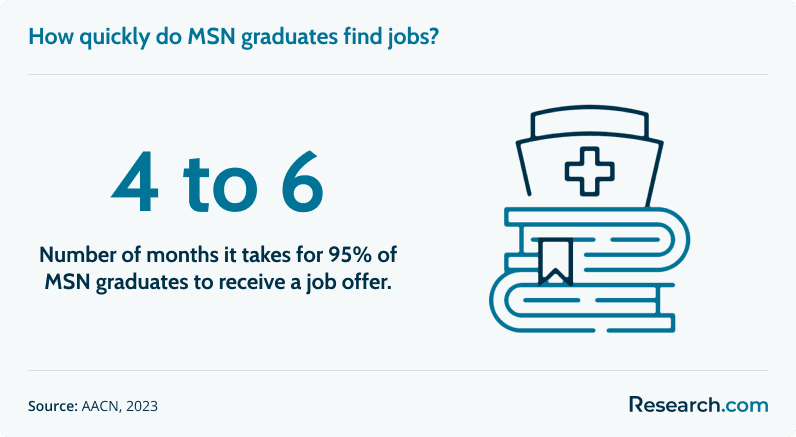
The effort can pay off. According to the data cited in this article, 95% of new MSN graduates have a job offer within four to six months of completing their program.
What courses are typically in an online MSN in nurse midwifery program?
An online MSN in nurse midwifery builds on RN practice and expands into advanced assessment, pharmacology, reproductive health, pregnancy care, birth, postpartum care, newborn care, leadership, and evidence-based practice. The curriculum is broader than labor and delivery alone because Certified Nurse-Midwives provide care across the lifespan.
| Course Area | Common Topics | Why It Matters |
| Advanced practice core | Advanced Pathophysiology, Advanced Pharmacology, Advanced Health Assessment | Builds the diagnostic and clinical foundation for advanced nursing practice |
| Antepartum care | Normal pregnancy, risk identification, prenatal assessment, patient education | Prepares students to support patients throughout pregnancy |
| Intrapartum care | Labor management, birth, fetal assessment, emergency recognition | Develops the clinical skills needed for birth-related care |
| Postpartum and newborn care | Maternal recovery, lactation support, newborn assessment, family education | Supports safe transition after birth for both patient and newborn |
| Women’s and reproductive health | Gynecologic care, contraception, primary care, health promotion | Prepares graduates for care beyond pregnancy and birth |
| Leadership, research, and policy | Health systems, evidence-based practice, advocacy, quality improvement | Helps graduates influence care delivery and maternal health outcomes |
How the curriculum supports advanced credentials
Some nurses use the MSN as a foundation for broader women’s health roles. If you are comparing nurse midwifery with other women’s health credentials, review career options with a women's health nurse practitioner graduate certificate to understand how additional preparation can affect practice settings and responsibilities.
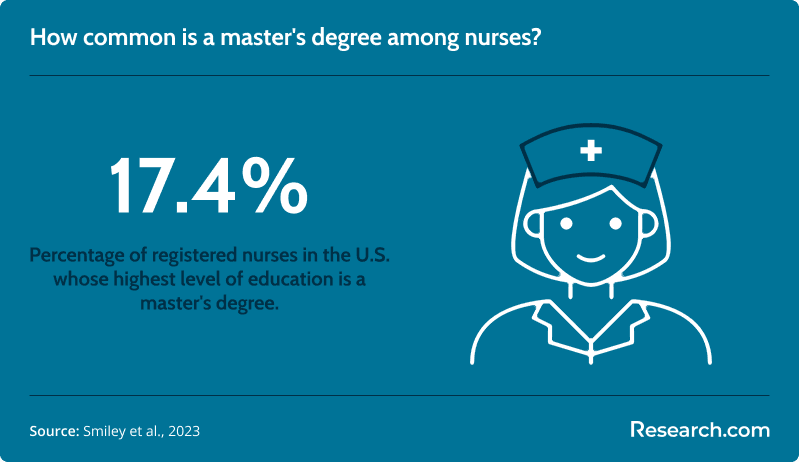
Graduate nursing education places students in a smaller segment of the profession. According to the data cited in this article, only about 17.4% of all registered nurses in the U.S. hold a master's degree.
What types of specializations are available in an online MSN in nurse midwifery program?
Most online MSN nurse midwifery programs do not offer many formal sub-specializations because nurse midwifery is already a specialized advanced practice field. Instead, graduates usually develop expertise through clinical placement, first jobs, continuing education, patient population, and practice setting.
For example, one CNM may focus on hospital-based obstetric care, another may work in community birth settings, and another may build expertise in adolescent reproductive health, lactation support, or care for underserved communities. This type of practice-based specialization is similar to how some nurses move into coaching-focused work and evaluate factors such as nurse health coach salary and career paths after developing a focused professional niche.
CNM vs. WHNP: the decision that matters most
The most important comparison for many applicants is Certified Nurse-Midwife versus Women’s Health Nurse Practitioner. Both roles focus on women’s and reproductive health, but their scopes are not identical.
| Role | Core Focus | Birth Attendance | Best Fit For |
| Certified Nurse-Midwife | Pregnancy, birth, postpartum care, newborn care, reproductive health, and primary care for women | Yes | RNs who want to manage labor and attend births |
| Women’s Health Nurse Practitioner | Gynecologic care, reproductive health, contraception, menopause care, and primary care for women | No | RNs who want women’s health practice without attending births |
| Dual CNM/WHNP pathway | Combined preparation across midwifery and women’s health advanced practice | Yes, if CNM requirements are met | Students who want maximum flexibility across clinical settings |
If you want to attend births, choose a CNM pathway. If your goal is women’s health primary and gynecologic care without birth attendance, WHNP preparation may fit better. If you want both, consider a dual-certification program such as Georgetown’s dual Nurse-Midwifery/Women’s Health Nurse Practitioner option.
How to choose the best online MSN in nurse midwifery program?
The best online MSN in nurse midwifery program is the one that matches your certification goal, state practice plans, budget, clinical placement needs, and learning style. A high ranking can help you build a shortlist, but your final decision should come from direct evidence about accreditation, outcomes, clinical support, and total cost.
| Decision Factor | Why It Matters | What to Verify |
| ACME accreditation | Supports program quality and certification eligibility | Confirm current Accreditation Commission for Midwifery Education status |
| Certification preparation | Graduates need readiness for board certification | Ask about first-time pass rates for the AMCB certification exam |
| Clinical placement support | Placement delays can extend your program and increase costs | Ask whether the school finds sites, assists students, or leaves placement to students |
| State authorization and practice rules | Online programs may not serve every state, and practice authority varies | Confirm the program accepts students from your state and supports your licensure goals |
| Total cost | Fees, travel, and lost work time can change affordability | Build a full cost estimate beyond tuition |
| Program philosophy | Midwifery programs may emphasize health equity, faith-based care, rural health, or reproductive justice | Choose a mission that aligns with how and where you want to practice |
Questions to ask before enrolling
- Is the program currently ACME-accredited?
- What percentage of students graduate on time?
- What is the first-time AMCB exam pass rate?
- How are clinical placements approved, and who finds the preceptor?
- Can I complete clinical rotations in my state or region?
- How many campus visits are required, and what do they cost?
- Are there restrictions for students in certain states?
- What happens if I cannot secure a clinical site on schedule?
- Are part-time options available during clinical semesters?
- What support is available for working nurses?
What career paths are available for graduates of an online MSN in nurse midwifery program?
Graduates of online MSN nurse midwifery programs most often move into direct patient care, but the degree can also support roles in education, leadership, advocacy, public health, and private practice. Your options depend on certification, state scope of practice, clinical experience, and employer needs.
| Career Path | Typical Setting | What the Role Involves |
| Certified Nurse-Midwife | Hospitals, birth centers, clinics, private practices | Pregnancy care, labor and birth support, postpartum care, reproductive health, and patient education |
| Women’s health advanced practice clinician | OB-GYN clinics, community health centers, primary care settings | Gynecologic care, contraception counseling, preventive care, and lifespan women’s health services |
| Midwifery practice owner | Independent or group practice, depending on state rules | Clinical care, business operations, staffing, compliance, and patient outreach |
| Nurse educator | Universities, hospitals, clinical training programs | Teaching, simulation, precepting, curriculum support, and clinical mentorship |
| Maternal health advocate or policy specialist | Professional associations, nonprofits, public health organizations | Policy work, health equity initiatives, community education, and systems improvement |
Beyond clinical practice: advocacy and public health
Many nurse midwives eventually move into work that addresses maternal health at the systems level. That may include policy, research, community health programming, or advocacy through professional organizations. Nurses interested in this direction may benefit from understanding adjacent community-based roles, including this community health worker career guide and information on how to become a certified community health worker.
The chart below shows the top industries where midwives are employed today and can help you understand where CNM careers most commonly begin.
What is the job market for graduates with an online MSN in nurse midwifery program?
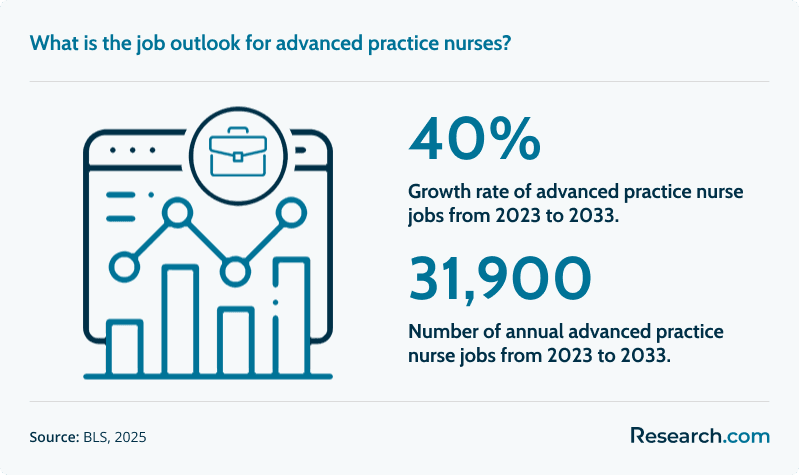
The broader job market for advanced practice nurses is strong. Overall employment for advanced practice nurses, including midwives, is projected to grow by 40% over the next decade. Within nurse midwifery specifically, projected growth is 7%. These figures suggest both broad demand for advanced practice clinicians and steady need for midwifery expertise.
If you are comparing advanced nursing specialties, you may also want to review career options for pediatric NP graduate certificate holders to see how another patient population and scope of practice may align with your goals.
Why demand remains stable
Nurse midwives work in a field tied to ongoing needs in pregnancy, birth, reproductive care, and maternal health. Demand can vary by state, employer, reimbursement environment, and local scope-of-practice rules, but the underlying need for qualified maternity and women’s health providers remains significant.
Graduates should not assume that any degree guarantees a specific job or salary. Strong outcomes are more likely when students choose accredited programs, build relevant clinical experience, pass certification exams, understand state practice rules, and develop professional networks during clinical training.
Here’s What Graduates Have to Say About Their Online MSN in Nurse Midwifery Program
- Annelise: "After 10 years as a labor and delivery nurse, I wanted a role where I could do more than follow the plan. The online format let me stay employed, and the clinical experiences showed me what real midwifery autonomy looks like. I now participate in birth care as an advocate and decision-maker in a way I had hoped for throughout my nursing career."
- Zola: "Health equity was the reason I chose midwifery, but I was not sure I would find a school that shared that priority. Online study expanded my search far beyond my local area. The policy coursework helped me see how midwives can influence systems, not only individual encounters, and that changed how I think about my future work."
- Elara: "I entered the program after feeling exhausted by years of bedside nursing. Learning the midwifery model helped me reconnect with patients and with the reason I became a nurse. Following someone through pregnancy, birth, and postpartum care has given my work a sense of continuity and purpose again."
What challenges should I anticipate in an online MSN in nurse midwifery program?
Online MSN nurse midwifery students should expect a demanding mix of graduate coursework, clinical scheduling, technology use, and personal time management. The most common challenges include finding approved clinical sites, coordinating preceptors, traveling for campus intensives, keeping up with synchronous sessions, and managing work hours during clinical semesters.
| Common Mistake | Why It Creates Problems | Better Approach |
| Choosing a program without confirming ACME accreditation | May affect certification eligibility and employer confidence | Verify accreditation before applying |
| Assuming online means no travel | Many programs require intensives, labs, or simulations | Budget for travel, lodging, meals, and missed work |
| Waiting too long to plan clinical placements | Preceptor shortages can delay graduation | Ask about placement support before enrollment and start early |
| Comparing tuition only | Fees and indirect expenses can change affordability | Calculate the total cost of attendance |
| Ignoring state authorization | Some programs may not accept students from every state | Confirm eligibility for your location and intended practice state |
| Relying only on rankings | A highly ranked program may not fit your clinical or financial needs | Use rankings as a starting point, then verify outcomes and fit |
Students entering accelerated nursing pathways often face similar planning pressures. Reviewing accelerated BSN nursing programs online can help illustrate how fast-paced online nursing education requires careful attention to prerequisites, clinical scheduling, and student support.
How can I seamlessly transition from an RN to an MSN in nurse midwifery program?
RNs who do not yet have a BSN should map their path before applying to nurse midwifery programs. Some schools expect a completed BSN before admission, while others may offer bridge pathways that combine undergraduate transition coursework with graduate study. The right route depends on your previous credits, GPA, RN experience, state authorization, and how quickly you want to begin advanced practice preparation.
- Confirm your current academic standing. Review your transcripts, nursing accreditation, GPA, and missing prerequisites.
- Compare BSN completion or bridge options. If you need a bachelor’s-level step first, explore RN to BSN bridge programs that may help you complete required preparation.
- Build relevant clinical experience. Labor and delivery, postpartum, OB, women’s health, and maternal-child roles can strengthen your application.
- Research only ACME-accredited midwifery pathways. Accreditation should be your first screening tool.
- Ask about clinical placement early. Bridge students still need approved preceptors and in-person clinical experiences.
- Plan finances across the entire pathway. Include the BSN or bridge portion, MSN tuition, fees, travel, and any reduced work hours.
Key Insights
- ACME accreditation is non-negotiable. It is one of the most important indicators that a nurse midwifery program meets recognized educational standards and supports certification preparation.
- Online programs are not fully remote. Coursework may be online, but clinical training, skills labs, simulations, and campus intensives can require in-person participation.
- Clinical placement support can make or break the experience. Ask whether the school secures placements, helps with placements, or expects students to find their own preceptors.
- Costs vary widely. Programs on this list range from approximately $21,000 to over $130,000 in total tuition, so students should compare total cost rather than per-credit tuition alone.
- CNM and WHNP roles are different. Choose CNM if you want to attend births; choose WHNP if you want women’s health care without birth attendance; consider a dual track if you want both scopes.
- Job demand is favorable but not guaranteed for every graduate. Advanced practice nursing employment is projected to grow by 40%, while nurse midwifery growth is projected at 7%; outcomes still depend on certification, location, clinical experience, and state practice rules.
- The best program is the best fit, not simply the highest-ranked option. Prioritize accreditation, clinical support, state eligibility, affordability, outcomes, and alignment with your professional values.
References:
- American Association of Colleges of Nursing. (2023). Employment of new nurse graduates and employer preferences for baccalaureate-prepared nurses. Retrieved August 5, 2025, from AACN.
- American Association of Nurse Practitioners. (2022). NP fact sheet. Retrieved August 5, 2025, from AANP.
- NSI Nursing Solutions, Inc. (2023). 2023 NSI national health care retention & RN staffing report. Retrieved August 5, 2025, from NSI Nursing Solutions, Inc.
- Smiley, R. A., Allgeyer, R. L., Shobo, Y., Lyons, K. C., Letourneau, R., & Zhong, E. (2023). The 2022 national nursing workforce survey. Journal of Nursing Regulation, 14(1), S1-S96. Retrieved August 5, 2025, from the Journal of Nursing Regulation.
- U.S. Bureau of Labor Statistics. (2025a). Occupational employment and wage statistics: 29-1161 Nurse Midwives. U.S. Department of Labor. Retrieved August 5, 2025, from BLS.
- U.S. Bureau of Labor Statistics. (2025b). Occupational outlook handbook: Nurse anesthetists, nurse midwives, and nurse practitioners. U.S. Department of Labor. Retrieved August 5, 2025, from BLS.
- Zippia. (2025, January 12). Nurse practitioner education levels. Retrieved August 5, 2025, from Zippia.
Other Things You Should Know About Online MSN in Nurse Midwifery Programs
Prerequisites typically include a Bachelor of Science in Nursing (BSN), an active RN license, and some clinical experience in maternity or women's health. While labor and delivery experience is beneficial, it is not always required for enrollment.
Graduates of a 2027 online MSN in Nurse Midwifery program typically pursue roles as certified nurse-midwives, providing prenatal, delivery, and postpartum care. They may work in hospitals, private practices, or birthing centers. Some nurse-midwives also engage in teaching, research, or health policy advocacy.
Yes, many 2027 online MSN in Nurse Midwifery programs offer scholarships. These financial aid options vary by institution and may include merit-based scholarships, need-based grants, and scholarships for specific underrepresented groups in healthcare. It's advisable to check with individual programs for detailed eligibility and application requirements.


