
2027 Easiest Nurse Practitioner Degree Programs

Co-Founder and Chief Data Scientist
With a projected job growth of 40% from 2023 to 2033 and an average of 31,900 openings annually, nurse practitioner roles are in exceptionally high demand. For students, though, finding the right degree program can be challenging, especially when balancing ease, affordability, and program quality.
In this article, I’ve compiled a list of the easiest nurse practitioner degree programs available, based on accessibility and program structure. My goal here is to offer straightforward guidance to help you make an informed choice, aligning your career goals with the right educational path.
What are the benefits of getting an easy management degree?
- A nurse practitioner degree opens doors to roles like primary care provider, clinical nurse specialist, and health services manager.
- In 2023, the median salary for nurse practitioners reached $126,260, with an earning potential from $94,530 to $168,030.
- Earning this degree online offers flexibility, allowing students to balance coursework with work and personal commitments.
What can I expect from the easiest nurse practitioner degree programs?
The easiest nurse practitioner degree programs are structured to balance academic rigor with accessibility, often featuring streamlined coursework, practical clinical experiences, and flexible scheduling options. These programs are designed to make completing a nurse practitioner degree more manageable for students who may have work or family commitments. Many of these programs also offer a part-time option or an accelerated path, allowing students to progress at their own pace or complete their degrees faster than traditional programs.
While the curriculum will cover essential areas such as advanced patient care, health assessment, and pharmacology, these programs often provide additional support through mentoring, advising, and simplified application processes. Expect to gain hands-on experience through required clinical hours, but with placements that align with your schedule and location, especially for online programs.
Where can I work with a nurse practitioner degree?
With an easy nurse practitioner degree, graduates have diverse employment options across various healthcare settings. Common workplaces include hospitals, outpatient clinics, and private practices, where nurse practitioners often serve as primary care providers or specialists. Additionally, many nurse practitioners work in community health centers, long-term care facilities, and schools, contributing to improved patient outcomes in both urban and rural communities.
In addition to direct patient care, nurse practitioners can work in specialized areas such as pediatrics, geriatrics, and mental health, or even pursue roles in healthcare administration, research, and education. This degree allows flexibility in choosing a work environment that aligns with your interests and expertise, as well as opportunities to impact public health on a broader scale.
How much can I make with a nurse practitioner degree?
Nurse practitioners enjoy a competitive earning potential, with a median annual salary of $126,260 as of 2023. Salaries in this field can vary widely, ranging from around $94,530 for entry-level positions to approximately $168,030 for experienced practitioners in specialized roles or high-demand areas. This salary range reflects the essential role nurse practitioners play in healthcare, as well as the advanced level of expertise and responsibility required for the job.
In addition to base salaries, many nurse practitioners receive benefits such as bonuses, healthcare coverage, and retirement contributions, which further enhance the overall compensation package. Factors like geographic location, specialty area, and years of experience can also significantly impact earning potential, allowing professionals to increase their income over time as they advance in their careers.
- Easiest Nurse Practitioner Degree Programs for 2027 List of Programs
- How long does it take to complete a nurse practitioner degree program? Program Length
- How does an online nurse practitioner degree compare to an on-campus program? How does an online nurse practitioner degree compare to an on-campus program?
- What is the average cost of a nurse practitioner degree program? Program Cost
- What are the financial aid options for students enrolling in a nurse practitioner degree program? Financial Aid
- What are the prerequisites for enrolling in a nurse practitioner degree program? Admission Requirements
- What courses are typically in a nurse practitioner degree program? Typical Courses
- What types of specializations are available in nurse practitioner degree programs? What types of specializations are available in nurse practitioner degree programs?
- How do you choose the best nurse practitioner degree program? How do you choose the best nurse practitioner degree program?
- What career paths are available for graduates of nurse practitioner degree programs? Career Opportunities
- What is the job market for graduates with a nurse practitioner degree? Job Outlook
- What Role Does Accreditation Play in Nurse Practitioner Program Quality? What Role Does Accreditation Play in Nurse Practitioner Program Quality?
- Are DNP Programs the Ideal Option for Advancing Nurse Practitioner Careers? Are DNP Programs the Ideal Option for Advancing Nurse Practitioner Careers?
- What are the emerging trends in nurse practitioner education and practice? What are the emerging trends in nurse practitioner education and practice?
- How Does Geographic Location Influence PMHNP Salary and Career Opportunities? How Does Geographic Location Influence PMHNP Salary and Career Opportunities?
- How Can I Find a Cost-Effective Nurse Practitioner Degree Program? How Can I Find a Cost-Effective Nurse Practitioner Degree Program?
- How Can Dual Degree Programs Enhance Your Nurse Practitioner Career? How Can Dual Degree Programs Enhance Your Nurse Practitioner Career?
- Should Nurse Practitioners Consider a Gerontology Specialization to Diversify Their Career? Should Nurse Practitioners Consider a Gerontology Specialization to Diversify Their Career?
- Are Direct Entry MSN Programs for Non-Nurses a Viable Option for Aspiring Nurse Practitioners? Are Direct Entry MSN Programs for Non-Nurses a Viable Option for Aspiring Nurse Practitioners?
- Are There Any Drawbacks to Enrolling in the Easiest Nurse Practitioner Degree Programs? Are There Any Drawbacks to Enrolling in the Easiest Nurse Practitioner Degree Programs?
- Why Opt for a DNP Program in Nurse Practitioner Education? Why Opt for a DNP Program in Nurse Practitioner Education?
- Are Post-Graduation Outcomes a Reliable Indicator of Program Quality? Are Post-Graduation Outcomes a Reliable Indicator of Program Quality?
- Are There RN to BSN Options That Eliminate Clinical Requirements for Aspiring Nurse Practitioners? Are There RN to BSN Options That Eliminate Clinical Requirements for Aspiring Nurse Practitioners?
10 Accessible Nurse Practitioner Degree Program Options for 2027
Choosing a nurse practitioner program is not really about finding the “easy” option. NP training is graduate-level clinical education, and every reputable program requires advanced coursework, supervised practice, certification preparation, and state authorization. What many students actually mean by an easy nurse practitioner degree is a program that is easier to access, easier to schedule around work, clearer in its clinical requirements, or more flexible for registered nurses who cannot pause their careers.
This guide explains which nurse practitioner tracks are often considered more accessible, what each specialty prepares you to do, how online and campus programs compare, what costs to expect, and how to avoid choosing a program that looks convenient but does not support licensure, certification, or career mobility.
Quick Answer: What Is the Easiest Nurse Practitioner Program to Complete?
The most manageable nurse practitioner program depends on your nursing background, specialty choice, schedule, and clinical placement options. For many working registered nurses, online or hybrid MSN-level NP programs with strong advising and clinical placement support feel more accessible than rigid campus-based programs. Family nurse practitioner, adult gerontology primary care, and some psychiatric mental health tracks are common options because they are widely offered, but no accredited NP program should be considered academically easy.
Before applying, verify accreditation, state authorization, clinical hour requirements, certification exam eligibility, total cost, and whether the school helps students secure approved clinical sites.
What “Easiest” Should Mean When Comparing Nurse Practitioner Programs
A program should not be judged by low rigor. In healthcare, weak training can limit certification eligibility, reduce employer confidence, and create safety concerns. A better definition of an accessible NP program includes:
- Flexible delivery: Online or hybrid coursework that works for nurses with rotating shifts.
- Clear admissions requirements: Transparent GPA, RN license, degree, and experience expectations.
- Clinical support: Practical guidance for finding preceptors and meeting placement requirements.
- Accreditation and certification alignment: A curriculum designed to prepare graduates for national certification and advanced practice licensure.
- Reasonable pace: Full-time, part-time, or accelerated options that match the student’s workload and life responsibilities.
Accessible Nurse Practitioner Specialties to Consider
The right NP specialty should match the patient population you want to serve, the settings where you want to work, and the kind of clinical decision-making you enjoy. The following options are commonly searched by students looking for flexible or more approachable NP pathways.
1. Adult Gerontology Acute Care Nurse Practitioner
Adult gerontology acute care nurse practitioner programs prepare nurses to care for adults with serious, unstable, or complex health conditions. Coursework usually emphasizes advanced assessment, diagnostic reasoning, care planning, and management of acute and chronic illness in high-acuity settings. Graduates often pursue work in hospitals, intensive care units, emergency departments, specialty services, and acute care clinics.
- University of Texas at Arlington
- University of Alabama at Birmingham
- Grand Canyon University
2. Adult Gerontology Primary Care Nurse Practitioner
Adult gerontology primary care nurse practitioner programs focus on long-term, preventive, and chronic care for adults and older adults. Students learn to manage conditions commonly seen in outpatient practice, support healthy aging, and coordinate care across providers. AGPCNP graduates commonly work in primary care offices, community health centers, outpatient clinics, and private practices.
- Walden University
- University of Cincinnati
- Southern Connecticut State University
3. Family Nurse Practitioner
Family nurse practitioner programs are broad primary care pathways that prepare nurses to treat patients across the lifespan. Students study health promotion, assessment, diagnosis, prescribing principles, preventive care, and chronic disease management for children, adults, and older adults. FNP graduates may work in family practice, urgent care, community health, retail clinics, and telehealth settings.
- University of Florida
- Simmons University
- Chamberlain University
4. Nurse Midwifery
Nurse midwifery programs prepare nurses to provide reproductive, prenatal, labor, birth, postpartum, and newborn care. The curriculum typically covers pregnancy management, childbirth support, women’s health, and care for low-risk maternity patients. Nurse midwives may work in hospitals, birth centers, maternal health clinics, and approved home birth settings. Students interested in this route may also compare the most accessible nurse midwife programs before choosing a specialty.
- Frontier Nursing University
- Rutgers University
- University of California, San Francisco
5. Pediatric Nurse Practitioner
Pediatric nurse practitioner programs train nurses to care for infants, children, adolescents, and young adults. Students study child development, pediatric assessment, immunization guidance, preventive care, family education, and treatment of common childhood illnesses. PNPs may work in pediatric primary care offices, hospitals, school-based programs, specialty clinics, and emergency departments.
- University of Massachusetts Amherst
- University of Kentucky
- Texas Woman’s University
6. Psychiatric Mental Health Nurse Practitioner
Psychiatric mental health nurse practitioner programs prepare nurses to assess, diagnose, and treat mental health and substance use conditions across the lifespan. Students develop skills in psychiatric evaluation, medication management, therapeutic communication, crisis care, and ongoing behavioral health support. PMHNPs often work in outpatient mental health clinics, hospitals, private practices, addiction treatment programs, and community behavioral health centers.
- Maryville University
- Purdue University Northwest
- Eastern Kentucky University
7. Women’s Health Nurse Practitioner
Women’s health nurse practitioner programs focus on reproductive, gynecologic, sexual, prenatal, and preventive care across the lifespan. Students may study contraception, fertility concerns, prenatal care, menopause, screening, and patient counseling. WHNPs commonly work in OB-GYN practices, women’s health clinics, reproductive health centers, maternal care settings, and wellness programs.
- University of Pittsburgh
- George Washington University
- University of Michigan-Flint
8. Neonatal Nurse Practitioner
Neonatal nurse practitioner programs are specialized and clinically demanding because they prepare nurses to care for premature, critically ill, or medically fragile newborns. Students learn advanced neonatal assessment, NICU procedures, critical care management, and family-centered newborn care. NNP roles are most often found in neonatal intensive care units, pediatric hospitals, and specialized newborn care services.
- Texas Woman’s University
- Emory University
- University of Alabama at Birmingham
9. Acute Care Nurse Practitioner
Acute care nurse practitioner programs train nurses to manage patients with urgent, complex, or rapidly changing health needs. Coursework emphasizes diagnostic interpretation, treatment planning, stabilization, procedures, and collaboration with interdisciplinary care teams. Graduates may work in emergency rooms, surgical units, trauma centers, specialty inpatient services, and urgent care environments.
- University of Southern California
- Chamberlain University
- University of North Carolina at Charlotte
10. Gerontological Nurse Practitioner
Gerontological nurse practitioner programs center on the health needs of older adults, including chronic illness, functional status, quality of life, medication management, and age-related physical and cognitive changes. Graduates may work in long-term care, assisted living, outpatient geriatrics, home health, palliative care, and geriatric assessment teams.
- University of Wisconsin-Madison
- Western Kentucky University
- University of South Florida
NP Specialty Comparison: Which Path Fits Your Goals?
| Specialty | Best fit for students who want to work with | Common work settings | Decision note |
| FNP | Patients across the lifespan | Primary care, urgent care, community health, telehealth | Broad and flexible, but scope can vary by employer and state. |
| AGPCNP | Adults and older adults in outpatient care | Clinics, private practices, community health centers | Good fit for nurses who prefer prevention and chronic disease management. |
| AGACNP or ACNP | Adults with acute or critical conditions | Hospitals, ICUs, emergency departments, specialty units | Better for nurses comfortable with high-acuity care and fast decisions. |
| PMHNP | Patients with mental health or substance use needs | Behavioral health clinics, hospitals, private practice, addiction treatment | Strong fit for nurses drawn to psychiatric assessment and long-term therapeutic care. |
| WHNP or Nurse Midwifery | Women, reproductive health patients, and maternity populations | OB-GYN offices, maternal health clinics, birth centers, hospitals | Choose based on whether you want a broader women’s health role or birth-focused practice. |
| PNP or NNP | Children, adolescents, or newborns | Pediatric clinics, hospitals, schools, NICUs | NNP is highly specialized and usually tied to hospital-based neonatal care. |
How Long Does It Take to Earn a Nurse Practitioner Degree?
The time required depends on your starting credential and whether you study full time or part time. Registered nurses entering an RN-to-MSN pathway often complete the program in two to three years. This route can work well for nurses with an associate degree who want to move into advanced practice without first completing a separate traditional BSN sequence.
Nurses who already hold a Bachelor of Science in Nursing and enter a BSN-to-DNP program usually spend about three to four years in school. This pathway leads to a Doctor of Nursing Practice and typically includes advanced clinical preparation, systems leadership, and evidence-based practice training.
Direct-entry master’s programs are another option for students who hold a non-nursing bachelor’s degree and want to transition into nursing and advanced practice. These programs may take a similar timeframe, but they can be intensive because students must build foundational nursing skills before progressing to graduate-level NP preparation. Students interested in technology-focused nursing roles may also compare accessible online nursing informatics programs if they prefer data, systems, and healthcare technology over direct advanced practice.
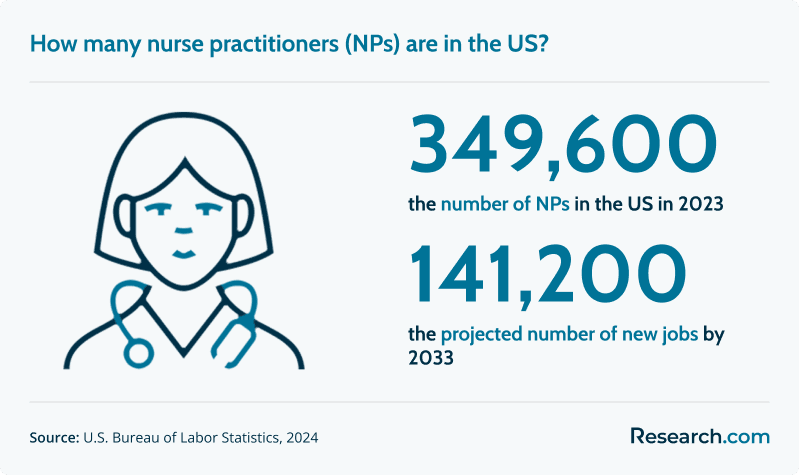
In 2023, there were around 349,600 nurse practitioners (NPs) in the US.
Online vs. Campus Nurse Practitioner Programs: Which Is Better?
Online nurse practitioner programs can be a strong option for working registered nurses because lectures, assignments, and discussions may be easier to complete around shifts and family responsibilities. They can also reduce commuting time and expand access for students who do not live near a graduate nursing campus. Students who want a faster route may compare accelerated RN to NP programs, while those focused on admissions flexibility may review accessible nurse practitioner specialty programs.
Campus-based programs offer more scheduled structure, in-person faculty access, peer interaction, and local networking. Some students prefer this model because labs, simulations, and advising can feel more immediate. Campus programs may also have established relationships with nearby clinical sites, which can support hands-on practical skills development.
Both online and campus NP programs should meet the same accreditation expectations and prepare graduates for the appropriate certification and licensure steps. The better option is the one that fits your learning style, state requirements, clinical placement needs, and ability to manage graduate-level workload consistently.
| Factor | Online or hybrid NP program | Campus NP program |
| Schedule | Often more flexible for working nurses | More fixed class and lab times |
| Clinical requirements | Usually completed in approved local or regional sites | May use school-affiliated local partners |
| Best for | Self-directed students who need location flexibility | Students who want in-person structure and networking |
| Risk to check | Whether the school helps with clinical placement in your state | Whether commuting and fixed schedules are realistic |
How Much Does a Nurse Practitioner Program Cost?
Tuition varies widely by institution, degree level, residency status, and delivery format. Students can generally expect tuition between $500 and $1,500 per credit hour. For a program requiring around 40 to 60 credits, estimated tuition may range from $20,000 to $90,000.
Annual tuition can range from $15,000 to $35,000 per year, depending on whether the school is public or private and how the program is structured. Students looking for lower-cost options should compare affordable online nurse practitioner programs and examine total program price, not just the per-credit rate. Understanding what GAAPs mean can also help students think more carefully about budgeting, loans, institutional finances, and education-related costs.
The return on investment can be meaningful, but it is not automatic. Nurse practitioners (NPs) earn around $90,000 to more than $160,000 across all industries. Top-paying industries for NPs include business support services ($180,570) and medical facilities ($153,580). The chart below has more details.
Financial Aid Options for Nurse Practitioner Students
Graduate nursing students often use a mix of aid sources to reduce out-of-pocket costs. Start early because scholarship deadlines, employer reimbursement rules, and federal loan timelines may not align with admission dates.
- Federal Student Aid: Completing the FAFSA is the usual first step for federal loans, grants, and work-study consideration.
- Scholarships: Universities, nursing associations, healthcare employers, and community organizations may offer awards for graduate nursing students.
- Grants: Grants do not have to be repaid and may come from federal, state, institutional, or nursing-specific sources.
- Work-study programs: Eligible students may access part-time work opportunities that help offset education expenses.
- Employer tuition reimbursement: Some healthcare employers support nurses pursuing advanced practice degrees, including students enrolled in online FNP programs.
Common Admission Requirements for Nurse Practitioner Programs
Prerequisites differ by degree pathway. An RN-to-MSN route may be attractive to some nurses because it can be one of the more direct graduate options for moving from registered nursing into advanced practice; students comparing graduate pathways may also review the most accessible master’s degrees to understand broader admissions patterns.
RN to MSN Pathway
- Current, active RN license.
- BSN or associate degree in nursing, plus required undergraduate prerequisites when applicable.
- Minimum GPA, typically around 3.0.
- Clinical nursing experience, depending on the program.
BSN to DNP Pathway
- Current, active RN license.
- BSN from an accredited nursing program.
- Minimum GPA, usually 3.0 or higher.
- Completed statistics and health assessment coursework.
- Professional nursing experience, if recommended or required by the school.
Accelerated RN to MSN Pathway
- Current, active RN license.
- Associate degree in nursing or a non-nursing bachelor’s degree with required prerequisites.
- Strong academic record, often with a minimum GPA of 3.0.
- Healthcare experience that strengthens the application.
Direct-Entry MSN for Non-Nursing Graduates
- Bachelor’s degree in a field outside nursing.
- Prerequisite courses such as anatomy, physiology, microbiology, and statistics.
- Minimum GPA requirement, typically around 3.0.
- Possible letters of recommendation and personal statement.
Courses You Can Expect in a Nurse Practitioner Program
Although each specialty has different clinical content, most NP programs include a shared advanced practice foundation. Common courses include:
- Advanced Health Assessment: Builds skill in collecting health histories, performing physical exams, and identifying patient concerns.
- Advanced Practice Pharmacology: Covers drug classes, pharmacokinetics, pharmacodynamics, prescribing considerations, and medication safety.
- Pathophysiology: Explains the biological and physiological processes behind disease and clinical symptoms.
- Primary Care Management: Focuses on prevention, chronic disease management, patient counseling, and care coordination.
- Clinical Practicum: Places students in supervised healthcare settings where they apply specialty-specific NP knowledge with real patients.
These courses support NP practice across many healthcare settings and industries. Most NPs, around 137,030 of the total 349,600 in 2023, work in physician offices. See the chart below for more employment details.
Nurse Practitioner Specializations and Career Fit
Specialization determines which patients you are trained to treat, which certification exam you may pursue, and which employers are most likely to hire you. Before choosing a track, ask whether you want broad primary care, high-acuity hospital care, mental health practice, maternity care, pediatrics, women’s health, or gerontology.
- Family Nurse Practitioner: Provides primary care to patients of all ages, including preventive care and chronic condition management.
- Pediatric Nurse Practitioner: Focuses on assessment, diagnosis, treatment, and family education for infants, children, and adolescents.
- Psychiatric Mental Health Nurse Practitioner: Provides psychiatric assessment, medication management, therapy-related support, and mental health treatment planning.
- Women’s Health Nurse Practitioner: Delivers reproductive, gynecologic, prenatal, menopausal, and preventive care for women.
- Adult Gerontology Acute Care Nurse Practitioner: Manages adults with complex acute or chronic conditions, often in hospital-based settings.
Specialty choice can influence earning potential, work setting, schedule, and long-term advancement. Students comparing doctorate-level outcomes may also review DNP salary patterns by state and role.
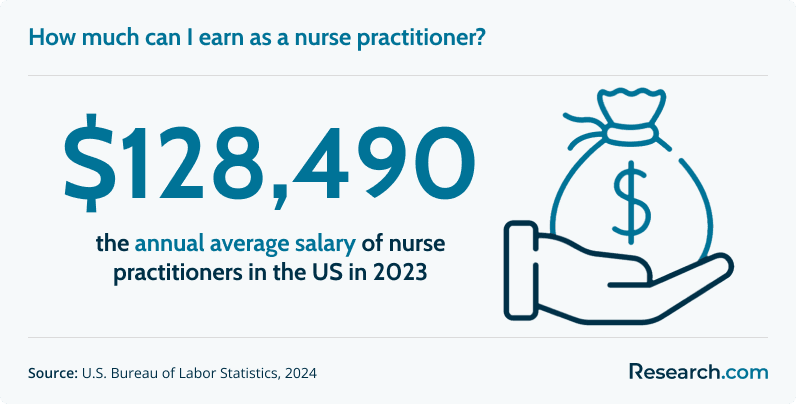
In 2023, NPs had an average annual salary of $128,490.
How to Choose the Best Nurse Practitioner Program
The best NP program is the one that prepares you for certification, licensure, and competent practice in the state and specialty where you plan to work. Rankings and convenience matter less than verified quality indicators.
- Confirm accreditation: Make sure the nursing program meets recognized standards required for certification and licensure pathways.
- Check state authorization: Online programs may not be approved to enroll students or place clinical learners in every state.
- Review the specialty curriculum: Match courses and clinical rotations to the patient population you want to serve.
- Ask about clinical placement support: A flexible online program can become stressful if students must find preceptors without meaningful school assistance.
- Compare total cost: Include tuition, fees, books, travel, background checks, equipment, exam costs, and lost work hours.
- Look at outcomes: Ask about certification pass rates, graduation rates, placement support, and employer relationships.
| Question to ask | Why it matters |
| Is the program accredited and aligned with my intended certification? | Accreditation and certification eligibility affect licensure and employability. |
| Will the school approve clinical sites in my state? | State authorization and placement rules can delay or block progression. |
| Who is responsible for finding preceptors? | Clinical placement is one of the biggest practical challenges for NP students. |
| What is the full cost through graduation? | Per-credit tuition does not show the real financial commitment. |
| What support exists for working nurses? | Advising, flexible sequencing, and predictable deadlines can affect completion. |
Career Paths After a Nurse Practitioner Degree
NP graduates can remain in direct care or move into broader leadership, education, policy, or research roles. Some opportunities require additional experience, credentials, or a doctorate, but an NP degree can create several career directions.
- Advanced clinical practice: Provide assessment, diagnosis, treatment, prescribing, and patient management within the NP’s specialty and state scope of practice.
- Clinical leadership: Guide care teams, improve workflows, mentor nurses, and support evidence-based practice in healthcare settings.
- Healthcare administration: Move into operations, compliance, quality improvement, or service-line leadership with additional management preparation.
- Academia and clinical education: Teach nursing students, precept future NPs, or help design clinical education experiences.
- Policy and advocacy: Use clinical expertise to contribute to healthcare access, workforce policy, quality initiatives, and public health priorities.
- Research and quality improvement: Participate in studies, outcomes evaluation, and practice changes that improve patient care.
Nurses who want a flexible route to graduate preparation may compare the most affordable online MSN programs before committing to a specific NP track.
Nurse Practitioner Job Market and Outlook
The NP job market is supported by healthcare access needs, primary care demand, specialty care demand, and the broader nursing shortage. Demand is especially visible in primary care, mental health, rural health, and specialty practice settings where NPs help expand patient access.
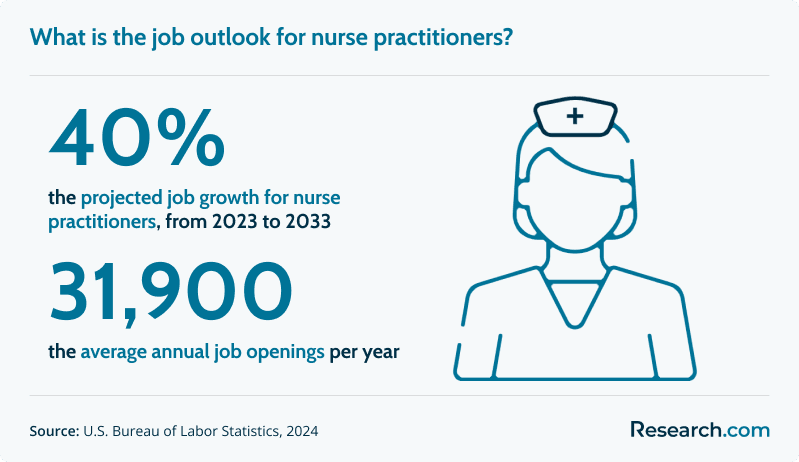
With a projected job growth of 40% for nurse practitioners from 2023 to 2033, the outlook is highly favorable. This growth is expected to create approximately 31,900 annual job openings, reflecting the ongoing need for healthcare providers.
Why Accreditation Matters in Nurse Practitioner Education
Accreditation is one of the first quality checks prospective NP students should make. It signals that the program has been reviewed against academic and clinical standards and may affect certification eligibility, licensure, transfer credits, employer acceptance, and financial aid access. Students comparing nursing education quality can also review top colleges for registered nurses by state to understand how school selection affects long-term preparation.
Is a DNP the Right Next Step for Nurse Practitioners?
A Doctor of Nursing Practice can be valuable for NPs who want deeper preparation in evidence-based practice, quality improvement, systems leadership, and healthcare policy. It may be especially useful for nurses aiming for executive practice roles, academic work, advanced clinical leadership, or complex care improvement initiatives. Experienced nurses who need a shorter format can compare short online DNP programs to understand available timelines.
Trends Shaping Nurse Practitioner Education and Practice
NP education is changing as healthcare delivery shifts toward digital access, team-based care, preventive services, and specialized patient needs. These trends should influence how students compare programs.
- Accelerated and flexible formats: Programs built for working nurses are expanding, including options that can be completed in as little as one year. Students interested in a faster route can review 1 year nurse practitioner programs online.
- Telehealth preparation: NP programs increasingly teach students how to assess, educate, monitor, and follow up with patients in virtual environments.
- Preventive and whole-person care: Curricula often emphasize wellness, lifestyle factors, behavioral health, nutrition, and community-based care.
- Interdisciplinary teamwork: Modern NP practice requires collaboration with physicians, pharmacists, social workers, therapists, and other clinicians.
- More specialty-focused training: Demand in psychiatric mental health, geriatrics, neonatal care, and other specialties is pushing schools to offer more defined tracks.
- Health informatics and data use: Electronic health records, analytics, and evidence-based decision-making are becoming more central to NP training.
- Rural and underserved care: Many programs are preparing NPs to help address access gaps in communities with limited primary care availability.
How Location Affects PMHNP Salary and Opportunity
State practice rules, local demand, employer mix, and cost of living can all influence nurse practitioner pay and career options. Psychiatric mental health nurse practitioners may see especially different opportunities across states because behavioral health access, reimbursement, and workforce supply vary by region. For state-specific information, review this PMHNP salary guide.
How to Find a More Affordable Nurse Practitioner Pathway
A cost-effective NP program is not always the one with the lowest tuition. Compare tuition, fees, clinical expenses, travel, books, certification costs, and the amount of work time you may need to reduce. Some students lower costs by completing earlier nursing credentials affordably before moving into graduate study; for example, an affordable bridge can begin with the cheapest BSN program options available online.
Can an MSN/MBA Dual Degree Help Nurse Practitioners Advance?
Dual degree programs may appeal to NPs who want to combine clinical expertise with business, operations, finance, and healthcare leadership training. An MSN/MBA can support goals in administration, service-line management, consulting, or executive practice. Students considering this route can compare affordable MSN/MBA programs before deciding whether the additional time and cost match their goals.
Should Nurse Practitioners Consider Gerontology?
Gerontology can be a practical specialization for nurses interested in aging, chronic disease, long-term care, palliative care, home health, and older adult wellness. This focus can broaden career options in settings where aging-related care needs are central. Students exploring this direction can learn more about how to become a gerontologist and how gerontology careers differ from NP practice.
Are Direct-Entry MSN Programs a Realistic Route for Non-Nurses?
Direct-entry MSN programs can help students with a non-nursing bachelor’s degree move into nursing and, in some cases, advanced practice preparation. These programs are typically intensive because they combine foundational nursing education with graduate-level expectations. Before enrolling, review accreditation, clinical placement support, certification alignment, and whether the program actually leads to the NP specialty you want. A helpful starting point is this guide to direct entry MSN programs for non nurses online.
Possible Drawbacks of Choosing the “Easiest” NP Program
Convenience can be useful, but it should not come at the expense of clinical readiness. Programs marketed as easy or fast may create problems if they lack strong placement support, have limited faculty access, offer weak specialty preparation, or do not align with your state’s licensure requirements. Students comparing accessible nursing routes may also review the easiest RN program to get into, but NP program selection should be held to a higher clinical standard.
| Common mistake | Better approach |
| Choosing a program only because admission seems easier | Verify accreditation, certification eligibility, and graduate outcomes. |
| Ignoring clinical placement responsibilities | Ask exactly how preceptors and sites are identified and approved. |
| Comparing only tuition | Calculate total cost through graduation and certification. |
| Assuming online means self-paced | Confirm deadlines, synchronous sessions, clinical schedules, and exam policies. |
| Enrolling without checking state authorization | Confirm that the school can enroll you and support clinicals in your state. |
Why Some NP Students Choose a DNP Program
DNP programs may offer stronger preparation in clinical leadership, evidence-based practice, quality improvement, systems thinking, and policy. They can help experienced nurses move beyond direct patient care into broader influence over healthcare delivery. Students who want doctoral preparation while controlling costs can compare the cheapest DNP programs as part of a long-term career investment.
How to Evaluate Women’s Health Nurse Practitioner Programs
When comparing WHNP programs, look closely at reproductive health coursework, preventive care training, patient counseling, clinical practicum quality, faculty expertise, accreditation, and cost. Strong programs should prepare students for real women’s health practice, not just provide a convenient schedule. Students focused on affordability can review affordable WHNP programs while still prioritizing clinical quality.
What Graduates Often Value in Flexible NP Programs
- Carla: "Returning to school after years in healthcare felt intimidating, but the online structure made it possible to keep working while I studied. Clear assignments, steady faculty feedback, and help with clinical planning made the process feel manageable."
- Sybile: "I wondered whether an online program would feel disconnected, but the courses were organized and the faculty were accessible. Being able to complete my degree without relocating helped me save time and stay close to my support system."
- Matt: "As a single parent, flexibility mattered as much as academics. The program allowed me to keep up with family responsibilities while moving toward advanced practice, and the faculty support helped me stay motivated."
Key Insights
- No reputable nurse practitioner program is truly easy; the better goal is finding a flexible, accredited, well-supported program that fits your background and state requirements.
- FNP, AGPCNP, PMHNP, WHNP, pediatric, neonatal, acute care, and gerontology tracks lead to different patient populations and work settings, so specialty choice should come before school choice.
- Online NP programs can work well for registered nurses, but clinical placement support and state authorization are essential checks.
- Costs can vary widely, with tuition commonly ranging from $500 to $1,500 per credit hour and total tuition estimates from $20,000 to $90,000 for programs requiring around 40 to 60 credits.
- In 2023, NPs had an average annual salary of $128,490, but salary outcomes vary by specialty, location, employer, experience, and industry.
- The job outlook is strong, with projected job growth of 40% for nurse practitioners from 2023 to 2033 and approximately 31,900 annual job openings.
- The safest program decision comes from comparing accreditation, certification alignment, clinical placement, total cost, graduate outcomes, and schedule fit together.
Should You Use Graduate Outcomes to Judge NP Program Quality?
Graduate outcomes can help you separate strong programs from convenient but weak ones. Ask schools for certification exam pass rates, graduation rates, employment support, first-time licensure outcomes, and clinical placement details. These measures can show whether the curriculum, faculty, advising, and practicum partnerships are producing prepared graduates. Students comparing long-term value may also examine an affordable BSN to DNP online pathway.
Can RN to BSN Programs Without Clinicals Help Future NP Students?
Some nurses complete an RN to BSN before applying to graduate NP programs. RN to BSN programs without in-person clinical requirements may help working nurses strengthen their academic record and meet BSN expectations while avoiding additional scheduling barriers. However, these programs do not replace the intensive clinical training required in NP education. To compare bridge options, review RN to BSN programs without clinical requirement.
References:
- Statista. (2024). Annual wage of nurse practitioners employed in the United States in 2023, by state (in U.S. dollars). Retrieved October 30, 2024, from Statista.
- U.S. Bureau of Labor Statistics. (2024). Nurse anesthetists, nurse midwives, and nurse practitioners. Retrieved October 30, 2024, from BLS.
- U.S. Bureau of Labor Statistics. (2024). Occupational employment and wages, May 2023 - 29-1171 Nurse practitioners. Retrieved October 30, 2024, from BLS.
Other Things You Need to Know About the Easiest Nurse Practitioner Degree Programs
Yes. Graduation from an accredited nurse practitioner program is not enough by itself. Most graduates must pass a national certification exam from a body such as the AANP or ANCC, then apply for state licensure and any required prescriptive authority before practicing.
Admission criteria for the easiest nurse practitioner programs in 2027 typically include a bachelor's degree in nursing, a valid RN license, and an undergraduate GPA of 3.0 or higher. Some programs may also require letters of recommendation and a professional resume.





