
2027 South Dakota Nursing License Requirements

Co-Founder and Chief Data Scientist
Getting a South Dakota nursing license is the step that turns nursing education into legal permission to practice. Whether you are preparing for the NCLEX, moving to South Dakota with an active license from another state, returning to practice, or planning an RN-to-BSN or advanced nursing pathway, the main challenge is understanding which requirements apply to your situation. This guide explains the license types, education and exam expectations, application steps, renewal rules, compact practice, costs, career paths, and common mistakes so you can move through the process with fewer delays.
Quick answer: South Dakota nursing license basics
The South Dakota Board of Nursing regulates nursing licensure for registered nurses and licensed practical nurses in the state. RN candidates take the NCLEX-RN, while LPN candidates take the NCLEX-PN. Applicants generally need to complete an approved nursing program, document required clinical preparation, submit the appropriate application materials, and complete a criminal background check. South Dakota nursing licenses are renewed every two years, and nurses must complete 20 hours of continuing education during that renewal period.
Key things you should know about South Dakota nursing licenses
- Licensing authority: The South Dakota Board of Nursing is responsible for RN and LPN licensure and nursing practice oversight in the state.
- Required exam: RN applicants must pass the NCLEX-RN, while LPN applicants must pass the NCLEX-PN.
- Education requirement: Applicants must complete an accredited nursing program, typically including a minimum of 1,500 hours of clinical practice.
- Application materials: The process commonly involves an online application, official transcripts, proof of clinical hours, and a criminal background check.
- Renewal cycle: South Dakota nursing licenses are renewed every two years, with 20 hours of continuing education required during that period.
- What is a South Dakota nursing license, and why do nurses need one?
- What nursing licenses are available in South Dakota?
- What are the requirements for a South Dakota nursing license?
- How do you apply for a nursing license in South Dakota?
- How often must South Dakota nurses renew their licenses?
- Can compact nurses practice in South Dakota?
- What advanced career options are available for South Dakota nurses?
- How can out-of-state nurses get licensed in South Dakota?
- How can nurses advance their careers in South Dakota?
- Which advanced nursing degrees can improve career mobility?
- How is nursing licensure different from other healthcare licensure paths?
- How can LPNs move into higher-level nursing roles?
- What are the time and cost commitments of nursing education?
- What financial aid options can nursing students use?
- What career paths exist for nurse midwives?
- How can LVNs transition to advanced nursing roles?
- How can candidates prepare for the South Dakota nursing licensing exam?
- What should students look for in a South Dakota nursing school?
- What challenges come with online RN-to-BSN programs?
- Which additional certifications may strengthen a nursing career?
What is a South Dakota nursing license, and why do nurses need one?
A South Dakota nursing license is the legal credential that allows a nurse to practice within the state’s scope-of-practice rules. It confirms that the nurse has completed the required education, met competency standards, passed the applicable licensing exam, and satisfied state review requirements such as background screening.
The license matters for three practical reasons:
- Patient safety: Licensure helps ensure that people providing nursing care have completed approved training and passed a national competency exam.
- Legal authorization: Employers generally cannot hire a nurse into an RN or LPN role unless that person holds the correct license or qualifying compact privilege.
- Professional accountability: Licensed nurses are subject to state practice rules, disciplinary procedures, renewal obligations, and continuing education expectations.
The South Dakota Board of Nursing manages licensure, evaluates whether applicants meet state standards, and regulates RN and LPN practice. Nursing assistants are also overseen by the board, but they follow a different credentialing pathway than licensed nurses.
Licensure also affects career mobility and pay. If you are comparing nursing pathways, reviewing earnings by degree level, such as associate degree in nursing salary data, can help you understand how an ADN may fit into your long-term plan.
Registered nurses are the largest licensed nursing group in many workforce discussions. The National Nursing Workforce Survey chart below shows that RNs represent the highest type of nursing license obtained by nurses.
What nursing licenses are available in South Dakota?
South Dakota’s two main nursing licenses are the Registered Nurse license and the Licensed Practical Nurse license. The right option depends on how quickly you want to enter the workforce, how much responsibility you want at the bedside, and whether you plan to pursue advanced practice later.
| License type | Typical education route | Licensing exam | Common responsibilities | Best fit for |
| Registered Nurse | Associate Degree in Nursing or Bachelor of Science in Nursing | NCLEX-RN | Patient assessment, care planning, medication administration, care coordination, patient education, and clinical decision-making | Students who want broader clinical responsibility, more advancement options, or a pathway to graduate nursing education |
| Licensed Practical Nurse | Practical nursing program, often about one year | NCLEX-PN | Basic nursing care, vital sign monitoring, assistance with treatments, documentation, and support under RN or physician supervision | Students who want a faster entry point into nursing and may later bridge into RN education |
Both RNs and LPNs must pass the appropriate NCLEX exam before licensure. South Dakota also participates in the Enhanced Nurse Licensure Compact, which can allow eligible nurses with a multistate license to practice across participating states without applying for a separate single-state license.
What are the requirements for a South Dakota nursing license?
Requirements vary depending on whether you are applying by examination, endorsement, renewal, or reinstatement. At a practical level, most applicants should be prepared to document education, exam eligibility or exam results, identity, background screening, and current practice status where applicable.
| Requirement | What it means | Why it matters |
| Approved nursing education | Complete an accredited or approved nursing program with classroom and clinical preparation, typically including a minimum of 1,500 hours of clinical practice. | The board needs evidence that you completed the academic and hands-on preparation required for safe practice. |
| NCLEX exam | Pass the NCLEX-RN for RN licensure or the NCLEX-PN for LPN licensure. | The NCLEX is the national exam used to assess entry-level nursing competency. |
| Application submission | Submit the appropriate online application. For licensure by endorsement, the application includes a non-refundable fee of $100. | The application opens the official board review process. |
| Criminal background check | Complete fingerprinting and background review as directed by the South Dakota Board of Nursing. | Background screening is used to support public protection and professional accountability. |
| Licensure verification | Endorsement applicants must verify licensure from the original state, usually through an electronic verification service or, when needed, paper verification. | The board must confirm that your previous license is valid and review your licensure history. |
| Practice evidence | Applicants may need to show at least 140 hours of nursing employment or volunteer work within the last year, or 480 hours over the past six years. | Practice evidence helps determine whether the nurse has remained professionally active. |
| Temporary permit | Eligible applicants may receive a temporary practice permit that is valid for 90 days while the application is being processed. | A temporary permit can help qualified nurses start work while waiting for final licensure review. |
If you do not already have a nursing background, you will need to begin with an approved nursing program. Some students coming from another field compare traditional programs with an online nursing degree for non-nurses, but they should confirm that any program includes required clinical experiences and meets South Dakota licensing expectations.
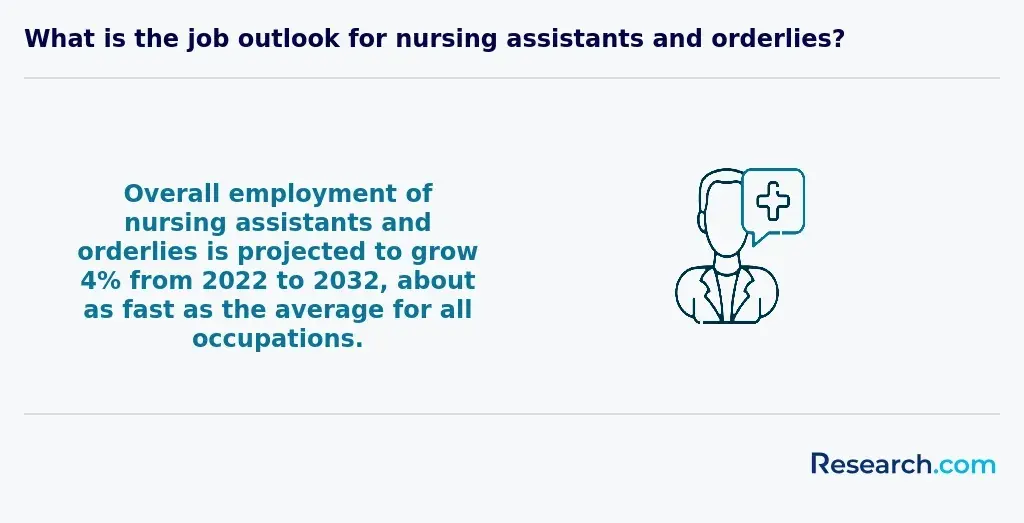
South Dakota has approximately 4.6 million residents. Within this population, 14,600 individuals are employed as nurses, representing a relatively stable employment figure. In the United States, employment of nursing assistants and orderlies is projected to grow by 4%.
How do you apply for a nursing license in South Dakota?
The application process is easiest when you treat it like a checklist. Before submitting, confirm whether you are applying by examination as a new graduate, by endorsement as an already licensed nurse, or under compact privileges.
- Choose the correct application type. New graduates, endorsement applicants, reinstatement applicants, and renewal applicants may have different forms and documentation requirements.
- Complete the online application. Endorsement applicants submit the online licensure application and pay the non-refundable $100 fee at submission.
- Submit official education records. Provide transcripts and documentation requested by the board, including clinical preparation details where required.
- Complete the background check. Applicants receive fingerprint cards from the South Dakota Board of Nursing, complete them, and return them with the required fee paid by money order.
- Verify any existing license. If you are licensed in another state, request verification from your original licensing state through the accepted electronic service or paper process.
- Document practice experience if required. Endorsement applicants may need to show 140 hours of nursing employment or volunteer service in the past year, or 480 hours during the past six years.
- Track your application status. Delays often happen when fingerprints, transcripts, license verification, or employer documentation arrive late.
If you are already thinking beyond initial licensure, graduate education may become relevant later. Working nurses comparing leadership or advanced practice options can review affordable graduate pathways, including online MSN programs with lower tuition options, once they understand their licensure and career goals.
How often must South Dakota nurses renew their licenses?
South Dakota nursing licenses must be renewed every two years. Renewal is more straightforward than first-time licensure, but missing a deadline or failing to complete continuing education can still interrupt your ability to work.
| Renewal item | What nurses should verify | Common risk |
| Renewal timing | Confirm your license expiration date and start early enough to resolve documentation issues. | Waiting until the final days can create avoidable work interruptions. |
| Continuing education | Complete 20 hours of continuing education during the two-year renewal period. | Assuming employer training automatically counts without checking state rules. |
| Employment or practice evidence | Maintain records of work or volunteer practice if evidence is requested. | Not keeping documentation from prior employers or volunteer sites. |
| Fee payment | Pay the applicable renewal fee for your license type. | Submitting education documentation but forgetting payment. |
Renewal is also a good time to reassess your career plan. If your goal is to move from RN practice into a BSN-level role more quickly, you may want to compare flexible options such as the best online accelerated BSN programs, while confirming that program expectations fit your work schedule.
Can compact nurses practice in South Dakota?
Yes. South Dakota participates in the Nurse Licensure Compact, which allows eligible RNs and LPN/VNs with a valid multistate license to practice in other participating compact states without obtaining separate licenses in each state. The compact was enacted in 2000, and as of October 2023, 39 states are part of the NLC.
South Dakota joined the compact in 2015. For nurses, compact participation can make employment across state lines easier, support travel or telehealth roles when allowed by law, and help employers respond more quickly to staffing needs. Nurses still must follow the laws and scope-of-practice rules of the state where the patient is located.
The average hourly wage for nurses in South Dakota stands at $33.19. Annually, nurses in the state earn an average of $69,030, indicating a moderate-income level.
What advanced career options are available for South Dakota nurses?
After gaining clinical experience, South Dakota nurses can pursue roles that involve more autonomy, specialization, teaching, leadership, or advanced practice. Common directions include nurse practitioner practice, nursing education, care coordination, clinical leadership, informatics, quality improvement, and specialty bedside practice.
Nurses interested in advanced clinical authority often explore graduate-level options such as nurse practitioner programs in South Dakota. Before enrolling, compare admission requirements, clinical placement support, accreditation, board certification alignment, and whether the program is designed for the population focus you want to serve.
How can out-of-state nurses get licensed in South Dakota?
Nurses who already hold a license in another state may qualify for South Dakota licensure by endorsement, unless they are practicing under a valid compact multistate privilege. Endorsement is mainly a verification process: the board checks your existing license, education, background, and practice history.
- Submit the endorsement application: Provide proof of a current, active nursing license from another state and complete the required South Dakota application.
- Verify education and practice history: Send official transcripts and any employment or practice documentation requested by the board.
- Complete license verification: Use electronic verification where available; if the original state does not participate, follow the paper verification process.
- Complete the background check: All endorsement applicants should expect criminal background review.
- Follow foreign-educated nurse requirements if applicable: Nurses educated outside the United States must have credentials evaluated by a recognized credentialing agency, pass the NCLEX-RN, and demonstrate English proficiency, often through tests such as the TOEFL.
Out-of-state nurses should not assume that a job offer alone authorizes practice. Wait for the board to issue the license, temporary permit, or confirm your compact authority before beginning duties that require RN or LPN licensure.
How can nurses advance their careers in South Dakota?
Career advancement in nursing usually comes from a combination of experience, education, credentials, and strategic job choices. A nurse may advance by moving into a specialty unit, completing a BSN or MSN, earning specialty certification, taking on charge nurse duties, or transitioning into advanced practice, education, administration, or public health.
If you are still mapping your entry point into the profession, Research.com’s guide on how to become a nurse in South Dakota can help you compare the steps from nursing school through licensure and employment.
Which advanced nursing degrees can improve career mobility?
Advanced nursing degrees can open doors to roles that typically require graduate education, such as nurse practitioner, clinical nurse specialist, nurse educator, nursing administrator, or doctorally prepared clinical leader. The best degree depends on whether you want to deliver direct advanced care, lead systems-level change, teach future nurses, or manage healthcare teams.
| Degree option | Primary purpose | Best for nurses who want to |
| RN to BSN | Build on RN preparation with broader coursework in leadership, evidence-based practice, community health, and professional nursing. | Qualify for BSN-preferred roles or prepare for graduate school. |
| MSN | Develop graduate-level clinical, leadership, education, or systems expertise. | Move into advanced practice, education, administration, or specialized leadership roles. |
| DNP | Apply doctoral-level evidence, quality improvement, and systems leadership to clinical practice. | Pursue high-level advanced practice or practice-focused leadership. |
Working nurses comparing doctorate options may find flexible formats useful, including short online DNP programs. However, program length should not be the only deciding factor; clinical requirements, accreditation, faculty experience, and certification preparation are just as important.
How is nursing licensure different from other healthcare licensure paths?
Nursing licensure is built around approved nursing education, NCLEX testing, background review, scope-of-practice regulation, renewal, and continuing education. Other healthcare professions may require different degrees, supervised practice structures, national exams, internships, residencies, or state-specific professional board reviews.
For example, pharmacy licensure follows a different education and examination pathway than nursing. Students comparing healthcare careers can review how requirements differ in Research.com’s guide on how to become a licensed pharmacist in South Dakota.
How can LPNs move into higher-level nursing roles?
Licensed Practical Nurses in South Dakota can use LPN experience as a foundation for RN education, specialty training, or supervisory responsibility in certain settings. The most direct advancement route is usually an LPN-to-RN bridge program, which can lead to ADN or BSN preparation and NCLEX-RN eligibility.
- LPN to RN: Best for LPNs who want broader clinical responsibility and RN licensure.
- LPN to BSN: Useful for nurses who want RN licensure and a bachelor’s degree in one longer pathway.
- Specialty training: May strengthen skills in long-term care, geriatrics, wound care, medication administration support, or other practice areas.
- Leadership development: Experienced LPNs may pursue team lead, preceptor, or coordinator responsibilities when allowed by employer policy and state scope rules.
If you are starting at the practical nursing level, first confirm eligibility and education requirements in Research.com’s guide, what it takes to become an LPN in South Dakota.
What are the time and cost commitments of nursing education in South Dakota?
Nursing education requires both tuition planning and schedule planning. The right path depends on whether you want the fastest route into practice, the broadest long-term mobility, or preparation for graduate nursing roles.
| Education path | Typical time commitment | Cost information stated | Decision point |
| Associate Degree in Nursing | Typically two years | Tuition often ranges from $6,000 to $20,000 | Good for students who want an RN pathway with a shorter initial timeline. |
| Bachelor of Science in Nursing | Typically four years | Program cost can range from $17,000 to $90,000 depending on the institution | Useful for students who want BSN preparation from the start or plan to pursue graduate study. |
| Graduate nursing degree | Additional study after RN preparation | Costs vary by program type and institution | Relevant for nurses pursuing nurse practitioner, leadership, education, or doctoral-level roles. |
Students should also budget for expenses beyond tuition, including textbooks, uniforms, immunizations, background checks, testing fees, transportation to clinical sites, and clinical supplies. For advanced practice planning, it is also important to ask how much it costs to become a nurse practitioner in South Dakota before committing to a graduate program.
What financial aid options can nursing students use?
Nursing students in South Dakota may be able to reduce out-of-pocket costs through scholarships, grants, federal aid, employer tuition reimbursement, payment plans, and school-specific awards. The strongest strategy is to compare the total cost of attendance, not tuition alone.
- Submit federal aid forms early: Federal grants and loans often require timely applications.
- Ask nursing schools about program-specific scholarships: Some awards are reserved for nursing students or students in high-need areas.
- Check employer benefits: Healthcare employers may offer tuition support for employees who commit to work while studying or after graduation.
- Compare online and campus expenses: Online coursework may reduce commuting costs, but clinical travel, technology fees, and local placement requirements still matter.
- Look beyond advertised tuition: Include books, uniforms, background checks, exam fees, and lost work hours in your budget.
Students who need flexible scheduling can compare online nursing programs in South Dakota, but they should verify accreditation, clinical placement support, and licensure alignment before enrolling.
What career paths exist for nurse midwives?
Nurse midwives provide care related to pregnancy, birth, postpartum recovery, reproductive health, and patient education. In South Dakota, these professionals may work in hospitals, clinics, community health settings, or collaborative care models, particularly where access to maternal healthcare is a concern.
Because nurse midwifery is an advanced nursing pathway, candidates should confirm degree, certification, clinical, and state practice requirements before choosing a program. Research.com’s guide to the educational requirements for nurse midwives in South Dakota can help nurses understand the steps involved.
How can LVNs transition to advanced nursing roles?
South Dakota commonly uses the LPN title rather than LVN. Nurses coming from states that use the LVN title should verify how their credential is recognized and whether they need endorsement, compact authorization, or additional education before practicing in South Dakota.
For advancement, the most practical route is usually a bridge program that moves practical or vocational nurses toward RN eligibility. Candidates should choose accredited programs with clear clinical requirements, strong student support, and outcomes that align with South Dakota licensing expectations. For a broader starting point, review how to become an LVN in South Dakota.
How can candidates prepare for the South Dakota nursing licensing exam?
The NCLEX is not just a memorization test. It assesses whether candidates can make safe entry-level nursing judgments. Strong preparation usually combines content review, repeated practice questions, test-taking strategy, and remediation of weak areas.
- Use the exam plan: Review the NCLEX-RN or NCLEX-PN test plan so your study time matches the exam’s content areas.
- Take practice exams: Practice tests help you get comfortable with question formats, pacing, and clinical judgment scenarios.
- Study with accountability: A focused study group can help you explain concepts, compare rationales, and avoid procrastination.
- Review rationales, not just scores: The explanation behind each answer is often more valuable than the number correct.
- Use professional resources: Organizations such as the South Dakota Nurses Association can provide networking, continuing education, and state-relevant professional support.
- Protect your schedule before exam day: Overloading work shifts or coursework immediately before the exam can reduce focus and confidence.
The Bureau of Labor Statistics reports that government jobs offer the highest average salary for registered nurses at $85,970. This figure is based on industry comparisons.
What should students look for in a South Dakota nursing school?
Choosing a nursing school is one of the most important decisions in the licensure process. A low tuition price or convenient online format is not enough if the program does not prepare you for the NCLEX, clinical practice, or state licensure requirements.
| Factor to check | Questions to ask | Why it matters |
| Accreditation and approval | Is the program approved for South Dakota licensure, and does it hold recognized nursing accreditation? | Licensure eligibility, transfer options, and graduate school admission can depend on program quality and recognition. |
| NCLEX preparation | How does the program support students before the licensing exam? | Passing the NCLEX is required for RN or LPN licensure. |
| Clinical placements | Who arranges clinical sites, and how far might students travel? | Clinical access affects schedule, cost, and completion time. |
| Faculty support | Are faculty accessible to online, hybrid, and campus students? | Nursing coursework can be demanding, and advising support matters. |
| Graduation and employment outcomes | What do graduates do after completion? | Outcomes can indicate whether the program prepares students for practice. |
| Transfer and bridge policies | Will prior credits, LPN coursework, or RN experience count? | Transfer rules can affect time to graduation and total cost. |
Students comparing options can start with Research.com’s list of the best nursing schools in South Dakota, then verify details directly with each program and the state board.
What challenges come with online RN-to-BSN programs?
Online RN-to-BSN programs can be convenient for working nurses, but they still require disciplined time management and careful program evaluation. The main challenge is balancing professional shifts, coursework, family responsibilities, and any required practice-based projects or clinical experiences.
- Technology expectations: Students need reliable internet, comfort with learning platforms, and the ability to complete online assignments on schedule.
- Workload management: Flexible does not mean easy; weekly reading, papers, projects, and discussions can be substantial.
- Clinical or practice components: Some programs include community health, leadership, or capstone requirements that must be completed locally.
- Employer support: Tuition assistance, schedule flexibility, and preceptor access can make completion more manageable.
- Program fit: Nurses should confirm accreditation, transfer credit policies, and whether the curriculum supports their career goals.
For a realistic look at expectations, read Research.com’s guide, How hard are RN-to-BSN online programs?
Which additional certifications may strengthen a nursing career?
Additional credentials can help nurses demonstrate focused expertise, but they should be chosen strategically. A certification is most valuable when it aligns with your unit, specialty, promotion goals, or desired career change.
- Clinical specialty certifications: Useful for nurses working in areas such as emergency care, critical care, pediatrics, geriatrics, obstetrics, or oncology.
- Leadership and quality credentials: Helpful for nurses pursuing management, care coordination, safety, or quality improvement roles.
- Technology and documentation-related credentials: Useful for nurses interested in informatics, billing, compliance, or administrative functions.
- Healthcare administration crossover credentials: Nurses considering non-bedside roles may explore options such as medical billing and coding certification in South Dakota.
Before paying for a certification, ask whether employers in your target setting recognize it, whether it requires an active RN or LPN license, and whether renewal or continuing education costs are manageable.
What support systems are available for nurses in South Dakota?
Nurses are more likely to stay in the profession when they have access to mentorship, continuing education, professional advocacy, and wellness support. South Dakota nurses can build a support network through employers, professional organizations, schools, and peer groups.
- South Dakota Nurses Association: Offers advocacy, networking, continuing education, and professional updates for nurses in the state.
- Employer mentorship: Hospitals, clinics, and long-term care facilities may pair new nurses with experienced staff to support the transition into practice.
- Continuing education providers: Workshops, webinars, and courses help nurses meet renewal expectations and strengthen practice skills.
- Online learning platforms: Flexible courses can help working nurses complete education without leaving employment.
- Mental health and wellness resources: Counseling, peer support, and stress management programs can help nurses manage the emotional demands of patient care.
- Career services: Nursing schools and healthcare organizations may provide job placement assistance, resume support, and interview preparation.
Common mistakes to avoid when pursuing South Dakota nursing licensure
| Mistake | Why it causes problems | Better approach |
| Choosing a program without checking approval or accreditation | You may complete coursework that does not support licensure or future education goals. | Confirm program approval, accreditation, and clinical requirements before enrolling. |
| Focusing only on tuition | Fees, supplies, clinical travel, exam costs, and lost work hours can change the real cost. | Compare total cost of attendance and available aid. |
| Assuming online programs are automatically easier | Online nursing courses can be rigorous and may still require in-person clinical or project work. | Ask about weekly workload, proctored exams, clinical placement, and faculty access. |
| Waiting too long to start the background check | Fingerprinting and review can delay licensing approval. | Begin required screening as soon as the board or program allows. |
| Assuming compact status applies in every situation | Compact privileges depend on eligibility and state participation rules. | Confirm whether you hold a valid multistate license and follow the rules of the state where the patient is located. |
| Letting continuing education wait until the deadline | Missing the 20-hour requirement can complicate renewal. | Complete continuing education throughout the two-year renewal cycle. |
Related Articles for Nearby States
- 2027 North Dakota Nursing License Requirements
- 2027 Nebraska Nursing License Requirements
- 2027 Minnesota Nursing License Requirements
- 2027 Wyoming Nursing License Requirements
- 2027 Iowa Nursing License Requirements
- 2027 Montana Nursing License Requirements
- 2027 Colorado Nursing License Requirements
- 2027 Kansas Nursing License Requirements
- 2027 Wisconsin Nursing License Requirements
- 2027 Missouri Nursing License Requirements
Resources:
- Tacy, J., McElwain, S., & Fletcher, A. (2023). Strategies for success that led to 99.98% school of nursing retention. Journal of Nursing Education and Practice. https://doi.org/10.5430/jnep.v13n5p52
- trustedhealth.com (n.d.). South Dakota Nurse Licensing Guide. https://www.trustedhealth.com/nurse-licensure-guide/south-dakota
- sdbon.org (n.d.). SD Board of Nursing. South Dakota Board of Nursing https://www.sdbon.org/
- U.S. Bureau of Labor Statistics. (2023, December 27). Occupational outlook handbook - Registered nurses. Retrieved February 16, 2024, from https://www.bls.gov/ooh/healthcare/registered-nurses.htm
Key Insights
- South Dakota nursing licensure is overseen by the South Dakota Board of Nursing and is required for legal RN or LPN practice in the state.
- RNs take the NCLEX-RN, while LPNs take the NCLEX-PN; both pathways require approved nursing education and clinical preparation.
- Endorsement applicants should plan for license verification, fingerprint-based background review, documentation of practice history, and the non-refundable $100 application fee.
- South Dakota nursing licenses renew every two years, and nurses must complete 20 hours of continuing education during that period.
- South Dakota’s participation in the Nurse Licensure Compact can improve mobility, but nurses must still follow compact eligibility rules and the practice laws of the state where care is delivered.
- The best nursing school is not always the cheapest or fastest option; accreditation, clinical placements, NCLEX preparation, student support, and transfer policies should guide your decision.
- LPNs can advance through bridge programs, RNs can strengthen mobility through BSN or MSN education, and experienced nurses can pursue advanced practice, leadership, education, or specialty certification pathways.
Other Things You Should Know About South Dakota Nursing License Requirements
To qualify for a nursing license in South Dakota in 2027, individuals must complete an approved nursing program, which can be a diploma, associate, or bachelor’s degree in nursing. Additionally, candidates must pass the NCLEX-RN exam to demonstrate their competency in providing nursing care.
Apply through the South Dakota Board of Nursing and submit the endorsement application, verification of an active license in another state, fingerprints for a criminal background check, and the required fee. Endorsement applicants must also meet South Dakota’s education and exam requirements if the Board requests proof.
In 2027, to obtain a nursing license in South Dakota, candidates must pass the NCLEX-RN exam. This standardized test assesses the knowledge and skills necessary for safe and effective nursing practice, as mandated by the South Dakota Board of Nursing.


