
2027 Best Online Nursing Programs in South Dakota – Accredited RN to BSN Programs

Co-Founder and Chief Data Scientist
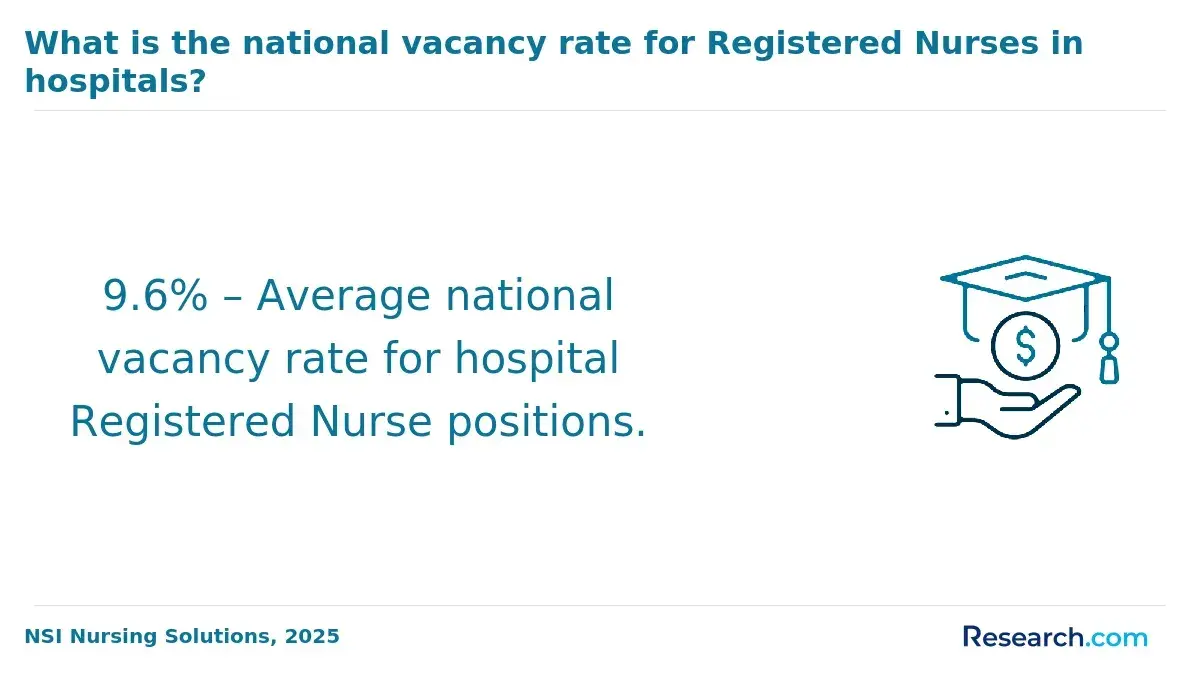
Choosing an online nursing program in South Dakota is usually not just about finding the fastest or cheapest option. You also need to know whether the program is approved for licensure, whether it fits your current nursing credential, how clinical requirements work, and whether the degree will help you qualify for the roles you actually want. This matters because South Dakota continues to face pressure in its nursing workforce, with the state ranking among those projected to have notable RN shortages and a deficit of several thousand by 2030 (RegisteredNursing.org, n.d.).
This guide is written for current RNs considering an online RN to BSN program, LPNs comparing bridge options, career changers exploring nursing, and nurses who want to understand whether South Dakota is a practical place to study and work. You will find program options, cost context, licensure steps, career pathways, salary considerations, questions to ask schools, and common mistakes to avoid before enrolling.
Quick answer: Are online nursing programs in South Dakota worth considering?
Yes, online nursing programs in South Dakota can be a practical choice if the program is properly approved, accredited, and aligned with your licensure or advancement goals. Current RNs often use online RN to BSN programs to strengthen leadership, evidence-based practice, informatics, and population health skills while continuing to work. However, online does not mean fully remote in every case. Nursing programs may still require clinical hours, practicums, local preceptors, simulations, or verified workplace experiences.
The best program for you depends on your starting point. A CNA candidate, LPN student, ADN graduate, licensed RN, and future APRN all need different program types. Before applying, confirm accreditation, South Dakota Board of Nursing approval, tuition and fees, transfer credit rules, NCLEX outcomes when applicable, and whether the program supports clinical placement in your area.
Best Online Nursing Programs in South Dakota Table of Contents
- How do you become a nurse in South Dakota?
- How much do nursing programs in South Dakota usually cost?
- How long does the nursing pathway take in South Dakota?
- Can an online degree qualify you for nursing work in South Dakota?
- Online Nursing Programs in South Dakota for 2027
- Is South Dakota a good state for nurses?
- What steps are required to obtain a nursing license in South Dakota?
- What jobs can you pursue with a nursing degree in South Dakota?
- What nursing pathways work best for career changers in South Dakota?
- Why consider an advanced nursing degree?
- How should you choose an online nursing program in South Dakota?
- How do accredited nursing schools in South Dakota maintain education quality?
- How can you move into a nurse practitioner role in South Dakota?
- How can administrative skills improve your nursing career in South Dakota?
- How can you become a nurse midwife in South Dakota?
- Which advanced nursing specializations can strengthen your career?
- What internship and job placement support do South Dakota nursing programs provide?
- Why consider an accelerated LPN to RN bridge program in South Dakota?
- How can you start an LVN-related nursing career path in South Dakota?
- Which continuing education options support long-term growth for South Dakota nurses?
How do you become a nurse in South Dakota?
The route to becoming a nurse in South Dakota depends on the credential you want. CNA candidates complete a training and competency program. LPN candidates complete a practical nursing program and meet licensing requirements. RN candidates usually earn an ADN or BSN, then pass the NCLEX-RN. APRNs need graduate-level preparation, such as one of the top RN to MSN online programs, along with national certification in their practice area.
For RN preparation, the ADN can be the quicker entry point, but the BSN remains the broader academic credential for registered nursing education. In South Dakota, 2024 NCLEX-RN test takers educated at the BSN level had a 95.6% pass rate, compared with 94.2% for ADN graduates. The state’s overall NCLEX-RN pass rate was 94.9%, higher than the average total of 91.1% (National Council of State Boards of Nursing, 2024).
| Credential goal | Typical preparation | Best fit | Key decision point |
| CNA | Training and competency program | Students who want a fast entry into patient care support roles | Confirm the program meets state training requirements |
| LPN | Practical nursing program | Students who want licensed nursing work sooner than the RN route | Check NCLEX-PN preparation and clinical access |
| RN with ADN | Associate degree in nursing plus NCLEX-RN | Students prioritizing a shorter path to RN licensure | Ask how credits transfer into RN to BSN programs |
| RN with BSN | Bachelor of Science in Nursing plus NCLEX-RN, or RN to BSN for licensed RNs | RNs seeking stronger advancement, leadership, and graduate school preparation | Verify accreditation, cost, and clinical or practicum requirements |
| APRN | Graduate degree plus national certification | RNs pursuing advanced practice, specialty, or leadership roles | Match the graduate track to state practice and certification requirements |
How much do nursing programs in South Dakota usually cost?
Cost should be one of the first filters you use when comparing nursing schools, but it should not be the only one. Tuition that looks low at first can become less affordable after adding online fees, books, clinical costs, background checks, uniforms, technology fees, travel, and lost work hours. If you are comparing options, start with a realistic view of how much nursing school tuition costs and then request a full program cost estimate from each school.
Many nursing programs in South Dakota list tuition and fees of about $250-$650 per credit hour. Some programs, including certain affordable MSN programs, may charge the same tuition and fees regardless of residency, while other online programs may vary by institution or include separate distance learning fees.
For broader context, public four-year institutions in South Dakota charged an average of $11,610 for in-state tuition and fees and $30,780 for out-of-state tuition and fees in 2024-2025. Private institutions reported a higher net price of $36,150 for tuition and fees during the same year (College Board, 2025).
| Cost factor | Why it matters | Question to ask before enrolling |
| Per-credit tuition | Most online RN to BSN and graduate programs price by credit | Is the quoted rate the same for online, in-state, and out-of-state students? |
| Required credits | A lower tuition rate may not save money if the program requires more credits | How many credits will I personally need after transfer evaluation? |
| Clinical or practicum expenses | Travel, placement documents, immunizations, and background checks can add costs | Can clinical hours be completed near my home or workplace? |
| Employer tuition support | Hospitals and healthcare employers may help working nurses reduce out-of-pocket costs | Does my employer reimburse tuition for this specific program? |
| Financial aid eligibility | Accreditation can affect access to federal aid and some employer benefits | Is the institution and nursing program eligible for the aid I plan to use? |
How long does the nursing pathway take in South Dakota?
The timeline depends on your starting credential and whether you study full time, part time, online, or through a bridge program. A CNA training program often takes four to 12 weeks. LPN programs usually take 12-18 months. ADN programs generally require one to three years, while traditional BSN programs commonly take four years. Students may need an additional year or less to prepare for and take the NCLEX-PN or NCLEX-RN. APRN preparation can add another two to three years.
Accelerated and bridge formats exist because many nursing students are already working adults. Options such as NP accelerated programs and the cheapest online RN to BSN program can help qualified nurses move faster than a traditional path, often in one to two years for RN to BSN completion. Some programs may take less than a year to two years, depending on transfer credits, enrollment load, and program design.
| Pathway | Typical timeline stated | Who it serves |
| CNA training | Four to 12 weeks | Students seeking a quick patient care entry point |
| LPN program | 12-18 months | Students seeking licensed practical nursing roles |
| ADN | One to three years | Students who want an RN route that may be shorter than a BSN |
| BSN | Four years | Students pursuing broad RN preparation and long-term advancement |
| RN to BSN | One to two years | Licensed RNs who want a bachelor’s credential |
| APRN preparation | Another two to three years | RNs moving into advanced practice or specialty roles |
Can an online degree qualify you for nursing work in South Dakota?
An online nursing degree can support licensure or advancement in South Dakota when it is properly accredited, approved when required, and designed for your intended credential. Online coursework is common in RN to BSN, MSN, DNP, and some bridge programs, but clinical learning and competency verification still matter. Nursing is not a purely academic field; employers and licensing boards expect graduates to show hands-on readiness.
South Dakota had an employment number of 32.99 per 1,000 jobs, the highest concentration of RN jobs among all U.S. states (BLS, 2023a). That makes program quality especially important: entering a state with a dense RN workforce does not remove the need for strong preparation, licensing compliance, and employer-ready skills.
CNA training programs are overseen by the SD Department of Health. LPN and nursing degree programs should be accredited by the Accreditation Commission for Education in Nursing (ACEN) or the Commission on Collegiate Nursing Education (CCNE), and they should be approved by the South Dakota Board of Nursing when approval is required.
These standards help ensure that online and campus-based programs meet appropriate expectations for faculty qualifications, curriculum design, student evaluation, and clinical learning. When comparing schools, review whether the curriculum includes essential content such as common courses in RN programs, evidence-based practice, pharmacology, health assessment, informatics, leadership, and population health.
- : "Before enrolling in an online nursing program, ask the school to confirm in writing whether the program meets South Dakota licensure or advancement requirements for your specific situation."
Online Nursing Programs in South Dakota for 2027
The following programs are online RN to BSN options in South Dakota or nearby states that may be relevant for South Dakota nurses. Use this list as a starting point, not a final decision. Program details, tuition, fees, transfer policies, and admission rules can change, so verify all information directly with the school before applying.
| School | Program length | Cost information | Credits required | Accreditation |
| University of South Dakota | One year | $354.75 per credit | 120 | CCNE |
| South Dakota State University | 10-18 months | $413 (in-state), $525 (out-of-state) per credit | 30-120 | CCNE |
| University of North Dakota | One to two years | $535.65 per credit | 30-120 | CCNE |
| North Dakota State University | One to two and a half years | $5,545-$6,654 (full-time with 13 or more credits), $456.37-$547.65 (part-time with 12 or less credits) | 30-120 | CCNE |
| University of Mary | One year | $340 per credit | 124 | CCNE |
1. University of South Dakota
The University of South Dakota offers a nursing curriculum built around relationship-centered care, communication, and applied professional nursing skills. Coursework includes topics such as health care policy, finance and regulatory environments, and information management and technology application, giving students exposure to the systems-level issues nurses often face in modern care settings.
- Program Length: One year
- Estimated Cost per Credit: $354.75
- Required Credits to Graduate: 120
- Accreditation: CCNE
2. South Dakota State University
South Dakota State University provides an online RN to BSN path designed for working registered nurses who need flexibility while completing a bachelor’s degree. The program connects nursing theory with evidence-based practice and includes courses such as genetics and genomics, healthcare systems and informatics, and evidence-based nursing practice.
- Program Length: 10-18 months
- Cost per Credit: $413 (in-state), $525 (out-of-state)
- Required Credits to Graduate: 30-120
- Accreditation: CCNE
3. University of North Dakota
The University of North Dakota offers an online RN to BSN completion program for registered nurses with a current and unencumbered license. Courses such as nursing pharmacology, transition to BSN, and evidence-informed practice help students strengthen clinical reasoning and professional judgment. Online learners also have access to support resources, including online tutoring, academic advising, and digital library services.
- Program Length: One to two years
- Cost per Credit: $535.65
- Required Credits to Graduate: 30-120
- Accreditation: CCNE
4. North Dakota State University
North Dakota State University offers an RN to BSN track that may interest South Dakota nurses seeking an online completion option. The program is open to ADN graduates who hold current and unencumbered RN licenses. Its curriculum emphasizes population-focused care, safety and quality, nursing leadership, and evidence-based practice.
- Program Length: One to two and a half years
- Estimated Cost: $5,545-$6,654 (full-time with 13 or more credits), $456.37-$547.65 (part-time with 12 or less credits)
- Required Credits to Graduate: 30-120
- Accreditation: CCNE
5. University of Mary
The University of Mary offers an online RN to BSN completion program that can serve nurses in South Dakota and nearby areas. The curriculum includes global issues in nursing, evidence-based nursing practice, and ethics, law, and policy in nursing. These courses can help RNs strengthen professional decision-making and prepare for broader responsibilities in clinical and organizational settings.
- Program Length: One year
- Cost per Credit: $340
- Required Credits to Graduate: 124
- Accreditation: CCNE
Is South Dakota a good state for nurses?
South Dakota can be a strong fit for some nurses and a poor fit for others. The state offers compact licensure advantages and workforce incentives, but wages and workplace fit should be weighed carefully. The right answer depends on whether your priority is mobility, rural healthcare experience, cost of living, specialization, salary growth, or long-term advancement.
| Potential advantage | What it means for nurses | What to verify |
| Compact state status | South Dakota participates in the Nurse Licensure Compact, allowing eligible RNs and LPNs to practice in other participating compact states without obtaining another separate license (Nurse Licensure Compact, n.d.). | Confirm whether you qualify for a multistate license and whether your intended employer accepts it. |
| Nursing incentives | The Recruitment Assistance Program (RAP) provides an incentive payment of at least $70,751.20 for qualified licensed nurses (SD Dept. of Health, n.d.). | Review eligibility rules, service obligations, qualifying sites, and application deadlines before counting on this benefit. |
| High RN job concentration | The state has a large concentration of RN employment relative to total jobs. | Look beyond statewide averages and compare openings by region, specialty, and employer type. |
| Potential drawback | Why it matters | How to evaluate it |
| Lower RN wages than the national average | The national average income for RNs is $89,010 yearly, while RNs in South Dakota earn $64,500 or about $31.01 per hour (BLS, 2023a; 2023b). | Compare total compensation, shift differentials, benefits, loan repayment, and local living costs before deciding. |
| Diversity and inclusion concerns | Reported hate crime bias motivations in South Dakota include race, ethnicity, or ancestry (53.6%), and sexual orientation has no statewide protections (Out Leadership, 2024). | Research employer policies, community climate, reporting systems, and support networks before relocating. |
How can South Dakota address its nursing shortage effectively?
South Dakota’s projected 14% shortage of registered nurses (RNs) by 2030 points to a workforce problem that cannot be solved by education alone. A stronger pipeline requires coordinated action across schools, healthcare systems, state programs, and employers.
One practical step is expanding scholarships, service-based loan support, and targeted recruitment for students who are likely to practice in South Dakota after graduation, especially in rural communities. Financial barriers can prevent qualified students from entering nursing, so clear information about aid and service commitments is important.
Another priority is building tighter partnerships between nursing programs and healthcare employers. Paid clinical experiences, residency pathways, preceptor support, and early hiring pipelines can help students move from coursework into practice with fewer delays. These partnerships also allow schools to align training with local workforce needs.
Retention is just as important as recruitment. Competitive compensation, manageable workloads, career ladders, mentoring, flexible scheduling, and affordable pathways into advanced roles can help reduce burnout and make nursing careers more sustainable in the state.
What steps are required to obtain a nursing license in South Dakota?
Licensure in South Dakota follows a regulated process designed to confirm that applicants have the education, examination results, and professional background needed for safe practice. In general, candidates complete an approved nursing program, pass the relevant NCLEX exam, submit required documents, and satisfy state review requirements. Because details vary by credential and applicant background, review the official process carefully before you apply.
For a more detailed checklist of eligibility rules, documentation, background checks, renewal expectations, and state-specific requirements, use this guide to nursing license requirements in South Dakota. Following the correct process matters because incomplete documentation or choosing the wrong program can delay your ability to work.
What jobs can you pursue with a nursing degree in South Dakota?
A nursing degree can lead to bedside care, public health, long-term care, home health, leadership, education, specialty practice, and advanced practice roles. In South Dakota, RNs ranked second in the state’s Top 30 Hot Careers as of September 2024, with a 13.2% career outlook or 1,028 annual openings through 2032 (SD Dept. of Labor & Regulation, September 2024).
Higher wages often require advanced education, specialty certification, leadership responsibility, or APRN preparation. For example, a nurse practitioner earns $115,610, while a nurse anesthetist earns $223,200 yearly. Nurses seeking senior clinical, executive, or academic roles may also compare options such as the best online MSN to DNP programs.
Experience also affects job options and pay. South Dakota does not have a standard nursing license renewal requirement in the usual sense, but LPNs and RNs must be employed for at least 140 hours within a 12-month period during the last six years, or a total of 480 hours, to keep their license. APRNs must also maintain national certification.
| Career direction | Typical education or credential | Why nurses choose it |
| Staff RN | ADN or BSN plus RN licensure | Direct patient care in hospitals, clinics, long-term care, or community settings |
| Charge nurse or unit leader | RN experience, often BSN preferred | More responsibility for coordination, staffing, and clinical decision support |
| Public health or community health nurse | RN licensure, often BSN useful | Population-focused work, prevention, education, and outreach |
| Nurse practitioner | Graduate nursing degree and certification | Advanced assessment, diagnosis, treatment planning, and patient management |
| Nurse anesthetist | Advanced graduate preparation and certification | Specialized anesthesia care and high-acuity responsibility |
| Nursing administration or education | BSN, MSN, DNP, or related graduate preparation depending on role | Leadership, workforce development, teaching, policy, or quality improvement |
What nursing pathways work best for career changers in South Dakota?
Career changers should choose a pathway based on their prior education, finances, timeline, and tolerance for intensive clinical training. Someone with no college credits may start with an ADN or BSN. Someone who already has a non-nursing bachelor’s degree may consider an accelerated BSN. Someone who needs to keep working may prefer a part-time or hybrid option, as long as clinical requirements are realistic.
Accelerated BSN programs can be a strong fit for students who already hold a non-nursing bachelor’s degree and want a faster transition into registered nursing. These programs commonly combine compressed nursing coursework with clinical practice and NCLEX-RN preparation. The pace can be demanding, so applicants should understand weekly time expectations before enrolling.
Online BSN options for non-nurses may offer more flexibility for didactic coursework, but students should not assume the entire degree can be completed remotely. Clinical rotations, skills labs, and in-person assessments may still be required. If you are comparing programs for students without a nursing background, review this guide to online BSN programs for non nurses for information on curriculum, accreditation, affordability, and program design.
| Your starting point | Possible pathway | Best reason to choose it | Main caution |
| No nursing license | ADN or traditional BSN | Structured entry into RN education | Program length and clinical scheduling vary |
| Non-nursing bachelor’s degree | Accelerated BSN | Faster route into RN preparation | High workload may limit ability to work |
| Current LPN | LPN to RN bridge | Builds on existing practical nursing experience | Admission may require active licensure and prerequisites |
| Current RN with ADN | Online RN to BSN | Supports advancement while continuing employment | Transfer credit evaluation can change cost and timeline |
Why consider an advanced nursing degree?
Advanced nursing degrees can help RNs move into nurse practitioner, leadership, education, policy, informatics, or specialized clinical roles. The value depends on your career goal. A graduate degree is not necessary for every nurse, but it becomes important if you want advanced practice authority, higher-level clinical responsibility, or formal leadership positions.
Nurses who want to become nurse practitioners may compare bridge and graduate routes such as RN to NP programs. These programs are designed to help nurses build from existing credentials into advanced coursework in assessment, diagnostics, pharmacology, and patient management.
Advanced degrees can also support roles outside direct bedside care, including healthcare administration, nursing education, quality improvement, and policy work. Online formats can make graduate study more realistic for working nurses, but students should still ask about practicum placement, certification exam preparation, and state authorization.
How should you choose an online nursing program in South Dakota?
The best online nursing program is the one that matches your licensure status, career goal, budget, schedule, and clinical needs. Start by confirming that the school is accredited by ACEN or CCNE when applicable and that the program meets South Dakota requirements for your intended path. Accreditation is not just a label; it can affect licensure, employment, transfer credit, graduate admission, and financial aid.
Next, evaluate flexibility honestly. Asynchronous courses can help working nurses, but clinical requirements, group projects, exams, and practicums may still create fixed obligations. Ask whether the school helps arrange clinical placements or expects students to secure their own preceptors.
You should also review outcome indicators such as graduation rates and NCLEX pass rates when they apply. Strong pass rates can suggest effective exam preparation, but they should be viewed alongside admission selectivity, student support, faculty access, and clinical quality.
If your long-term plan includes advanced practice, compare RN to BSN programs with graduate admission in mind. Nurses planning to specialize can also review nurse practitioner programs in South Dakota to understand how today’s degree choice may affect tomorrow’s options.
| What to check | Why it matters | Red flag |
| Accreditation and approval | Supports licensure, employment, transfer, and graduate study | The school cannot clearly explain its nursing accreditation status |
| Transfer credit policy | Determines how many credits you still need | The estimate is vague until after you commit financially |
| Clinical placement support | Clinical access can delay graduation if not planned early | The school places full responsibility on students without guidance |
| Total program cost | Fees and required supplies can change affordability | Only tuition is listed, with no full cost breakdown |
| Student support | Online learners need advising, tutoring, library access, and faculty communication | Advising is limited or responses are slow before enrollment |
| State authorization | Online programs may have restrictions by student location | The program does not confirm eligibility for South Dakota students |
How do accredited nursing schools in South Dakota maintain education quality?
Accredited nursing schools use formal review processes to demonstrate that their curriculum, faculty, student outcomes, clinical experiences, and assessment methods meet professional expectations. In practice, this means schools must keep course content aligned with current healthcare standards, evaluate student competencies, and prepare graduates for safe practice.
Quality also depends on the learning environment. Strong programs invest in simulation, clinical partnerships, faculty development, advising, and evidence-based teaching methods. If you want to compare institutions that meet recognized standards, review this guide to accredited nursing schools in South Dakota.
What financial aid options are available for nursing students in South Dakota?
Nursing students may be able to use scholarships, grants, federal financial aid, institutional awards, employer tuition reimbursement, service-based programs, or loan repayment options. Availability depends on the school, the student’s eligibility, the credential level, and whether the program qualifies for aid.
Before applying, ask each school for a full financial aid estimate and clarify whether aid applies to online students, part-time enrollment, summer terms, clinical fees, and repeated courses. If your goal is RN licensure, this overview of how to become an RN in South Dakota can help you connect education steps with licensing and workforce planning.
How can you move into a nurse practitioner role in South Dakota?
To become a nurse practitioner, you generally need an active RN license, relevant clinical experience, an accredited graduate nursing program, supervised advanced clinical training, and national certification in your population focus. Coursework should include advanced health assessment, pharmacology, pathophysiology, diagnostics, evidence-based practice, and clinical decision-making.
Because nurse practitioner preparation is specialized, choose a program that fits the patient population you want to serve. Family practice, psychiatric-mental health, adult-gerontology, acute care, pediatrics, and women’s health tracks may lead to different certification exams and job options. For a step-by-step explanation, review how to become a nurse practitioner in South Dakota.
How can administrative skills improve your nursing career in South Dakota?
Administrative skills can help nurses move beyond bedside care into operations, care coordination, compliance, utilization review, quality improvement, informatics, and management. Understanding documentation, billing workflows, coding concepts, and reimbursement processes can also improve communication between clinical and administrative teams.
This does not mean every nurse needs a billing or coding credential. It does mean that nurses who understand both patient care and healthcare operations may be better prepared for leadership and systems-focused roles. If you want to explore this adjacent skill area, read about how to become a medical biller and coder in South Dakota.
How can you become a nurse midwife in South Dakota?
Nurses interested in midwifery should plan for graduate education focused on maternal, reproductive, prenatal, intrapartum, postpartum, and newborn care. This path usually begins with RN licensure and clinical nursing experience, followed by a graduate program with a midwifery track and supervised clinical training.
Because midwifery involves specialized certification and scope-of-practice considerations, verify state requirements before choosing a program. Clinical placement is especially important because students need experience across pregnancy, birth, postpartum, and reproductive health settings. For more details, review how to become a nurse midwife in South Dakota.
Which advanced nursing specializations can strengthen your career?
Advanced nursing specialization can help experienced RNs build deeper expertise in a defined patient population, care setting, or clinical problem. Examples include acute care, family practice, psychiatric-mental health, adult-gerontology, women’s health, nurse anesthesia, nursing education, and leadership. The right specialization should match both your interests and the types of employers hiring in your region.
For nurses interested in high-acuity care, acute care nurse practitioner programs online can provide advanced preparation in complex assessment, treatment planning, and management of seriously ill patients. Before enrolling, confirm certification alignment, clinical placement support, and whether the program is authorized for students in South Dakota.
What internship and job placement support do South Dakota nursing programs provide?
Clinical placement and career support can affect how smoothly you move from school to employment. Strong programs maintain relationships with hospitals, clinics, long-term care facilities, public health agencies, and community-based providers. They may also offer advising, resume help, interview preparation, employer events, and guidance on licensure paperwork.
Ask specifically how the school handles placements for online students. Some programs arrange sites directly, while others require students to identify preceptors with school approval. If you are comparing healthcare entry points more broadly, you may also want to review medical assistant programs in South Dakota to understand related clinical training options.
Why consider an accelerated LPN to RN bridge program in South Dakota?
An accelerated LPN to RN bridge program can be useful for licensed practical nurses who want to become registered nurses without repeating unnecessary foundational coursework. These programs typically build on practical nursing experience while adding RN-level content in assessment, clinical judgment, leadership, pharmacology, and patient care planning.
The benefit is speed, but the trade-off is intensity. A compressed program may require strong time management, flexible work scheduling, and readiness for challenging clinical expectations. If you are comparing shorter bridge formats, review options such as the 6 month LPN to RN program online to understand how accelerated models may work and what limitations they may have.
How can you start an LVN-related nursing career path in South Dakota?
Students searching for LVN information should note that terminology varies by state, and South Dakota nursing pathways are typically discussed in relation to practical nursing and LPN licensure. The basic idea is to complete an approved practical nursing program, fulfill clinical and academic requirements, prepare for the licensing exam, and meet state application rules.
Before choosing a program, confirm the credential title used in South Dakota, program approval status, exam preparation, clinical requirements, and whether credits can later transfer into an RN bridge program. For a focused walkthrough, see how to become an LVN nurse in South Dakota.
Which continuing education options support long-term growth for South Dakota nurses?
Nursing careers change as technology, regulations, patient needs, and employer expectations change. Continuing education helps nurses stay current in medication safety, documentation, specialty care, leadership, informatics, infection prevention, ethics, and evidence-based practice. It can also support certification renewal and career mobility.
Long-term growth does not always require another full degree. Short courses, specialty certifications, employer training, professional workshops, and graduate certificates may be enough for some goals. Nurses at the beginning of the practical nursing path can also review how to become an LPN in South Dakota to understand how initial credentials can connect to future advancement.
Common mistakes to avoid when choosing a South Dakota nursing program
| Mistake | Why it can hurt you | Better approach |
| Choosing a program before checking accreditation | It may affect licensure, transfer credit, graduate admission, and employer acceptance | Verify ACEN or CCNE accreditation and state approval when required |
| Looking only at tuition | Fees, supplies, travel, testing, and clinical costs can change the real price | Request a complete cost sheet before applying |
| Assuming online means no campus or clinical obligations | Many nursing programs still require in-person clinical experiences or skills validation | Ask exactly where, when, and how clinical requirements are completed |
| Ignoring transfer credit rules | Your timeline and cost can increase if fewer credits transfer than expected | Get a written transfer evaluation before making a final decision |
| Relying only on rankings | A highly ranked school may not fit your schedule, budget, or licensure needs | Compare outcomes, support, cost, accreditation, and clinical placement together |
| Assuming salary outcomes are guaranteed | Pay varies by role, employer, location, shift, experience, and credential | Use salary data as a planning tool, not a promise |
Key Insights
- Online nursing programs in South Dakota can be worthwhile when they are accredited, properly approved, and aligned with your credential goal.
- The right pathway depends on your starting point: CNA, LPN, ADN, BSN, RN to BSN, MSN, DNP, and APRN routes serve different career plans.
- South Dakota’s 2024 NCLEX-RN outcomes were strong, with BSN-educated test takers at a 95.6% pass rate, ADN graduates at 94.2%, and the state overall at 94.9%.
- Costs vary widely. Many programs charge around $250-$650 per credit hour, but students should compare total program cost, not tuition alone.
- South Dakota offers compact licensure advantages and workforce incentives, including a Recruitment Assistance Program payment of at least $70,751.20 for qualified licensed nurses.
- Wage expectations require caution. RNs nationally earn $89,010 yearly on average, while South Dakota RNs earn $64,500 or about $31.01 per hour, based on the cited BLS data.
- Clinical placement support is one of the most important questions for online students. A flexible online format is less useful if you cannot complete required hands-on hours.
- Before enrolling, ask every school about accreditation, state authorization, transfer credits, clinical requirements, NCLEX outcomes where relevant, total cost, and support for working nurses.
Related Articles for Nearby States
- 2027 Best Online Nursing Programs in North Dakota – Accredited RN to BSN Programs
- 2027 Best Online Nursing Programs in Nebraska – Accredited RN to BSN Programs
- 2027 Best Online Nursing Programs in Minnesota – Accredited RN to BSN Programs
- 2027 Best Online Nursing Programs in Wyoming – Accredited RN to BSN Programs
- 2027 Best Online Nursing Programs in Iowa – Accredited RN to BSN Programs
- 2027 Best Online Nursing Programs in Montana – Accredited RN to BSN Programs
- 2027 Best Online Nursing Programs in Colorado – Accredited RN to BSN Programs
- 2027 Best Online Nursing Programs in Kansas – Accredited RN to BSN Programs
- 2027 Best Online Nursing Programs in Wisconsin – Accredited RN to BSN Programs
- 2027 Best Online Nursing Programs in Missouri – Accredited RN to BSN Programs
References:
- AACN. (2025). 2024-2025 Enrollment and Graduations in Baccalaureate and Graduate Programs in Nursing. https://www.aacnnursing.org/news-data/all-news/schools-of-nursing-enrollment-increases
- HRSA. (2025). 2024 National Sample Survey of Registered Nurses. https://bhw.hrsa.gov/data-research/access-data-tools/national-sample-survey-registered-nurses
- NCSBN. (2025). 2024 National Nursing Workforce Study. https://www.ncsbn.org/workforce
- South Dakota Department of Health. (n.d.). Recruitment assistance program. https://doh.sd.gov/health-care-professionals/careers-and-recruiting/sd-healthcare-workforce-center/recruitment-assistance-program
- U.S. Bureau of Labor Statistics. (2025). Occupational Outlook Handbook: Registered Nurses. https://www.bls.gov/ooh/healthcare/registered-nurses.htm
Other Things You Should Know About Online Nursing Programs in South Dakota
In 2027, South Dakota State University and the University of South Dakota offer notably flexible online RN to BSN programs designed for working nurses, providing asynchronous coursework and customizable schedules to accommodate professional commitments. These programs prioritize adaptability to ensure that current employment does not hinder educational advancements.
Clinical hours in South Dakota’s online RN to BSN programs are primarily "practice experiences" that focus on community health and nursing leadership rather than traditional hospital-based bedside care. These requirements are designed to be flexible and can often be completed within your own local community or at your current place of employment under the guidance of a qualified preceptor. Projects typically involve population health assessments or quality improvement initiatives.
Yes, reputable online RN to BSN programs in South Dakota are accredited by the Commission on Collegiate Nursing Education (CCNE) or the Accreditation Commission for Education in Nursing (ACEN). Furthermore, these programs are approved by the South Dakota Board of Nursing, ensuring that the education provided aligns with the state’s professional licensing regulations and healthcare workforce needs.
South Dakota nurses enrolled in online RN to BSN programs can access financial aid options like state grants, scholarships, and tuition reimbursement programs. Additionally, the South Dakota Board of Nursing may offer funding assistance, and nurses can also apply for federal aid, including the Pell Grant and student loans.


