2027 Best Online Acute Care Nurse Practitioner (ACNP) Programs

Co-Founder and Chief Data Scientist
Choosing an online Acute Care Nurse Practitioner (ACNP) program is not just a question of convenience. It affects your eligibility for certification, your clinical placement options, your ability to keep working while enrolled, and the total cost of becoming an advanced practice nurse. ACNP programs are designed for registered nurses who want to manage acutely ill, critically ill, or medically complex patients in hospitals, emergency departments, intensive care units, specialty practices, and other high-acuity settings.
According to recent data, demand for ACNPs is expected to rise by 12% in the next decade. That demand has made online ACNP programs more attractive to working nurses, but program quality, accreditation, clinical support, and tuition vary widely. This guide explains what to expect from online ACNP programs, how to compare MSN and DNP pathways, what the listed programs cost, how clinical training works, and which questions to ask before applying.
Quick Answer: Are Online ACNP Programs Worth Considering?
Online ACNP programs can be a strong option for licensed RNs who need flexibility but still want preparation for advanced acute care practice. The best programs are accredited, include rigorous clinical requirements, prepare graduates for national certification, and provide meaningful support for clinical placements. They are not fully “online” in the practical sense because students must complete supervised clinical hours in approved healthcare settings.
- Best fit: Experienced RNs who want to work with high-acuity adult, geriatric, pediatric, or specialty patients.
- Typical completion time: Most full-time students finish in about 2-3 years; part-time students often need 3-4 years.
- Typical cost range: Tuition commonly falls between $20,000 and $60,000, with many programs averaging $25,000 to $60,000 for the full degree.
- Common degree options: MSN, BSN-to-DNP, and MSN-to-DNP pathways.
- Important requirement: Students should verify CCNE or ACEN accreditation and confirm that the program meets certification and state licensure expectations.
What are the benefits of online acute care nurse practitioner (ACNP) programs?
- Career mobility in high-acuity care. An online ACNP degree can prepare nurses for advanced practice roles in hospitals, urgent care centers, specialty clinics, intensive care units, emergency departments, and other settings that treat patients with acute or complex conditions.
- Competitive earning potential. Graduates with an ACNP degree typically earn a median salary of around $112,000 annually, though actual pay depends on specialty, employer, state, shift structure, and experience.
- Flexibility for working nurses. Online coursework can make graduate study more manageable for nurses balancing employment, family responsibilities, and clinical training requirements.
- Specialized clinical preparation. ACNP coursework focuses on advanced assessment, pharmacology, pathophysiology, diagnostics, and management of unstable or complex patients.
- Pathways to advancement. ACNP preparation can support movement into hospitalist roles, specialty practice, leadership, clinical education, or doctoral-level practice depending on the degree path selected.
What can I expect from online acute care nurse practitioner (ACNP) programs?
Online ACNP programs combine graduate nursing theory with supervised clinical practice. Coursework is usually delivered online, while clinical hours are completed in approved healthcare settings. Some programs also require campus intensives, simulation sessions, skills assessments, or in-person checkoffs.
| Program feature | What it usually means for students |
| Core coursework | Students study advanced pathophysiology, advanced pharmacology, advanced health assessment, clinical decision-making, diagnostics, and management of acute and complex conditions. |
| Completion timeline | Most full-time students complete the program in about 2-3 years; part-time plans may extend the timeline. |
| Tuition range | Tuition costs generally range between $20,000 and $60,000, depending on the school, degree level, credit load, and fees. |
| Online format | Coursework may be asynchronous, synchronous, or hybrid. Students still complete in-person clinical hours. |
| Clinical preparation | Programs prepare students to assess, diagnose, and manage patients with serious acute, chronic, or life-threatening conditions. |
Where can I work with an online acute care nurse practitioner (ACNP) degree?
ACNP graduates commonly work in hospitals, particularly in intensive care units, emergency departments, step-down units, trauma services, cardiology, oncology, pulmonology, and other specialty areas. These roles often involve managing unstable patients, interpreting diagnostics, ordering treatments, coordinating care teams, and responding to rapid changes in patient status.
ACNPs may also work outside traditional inpatient units. Urgent care centers, outpatient specialty clinics, long-term acute care hospitals, post-discharge clinics, academic institutions, and long-term care facilities may employ ACNPs for advanced assessment, follow-up care, complex case management, teaching, or clinical research. Opportunities can exist in both urban and rural markets, but state scope-of-practice laws, employer needs, and clinical specialty strongly influence hiring.
How much can I make with an online acute care nurse practitioner (ACNP) degree?
Acute care nurse practitioners earn a median annual salary of around $112,000. Some ACNPs in high-demand settings, large urban hospitals, or specialized clinics may see salaries closer to $130,000 or more annually. Pay is not guaranteed and can differ by region, experience, specialty certification, employer type, work schedule, and whether the role includes nights, weekends, call coverage, or overtime.
Total compensation may include more than base pay. ACNPs working in 24/7 clinical environments such as ICUs or emergency departments may receive bonuses, overtime, shift differentials, retirement benefits, health insurance, and tuition reimbursement. When comparing job offers, nurses should look at the full compensation package, not salary alone.
- Best Online Acute Care Nurse Practitioner (ACNP) Programs for 2027
- How long does it take to complete online acute care nurse practitioner (ACNP) programs?
- How do online acute care nurse practitioner (ACNP) programs compare to on-campus programs?
- What is the average cost of online acute care nurse practitioner (ACNP) programs?
- What are the financial aid options for students enrolling in online acute care nurse practitioner (ACNP) programs?
- What are the prerequisites for enrolling in online acute care nurse practitioner (ACNP) programs?
- What courses are typically in online acute care nurse practitioner (ACNP) programs?
- What types of specializations are available in online acute care nurse practitioner (ACNP) programs?
- How to choose the best online acute care nurse practitioner (ACNP) programs?
- What are the time commitments required to become an acute care nurse practitioner?
- What career paths are available for graduates of online acute care nurse practitioner (ACNP) programs?
- What is the job market for graduates of online acute care nurse practitioner (ACNP) programs?
- How can ACNP training enhance career opportunities in geriatric care?
- What student support and resource services do online ACNP programs offer?
- Can ADN nurses transition effectively to acute care nurse practitioner roles?
- What is the return on investment for online ACNP programs?
- What are the post-graduation success metrics for online ACNP programs?
- What career support services do online ACNP programs offer?
- How do online ACNP programs prepare graduates to navigate evolving healthcare policies?
- What are the certification and licensing requirements for ACNP graduates?
- Tips for Success in Online ACNP Programs
- Fast-Track Pathways to Becoming an Acute Care Nurse Practitioner
- How do online ACNP programs integrate advanced clinical simulation tools?
- What challenges might I encounter in online ACNP programs?
- What trends are shaping the future of online ACNP programs?
- How does integrating public health perspectives enhance my ACNP career?
- How can fast track programs accelerate my ACNP career?
- How can additional certifications enhance career opportunities in ACNP roles?
- Can a complementary science degree benefit my ACNP career?
- Should I pursue an MSN or DNP for my ACNP career?
- Recognizing the importance of accreditation and short-term programs
Best Online Acute Care Nurse Practitioner (ACNP) Programs for 2027
How do we rank schools?
Research.com rankings are developed through structured research and data review by our editorial and research teams. The process draws from sources such as the IPEDS database, Peterson's database, including its Distance Learning Licensed Data Set, the College Scorecard database, and the National Center for Education Statistics. Because an ACNP degree is a major academic and financial commitment, the ranking process emphasizes transparent information that can help students compare program format, cost, accreditation, and academic fit. More details are available in our methodology section.
| Rank | School | Program options | Program length | Tracks/concentrations | Cost per credit | Credits | Accreditation |
| 1 | Duke University - Durham, NC | MSN; BSN-to-DNP | 2 years (MSN), 3 years (BSN-to-DNP) | Adult-Gerontology, Pediatric | $1,825 | 43–74 | Commission on Collegiate Nursing Education (CCNE) |
| 2 | The George Washington University - Washington, DC | MSN; BSN-to-DNP | 2 years (MSN), 4 years (BSN-to-DNP) | Adult-Gerontology | $1,875 | 48 (MSN), 72 (BSN-to-DNP) | Commission on Collegiate Nursing Education (CCNE) |
| 3 | Vanderbilt University - Nashville, TN | MSN; BSN-to-DNP | 2 years (MSN), 3 years (BSN-to-DNP) | Adult-Gerontology, Pediatric | $1,850 | 40 (MSN), 65–68 (BSN-to-DNP) | Commission on Collegiate Nursing Education (CCNE) |
| 4 | Rush University Medical Center - Chicago, IL | Adult-Gerontology and Pediatric ACNP pathways | 2 years (MSN-to-DNP), 3 years (BSN-to-DNP) | Adult-Gerontology, Pediatric | $1,950 | 38–71 (depending on pathway) | Commission on Collegiate Nursing Education (CCNE) |
| 5 | Emory University - Atlanta, GA | MSN; BSN-to-DNP | 2 years (MSN), 3 years (BSN-to-DNP) | Adult-Gerontology, Pediatric | $1,750 | 48 (MSN), 74 (BSN-to-DNP) | Commission on Collegiate Nursing Education (CCNE) |
| 6 | Johns Hopkins University - Baltimore, MD | BSN-to-DNP and Entry-Level MSN-to-DNP pathways in Adult-Gerontology and Pediatric ACNP specialties | 2 years (Entry-Level MSN-to-DNP), 3 years (BSN-to-DNP) | Adult-Gerontology, Pediatric | $1,930 | 78–88 (depending on pathway) | Commission on Collegiate Nursing Education (CCNE) |
| 7 | University of Iowa - Iowa City, IA | BSN-to-DNP and MSN-to-DNP pathways | 2 years (MSN-to-DNP), 3 years (BSN-to-DNP) | Adult-Gerontology, Pediatric | $1,700 | 44 (MSN), 75–78 (BSN-to-DNP) | Commission on Collegiate Nursing Education (CCNE) |
| 8 | University of Pittsburgh - Pittsburgh, PA | BSN-to-DNP and MSN-to-DNP pathways | 2 years (MSN-to-DNP), 3 years (BSN-to-DNP) | Adult-Gerontology | $1,800 | 32–37 (MSN-to-DNP), 79 (BSN-to-DNP) | Commission on Collegiate Nursing Education (CCNE) |
| 9 | University of South Carolina - Columbia, SC | MSN; BSN-to-DNP | 2 years (MSN), 3 years (BSN-to-DNP) | Adult-Gerontology | $1,650 | 46 (MSN), 74 (BSN-to-DNP) | Commission on Collegiate Nursing Education (CCNE) |
| 10 | University of Alabama at Birmingham - Birmingham, AL | MSN; BSN-to-DNP | 2 years (MSN), 3 years (BSN-to-DNP) | Adult-Gerontology Acute Care Nurse Practitioner, Pediatric Acute Care Nurse Practitioner, Adult-Gerontology Acute Care Nurse Practitioner with RNFA | $1,000 | 45 (MSN), 79 (BSN-to-DNP) | Commission on Collegiate Nursing Education (CCNE) |
How to use this ranking
A ranking should be a starting point, not the only deciding factor. Before applying, confirm whether the program serves students in your state, whether it helps arrange clinical placements near you, whether the track matches your intended certification, and whether total costs fit your budget. A lower tuition rate may not be the best value if clinical support is weak or if the program does not align with your licensure plans.
What graduates say about their online ACNP degree
-
: "
My online ACNP program made it possible to continue working while preparing for advanced acute care practice. The schedule flexibility mattered, but the biggest benefit was having faculty support while I moved through demanding clinical requirements. — Ana
"
-
: "
The coursework pushed me to think more critically about complex patients. I was able to keep my full-time nursing role while building the acute care knowledge I now use every day. — Denny
"
-
: "
Online study gave me access to faculty, case-based learning, and professional connections without relocating. The program was challenging, but it prepared me for real acute care decision-making. — Irene
"
Key Findings
- Family nurse practitioners make up the largest group, representing 70.3% of all Nurse Practitioners (NPs), with 147,260 employed FNPs.
- Adult-Gerontology Primary Care is the second largest certification area, accounting for 8.9% of NPs and employing 14,790 NPs.
- Psychiatric/mental health NPs represent 6.5% of the NP population, with 9,930 professionals employed in this specialty.
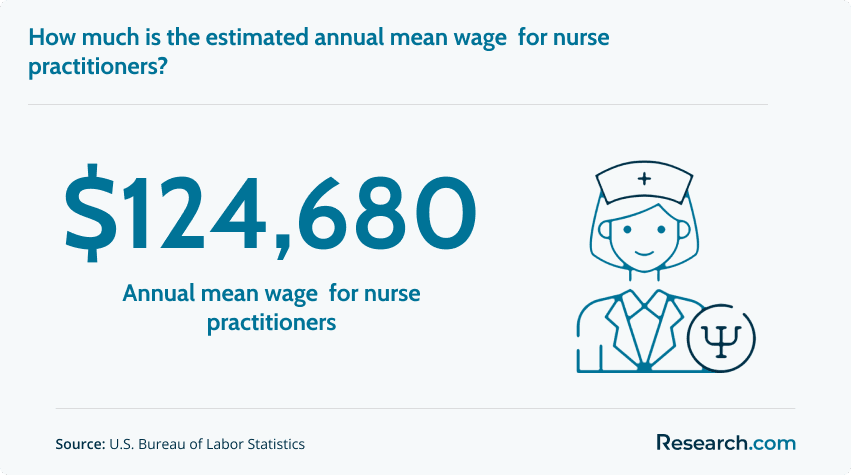
- Nurse practitioners earn an average annual wage estimated at $124,680, according to the U.S. Bureau of Labor Statistics.
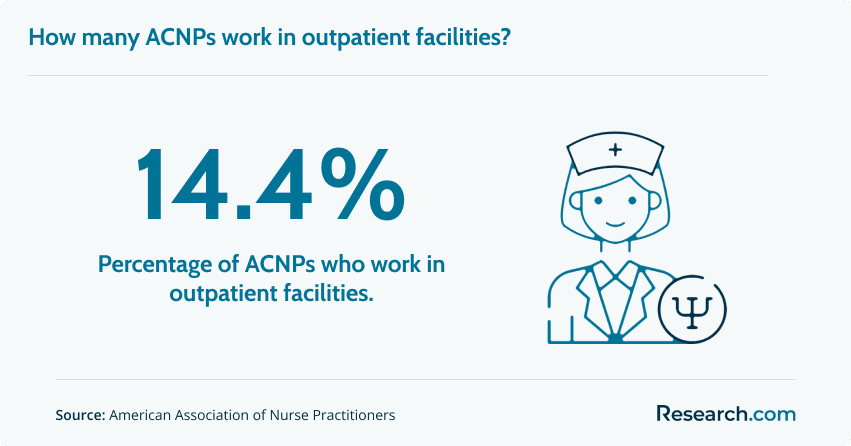
- ACNPs are not limited to inpatient roles; 14.4% of acute care nurse practitioners (ACNPs) work in outpatient facilities.
How long does it take to complete online acute care nurse practitioner (ACNP) programs?
Most online ACNP programs take about 2 to 3 years for full-time students. Part-time students often need around 3 to 4 years, especially if they continue working while completing coursework and clinical rotations. Timeline differences usually come from degree level, transfer credits, required clinical hours, practicum scheduling, and whether the student enrolls in an MSN, BSN-to-DNP, or MSN-to-DNP pathway.
Students comparing program pace should look beyond the advertised graduation date. Ask how clinical hours are sequenced, whether courses are offered every term, and whether part-time students can keep a predictable plan of study. Nurses comparing cost-sensitive options can also review affordable online nurse practitioner programs while checking whether the lower-cost programs still provide strong acute care clinical support.
How do online acute care nurse practitioner (ACNP) programs compare to on-campus programs?
Online and campus-based ACNP programs usually share the same academic goal: preparing nurses for advanced practice in acute and complex care. Both formats cover core graduate nursing content such as advanced pharmacology, pathophysiology, assessment, diagnostics, and clinical management. Both also require hands-on clinical practice in approved settings.
| Comparison point | Online ACNP programs | On-campus ACNP programs |
| Course delivery | Lectures, assignments, discussions, and exams are delivered through digital learning platforms. | Students attend scheduled in-person classes, labs, and faculty-led activities. |
| Schedule flexibility | Often better for working nurses, especially when courses are asynchronous. | More structured and predictable, but less flexible for shift workers. |
| Clinical training | Clinical hours are completed in person, often near the student if approved by the school. | Clinical placements may be tied more closely to the school’s local healthcare partners. |
| Faculty interaction | Occurs through video meetings, online discussions, email, virtual office hours, and sometimes campus intensives. | More frequent face-to-face access to faculty and classmates. |
| Best for | Self-directed nurses who need flexibility and can manage deadlines independently. | Students who prefer in-person structure, direct classroom interaction, and campus resources. |
What is the average cost of online acute care nurse practitioner (ACNP) programs?
The average cost of online acute care nurse practitioner programs typically ranges from $25,000 to $60,000 for the entire program. Total cost can change based on tuition per credit, number of credits, program length, residency or campus intensive fees, technology fees, books, travel, certification exam costs, and clinical placement expenses.
Do not compare tuition alone. A program with a lower advertised tuition may still cost more if it requires frequent travel, charges high fees, or offers limited clinical placement support. Students researching inexpensive doctoral pathways may encounter resources such as low-cost online doctoral program comparisons, but nursing students should be especially careful to verify nursing accreditation, certification alignment, and state authorization before enrolling.
What are the financial aid options for students enrolling in online acute care nurse practitioner (ACNP) programs?
Online ACNP students may be able to reduce out-of-pocket costs through loans, scholarships, employer benefits, payment plans, or school-based aid. Availability depends on enrollment status, school policy, financial need, academic profile, and employer support.
- Federal student loans. Students can submit the FAFSA to determine eligibility for federal loan options such as Direct Unsubsidized Loans and Grad PLUS Loans.
- Scholarships. Nursing associations, healthcare foundations, hospitals, and universities may offer awards for graduate nursing or advanced practice students.
- Grants. Some grants are awarded through schools or private organizations and do not require repayment.
- Employer tuition assistance. Hospitals and healthcare systems may help pay for graduate nursing education, especially when the degree supports workforce needs.
- Payment plans. Some schools let students divide tuition into scheduled payments rather than paying the full balance at once.
- Assistantships and fellowships. These are more common in campus-based programs, but some online or hybrid programs may offer limited funding, stipends, or tuition support.
What are the prerequisites for enrolling in online acute care nurse practitioner (ACNP) programs?
Admission requirements vary by school and pathway, but most ACNP programs expect applicants to have nursing licensure, prior nursing education, clinical experience, and evidence that they can succeed in graduate-level work.
- Active RN license. Applicants typically need an unencumbered RN license, often in the state where they will complete clinical hours. Some schools also have state-specific authorization rules. Nurses entering from other healthcare roles may need to become RNs first; for example, medical assistants can explore MA to RN bridge program options.
- BSN or approved nursing background. A Bachelor of Science in Nursing is commonly required, although some pathways may admit RNs with different academic backgrounds if prerequisites are met.
- Relevant clinical experience. Many schools prefer or require 1 to 2 years of full-time RN experience, especially in acute care, critical care, emergency care, or a related setting.
- Minimum GPA. Programs often set a minimum GPA around 3.0 on a 4.0 scale, though competitive programs may expect stronger academic records.
- Test scores when required. Some online nurse practitioner programs may request GRE scores, but this requirement is less common than it once was.
- Recommendations. Schools often ask for letters from supervisors, faculty, or clinical leaders who can speak to the applicant’s nursing skill, professionalism, and readiness for graduate study.
- Clinical compliance documents. Background checks, immunization records, drug screening, CPR certification, and other health requirements may be needed before clinical placement begins.
What courses are typically in online acute care nurse practitioner (ACNP) programs?
ACNP coursework builds the advanced clinical judgment needed to care for unstable, medically complex, or critically ill patients. While course names differ by school, the curriculum usually includes the following subjects:
- Advanced pathophysiology. Students examine disease processes, system dysfunction, and the physiologic changes that drive acute and chronic illness.
- Advanced pharmacology. This course covers medication selection, pharmacokinetics, pharmacodynamics, adverse effects, interactions, and prescribing considerations in acute care.
- Advanced health assessment. Students develop advanced examination, diagnostic reasoning, and clinical interpretation skills.
- Acute care management. Coursework focuses on assessment, diagnosis, treatment planning, monitoring, and follow-up for complex acute conditions.
- Clinical decision-making. Students practice prioritizing care, interpreting changing patient data, and making decisions in high-pressure settings such as those described in acute care resources from the American Speech-Language-Hearing Association.
- Evidence-based practice. Students learn how to apply current research, guidelines, and quality-improvement principles to improve outcomes.
What types of specializations are available in online acute care nurse practitioner (ACNP) programs?
ACNP programs may focus on a broad population group or a more specialized practice area. The right track depends on the age group and clinical setting you want to serve after graduation.
| Specialization | Best suited for nurses interested in |
| Pediatric acute care | Managing acute and complex conditions in infants, children, and adolescents. |
| Adult-gerontology acute care | Caring for acutely ill adults and older adults in hospitals, ICUs, specialty units, or post-acute settings. |
| Cardiovascular acute care | Working with patients experiencing heart failure, myocardial infarction, arrhythmias, and related complications. |
| Critical care | Treating patients with life-threatening conditions, often in intensive care or step-down environments. |
| Oncology acute care | Managing cancer-related emergencies, treatment complications, and complex oncology needs. |
| Emergency medicine | Assessing and treating urgent and emergent conditions in emergency department or urgent care settings. |
| Neonatal acute care | Caring for critically ill newborns and premature infants with complex neonatal conditions. |
The chart below shows the distribution of nurse practitioners across primary certification areas, with family nurse practitioners representing the largest share of the workforce. Nurses considering a broader primary care route can also compare online BSN to FNP programs with acute care pathways.
How to choose the best online acute care nurse practitioner (ACNP) programs?
The best online ACNP program is the one that fits your certification goal, state licensure needs, clinical placement situation, budget, schedule, and preferred patient population. Use the following criteria before submitting applications.
1. Confirm accreditation first
Look for programmatic accreditation from the Commission on Collegiate Nursing Education (CCNE) or the Accreditation Commission for Education in Nursing (ACEN). Accreditation matters because employers, certification boards, state licensing agencies, and doctoral programs may rely on it when evaluating your education. This is especially important when comparing MSN pathways with affordable online DNP programs.
2. Match the track to your intended certification
Do not assume every ACNP program leads to the same outcome. Adult-gerontology acute care, pediatric acute care, neonatal care, and other tracks may prepare students for different exams and practice populations.
3. Investigate clinical placement support
Ask whether the school finds preceptors, provides placement assistance, approves sites in your area, or expects students to secure clinical sites independently. Weak placement support can delay graduation.
4. Review faculty experience
Faculty should have relevant advanced practice, acute care, critical care, specialty, research, or leadership experience. Strong faculty mentorship can be especially valuable in online programs.
5. Compare format and schedule
Check whether courses are synchronous, asynchronous, hybrid, accelerated, or cohort-based. Nurses who want a shorter timeline may compare formats with accelerated online NP programs, but speed should not come at the expense of clinical readiness.
6. Calculate the real total cost
Include tuition, fees, books, travel, campus visits, clinical compliance costs, certification exams, lost work hours, and interest on loans. A simple tuition comparison can miss thousands of dollars in added expenses.
| Question to ask | Why it matters |
| Is the program CCNE- or ACEN-accredited? | Accreditation can affect certification eligibility, licensure, employer recognition, and transfer options. |
| Does the program accept students in my state? | State authorization and clinical placement rules can limit enrollment or practicum options. |
| Who is responsible for finding preceptors? | Clinical placement delays are one of the biggest risks for online NP students. |
| Which certification exam does the track prepare me for? | Your track must match your intended population and role. |
| How many campus visits or intensives are required? | Travel, lodging, and missed work can increase total cost. |
| What are recent certification pass rates and employment outcomes? | These metrics help you judge whether graduates are well prepared. |
What are the time commitments required to become an acute care nurse practitioner?
Becoming an ACNP requires time for graduate coursework, supervised clinical practice, certification preparation, and state licensure steps. Most full-time online ACNP programs take around 2 to 3 years, while part-time plans often take around 3 to 4 years. Students also need time outside class for reading, case preparation, simulation, exams, clinical documentation, and preceptor communication.
If you are still comparing advanced practice timelines, Research.com’s guide on how long it takes to become a nurse practitioner explains common NP education pathways in more detail.
What career paths are available for graduates of online acute care nurse practitioner (ACNP) programs?
Online ACNP graduates can pursue advanced practice roles across high-acuity healthcare settings. These positions can be among the highest paying nursing jobs, but compensation depends heavily on specialty, employer, location, credentials, and schedule.
- Intensive care and emergency departments. ACNPs assess and manage critically ill or rapidly deteriorating patients, collaborate with physicians and interprofessional teams, and help coordinate urgent interventions.
- Hospitalist and inpatient roles. ACNPs may manage hospitalized patients, monitor treatment plans, order tests, adjust therapies, and support continuity of care.
- Specialty clinics. Cardiology, oncology, pulmonology, trauma, neurology, and surgical specialty practices may employ ACNPs to manage acute episodes and complex follow-up care.
- Long-term acute care hospitals. ACNPs can care for patients with prolonged, complicated conditions that require extended medical management.
- Urgent care centers. Some ACNPs evaluate and treat urgent but non-life-threatening conditions, depending on state scope-of-practice laws and employer needs.
- Academic and clinical education roles. Experienced ACNPs may teach, mentor, precept, or contribute to curriculum and clinical training, supporting the future of nursing education.
The chart below compares nurse practitioner specialties by employment numbers and shows which practice areas are most common.
What is the job market for graduates of online acute care nurse practitioner (ACNP) programs?
The job market for ACNP graduates is shaped by demand for acute, critical, specialty, and complex care services. Hospitals, emergency departments, long-term acute care hospitals, and specialty groups need clinicians who can manage high-acuity patients and work across interprofessional teams.
Demand for specialized care
As patients live longer with chronic and complex conditions, healthcare organizations need advanced practice nurses who can manage acute deterioration, post-hospital needs, and specialty-related complications. Nurses considering other high-demand NP routes may also compare ACNP pathways with online RN to MSN PMHNP programs.
Growth in acute care settings
ICUs, emergency departments, specialty units, and long-term acute care hospitals continue to rely on clinicians with advanced assessment, diagnostic, and treatment planning skills. ACNPs can help fill these needs when their certification and state scope of practice align with employer requirements.
Job growth projections
The U.S. Bureau of Labor Statistics reports that employment of nurse practitioners, including ACNPs and graduates of online Master of Science in Nursing programs, is projected to increase much faster than the average for all occupations because of rising healthcare demand.
How can ACNP training enhance career opportunities in geriatric care?
Adult-gerontology acute care training can be especially valuable for nurses who want to care for older adults with complex, unstable, or multi-system conditions. ACNPs in geriatric care may support hospital medicine, specialty services, post-acute transitions, quality improvement, medication management, and patient safety initiatives. Nurses interested in aging-related roles can also review broader careers in gerontology.
What student support and resource services do online ACNP programs offer?
Strong online ACNP programs provide more than a learning platform. Look for academic advising, clinical placement coordination, technical support, library access, writing assistance, faculty office hours, certification preparation, and career counseling. Some programs also use virtual simulation labs, case-based learning, peer groups, and mentorship to help students build confidence before and during clinical rotations. Students exploring alternative nursing entry points can compare these supports with direct entry MSN online pathways.
Can ADN nurses transition effectively to acute care nurse practitioner roles?
ADN-prepared nurses can move toward ACNP roles, but they typically need additional education before entering graduate advanced practice study. Depending on the school, an ADN nurse may complete an RN-to-BSN, ADN-to-MSN, or bridge pathway before acute care specialization. The key is choosing an accredited route that builds advanced assessment, evidence-based practice, leadership, and clinical reasoning skills. Nurses comparing bridge options can review ADN to MSN bridge programs.
What is the return on investment for online ACNP programs?
ROI for an online ACNP program depends on total program cost, time to completion, debt, lost income, clinical placement efficiency, post-graduation salary, and advancement opportunities. A program with higher tuition may still offer value if it has strong placement support, high certification pass rates, and good employer connections. Conversely, a low-cost program may be risky if students struggle to secure clinical sites or if the track does not match their licensure goals.
Students who already hold a graduate nursing degree may improve ROI by comparing shorter doctoral options such as the shortest post-master's DNP program, while still checking accreditation and clinical expectations.
What are the post-graduation success metrics for online ACNP programs?
Before enrolling, ask schools for measurable outcomes. Useful indicators include national certification exam pass rates, graduation rates, employment rates, clinical placement completion rates, alumni satisfaction, and employer feedback. These metrics help you judge whether the program prepares students for practice, not just coursework completion. Students comparing adult-gerontology options may also review online AGNP programs for cost and outcome benchmarks.
What career support services do online ACNP programs offer?
Career support can make the transition from graduate student to advanced practice provider smoother. Look for resume review, interview coaching, clinical preceptor networking, alumni communities, job boards, certification advising, and employer partnerships. Nurses earlier in their academic pathway may find that practical support matters just as much in bridge options such as the fastest LPN to RN program.
How do online ACNP programs prepare graduates to navigate evolving healthcare policies?
ACNPs practice within a changing policy environment that includes state scope-of-practice rules, telehealth regulations, reimbursement requirements, documentation standards, and quality reporting. Online ACNP programs may address these topics through courses in ethics, health policy, leadership, informatics, and systems-based practice. Nurses building toward advanced leadership may also compare policy-focused preparation with fast online RN to BSN programs earlier in the education pathway.
What are the certification and licensing requirements for ACNP graduates?
ACNP graduates generally need to complete an accredited graduate program, pass a national certification exam aligned with their population focus, and apply for advanced practice licensure in the state where they plan to work. Requirements can vary by state, so students should check the board of nursing rules before enrolling, especially if they live in a different state from the school. Continuing education and periodic recertification are also common expectations. Nurses comparing accelerated graduate routes can review the shortest RN to MSN online program options while confirming certification alignment.
Tips for Success in Online ACNP Programs
- Plan your week before classes begin. Block time for lectures, readings, assignments, clinical documentation, exam review, and rest.
- Secure clinical requirements early. If the school expects students to identify preceptors, begin networking before the practicum term.
- Use faculty office hours. Acute care content is demanding; timely clarification can prevent small gaps from becoming major problems.
- Participate actively online. Case discussions, peer feedback, and faculty interaction can improve clinical reasoning.
- Master the technology. Learn the learning platform, virtual simulation tools, library databases, and telehealth systems before high-stakes assignments begin.
- Protect your health. Graduate nursing study and shift work can increase burnout risk, so schedule sleep, meals, exercise, and recovery time deliberately.
- Choose a track that matches your real career goal. If your goal is acute care, compare track details carefully with resources such as the best acute care NP programs.
Fast-Track Pathways to Becoming an Acute Care Nurse Practitioner
Fast-track pathways can shorten the route to advanced practice, but they are not right for every student. They work best for experienced, organized nurses who can handle compressed coursework, demanding clinical schedules, and limited downtime. Bridge programs may help RNs move more directly toward graduate study, while accelerated MSN or DNP formats can reduce time in school.
Students should be cautious with any program that sounds too easy or too fast. Certification eligibility, clinical quality, and accreditation matter more than speed. If you are comparing lower-barrier NP options, use resources such as easiest nurse practitioner degree programs as a research starting point, then verify whether the program truly supports acute care practice.
How do online ACNP programs integrate advanced clinical simulation tools?
Many online ACNP programs use virtual simulation, interactive case scenarios, remote patient monitoring exercises, and digital decision-making tools to prepare students for complex clinical situations. Simulation does not replace required in-person clinical hours, but it can help students practice prioritization, diagnostics, communication, and treatment planning before working with patients. Students comparing entry points into nursing can also review accessible nursing programs while planning for the advanced requirements of ACNP study.
What challenges might I encounter in online ACNP programs?
Common challenges include heavy reading loads, complex pharmacology, clinical placement logistics, technology problems, limited face-to-face interaction, and balancing work schedules with practicum hours. Students who thrive usually communicate early, stay organized, use support services, and build relationships with faculty and preceptors. Nurses strengthening their foundation before graduate study may consider affordable RN to BSN programs.
What trends are shaping the future of online ACNP programs?
Online ACNP education is being influenced by telehealth training, virtual simulation, hybrid intensives, stronger outcome tracking, and closer partnerships with healthcare organizations for clinical placements. Employers also continue to value graduates who can use data, communicate across care teams, adapt to policy changes, and manage complex patients safely. Nurses comparing flexible undergraduate completion routes may find related planning help in easiest RN to BSN online program resources.
How does integrating public health perspectives enhance my ACNP career?
Public health knowledge can help ACNPs understand disease patterns, prevention strategies, community risks, discharge planning, and the social factors that affect acute care outcomes. This perspective is useful for quality improvement, readmission reduction, population health initiatives, and interdisciplinary leadership. Nurses interested in the connection between public health and advanced nursing can explore public health MSN salary and career pathways.
How can fast track programs accelerate my ACNP career?
Fast-track programs can reduce time in school by condensing coursework, using year-round schedules, accepting transfer credits, or building on prior nursing education. They can be useful for experienced nurses with strong clinical backgrounds, but students should confirm that the accelerated format still includes sufficient clinical preparation. Nurses comparing other accelerated MSN specialties can review fast track online MSN WHNP programs for format comparison.
How can additional certifications enhance career opportunities in ACNP roles?
Supplemental certifications can demonstrate readiness for specific high-acuity environments. Credentials such as Advanced Cardiac Life Support (ACLS) or Pediatric Advanced Life Support (PALS) may complement ACNP preparation, depending on the patient population and employer expectations. Additional credentials do not replace ACNP certification, but they can strengthen a resume and support specialty practice. Students comparing lower-cost NP routes can also review the cheapest FNP online program options while deciding whether primary care or acute care is the better fit.
Can a complementary science degree benefit my ACNP career?
A science background can strengthen understanding of physiology, disease mechanisms, research methods, and diagnostics. It is not a substitute for nursing education or ACNP certification, but it may support clinical reasoning, teaching, research, or interdisciplinary work. Nurses interested in additional science study can compare options such as an online biology degree bachelor's.
Should I pursue an MSN or DNP for my ACNP career?
The MSN is typically focused on advanced clinical preparation for nurse practitioner practice. The DNP adds doctoral-level work in leadership, evidence-based practice, quality improvement, systems thinking, and healthcare change. Choose the MSN if your main goal is to enter ACNP practice efficiently. Consider the DNP if you want broader preparation for leadership, policy, academic, or system-level roles. Students who want a shorter doctoral route can compare DNP fast track online programs.
| Pathway | When it may make sense | Trade-offs to consider |
| MSN ACNP | You want graduate-level nurse practitioner preparation with a shorter timeline than most doctoral options. | May offer less doctoral-level leadership, systems, and quality-improvement training than a DNP. |
| BSN-to-DNP ACNP | You want to move from BSN preparation directly into doctoral advanced practice education. | Usually requires more credits, more time, and higher total cost than an MSN. |
| MSN-to-DNP | You already hold an MSN and want doctoral preparation for leadership, practice improvement, or expanded career options. | May not be necessary for every clinical role, depending on employer and career goals. |
Recognizing the Importance of Accreditation and Short-Term Programs
Accreditation should be nonnegotiable when choosing an online ACNP program. Programs accredited by organizations such as the Commission on Collegiate Nursing Education (CCNE) or the Accreditation Commission for Education in Nursing (ACEN) are more likely to meet educational standards expected by certification bodies, employers, and state boards of nursing.
Shorter programs can be attractive, especially for working nurses who want to advance quickly. However, accelerated study requires strong time management and careful verification of clinical quality. Options such as 1 year nurse practitioner programs online may help students compare intensive formats, but prospective ACNP students should confirm that any short-term pathway matches acute care certification and licensure requirements.
Common Mistakes to Avoid When Choosing an Online ACNP Program
| Mistake | Why it can hurt you | Better approach |
| Choosing a program without checking accreditation | It may affect certification eligibility, licensure, employment, and transfer options. | Verify CCNE or ACEN accreditation directly with the school and accreditor. |
| Assuming “online” means no travel | Many programs require clinical hours, campus intensives, simulations, or skills checkoffs. | Ask for a full list of in-person requirements before applying. |
| Comparing only tuition | Fees, travel, books, clinical compliance, and lost work hours can change total cost. | Build a full budget that includes all direct and indirect expenses. |
| Ignoring clinical placement policies | Students may be delayed if they cannot find approved preceptors. | Ask who secures sites, how placements are approved, and what happens if a site falls through. |
| Choosing the wrong population track | Your program must align with the certification and patient population you plan to serve. | Match the track to adult-gerontology, pediatric, neonatal, or other intended practice areas. |
| Assuming salary outcomes are guaranteed | Pay varies by location, employer, specialty, shift, and experience. | Review local job postings and talk with ACNPs in your target market. |
Key Insights
- Online ACNP programs are best for licensed RNs who want advanced practice roles managing acute, critical, or complex patients while maintaining some schedule flexibility.
- The strongest programs combine accreditation, certification alignment, rigorous coursework, high-quality clinical training, and reliable student support.
- Most full-time online ACNP students finish in about 2-3 years, while part-time students often need 3-4 years.
- Program cost commonly ranges from $20,000 to $60,000, and many programs average $25,000 to $60,000 for the full degree, but total cost should include fees, travel, clinical expenses, and lost work time.
- MSN pathways may be faster for entering practice, while DNP pathways may better support leadership, quality improvement, academic, or systems-level goals.
- Clinical placement support is one of the most important differences between online ACNP programs. Ask detailed questions before enrolling.
- Salary can be strong, with ACNP graduates typically earning a median salary of around $112,000 annually, but outcomes depend on market, specialty, experience, employer, and schedule.
- Do not rely only on rankings. Use rankings to build a shortlist, then verify accreditation, state authorization, certification eligibility, clinical placement policies, and total cost.
References:
- U.S. Bureau of Labor Statistics. (2023). Nurse practitioners. Occupational Employment and Wages, May 2022. U.S. Bureau of Labor Statistics.
- American Association of Nurse Practitioners. (2024). Practice-related research reports. American Association of Nurse Practitioners.
- American Association of Nurse Practitioners. (2023). NP fact sheet. American Association of Nurse Practitioners.
Other Things You Should Know About Online Acute Care Nurse Practitioner (ACNP) programs
In 2027, leading online ACNP programs stand out with up-to-date clinical technology, expert faculty, flexible scheduling, and robust support systems. These programs also emphasize interprofessional collaboration and offer diverse clinical placements, ensuring graduates are well-prepared for complex healthcare environments.
The top criteria for selecting the best online ACNP programs in 2027 include accreditation, curriculum quality, flexibility of the schedule, faculty credentials, clinical placement opportunities, and student support services. These elements ensure that the program meets educational standards, accommodates your lifestyle, and offers comprehensive clinical experience.