
2027 Highest Paying Nursing Jobs and Careers

Co-Founder and Chief Data Scientist
Choosing a nursing specialty is not only a clinical decision; it is also a financial, educational, and lifestyle decision. The highest-paying nursing jobs usually require advanced training, national certification, state licensure, and several years of focused experience. For nurses comparing CRNA, nurse practitioner, nurse educator, informatics, leadership, research, or midwifery roles, the right path depends on how much autonomy you want, how long you are willing to study, where you want to work, and whether the expected salary justifies the cost of additional education.
This guide explains the highest-paying nursing careers in the United States, what each role does, what skills and credentials matter, how much nursing degrees typically cost, and how to choose a specialization that fits your goals. It also covers technology trends, bridge programs, work-life balance, common myths, and practical questions to ask before investing in an advanced nursing degree.
Quick Answer: Which nursing jobs pay the most?
The highest-paying nursing roles are typically advanced practice, leadership, education, informatics, and research positions. Certified Registered Nurse Anesthetists (CRNAs) and nurse anesthetist educators are among the top earners, with salaries listed in this guide at $210,700 and $214,200, respectively. Nurse practitioners, certified nurse midwives, clinical nurse specialists, and nurse practitioner educators also offer strong earning potential, often requiring graduate-level education and specialized certification.
Key Things You Need to Know About the Highest-Paying Nursing Jobs and Careers
- The best-paid nursing careers usually place nurses in advanced clinical practice, education, administration, research, informatics, public health, or specialized patient care roles.
- Online and hybrid nursing programs may reduce commuting time and improve schedule flexibility, but students still need to verify accreditation, clinical requirements, state authorization, and licensure alignment.
- Advanced nursing roles in this guide show salaries of at least $90,000, with some listed roles approaching $245,000 annually depending on specialty, location, experience, and employer.
- Top 10 highest-paying nursing jobs in the USA
- Skills needed for high-paying nursing careers
- Typical nursing degree costs
- Nursing certifications that support career growth
- Related healthcare paths that can complement nursing
- How to choose a nursing specialization
- Ways to improve your nursing career skills
- Trends shaping nursing jobs
- Barriers to high-paying nursing roles
- Technology in nursing practice
- Bridge programs for career advancement
- Balancing work, school, and career growth
- RN to BSN programs with no clinical requirements
- Direct-entry MSN programs for non-nurses
- Online LPN programs as an entry point
- Health informatics and nursing careers
- Whether nursing education is worth the investment
- Mentorship in nursing advancement
- Technology-driven education for nurses
- How to judge online nursing program quality
- Data science skills for nurses
- Nursing informatics specialization
- Online biology degrees and clinical reasoning
- Interdisciplinary graduate degrees for nurses
- MSN in public health career options
- Cybersecurity responsibilities in healthcare
- Online accelerated BSN programs
- Misconceptions about high-paying nursing careers
- Accelerated nurse practitioner programs
What are the 10 highest-paying nursing jobs and careers in the USA?
The roles below represent some of the highest-paying nursing careers in the United States based on salary figures cited from 2024 sources. Actual compensation can differ by state, employer type, union status, shift structure, years of experience, specialty certification, and local demand.
| Rank | Nursing role | What the role focuses on | Median salary | Salary range |
| 1 | Certified Registered Nurse Anesthetist (CRNA) | Provides anesthesia care, monitors patients during procedures, and manages pain control before, during, and after surgery. | $210,700 per year | $189,290 to $233,581 annually |
| 2 | Certified Nurse Midwife (CNM) | Delivers prenatal, labor, birth, postpartum, reproductive, and patient education services in hospitals, birth centers, and private practices. | $125,460 per year | $116,420 to $136,299 annually |
| 3 | Nurse Practitioner (NP) | Assesses patients, diagnoses conditions, prescribes medications, orders tests, and provides preventive and primary care across age groups or specialties. | $125,460 per year | $116,420 to $136,299 annually |
| 4 | Clinical Nurse Specialist (CNS) | Improves care for a defined patient population or specialty area, such as pediatrics, geriatrics, oncology, or acute care. | $124,077 per year | $111,032 to $136,293 annually |
| 5 | Nurse Educator | Teaches nursing students, trains practicing nurses, develops curricula, and supports clinical competency in academic or hospital settings. | $102,263 /year | $42,000 to $188,000 annually |
| 6 | Nurse Administrator | Oversees nursing units, staffing, budgets, operations, policies, and quality improvement in healthcare organizations. | $98,780 per year | $83,586 to $119,764 annually |
| 7 | Nurse Informaticist | Connects nursing practice with healthcare technology, electronic health records, data workflows, and patient-care improvement projects. | $98,325 per year | $85,438 - $111,178 per year |
| 8 | Nurse Researcher | Designs studies, analyzes clinical data, evaluates interventions, publishes findings, and contributes to evidence-based nursing practice. | $99,705 per year | $84,398 - $119,547 per year |
| 9 | Nurse Anesthetist Educator | Prepares future CRNAs through classroom teaching, clinical supervision, mentoring, and anesthesia practice education. | $214,200 | $140,000 - $220,000 |
| 10 | Nurse Practitioner Educator | Trains current or future NPs, teaches advanced practice content, and helps students develop clinical decision-making skills. | $126,260 | $80,000 - $130,000 |
These roles do not follow a single career ladder. Some require direct patient care at an advanced level, while others focus on teaching, systems improvement, technology, or leadership. A nurse who enjoys high-acuity procedures may be drawn to CRNA practice, while a nurse who prefers long-term patient relationships may be better suited to nurse practitioner, midwifery, or clinical nurse specialist roles.
The salary comparison above shows that CRNAs and nurse anesthetist educators sit at the top of the listed nursing pay scale. Their compensation reflects highly specialized anesthesia training, procedural responsibility, and the clinical risk involved in perioperative care. Nurse practitioners, certified nurse midwives, nurse practitioner educators, and clinical nurse specialists also rank strongly because they require graduate education and advanced clinical judgment.
Nurse educators, nurse researchers, nurse administrators, and nurse informaticists can also provide strong salaries, but their value comes from a different type of expertise. These nurses influence workforce development, care quality, clinical evidence, staffing, operations, and digital health systems rather than focusing only on bedside care.
The main takeaway is that the highest-paying nursing jobs reward specialization. Pay tends to rise when nurses combine clinical experience with advanced education, certification, leadership responsibility, scarce technical expertise, or the ability to improve outcomes across a department or organization.
What are the essential skills required to succeed in nursing jobs?
High-paying nursing roles require more than clinical competence. Nurses who move into advanced practice, education, leadership, informatics, or research must combine patient-care skills with judgment, communication, technology fluency, ethics, and resilience.
Core clinical and technical skills
- Clinical assessment: Advanced nurses must recognize changes in patient status, interpret symptoms, perform physical assessments, and respond quickly when care needs escalate.
- Medication and procedure safety: Administering medications, assisting with procedures, monitoring effects, and preventing errors are central to safe practice.
- Documentation and EHR use: Nurses need accurate charting habits and the ability to work efficiently in electronic health record systems.
- Critical thinking: Higher-paying roles often involve incomplete information, urgent decisions, and complex patient histories, making sound clinical reasoning essential.
- Technology proficiency: Modern nurses work with smart pumps, monitors, telehealth platforms, clinical databases, and decision-support tools.
Communication and leadership skills
- Patient communication: Nurses must explain care plans, risks, medications, and discharge instructions in language patients and families can understand.
- Interprofessional collaboration: Nurses work with physicians, pharmacists, therapists, social workers, administrators, and IT teams.
- Delegation: Experienced nurses need to assign tasks appropriately while maintaining accountability for patient safety.
- Teaching ability: Nurse educators, preceptors, and advanced practice nurses must translate complex clinical concepts into practical guidance.
- Conflict management: High-pressure healthcare environments require tact, professionalism, and the ability to de-escalate difficult situations.
Professional traits that support long-term success
- Compassion and empathy: Patients often meet nurses during vulnerable moments, so emotional intelligence matters.
- Cultural sensitivity: Nurses need to respect different backgrounds, beliefs, communication styles, and health priorities.
- Integrity: Ethical practice, confidentiality, honesty, and accountability are nonnegotiable in nursing.
- Reliability: Healthcare teams depend on nurses who are punctual, prepared, and consistent.
- Lifelong learning: Guidelines, technologies, medications, and regulations change, especially in advanced nursing roles.
Students who want a faster entry point into patient care can start with a home health aide certification. This path can build foundational experience with patient support, chronic condition care, mobility assistance, and home-based health routines before pursuing nursing credentials.
How much do nursing degrees typically cost?
Nursing education costs vary widely by credential level, public versus private institution, residency status, online or campus format, fees, supplies, clinical travel, and whether the student can transfer credits. The figures below show typical ranges cited in the source article.
| Nursing pathway | Typical total cost | Common duration | Best fit |
| Associate Degree in Nursing (ADN) | $4,000 to $28,000 in total, with most students paying around $8,000 to $12,000 | About two years | Students seeking an RN entry pathway with lower upfront cost |
| Bachelor of Science in Nursing (BSN) | $40,000 to $80,000 at public colleges; $60,000 to $120,000 at private colleges | Usually four years | Students seeking broader RN preparation, leadership options, and stronger long-term mobility |
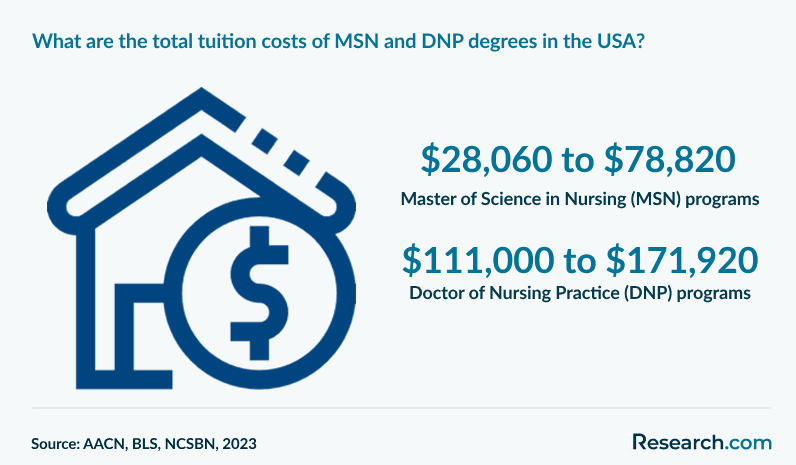
| Master of Science in Nursing (MSN) | $28,060 and $78,820, with an average yearly cost of about $33,150 | Usually 1-2 years | RNs pursuing advanced practice, education, leadership, or specialty roles |
| Doctor of Nursing Practice (DNP) | Approximately $111,000 to $171,920, with an average yearly cost around $61,080 | Generally 2-4 years | Nurses seeking terminal clinical preparation, advanced leadership, or high-level practice roles |
Cost should be evaluated against completion time, licensure eligibility, certification pass rates, clinical placement support, employer tuition benefits, and likely earnings in your chosen specialty. For working RNs, the cheapest RN to BSN online options may be worth comparing if affordability and flexibility are priorities. Nurses planning doctoral study can also compare shorter MSN to DNP program routes, especially when the program offers the specialization they need. When weighing graduate costs, it is useful to compare expected nursing earnings with other healthcare and behavioral health education options, including resources that discuss how much do dnp make in relation to advanced degree planning.
If you want to enter healthcare before committing to a full nursing degree, reviewing how to become HHA certified can help you understand a shorter patient-care pathway that may provide experience before nursing school.
If your first degree is outside nursing, or if you are starting with only a high school diploma, fast track LPN program options may offer a quicker route into practical nursing before pursuing RN, BSN, or advanced credentials.
What certifications are available for nursing jobs?
Certifications help nurses document specialty expertise, qualify for certain roles, and demonstrate readiness for advanced responsibilities. They do not replace state licensure, and requirements vary by role, state, employer, and specialty board.
Advanced practice certifications
- Family Nurse Practitioner (FNP): Focuses on primary care for individuals and families across the lifespan, including prevention, assessment, diagnosis, and treatment of common conditions. Nurses interested in this path can compare 12-month FNP programs if they need a faster graduate route.
- Adult-Gerontology Nurse Practitioner (AGNP): Centers on adult and older-adult care, including chronic disease management, geriatric care, and palliative care.
- Pediatric Nurse Practitioner (PNP): Prepares nurses to care for infants, children, and adolescents through wellness visits, acute care, and developmental assessment.
- Women’s Health Nurse Practitioner (WHNP): Supports gynecologic, reproductive, pregnancy-related, and preventive health services for women.
- Gerontological Nurse Practitioner (GNP): Emphasizes older-adult care, family support, functional decline, chronic illness, and end-of-life concerns.
Specialty nursing certifications
- Certified Emergency Nurse (CEN): Recognizes emergency nursing expertise in trauma, cardiac events, urgent assessment, and rapid stabilization.
- Certified Critical Care Nurse (CCRN): Supports nurses working with patients who have life-threatening conditions in intensive care or high-acuity settings.
- Certified Medical-Surgical Nurse (CMSRN): Validates broad medical-surgical nursing knowledge, including postoperative care, monitoring, and medication administration.
- Certified Oncology Nurse (ONC): Focuses on cancer care, symptom management, treatment coordination, patient education, and family support.
- Certified Pediatric Nurse (CPN): Demonstrates pediatric nursing competency across acute, chronic, developmental, and family-centered care needs.
Leadership, management, and care coordination certifications
- Certified Nurse Manager (CNM): Supports nurses managing staff, unit operations, scheduling, quality improvement, and budgets.
- Certified Nurse Executive (CNE): Recognizes executive-level leadership in healthcare strategy, financial planning, performance, and organizational outcomes.
- Certified Wound Care Nurse (CWCN): Focuses on wound assessment, treatment planning, prevention, and management.
- Certified Case Manager (CCM): Supports coordination of care for patients with complex medical, social, and resource needs.
Nursing certifications are one route to specialization, but they are different from physician pathways. For example, students asking how can I become a psychiatrist should understand that psychiatry requires medical school and residency, not nursing certification.
Certification data also shows that several credentials are common among registered nurses, especially life support and resuscitation credentials.
Nurses who want to move into operations, budgeting, or executive roles may also compare business-focused graduate options such as affordable online healthcare MBA programs, especially if they want leadership roles beyond direct care.
What other healthcare career paths could complement my nursing degree?
Nursing pairs well with disciplines that deepen understanding of movement, prevention, rehabilitation, technology, behavioral health, public health, or healthcare management. For example, a best online kinesiology degree can be relevant for nurses interested in rehabilitation, sports medicine, wellness, ergonomics, physical therapy preparation, or chronic disease prevention. The value of an additional healthcare-related credential depends on whether it supports a clear career goal rather than simply adding another degree.
How can I choose the right nursing specialization for my career goals and interests?
The best nursing specialty is the one that fits your clinical interests, preferred work environment, tolerance for stress, desired salary, education timeline, and long-term lifestyle. A high salary alone is not enough if the role requires responsibilities or schedules that do not match your strengths.
| If you value... | Consider these nursing paths | Questions to ask before choosing |
| High autonomy and direct diagnosis or treatment | Nurse practitioner, certified nurse midwife, CRNA, clinical nurse specialist | Am I ready for graduate school, board certification, and state-specific practice rules? |
| Procedural and high-acuity care | CRNA, critical care, emergency nursing | Can I handle fast decisions, high patient risk, and intense clinical environments? |
| Teaching and mentoring | Nurse educator, nurse practitioner educator, nurse anesthetist educator | Do I enjoy curriculum design, evaluation, advising, and student development? |
| Systems, technology, and data | Nurse informaticist, quality improvement, data-driven care roles | Do I want to work with EHRs, analytics, workflow design, and interdisciplinary teams? |
| Leadership and operations | Nurse administrator, nurse manager, executive nursing roles | Am I comfortable with budgets, staffing, policy, conflict, and performance metrics? |
| Evidence and innovation | Nurse researcher, academic nursing, clinical trials support | Do I want to design studies, analyze data, publish findings, or improve protocols? |
Decision factors to compare
- Patient population: Decide whether you prefer pediatrics, adult care, older adults, women’s health, acute care, mental health, oncology, or community health.
- Education requirement: Confirm whether the role requires an ADN, BSN, MSN, DNP, national certification, or specific clinical hours.
- Licensure and state rules: Advanced practice authority and prescriptive authority vary by state, so check requirements where you plan to work.
- Schedule demands: Hospital, anesthesia, emergency, and critical care roles may involve nights, weekends, call, or long shifts. Education and informatics roles may offer more predictable schedules.
- Return on investment: Compare tuition, lost work time, certification costs, and expected salary increase.
- Career flexibility: Some credentials open multiple paths, while others are highly specialized.
It can also help to compare nursing with adjacent healthcare careers. For example, the dental hygienist career path may appeal to students who want patient care, preventive health work, and a different training and work environment than nursing.
How can I improve my skills for a nursing career?
Career growth in nursing comes from a combination of formal education, supervised experience, specialty exposure, certification, mentorship, and deliberate skill-building. Nurses who want higher-paying roles should build a plan rather than rely only on years of experience.
Practical ways to strengthen your nursing profile
- Clarify your target role. Decide whether you are aiming for advanced practice, administration, education, informatics, research, or specialty bedside care.
- Map the credential requirements. Identify the degree, license, certification, clinical hours, and exam requirements for that role.
- Seek relevant clinical exposure. Volunteer, shadow, request rotations, or apply for positions in settings that match your long-term goal.
- Build communication skills. Practice patient education, handoffs, interdisciplinary communication, and documentation.
- Improve technology fluency. Learn EHR workflows, telehealth basics, data interpretation, and device safety.
- Use mentorship intentionally. Ask experienced nurses how they selected programs, prepared for certification, negotiated roles, and avoided burnout.
- Earn certifications strategically. Choose credentials that match the jobs you want, not just credentials that look impressive.
Skill-building should be tied to a career goal. A future CRNA needs different experience than a future nurse informaticist, educator, or administrator.
Accessible pathways to high-paying nursing careers
Not every nurse begins at a highly selective four-year nursing school. Community colleges, state universities, LPN programs, ADN programs, RN-to-BSN programs, and bridge pathways can help students enter nursing and advance over time. For applicants concerned about admissions competition, comparing the easiest nursing schools to get into can be a practical first step, as long as the program is properly accredited and aligned with licensure requirements.
An accessible program is only useful if it leads somewhere. Before enrolling, confirm NCLEX preparation, clinical placement quality, transfer agreements, graduate school acceptance, employer reputation, and whether credits can apply toward future BSN, MSN, or DNP study.
What is the job outlook for nursing professionals in the next decade?
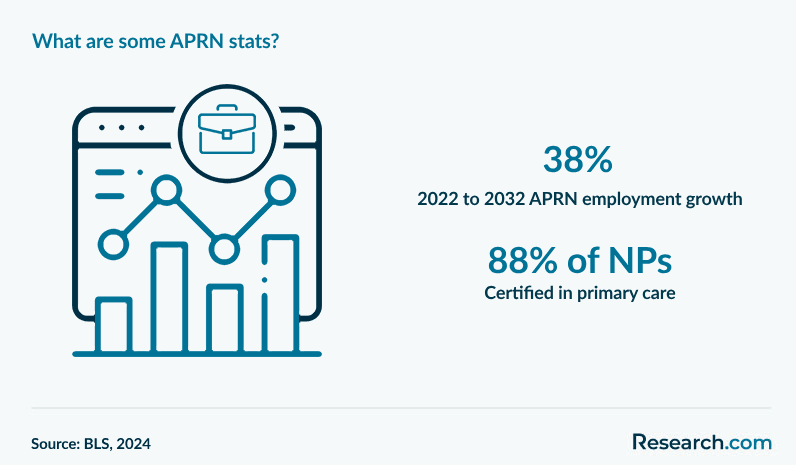
Advanced practice registered nurses are expected to remain important to healthcare delivery. The U.S. Bureau of Labor Statistics projects 38% employment growth for nurse anesthetists, nurse midwives, and nurse practitioners from 2022 to 2032. This growth is tied to aging populations, chronic disease management, primary care demand, and broader use of APRNs in underserved areas.
- Primary care demand is rising: Nurse practitioners help expand access to preventive, chronic, and routine care.
- NPs help fill access gaps: The BLS highlights the role of NPs in providing primary care, especially in underserved communities.
- Care models are changing: NPs are increasingly recognized for providing high-quality, cost-effective care.
- Primary care preparation is common: 88% of NPs are certified in primary care and can manage care across multiple specialties.
The following graphic summarizes these workforce trends.
Nursing shortages
- The Health Resources and Services Administration predicts a shortage of over 200,000 registered nurses by 2030.
- Demand is rising as the population ages and current nurses retire.
- Hospitals, nursing homes, and other care settings may continue to face staffing gaps.
- States with large rural populations and underserved urban areas, including Texas, California, and Florida, have reported some of the most severe shortages.
Nurse practitioner compensation
The BLS reports that the median annual wage for nurse practitioners was $124,680 as of May 2023. That figure reflects graduate training, clinical responsibility, and the expanding role of NPs in healthcare delivery.
What emerging trends will impact nursing jobs in the coming years?
Nursing is being reshaped by technology, demographics, care delivery models, and employer expectations. Nurses who want to remain competitive should track these changes early, especially if they are considering graduate education.
Key trends to watch
- Artificial intelligence and analytics: AI-supported tools may help with monitoring, documentation, risk prediction, and care planning, but nurses still need clinical judgment and ethical oversight.
- Telehealth and virtual nursing: Remote visits, patient portals, and home monitoring are expanding where and how nurses interact with patients.
- Population health: Preventive care, chronic disease management, community outreach, and health education are becoming more central to nursing practice.
- Advanced specialization: Complex care needs are increasing demand for nurses with expertise in geriatrics, oncology, critical care, anesthesia, informatics, and primary care.
- Diversity and inclusion: Healthcare organizations are paying closer attention to culturally responsive care and workforce representation.
- Ethics and safety: Nurses are likely to face more questions involving data privacy, AI-supported decisions, resource allocation, and end-of-life care.
What are the barriers to advancing in high-paying nursing roles?
Many nurses want higher-paying roles but face barriers that are financial, academic, professional, geographic, and personal. Identifying these barriers early helps nurses choose a realistic advancement plan.
| Barrier | Why it matters | Better strategy |
| Graduate education cost | MSN and DNP programs can require major tuition, fees, books, travel, and reduced work hours. | Compare total cost, scholarships, employer tuition assistance, part-time study, and program completion rates. |
| Licensure and certification complexity | Advanced roles may require board exams, state approval, continuing education, and clinical hour documentation. | Check state board rules before applying and confirm the program meets the requirements where you plan to practice. |
| Limited mentorship | Nurses without sponsors or role models may miss advancement opportunities. | Join professional associations, request preceptors, and build relationships with nurses already in your target role. |
| Geographic limitations | Some high-paying roles are concentrated in major hospitals, academic centers, or metropolitan areas. | Compare local demand, telehealth possibilities, relocation costs, and rural incentive programs when available. |
| Burnout and schedule strain | Long shifts and emotional stress can make school or certification preparation harder. | Use realistic timelines, protect recovery time, and avoid overloading work, school, and family obligations at once. |
For nurses who need a faster graduate route, 1 year online MSN programs may be worth reviewing. However, speed should not outweigh accreditation, clinical quality, certification eligibility, and state licensure fit.
How are technological advances transforming nursing practice and patient care?
Technology is changing nursing workflows, documentation, monitoring, communication, and clinical decision-making. The most successful nurses will not need to become software engineers, but they will need to understand how digital tools affect safety, efficiency, privacy, and patient outcomes.
- Electronic Medical Records (EMRs): By 2017, over 95% of hospitals in the U.S. had adopted certified EMR systems, reducing paper-based documentation and centralizing patient information.
- Monitoring technologies: Portable monitors help nurses track vital signs such as respiratory rates and oxygen levels while receiving alerts when patients need urgent attention.
- Smart IV pumps: Automated pumps support more precise medication delivery and alert nurses to possible dosing or administration issues.
- Smart beds: These beds can monitor weight, movement, and vital signs while helping reduce injuries and pressure-related complications.
- Wearable devices: Wearables support continuous health tracking beyond traditional clinical settings.
- Telehealth services: Virtual care expanded rapidly during the COVID-19 pandemic and continues to improve access for patients in remote areas.
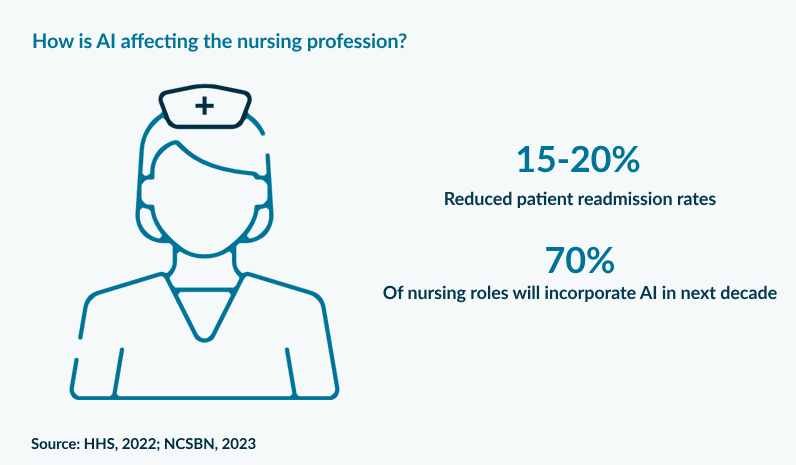
- Artificial intelligence: AI is being used in predictive analytics and decision support. Predictive analytics powered by AI can reduce patient readmission rates by 15-20%, according to the U.S. Department of Health and Human Services (HHS, 2022), and the NCSBN estimates that 70% of nursing roles will incorporate some form of AI within the next decade.
- Communication tools: Secure messaging and collaboration platforms support faster coordination among healthcare teams.
- Robotics: Mobile robotic systems can assist with supply transport and other routine tasks, allowing nurses to devote more attention to patient care.
- Patient safety systems: Better data access, alerts, and real-time monitoring can reduce preventable errors when implemented carefully.
Technology can improve nursing practice, but it also creates new responsibilities. Nurses must understand documentation standards, alert fatigue, privacy protections, data quality, and when to question automated recommendations.
How can bridge programs accelerate my career advancement?
Bridge programs help nurses move from one credential level to another without starting over. ADN-to-BSN, ADN-to-MSN, RN-to-BSN, RN-to-MSN, and LPN-to-RN pathways can shorten the timeline for nurses who already have licensure, credits, or clinical experience. Nurses targeting advanced practice may compare ADN to NP programs to understand how associate-prepared nurses can transition toward graduate-level practice.
The best bridge program is not simply the fastest one. It should have appropriate accreditation, clear clinical placement expectations, state authorization, strong student support, transparent costs, and outcomes that match your career target.
How can nurses balance work-life demands while advancing their careers?
Nurses often advance while working long shifts, managing family obligations, and recovering from physically and emotionally demanding work. A sustainable plan matters because burnout can derail even the best career strategy.
- Choose flexible education carefully: Online and part-time formats can help working nurses, but verify clinical requirements, synchronous sessions, and exam schedules before enrolling. Cost-conscious nurses may compare the cheapest online nurse practitioner programs if becoming an NP is the goal.
- Protect your schedule: Build study time around your actual shift pattern, not an ideal week that rarely happens.
- Discuss options with your employer: Ask about tuition reimbursement, reduced hours, preceptor opportunities, schedule preferences, or internal advancement tracks.
- Use mentorship: Nurses who have completed the same credential can help you anticipate difficult semesters, clinical placement challenges, and certification preparation.
- Plan recovery time: Sleep, nutrition, exercise, and mental health support are not extras; they protect your ability to practice safely and study effectively.
Can RN to BSN programs with no clinical requirements boost my career?
RN-to-BSN programs that do not require traditional clinical rotations may help licensed RNs complete a bachelor’s degree while continuing to work. These programs often emphasize leadership, evidence-based practice, community health concepts, quality improvement, and nursing theory. Nurses comparing flexible completion routes can review RN to BSN no clinicals options, but they should still verify accreditation, employer recognition, and graduate school acceptance.
Can direct-entry MSN programs help non-nurses launch high-paying nursing careers?
Direct-entry MSN programs are designed for students who already hold a non-nursing bachelor’s degree and want to enter nursing through an accelerated graduate pathway. These programs can be intensive because they combine foundational nursing preparation with advanced coursework and clinical training. Career changers can compare direct-entry MSN programs for non-nurses online, but they should confirm licensure eligibility, clinical placement arrangements, and whether the program leads to the exact role they want.
Can a 6-month LPN program online pave the path for advanced nursing careers?
An LPN pathway can help some students enter nursing sooner, gain patient-care experience, and later bridge into RN or BSN study. A 6-month LPN program online may sound appealing, but students should check whether the program includes required hands-on clinical training, prepares them for licensure, and is recognized in their state. For long-term advancement, the LPN credential is usually a starting point rather than the final step.
Can health informatics elevate nursing career trajectories?
Health informatics is a strong option for nurses who like systems, data, EHR workflows, clinical documentation, quality improvement, and technology adoption. It can move nurses into roles that improve care delivery across entire units or organizations. Nurses interested in this blend of clinical and technical work can explore the health informatics career pathway to understand job options and salary considerations.
Is the financial investment in nursing education worth it?
Nursing education can be worth the cost when the credential leads to licensure, certification eligibility, higher earnings, better schedule options, or a role that matches your career goals. It may not be worth it if the program is poorly aligned with state requirements, lacks accreditation, has weak clinical support, or forces a debt level that the target salary cannot reasonably support.
Before enrolling, compare tuition, fees, books, background checks, uniforms, exam costs, travel, lost work hours, and financing. Entry-level students can review LVN tuition cost information to understand how practical nursing expenses fit into a broader career ladder.
How does mentorship enhance career advancement in nursing?
Mentorship helps nurses make better career decisions because experienced professionals can explain what programs, certifications, employers, and specialties are actually like. A mentor can help you prepare for graduate school, identify leadership opportunities, avoid common mistakes, and build confidence in advanced practice or management roles. Nurses moving from RN to BSN study may also ask mentors about flexible options such as RN to BSN online fast programs.
How can technology-driven education boost nursing career success?
Nurses who understand data, automation, digital health, and AI-supported tools may be better prepared for informatics, quality improvement, leadership, and research-focused roles. Cross-disciplinary study can be useful when it supports a clear nursing career plan. For nurses considering deeper technical training, an affordable online masters in artificial intelligence may be relevant if they intend to work in clinical analytics, AI governance, health technology implementation, or digital transformation.
How can I assess the quality and career outcomes of online nursing programs?
Online nursing programs should be judged by more than convenience. Students should verify accreditation, NCLEX or certification eligibility, clinical placement support, state authorization, faculty qualifications, student services, graduation outcomes, employer reputation, transfer policies, and total cost. Nurses comparing flexible completion options can use resources such as the easiest RN to BSN online program list as a starting point, not as the only decision factor.
Questions to ask before enrolling
- Is the program accredited by a recognized nursing accreditor?
- Will the program meet licensure or certification requirements in my state?
- Who arranges clinical placements, and where do they occur?
- What is the total cost after fees, supplies, travel, and exams?
- Can I transfer credits or receive credit for prior learning?
- What support is available for working nurses?
- What are the program’s completion, licensure, and job placement outcomes?
How can data science competencies elevate nursing careers?
Data science skills can help nurses analyze quality metrics, identify care patterns, support population health initiatives, contribute to research, and improve operational decisions. Nurses do not need to become full-time data scientists to benefit from analytics literacy, but specialized training can be valuable for informatics, research, leadership, and quality roles. Nurses interested in deeper analytics preparation can compare data science masters online affordable options.
Should I consider a nursing informatics specialization for career growth?
A nursing informatics specialization may be a good fit if you enjoy improving workflows, training clinicians on technology, managing EHR changes, analyzing data, and bridging communication between clinical teams and IT departments. It is less ideal for nurses who want mostly hands-on direct patient care. Cost-conscious nurses can review low cost online nursing informatics degree programs while checking accreditation, practicum design, and employer alignment.
How can a biology degree online enhance clinical decision-making?
Biology study can strengthen understanding of anatomy, physiology, genetics, microbiology, pharmacology foundations, and disease mechanisms. For nurses working in complex clinical environments, stronger science preparation may improve reasoning and patient education. Nurses considering additional science-focused study can explore a biology degree online, especially if they are planning research, graduate healthcare study, or advanced clinical preparation.
Can interdisciplinary advanced degrees diversify my nursing career?
Interdisciplinary graduate education can expand nursing careers into biotechnology, clinical research, health administration, product development, public health, informatics, or policy. The key is choosing a degree that connects directly to a role you want. Nurses exploring biotech-related careers can review what to do with a masters in biotechnology to understand how scientific and clinical skills may combine outside traditional bedside roles.
Can an MSN in public health elevate my nursing career?
An MSN with a public health focus can prepare nurses for roles in epidemiology, community health, health education, program planning, prevention, policy, and population health leadership. This path may suit nurses who want to influence health outcomes at the community or systems level rather than only at the individual bedside. Nurses comparing this direction can review master of science in nursing public health jobs for career ideas.
How can nurses address cybersecurity risks in healthcare?
Nurses interact with sensitive patient data every day, so cybersecurity is part of safe nursing practice. Protecting login credentials, recognizing phishing attempts, following privacy policies, reporting suspicious system behavior, and using secure communication tools all matter. Nurses who want more technical preparation can explore the cheapest online cyber security degree options, particularly if they are interested in health IT, informatics, compliance, or digital risk management.
Are online accelerated BSN programs a smart investment for boosting nursing careers?
Online accelerated BSN programs may be useful for students who want a faster route into registered nursing, especially career changers with prior college credit. However, accelerated does not mean easy. Students should evaluate workload, clinical placement, NCLEX preparation, accreditation, state authorization, and total cost. Comparing the cheapest online accelerated BSN programs can help reduce expenses, but affordability should be balanced with completion support and licensure outcomes.
Common myths and misconceptions about high-paying nursing jobs
| Myth | Reality |
| Nursing is only for women. | Nursing is open to people of all genders, and the profession includes diverse roles across clinical, technical, academic, and leadership settings. |
| Every nursing job pays about the same. | Pay varies widely by education, specialty, certification, employer, location, experience, and responsibility level. |
| High-paying nursing jobs are low stress. | Many of the best-paid roles involve high stakes, complex decisions, staffing pressures, or significant accountability. |
| Nursing school is always easy to enter. | Many nursing programs are competitive, especially BSN, accelerated, and graduate programs. |
| Nurses only work in hospitals. | Nurses also work in clinics, schools, public health agencies, research centers, universities, technology companies, insurers, home health, and corporate settings. |
| Nursing has limited advancement. | Nurses can move into advanced practice, anesthesia, midwifery, education, administration, research, informatics, public health, and executive leadership. |
| All nursing roles are physically intense. | Some roles are physically demanding, while informatics, education, administration, and research may involve less bedside lifting or prolonged standing. |
| Nursing is always low-paying. | Advanced nursing specialties can offer strong earning potential, especially with graduate education and specialized certification. |
| Nursing is not personally rewarding. | Many nurses find meaning in patient care, advocacy, teaching, leadership, research, and improving healthcare systems. |
| Nursing is only for young professionals. | People enter and advance in nursing at many ages, and experienced nurses often bring valuable judgment and leadership skills. |
What do graduates have to say about their nursing jobs?
-
: "
As a Certified Registered Nurse Anesthetist, I use advanced anesthesia skills in high-pressure situations where patient safety is the priority. The work is demanding, but it is also meaningful because I can see the impact of my training every day. The compensation has helped me support my family and maintain goals outside of work. —Susan
"
-
: "
Becoming a Nurse Practitioner gave me more independence in patient care. I can assess, diagnose, treat, and build ongoing relationships with patients. The salary has helped me manage student debt, but the bigger reward is being trusted as a healthcare provider. —Miguel
"
-
: "
Nurse education lets me combine clinical experience with teaching. I enjoy preparing future nurses while continuing to stay connected to practice. The role gives me balance, professional growth, and the chance to influence the next generation of healthcare workers. —Andrea
"
How do accelerated NP programs impact career growth?
Accelerated NP programs can shorten the time needed to move into advanced practice, but they require focus, strong clinical preparation, and careful scheduling. These programs may help nurses gain diagnostic, prescribing, leadership, and specialty skills more quickly than traditional timelines. Nurses considering this route should compare accreditation, clinical placement support, certification eligibility, and state requirements before enrolling in accelerated NP programs.
Common mistakes to avoid when pursuing a high-paying nursing career
- Choosing only by salary: A high-paying specialty may not fit your stress tolerance, schedule needs, or clinical interests.
- Ignoring accreditation: An unaccredited or poorly recognized program can create licensure, transfer, and employment problems.
- Assuming online means fully remote: Many online nursing programs still require in-person labs, exams, simulations, or clinical placements.
- Overlooking state requirements: Advanced practice rules, clinical hour requirements, and licensure processes vary by state.
- Comparing tuition only: Fees, travel, lost wages, books, equipment, certification exams, and repeat coursework can change the real cost.
- Relying only on rankings: A program’s reputation matters, but fit, outcomes, support, accreditation, and licensure alignment matter more.
- Underestimating burnout: Career advancement is harder when work, school, and personal responsibilities are not planned realistically.
Key Insights
- CRNAs and nurse anesthetist educators are the top-paying roles in this guide, with listed salaries of $210,700 and $214,200, but they require advanced training and significant responsibility.
- Certified nurse midwives, nurse practitioners, nurse practitioner educators, and clinical nurse specialists also offer strong pay because they rely on graduate education, certification, and advanced clinical judgment.
- Non-bedside nursing roles can still be lucrative. Informatics, research, education, and administration reward nurses who build expertise in systems, data, leadership, teaching, or evidence-based practice.
- Nursing education costs vary substantially: ADN programs typically range from $4,000 to $28,000, BSN programs from $40,000 to $80,000 at public colleges and $60,000 to $120,000 at private colleges, MSN programs from $28,060 to $78,820, and DNP programs from approximately $111,000 to $171,920.
- The BLS projects 38% employment growth for nurse anesthetists, nurse midwives, and nurse practitioners from 2022 to 2032, while HRSA predicts a shortage of over 200,000 registered nurses by 2030.
- 88% of NPs are certified in primary care, making primary care preparation a major part of the advanced nursing workforce.
- Technology, AI, telehealth, EHRs, and data analytics are changing nursing practice. Nurses who build digital literacy may have stronger options in informatics, quality improvement, leadership, and advanced practice.
- Life support is the most common certification among registered nurses, with 70.3% of RNs, approximately 3,057,849 nurses, holding this certification. Resuscitation follows at 37.1%, about 1,614,002 nurses, with trauma nursing at 6.8%, critical care at 4.0%, and emergency medicine/nursing at 3.6%.
- The best specialization is not automatically the highest-paid one. The right choice balances salary, education cost, licensure rules, stress level, work environment, schedule, and long-term career satisfaction.
References:
- American Association of Colleges of Nursing. (2023). Nursing school tuition and fees. American Association of Colleges of Nursing.
- Agency for Healthcare Research and Quality. (2020). The role of artificial intelligence in improving patient care. Agency for Healthcare Research and Quality.
- Bureau of Labor Statistics. (2023). Occupational outlook handbook: Registered nurses. Bureau of Labor Statistics.
- Health Resources and Services Administration. (2021). Telehealth programs and services. Health Resources and Services Administration.
- National Academy of Medicine. (2021). Artificial intelligence in health care: The challenges and opportunities. National Academy of Medicine.
- National Council of State Boards of Nursing. (2023). Future trends in nursing practice: The role of artificial intelligence. National Council of State Boards of Nursing.
- National Council of State Boards of Nursing. (2023). Nursing education programs. National Council of State Boards of Nursing.
- Nightingale College. (2024). Nurse practitioners: Salary and job outlook. Nightingale College.
- Nursing Schools Almanac. (2024). Nurse educator salary: How much do nurse educators make? Nursing Schools Almanac.
- Salary.com. (2024). Certified nurse midwife salary. Salary.com.
- Salary.com. (2024). Clinical nurse specialist salary. Salary.com.
- Salary.com. (2024). Nurse administrator salary. Salary.com.
- Salary.com. (2024). Nurse educator salary. Salary.com.
- Salary.com. (2024). Nurse informaticist salary. Salary.com.
- Salary.com. (2024). Nurse practitioner salary. Salary.com.
- Salary.com. (2024). Nurse researcher salary. Salary.com.
- Salary.com. (2024). Certified registered nurse anesthetist salary. Salary.com.
Other Things You Should Know About the Highest-paying Nursing Jobs
As of 2027, states like California, Hawaii, and Massachusetts offer some of the highest salaries for nurses. Factors contributing to these high salaries include state demand, living costs, and the presence of top medical facilities.
Critical care nurses often need CCRN certification, emergency nurses may earn CEN, and operating room nurses may pursue CNOR. Many employers also require an active RN license and at least one to two years of specialty experience before these credentials improve pay or access to higher-paying roles.
Specialized high-paying nursing roles in 2027 typically require advanced degrees such as a Master's or Doctorate in Nursing, along with certifications in fields like nurse anesthesia or nurse midwifery. These positions also require a valid RN license and often several years of clinical experience.


