2027 What Can You Do With a Public Health MSN Degree?

Co-Founder and Chief Data Scientist
Public health ensures the quality of life and well-being of communities. It is a vastly collaborative field and calls on professionals with diverse yet relevant expertise, such as social workers, policymakers, restaurant inspectors, nutritionists, and, of course, healthcare workers. Notably, healthcare workers include professionals who are considered as the backbone of healthcare—nurses.
Nursing professionals can specialize in public health by earning a public health degree through a Master of Science in Nursing (MSN) program. To help you decide whether or not to take up a public health nursing degree, I created this guide to opportunities that may be available to nurses in this specialization. With this, you can explore occupations, salary potential, certifications, career outlooks, and alternative career paths.
What are the benefits of getting an MSN in Public Health degree?
- MSN in public health degree programs may equip nursing professionals with key skills, such as public health nursing leadership, population-based public health nursing interventions, as well as program planning, implementation, and evaluation.
- MSN programs in public health nursing usually take 1.5 to 3 years to complete. Program length may depend on several factors, such as enrollment status, prior coursework, and program structure.
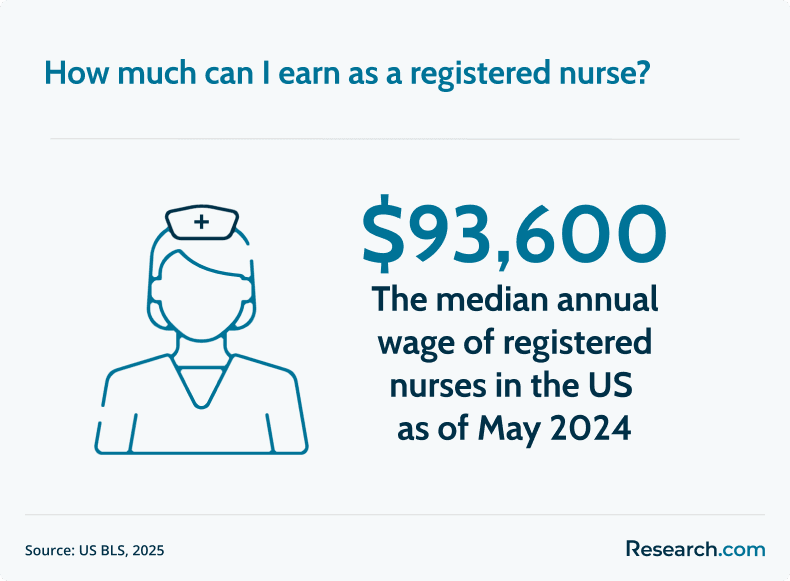
- In May 2024, registered nurses (RNs) employed in the US had a median annual wage of $93,600 [US Bureau of Labor Statistics (BLS), 2025]. In August 2025, public health nurses in the US had an average annual salary of $86,734, based on 674 salaries submitted anonymously to Glassdoor (2025).
- What jobs can I get with an MSN in public health nursing degree? Potential Jobs
- How much can I earn with an MSN in public health degree? Income Potential
- How can a public health nursing degree help increase my income potential? How can a public health nursing degree help increase my income potential?
- Where can I work with an MSN in public health degree? Industry Demand
- What skills learned in public health nursing degree programs are essential for career advancement? Core Skills
- What certifications can I pursue with an MSN in Public Health degree? Certifications
- What is the job outlook for public health nursing professionals? Job Outlook
- What continuing education options are best for public health nurses? What continuing education options are best for public health nurses?
- What are the alternative career paths available to graduates of MSN in public health degree programs? Alternative Careers
- What are the admission requirements and application strategies for MSN in Public Health programs? What are the admission requirements and application strategies for MSN in Public Health programs?
- What alternative degrees can I take up instead of an MSN in public health degree? What alternative degrees can I take up instead of an MSN in public health degree?
- How can I verify the accreditation and quality of a public health nursing program? How can I verify the accreditation and quality of a public health nursing program?
What can you do with an MSN in public health degree?
An MSN in public health is designed for registered nurses who want to move beyond one-patient-at-a-time care and work on health problems that affect whole communities. The degree can support careers in community prevention, health education, nursing leadership, care coordination, policy implementation, emergency preparedness, and, with the right clinical preparation and licensure, advanced practice nursing.
This guide explains the jobs available to graduates, where public health nurses work, how salary and job outlook data compare with broader nursing careers, what certifications may strengthen your resume, and how to decide whether this MSN path fits your goals. It is written for RNs comparing graduate nursing options, nurses considering a shift away from bedside roles, and healthcare professionals evaluating the return on investment of a public health nursing specialization.
Quick answer: Is an MSN in public health useful?
Yes, an MSN in public health can be useful if you want to combine nursing experience with population health, prevention, program leadership, and community-based care. It is especially relevant for nurses interested in health departments, community health centers, schools, nonprofits, correctional facilities, nursing education, and care coordination. It may not be the best fit if your main goal is a direct advanced clinical provider role unless the program also meets the requirements for nurse practitioner preparation and state licensure.
| Career direction | Best fit for nurses who want to | Important consideration |
| Public health nursing | Improve community health through prevention, education, outreach, and disease control | Roles may vary by state, employer, and RN licensure requirements |
| Nursing leadership | Supervise teams, manage programs, coordinate services, and support quality improvement | Employers may value both graduate education and several years of clinical experience |
| Nursing education | Teach future nurses and contribute to public health curriculum development | Postsecondary teaching roles may have additional institutional requirements |
| Advanced clinical practice | Diagnose, treat, and manage patient care as a nurse practitioner | The MSN must include the correct NP track and meet licensure and certification requirements |
Graduates of public health nursing programs may qualify for several career paths that connect clinical judgment with prevention-focused, community-level work:
- Public health nurse: Public health nurses serve communities through health education, disease prevention, screenings, immunization support, outreach, and care access initiatives. Their work focuses on patterns of health across groups, not only on individual treatment episodes.
- Postsecondary nursing instructor: Nursing instructors teach students in colleges, universities, and clinical training environments. A public health specialization can be useful for teaching community health nursing, prevention strategies, health equity, and population-based care.
- Charge nurse: Charge nurses coordinate nursing units, guide staff during shifts, monitor patient care flow, and help maintain safety and quality standards. Public health training can strengthen a nurse’s ability to think about systems, protocols, and prevention.
- Nurse care coordinator: Care coordinators organize services across providers, agencies, and care settings. They help patients navigate treatment plans, follow-up care, referrals, and community resources while working to improve outcomes and reduce gaps in care.
- Nurse practitioner: Nurse practitioners deliver advanced clinical care, including diagnosis and treatment, when they have completed the required NP preparation and hold the appropriate credentials. Public health training can help NPs address prevention, chronic disease management, and health disparities in primary-care settings.
If your priority is to complete graduate training faster, compare program formats carefully before choosing an accelerated MSN degree in public health nursing. Speed matters, but accreditation, clinical requirements, faculty support, and state authorization matter more.
The chart below shows employment levels for nursing roles in the US in 2023, using 2025 data from the US BLS.
How much can you earn with an MSN in public health?
Salary outcomes depend on your role, employer, location, credentials, years of experience, and whether the position is clinical, administrative, academic, or community-based. In August 2025, public health nurses in the US had an average annual salary of $86,734, based on 674 anonymous salary submissions to Glassdoor (2025). For registered nurses overall, the US median annual wage was $93,600 in May 2024, compared with $49,500 for all US occupations during the same period (US BLS, 2025).
These figures show that nursing roles can offer earnings above the national occupational median, but an MSN does not guarantee a specific salary. Nurses researching public health nursing salary and career paths should compare job titles carefully because “public health nurse,” “program manager,” “care coordinator,” “nurse educator,” and “nurse practitioner” can have very different pay ranges and requirements.
For RNs in the US, the highest 10% of wage earners made over $135,320, while the lowest 10% earned below $66,030 in the same period. The US BLS (2025) reported the following median annual wages for RNs by major employing industry:
| Industry employing registered nurses | Median annual wage | What this may mean for public health MSN graduates |
| Government | $106,480 | May align with health departments, public agencies, and population health programs |
| Hospitals (State, Local, & Private) | $97,260 | May include care coordination, quality improvement, infection prevention, and leadership roles |
| Ambulatory Healthcare Services | $83,780 | May include clinics, outpatient care, preventive services, and chronic disease management |
| Nursing and Residential Care Facilities | $81,820 | May involve care planning, staff education, infection control, and population-based risk management |
| Educational Services (State, Local, & Private) | $74,360 | May apply to school nursing, nursing instruction, and health education settings |
How can an MSN in public health increase your income potential?
An MSN in public health may improve income potential by qualifying nurses for roles with broader responsibility: program leadership, supervisory positions, care coordination, health education, quality improvement, policy support, or academic instruction. The degree can also help a nurse compete for positions that prefer or require graduate-level preparation.
The broader education-wage pattern supports the value of advanced credentials, though it does not prove that every graduate will earn more. In 2022, full-time workers ages 25 to 34 in the US with master’s or higher degrees had median wages of $80,200, which was 20% higher than the $66,600 median wages for those whose highest credential was a bachelor’s degree (US Census Bureau, 2023). In nursing, the highest-paid RNs may combine graduate education, specialized credentials, leadership responsibilities, and extensive experience.
Income growth is more likely when the MSN is paired with a clear career strategy. For example, a nurse who wants to manage community health programs should build experience in program evaluation, grant-funded initiatives, and interagency collaboration. A nurse interested in health equity work may also benefit from interdisciplinary study; an online social sciences degree can provide broader context in policy, inequality, research methods, and community systems.
| Factor | How it can affect earnings | Action to take before enrolling |
| Role type | Clinical, leadership, education, and government roles may pay differently | Review job postings in your target state and compare required qualifications |
| Licensure and certification | Some higher-responsibility roles require specific credentials beyond the MSN | Confirm whether the program supports the credential you want |
| Experience | Graduate education often has the strongest effect when combined with relevant nursing experience | Seek public health projects, committees, outreach work, or leadership assignments while studying |
| Employer setting | Government, hospitals, schools, nonprofits, and clinics may use different pay structures | Compare salary data by industry, not just by degree title |
Where can you work with an MSN in public health?
Public health nursing graduates can work in settings that serve communities, coordinate prevention efforts, or manage health risks across populations. The right workplace depends on whether you prefer direct community contact, program administration, teaching, policy work, or clinical leadership.
- Government agencies: Local, state, and federal health departments may employ public health nurses in disease prevention, emergency response, immunization programs, maternal and child health, surveillance support, and policy implementation.
- Community health centers: Nurses in these settings may provide care, education, screenings, referrals, and preventive services for populations that face barriers to healthcare access.
- Schools: School-based public health nurses support student wellness through screenings, immunization compliance, chronic condition management, health education, and coordination with families and community providers. Nurses interested in the built environment, housing, transportation, and community design may also examine how an online urban planning degree connects to public health planning.
- Nonprofit organizations: Nonprofits may hire nurses to lead outreach campaigns, manage education programs, support underserved communities, and address social determinants of health through partnerships.
- Correctional facilities: Correctional health nurses help manage chronic conditions, provide preventive care, reduce communicable disease risks, and support public health protocols within confined populations.
| Work setting | Common responsibilities | Best fit if you value |
| Health department | Community prevention, outbreak response, health education, program coordination | Policy, prevention, and population-level impact |
| Community clinic | Patient education, care access, screenings, referrals, chronic disease support | Direct service with underserved populations |
| School or educational setting | Student health, health screenings, immunization support, wellness education | Working with children, families, and educators |
| Nonprofit organization | Outreach, advocacy, grant-supported programs, community partnerships | Mission-driven work and health equity initiatives |
| Correctional facility | Preventive care, infection control, health monitoring, care coordination | Structured environments and high-need populations |
The chart below shows the US industries that employed the largest shares of registered nurses in 2023, based on 2025 data from the US BLS.
What skills from an MSN in public health matter most for advancement?
Public health nursing programs are valuable when they help nurses move from task-based clinical work into evidence-based decision-making, program leadership, and measurable community outcomes. The most useful skills are those employers can connect to real responsibilities.
- Public health nursing leadership: Graduate coursework may prepare nurses to supervise teams, allocate resources, coordinate services, contribute to policy discussions, and lead initiatives that support population health goals.
- Population-based interventions: Students learn to identify health needs across groups and design evidence-informed interventions that address prevention, access, disparities, and community wellness.
- Program planning, implementation, and evaluation: Public health nurses must know how to build programs, carry them out, measure results, improve weak points, and communicate impact to employers, funders, agencies, or community partners.
Strong public health nurses also need communication, cultural humility, data literacy, project management, interprofessional collaboration, and the ability to translate clinical knowledge into plain-language guidance for communities. Nurses who want a deeper understanding of culture, communities, and human behavior may find that accelerated online anthropology degree programs complement public health practice, especially in outreach and health equity work.
| Skill area | Why employers value it | How to build evidence of the skill |
| Data interpretation | Public health decisions often rely on trends, risks, outcomes, and community needs | Complete projects using public health data, dashboards, or program metrics |
| Community communication | Prevention efforts fail when messages do not reach or resonate with the target population | Develop education materials, outreach plans, or multilingual communication strategies |
| Program evaluation | Employers need to know whether an initiative is working | Create measurable goals, collect outcomes, and recommend improvements |
| Leadership | Graduate-prepared nurses are often expected to coordinate people, services, and resources | Lead committees, mentor staff, or manage a quality improvement project |
What certifications can you pursue with an MSN in public health?
Certifications can help document specialized knowledge, but requirements vary by credential, employer, and state. Before you enroll in an MSN program, confirm whether the curriculum supports the certification or professional pathway you want. Also verify current credential availability, renewal rules, fees, and eligibility directly with the certifying organization.
| Certification | Organization | What to verify |
| Public Health Nurse certification | Board of Registered Nursing (BRN) | Eligibility rules, state applicability, and whether the credential remains valid as long as the RN license is active |
| Advanced Public Health Nursing Certification (PHNA-BC) | American Nurses Credentialing Center (ANCC) | Credentialing fees, which may range from $250 to $350 depending on membership, and professional development expectations |
| Certification in Public Health (CPH) | National Board of Public Health Examiners (NBPHE) | Eligibility for students or alumni of a CEPH-accredited school or program, public health faculty, and applicants with public health work experience |
The NBPHE is currently developing a public health nursing certification program. Because credential rules can change, use the certifying body’s website as the final source before paying fees or selecting coursework.
What is the job outlook for public health nursing professionals?
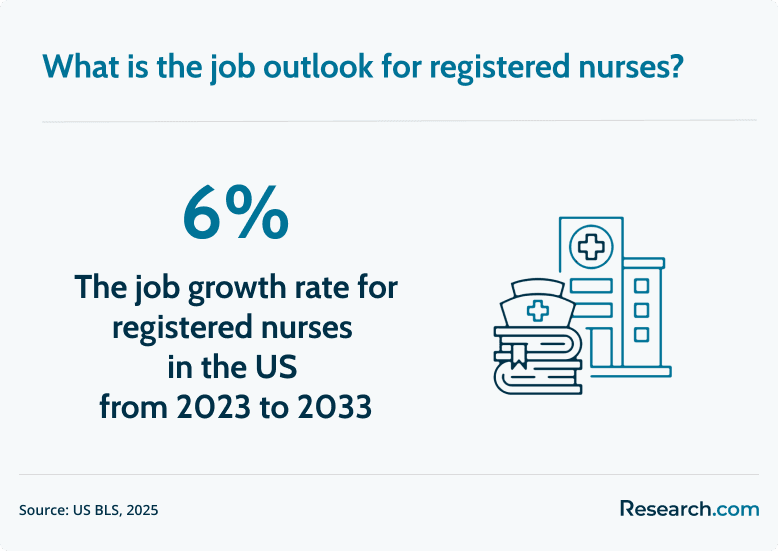
The outlook for public health nursing is tied to broader demand for registered nurses, preventive care, chronic disease management, primary care access, emergency preparedness, and community-based health services. From 2023 to 2033, employment for registered nurses in the US is projected to grow by 6%, which is faster than the average growth rate for all occupations. That projection equals an average of about 194,500 openings each year during the decade. The US had 3,300,100 employed RNs in 2023, and the number is projected to reach 3,497,300 by 2033 (US BLS, 2025).
Demand for advanced practice providers is also shaped by primary care access needs. As of December 31, 2024, only 47.23% of the need for primary care providers in the US had been met. Primary care providers include primary-care physicians, physician assistants, and nurse practitioners. The US needs approximately 13,273 primary care providers to remove the primary care health professional shortage area designation.
Current trends affecting public health nurses
- More focus on prevention and population health: Employers increasingly need nurses who can help reduce avoidable illness, manage chronic disease risk, and connect patients with community resources.
- Greater use of data and technology: Public health nurses may work with electronic health records, registries, dashboards, telehealth tools, and program outcome data. AI tools may assist with documentation, risk identification, and workflow support, but nurses still need clinical judgment and ethical oversight.
- Continued pressure on primary care access: Shortage-area data highlights the importance of care models that use nurse practitioners, care coordinators, community health workers, and public health nurses to reach underserved populations.
- Employer preference for measurable results: Public health programs are often expected to show outcomes, not just activity. Skills in evaluation, reporting, and quality improvement can help graduates stand out.
What continuing education options are best for public health nurses?
The best continuing education option depends on your current role and the next job you want. Public health nurses should choose credentials that fill a specific gap, such as epidemiology, leadership, education, emergency preparedness, advanced clinical practice, or policy.
- Graduate certificates in public health: Certificate programs can deepen knowledge in areas such as epidemiology, environmental health, public health methods, health equity, or program evaluation without requiring a second full degree.
- Doctor of Nursing Practice programs: A DNP can support advanced leadership, systems improvement, policy work, and high-level clinical or administrative practice. It may be useful for nurses aiming for senior practice or executive roles.
- Online professional development courses: Short courses can help nurses stay current in infectious disease control, emergency preparedness, health promotion, data analysis, and community-based prevention.
Nurses who want to specialize in maternal and reproductive health may compare public health nursing with an accelerated online MSN in nurse midwifery, which is a more specialized route into midwifery practice.
| Continuing education path | When it makes sense | When to consider another option |
| Graduate certificate | You need focused public health skills without committing to another degree | You need a credential that leads to advanced practice licensure |
| DNP | You want doctoral-level preparation for systems leadership, policy, or advanced practice | You are not ready for the time, cost, and project expectations of doctoral study |
| Professional development course | You need a fast update on a specific topic for your current job | You need formal graduate credits or a recognized credential |
What alternative career paths are available to MSN in public health graduates?
An MSN in public health can build transferable skills in education, advocacy, program design, communication, and systems thinking. Some graduates remain in nursing while others move toward adjacent roles in public health, community services, or behavioral health. Requirements differ, so verify whether a role requires a nursing license, another degree, or a separate certification.
- Health education specialist: Health education specialists develop, deliver, and evaluate programs that help people and communities prevent illness and make healthier choices.
- Social worker: Social workers help individuals and families access services, navigate healthcare and social systems, and address complex life challenges. A nurse moving into licensed social work may need additional education, such as a Master of Social Work.
- Community health worker: Community health workers connect communities with healthcare systems, provide outreach, share health information, and support health equity efforts.
Nurses who want a behavioral health advanced-practice role should compare public health nursing with fast-track online MSN psychiatric mental health nurse practitioner programs, which are built for clinical mental health assessment and treatment pathways.
The chart below shows 2024 median annual wages for alternative career paths available to graduates of MSN in public health programs, using 2025 data from the US BLS.
What are the admission requirements and application strategies for MSN in public health programs?
Admission requirements vary by school, but applicants should expect programs to verify nursing preparation, academic readiness, and professional fit. Most candidates should be prepared to document an active RN license, prior nursing education, a competitive undergraduate GPA, relevant prerequisites, healthcare experience, recommendations, and a professional statement explaining why public health nursing is the right next step.
How to strengthen your application
- Connect your experience to population health. Use your statement to show how your clinical background relates to prevention, community needs, access gaps, health equity, education, or program improvement.
- Choose recommenders who can discuss leadership. Strong letters should speak to your judgment, reliability, communication, teamwork, and readiness for graduate-level responsibility.
- Verify clinical or practicum expectations early. Ask whether placements are arranged by the school or by the student, especially if you are enrolling online or out of state.
- Check whether test scores are required. Some programs may request standardized test scores, while others may not. Follow each school’s current policy.
- Compare long-term pathways. If doctoral study is part of your plan, review bridge or accelerated options such as the shortest MSN to DNP program options before committing to an MSN.
| Application item | What schools may look for | Applicant strategy |
| RN license | Proof that you are eligible for graduate nursing study and clinical work | Confirm license status and state requirements before applying |
| Academic record | Evidence that you can handle graduate coursework | Address weak areas directly and highlight recent strong performance |
| Professional statement | Clear goals and fit with public health nursing | Use specific examples from practice, not generic interest in helping people |
| Recommendations | Leadership potential, clinical maturity, and communication skills | Ask supervisors, faculty, or colleagues who know your work well |
What alternative degrees can you choose instead of an MSN in public health?
An MSN in public health is not the only graduate pathway for registered nurses. The right alternative depends on whether you want direct advanced clinical practice, healthcare administration, teaching, gerontology care, mental health practice, or doctoral-level preparation.
- Doctor of Nursing Practice in Adult-Gerontology Primary Care: Nurses considering the highest level of clinical preparation can explore what you can do with a DNP in adult-gerontology primary care to understand advanced clinical, leadership, and education options beyond traditional RN roles.
- Master of Science in Nursing in Family Nurse Practitioner: An FNP program prepares nurses to provide primary care across the lifespan. Graduates may pursue opportunities in clinics, hospitals, and private practices, depending on licensure and certification.
- Master’s in Healthcare Administration: An MHA may be a better fit for nurses who want executive, operations, policy, or organizational leadership roles rather than nursing-focused public health practice.
- Master of Science in Nursing Education: Nursing education programs prepare nurses to teach in academic or clinical environments and help train the future nursing workforce.
Nurses who want to specialize in care for aging populations may compare public health nursing with the shortest online adult-gerontology primary care NP programs.
| Degree option | Best for | Less ideal if |
| MSN in public health | Nurses focused on prevention, community programs, population health, and public health leadership | You want a narrowly clinical provider track without public health responsibilities |
| FNP MSN | Nurses seeking broad primary-care provider preparation | You prefer program design, health departments, or community prevention over direct diagnosis and treatment |
| MHA | Nurses interested in healthcare operations, administration, and organizational strategy | You want a nursing-specific graduate curriculum |
| MSN in Nursing Education | Nurses who want to teach students, staff, or clinical teams | You prefer community health programming or policy implementation |
| DNP | Nurses seeking doctoral preparation for advanced practice, leadership, or systems improvement | You are not ready for doctoral-level time, cost, and project requirements |
Here’s what professionals with an MSN in public health say about their careers
- Alanah: "My MSN in public health nursing helped me move from bedside practice into community program management. I now build prevention initiatives that reach large groups of people. The program strengthened my leadership skills and gave me the tools to contribute to health policy decisions. —Anna"
- Justine: "With graduate public health training, I now lead wellness and vaccination campaigns for communities with limited access to care. Courses in epidemiology and program management helped me design services that are practical, measurable, and sustainable. —Joshua"
- Max: "Finishing an MSN in public health nursing opened the door to leadership work in public health departments. I can advocate for policy improvements and put evidence-based programs into practice, which makes the career both meaningful and impactful. —Julie"
How can you verify the accreditation and quality of a public health nursing program?
Program quality should be checked before you apply, not after you enroll. Accreditation, state authorization, clinical placement support, faculty expertise, graduate outcomes, and curriculum fit can all affect whether the degree helps you reach your goal.
Questions to ask before choosing a program
- Is the nursing program properly accredited? Confirm institutional and nursing program accreditation through recognized sources, and make sure the credential is accepted by employers, certification bodies, and licensing boards relevant to your goal.
- Will the program meet requirements in your state? Online programs may not automatically satisfy state authorization, practicum, certification, or licensure expectations where you live.
- Who arranges practicum placements? Ask whether the school places students or requires students to find approved sites on their own.
- What public health content is included? Look for coursework in epidemiology, community assessment, program planning, policy, prevention, evaluation, leadership, and health equity.
- What outcomes are reported? Review graduation rates, employment data, certification preparation, alumni feedback, and employer connections when available.
- How flexible is the format? If you need an accessible bridge into graduate study, comparing reputable online nursing options such as the easiest RN-to-BSN programs can help you understand how schools balance flexibility and academic expectations.
Common mistakes to avoid
| Mistake | Why it can hurt you | Better approach |
| Choosing only by tuition | A low price may not offset weak support, limited placements, or poor fit with your goals | Compare total cost, accreditation, practicum support, outcomes, and time to completion |
| Assuming every online MSN works in every state | State authorization and clinical requirements can limit eligibility | Confirm requirements with the school and relevant state board before enrolling |
| Ignoring the difference between public health and NP tracks | A public health MSN alone may not prepare you for nurse practitioner licensure | Select the exact track that matches your intended role |
| Relying only on rankings | Rankings may not reflect your state, schedule, practicum needs, or employer preferences | Use rankings as one input, then verify quality indicators directly |
| Expecting guaranteed salary gains | Pay depends on role, location, employer, credentials, and experience | Research job postings and salary data for your target market before committing |
Key Insights
- An MSN in public health is best for RNs who want to work on prevention, community health, care access, program leadership, health education, and population-level outcomes.
- Possible roles include public health nurse, nurse care coordinator, charge nurse, postsecondary nursing instructor, and nurse practitioner when the program includes the required advanced-practice preparation.
- Public health nurse salary data and RN wage data show strong earning potential, but salary depends on job title, employer, location, experience, licensure, and credentials.
- Registered nurse employment is projected to grow by 6% from 2023 to 2033, with about 194,500 openings each year during the decade, according to US BLS data.
- Certifications such as PHN, PHNA-BC, and CPH may strengthen credibility, but students should verify current eligibility, fees, renewal rules, and employer recognition before choosing a program.
- Before enrolling, confirm accreditation, state authorization, practicum placement support, curriculum alignment, and whether the program leads to the exact career outcome you want.
- If your goal is direct primary care, behavioral health treatment, nurse midwifery, healthcare administration, or doctoral-level practice, compare the public health MSN with FNP, PMHNP, nurse midwifery, MHA, MSN education, and DNP options.
References:
- Glassdoor. (2025, April 10). How much does a Public Health Nurse make? https://www.glassdoor.com/Salaries/public-health-nurse-salary-SRCH_KO0,19.htm
- US Bureau of Labor Statistics. (2025, April 18). Community Health Workers. Occupational Outlook Handbook. https://www.bls.gov/ooh/community-and-social-service/community-health-workers.htm
- US Bureau of Labor Statistics. (2025, April 18). Health Education Specialists. Occupational Outlook Handbook. https://www.bls.gov/ooh/community-and-social-service/health-educators.htm
- US Bureau of Labor Statistics. (2025, April 18). Nurse Anesthetists, Nurse Midwives, and Nurse Practitioners. Occupational Outlook Handbook. https://www.bls.gov/ooh/healthcare/nurse-anesthetists-nurse-midwives-and-nurse-practitioners.htm
- US Bureau of Labor Statistics. (2025). Occupational Employment and Wage Statistics, Industry: Cross-industry, Private, Federal, State, and Local Government. Occupational Employment and Wage Statistics Query System. https://data.bls.gov/oes/#/industry/000000
- US Bureau of Labor Statistics. (2025). Occupational Employment and Wages, May 2023, 25-1072 Nursing Instructors and Teachers, Postsecondary. Occupational Employment and Wage Statistics. https://www.bls.gov/oes/2023/may/oes251072.htm
- US Bureau of Labor Statistics. (2025, April 18). Physicians and Surgeons. Occupational Outlook Handbook. https://www.bls.gov/ooh/healthcare/physicians-and-surgeons.htm
- US Bureau of Labor Statistics. (2025, April 18). Registered Nurses. Occupational Outlook Handbook. https://www.bls.gov/ooh/healthcare/registered-nurses.htm
- US Bureau of Labor Statistics. (2025, April 18). Social Workers. Occupational Outlook Handbook. https://www.bls.gov/ooh/community-and-social-service/social-workers.htm
- US Census Bureau. (2023, October). Current Population Survey (CPS), Annual Social and Economic Supplement, 2006 through 2023. US Department of Commerce. https://nces.ed.gov/programs/digest/d23/tables/dt23_502.30.asp
Other Things You Should Know about Getting an MSN in Public Health Nursing
Public health MSN graduates usually do not need a single national license for the degree itself, but nursing roles require an active RN license from a state board of nursing. Some employers also prefer or require certifications such as the Certified in Public Health (CPH) credential from the National Board of Public Health Examiners.
In 2027, a Public Health MSN degree opens doors to various career paths, including roles like epidemiologist, health policy advisor, healthcare administrator, and public health educator. These positions demand expertise in public health principles to improve community health outcomes and influence health policies effectively.