2027 Fastest Online MSN in Nurse Midwifery Programs

Co-Founder and Chief Data Scientist
With demand for advanced practice nurses surging, healthcare professionals who delay midwifery training risk missing some of the most rewarding opportunities in women’s health. The Bureau of Labor Statistics projects a 40% increase in APRN roles, including nurse midwives, by 2033, making now the ideal time to move forward.
Yet many RNs hesitate, unsure how to pursue midwifery without stepping away from work. This guide explores the fastest online MSN in nurse midwifery programs for 2027—built to help you move quickly, stay employed, and meet today’s workforce needs. It’s prepared by career-planning experts to help you act before opportunities pass you by.
What are the benefits of getting an online MSN in nurse midwifery?
- Qualifies you for roles such as certified nurse midwife (CNM), women’s health nurse practitioner, or clinical educator in maternal care.
- Median salary for certified nurse midwives is around $129,650 per year, according to the U.S. Bureau of Labor Statistics.
- Online MSN programs offer flexible scheduling, letting you advance your career without leaving your current healthcare job.
What can I expect from an online MSN in nurse midwifery program?
Online MSN in nurse midwifery programs combine advanced nursing theory with hands-on clinical training. The core curriculum covers topics like reproductive health, prenatal care, labor and delivery, and newborn care. Most programs require a capstone project and at least 600–1,000 supervised clinical hours in midwifery settings.
Courses are delivered through a mix of asynchronous modules, live virtual lectures, and interactive discussion boards. Some programs include occasional campus visits for simulations or exams.
Tuition varies widely, ranging from $39,000 to $51,000 depending on the school. Many schools offer part-time and full-time formats, allowing you to balance work and study. Programs are designed to prepare you for national certification as a Certified Nurse Midwife (CNM).
Where can I work with an online MSN in nurse midwifery?
An online MSN in nurse midwifery opens doors to advanced roles in various healthcare settings. Certified Nurse Midwives (CNMs) are in demand across hospitals, private practices, birthing centers, and public health agencies. According to the U.S. Bureau of Labor Statistics, as of May 2023, the top industries employing nurse midwives include:
- Offices of Physicians: Employ approximately 3,490 CNMs, accounting for over 0.12% of the field’s total employment.
- General Medical and Surgical Hospitals: Employ around 1,640 CNMs, or roughly 0.03% of the workforce.
- Outpatient Care Centers: Employ about 1,020 CNMs, comprising 0.10% of the field.
- Colleges, Universities, and Professional Schools: Employ nearly 90 CNMs in teaching and training roles.
- Other Health Practitioners Offices: Employ about 470 CNMs in public health programs and clinics.
How much can I make with an online MSN in nurse midwifery?
Certified nurse midwives (CNMs) have strong earning potential. The following settings had 2023 median wages well above the national average per hour:
- Certified Nurse Midwives (All Settings): $62.33 per hour; $129,650 per year
- Outpatient Care Centers: $78.89 per hour; $164,080 per year
- General Medical and Surgical Hospitals: $65.34 per hour; $135,900 per year
- Physicians’ Offices: $61.32 per hour; $127,550 per year
- Local Government Agencies: $63.55 per hour; $132,190 per year
- List of the Best Online MSN in Nurse Midwifery Programs for 2027 List of Programs
- How long does it take to complete an online MSN in nurse midwifery program? Completion Time
- How does an online MSN in nurse midwifery program compare to an on-campus program? Online vs. On-Campus
- What is the average cost of an online MSN in nurse midwifery program? Certification Cost
- What are the financial aid options for students enrolling in an online MSN in nurse midwifery program? Financial Aid
- What are the prerequisites for enrolling in an online MSN in nurse midwifery program? What are the prerequisites for enrolling in an online MSN in nurse midwifery program?
- What courses are typically in an online MSN in nurse midwifery program? What courses are typically in an online MSN in nurse midwifery program?
- What types of specializations are available in an online MSN in nurse midwifery program? What types of specializations are available in an online MSN in nurse midwifery program?
- How to Choose the Best Online MSN in Nurse Midwifery Program How to Choose the Best Online MSN in Nurse Midwifery Program
- What career paths are available for graduates of an online MSN in nurse midwifery program? What career paths are available for graduates of an online MSN in nurse midwifery program?
- What is the job market for graduates with an online MSN in nurse midwifery program? Job Market
- What is the return on investment of an online MSN in nurse midwifery program? What is the return on investment of an online MSN in nurse midwifery program?
- What challenges are commonly encountered in online MSN in nurse midwifery programs? What challenges are commonly encountered in online MSN in nurse midwifery programs?
Best Online MSN in Nurse Midwifery Programs for 2027
Choosing an online MSN in nurse midwifery is not just a graduate school decision. It affects where you can complete clinical training, whether you qualify for certification, how much debt you may take on, and how quickly you can move from registered nurse to advanced practice maternal health provider. For working RNs, the best program is usually the one that combines accredited coursework, dependable clinical placement support, transparent tuition, and a format that fits around employment and family responsibilities.
This guide is designed for BSN-prepared registered nurses comparing online and hybrid MSN nurse-midwifery programs. It explains how long these programs take, what they cost, what admissions requirements to expect, how online programs compare with campus programs, what careers graduates pursue, and how to evaluate return on investment before enrolling.
Quick Answer: What Is the Best Online MSN in Nurse Midwifery Program?
The best online MSN in nurse midwifery program depends on your state, clinical placement needs, budget, and certification goals. Strong programs generally require 49 to 57 credits, combine online coursework with in-person clinical training, hold recognized nursing accreditation such as CCNE, and prepare graduates for Certified Nurse-Midwife certification. Frontier Nursing University, University of Cincinnati, Old Dominion University, George Washington University, Bethel University, Texas Tech University Health Sciences Center, University of Alabama at Birmingham, Loyola University New Orleans, Shenandoah University, and Marquette University are among the programs reviewed in this guide.
How Research.com Ranks Schools
Graduate nursing education requires a significant investment, so our rankings emphasize data transparency and practical decision-making. Research.com uses credible education data sources, including the IPEDS database, Peterson's database, the College Scorecard database, and The National Center for Education Statistics, when evaluating online MSN nurse-midwifery options. You can review the broader ranking process on Research.com's methodology page.
| Program | Format | Credits | Published Cost | Accreditation Listed |
| Frontier Nursing University | Online with short on-campus immersion and local clinical training | 55 | $705 per credit hour / $38,775 total tuition cost | Commission on Collegiate Nursing Education (CCNE) |
| University of Cincinnati | Online coursework with clinical experiences and brief campus visits | 57 | $892.00 per credit hour (In-state) / $908.00 per credit hour (Out-of-state) | Commission on Collegiate Nursing Education (CCNE) |
| Old Dominion University | Online with clinical training and occasional campus intensives | 52 | $486 per credit hour (In-state) / $649 per credit hour (Out-of-state) | Commission on Collegiate Nursing Education (CCNE) |
| George Washington University | Distance learning with clinical training and a few on-campus sessions | 50 | $1,630 per credit hour | Commission on Collegiate Nursing Education (CCNE) |
| Bethel University | Online coursework, in-person labs, and local clinical experiences | 57 | $50,559 tuition cost | Commission on Collegiate Nursing Education (CCNE) |
| Texas Tech University Health Sciences Center | Online coursework with occasional campus intensives and clinical placements | 51 | $280.18 per credit hour (In-state) / $589 per credit hour (Out-of-state) | Commission on Collegiate Nursing Education (CCNE) |
| University of Alabama at Birmingham | Hybrid | 54 | $723 per credit hour | Commission on Collegiate Nursing Education (CCNE) |
| Loyola University New Orleans | Online with on-campus intensives and clinical placements near home | 50 | $885 per credit hour | Commission on Collegiate Nursing Education (CCNE) |
| Shenandoah University | Online study with in-person clinical work | 49 | $1020.00 per credit hour | Commission on Collegiate Nursing Education (CCNE) |
| Marquette University | Hybrid | 49 to 51 | $1,400 per credit hour | Commission on Collegiate Nursing Education (CCNE) |
1. Frontier Nursing University
The online Master of Science in Nursing program with a nurse-midwifery concentration at Frontier Nursing University is built for registered nurses who want to provide pregnancy, birth, postpartum, reproductive, and primary care services. The program is especially known for its attention to evidence-based care, culturally responsive practice, and healthcare access in rural and underserved communities. Students complete most coursework online, attend a brief campus immersion, and arrange clinical training in their local area.
- Required Credits to Graduate: 55
- Cost: $705 per credit hour / $38,775 total tuition cost
- Accreditation: Commission on Collegiate Nursing Education (CCNE)
2. University of Cincinnati
The online MSN in Nurse-Midwifery at the University of Cincinnati prepares registered nurses to deliver women’s primary care, pregnancy care, childbirth support, and postpartum services. The program combines online classes with in-person clinical learning and short campus visits. Its curriculum emphasizes evidence-based practice and culturally sensitive care for patients from varied communities.
- Program Length: 2 years
- Required Credits to Graduate: 57
- Cost: $892.00 per credit hour (In-state) / $908.00 per credit hour (Out-of-state)
- Accreditation: Commission on Collegiate Nursing Education (CCNE)
3. Old Dominion University
Old Dominion University offers an online Nurse-Midwifery MSN that trains registered nurses for full-scope midwifery practice, including prenatal care, birth support, postpartum services, and newborn care. Students complete virtual coursework while meeting clinical and intensive requirements in person. The program highlights holistic practice, evidence-based decision-making, and care for diverse patient populations.
- Required Credits to Graduate: 52
- Cost: $486 per credit hour (In-state) / $649 per credit hour (Out-of-state)
- Accreditation: Commission on Collegiate Nursing Education (CCNE)
4. George Washington University
The online Nurse-Midwifery MSN at George Washington University helps registered nurses develop advanced skills for care across the reproductive lifespan. Students complete distance-based coursework, clinical training, and limited on-campus sessions. The program’s priorities include health equity, leadership, research use, and competent management of prenatal, birth, and postpartum care.
- Required Credits to Graduate: 50
- Cost: $1,630 per credit hour
- Accreditation: Commission on Collegiate Nursing Education (CCNE)
5. Bethel University
The online Nurse-Midwifery MSN at Bethel University prepares registered nurses to provide holistic maternal and women’s health care before, during, and after childbirth. The program combines online instruction, in-person lab experiences, and local clinical placements. Its curriculum integrates Christian values with advanced nursing and midwifery practice, preparing graduates for national certification and midwifery practice.
- Program Length: 2 to 3 years
- Required Credits to Graduate: 57
- Cost: $50,559 tuition cost
- Accreditation: Commission on Collegiate Nursing Education (CCNE)
6. Texas Tech University - Health Sciences Center
The MSN in Nurse-Midwifery at Texas Tech University Health Sciences Center prepares registered nurses for full-scope midwifery care, with a particular emphasis on rural and underserved communities. Students complete online courses, occasional campus intensives, and in-person clinical placements. The program focuses on cultural awareness, evidence-based practice, and team-based maternal and newborn care.
- Required Credits to Graduate: 51
- Cost: $280.18 per credit hour (In-state) / $589 per credit hour (Out-of-state)
- Accreditation: Commission on Collegiate Nursing Education (CCNE)
7. University of Alabama at Birmingham (Hybrid)
The hybrid MSN in Nurse-Midwifery at the University of Alabama at Birmingham prepares nurses to deliver full-spectrum midwifery care. Students complete online coursework, attend campus-based intensives, and fulfill clinical requirements in their communities. The program emphasizes interprofessional practice, evidence-informed care, and expanded access for underserved populations.
- Program Length: 2 years
- Required Credits to Graduate: 54
- Cost: $723 per credit hour
- Accreditation: Commission on Collegiate Nursing Education (CCNE)
8. Loyola University New Orleans
The online MSN in Nurse-Midwifery at Loyola University New Orleans prepares registered nurses to offer evidence-based and holistic care across the reproductive health spectrum. The program includes online coursework, campus intensives, and clinical placements near the student’s home. Its Jesuit mission is reflected in its emphasis on ethics, social justice, and compassionate service.
- Program Length: 5 semesters
- Required Credits to Graduate: 50
- Cost: $885 per credit hour
- Accreditation: Commission on Collegiate Nursing Education (CCNE)
9. Shenandoah University
The MSN in Nurse-Midwifery at Shenandoah University combines online learning with in-person clinical education. The program prepares nurses to provide individualized, full-scope midwifery care and places emphasis on health promotion, leadership, reproductive health, and service to diverse communities.
- Required Credits to Graduate: 49
- Cost: $1020.00 per credit hour
- Accreditation: Commission on Collegiate Nursing Education (CCNE)
10. Marquette University (Hybrid)
The hybrid Nurse-Midwifery MSN at Marquette University prepares students to provide women-centered care from adolescence through menopause. Online learning is paired with in-person labs and clinical practice. The program highlights ethical leadership, evidence-based care, and service to diverse and underserved communities.
- Required Credits to Graduate: 49 to 51
- Cost: $1,400 per credit hour
- Accreditation: Commission on Collegiate Nursing Education (CCNE)
How Long Does It Take to Complete an Online MSN in Nurse Midwifery Program?
Most online MSN in nurse midwifery programs take 2 to 3 years of full-time study. The programs reviewed here generally require 50–60 credit hours and substantial supervised clinical education. Hybrid and full-time online formats commonly include 700–1,000+ clinical hours, which reflects the intensive hands-on preparation required for advanced midwifery practice.
Some accelerated pathways allow BSN-prepared RNs to finish in 15–18 months, depending on the school and course load. These options can be attractive for nurses who can reduce work hours or commit to a demanding schedule, but they may be difficult for students balancing full-time employment, family responsibilities, and clinical placements.
Students comparing accelerated healthcare education may also look at other fast online options, such as a fast track sports psychology degree online, although nurse-midwifery remains a licensed clinical nursing pathway with far more clinical requirements.
Clinical expectations vary by institution. Many programs require between 620 and 1,000 clinical hours, with some online programs listing requirements from 620–680 hours and hybrid programs requiring more than 1,000 hours. Before applying, ask whether the school secures preceptors, whether you must find your own clinical sites, and whether your state is approved for student placement.
Online MSN nurse-midwifery programs are not direct-entry programs for beginners. Applicants generally need a BSN and an active RN license before beginning advanced midwifery coursework. Students without a nursing background should expect a longer pathway.
Accelerated programs may reduce the time to graduation, but they can also increase weekly workload and may cost more per credit. A shorter calendar does not always mean a lower total cost, especially when travel, clinical fees, reduced work hours, and certification expenses are included.
Graduates from eligible programs are prepared to pursue CNM certification.
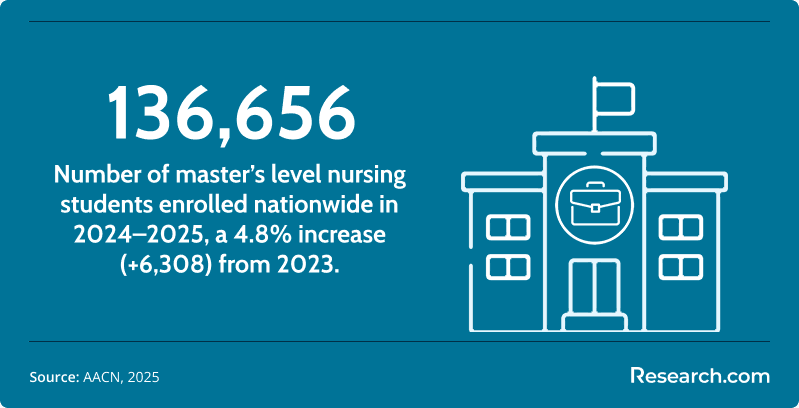
Online MSN in Nurse Midwifery vs. On-Campus Programs: What Changes?
Accredited online and campus-based MSN nurse-midwifery programs are designed to lead to the same advanced practice preparation. The main difference is not the academic standard; it is how coursework, campus visits, labs, and clinical placements are delivered. Online students usually complete didactic courses remotely while meeting clinical and skills requirements in person.
Nurses considering other advanced practice directions may also compare midwifery with specialized options such as accelerated online MSN AGACNP programs, which prepare nurses for acute care roles rather than pregnancy, birth, and reproductive health practice.
| Factor | Online MSN Nurse-Midwifery | On-Campus MSN Nurse-Midwifery |
| Course delivery | Most lectures and assignments are completed online | Classes are usually held in person on a set campus schedule |
| Clinical training | Completed in approved local or regional sites, depending on school policy | Often coordinated near the campus or through established regional partners |
| Campus requirements | May include short immersions, labs, or intensives | Regular campus attendance is expected |
| Best for | Working RNs who need geographic flexibility | Students who want frequent face-to-face faculty and peer interaction |
| Potential drawback | Clinical placement logistics can be challenging | Relocation, commuting, or reduced work flexibility may be required |
Key similarities include accreditation expectations, core advanced nursing courses, specialty midwifery competencies, supervised clinical hours, and preparation for national certification. Programs commonly require 600–1,000 supervised clinical hours, and online learners complete this work in person rather than virtually.
According to a 2025 survey, 83% of healthcare employers view accredited online MSN degrees as credible and equal to traditional formats. Still, students should focus on accreditation, clinical placement quality, certification pass rates, and state authorization rather than assuming every online option carries the same value.
Online outcomes can be comparable to campus outcomes, including GPAs, satisfaction, and board pass rates. The biggest risks for online students are isolation, time management pressure, and difficulty coordinating clinical sites. Strong programs reduce those risks through advising, placement support, faculty access, and clear clinical timelines.
What Is the Average Cost of an Online MSN in Nurse Midwifery Program?
The average total tuition for an online MSN in nurse midwifery typically ranges from $30,000 to $70,000. Research.com’s review shows that costs vary widely by credit requirement, residency status, public or private institution type, and whether the student pays extra fees for technology, clinical placement, travel, labs, and campus intensives.
Public universities often publish lower tuition than private nonprofit institutions. Public MSN programs average around $28,100 per year, while private non-profit programs can go up to $39,410 per year. In nurse-midwifery specifically, Frontier Nursing University lists tuition at $705 per credit for 55 credits, totaling $38,775.
Online study can reduce relocation, commuting, and housing costs, but it does not eliminate in-person expenses. Students should budget for textbooks, technology fees, malpractice insurance if required, background checks, immunizations, drug screening, clinical onboarding costs, travel to clinical sites, and campus intensives.
Cost planning becomes even more important if you are weighing whether to continue beyond the MSN. Nurses asking do I need a DNP to be a nurse practitioner should compare MSN and DNP tuition, time in school, certification requirements, and employer expectations before committing to a longer pathway.
| Cost Item | Why It Matters | Question to Ask |
| Tuition per credit | Small per-credit differences add up across 49 to 57 credits | Is tuition different for in-state and out-of-state online students? |
| Clinical placement fees | Some schools charge extra for placement coordination or clinical onboarding | Are clinical costs included in tuition or billed separately? |
| Campus intensive travel | Hybrid and online programs may require short in-person sessions | How many trips are required, and where are they held? |
| Reduced work hours | Clinical schedules may make full-time employment difficult | Can students realistically keep working while enrolled? |
| Certification and licensure costs | Graduation is not the final professional expense | What exam, application, and state practice costs should I expect? |
Financial Aid Options for Online MSN in Nurse Midwifery Students
Students in accredited online MSN nurse-midwifery programs can often use many of the same aid options available to campus-based graduate nursing students. Eligibility depends on the school, enrollment status, program approval, citizenship status, and other federal or institutional requirements.
Most students start with the FAFSA because it determines access to federal and school-administered aid. Common options include:
- Direct Unsubsidized Loans and Grad PLUS Loans, available through at least July 2026
- Federal work-study, which is less common for online learners but may be available at select institutions
- Pell Grants and institutional grants, when eligible, although graduate students should confirm eligibility directly with the financial aid office
Scholarships and Tuition Support
Midwifery and nursing students may qualify for awards from organizations such as the ACNM Foundation, HRSA, and the National Health Service Corps. The American Association of Colleges of Nursing also lists more than 50 general nursing scholarships offered annually.
Scholarships and grants can meaningfully reduce borrowing. Combined with grants, these awards can cover 40% to 60% of educational costs for some students, although the actual amount depends on eligibility, award competitiveness, school participation, and available funding.
Employer Tuition Reimbursement
Employer tuition support can be valuable for working RNs. About 50% of RNs pursuing graduate degrees receive employer tuition assistance. Hospitals and healthcare systems may reimburse part or all of tuition, often in exchange for a service commitment after graduation.
Assistantships are less common in online MSN programs, but some universities offer fellowships, need-based institutional aid, or graduate nursing scholarships. Ask whether aid is renewable, whether part-time students qualify, and whether clinical hours affect your ability to continue working.
Prerequisites for an Online MSN in Nurse Midwifery Program
Most online MSN nurse-midwifery programs are designed for licensed registered nurses who already hold a BSN. Admissions committees look for academic readiness, nursing licensure, clinical experience, and the ability to complete advanced graduate-level science and practice courses.
Some students begin by strengthening their science background through undergraduate study, including options such as a fast track natural sciences degree online. However, a natural sciences degree alone does not replace the RN license and nursing degree requirements typically needed for MSN nurse-midwifery admission.
Common Admission Requirements
Nearly 100% of programs require applicants to hold:
- A Bachelor of Science in Nursing (BSN) from a CCNE- or ACEN-accredited school
- An unrestricted RN license in the student’s state of practice
Additional Criteria to Expect
A minimum GPA of 3.0 is standard, though stronger programs may prefer 3.3 or higher. Many programs also expect 1–2 years of clinical experience, especially in labor and delivery, maternal-child health, women’s health, or a related setting. Applicants may also need completed undergraduate coursework in Statistics, Health Assessment, and Nursing Research.
Alternate Pathways
Some institutions offer RN-to-MSN bridge programs or direct-entry MSN tracks for students with non-nursing bachelor’s degrees. These routes are less common, often more intensive, and may take longer because students must build foundational nursing competencies before advancing into midwifery practice.
Courses in an Online MSN in Nurse Midwifery Program
An online MSN in nurse midwifery usually includes 50–60 credit hours across advanced nursing core courses, midwifery specialty courses, labs, and supervised clinical practice. The curriculum overlaps with some postpartum nurse requirements, especially in recovery support, newborn assessment, patient education, lactation-related guidance, and postpartum complication recognition.
Advanced Nursing Core
Most programs include graduate-level courses such as:
- Advanced health assessment
- Advanced pharmacology
- Advanced pathophysiology
- Biostatistics and research methods
Midwifery Specialty Content
Specialty coursework usually covers:
- Women’s reproductive and sexual health
- Antepartum, intrapartum, and postpartum care
- Primary care for women across the lifespan
- Newborn assessment and care
Clinical and Lab Requirements
Programs often require 780–900 clinical hours completed in approved settings. Many also include brief in-person clinical intensives to assess hands-on skills. For example, the University of Cincinnati’s program includes 57 credits, 784 clinical hours, and 42 lab hours.
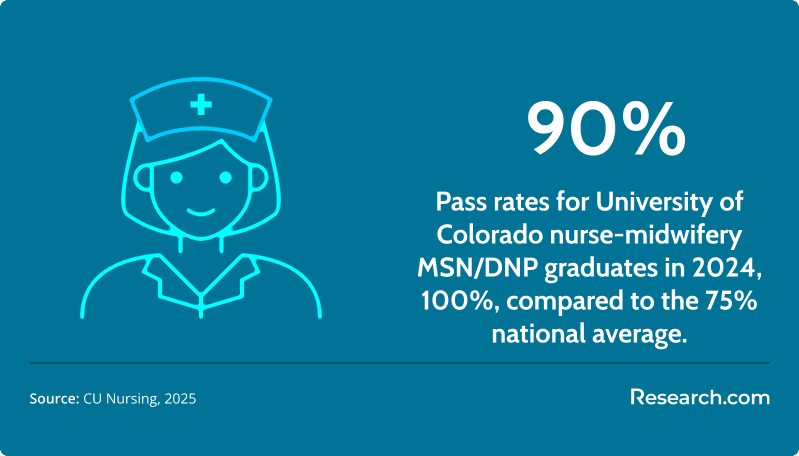
Graduation from an eligible accredited program prepares students to sit for the American Midwifery Certification Board exam. Programs may report strong certification outcomes; UCSF reports first-time AMCB pass rates near 98%–100%.
Specialization Options in Online MSN Nurse Midwifery Programs
Most MSN nurse-midwifery programs focus on the Certified Nurse-Midwife pathway. Some schools also offer dual tracks or specialty combinations for nurses who want broader authority in women’s health, family care, leadership, or healthcare systems.
Nurses who want to combine clinical preparation with management responsibilities may also compare midwifery with leadership-oriented pathways such as the shortest MSN in health systems management online.
| Pathway | Best For | What It Adds |
| CNM | Nurses focused on pregnancy, birth, postpartum, newborn, and reproductive health care | Preparation for Certified Nurse-Midwife practice |
| CNM + WHNP | Nurses who want both midwifery and women’s health nurse practitioner preparation | Broader women’s health services across the lifespan |
| CNM + FNP | Nurses who want family, primary care, and obstetric preparation | Expanded family practice and primary care flexibility |
CNM + WHNP
A CNM plus Women’s Health Nurse Practitioner track is offered at schools such as Georgetown, Rutgers, and Penn. This pathway prepares nurses for both childbirth-related care and broader women’s health services.
CNM + FNP
A CNM plus Family Nurse Practitioner pathway, available at institutions such as Vanderbilt, prepares graduates for broader family, primary care, and obstetric roles. About 20% of CNMs hold both CNM and FNP certifications.
Online specialization options can be similar to campus options, but availability varies by state authorization, faculty capacity, clinical placement networks, and certification requirements. If you are still comparing specialties, you may also review how to become a different type of procedural nurse, such as how to become a cardiovascular operating room nurse, before committing to a midwifery-focused graduate path.
How to Choose the Best Online MSN in Nurse Midwifery Program
The best program is the one that prepares you for certification, fits your state and clinical placement situation, and makes financial sense. Do not choose based on tuition or rankings alone. Use the steps below to compare programs more carefully.
1. Verify Accreditation and Certification Eligibility
Choose a program with recognized nursing accreditation, such as CCNE or ACEN, and confirm that the midwifery track meets the requirements for certification and practice in your state. Accreditation affects transferability, financial aid eligibility, employer recognition, and certification preparation.
2. Ask How Clinical Placement Works
Clinical placement can be the hardest part of an online midwifery program. Ask whether the school finds preceptors, whether students must secure their own sites, what happens if a placement falls through, and whether the program has approved sites in your state. Programs with strong placement support can improve the student experience; one source reports strong student satisfaction, with median scores averaging 81 out of 95.
3. Compare Graduation, Retention, and Board Exam Outcomes
Ask for recent graduation rates, retention rates, certification exam pass rates, and employment outcomes. A lower-tuition program may not be a better value if students struggle to complete clinical requirements or pass certification exams.
4. Review Rankings, but Do Not Rely on Them Alone
Rankings can help you identify reputable programs, clinical partnerships, and student support structures. However, a well-ranked school is not automatically the best choice for your state, budget, clinical needs, or schedule. Accredited lesser-known programs may be a better fit if they offer strong advising and local placement support.
5. Ask Admissions Specific Questions
- Is the program authorized to enroll students in my state?
- Who is responsible for finding clinical preceptors?
- How many campus visits are required?
- What are the most recent AMCB pass rates?
- How many students graduate on time?
- What fees are not included in tuition?
- Can students work while enrolled?
- What support is available if a clinical placement is delayed?
Career Paths for Graduates of an Online MSN in Nurse Midwifery Program
Graduates of online MSN nurse-midwifery programs usually pursue advanced clinical practice, but the degree can also support roles in leadership, education, advocacy, and women’s health program development. Career options depend on certification, state scope-of-practice rules, employer requirements, and clinical experience.
Primary Career Path: Certified Nurse Midwife
Most graduates become Certified Nurse Midwives and work in settings such as:
- Hospitals
- Birthing centers
- OB/GYN and primary care clinics
- Private practice or physician offices
Additional Career Options
- Clinical leadership: Experienced midwives may move into clinical director, program manager, quality improvement, or maternal health advocacy roles. Some also pursue wellness-focused credentials such as nurse health coach certification to combine clinical knowledge with prevention, coaching, and patient education.
- Teaching and academic support: MSN-prepared midwives may begin teaching, clinical instruction, or research-related work. Roughly 60% of DNP graduates transition into faculty roles, and some MSN graduates later pursue doctoral study to expand academic options.
- Women’s health clinics: Graduates may provide reproductive health, preventive care, contraception counseling, prenatal support, and postpartum care across the lifespan.
Some graduates continue into Doctor of Nursing Practice programs. Over 57% of DNP students come from MSN backgrounds, often seeking broader influence in practice improvement, systems leadership, and policy.
Job Market for Online MSN Nurse Midwifery Graduates
The employment outlook for advanced practice registered nurses remains strong. The Bureau of Labor Statistics projects a 40% increase in APRN roles—including midwives—by 2033. For nurse midwives specifically, projected growth is 7% through the decade, with roughly 32,000 annual openings reported for the broader APRN category.
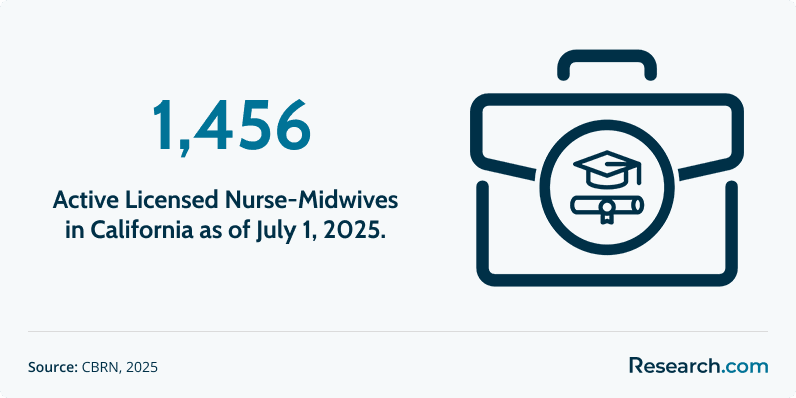
Employment is concentrated in states such as California, New York, Georgia, Texas, and Pennsylvania, with California leading in employment. California also reports the highest average CNM annual pay at $183,740, followed by New York and Georgia.
Certified Nurse Midwives work across multiple healthcare settings. Reported employment settings include physician offices at 49%, hospitals at 25%, and outpatient care centers at 8%, with additional opportunities in clinics and birth centers. Midwives interested in moving beyond direct clinical work may also ask, What does a nurse administrator do? Administrative roles can be a logical next step for clinicians who want to manage teams, budgets, policies, and service lines.
Median salary for nurse midwives is approximately $129,650 as of 2023–2024. Entry-level earnings are around $87,320, while top earners exceed $177,530. Actual pay varies by state, employer, certification, experience, call schedule, and practice setting.
Return on Investment of an Online MSN in Nurse Midwifery Program
The ROI of an online MSN in nurse midwifery depends on total cost, lost income while studying, certification success, job placement, salary growth, and how long you plan to practice as an advanced practice nurse. A program with lower tuition is not automatically the best financial choice if it offers weak clinical placement support or delays graduation.
To estimate ROI, compare the full cost of attendance against realistic post-graduation earnings. Include tuition, fees, books, travel, clinical expenses, exam costs, and any wages lost if you reduce work hours. Then compare those costs with expected salary changes in your state and desired practice setting.
Students looking for lower-cost nursing pathways before or alongside graduate planning may also compare options such as the cheapest RN to BSN online programs. Cost-effective undergraduate completion can reduce total debt before entering an MSN program.
Common Challenges in Online MSN Nurse Midwifery Programs
Online MSN nurse-midwifery programs can be flexible, but they are not easy. Students must manage graduate coursework, clinical hours, family responsibilities, professional obligations, and certification preparation. The online format requires strong self-direction because lectures, assignments, discussion boards, and exam preparation often happen outside a traditional classroom schedule.
| Challenge | Why It Happens | How to Reduce the Risk |
| Clinical placement delays | Preceptor availability may be limited in some regions | Ask about placement responsibility before enrolling |
| Isolation | Online students may have fewer informal peer and faculty interactions | Choose programs with active advising, cohorts, and faculty access |
| Work-school conflict | Clinical hours may not fit around full-time work schedules | Discuss schedule expectations with your employer early |
| Hidden costs | Travel, campus intensives, background checks, and clinical fees may be separate | Request a complete cost breakdown from financial aid |
| State authorization problems | Not every online program can place students in every state | Confirm state eligibility in writing before applying |
If your background or goals do not align with a BSN-to-MSN midwifery route, compare alternatives such as direct entry nurse practitioner programs online. Direct-entry pathways serve a different audience and may be more appropriate for students who do not already hold an RN license.
Common Mistakes to Avoid When Choosing an Online MSN in Nurse Midwifery
- Choosing a program without confirming clinical placement support: A school may offer online coursework but still expect students to locate their own preceptors.
- Looking only at tuition: Fees, travel, campus intensives, clinical onboarding, and reduced work hours can change the real cost.
- Assuming every online program works in every state: State authorization and clinical placement rules can limit enrollment options.
- Ignoring certification eligibility: Make sure the program supports your path to CNM certification and practice in your intended state.
- Relying only on rankings: Rankings are useful, but fit, support, outcomes, and affordability matter more for individual students.
- Underestimating workload: Online does not mean less rigorous. Nurse-midwifery programs require advanced science, intensive clinical practice, and strong time management.
What Graduates Say About Online MSN in Nurse Midwifery Programs
- Zephyra: "The program structure made it possible for me to keep my hospital role while working toward the MSN. I watched lectures after shifts, handled assignments on weekends, and completed clinical hours close to home. It let me advance without leaving direct patient care behind."
- Oliver: "I expected online learning to feel distant, but the faculty were responsive and the course discussions with other nurses were genuinely useful. Clinical rotations were demanding, but I felt guided through the process. By graduation, I was ready to take on more responsibility in maternal health."
- Kaylan: "Studying after my children were asleep became part of my routine. The program gave me enough structure without making everything feel rushed, and the certification preparation was practical. I could stay present for my family while moving toward midwifery one step at a time."
Key Insights
- Online MSN nurse-midwifery programs are best suited for licensed RNs with a BSN who want advanced practice roles in pregnancy, birth, postpartum, newborn, and reproductive health care.
- Most programs take 2 to 3 years and require about 50–60 credits, plus extensive supervised clinical training that must be completed in person.
- Published tuition commonly ranges from $30,000 to $70,000, but students should calculate total cost using fees, travel, clinical expenses, and lost work time.
- Accreditation, certification eligibility, and state authorization are non-negotiable. Confirm all three before applying.
- Clinical placement support is one of the most important differences between programs. Ask whether the school finds placements or expects students to do it themselves.
- Online and campus programs can prepare students for the same certification goals, but online learners need stronger self-management and more proactive communication.
- Salary and job prospects are promising, but outcomes are not guaranteed. Location, employer type, experience, certification, and scope-of-practice rules all affect career results.
- The best program is not always the cheapest or highest ranked. It is the one that fits your state, schedule, clinical needs, budget, and long-term practice goals.
References
- The benefits and opportunities of online nursing degrees. (2025, January 20). https://www.healthtechzone.com/topics/healthcare/articles/2025/01/20/461704-benefits-opportunities-online-nursing-degrees.htm
- What employers think about your online nursing degree | Journal of Nursing. Nursing Journals: American Society of Registered Nurses. (n.d.). https://www.asrn.org/journal-nursing/1459-what-employers-think-about-your-online-nursing-degree.html
- Nursing School Cost – How Much is Nursing School in 2025? | Leland. (2025, June 13). https://www.joinleland.com/library/a/nursing-school-cost-how-much-is-nursing-school-and-how-to-finance-your-education
- Tuition and fees. (n.d.). Frontier Nursing University. https://frontier.edu/tuition
- Tuition and fees. (2025, July 11). Yale School of Nursing. https://nursing.yale.edu/admissions-aid/financial-aid/tuition-and-fees
- Apply to the Nurse Corps Scholarship Program | Bureau of Health Workforce. (2025, April 1). https://bhw.hrsa.gov/programs/nurse-corps/scholarship/apply
- University of Cincinnati. (2025d, July 15). MSN Nurse-Midwifery | University of Cincinnati Online. https://online.uc.edu/masters-programs/msn-nurse-midwifery/admissions
- Curriculum | College of Nursing | The University of New Mexico. (n.d.). https://hsc.unm.edu/nursing/programs/msn/midwifery/curriculum.html
- Adminuser. (2024, July 2). Nurse-Midwifery/Family Nurse Practitioner Specialty. School of Nursing. https://nursing.vanderbilt.edu/programs/specialties/nmfnp/
- Dual Women’s Health/Midwifery Track. (2025, July 9). College of Nursing | University of Utah Health. https://nursing.utah.edu/programs/womens-health-midwifery
- Hastings‐Tolsma, M., Foster, S. W., Brucker, M. C., Nodine, P., Burpo, R., Camune, B., Griggs, J., & Callahan, T. J. (2018). Nature and scope of certified nurse‐midwifery practice: A workforce study. Journal of Clinical Nursing, 27(21–22), 4000–4017. https://doi.org/10.1111/jocn.14489
- CCNE accredited programs. (n.d.). https://www.aacnnursing.org/ccne-accreditation/find-accredited-programs
- Online DNP - Nurse-Midwifery Program | Baylor University. (n.d.). https://onlinenursing.baylor.edu/programs/dnp-midwifery
- CCNE Accreditation. (n.d.). https://www.aacnnursing.org/ccne-accreditation
- Nurse anesthetists, nurse midwives, and nurse practitioners. (2025, April 18). Bureau of Labor Statistics. https://www.bls.gov/ooh/healthcare/nurse-anesthetists-nurse-midwives-and-nurse-practitioners.htm
- Nurse midwives. (2023, April 25). Bureau of Labor Statistics. https://www.bls.gov/oes/2023/may/oes291161.htm
- Flaubert, J. L., Menestrel, S. L., Williams, D. R., & Wakefield, M. K. (2021, May 11). Educating nurses for the future. The Future of Nursing 2020-2030 - NCBI Bookshelf. https://www.ncbi.nlm.nih.gov/books/NBK573912
- Taylor, M., & Taylor, M. (2025, April 29). The nurse position expected to grow 46% by 2033: BLS. Becker’s Hospital Review | Healthcare News & Analysis. https://www.beckershospitalreview.com/quality/nursing/the-nurse-position-expected-to-grow-40-by-2033-bls
- Registered nurses. (2025, August 28). Bureau of Labor Statistics. https://www.bls.gov/ooh/healthcare/registered-nurses.htm
- McElroy, A. (2023, September 7). New data show enrollment declines in schools of nursing, raising concerns about the nation’s nursing workforce. AACN. https://www.aacnnursing.org/news-data/all-news/new-data-show-enrollment-declines-in-schools-of-nursing-raising-concerns-about-the-nations-nursing-workforce
- Kalosieh, J., & Bsn, A. R., RN. (2025, April 29). 2025 Nurse midwife salary: facts, figures, and salaries by state. IntelyCare. https://www.intelycare.com/career-advice/nurse-midwife-salary-facts-figures-and-salaries-by-state
Other Things You Should Know About Online MSN in Nurse Midwifery Programs
In 2027, the fastest online MSN in Nurse Midwifery programs can be completed in as little as 18 to 24 months. This accelerated pace allows students to swiftly enter the workforce while fulfilling all academic and clinical requirements.
When selecting a fast-track MSN in Nurse Midwifery for 2027, consider program length, accreditation, cost, faculty expertise, and clinical placement opportunities. Ensure the curriculum aligns with your career goals and offers sufficient support for students balancing studies with other commitments.