
2027 Fastest Online MSN Adult-Gerontology Acute Care NP Programs

Co-Founder and Chief Data Scientist
Are you an experienced nurse who sees the next step for your patient but can't be the one to order it? That daily frustration of being limited by your scope of practice is a clear sign you are ready for more autonomy.
While only about 17% of RNs hold a master's degree, joining this group is key to transitioning from executing care plans to creating them. This guide, crafted by career planning experts, shows how the best online MSN adult gerontology acute care NP programs provide the most direct path to earning the authority your experience deserves.
What are the benefits of getting a fast online MSN adult-gerontology acute care NP degree?
- You gain the clinical authority and scope of practice to diagnose, treat, and lead patient care in high-acuity settings.
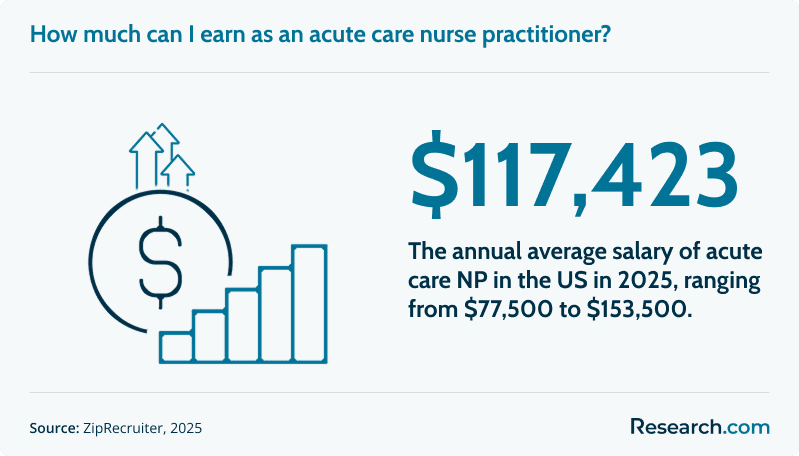
- You can significantly increase your earning potential, with an average AG-ACNP salary of around $117,000 compared to about $98,000 for RNs.
- You get the flexibility to earn your degree from a top-tier institution without having to relocate or stop working.
What can I expect from a fast online MSN adult-gerontology acute care NP program?
You should expect a program that is every bit as rigorous as a traditional on-campus degree. Many nurses worry that an online program won’t be taken seriously, but that’s a misconception.
The academic coursework is demanding, delivered online through advanced platforms that allow for flexible study schedules. This is where you’ll build the deep theoretical knowledge for advanced practice.
However, the heart of any AG-ACNP program is the clinical requirement. You will have to complete several hundred hours of hands-on, in-person training in an approved acute care setting. This is not optional; it’s where you prove you can apply theory to real-world patient care.
It’s also important to know that many programs require you to take an active role in securing your own clinical placements, which is a significant logistical step you need to plan for.
Where can I work with a fast online MSN adult-gerontology acute care degree?
As a certified AG-ACNP, you are specifically trained to work in hospital-based, high-acuity environments where patients are facing complex, urgent, and often life-threatening conditions. This is the key difference between this role and a primary care NP.
You can expect to find opportunities in intensive care units (ICUs), emergency departments, trauma units, and specialized surgical floors. Many AG-ACNPs also work as hospitalists, managing the care of acutely ill patients throughout their hospital stay. Your specific duties and level of autonomy will be grounded in these settings.
Still, it’s important to remember they are also defined by your state’s scope of practice laws for nurse practitioners. This is a crucial factor to consider when planning your career.
How much can I make with an online MSN adult-gerontology acute care NP degree?
The average annual salary for an AG-ACNP is approximately $117,000. Of course, this figure can vary based on your geographic location, years of experience, and the specific institution where you work. This six-figure salary is a direct reflection of the advanced skills gained in online MSN adult gerontology acute care NP programs.
While you may see slightly higher averages for some primary care NPs, that often reflects different market demands. For AG-ACNPs, this salary represents a significant return on your educational investment, rewarding you for taking on a more advanced clinical role.
- List of Fastest Online MSN Adult-Gerontology Acute Care NP Programs for 2027 List of Programs
- How long does it take to complete a fast online MSN adult-gerontology acute care NP program? Completion Time
- How does an online MSN adult-gerontology acute care NP program compare to an on-campus program? How does an online MSN adult-gerontology acute care NP program compare to an on-campus program?
- What is the average cost of a fast online MSN adult-gerontology acute care NP program? Program Cost
- What are the financial aid options for students enrolling in a fast online MSN adult-gerontology acute care NP program? Financial Aid
- What are the prerequisites for enrolling in a fast online MSN adult-gerontology acute care NP program? Prerequisites
- What courses are typically in an MSN adult-gerontology acute care NP program? What courses are typically in an MSN adult-gerontology acute care NP program?
- What types of specializations are available in a fast online MSN adult-gerontology acute care NP program? What types of specializations are available in a fast online MSN adult-gerontology acute care NP program?
- How to choose the best and fastest online MSN adult-gerontology acute care NP program? How to choose the best and fastest online MSN adult-gerontology acute care NP program?
- What career paths are available for graduates of a fast online MSN adult-gerontology acute care NP program? What career paths are available for graduates of a fast online MSN adult-gerontology acute care NP program?
- What pitfalls should I avoid when selecting a fast online MSN adult-gerontology acute care NP program? What pitfalls should I avoid when selecting a fast online MSN adult-gerontology acute care NP program?
- What is the job market for graduates with a degree from a fast online MSN adult-gerontology acute care NP program? Job Market
- Can online direct entry NP programs facilitate a smoother transition into advanced practice? Can online direct entry NP programs facilitate a smoother transition into advanced practice?
- What are the key evaluation factors for nurse practitioner direct entry programs for non nurses? What are the key evaluation factors for nurse practitioner direct entry programs for non nurses?
- How do fast online MSN programs incorporate emerging healthcare technology? How do fast online MSN programs incorporate emerging healthcare technology?
Fastest Online MSN Adult-Gerontology Acute Care NP Programs for 2026
Registered nurses who want to move into high-acuity provider roles face a difficult choice: earn the Adult-Gerontology Acute Care Nurse Practitioner credential quickly, or choose a slower path that may be easier to manage with work and clinical obligations. Online MSN AGACNP programs can shorten the route to advanced practice, but “fast” should never mean poorly supported, weakly accredited, or unrealistic.
This guide is built for working RNs comparing accelerated online MSN adult-gerontology acute care NP programs. You will find ranked program options, timelines, tuition data, admission requirements, online versus campus trade-offs, clinical placement questions, career outcomes, and common mistakes to avoid before enrolling.
Quick answer: What is the fastest online MSN AGACNP program?
Among the programs listed here, Texas Tech University offers one of the shortest stated completion windows at 16-24 months, while West Coast University lists a 20-32 months range. However, the fastest option is not automatically the best fit. You should compare accreditation, clinical placement support, board certification preparation, state authorization, total cost, and whether the schedule is realistic alongside your RN workload.
How these online MSN AGACNP programs were evaluated
Research.com ranks schools using education and outcomes data from established sources rather than promotional claims. Institutional information comes from the National Center for Education Statistics (NCES) and its IPEDS database. Distance learning data is reviewed through Peterson's database, while cost and student outcome information is analyzed through the federal College Scorecard. More detail is available in our full ranking methodology.
| Rank | School and Program | Program Length | Credits | Published Cost | Institutional Accreditation |
| 1 | Walden University — MSN-Adult-Gerontology Acute Care Nurse Practitioner (AGACNP) | 24 months | 58 | $40,650.00 | Higher Learning Commission (HLC) |
| 2 | Georgetown University — MS in Nursing, Adult-Gerontology Acute Care Nurse Practitioner (AG-ACNP) Program | 23 months | 40 | $33,912.00 | Middle States Commission on Higher Education (MSCHE) |
| 3 | West Coast University — Master of Science in Nursing (MSN) - AGACNP | 20-32 months | 50 | $32,220.00 | WASC Senior College and University Commission (WSCUC) |
| 4 | Texas Tech University — Master of Science in Nursing Adult-Gerontology Acute Care Nurse Practitioner Track | 16-24 months | 48 | $23,557.12 (in-state); $43,237.12 (out-of-state) | Southern Association of Colleges and Schools Commission on Colleges (SACSCOC) |
| 5 | Regis College — Master of Science in Nursing (MSN) in Adult Gerontology – Acute Care | 28 months | 46 | $1,275.00 per credit | New England Commission of Higher Education (NECHE) |
| 6 | Ohio University — MSN Adult Gerontology-Acute Care Nurse Practitioner | 6 semesters | 40 | $668.00 per credit (in-state) | Higher Learning Commission (HLC) |
| 7 | Barry University — MSN Adult-Gerontology Acute Care | 24 months | 51 | $1,050.00 per credit | Southern Association of Colleges and Schools Commission on Colleges (SACSCOC) |
| 8 | University of Texas at Arlington — Master of Science in Nursing in Adult Gerontology Acute Care | 29-33 months | 41 | $26,814.00 | Southern Association of Colleges and Schools Commission on Colleges (SACSCOC) |
1. Walden University — MSN-Adult-Gerontology Acute Care Nurse Practitioner (AGACNP)
Walden University’s AGACNP track is designed for RNs who want an online route into acute care practice with structured clinical placement support. Its Practicum Pledge® may be especially important for students who are concerned about finding eligible preceptors while working full time. The curriculum focuses on diagnosing and managing complex acute conditions in patients 13 and older.
- Program Length: 24 months
- Required Credits to Graduate: 58
- Total Tuition: $40,650.00
- Accreditation: Higher Learning Commission (HLC)
2. Georgetown University — MS in Nursing, Adult-Gerontology Acute Care Nurse Practitioner (AG-ACNP) Program
Georgetown University combines online coursework with live class sessions and clinical intensives. The program emphasizes cura personalis, or care for the whole person, while preparing students to manage adults with acute and complex chronic conditions. It may fit nurses who want a structured, interactive online format tied to a values-based academic model.
- Program Length: 23 months
- Required Credits to Graduate: 40
- Total Tuition: $33,912.00
- Accreditation: Middle States Commission on Higher Education (MSCHE)
3. West Coast University — Master of Science in Nursing (MSN) - AGACNP
West Coast University’s MSN AGACNP program is built for working nurses who need online access but still want hands-on skill reinforcement through On-site Intensive weekends. Its mobile-accessible format and acute care focus may appeal to nurses with ICU or similar high-acuity experience who want to move into provider-level decision-making.
- Program Length: 20-32 months
- Required Credits to Graduate: 50
- Total Tuition: $32,220.00
- Accreditation: WASC Senior College and University Commission (WSCUC)
4. Texas Tech University — Master of Science in Nursing Adult-Gerontology Acute Care Nurse Practitioner Track
Texas Tech University Health Sciences Center uses a holistic admissions process that considers more than grades alone. The track prepares students to care for adults with critical health conditions and includes culturally responsive care concepts. Applicants should note that occasional travel to the Lubbock campus is required.
- Program Length: 16-24 months
- Required Credits to Graduate: 48
- Total Tuition: $23,557.12 (in-state); $43,237.12 (out-of-state)
- Accreditation: Southern Association of Colleges and Schools Commission on Colleges (SACSCOC)
5. Regis College — Master of Science in Nursing (MSN) in Adult Gerontology – Acute Care
Regis College offers multiple entry options for nurses with different academic backgrounds, including associate, non-nursing bachelor's, and BSN pathways. The online program extends the college’s campus-based nursing model and does not require the GRE. It may be useful for students who need a route that accounts for prior education rather than a single BSN-only entry point.
- Program Length: 28 months
- Required Credits to Graduate: 46
- Cost per Credit: $1,275.00
- Accreditation: New England Commission of Higher Education (NECHE)
6. Ohio University — MSN Adult Gerontology-Acute Care Nurse Practitioner
Ohio University offers a part-time online structure with asynchronous coursework and a one-course-per-seven-weeks format. This design may suit nurses who want steady progress without carrying several courses at once. The curriculum prepares students to address common adult health problems in acute care contexts.
- Program Length: 6 semesters
- Required Credits to Graduate: 40
- Cost per Credit: $668.00 (in-state)
- Accreditation: Higher Learning Commission (HLC)
7. Barry University — MSN Adult-Gerontology Acute Care
Barry University offers a private-college MSN experience with smaller classes and a 25% tuition scholarship for MSN students. The AGACNP track is aimed at RNs who want closer faculty interaction while preparing to manage acute and critical conditions in adult patients.
- Program Length: 24 months
- Required Credits to Graduate: 51
- Cost per Credit: $1,050.00
- Accreditation: Southern Association of Colleges and Schools Commission on Colleges (SACSCOC)
8. University of Texas at Arlington — Master of Science in Nursing in Adult Gerontology Acute Care
The University of Texas at Arlington offers a fully online accelerated MSN AGACNP program focused on research-informed care for adults with complex and technologically dependent health needs. The program includes collaborative clinical placement assistance, which is a major factor to verify when comparing accelerated online NP options.
- Program Length: 29-33 months
- Required Credits to Graduate: 41
- Total Tuition: $26,814.00
- Accreditation: Southern Association of Colleges and Schools Commission on Colleges (SACSCOC)
How long does a fast online MSN adult-gerontology acute care NP program take?
For an RN who already holds a BSN, a full-time online MSN AGACNP program commonly takes 24 to 36 months. Nurses entering with an ADN usually need an RN-to-MSN bridge route, which typically takes 36 to 48 months because it adds upper-division nursing foundation work before the graduate-level NP sequence.
The accelerated path is becoming a familiar route for nurses seeking advanced practice roles. In 2023 alone, U.S. institutions awarded over 7,900 advanced nursing practice degrees, showing that many nurses are using graduate education to move into higher-level clinical practice.
What “fast” really means in an AGACNP program
A fast AGACNP program usually compresses the academic calendar, limits long breaks, and requires consistent progress through didactic coursework, clinical hours, and exams. That structure can work well for nurses who want a defined path to practice, but it can also be demanding. Similar to other fast track degree options, the benefit is speed; the trade-off is intensity.
Before choosing the shortest program, map your work shifts, family obligations, commute or travel requirements, clinical availability, and recovery time. A program that looks efficient on paper may become unmanageable if you cannot protect time for studying, patient logs, simulation, and clinical preparation.
Online vs. on-campus MSN AGACNP programs: What changes and what does not?
An online MSN AGACNP program should lead to the same academic credential and certification preparation as a comparable campus program, assuming it is properly accredited and meets your state’s requirements. The main difference is how lecture-based coursework is delivered. Clinical learning still happens in person.
For a hands-on specialty, some nurses worry that an online format will be viewed as less rigorous. The stronger question is not whether the course platform is online; it is whether the program meets recognized quality standards, provides appropriate faculty oversight, and requires supervised clinical practice. The standards used by accrediting bodies like the CCNE are designed to evaluate whether nursing programs have the curriculum, outcomes, and resources needed to prepare students safely.
| Factor | Online MSN AGACNP | On-Campus MSN AGACNP |
| Best for | Working nurses who need location flexibility and can manage independent study | Students who prefer face-to-face class time and frequent campus access |
| Clinical training | Completed in approved in-person settings | Completed in approved in-person settings |
| Schedule | Often more flexible, though intensives may be required | Usually tied more closely to campus meeting times |
| Major risk | Weak clinical placement support can delay progress | Commuting and fixed schedules can limit flexibility |
| What to verify | State authorization, preceptor support, online student services, technology reliability | Campus access, clinical site availability, faculty availability, commuting time |
Signs of a strong online MSN AGACNP program
- Clear clinical placement process: The school explains whether it finds sites, assists students, or expects students to secure their own preceptors.
- Experienced acute care faculty: Instructors should understand high-acuity adult care and current hospital practice.
- Responsive advising: Accelerated programs leave little room for delayed answers about registration, clinical documents, or state rules.
- Reliable learning technology: Online exams, simulation, discussion, telehealth tools, and video classes should be supported by accessible technical help.
- Transparent outcomes: Ask for board pass rates, completion rates, and placement information when available.
If you are comparing accelerated graduate routes beyond the AGACNP specialty, reviewing the fastest MSN MBA dual degree online options can help you understand how different schools structure speed, workload, and career outcomes.
How much does a fast online MSN adult-gerontology acute care NP program cost?
Based on the programs in this guide, the average total tuition is approximately $30,645 for in-state students and $35,366 for out-of-state students. The listed tuition range runs from about $23,500 to over $43,000.
Those figures should be treated as tuition estimates, not the full price of attendance. You may also need to budget for university fees, books, clinical compliance documents, technology, background checks, travel to campus intensives, and travel to clinical sites. If you are still comparing graduate nursing routes, fast track BSN to MSN online programs may help you evaluate whether an accelerated pathway improves your time-to-degree and overall cost planning.
How to judge value, not just tuition
A low tuition price can be attractive, but it is not enough. A more expensive program may be worth considering if it offers stronger clinical placement support, better advising, clearer state authorization guidance, or stronger certification preparation. Conversely, a high-cost program is not a good investment if students are left to solve clinical placement problems alone.
With an average salary of over $117,000, the AGACNP path can offer meaningful earning potential for experienced nurses, but salary is never guaranteed. Location, hospital system, specialty unit, experience, schedule, and local scope-of-practice rules all influence compensation. Some nurses also compare school governance and reinvestment models; for example, a not for profit online university may appeal to students who want to understand how institutional resources support academics and student services.
| Cost item | Why it matters | Question to ask |
| Tuition | This is the largest published expense and may vary by residency status. | Is tuition locked, or can it increase while I am enrolled? |
| Fees | Online, technology, clinical, graduation, and course fees can raise the total price. | Can you provide a full fee schedule for the entire program? |
| Clinical expenses | Compliance paperwork, immunizations, background checks, and site travel can add costs. | Which clinical-related costs are paid by students? |
| Campus visits | Some online programs require intensives or skills weekends. | How many required visits are there, and where do they occur? |
| Lost work hours | Clinical rotations may reduce your ability to work regular RN shifts. | How many clinical hours are expected each term? |
What financial aid options are available for fast online MSN AGACNP students?
Graduate nursing students can use several funding sources, including federal aid, employer benefits, scholarships, and private financing. Start early because accelerated calendars move quickly, and funding delays can affect registration or clinical progress.
- Federal Financial Aid: Completing the Free Application for Federal Student Aid (FAFSA) is the usual first step for students seeking federal loans and possible grant eligibility.
- Employer Tuition Reimbursement: Hospitals and health systems may help pay for advanced nursing education, especially when the degree aligns with workforce needs.
- Nursing-Specific Scholarships: Professional associations, foundations, universities, and healthcare employers may offer awards for graduate nursing students.
- Private Loans: Banks and private lenders can fill funding gaps, but repayment terms should be compared carefully before borrowing.
Funding strategies working nurses should try first
Contact your HR department before you borrow. Ask whether tuition reimbursement applies to graduate NP programs, whether you must remain employed for a period after graduation, and whether your clinical hours can be scheduled around work obligations. Employer funding can reduce debt, but it may come with service commitments.
You should also review loan repayment and service programs tied to shortage areas. Programs such as the Nurse Corps Loan Repayment Program may support nurses who commit to work in qualifying shortage facilities after graduation. Related advanced practice routes, including accelerated online DNP WHNP programs, often attract similar questions about repayment, service obligations, and workforce demand.
What are the admission requirements for fast online MSN adult-gerontology acute care NP programs?
Fast online MSN AGACNP programs are designed for licensed nurses who already have meaningful clinical experience. Admissions teams usually want evidence that you can handle graduate-level science, complex patient care, and an accelerated workload.
- Accredited nursing education: Most direct MSN AGACNP tracks require a BSN, while RN-to-MSN bridge options may admit nurses with an ADN.
- Active, unencumbered RN license: You must hold a current registered nurse license in the United States.
- Recent acute care experience: Many programs expect at least one to two years of full-time experience in a high-acuity environment such as the ICU, emergency department, or step-down unit.
Why acute care experience matters
The AGACNP curriculum assumes that you already understand unstable adult patients, rapid changes in condition, invasive monitoring, interdisciplinary communication, and hospital workflows. That background is not a formality. It is the base that allows programs to move quickly into advanced assessment, diagnosis, prescribing, and treatment planning.
If a program appears unusually easy to enter, look carefully at whether its prerequisites match your intended practice setting. Comparing selective and less selective options, including the easiest MSN programs to get into, can help you see how admission standards differ by specialty and career goal.
What courses are included in an MSN adult-gerontology acute care NP program?
An MSN AGACNP curriculum moves beyond bedside nursing tasks into provider-level reasoning. Students learn to evaluate complex patient data, make differential diagnoses, order and interpret tests, develop treatment plans, and manage acute and chronic conditions in adult and older adult populations.
For nurses earlier in the education pipeline, pathways such as the shortest online LVN to RN bridge programs may help clarify how foundational nursing credentials can eventually lead toward graduate practice.
- Advanced Pathophysiology: Study of disease mechanisms, physiologic changes, and complex clinical presentations at the graduate level.
- Advanced Pharmacology: Preparation for safe medication selection, prescribing principles, interactions, and monitoring.
- Advanced Health Assessment: Development of comprehensive exam skills, diagnostic reasoning, and clinical interpretation.
- Adult-gerontology acute care management: Specialty coursework focused on acute, critical, and complex chronic conditions in adult and older adult patients.
- Clinical practicum courses: Supervised patient-care experiences that connect online coursework with real acute care practice.
The academic shift: from carrying out the plan to building the plan
For many RNs, the biggest transition is intellectual rather than technological. As an RN, you may be highly skilled at recognizing deterioration and implementing orders. As an AGACNP student, you are learning to determine what is happening, what must be ruled out, what treatment should begin, and when escalation is needed.
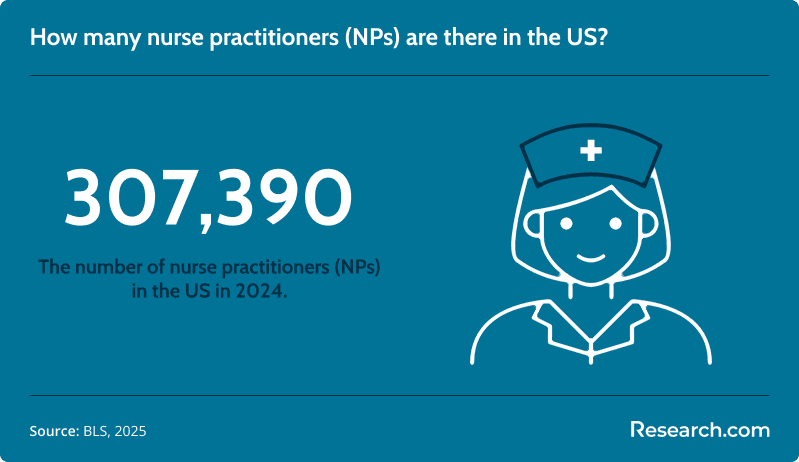
This shift prepares graduates to join the more than 307,000 nurse practitioners already practicing in the U.S. The degree is not just a credential upgrade; it is preparation for a different level of clinical accountability.
What specializations are available within an MSN AGACNP pathway?
Adult-Gerontology Acute Care Nurse Practitioner is already a specialty. It prepares nurses to manage acutely ill adult and older adult patients, typically in hospital-based or high-acuity settings. Unlike broader primary care NP tracks, AGACNP education is centered on complex, unstable, and acute conditions.
Further specialization usually develops after graduation through the unit, service line, or patient population you choose. Common post-graduation focus areas include cardiology, trauma, neurology, oncology, surgical services, pulmonary care, and critical care. Some nurses strengthen these areas through employer training, continuing education, or post-graduate certificates.
How to build a high-value niche after certification
Think of the AGACNP degree as your clinical platform. After certification and employment, your daily practice environment shapes your expertise. An AGACNP in a cardiac ICU may build a cardiology-focused career, while one in a Level I trauma center may become deeply experienced in trauma and surgical critical care.
The best specialization is not always the one that sounds most prestigious. It should match your clinical strengths, local hiring demand, preferred patient population, and tolerance for intensity, procedures, nights, weekends, or rotating schedules.
How should you choose the best and fastest online MSN AGACNP program?
The best fast online MSN AGACNP program is not simply the shortest or cheapest. It is the accredited program that can get you to graduation, certification preparation, and safe practice without creating avoidable clinical placement, financial, or licensure problems.
- Confirm programmatic nursing accreditation: Verify that the nursing program is accredited by the Commission on Collegiate Nursing Education (CCNE) or the Accreditation Commission for Education in Nursing (ACEN), because this can affect certification eligibility.
- Check state authorization: Make sure the school is allowed to enroll students from your state and that the program aligns with your state’s NP requirements.
- Investigate clinical placement support: Ask whether the school secures clinical sites, provides leads, approves student-found preceptors, or offers formal placement assistance.
- Review board certification preparation: Ask for first-time pass rates and how the curriculum supports certification exam readiness.
- Compare total cost: Look beyond tuition and include fees, travel, time away from work, and clinical expenses.
- Assess workload fit: A fast program can save time only if you can realistically complete the courses and clinical hours.
Acute care or primary care: the decision you must make before applying
Before you commit to online MSN adult-gerontology acute care NP programs, be certain that acute care is the environment you want. AGACNP practice fits nurses who are energized by unstable patients, rapid decisions, hospital-based teams, complex diagnostics, and high-acuity treatment planning.
If you prefer prevention, health maintenance, long-term relationships, and outpatient chronic disease management, a primary care NP route may be a better fit. Choosing the wrong population focus can be expensive and frustrating. For a deeper comparison, review this guide to AGNP vs FNP.
| Choose AGACNP if you want... | Consider another path if you prefer... |
| Hospital, ICU, emergency, specialty service, or high-acuity roles | Clinic-based primary care, wellness visits, or long-term panel management |
| Complex adult and older adult patient management | Care across children, families, or broad community populations |
| Fast clinical decision-making and unstable patient scenarios | Slower visit-based care focused on prevention and routine follow-up |
| Collaboration with hospitalists, intensivists, surgeons, and specialty teams | Independent or outpatient practice models centered on continuity of care |
What careers can graduates pursue with an MSN AGACNP degree?
Graduates of fast online MSN AGACNP programs most often move into provider roles within hospitals, acute care systems, and specialty services. Their work may include patient assessment, diagnosis, treatment planning, medication management, procedures within scope, coordination with physicians and specialists, and discharge planning.
| Career path | Typical setting | Core responsibilities |
| Hospitalist NP | Inpatient medical units | Manage admissions, daily care plans, diagnostics, treatment adjustments, and discharge coordination |
| Intensivist NP | ICU or critical care unit | Support management of critically ill patients, monitor rapid changes, and collaborate with critical care teams |
| Specialty service NP | Cardiology, neurology, oncology, surgical, or pulmonary teams | Provide focused care for adults with complex specialty-specific conditions |
| Clinical leader or Chief NP | Hospital system or service line | Lead NP teams, support quality improvement, mentor staff, and coordinate advanced practice operations |
| Faculty or clinical educator | Academic or healthcare education setting | Teach nursing students, precept clinicians, and support professional development |
Long-term growth beyond the first NP role
The first AGACNP job is often the foundation for later specialization and leadership. With experience, graduates may move into advanced practice leadership, service-line coordination, quality improvement, education, or policy-related work. In complex care settings, AGACNPs also coordinate with diagnostic and allied health professionals, including graduates of MRI technologist programs, to support comprehensive patient care.
What mistakes should you avoid when choosing a fast online MSN AGACNP program?
The biggest mistake is treating speed as the only measure of quality. A short program can become longer and more expensive if clinical placements fall through, state requirements are not met, or the workload forces you to stop out.
| Common mistake | Why it can hurt you | Better approach |
| Choosing without checking accreditation | Certification and employer acceptance may be affected. | Verify current institutional and nursing program accreditation before applying. |
| Ignoring state authorization | You may enroll in a program that does not support your state’s requirements. | Ask the school in writing whether it can enroll students in your state and prepare them for NP practice there. |
| Assuming clinical placement is guaranteed | Students can be delayed if they cannot find approved sites or preceptors. | Request a written explanation of placement responsibilities and support. |
| Comparing tuition only | Fees, travel, books, and lost work hours may change the real cost. | Build a full budget and compare value, not just sticker price. |
| Underestimating accelerated workload | Burnout can lead to poor performance or withdrawal. | Match the schedule to your work shifts, support system, and clinical availability. |
| Relying only on rankings | A high-ranked school may not fit your state, schedule, or specialty goals. | Use rankings as a starting point, then verify fit with admissions and nursing advisors. |
If affordability is your main constraint, comparing cheapest online nursing degree options can help you identify lower-cost pathways, but you should still verify accreditation, clinical support, and certification alignment.
What is the job market for MSN AGACNP graduates?
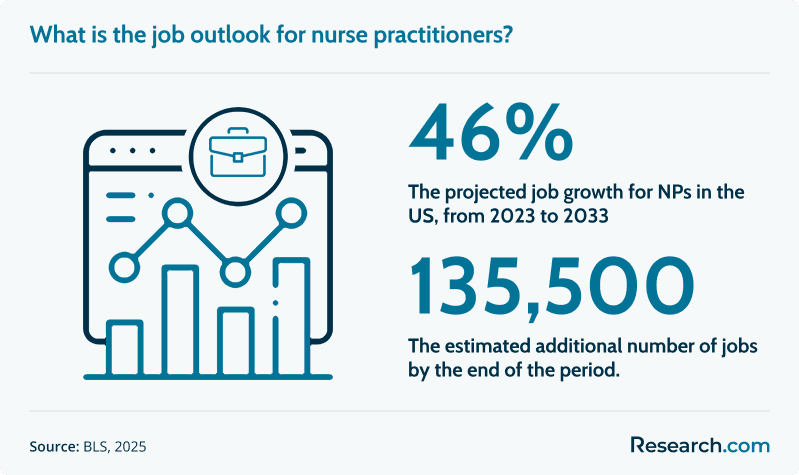
The nurse practitioner labor market is strong. The U.S. Bureau of Labor Statistics projects 46% growth for the profession between 2023 and 2033, making advanced practice nursing one of the fastest-growing areas in healthcare.
Strong demand does not mean every graduate will receive the exact job, salary, or specialty placement they want. Competitive hospital systems often prefer candidates with strong acute care RN backgrounds, excellent clinical evaluations, relevant specialty exposure, and local professional connections.
How to improve your hiring prospects before graduation
- Treat clinical rotations like interviews: Preceptors and unit leaders may become references, mentors, or hiring contacts.
- Choose placements strategically: Whenever possible, seek rotations aligned with your target specialty or hospital system.
- Build your NP network early: Connect with practicing AGACNPs, hospital leaders, faculty, and recruiters before your final term.
- Document your strengths: Track procedures, patient populations, high-acuity experiences, and specialty exposure for your resume.
- Prepare for certification while in school: Do not wait until graduation to identify weak content areas.
What graduates say about fast online MSN adult-gerontology acute care NP programs
- Idris: "After ten years in the ICU, I understood unstable patients, but I was still carrying out another provider’s plan. The AGACNP program changed how I think. Online coursework strengthened the science behind my decisions, and clinical rotations forced me to apply that knowledge when patients deteriorated. Becoming responsible for the diagnostic direction of care was the professional shift I wanted."
- Samir: "My ADN experience gave me confidence at the bedside, but advancement kept requiring more education. The RN-to-MSN bridge route helped me move forward without wiping away the value of my nursing background. It gave me the academic credential I needed and finally made advanced roles realistic."
- Tam: "I have always been drawn to the patients whose conditions can change without warning. As an RN, I contributed to the team; as an AGACNP, I help direct the clinical response. Using my training to stabilize a critically ill adult patient is exactly why I pursued graduate nursing education."
Can online direct entry NP programs help non-nurses move into advanced practice?
Online direct entry NP programs serve a different audience than MSN AGACNP programs for licensed RNs. They are usually designed for students with non-nursing bachelor’s degrees or applicants seeking a major career change into nursing and advanced practice. Because these pathways combine foundational nursing preparation with graduate-level training, applicants must examine clinical structure, licensure sequencing, state eligibility, and time commitment closely. Prospective students can compare pathway designs through Research.com’s guide to online direct entry NP programs.
Key findings
- Fast online MSN AGACNP programs can shorten the path to advanced practice, but the best choice depends on accreditation, clinical placement support, state authorization, and workload fit.
- For BSN-prepared RNs, many full-time programs take 24 to 36 months; ADN-prepared nurses usually need longer bridge pathways.
- Published tuition in this guide averages approximately $30,645 for in-state students and $35,366 for out-of-state students, before fees and other expenses.
- AGACNP is a specialty focused on acutely ill adults and older adults, usually in hospital or high-acuity settings.
- The job outlook is strong, with the U.S. Bureau of Labor Statistics projecting 46% growth for nurse practitioners between 2023 and 2033.
How should non-nurses evaluate direct entry nurse practitioner programs?
Applicants without a nursing background should focus on whether the program builds nursing fundamentals before moving into advanced practice competencies. Important evaluation points include clinical sequencing, faculty experience, practicum support, accreditation, state licensure alignment, board preparation, and verified graduate outcomes. For side-by-side program information, review Research.com’s comparison of nurse practitioner direct entry programs for non nurses.
How are fast online MSN programs using emerging healthcare technology?
Many online MSN programs use digital tools to support clinical reasoning and remote learning. Examples may include virtual simulation, telehealth-focused assignments, electronic health record practice, online case discussions, and interactive decision-making exercises. These tools do not replace in-person clinical training, but they can help students practice documentation, patient assessment, and data-driven decision-making before and during practicum experiences. Students comparing advanced nursing formats can also review related technology use in DNP online programs.
Key insights
- Do not choose by speed alone. The fastest program is only valuable if it is accredited, authorized in your state, and able to support your clinical placements.
- Clinical placement support is a make-or-break factor. Ask exactly who finds preceptors, what happens if a site falls through, and whether the school has partnerships near you.
- AGACNP is for acute care, not general primary care. Choose this path if you want high-acuity adult and older adult care in hospitals or specialty services.
- Total cost is more than tuition. Include fees, travel, compliance costs, books, technology, and possible lost RN work hours.
- Your RN background matters. Strong ICU, emergency, step-down, or other acute care experience can help you succeed academically and compete for desirable NP roles.
- Online can be rigorous when the program is strong. The delivery format matters less than accreditation, faculty expertise, clinical quality, student support, and certification outcomes.
References:
- American Association of Colleges of Nursing. (2025). Nursing shortage fact sheet. Retrieved July 16, 2025, from AACN.
- Bureau of Labor Statistics. (2025). Nurse anesthetists, nurse midwives, and nurse practitioners. U.S. Department of Labor. Retrieved July 16, 2025, from BLS.
- Bureau of Labor Statistics. (2025). Occupational employment and wage statistics (OEWS) profiles. U.S. Department of Labor. Retrieved July 16, 2025, from BLS.
- Bureau of Labor Statistics. (2025). Registered nurses. U.S. Department of Labor. Retrieved July 16, 2025, from BLS.
- Data USA. (2025). Nursing practice. Retrieved July 16, 2025, from Data USA.
- Data USA. (2025). Registered nursing. Retrieved July 16, 2025, from Data USA.
- National Council of State Boards of Nursing. (2025). 2024 study highlights. Retrieved July 16, 2025, from NCSBN.
- National Council of State Boards of Nursing. (2025). Active RN licenses. Retrieved July 16, 2025, from NCSBN.
- Payscale. (2025). Master of Science in Nursing (MSN) degree. Retrieved July 16, 2025, from Payscale.
- University of St. Augustine for Health Sciences. (2024). Nursing shortage: A 2024 data study reveals key insights. Retrieved July 16, 2025, from University of St. Augustine for Health Sciences.
- US Census Bureau. (2021, April 5). Who are our health care workers? Retrieved July 16, 2025, from US Census Bureau.
- ZipRecruiter. (2025). Acute care nurse practitioner salary. Retrieved July 16, 2025, from ZipRecruiter.
- ZipRecruiter. (2025). Primary care nurse practitioner salary. Retrieved July 16, 2025, from ZipRecruiter.
Other Things You Should Know About Fast Online MSN Adult-Gerontology Acute Care NP Programs
Prerequisites for enrolling in an online MSN Adult-Gerontology Acute Care NP program typically include a Bachelor of Science in Nursing (BSN), an active RN license, and relevant clinical nursing experience. Additionally, some programs may require specific undergraduate coursework in areas such as statistics or health assessment.
Yes, this is very common, but you must verify two key things before enrolling. First, the university must have "state authorization," meaning it is legally permitted to provide education to students in your specific state. Second, the program's curriculum must meet the particular requirements for NP licensure set by your state's Board of Nursing. Always confirm both of these with an admissions advisor before submitting your application.
Graduates usually must pass the Adult-Gerontology Acute Care Nurse Practitioner certification exam from the American Nurses Credentialing Center or the American Association of Critical-Care Nurses. State boards then use that credential, along with an active RN license and graduate transcript, to issue advanced practice authority.


