
2027 Best BSN to NP Degree Programs

Co-Founder and Chief Data Scientist
BSN to NP Programs: How to Choose the Right Nurse Practitioner Pathway
If you already have a Bachelor of Science in Nursing and an active RN license, a BSN to NP program can move you from bedside or staff nursing into advanced practice. The decision is not simple. You need to compare cost, accreditation, clinical placement support, specialty tracks, certification eligibility, work-life fit, and the return you can realistically expect after graduation.
This guide is for registered nurses weighing whether a Nurse Practitioner program is worth the time, tuition, and clinical commitment. It explains what BSN to NP programs include, how long they take, what they cost, how online and campus formats differ, which specialties are available, and how to evaluate programs before applying.
Quick Answer: Is a BSN to NP Program Worth It?
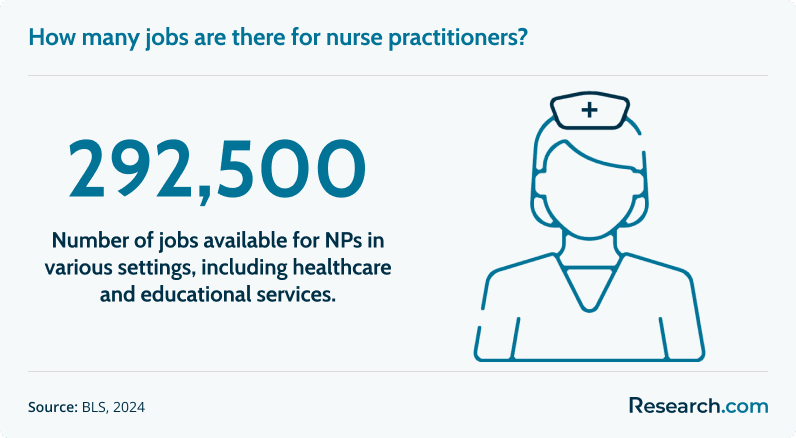
For many BSN-prepared nurses, a BSN to NP program is worth considering if they want greater clinical autonomy, access to advanced practice roles, and stronger long-term earning potential. Nurse Practitioners earn a median salary of $128,948 per year, and the job market for nurse anesthetists, nurse midwives, and nurse practitioners is projected to grow by 40% between 2023 and 2033.
The best fit is usually a CCNE- or ACEN-accredited program that matches your intended specialty, offers reliable clinical placement support, prepares you for national NP certification, and is affordable enough that repayment will not outweigh the career benefit.
What Are the Main Benefits of a BSN to NP Program?
A BSN to NP program is designed for nurses who want to expand their scope of practice and qualify for advanced clinical roles. The biggest advantages are not only higher pay; they also include broader career mobility, specialty practice options, and preparation for leadership in patient care.
- More practice settings: Nurse Practitioners may work in hospitals, outpatient care centers, primary care clinics, private practices, specialty offices, urgent care, and community health settings.
- Strong employer demand: In 2024, hospitals employ 40% of NPs, outpatient care centers employ 25%, and physician offices employ 20%.
- Flexible study options: Many BSN to NP programs use online coursework, allowing working nurses to complete academic requirements while arranging clinical hours in approved healthcare settings.
- Consistent openings: Around 31,900 openings for nurse anesthetists, nurse midwives, and nurse practitioners are expected each year over the next decade, including roles created by retirements and workforce replacement needs.
- Specialty growth: NP tracks allow nurses to focus on family care, pediatrics, psychiatric-mental health, adult-gerontology, acute care, neonatal care, women’s health, or midwifery.
| Reason to Pursue an NP Degree | Why It Matters | What to Check Before Enrolling |
| Higher clinical responsibility | NPs assess, diagnose, manage treatment plans, and provide advanced patient care. | Confirm the program prepares graduates for your intended NP certification exam. |
| Better career mobility | Advanced practice credentials can open roles beyond traditional RN positions. | Review employment outcomes, specialty options, and employer reputation. |
| Flexible learning | Online programs may make graduate study possible while working. | Ask how clinical placements are approved and whether relocation is ever required. |
| Long-term earning potential | NP salaries can exceed many BSN-level RN roles, depending on setting and specialty. | Compare total cost with realistic salary expectations in your state or region. |
What Can I Expect from a BSN to NP Program?
A BSN to NP program combines graduate nursing coursework, advanced clinical training, specialty preparation, and supervised practicum experiences. The goal is to prepare registered nurses to move into Nurse Practitioner practice and meet requirements for national certification and state licensure.
Most programs include advanced pathophysiology, advanced pharmacology, advanced health assessment, clinical decision-making, evidence-based practice, healthcare policy, and leadership. Students then complete specialty courses based on the NP population focus they choose, such as family practice, pediatrics, psychiatric-mental health, adult-gerontology, acute care, neonatal care, women’s health, or midwifery.
Online programs typically deliver lectures, readings, discussions, assignments, exams, and faculty interactions through a learning management system. Even when coursework is online, clinical practicums must be completed in approved healthcare environments. Some schools help students find placements, while others expect students to secure preceptors with faculty approval.
How Much Can I Make After Completing a BSN to NP Program?
A BSN to NP pathway can increase earning potential, but salaries vary by specialty, location, employer, experience, and scope-of-practice rules. According to the Bureau of Labor Statistics, the mean annual wage for Nurse Practitioners is $128,490, or about $61.78 per hour. Half of all NPs earn $126,260 or less annually, while the top 10% earn more than $168,030 each year.
These figures show why many nurses view NP education as a career investment. However, salary should be weighed against tuition, fees, lost income if you reduce work hours, clinical travel costs, certification expenses, and loan repayment.
| Salary Measure | Reported Figure | How to Use This Number |
| Indeed nurse practitioner salary | $128,948 per year | Useful as a market snapshot, but it may reflect job postings and self-reported data. |
| BLS mean annual wage | $128,490 | Helpful for comparing NP earnings with other occupations using federal wage data. |
| BLS hourly estimate | $61.78 per hour | Useful for comparing hourly clinical work, part-time roles, or contract opportunities. |
| Top 10% earnings | More than $168,030 each year | Represents higher earners, not a guaranteed outcome for new graduates. |
- Best BSN to NP Programs for 2027
- How long does it take to complete a BSN to NP program?
- What is the average cost of a best BSN to NP program?
- What are the financial aid options for students enrolling in a BSN to NP program?
- What are the prerequisites for enrolling in a BSN to NP program?
- How are emerging healthcare technologies integrated in BSN to NP programs?
- Can a BSN to NP Program Lead to a DNP Degree?
- What challenges might I face in a BSN to NP program?
- How do BSN to NP programs prepare you for NP certification and licensure?
- What are the courses typically in a BSN to NP program?
- What types of specializations are available in a BSN to NP program?
- What is the return on investment for a BSN to NP program?
- What are the key success metrics for BSN to NP programs?
- How do BSN to NP programs promote cultural competence and inclusive care?
- What are the differences between online and traditional BSN to NP programs?
- How do you choose the best BSN to NP program?
- What student support services are offered in a BSN to NP program?
- What career paths are available for graduates of a BSN to NP program?
- What is the admission process for a BSN to NP program? Career path details
- What is the job market for graduates with a BSN to NP program? Additional job market note
Best BSN to NP Degree Programs for 2027
How We Rank Schools
A BSN to NP degree is a major financial and professional commitment, so rankings should be read as a starting point rather than a final decision. Our ranking process uses data from sources such as the IPEDS database, Peterson's database, the College Scorecard database, and The National Center for Education Statistics. These sources help evaluate institutional data, program characteristics, and student outcomes. For a fuller explanation, see Research.com's methodology page.
1. Purdue Global RN to NP Degree
Purdue Global offers an online RN to NP degree for registered nurses who want to move into Nurse Practitioner roles. The program combines graduate nursing coursework with clinical training and is structured for working nurses who need flexibility while preparing for advanced patient care responsibilities.
- Cost: Approximately $900 per credit
- Program Length: 24 months
- Accreditation: Commission on Collegiate Nursing Education (CCNE) accredited
- Other Key Details: Flexible online learning, clinical placement support, and specialization options in family practice, pediatrics, and mental health
2. Georgetown University BSN to NP Degree
Georgetown University provides a BSN to NP program for registered nurses seeking advanced practice preparation. The online format blends rigorous academic study with clinical experiences and emphasizes patient-centered care, leadership, and specialty-specific preparation.
- Cost of Attendance: Approximately $1,847 per credit
- Program Length: 2-3 years, depending on full-time or part-time enrollment
- Accreditation: Commission on Collegiate Nursing Education (CCNE) accredited
- Other Key Details: Flexible online format with in-person clinical requirements, multiple specialization options including Family Nurse Practitioner (FNP), Adult-Gerontology Acute Care Nurse Practitioner (AGACNP), and Psychiatric-Mental Health Nurse Practitioner (PMHNP), strong faculty mentorship, and personalized clinical placement support
3. Walden University Master of Science in Nursing (MSN) – Family Nurse Practitioner
Walden University offers an online Master of Science in Nursing program for nurses preparing for Family Nurse Practitioner practice. The curriculum pairs academic instruction with clinical training so graduates can build the competencies needed to provide broad patient care across healthcare settings.
- Cost of Attendance: Approximately $1,200 per credit
- Program Length: 24 months on average
- Accreditation: Commission on Collegiate Nursing Education (CCNE) accredited
- Other Key Details: Flexible online format with local clinical practicums, access to experienced faculty, and comprehensive student support services
4. Ohio University BSN to NP Degree
Ohio University offers an online BSN to NP degree for registered nurses with a BSN who are ready to pursue Nurse Practitioner preparation. The program focuses on advanced clinical skills, patient care, and leadership, with specialization choices for nurses pursuing different practice goals.
- Cost: $695 per credit hour
- Program Length: 2-3 years, depending on the specialization and pace
- Accreditation: Commission on Collegiate Nursing Education (CCNE) accredited
- Other Key Details: Flexible online learning, clinical placement support, and specialization options in family nurse practitioner, psychiatric mental health, and adult-gerontology
5. Grand Canyon University BSN to NP Degree
Grand Canyon University offers a BSN to NP program for registered nurses who want to qualify for advanced practice roles. Its online format is built for working professionals and includes graduate coursework, clinical training, and specialty preparation.
- Cost of Attendance: Approximately $695 per credit
- Program Length: 2-4 years, depending on full-time or part-time enrollment
- Accreditation: Commission on Collegiate Nursing Education (CCNE) accredited
- Other Key Details: Online classes with optional in-person clinical requirements, specializations in Family Nurse Practitioner (FNP) and other advanced practice roles, faculty support, and clinical placement assistance
| Program | Best For | Key Question to Ask |
| Purdue Global RN to NP Degree | Nurses seeking an online format with multiple specialty options | How much help is provided with clinical placements in your state? |
| Georgetown University BSN to NP Degree | Nurses who want strong mentorship and several advanced practice tracks | What in-person requirements apply to your chosen specialization? |
| Walden University MSN – Family Nurse Practitioner | Nurses focused specifically on FNP preparation | How are local preceptors identified, approved, and supported? |
| Ohio University BSN to NP Degree | Students comparing family, psychiatric mental health, and adult-gerontology options | How does the timeline change by specialty and enrollment pace? |
| Grand Canyon University BSN to NP Degree | Working nurses looking for flexible online study | Which clinical or campus requirements apply before graduation? |
How Long Does It Take to Complete a BSN to NP Program?
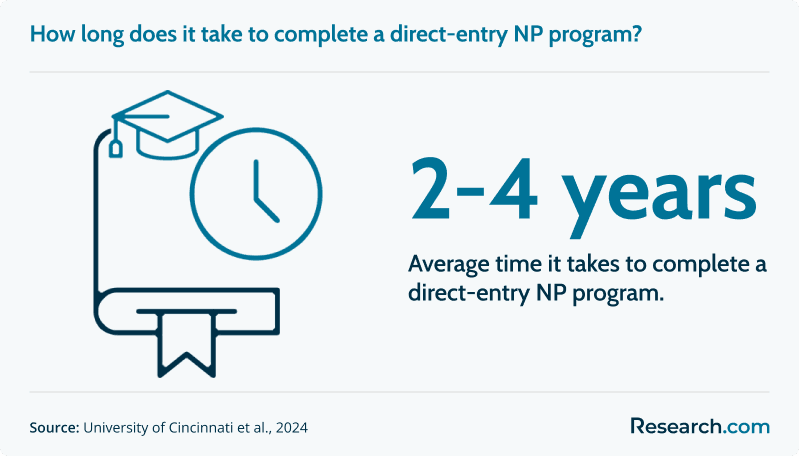
Most BSN to NP programs take two to three years to complete. The exact timeline depends on whether you enroll full time or part time, the number of clinical hours required, your specialty track, and whether the program follows a traditional, accelerated, or flexible online schedule.
Accreditation is one of the first things to verify before committing to any program. You can check nursing accreditation through the Commission on Collegiate Nursing Education or the Accreditation Commission for Education in Nursing. Accreditation matters because certification boards, state licensing agencies, employers, and doctoral programs may review whether your NP preparation came from a recognized program.
Unaccredited or poorly supported programs can create problems later, especially if you need certification eligibility, state authorization, or employer recognition. This is especially important for online students, who must confirm that the program is approved to enroll students in their state and that clinical requirements can be completed where they live.
The American Association of Colleges of Nursing has noted that efforts to expand nursing pathways remain important as faculty and clinical space shortages have contributed to qualified applicants being turned away. That context makes it even more important to apply early, evaluate clinical placement policies, and choose accredited programs with clear progression plans.
People who want to become NPs but are not registered nurses and already hold a non-nursing bachelor's degree can explore the best direct entry NP programs for non nurses. These pathways generally take 3 to 4 years to complete.
| Enrollment Option | Typical Time Commitment | Best For | Trade-Off |
| Full-time BSN to NP | Usually closer to two years | Nurses who can reduce work hours or manage an intensive schedule | Faster completion but heavier academic and clinical workload |
| Part-time BSN to NP | Often closer to three years | Working nurses with family or employment responsibilities | More manageable pace but longer time before NP practice |
| Accelerated online track | Varies by program structure | Highly organized students with strong clinical access | Less schedule flexibility during compressed terms |
What Is the Average Cost of a Best BSN to NP Program?
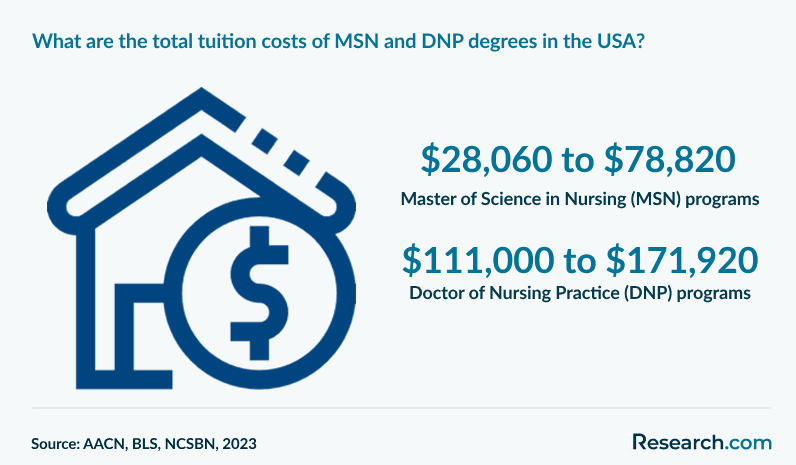
The total tuition for a strong BSN to nurse practitioner pathway often falls between $20,000 to $50,000. Actual cost depends on the school, credit requirements, residency status, program format, specialty, and whether you pay extra fees for clinical placement, technology, labs, books, testing, background checks, immunizations, travel, or certification preparation.
Online programs may reduce commuting and campus-related expenses, but they are not automatically cheaper. Students should compare total program cost rather than only the per-credit tuition rate. A lower tuition program with limited clinical support can become more stressful or expensive if students must spend significant time finding placements on their own.
Financial aid can reduce upfront cost. Students may use scholarships, grants, federal loans, private loans, employer tuition assistance, military benefits, or repayment programs depending on eligibility. Some healthcare employers offer tuition support to nurses pursuing advanced practice preparation, but benefits often include employment commitments or reimbursement conditions.
The NP workforce has also grown. According to the American Association of Nurse Practitioners, the number of licensed NPs increased by 8.5% from 355,000 in 2022 to 385,000 in 2023. That growth reflects strong interest in the profession, but it also means students should choose programs that deliver clear certification preparation and clinical quality rather than relying on the credential alone.
Nurses interested in mental health practice can compare specialty-specific options such as the cheapest online PMHP programs before choosing a broader MSN or NP pathway.
| Cost Category | Why It Matters | Question to Ask |
| Tuition | Usually the largest direct expense | Is the quoted price per credit, per term, or total program tuition? |
| Fees | Technology, lab, clinical, and graduation fees can add up | Which mandatory fees are not included in tuition? |
| Clinical costs | Travel, background checks, immunizations, and placement expenses may apply | Does the school charge for placement coordination? |
| Reduced work hours | Clinical rotations may limit earning capacity during school | Will you need to cut shifts during practicum semesters? |
| Certification and licensure | Graduates must budget for exams and state requirements | What exam preparation resources are included? |
What Financial Aid Options Are Available for BSN to NP Students?
BSN to NP students can often combine several forms of aid to reduce out-of-pocket cost. The strongest plan starts with federal aid and scholarships before turning to higher-interest private loans.
- Scholarships: These awards may be based on academic achievement, financial need, specialty interest, employer affiliation, or professional membership and do not need to be repaid.
- Grants: Grant funding is usually need-based or tied to a specific service goal and does not require repayment when conditions are met.
- Federal student loans: Federal loans can help cover graduate study and often provide borrower protections not available through private lenders.
- Work-study programs: Eligible students may earn income through part-time work connected to their financial aid package.
- Employer tuition assistance: Hospitals and healthcare systems may reimburse part or all of tuition for nurses pursuing advanced credentials.
- Military benefits: Active-duty service members, veterans, and eligible family members may qualify for education benefits, tuition support, or loan repayment.
- Private loans: Private borrowing can fill funding gaps, but interest rates, repayment terms, and borrower protections vary widely.
What Are the Prerequisites for Enrolling in a BSN to NP Program?
Admission requirements vary by institution and specialty, but most BSN to NP programs expect applicants to show academic readiness, RN licensure, and clinical maturity before beginning advanced practice coursework.
- Bachelor of Science in Nursing: Applicants are generally expected to have a BSN from an accredited college or university.
- Active RN license: Programs usually require a current, unrestricted Registered Nurse license.
- Clinical experience: Many schools prefer or require one to two years of nursing experience before enrollment or before advanced clinical courses.
- Minimum GPA: A common benchmark is around 3.0, though schools may review applicants holistically.
- Prerequisite coursework: Some programs require prior study in anatomy, physiology, statistics, or related foundational subjects.
- Recommendation letters: Applicants may need two to three references from supervisors, faculty, or clinicians who can evaluate readiness for graduate nursing study.
- Personal statement: Schools often ask candidates to explain their career goals, specialty interest, patient care experience, and motivation for becoming an NP.
- Entrance exams: Some programs may request GRE scores, although this requirement is becoming less common.
If you are comparing other healthcare roles while planning your future, you may also want to review how much do child life specialists make and what credentials that path requires.
How Are Emerging Healthcare Technologies Integrated in BSN to NP Programs?
Modern BSN to NP programs increasingly train students to practice in technology-enabled healthcare environments. Coursework and clinical activities may include telehealth, electronic health records, remote patient monitoring, clinical decision-support tools, simulation labs, informatics, and virtual patient care coordination.
Students should not assume every online program has strong digital training. Ask whether telehealth competencies are assessed, whether simulations are used before clinical rotations, and how the curriculum prepares students to interpret patient data safely. Nurses who are still completing undergraduate requirements may compare earlier bridge options such as a 6 month RN to BSN program before moving into graduate study.
Can a BSN to NP Program Lead to a DNP Degree?
Yes. A BSN to NP program can serve as a pathway toward a Doctor of Nursing Practice, especially for nurses who later want advanced clinical leadership, systems improvement, policy, executive practice, or doctoral-level practice preparation. Some students complete an MSN-level NP program first and then enter a post-master's DNP. Others choose a BSN-to-DNP route that includes NP preparation along the way.
A DNP can deepen practice leadership and evidence-based care skills, but it also adds time and cost. Nurses considering this route should compare whether an MSN-to-DNP or BSN-to-DNP structure better fits their timeline. Flexible options are available through DNP schools online, but students should still verify accreditation, clinical expectations, and state authorization.
What Challenges Might I Face in a BSN to NP Program?
The most common challenge is balancing graduate coursework, clinical hours, paid nursing work, and personal responsibilities. NP training is not simply an extension of RN education; it requires a shift toward diagnosis, treatment planning, prescribing knowledge, population-specific care, and independent clinical reasoning.
Students may also struggle with preceptor availability, changing work schedules, technology requirements, and the pressure of preparing for national certification. If you are entering nursing from a different field, a BSN to NP program may not be the correct starting point; alternative pathways such as direct-entry MSN programs for non-nursing majors online may be more appropriate.
| Common Challenge | Why It Happens | Better Strategy |
| Underestimating clinical hours | Students focus on online coursework and overlook practicum demands. | Map clinical semesters before enrolling and discuss schedule changes with your employer. |
| Difficulty finding preceptors | Some markets have limited approved clinical sites. | Choose a program with transparent placement support and ask for state-specific details. |
| Work-school overload | Graduate nursing study requires sustained weekly time. | Consider part-time enrollment if you cannot reduce shifts during intensive terms. |
| Certification anxiety | NP board exams require focused preparation. | Use practice exams, faculty review sessions, and specialty-specific study plans early. |
How Do BSN to NP Programs Prepare Students for Certification and Licensure?
BSN to NP programs prepare students for national certification by aligning coursework, clinical hours, and specialty competencies with the expectations of NP certifying bodies. Programs commonly use simulation, case-based assignments, practice assessments, exam review materials, and faculty feedback to strengthen clinical reasoning.
Licensure is handled at the state level, so students should confirm that a program meets requirements in the state where they plan to practice. This is especially important for online students and for nurses who may move before graduation. Accelerated options such as a 12-month FNP program online may be appealing, but speed should not come at the expense of clinical readiness, accreditation, or certification eligibility.
What Courses Are Typically Included in a BSN to NP Program?
BSN to NP coursework builds from advanced nursing science into specialty practice. While course names differ by school, most programs cover the same core competency areas.
Advanced Health Assessment
Students learn to perform comprehensive physical assessments, collect focused patient histories, recognize abnormal findings, and connect assessment data to diagnostic reasoning.
Advanced Pathophysiology
This course examines disease processes and how alterations in body systems influence symptoms, diagnosis, treatment, and patient outcomes.
Advanced Pharmacology
Students study medication selection, dosing, contraindications, interactions, monitoring, patient education, and safe prescribing principles.
Clinical Management
Clinical management courses develop skills in diagnosis, care planning, treatment selection, follow-up, referral, and evidence-based intervention.
Specialized NP Courses
Specialty courses prepare students for population-focused practice, such as family care, pediatrics, psychiatric-mental health, acute care, or adult-gerontology.
Evidence-Based Practice
This coursework teaches students to evaluate research, apply findings to clinical decisions, and improve patient care through current evidence.
Leadership and Healthcare Policy
Students examine healthcare systems, policy, ethics, quality improvement, leadership, and the NP role in care delivery.
Nurses comparing bridge routes may also explore the ADN to FNP pathway if they are not yet BSN-prepared.
What Types of Specializations Are Available in a BSN to NP Program?
Choosing a specialization is one of the most important decisions in a BSN to NP program because it determines your patient population, certification exam, clinical placement requirements, and likely work settings.
Family Nurse Practitioner
Family Nurse Practitioners provide primary and preventive care across the lifespan, including assessment, diagnosis, treatment, and chronic condition management.
Pediatric Nurse Practitioner
Pediatric Nurse Practitioners care for infants, children, and adolescents, with attention to growth, development, acute illness, prevention, and family education.
Adult-Gerontology Nurse Practitioner
Adult-Gerontology Nurse Practitioners focus on adult and older adult patients, including wellness, chronic disease management, and age-related care needs.
Psychiatric-Mental Health Nurse Practitioner
Psychiatric-Mental Health Nurse Practitioners assess, diagnose, and treat mental health conditions and may provide therapy, medication management, and behavioral health support.
Acute Care Nurse Practitioner
Acute Care Nurse Practitioners manage patients with complex, urgent, or critical conditions, often in hospitals, emergency departments, intensive care units, and specialty services.
Neonatal Nurse Practitioner
Neonatal Nurse Practitioners care for newborns, including premature infants and babies with complications requiring advanced monitoring and treatment.
Women’s Health Nurse Practitioner
Women’s Health Nurse Practitioners focus on reproductive health, gynecologic care, prenatal and postnatal care, and health needs across the lifespan.
Certified Nurse Midwife
Certified Nurse Midwives provide pregnancy, birth, postpartum, reproductive, and gynecologic care for women and birthing patients.
| Specialization | Common Practice Focus | Good Fit If You Prefer |
| FNP | Lifespan primary care | Broad patient populations and outpatient care |
| PNP | Children and adolescents | Pediatric development, family education, and child health |
| AGNP | Adults and older adults | Chronic disease management and aging-related care |
| PMHNP | Mental and behavioral health | Psychiatric assessment, therapy, and medication management |
| ACNP | Complex and acute illness | Hospital-based, high-acuity, or specialty care |
| NNP | Newborn and premature infant care | Neonatal intensive care and infant stabilization |
| WHNP | Women’s and reproductive health | Gynecology, prenatal care, and gender-specific health needs |
| CNM | Pregnancy, birth, and postpartum care | Labor, delivery, reproductive care, and midwifery practice |
What Is the Return on Investment for a BSN to NP Program?
The return on investment depends on total program cost, how quickly you graduate, how much income you give up while studying, your post-graduation salary, and whether your specialty is in demand where you plan to work. A program with a higher tuition price may still be worthwhile if it has strong certification outcomes and clinical placement support, while a cheaper program may be risky if students struggle to graduate or qualify for licensure.
To estimate ROI, compare your current BSN-level earnings with realistic NP salaries in your target specialty and region. Then subtract tuition, fees, interest, travel, certification costs, and any reduced income during clinical rotations. Comparing broader nursing education options, including easy nursing schools to get into, can also help you understand how admission access, affordability, and long-term outcomes differ.
What Are the Key Success Metrics for BSN to NP Programs?
Do not judge a BSN to NP program only by reputation or tuition. Stronger indicators include graduation rates, first-time NP certification exam pass rates, employment outcomes, clinical placement quality, faculty accessibility, student support, and alignment with state licensure requirements.
Ask each school for specialty-specific outcomes, not just overall nursing school data. For example, an FNP track and a PMHNP track may have different faculty, clinical networks, and certification results. Students comparing cost-focused options can review cheap FNP online programs while still verifying quality metrics.
How Do BSN to NP Programs Promote Cultural Competence and Inclusive Care?
NPs care for patients across communities, cultures, languages, identities, and socioeconomic conditions. Strong BSN to NP programs teach students to recognize social determinants of health, reduce implicit bias, communicate across differences, and adapt care plans to patient context.
Inclusive care training may appear in simulation cases, community clinical placements, ethics coursework, population health assignments, and reflective practice. Specialty tracks may also address population-specific needs. For example, nurses interested in gender-specific care can compare accelerated women's health nurse practitioner programs online.
What Are the Differences Between Online and Traditional BSN to NP Programs?
Online and campus-based BSN to NP programs can both be rigorous, accredited, and clinically intensive. The main difference is how coursework, faculty interaction, simulation, and peer engagement are delivered. Clinical experiences still occur in real healthcare settings regardless of format.
| Format | Advantages | Limitations | Best For |
| Online BSN to NP | Flexible scheduling, remote coursework, and easier fit for working nurses | Requires self-discipline and careful clinical placement planning | Nurses who need to keep working while completing graduate study |
| Campus-based BSN to NP | In-person classes, direct faculty access, campus labs, and structured interaction | Less flexible for nurses with rotating shifts or long commutes | Students who prefer face-to-face learning and on-site support |
| Hybrid BSN to NP | Combines online convenience with periodic campus or lab requirements | Travel may be required for intensives or skills sessions | Nurses who want flexibility but still value in-person training |
Students planning long-term doctoral preparation can also compare accelerated doctor of nursing practice programs after evaluating whether an MSN-level NP program or BSN-to-DNP path is the better fit.
How Do You Choose the Best BSN to NP Program?
The best BSN to NP program is not always the fastest, cheapest, or highest-ranked option. It is the program that matches your license, state, specialty goal, schedule, budget, and certification requirements.
- Verify accreditation: Confirm that the program is accredited by CCNE or ACEN and that its status is current.
- Check state authorization: Make sure the school can enroll students from your state and that the program supports licensure where you plan to practice.
- Choose the right specialty: Match the NP track to the patient population and work setting you actually want.
- Review clinical placement support: Ask whether the school finds placements, assists students, or expects students to locate preceptors independently.
- Calculate total cost: Include tuition, fees, books, clinical expenses, certification costs, travel, and lost income from reduced shifts.
- Evaluate faculty experience: Look for instructors with relevant clinical backgrounds and specialty expertise.
- Ask for outcomes: Review graduation rates, certification pass rates, employment outcomes, and student support data.
- Confirm technology and support: Online students should ask about learning platforms, tutoring, library access, simulation tools, and technical help.
Some healthcare professionals move through several career stages before reaching advanced practice. For example, a worker might begin in an entry-level clinical role, become an RN, complete a BSN, and then pursue an MSN or NP specialization. If you are comparing healthcare career ladders, you may wonder what is the highest pay for a phlebotomist and how that compares with nursing advancement.
| Common Mistake | Why It Can Hurt You | Better Approach |
| Choosing based only on tuition | Low cost does not guarantee clinical support or certification readiness. | Compare total cost with outcomes, accreditation, and placement services. |
| Ignoring accreditation | Certification, licensure, and employer recognition may be affected. | Verify CCNE or ACEN status before applying. |
| Assuming online means fully remote | Clinical hours and some intensives may require in-person attendance. | Ask about every on-site, travel, and practicum requirement. |
| Picking a specialty too quickly | Your specialty controls your certification and job options. | Shadow NPs and review job postings before selecting a track. |
| Relying only on rankings | Rankings may not reflect your state, specialty, budget, or learning needs. | Use rankings as one input, then verify fit with your own checklist. |
What Student Support Services Are Offered in a BSN to NP Program?
Student support can make a major difference in whether working nurses stay on track. Strong BSN to NP programs usually provide academic advising, faculty mentorship, clinical placement assistance, library access, writing support, technical help, exam preparation, and career services.
Career support may include resume reviews, interview coaching, networking guidance, and help translating RN experience into advanced practice qualifications. Clinical support is especially important for online students because preceptor availability can vary by region. Nurses still comparing earlier education steps may also review affordable RN to BSN programs before committing to graduate study.
What Career Paths Are Available for BSN to NP Graduates?
Graduates of BSN to NP programs can pursue roles that match their specialty certification, clinical training, and state scope-of-practice rules. Career options vary by population focus and employer type.
Primary Care Nurse Practitioner
Primary Care NPs provide preventive care, diagnose common conditions, manage chronic illnesses, and coordinate treatment in clinics, community health centers, and private practices.
Pediatric Nurse Practitioner
Pediatric NPs care for infants, children, and adolescents in pediatric offices, hospitals, school-based clinics, and specialty settings.
Psychiatric-Mental Health Nurse Practitioner
Psychiatric-Mental Health NPs assess and treat mental health conditions, provide counseling support, and manage psychiatric medications in clinics, hospitals, and private practices.
Acute Care Nurse Practitioner
Acute Care NPs treat patients with serious, complex, or unstable conditions in emergency departments, intensive care units, inpatient units, and specialty services.
Gerontology Nurse Practitioner
Gerontology NPs work with older adults, addressing chronic disease, functional status, medication management, preventive care, and quality-of-life concerns.
Women’s Health Nurse Practitioner
Women’s Health NPs provide reproductive, gynecologic, prenatal, postnatal, and preventive care in women’s health clinics, obstetric practices, and community settings.
Nurse Educator
Nurse Educators teach nursing students, train clinical staff, develop curricula, and support professional development in academic or healthcare organizations.
If you are also considering adjacent health fields, a nutrition credential may be another route. You can compare affordability and flexibility through the cheapest online nutrition degree options.
What Is the Admission Process for a BSN to NP Program?
The admission process usually starts with identifying programs that offer your preferred specialty and are approved for your state. After that, applicants submit materials that show academic preparation, nursing licensure, professional experience, and readiness for graduate-level clinical responsibility.
- Review eligibility requirements: Confirm BSN, RN license, GPA, clinical experience, and state authorization requirements.
- Gather documents: Prepare transcripts, résumé, license verification, references, and any required proof of clinical experience.
- Write a focused statement: Explain why you want to become an NP, which population you plan to serve, and how your nursing background supports that goal.
- Complete the application: Submit all materials before the deadline and monitor the school’s portal for missing items.
- Prepare for an interview: Some programs interview candidates to assess clinical judgment, motivation, communication skills, and fit.
- Compare offers carefully: Review tuition, clinical placement support, start dates, specialty requirements, and financial aid before enrolling.
Students looking specifically at adult-gerontology tracks can compare affordability through cheapest AGNP programs online while still checking accreditation and clinical quality.
What Is the Job Market for Graduates with a BSN to NP Program?
The job market for Nurse Practitioners remains strong across many healthcare settings. Demand is influenced by primary care needs, aging populations, chronic disease management, access gaps in rural and underserved areas, and the growing use of advanced practice providers in team-based care.
Employment Growth
The Bureau of Labor Statistics projects overall employment of nurse anesthetists, nurse midwives, and nurse practitioners to grow 40 percent from 2023 to 2033, which is much faster than the average for all occupations.
Salary Expectations
How much does BSN make compared with NP pay? The gap can be substantial, depending on role and location. Nurse Practitioners have a reported median annual wage of $128,490, and the top 10% of earners make more than $168,030 annually.
Job Opportunities
There are about 31,900 openings each year for nurse anesthetists, nurse midwives, and nurse practitioners, on average, over the decade. Many openings are expected because workers retire, change occupations, or leave the labor force.
Industries Hiring NPs
NPs work in hospitals, outpatient care centers, physician offices, specialty clinics, urgent care settings, community clinics, and other healthcare environments. This range allows graduates to pursue roles that match their specialty and preferred patient population.
Geographic Demand
Demand exists nationwide, with especially important needs in rural and underserved communities. State scope-of-practice laws, payer policies, and local employer needs can affect the types of NP roles available.
Nurses who want to continue beyond the NP level can explore easiest online DNP programs as a possible next step, especially if they want doctoral preparation with flexibility for work and personal obligations.
Key Insights
- A BSN to NP program is best for licensed RNs with a BSN who want advanced clinical practice, specialty credentials, and broader career options.
- Most programs take two to three years, but full-time, part-time, online, hybrid, and accelerated formats can change the workload significantly.
- Accreditation is non-negotiable. Check CCNE or ACEN status and confirm the program supports certification and licensure in your state.
- Total tuition often ranges from $20,000 to $50,000, but fees, clinical costs, certification expenses, travel, and reduced work hours can change the real price.
- Clinical placement support is one of the most important factors, especially in online programs and high-demand specialties.
- Salary and job outlook are strong, with projected 40% growth from 2023 to 2033 for nurse anesthetists, nurse midwives, and nurse practitioners, but outcomes vary by specialty, location, and employer.
- The right specialty should be chosen carefully because it determines your certification exam, patient population, clinical rotations, and job market.
- Do not choose a program based only on rankings or tuition. Compare accreditation, outcomes, placement support, faculty expertise, state authorization, and long-term ROI.
References:
- Nurse Anesthetists, Nurse Midwives, and Nurse Practitioners. (2024, August). Bureau of Labor Statistics. Retrieved January 28, 2025, from https://www.bls.gov/ooh/healthcare/nurse-anesthetists-nurse-midwives-and-nurse-practitioners.htm#tab-6
- Nurse practitioner salary in United States. (2025, January). Indeed. Retrieved January 28, 2025, from https://www.indeed.com/career/nurse-practitioner/salaries
- Writers, S. (2024, September 16). How to go from RN to NP | NurseJournal.org. NurseJournal.org. https://nursejournal.org/registered-nursing/how-to-go-from-rn-to-np/
Other Things You Should Know about BSN to NP Degree Programs
No national certification is required before starting clinical rotations in a BSN-to-NP program. Students usually need an unrestricted RN license, current immunizations, background checks, drug screening, CPR certification, and a completed health clearance before clinical placement.
Most BSN to NP programs in 2027 require applicants to have at least one year of clinical experience as a registered nurse. This experience must be in a relevant field, ensuring that candidates have practical skills needed for advanced practice roles.
Admission prerequisites for top BSN to NP programs in 2027 typically include a current RN license, a BSN degree from an accredited institution, a minimum GPA of 3.0, and relevant clinical experience. Programs may also require GRE scores and letters of recommendation.


