
2027 Best Certification Programs for Careers That Pay Well

Co-Founder and Chief Data Scientist
A certification can be the shortest practical route into a better-paying job, but only if the credential is recognized by employers, matches real hiring demand, and fits your long-term plan. The right program can help you move into healthcare, technology, skilled trades, transportation, business, or project-based work without committing to several years of college first. The wrong one can leave you with debt, a certificate employers do not value, or a credential that does not meet licensing rules in your state.
This guide explains which certification programs can lead to careers that pay well, how long they usually take, when certifications may be a better choice than a degree, and how to evaluate cost, accreditation, job demand, and return on investment. It is designed for career changers, working adults, recent graduates, and professionals who want a faster path to marketable skills.
Quick Answer: What are the best certification programs for careers that pay well?
The best certification programs for careers that pay well are typically tied to regulated healthcare roles, information technology, cybersecurity, cloud computing, skilled trades, transportation, project management, finance, and medical billing or coding. Many can be completed in 3 to 12 months, although licensing, exams, supervised practice, apprenticeships, or state requirements may extend the full timeline.
Certifications work best when they prove a specific job-ready skill. Examples include EMT, phlebotomy, CNA, CDL, HVAC, dental assisting, IT support, medical coding, landscaping or groundskeeping credentials, and LPN/LVN training. Advanced credentials in areas such as cloud computing, cybersecurity, and project management may lead to higher pay, but they often require prior experience.
Key Things to Know Before Choosing a High-Paying Certification
- A certification is most valuable when employers in your target field regularly request it in job postings.
- Fast programs can help you enter the workforce quickly, but “fast” does not always mean “easy” or “guaranteed employment.”
- Healthcare and skilled-trade programs may require state approval, clinical hours, hands-on labs, licensure exams, or supervised training.
- Technology certifications can be powerful, but entry-level candidates still need portfolios, labs, projects, internships, or practical troubleshooting experience.
- Some certifications are stand-alone career credentials, while others are stepping stones toward higher-paying licenses, degrees, or advanced roles.
- Total cost matters more than tuition alone. Exam fees, books, tools, background checks, uniforms, transportation, renewal fees, and lost work hours can change the true ROI.
- Best Certification Programs for Careers That Pay Well for 2027
- Can certifications really lead to high salaries?
- What industries offer the highest-paying jobs with certification programs?
- Are certifications better than degrees for high-paying careers?
- Can you complete a high-paying certification in less than a year?
- Can you get a high-paying job with an online certification?
- How long does it take to get a certification for high-paying careers?
- Are there any scholarships or financial aid options available for certification programs?
- Can high-paying certifications lead to accelerated bachelor's degrees?
- What certification programs can provide a quick and lucrative career path?
- Can certification programs help pave the way for doctoral studies?
- Is investing in certifications a smart financial decision?
- How do I choose the right certification for my career?
- Can you earn a master’s degree after completing a high-paying certification program?
- What emerging trends are shaping certification programs for high-paying careers?
- How can I ensure a cost-effective and quality certification program?
- What are the top industries hiring for certified professionals for 2027?
- How do I verify the accreditation of a certification program?
- How do high-paying certifications influence long-term career advancement?
- What challenges should I consider before investing in a certification program?
- What factors should I consider when evaluating the ROI of a certification program?
- How do certification programs offer ongoing career support?
- Can certifications and online degrees work synergistically?
Best Certification Programs for Careers That Pay Well for 2027
The certification options below are commonly used as faster pathways into employable roles. Some can lead directly to entry-level work, while others are stronger when paired with experience, state licensing, employer training, or additional education.
| Certification path | Typical fit | Salary range stated | Best next step |
| EMT | People who can work under pressure and want a healthcare entry point | $36,000–$50,000 per year | Advance toward paramedic or other healthcare roles |
| Phlebotomy | Detail-oriented learners comfortable working with patients and specimens | $37,000–$49,000 per year | Build experience in hospitals, clinics, and laboratories |
| CNA | Students considering nursing or direct patient care | $30,000–$40,000 per year | Use the role as a bridge into nursing education |
| CDL | Workers interested in transportation and route-based employment | $50,000–$70,000 per year | Compare local, regional, and long-haul opportunities |
| HVAC | Hands-on learners who want a skilled-trade career | $48,000–$65,000 per year | Gain field experience and pursue advanced trade credentials |
1. Emergency Medical Technician (EMT)
Median Salary: $36,000–$50,000 per year
EMT certification prepares you to respond to medical emergencies, stabilize patients, and assist with transport during urgent situations. It is often one of the fastest ways to enter healthcare, and it can also be a foundation for paramedic training or other clinical careers.
2. Certified Phlebotomy Technician (CPT)
Median Salary: $37,000–$49,000 per year
Phlebotomy technicians collect blood samples for testing, transfusions, donations, and diagnostic work. Because hospitals, outpatient centers, clinics, and laboratories rely on accurate specimen collection, this credential can be useful for people who want a short healthcare training path with direct patient contact.
3. Certified Nursing Assistant (CNA)
Median Salary: $30,000–$40,000 per year
CNAs help patients with daily care tasks, monitor basic needs, and support nurses in hospitals, long-term care facilities, and other healthcare settings. For many students, CNA training is not the final goal; it is the first step toward LPN/LVN, RN, or other nursing-related roles.
4. Commercial Driver’s License (CDL)
Median Salary: $50,000–$70,000 per year
A CDL qualifies drivers to operate commercial vehicles for local, regional, or long-distance freight and transportation work. Pay can vary widely by route type, schedule, employer, endorsements, overtime, and bonus structure, so applicants should compare job conditions as carefully as salary.
5. HVAC Technician Certification
Median Salary: $48,000–$65,000 per year
HVAC technicians install, maintain, and repair heating, ventilation, air conditioning, and air-quality systems in homes, commercial properties, and industrial settings. This path is a strong fit for people who prefer hands-on technical work and are willing to keep learning as equipment, energy standards, and building systems change.
6. Dental Assistant Certification
Median Salary: $38,000–$50,000 per year
Dental assistants help prepare treatment rooms, support dentists during procedures, sterilize instruments, update records, and communicate with patients. The role can provide steady employment and may also help students decide whether they want to continue into dental hygiene or other oral healthcare careers.
7. IT Support Specialist
Median Salary: $50,000–$60,000 per year
IT support certifications teach troubleshooting, operating systems, networking basics, hardware, software, customer support, and security fundamentals. This is one of the most common entry points into technology, especially for learners who can build practical experience through labs, help desk work, home projects, or internships.
8. Certified Medical Coder (CPC)
Median Salary: $50,000–$65,000 per year
Medical coders convert healthcare services, diagnoses, and procedures into standardized codes used for billing, insurance claims, and compliance. This path can appeal to detail-oriented learners who want healthcare work that is less physically demanding than direct patient care and may include remote opportunities depending on employer requirements.
9. Landscaper and Groundskeeper Certification
Median Salary: $35,000–$50,000 per year
Landscaping and groundskeeping credentials can strengthen skills in plant care, irrigation, equipment use, landscape maintenance, and outdoor site management. Certification may be especially useful for workers who want to move beyond entry-level labor into crew leadership, landscape management, or self-employment.
10. Licensed Practical Nurse (LPN) / Licensed Vocational Nurse (LVN)
Median Salary: $50,000–$65,000 per year
LPNs and LVNs provide basic nursing care under the supervision of registered nurses and physicians. This credential can lead to work in clinics, long-term care facilities, hospitals, and home health settings, and it can also serve as a bridge toward RN education or other advanced nursing pathways.
Yes, certifications can lead to high-paying jobs when they verify skills that employers urgently need. They are not a universal substitute for a degree, but they can be effective in fields where hiring managers value demonstrated competence, vendor-specific technical knowledge, licensing eligibility, or hands-on ability. Research and employer behavior increasingly show that experience and job-ready skills can carry significant weight; Harvard Business Review has discussed how employers compare degrees with experience and skills-based proof, including certifications often validate expertise.
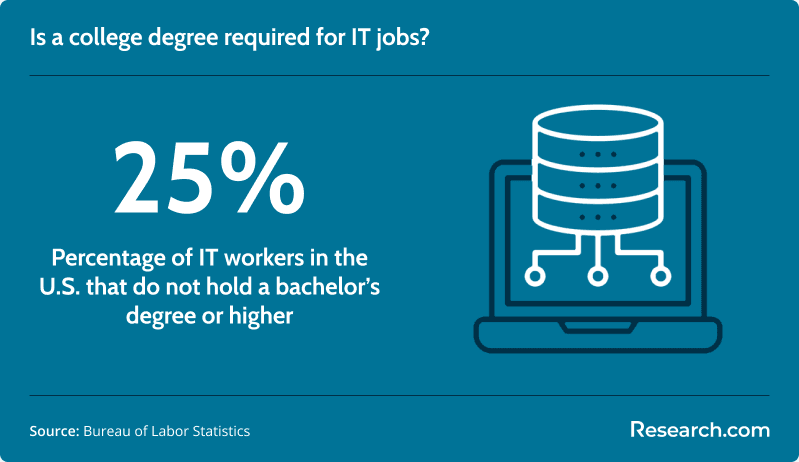
According to the U.S. Bureau of Labor Statistics, 25% of IT workers in the U.S. do not hold a bachelor’s degree or higher. That does not mean a certification alone guarantees a technology job, but it does show that degree-free pathways exist in parts of the labor market when candidates can prove technical ability.
The strongest salary outcomes usually come from certifications that do one of three things: meet a legal or licensing requirement, validate a scarce technical skill, or help experienced workers qualify for higher-responsibility roles. Examples include cloud architecture, cybersecurity, project management, medical coding, nursing support, and skilled trades.
Certification-driven career paths are strongest in industries where employers need proof of competence before allowing workers to handle systems, patients, equipment, financial processes, or regulated work. The following sectors are often worth researching first.
- Information Technology: IT employers frequently use credentials to screen for help desk, networking, cloud, systems, and cybersecurity skills. If you are exploring security-focused training, compare reputable cyber security courses online and look for hands-on labs, exam alignment, and employer recognition.
- Healthcare: Certifications can qualify workers for patient care, billing, coding, laboratory, and support roles. Some credentials also help learners prepare for bridge programs, including an MA to LPN bridge program online, when they want to move from allied health into nursing.
- Finance and Accounting: Credentials in auditing, financial analysis, accounting, and planning can support advancement, especially when paired with relevant work experience and, in some roles, degree requirements.
- Cybersecurity: Security certifications can be valuable because organizations need workers who understand risk, compliance, networks, threat response, and secure systems. Advanced credentials are usually most useful after building practical IT experience.
- Project Management: Project management certifications can transfer across technology, construction, healthcare, manufacturing, and business operations because organizations need people who can manage scope, deadlines, budgets, and stakeholders.
- Trades and Skilled Labor: HVAC, electrical, plumbing, welding, and similar fields often require a blend of classroom training, certification, licensing, apprenticeships, and supervised work.
- Energy and Utilities: Credentials related to energy systems, utilities, safety, and specialized equipment can support employment in sectors that require technical reliability and compliance.
Certifications are better than degrees for some goals, but not all. They are usually faster, narrower, and less expensive. Degrees are broader, take longer, and may be required for licensed professions, graduate school, management tracks, or roles where employers expect formal academic preparation. CNBC has reported on companies that certifications are better than degrees in some hiring contexts by reducing degree requirements, but that trend does not apply evenly across every occupation.
In IT, cybersecurity, project management, transportation, and skilled trades, certifications can sometimes open doors more quickly than a degree. In medicine, law, engineering, many finance roles, and advanced healthcare positions, a degree is often required before certification, licensing, or professional practice.
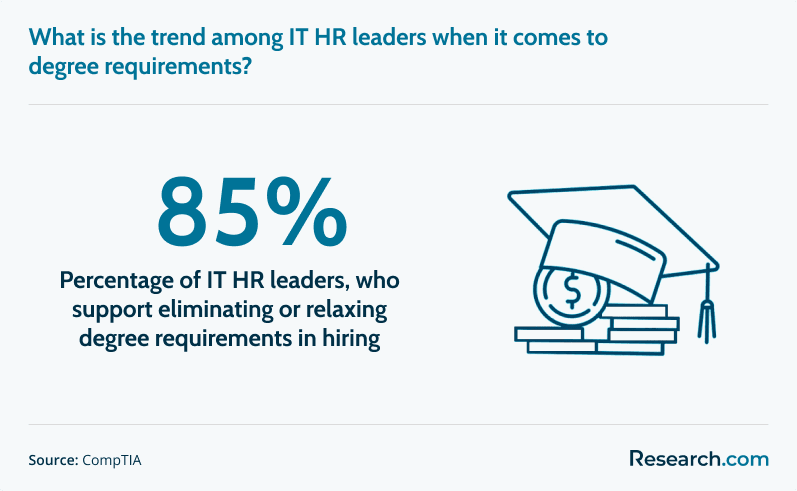
In a CompTIA survey of HR leaders, 85% support eliminating or relaxing degree requirements in hiring. That is encouraging for skills-based candidates, but applicants should still check actual job postings in their region because employer expectations vary by company, role, seniority, and location.
| Choose a certification when... | Choose a degree when... |
| You need a faster job-entry route and the credential is requested in postings. | Your target profession requires formal education for licensure or advancement. |
| You already have experience and need proof of a specialized skill. | You want broader academic training, research preparation, or leadership mobility. |
| The cost is manageable and the exam has clear employer value. | The salary ceiling or promotion path in your field depends on a degree. |
| You want to test a field before committing to a longer program. | You plan to pursue graduate or professional school later. |
Yes. Many programs tied to technology, healthcare support, cloud computing, project management, and trades can be completed in less than a year. However, completion time is not the same as time to employment. You may still need to pass an exam, meet work-experience requirements, complete clinical or hands-on hours, apply for state licensure, or build a portfolio.
The examples below show how some certifications that pay well can fit within a shorter training timeline.
| Role | Time to Complete | Average Salary |
| Certified Ethical Hacker (CEH) | 6 months or less | $80,000 - $130,000 |
| Google Cloud Professional Data Engineer | 6 months | $110,000 - $160,000 |
| Project Management Professional (PMP) | 6 to 12 months | $95,000 - $135,000 |
| AWS Certified Solutions Architect – Associate | 3 to 6 months | $120,000 - $150,000 |
| Certified Phlebotomy Technician (CPT) | 3 to 6 months | $35,000 - $50,000 |
Yes, an online certification can support a high-paying job search when the credential is reputable, skill-based, and relevant to the role. Online delivery is common in IT, cloud computing, cybersecurity, project management, data analytics, digital marketing, and medical billing or coding. The key question is not whether the program is online; it is whether employers recognize the credential and whether the training gives you enough practice to perform the work.
Technology credentials from major providers and established certifying bodies can be widely respected, particularly when candidates also show projects, labs, troubleshooting experience, or prior work history. Online healthcare certificates require more caution because some roles need clinical practice, state approval, in-person testing, or supervised hours.
For healthcare administration roles, compare curriculum, exam preparation, and employer recognition before enrolling in programs such as affordable medical billing and coding online schools. For career changers considering business or management, an online certification may be a first step, while broader graduate study, such as the cheapest online master's degree in sports management, may be more relevant for long-term leadership goals in a specialized industry.
| Online certification works well when... | Be cautious when... |
| The credential is issued by a recognized vendor, professional body, college, or licensing-aligned provider. | The school promises a salary or job without transparent outcomes. |
| The program includes labs, simulations, projects, exam prep, or hands-on requirements. | The career requires state approval or clinical hours that the online program does not provide. |
| Job postings in your area name the certification. | The credential is not mentioned by employers or professional associations. |
Many career-focused certifications take 3 to 12 months, depending on the field, credential level, schedule, and whether hands-on training is required. Students comparing options through affordable online colleges should verify whether the program is a short certificate, a credit-bearing college certificate, a licensing-prep program, or a noncredit professional course.
- Digital Marketing Certifications: These may take two to six months and are best paired with a portfolio showing campaigns, analytics, content, SEO, advertising, or social media results.
- Finance Certifications: Some entry-level credentials, including FMVA, can be completed in under a year, while more advanced credentials may require deeper preparation. Learners who want broader business training after a certificate can compare the best online MBA programs under 30k.
- Skilled Trades Certifications: Many trade programs combine classroom learning with hands-on practice. The coursework may finish within a year, but apprenticeships, licensing, and field experience can extend the career timeline.
- Data Science Certifications: Many data-focused programs take less than a year and can help learners build skills in analytics, tools, and data-driven decision-making.
- Real Estate Licensing: Real estate courses can often be completed quickly, but licensing rules, exams, background checks, and state requirements vary.
If your goal is interactive media or software work, a short certificate may help you learn tools, but it is rarely enough by itself. Review what it takes to build a portfolio and enter a career in game development before choosing a program.
Yes. Certification students may have access to scholarships, employer funding, workforce training funds, platform-based financial aid, state programs, or limited federal aid depending on the provider and program type. Funding is less standardized than it is for degree programs, so applicants should ask direct questions before enrolling.
Private foundations and industry groups sometimes support students entering high-demand trades, healthcare, and technology fields. The Mike Rowe Works Foundation, for example, offers scholarships related to skilled trades such as welding, HVAC, and electrical work.
Some online platforms and companies offer need-based aid or scholarships for selected career certificates. Coursera offers financial aid for learners who cannot afford certain courses, and Google offers scholarships for Google Career Certificates in areas such as IT support, project management, and data analytics.
Employer tuition reimbursement can also reduce the cost of certifications, especially when the credential supports your current role or an internal promotion path. Workers should confirm reimbursement rules before paying: some employers require preapproval, successful completion, a minimum grade, continued employment, or a role-related justification.
In the U.S., the Workforce Innovation and Opportunity Act (WIOA) can support job training and certification programs for people who are unemployed, underemployed, or displaced. Some state and local programs partner with community colleges or workforce boards to provide low-cost training in healthcare, IT, and trades.
Pell Grants may apply in limited cases when the certificate is offered by an accredited institution and meets program-length requirements. If your interest is design rather than a short certificate, compare scholarships and costs for a UX design degree online to decide whether a degree or certificate is the better investment.
They can, but it depends on the school. Some colleges evaluate certifications, licenses, military training, workplace learning, or prior coursework for credit. Others may accept a certification only as evidence of readiness, not as transferable credit. Always ask for a written transfer-credit evaluation before assuming that a certificate will shorten a bachelor’s program.
Professionals in IT, healthcare, business, and trades may be able to combine prior learning with transfer credits in programs such as 2-year accelerated bachelor degrees. This can be useful if you used a certification to enter the workforce and later need a bachelor’s degree for management, graduate school, or broader career mobility.
The best strategy is to plan both short-term and long-term credentials together. A certificate can help you earn sooner, while an accelerated degree may help you move into roles with greater responsibility later.
Short programs are most useful when they train for a specific role that has active hiring demand. If speed is your priority, compare 6-month certificate programs that pay well, but do not choose based only on program length. A six-month credential with strong employer recognition is far more valuable than a shorter certificate that does not appear in job postings.
Look for programs connected to licensing, industry exams, apprenticeships, employer partnerships, clinical placements, or portfolios. Fast credentials are especially common in healthcare support, IT support, medical coding, digital marketing, transportation, and some skilled trades.
Certifications can support a future doctoral application by showing professional specialization, continuing education, and applied expertise. However, they usually do not replace academic prerequisites, graduate-level research preparation, or required degrees. Policies vary by institution, so applicants should ask whether certifications are considered for admission strength, prerequisite waivers, or transfer credit.
If you are thinking about advanced academic pathways after building professional credentials, compare doctoral formats carefully. Research.com’s guide to the easiest PhD can help you understand how program structure, admissions expectations, and completion requirements differ.
A certification is financially smart when the total cost is reasonable, the credential is trusted, and the expected career benefit is realistic. Before enrolling, compare tuition, exam fees, books, tools, background checks, renewals, travel, technology, and time away from work against likely salary growth and job opportunities.
Certifications can produce a faster return than degrees because they usually require less time and money. Still, the ROI depends on your starting point. A credential may help an experienced worker qualify for a promotion quickly, while a complete beginner may need additional projects, supervised training, or entry-level experience before seeing a major salary increase.
Some professionals strengthen long-term ROI by pairing certifications with graduate education, including 1 year masters programs, when their field rewards both technical proof and advanced academic credentials.
Between 2020 and 2030, BLS projects that about 60% of new jobs in the economy will be in occupations that do not typically require an associate’s, bachelor’s, or graduate degree. That makes certifications worth considering, but the decision should be as deliberate as choosing among good majors. You need to match the credential to your target job, current skill level, budget, timeline, and long-term plans.
Step 1: Start with the job, not the certificate
Choose three to five target job titles and read current postings. Write down which credentials appear repeatedly, which skills employers expect, and whether experience is required.
Questions to ask
- Which certification appears most often in job ads for the role I want?
- Is the credential required, preferred, or simply nice to have?
- Do employers also ask for a degree, license, portfolio, or work experience?
Step 2: Match the credential to your experience level
Foundational certifications may fit beginners, while advanced credentials often assume professional experience. For example, an entry-level IT learner may start with support or networking basics, while an experienced professional may pursue cloud, cybersecurity, or architecture credentials.
Questions to ask
- Am I eligible for the exam or credential now?
- Does the program teach beginners, or does it assume prior knowledge?
- Will I graduate with projects, clinical hours, labs, or work samples?
Step 3: Check employer recognition
A certificate’s value depends heavily on who issues it and whether employers trust it. Prefer credentials tied to recognized vendors, licensing boards, professional associations, accredited colleges, or widely used industry exams.
Questions to ask
- Who awards the certification?
- Do employers in my area recognize it?
- Is the curriculum aligned with a national exam, state requirement, or industry standard?
Step 4: Calculate the full cost
Low tuition can hide expensive add-ons. Ask for a complete cost breakdown before enrolling, including exam vouchers, equipment, software, uniforms, drug screening, background checks, renewal fees, and retake costs.
Yes. A certification does not prevent you from pursuing graduate education later. The better question is whether a master’s degree adds enough value for your career goal. Some professionals use certificates to enter a field quickly, then pursue easy masters degrees or other graduate programs once they know which specialization or leadership path they want.
- Skill expansion: A certification usually proves a focused ability, while a master’s degree can add strategy, leadership, research, analysis, or advanced domain knowledge.
- Career mobility: Certifications may help with entry or specialization; graduate degrees may support movement into management, consulting, policy, education, or senior technical roles.
- Promotion potential: In fields such as business, technology, healthcare administration, and project management, combining applied credentials with graduate study may strengthen advancement opportunities.
Certification programs are changing because employers need faster ways to verify skills. Micro-credentials, stackable certificates, modular courses, hybrid training, online labs, and employer-designed learning pathways are becoming more common. These formats can help workers update skills without leaving the workforce for a full degree program.
AI and automation are also changing what certifications need to cover. In technology, business, marketing, analytics, healthcare administration, and cybersecurity, workers increasingly need to understand digital tools, data workflows, security practices, and ethical use of automation. Credentials that update frequently and include applied practice are likely to remain more useful than static programs.
These trends overlap with the growth of flexible academic pathways, including highest-paying online degrees, where students look for shorter, career-aligned education that still supports long-term advancement.
To find a program that is both affordable and credible, compare outcomes, not just advertised tuition. A quality certificate should have a clear curriculum, qualified instructors, transparent fees, exam alignment, student support, and evidence that employers value the credential.
| What to check | Why it matters | What to ask |
| Accreditation or recognition | Helps confirm legitimacy and may affect financial aid or licensure | Is the provider accredited, state-approved, or recognized by the certifying body? |
| Total program cost | Prevents surprise expenses | Are exams, books, tools, background checks, and retakes included? |
| Employer value | Determines whether the credential helps in hiring | Which local employers hire graduates or request this credential? |
| Hands-on training | Builds job readiness | Are there labs, clinicals, simulations, apprenticeships, or projects? |
| Student support | Improves completion and job-search readiness | Do students receive tutoring, advising, resume help, or placement support? |
If you need a broader low-cost education path, compare certificate options with the cheapest online colleges that accept FAFSA to see whether a credit-bearing program provides better value.
For 2027, certified professionals are especially relevant in industries where technical skills, compliance, safety, patient care, financial accuracy, or project execution matter. Hiring conditions vary by region and employer, so use this list as a starting point for local labor-market research.
- Information Technology: Credentials such as CompTIA A+, CISSP, and AWS Certified Solutions Architect can support roles in support, cloud, networking, and security.
- Healthcare: Certifications in nursing support, phlebotomy, medical billing, coding, and health information can provide entry points into stable healthcare environments.
- Construction and Skilled Trades: Electrical, plumbing, HVAC, welding, and related fields often rely on certification, licensing, apprenticeships, and safety training.
- Project Management: PMP and similar credentials can be valuable in industries that manage complex timelines, budgets, teams, and deliverables.
- Finance: Credentials such as CFA and CPA can support advancement in analysis, accounting, auditing, and financial leadership, though degree requirements may still apply.
If a certificate is not enough for your target role, consider whether affordable degree options through cheap accredited online colleges would provide a stronger long-term foundation.
Start by identifying what kind of program you are evaluating. A college certificate may involve institutional accreditation. A licensing-prep program may need state approval. A vendor certification may be validated by the company or professional association that controls the exam. These are not the same thing.
- Check the provider’s accreditation or state approval on official government, accreditor, licensing board, or professional association websites.
- Confirm that the program prepares students for the exact exam or license required in your target role.
- Ask employers, workforce boards, or professional associations whether the credential is recognized.
- Review instructor qualifications, curriculum transparency, completion support, and published outcomes.
- Be careful with programs that use vague language such as “accredited certificate” without naming the accreditor or approving body.
Accreditation can also matter if you later pursue advanced education, including master degrees that pay well, because transfer policies and admissions expectations may depend on the original institution or credential type.
High-paying certifications can help with advancement when they build on work experience and align with higher-responsibility roles. They may support promotions, lateral moves, specialization, consulting work, supervisory responsibilities, or eligibility for advanced training.
The long-term value is strongest when certifications are stacked strategically. For example, an IT support credential can lead to networking, cloud, or cybersecurity credentials. A CNA can move toward LPN/LVN or RN training. A project coordinator can pursue project management credentials after gaining experience. A trade worker can add safety, equipment, supervisory, or business credentials over time.
Some professionals later combine certifications with faster graduate study, such as shortest masters programs online, when they want to move from technical execution into strategy, leadership, or specialized management.
Certifications can be efficient, but they are not risk-free. Before paying, evaluate whether the credential will still be relevant, whether the provider is credible, and whether the program actually prepares you for the work.
| Common mistake | Why it hurts | Better approach |
| Choosing the fastest program without checking employer demand | You may earn a credential that does not improve hiring odds | Review job postings first and identify repeated certification requirements |
| Ignoring accreditation, state approval, or licensing rules | You may not qualify for the exam or job you want | Verify requirements through official boards or certifying bodies |
| Comparing only tuition | Fees, tools, books, exams, and renewals can raise the real cost | Request a full cost sheet before enrollment |
| Assuming online always works for healthcare or trades | Some roles require hands-on labs, clinical hours, or apprenticeships | Confirm in-person requirements and placement support |
| Expecting a salary guarantee | Pay depends on location, experience, employer, and market conditions | Use salary ranges as estimates, not promises |
If your career goal requires deeper research training or academic credentials, a certificate may not be enough. In that case, compare options such as short PhD programs online only after confirming admissions standards, research expectations, and career relevance.
To evaluate ROI, compare the total cost of the certificate with the realistic benefit it can provide. Do not rely on advertised salary examples alone. Look at your current earnings, target job postings, local demand, completion requirements, exam pass expectations, and whether employers in your area recognize the credential.
- Total cost: Include tuition, materials, exam fees, renewal fees, equipment, software, transportation, and lost income while studying.
- Time to completion: A shorter program may produce value faster, but only if it qualifies you for real opportunities.
- Employer recognition: A low-cost credential with little market value may have poor ROI.
- Career ladder: The best certifications often lead to additional roles, promotions, licenses, or degree pathways.
- Support services: Advising, tutoring, exam prep, apprenticeships, clinical placement, and career services can affect outcomes.
Working adults should also compare certificates with flexible degree options through the most affordable online colleges for working adults if a degree would improve long-term earning potential or advancement.
Better certification programs do more than deliver lessons. They help students prepare for exams, build resumes, connect with employers, understand renewal requirements, and continue learning as industry standards change.
- Exam preparation and practice tests
- Resume, interview, and portfolio support
- Employer partnerships, apprenticeships, or clinical placement assistance
- Alumni groups and professional networking
- Continuing education or renewal reminders
- Credit-transfer guidance for students who may later pursue a degree
If you plan to continue into a bachelor’s program, ask whether your certificate can transfer or count as prior learning. Research.com’s guide, What is the fastest and easiest bachelor's degree to get?, can help you compare degree-completion possibilities.
Yes. Certifications and online degrees can complement each other when they serve different purposes. A certification can prove a specific job skill quickly, while a degree can provide broader theory, communication, research, management, and critical-thinking preparation.
This combination is especially useful for professionals who need to work while studying. You might use a certificate to qualify for an entry-level role, gain experience, and then complete an online degree to prepare for advancement. If you are comparing flexible academic options, review What is the easiest online degree to get? as a starting point, but choose based on career fit rather than ease alone.
Graduate stories can be motivating, but they should not be treated as guaranteed results. Instead of relying on testimonials alone, ask programs for verifiable outcomes: completion rates, exam pass rates, job placement support, employer partners, median debt, graduate job titles, and whether outcomes are independently reported.
When speaking with alumni, ask what they earned before the program, how long it took to find work, whether the certificate was required for the job, what additional experience they needed, and whether they would choose the same program again.
- Certifications can lead to careers that pay well, but only when the credential is recognized by employers and tied to real job requirements.
- Many high-value certification paths can be completed in 3 to 12 months, though licensing, exams, clinical hours, apprenticeships, and experience may extend the full timeline.
- According to the U.S. Bureau of Labor Statistics, 25% of IT workers in the United States do not hold a bachelor’s degree or higher.
- In a CompTIA survey of HR leaders, 85% support eliminating or relaxing degree requirements in hiring.
- In service industries such as healthcare, education and government services, 62% of workers with no postsecondary education have a certification.
- 25% of IT professionals in the U.S. have completed certification programs but do not hold a bachelor’s degree.
- Certifications are often strongest for fast workforce entry, while degrees may be better for licensed professions, leadership roles, graduate study, and long-term mobility.
- The best ROI comes from comparing total cost, employer recognition, salary potential, completion time, support services, and advancement pathways before enrolling.
- Avoid programs that promise guaranteed salaries, hide fees, lack accreditation or state approval, or cannot show clear connections to jobs in your target field.
- Carnevale, A. P., Cheah, B., & Van Der Werf, M. (2022). Georgetown University Center on Education and the Workforce. The college payoff: Sub-baccalaureate education and economic opportunity.
- CompTIA. (n.d.). Get into IT without a degree.
- Intelligent.com. (2023). Nearly half of companies plan to eliminate bachelor’s degree requirements in 2024.
- Lumina Foundation. (2020). Professional certifications offer a pathway to good jobs.
- U.S. Bureau of Labor Statistics. (2022). Occupations that don’t require a degree. Career Outlook.
Other Things You Should Know About Certification Programs for Careers That Pay Well
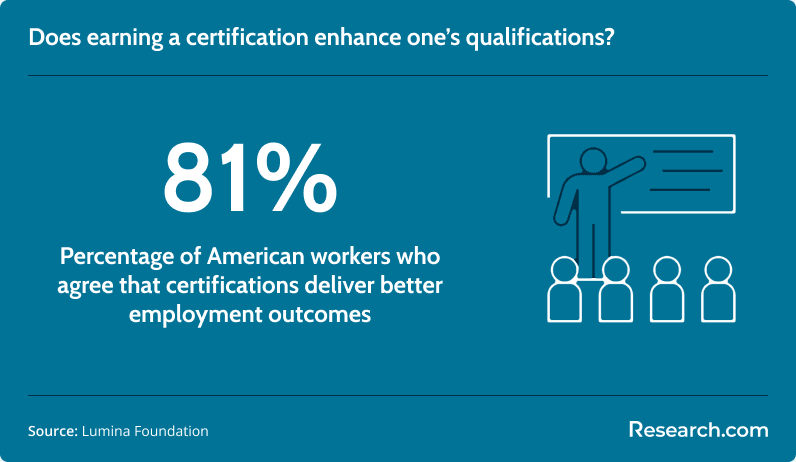
Certifications in 2027 can significantly impact salary increases by validating specialized skills, enhancing one’s qualifications, and demonstrating commitment to professional growth. Employers recognize certifications as a benchmark of expertise, often leading to higher pay in fields like IT, healthcare, and project management.
In 2027, the technology and healthcare sectors are experiencing the highest demand for certification programs. Fields like cybersecurity, cloud computing, and nursing offer certification paths that align with rapid industry growth and increasing employment opportunities, reflecting the evolving job market dynamics.
Yes. Several well-paid certifications require experience before you can sit for the exam. For example, the Project Management Professional (PMP) requires 36 months of leading projects with a four-year degree, or 60 months without one. The CISSP requires five years of paid, full-time security work in two domains.


