2027 Most Affordable Online Master's in Sports Management Degree Programs

Co-Founder and Chief Data Scientist
An affordable online master’s in sports management can help working adults move into leadership, operations, marketing, analytics, event, or athletic administration roles without leaving their jobs or relocating. The challenge is choosing a program that is genuinely low-cost, accredited, career-relevant, and flexible enough to fit around professional responsibilities.
This guide is built for students comparing online graduate sports management programs for 2027. It explains what these programs teach, how much they cost, how long they take, what careers they can support, and how to judge whether the investment makes sense for your goals. It also highlights affordable program options and the questions you should ask before enrolling.
Quick Answer: Is an Online Master’s in Sports Management Worth Considering?
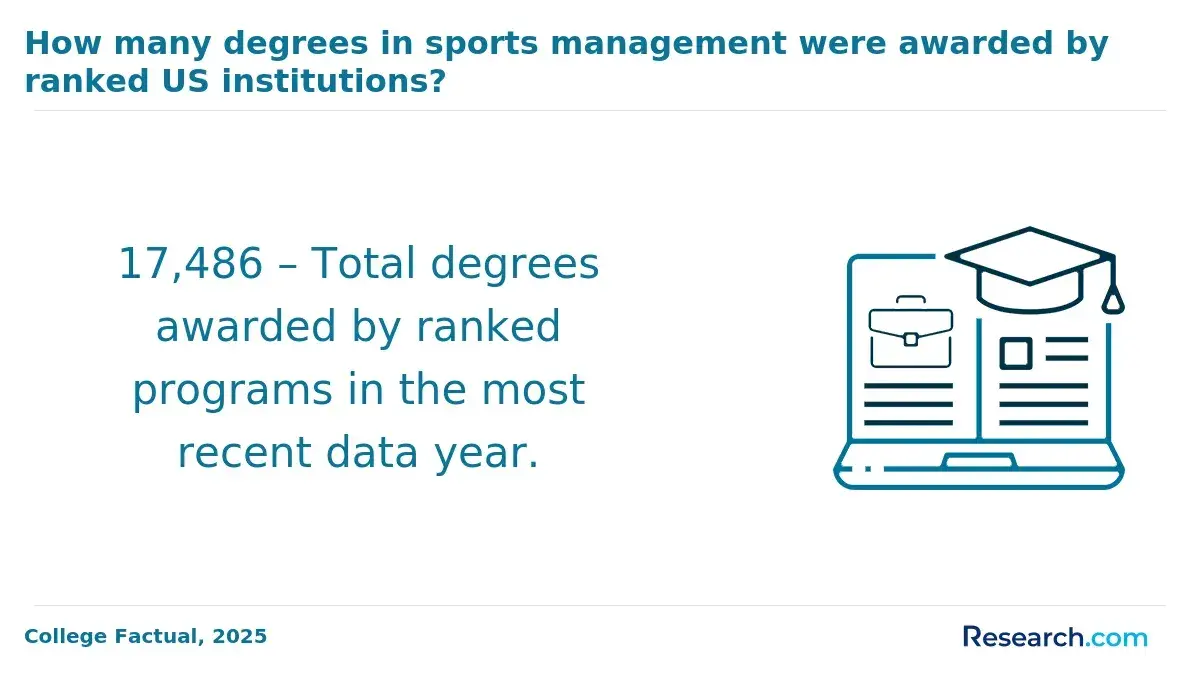
An online master’s in sports management may be worth it if you want to work in sports business, athletic administration, event operations, facility management, sponsorship, sports marketing, or analytics and need graduate-level business training focused on the sports industry. Most programs require 30-36 credits, often take 12-24 months, and commonly cover sports finance, marketing, law, leadership, analytics, and event management.
- Online study can be a strong fit for working professionals who need flexibility while building experience.
- Graduates may pursue roles such as sports manager, athletic director, marketing director, event coordinator, facilities manager, or sports agent.
- Higher-level roles can pay substantially more, but outcomes depend on experience, location, employer type, networking, and prior industry exposure.
- Agents and business managers of artists, performers, and athletes earn a median annual salary of $96,310, while sports marketing managers can earn around $161,030.
- The best-value program is not always the cheapest; accreditation, internship access, alumni connections, and industry partnerships matter.
What can I expect from an online master's in sports management program?
An online master’s in sports management is a graduate business degree focused on how sports organizations are financed, marketed, staffed, regulated, and operated. Programs usually combine management theory with sports-specific coursework in areas such as sponsorship, facility operations, sport law, fan engagement, event planning, analytics, and organizational leadership.
Most programs require about 30-36 credit hours and can often be completed in 1-2 years. Tuition commonly falls between $400 and $1,000 per credit hour, although the affordable programs listed below include several options below that range. Many programs include a capstone, internship, practicum, consulting project, or applied research assignment so students can connect coursework to real sports organizations.
| Program feature | What it usually means for students | Why it matters |
| 30-36 credit curriculum | Students complete a compact graduate sequence in sports business and leadership. | Credit count directly affects total tuition and time to graduation. |
| Online delivery | Courses may be asynchronous, scheduled live, or a mix of both. | The format determines how easily you can study while working. |
| Applied project or internship | Students complete hands-on work with sports organizations or solve a real business problem. | Practical experience is especially important in a relationship-driven field. |
| Specialization options | Some programs let students focus on analytics, administration, marketing, coaching, or facilities. | A concentration can help align the degree with a specific career path. |
Where can I work with an online master's degree in sports management?
Graduates can work across professional sports, college athletics, recreation, fitness, youth sports, sports agencies, facilities, event companies, nonprofit sports organizations, and sports media. Common employers include teams, leagues, universities, athletic departments, recreation agencies, fitness companies, stadiums, sports marketing firms, and community sports organizations.
Typical roles include sports manager, athletic director, event coordinator, marketing director, facilities manager, sports operations manager, sponsorship coordinator, sports analytics specialist, and public relations specialist. The Bureau of Labor Statistics reported that 21,400 agents and managers of athletes were employed in the U.S., which illustrates one segment of the broader sports business labor market.
How much can I make with an online master's in sports management?
Salary potential varies widely because sports management covers many job functions. Agents and business managers of artists, performers, and athletes earn a median salary of $96,310 annually. Sports marketing managers can make around $161,030. University athletic directors typically earn around $60,000 to $120,000, while sports event coordinators usually earn between $45,000 and $65,000 annually.
A master’s degree can improve competitiveness for management and executive roles, but it does not guarantee a specific salary. Employer size, market, geographic location, prior experience, professional network, and the type of sports organization all influence earnings.
- Most Affordable Online Master’s in Sports Management Degree Programs for 2027
- How Long Does an Online Master’s in Sports Management Take?
- Online vs. On-Campus Sports Management Master’s Programs
- Average Cost of an Online Master’s in Sports Management
- Financial Aid Options for Online Sports Management Graduate Students
- Admissions Requirements and Prerequisites
- Common Courses in Online Sports Management Master’s Programs
- Sports Management Specializations
- How to Check Accreditation and Program ReputationReview specialization choices
- Return on Investment of a Sports Management Master’s Degree
- Advanced Academic Study in Sports Management
- How to Choose the Best Online Master’s in Sports Management
- Industry Partnerships and Career Outcomes
- Technology Trends in Sports Management Programs
- Career Advancement With a Sports Management Master’s
- Career Support Services in Online ProgramsSee advancement paths
- Soft Skills Developed in Online Sports Management Programs
- Networking Strategies for Sports Management Careers
- Challenges of Online Graduate Study
- Building Financial Skills for Sports Management
- Career Paths for Sports Management Graduates
- Job Market for Sports Management Graduates
- Certifications That Can Complement the Degree
- Doctoral Study for Sports Management Leaders
- Should You Combine Sports Management With an MBA?Compare certificationsReview job outlook
Most Affordable Online Master’s in Sports Management Degree Programs for 2027
How do we rank our schools?
Research.com evaluates affordable online master’s in sports management programs using information from recognized education data sources, including the IPEDS database, Peterson’s database, the College Scorecard database, and the National Center for Education Statistics. These sources help compare affordability, institutional information, and program characteristics. To understand the broader ranking process, see the Research.com methodology page.
1. Georgia Southern University
Georgia Southern University offers an online Master’s in Sport Management built for professionals who want to strengthen their knowledge of sports business, administration, and industry decision-making. The program emphasizes applied learning and discussion of current issues, making it suitable for students who want to keep working while preparing for roles in for-profit and nonprofit sports organizations.
- Required Credits to Graduate: 36 credits
- Cost: $367 per credit hour
- Accreditation: Southern Association of Colleges and Schools Commission on Colleges (SACSCOC)
2. American Public University System
The online Master’s in Sports Management from American Public University System is designed to build business, analytical, legal, and ethical decision-making skills for sports settings. Students study areas such as sports finance, law, marketing, and event management while learning to apply management concepts to practical industry problems.
- Required Credits to Graduate: 30 credits
- Cost: $455 per credit hour
- Accreditation: Commission on Sport Management Accreditation (COSMA)
3. University of West Georgia
The University of West Georgia offers a Master’s in Sports Management with pathways in intercollegiate athletic administration and sports analytics. The program is useful for students who want flexibility as well as a curriculum that connects administration, leadership, and data-informed decision-making in sports organizations.
- Required Credits to Graduate: 36 credits
- Cost: $241 per credit hour
- Accreditation: SACSCOC
4. Minot State University
Minot State University’s Master of Science in Sports Management focuses on advanced management concepts in sports administration, law, and psychology. The online format supports students preparing for work in coaching, athletic administration, agencies, or other sports leadership settings while studying at a manageable pace.
- Required Credits to Graduate: 33 credits
- Cost: $389.65 per credit hour
- Accreditation: International Accreditation Council for Business Education (IACBE), Higher Learning Commission (HLC)
5. Jacksonville State University
Jacksonville State University provides a fully online Master of Science in Sport Management with coursework in finance, ethics, marketing, and sports industry operations. The program can fit students interested in professional athletics, college athletics, coaching, event management, or administrative roles.
- Required Credits to Graduate: 30 credits
- Cost: $422 per credit hour
- Accreditation: SACSCOC
6. Adams State University
Adams State University’s online Master’s in Sports Administration is structured for professionals who want graduate training in areas such as event management, sports marketing, and administration. Students can complete the 36-credit program in two years and choose between Capstone or Thesis tracks, depending on whether they prefer applied work or a research-focused finish.
- Required Credits to Graduate: 36 credits
- Cost: $452.80 per credit hour
- Accreditation: HLC
7. Arkansas State University
Arkansas State University offers a fully online Master’s in Sports Administration for working professionals preparing for leadership roles. The curriculum emphasizes practical program design, evaluation, networking, and applied experience through internships, making it a strong option for students seeking both affordability and career relevance.
- Required Credits to Graduate: 36 credits
- Cost: $340 per credit hour
- Accreditation: COSMA
8. Midwestern State University
Midwestern State University offers a Master of Education in Sports Administration that prepares students for administrative and management roles in interscholastic, collegiate, and other sports environments. The 36-hour curriculum includes leadership, event management, marketing, research, and practical learning components.
- Required Credits to Graduate: 36 credits
- Cost: $614.95 per credit hour for residents, $1,024.95 for non-residents
- Accreditation: SACSCOC
9. Campbellsville University
Campbellsville University offers an online Master’s in Sport Management with emphasis options in administration and marketing. The 30-credit curriculum is designed to help students connect business fundamentals with sports and entertainment industry practice, with a two-year completion structure for many learners.
- Required Credits to Graduate: 30 credits
- Cost: $445 per credit hour
- Accreditation: IACBE
10. Utah State University
Utah State University’s Sport Management program prepares students for leadership work in athletic and sports organizations. Coursework covers issues in athletics, facility management, legal aspects of sports, and applied practice through a practicum experience.
- Required Credits to Graduate: 33 credits
- Cost: $504 per credit hour
- Accreditation: Northwest Commission on Colleges and Universities (NWCCU)
What Graduates Say About Online Sports Management Master’s Programs
-
: "
“The online format gave me the flexibility I needed. I could keep working, manage my coursework, and immediately connect class projects to real sports management situations.” – Garrett
"
-
: "
“I expected online learning to feel isolated, but the faculty interaction and peer discussions helped create a real academic community. The practical assignments helped me take on more responsibility at work.” – Leigh
"
-
: "
“Being able to focus on sports marketing and event management while working full-time made the program valuable. It was demanding, but the coursework helped me build confidence and sharper professional skills.” – Aliya
"
Key Findings
- Most online master’s in sports management programs require 30-36 credits.
- Many students finish in 12-24 months, depending on whether they enroll full-time or part-time.
- Online sports management master’s programs often cost $15,000 to $30,000, although tuition varies by school and residency status.
- Graduates can pursue roles with salaries ranging from $50,000 to $100,000+ depending on position, employer, market, and experience.
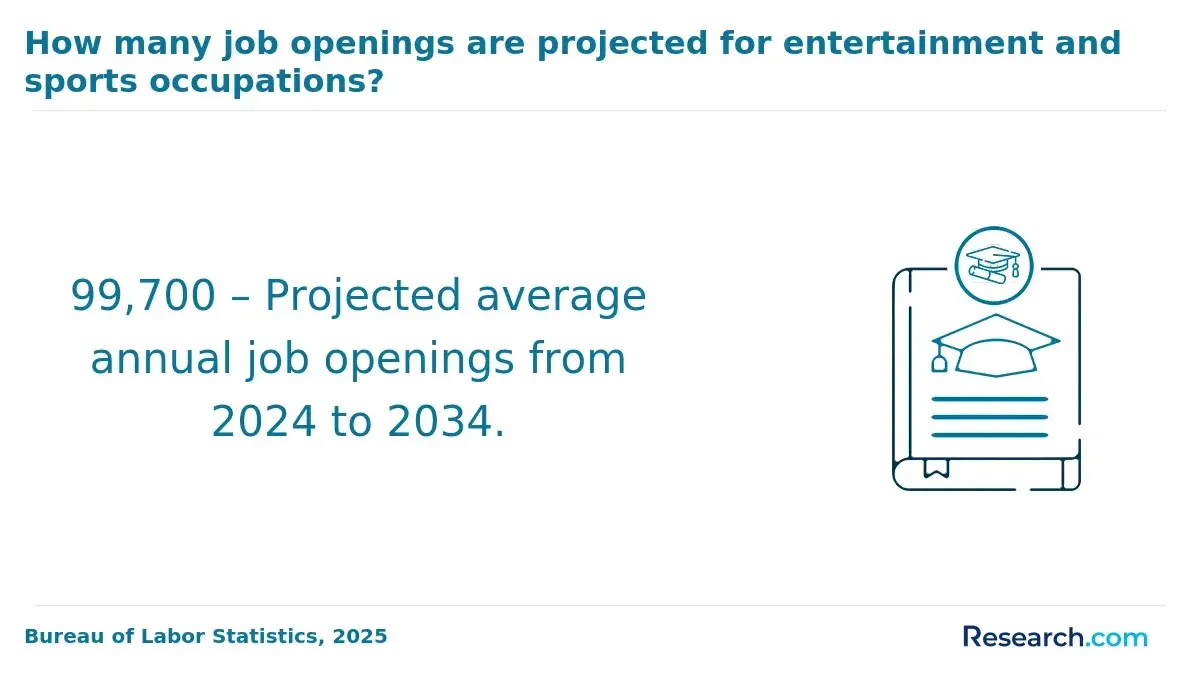
- The entertainment and sports field is projected to grow faster than average, with 99,700 job openings annually through 2034.
How long does it take to complete an online master’s in sports management program?
Most online master’s in sports management programs take 1 to 2 years to complete. Full-time students can often graduate in 12 to 18 months, especially when a school offers accelerated sessions, multiple start dates, or year-round coursework. Part-time students may need closer to 2 to 3 years if they are balancing school with work, family, coaching, or travel schedules.
The total timeline depends on credit requirements, course length, enrollment pace, internship expectations, and whether the program uses 8-week or traditional semester courses. Internships and practicums can extend the calendar but may also make the degree more valuable because sports employers often look for demonstrated experience.
| Enrollment pace | Typical completion time | Best for |
| Accelerated full-time | 12 to 18 months | Students who can manage a heavy course load and want to move quickly into a new role. |
| Standard full-time | About 1 to 2 years | Students who want steady progress without stretching the program too long. |
| Part-time | Closer to 2 to 3 years | Working professionals, coaches, parents, and students with demanding schedules. |
If flexibility is your main priority, compare scheduling models across fields as well. For example, the best online game development degree programs also illustrate how online programs may offer accelerated or part-time study paths for students with different career timelines.
How does an online master’s in sports management program compare to an on-campus program?
Online and on-campus sports management master’s programs often cover similar academic content, but the student experience can be very different. The right format depends on your work schedule, networking needs, learning style, budget, and access to local sports organizations.
| Factor | Online master’s in sports management | On-campus master’s in sports management |
| Schedule | Usually more flexible, especially if courses are asynchronous. | Often follows fixed class times and campus-based schedules. |
| Cost | May reduce relocation, commuting, and housing expenses. | May involve campus fees, transportation, and living costs. |
| Networking | Relies on virtual events, group projects, alumni platforms, and local internships. | Offers easier access to face-to-face events, campus athletics, and local employer visits. |
| Internships | Often allows students to complete experience requirements near where they live. | May provide established partnerships with nearby teams, schools, or facilities. |
| Learning style | Requires strong self-direction and comfort with digital tools. | Works well for students who prefer classroom structure and in-person discussion. |
Online programs can be especially useful for students who already work in coaching, recreation, education, fitness, or athletics and want to apply coursework immediately. On-campus programs may be better for students who want daily face-to-face access to faculty, athletic departments, and local sports employers. Similar trade-offs appear in other online graduate fields, including the cheapest online PhD psychology programs, where flexibility must be weighed against practical training and local placement options.
What is the average cost of online master’s in sports management degree programs?
The average cost of an online master’s in sports management degree typically ranges from $15,000 to $30,000. Public universities may be less expensive for in-state students, with some total costs falling around $10,000 to $20,000. Private institutions can cost closer to $25,000 to $35,000 for the full program.
Tuition is only one part of the real cost. Students should also review online course fees, technology fees, textbooks, application fees, graduation fees, travel for any required campus visits, and possible internship-related expenses. This same full-cost comparison is important in related graduate fields such as the cheapest online MHA, where program price can change significantly once fees are included.
| Cost item | What to check before enrolling |
| Tuition per credit | Multiply the per-credit price by the exact number of credits required to graduate. |
| Online fees | Ask whether technology or distance learning fees are charged every course or every semester. |
| Residency pricing | Confirm whether online students pay in-state, out-of-state, or a flat online rate. |
| Books and materials | Ask whether courses use paid textbooks, digital access codes, or open educational resources. |
| Internship expenses | Consider transportation, background checks, insurance, or unpaid work time if applicable. |
What are the financial aid options for students enrolling in an online master’s in sports management program?
Online graduate students in sports management may qualify for several types of aid, but eligibility depends on the institution, enrollment status, program accreditation, and individual financial circumstances.
- Federal Student Loans: Graduate students can complete the FAFSA to determine federal loan eligibility. Common options include Direct Unsubsidized Loans and Graduate PLUS Loans. Federal loans may offer repayment options that private loans do not.
- Scholarships: Some universities, professional associations, and sports-related organizations offer scholarships for students pursuing sports business, athletics, leadership, or related fields. Ask each school whether online graduate students are eligible for institutional awards.
- Grants: Grant availability is more limited at the graduate level, but some schools offer institutional grants or targeted awards. Confirm whether your program qualifies before assuming grant funding is available.
- Employer Tuition Assistance: If you work for a university, athletic department, recreation agency, fitness company, school district, or sports organization, ask HR whether tuition reimbursement applies to graduate study in sports management.
- Military Benefits: Veterans, active-duty service members, and eligible family members may be able to use GI Bill benefits or school-specific military tuition discounts.
- Private Loans: Private graduate loans can cover remaining costs, but rates and repayment protections differ from federal loans. Compare terms carefully before borrowing.
- Work-Study Programs: Work-study is less common for online graduate students, but some schools may offer relevant roles in athletics, recreation, or administrative offices.
- Payment Plans: Monthly payment plans can reduce the need to borrow a large amount at once, though students should check setup fees and payment deadlines.
What are the prerequisites for enrolling in an online master’s in sports management degree program?
Admissions requirements vary by school, but most online sports management master’s programs look for evidence that applicants can handle graduate-level business, leadership, and research coursework.
- Bachelor’s Degree: Applicants usually need a bachelor’s degree from an accredited institution. Sports management is not always required; business, education, health, fitness, communications, or related backgrounds may also be accepted. Students comparing broader management routes may also review the easiest project management degree programs online.
- Minimum GPA: Many programs require a minimum GPA around 2.5 to 3.0. Some schools offer conditional admission for applicants who show professional promise but fall below the standard threshold.
- Professional Experience: Experience in coaching, athletics, recreation, event planning, marketing, fitness, or administration can strengthen an application, though it is not always mandatory.
- Letters of Recommendation: Schools commonly request 2-3 recommendations from supervisors, professors, coaches, or professional mentors who can speak to your readiness for graduate study.
- Personal Statement or Essay: The essay should connect your career goals to the program’s curriculum, especially if you are changing careers or seeking advancement.
- GRE or GMAT Scores: Some programs still ask for standardized test scores, but many online options waive them for applicants with strong academic records or relevant experience. If you are still completing undergraduate requirements, the easiest online bachelor degree programs may help you compare bachelor’s pathways.
- Resume or CV: A current resume should highlight leadership, sports-related experience, business skills, volunteer roles, internships, coaching, and measurable achievements.
- Prerequisite Courses: Some schools may require background coursework in business, economics, statistics, kinesiology, or sport foundations. Bridge courses may be available if you lack the required background.
Admissions expectations differ across specialized fields. If you are comparing sports management with creative or technical routes, resources such as animation certificate programs can help you understand how prerequisites vary by discipline.
What courses are typically in online master’s in sports management programs?
Online sports management master’s programs usually blend business administration with sports industry applications. Students may see overlap with fields such as exercise science, business analytics, and athletic administration. For comparison, students focused more on performance, wellness, or kinesiology can review the cheapest online exercise science degree options.
| Course area | What students learn |
| Sports Marketing | How to promote teams, athletes, events, sponsorships, merchandise, and fan experiences. |
| Sports Law and Ethics | Legal and ethical issues involving contracts, liability, compliance, intellectual property, athlete rights, and organizational decision-making. |
| Financial Management in Sports | Budgeting, revenue models, sponsorship valuation, ticketing, media rights, and expense control. |
| Event and Facility Management | Planning, staffing, security, crowd management, vendor coordination, venue operations, and event execution. |
| Leadership in Sports Organizations | Team leadership, conflict resolution, communication, strategic planning, and personnel management. |
| Sports Analytics | Using data to evaluate performance, fan engagement, operations, marketing, and business strategy. |
| Global Sports Management | International sports markets, cultural considerations, global events, and cross-border regulations. |
| Sports Media and Communication | Media relations, crisis communication, social media strategy, digital content, and public messaging. |
| Sociology of Sport | How sports intersect with culture, gender, race, economics, identity, and community life. |
| Capstone Project or Internship | Applied work that may involve research, consulting, business planning, or field experience with a sports organization. |
What types of specializations are available in an online master’s in sports management program?
Specializations help students align the degree with a target role. Not every school offers the same tracks, so applicants should compare course lists carefully rather than relying only on program titles.
- Sports Marketing and Promotions: Best for students interested in branding, fan engagement, sponsorship, advertising, ticket campaigns, and digital promotion.
- Sports Analytics: Useful for students who want to work with performance metrics, fan data, business intelligence, or strategy. Students interested in deeper quantitative training may also compare cheap MS in data science courses in USA.
- Event and Facility Management: Designed for students who want to manage venues, tournaments, stadium operations, logistics, and major sports events.
- Athlete Development and Coaching: Appropriate for students who want to work directly with athletes, teams, coaching staffs, or development programs.
- Sports Law and Compliance: Valuable for students interested in contracts, risk management, eligibility, governance, or regulatory issues in athletics.
- Global Sports Management: A fit for students interested in international events, global sports brands, cross-cultural marketing, and worldwide sports organizations.
- Esports Management: Useful for students focused on competitive gaming, esports events, team operations, streaming, sponsorship, and digital communities.
- Sports Media and Communication: Designed for future media relations specialists, digital content managers, communications staff, and public relations professionals.
- Leadership in Sports Organizations: A broad option for students targeting management, operations, athletic administration, or executive leadership.
- Youth and Amateur Sports Management: Relevant for students who want to run community programs, youth leagues, amateur associations, or school-based sports initiatives. Those who also want classroom teaching options may compare cheap degrees in elementary education online.
How to assess program accreditation and reputation when choosing an online master’s in sports management
Accreditation should be one of the first filters you use. Institutional accreditation from a recognized accreditor helps confirm that the university meets accepted academic standards and can affect federal financial aid eligibility, credit transfer, and employer recognition. Some sports management programs may also hold specialized accreditation, such as Commission on Sport Management Accreditation (COSMA).
Reputation is different from accreditation. A reputable program should show evidence of qualified faculty, active industry relationships, alumni outcomes, internship access, career services, and relevant coursework. Before enrolling, ask whether faculty have sports industry experience, whether online students receive equal career support, and whether internships can be completed where you live.
If you want to start with institutions that meet recognized quality standards, review this Research.com guide to regionally accredited online universities.
What is the return on investment of an online master’s in sports management degree?
ROI depends on more than tuition. A lower-cost degree can still produce weak returns if it lacks internships, career support, employer recognition, or relevant coursework. A more expensive program may be worthwhile only if it provides access to stronger networks, practical experience, and career opportunities that match your goals.
To estimate ROI, compare total program cost with realistic career outcomes. Include tuition, fees, books, possible travel, loan interest, and income you may forgo if you reduce work hours. Then evaluate whether the degree can help you qualify for roles with higher pay, better advancement potential, or a more direct path into the sports industry. Students still building an academic foundation may also compare options such as the cheapest online college bachelor degree before committing to graduate study.
| ROI question | Why it matters |
| What is the total cost after fees? | Per-credit tuition can understate the real price of the degree. |
| Does the program require or support internships? | Experience and contacts are critical in sports careers. |
| Are graduates working in roles you want? | Alumni outcomes reveal whether the program aligns with your target path. |
| Will your employer value the credential? | Some roles prioritize experience, while others reward graduate education. |
| Can you keep working while enrolled? | Maintaining income can improve the financial return of an online degree. |
Can pursuing advanced academic studies enhance my career in sports management?
Additional academic study can help professionals who want research, teaching, consulting, or senior strategy roles. After completing a master’s, some graduates consider doctoral or research-focused pathways to study sports policy, analytics, leadership, organizational behavior, or emerging trends in depth.
Advanced study is not necessary for every sports management career. It is most useful when your goals include university teaching, research leadership, executive consulting, or highly specialized industry analysis. Professionals who want doctoral-level study while remaining employed may explore part time PhD programs.
How to choose the best online master’s in sports management degree program?
The best program is the one that matches your career target, budget, schedule, and experience level. Use the following factors to compare programs side by side.
- Accreditation: Confirm institutional accreditation and look for relevant specialized accreditation when available.
- Career alignment: Match the curriculum to your goal, whether that is athletic administration, marketing, analytics, facility management, coaching, or event operations.
- Flexibility: Check whether classes are asynchronous, synchronous, accelerated, part-time, or cohort-based.
- Total cost: Compare full program cost, not just per-credit tuition. Include fees, books, and internship expenses.
- Faculty experience: Review whether faculty have sports business, athletic administration, analytics, coaching, legal, or facility management expertise.
- Student support: Ask about online advising, tutoring, writing support, technical help, and career services.
- Internships and field experience: Determine whether the program helps students secure placements or expects them to find their own.
- Alumni network: A strong alumni base can be valuable in a field where referrals and relationships often matter.
- Reputation: Rankings can be useful, but they should not replace direct evidence such as graduate outcomes, employer partnerships, and student feedback.
How do industry partnerships enhance online master's in sports management outcomes?
Industry partnerships can make an online sports management program more practical. Relationships with teams, athletic departments, leagues, venues, agencies, fitness organizations, and event companies may lead to guest speakers, real-world projects, internships, mentorship, and networking opportunities.
When evaluating partnerships, ask how online students benefit. A partnership is more useful if it produces accessible internships, virtual networking, project-based coursework, or alumni introductions. Students who want broader leadership preparation may also compare sports management study with accredited online MBA programs.
How do emerging technologies shape online sports management programs?
Sports organizations increasingly rely on digital tools for fan engagement, performance tracking, sponsorship analysis, ticketing, event operations, and communication. In response, many online sports management programs now include topics such as sports analytics, social media strategy, virtual event planning, wearable technology applications, and esports management.
Technology-focused coursework can help graduates make data-informed decisions and communicate more effectively with modern sports audiences. Professionals who want stronger general business and technology leadership skills may also consider fast online MBA programs as a complementary path.
How does an online master's in sports management impact career advancement?
An online master’s in sports management can support career advancement by adding graduate-level business, leadership, legal, marketing, and analytics training to existing sports or management experience. It is most valuable when paired with internships, industry networking, and a clear target role.
- Leadership roles: Graduates may become stronger candidates for positions such as sports director, team manager, operations coordinator, or department leader.
- Executive preparation: Coursework in finance, law, marketing, governance, and strategy can support long-term goals such as athletic director, general manager, or senior administrator.
- Salary growth: Graduate education may improve earning potential, particularly when it helps a student move into management. However, salaries are not guaranteed. Some sports business roles are associated with the highest paying master's degrees, but outcomes vary by job function and employer.
- Career transition: Professionals from business, marketing, education, finance, communications, or fitness may use the degree to pivot into sports organizations.
- Professional network: Alumni, classmates, faculty, internships, and industry events can help students identify openings and build credibility.
What career support services are offered with an online master’s in sports management?
Strong online programs provide career support that goes beyond a general job board. Look for career coaching, resume reviews, mock interviews, internship guidance, alumni introductions, virtual career fairs, employer panels, and mentoring from sports professionals.
Ask whether services are available to online students in your time zone and whether support continues after graduation. Students who want a broader business credential in addition to sports management may also review the fastest online business degree options.
How do online master’s programs in sports management cultivate essential soft skills?
Sports management requires more than technical knowledge. Professionals must communicate under pressure, lead teams, negotiate with partners, manage conflict, coordinate events, and make decisions with incomplete information. Online programs can build these skills through group projects, case discussions, presentations, simulations, peer feedback, and applied assignments.
Soft skills are especially important for students aiming at leadership positions. If you want a business-heavy leadership route with accelerated pacing, you can also compare accelerated MBA programs USA.
How can strategic networking opportunities boost my career in sports management?
Sports careers are often relationship-driven. Networking can lead to internships, informational interviews, mentorship, referrals, project opportunities, and early awareness of openings. Online students should be proactive because they may not have the casual hallway, event, or campus athletics interactions that on-campus students experience.
Useful networking strategies include joining sports management associations, attending virtual conferences, connecting with alumni, asking faculty for introductions, volunteering at events, and maintaining relationships with internship supervisors. Professionals targeting upper-management roles may also explore the cheapest executive MBA in USA to strengthen executive-level business skills.
What challenges should I anticipate when pursuing an online master’s in sports management?
The biggest challenges are time management, self-motivation, networking, and finding meaningful field experience. Online students must often create structure for themselves, participate actively in virtual environments, and seek out internships or volunteer opportunities in their local markets.
- Limited in-person interaction: You may need to work harder to build relationships with faculty and classmates.
- Internship logistics: Some programs expect students to secure their own placements, so ask about support before enrolling.
- Balancing work and school: Sports professionals may have evenings, weekends, travel, or seasonal demands that conflict with coursework.
- Technology demands: Students need reliable internet, comfort with learning platforms, and the discipline to keep up with digital coursework.
- Career competition: Sports jobs can attract many applicants, so experience and networking matter as much as the credential.
Career changers may benefit from exploring adjacent business pathways as well. For example, understanding what jobs can you get with an entrepreneurship degree can help students think more broadly about sports startups, consulting, venue operations, and business development.
How can I enhance my financial acumen alongside an online master’s in sports management?
Financial skill is central to sports management. Professionals may need to manage budgets, evaluate sponsorships, price tickets, analyze revenue streams, negotiate contracts, assess facility costs, or measure event profitability. If finance is a weak area, choose a program with strong coursework in budgeting, accounting, revenue generation, and analytics.
Students who want deeper finance training beyond a sports management curriculum may compare fastrack online programs in finance to build complementary skills.
What career paths are available for graduates of an online master’s in sports management?
Graduates can pursue many roles, but the right path depends on prior experience and the program’s emphasis. A student with coaching experience may move toward athletic administration, while someone with a marketing background may be better positioned for sponsorship or fan engagement roles.
| Career path | Primary responsibilities | Good fit for students interested in |
| Sports Marketing Manager | Promotes teams, events, athletes, sponsorships, and fan engagement campaigns. | Branding, advertising, social media, sponsorship, and communications. |
| Athletic Director | Oversees athletic programs, budgets, staff, compliance, facilities, and strategic planning. | School or college athletics leadership. Related preparation may include the cheapest online masters educational leadership programs. |
| Event Coordinator | Plans sports events, coordinates venues, vendors, ticketing, staffing, safety, and operations. | Logistics, event planning, tournaments, and live sports operations. |
| Sports Agent | Represents athletes, negotiates contracts, manages endorsements, and supports career decisions. | Negotiation, law, business development, and athlete representation. |
| Sports Analytics Specialist | Analyzes performance, fan, marketing, ticketing, or financial data to guide decisions. | Data, statistics, business intelligence, and strategy. |
| Facilities Manager | Manages venue operations, maintenance, safety, staffing, and event readiness. | Stadiums, recreation centers, arenas, and operations management. |
| Sports Operations Manager | Coordinates day-to-day operations, budgets, logistics, staff, and organizational processes. | Administration, process improvement, and sports business operations. |
| Sports Media and Communication Specialist | Creates content, manages media relations, handles messaging, and supports public communication. | Journalism, digital media, public relations, and social content. |
| Ticket Sales Manager | Develops sales strategies, manages customer relationships, and works to increase attendance revenue. | Sales, marketing, fan engagement, and revenue generation. |
| Nonprofit Sports Organization Director | Leads community sports programs, fundraising, outreach, operations, and program development. | Youth sports, recreation, nonprofit leadership, and community impact. |
What is the job market for graduates with an online master’s in sports management?
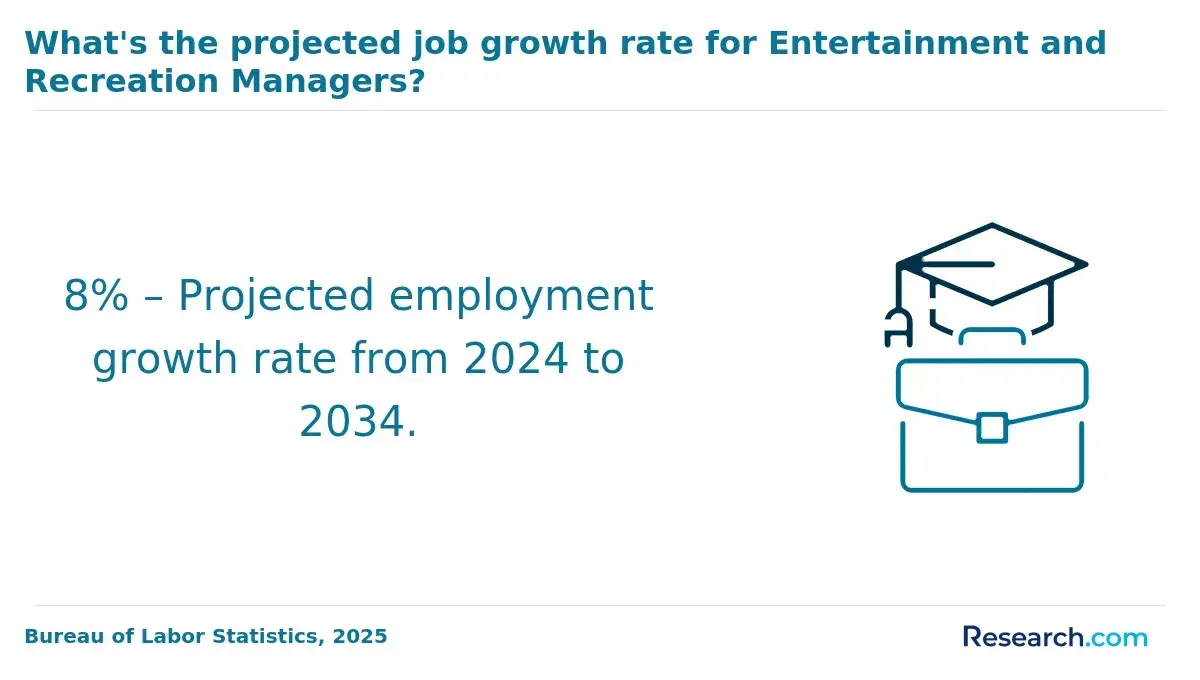
The job market for sports management graduates is broad because sports organizations need professionals in operations, administration, marketing, analytics, coaching support, event planning, facilities, and revenue generation. Through 2034, management jobs in entertainment and sports are expected to expand, with around 6,000 openings each year.
Some related roles are also projected to grow. Employment for coaches and scouts is expected to rise by 6%, and athletic trainers are expected to see 11% growth in the same period. These figures point to continued demand for professionals who understand both sports operations and business management.
That said, sports jobs can be competitive. Students should use the master’s program to build a portfolio of projects, complete internships, join professional networks, and develop evidence of measurable results.
What additional certifications can complement an online master’s in sports management?
Certifications can help graduates add targeted expertise without completing another full degree. The best option depends on the role you want.
- Certified Sports Manager (CSM): A credential option for professionals who want to strengthen sports management knowledge.
- Certified Athletic Trainer (ATC): Relevant for those who want to work directly with athletes in injury prevention and treatment contexts.
- Certified Strength and Conditioning Specialist (CSCS): Useful for professionals focused on athletic performance and physical training.
- Event Planning Certifications: Credentials such as the Certified Meeting Professional (CMP) may help students pursuing sports event roles.
- Sports Marketing Certification: Targeted marketing credentials can support careers in sponsorship, promotion, advertising, and fan engagement.
Students comparing shorter credentials can review flexible online certification programs to identify options that match their target role and budget.
Can a doctoral degree further enhance my leadership potential in sports management?
A doctoral degree can be useful for professionals who want to conduct advanced research, teach at the college level, consult, or pursue senior leadership roles that require deep expertise. Doctoral study may focus on leadership, analytics, policy, organizational behavior, or sports industry research.
Before pursuing a doctorate, compare the opportunity cost with your career goals. For some professionals, executive experience or a targeted certification may be more useful than another degree. If you are considering business-focused doctoral study, review factors such as DBA degree cost before committing.
Should I combine my master's in sports management with an online MBA program?
Combining sports management with MBA-level coursework can make sense if your goals involve executive leadership, finance, entrepreneurship, strategy, or general management. A sports management degree provides industry-specific context, while an MBA can add broader training in accounting, economics, operations, leadership, and organizational strategy.
This combination may be especially valuable for students who want to move beyond program-level roles into senior administration, ownership, consulting, or business development. If you want that broader business foundation, compare your sports management options with an online MBA program.
Common Mistakes to Avoid When Choosing an Online Sports Management Master’s
- Choosing only by lowest tuition: A cheap program may not be the best value if it lacks accreditation, internships, career support, or relevant coursework.
- Ignoring accreditation: Always verify institutional accreditation and any specialized accreditation before applying.
- Assuming online means easy: Online graduate programs require consistent time management, writing, collaboration, and independent study.
- Overlooking internship access: In sports, experience and contacts can matter as much as classroom learning.
- Relying only on rankings: Rankings can help you start, but your decision should also reflect career goals, cost, faculty, flexibility, and outcomes.
- Assuming salary outcomes are guaranteed: A master’s degree can improve competitiveness, but earnings depend on role, employer, location, and experience.
- Not asking about online student support: Confirm that advising, career services, library access, tutoring, and faculty support are available remotely.
Questions to Ask Before You Enroll
- Is the university institutionally accredited?
- Does the sports management program hold specialized accreditation such as COSMA?
- What is the total cost, including tuition, fees, books, and internship expenses?
- Can online students complete internships locally?
- Are courses asynchronous, live, accelerated, or cohort-based?
- What sports organizations, athletic departments, or employers does the program work with?
- What roles do recent graduates hold?
- Does the program offer a specialization aligned with your target job?
- How much access do online students have to faculty, alumni, and career services?
- Can you continue working while completing the program?
Key Insights
- An affordable online master’s in sports management is best for students who want graduate business training focused on sports and need flexibility to keep working.
- Most programs require 30-36 credits and commonly take 12-24 months, but part-time students may take longer.
- Program value depends on more than tuition. Accreditation, internships, career support, faculty expertise, and industry partnerships strongly influence outcomes.
- Common career directions include athletic administration, sports marketing, event management, analytics, facilities, operations, athlete representation, and nonprofit sports leadership.
- Salary potential can be strong in some roles, but sports careers are competitive and outcomes depend heavily on experience, networking, location, and employer type.
- Before enrolling, calculate total cost, verify accreditation, ask about internship support, and make sure the curriculum matches the specific sports career you want.
References:
- Bureau of Labor Statistics. (2025). Occupational Outlook Handbook: Entertainment and Sports Occupations. BLS.
- Bureau of Labor Statistics. (2025). Occupational Outlook Handbook: Coaches and Scouts. BLS
- College Factual. (2025). 2025 Best Sports Management Schools. College Factual.
- Cost Estimator for 2024-2025 – United States Sports University https://ussu.edu/admissions/costs-aid/cost-estimator/
- National Center for Education Statistics (NCES). (2024). Student Charges: What is the average amount of tuition and required fees for graduate students at public postsecondary institutions operating on an academic year calendar system? Trend Generator. NCES.
- Sports & Fitness Industry Association (SFIA). (2024). SFIA’s 2024 State of the Industry Report Reveals 4.2% Growth Last Year, Just Behind 4.9% GDP. SFIA.
- Zippia. (2025). Sports Agent Demographics and Statistics in the US. Zippia.
Other Things You Should Know About Online Degrees in Sports Management
In 2027, many online master's programs in sports management offer scholarships like the Graduate Merit Scholarship, which provides up to $5,000. These scholarships can significantly reduce tuition costs, enhancing affordability for students pursuing this advanced degree.
The application deadlines for the most affordable online master's in sports management programs in 2027 typically fall between February and April. However, it is crucial to check each program's specific deadline as they may vary. Submit early to secure your spot.
Most affordable online master’s in sports management programs require 30 to 36 credit hours. Students usually finish in 12 to 24 months, depending on full-time or part-time enrollment. Some programs also cap transfer credit at 6 to 9 semester hours, which can lower total cost.