2027 What Degree Do You Need To Be a Social Worker: Education Requirements in Hawaii

Co-Founder and Chief Data Scientist
Choosing the right social work degree in Hawaii is not just an academic decision. It determines which license you can apply for, what type of clients you may serve, whether you can practice clinically, and how quickly you can move into higher-responsibility roles. Because 15% of Hawaii’s population experiences mental health issues that require professional support, the state needs trained practitioners who understand both evidence-based social work practice and Hawaii’s culturally diverse communities.
This guide explains the education requirements for social workers in Hawaii, including BSW, MSW, doctoral, online, and alternative pathways. It also covers coursework, timelines, costs, financial aid, accreditation, licensure, specializations, and practical questions to ask before choosing a program.
Quick Answer: What Degree Do You Need to Become a Social Worker in Hawaii?
The minimum degree for entry-level licensed social work in Hawaii is a Bachelor of Social Work (BSW) from a CSWE-accredited program. For clinical practice, Hawaii requires a Master of Social Work (MSW), 3,000 hours of supervised clinical experience, and the required licensing exam. Students who want the broadest career options should usually plan for an MSW, especially if they are interested in healthcare, school social work, therapy, or supervisory roles.
Key Things to Know About Social Work Education Requirements in Hawaii
- A CSWE-accredited Bachelor of Social Work (BSW) is the standard minimum education for entry-level social work licensure in Hawaii.
- Clinical social work requires an MSW, 3,000 supervised post-master’s clinical hours, and successful completion of the appropriate licensing exam.
- Hawaii reports a 12% projected employment growth by 2030, making accredited education especially important for students preparing for long-term careers in the field.
- Minimum degree required for social work licensure in Hawaii
- Courses included in Hawaii social work degree programs
- How long social work degrees take in Hawaii
- Cost of earning a social work degree in Hawaii
- Degree requirements by social work specialization
- Financial aid for social work students in Hawaii
- Alternative pathways into social work in Hawaii
- Career opportunities and salary trends for Hawaii social workers
- How to get and keep a Hawaii social work license
- Whether online social work degrees are accepted in Hawaii
- Accreditation for Hawaii social work programs
- Top institutions offering social work degrees in Hawaii
What is the minimum degree required to become a licensed social worker in Hawaii?
Hawaii uses different license levels to separate entry-level generalist practice, advanced non-clinical practice, and independent clinical services. The degree you choose should match the license you want, because a BSW and an MSW lead to different scopes of practice.
| Hawaii license level | Minimum degree | What it generally prepares you to do |
| Licensed Bachelor Social Worker (LBSW) | BSW from a CSWE-accredited program or equivalent | Work in entry-level generalist roles, provide supervised services, support prevention programs, and assist clients with access to resources. |
| Licensed Social Worker (LSW) | MSW from a CSWE-accredited program or doctoral degree in social work | Provide advanced non-clinical services, manage interventions, coordinate programs, and take on more complex practice responsibilities. |
| Licensed Clinical Social Worker (LCSW) | MSW or doctoral social work degree plus supervised clinical experience | Practice independently in clinical settings, complete assessments, deliver psychotherapy, and provide behavioral health services within the permitted scope. |
For students who are still deciding between generalist and clinical practice, the practical difference is this: a BSW can start your career, but an MSW keeps more doors open. If you are interested in aging services, long-term care, or work with older adults, reviewing a gerontology social worker career profile can help you understand what specialized roles may require.
What courses are covered in a social work degree program in Hawaii?
Social work programs in Hawaii combine national professional standards with preparation for local community needs. Students learn social welfare systems, human development, ethics, policy, research, and direct practice while also building cultural responsiveness for Native Hawaiian, Pacific Islander, Asian, and other communities across the state.
- Introduction to Social Welfare and Social Work: Students study the history, purpose, and structure of social work and social welfare systems.
- Human Behavior in the Social Environment: Coursework examines how individuals, families, groups, organizations, and communities are shaped by culture, environment, relationships, and social conditions.
- Social Welfare Policy: Students learn how policies are created, analyzed, and applied, including issues affecting Hawaii communities.
- Social Work Values and Ethics: Programs cover professional responsibility, client rights, confidentiality, boundaries, and the NASW Code of Ethics.
- Anti-Racism, Diversity, Equity, and Inclusion: Students build skills for working across differences and addressing inequities affecting Pacific/Asian and Indigenous populations.
- Social Research Methods and Applied Statistics: Courses teach students how to evaluate programs, interpret evidence, and use data to improve services.
- Field Education or Practicum: Students complete supervised agency-based learning. For example, the University of Hawaii at Manoa requires four semesters of practicum.
- Specialized Practice Areas: Programs may include behavioral mental health, child and family services, gerontology, health, Indigenous perspectives, global practice, and community-based services.
- Native Hawaiian and Local Context: Hawaii programs often integrate Native Hawaiian perspectives so students can practice in ways that are culturally grounded and community-informed.
Field education is one of the most important parts of the degree. Before enrolling, ask whether the school helps secure placements, whether placements are available on your island, and whether evening or weekend options exist for working students.
How long does it take to complete a social work degree program in Hawaii?
The time required to become a social worker in Hawaii depends on your starting point, whether you study full time or part time, and whether you qualify for advanced standing in an MSW program. Field placement schedules can also affect your timeline because practicum hours must be completed through approved agencies.
| Pathway | Typical length | Best fit |
| BSW | Four years full time; five or more years part time | Students starting college who want entry-level licensed social work roles. |
| BSW + MSW accelerated 4+1 program | Five years | Students who know early that they want graduate-level social work preparation. |
| Traditional MSW | 18 months full time or up to 36 months part time | Students with a bachelor’s degree in another field. |
| Advanced standing MSW | 12 months full time or 24 months part time | Students who already hold a CSWE-accredited BSW. |
| DSW or PhD | Three to five years full time; longer part time | Professionals interested in leadership, teaching, research, advanced practice, or policy work. |
- Credit load matters: A lighter course schedule may be more manageable but will delay graduation.
- Fieldwork can be the scheduling bottleneck: MSW programs may include 900 hours of field education, which can be difficult to fit around full-time employment.
- Advanced standing can save time: BSW graduates may complete an MSW faster than students entering from unrelated majors.
- Part-time study can reduce burnout: Working adults often choose part-time enrollment even when it adds one to two years or more.
One Hawaii social worker described taking six years to finish while working and raising a family. The hardest part, she explained, was not the coursework alone but coordinating field placement hours with job and home responsibilities. Faculty support and peer relationships helped her stay on track, and the slower pace made the process sustainable.
How much does a social work degree cost in Hawaii?
The price of a social work degree in Hawaii varies widely by degree level, residency status, institution type, delivery format, and transfer credit. Tuition is only one part of the total cost; students should also budget for fees, books, transportation, technology, exam fees, and lost work hours during field placements.
| Degree or program type | Reported cost range | Cost considerations |
| BSW at public universities | $11,000 to $12,000 per year for in-state students; over $34,000 for out-of-state students | Often the most affordable route for Hawaii residents pursuing entry-level licensure. |
| BSW at private colleges | Can exceed $40,000 annually | May offer smaller classes or different support services, but students should compare net cost after aid. |
| MSW at public institutions | $15,000 to $18,000 per year for residents; upwards of $38,000 for non-residents | Usually required for advanced and clinical social work roles. |
| Private or online MSW options | $20,000 to $60,000 total | Flexibility may help working students, but accreditation and field placement support are critical. |
| DSW programs | $20,000 to $35,000 per year at private schools | Less common in Hawaii; often considered by experienced professionals. |
| PhD programs in social work | $18,000 to $30,000 per year | Frequently pursued online or out of state because local options are limited. |
| Online or hybrid coursework | $500 to $1,200 per credit | May reduce housing or commuting costs, but fieldwork still happens in person. |
Students comparing helping professions should look beyond tuition and consider licensure rules, supervised experience, income potential, and job setting. A side-by-side explanation of social work vs. counseling can help clarify which path better matches your goals.
What degrees are required for different social work specializations in Hawaii?
Not every social work job has the same degree requirement. Some community and case management roles may be accessible with a BSW, while clinical, healthcare, school, and supervisory roles usually require an MSW. The safest approach is to identify your target setting first, then choose the degree that meets that role’s licensing and employer expectations.
| Specialization | Typical degree needed | Important requirements or preparation |
| Clinical social work | MSW from a CSWE-accredited program | Requires 3,000 hours of post-master’s supervised clinical experience and the clinical ASWB exam for advanced clinical licensure. |
| School social work | MSW | Field placements in school or youth-serving settings can strengthen employability. |
| Healthcare social work | Usually MSW | Relevant coursework may include health, crisis intervention, behavioral health, and interdisciplinary care. |
| Child and family services | BSW for some entry-level jobs; MSW for advanced or supervisory work | UH Mānoa BSW programs include at least 120 credit hours; MSW programs require 57 credit hours plus 900 field education hours. |
| Generalist entry-level social work | BSW | Can support LBSW roles after meeting exam and licensing requirements. |
If your long-term goal involves therapy, diagnosis-related assessment, independent practice, or behavioral health treatment, plan for an MSW from the beginning. If you want to enter the workforce sooner, a BSW can be a practical first step, especially if you later apply to an advanced standing MSW program.
What financial aid options are available to social work students in Hawaii?
Financial aid can determine whether a social work degree is manageable, especially for students who need to reduce work hours during practicum. Start with the FAFSA, then compare institutional scholarships, state-based awards, professional association funding, and employer tuition assistance if available.
- Federal grants: Pell Grants and Supplemental Educational Opportunity Grants are need-based awards that do not have to be repaid.
- University and state scholarships: The University of Hawai‘i Mānoa offers awards such as the Mānoa Achievement and Hoa Hana Scholarships for eligible BSW, MSW, and PhD students.
- Federal Work-Study: Students may qualify for part-time paid work, sometimes in positions connected to human services or campus support programs.
- Federal student loans: Direct Subsidized Loans, Direct Unsubsidized Loans, and Parent PLUS Loans may be available to FAFSA filers, but repayment with interest is required.
- Professional organization scholarships: Awards such as the NASW Student Community Service Scholarship may support students with strong academic and service records.
- Funding for Native Hawaiian students: The Office of Hawaiian Affairs and Native Hawaiian Student Services provide scholarship and support opportunities for Native Hawaiian students.
- External and private scholarships: Community organizations, foundations, and nonprofits may fund students committed to underserved populations or public service.
How to reduce the cost of a social work degree
- Complete transferable general education courses at a lower-cost institution when appropriate.
- Ask whether your employer offers tuition reimbursement or flexible practicum scheduling.
- Compare total program cost, not just tuition per credit.
- Prioritize programs with strong local field placement support to avoid delays that increase costs.
- Consider flexible online MSW programs if you need to keep working while enrolled.
What are the alternative pathways to become a social worker in Hawaii?
You do not always need a BSW to enter the social work profession. Many students come from psychology, sociology, public health, criminal justice, education, or human services backgrounds and then use a traditional MSW program to meet professional preparation requirements.
| Alternative pathway | Who it fits | What to confirm before enrolling |
| Traditional MSW for non-BSW graduates | Career changers and bachelor’s degree holders from other majors | Confirm prerequisite courses, fieldwork expectations, and whether the program is CSWE-accredited. |
| Advanced standing MSW | Students with a CSWE-accredited BSW | Check GPA rules, graduation date limits, and whether prior fieldwork qualifies. |
| Psychology or sociology background | Students with related social science preparation | Ask whether additional foundation courses are required before MSW admission. |
| Post-bachelor’s certificate or bridge preparation | Applicants who need social work fundamentals before graduate study | Confirm whether the credits transfer or improve MSW admission chances. |
| Career pathway support programs | Non-traditional students and working adults | Review advising, transition services, and alignment with Hawaii licensure requirements. |
One Hawaii professional who moved into social work after another career said the transition was demanding but worthwhile. He described fieldwork as the biggest adjustment because it required careful planning around employment. His advice for career changers: speak with admissions advisors early, map out placement obligations, and understand the full social work career pathway before committing.
What are the career opportunities and salary trends for social workers in Hawaii?
Social work graduates in Hawaii can work in hospitals, schools, behavioral health agencies, child welfare organizations, government offices, correctional settings, community nonprofits, elder care programs, and private clinical practice when properly licensed. The best opportunities often go to candidates who combine accredited education, supervised field experience, cultural competence, and a clear specialization.
| Work setting | Common responsibilities | Degree advantage |
| Healthcare and hospitals | Discharge planning, crisis support, care coordination, patient advocacy, and family support | An MSW is commonly preferred for advanced medical and behavioral health roles. |
| Schools and youth programs | Student support, family outreach, attendance barriers, mental health referrals, and intervention planning | MSW training and school-based field experience can strengthen readiness. |
| Child and family services | Case management, safety planning, parent support, resource coordination, and advocacy | BSW roles may be available, while MSW preparation supports advancement. |
| Community nonprofits | Program delivery, outreach, benefits navigation, housing support, and community education | Both BSW and MSW graduates may qualify depending on role complexity. |
| Clinical practice | Assessment, psychotherapy, treatment planning, and behavioral health services | Requires the MSW-based clinical licensure pathway. |
Salary outcomes vary by license level, setting, island, employer, experience, specialization, and whether the role is clinical or non-clinical. MSW-prepared and licensed clinical social workers may qualify for higher-responsibility roles, but no degree guarantees a specific salary. For a broader licensure and employment roadmap, review how to become a social worker in Hawaii.
Current trends affecting social work careers in Hawaii
- Behavioral health demand: Mental health and substance use needs continue to shape hiring in healthcare, community agencies, and crisis services.
- Telehealth and hybrid service delivery: Social workers may need comfort with remote documentation, virtual client meetings, and digital case management tools.
- Culturally responsive practice: Employers in Hawaii value professionals who can work respectfully with Native Hawaiian, Pacific Islander, Asian, immigrant, military, rural, and multigenerational communities.
- Interdisciplinary care: Social workers increasingly collaborate with nurses, physicians, teachers, counselors, legal advocates, and community health workers.
- AI and documentation tools: Technology may help with administrative work, but ethical judgment, trauma-informed care, cultural understanding, and client relationships remain human-centered skills.
How do I obtain and maintain social work licensure in Hawaii?
To become licensed in Hawaii, you must complete the education required for your license level, document supervised experience when required, submit the state application materials, and pass the appropriate licensing examination. The Hawaii Department of Commerce and Consumer Affairs reviews applications for social worker licensure.
- Choose the right license level: Decide whether you are pursuing LBSW, LSW, or LCSW status.
- Complete an accredited degree: Earn the BSW, MSW, or doctoral degree required for your intended license.
- Send official transcripts: Provide academic documentation directly as required by the licensing process.
- Complete supervised experience: LCSW applicants must document 3,000 hours of supervised clinical experience.
- Pass the required exam: Hawaii uses the relevant social work licensing exam for the license level.
- Submit application materials and fees: Follow state instructions carefully and include required forms, verification, and payment.
- Meet renewal requirements: Licensed professionals must complete approved continuing education and renew according to the state schedule.
Students considering related counseling careers should not assume that social work and counseling licenses are interchangeable. The education, exams, supervised hours, and scope of practice differ. If you are comparing options, this guide to the fastest way to become a counselor in Hawaii can help you understand a separate pathway.
Are online social work degrees recognized in Hawaii?
Online social work degrees can be recognized in Hawaii when they meet the same accreditation and licensure standards as campus-based programs. The key question is not whether the coursework is online; it is whether the BSW or MSW is CSWE-accredited and whether the program can support Hawaii-approved field education.
Hawaii requires a CSWE-accredited degree for social work licensure. The University of Hawaii at Manoa offers a hybrid MSW program, while Hawaii Pacific University has a fully online MSW program pending CSWE accreditation. Students should verify accreditation status directly before enrolling because pending accreditation is not the same as full accreditation for licensure planning.
Online programs are especially relevant in Hawaii because students may live far from a campus or need to balance work, family, and field placement. However, all accredited social work programs still require supervised in-person practicum experiences with approved agencies. Reported surveys indicate that over 70% of social service employers nationally accept accredited online degrees as comparable to traditional degrees, although local fieldwork remains highly valued. UH Manoa has also reported more than 250 distance education graduates since 2007.
Questions to ask before choosing an online social work program
- Is the program currently CSWE-accredited, or is accreditation still pending?
- Will the school help arrange practicum placements in Hawaii?
- Does the curriculum meet Hawaii’s license requirements for the level you want?
- Are any campus visits, synchronous classes, or island-specific meetings required?
- What happens if a field placement cannot be found near your home?
What organizations accredit social work degree programs in Hawaii?
Accreditation is one of the most important checks a social work student can make. Without the right accreditation, a degree may not support Hawaii licensure, even if the school is legitimate or the coursework sounds relevant.
- Council on Social Work Education (CSWE): CSWE is the main accreditor for U.S. social work programs. Hawaii licensure depends on graduating from a CSWE-accredited BSW or MSW program; as of 2025, the University of Hawaiʻi at Mānoa offers Hawaii’s only CSWE-accredited MSW program.
- Regional institutional accreditation: Universities should also hold recognized institutional accreditation, such as accreditation through the Western Association of Schools and Colleges (WASC), which addresses overall academic quality.
- Hawaii Department of Commerce and Consumer Affairs: Hawaii does not operate a separate social work program accreditor. The DCCA reviews whether applicants meet education, examination, supervised experience, and licensure requirements.
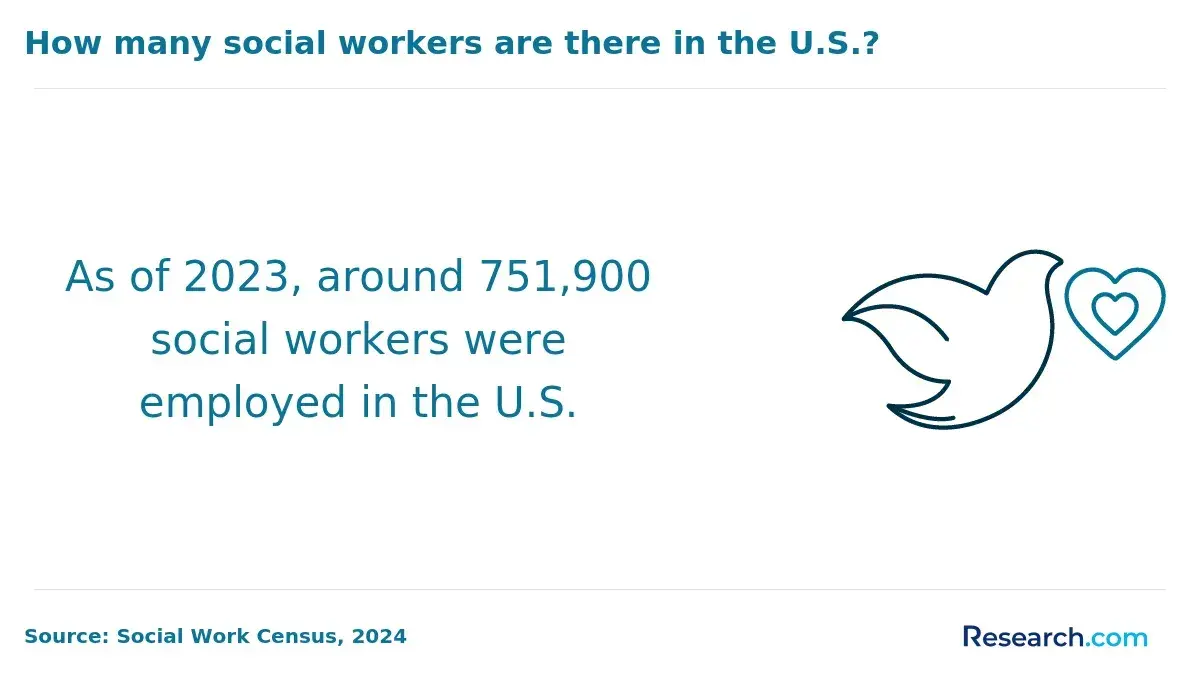
Accreditation matters because Hawaii had over 2,000 social workers employed in 2022, and demand is expected to rise as mental health needs grow. Students who need accessible graduate options can also compare the easiest MSW programs to get into, but admission flexibility should never outweigh accreditation and licensure fit.
What are the top institutions offering social work degree programs in Hawaii?
The best social work program for you depends on your license goal, budget, location, schedule, field placement needs, and whether you want campus-based, hybrid, or online study. Accreditation should be the first filter, followed by cost, student support, practicum access, and cultural preparation for practice in Hawaii.
| Institution | Program options and strengths | Best fit for |
| University of Hawaiʻi at Mānoa – Thompson School of Social Work & Public Health | Offers CSWE-accredited BSW and MSW degrees, specialized tracks, and more than 900 practicum hours with attention to Pacific/Asian cultural contexts. | Students who want the state’s established public university pathway and broad field placement preparation. |
| Hawaiʻi Pacific University | Provides a fully online MSW for working professionals with flexible timelines; accreditation status is pending CSWE approval by 2025. | Students needing online flexibility who will carefully verify accreditation status before enrolling. |
| Chaminade University of Honolulu | Offers a BSW experience known for smaller classes, mentoring, Hawaiian cultural values, and urban field opportunities. | Students who want a more personalized undergraduate environment. |
| University of Hawaiʻi at Hilo | Emphasizes rural communities, Indigenous perspectives, community-based practice, and close cohort learning. | Students interested in serving rural and Native Hawaiian communities. |
| Windward Community College | Offers an Associate of Arts in Liberal Arts with a social work emphasis as a lower-cost transfer route. | Students seeking an affordable starting point before transferring into a four-year social work program. |
How to choose the right Hawaii social work program
- Start with your license goal: Choose a BSW for entry-level practice or an MSW if you want clinical, school, healthcare, or advanced roles.
- Confirm CSWE accreditation: Do this directly through official sources before applying or paying deposits.
- Ask about field placements: A strong program should explain how placements are approved, assigned, supervised, and evaluated.
- Calculate total cost: Include tuition, fees, travel, books, technology, and income lost during practicum.
- Compare student support: Look for advising, licensure guidance, writing support, career services, and support for working adults.
- Evaluate cultural preparation: In Hawaii, training should prepare students to work respectfully with Native Hawaiian, Pacific Islander, Asian, and other local communities.
What do social workers in Hawaii say about their degree?
-
: "
My degree at the University of Hawaiʻi at Mānoa helped me understand social work through the realities of local communities. Faculty connected classroom theory to Hawaiian culture, school-based needs, and the everyday challenges families face. When I began working in a local school, I felt better prepared to support students in ways that respected their histories and strengths. - Kealoha
"
-
: "
The Hawaii Pacific University program changed how I viewed service, family systems, and culturally responsive practice. Its focus on Hawaii’s communities helped me work more thoughtfully with youth and families in educational settings. My earlier background as a registered dietitian also became useful because I could connect nutrition, wellness, and social well-being. - Laila
"
-
: "
Studying social work at Chaminade University gave me meaningful opportunities to learn from Native Hawaiian and Pacific Islander communities. The program taught me to treat resource limitations as a reason to advocate more creatively. Working with students after graduation confirmed that this was the right path for me. - Nani
"
Common mistakes to avoid when choosing a social work degree in Hawaii
| Mistake | Why it can hurt you | Better approach |
| Choosing a program before checking CSWE accreditation | You may graduate from a program that does not support Hawaii licensure. | Verify accreditation through official sources before applying. |
| Looking only at tuition | Fees, travel, technology, housing, and practicum-related work reductions can change the real cost. | Compare total cost of attendance and expected financial aid. |
| Assuming online automatically means easier | Online programs still require fieldwork, deadlines, live participation, and licensing alignment. | Ask detailed questions about practicum support and schedule requirements. |
| Ignoring field placement logistics | Placement delays can postpone graduation or licensure progress. | Ask where students are placed and how the school helps students on different islands. |
| Assuming an MSW is always optional | Clinical, healthcare, school, and supervisory roles often require graduate education. | Match the degree to your long-term role, not just your first job. |
| Relying only on rankings or reputation | A highly visible school may not be the best fit for your schedule, budget, or license plan. | Compare accreditation, cost, field support, completion timeline, and career outcomes. |
Questions to ask admissions advisors before enrolling
- Is the BSW or MSW currently CSWE-accredited?
- Which Hawaii social work license does this degree prepare graduates to pursue?
- How many field hours are required, and where are students typically placed?
- Can working students complete practicum on evenings or weekends?
- What percentage of students complete the program on time?
- Are scholarships available for BSW, MSW, part-time, online, or Native Hawaiian students?
- Does the school provide licensing exam preparation?
- How does the program prepare students for Hawaii’s cultural and community context?
- What happens if a student cannot secure a local practicum site?
- Can credits transfer into or out of the program?
Related Articles for Nearby States
- 2027 What Degree Do You Need To Be a Social Worker: Education Requirements in Alaska
- 2027 What Degree Do You Need To Be a Social Worker: Education Requirements in California
- 2027 What Degree Do You Need To Be a Social Worker: Education Requirements in Oregon
- 2027 What Degree Do You Need To Be a Social Worker: Education Requirements in Washington
- 2027 What Degree Do You Need To Be a Social Worker: Education Requirements in Nevada
- 2027 What Degree Do You Need to Be a Social Worker: Education Requirements in Arizona
- 2027 What Degree Do You Need To Be a Social Worker: Education Requirements in Idaho
- 2027 What Degree Do You Need To Be a Social Worker: Education Requirements in Utah
- 2027 What Degree Do You Need To Be a Social Worker: Education Requirements in Montana
- 2027 What Degree Do You Need To Be a Social Worker: Education Requirements in Wyoming
References:
- Best MSW Programs. (n.d.). How to Become a Social Worker in Hawaii. Best MSW Programs
- BYU Hawaii. (n.d.). Social Work (BSW). BYU Hawaii
- Council on Social Work Education. (2024). Annual Survey of Social Work Programs. CSWE
- Department of Commerce and Consumer Affairs Hawaii. (n.d.). Social Worker Program. DCCA Hawaii
- Hawaii Pacific University. (n.d.). Bachelor of Social Work. HPU Hawaii social work licensing information
- Public Health Online. (n.d.). Hawaii Social Work License Requirements. PHO DCCA licensing reference
- Social Work Degree Center. (2025). Guide on How to Become a Social Worker in Hawaii. SWDC
- Social Work Education Center. (2025). How to Become a Social Worker in Hawaii. SWEC
- Social Work License Map with edX. (n.d.). Become a Social Worker in Hawaii. SWLM with edX
- University of Hawaii at Manoa Department of Social Work. (2025). BSW Degree Requirements. UH at Manoa
Key Insights
- The BSW is the minimum education for entry-level licensed social work in Hawaii, but the MSW is the stronger choice for clinical, healthcare, school, and advanced roles.
- Clinical social work in Hawaii requires graduate education, 3,000 supervised clinical hours, and the appropriate licensing exam.
- CSWE accreditation is non-negotiable for licensure planning. Always verify accreditation before enrolling, especially for online or pending-accreditation programs.
- Field education can shape your timeline as much as coursework. Ask early about placement availability, supervision, island access, and scheduling flexibility.
- Costs vary sharply by residency, institution type, and delivery format, with reported annual tuition ranging from $11,000 to over $40,000 depending on the program.
- Online social work degrees can be valid in Hawaii when they are CSWE-accredited and include approved in-person practicum placements.
- The best program is the one that fits your license goal, budget, schedule, cultural practice needs, and long-term career direction—not simply the one with the most recognizable name.
Other Things You Need to Know About Becoming a Social Worker in Hawaii
The Hawaii Board of Social Work oversees social work licensure in the state. It regulates Licensed Bachelor Social Workers, Licensed Social Workers, and Licensed Clinical Social Workers, and it administers licensing under Hawaii’s Department of Commerce and Consumer Affairs.
Aspiring social workers in Hawaii must pass the Association of Social Work Boards (ASWB) exam specific to their licensure level. The exam tests knowledge across various practice areas, crucial for obtaining a social work license in Hawaii by 2027.
In Hawaii, social workers must complete 15 hours of continuing education every two years to maintain their license. Continuing education must include ethics training and be approved by the Hawaii Social Work Examining Board.


![2027 Best Advanced Standing Online MSW Programs [CSWE Accredited] thumbnail](https://research.com/resized/uploads/Online_Advanced_Standing_MSW_301dbd5368.jpg?format=thumbnail)