2027 What Degree Do You Need To Be a Social Worker: Education Requirements in Washington

Co-Founder and Chief Data Scientist
Choosing the right social work degree in Washington is not just an academic decision. It determines whether you can qualify for licensure, complete supervised practice, move into clinical roles, and avoid paying for a program that does not meet state requirements. This matters especially because Washington employs over 13,000 social workers statewide, and many roles require specific credentials rather than general helping experience.
This guide explains which degree you need for entry-level, advanced, and clinical social work roles in Washington; how long programs take; what they cost; how online programs are treated; and how to compare accredited schools. It is written for students, career changers, BSW graduates considering an MSW, and professionals deciding whether the social work licensure path is the right investment.
The main point is straightforward: a BSW can support some entry-level human services work, but Washington licensure pathways require graduate-level social work education from an accredited program. If your goal is independent clinical practice, counseling, diagnosis, or private practice, you should plan for an MSW and supervised post-degree experience.
Quick Answer: Social Work Degree Requirements in Washington
In Washington, the minimum degree for state social work licensure is typically a Master of Social Work (MSW) or a doctoral degree in social work from a CSWE-accredited program. A Bachelor of Social Work (BSW) may qualify you for some entry-level social service jobs, but it does not provide the same licensure options as an MSW. To become a Licensed Independent Clinical Social Worker (LICSW), you must complete a qualifying graduate degree, supervised postgraduate experience, the required exam process, and continuing education.
- BSW: Useful for entry-level case management, community services, and human services roles, but limited for licensure in Washington.
- MSW: The standard degree for advanced practice, clinical preparation, and most Washington social work license pathways.
- LICSW pathway: Requires graduate education, supervised clinical experience, and compliance with Washington State licensing rules.
- Accreditation: CSWE accreditation is the key requirement students should verify before enrolling.
- Online programs: Online or hybrid degrees can be acceptable if the program is CSWE-accredited and includes approved field education.
- What degree do you need to become a licensed social worker in Washington?
- What will you study in a Washington social work degree program?
- How long does a social work degree take in Washington?
- How much does a social work degree cost in Washington?
- Which degree fits different social work specializations?
- What financial aid can Washington social work students use?
- What licensing exam and continuing education rules apply?
- Can social work education lead to counseling careers?
- What alternative pathways exist for career changers?
- Are online social work degrees accepted in Washington?
- Who accredits social work programs in Washington?
- Which Washington schools offer social work degrees?
What is the minimum degree required to become a licensed social worker in Washington?
Washington separates general social service employment from licensed social work practice. You may find entry-level jobs with a BSW or a related bachelor’s degree, but state licensure is tied to graduate-level education. For students comparing career paths for social workers, this distinction is critical because the degree you choose affects your legal scope of practice.
The safest rule is this: if you want a Washington social work license, choose a CSWE-accredited MSW or qualifying doctoral program. If you want independent clinical practice, plan for the LICSW pathway rather than stopping at a bachelor’s degree.
| Credential or degree | What it means in Washington | Best fit |
| Bachelor of Social Work (BSW/BASW) | Can prepare graduates for entry-level social service and case support roles, but it does not provide the same Washington licensure options as graduate education. | Students seeking early workforce entry or a foundation for advanced standing MSW admission. |
| Master of Social Work (MSW) | The core degree required for Washington social work licensure pathways and advanced practice preparation. | Students who want licensed practice, clinical preparation, or higher-level agency roles. |
| Doctoral degree in social work | A DSW or PhD may meet educational expectations for certain advanced pathways, although it is not the typical minimum route. | Professionals interested in leadership, research, academia, policy, or advanced practice development. |
| Licensed Social Worker Associate-Advanced (LSWAA) | Requires a master’s or doctoral degree and allows candidates to gain supervised experience toward full licensure. | MSW graduates building supervised post-degree practice hours. |
| Licensed Social Worker Associate-Independent Clinical (LSWAIC) | Requires graduate education and supports candidates pursuing independent clinical licensure through supervised practice. | Future clinical social workers preparing for the LICSW. |
| Licensed Advanced Social Worker (LASW) | Requires graduate-level education and supervised postgraduate experience. | Professionals working in advanced non-independent or specialized social work roles. |
| Licensed Independent Clinical Social Worker (LICSW) | The independent clinical license for social workers who complete the required graduate education, supervised experience, and exam process. | Professionals who want to provide clinical services independently. |
The decision point is whether you want a job in social services or a licensed social work career. A BSW can be a practical starting point, but an MSW is usually the degree that keeps clinical, advanced, and independent practice options open in Washington.
What courses are covered in a social work degree program in Washington?
Social work programs are built around two goals: understanding people and systems, and learning how to intervene ethically in real situations. Washington programs typically combine classroom instruction, applied skill-building, policy analysis, research training, and supervised field education.
- Introduction to Social Welfare: Covers the development of social welfare systems, public services, and the role of social workers in communities.
- Human Behavior and the Social Environment: Examines human development, family systems, culture, community conditions, and social forces that shape client needs.
- Social Work Practice with Individuals, Families, and Groups: Builds interviewing, assessment, engagement, planning, and intervention skills for direct practice settings.
- Social Justice and Advocacy: Focuses on equity, access, human rights, and advocacy for populations affected by poverty, discrimination, trauma, or systemic barriers.
- Research Methods in Social Work: Teaches students how to evaluate evidence, interpret data, and use research to improve services and policy decisions.
- Policy and Macro Practice: Explores social policy, program development, community organizing, and systems-level change.
- Field Practicum: Places students in supervised agency settings so they can apply classroom learning with real clients, organizations, and communities.
- Clinical Social Work Practice: Provides preparation in assessment, therapeutic approaches, trauma-informed practice, and culturally responsive care for students pursuing clinical pathways.
Students should look beyond course titles and ask how the curriculum supports their target role. A future school social worker may need different field placements than someone aiming for healthcare, behavioral health, or child welfare. Field education is especially important because it can influence your resume, references, confidence, and post-graduation job search.
How long does it take to complete a social work degree program in Washington?
The time required depends on your starting point, enrollment pace, field placement schedule, and whether you qualify for advanced standing. Students who already hold an accredited BSW can often finish an MSW faster than career changers entering with a different bachelor’s degree.
| Degree | Typical full-time length | Part-time or accelerated options |
| BSW/BASW | Typically 4 years full-time, including coursework and field placement. | Part-time study may take up to 6 years. |
| MSW | Standard full-time programs usually take about 2 years. | Part-time programs often take around 3 years; advanced standing students may finish in 12–14 months full-time or 18–24 months part-time. |
| DSW | Generally 3–4 years full-time. | Part-time formats may take up to 6 years, depending on research and capstone or dissertation expectations. |
| PhD in Social Work | Often around 4–5 years full-time. | Part-time students may take 6–7 years because of research and dissertation requirements. |
Several practical factors can change your timeline:
- Work and family obligations: Part-time students often take 50–100% longer because fieldwork and class schedules must fit around other responsibilities.
- Advanced standing eligibility: Students with an accredited BSW may reduce MSW time by up to one year, depending on school policy and transfer rules.
- Field placement availability: Even online students usually need in-person practicum hours, which can affect scheduling and commute time.
- Licensure goals: The degree is only one stage. Clinical licensure also requires supervised post-graduate experience after the MSW.
One Washington social worker who completed an MSW part-time while working full-time described the process as “a puzzle” because classes, practicum hours, employment, and family responsibilities all competed for time. She said the three-year timeline was demanding, but the slower pace helped her connect coursework to community practice.
Advanced degrees can also change the type of work available to you. A PhD, for example, may expand opportunities beyond direct clinical practice into research, academia, policy leadership, or program administration.
How much does a social work degree cost in Washington?
The cost of a social work degree in Washington varies by degree level, school type, residency status, and delivery format. Tuition is only part of the total cost. Students should also budget for fees, books, commuting, technology, lost work hours during field placement, and living expenses.
| Degree level | Typical cost range stated for Washington programs | Cost considerations |
| BSW | Public universities typically charge between $7,000 and $12,000 annually for in-state students and $25,000 to $35,000 for out-of-state students. Private colleges range from $30,000 to $45,000 per year. | Online options may have similar or slightly lower tuition, but students should still account for fees and field placement expenses. |
| MSW | Public institutions charge about $12,000 to $22,000 yearly for residents and $25,000 to $40,000 for non-residents. Private and online MSW programs often cost between $35,000 and $50,000 including some additional fees. | The MSW is often the key investment for licensure, so compare total program cost against licensing goals and realistic employment plans. |
| DSW | Public university tuition ranges from $15,000 to $30,000 per year, while private schools charge $35,000 to $50,000. | Online delivery may reduce travel costs, though per-credit tuition can be similar. |
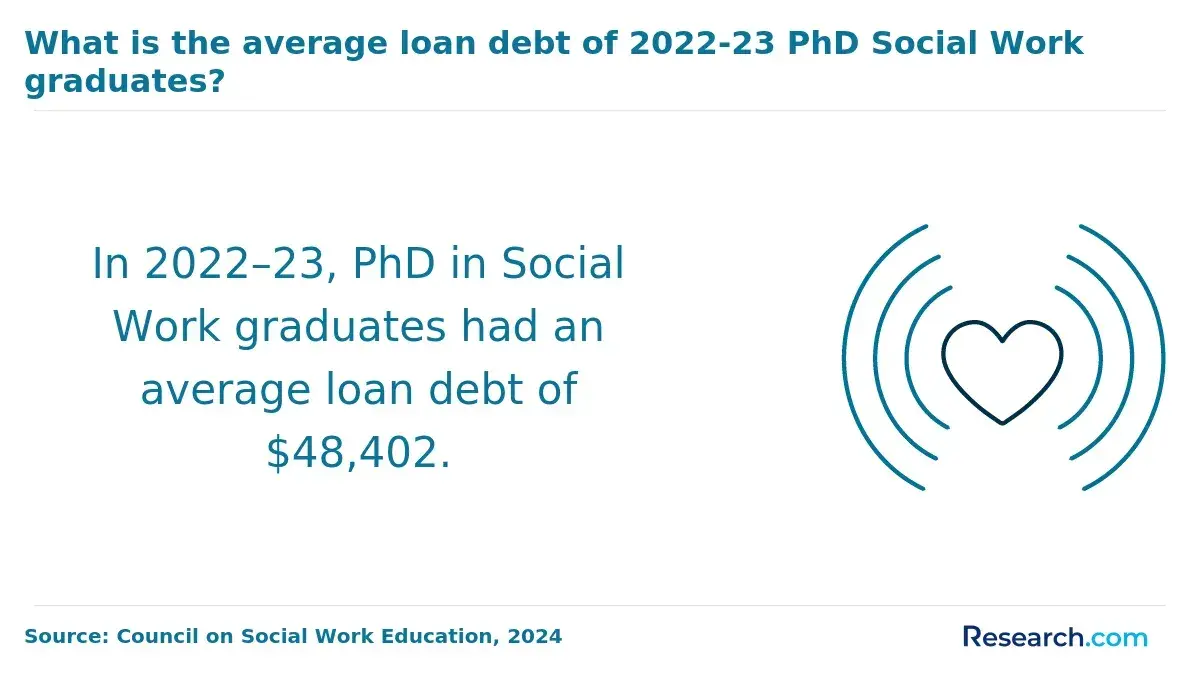
| PhD in Social Work | Public PhD programs usually cost $14,000 to $25,000 annually for residents, with out-of-state tuition often exceeding $35,000. Private institutions tend to charge $40,000 or more. | Some doctoral students may receive assistantships or waivers, so funding packages matter as much as sticker price. |
To judge affordability, compare the total price of attendance with your likely career path, licensure timeline, and debt tolerance. Students researching earning potential can review social worker salary information by state, but they should avoid assuming that any degree guarantees a specific income.
What degrees are required for different social work specializations in Washington?
Different social work specialties require different levels of preparation because the responsibilities vary. Some roles focus on service coordination and advocacy, while others involve clinical assessment, therapy, healthcare coordination, or work with high-risk populations.
| Specialization | Common degree expectation | Licensure or experience note |
| Clinical Social Work | MSW or doctorate from a CSWE-accredited program. | Requires a minimum of 4,000 hours of supervised post-graduate experience, including direct client contact and supervision by a licensed clinical social worker (LICSW). |
| School Social Work | Entry-level roles may accept a BASW, but many advanced or licensed roles require an MSW. | Students should verify school-specific credential expectations and field placement opportunities. |
| Healthcare Social Work | Typically requires an MSW for advanced practice settings. | Often aligned with the LASW pathway and at least 3,000 hours of supervised experience, including client contact hours appropriate to medical or clinical environments. |
| Child and Family Services | BASW graduates may qualify for some entry-level work; MSW preparation is common for advanced or clinical roles. | Relevant practicum experience in family services, protective services, or counseling settings can be especially valuable. |
The best degree depends on the work you want to do. If you want to coordinate services, a BSW may be enough for some roles. If you want to assess, counsel, diagnose, or practice independently, an MSW is the more appropriate plan.
What financial aid options are available to social work students in Washington?
Because social work programs can be expensive and field placements may limit paid work hours, students should build a funding strategy before enrolling. The goal is not only to reduce tuition but also to avoid taking on debt for a program that does not match your licensure or career plans.
- Federal grants and loans: Filing the FAFSA can help students access Pell Grants, Federal Supplemental Educational Opportunity Grants (FSEOG), and federal student loans, depending on eligibility and degree level.
- Washington-based scholarships and grants: State and institution-supported aid may be available for residents enrolled in qualifying public or private programs.
- University scholarships: Schools such as Seattle University and Walla Walla University may offer social work scholarships based on financial need, academic performance, service interests, or program criteria.
- Professional association funding: Organizations such as the National Association of Social Workers (NASW) may provide scholarship opportunities for students committed to social work practice, including service to underserved communities.
- Federal Work-Study: Eligible students may use part-time work opportunities to help cover expenses while gaining relevant experience on campus or in community settings.
- Loan forgiveness and employer tuition support: Graduates employed by qualifying public or nonprofit agencies may explore loan forgiveness options, and some employers offer tuition reimbursement.
- Private loans and service programs: These may fill remaining gaps, but students should compare interest rates, repayment terms, and service obligations carefully.
Students trying to lower graduate school costs may also compare affordable CSWE-accredited online MSW programs. Cost should not be the only factor, but choosing a properly accredited, lower-cost program can improve long-term return on investment.
What are the licensing exam and continuing education requirements in Washington?
After completing the required social work degree, Washington candidates must follow the state licensing process, which includes supervised experience, examination requirements, application steps, and continuing education obligations. The exact pathway depends on whether the person is pursuing associate-level, advanced, or independent clinical licensure.
Students should not wait until graduation to understand these rules. Program choice, field placement, supervisor qualifications, and post-degree employment can all affect how efficiently a graduate progresses toward licensure. For a step-by-step explanation of the state process, see Research.com’s guide on how to become a social worker in Washington.
- Before enrolling: Confirm that the program is CSWE-accredited and meets Washington Department of Health expectations.
- During the degree: Choose field placements that support your intended specialization when possible.
- After graduation: Apply for the correct associate or advanced credential and document supervised hours carefully.
- Before independent practice: Complete required supervised experience and examination steps.
- After licensure: Meet continuing education requirements to keep the license active and compliant.
How can social work education pave the way for specialized counseling careers in Washington?
An MSW can support counseling-related careers when the program includes clinical coursework, supervised field experience, and preparation aligned with Washington licensure requirements. Social work and counseling are not identical professions, but they overlap in areas such as behavioral health, trauma-informed care, family support, crisis intervention, and therapy settings.
Students interested in counseling should compare the social work route with counseling-specific degrees before choosing. An MSW may be a strong fit if you want a blend of therapy, advocacy, case coordination, policy awareness, and systems-level practice. A counseling degree may be more direct if your goal is strictly professional counseling without the broader social work framework. Readers comparing timelines can review the fastest way to become a counselor in Washington.
What are the alternative pathways to become a social worker in Washington?
Career changers do not always need to start over, but they do need the right graduate credential if they want Washington social work licensure. A background in psychology, sociology, public health, education, criminal justice, or human services can strengthen an MSW application, but it does not replace a CSWE-accredited social work degree for licensure.
| Pathway | Who it fits | What to watch for |
| Traditional MSW track | Applicants with a bachelor’s degree outside social work. | Usually takes about 2 years full-time and includes foundational social work coursework. |
| Advanced standing MSW | Applicants with a CSWE-accredited BSW. | Can reduce completion time, but admission standards and recency rules vary by school. |
| Related-degree foundation | Students from psychology, sociology, public health, or similar fields. | Helpful preparation, but it does not remove MSW requirements for licensure. |
| Bridge or post-bachelor’s preparation | Students missing prerequisites or social service experience. | May improve readiness for graduate admission but should be evaluated for cost and necessity. |
| Associate-level licensure after the MSW | Graduates accumulating supervised practice hours. | Requires careful documentation and supervision that meets state rules. |
One Washington social worker who moved from education into social work described the transition as “challenging but rewarding.” He said the hardest part was not only completing prerequisites while working part-time, but also learning to think differently about systems, power, and client support. For him, a bridge pathway made the transition possible without erasing the value of his earlier professional experience.
Are online social work degrees recognized in Washington?
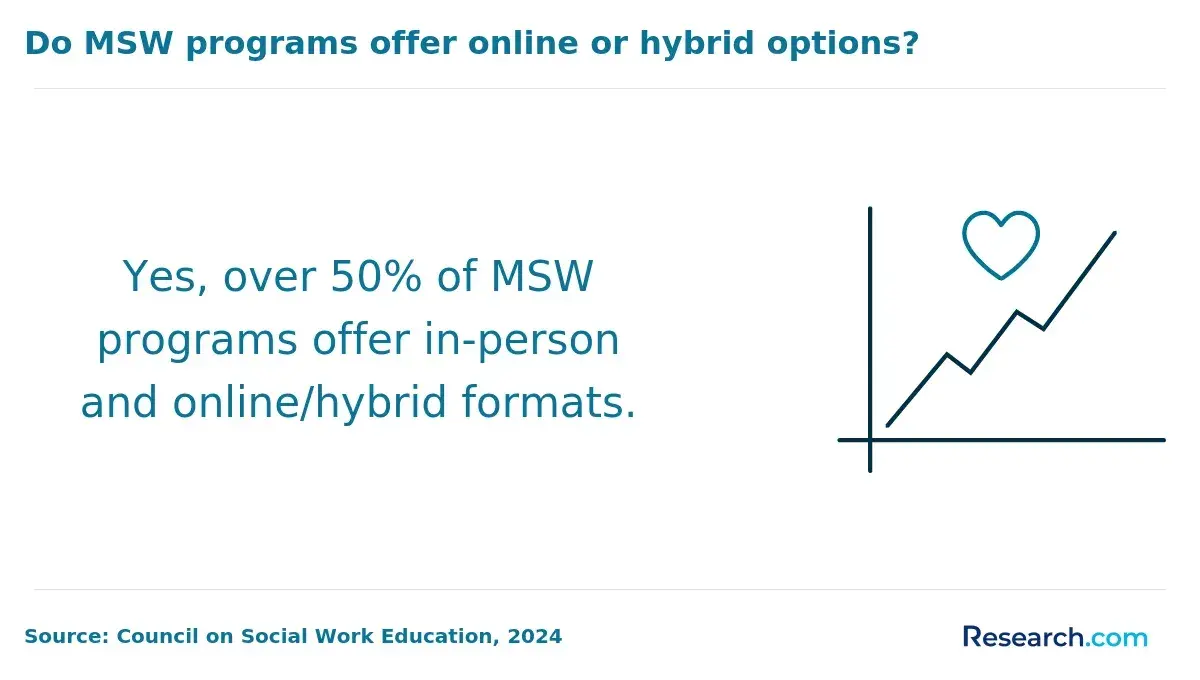
Washington can recognize online BSW and MSW programs when they meet the same accreditation and field education standards expected of campus-based programs. The delivery format is less important than whether the program is CSWE-accredited and whether it prepares students for Washington’s licensing requirements.
Online social work programs have become more common because they help working adults, rural students, caregivers, and career changers access degree options without relocating. Recent data show a 30% increase in nationwide enrollment in online MSW programs, and 76% of employers consider CSWE-accredited online degrees equivalent to on-campus ones if they include appropriate field experience.
However, “online” does not mean fully remote. Most social work programs require supervised fieldwork in person at approved agencies. Students should ask how the school finds placements in Washington, whether placements are available near their home, and what happens if a placement falls through.
| Question to ask about an online program | Why it matters |
| Is the program CSWE-accredited? | Without CSWE accreditation, graduates may not meet Washington licensure education requirements. |
| Does the school support Washington field placements? | Students need approved practicum settings, often in their local communities. |
| Are there synchronous class times? | Live sessions can affect students who work full-time or live in different time zones. |
| Does the curriculum align with clinical goals? | Students pursuing LICSW preparation should check clinical electives, supervision expectations, and practicum options. |
| What student support is available online? | Advising, placement coordination, licensure guidance, and career services can make a major difference. |
What organizations accredit social work degree programs in Washington?
Accreditation is one of the most important checks a student can make. It affects licensure eligibility, employer recognition, transfer options, financial aid access, and graduate school admission. For social work, programmatic accreditation and institutional accreditation both matter.
- Council on Social Work Education (CSWE): CSWE is the main accrediting body for social work education in the United States. Washington licensure pathways rely on CSWE-accredited social work education. As of 2024, Washington had 6 MSW and 7 BSW programs accredited statewide.
- Regional higher education accreditation: Colleges and universities should also hold institutional accreditation through recognized bodies such as the Northwest Commission on Colleges and Universities (NWCCU). This supports academic quality, federal financial aid eligibility, and credit transfer.
- Washington State Department of Health (DOH): The DOH does not accredit programs, but it regulates social work licensing in Washington and determines whether applicants meet credentialing requirements.
Students comparing credentials should understand the difference between earning an MSW and becoming licensed. The degree is the academic credential; the license is the state authorization to practice within a defined scope. Research.com’s guide to the difference between an MSW and an LCSW explains this distinction in more detail.
What are the top institutions offering social work degree programs in Washington?
The best school is not always the highest-profile option. It is the accredited program that fits your licensure goal, budget, location, schedule, field placement needs, and preferred practice area. Washington students can choose among public, private, urban, rural, research-focused, and community-oriented programs.
- University of Washington – Seattle: Offers BASW, MSW, and PhD programs with specialization options including healthcare and policy practice, supported by community partnerships.
- Seattle University: Provides BSW and MSW programs with an emphasis on social justice, anti-oppressive practice, equity, and community-based learning.
- University of Washington – Tacoma: Offers an MSW with standard and advanced standing tracks, flexible part-time options, and a strong field placement network.
- Eastern Washington University: Provides BASW and MSW pathways across multiple campuses, with accessible scheduling and areas such as school social work and mental health.
- Walla Walla University: Offers a CSWE-accredited MSW that blends faith-based values with evidence-based preparation and attention to rural communities.
Students comparing helping professions may also want to review the difference between therapist and social worker roles. This can help clarify whether your long-term goal is clinical therapy, case management, advocacy, school support, healthcare coordination, or policy work.
What Washington Social Workers Say About Their Degree
- My social work program at Seattle University helped me understand how culture, community, and systems shape a client’s experience. The emphasis on responsive practice prepared me for school-based work, where students often need both emotional support and practical advocacy. I use what I learned every day when helping young people navigate academic pressure, family stress, and personal challenges. Darnell
- Studying social work at Western Washington University pushed me academically and personally. The combination of coursework and community engagement helped me understand the social issues affecting families across the Pacific Northwest. Working in a local school now gives me a stable path for growth while allowing me to support students and families in meaningful ways. Chloe
- Eastern Washington University gave me a clearer view of the issues facing rural and indigenous communities. That preparation matters in my current school role because many challenges are connected to resources, access, and community history. My degree helped me see social work as both direct support and long-term change. Hassan
Common mistakes to avoid when choosing a Washington social work degree
- Choosing a program without checking CSWE accreditation: This is the biggest risk for students who want licensure. Always verify accreditation before applying.
- Assuming a BSW is enough for clinical licensure: A BSW may support entry-level work, but graduate education is required for Washington licensure pathways.
- Looking only at tuition: Field placement travel, fees, books, technology, and reduced work hours can change the true cost.
- Ignoring field placement support: A strong placement can lead to better experience, references, and job opportunities. A weak placement can slow your growth.
- Assuming online programs are automatically accepted: Online format is acceptable only when accreditation and field education requirements are met.
- Relying only on rankings: Rankings can be useful, but licensure fit, affordability, faculty support, and practicum access matter more.
- Waiting too long to study licensure rules: Students should understand supervision, exams, and continuing education before graduation.
How to choose the right social work degree program in Washington
- Define your target role. Decide whether you want entry-level social services work, school social work, healthcare, child welfare, clinical practice, or policy leadership.
- Match the degree to the license. If you want advanced or independent clinical practice, plan for an MSW and post-degree supervision.
- Verify CSWE accreditation. Check the accreditor directly rather than relying only on marketing language.
- Compare total cost. Include tuition, fees, living costs, commuting, placement requirements, and expected borrowing.
- Ask about field placements. Find out who secures placements, where students are placed, and whether placements align with your specialization.
- Review scheduling carefully. Working students should compare evening, weekend, online, hybrid, part-time, and advanced standing options.
- Evaluate licensure support. Strong programs help students understand Washington licensing steps, supervision documentation, and exam preparation.
- Talk to current students or alumni. Ask about advising, workload, placement quality, faculty responsiveness, and job search support.
Key Insights
- Washington licensure is graduate-driven. A BSW can lead to entry-level roles, but an MSW or qualifying doctoral degree is the standard route for licensed social work practice.
- CSWE accreditation is non-negotiable. Before enrolling, confirm that the program meets social work accreditation standards recognized for Washington licensure.
- Clinical practice takes more than a degree. The LICSW pathway requires graduate education, supervised post-graduate experience, exams, and ongoing continuing education.
- Online degrees can work if field education is handled well. Students should verify accreditation and ask how local practicum placements are arranged.
- Advanced standing can save time. Students with an accredited BSW may shorten the MSW timeline, but school policies vary.
- The best program is the one that fits your goal. Cost, schedule, specialization, field placement quality, and licensure alignment matter more than name recognition alone.
Related Articles for Nearby States
- 2027 What Degree Do You Need To Be a Social Worker: Education Requirements in Oregon
- 2027 What Degree Do You Need To Be a Social Worker: Education Requirements in Idaho
- 2027 What Degree Do You Need To Be a Social Worker: Education Requirements in Montana
- 2027 What Degree Do You Need To Be a Social Worker: Education Requirements in California
- 2027 What Degree Do You Need To Be a Social Worker: Education Requirements in Nevada
- 2027 What Degree Do You Need To Be a Social Worker: Education Requirements in Utah
- 2027 What Degree Do You Need To Be a Social Worker: Education Requirements in Wyoming
- 2027 What Degree Do You Need to Be a Social Worker: Education Requirements in Arizona
- 2027 What Degree Do You Need To Be a Social Worker: Education Requirements in Colorado
- 2027 What Degree Do You Need To Be a Social Worker: Education Requirements in New Mexico
References:
- 2025 Best Social Work Schools in Washington https://www.collegefactual.com/majors/social-services-public-administration/social-work/rankings/top-ranked/far-western-us/washington/
- Bachelor of Arts in Social Work | College of Nursing | Washington State University https://nursing.wsu.edu/ug-programs/bachelor-of-arts-in-social-work/
- How to Become a Social Worker in Washington https://socialworklicensemap.com/social-work-licensure/become-a-social-worker-in-washington/
- MSW Specializations | Washington University Bulletin https://bulletin.wustl.edu/brownschool/msw/specializations/
- Schools of Social Work https://naswmetrodc.socialworkers.org/Professional-Development/Schools-of-Social-Work
- Social Work, BSW | All Programs | Academics | Seattle University https://www.seattleu.edu/academics/all-programs/social-work-bsw/
- Social Work - School of Social Work - College of Professional Programs - EWU https://www.ewu.edu/cpp/social-work/social-work/
- Social Worker Degree Washington State https://www.socialworkdegreecenter.com/best-social-work-schools-washington/
- Specializations | School of Social Work https://socialwork.uw.edu/academics/msw/advanced-standing/specializations/
- Washington Social Work License Requirements And Programs | Psychology.org https://www.psychology.org/social-work/licensure/washington/
Other Things You Should Know About Becoming a Licensed Social Worker in Washington
In 2027, to become a clinical social worker in Washington, you'll need at least a Master of Social Work (MSW) degree from an accredited program. A doctorate is not required for clinical practice, but a master's degree is essential for licensure and practice.
In Washington, you generally need a degree in social work to become a licensed social worker. A Bachelor's or Master's in Social Work (BSW or MSW) is typically required for licensure, which includes passing relevant exams and completing supervised practice hours. Without a degree in social work, you may pursue related roles, but licensure as a social worker usually requires the specific educational path.
Admission requirements for a Bachelor of Social Work (BSW) degree in Washington typically include a high school diploma or GED, completion of prerequisite courses such as psychology and sociology, and a minimum GPA often around 2.5 to 3.0. Some programs may require letters of recommendation, a personal statement, or an interview to assess applicants’ commitment to social work values.
Additionally, many schools give preference to candidates with volunteer or work experience in social services, demonstrating practical interest and readiness for the field. It’s important to check each university’s specific criteria, as they can vary between institutions across Washington.