2027 Comparing Social Service Degrees

Co-Founder and Chief Data Scientist
Choosing a social service degree is not just a question of picking a major. It is a decision about the populations you want to serve, the level of responsibility you want, whether you may need licensure, and how much time and money you can invest before entering the field. Social service programs can lead to careers in social work, case management, counseling-adjacent roles, community outreach, public health, nonprofit leadership, and policy advocacy.
This guide explains how social service degrees compare in 2026, including degree levels, online and campus formats, costs, accreditation, common career paths, salary expectations, program requirements, and practical questions to ask before enrolling. It is designed for students comparing social work, psychology, sociology, public health, and related social science career paths, as well as career changers who want a clearer route into human services.
If your goal is to become a social worker specifically, pay close attention to accreditation and state licensure rules. A general social service degree may qualify you for some support roles, but many regulated social work positions require a social work degree from an accredited program. For a deeper step-by-step path, see Research.com’s guide on how to get into social work.
Quick Answer: Which Social Service Degree Should You Choose?
A bachelor’s degree in social work or a related field can prepare you for entry-level social service jobs, while a master’s degree in social work is usually the stronger option for advanced practice, clinical preparation, leadership, and specialized roles. A doctorate is typically best for experienced professionals who want to move into advanced clinical leadership, research, teaching, or policy-level work.
The labor market remains steady for social workers. Employment is projected to grow by 6% between 2024 and 2034, which is faster than the average for all occupations. About 44,700 openings for social workers are expected each year over the decade, with many openings tied to retirements and workers moving into other fields. (BLS, 2024)
Comparing Social Service Degrees in 2026 Table of Contents
- What social service degrees cover
- How much social service degrees cost
- Online vs. campus social service programs
- Master’s programs in social work to compare
- Jobs you can pursue with a social service degree
- Degree levels in social service and social work
- Admissions and skill requirements
- How to evaluate a social service degree program
- Affordable online social work degree options
- Related majors to compare before choosing
- Financial aid options for social service students
- Clinical psychology and social service practice
- Why accreditation matters
- Clinical specializations and career growth
- Accelerated social service degree pathways
- Emerging trends in social services careers
- Challenges students should expect
- Long-term value of an MSW
- Career advancement through online DSW programs
- Whether a more accessible MSW can speed up career progress
What Is a Social Service Degree?
A social service degree prepares students to support individuals, families, groups, and communities facing challenges such as poverty, trauma, aging, disability, mental health needs, substance use, family instability, housing insecurity, and unequal access to resources. The field includes direct client support, community programming, advocacy, policy work, and organizational leadership.
Social service education can take several academic forms. Some students choose a dedicated social work program, while others enter the field through psychology, public health, human services, criminal justice, counseling-related programs, or sociology degrees. The best choice depends on whether you want to provide direct services, pursue licensure, conduct research, manage programs, or work on population-level problems.
What Can You Do With a Social Service Degree?
With an undergraduate social service or social work degree, graduates often qualify for entry-level roles in outreach, case support, community education, nonprofit services, and human services agencies. Graduate study can open doors to advanced practice, clinical preparation, supervision, specialized case management, policy analysis, and administrative roles.
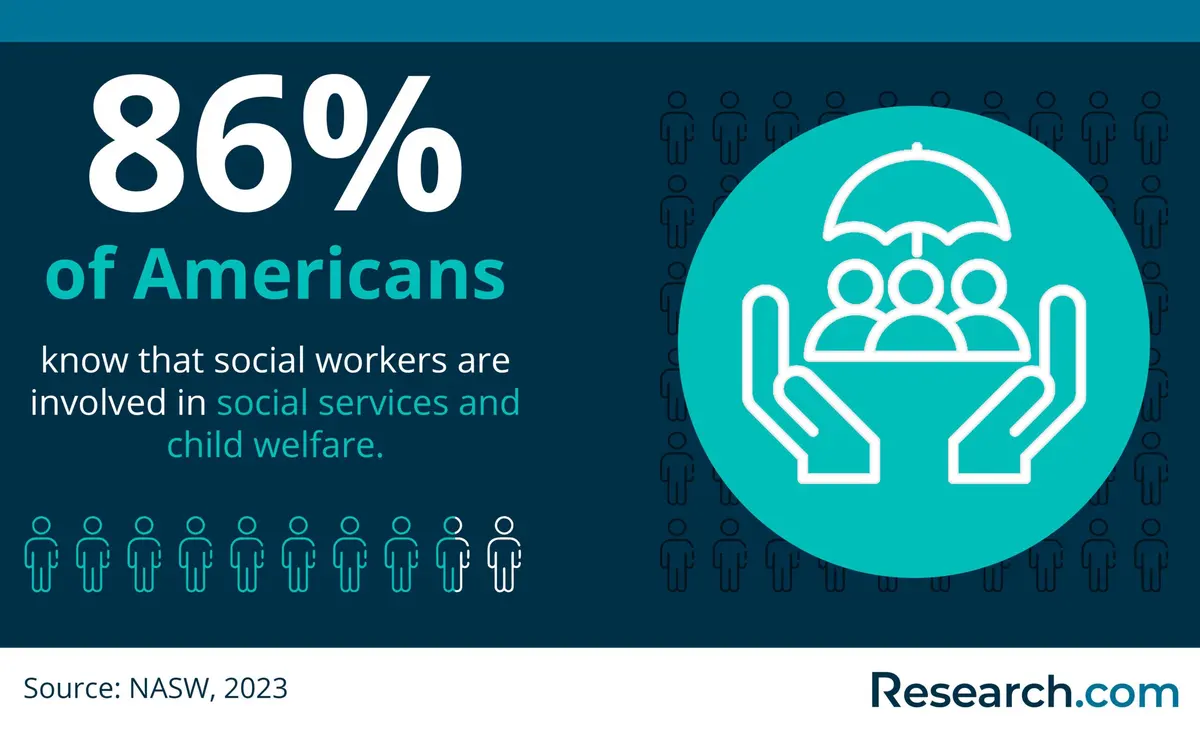
Public awareness of social work is strong in core service areas. According to NASW, 86% of Americans know that social workers are connected to social services and child welfare.
People enter social services for different reasons, but the work generally centers on a common professional commitment: helping people maintain dignity, safety, access, and support during difficult circumstances.
Cost of a Social Service Degree
The cost of a social service degree varies by school type, residency status, delivery format, degree level, transfer credits, fees, and field placement requirements. Public colleges often charge less than private institutions, and in-state students usually pay lower tuition than out-of-state students at public schools.
How Much Does It Cost to Get a Social Service Degree?
National Center for Education Statistics data reports that average tuition and fees for a four-year bachelor’s degree program at a public school are $9,400. By comparison, for-profit private schools average $18,200, while nonprofit private schools average $37,600.
For master’s-level social service programs, in-state tuition commonly falls between $868 and $1,834, while out-of-state tuition can reach $2,714.
| Cost Factor | Why It Matters | Question to Ask |
| Public vs. private tuition | Institution type can significantly change total program cost. | What is the full tuition and fee estimate for the entire degree? |
| In-state vs. out-of-state pricing | Residency status may affect per-credit tuition at public universities. | Can online students qualify for in-state or reduced tuition? |
| Field placement expenses | Internships may require transportation, background checks, insurance, or schedule changes. | What costs are connected to practicum or field education? |
| Transfer credits | Accepted credits can shorten time to graduation and reduce tuition. | How many previous credits can be applied to this program? |
| Financial aid eligibility | Accreditation and enrollment status can affect aid access. | Is the program eligible for federal student aid? |
Is a Social Service Degree Worth It?
A social service degree can be worth it when the program aligns with your career target, licensing needs, financial situation, and preferred population. Graduates build skills in assessment, communication, ethics, advocacy, crisis response, cultural responsiveness, and service coordination. For some postgraduate degree holders, annual earnings may exceed $100,000, depending on role, credentials, location, employer, and experience. For role-specific pay context, review Research.com’s salary guide explaining how much does a licensed social worker make.
The Council on Social Work Education reported survey responses from 283 programs showing 75,851 students enrolled in postgraduate social service degrees, specifically MSW programs. Of those students, 63% attended full time and 37% attended part time.
How Do Online Programs Compare for Social Service Degrees?
Online social service programs can be a strong fit for working adults, caregivers, military-connected students, and career changers who need more scheduling control. However, online does not always mean fully remote. Many social work and human services programs still require in-person fieldwork, supervised practice, or local agency placements.
| Program Format | Best For | Potential Trade-Off |
| Online asynchronous | Students who need to study outside set class times. | Requires strong self-discipline and careful planning. |
| Online synchronous | Students who want live interaction without commuting. | Class times may conflict with work or family obligations. |
| Hybrid | Students who want some campus connection with added flexibility. | Travel may still be required for intensives or meetings. |
| Campus-based | Students who prefer face-to-face learning and local networking. | Less flexible for students with full-time jobs or long commutes. |
Flexibility and Access
Online programs often let students complete lectures, readings, discussions, and assignments around work or family schedules. This format can be especially helpful for students who cannot relocate or commute to campus several days per week.
Technology in Social Service Training
Many online programs use digital simulations, video meetings, online case discussions, and interactive learning platforms. These tools can help students prepare for technology-supported service delivery, including telehealth coordination, remote case management, and virtual client communication.
Networking in an Online Program
Online students can still build professional relationships through discussion boards, group projects, virtual events, faculty office hours, and field placements. The key is to choose a program that actively supports advising, peer connection, and career development rather than simply posting coursework online.
Fieldwork and Internship Requirements
Most reputable online social work and social service programs include supervised practical experience. Before enrolling, confirm whether the school helps arrange placements near your location, whether your current workplace can count, and whether your state has specific requirements for licensure preparation.
Best Master’s Degree Programs in Social Work for 2026
Master’s programs in social work should be compared by accreditation, field education, curriculum fit, cost, specializations, licensure preparation, student support, and placement options. Research.com reviewers used reputable sources, including current public datasets, to identify leading Master’s Degree in Social Work programs in 2026. The review considered metrics such as academic ratings, enrollment rate, accreditation, and other relevant factors.
1. University of Michigan School of Social Work
The University of Michigan offers an MSW program with a broad set of specialization options, research-informed instruction, interdisciplinary study, and flexible enrollment choices.
The program requires 60 credit hours and is available in both full-time and part-time formats. The part-time pathway can make graduate study more accessible for qualified students who cannot commit to full-time enrollment.
- Program Length: 1220 months (full-time)
- Tracks/concentrations: Field Education; Research Methods for Social Work
- Cost per Credit: $1,680 (in-state), $2,714 (out-of-state)
- Required Credits to Graduate: 60
- Accreditation: Council on Social Work Education (CSWE)
2. The University of Chicago Crown Family School of Social Work, Policy, and Practice
The University of Chicago’s graduate program in social work, social policy, and social administration emphasizes professional skills for creating change in organizations, communities, and systems. Students begin with a core first-year curriculum that introduces major approaches to social intervention.
The program also builds understanding of human development, behavior, and lived experience. Later, students select from two academic concentrations: clinical practice or social administration.
- Program Length: Two years
- Tracks/concentrations: Clinical Practice; Social Administration
- Accreditation: CSWE
3. University of Washington School of Social Work
The University of Washington MSW prepares students for direct-practice and leadership roles across professional settings such as aging services, mental health, and multicultural communities.
The curriculum combines classroom learning with field-based experience and emphasizes innovation, leadership, social justice, and culturally responsive practice.
- Program Length: Two years
- Tracks/concentrations: Professional Identity; Policy; Social Justice
- Cost per Credit: $868
- Required Credits to Graduate: 75
- Accreditation: CSWE
4. Washington University in St. Louis Brown School
Washington University in St. Louis offers an MSW that develops foundational social work knowledge along with advanced skills in analysis, collaboration, and problem-solving.
The program is known for curriculum flexibility, evidence-based learning, attention to oppression, applied practice opportunities, and research engagement.
- Program Length: Two years
- Tracks/concentrations: American Indian and Alaska Native; Children Youth and Families; Health, Individualized; Mental Health; Social and Economic Development Domestic; Social and Economic Development International; Social Impact Leadership
- Cost per Credit: $1,561
- Required Credits to Graduate: 60
- Accreditation: CSWE
5. Columbia University School of Social Work
Columbia University’s MSW prepares students for specialized social work practice with an emphasis on social and economic justice, advocacy, and service to vulnerable populations.
The curriculum blends core social work preparation with focused study in the student’s chosen specialization.
- Program Length: Two years
- Tracks/concentrations: Advanced Clinical Social Work; Advanced Generalist Practice and Programming; Policy Practice; Leadership Management and Entrepreneurship for Social Justice
- Cost per Credit: $1,834
- Required Credits to Graduate: 60
- Accreditation: CSWE
Social Service Degree Jobs
Social service graduates work in direct care, case coordination, mental health services, child and family support, community outreach, advocacy, nonprofit administration, and program development. Some professionals focus on individual clients, while others work at the macro level by improving programs, policies, service systems, and community conditions.
Advocacy is a core part of the field. Social service professionals often help clients understand rights and resources, communicate with agencies, navigate public systems, and access needed care. Many also advocate for stronger services at local, state, and national levels.
Is Social Service in High Demand?
Demand is supported by the ongoing need for professionals who can help people manage health, family, financial, housing, behavioral health, and community challenges. According to BLS data from 2024, individual and family services employ the largest number of social workers.
What Jobs Can You Get With a Social Service Degree?
| Role | Typical Focus | Good Fit For |
| Outreach Worker | Connects community members with programs, events, relief services, and support resources. | Students who enjoy public-facing work, community education, and resource navigation. |
| Mental Health Case Manager | Assesses client needs, coordinates treatment plans, identifies triggers and strengths, and supports recovery goals. | Students interested in behavioral health support and coordinated care. |
| Licensed Clinical Social Worker | Provides individual or group treatment, contributes to diagnosis and planning, and evaluates client progress. | Graduate-level students pursuing clinical practice and licensure. |
| Counselor | Helps clients manage emotional and mental health challenges, build coping strategies, and follow treatment goals. | Students interested in supportive helping roles, noting that requirements vary by counseling role and state. |
What Salary Can You Earn With a Social Service Degree?
In 2025, social service workers earned a median annual wage of $61,330. Median pay means half of workers earned more and half earned less.
The lowest 10 percent earned below $27,180, while the highest 10 percent earned more than $200,000.
Types of Degrees in Social Service
Social service degrees include associate, bachelor’s, master’s, and doctoral options. Students who want to become professional social workers should be especially careful: many roles require a social work degree from an accredited program.
What Kinds of Social Work Degrees Are Available?
Undergraduate options include associate and bachelor’s degrees. Students who want a shorter starting point can compare associate’s degree in social work online programs. Graduate options include the Master of Social Work (MSW), Doctorate in Social Work (DSW), and Ph.D. in social work.
| Degree Level | Average Time to Complete | Common Career Direction |
| Bachelor’s Degree in Social Work | Four years | Entry-level social service and community support roles. |
| Master’s Degree in Social Work | One to two years | Advanced practice, clinical preparation, case leadership, and specialized roles. |
| Doctorate in Social Work | Two to four years | Advanced clinical leadership, executive practice, and applied expertise. |
| Doctor of Philosophy in Social Work | Two to four years | Research, teaching, policy analysis, and scholarly work. |
1. Bachelor’s Degree in Social Work
Average time to complete: Four years
A BSW introduces students to social welfare policy, human behavior, social work theory, ethics, and practice methods. Programs usually include field education so students can apply classroom concepts in real service settings.
Entry-level jobs: Health Educator, Habilitation Specialist, Outreach Worker
2. Master’s Degree in Social Work
Average time to complete: One to two years
An MSW provides advanced preparation in social work practice, ethics, assessment, social justice, policy, and specialized intervention methods. Coursework may include advanced practice, social policy analysis, and clinical social work.
Many MSW programs combine classes, case studies, supervised fieldwork, discussion-based learning, and specialization options in clinical practice, community work, policy advocacy, or related areas.
Students who need flexibility can compare a masters degree in social work online with campus and hybrid formats.
Entry-level jobs: Child Welfare Specialist, Mental Health Case Manager, Mental Health Technician
3. Doctorate in Social Work
Average time to complete: Two to four years
A DSW is an advanced practice-focused degree for social work professionals who want to deepen clinical expertise, applied leadership, and practice innovation. Students may choose electives connected to their concentration or professional goals.
Coursework often includes advanced clinical practice, practice leadership, clinical research, and theory. Some programs require a residency, dissertation, or applied doctoral project. To compare doctoral options, read Research.com’s guide to DSW vs PhD social work.
Entry-level jobs: Licensed Clinical Social Worker, Family Therapist, Nonprofit Director
4. Doctor of Philosophy in Social Work
Average time to complete: Two to four years
A Ph.D. in social work is primarily research-oriented. It prepares students to produce scholarship, teach, conduct studies, analyze policy, and contribute evidence to the field rather than focusing mainly on direct clinical practice. Students exploring helping professions can also review how social work compares with guidance on how to become a counselor.
Students typically complete advanced research design, behavioral science, teaching, theory, and an original thesis or dissertation.
Entry-level jobs: College Professor, Policy Researcher, Counselor
Social Service Degree Requirements
Admission requirements differ by institution and degree level, but most programs evaluate academic preparation, communication ability, readiness for service-oriented work, and fit with the program’s mission.
Admission Requirements
- Proof of graduation. Applicants may need a high school diploma, GED transcript, or recognized completion certificate for undergraduate study.
- Transcripts. Schools typically request academic records from previous high schools, colleges, or universities.
- SAT or ACT score. Some undergraduate programs still request standardized test scores to evaluate college readiness.
- Personal essay. Many programs ask applicants to explain their goals, service experience, motivation, and readiness for social service education.
Skill Requirements
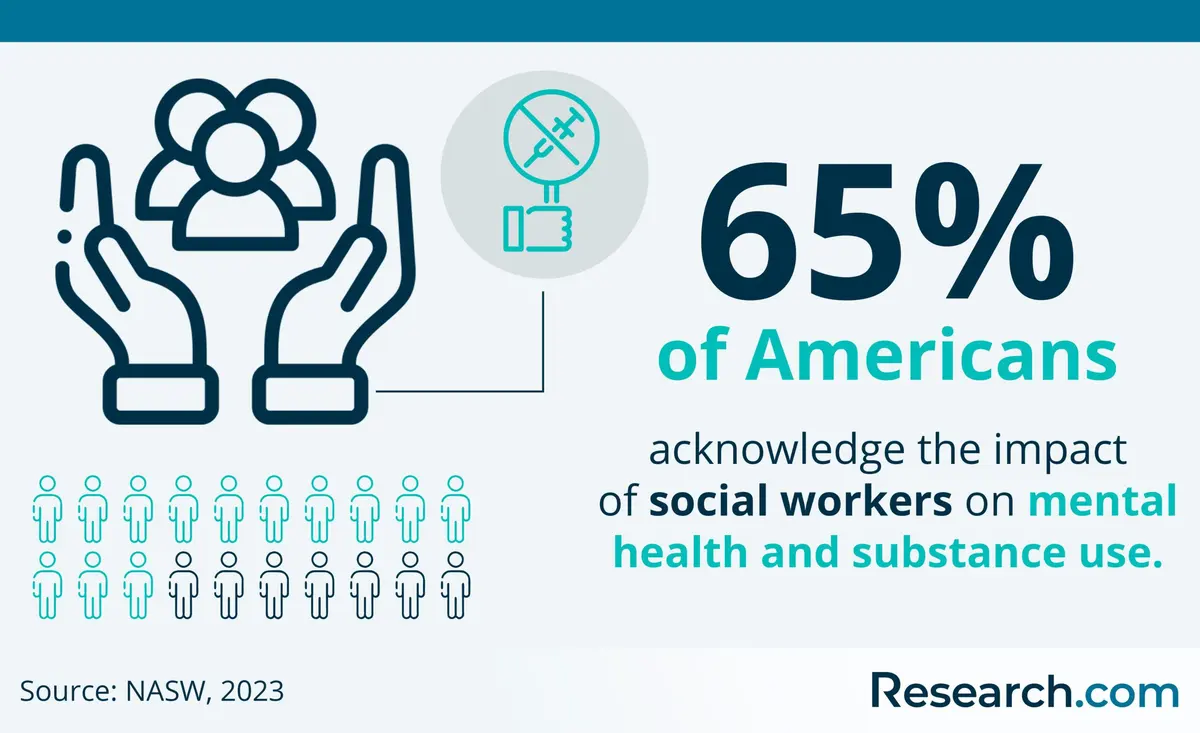
Current areas of focus within social work include trauma-informed support, technology use in practice, and efforts to address racial injustice.
Students should expect to build both interpersonal and analytical skills. The strongest candidates are not only compassionate; they are also organized, ethical, reflective, and able to work with people under stress.
- Empathy and compassion. Social service professionals must connect with people respectfully while recognizing their circumstances, strengths, and needs.
- Communication and active listening. Clear writing, careful listening, documentation, and client-centered communication are essential in casework and advocacy.
- Problem-solving and critical thinking. Professionals often need to assess complex situations, weigh risks, identify resources, and adapt plans.
- Cultural competence. Effective practice requires respect for different identities, communities, histories, and lived experiences.
- Collaboration and teamwork. Social service work frequently involves agencies, families, healthcare providers, schools, courts, and community organizations.
What to Look for in a Social Service Degree Program
A strong program should match your career goal, meet accreditation expectations, provide relevant field experience, and offer a realistic total cost. Do not choose a school based only on convenience or name recognition.
| Selection Factor | Why It Matters | What to Verify Before Enrolling |
| Specializations | Focus areas such as mental health, child welfare, substance abuse, or community development can shape your career path. | Does the curriculum match the population or setting you want to serve? |
| Accreditation | Accreditation affects educational quality, employer recognition, aid eligibility, and sometimes licensure. | Is the institution accredited, and is the social work program CSWE-accredited when required? |
| Student-to-teacher ratio | Smaller classes may offer more faculty interaction, feedback, and mentorship. | How accessible are instructors and advisors? |
| Financial aid | Grants, scholarships, payment plans, work-study, and employer assistance can affect affordability. | What is the net cost after aid, not just listed tuition? |
| Field placement support | Practical training is central to social service preparation. | Who arranges placements, and can they be completed near you? |
Affordable Online Social Work Degrees: Quality Education for Less
Affordable online programs can reduce relocation and commuting costs, but students should still compare total tuition, fees, field placement expenses, technology costs, and financial aid. Low tuition is helpful only if the program is accredited, well-supported, and aligned with your career goal.
If you are looking for a lower-cost bachelor’s path, Research.com’s list of cheapest online BSW programs can help you compare options that combine online access with social work preparation.
Cost-conscious students should also ask whether the school accepts transfer credits, offers part-time pacing, provides scholarships for service-oriented students, and supports local field placements.
Majors Related to Social Service
Social work is not the only major that can lead to service-oriented careers. Psychology, sociology, and public health can also prepare students to address human needs, but each field approaches problems differently. Choosing the wrong major can delay licensure, limit job options, or require additional graduate study later.
Social Work vs. Psychology Degrees
Social work and psychology both focus on human well-being, but they prepare students for different types of work. The distinction between social workers and psychologists often comes down to scope: social work emphasizes people-in-environment, resources, advocacy, and systems, while psychology focuses more heavily on behavior, cognition, assessment, and mental processes.
| Social Work Degree | Psychology Degree |
| Prepares students to connect people and families with services, support systems, and advocacy while addressing social and economic barriers. | Examines the mind, behavior, development, and normal and abnormal patterns connected to brain and psychological functioning. |
Social Work vs. Sociology Degrees
Social work and sociology both study individuals and groups, but they are not interchangeable. Sociology is more research- and theory-oriented, while social work is more practice-oriented and focused on intervention, services, and client support.
| Social Work Degree | Sociology Degree |
| Focuses on social, economic, family, and community challenges and prepares students to intervene through services and advocacy. | Studies population behavior, institutions, groups, and social patterns to explain how societies function. |
Social Work vs. Public Health Degrees
Public health workers and social workers may address similar problems, but they usually work at different levels. Public health often focuses on populations, prevention, policy, and broad health systems. Social work often focuses on individuals, families, groups, and communities needing direct support.
| Social Work Degree | Public Health Degree |
| Uses a micro-level and community-informed approach to support individuals and families with personal, social, and service-related challenges. | Uses a macro-level approach to improve health outcomes across large populations through prevention, policy, research, and programs. |
What Financial Aid Options Are Available for Your Social Service Degree?
Social service students may use grants, scholarships, institutional awards, work-study, loans, employer tuition assistance, and payment plans to reduce out-of-pocket costs. Start with accredited programs because accreditation can affect eligibility for federal student aid and employer recognition.
Students with niche service interests may also compare specialized online pathways, such as a christian counseling degree online, when the curriculum matches their professional goals. Apply early, ask about department-level scholarships, and compare net price rather than advertised tuition alone.
Can Integrating Clinical Psychology Enhance Social Service Practices?
Clinical psychology coursework can strengthen a social service professional’s understanding of assessment, mental health conditions, therapeutic frameworks, and evidence-based intervention. This background can be useful for case managers, social workers, and human services professionals who collaborate with behavioral health teams.
Students who want deeper mental health training may explore a clinical psychology degree online, but they should compare licensure rules carefully. Psychology, counseling, and social work credentials are not interchangeable, and each profession has distinct education and supervised practice requirements.
The Importance of Accreditation in Social Service Degrees
Accreditation is one of the most important checks before enrolling in any social service program, including the cheapest online MSW programs. It signals that a school or program has been reviewed against recognized standards and may affect transfer credits, financial aid, employer confidence, and licensure eligibility.
Why Accreditation Matters
- Quality assurance: Accredited programs are evaluated by recognized accrediting organizations and are expected to meet defined academic standards.
- Licensure and certification: Many states and professional organizations require graduates to complete an accredited program before qualifying for credentials such as LSW or LCSW.
- Employment opportunities: Employers may prefer or require accredited degrees, especially for regulated roles, clinical settings, government agencies, and healthcare-linked positions.
- Financial aid eligibility: Federal student aid and many scholarships are generally tied to accredited institutions.
Types of Accreditation to Look For
- Regional accreditation: This applies to the college or university and indicates institutional academic review.
- Program-specific accreditation: For social work, CSWE accreditation is especially important for BSW, MSW, and DSW programs when students plan to pursue social work practice or licensure.
- National accreditation: Some specialized institutions or programs may hold national accreditation, though it is less common than regional and program-specific accreditation in traditional social work education.
How to Verify Accreditation
- Review the school’s official accreditation page and confirm the accreditor’s name.
- Check the CSWE website for accredited social work programs.
- Use the U.S. Department of Education database to verify institutional accreditation.
- Ask the state licensing board whether the program meets educational requirements for your intended credential.
Do not rely only on a school representative’s verbal assurance. Accreditation and licensure rules should be verified directly through official databases and licensing boards.
How Can Clinical Specializations Enhance Your Social Service Career?
Clinical specializations can help students develop stronger skills in assessment, treatment planning, therapeutic methods, case documentation, crisis response, and evidence-informed practice. They may also support preparation for advanced licensure and supervisory roles when paired with the required degree, fieldwork, and post-graduate supervised experience.
Students focused on clinical social work can compare the best LCSW programs to identify programs with relevant coursework, field placements, faculty expertise, and state licensure alignment.
Accelerated Degree Programs in Social Services and Their Benefits
Accelerated degree programs can help motivated students finish faster than traditional timelines, but speed should not come at the expense of accreditation, field education, support services, or licensure preparation. They are most useful for students with transfer credits, clear career goals, strong time-management skills, and the ability to handle compressed coursework.
- Time efficiency: Accelerated programs shorten terms or increase course intensity so students can complete requirements more quickly. Some BSW programs can be completed in as little as two to three years.
- Cost control: Finishing sooner may reduce tuition exposure, fees, commuting, and living expenses, depending on the school’s pricing structure.
- Earlier workforce entry: Graduates may begin gaining experience sooner in areas such as mental health, substance abuse counseling, community advocacy, and human services.
- Flexible learning: Many accelerated options are online and may include asynchronous coursework for students balancing school with work or family responsibilities.
Before choosing a fast-track pathway, confirm accreditation, practicum requirements, course load expectations, advising support, and whether the schedule is realistic. Research.com’s guide to accelerated degree programs can help you compare options across fields.
How to Choose a Social Service Degree Program
Start by defining your target role. If you want to become a licensed social worker, prioritize accredited BSW or MSW programs and state licensure alignment. If you want broader community work, nonprofit support, research, or policy roles, related majors may also make sense. Social service education can also connect to humanities and social science career paths.
- Identify your intended job. Compare job descriptions in your state and note required degrees, licenses, and experience.
- Check accreditation first. Eliminate programs that do not meet institutional or program-specific accreditation needs.
- Compare curriculum and specializations. Look for coursework tied to your preferred population, such as children, older adults, mental health, substance use, policy, or healthcare.
- Ask about field placement support. Strong programs should explain how placements are approved, supervised, and evaluated.
- Calculate total cost. Include tuition, fees, books, technology, transportation, lost work hours, and fieldwork expenses.
- Review student support. Advising, writing help, licensure guidance, career services, and mentorship can affect completion and employment outcomes.
Common Mistakes to Avoid
| Mistake | Why It Can Hurt You | Better Approach |
| Choosing a program without checking accreditation | You may face problems with aid, transfer credits, employment, or licensure. | Verify institutional and program-specific accreditation before applying. |
| Looking only at tuition | Fees, fieldwork costs, and lost work time can change affordability. | Compare full program cost and expected net price after aid. |
| Assuming all online programs meet licensure rules | Licensure requirements vary by state and profession. | Confirm requirements with your state board before enrolling. |
| Ignoring field placement logistics | A poor placement match can delay graduation or limit practical preparation. | Ask how placements are secured, supervised, and approved. |
| Relying only on rankings | A highly ranked school may not be affordable, flexible, or aligned with your goals. | Use rankings as one input alongside cost, accreditation, curriculum, and outcomes. |
| Assuming salary outcomes are guaranteed | Pay varies by role, location, employer, credentials, and experience. | Research local job postings and compare realistic entry-level expectations. |
What Are the Emerging Career Trends in Social Services?
Social services are being shaped by technology, changing community needs, and growing expectations for integrated care. Telehealth, remote counseling support, online resource platforms, and digital case management tools are increasingly part of service delivery.
Employers may value professionals who can use data responsibly, coordinate care across systems, serve diverse populations, and adapt services for remote or hybrid environments. Flexible programs, including the fastest MSW program online, may help qualified students respond to changing workforce needs more quickly when the program is accredited and appropriately rigorous.
What Challenges Might You Encounter During a Social Service Degree Program?
Social service education can be emotionally and academically demanding. Students often study trauma, poverty, family conflict, discrimination, mental illness, ethical dilemmas, and systems that can be difficult to navigate. Fieldwork can also introduce stress, compassion fatigue, and time-management pressure.
Successful students build support early. Mentorship, peer groups, supervision, self-care routines, and realistic workload planning can make the program more manageable. It also helps to understand role differences before committing; for example, reviewing what is the difference between social work and psychology can clarify expectations and prevent choosing a path that does not match your goals.
What Are the Long-Term Career Advantages of Earning a Master’s Degree in Social Work?
An MSW can expand access to advanced practice, clinical preparation, leadership, policy work, supervision, and specialized social service roles. It can also strengthen professional networks and prepare graduates to move beyond entry-level support positions.
The long-term value depends on licensure goals, field placement quality, employer demand, and how well the program matches your career plan. To compare specific roles, review Research.com’s guide on what jobs can you get with a masters in social work.
How Can Affordable Online DSW Programs Boost Your Career Advancement?
A DSW can support experienced professionals who want to move into senior practice leadership, applied research, program development, policy advocacy, teaching-adjacent roles, or executive-level social service work. Online options may make doctoral study more practical for working professionals.
When comparing affordable online DSW programs, look beyond tuition. Review faculty expertise, dissertation or capstone expectations, residency requirements, student support, and whether the curriculum fits your intended leadership path.
Can an Easier MSW Program Expedite Career Growth?
A more accessible MSW program can help some students enter graduate study sooner, but “easy” should not mean weak, unaccredited, or disconnected from licensure preparation. The best option is a program with clear admissions criteria, strong support, practical field education, and an efficient structure that still meets professional standards.
Students seeking a less restrictive admissions route can compare programs described as the easiest master's degree in social work, while still verifying accreditation, field placement quality, graduation requirements, and state licensure alignment.
Key Insights
- Start with the career goal. A general social service degree, BSW, MSW, DSW, psychology degree, sociology degree, and public health degree can all lead to helping professions, but they prepare students for different roles.
- Accreditation is non-negotiable for social work pathways. Students seeking licensure or regulated practice should verify CSWE accreditation and state board requirements before enrolling.
- Online programs can be practical, but fieldwork is still usually in person. Ask how placements are arranged and whether your location affects completion or licensure preparation.
- Cost comparisons should use total price, not tuition alone. Include fees, field placement expenses, technology, transportation, transfer credits, and aid eligibility.
- The job outlook is stable. Social worker employment is projected to grow by 6% from 2024 to 2034, with about 44,700 openings expected annually over the decade. (BLS, 2024)
- Graduate study can broaden options. An MSW may support advanced practice, clinical preparation, leadership, and specialized roles, while doctoral degrees are better suited for experienced professionals pursuing high-level practice, research, policy, or leadership.
- Do not assume salary outcomes are guaranteed. Earnings vary by role, location, employer, licensure, experience, and specialization.
References:
- BLS. (2024). Social Workers: Occupational Outlook Handbook: U.S. Bureau of Labor Statistics. https://www.bls.gov/ooh/community-and-social-service/social-workers.htm
- NASW. (n.d.). National Social Work Public Opinion Survey. https://www.socialworkers.org/News/Social-Work-Month/National-Social-Work-Public-Opinion-Survey
- NCES. (2024). Fast Facts: Tuition costs of colleges and universities (76). https://nces.ed.gov/fastfacts/display.asp?id=76
- Zippia, Inc. (2025, January 8). Social worker jobs: How to become a social worker and career outlook. Zippia. https://www.zippia.com/social-worker-jobs/
- ZipRecruiter, Inc. (2026). Human services salary in the United States. https://www.ziprecruiter.com/Salaries/Human-Services-Salary
Other Things You Should Know About Social Service Degrees
In 2027, a social service degree program should be accredited by recognized bodies such as the Council on Social Work Education (CSWE) in the U.S. Accreditation ensures the program meets educational standards required for professional practice and licensure in the field.
In 2027, a typical bachelor's degree in social service requires around 120 credit hours, which includes general education and major-specific courses. Master's programs can require about 60 credit hours, focusing on advanced topics and often include a fieldwork component.
Most MSW graduates who plan to practice clinically must pass the ASWB clinical licensing exam after earning a CSWE-accredited degree and completing supervised postdegree hours. State boards set the exact hours and supervision rules, and many states require an LCSW credential before independent clinical work.
Graduates can work as outreach workers, mental health case managers, licensed clinical social workers, and counselors, among other roles. These jobs involve direct support to individuals, community advocacy, and development of social programs.
As of May 2024, the median annual wage for social workers was $61,330. Salaries range from $41,580 for the lowest 10% to over $99,500 for the top 10%, varying by specialization and experience.
In 2027, top programs for Master’s degrees in Social Work include the University of Michigan, Washington University in St. Louis, and Columbia University. These programs are renowned for their comprehensive curriculums, experienced faculty, and diverse fieldwork opportunities, which prepare students for leadership roles in social work.
In 2027, social service degree programs often emphasize practical experience by integrating fieldwork or internships. Students typically engage in supervised field placements in community organizations, healthcare settings, or government agencies, equipping them with essential, hands-on experience and professional networking opportunities in the social service sector.
The cost of obtaining a Social Service degree in 2027 varies widely based on the institution and location. On average, students at public universities might expect to pay between $10,000 to $25,000 annually for tuition, while private institutions can range from $30,000 to $60,000 per year. Additional expenses such as books and accommodations should also be considered.