
2027 How to Become a Licensed Counselor (LPC) in Ohio

Co-Founder and Chief Data Scientist
Becoming a Licensed Professional Counselor (LPC) in Ohio is a regulated process, not just a matter of earning a counseling degree. You need the right graduate program, supervised clinical training, board approval, exams, background checks, and ongoing continuing education. The decision matters because the demand for mental health support in Ohio is substantial: 33.1% of adults in Ohio report symptoms of anxiety or depressive disorder, and 25.6% of adults with mental illness could not get needed care.
This guide is for students, career changers, counseling graduates, and out-of-state professionals who want a practical roadmap to LPC licensure in Ohio. You will learn which degrees meet Ohio requirements, how long the process can take, what the application and renewal steps involve, how to evaluate counseling programs, where LPCs work, what salaries look like, and what mistakes to avoid before investing in graduate school.
Quick answer: How do you become an LPC in Ohio?
To become an LPC in Ohio, you generally need to complete a qualifying master’s degree in counseling or a closely related field, meet the required practicum and internship standards, pass the National Counselor Examination and Ohio’s Laws and Rules Examination, complete a criminal background check, submit your application through Ohio’s eLicense system, and pay the required fees. Most counseling master’s programs take 2 to 3 years, and an LPC license must be renewed every two years with 30 hours of continuing education.
| Step | What Ohio LPC candidates should do | Why it matters |
| 1. Choose the right graduate program | Look for a 60-credit counseling program, preferably CACREP-accredited. | The wrong program can delay or complicate licensure. |
| 2. Complete clinical training | Finish required practicum and internship experiences, including 40 hours of practicum and 240 hours of internship. | Ohio requires documented supervised experience before licensure. |
| 3. Apply through the Board | Use Ohio’s eLicense system and submit transcripts, documentation, and fees. | The Ohio Counselor, Social Worker, and Marriage and Family Therapist Board reviews LPC applications. |
| 4. Pass required exams | Pass the National Counselor Examination and the Laws and Rules Examination. | Exam results are part of the Board’s licensure decision. |
| 5. Maintain the license | Renew every two years and complete 30 CE hours, including three hours in ethics. | Continuing education keeps the license active and supports ethical practice. |
Key things you should know about becoming a licensed counselor in Ohio
- 25.6% of adults in Ohio with mental illness could not access the care they needed.
- A counseling master’s degree usually requires 2 to 3 years of study.
- Substance abuse, behavioral disorder, and mental health counseling is the largest listed specialty area in Ohio, with 16,310 employed.
- LPCs in Ohio earn around $61,973 per year on average.
- Ohio’s licensed counselor job market is growing at 21%, compared with the national average of 18%.
- Top licensed counselor programs in Ohio for 2027
- Ohio LPC education requirements
- Best degree options for LPC licensure in Ohio
- How long it takes to meet LPC education requirements
- Ohio LPC application, endorsement, and renewal process
- Ohio LPC exam topics
- How to find a qualified LPC supervisor in Ohio
- Internship options for aspiring Ohio LPCs
- Continuing education requirements for Ohio LPCs
- Benefits of dual licensure for Ohio LPCs
- Career-building resources for LPCs in Ohio
- Career paths for LPCs outside traditional counseling offices
- Average LPC salary in Ohio
- Ohio job market for licensed counselors
- Costs and funding options for Ohio LPC licensure
- How LPCs can start and grow a private practice in Ohio
- Detailed LPC licensure criteria in Ohio
- Mentorship and networking for Ohio LPCs
- Using behavior analysis in counseling practice
- Recent legislative and regulatory issues affecting Ohio LPCs
- Alternative career paths for LPCs in Ohio
- Cultural competence and inclusive counseling practice
- Substance abuse counseling certifications
- Advanced certifications for Ohio LPCs
- Common challenges during the LPC journey
- Ethical and legal considerations for Ohio LPCs
Top Licensed Counselor Programs in Ohio for 2027
How Research.com evaluates counseling programs
When comparing Ohio counseling programs, students need more than a school name. Accreditation, credit requirements, practicum structure, internship support, tuition, format, and licensure alignment all affect whether a program is a smart investment. Research.com uses data from trusted sources, including the IPEDS database, Peterson's database, the College Scorecard database, and the National Center for Education Statistics. For more detail on how programs are reviewed, see the Research.com methodology page.
| School | Program | Length | Credits | Cost per credit | Accreditation |
| Ashland Theological Seminary | Master of Arts in Clinical Mental Health Counseling | 2 to 3 years | 64 | $650 | CACREP |
| Capital University | Master in Counselor Education | 2 to 3 years | 64 | $710 | CACREP |
| Ohio University | Clinical Mental Health Counseling master’s degree | 2 years | 60 | $583 in-state; $1,079 out-of-state | CACREP |
| Bowling Green State University | Master’s Degree in Clinical Mental Health Counseling | 2.5 to 3 years | 60 | $467.70 in-state; $800.55 out-of-state | CACREP |
| The Ohio State University | Master of Arts in Educational Studies, Counseling Education | 2 years | 60 | $782 resident; $1,733 non-resident | CACREP |
1. Ashland Theological Seminary
Ashland Theological Seminary, affiliated with Ashland University, offers a Master of Arts in Clinical Mental Health Counseling. The program is built around a Christian-centered counseling framework and prepares graduates to pursue Ohio counseling licensure as an LPC or LPCC.
- Program length: 2 to 3 years
- Cost per credit: $650
- Credits required: 64
- Accreditation: Council for Accreditation of Counseling and Related Educational Program (CACREP)
2. Capital University
Capital University offers a Master in Counselor Education with two pathways: School Counseling and Clinical Mental Health. Students interested in LPC eligibility should focus on the Clinical Mental Health track. Both tracks include a 100-hour practicum and 600 internship hours.
- Program length: 2 to 3 years
- Cost per credit: $710
- Credits required: 64
- Accreditation: CACREP
3. Ohio University
Ohio University offers a Clinical Mental Health Counseling master’s program that emphasizes integrated counseling practice. Coursework includes psychopathology, personality assessment, diagnosis, and treatment planning. Students also have opportunities to connect with professional counseling organizations, peers, and alumni.
- Program length: 2 years
- Cost per credit: $583 in-state; $1,079 out-of-state
- Credits required: 60
- Accreditation: CACREP
4. Bowling Green State University
Bowling Green State University offers a Master’s Degree in Clinical Mental Health Counseling designed for students preparing to serve diverse client populations. The program includes evening campus classes and some online sessions. Reported outcomes include job placements within six months of graduation and a 95% pass rate on the NCE.
- Program length: 2.5 to 3 years
- Cost per credit: $467.70 in-state; $800.55 out-of-state
- Credits required: 60
- Accreditation: CACREP
5. The Ohio State University
Ohio State University offers a Master of Arts in Educational Studies, Counseling Education. The Clinical Mental Health Counseling track is designed for students seeking Ohio counselor licensure and careers in community-based agencies, healthcare environments, and private practice settings.
- Program length: 2 years
- Cost per credit: $782 resident; $1,733 non-resident
- Credits required: 60
- Accreditation: CACREP
How to compare Ohio counseling programs before enrolling
- Confirm accreditation first. A lower-cost program is not a bargain if it creates licensure problems later.
- Ask how practicum and internship placements work. Some programs place students; others expect students to find their own sites.
- Compare total program cost, not only tuition. Fees, commuting, books, background checks, exam costs, and unpaid internship time can change affordability.
- Check format and scheduling. Evening, hybrid, and online coursework may help working adults, but clinical placements still require real-time availability.
- Ask about NCE preparation and pass rates. Exam support can reduce delays between graduation and licensure.
Graduate perspectives on LPC careers in Ohio
"Counseling school changed how I understood both my career and my purpose. The training helped me see how meaningful each client interaction can be, especially in a state where so many people need support." - Skylar
"What surprised me most was how much practical influence counselors can have during a person’s hardest moments. Becoming an LPC in Ohio gave me a way to turn that responsibility into daily work." - Marietta
"The LPC path helped me connect my interest in helping people with a structured profession. The education was demanding, but it gave me tools I now use with clients every day." - Tyler
What are the educational requirements for licensed counselors in Ohio?
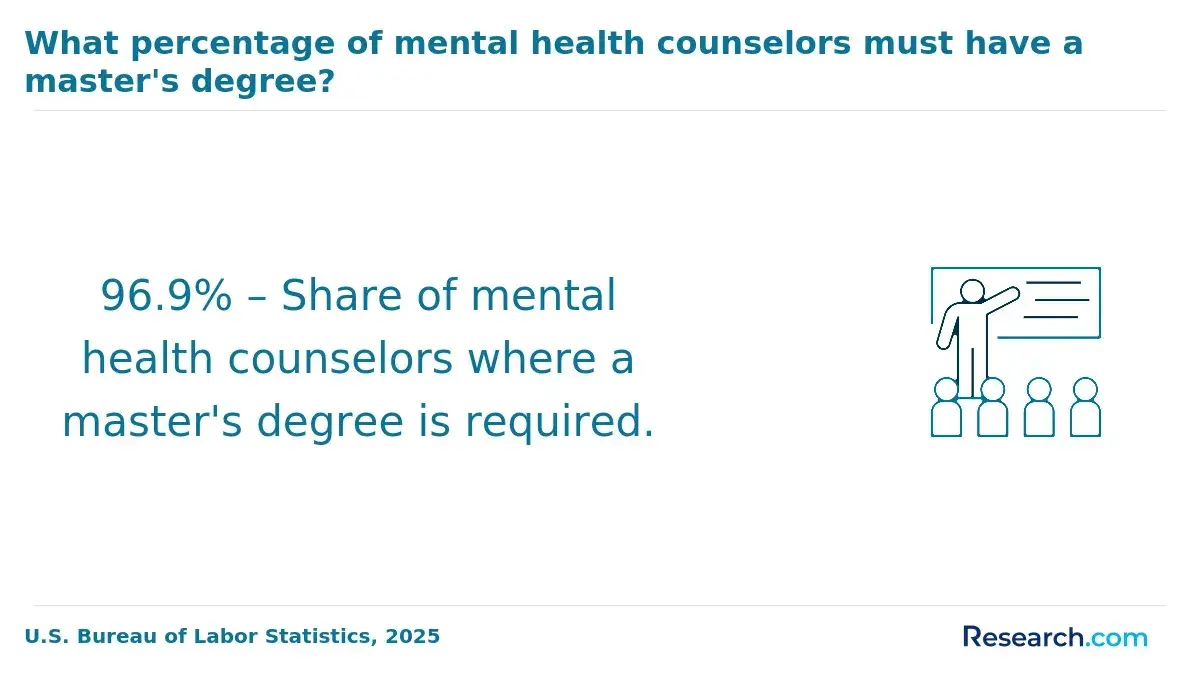
Ohio LPC applicants typically need a master’s degree from a clinical mental health counseling, clinical rehabilitation counseling, or addiction counseling program. The program should include 60 credits and be accredited by the Council for Accreditation of Counseling and Related Educational Program (CACREP). There are currently 22 CACREP-accredited master’s degree programs in clinical mental health counseling.
Graduates of non-CACREP programs may still be reviewed if the institution is recognized by the US State Secretary of Education or the Council for Higher Education. However, non-CACREP applicants should expect additional documentation, including evidence that their coursework covered required counseling content such as counseling techniques, human growth and development, assessment, ethics, and related areas.
Most counseling master’s programs require a bachelor’s degree for admission. A psychology, human services, sociology, education, or related major can provide useful preparation, although specific prerequisites vary by school. If you are comparing related helping professions, this guide to social work versus counseling can help clarify how the career paths differ.
What type of degree do I need to become an LPC in Ohio?
The most direct route to Ohio LPC licensure is a CACREP-accredited master’s degree in clinical mental health counseling or a closely aligned counseling field. Other graduate degrees may support counseling-related careers, but not every psychology, social work, education, or therapy degree automatically meets LPC requirements. Students considering broader psychology training can also compare counseling master’s programs with options such as online doctoral programs in psychology.
| Degree option | Best fit | Important licensure note |
| Master of Counseling | Students who want broad counseling preparation across client needs and practice settings. | Confirm that the curriculum meets Ohio LPC coursework standards. |
| Master of Clinical Mental Health Counseling | Students aiming for mental health counseling, diagnosis, and treatment planning roles. | Often the clearest match for LPC preparation when CACREP-accredited. |
| Master of Marriage and Family Therapy | Students focused on couples, families, and relationship systems. | May align more directly with MFT licensure than LPC licensure. |
| Master of Social Work (MSW) | Students interested in clinical social work, advocacy, and case-based service systems. | Usually leads to social work licensure rather than LPC licensure. |
| Master of Psychology | Students interested in psychological theory, research, and applied mental health roles. | May require careful coursework review for LPC eligibility. |
| Master of Rehabilitation Counseling | Students who want to support people with disabilities in employment, independence, and adjustment. | Can be relevant when it meets Ohio counseling requirements. |
| Master of Education in Counseling | Students interested in school or education-based counseling settings. | School counseling and LPC requirements may differ, so verify the track. |
How long does it take to complete the educational requirements for LPC licensure in Ohio?
Most students complete the graduate education portion of Ohio LPC preparation in about two to three years of full-time study. Part-time enrollment, delayed field placements, prerequisite courses, or switching programs can extend the timeline. Students who continue immediately into doctoral study, including a PsyD online, should plan for a longer overall training path.
| Path | Typical timeline | Best for |
| Full-time master’s program | 2 to 3 years | Students who can prioritize graduate coursework and fieldwork. |
| Part-time master’s program | Longer than full-time study | Working adults or students with family responsibilities. |
| Master’s plus doctoral study | Longer than the LPC-only route | Students interested in advanced clinical, academic, or psychology-focused roles. |
| Non-CACREP route | Variable | Students whose program may need additional Board review or coursework documentation. |
What is the licensure application and renewal process for LPCs in Ohio?
The Ohio Counselor, Social Worker, and Marriage and Family Therapist Board, often called the CSWMFT Board, regulates counselors, social workers, and marriage and family therapists in the state. Applicants pursuing an LPC, an Ohio social work license, or another regulated mental health credential should use the Board’s official guidance. If you are comparing several regulated roles, review this overview of counseling, therapy, and psychology careers.
Ohio LPC application process
- Complete the required graduate degree. A CACREP-accredited master’s in counseling is the most straightforward option. Non-CACREP graduates should prepare additional documentation.
- Document supervised training. Applicants need 40 hours of practicum and 240 hours of internship.
- Complete criminal background checks. Initial applicants must complete Ohio Bureau of Criminal Identification and Investigation (BCI&I) and FBI criminal records checks. The records must be obtained no more than a year after the application is filed.
- Submit the application online. Ohio uses the eLicense system for applications, status tracking, and license lookup functions.
- Request exam preapproval if required. Candidates should follow Board instructions before sitting for required exams.
- Pass the required exams. Ohio LPC candidates must pass the National Counselor Examination and the Laws and Rules Examination.
- Pay application fees. The LPC application fee is $80, plus a $3.50 processing fee. Exam fees are separate.
- Monitor Board approval. Applicants can check progress through their Ohio counseling board login on the eLicense website.
License by endorsement for out-of-state counselors
Ohio does not have a blanket LPC reciprocity agreement with other states. However, out-of-state counselors may apply by endorsement. If your counseling license from another state is at least five years old, you may submit an endorsement application to the Board.
Ohio LPC renewal process
- Renew every two years. An LPC license is valid for two years from the date issued, and the Board sends renewal notices by email 90 days before expiration.
- Complete continuing education. Ohio LPCs must complete 30 hours of continuing education every two years, including three hours in ethics.
- Renew through eLicense. After completing CE requirements, counselors renew online.
- Pay renewal fees. The license renewal fee is $80, with a $3.50 processing fee. Late renewal adds a $40 late fee.
What topics are covered in the LPC licensure exam in Ohio?
Ohio LPC candidates take the National Counselor Examination, which assesses core counseling knowledge and applied decision-making. These areas are commonly covered in CACREP-aligned counseling programs and may also appear in related graduate study, including some online masters of psychology programs. Candidates should study the official exam content outline rather than relying only on class notes.
| Exam area | What to know |
| Professional practice and ethics | Confidentiality, informed consent, documentation, boundaries, professional responsibility, and ethical decision-making. |
| Intake, assessment, and diagnosis | Client interviews, presenting concerns, risk assessment, diagnosis, and common concerns such as depression and substance use. |
| Clinical focus areas | Client issues counselors commonly address, including bullying, sleep concerns, stress, trauma, and behavioral symptoms. |
| Treatment planning | Goal setting, intervention selection, collaboration, progress monitoring, and barriers to treatment. |
| Counseling skills and interventions | Therapeutic communication, crisis response, group and family dynamics, and evidence-informed intervention strategies. |
| Core counseling attributes | Empathy, authenticity, cultural awareness, respect for diversity, and client-centered professionalism. |
How do I find a qualified supervisor for LPC licensure in Ohio?
A qualified supervisor can shape your clinical confidence, documentation habits, ethical judgment, and readiness for independent practice. Do not wait until the last minute to look for one. Start during graduate school, especially before practicum and internship placements. Even students in flexible or lower-cost programs, including the cheapest online masters degree in psychology, should confirm how supervision and placement support will work.
- Ask your graduate program first. Faculty, field placement coordinators, and department advisors often know approved supervisors and clinical sites.
- Use professional associations. The American Counseling Association and the Ohio Counseling Association may help you identify networking and supervision leads.
- Search counselor directories carefully. Online directories can help locate licensed counselors by city, specialty, and practice area, but you still need to verify supervision eligibility.
- Attend counseling events. Conferences, workshops, and local trainings create opportunities to meet experienced LPCs and LPCCs.
- Ask peers and mentors. Other counseling students, alumni, and internship supervisors may know who provides structured, ethical supervision.
Questions to ask a potential supervisor
- Are you approved or qualified to provide the type of supervision I need for Ohio licensure?
- How often will we meet, and what happens if I need additional support after a difficult client situation?
- How do you document supervision hours and clinical activities?
- What populations, diagnoses, and treatment settings do you have the most experience with?
- How do you handle ethical questions, crisis situations, and mandated reporting concerns?
What kind of internship opportunities are available for aspiring LPCs in Ohio?
Internships allow counseling students to test career interests before committing to a specialty. The right site should match your learning goals, provide reliable supervision, expose you to appropriate client populations, and meet your program’s requirements.
| Internship setting | What students may learn | Good fit for students interested in |
| Community mental health centers | Assessment, case coordination, crisis support, and counseling with diverse client groups. | Public mental health, underserved communities, broad clinical exposure. |
| Hospitals and medical centers | Integrated behavioral health, referral coordination, and collaboration with medical teams. | Healthcare-based counseling and interdisciplinary care. |
| School counseling programs | Student support, family communication, academic concerns, and educator collaboration. | Youth services and education settings. |
| Substance abuse treatment facilities | Addiction assessment, relapse prevention, group counseling, and recovery planning. | Substance use and behavioral health specialization. |
| Private practice clinics | Outpatient counseling, scheduling, documentation, and specialty practice models. | Future private practice or niche clinical work. |
| Correctional facilities | Mental health counseling with incarcerated individuals and reentry-related concerns. | Forensic, correctional, and high-need populations. |
| Nonprofit organizations | Community outreach, advocacy, trauma-informed services, and social support programs. | Mission-driven counseling and community work. |
| Military and veterans support services | Adjustment, trauma, family stress, and service-related mental health needs. | Veterans, military families, and trauma support. |
| Employee Assistance Programs | Short-term counseling, workplace stress, referrals, and crisis consultation. | Workplace mental health and corporate wellness. |
| Research institutions | Data collection, program evaluation, and counseling research support. | Academic, research, and evidence-based practice roles. |
What are the continuing education requirements for maintaining LPC licensure in Ohio?
Ohio LPCs must complete continuing education to renew their licenses and maintain professional competence. CE is not just a paperwork requirement; it is how counselors stay current on ethics, legal duties, client safety, treatment methods, and changes in practice standards.
- Complete 30 hours every two years. Ohio requires 30 CE hours during each two-year renewal cycle.
- Include three ethics hours. Ethics training helps counselors maintain appropriate boundaries, confidentiality practices, documentation habits, and legal awareness.
- Consider cultural competency training. Cultural competency may not be listed as a separate mandatory hour category here, but it is strongly useful for client-centered and inclusive care.
- Use approved providers. CE should come from accepted sources such as the Ohio Counseling Association, the American Counseling Association, accredited universities, or other Board-approved providers.
- Keep records. Counselors should retain certificates and documentation in case of an audit by the CSWMFT Board.
- Ask about hardship waivers if needed. Counselors facing medical or other serious hardship may request a waiver, which the Board reviews individually.
What are the benefits of dual licensure for LPCs in Ohio?
Dual licensure can expand the types of clients, settings, and services available to an Ohio LPC. For example, adding a Licensed Marriage and Family Therapist credential can strengthen a counselor’s work with couples, families, and relational systems. This may be useful for LPCs who already see clients whose concerns involve parenting, marital stress, blended families, or family conflict.
The main advantage is flexibility. Dual-licensed professionals may qualify for more specialized roles, collaborate more easily in multidisciplinary agencies, and market their services to a wider range of clients. However, an additional license also means more education, exams, supervision, fees, and continuing education obligations, so it should be pursued for a clear professional reason rather than as a general résumé booster.
If family systems work is your target specialty, review this guide on how to become a marriage and family therapist in Ohio.
What additional resources are available for LPCs in Ohio to enhance their careers?
Ohio LPCs can strengthen their careers through professional associations, Board updates, supervision groups, clinical trainings, specialty certifications, and continuing education providers. Early-career counselors should prioritize resources that improve documentation, ethics, risk assessment, telehealth practice, and evidence-based treatment skills. Students who want a broader overview of the mental health counseling route can also read about how to become a licensed mental health counselor in Ohio.
What career paths are available for LPCs in Ohio beyond traditional counseling settings?
Many LPCs work in outpatient counseling, but the license can support several related career directions. The best option depends on your preferred client population, risk tolerance, income goals, supervision experience, and interest in business ownership.
| Career path | What LPCs do | When it may be a good fit |
| Career counseling | Help clients clarify goals, evaluate career options, prepare for job searches, and manage work transitions. | You enjoy vocational development and practical coaching. |
| Employee Assistance Programs | Provide short-term counseling, workplace stress support, crisis response, and referrals. | You want a workplace-focused counseling role. |
| Consulting | Advise organizations on mental health programs, conflict management, and employee well-being. | You have strong communication and systems-level thinking skills. |
| Life coaching | Support nonclinical personal or professional goal-setting. | You understand the boundary between coaching and clinical treatment. |
| Educational institutions | Work as student counselors, advisors, or mental health educators. | You want to support students and campus communities. |
| Healthcare settings | Collaborate with medical professionals on behavioral health and integrated care. | You are comfortable with interdisciplinary teams. |
| Private practice specialization | Focus on areas such as grief, trauma, addiction, or adolescent counseling. | You want autonomy and have a clear niche. |
| Teletherapy and online counseling | Provide counseling remotely through secure platforms. | You want geographic flexibility and can manage telehealth compliance. |
What is the average salary of LPCs in Ohio?
The average annual salary for LPCs in Ohio is $64,321, according to data published in 2025. Reported pay varies widely by employer, experience, location, specialization, caseload, and whether the counselor works in an agency or private practice. Some LPCs earn as much as $112,491 annually, while others earn as little as $34,537 annually.
Salary should be evaluated cautiously. A high salary figure may reflect experienced clinicians, business owners, high-demand specialties, or full caseloads, while entry-level roles may pay less. Before enrolling in a program, compare expected debt, unpaid internship time, local job postings, supervision costs, and the type of setting where you want to work.
What is the job market for licensed counselors in Ohio?
Ohio’s licensed counselor job market is strong, with a growth rate of 21%, above the national average of 18%. The largest listed demand area is substance abuse, behavioral disorder, and mental health counseling, with 16,310 employed. Educational, guidance, and career counselors and advisors are also a major counseling group in the state, with 12,140 professionals.
This does not mean every graduate will immediately land a preferred job or salary. Hiring depends on location, license level, clinical experience, specialty, and employer requirements. Candidates who gain experience in substance use, crisis work, community mental health, telehealth, and assessment may be better positioned for a wider range of opportunities.
What are the costs and funding options for LPC licensure in Ohio?
The cost of becoming an LPC in Ohio includes more than graduate tuition. Students should budget for application fees, exam fees, background checks, books, technology, transportation, professional liability coverage when required, lost work hours during internship, continuing education, and future renewal fees. Candidates considering advanced study after licensure may also compare options such as the cheapest online PhD in counseling.
| Cost category | What to review before committing |
| Tuition and fees | Compare total program cost, not only cost per credit. |
| Clinical placement expenses | Ask whether internships are paid, unpaid, local, or difficult to secure. |
| Licensure application | The LPC application fee is $80 plus a $3.50 processing fee. |
| Renewal | The renewal fee is $80 plus a $3.50 processing fee; late renewal adds $40. |
| Exams | Exam fees are paid separately from the LPC application fee. |
| Continuing education | Ohio LPCs need 30 CE hours every two years, including three ethics hours. |
| Funding options | Review federal financial aid, institutional scholarships, grants, professional association awards, and employer tuition assistance. |
How can LPCs successfully establish and grow their private practice in Ohio?
Starting a private practice requires clinical readiness and business preparation. An Ohio LPC should confirm scope of practice, supervision requirements, documentation standards, malpractice insurance, telehealth compliance, informed consent procedures, billing workflows, and referral relationships before accepting clients independently.
- Build a business plan. Define your specialty, ideal clients, fee structure, schedule, referral sources, and financial runway.
- Protect the practice legally. Maintain malpractice coverage, clear consent forms, privacy procedures, and emergency protocols.
- Develop a focused niche. Trauma, grief, addiction, adolescents, couples-related concerns, or workplace stress can help clients understand your services.
- Create a professional online presence. Use accurate credentials, clear service descriptions, and compliant communication practices.
- Keep training current. Specialized coursework and continuing education from providers and institutions, including good colleges for psychology in Ohio, can strengthen clinical credibility.
What are the detailed LPC licensure criteria in Ohio?
Ohio LPC candidates must show that they meet education, supervised training, examination, background check, documentation, and ethical standards set by the state. The key is alignment: your degree, coursework, practicum, internship, exam timing, and application paperwork should all match Board expectations. For a focused overview, see this guide to LPC requirements in Ohio.
How can LPCs benefit from mentorship and professional networking in Ohio?
Mentorship helps new counselors understand the parts of practice that are difficult to learn from textbooks: documentation judgment, client boundaries, difficult referrals, exam planning, agency politics, burnout prevention, and specialization decisions. Networking also helps counselors find internship sites, supervisors, continuing education, job leads, and peer consultation groups.
LPCs who want a broader view of behavioral health systems may benefit from learning how adjacent professions operate. For example, understanding how to become a social worker in Ohio can clarify how counseling and social work roles overlap and differ in agencies, hospitals, and community programs.
How can LPCs integrate behavior analysis into their counseling practice in Ohio?
Behavior analysis can complement counseling when clients need structured behavior change strategies, measurable goals, reinforcement plans, or support for developmental and behavioral concerns. LPCs should stay within their scope of practice and seek appropriate training before using specialized behavior analytic methods. Counselors interested in deeper credentialing can review how to become a behavior analyst in Ohio.
What recent legislative changes affect LPC licensure and practice in Ohio?
Ohio LPCs should regularly monitor Board announcements because rules affecting supervision, telehealth, privacy, informed consent, documentation, and licensure procedures can change. Rather than relying on old program handbooks or secondhand advice, candidates should confirm current requirements directly with the state Board before applying, renewing, offering telehealth, or changing practice settings. Candidates trying to reduce delays can also review the fastest way to become a counselor in Ohio.
Alternative Career Paths for LPCs in Ohio
Ohio LPCs do not have to stay in one type of counseling role for their entire careers. The license can support clinical, educational, organizational, community, and online work. The right alternative path depends on your tolerance for risk, desired schedule, preferred client population, and interest in leadership or specialization.
Career counseling and coaching
LPCs who enjoy practical goal-setting may work with clients on career changes, job search stress, professional identity, workplace conflict, and employment transitions. This path can fit schools, colleges, workforce programs, corporations, or private practice.
Teletherapy and online counseling
Teletherapy can increase scheduling flexibility and improve access for clients who live far from providers. LPCs should still confirm Ohio telehealth rules, privacy standards, informed consent language, emergency planning, and any cross-state practice restrictions.
Employee Assistance Programs
EAP counselors help employees manage personal concerns, work stress, crisis situations, grief, conflict, and referrals. This work is often brief, structured, and connected to workplace well-being.
Private practice specialization
Specializing can help LPCs build expertise and attract clients with specific needs, such as trauma, grief, addiction, adolescents, or family-related concerns. Specialization should be supported by training, supervision, and ethical marketing.
Mental health consulting
Experienced LPCs may advise schools, nonprofits, healthcare organizations, or employers on mental health programming, stress reduction, crisis response, and wellness initiatives.
Research and academia
Counselors interested in teaching, program evaluation, or research may pursue academic or institutional roles. Additional graduate education may be useful depending on the position.
Nonprofit and community-based work
Nonprofit roles may involve counseling, advocacy, outreach, crisis support, and services for underserved populations affected by homelessness, addiction, domestic violence, or limited access to care.
If you want to broaden your clinical options through family systems training, compare affordable online MFT programs.
How can LPCs enhance cultural competence and inclusivity in their practice?
Cultural competence is not a one-time training. It requires ongoing reflection, supervision, consultation, and adaptation of counseling approaches to the client’s identity, values, language, religion, disability status, family structure, and lived experience. LPCs should choose CE that addresses bias, culturally responsive assessment, inclusive language, trauma, community context, and ethical practice with marginalized clients. For regulatory context, review Ohio LPC license requirements.
What additional certifications can enhance LPC specialization in substance abuse counseling?
Substance abuse counseling is one of Ohio’s strongest demand areas, so LPCs who want to specialize in addiction treatment should consider targeted training in assessment, motivational interviewing, relapse prevention, co-occurring disorders, group counseling, and recovery systems. Certification choices should align with Ohio rules and the settings where you want to work. For a dedicated pathway, see how to become a substance abuse counselor in Ohio.
Are there advanced certifications available for LPCs in Ohio?
Advanced certifications can help LPCs document specialized competence in areas such as trauma-informed care, addiction counseling, family systems, rehabilitation counseling, or school-related services. A certification is most valuable when it matches your client population, employer expectations, and long-term practice niche. LPCs interested in education settings can also explore the requirements for becoming a school counselor in Ohio.
What challenges do LPC candidates face during their licensure journey in Ohio?
The LPC path is manageable, but several issues can create delays or unnecessary costs. Candidates may struggle to interpret Ohio-specific rules, find appropriate internships, document clinical hours correctly, afford tuition, manage unpaid fieldwork, or transfer an out-of-state license because Ohio does not use simple reciprocity. Students comparing regulated mental health careers may find it useful to review how to become a psychologist in Ohio to understand how different licensure systems work.
Common mistakes to avoid
| Mistake | Why it creates problems | Better approach |
| Choosing a program without checking licensure alignment | You may need extra coursework or documentation later. | Confirm CACREP status and Ohio Board expectations before enrolling. |
| Comparing only tuition | Fees, internship travel, exam costs, and unpaid time can change the real cost. | Build a full licensure budget. |
| Assuming online always means easier | Online coursework may still require in-person or local clinical placements. | Ask how practicum and internship placements are arranged. |
| Waiting too long to find supervision | Placement and supervision shortages can delay graduation or licensure. | Start networking with supervisors early in the program. |
| Relying only on rankings | A highly ranked program may not fit your schedule, budget, location, or specialty. | Use rankings as one factor, not the final decision. |
| Assuming salary outcomes are guaranteed | Pay varies by setting, experience, location, and caseload. | Review local job postings and speak with recent graduates. |
What are the ethical and legal considerations for LPCs in Ohio?
Ohio LPCs must protect client welfare while following state law, Board rules, professional ethics, and privacy obligations. Key responsibilities include confidentiality, informed consent, proper documentation, mandated reporting, boundaries, accurate credentials, conflicts of interest, crisis planning, and appropriate referrals. Counselors should maintain malpractice insurance, use secure systems, and consult supervisors or attorneys when legal uncertainty arises. If you are still comparing helping professions, this overview of a social worker degree may help you understand another regulated pathway.
What is the impact of technology and telehealth on LPC careers in Ohio?
Telehealth has become an important part of counseling practice in Ohio. For LPCs, it can expand access, reduce geographic barriers, and support flexible scheduling. It also creates responsibilities: counselors need secure platforms, telehealth-specific informed consent, emergency protocols, privacy safeguards, and clear knowledge of where clients are physically located during sessions.
Technology is also changing employer expectations. Counselors may be asked to use electronic health records, online scheduling systems, measurement-based care tools, teletherapy platforms, and digital screening instruments. These tools can improve access and documentation, but they do not replace clinical judgment, ethical decision-making, or strong counseling skills.
If you are exploring flexible graduate options in a related counseling field, compare the cheapest online MFT programs.
Key Insights
- The most direct Ohio LPC path is a 60-credit, CACREP-accredited counseling master’s program with required practicum and internship experience.
- Ohio LPC candidates must pass the National Counselor Examination and the Laws and Rules Examination, complete background checks, and apply through eLicense.
- The degree decision is critical. A non-CACREP or misaligned program may still be reviewed, but it can create extra documentation and possible delays.
- Most counseling master’s programs take 2 to 3 years, but part-time study, placement delays, and additional coursework can extend the timeline.
- Ohio LPCs renew every two years and must complete 30 continuing education hours, including three hours in ethics.
- Salary and career outlook are promising but not guaranteed. Ohio reports 21% job growth for licensed counselors, while LPC salaries vary by experience, specialty, location, and employer.
- Before enrolling, compare accreditation, total cost, internship support, NCE preparation, scheduling, and whether the program fits your intended counseling specialty.
Related Articles for Nearby States
- 2027 How to Become a Licensed Counselor (LPC) in Indiana
- 2027 How to Become a Licensed Counselor (LPC) in Kentucky
- 2027 How to Become a Licensed Counselor (LPC) in West Virginia
- 2027 How to Become a Licensed Counselor (LPC) in Pennsylvania
- 2027 How to Become a Licensed Counselor (LPC) in Michigan
- 2027 How to Become a Licensed Counselor (LPC) in Illinois
- 2027 How to Become a Licensed Counselor (LPC) in Virginia
- 2027 How to Become a Licensed Counselor (LPC) in Tennessee
- 2027 How to Become a Licensed Counselor (LPC) in North Carolina
- 2027 How to Become a Licensed Counselor (LPC) in Missouri
References:
- All Psychology Schools. (2026). Counselor salary and job outlook. https://www.allpsychologyschools.com/counseling/salary/
- Commission on Rehabilitation Counselor Certification. (2026). Certification requirements. https://www.crccertification.com
- National Board for Certified Counselors. (2026). National clinical mental health counseling exam (NCMHCE). https://www.nbcc.org/exams/ncmhce
- Ohio Counselor, Social Worker, and Marriage & Family Therapist Board. (2026). Counselors licensure overview. https://cswmft.ohio.gov/get-licensed/counselors
- Ohio Counselor, Social Worker, and Marriage & Family Therapist Board. (2026). LPCC licensure requirements. https://cswmft.ohio.gov/preparing-for-a-license/counselors/LPCC-LICENSURE
- Ohio Department of Higher Education. (2026). Graduate counseling programs in Ohio. https://highered.ohio.gov
- Substance Abuse and Mental Health Services Administration. (2026). Behavioral health workforce. https://www.samhsa.gov
- U.S. Bureau of Labor Statistics. (2026). Substance abuse, behavioral disorder, and mental health counselors. https://www.bls.gov/ooh/community-and-social-service/substance-abuse-behavioral-disorder-and-mental-health-counselors.htm
- U.S. Department of Labor. (2026). CareerOneStop: Mental health counselors. https://www.careeronestop.org
- ZipRecruiter. (2025). Licensed Professional Counselor Salary in Ohio. https://www.ziprecruiter.com/Salaries/Licensed-Professional-Counselor-Salary--in-Ohio
Other Things You Should Know About Becoming an LPC in Ohio
In 2027, approved supervision for LPC candidates in Ohio must be provided by a Licensed Professional Clinical Counselor (LPCC) or another board-approved professional, as specified by the Ohio Counselor, Social Worker, and Marriage and Family Therapist Board.
In 2027, aspiring LPCs in Ohio must pass the National Counselor Examination (NCE) or the National Clinical Mental Health Counseling Examination (NCMHCE). These exams assess knowledge and skills necessary for effective counseling.


