
2027 How to Become a Mental Health Counselor in Tennessee

Co-Founder and Chief Data Scientist
Becoming a mental health counselor in Tennessee is a licensure-driven career decision, not just a degree choice. You need the right graduate education, supervised clinical experience, exams, and a clear understanding of where counselors are needed most across the state. The U.S. Bureau of Labor Statistics (BLS) reported 5,220 substance abuse, behavioral disorder, and mental health counselors in Tennessee in 2023, and many communities continue to face gaps in access to behavioral health care.
This guide explains how to become a mental health counselor in Tennessee, what the LPC path requires, how online and campus programs compare, which specializations may fit your goals, and what practical questions to ask before investing in a counseling degree. It is written for prospective graduate students, career changers, bachelor’s degree holders, and current helping professionals who want a realistic view of counseling careers in Tennessee.
Quick answer: How do you become a mental health counselor in Tennessee?
To become a licensed mental health counselor in Tennessee, you typically need a master’s degree in counseling or a closely related field, at least 500 hours of practicum or internship experience during training, 3,000 hours of supervised post-graduate experience completed in not less than two years, and passing scores on the required licensure examinations. Candidates should confirm current rules with the Tennessee Board of Professional Counselors, Marital and Family Therapists, and Clinical Pastoral Therapists before enrolling in a program or submitting an application.
Key things to know before choosing this career
- Tennessee’s projected job growth rate for mental health counselors is 22% from 2020 to 2030, making counseling a career path with strong service demand.
- The average annual salary for mental health counselors in Tennessee is approximately $49,000, though pay can differ by employer, location, license level, specialty, and experience.
- The LPC route requires graduate education, supervised clinical practice, state-required exams, documentation, and ongoing continuing education.
- Telehealth is changing how Tennessee counselors reach clients, especially in rural and underserved areas where provider shortages remain a concern.
- Students should choose programs based on accreditation, licensure alignment, clinical placement support, cost, faculty expertise, and fit with their intended counseling specialty.
- What does a mental health counselor do in Tennessee?
- What are the steps to become a mental health counselor in Tennessee?
- How should Tennessee students prepare for counseling careers?
- Why does practicum experience matter for Tennessee counseling students?
- Which counseling specializations are available in Tennessee?
- Is Tennessee a strong state for mental health counselors?
- How strong is demand for mental health counselors in Tennessee?
- What jobs can mental health counseling graduates pursue in Tennessee?
- What challenges should Tennessee counselors expect?
- How does substance abuse counseling fit into Tennessee mental health care?
- What professional groups and continuing education options support Tennessee counselors?
- How can counselors improve access in rural Tennessee?
- How can Tennessee counselors reduce burnout risk?
- Can counselors move into school psychology?
- How do social workers support counseling outcomes in Tennessee?
- What licensure issues should future Tennessee counselors understand?
- How is telehealth changing counseling practice in Tennessee?
- What legal and ethical duties apply to Tennessee counselors?
- What are the core steps for securing an LPC license in Tennessee?
- What related careers should counseling students compare?
- Which Tennessee schools should counseling students research?
- What online counseling degree options are available for Tennessee students?
- What financial and reimbursement issues affect counseling practices?
What does a mental health counselor do in Tennessee?
Mental health counselors help individuals, couples, families, and groups work through emotional, behavioral, relational, and psychological concerns. In Tennessee, their work may include assessment, treatment planning, talk therapy, crisis support, referral coordination, prevention education, and collaboration with physicians, schools, community agencies, and social service providers.
The need is not limited to large cities. Tennessee includes urban centers such as Nashville and Memphis, suburban communities, small towns, and rural regions where access to licensed providers may be limited. NAMI reported that mental health challenges affect approximately 43.5% of adults, which helps explain why trained counselors are part of the state’s broader behavioral health workforce.
Common responsibilities include:
- Conducting intake assessments: Counselors gather client history, symptoms, risk factors, strengths, goals, and support systems before recommending a care plan.
- Providing individual and group counseling: They use evidence-informed methods to help clients address concerns such as anxiety, depression, trauma, grief, relationship conflict, and substance use.
- Supporting access to care: Counselors often connect clients with psychiatrists, primary care clinicians, social workers, housing resources, crisis services, or community programs.
- Documenting treatment: Accurate records, progress notes, treatment plans, and informed consent forms are essential for ethical practice and reimbursement.
- Promoting mental health awareness: In schools, clinics, nonprofits, and community settings, counselors may help reduce stigma and encourage earlier intervention.
| Work setting | Typical clients | What counselors may do |
| Community mental health centers | Children, adults, families, and clients with complex needs | Provide therapy, coordinate referrals, support crisis response, and work with multidisciplinary teams |
| Private practice | Clients seeking outpatient counseling | Offer individual, couples, family, or group therapy while managing records, billing, scheduling, and compliance |
| Schools and colleges | Students and families | Support emotional health, academic concerns, social development, crisis intervention, and referral planning |
| Hospitals and integrated care clinics | Patients with behavioral and physical health needs | Work alongside medical teams, conduct screenings, and help clients manage mental health symptoms connected to health conditions |
| Substance use treatment programs | Clients affected by addiction or co-occurring disorders | Provide counseling, relapse prevention, family support, group sessions, and recovery planning |
What are the steps to become a mental health counselor in Tennessee?
The Tennessee counseling path is sequential. A student who chooses the wrong graduate program or misunderstands supervision rules may lose time, money, or licensure eligibility. Use the steps below as a planning framework, then verify current requirements with the state board.
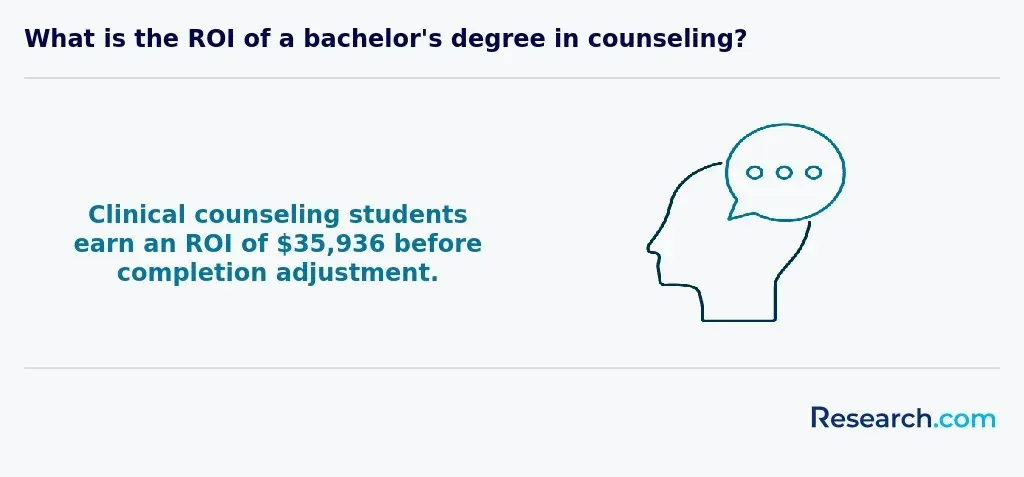
- Earn a bachelor’s degree. Most future counselors begin with psychology, human services, social science, education, or a related undergraduate major. The American Counseling Association (2024) reported the average return on investment (ROI) of a bachelor's degree in counseling as around $35,936 before completion adjustment, which is one reason many students continue into graduate study for licensed clinical roles.
- Choose a licensure-aligned master’s program. Tennessee LPC candidates need graduate-level counseling preparation. Look for a curriculum that includes counseling theory, ethics, assessment, diagnosis, multicultural counseling, group counseling, human development, research, and supervised fieldwork.
- Complete required practicum or internship training. Tennessee requires at least 500 hours of practicum or internship experience. This is where students begin applying counseling skills under supervision before independent practice.
- Finish post-graduate supervised experience. Tennessee mandates 3,000 hours of supervised experience completed in not less than two years. Keep detailed records because incomplete documentation can delay licensure.
- Pass the required exams. Candidates should prepare for the National Counselor Examination (NCE) and the jurisprudence exam. Some applicants may also need to understand when the National Clinical Mental Health Counseling Examination (NCMHCE) applies, depending on license goals and current board rules.
- Submit the licensure application. After completing education, exams, supervision, background checks, and required documentation, candidates apply through the state licensing process.
- Maintain the license. Licensed counselors must meet renewal and continuing education requirements so their practice remains compliant and current.
| Stage | Main decision | Risk to avoid |
| Bachelor’s degree | Build a foundation in psychology, counseling, research, and human behavior | Assuming an undergraduate degree alone qualifies you for independent counseling practice |
| Master’s program | Select a program that fits Tennessee LPC requirements | Choosing a program without checking accreditation, coursework, and clinical placement support |
| Practicum or internship | Complete at least 500 hours in an approved setting | Treating fieldwork as a formality instead of a supervised skills-building period |
| Post-graduate supervision | Complete 3,000 hours in not less than two years | Poor documentation or supervision that does not meet board expectations |
| Licensure exams and application | Prepare early and submit complete records | Waiting until the end of supervision to learn what paperwork is required |
If you want to compare Tennessee requirements with another state’s process, this guide to the LPC career path in Connecticut can help you understand how licensure rules vary by location.
How should Tennessee students prepare for counseling careers?
Strong preparation begins before the licensure application. Students should evaluate programs, clinical placements, faculty expertise, state rules, affordability, and long-term career fit. A counseling degree is valuable only if it moves you toward the credential and type of practice you actually want.
- Prioritize accreditation and licensure alignment. Review whether the program is regionally accredited and whether counseling-specific accreditation such as CACREP or MPCAC applies. Accreditation is not just a quality marker; it may affect licensure review, transferability, and employer confidence.
- Study the curriculum carefully. Look for courses in ethics, assessment, counseling techniques, diagnosis, multicultural counseling, career development, group work, crisis intervention, and research methods.
- Ask about clinical placement support. A strong program should explain how students secure practicum and internship sites, who approves placements, and what happens if a site falls through.
- Build professional connections early. Student memberships, conferences, and local events through groups such as the Tennessee Counseling Association can help future counselors find mentors, supervisors, and job leads.
- Compare counseling with adjacent professions. Students uncertain about counseling, social work, or psychology should review the difference between MSW, MS in counseling, and MS in psychology before enrolling.
What resources can support mental health counselors in Tennessee?
Tennessee counselors and students can strengthen their practice through professional organizations, supervision, continuing education, state licensing resources, and interdisciplinary collaboration. These resources are especially important because counseling laws, documentation standards, telehealth practices, and clinical approaches continue to evolve.
- Professional associations: Organizations such as the Tennessee Counseling Association can provide advocacy, networking, leadership opportunities, and professional development.
- Continuing education: Workshops, conferences, webinars, and university-sponsored trainings help counselors maintain competence and meet license renewal expectations.
- Supervision and consultation: Peer consultation and qualified supervision help counselors manage complex cases, ethical questions, documentation concerns, and professional growth.
- National resources: The National Board for Certified Counselors and the American Counseling Association publish guidance on professional standards, research, ethics, and credentialing.
- State board guidance: The Tennessee Board of Professional Counselor and Marriage and Family Therapist Examiners remains the key source for application rules, license categories, renewals, and regulatory updates.
- Community providers: Mental health centers, clinics, hospitals, schools, and nonprofits can offer training partnerships, referrals, and employment pathways.
Why does practicum experience matter for Tennessee counseling students?
Practicum and internship training are where counseling students begin turning classroom knowledge into clinical judgment. Tennessee requires at least 500 hours of practicum or internship experience, and students should treat this requirement as one of the most important parts of their education.
Practicum matters because it helps students learn how to sit with distress, ask better questions, respond ethically, document care, receive feedback, and understand the limits of their competence. It also exposes students to the realities of counseling work, including missed appointments, crisis concerns, family dynamics, insurance documentation, and coordination with other providers.
| What practicum builds | Why it matters in practice | Question to ask a program |
| Therapeutic communication | Clients need trust, clarity, empathy, and appropriate boundaries | How are students observed and evaluated during client sessions? |
| Ethical decision-making | Counselors must handle confidentiality, informed consent, mandated reporting, and risk concerns correctly | How does the program teach ethics during fieldwork? |
| Case documentation | Accurate records are essential for continuity of care, compliance, and reimbursement | What documentation systems or formats do students learn? |
| Professional identity | Students begin understanding their preferred populations, settings, and counseling approaches | Can students pursue placements that match their career goals? |
| Supervisor feedback | Clinical skill grows through observation, correction, and reflection | Who qualifies as a supervisor, and how often does supervision occur? |
Which counseling specializations are available in Tennessee?
Specialization can help counselors serve specific populations more effectively and may improve career focus. A specialty should be chosen because it matches client needs, training opportunities, and long-term professional goals—not only because it sounds marketable.
| Specialization | Primary focus | Salary information stated in the source article |
| Substance abuse counseling | Supports people affected by alcohol, drug, and other substance use disorders, often including relapse prevention, recovery planning, and family support | The average annual wage for substance abuse counselors in Tennessee is approximately $49,280 |
| Behavior disorder counseling | Helps clients manage disruptive behavior patterns, attention concerns, emotional regulation problems, and related challenges at home, school, or work | The average salary for behavior disorder counselors in Tennessee is around $41,541 |
| Licensed mental health counseling | Addresses a broad range of mental health concerns through assessment, treatment planning, and therapeutic intervention | The average annual salary is about $69,085 in Tennessee |
| Licensed marital and family therapy | Focuses on relationship systems, couples, parenting, family conflict, communication, and emotional concerns within relational contexts | The article states that Idahoans earn around $65,584 and Tennesseeans make $75,585 annually; students comparing locations may also review the licensed counselor role in Idaho |
When comparing specialties, ask whether the graduate program offers relevant electives, whether local practicum sites serve that population, whether the specialty requires another credential, and whether your desired employers hire counselors with that focus.
Is Tennessee a strong state for mental health counselors?
Tennessee can be a good place to build a counseling career, particularly for professionals who want to serve communities with unmet mental health needs. The state combines growing demand, urban and rural practice settings, telehealth expansion, and a lower cost-of-living profile than many higher-cost states. Still, the opportunity comes with trade-offs, including provider shortages, reimbursement complexity, and heavy caseloads in some settings.
- Compensation varies widely. Mental health counselors in Tennessee earn an average salary between $39,028 to $103,014, depending on the source, setting, credential, location, and specialization.
- Interstate mobility may improve. Tennessee has enacted Counseling Compact legislation, although the compact is not yet operational. Counselors should not assume immediate multistate practice rights until compact implementation rules are active.
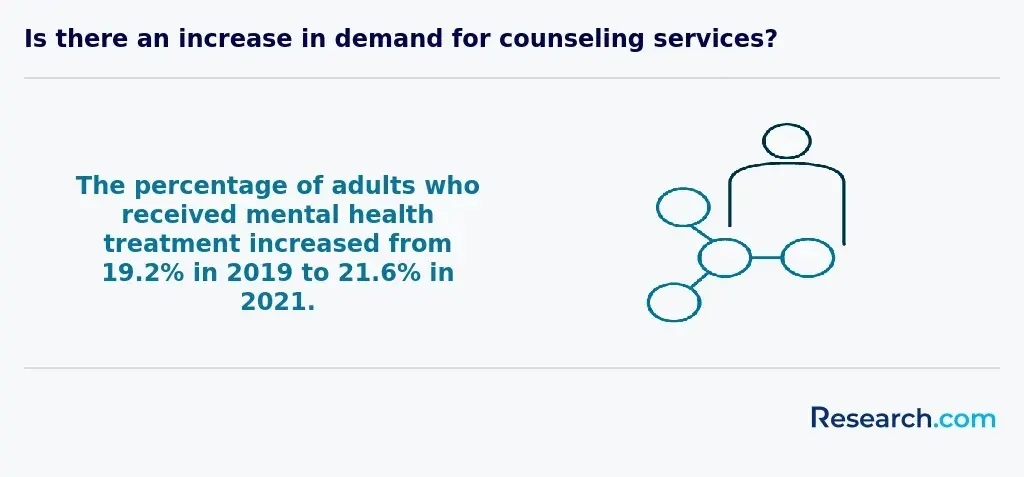
- Public awareness is increasing. The National Center for Health Statistics reported that 19.2% of adults in the U.S. received some form of mental health treatment in 2019, increasing to 21.6% in 2021.
- Practice environments are diverse. Counselors may work in private practice, integrated care, schools, community agencies, hospitals, residential treatment, telehealth, or nonprofit settings.
| Choose Tennessee if you want... | Be cautious if you need... |
| Opportunities to serve high-need communities | A low-stress caseload immediately after graduation |
| A mix of urban, suburban, and rural practice options | A simple reimbursement environment with little administrative work |
| Potential telehealth and community-based service roles | Guaranteed salary outcomes regardless of employer or license level |
| A counseling career connected to public health needs | A path that avoids exams, supervision, documentation, and continuing education |
How strong is demand for mental health counselors in Tennessee?
Demand for mental health counselors in Tennessee is shaped by several overlapping factors: increased public awareness, school-based mental health needs, substance use concerns, rural access gaps, and the broader national shortage of behavioral health professionals. On a national level, the need for mental health counselors by 2036 will reach more than 69,000.
A WVLT report stated that many Tennessee public schools are severely understaffed, with over half of school districts employing only one or no psychologists. That shortage does not mean every counseling graduate will automatically get a preferred job, but it does show that mental health services in educational and community settings remain under pressure.
Counselors may find demand in community mental health agencies, private practices, telehealth platforms, school-linked programs, substance use treatment centers, hospitals, and integrated primary care settings. Students comparing licensure across the Southeast may also find it useful to review the North Carolina LPC certification process.
The chart below shows the top states with the highest demand for mental health counselors by 2030.
What jobs can mental health counseling graduates pursue in Tennessee?
Mental health counseling graduates can pursue several career directions, though job titles, scope of practice, and independence depend on licensure status. The source article notes a job outlook for mental health counselors in Tennessee reaching 35% by 2030, which makes career planning especially important for students entering graduate programs now.
| Career path | What the role involves | Best fit for students interested in... |
| Mental health counselor | Provides therapy for clients dealing with emotional, behavioral, relational, or psychological concerns | Individual therapy, assessment, treatment planning, and outpatient care |
| Substance abuse counselor | Supports clients affected by addiction, recovery, relapse risk, and co-occurring mental health needs | Addiction treatment, recovery programs, group counseling, and community health |
| School counselor | Works in educational settings to support student development, emotional well-being, and academic planning | Children, adolescents, family systems, and school-based services |
| Geriatric counselor | Helps older adults and families navigate grief, health changes, isolation, caregiving stress, and life transitions | Aging services, healthcare collaboration, and family support |
| Employee Assistance Program counselor | Supports workers facing personal, family, behavioral health, or workplace stressors | Workplace mental health, short-term counseling, and organizational support |
The chart below shows states with the highest demand for mental health counselors.
What challenges should Tennessee counselors expect?
Counseling can be meaningful work, but students should enter the field with a realistic view of the pressures involved. Tennessee counselors may face access barriers, high need in rural regions, administrative demands, regulatory requirements, and emotional fatigue.
- Limited access in rural areas: Many communities have too few providers, which can mean long waitlists, transportation barriers, and difficulty referring clients to specialized care.
- Unmet treatment needs: An article in The Tennessean stated that approximately one in five adults in the state experiences a mental health condition, while many do not receive needed care.
- Licensure complexity: Graduate coursework, supervision hours, exams, documentation, and renewals require careful planning and ongoing attention.
- Insurance and affordability barriers: Clients may struggle to pay for services, and counselors may spend significant time on reimbursement, claims, authorizations, and billing issues.
- Burnout risk: Heavy caseloads, trauma exposure, crisis work, and limited resources can make boundaries and consultation essential.
- Career-path confusion: Students considering advanced study should compare options such as MS and MA counseling degrees before choosing a program.
| Common mistake | Why it can hurt your career | Better approach |
| Choosing a program based only on tuition | A low-cost program may still be a poor investment if it does not support licensure or field placement | Compare accreditation, curriculum, clinical support, faculty, outcomes, and total cost |
| Assuming every online program meets Tennessee rules | Licensure boards review coursework, practicum, supervision, and documentation | Ask the program directly how it prepares Tennessee LPC applicants |
| Waiting to find a supervisor | Post-graduate supervision is required and may take time to arrange | Network during practicum, internships, and professional events |
| Ignoring reimbursement realities | Private practice income depends on payer mix, documentation, business costs, and client access | Learn billing basics, insurance rules, sliding-scale policies, and practice management early |
| Assuming salary data is guaranteed | Pay differs by region, employer, specialty, license status, and experience | Review multiple sources and ask employers about compensation structure |
How does substance abuse counseling fit into Tennessee mental health care?
Substance abuse counseling is a critical part of behavioral health in Tennessee because many clients experience addiction alongside trauma, depression, anxiety, family stress, housing instability, or legal concerns. Counselors with addiction-focused training can support recovery while coordinating with medical providers, peer specialists, social workers, family members, and community programs.
Students who want to specialize in this area should compare counseling licensure requirements with addiction-specific credentials and clinical site expectations. For a focused roadmap, review this guide on how to become a substance abuse counselor in Tennessee.
What professional groups and continuing education options support Tennessee counselors?
Professional development is not optional in counseling. It helps clinicians stay current with ethics, trauma-informed care, cultural responsiveness, diagnosis, documentation, telehealth standards, and evidence-informed interventions. Tennessee counselors can use professional associations, conferences, supervision, peer consultation, workshops, and graduate certificates to keep skills current.
Some professionals also compare counseling with clinical social work when they want broader systems-level training or additional career options. If that describes you, exploring online clinical MSW programs may help you decide whether counseling or social work better matches your goals.
How can counselors improve access in rural Tennessee?
Rural access is one of Tennessee’s most important mental health issues. The source article states that nearly 60% of rural Tennesseans live in areas with limited or no access to licensed mental health counselors. For clinicians, this creates both a service opportunity and a practice-design challenge.
- Use telehealth appropriately: Secure virtual sessions can reduce travel barriers, but counselors must follow privacy, informed consent, emergency planning, and state practice rules.
- Partner with trusted local organizations: Schools, churches, libraries, clinics, nonprofits, and community groups can help reduce stigma and connect residents with care.
- Coordinate with primary care: Rural clients may be more likely to seek help through a medical clinic than a mental health office, making integrated care valuable.
- Consider mobile or community-based services: Outreach models can bring screenings, brief interventions, and referrals closer to people who cannot easily travel.
- Offer thoughtful payment options: Sliding-scale fees, grant-funded services, and referral partnerships may help clients who cannot afford standard private-pay therapy rates.
Students interested in grief, loss, bereavement, and trauma-related work can compare that path with general counseling by reviewing how long it takes to become a grief counselor.
How can Tennessee counselors reduce burnout risk?
Burnout prevention should begin during graduate training, not after a counselor is already overwhelmed. Tennessee counselors may work with high-need clients, limited resources, crisis situations, and heavy documentation requirements. Sustainable practice requires boundaries, consultation, supervision, realistic caseloads, and ongoing skill development.
- Set clear professional boundaries: Define availability, emergency procedures, communication expectations, and session limits.
- Use supervision and consultation: Difficult cases should not be carried in isolation, especially when risk, trauma, or ethical complexity is present.
- Track caseload intensity, not just caseload size: A smaller caseload with high-risk clients may be more demanding than a larger caseload of stable clients.
- Build recovery into the workweek: Breaks, documentation time, peer support, and nonclinical time reduce emotional overload.
- Expand skills strategically: Additional training can improve confidence, but counselors should avoid taking courses only to compensate for an unsustainable workload.
Students comparing adjacent behavioral health education options may find useful cost context in the ranking of most affordable bachelors in substance abuse counseling online.
Can counselors move into school psychology?
Mental health counseling and school psychology both support student well-being, but they are not the same profession. School psychologists typically follow different education, assessment, and credentialing requirements, especially when they conduct psychoeducational evaluations or work under school-based regulations. A counselor who wants to move into this area should expect additional training or credentials.
If you are deciding between counseling and school psychology, compare timelines, fieldwork requirements, state credentialing rules, and daily responsibilities. This guide to how long it takes to become a school psychologist in Tennessee can help you evaluate that pathway.
How do social workers support counseling outcomes in Tennessee?
Counselors and social workers often serve the same clients from different professional angles. Counselors may focus heavily on therapy and treatment planning, while social workers may add case management, resource coordination, advocacy, family systems support, and help with housing, benefits, or community services. In practice, collaboration can improve continuity of care.
Understanding social worker education requirements in Tennessee can help counseling students decide whether they want a therapy-centered path, a broader systems-focused path, or a career that blends both through interdisciplinary work.
What licensure issues should future Tennessee counselors understand?
Licensure is the legal foundation for professional counseling practice in Tennessee. Students should understand the difference between completing a counseling degree and becoming authorized to practice independently. A degree may qualify you to begin the licensure process, but the license requires additional steps.
- Graduate education: Candidates need at least a master’s degree in counseling or a closely related field that satisfies state educational standards.
- Clinical experience: Tennessee requires 3,000 hours of supervised experience completed in not less than two years after the graduate degree.
- Examinations: Applicants must pass required exams, including the National Counselor Examination (NCE) and the jurisprudence exam. Candidates should verify whether the NCMHCE applies to their intended designation.
- LPC/MHSP considerations: Counselors who want expanded clinical functions such as diagnosis and treatment planning should review requirements for the LPC with Mental Health Service Provider designation.
- Renewal obligations: Licensed counselors must complete continuing education and follow renewal rules to keep the license active.
For a fuller explanation of the state pathway, see this detailed guide on how to become a therapist in Tennessee.
How is telehealth changing counseling practice in Tennessee?
Telehealth has become a major access tool for counseling, especially for clients who live far from providers, lack transportation, have scheduling constraints, or prefer remote sessions. For Tennessee counselors, telehealth can expand reach, but it also requires careful attention to privacy, emergency procedures, informed consent, documentation, platform security, and licensure boundaries.
Future counselors should not treat telehealth as simply “video therapy.” They should learn how to assess whether remote care is clinically appropriate, create a plan for emergencies, document client location, protect confidentiality, and comply with applicable regulations. If you are looking for a faster education-to-licensure strategy, compare options in this guide to the quickest path to becoming a counselor in Tennessee.
What legal and ethical duties apply to Tennessee counselors?
Tennessee counselors must practice within legal, ethical, and professional boundaries. These obligations protect clients and reduce risk for the counselor. Core responsibilities include confidentiality, informed consent, mandated reporting, accurate record keeping, appropriate boundaries, competence, supervision when required, and compliance with privacy laws such as HIPAA when applicable.
Counselors working with minors, families, schools, or telehealth clients should pay particular attention to consent, custody issues, crisis planning, documentation, and communication with third parties. Those interested in educational settings can compare requirements in this guide on how to become a school counselor in Tennessee.
What are the core steps for securing an LPC license in Tennessee?
The practical LPC checklist is straightforward but detail-heavy: complete a qualifying graduate degree, document practicum and internship training, complete 3,000 hours of supervised experience in not less than two years, pass required examinations, submit a complete application, satisfy background and documentation requirements, and maintain the license through renewal and continuing education.
Because board rules can change, applicants should verify requirements directly before enrolling, changing supervisors, moving states, or applying. A focused overview is available in this guide to LPC license requirements in Tennessee.
What related careers should counseling students compare?
Mental health counseling overlaps with several helping professions, but each path has different training, licensure, and day-to-day work. Comparing options before graduate school can prevent expensive detours.
| Related path | How it differs from mental health counseling | When it may be a better fit |
| Marriage and family therapy | Emphasizes relationships, couples, families, and systemic patterns | You want your core clinical identity to center on relational and family systems work |
| School counseling | Operates inside educational systems with student development and academic support responsibilities | You want to work primarily with K-12 students in school environments |
| School psychology | May include assessment, consultation, intervention, and school-based evaluation responsibilities | You are interested in psychological assessment and educational supports |
| Social work | Often combines counseling with case management, advocacy, community resources, and systems-level intervention | You want a broader human-services and policy-informed practice scope |
If marriage and family therapy interests you, review how to become a marriage and family therapist in Tennessee before choosing a counseling program.
Which Tennessee schools should counseling students research?
The strongest program is not always the most famous one. For counseling students, the right school is the one that aligns with Tennessee licensure requirements, offers strong clinical training, provides placement support, fits your budget, and prepares you for the populations you want to serve.
When comparing schools, ask admissions staff and faculty direct questions:
- Does the program meet Tennessee LPC educational requirements?
- Is the program accredited, and by which accreditor?
- How are practicum and internship sites approved?
- What support is available if a student cannot find a placement?
- Do faculty have experience in the specialty you want to pursue?
- How does the program prepare students for the NCE, jurisprudence exam, and supervised practice?
- What is the total cost after fees, books, residencies, travel, and lost work time?
Students who want a broader view of mental health-related academic options can begin with this review of the best psychology schools in Tennessee.
What online counseling degree options are available for Tennessee students?
Online counseling programs can be a practical option for Tennessee students who work, live far from campus, care for family members, or need more scheduling flexibility. However, online format alone does not determine quality or licensure eligibility. The key question is whether the program’s curriculum, accreditation, practicum structure, internship support, and supervision expectations align with Tennessee requirements.
| Online counseling program factor | Why it matters | What to verify |
| Accreditation | Accreditation can affect licensure review, transferability, and employer trust | Regional accreditation and counseling-specific accreditation such as CACREP when applicable |
| Licensure alignment | Tennessee reviews education, clinical hours, exams, and documentation | Whether the program explicitly prepares Tennessee LPC applicants |
| Practicum and internship support | Online students still need supervised clinical experience | How placements are found, approved, supervised, and documented |
| Residency requirements | Some online programs require campus visits | Travel frequency, cost, location, and scheduling expectations |
| Telehealth preparation | Remote counseling is increasingly relevant in Tennessee | Training in secure platforms, ethics, emergency planning, and documentation |
| Total cost | Tuition is only one part of affordability | Fees, books, travel, technology, supervision costs, and time away from work |
Online learning may be especially useful for rural students, but it can also create challenges if the program does not help secure local clinical sites. Before enrolling, ask for written confirmation of how the program supports Tennessee licensure preparation. Students who want a simplified comparison of flexible programs can review what is the easiest counseling degree to get online, while remembering that “easy” should never mean unaccredited or misaligned with licensure.
What financial and reimbursement issues affect counseling practices?
Counselors in Tennessee must understand the business side of care, especially if they plan to work in private practice, contract settings, or community agencies that depend on reimbursement. Revenue can be affected by insurance paneling, payer rates, claim denials, documentation requirements, client affordability, sliding-scale fees, administrative time, supervision costs, and overhead.
Financial incentives such as state-backed initiatives and loan forgiveness programs may help some professionals, but availability and eligibility vary. Counselors should compare these opportunities carefully rather than assuming they will offset graduate school debt or business expenses. Those considering relationship-focused practice can also review marriage counselor education requirements in Tennessee to evaluate whether a related license could broaden career options.
What Tennessee counselors say about the work
- “Counseling in Tennessee has given me the chance to support clients during some of the hardest periods of their lives. The work is demanding, but seeing people regain stability and confidence makes the effort meaningful.” - Pauline
- “The variety of clients and communities in Tennessee has shaped the way I practice. Every setting brings different needs, and that keeps me learning while reminding me why access to care matters.” - Douglas
- “The path to becoming a counselor changed how I understand resilience, communication, and healing. The clinical training was challenging, but it prepared me to build real therapeutic relationships.” - Stan
Related Articles for Nearby States
- 2027 How to Become a Mental Health Counselor in Kentucky
- 2027 How to Become a Mental Health Counselor in Mississippi
- 2027 How to Become a Mental Health Counselor in Alabama
- 2027 How to Become a Mental Health Counselor in Georgia
- 2027 How to Become a Mental Health Counselor in North Carolina
- 2027 How to Become a Mental Health Counselor in Missouri
- 2027 How to Become a Mental Health Counselor in Arkansas
- 2027 How to Become a Mental Health Counselor in Virginia
- 2027 How to Become a Mental Health Counselor in Indiana
- 2027 How to Become a Mental Health Counselor in South Carolina
References:
- American Counseling Association. (2024). Counseling Workforce Survey Report. https://www.counseling.org/resources/research-reports/counseling-workforce-report
- Harrison, N., Bledsoe, X., & Stansell, M. (2021, September 27). Why funding for more mental health resources is in Tennessee's best interests. The Tennessean. https://www.tennessean.com/story/opinion/2021/09/27/mental-health-resources-must-main-priority-tennessee/5888733001
- National Alliance on Mental Illness. (2021, February). Mental health in Tennessee. https://www.nami.org/wp-content/uploads/2023/07/TennesseeStateFactSheet.pdf
- Pirsos, J. (2024, January 13). Report shows a serious need for mental health professionals in Tennessee public schools. WVLT. https://www.wvlt.tv/2024/01/12/report-shows-serious-need-mental-health-professionals-tennessee-public-schools
- Tennessee Department of Health. (n.d.). Board for Licensed Professional Counselors, Licensed Marital and Family Therapists, and Licensed Clinical Pastoral Therapists. Retrieved August 2024, from https://www.tn.gov/health/health-program-areas/health-professional-boards/pcmft-board/pcmft-board/licensure.html
- U.S. Bureau of Labor Statistics. (2024, April 3). Occupational employment and wages, May 2023: Substance abuse, behavioral disorder, and mental health counselors. Occupational Employment and Wage Statistics. https://www.bls.gov/oes/current/oes211018.htm
- William & Mary School of Education. (2023, October 24). The different types of counseling careers and their challenges. https://counseling.education.wm.edu/blog/opportunities-and-challenges-in-the-counseling-field
Key Insights
- Becoming a mental health counselor in Tennessee requires more than earning a degree: you must complete licensure-aligned graduate education, practicum or internship training, 3,000 supervised hours, exams, and renewal requirements.
- Program choice is the highest-stakes decision. Confirm accreditation, Tennessee LPC alignment, clinical placement support, total cost, and faculty expertise before enrolling.
- Tennessee offers meaningful counseling opportunities in community agencies, schools, substance use treatment, private practice, telehealth, integrated care, and rural service settings.
- Demand is strong, but salary and job quality vary. Do not assume that projected growth guarantees a specific income, preferred location, or low caseload.
- Telehealth and rural outreach are central to Tennessee’s access-to-care conversation, but counselors must handle remote care ethically, securely, and within state rules.
- The best counseling path depends on your preferred clients and work setting. Compare LPC, school counseling, school psychology, social work, substance abuse counseling, and marriage and family therapy before committing to graduate school.
Other Things You Should Know About Mental Health Counseling in Tennessee
In 2027, aspiring mental health counselors in Tennessee must obtain a master's degree in counseling or a related field from a regionally accredited institution. The program should include coursework in areas such as human development, counseling techniques, and ethics.
Yes, to practice as a mental health counselor in Tennessee in 2027, you must obtain a license. This requires completing a relevant graduate program, supervised clinical experience, and passing a national examination. Licensing ensures the quality and safety of mental health services in the state.


