
2027 Best Online Computer Engineering Degree Programs

Co-Founder and Chief Data Scientist
Choosing an online computer engineering degree is a high-stakes decision because the field sits at the intersection of hardware, software, networks, cybersecurity, embedded systems, and emerging technologies such as artificial intelligence. The right program can help you qualify for technical roles in computing and engineering, but the wrong program can cost you time and money if it lacks proper accreditation, hands-on lab work, transfer flexibility, or employer recognition.
This guide is designed for students comparing online computer engineering bachelor’s programs, working adults considering a return to school, and learners deciding whether computer engineering is a better fit than computer science, cybersecurity, software engineering, or another STEM degree. You will learn what these programs cover, how long they take, what they cost, which schools offer online options, how to evaluate accreditation, and what career outcomes may be possible based on available US Bureau of Labor Statistics (BLS) data.
Quick answer: Is an online computer engineering degree worth considering?
An online computer engineering degree can be worth considering if you want a technical education that combines computer hardware, software, electronics, programming, and systems design. It may be especially useful if you need a flexible format while working or managing personal responsibilities. However, you should carefully check accreditation, lab requirements, total cost, transfer policies, and whether the online format gives you enough hands-on engineering experience.
- Online computer engineering programs can prepare students for roles related to computer hardware engineering, software development, quality assurance, research, embedded systems, cybersecurity, and digital systems design.
- In 2023, computer hardware engineers across the US earned a median annual wage of $138,080, while computer and information research scientists earned $145,080, according to the US BLS, 2024.
- The online format may reduce scheduling barriers, but students still need strong math preparation, disciplined study habits, access to technical tools, and a program with credible academic and industry recognition.
What can I expect from an online computer engineering degree program?
An online computer engineering degree usually teaches students how computing systems are designed, built, programmed, tested, and secured. Unlike a general computer science program, computer engineering typically places more emphasis on hardware-software integration, digital logic, circuits, processors, embedded systems, and computer architecture. Unlike a traditional electrical engineering degree, it usually focuses more heavily on computing devices, software systems, and digital technologies.
In a strong online program, you can expect a mix of recorded or live lectures, coding assignments, engineering design projects, virtual labs, simulation tools, group work, exams, and a capstone or senior design experience. Some programs may also require internships or limited in-person lab components, so students should confirm these expectations before enrolling.
| Program feature | What it usually means for students | Why it matters |
| Hardware and software curriculum | Courses may cover programming, digital systems, circuits, algorithms, operating systems, and computer architecture. | Computer engineers often need to understand both physical computing components and the software that controls them. |
| Virtual or remote labs | Students may use simulations, cloud tools, remote access equipment, or at-home kits depending on the school. | Hands-on practice is important in an engineering program, especially for hardware and embedded systems topics. |
| Asynchronous coursework | Students can often watch lectures and complete assignments on a flexible schedule. | This format can help working adults, parents, and military students manage school around other responsibilities. |
| Live sessions or group projects | Some classes may include scheduled meetings, team design work, or presentations. | Collaboration and communication are important workplace skills in engineering and software teams. |
| Capstone or internship | Students may complete a final engineering project or gain supervised professional experience. | Employers often value evidence that graduates can apply technical concepts to real problems. |
Where can I work with an online computer engineering degree?
Computer engineering graduates may work in industries that design, build, test, secure, and improve computing systems. Based on US BLS 2024 data, the following industries employed the largest shares of computer hardware engineers in 2023:
- Computer systems design and related services: 20%
- Semiconductor and other electronic component manufacturing: 18%
- Research and development in the physical, engineering, and life sciences: 16%
- Computer and peripheral equipment manufacturing: 6%
- Federal government: 6%
These categories show why computer engineering can lead to more than one type of career. Some graduates work close to hardware, chips, circuits, and devices. Others move toward software, cloud systems, cybersecurity, research, automation, or technical product development.
How much can I make with an online computer engineering degree?
Salary outcomes depend on job title, location, employer, experience, technical specialization, internships, and graduate education. Still, BLS wage data shows that several occupations connected to computer engineering report median wages above the national median for all occupations in the US, which was $23.11 per hour in 2023.
| Occupation | 2023 median hourly wage | 2023 median annual wage |
| Computer and Information Research Scientists | $69.75 per hour | $145,080 per year |
| Computer Hardware Engineers | $66.38 per hour | $138,080 per year |
| Software Developers | $63.59 per hour | $132,270 per year |
These figures should not be read as guaranteed earnings for new graduates. Entry-level pay can differ significantly from median pay, and some research-oriented roles may require advanced education.
- Online Computer Engineering Degree Programs for 2027
- How long does an online computer engineering degree take?
- Online vs. on-campus computer engineering degrees
- How much does an online computer engineering degree cost?
- Financial aid options for online computer engineering students
- Admission requirements and prerequisites
- Common online computer engineering courses
- Computer engineering specializations
- How to choose the right online computer engineering program
- Accreditation and employer recognition
- When an advanced degree may help
- Student support services to look for
- How emerging technologies appear in the curriculum
- Return on investment for an online computer engineering degree
- Interdisciplinary options such as game design
- Computer engineering compared with other STEM degrees
- Career paths for online computer engineering graduates
- Health informatics as a related advanced pathway
- Job market outlook for computer engineering graduates
- Moving from technical roles into managementCommon mistakes to avoid
Online Computer Engineering Degree Programs for 2027
The programs below can help students begin comparing online computer engineering options in the US. This list was developed using the Research.com methodology and data gathered from the IPEDS database, Peterson's database, the College Scorecard database, and the National Center for Education Statistics. Students should still verify current tuition, delivery format, accreditation, and program availability directly with each institution before applying.
| School | Online program | Program length | Cost information | Credits | Accreditation listed |
| Old Dominion University | Online Bachelor of Science (BS) in computer engineering through the Batten College of Engineering & Technology | 4 years | $408 (Resident); $439 (Non-resident) | 128 credits | Southern Association of Colleges and Schools Commission on Colleges (SACSCOC); Engineering Accreditation Commission of ABET |
| Florida International University | Online BS in computer engineering through the College of Engineering and Computing | 4 years | $235.57 (Resident); $648.87 (Non-resident) | 128 credits | SACSCOC; ABET |
| North Dakota State University-Main Campus | Online computer engineering bachelor’s degree with options such as computer architecture, embedded systems, and cyber physical systems | 4 years | $9,309 (Resident); $10,426–$13,963 (Non-resident) | Contact the university for information. | Higher Learning Commission (HLC) |
| University of Arizona Online | Online BS in electrical and computer engineering | 4 years | $525 | 128 credits | HLC |
| Colorado Technical University | BS in computer engineering offered in in-person and online formats | 4 years | $340 | 186 credits | HLC; ABET |
How to use this program list
Do not choose a program based only on the lowest per-credit price. A cheaper program may become more expensive if it accepts fewer transfer credits, charges additional fees, requires travel for labs, or does not align with your career goals. Compare total degree cost, ABET status where relevant, lab delivery, student support, career services, course availability, and graduation requirements.
How long does an online computer engineering degree take?
A full-time online bachelor’s degree in computer engineering commonly takes 4 years and often requires about 120 to 130 credit hours. The actual timeline depends on the school’s curriculum, course sequencing, transfer credit policy, whether the student attends full time or part time, and whether summer or year-round courses are available.
Some students may finish in about 3 years through accelerated pacing, heavier course loads, prior college credits, or transfer pathways. Others may need 5 to 6 years if they study part time while working or managing family responsibilities. Students entering with an associate degree or previous coursework should ask how many credits will apply to major, general education, and elective requirements.
| Student situation | Likely timeline | What to confirm before enrolling |
| First-time, full-time bachelor’s student | Usually about 4 years | Course sequencing, lab requirements, and credit load per term |
| Accelerated student | May finish in about 3 years | Whether accelerated pacing is available for engineering courses, not just general education |
| Part-time working student | May take 5 to 6 years | Maximum time to degree, course rotation, and financial aid eligibility for part-time enrollment |
| Transfer student | Can vary widely | How prior math, science, engineering, and computer science credits apply to the degree |
How does an online computer engineering degree program compare to an on-campus program?
Online and on-campus computer engineering programs may cover similar technical subjects, but the learning experience can differ significantly. The best choice depends on your schedule, learning style, need for lab access, budget, and preferred level of face-to-face interaction.
| Factor | Online computer engineering degree | On-campus computer engineering degree |
| Schedule | Often more flexible, especially when courses are asynchronous | Usually follows fixed class and lab times |
| Labs | May use virtual simulations, remote tools, cloud platforms, or occasional in-person requirements | Typically provides direct access to physical engineering labs and campus equipment |
| Networking | Requires proactive participation in forums, group projects, virtual events, and career services | Offers easier access to in-person faculty, peers, clubs, labs, and recruiting events |
| Best for | Working adults, transfer students, military learners, and students who need location flexibility | Students who want frequent in-person collaboration and direct physical lab access |
| Potential challenge | Students must be self-directed and comfortable troubleshooting technology remotely | Students may have less scheduling flexibility and may need to relocate or commute |
If you are comparing engineering fields broadly, you may also want to review options for earning an engineering degree online to understand how computer engineering differs from other engineering pathways.
What is the average cost of an online computer engineering degree program?
The cost of an online computer engineering degree can vary widely by institution, residency status, tuition model, number of required credits, transfer credits, and additional fees. Instead of looking only at the advertised per-credit rate, calculate the total expected cost to complete the degree.
- Public vs. private pricing: Public universities may charge lower tuition to in-state students. For example, Florida International University listed $235.57 per credit for resident students and $648.87 per credit for non-resident students during the 2024–2025 academic year.
- Residency rules: Some public universities charge different in-state and out-of-state rates, while others use a flat online tuition rate. The University of Arizona listed a flat rate of $525 per credit for its online computer engineering degree students during the same academic year.
- Fees beyond tuition: Online learners may pay technology fees, virtual lab fees, proctoring fees, textbooks, software costs, exam fees, or travel expenses for any required in-person sessions.
| Cost factor | Question to ask the school |
| Per-credit tuition | Is this rate the same for online, in-state, and out-of-state students? |
| Total credits | How many credits are required for graduation, and how many can I transfer? |
| Engineering fees | Are there separate lab, technology, equipment, or software fees? |
| Course availability | Can I take required engineering courses every term, or are some offered only once per year? |
| Time to completion | Will part-time enrollment increase my total cost because of fees or delayed graduation? |
The chart below shows the per-credit cost information for the featured institutions’ online computer engineering programs during the 2024–2025 academic year, based on current tuition data used for this guide.
What are the financial aid options for students enrolling in an online computer engineering degree program?
Online computer engineering students may be able to reduce out-of-pocket costs through federal aid, state aid, institutional scholarships, private scholarships, employer benefits, and transfer credit. Eligibility depends on the school, enrollment status, financial need, citizenship or residency requirements, academic progress, and program approval for aid.
- Federal and state aid: Students can complete the Free Application for Federal Student Aid (FAFSA) to be considered for federal grants, loans, and work-study. State programs may also provide aid to eligible students.
- Scholarships and grants: Colleges, professional organizations, nonprofits, and technology companies may fund STEM students. For example, the Amazon Future Engineer scholarship and internship program provides a maximum of $40,000, or up to $10,000 annually, and includes an Amazon summer internship opportunity. Students exploring undergraduate computer science or engineering-related options, including some of the best associate degrees for remote work, may find similar scholarship pathways useful.
- Employer tuition assistance: Some employers reimburse or prepay tuition for job-related degrees. Students should ask whether the benefit requires minimum grades, continued employment, or repayment if they leave the company.
- Transfer credits: Prior college coursework, AP credit, dual enrollment, military training, or an associate degree may lower total cost if the credits apply to degree requirements.
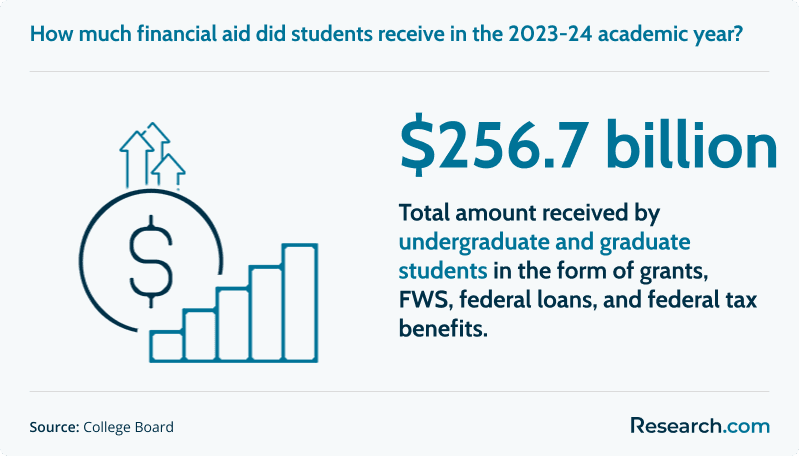
In the 2023–2024 academic year, undergraduate and graduate students in the US received $256.7 billion in grants, federal loans, tax credits, and federal work-study. Students researching lower-cost graduate-level computing options may also compare affordable online master's degree in computer science programs.
What are the prerequisites for enrolling in an online computer engineering degree program?
Admissions requirements differ by school, but online computer engineering bachelor’s programs generally expect applicants to show readiness for college-level math, science, and computing coursework. Because engineering curricula are sequential, weak preparation in algebra, calculus, physics, or programming can delay progress.
- High school diploma or equivalent: Applicants usually need a high school diploma or GED. Some schools may expect a minimum GPA, often around 2.5 to 3.0, especially when admission is competitive.
- Math and science preparation: Strong coursework in algebra, calculus, physics, and computer science can help students begin major requirements sooner and reduce the risk of needing remedial courses.
- Standardized tests: Some institutions may require SAT or ACT scores, while many online programs use test-optional policies.
- Transfer documentation: Transfer applicants may need official transcripts, course descriptions, syllabi, or evaluations to determine how previous credits apply.
- Technology readiness: Students should confirm computer specifications, software access, internet requirements, and any lab equipment expectations before classes begin.
What courses are typically in an online computer engineering degree program?
Computer engineering curricula combine computing theory, engineering design, electronics, programming, and systems-level thinking. The exact course list varies, but many programs include the following types of courses:
| Course area | What students learn | Career relevance |
| Digital Logic Design | Logic circuits, Boolean algebra, digital circuit behavior, and the foundations of processors and memory. | Useful for hardware design, embedded systems, and computer architecture roles. |
| Microprocessor Systems | Microprocessor and microcontroller architecture, programming, interfaces, and embedded applications. | Important for devices used in healthcare, automotive, telecommunications, and consumer electronics. |
| Computer Networks and Security | Network structures, communication protocols, cybersecurity principles, and methods for protecting data. | Supports roles in network engineering, secure systems, and cybersecurity-focused development. |
| Operating Systems | Memory management, processes, scheduling, file systems, and system security. | Relevant for software engineering, systems programming, and infrastructure-related work. |
| Software Engineering | Development methods, project management, testing, debugging, and collaborative coding practices. | Prepares students for application development, quality assurance, and team-based software projects. |
Students should review whether advanced courses are offered regularly online and whether lab-heavy courses require special software, hardware kits, or campus visits.
What types of specializations are available in online computer engineering degree programs?
Specializations help students connect a broad computer engineering foundation to a more focused career direction. Availability varies by school, and some programs use electives or concentration tracks rather than formal specializations.
- Embedded Systems: Focuses on microcontrollers, real-time computing, sensors, and hardware-software integration for devices used in automotive, healthcare, telecommunications, and consumer electronics.
- Cybersecurity: Covers network defense, cryptography, ethical hacking, threat detection, and secure system design.
- Artificial Intelligence (AI) and Machine Learning (ML): Introduces data analysis, neural networks, deep learning, automation, and intelligent systems.
- Robotics and Automation: Explores control systems, robotic design, sensors, programming, and automation technologies.
- Software Development: Emphasizes programming, software architecture, application development, debugging, and scalable systems. Students interested in programming-heavy roles can also review common computer programming jobs.
| Specialization | Best fit for students who want to work with | Potential roles or settings |
| Embedded Systems | Devices, sensors, firmware, microcontrollers, and real-time systems | Hardware companies, automotive technology, medical devices, consumer electronics |
| Cybersecurity | Secure networks, threat detection, cryptography, and system protection | Security teams, government contractors, software companies, infrastructure firms |
| AI and ML | Algorithms, automation, data-driven models, and intelligent applications | Research teams, software firms, robotics companies, data-intensive industries |
| Robotics and Automation | Control systems, robotics platforms, sensors, and automated processes | Manufacturing, logistics, research labs, industrial automation |
| Software Development | Applications, systems software, testing, and scalable platforms | Software companies, enterprise IT, cloud platforms, product teams |
The chart below visualizes 2023 employment levels for computer engineering-related professionals in the US, using 2024 US BLS data.
How to choose the best online computer engineering degree program?
The best online computer engineering program is the one that fits your career goal, budget, schedule, academic preparation, and need for hands-on experience. Rankings can help you discover options, but they should not replace your own review of accreditation, curriculum, outcomes, and support.
- Check accreditation first: Confirm institutional accreditation and, when important for your goals, programmatic accreditation such as ABET. Accreditation can affect transfer credits, graduate school admission, employer confidence, and professional pathways.
- Match the curriculum to your target role: A student interested in embedded systems should look for microcontrollers, digital systems, circuits, and hardware labs. A student aiming for software development should look for programming depth, software engineering, data structures, and project work.
- Study the lab model: Ask whether labs are fully online, remote-access, simulation-based, hybrid, or campus-based. Engineering programs should offer more than passive lectures.
- Calculate total cost: Include tuition, credits, fees, books, software, hardware, travel, transfer credit loss, and the financial impact of taking longer to graduate.
- Review support services: Online students should have access to advising, tutoring, tech support, library resources, disability services, career coaching, and internship guidance.
- Ask about employer connections: Look for capstone sponsors, internship pipelines, alumni networks, career fairs, research opportunities, and industry-aligned projects.
| Question to ask | Why it matters |
| Is the program ABET-accredited or otherwise industry recognized? | Programmatic accreditation can be important for some employers, graduate programs, and engineering pathways. |
| How are labs completed online? | Computer engineering requires applied practice, especially in hardware, circuits, and embedded systems. |
| How many transfer credits will apply to the major? | General transfer credit does not always shorten engineering degree timelines if major prerequisites are unmet. |
| Are required courses offered every term? | Limited course rotations can delay graduation for part-time students. |
| What career support is available to online students? | Internships, resume help, technical interview practice, and employer connections can affect job readiness. |
Are online computer engineering programs accredited and industry recognized?
Some online computer engineering programs are accredited and industry recognized, but students should verify both institutional and program-level accreditation before enrolling. Institutional accreditation confirms that a college or university meets broad academic standards. Programmatic accreditation, such as ABET for engineering programs, evaluates whether a specific engineering curriculum meets recognized technical and professional standards.
Accreditation can matter for employer trust, graduate school admission, transfer credit, and eligibility for certain credentials or licensure-related pathways. Do not rely only on marketing language. Search the accreditor’s database, confirm the exact program name and delivery format, and ask the school whether the online version carries the same accreditation status as the campus program. Students comparing faster computing pathways may also find it useful to review accelerated options such as a 2 year computer science degree, while remembering that computer science and computer engineering are not identical.
Should I pursue an advanced degree to enhance my career prospects?
An advanced degree can help in some computer engineering careers, but it is not automatically necessary for every student. A bachelor’s degree may be enough for many entry-level roles in software development, hardware support, quality assurance, systems work, or junior engineering positions. A master’s degree may be more valuable if you want to specialize in areas such as artificial intelligence, cybersecurity, embedded systems, computer architecture, data science, research, or technical leadership.
Before committing to graduate school, compare the cost, time investment, employer tuition benefits, and actual requirements in job postings that interest you. If your target roles are software-heavy, an advanced computing credential may be useful; students can compare online masters in computer science programs to see whether a computer science graduate path better matches their goals.
What student support services are available in online computer engineering degree programs?
Student support can make a major difference in a technical online degree. Engineering students often need help with math, programming, lab tools, project planning, and career preparation. A strong online program should support students academically and professionally, not simply provide recorded lectures.
- Academic advising: Helps students plan prerequisites, course sequences, transfer credits, and graduation timelines.
- Technical support: Assists with learning platforms, remote labs, software installations, and proctored exams.
- Tutoring: Supports challenging courses such as calculus, physics, circuits, programming, and computer architecture.
- Career services: Provides resume feedback, internship guidance, interview preparation, portfolio support, and employer connections.
- Faculty access: Office hours, discussion boards, and project feedback help online students stay connected to instructors.
- Peer collaboration: Group projects, student organizations, mentorship, and virtual networking can reduce isolation.
Students interested in cybersecurity as a specialization or alternative path may also compare a cheap online cyber security degree to see whether a security-focused program better matches their goals and budget.
How are emerging technologies integrated into online computer engineering curricula?
Computer engineering programs increasingly need to prepare students for systems shaped by artificial intelligence, automation, cybersecurity threats, cloud infrastructure, embedded devices, and data-intensive applications. In an online program, emerging technologies may appear through electives, capstone projects, simulation platforms, cloud-based labs, research opportunities, or industry-sponsored assignments.
Students should look for evidence that the curriculum is updated regularly rather than assuming a program is current because it uses modern-sounding course titles. Ask whether students complete projects involving AI, machine learning, cybersecurity, embedded systems, robotics, or data analytics, and whether faculty have relevant professional or research expertise. Learners who want deeper AI preparation can also compare the best online masters in artificial intelligence options after completing a bachelor’s degree or gaining professional experience.
What is the return on investment for an online computer engineering degree?
The return on investment of an online computer engineering degree depends on total cost, time to completion, financial aid, transfer credits, work experience, internship access, and the career path you pursue after graduation. A program with higher tuition may still be a better value if it has strong accreditation, better lab experiences, stronger employer connections, and a curriculum aligned with your target job. A lower-cost program may be the better choice if it is accredited, accepts transfer credits, and provides the technical depth you need.
| ROI factor | Better signal | Warning sign |
| Accreditation | Clear institutional accreditation and relevant programmatic accreditation where applicable | Vague claims that are hard to verify |
| Total cost | Transparent tuition, fees, credit requirements, and transfer evaluation | Low advertised tuition but unclear fees or credit policies |
| Career alignment | Courses and projects directly match your target roles | Curriculum is broad but lacks depth in your intended specialty |
| Hands-on learning | Labs, capstones, coding projects, hardware simulations, or remote equipment access | Mostly lecture-based courses with limited applied work |
| Student outcomes | Career services, internship support, alumni examples, and employer engagement | No clear information on how online students are supported professionally |
Students considering data-heavy roles may also compare the cost and outcomes of an online master of science in data science after determining whether data science, computer engineering, or computer science is the best long-term fit.
Can interdisciplinary specializations, like game design, enhance my computer engineering career?
Interdisciplinary study can help if it adds marketable skills without weakening your core engineering foundation. For example, game design can expose computer engineering students to graphics, real-time systems, user experience, simulation, interactive media, and performance optimization. These skills may be useful in gaming, virtual reality, simulation, training technology, defense, education technology, and digital product development.
However, students should be careful not to replace essential computer engineering coursework with unrelated electives too early. If you are considering this direction, compare the curriculum of online game design programs with computer engineering requirements and decide whether you want a primary engineering degree with creative electives or a dedicated game development pathway.
How does an online computer engineering degree compare to other STEM degree options?
Computer engineering is one of several STEM pathways that can lead to technology careers, but it is not interchangeable with every computing or science degree. The right choice depends on whether you want to design computing hardware, write software, secure systems, analyze data, conduct laboratory research, or work in a specialized scientific field.
| Degree path | Main focus | Best fit for students who want to |
| Computer Engineering | Hardware, software, embedded systems, circuits, computer architecture, and systems design | Work across the hardware-software boundary |
| Computer Science | Algorithms, programming, software systems, theory, data structures, and computing applications | Focus more heavily on software, algorithms, or computing theory |
| Cybersecurity | Threat defense, secure systems, networks, cryptography, and risk management | Protect systems, networks, and data from attacks |
| Data Science | Statistics, machine learning, analytics, databases, and data-driven decision-making | Extract insights from data and build predictive models |
| Biochemistry | Chemistry, biology, laboratory science, and molecular research | Pursue life science, healthcare research, or laboratory-centered work |
If you are still comparing STEM fields, reviewing the best online biochemistry degrees can help clarify how lab-based science programs differ from computing and engineering programs.
What career paths are available for graduates of online computer engineering degree programs?
Graduates may qualify for several technology and engineering-related roles, depending on their coursework, projects, internships, certifications, and experience. Some roles are more hardware-focused, while others are software-heavy or research-oriented.
- Computer Hardware Engineers: These professionals design, develop, and test processors, circuit boards, memory devices, and other computer components. They may work in technology manufacturing, telecommunications, aerospace, or related industries. In 2023, computer hardware engineers had a median annual wage of $138,080, according to the US BLS, 2024.
- Computer and Information Research Scientists: These workers develop new computing methods, create algorithms, and solve complex technical problems in areas such as artificial intelligence, cybersecurity, and data science. In 2023, computer and information research scientists in the US had a median annual wage of $145,080, according to the US BLS, 2024. This role is often discussed among the highest paying jobs in computer science field.
- Software Developers: Software developers design and build applications, platforms, and systems for businesses, consumers, and organizations. In 2023, they had a median annual wage of $132,270, according to the US BLS, 2024.
- Software Quality Assurance Analysts and Testers: These professionals test software for defects, security issues, usability concerns, and performance problems before release. In 2023, software quality assurance analysts and testers had a median annual wage of $101,800, according to the US BLS, 2024.
- Web Developers: Web developers build and maintain websites and web applications, often working on front-end, back-end, or full-stack development. In 2023, web developers had a median annual wage of $84,960, according to the US BLS, 2024.
- Web and Digital Interface Designers: These professionals design user-friendly digital interfaces for websites, apps, and online platforms. In 2023, web and digital interface designers had a median annual wage of $98,540, according to the US BLS, 2024.
The chart below visualizes 2023 median annual wages for computer engineering-related professionals in the US, using 2024 US BLS data.
Could an accelerated online masters degree in health informatics boost my computer engineering career?
An accelerated online masters degree in health informatics may be useful for computer engineering graduates who want to apply technical skills in healthcare technology. Health informatics combines computing, data systems, healthcare operations, privacy, cybersecurity, and regulatory requirements. This pathway may fit professionals interested in electronic health records, clinical systems, medical device data, health data security, or healthcare analytics.
It is not the right next step for every computer engineering graduate. If your goal is chip design, embedded systems, software architecture, robotics, or AI research, a different graduate program may align better. Consider health informatics if you specifically want to work at the intersection of computing and healthcare systems.
What is the job market for graduates with an online computer engineering degree?
The job market for computer engineering-related graduates is supported by demand across hardware, software, cybersecurity, embedded systems, cloud computing, and digital products. Engineering is also commonly considered among the best majors to make money, though actual outcomes depend on role, employer, location, and experience.
- Computer Hardware Engineers: Employment is projected to grow by 7% from 2023 to 2033, with about 5,000 job openings each year. BLS notes that developments in semiconductor technology, artificial intelligence, and embedded systems contribute to demand.
- Software Developers, Quality Assurance Analysts, and Testers: These roles are projected to grow by 17% during the same period, with about 140,100 job openings each year. Demand is connected to software innovation, cybersecurity needs, and cloud computing.
- Web Developers and Digital Designers: Employment is projected to grow by 8% from 2023 to 2033, with an average of around 16,500 openings per year. Growth is tied to user experience, e-commerce, mobile applications, and digital services.
Students should interpret job outlook data carefully. National projections do not guarantee employment in a specific city, company, or entry-level role. Internships, projects, technical interviews, portfolios, and networking can strongly influence job search results.
How can I transition from technical roles to management positions?
Computer engineering graduates who want to move into management need more than technical expertise. They must learn how to lead teams, communicate with nontechnical stakeholders, manage budgets, plan product timelines, evaluate risk, and make trade-offs between technical quality, business goals, and deadlines.
- Build project leadership experience: Volunteer to lead small technical projects, mentor junior team members, or coordinate cross-functional work.
- Strengthen communication skills: Practice explaining engineering decisions to business, design, finance, and operations teams.
- Learn project management tools: Become comfortable with scheduling, documentation, agile workflows, risk tracking, and resource planning.
- Understand business context: Managers need to connect technical decisions to customer needs, revenue, compliance, security, and long-term maintainability.
- Consider graduate education when it fits: A cheap engineering management masters degree online may help professionals who want formal preparation in leadership, operations, and technical management.
Common mistakes to avoid when choosing an online computer engineering degree
| Mistake | Why it can hurt you | Better approach |
| Choosing only by tuition | The lowest per-credit price may not reflect total cost, transfer credit loss, fees, or delayed graduation. | Compare full degree cost, credits required, fees, aid, and time to completion. |
| Ignoring accreditation | Lack of recognized accreditation can affect transfer, graduate study, employer recognition, or professional pathways. | Verify institutional accreditation and programmatic accreditation where relevant. |
| Assuming online means easier | Computer engineering is math-heavy and technically demanding regardless of format. | Plan weekly study time and prepare for calculus, physics, programming, and labs. |
| Overlooking lab requirements | Some online programs may require special equipment, remote tools, or in-person sessions. | Ask exactly how every required lab course is completed. |
| Not checking course sequencing | Engineering prerequisites can delay graduation if courses are missed or offered infrequently. | Request a term-by-term degree plan before enrolling. |
| Assuming salary outcomes are guaranteed | Median wage data does not represent every graduate’s starting salary. | Use salary data as context and focus on internships, projects, skills, and local job demand. |
Key Insights
- An online computer engineering degree can be a strong option for students who want computing, electronics, hardware, software, and systems design training in a flexible format.
- Most online bachelor’s programs in this field take about 4 years for full-time students and often require about 120 to 130 credit hours, though transfer credits and pacing can change the timeline.
- Accreditation is one of the most important quality checks. Verify institutional accreditation and determine whether ABET or another programmatic accreditation matters for your goals.
- Cost comparisons should include more than tuition. Review fees, required credits, transfer policies, lab costs, software, hardware, and the financial impact of part-time or delayed completion.
- Computer engineering graduates may pursue hardware, software, research, quality assurance, web, cybersecurity, embedded systems, robotics, and AI-related pathways, but career outcomes depend heavily on skills, projects, internships, and experience.
- In 2023, computer hardware engineers had a median annual wage of $138,080, and employment for this occupation is projected to grow by 7% from 2023 to 2033, according to 2024 US BLS data.
- Undergraduate and graduate students in the US received $256.7 billion in grants, federal loans, tax credits, and federal work-study in A.Y. 2023–2024, making financial aid research an essential part of program selection.
- The Amazon Future Engineer scholarship and internship program awards a maximum of $40,000, or up to $10,000 annually, for eligible students.
- The best program is not always the cheapest or highest ranked. Choose the option that combines credible accreditation, relevant coursework, practical labs, student support, affordability, and alignment with your target career.
References:
- College Board. (2024). Trends in Student Aid: Highlights. https://research.collegeboard.org/trends/student-aid/highlights
- US Bureau of Labor Statistics. (2024, August 29). Computer and Information Research Scientists. Occupational Outlook Handbook. https://www.bls.gov/ooh/computer-and-information-technology/computer-and-information-research-scientists.htm
- US Bureau of Labor Statistics. (2024, August 29). Computer Hardware Engineers. Occupational Outlook Handbook. https://www.bls.gov/ooh/architecture-and-engineering/computer-hardware-engineers.htm
- US Bureau of Labor Statistics. (2024, April 03). May 2023 National Occupational Employment and Wage Estimates, United States. Occupational Employment and Wage Statistics. https://www.bls.gov/oes/current/oes_nat.htm
- US Bureau of Labor Statistics. (2024, August 29). Software Developers, Quality Assurance Analysts, and Testers. Occupational Outlook Handbook. https://www.bls.gov/ooh/computer-and-information-technology/software-developers.htm
- US Bureau of Labor Statistics. (2024, August 29). Web Developers and Digital Designers. Occupational Outlook Handbook. https://www.bls.gov/ooh/computer-and-information-technology/web-developers.htm
Other Things You Need to Know about Online Computer Engineering Degree Programs
Yes, some are. ABET accredits engineering technology and engineering programs, including online formats when the curriculum, faculty, labs, and student outcomes meet its standards. For 2027, verify accreditation through the ABET database and the program’s engineering accreditation status before enrolling.
Admission requirements typically include a high school diploma or equivalent, transcripts, and standardized test scores like the SAT or ACT. Some programs may also require a personal statement or letters of recommendation for enrollment in 2027.





