
2027 Best Online Microsoft Azure Dual Certification Bootcamps

Co-Founder and Chief Data Scientist
With IT leadership roles commanding median salaries over $171,200, the path to the top of the tech field is more lucrative than ever. For many ambitious professionals, however, that path feels stuck. You've either reached a career ceiling or are worried that your current skills are becoming obsolete.
The solution isn't just another credential; it's a strategic leap. A dual Microsoft Azure certification, earned through intensive online Microsoft Azure bootcamps, is a powerful tool designed to transform you from a practitioner into a high-value specialist architect. This guide, crafted by career planning experts with 10 years of experience, is your definitive roadmap for making that investment.
What are the benefits of getting an online Microsoft Azure bootcamp?
- Access a clear path to senior roles, such as Cloud Security Engineer or Solutions Architect.
- Unlock significant salary growth, with specialized roles commanding average salaries over $152,000.
- Gain transformative skills in an intensive, week-long online format designed for minimal career disruption.
What can I expect from online Microsoft Azure bootcamps?
You should expect an intensive, hands-on learning sprint that is laser-focused on job-ready skills. Let's be clear: this is not a passive, self-paced course where you are left to watch videos and read tutorials on your own.
Instead, quality online Microsoft Azure bootcamps are structured around live instruction from industry experts. You'll be actively engaged in virtual labs, applying what you learn to solve problems that mimic real-world IT challenges. The entire experience is designed to make you effective in a new role immediately after graduation.
Furthermore, the best programs provide comprehensive career services. This includes resume reviews, interview preparation, and networking support to ensure your investment translates into a tangible career move.
Where can I work with an online Microsoft Azure bootcamp?
You can work in stable, high-value sectors across the entire economy, including finance, computer systems design, and manufacturing. A common assumption is that these skills are only valuable in the tech industry. Still, your opportunities are much broader than that.
Because Microsoft Azure is a foundational platform for the corporate world, professionals with these skills are in high demand everywhere. These core parts of the economy rely on secure and efficient cloud infrastructure. This gives you a high degree of career security that isn't tied to the volatility of a single industry.
How much can I make with an online Microsoft Azure bootcamp?
Specialized professionals with dual Azure certifications can command average salaries exceeding $152,000. This is because the dual certification is what qualifies you for higher-paying roles that are often out of reach with a single, foundational credential.
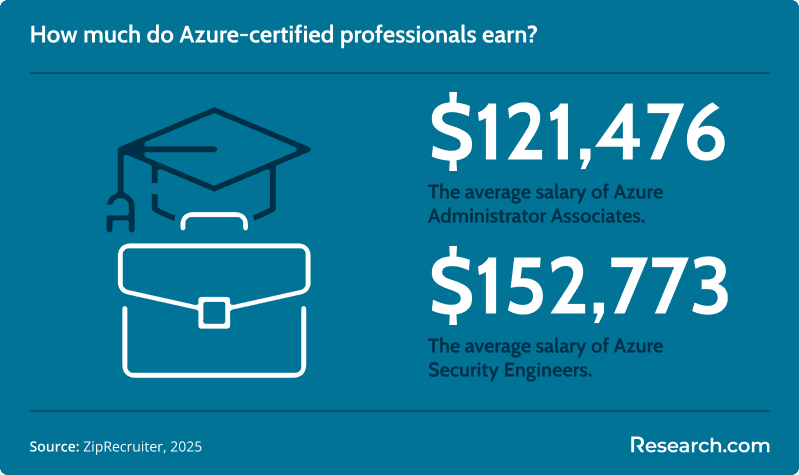
There's a clear salary ladder. While a professional with a foundational Azure Administrator certification earns an average salary of around $121,000, specialists earn significantly more. For example, an Azure Security Engineer averages over $152,000, and a Cloud Solutions Architect earns around $150,000.
This jump in pay is the direct result of having advanced skills that companies are willing to pay a premium for.
- List of the Best Online Microsoft Azure Dual Certification Bootcamps for 2027 List of Programs
- How long does it take to complete online Microsoft Azure dual certification bootcamps? Completion Time
- How does an online Microsoft Azure bootcamp compare to an on-campus program? How does an online Microsoft Azure bootcamp compare to an on-campus program?
- What is the average cost of online Microsoft Azure dual certification bootcamps? Program Cost
- What are the financial aid options for students enrolling in online Microsoft Azure bootcamps? Financial Aid
- What are the prerequisites for enrolling in online Microsoft Azure dual certification bootcamps? What are the prerequisites for enrolling in online Microsoft Azure dual certification bootcamps?
- What courses are typically in an online Microsoft Azure dual certification bootcamp? What courses are typically in an online Microsoft Azure dual certification bootcamp?
- What types of specializations are available in an online Microsoft Azure dual certification bootcamp? What types of specializations are available in an online Microsoft Azure dual certification bootcamp?
- How to choose the best online Microsoft Azure dual certification bootcamps? How to choose the best online Microsoft Azure dual certification bootcamps?
- What career paths are available for graduates of an online Microsoft Azure bootcamp? Career Paths
- What is the job market for graduates of an online Microsoft Azure dual certification bootcamp? Job Market
- Can Online Microsoft Azure Bootcamps Complement a Traditional Computer Science Degree? Can Online Microsoft Azure Bootcamps Complement a Traditional Computer Science Degree?
- What challenges might I face during an online Microsoft Azure bootcamp? What challenges might I face during an online Microsoft Azure bootcamp?
Best Online Microsoft Azure Dual Certification Bootcamps for 2027
Microsoft Azure dual certification bootcamps are short, intensive training programs for IT professionals who want to validate cloud administration and cloud security skills quickly. They are not the same as a computer science degree, and they are not ideal for someone with no technical background. Their value is strongest when you already understand networking, operating systems, identity, and basic infrastructure—and you need structured preparation for Microsoft Azure certification exams.
This guide is designed to help you compare online Azure dual certification bootcamps by cost, length, credential focus, prerequisites, career fit, and return on investment. You will also learn how online programs compare with campus-based training, what funding options may be available, which mistakes to avoid, and how to decide whether an Azure bootcamp is the right next step for your career.
Quick answer: Are online Microsoft Azure dual certification bootcamps worth it?
Online Microsoft Azure dual certification bootcamps can be worth it for working IT professionals who need focused exam preparation and hands-on cloud training in a short timeframe. Most programs listed here take 6 days or 7 days and cost between $4,399 and $4,499. They are best suited for learners who already have IT experience and want to prepare for Azure administrator, security, or related Microsoft certification exams without enrolling in a multi-year degree program.
They are usually not the right first step if you are completely new to IT. In that case, a foundational networking, security, or cloud course may be a better starting point before entering a compressed Azure certification bootcamp.
How we evaluate schools and bootcamp providers
Selecting a short professional training program still requires careful research. A bootcamp may last only a week, but the cost, schedule, certification goals, and career implications can be significant. Our rankings and program evaluations draw from official and established education data sources where applicable, including the U.S. Department of Education’s IPEDS database, College Scorecard, Peterson’s database, and the National Center for Education Statistics.
Because Azure bootcamps are often professional education offerings rather than traditional degree programs, readers should also verify provider details directly: exam voucher policies, instructor credentials, refund terms, post-course access, career support, and whether the program is delivered by the university itself or through a training partner. For a broader explanation of our evaluation process, visit our methodology page.
| Rank | Program | Length | Certification focus | Total cost |
| 1 | Infosec – Microsoft Azure Dual Certification Boot Camp | 7 days | Azure Administrator Associate and Azure Security Engineer Associate | $4,399 |
| 2 | Certification Camps – MCA Microsoft Azure Admin Training & Certification Boot Camp | 6 days | Microsoft Azure Fundamentals and Microsoft Azure Administrator | $4,495 |
| 3 | Texas State University – Microsoft Azure Dual Certification Boot Camp | 7 days | Microsoft Azure Administrator and Microsoft Azure Security Technologies | $4,499 |
| 4 | Indiana University South Bend – Microsoft Azure Dual Certification Boot Camp | 7 days | Microsoft Azure Administrator Associate and Azure Security Engineer Associate | $4,399 |
| 5 | University of Wisconsin-Eau Claire – Microsoft Azure Dual Certification Boot Camp | 7 days | Microsoft Azure Administrator Associate and Azure Security Engineer Associate | $4,399 |
| 6 | Motlow State Community College – Microsoft Azure Dual Certification Boot Camp | 7 days | Microsoft Azure Administrator Associate and Azure Security Engineer Associate | $4,399 |
| 7 | University of New Orleans – Microsoft Azure Dual Certification Boot Camp | 7 days | Microsoft Azure Administrator (AZ-104) and Microsoft Azure Security Technologies (AZ-500) | $4,399 |
| 8 | California State University–San Marcos – Microsoft Azure Dual Certification Boot Camp | 7 days | Microsoft Azure Administrator Associate and Azure Security Engineer Associate | $4,399 |
| 9 | University of Houston – Microsoft Azure Dual Certification Boot Camp | 7 days | Microsoft Azure Administrator Associate and Azure Security Engineer Associate | $4,399 |
| 10 | George Mason University – Microsoft Azure Dual Certification Boot Camp | 7 days | Microsoft Azure Administrator Associate and Azure Security Engineer Associate | $4,499 |
1. Infosec – Microsoft Azure Dual Certification Boot Camp
Infosec offers a concentrated 7-day online boot camp for learners who want structured preparation for Azure administration and Azure security credentials. The program uses instructor-led training and practical labs to help participants work through cloud administration tasks, security concepts, and exam-aligned material.
- Program length: 7 days
- Certifications: Azure Administrator Associate and Azure Security Engineer Associate
- Total cost: $4,399
2. Certification Camps – MCA Microsoft Azure Admin Training & Certification Boot Camp
Certification Camps provides a 6-day Azure administrator training boot camp focused on implementing, monitoring, and managing Azure environments. Its certification path is built around preparation for the AZ-900 and AZ-104 exams, which support two separate Microsoft credentials.
- Program length: 6 days
- Certifications: Microsoft Azure Fundamentals and Microsoft Azure Administrator
- Total cost: $4,495
3. Texas State University – Microsoft Azure Dual Certification Boot Camp
Texas State University features a 7-day online program centered on Azure administration and security. The bootcamp is designed around practical cloud training and prepares students for the AZ-104 and AZ-500 exams, with exam vouchers included.
- Program length: 7 days
- Certifications: Microsoft Azure Administrator and Microsoft Azure Security Technologies
- Total cost: $4,499
4. Indiana University South Bend – Microsoft Azure Dual Certification Boot Camp
Indiana University South Bend delivers a 7-day live online boot camp powered by Infosec. The program concentrates on Azure administration and security, and it includes post-course access to training resources along with an Infosec Skills subscription.
- Program length: 7 days
- Certifications: Microsoft Azure Administrator Associate and Azure Security Engineer Associate
- Total cost: $4,399
5. University of Wisconsin-Eau Claire – Microsoft Azure Dual Certification Boot Camp
The University of Wisconsin-Eau Claire offers a 7-day online Microsoft Azure dual certification boot camp through an Infosec partnership. The curriculum emphasizes hands-on cloud administration and security practice, and students receive a 90-day subscription to additional on-demand courses.
- Program length: 7 days
- Certifications: Microsoft Azure Administrator Associate and Azure Security Engineer Associate
- Total cost: $4,399
6. Motlow State Community College – Microsoft Azure Dual Certification Boot Camp
Motlow State Community College provides a 7-day online cohort-based Azure bootcamp powered by Infosec. The program is built for IT professionals who want focused preparation in cloud administration and security, and it provides full-year access to materials.
- Program length: 7 days
- Certifications: Microsoft Azure Administrator Associate and Azure Security Engineer Associate
- Total cost: $4,399
7. University of New Orleans – Microsoft Azure Dual Certification Boot Camp
The University of New Orleans offers a 7-day online boot camp that combines Azure administration and security instruction with labs and simulations. Its program includes a Certification Success Program, which may offer a second exam attempt at no additional fee.
- Program length: 7 days
- Certifications: Microsoft Azure Administrator (AZ-104) and Microsoft Azure Security Technologies (AZ-500)
- Total cost: $4,399
8. California State University–San Marcos – Microsoft Azure Dual Certification Boot Camp
California State University–San Marcos provides a 7-day online Azure dual certification boot camp through its Infosec partnership. The program combines live expert instruction with access to boot camp materials and video lessons for 90 days after the course.
- Program length: 7 days
- Certifications: Microsoft Azure Administrator Associate and Azure Security Engineer Associate
- Total cost: $4,399
9. University of Houston – Microsoft Azure Dual Certification Boot Camp
The University of Houston offers a live online Azure boot camp that prepares learners for Azure Administrator and Security Engineer certifications. The program includes practical labs and a Certification Success Program that can provide a second exam voucher if needed.
- Program length: 7 days
- Certifications: Microsoft Azure Administrator Associate and Azure Security Engineer Associate
- Total cost: $4,399
10. George Mason University – Microsoft Azure Dual Certification Boot Camp
George Mason University offers a 7-day online Microsoft Azure boot camp in partnership with ed2go. The program is intended to help learners build Azure administration and security skills while preparing for Azure Administrator and Security Engineer Associate certifications.
- Program length: 7 days
- Certifications: Microsoft Azure Administrator Associate and Azure Security Engineer Associate
- Total cost: $4,499
How long does it take to complete online Microsoft Azure dual certification bootcamps?
The instructional portion of the programs listed here can be completed in 6 days or 7 days. That short timeline is possible because these bootcamps are highly compressed and assume that learners already understand core IT concepts. They are designed for rapid exam preparation and skill reinforcement, not for teaching the basics of computing from the ground up.
An accelerated online Microsoft Azure dual certification bootcamp may be useful if you need a fast, structured pathway to prepare for certification exams while minimizing time away from work. However, the calendar length does not reflect the full workload. Many learners also need time before the bootcamp to review prerequisites and time after the bootcamp to study for exams.
| Timeline stage | What to expect | Why it matters |
| Before the bootcamp | Review networking, operating systems, identity, security basics, and Azure fundamentals. | Preparation reduces the risk of falling behind during a compressed course. |
| During the bootcamp | Attend live instruction, complete labs, review exam objectives, and troubleshoot technical exercises. | The pace is intense, so daily participation is important. |
| After the bootcamp | Use post-course materials, practice tests, and lab access to prepare for certification exams. | Certification success often depends on focused review after instruction ends. |
Why the timeline is so short
The short format reflects the needs of working IT professionals and employers that need cloud skills quickly. According to the BLS, database administrators and architects are projected to grow by 9% over the next decade, with about 9,500 job openings projected each year. A bootcamp can help experienced professionals target those opportunities faster than a traditional academic program, but it does not guarantee employment or certification success.
How does an online Microsoft Azure bootcamp compare to an on-campus program?
An online Azure bootcamp is often the more practical option for working professionals because it removes commuting, relocation, and campus scheduling barriers. The best fit depends on your learning style, schedule, technical setup, and need for in-person support. Online delivery can be highly effective when the program includes live instruction, interactive labs, instructor access, and structured exam preparation.
On-campus training may still be useful for learners who prefer face-to-face accountability or who do not have a reliable home technology setup. However, online delivery is common in cloud training because the work itself is typically performed in virtual environments.
| Factor | Online Azure bootcamp | On-campus Azure bootcamp |
| Schedule flexibility | Usually easier for working professionals to attend from home or office. | May require commuting and fixed location-based attendance. |
| Learning environment | Live virtual classrooms, remote labs, online collaboration, and digital resources. | Physical classroom interaction and potentially more direct in-person support. |
| Technical practice | Cloud labs can closely reflect real remote IT work. | Labs may still be cloud-based even when instruction is on campus. |
| Best for | Professionals who need training without disrupting work and family obligations. | Learners who benefit from in-person structure and local classroom accountability. |
If you are comparing Azure training with unrelated graduate or professional education options, be careful not to use salary data from a different field as a proxy for cloud computing outcomes. For example, information about master’s in health systems management salary may help healthcare management students evaluate their own path, but it should not be used to estimate Azure bootcamp ROI.
What makes a strong online Azure bootcamp different from a passive video course?
A strong online bootcamp should provide more than recorded lessons. Look for live instruction, scheduled labs, instructor feedback, exam objective mapping, practice assessments, and post-course study resources. Since Azure roles involve real systems and configuration decisions, hands-on practice is one of the most important signs of program quality.
What is the average cost of online Microsoft Azure dual certification bootcamps?
The listed online Microsoft Azure dual certification bootcamps cost around $4,400, with individual totals ranging from $4,399 to $4,499. This price may include live instruction, labs, exam preparation materials, subscriptions, or exam vouchers depending on the provider. Always confirm what is included before enrolling because a lower advertised price may not cover every expense.
Specialized IT bootcamps in other areas can fall into a similar professional training category. For example, learners comparing cloud security pathways may also review online CISM certification training to understand how pricing and credential preparation differ across cybersecurity-focused programs.
| Cost item | Questions to ask before paying |
| Tuition | Is the full program price $4,399, $4,495, or $4,499, or are there additional fees? |
| Exam vouchers | Are certification exam vouchers included, and for which exams? |
| Second exam attempt | Does the provider offer a Certification Success Program or another retake option? |
| Post-course access | How long can you use recordings, labs, practice tests, or subscription resources? |
| Financing | Are installment plans, private loans, employer reimbursement, or workforce funding available? |
How to think about ROI without overestimating outcomes
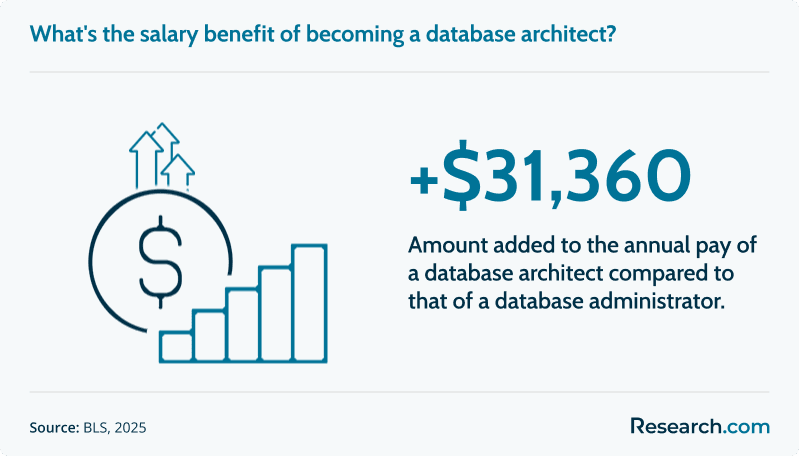
The median annual pay for a database architect is $135,980, while the median for a database administrator is $104,620. That is a difference of over $31,000 in salary for a single year. These figures can help frame the potential value of advanced technical skills, but they should not be read as a guaranteed salary increase after a bootcamp.
Your actual return depends on your starting experience, current role, local labor market, certifications earned, interview performance, employer demand, and whether the bootcamp helps you move into a more specialized position. A practical ROI calculation should compare the bootcamp’s total cost with realistic job targets, not only with top advertised salaries.
What are the financial aid options for students enrolling in online Microsoft Azure bootcamps?
Funding for professional Azure bootcamps usually works differently from aid for degree programs. Federal aid through the FAFSA may not apply to many non-degree bootcamps, so students should ask each provider directly about payment and financing options before enrolling.
- Installment plans: Some providers allow students to divide the program price into multiple payments instead of paying the full amount upfront.
- Private loans: Certain bootcamps may work with private lenders that finance short-term career training programs.
- Employer sponsorship: Professionals whose current jobs involve Azure, cloud migration, cybersecurity, or infrastructure may be able to request employer-paid training.
- Workforce funding: Depending on location and eligibility, some learners may qualify for local workforce development support.
- Tax and reimbursement review: Ask a qualified tax professional or employer benefits team whether any education reimbursement or professional development policy applies.
Financing models vary widely across short career programs. Students researching non-degree education in other fields, such as online cosmetology courses, should also verify whether federal aid, private financing, or school-based payment plans apply to their specific program type.
How to ask your employer to pay for Azure training
Employer sponsorship is often strongest when you connect the bootcamp to business needs. Instead of presenting the training only as a personal career move, explain how Azure administration or security skills can help your team manage cloud resources, improve security controls, reduce outside consulting needs, or support migration projects.
Before speaking with your manager, prepare a short proposal that includes the program cost, length, certification targets, skills covered, expected work benefits, and how you will share what you learn with the team.
What are the prerequisites for enrolling in online Microsoft Azure dual certification bootcamps?
Most learners need prior IT knowledge to succeed in a fast Azure dual certification bootcamp. You should be comfortable with networking concepts, operating systems, command-line tools, identity and access management, security basics, and general troubleshooting. These programs move quickly because they are built on the assumption that you already know foundational technology concepts.
This is similar to other fields where advanced coursework depends on prior knowledge. For instance, students considering an online applied psychology degree also need a foundation in their discipline before moving into specialized study. In Azure training, the foundation is technical: networks, systems, cloud concepts, and security fundamentals.
| Prerequisite area | What you should know before enrolling | Why it matters in Azure |
| Networking | IP addressing, DNS, routing, firewalls, and virtual networks. | Azure administrators frequently configure cloud networking and connectivity. |
| Operating systems | Basic Windows and Linux administration concepts. | Cloud workloads often involve virtual machines, permissions, services, and updates. |
| Security | Authentication, authorization, least privilege, monitoring, and incident response basics. | Security is central to Azure identity, access, and infrastructure protection. |
| Command line | Comfort using shells, scripts, and administrative commands. | Many cloud tasks require automation or command-line troubleshooting. |
| Cloud fundamentals | Basic understanding of compute, storage, databases, and shared responsibility. | Bootcamp instruction moves faster when you already understand cloud service models. |
What to do if you are not ready yet
If several prerequisite areas feel unfamiliar, build an on-ramp before enrolling. A foundational security or networking credential can make the bootcamp more manageable and improve your confidence during labs. Many learners review online CompTIA Security+ training bootcamps before moving into more specialized cloud security work.
What courses are typically in an online Microsoft Azure dual certification bootcamp?
Azure dual certification bootcamps generally organize content around Microsoft exam objectives and practical cloud administration tasks. The official Microsoft Azure training ecosystem includes learning paths across compute, storage, networking, identity, security, data, and governance. A dual certification bootcamp compresses selected topics into an exam-focused format.
- Azure administration: Managing subscriptions, resources, virtual machines, storage, virtual networking, monitoring, and identity services.
- Azure security: Applying access controls, securing workloads, configuring monitoring, managing security posture, and understanding threat protection tools.
- Exam preparation: Reviewing exam domains, question styles, practice assessments, and common weak areas.
- Hands-on labs: Completing guided exercises in virtual environments to practice configuration and troubleshooting.
- Cloud governance: Understanding policies, cost controls, compliance considerations, and operational best practices.
Where Azure skills are used
Azure skills are relevant in many industries because cloud infrastructure supports business applications, data systems, identity platforms, and security operations. The top industries hiring for related roles include Computer Systems Design (21%), Information (14%), and Finance & Insurance (12%). These figures show that cloud skills are not limited to software companies; they also matter in sectors that depend on secure, scalable digital infrastructure.
What types of specializations are available in an online Microsoft Azure dual certification bootcamp?
Most dual certification bootcamps pair Azure administration with a second credential area. The best choice depends on your current experience and the roles you want next. Security is a common pairing because employers need professionals who can not only deploy cloud resources but also protect them.
| Specialization path | Best for | Typical focus |
| Azure Administrator + Security Engineer | IT professionals moving toward cloud security, security operations, or infrastructure protection. | Identity, access, monitoring, threat protection, secure configuration, and cloud defense. |
| Azure Administrator + Data Engineer | Learners interested in data platforms, pipelines, analytics infrastructure, and business intelligence support. | Data storage, data movement, processing, and cloud-based data architecture. |
| Azure Administrator + AI Engineer | Professionals who want to support applied AI systems on cloud infrastructure. | AI services, deployment environments, responsible use considerations, and solution integration. |
How specialization affects career value
Specialization can improve your marketability because employers often need cloud professionals who can solve specific business problems. The average salary for an Azure Security Engineer is over $152,000—a nearly $32,000 premium over a general Azure Administrator. That comparison suggests why cloud security is attractive, but salary outcomes still depend on experience, location, employer, certifications, and job scope.
Learners interested in the AI-focused path may also compare Azure training with broader artificial intelligence education. A fast-track artificial intelligence program online can be a separate option for professionals who want deeper study beyond Azure certification preparation.
How do you choose the best online Microsoft Azure dual certification bootcamp?
Choose an Azure dual certification bootcamp by checking fit, not only brand recognition. A good program should align with your current skill level, certification goals, schedule, budget, and career target. Because many programs look similar, the details matter: instructor background, lab quality, exam voucher policy, retake support, post-course access, and whether the training partner has a strong reputation.
- Confirm the exact certifications. Make sure the program prepares for the exams you actually need, such as AZ-104 and AZ-500 where applicable.
- Check prerequisites honestly. If you lack networking or security fundamentals, prepare before enrolling.
- Ask what the cost includes. Verify whether exam vouchers, retakes, subscriptions, labs, and recordings are included.
- Review instructor qualifications. Look for real Azure, infrastructure, security, or cloud operations experience.
- Evaluate support after the course. A one-week bootcamp is short, so post-course access can be important for exam readiness.
- Compare the university and training partner roles. Understand who teaches the course, who issues the certificate of completion, and who provides student support.
- Look for realistic career guidance. Be cautious of programs that imply certification alone guarantees a high-paying job.
Questions to ask before enrolling
| Question | Why it matters |
| Which Microsoft exams does this bootcamp prepare me for? | Dual certification programs can target different credential combinations. |
| Are exam vouchers included in the total cost? | This can affect the true price of the program. |
| What happens if I do not pass the exam on the first attempt? | Some programs may offer a Certification Success Program or second attempt option. |
| How long will I have access to course materials? | Post-course review is often important after an intensive week. |
| Who teaches the course? | Instructor experience can affect the quality of labs, examples, and troubleshooting help. |
| Is this program right for beginners? | Most accelerated Azure bootcamps are not designed for learners with no IT background. |
| What career services are included? | Resume help, interview support, and employer connections vary by provider. |
Common mistakes to avoid
- Choosing only by price: A lower cost is not helpful if exam vouchers, labs, or support are missing.
- Ignoring prerequisites: Entering without basic IT knowledge can make a 6-day or 7-day program overwhelming.
- Assuming a university name means the university teaches the course: Many programs are delivered through training partners.
- Relying only on rankings: Rankings can narrow your options, but your schedule, goals, and technical background should drive the final decision.
- Expecting salary guarantees: Certifications can support career movement, but job offers depend on experience, market demand, and interview performance.
- Skipping employer reimbursement: Many professionals pay out of pocket before checking whether their company has a professional development budget.
What career paths are available for graduates of an online Microsoft Azure bootcamp?
Azure bootcamp graduates typically pursue roles connected to cloud administration, cloud security, systems operations, infrastructure support, and cloud architecture. The right path depends on previous experience. A learner who already works in systems administration may be ready for Azure administrator or cloud engineer roles, while someone with stronger security experience may target cloud security positions.
| Career direction | Possible roles | What the work involves |
| Cloud operations | Azure Administrator, Cloud Administrator, Systems Administrator | Managing cloud resources, users, storage, virtual machines, networking, and monitoring. |
| Cloud engineering | Cloud Engineer, Infrastructure Engineer, Platform Engineer | Building and improving cloud environments, automating deployments, and supporting reliability. |
| Cloud security | Azure Security Engineer, Cloud Security Analyst, Security Engineer | Securing identities, monitoring threats, applying controls, and reducing cloud risk. |
| Architecture | Solutions Architect, Cloud Solution Architect | Designing cloud systems, advising stakeholders, and aligning technology with business needs. |
| Leadership | IT Manager, Cloud Operations Manager, Infrastructure Manager | Managing teams, budgets, technical strategy, vendors, and operational priorities. |
Technical path vs. leadership path
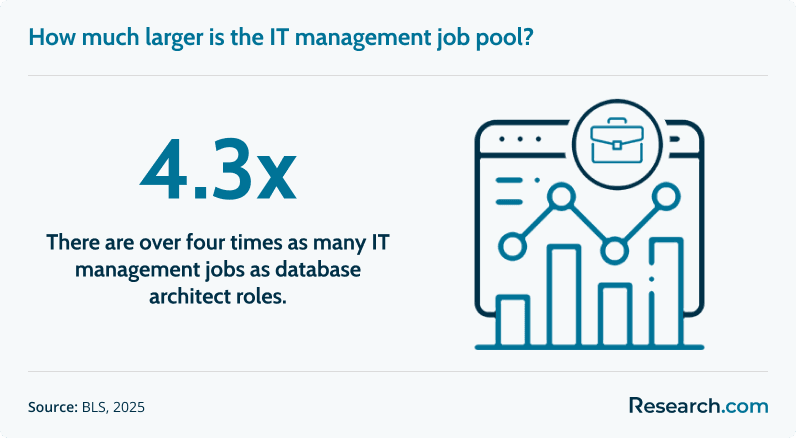
The technical path is usually best for people who want to stay close to systems design, implementation, automation, and troubleshooting. The leadership path may fit professionals who want to supervise teams, manage cloud budgets, and shape infrastructure strategy. Government data shows the IT manager job pool is over four times larger than the pool for technical architect roles, which can make management a broader advancement route for some professionals.
If your long-term goal is architecture, broader analytics and systems knowledge may help you move beyond platform administration. Some learners compare certification training with accelerated online bachelor’s programs in analytics when they want more formal study in data-driven decision-making.
What is the job market for graduates of an online Microsoft Azure dual certification bootcamp?
The labor market for cloud-related skills is supported by continued demand for IT managers, database administrators, architects, security professionals, and cloud infrastructure specialists. The job market is projected to grow by 17% for IT managers and 9% for database architects over the next decade, which is faster than the average for all occupations.
That outlook does not mean every bootcamp graduate will immediately qualify for an advanced role. Employers usually evaluate the full candidate profile: prior IT experience, certifications, project work, communication skills, security awareness, and ability to operate in production environments. A dual Azure certification can strengthen that profile, especially when paired with relevant experience.
Current trends affecting Azure bootcamp graduates
- Cloud security remains a priority: Organizations need professionals who can reduce risk in complex cloud environments.
- Hybrid and remote infrastructure are normal: Cloud teams often manage systems across distributed environments, making online lab-based training relevant.
- Employers want proof of practical ability: Certifications help, but hands-on labs, projects, and real troubleshooting examples are important in interviews.
- AI is increasing demand for cloud fluency: Many AI systems rely on cloud infrastructure, storage, identity, monitoring, and governance.
- Credential stacking is common: Professionals often combine Azure certifications with security, networking, data, or operations credentials.
Security-focused learners may also consider related training such as accelerated online CyberOps training bootcamps if they want to deepen incident detection, monitoring, and security operations skills.
Can online Microsoft Azure bootcamps complement a traditional computer science degree?
Yes. An Azure bootcamp can complement a computer science degree by adding platform-specific, job-aligned cloud skills to a broader academic foundation. Computer science programs often emphasize algorithms, software design, systems, data structures, and theory. Azure bootcamps focus more narrowly on administration, security, labs, and certification preparation.
This combination can be useful for learners who want both conceptual depth and practical cloud credentials. For example, someone enrolled in or considering an accelerated online computer science degree may use an Azure bootcamp to build applied cloud skills that are not covered in detail in every degree curriculum.
| Option | Main value | Best fit |
| Azure bootcamp only | Fast, certification-focused cloud preparation. | Experienced IT professionals who need targeted upskilling. |
| Computer science degree only | Broad academic foundation in computing and problem-solving. | Learners seeking long-term technical depth and degree-based qualifications. |
| Degree plus Azure bootcamp | Combines theory with practical cloud platform skills. | Students or professionals aiming for cloud engineering, architecture, or technical leadership. |
What graduates say about online Microsoft Azure bootcamps
- : "I had been in the same mid-level position for three years while other people moved ahead. After earning the dual certification, I accepted a Senior Cloud Engineer role six weeks later with a 30% pay increase. The salary change mattered, but the bigger shift was knowing I could compete for higher-level work. — Kieran"
- : "I wanted to stop handling only day-to-day tickets and start contributing to bigger infrastructure decisions. The program helped me understand Azure services in a more architectural way, so I could discuss design choices instead of just implementation tasks. — Malik"
- : "I was nervous about entering an advanced bootcamp, but the prerequisite guidance helped me prepare. The opening lessons reinforced the essentials, and that made the later security and administration topics much easier to handle. — Siobhan"
What challenges might I face during an online Microsoft Azure bootcamp?
The main challenge is the pace. A 6-day or 7-day Azure bootcamp can feel intense because learners must absorb cloud administration, security concepts, labs, and exam preparation in a compressed schedule. Working professionals may also need to balance job duties, family responsibilities, and evening study while keeping up with live sessions.
- Time pressure: Block your calendar before the course starts and avoid scheduling major work deadlines during the bootcamp week.
- Technical troubleshooting: Test your computer, internet connection, browser, authentication tools, and lab access before day one.
- Concept overload: Review prerequisites early so the bootcamp reinforces knowledge rather than introducing everything for the first time.
- Exam anxiety: Use practice assessments and post-course resources instead of rushing into the exam before you are ready.
- Limited networking: In an online format, you may need to be intentional about asking questions and connecting with instructors or classmates.
If you are comparing Azure with very different technical or interdisciplinary fields, keep the end goal clear. A program such as an online space systems degree may build valuable systems thinking, but it serves a different academic and career purpose than Azure certification training.
References
- U.S. Bureau of Labor Statistics. (2025a). Computer and information systems managers. Occupational Outlook Handbook. Retrieved August 1, 2025, from BLS.
- U.S. Bureau of Labor Statistics. (2025b). Database administrators and architects. Occupational Outlook Handbook. Retrieved August 1, 2025, from BLS.
- ZipRecruiter. (2025a). Azure 104 salary. Retrieved August 1, 2025, from ZipRecruiter.
- ZipRecruiter. (2025b). Azure cloud solution architect salary. Retrieved August 1, 2025, from ZipRecruiter.
- ZipRecruiter. (2025c). Azure security engineer salary. Retrieved August 1, 2025, from ZipRecruiter.
Key Insights
- Online Microsoft Azure dual certification bootcamps are best for IT professionals who already understand networking, systems, security basics, and cloud concepts.
- The programs listed here are short and intensive, typically lasting 6 days or 7 days, with costs between $4,399 and $4,499.
- Before enrolling, verify the exact certification exams, whether vouchers are included, how long you can access course materials, and what support is available after the bootcamp.
- Online delivery can be a strong fit for cloud training because labs and real-world Azure work are often virtual, but learners still need live support and hands-on practice.
- Azure security is one of the most practical specialization paths because employers need professionals who can manage and protect cloud infrastructure.
- Do not treat bootcamp completion as a guaranteed salary increase. ROI depends on your experience, certifications earned, job market, and ability to demonstrate practical skills.
- If you are new to IT, start with foundational training before entering a compressed Azure dual certification bootcamp.
Other Things You Should Know About Online Microsoft Azure Bootcamps
Participants can earn the Microsoft Certified: Azure Fundamentals and Microsoft Certified: Azure Administrator Associate certifications from the 2027 Best Online Microsoft Azure Dual Certification Bootcamps, enhancing expertise in cloud services and management. These certifications are recognized globally by technology employers.
Yes. Most online Azure dual certification bootcamps require basic familiarity with cloud concepts, Windows or Linux administration, and some hands-on IT experience. Many also expect learners to create a Microsoft account and be ready to sit for role-based certification exams such as AZ-104 or AZ-305.


