2027 Best Online Beauty and Cosmetology Trade School Programs

Co-Founder and Chief Data Scientist
In 2023, the United States employed 571,100 hairdressers, hairstylists, and cosmetologists, reflecting the steady demand for skilled beauty professionals. This thriving field spans hair, skin, and nail care, with opportunities in salons, spas, media, and independent businesses. As beauty trends evolve, education remains the foundation for success.
In this article, I will talk about the best online beauty and cosmetology programs, detailing how they work, what skills they teach, and the career paths they open. I will also share the licensing requirements, potential earnings, and how virtual learning can prepare them for competitive and creative roles in the beauty industry.
What are the benefits of getting into an online beauty and cosmetology trade school program?
- Online beauty and cosmetology trade school programs offer flexible schedules, making it easier to balance training with work, family, or personal commitments.
- Students of this online program learn skills that can be applied immediately in salon work, freelance services, or personal practice.
- Online beauty and cosmetology trade school program graduates have the potential to earn an average of $43,287 per year.
What can I expect from an online beauty and cosmetology trade school program?
Online beauty and cosmetology programs blend flexible virtual learning with local, in-person practice to meet licensing requirements. You’ll gain foundational skills in hair cutting and coloring, skincare treatments, nail care, and makeup artistry while also learning client communication, sanitation, and business basics.
Typical coursework covers:
- Hair design, coloring, and chemical treatments
- Skin analysis, facials, and advanced esthetics techniques
- Nail enhancements and art
- Makeup application for different occasions and skin types
- Salon business management and safety regulations
Online programs often provide:
- Asynchronous lessons you can complete on your schedule
- Virtual demonstrations and live-streamed classes
- Local externships or practice hours at approved facilities
- Licensing exam preparation and portfolio building
Some schools also offer advanced modules in medical esthetics, spa management, or trend-based styling to help you stand out.
Where can I work with an online beauty and cosmetology trade school program?
With a cosmetology education, you can work in a variety of settings that fit your skills and interests. Many online beauty and cosmetology trade school program graduates find careers in:
- Salons and Spas: Works as a hair stylist, colorist, esthetician, or nail technician.
- Freelance or Mobile Services: Offer at-home beauty treatments or special event styling.
- Resorts and Cruise Ships: Provides luxury beauty services for traveling guests.
- Film, TV, and Fashion: Specializes in makeup and hair for productions and photoshoots.
- Medical Spas and Dermatology Clinics: Performs advanced skin treatments under supervision.
The training also opens pathways in education, product sales, and beauty brand representation.
How much can I make with an online beauty and cosmetology trade school program?
Earnings for cosmetologists vary by location, specialty, and experience. In the United States, the average yearly pay is $43,287. Put that to hourly rate is $20.81 an hour, with top earners making up to $36.06 an hour. Most cosmetologists earn between $15.38 (25th percentile) and $24.28 (75th percentile).
Online beauty and cosmetology trade school program graduates’ income potential can increase with advanced skills, high-end clientele, or owning your own salon. Those working in metropolitan areas or luxury service settings often earn more through higher service rates and tips.
- Best Online Beauty and Cosmetology Trade School Programs for 2027 List of Programs
- How long does it take to complete an online beauty and cosmetology trade school program? Program Length
- How does an online beauty and cosmetology trade school program compare to an on-campus program? How does an online beauty and cosmetology trade school program compare to an on-campus program?
- What is the average cost of an online beauty and cosmetology trade school program? Program Cost
- What are the financial aid options for students enrolling in an online beauty and cosmetology trade school program? Financial Aid
- What are the prerequisites for enrolling in an online beauty and cosmetology trade school program? Requirements
- What courses are typically in an online beauty and cosmetology trade school program? What courses are typically in an online beauty and cosmetology trade school program?
- What types of specializations are available in online beauty and cosmetology trade school programs? What types of specializations are available in online beauty and cosmetology trade school programs?
- How to choose the best online beauty and cosmetology trade school program? How to choose the best online beauty and cosmetology trade school program?
- What career paths are available for graduates of online beauty and cosmetology trade school programs? Career Paths
- What is the job market for graduates with an online beauty and cosmetology trade school program? Job Market
- What challenges do online beauty and cosmetology trade school graduates face? What challenges do online beauty and cosmetology trade school graduates face?
- Is the Investment in an Online Beauty and Cosmetology Trade School Program Worthwhile? Is the Investment in an Online Beauty and Cosmetology Trade School Program Worthwhile?
- How can online beauty and cosmetology graduates enhance their professional development? How can online beauty and cosmetology graduates enhance their professional development?
Best Online Beauty and Cosmetology Trade School Programs for 2027
Students searching for an online cosmetology school are usually trying to solve two problems at once: they want flexible training, but they also need a program that qualifies them for a state license. That is why beauty and cosmetology programs are different from most online certificates. Cosmetology is a hands-on licensed trade, so a credible “online” program is usually hybrid. You may complete theory lessons online, but you still need supervised practice in a campus salon, student clinic, lab, or approved training location.
This guide is designed for future hairstylists, barbers, estheticians, nail technicians, makeup artists, high school career and technical education students, and working adults who want to compare flexible beauty school options before enrolling. It explains how hybrid cosmetology programs work, what they cost, how long they take, what licensing issues to verify, and which questions to ask before signing an enrollment agreement.
You will also find a comparison of featured programs, financial aid options, common courses, specialization choices, job market context, common mistakes, and practical decision points that can help you choose a program that fits your goals and state requirements.
Quick answer: Should you consider an online cosmetology program?
An online or hybrid cosmetology program can be a smart choice if you need flexibility for classroom-style theory and can consistently attend required in-person training. It is not the right choice if you need a program that is 100% remote. State licensing rules typically require documented hands-on hours before students can qualify for cosmetology exams.
| Decision factor | What it means for students |
| Best fit | Learners who want online theory classes but can travel to a salon, lab, campus, or approved site for practical training. |
| Not ideal for | Students who cannot attend any in-person sessions, because cosmetology licensing depends on supervised practice. |
| Typical completion time | Many programs take 7 to 12 months, while part-time formats may take 18 to 24 months. |
| Common hour requirement | Hybrid cosmetology programs often require 1,200 to 1,500 clock hours, depending on the state. |
| Most important checks | Accreditation, state board approval, required practical hours, total cost, licensing exam preparation, and graduate outcomes. |
How Research.com reviews cosmetology schools
The strongest hybrid beauty programs do more than post lessons online. They provide structured theory instruction, supervised skill development, licensing support, qualified faculty, clear attendance expectations, and practical preparation for salon work. Research.com applies its school evaluation methodology to identify programs with organized curricula, recognized oversight, relevant beauty training options, and career-focused learning.
Program information is reviewed against institutional and education data sources such as the Integrated Postsecondary Education Data System (IPEDS), Peterson’s Distance Learning database, the U.S. Department of Education’s College Scorecard, and the National Center for Education Statistics (NCES).
Featured hybrid cosmetology programs at a glance
| School | Program length | Cost | Training requirement | Accreditation or approval listed |
| Avalon Institute | 12 months | $19,708 | 1500 | National Accrediting Commission of Career Arts & Sciences (NACCAS) |
| American Leadership Academy | Two years (while in high school) | Tuition-free (public charter school) | 1,000 (Hairstyling); 600 (Aesthetics) | Arizona Board of Barbering & Cosmetology |
| Madison Area Technical College | One year | $268.69 per credit hour | 39 credits | Wisconsin Department of Safety and Professional Services (DSPS) |
| Wisconsin Technical College System (WTCS) | One year | $4,585.50 | 44 credits | Wisconsin Technical College System Board |
| Elaine Sterling Institute | 12 months | $22,759 | 1500 hours | Council on Occupational Education (COE) |
| Empire Beauty School | Nine months | $17,271 | 1,000 to 1,500 hours | NACCAS |
| Houston Community College | Seven months | $227 per credit hour | 1500 hours | Southern Association of Colleges and Schools Commission on Colleges (SACSCOC) |
| Aveda Institute | One year | $21,450 | 1500 hours | NACCAS |
| Elevate Salon Institute | 47 weeks | $19,960 | 1,500 hours | NACCAS |
| San Francisco Institute of Esthetics & Cosmetology | 44 weeks | $22,105 | 1,000 hours | NACCAS, BPPE |
1. Avalon Institute
Avalon Institute offers a cosmetology route that blends online beauty theory with required in-person salon training. This structure may work well for students who want remote coursework for lectures and assignments but still need the practical experience required for licensing.
The program includes hairstyling, esthetics, makeup, and salon business topics. Students develop skills in student salon environments that are intended to mirror professional beauty settings, supporting preparation for state board exams, salon jobs, and freelance work.
- Program Length: 12 months
- Tracks/Concentrations: Cosmetology, Esthetics, Makeup Artistry, Hair Extension
- Total Tuition Cost: $19,708
- Required Credits to Graduate: 1500
- Accreditation: National Accrediting Commission of Career Arts & Sciences (NACCAS)
2. American Leadership Academy
The American Leadership Academy Applied Technologies Campus provides a Hairstyling Track for high school students who want to start beauty career preparation before graduating. The program combines online theory instruction with supervised client-service practice in an on-campus salon.
Students learn services such as precision cutting, balayage, foiling, and texture work while also studying scheduling, inventory, client interaction, and salon operations. Graduates may use the training as a foundation for licensure exams, entry-level beauty work, or further education.
- Program Length: Two years (while in high school)
- Tracks/Concentrations: Hairstyling, Aesthetics
- Cost Per Credit Hour: Tuition-free (public charter school)
- Required Credits to Graduate: 1,000 (Hairstyling); 600 (Aesthetics)
- Accreditation: Arizona Board of Barbering & Cosmetology
3. Madison Area Technical College
Madison Area Technical College offers a Cosmetology diploma for students planning to enter the beauty field after completing training. The program includes classroom instruction, supervised technical practice, and a salon externship where students work under licensed professionals.
Coursework covers haircutting and styling for varied hair types, hair coloring, permanent waving, nail technology, facials, scalp treatments, makeup analysis, wig styling, infection control, retail sales, and client relations. Graduates may apply for licensure through the Wisconsin Department of Safety and Professional Services (DSPS).
- Program Length: One year
- Tracks/Concentrations: Cosmetology
- Cost Per Credit Hour: $268.69
- Required Credits to Graduate: 39
- Accreditation: Wisconsin Department of Safety and Professional Services (DSPS)
4. Wisconsin Technical College System (WTCS)
The Wisconsin Technical College System provides a Cosmetology Technical Diploma through technical colleges across the state. The program is built for students pursuing dual licensing in barbering and cosmetology through online coursework and required hands-on instruction.
Students study hair services, skincare, nail care, sanitation, salon management, anatomy, chemistry, and client communication. The diploma can prepare graduates for salon or spa employment and may also support future plans for independent business ownership.
- Program Length: One year
- Tracks/Concentrations: Dual licensing in Cosmetology and Barbering
- Total Tuition Cost: $4,585.50
- Required Credits to Graduate: 44
- Accreditation: Wisconsin Technical College System Board
5. Elaine Sterling Institute
The Elaine Sterling Institute offers a hybrid Cosmetology program in which students complete theory online and finish hands-on training at the Atlanta campus. The format is intended for learners who need more schedule flexibility without giving up required practical instruction.
The curriculum includes hair, skincare, nails, and salon operations. Students who complete the required coursework and hours may pursue state cosmetology licensure.
- Program Length: 12 months
- Tracks/Concentrations: Hair, skincare, nails, salon operations
- Total Tuition Cost: $22,759
- Required Hours to Graduate: 1500
- Accreditation: Council on Occupational Education (COE)
6. Empire Beauty School
Empire Beauty School provides a Hybrid Hairdressing/Cosmetology program for students who want a portion of training delivered remotely. Online theory lessons are combined with scheduled in-person salon practice on campus.
Students complete theory from home through Zoom and the CIMA learning platform, then attend campus-based sessions for required hands-on skill development. Topics include haircutting, coloring, basic skincare, nail care, client management, and salon business.
- Program Length: Nine months
- Tracks/Concentrations: Hair, skin, nails, salon business
- Total Tuition Cost: $17,271
- Required Hours to Graduate: 1,000 to 1,500
- Accreditation: NACCAS
7. Houston Community College
Houston Community College offers cosmetology training that prepares students for beauty industry licensure through online and campus-based learning. Online theory makes up 50% to 85% of coursework, while practical services are completed in person.
Students learn hairstyling, cutting, coloring, texture services, facials, makeup, manicures, and pedicures. Graduates may sit for the Texas Department of Licensing and Regulation (TDLR) exam to become licensed cosmetologists.
- Program Length: Seven months
- Tracks/Concentrations: Cosmetology Operator, Instructor, Nail Technician, Lash, Facial Specialist, Barbering
- Cost Per Credit Hour: $227
- Required Hours to Graduate: 1500
- Accreditation: Southern Association of Colleges and Schools Commission on Colleges (SACSCOC)
8. Aveda Institute
Aveda Institutes provide hybrid cosmetology education that pairs online theory with salon-based practice using Aveda systems and products. Students train in hair cutting, coloring, texture services, nail care, makeup, and client-service techniques.
The program also includes business learning through the LearnAveda platform and practical salon experience on campus, helping students connect technical service skills with professional beauty industry standards.
- Program Length: One year
- Tracks/Concentrations: Cosmetology (with focus on hair, nails, makeup, business)
- Total Tuition Cost: $21,450
- Required Hours to Graduate: 1500
- Accreditation: NACCAS
9. Elevate Salon Institute
Elevate Salon Institute delivers cosmetology training through a hybrid model that connects digital lessons with in-person salon instruction. The curriculum is designed to support licensure preparation and entry into beauty careers.
Students practice haircutting, coloring, styling, skincare, nail services, and makeup while also studying salon business, marketing, and social media strategy. This mix can benefit students who want to develop both technical skills and client-building ability.
- Program Length: 47 weeks
- Tracks/Concentrations: Cosmetology, Esthetics, Nail Tech
- Total Tuition Cost: $19,960
- Required Hours to Graduate: 1,500
- Accreditation: NACCAS
10. San Francisco Institute of Esthetics & Cosmetology
San Francisco Institute of Esthetics & Cosmetology offers hybrid cosmetology education through online coursework and campus-based salon instruction. The program is structured to help students prepare for state licensure and entry-level beauty roles.
Students complete asynchronous online classes and in-person sessions covering hair design, skincare, nails, makeup, client consultation, sanitation, salon business, and professional conduct.
- Program Length: 44 weeks
- Tracks/Concentrations: Cosmetology
- Total Tuition Cost: $22,105
- Required Hours to Graduate: 1,000
- Accreditation: NACCAS, BPPE
How long does an online beauty and cosmetology trade school program take?
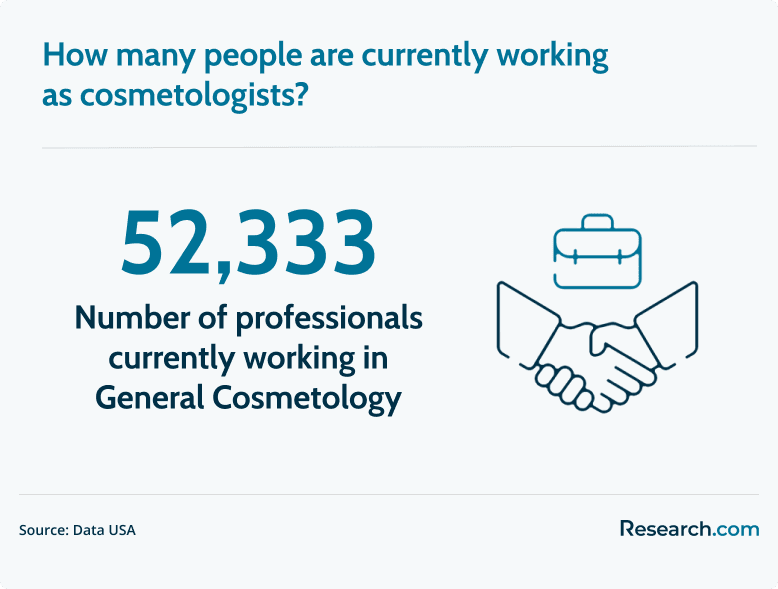
Most online or hybrid beauty and cosmetology certificate and diploma programs can be completed in 7 to 12 months. Students who enroll part time or choose a more flexible schedule may need 18 to 24 months. With 52,333 people currently in the general cosmetology workforce, the time it takes to finish training can influence how quickly a student moves into licensed work.
Program length is usually shaped by state licensing rules rather than only by school pacing. Many hybrid cosmetology programs require 1,200 to 1,500 clock hours. Students comparing trade school career options should understand that cosmetology training depends heavily on documented practice hours. Prior training or transferable credits may shorten the path for some students, but transfer approval depends on the school and state board.
Online vs. on-campus cosmetology programs: What is the difference?
Hybrid and campus-based cosmetology programs generally cover the same core areas: hair, nails, skincare, sanitation, client service, and salon business. The difference is how the instruction is delivered. Hybrid programs shift theory lessons to an online platform, while skill practice remains in person and supervised.
If you are reviewing online trade school programs, read the word “online” carefully. A legitimate online cosmetology option may include videos, live virtual classes, assignments, quizzes, and digital demonstrations, but it still needs an approved plan for hands-on hours. Hybrid learning can be especially useful for students who are balancing work, caregiving, transportation limits, or irregular schedules.
| Feature | Online or hybrid cosmetology program | Traditional on-campus program |
| Theory classes | Often delivered through online modules, live sessions, videos, readings, and assignments. | Typically taught in campus classrooms on a set weekly schedule. |
| Hands-on practice | Still completed face to face in a campus salon, lab, clinic, or approved training setting. | Completed on campus through labs, clinics, student salons, or supervised service areas. |
| Flexibility | Usually better for students who want to complete theory coursework from home. | Often better for students who prefer daily in-person structure and immediate instructor access. |
| Licensure preparation | Can meet licensing rules when the program is approved and practical hours are properly tracked. | Can meet licensing rules when the program has the required state approval. |
| Main risk | Enrolling in a program that does not satisfy state approval, hour, or practical-training requirements. | Having less flexibility, especially for students who work or have family obligations. |
How much does an online beauty and cosmetology trade school program cost?
Online and hybrid beauty school tuition commonly falls between $10,000 and $20,000, though the final cost depends on the institution, location, state funding, supplies, and whether exam-related expenses are included. Students comparing cosmetology with other higher-paying trade school paths should look at the full cost of licensure preparation and weigh it against realistic earnings in their local market.
Public technical schools may cost as little as $7,000 for in-state students. Private beauty schools can exceed $25,000 because of brand positioning, salon facilities, student kits, and added services. Some schools use credit-hour pricing, with rates ranging from $300 to $600 per credit hour.
The chart below shows tuition differences among trade schools with online or hybrid cosmetology options.
What financial aid is available for online beauty and cosmetology trade school students?
Students enrolled in eligible accredited cosmetology diploma or certificate programs may be able to lower out-of-pocket costs through federal aid, state grants, school-based awards, workforce training funds, or payment plans. If you are comparing hands-on career programs beyond beauty, you may also want to explore online locksmith and home security technician trade school programs.
Federal aid through the FAFSA
Students in eligible accredited programs can complete the Free Application for Federal Student Aid (FAFSA). Depending on financial need, dependency status, and enrollment status, possible aid may include:
- Pell Grants: Need-based grant funding that does not need to be repaid. Award amounts vary by eligibility and enrollment level.
- Federal Direct Loans: Subsidized and unsubsidized student loans with low fixed interest rates.
- Parent PLUS Loans: Loans available to parents of dependent students to help cover remaining education costs.
State grants and workforce funding
Many states provide support for career and technical education through grant programs. Examples include California’s Cal Grant C, the Texas Educational Opportunity Grant (TEOG), and New York’s Tuition Assistance Program (TAP).
The Workforce Innovation and Opportunity Act (WIOA) may also help eligible low-income or unemployed students pay for occupational training, including cosmetology. Because WIOA funding is typically managed by local workforce agencies, students should ask each school whether its program is WIOA-approved.
School scholarships and discounts
Beauty schools may offer merit scholarships, need-based grants, artistic talent awards, military discounts, or veteran benefits. These opportunities can change by campus and start date, so contact the financial aid office and ask about current deadlines, eligibility criteria, and whether awards apply to tuition, fees, kits, or supplies.
AACS scholarship opportunities
The American Association of Cosmetology Schools (AACS) works with industry sponsors to list scholarship opportunities for beauty students. Partners include the Beauty Changes Lives Foundation, Great Clips Scholarship Program, Sport Clips, and other organizations. Available awards may change during the year.
Tuition payment plans
Many trade schools let students divide tuition into monthly payments. Some plans may be interest-free when payments are made on time, but they often require an upfront deposit. Before enrolling, ask whether missed payments can affect attendance, access to classes, or completion records.
What are the admission requirements for online beauty and cosmetology trade school programs?
Cosmetology school admissions are often less complex than college admissions, but students still need to review both school requirements and state licensing rules. It is possible to enter a program and later discover that a state-specific licensing condition was missed, so verification before enrollment matters.
Students exploring broader professional directions may also find it useful to compare beauty training with technology-supported healthcare paths, including what you can do with an MSN in nursing informatics, especially if they are interested in wellness services, client records, or digital operations.
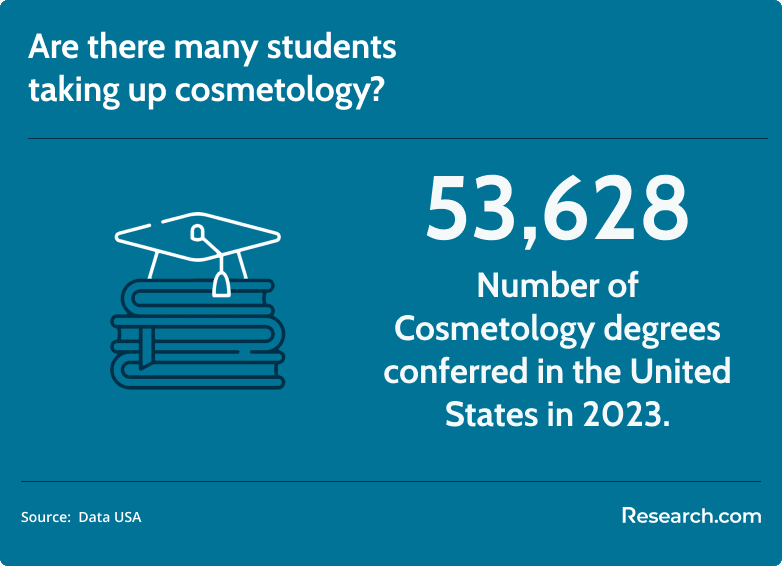
In 2023 alone, a total of 53,628 cosmetology degrees were awarded, reflecting continued demand for beauty education and a competitive training landscape.
Common enrollment requirements include:
- Minimum age: Many schools require applicants to be at least 16 or 17 years old at enrollment. Some states may require applicants to be 18 for licensure.
- Education level: A high school diploma or GED certificate is commonly required. Some high school students may enter through dual-enrollment or career and technical education pathways.
- Identity and residency documents: Schools often ask for government-issued identification and proof of legal residency or U.S. citizenship.
- Application materials: Applicants may need to submit an application, complete an interview or personal statement, and pay a non-refundable application fee, typically $25 to $100.
- State-specific conditions: Depending on the state, licensing eligibility may involve background checks, immunization records, or proof of English language proficiency.
What do students study in an online beauty and cosmetology trade school program?
Hybrid beauty programs combine technical theory, product knowledge, safety rules, sanitation standards, and supervised practice. Because the training is practical and career-oriented, cosmetology is often considered alongside trade jobs that can be learned relatively quickly, although students still need documented hours and demonstrated hands-on competence for licensure.
Online coursework may include recorded demonstrations, live virtual classes, quizzes, assignments, discussion activities, and instructor feedback. Practical training is completed through labs, salons, externships, or approved training sites. Students who are interested in customer behavior, communication, and community relationships may also see relevant skill overlap with an online sociology bachelor's degree, particularly in client service and business management.
- Haircutting and styling: Students practice scissor, razor, and clipper techniques along with blow-drying, finishing, and contemporary styling methods.
- Hair color and chemical services: Lessons address color formulation and application, bleaching, permanent waves, relaxers, straightening services, product chemistry, and safety procedures.
- Skincare and makeup: Training includes facials, skin analysis, makeup application, product selection, and client consultation.
- Nail care: Students learn manicures, pedicures, nail art, nail enhancements, sanitation, and client safety practices.
- Sanitation and safety: Coursework covers infection control, personal hygiene, tool disinfection, and compliance with health regulations.
- Salon business and management: Programs may include customer service, appointment scheduling, retail sales, entrepreneurship, inventory control, and professional ethics.
Which cosmetology specializations can students choose?
Some programs provide broad cosmetology preparation, while others allow students to concentrate on one service area. With the cosmetology market projected to be valued at $134.2 billion by 2025, choosing a specialization can help students connect their training with local demand, client preferences, and long-term career plans.
Specialization options depend on state licensing rules. In some states, cosmetology, barbering, esthetics, and nail technology are separate licenses. In others, a broader cosmetology license may cover several services. Always verify the rules with your state board before choosing a track.
- Hair design: Advanced preparation in cutting, coloring, styling, and trend-focused services for different hair textures.
- Barbering: Training focused on men’s grooming, fades, shaving, beard shaping, and clipper techniques.
- Esthetics: Skincare-focused education in facials, waxing, microdermabrasion, and spa services.
- Nail technology: Instruction in manicures, pedicures, gels, acrylics, nail art, sanitation, and client protection.
- Makeup artistry: Training for bridal, fashion, editorial, theatrical, special effects, and event makeup work.
How to choose the best online beauty and cosmetology trade school program
The right hybrid cosmetology program is not automatically the cheapest, fastest, or most recognizable option. The best choice is the program that satisfies your state licensing rules, fits your schedule, provides enough supervised practice, prepares you for the exam, and gives you a practical route into employment or self-employment.
Students who want to connect beauty training with leadership, consulting, or wellness entrepreneurship may also benefit from reviewing organizational communication career paths, since salon success often depends on strong client communication, team leadership, and operational planning.
Questions to ask schools before you enroll
| Question | Why this question matters |
| Is the program accredited or approved by the required state board? | Licensure eligibility and financial aid access may depend on recognized approval. |
| How many hands-on hours are required, and where are they completed? | Online theory alone is not enough; practical hours must be completed and documented correctly. |
| Does the curriculum prepare students for my state’s licensing exam? | Licensing rules differ by state, so a program that works in one location may not meet another state’s requirements. |
| What is the total cost, including kits, fees, uniforms, books, and exam expenses? | Tuition does not always reflect the full amount students must pay before becoming licensed. |
| What are the licensing exam pass rates and job placement outcomes? | These measures can show whether the school supports students beyond admission and attendance. |
| Can I transfer hours or credits if I move or change schools? | Cosmetology hours may not transfer smoothly between institutions or states. |
Factors that should guide your comparison
- Accreditation: When applicable, look for recognition from an appropriate agency such as the National Accrediting Commission of Career Arts and Sciences (NACCAS). Accreditation may influence quality assurance, federal aid eligibility, and employer confidence.
- Licensure alignment: Confirm that the curriculum, clock hours, practical training, and exam preparation match the licensing board requirements in the state where you plan to work.
- Hybrid schedule: Identify exactly which courses are online and which sessions require in-person attendance. Review commute time, salon hours, lab availability, makeup policies, and attendance rules.
- Total cost and financial aid: Compare tuition, kits, supplies, registration fees, exam preparation, licensing expenses, and payment options. Ask about FAFSA, WIOA, state grants, school scholarships, and payment plans.
- Graduate outcomes: Request job placement rates, licensing exam pass rates, employer relationships, and examples of where graduates work.
- Student support: Strong programs provide advising, exam preparation, technology support, career coaching, and regular instructor feedback. Data USA reports institutions with high numbers of general cosmetology graduates, including Aveda Arts & Sciences Institute-Covington (903 graduates) and NUC University (366).
The chart below from Data USA shows institutions with the most general cosmetology degrees awarded in 2023.
What jobs can graduates pursue after an online beauty and cosmetology trade school program?
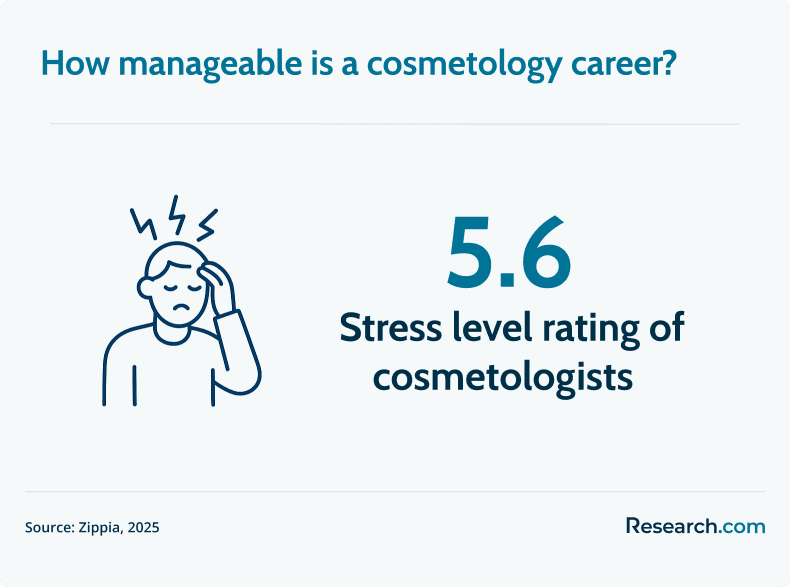
Graduates of approved hybrid cosmetology programs may work in salons, spas, barbershops, beauty clinics, event settings, freelance businesses, or mobile service environments where permitted. With a manageable stress level of 5.6, beauty careers may appeal to people who want creative, people-centered work and are comparing trade school jobs that pay well.
Career options vary by state license, specialization, experience, and local demand. Many graduates start in entry-level service roles, then move into management, education, product representation, platform artistry, or independent business ownership.
- Hairstylist or barber: Cuts, colors, grooms, styles, and performs texture services in salons, barbershops, or independent settings.
- Esthetician: Provides facials, waxing, skincare services, and related treatments in spas, medi-spas, or dermatology-adjacent workplaces.
- Nail technician: Performs manicures, pedicures, nail art, extensions, and mobile nail services where allowed by state rules.
- Makeup artist: Works in bridal, fashion, film, editorial, theater, special events, or production environments.
- Salon manager or owner: Manages staffing, scheduling, operations, client retention, retail sales, marketing, and business growth.
What is the job outlook for online beauty and cosmetology trade school graduates?
Beauty school can lead to practical career options for students comparing short-term programs and quick degrees that pay well. According to the U.S. Bureau of Labor Statistics, employment for hairdressers, hairstylists, and cosmetologists is projected to grow 7% from 2023 to 2033. By 2033, the workforce in this field is expected to reach approximately 611,400 professionals.
Opportunities are often stronger in urban areas and affluent suburbs, although freelance and mobile beauty services may create options in rural and underserved communities. Graduates with multiple skill sets, such as hairstyling plus esthetics, may have more flexibility. Technical talent matters, but client retention, punctuality, sanitation habits, professionalism, and business skills often determine long-term success.
What graduates say about online beauty and cosmetology trade school programs
- Maria: "The online format let me keep working in a salon while I finished my certification. I studied theory when my schedule allowed, then used hands-on sessions to practice what I was learning."
- Janelle: "The videos, quizzes, and instructor comments gave the online portion a clear structure. I still needed in-person practice, but I felt more organized when preparing for the licensing exam."
- Tasha: "Flexible lessons made it easier to manage school and family responsibilities. The virtual workshops helped me build confidence before trying advanced makeup techniques in person."
What challenges do online beauty and cosmetology graduates face?
Graduates often need time to convert online theory into fast, confident client service. The most important challenge is making sure hands-on practice is strong enough to meet both state licensing standards and real salon expectations. Students may also need to be intentional about finding mentors, building peer networks, and practicing with varied client needs because online coursework reduces casual in-person interaction.
Other challenges include adjusting to busy salon schedules, communicating with clients, building a portfolio, and learning how to attract repeat business. Graduates who want additional credentials can explore focused continuing education or one of the career certification programs that support advanced technical skills or business development.
Is an online beauty and cosmetology trade school program worth the investment?
A hybrid cosmetology program can be worth the cost when it is approved for licensure, fits your schedule, keeps debt manageable, and helps you enter a market where you can build a stable client base. It may not be worth it if the program lacks proper approval, the practical training site is difficult to attend, the total cost is too high, or the curriculum does not match your state’s licensing rules.
Before committing, compare tuition, supplies, fees, transportation, missed work time, and licensing expenses. Students focused primarily on affordability can also compare low-cost online colleges that accept FAFSA, while keeping in mind that cosmetology programs require approved in-person training hours.
How can cosmetology graduates keep improving after beauty school?
Cosmetology graduates can stay competitive through continuing education, advanced workshops, product training, sanitation refreshers, and specialization courses. Mentorship, local beauty events, industry conferences, portfolio development, and business classes in pricing, branding, client retention, and retail sales can also support career growth.
Professional development should match the career goal. A future salon owner may need business and communication training, while a makeup artist may focus on portfolio work and event networking. Cost-conscious graduates who want broader business, management, or communication training can review options at affordable online colleges.
Common mistakes to avoid when choosing an online cosmetology program
| Mistake | Smarter approach |
| Assuming “online” means no campus or salon attendance | Ask exactly where practical hours are completed and how attendance is tracked. |
| Comparing tuition but ignoring added expenses | Request a full cost sheet that includes kits, books, uniforms, exam fees, supplies, and licensing costs. |
| Choosing a school before verifying state licensing rules | Contact your state board and confirm that the program meets licensing requirements where you plan to work. |
| Depending only on a brand name or ranking | Compare accreditation, exam pass rates, job placement, instructor availability, and quality of hands-on training. |
| Assuming clock hours will transfer easily | Ask how transfer hours are reviewed, especially if you may move, pause training, or change schools. |
| Forgetting schedule logistics | Review required campus days, clinic hours, transportation time, attendance policies, and makeup options before enrolling. |
Key Insights
- Online cosmetology programs are usually hybrid. Theory may be online, but supervised hands-on training is still required for licensure.
- Most programs take 7 to 12 months, while flexible or part-time formats may extend to 18 to 24 months.
- State licensing rules should be the first filter when comparing schools. Accreditation is important, but state board approval and documented practical hours are essential.
- Tuition commonly ranges from $10,000 to $20,000, and students should also budget for kits, supplies, fees, transportation, exams, and licensing costs.
- Eligible students may reduce costs through FAFSA-based aid, state grants, WIOA funding, school scholarships, AACS-partnered scholarships, and payment plans.
- Graduates may work as hairstylists, barbers, estheticians, nail technicians, makeup artists, salon managers, or business owners, depending on their license and specialization.
- The best program is the one that combines flexibility with state approval, strong hands-on training, transparent pricing, exam preparation, and credible career support.
References:
- Data USA (n.d.). General Cosmetology. Retrieved from https://datausa.io/profile/cip/general-cosmetology
- US BLS (2025). Barbers, Hairstylists, and Cosmetologists. Retrieved from https://www.bls.gov/ooh/personal-care-and-service/barbers-hairstylists-and-cosmetologists.htm#tab-6
- ZipRecruiter (2025). Cosmetologist Salary. Retrieved from https://www.ziprecruiter.com/Salaries/Cosmetologist-Salary
- Zippia (2025). What is a Cosmetologist and How to Become One. Retrieved from https://www.zippia.com/cosmetologist-jobs/
Other Things You Should Know About Online Beauty and Cosmetology Trade School Programs
Admission requirements for 2027’s top online beauty and cosmetology programs often include a high school diploma or GED, application submission, and sometimes an interview. Specific programs may require a portfolio showcasing skill or prior experience in the field. Always check with individual schools for their criteria.
In 2027, online beauty and cosmetology trade programs offer certifications like the CIDESCO diploma and NACCAS-approved licenses. These credentials are recognized globally and can enhance your career prospects in the beauty industry. Verify each program’s accreditation to ensure certification validity.
Yes. Many 2027 online cosmetology programs include state board exam prep for the written licensing test, covering sanitation, chemistry, infection control, and state law. Students usually still need in-person practical training hours before they can take the practical exam required by their state board.