2027 Most Affordable Online Freight Broker Trade School Programs

Co-Founder and Chief Data Scientist
Choosing an online freight broker trade school is usually a cost-and-speed decision: you want training that is practical enough to help you enter logistics, but affordable enough that you are not taking on debt for a short-term credential. The freight brokerage field matters because businesses need people who can connect shippers with carriers, manage documentation, negotiate rates, and keep freight moving through increasingly complex supply chains.
The market context is favorable. SkyQuest valued the global freight brokerage market at $51.13 billion in 2023 and projected it could reach $94.19 billion by 2032. For students, career changers, dispatchers, sales professionals, and aspiring brokerage owners, online freight broker programs can provide a faster and lower-cost route into the industry than a traditional degree.
This guide explains what online freight broker training covers, how much programs cost, how long they take, what careers may follow, and how to compare affordable options without overlooking licensing, support services, or program quality.
Quick answer: Are online freight broker programs worth considering?
Online freight broker programs can be worth considering if you want a short, flexible introduction to logistics, freight regulations, carrier relationships, rate negotiation, and brokerage operations. Most programs are non-credit certificates rather than degrees, so they are best for learners who want job-focused training or a foundation for starting a brokerage, not a broad academic credential.
- Program completers may pursue roles such as freight broker, logistics coordinator, shipping manager, transportation specialist, dispatcher, or carrier sales representative.
- Cargo and freight agents earned a median annual wage of $48,330 in May 2023, though earnings vary by employer, location, specialization, and whether a broker works independently.
- Online formats are especially useful for working adults because many courses are self-paced and can be completed without relocating or attending scheduled campus classes.
What can I expect from an online freight broker program?
An online freight broker program teaches the operational side of moving freight from one point to another. Students typically learn how brokers find shippers, locate qualified carriers, compare rates, coordinate loads, use transportation technology, document shipments, and follow federal transportation rules.
These programs are usually practical rather than theory-heavy. Instead of spending years on general education courses, learners focus on brokerage tasks: reading load details, communicating with carriers, understanding contracts, avoiding compliance mistakes, and developing the customer-service and sales skills needed to build shipping relationships.
| What the program covers | Why it matters in freight brokerage |
| Freight brokerage fundamentals | Explains the broker’s role between shippers and motor carriers. |
| Transportation rules and documentation | Helps students understand compliance expectations and shipment paperwork. |
| Rate negotiation and load matching | Builds skills used to price freight and secure carrier capacity. |
| Carrier and shipper communication | Prepares learners to manage relationships, updates, disputes, and service expectations. |
| Transportation software and load boards | Introduces tools used to search for loads, track shipments, and organize workflow. |
| Business development | Supports students who want to find clients or eventually operate their own brokerage. |
Some schools include simulations, case studies, mentorship, licensing guidance, or career support. Others provide a more basic self-study course. Before enrolling, students should confirm exactly what is included because “freight broker training” can range from a short introductory class to a more comprehensive workforce certificate.
Where can I work after completing a freight broker program?
Freight broker training can lead to opportunities across transportation, warehousing, shipping, distribution, and third-party logistics. Many graduates look for roles with freight brokerage firms, third-party logistics providers, freight forwarding companies, trucking companies, dispatch operations, and businesses that coordinate regular shipments.
Some learners use the training to pursue independent work. If you plan to broker freight as your own business, you will need to understand the broker authority process through the Federal Motor Carrier Safety Administration (FMCSA) and verify current requirements directly before operating. A course can explain the process, but enrollment alone does not automatically give you legal authority to broker freight.
Specialized areas may include refrigerated transportation, e-commerce logistics, international freight, expedited shipping, truckload freight, less-than-truckload freight, and niche carrier networks. These paths usually require more than a certificate; they also depend on industry contacts, sales ability, service reliability, and the capacity to solve problems under time pressure.
How much can I make after completing a freight broker program?
The closest federal wage category for many freight brokerage roles is cargo and freight agents. According to the US Bureau of Labor Statistics (BLS), cargo and freight agents earned a median annual salary of $48,330 in May 2023. That figure is a midpoint, not a guarantee. Actual pay can differ widely based on experience, commission structure, employer size, geographic market, specialization, and book of business.
Entry-level employees often begin in support, dispatch, logistics coordination, or carrier sales roles before moving into higher-responsibility brokerage work. Independent brokers may earn commissions on shipments, but they also carry business costs, client acquisition responsibilities, compliance obligations, and income uncertainty.
Students should treat salary claims carefully. A short training course can help build foundational knowledge, but higher earnings usually come from experience, strong negotiation, dependable service, customer relationships, and the ability to manage exceptions when shipments do not go as planned.
- Most Affordable Online Freight Broker Trade School Programs for 2027
- How long does it take to complete an online freight broker program?
- How does an online freight broker trade school compare to an on-campus program?
- What is the average cost of an online freight broker program?
- What are the financial aid options for students enrolling in an online freight broker program?
- What are the prerequisites for enrolling in an online freight broker program?
- What courses are typically in an online freight broker program?
- What types of specializations are available in online freight broker programs?
- Are online freight broker programs accredited and how does it impact career opportunities?
- How can advanced education enhance my freight brokerage career?
- How can additional certifications enhance my freight brokerage career?
- Could a One-Year Masters Program Accelerate My Freight Brokerage Career?
- How do you choose the most affordable online freight broker program?
- What career paths are available for graduates of online freight broker programs?
- What is the job market outlook for graduates who completed an online freight broker program?
Most Affordable Online Freight Broker Trade School Programs for 2027
How do we rank schools?
Affordability matters in freight broker training because many programs are short, non-credit certificates. Paying more does not always mean getting better preparation. Research.com’s experts reviewed accessible online freight broker trade school options for 2027 with an emphasis on cost, online delivery, institutional credibility, and practical workforce relevance.
Our full ranking process is explained here. The review used trusted education data sources, including the IPEDS database, Peterson’s database, which includes the Distance Learning Licensed Data Set, the College Scorecard database, and the National Center for Education Statistics (NCES). Factors considered included tuition, delivery format, program structure, accreditation status, and accessibility for online learners.
The schools below offer affordable online freight broker training options. Because many are continuing education or non-credit programs, students should verify current pricing, refund policies, included materials, and licensing support before enrolling.
| School | Program length | Cost information provided | Credential type |
| Wake Technical Community College | Six months (self-paced) | $183 (in-state); $344 (out-of-state) | Non-credit certificate program |
| Georgia Northwestern Technical College | Four to six months | $100 (approximate for in-state students) | Non-credit certificate program |
| Delgado Community College | Six months (self-paced) | ~$133 (in-state tuition equivalent) | Non-credit certificate program |
| Cleveland Community College | Six months (self-paced) | $76 (in-state) | Non-credit certificate program |
| Coastline Community College | Six months | ~$46 (California residents) | Non-credit certificate |
| Northampton Community College | Six months (self-paced) | ~$150 (in-state equivalent) | Non-credit certificate |
| Lone Star College | Six months | ~$96 (in-district rate) | Non-credit certificate |
| Hinds Community College | Six months | ~$125 (Mississippi residents) | Non-credit certificate |
| Middlesex Community College (Massachusetts) | Six months | ~$218 (Massachusetts residents) | Non-credit certificate |
| Central Georgia Technical College | Six months | ~$100 (in-state) | Non-credit certificate |
1. Wake Technical Community College
Wake Technical Community College provides an online Freight Broker/Agent Training program for learners who want a structured entry point into logistics and freight coordination. The self-paced format is built around asynchronous learning, making it suitable for career changers, working adults, and students who need flexibility. Coursework introduces brokerage operations, shipment coordination, industry rules, and practical responsibilities brokers handle when working with shippers and carriers. Wake Tech has offered practical online education since the early 2000s and uses industry-informed instruction to support job-focused learning.
- Program Length: Six months (self-paced)
- Tracks/concentrations: Freight Broker/Agent
- Cost per Credit: $183 (in-state); $344 (out-of-state)
- Required Credits to Graduate: Non-credit certificate program
- Accreditation: Southern Association of Colleges and Schools Commission on Colleges (SACSCOC)
2. Georgia Northwestern Technical College
Georgia Northwestern Technical College offers an online Freight Broker/Agent Certificate intended for students who want to move into logistics without a long academic timeline. The program emphasizes applied training, including tools and processes used in freight coordination. It is open to beginners and designed with flexible scheduling in mind, which makes it a practical option for adult learners and part-time students. The college has supported online education since 2010.
- Program Length: Four to six months
- Tracks/concentrations: General Freight Brokerage
- Cost per Credit: $100 (approximate for in-state students)
- Required Credits to Graduate: Non-credit certificate program
- Accreditation: SACSCOC
3. Delgado Community College
Delgado Community College offers an online Freight Broker/Agent Training program for both entry-level learners and aspiring business owners. The curriculum covers FMCSA-related topics, market awareness, client communication, and brokerage operations. Delgado has provided online learning since 2008 and uses a flexible platform that allows students to study around work or family responsibilities. The program also includes career support and guidance related to licensing steps.
- Program Length: Six months (self-paced)
- Tracks/concentrations: Freight Broker/Agent Basics
- Cost per Credit: ~$133 (in-state tuition equivalent)
- Required Credits to Graduate: Non-credit certificate program
- Accreditation: SACSCOC
4. Cleveland Community College
Cleveland Community College offers an online Freight Broker/Agent program for students seeking a quick and budget-conscious path into transportation and logistics. The curriculum introduces freight rules, brokerage workflows, and business development concepts. The college has offered online programs since 2007 and is known for workforce-oriented instruction and student support. Because the course is self-paced, it may work well for learners managing employment, caregiving, or other obligations.
- Program Length: Six months (self-paced)
- Tracks/concentrations: Freight Brokerage and Logistics
- Cost per Credit: $76 (in-state)
- Required Credits to Graduate: Non-credit certificate program
- Accreditation: SACSCOC
5. Coastline Community College
Coastline Community College, part of California’s Coast Community College District, offers a fully online Freight Broker/Agent Training program through Continuing Education. The course is designed for students who want preparation for employment or for building a brokerage business. Its online format, launched in 2009, provides industry-relevant resources for learners who need a flexible schedule and cannot commit to traditional campus attendance.
- Program Length: Six months
- Tracks/concentrations: Freight Brokerage Operations
- Cost per Credit: ~$46 (California residents)
- Required Credits to Graduate: Non-credit certificate
- Accreditation: Accrediting Commission for Community and Junior Colleges (ACCJC)
6. Northampton Community College
Northampton offers an online Freight Broker/Agent course that introduces transportation logistics, broker responsibilities, and federal compliance concepts. The program supports students interested in employment with brokerage firms as well as those exploring entrepreneurial goals. Northampton began offering online programs in the mid-2000s and provides adult education support services for learners balancing school with other responsibilities. The self-paced structure makes the training accessible to students in different locations.
- Program Length: Six months (self-paced)
- Tracks/concentrations: Freight Logistics and Regulation
- Cost per Credit: ~$150 (in-state equivalent)
- Required Credits to Graduate: Non-credit certificate
- Accreditation: Middle States Commission on Higher Education (MSCHE)
7. Lone Star College
Lone Star College provides an online freight broker program through Continuing Education. The course is intended to help students understand licensing preparation, shipment coordination, carrier relationships, and rate negotiation. Lone Star has delivered online learning since 2008 and serves both aspiring brokerage owners and students seeking roles with logistics or freight companies.
- Program Length: Six months
- Tracks/concentrations: Freight Brokerage Fundamentals
- Cost per Credit: ~$96 (in-district rate)
- Required Credits to Graduate: Non-credit certificate
- Accreditation: SACSCOC
8. Hinds Community College
Hinds Community College offers an online Freight Broker/Agent program that combines logistics instruction with business communication and customer-service skills. Students learn about transportation documents, carrier coordination, client development, and the operational steps involved in moving freight. Hinds has provided affordable online workforce training since 2006. The program is designed with Mississippi residents in mind but is open to all students.
- Program Length: Six months
- Tracks/concentrations: Freight Broker/Agent Training
- Cost per Credit: ~$125 (Mississippi residents)
- Required Credits to Graduate: Non-credit certificate
- Accreditation: SACSCOC
9. Middlesex Community College (Massachusetts)
Middlesex Community College offers an online Freight Broker program through Workforce Development. The course is aimed at adult learners who want a practical route into logistics. Since launching its online division in the early 2010s, the college has focused on career-aligned online training. Student support may include mentor access and online learning coaches.
- Program Length: Six months
- Tracks/concentrations: Logistics and Freight Brokerage
- Cost per Credit: ~$218 (Massachusetts residents)
- Required Credits to Graduate: Non-credit certificate
- Accreditation: New England Commission of Higher Education (NECHE)
10. Central Georgia Technical College
Central Georgia Technical College offers a flexible online freight broker training option for students interested in transportation, logistics operations, and regulatory compliance. The program is available through Economic Development and includes support related to job placement and licensing. The college began online instruction in 2007 and maintains a workforce-focused approach to technical education.
- Program Length: Six months
- Tracks/concentrations: Freight Brokerage
- Cost per Credit: ~$100 (in-state)
- Required Credits to Graduate: Non-credit certificate
- Accreditation: SACSCOC
How long does it take to complete an online freight broker program?
Most online freight broker programs are designed to be completed quickly. Many take four to six months, while some accelerated options can be finished in eight to twelve weeks. The shorter timeline is possible because these are usually non-credit certificate programs focused on a narrow set of job tasks rather than broad degree requirements.
The right timeline depends on your schedule and learning style. A self-paced course is often best if you are working full-time, managing family responsibilities, or returning to school after a long break. A cohort-based course may be better if you need deadlines, instructor interaction, or a more structured weekly routine.
This model is similar to other career-specific online trade programs, such as affordable online gunsmith training, where the goal is concentrated workforce preparation rather than a multi-year academic pathway.
| Program pace | Typical completion time | Best for | Possible drawback |
| Accelerated | Eight to twelve weeks | Learners with available study time who want to enter the field quickly | Less time to practice concepts or review difficult topics |
| Standard online | Four to six months | Working adults who want steady progress without a heavy weekly workload | Requires consistent self-discipline over several months |
| Self-paced | Varies by student, often up to six months | Students who need maximum flexibility | Some learners may fall behind without fixed deadlines |
How does an online freight broker trade school compare to an on-campus program?
Online and on-campus freight broker programs can cover similar topics, but the learning experience is different. The best format depends on whether you value flexibility, direct interaction, structure, local networking, or lower overall costs.
| Factor | Online freight broker program | On-campus freight broker program |
| Schedule | Often self-paced or asynchronous, which helps students study around work | Usually follows scheduled class times |
| Location | No commute or relocation required | Requires travel to campus or a training site |
| Learning style | Works well for independent learners comfortable with digital platforms | Better for students who prefer face-to-face instruction |
| Networking | May include online discussion boards, mentor support, or virtual coaching | May offer stronger local peer and instructor connections |
| Cost considerations | May reduce transportation, housing, and campus-related expenses | May include additional costs tied to attendance and campus services |
When an online program makes sense
- You need flexibility: Online coursework can be completed during evenings, weekends, or other open study periods.
- You live far from campus: Remote access is useful for rural students, caregivers, retirees, and learners comparing options such as online college courses for seniors.
- You are trying to limit costs: Online training can help reduce commuting and campus-related expenses.
When an on-campus program may be better
- You need external structure: Scheduled classes can help students who struggle with self-paced learning.
- You value in-person networking: Local instructors and classmates may help you build relationships in your area.
- You want access to campus services: Some students benefit from in-person career support, workshops, or advising.
For most adult learners and career changers, the online format is attractive because freight broker training does not usually require labs or hands-on equipment. The real question is whether you can stay organized and practice the communication, sales, and problem-solving skills needed in the field.
What is the average cost of an online freight broker program?
Online freight broker certificates are generally much less expensive than traditional degree programs. Many community colleges and trade schools price non-credit freight broker programs between $800 and $2,000 for the full course, depending on residency status, included materials, instructor access, and student support services.
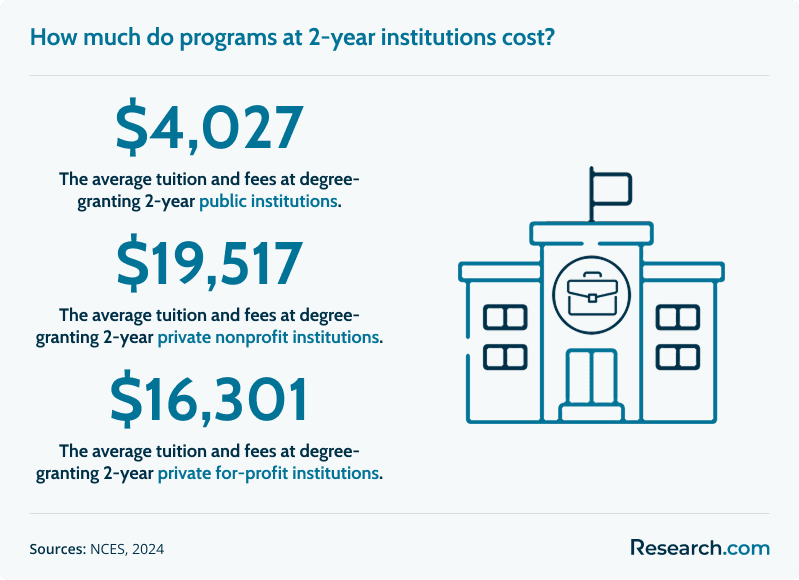
NCES data show that in the 2022–23 academic year, average tuition and fees for first-time, full-time students at degree-granting two-year institutions were:
- Public institutions: $4,027
- Private nonprofit institutions: $19,517
- Private for-profit institutions: $16,301
Compared with those averages, freight broker training can be a lower-cost way to test your interest in logistics or prepare for entry-level work. However, students should look beyond advertised tuition. A program that costs slightly more may be a better value if it includes instructor support, software exposure, licensing guidance, or career services.
| Cost item | Why to check it before enrolling |
| Tuition or course fee | Confirms the base price of the training. |
| Books and digital materials | Some programs include materials, while others charge separately. |
| Software or platform access | Transportation tools and learning systems may affect total cost. |
| Licensing guidance | Important if you plan to pursue broker authority after training. |
| Career services | Resume help, coaching, or job search support can increase program value. |
| Refund policy | Short programs may have limited refund windows. |
If you are comparing freight brokerage with longer degree pathways, programs such as the most affordable online Bachelor's Degree in Sustainability may connect to broader interests in supply chain responsibility, transportation efficiency, and sustainable operations.
What are the financial aid options for students enrolling in an online freight broker program?
Many online freight broker programs are non-credit continuing education courses, which means they often do not qualify for federal student aid. That does not mean you must pay the full amount upfront. Students should ask the school about workforce funding, payment arrangements, and local support options before assuming the course is unaffordable.
- State Workforce Grants: Workforce development boards may provide support for short-term training tied to employment goals.
- Employer Sponsorships: Logistics companies, trucking firms, warehouses, or related employers may help pay for training when the skills support current or future job duties.
- Payment Plans: Some schools allow students to divide the course cost into installments.
- Institutional Scholarships: Continuing education departments may offer limited scholarships for adult learners or workforce students.
- Private Scholarships or Community Funds: Local organizations may support vocational or trade training for residents.
When comparing options, ask whether financial support applies to non-credit students. Aid rules for degree programs and continuing education courses can differ. Similar affordability questions also apply in other career-focused fields, including a low-cost fashion merchandising degree online.
What are the prerequisites for enrolling in an online freight broker program?
Most freight broker programs are built for beginners. Prior logistics experience is usually not required, but schools may set basic requirements to ensure students can complete online coursework and understand industry documentation.
- Minimum Age Requirement: Often 18 years or older.
- Education: A high school diploma or equivalent is commonly required.
- Language Proficiency: Students need strong English reading and writing skills because freight brokerage involves contracts, regulations, email communication, and shipment details.
- Computer Access: Reliable internet and regular computer access are necessary for online study and transportation software practice.
There is no single academic pathway into freight brokerage. According to Zippia, 52% of freight brokers hold a bachelor’s degree, 21% have an associate degree, and 16% have only a high school diploma. This mix shows that formal education levels vary across the field.
Students from business, sales, customer service, operations, marketing, transportation, or administrative backgrounds may be able to transfer existing skills into freight brokerage. A graduate from a human resources degree, for example, may already have useful communication, negotiation, documentation, and relationship-management experience.
What courses are typically in an online freight broker program?
Online freight broker programs usually focus on the workflow of moving freight, complying with rules, communicating with customers, and building carrier relationships. Course names differ by school, but the core topics are often similar.
Core curriculum topics
- Introduction to Freight Brokerage: Explains how brokers fit into the supply chain and how they work with shippers and carriers.
- Transportation Law and Regulations: Covers the importance of compliance with FMCSA and DOT standards.
- Load Planning and Management: Teaches routing, shipment coordination, load details, and cost-control basics.
- Carrier and Shipper Relationships: Shows how brokers build trust, communicate expectations, and manage service issues.
- Sales and Marketing Strategies: Introduces prospecting, lead generation, client acquisition, and negotiation.
- Software Training: Introduces TMS tools, transportation workflows, and digital load boards.
Skills students should try to develop during training
- Clear phone and email communication
- Basic math for rate comparisons and margins
- Attention to detail when reviewing shipment information
- Problem-solving when loads are delayed or capacity changes
- Professional persistence for sales and client follow-up
- Ethical decision-making when handling carrier and shipper commitments
Programs that include case studies or simulations may be especially useful because freight brokerage often involves judgment calls, not just memorized definitions.
What types of specializations are available in online freight broker programs?
Most freight broker programs begin with general training. Some, however, introduce specialized areas within transportation and logistics. Specialization can help students focus their job search or business plan, but beginners should first understand the general brokerage process before narrowing their niche.
Students who want deeper logistics knowledge may eventually pair a certificate with a broader credential, such as an accelerated bachelor's degree supply chain management online, especially if they are aiming for supervisory, analyst, or management roles.
Common specialization areas
- Air Freight Brokerage: Relevant for students interested in scheduled air transportation or support activities for air transportation, which together employ over 16,000 cargo and freight agents, according to BLS.
- Truckload and LTL (Less-than-Truckload) Freight: Closely connected to truck transportation, which employs 7,990 agents.
- Express and Courier Services: Useful for learners interested in couriers and express delivery services, with 5,700 agents.
- Freight Transportation Arrangement: The largest industry segment, employing over 61,000 freight agents. This area often emphasizes negotiation, multimodal shipping, and international logistics.
| Specialization | Best fit for students who want to | Questions to ask the school |
| Air freight | Work with faster shipping timelines and airport-connected logistics | Does the course discuss air cargo documentation and carrier coordination? |
| Truckload and LTL | Focus on domestic road freight and carrier capacity | Does the program explain load boards, rate negotiation, and lane planning? |
| Express and courier services | Support time-sensitive delivery operations | Does the curriculum cover customer communication and service exceptions? |
| Freight transportation arrangement | Enter the broadest brokerage and logistics segment | Does the program include multimodal shipping or international logistics topics? |
Are online freight broker programs accredited and how does it impact career opportunities?
Accreditation can be confusing in short-term trade training. Many freight broker courses are non-credit continuing education programs, so they may not have separate programmatic accreditation. What students should verify is whether the institution offering the course is properly accredited and whether the training is recognized, current, and aligned with industry practices.
Institutional accreditation matters because it signals that the school meets external quality standards. It can also affect transfer options, employer confidence, and eligibility for some types of funding. However, accreditation alone does not guarantee employment, licensing approval, or business success.
Students should ask direct questions: Is the school institutionally accredited? Is the course non-credit or credit-bearing? Does the program prepare students for FMCSA broker authority steps? Are instructors experienced in freight, logistics, or transportation? Does the certificate come from the school or a third-party training provider?
Short credentials can be useful when they are clear about outcomes. The same caution applies to other fast training paths, including 6 month degrees: speed is valuable only when the credential fits your goal and comes from a credible provider.
How can advanced education enhance my freight brokerage career?
A freight broker certificate can help you learn the basics, but advanced education may help if you want to move beyond entry-level coordination or independent brokerage work. Additional study in supply chain management, business analytics, operations, finance, or international trade can strengthen your ability to analyze costs, manage teams, evaluate vendors, and understand broader logistics strategy.
This matters most for students who want long-term advancement into logistics management, procurement, operations leadership, transportation analysis, or supply chain planning. Programs such as the best accelerated bachelor's degree programs may appeal to working adults who want a faster path to a broader academic credential while continuing to build practical experience.
| Education path | When it makes sense | When it may not be necessary |
| Freight broker certificate | You want targeted training for brokerage tasks or entry-level logistics roles | You already have strong freight experience and only need licensing guidance |
| Bachelor’s degree | You want broader business, supply chain, or management opportunities | You only want a short course before testing the field |
| Graduate certificate | You already have a degree and want specialized logistics knowledge | You are still exploring whether logistics is the right field |
| Master’s degree | You are aiming for senior strategy, analytics, or leadership roles | You need immediate entry-level training and want to minimize cost |
How can additional certifications enhance my freight brokerage career?
Additional certifications can strengthen a freight brokerage career when they build skills employers or clients actually value. The best credentials are those tied to compliance, logistics systems, supply chain operations, transportation management, sales, analytics, or industry-specific knowledge.
Certifications are most useful when paired with experience. A credential can help demonstrate commitment, but freight brokerage also depends on responsiveness, reliability, negotiation, and the ability to manage real shipments. Students comparing credential options can review broader guidance on certifications for high paying jobs to understand how short-term training may fit into a larger career plan.
Could a One-Year Masters Program Accelerate My Freight Brokerage Career?
A one-year master’s program may help experienced logistics professionals move toward leadership, analytics, operations strategy, or supply chain management. It is usually not necessary for someone whose immediate goal is to become an entry-level freight broker, but it can be relevant for professionals who already have industry experience and want a graduate credential to support advancement.
Before choosing a master’s program, compare cost, admission requirements, curriculum, employer relevance, and whether the degree supports your target role. A freight broker who wants to run a small brokerage may need sales and compliance skills more urgently than graduate coursework, while someone seeking corporate supply chain leadership may benefit from advanced study. Students considering this route can review masters degree in one year options to see whether an accelerated graduate format fits their timeline.
How do you choose the most affordable online freight broker program?
The most affordable program is not always the cheapest one. A better way to evaluate value is to compare total cost against training quality, schedule fit, instructor support, career services, licensing guidance, and relevance to your goals.
Some students may eventually stack credentials. For example, a freight broker certificate can introduce the field, while an accelerated online graduate certificate in logistics and supply chain management may support students who already have a degree and want more advanced supply chain expertise.
Key factors to compare
- Institutional Accreditation: Confirm that the school is recognized by appropriate accrediting bodies.
- Total Cost: Include tuition, course fees, books, materials, technology, software access, and any optional services.
- Program Format: Decide whether you need self-paced flexibility or scheduled accountability.
- Curriculum Depth: Look for compliance, load planning, rate negotiation, customer acquisition, carrier relationships, and software exposure.
- Instructor Support: Ask whether you can contact an instructor, mentor, advisor, or coach when you have questions.
- Career Support: Review whether the school offers resume help, job search guidance, networking resources, or interview preparation.
- Licensing Guidance: If you plan to operate independently, confirm whether the course explains FMCSA broker authority steps and where to verify current requirements.
- Student Feedback: Look for reviews that discuss course usefulness, support quality, and whether expectations matched the actual training.
Questions to ask before enrolling
| Question | Why it matters |
| Is this a credit or non-credit program? | It affects financial aid, transferability, and how the credential appears on a transcript. |
| What exactly is included in the published price? | Some programs charge separately for materials or technology access. |
| Who teaches or supports the course? | Industry experience and instructor access can affect how practical the training feels. |
| Does the program cover FMCSA-related requirements? | Important for students who want to pursue independent brokerage authority. |
| Are there simulations, case studies, or applied assignments? | Practice helps students move from terminology to real decision-making. |
| What career services are available to non-credit students? | Continuing education students may not always receive the same services as degree-seeking students. |
| What is the refund policy? | Short online programs may have strict withdrawal and refund deadlines. |
Common mistakes to avoid
- Choosing only by price: A very cheap program may not include support, current materials, or career guidance.
- Assuming a certificate equals a license: Completing training is not the same as receiving broker authority.
- Ignoring accreditation: Verify the school’s institutional credibility before paying.
- Overlooking total cost: Books, software, platform fees, and optional services can change the real price.
- Skipping career research: Understand entry-level roles, commission structures, and local employer demand before enrolling.
- Relying only on rankings: Rankings are a starting point, not a substitute for checking whether a program fits your schedule, budget, and career goal.
What career paths are available for graduates of online freight broker programs?
Online freight broker training can support several career directions, especially for students interested in transportation coordination, customer communication, sales, and logistics operations. Some graduates pursue brokerage roles directly, while others start in related positions that build industry experience.
| Career path | Typical responsibilities | Good fit for |
| Freight Broker | Connects shippers with carriers, negotiates rates, coordinates loads, and manages communication | Students with sales ability, persistence, and strong organizational skills |
| Logistics Coordinator | Tracks shipments, schedules transportation, communicates updates, and supports operations | Learners who want an entry point into logistics without immediately running a brokerage |
| Carrier Sales Representative | Builds carrier relationships, negotiates capacity, and supports load coverage | Students who enjoy negotiation, phone communication, and relationship-building |
| Dispatcher | Coordinates drivers, schedules loads, monitors routes, and solves delivery issues | People with strong multitasking and real-time problem-solving skills |
| Transportation Analyst | Reviews shipping data, costs, performance, and routing efficiency | Students who are comfortable with data and operational analysis |
Advanced opportunities may be available in higher-paying industries for cargo and freight agents. BLS data identify the following top-paying industries:
- Support Activities for Water Transportation: $96,330
- Securities and Financial Investments: $75,020
- Deep Sea and Coastal Water Transportation: $72,490
- Inland Water Transportation: $66,290
- Federal and Local Government: $64,200
Freight brokerage also overlaps with sales, operations, compliance, and client advising. Students interested in brokerage careers outside transportation may compare the path with related guides, such as how to become a mortgage broker, to understand how licensing, client relationships, and commission-based work can differ by industry.
What is the job market outlook for graduates who completed an online freight broker program?
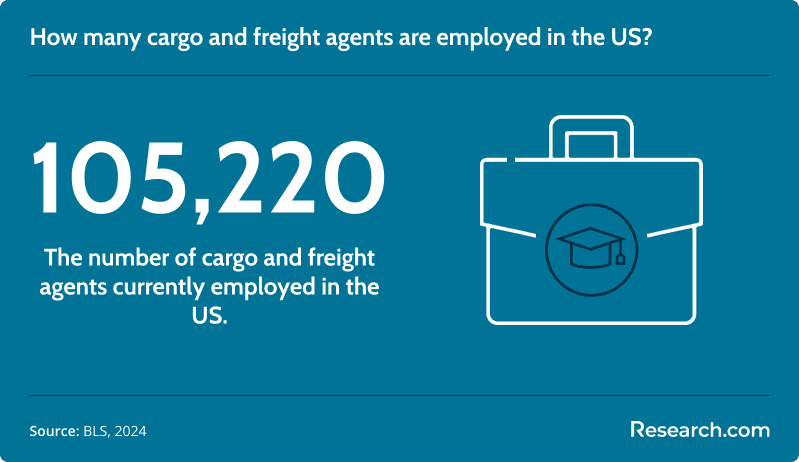
The freight brokerage job market is supported by ongoing shipping activity, e-commerce fulfillment, domestic trucking needs, international trade, and the need for human problem-solving when shipments face delays or capacity constraints. According to BLS, approximately 105,220 cargo and freight agents were employed across industries in the most recent report.
Technology is changing the work. Transportation management systems, digital load boards, automated tracking, and data tools can make routine processes faster. However, brokers and freight agents still add value when they negotiate, manage exceptions, communicate with clients, verify capacity, and resolve service problems that software alone cannot fully handle.
Career changers from adjacent trades may bring useful knowledge into freight coordination. For example, students who completed the cheapest automotive tech programs online may already understand vehicle operations, maintenance constraints, and transportation workflows that can support a move into logistics.
With experience, some freight broker program graduates may move toward logistics management or broader supply chain roles. To understand higher-level responsibilities in the field, review this logistics manager job description, which outlines how logistics leadership differs from entry-level coordination and brokerage support.
Current trends affecting freight broker training and careers
- Digital freight tools are becoming standard: Students should expect to learn or quickly adapt to transportation management systems, load boards, and shipment tracking platforms.
- Compliance knowledge remains important: Brokers must understand where to find current FMCSA and DOT information rather than relying only on course notes.
- Customer communication is still a differentiator: Technology can automate updates, but clients still expect fast, accurate communication when freight problems occur.
- Specialization can improve positioning: Learners who understand a niche such as truckload, LTL, refrigerated transport, courier services, or international freight may be better prepared to target specific employers or clients.
- Short credentials are being used strategically: Many students start with a certificate, gain experience, and later decide whether a degree or graduate credential is worth the investment.
References
- BLS. (2023, April 25). Cargo and freight agents. BLS.
- NCES. (2024). Fast Facts: Tuition costs of colleges and universities (76). NCES.
- SkyQuest. (2025). Freight Brokerage Market Size & Share | Industry Growth [2032]. skyquestt.com.
- Zippia. (2025, January 8). Freight Broker Demographics and Statistics [2025]: Number of freight brokers in the US. Zippia.
Key Insights
- The global freight brokerage market was valued at $51.13 billion in 2023 and is projected to reach $94.19 billion by 2032, which supports continued interest in logistics and freight coordination training.
- Most online freight broker programs are short non-credit certificates, commonly taking four to six months, with some accelerated options completed in eight to 12 weeks.
- The median annual wage for cargo and freight agents was $48,330 in May 2023, but individual earnings depend heavily on experience, industry, market, employer, commission structure, and business development ability.
- Program costs commonly range from $800–$2,000, which is lower than average 2022–23 tuition and fees at two-year degree-granting institutions: public institutions at $4,027, private nonprofit institutions at $19,517, and private for-profit institutions at $16,301.
- Do not confuse training with legal operating authority. A freight broker certificate can teach the process, but students who want to operate independently must verify current FMCSA requirements.
- The best affordable program is the one that balances low cost with credible instruction, current curriculum, software exposure, licensing guidance, and career support.
- Online freight broker training is best for self-directed learners who want practical logistics skills quickly. Students seeking management, analytics, or long-term supply chain leadership may eventually benefit from additional education.
Other Things You Should Know About the Most Affordable Online Freight Broker Trade School Programs
When selecting an affordable online freight broker trade school program in 2027, consider factors such as tuition costs, program accreditation, course content relevance, and feedback from industry professionals. Comparing multiple programs can help ensure that you choose one that offers high-quality education at an affordable price.
In 2027, prerequisites for enrolling in an online freight broker trade school program typically include a high school diploma or GED and basic computer skills. Some programs may also require prior experience in logistics or related fields, although this is less common. Always check specific program requirements before applying.
Yes, many individuals combine freight broker training with careers in logistics, supply chain management, or transportation. This versatile skill set can enhance job prospects and add value in related fields, providing flexibility in career development.