2027 Most Affordable Online Fashion Merchandising Degree Programs

Co-Founder and Chief Data Scientist
Choosing an online fashion merchandising degree is really a decision about how you want to enter the business side of fashion: buying, planning, retail strategy, e-commerce, product development, visual presentation, or brand management. More than 4 million people work in the U.S. fashion industry, and many of the roles that keep products moving from concept to customer depend on merchandising skills.
This guide explains what an online fashion merchandising bachelor’s degree covers, how much it may cost, what careers it can lead to, and how to compare programs without relying only on tuition or rankings. It also highlights 10 affordable online fashion merchandising bachelor’s programs for 2027 so you can evaluate options based on cost, accreditation, curriculum, flexibility, and career fit.
Quick answer: Is an online fashion merchandising degree worth considering?
An online fashion merchandising degree can be a practical choice if you want a career that combines fashion, retail business, consumer behavior, marketing, analytics, and product strategy. It is especially useful for students who need scheduling flexibility, already work in retail, or want to build credentials for roles such as assistant buyer, merchandise planner, visual merchandiser, e-commerce merchandiser, or product development specialist.
- Graduates may pursue roles with median pay around $75,000 a year, while experienced buyers, planners, and managers can earn more depending on employer, location, and performance.
- Related merchandising roles are projected to grow ~7% by 2033, suggesting steady need for professionals who understand product selection, inventory planning, and customer demand.
- The strongest programs combine fashion coursework with business, data analysis, digital retail, internships, and portfolio-building projects.
What can I expect from an online fashion merchandising degree?
An online fashion merchandising degree teaches students how fashion products are researched, sourced, priced, promoted, displayed, and sold. The major sits between fashion design and business administration: students study style trends and textiles, but they also learn retail math, consumer behavior, marketing, supply chains, buying, and inventory planning.
Most bachelor’s programs use the same core curriculum as their campus-based versions. Online students usually complete readings, recorded lectures, discussions, projects, exams, and group assignments through a learning platform. Many programs also include applied work such as merchandising plans, trend reports, product line proposals, visual display projects, capstones, or internships.
Online delivery can be especially helpful for students already working in retail, e-commerce, marketing, or customer service. Some programs use accelerated 7- or 8-week courses, while others follow traditional semester schedules. The best fit depends on your availability, transfer credits, work schedule, and preferred learning pace.
| What you study | Why it matters in fashion merchandising |
| Retail buying and merchandise planning | Prepares students to select products, plan assortments, forecast demand, and manage inventory. |
| Fashion marketing and consumer behavior | Helps students understand how shoppers make decisions and how brands position products. |
| Textiles and product knowledge | Builds understanding of fabrics, construction, quality, sourcing, and product value. |
| Visual merchandising and branding | Develops skills for store displays, online presentation, planograms, and brand storytelling. |
| Analytics and retail math | Supports pricing, sales analysis, inventory control, profit planning, and allocation decisions. |
| Internship or capstone | Gives students applied experience they can discuss in interviews or include in a portfolio. |
Where can I work with an online fashion merchandising degree?
Fashion merchandising graduates work across retail, wholesale, brand, and digital commerce settings. Some begin in store-level leadership or visual merchandising, while others move into corporate buying offices, brand merchandising teams, fashion marketing agencies, apparel wholesalers, or e-commerce companies.
Common employers include department stores, specialty retailers, online retailers, apparel brands, fashion distributors, showroom operations, fashion media companies, and agencies that support retail marketing or product launches.
- Retail and e-commerce: Department stores, boutiques, direct-to-consumer brands, and online marketplaces need merchandisers to choose assortments, improve product pages, and align inventory with demand.
- Apparel brands and wholesalers: Brands and distributors use merchandising talent for line planning, product development, sourcing coordination, and market analysis.
- Marketing and media: Fashion-focused agencies, publications, and content teams benefit from professionals who understand products, customers, trends, and retail timing.
New York and California remain major fashion centers, but fashion merchandising work is not limited to those states. Large retail headquarters, logistics operations, and fast-growing e-commerce employers also create opportunities in markets such as Texas and Florida.
- California: Opportunities include Los Angeles apparel companies, retail technology firms, and West Coast brand operations.
- Texas: Dallas and other retail hubs support corporate merchandising, buying, and planning roles.
- Florida: Tourism, retail centers, and regional fashion markets create demand for merchandising and visual retail talent.
- New York: Buying offices, showrooms, fashion brands, and department store headquarters make the state a core fashion business market.
How much can I make with an online fashion merchandising degree?
Fashion merchandising pay depends heavily on the job title, employer, location, experience level, and whether the role is store-based, corporate, analytical, or management-focused. The U.S. Bureau of Labor Statistics reports that buyers and purchasing agents, a closely related occupational group, earn a median annual wage of about $79,830. Higher-level purchasing managers average more.
Salary platforms report different averages for fashion merchandising roles because they use different job titles, employer samples, and compensation methods:
- Zippia: ~$51,800 average annual salary, with a range of ~$37K–$72K for fashion merchandisers.
- Salary.com: ~$42,900 per year on average for fashion merchandising roles.
- PayScale: ~$64,600 per year on average for fashion merchandising professionals.
- ZipRecruiter: ~$65,000 per year as the average U.S. fashion merchandiser pay.
- Glassdoor: ~$68,910 total pay per year on average, including base salary and bonuses.
Entry-level roles may pay less than these averages, especially for store-based positions or assistant-level jobs. Earnings tend to improve with experience in buying, planning, allocation, analytics, product development, or management. Some companies also offer bonuses or commissions tied to sales performance.
- Affordable online fashion merchandising degree programs for 2027
- How long does an online fashion merchandising bachelor’s degree take?
- What skills and experience do fashion merchandisers need?
- How much does an online fashion merchandising degree cost?
- What financial aid is available for online fashion merchandising students?
- What are the admissions requirements?
- What courses are included in the curriculum?
- What specializations can online fashion merchandising students choose?
- Are online fashion merchandising programs accredited and industry-recognized?
- Can graduate education support a fashion merchandising career?
- Online vs. on-campus fashion merchandising programs
- How to estimate ROI for an online fashion merchandising degree
- Sustainability and ethical fashion merchandising
- How to choose the best online fashion merchandising program
- What careers can you pursue after graduation?
- What is the job market for fashion merchandising graduates?
Most Affordable Online Fashion Merchandising Degree Programs for 2027
The programs below represent affordable online bachelor’s options in fashion merchandising or closely related fields. This list focuses on accredited U.S. programs that combine fashion knowledge with business, retail, marketing, or product strategy coursework and offer online study options.
How do we rank schools?
Research.com rankings are built using a structured methodology that reviews academic quality, cost, student outcomes, and program availability. Data sources include the IPEDS database from the National Center for Education Statistics, Peterson’s database for distance learning information, and the U.S. Department of Education’s College Scorecard database.
For this guide, affordability was evaluated alongside accreditation, online delivery, fashion or business curriculum strength, and student outcome indicators such as graduation rates and alumni earnings. Each school listed is regionally accredited and offers an online fashion merchandising degree or a closely aligned program.
| Rank | School and program | Cost listed | Credits | Accreditation listed |
| 1 | Arkansas State University – B.S. in Fashion Merchandising and Marketing | $282 per credit hour | 120 credits | HLC and AACSB |
| 2 | Sam Houston State University – B.S. in Fashion Merchandising | $244 per credit | 120 credits | SACSCOC |
| 3 | Southern New Hampshire University – B.S. in Fashion Merchandising and Management | $330 per credit | 120 credits | NECHE and ACBSP |
| 4 | Indiana State University – B.S. in Textiles, Apparel, and Merchandising | ~$335/credit for online undergraduates | 120 | HLC |
| 5 | Old Dominion University – B.S. in Fashion Merchandising concentration | $360 per credit in-state / $407 out-of-state | 120 credits | SACSCOC, AACSB, and CAEP |
| 6 | Liberty University – B.S. in Fashion Merchandising | $390 per credit | 120 credits | SACSCOC and ACBSP |
| 7 | Central Michigan University – B.A.A. in Fashion Merchandising and Design | ~$13,376 per year in-state tuition | 120 | Higher Learning Commission (HLC) |
| 8 | Johnson & Wales University – B.S. in Fashion Merchandising & Retailing | $13,365 per year | 120 credits | NECHE and ACBSP |
| 9 | Lindenwood University – B.S. in Fashion Business & Entrepreneurship | $495 per credit | 120 | Higher Learning Commission (HLC) |
| 10 | LIM College – B.B.A. in Fashion Merchandising | $450 per credit | 121 credits | MSCHE and ACBSP |
1. Arkansas State University – B.S. in Fashion Merchandising and Marketing
Arkansas State University, often called A-State, is a public research university in Jonesboro, Arkansas. Founded in 1909, the university is known for accessible tuition and a broad online program portfolio. Its Bachelor of Science in Fashion Merchandising and Marketing connects fashion product knowledge with marketing, retail, and business training.
- Program cost: $282 per credit hour
- Program duration: 4 years
- Total credits: 120 credits
- Accreditation: HLC and AACSB.
2. Sam Houston State University – B.S. in Fashion Merchandising
Sam Houston State University is a public university in Huntsville, Texas, founded in 1879. Its Bachelor of Science in Fashion Merchandising is offered through the Department of Human Sciences and emphasizes applied preparation, including internship experience, for students pursuing retail, buying, planning, or fashion business roles.
- Program cost: $244 per credit
- Program duration: 4 years full-time
- Total credits: 120 credits
- Accreditation: SACSCOC
3. Southern New Hampshire University – B.S. in Fashion Merchandising and Management
Southern New Hampshire University is a private nonprofit university in Manchester, New Hampshire, founded in 1932. SNHU is widely recognized for online learning and affordability. Its Bachelor of Science in Fashion Merchandising and Management previously combined fashion, retail, and business management coursework.
Prospective students should verify current availability because SNHU’s fashion merchandising degree program was recently realigned into other business programs. Students interested in fashion may need to consider SNHU’s online marketing or business degrees with fashion-related electives.
- Program cost: $330 per credit
- Program duration: 4 years full-time
- Total credits: 120 credits
- Accreditation: NECHE and ACBSP
4. Indiana State University – B.S. in Textiles, Apparel, and Merchandising
Indiana State was founded in 1865 and offers career-focused public university programs. Its fully online B.S. in Textiles, Apparel, and Merchandising covers fashion merchandising, retail management, global sourcing, and textiles science. Internships and networking opportunities help students connect classroom knowledge to industry expectations.
- Program Cost: ~$335/credit for online undergraduates (estimate)
- Program Duration: 4 years (full-time)
- Total Credits: 120
- Accreditation: HLC
5. Old Dominion University – B.S. in Fashion Merchandising (Occupational & Technical Studies)
Old Dominion University is a public research university in Norfolk, Virginia, founded in 1930. Through ODUOnline, the university offers a Bachelor of Science in Occupational & Technical Studies with a Fashion Merchandising concentration. The program blends business concepts with practical occupational and technical studies coursework.
- Program cost: $360 per credit in-state / $407 out-of-state
- Program duration: 4 years (or less with transfers).
- Total credits: 120 credits
- Accreditation: SACSCOC, AACSB, and CAEP
6. Liberty University – B.S. in Fashion Merchandising
Liberty University is a private nonprofit Christian university in Lynchburg, Virginia. Founded in 1971, Liberty has become a major provider of online degrees. Its Bachelor of Science in Fashion Merchandising offers professional training within a Christian liberal arts framework and includes an internship requirement.
- Program cost: $390 per credit
- Program duration: 3.5–4 years
- Total credits: 120 credits.
- Accreditation: SACSCOC and ACBSP
7. Central Michigan University (CMU) – B.A.A. in Fashion Merchandising and Design (Merchandising Concentration)
Founded in 1892, CMU is a Michigan research university with programs that connect design, technology, and applied learning. Its Fashion Merchandising and Design bachelor’s degree offers a merchandising concentration that can be completed online or in a hybrid format. Students work with tools such as 3D virtual merchandising software and product lifecycle management systems, and the program requires an internship.
- Program Cost: ~$13,376 per year in-state tuition (30 credits)
- Program Duration: 4 years (full-time)
- Total Credits: 120
- Accreditation: Higher Learning Commission (HLC)
8. Johnson & Wales University (Online) – B.S. in Fashion Merchandising & Retailing
Johnson & Wales University is a private university founded in 1914 in Providence, Rhode Island. Known for career-oriented education in business, hospitality, culinary arts, and related fields, JWU offers online programs through JWU Online. Its B.S. in Fashion Merchandising & Retailing prepares students for retail and fashion business roles.
- Program cost: $13,365 per year
- Program duration: 4 years
- Total credits: 120 credits
- Accreditation: NECHE and ACBSP
9. Lindenwood University – B.S. in Fashion Business & Entrepreneurship
Founded in 1832, Lindenwood is a private nonprofit university in Missouri and the second-oldest higher-education institution west of the Mississippi River. Its 100% online B.S. in Fashion Business & Entrepreneurship focuses on fashion marketing, luxury brand management, retail operations, e-commerce, business planning, and entrepreneurship.
- Program Cost: $495 per credit
- Program Duration: 4 years (possible to accelerate)
- Total Credits: 120
- Accreditation: Higher Learning Commission (HLC)
10. LIM College – B.B.A. in Fashion Merchandising (Online)
LIM College, the Laboratory Institute of Merchandising, is a private college in New York City focused on the business of fashion. Established in 1939, LIM offers an online Bachelor of Business Administration in Fashion Merchandising that mirrors its campus-based program and includes required internship experience.
- Program cost: $450 per credit for online undergraduates
- Program duration: 4 years full-time
- Total credits: 121 credits
- Accreditation: MSCHE and ACBSP
How long does it take to complete an online fashion merchandising degree program?
Most online bachelor’s programs in fashion merchandising require 120 credit hours and take about four years for full-time students. Students who enroll part time usually need longer, while those who transfer prior credits or take accelerated courses may finish sooner.
Many online programs use 8-week courses or offer year-round enrollment. A student who takes multiple accelerated courses across fall, spring, and summer terms may be able to complete the degree in 3–3½ years rather than four. Transfer students with an associate degree or significant prior college credit may reduce the timeline further, especially if a school accepts up to 90 credits toward the 120-credit requirement.
Students should also account for internships, capstones, and portfolio projects. These requirements usually fit within the normal degree plan, but working students may need to schedule internships carefully so they do not conflict with employment or family obligations.
| Student situation | Typical timeline consideration |
| First-time full-time student | Usually about four years for a 120-credit bachelor’s degree. |
| Accelerated online student | May finish in 3–3½ years by taking 7- or 8-week courses and enrolling year-round. |
| Transfer student | May shorten the program substantially if the school accepts prior credits or an associate degree. |
| Part-time working student | May need additional terms but can keep working while completing the degree. |
What skills and experiences are important for fashion merchandisers to have?
Fashion merchandisers need both creative judgment and business discipline. Employers look for people who can spot trends, understand shoppers, read sales data, communicate across teams, and make product decisions that support revenue goals.
- Trend analysis and product knowledge: Merchandisers track silhouettes, colors, fabrics, style cycles, competitors, and customer preferences. Coursework in fashion marketing or a related marketing major can strengthen research and consumer behavior skills.
- Analytical and math skills: Buying, planning, pricing, and allocation all require retail math, spreadsheets, sales analysis, and inventory control. Comfort with Excel and analytics tools is a major advantage.
- Communication and teamwork: Merchandisers collaborate with designers, buyers, store teams, vendors, visual teams, and marketing staff. Strong written and verbal communication is essential.
- Visual merchandising and presentation: Professionals must understand how product placement, displays, e-commerce imagery, and brand storytelling influence shoppers.
- Digital literacy: Employers increasingly expect familiarity with inventory systems, e-commerce platforms, product lifecycle management software, Adobe Creative Suite, social media tools, and digital merchandising workflows.
Internships and retail experience matter. Working in a store, assisting a buyer, supporting a visual merchandising team, or completing an e-commerce project gives students examples they can use in interviews and helps them understand how decisions affect customers and sales.
The chart below shows common skills found on fashion merchandiser resumes.
What is the average cost of an online fashion merchandising degree program?
Fashion merchandising undergraduate programs typically costs $11,157 to $30,297. Online program costs vary because schools charge different tuition rates, fees, and technology costs. Students should compare total program price, not only the per-credit rate.
- Tuition per credit: Rates range from $250 to over $1,000 per credit. Lower-cost public options may charge $300–$400/credit, which can place total tuition near ≈$36K–$48K for a 120-credit degree, while private colleges can exceed $1,000/credit.
- Total tuition: Arkansas State’s program is about $33,840 total, while LIM College is roughly $116,000 before aid. Because fashion merchandising is business-oriented, it can be useful to compare prices with related programs such as how much does an online marketing degree cost.
- Fees: Online students may pay technology or distance-learning fees of $30–$100 per course. However, they may avoid housing, commuting, parking, and some campus-based costs.
- Discounts and aid: Some schools offer flat-rate online tuition, military rates such as Liberty at $390/credit, transfer-credit savings, or the same rate for in-state and out-of-state online students.
- Books and supplies: Students should budget $200–$500 per semester for course materials, although e-textbooks and inclusive access programs may reduce costs.
Students comparing creative business programs can also review the most affordable online entertainment business degree programs to understand pricing for degrees that combine industry knowledge with business training.
As a practical rule, many online fashion merchandising degrees cost $10K–$15K per year before financial aid. Transfer credits, employer tuition assistance, scholarships, and careful course planning can reduce borrowing.
The chart below compares tuition fees for fashion merchandising programs.
What are the financial aid options for students enrolling in an online fashion merchandising degree program?
Students in accredited online fashion merchandising programs can often use the same aid options available to campus-based students. The first step is usually completing the FAFSA, then comparing federal, state, institutional, employer, and outside scholarship options.
- Federal financial aid: FAFSA completion can help students qualify for Pell Grants, low-interest federal loans, and FSEOG awards if they meet eligibility requirements and attend an eligible accredited institution.
- State and institutional aid: Some states provide grants to online learners, and universities may offer scholarships, e-tuition rates, or department-level awards.
- External scholarships: Fashion Scholarship Fund, NRF Foundation, local retail associations, and business or marketing scholarships may support merchandising students.
- Employer tuition assistance: Retail employers such as Macy’s and Walmart may offer tuition reimbursement or employee education benefits, often tied to grades or continued employment.
- Payment plans and credit for prior learning: Monthly plans can spread tuition across a term, while transfer credit, prior learning assessment, or industry certifications may reduce the number of credits students must pay for.
Online study can also lower indirect expenses by allowing students to remain employed and avoid relocation. Students should ask financial aid offices to provide a full cost estimate that includes tuition, fees, books, and any internship-related expenses.
Although it is in a different field, the cheapest online education specialist degree in leadership can help students understand how online programs commonly package federal grants, institutional scholarships, and employer-sponsored tuition reimbursement.
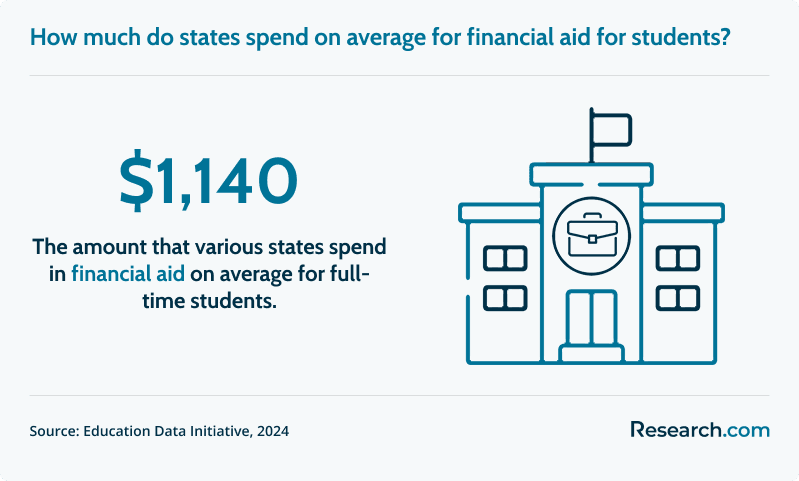
Online fashion merchandising students may also benefit from state-level support. On average, states contribute $1,140 per full-time student in financial aid, which can supplement federal grants, scholarships, and employer assistance.
What are the prerequisites for enrolling in an online fashion merchandising degree program?
Most online fashion merchandising bachelor’s programs use standard undergraduate admissions requirements. They are usually accessible to recent high school graduates, transfer students, and adult learners with retail or business experience.
- High school diploma or GED: Applicants generally need proof of high school completion or an equivalent credential. Some schools require a minimum GPA, often 2.0–2.5, while others offer conditional admission.
- College-prep background: English, basic algebra, business, computer applications, spreadsheets, and communication courses are useful, even when not formally required.
- Test-optional policies: Many institutions waive SAT or ACT scores, particularly for adult learners and transfer applicants. Always confirm the current policy with the admissions office.
- Transfer credits: Students with prior college coursework or an associate degree may transfer up to 90 credits, depending on school policy and course equivalency.
- Application materials: Applicants typically submit an online application, official transcripts, and sometimes a short statement. Recommendations may be optional.
- Technology requirements: Online learners need reliable internet, a compatible computer, office software, and the ability to use a learning management system.
Portfolio requirements are uncommon for merchandising-focused programs, but students interested in design-heavy tracks should verify whether samples of creative work are needed.
The chart below shows common academic backgrounds among fashion merchandisers: 23% studied specialized sales and merchandising, 16% studied business, 11% studied graphic design, 7% studied marketing, and 43% held varied degrees.
What courses are typically in an online fashion merchandising degree program?
Online fashion merchandising programs usually combine general education, business core courses, fashion-specific coursework, electives, and experiential learning. The goal is to prepare students to understand products, customers, numbers, brands, and retail channels.
- Fashion merchandising fundamentals: Introduces the fashion industry, merchandising roles, trend cycles, product categories, and fashion history.
- Retail management and buying: Covers store operations, customer service, assortment planning, purchasing, inventory levels, and merchandising math.
- Fashion marketing and consumer behavior: Examines branding, social media, market research, customer psychology, and promotion. Some programs may allow electives related to a public relations major.
- Textiles and product knowledge: Studies fibers, fabrics, garment construction, sourcing, quality, cost, and apparel production.
- Visual merchandising and branding: Teaches students how to create displays, layouts, online product presentations, and brand-consistent shopping experiences.
- Analytics and planning: Introduces merchandise planning, retail analytics, demand forecasting, spreadsheets, inventory control, and performance measurement.
- Business core: Often includes marketing, management, accounting, finance, economics, business law, entrepreneurship, and ethics.
- General education: Typically includes writing, math, science, humanities, and social science requirements.
- Electives and specializations: Students may choose topics such as sustainability, luxury merchandising, global sourcing, digital commerce, or entrepreneurship.
- Capstone or internship: Final projects and internships allow students to apply coursework to a merchandising plan, product strategy, or workplace setting.
Students interested in visual storytelling may also compare coursework with a low cost digital photography degree online, since both areas use aesthetics, branding, image quality, and audience response to shape commercial decisions.
What types of specializations are available in online fashion merchandising programs?
Specializations help students tailor a fashion merchandising degree toward a specific role or industry segment. Not every school offers formal concentrations, but many allow students to use electives, minors, internships, and capstone projects to build a focus area.
- Product development: Focuses on design-to-market processes, sourcing, textiles, technical product development, PLM tools, and coordination between creative and production teams.
- Visual merchandising and display: Builds skills in store presentation, planograms, lighting, experiential retail, window displays, and digital product presentation.
- Fashion marketing and promotion: Emphasizes advertising, social media, influencer strategy, consumer psychology, campaigns, and brand positioning.
- Retail merchandising management: Prepares students for multi-store operations, retail analytics, e-commerce management, leadership, and strategic planning.
- Luxury and global merchandising: Explores luxury brand strategy, exclusivity, international retail markets, import/export considerations, cultural trends, and global sourcing.
- Interdisciplinary minors: Minors in marketing, business administration, entrepreneurship, graphic design, or supply chain management can help students strengthen career-specific skills.
If a program does not offer the exact specialization you want, ask whether you can customize electives, complete an internship in your preferred area, or build a capstone around your career goal.
Are Online Fashion Merchandising Programs Accredited and Industry-Recognized?
Accreditation should be one of the first items you verify before applying. Institutional accreditation helps confirm that a college meets recognized academic standards and is often required for federal financial aid, transfer credit acceptance, and employer tuition reimbursement.
Students should confirm the school’s regional or national accreditation, then look for business or program-level recognition when available. Accreditation names in this guide include HLC, AACSB, SACSCOC, NECHE, ACBSP, CAEP, and MSCHE. Beyond accreditation, check whether faculty have industry experience, whether the curriculum includes current retail technologies, and whether students complete internships or portfolio projects.
Students who later want broader management credentials may also compare business graduate options, including the cheapest MBA online, although an MBA is not required for most entry-level fashion merchandising roles.
Can Complementary Advanced Degrees Enhance My Fashion Merchandising Career?
A bachelor’s degree is usually enough for entry-level fashion merchandising positions, but graduate education can help professionals move toward leadership, operations, analytics, brand strategy, supply chain management, or executive retail roles. The best graduate option depends on the role you want, not simply on adding another credential.
An MBA or specialized master’s degree may be useful for professionals who already have experience and want to manage larger teams, oversee budgets, lead merchandising strategy, or move into corporate planning. Students should compare cost, time, employer support, and expected promotion opportunities before enrolling.
Programs outside fashion can also show how business skills transfer across industries. For example, the cheapest online MBA degree in healthcare management is not fashion-specific, but it illustrates how specialized MBA programs combine leadership, analytics, and industry knowledge.
What differentiates online from on-campus fashion merchandising programs?
The main difference between online and campus-based fashion merchandising programs is the learning environment. Online programs prioritize flexibility and digital collaboration, while campus programs may offer easier access to physical studios, campus events, in-person networking, and local fashion markets.
| Factor | Online fashion merchandising | On-campus fashion merchandising |
| Schedule | Often more flexible, with asynchronous or accelerated options. | Usually follows set class times and campus calendars. |
| Networking | Uses virtual projects, online career services, remote mentoring, and digital events. | Offers in-person faculty access, clubs, campus events, and local employer visits. |
| Hands-on work | Completed through projects, local internships, virtual tools, and online portfolios. | May include physical labs, studios, displays, and campus retail experiences. |
| Best for | Working adults, transfer students, remote learners, and students who need flexibility. | Students who want in-person community, local fashion access, and campus resources. |
Online learning is now used across many specialized fields, including programs such as online PharmD options, but fashion merchandising students should still confirm that their program includes enough applied work, industry exposure, and career support.
What is the ROI of an online fashion merchandising degree?
Return on investment depends on what you pay, how quickly you finish, how much debt you take on, and whether the degree helps you move into better-paying or more stable roles. Students should compare total cost against likely career outcomes rather than assuming that any fashion degree will automatically lead to a high salary.
Use the salary data in this guide as a benchmark, but treat it cautiously. Entry-level merchandising jobs may start below reported averages, while experienced planners, buyers, managers, and specialists in major markets may earn more. Internships, retail work experience, analytics skills, and geographic mobility can all affect outcomes.
| ROI question | Why it matters |
| What is the full cost after aid? | Tuition alone does not show fees, books, lost wages, or borrowing costs. |
| How many credits will transfer? | Accepted transfer credits can reduce both cost and time to completion. |
| Does the program require an internship? | Relevant work experience can improve job readiness and interview strength. |
| What jobs do graduates actually get? | Career outcomes matter more than broad salary averages. |
| Will you need graduate school? | Some leadership goals may require additional education or experience, increasing total investment. |
Students comparing ROI across bachelor’s-level fields may also review resources on highest paying healthcare jobs with bachelor's degree to see how salary expectations vary by industry and credential type.
How Are Sustainability and Ethical Practices Integrated in Fashion Merchandising Programs?
Sustainability and ethical sourcing are increasingly important in fashion merchandising because consumers, regulators, and brands are paying closer attention to labor practices, environmental impact, waste, transparency, and supply chain decisions. Strong programs introduce these topics through sourcing, textiles, product development, marketing ethics, and retail strategy courses.
Students may study sustainable materials, responsible sourcing, circular fashion, inventory waste reduction, supply chain transparency, corporate social responsibility, and ethical marketing. These topics matter because merchandisers influence what products are selected, how they are promoted, how much inventory is ordered, and how brands communicate value to customers.
Students interested in ethics across professional fields can also examine unrelated but standards-focused programs such as the most affordable online doctorate in pharmacy program to understand how different industries integrate professional responsibility into advanced training.
How do you choose the best online fashion merchandising program?
The best online fashion merchandising program is not always the cheapest or the most recognizable. It is the program that fits your budget, schedule, transfer situation, learning style, and target career path.
- Verify accreditation: Confirm institutional accreditation and any relevant business accreditation before applying.
- Compare the curriculum: Look for buying, planning, retail math, fashion marketing, textiles, visual merchandising, e-commerce, analytics, and internship or capstone requirements.
- Check format and pacing: Decide whether asynchronous courses, live sessions, 8-week terms, part-time study, or year-round enrollment fits your life.
- Calculate total cost: Include tuition, fees, books, technology, internship expenses, and lost income. You can compare related pricing using business degree online cost resources.
- Ask about transfer credit: A generous transfer policy can reduce both time and tuition.
- Review faculty and industry access: Programs taught by experienced retail, buying, marketing, or merchandising professionals may offer more relevant examples and contacts.
- Evaluate career support: Look for resume help, internship placement, virtual job fairs, alumni networks, employer partnerships, and portfolio guidance.
- Study outcomes carefully: Ask what roles graduates enter and whether the school tracks employment in merchandising, buying, planning, e-commerce, or retail management.
Questions to ask before enrolling
- Is the college accredited, and by which accreditor?
- Is the fashion merchandising program fully online, or are campus visits required?
- How many of my previous credits will transfer?
- Are internships required, optional, or arranged independently?
- Does the curriculum include e-commerce, analytics, and retail technology?
- What career services are available to online students?
- What is the total cost after fees, books, and estimated aid?
- Can I study part time without losing financial aid eligibility?
Common mistakes to avoid
- Choosing only by tuition: A low price is helpful, but weak career support or limited coursework can reduce value.
- Ignoring accreditation: Unaccredited programs can create problems with financial aid, transfer credits, and employer recognition.
- Assuming every online program is identical: Some programs include internships and analytics, while others focus more narrowly on retail theory.
- Skipping transfer-credit review: Transfer policy can make a major difference in cost and timeline.
- Relying only on rankings: Rankings are a starting point, not a substitute for checking curriculum, support, schedule, and outcomes.
- Expecting guaranteed salaries: Pay depends on role, location, experience, employer, and performance.
What career paths are available for graduates of online fashion merchandising programs?
Fashion merchandising graduates can pursue roles where product knowledge, customer insight, sales analysis, and brand strategy overlap. Many careers begin with assistant or coordinator positions, then progress into buying, planning, management, or specialized merchandising roles.
- Retail buyer: Selects and purchases merchandise for stores or e-commerce channels, reviews sales data, monitors trends, and plans assortments.
- Merchandise planner or allocation analyst: Uses sales history, inventory data, spreadsheets, and forecasting tools to determine how much product to buy and where it should go.
- Visual merchandiser: Designs store displays, window presentations, planograms, and digital visual layouts that support brand identity and sales goals.
- Product development specialist: Coordinates with designers, vendors, factories, and sourcing teams to help bring new apparel or accessory products to market.
- E-commerce merchandiser: Manages online assortments, product categorization, search visibility, navigation, imagery, descriptions, and conversion-focused merchandising.
- Fashion marketing or brand manager: Develops campaigns, social media strategies, influencer partnerships, and messaging that align with product launches and retail calendars.
- Entrepreneur or fashion business owner: Uses merchandising, sourcing, pricing, and inventory skills to launch boutiques, online shops, or private-label fashion ventures.
Students who want broader business preparation can compare fashion merchandising with resources on how to get a business degree. For those targeting leadership in operations, retail strategy, or cross-functional teams, the cheapest online mba programs in project management may be worth reviewing after gaining professional experience.
What is the job market for graduates with an online fashion merchandising degree?
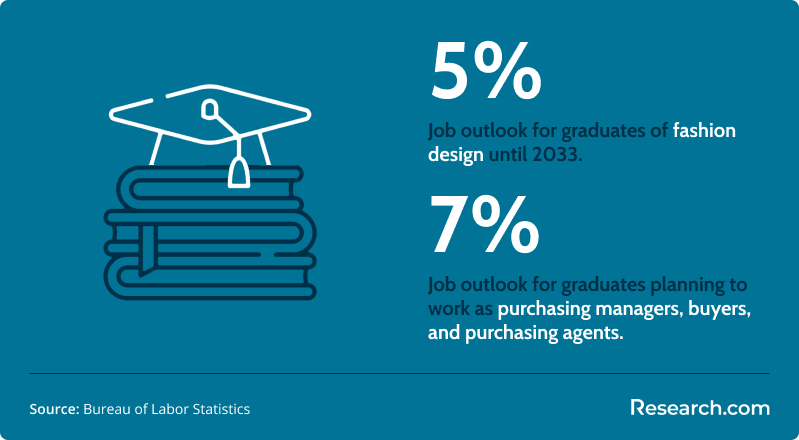
The job market for fashion merchandising graduates is changing as retailers rely more on e-commerce, omnichannel selling, inventory analytics, and rapid product cycles. Related careers such as fashion designers (5%) and purchasing managers, buyers, and purchasing agents (7%) provide useful benchmarks for understanding demand in adjacent occupations.
- Traditional retail is shifting: Some brick-and-mortar roles face pressure, including a –6% projected 2021–31 decline for certain traditional retail functions, but digital merchandising and analytics roles continue to grow in importance.
- E-commerce skills matter: Employers increasingly value candidates who understand product pages, online assortments, search, conversion, customer data, and omnichannel inventory.
- Analytics creates opportunity: Inventory analyst, allocation analyst, planning assistant, and merchandise planner roles reward comfort with numbers, spreadsheets, and forecasting.
- Location still affects access: New York, Los Angeles, San Francisco, Miami, and Dallas remain important for corporate merchandising roles, although remote and hybrid work have expanded some opportunities.
- Entry-level roles are competitive: Common starting positions include merchandise assistant, assistant buyer, allocation analyst, visual merchandiser, retail management trainee, and merchandising coordinator.
- Skill upgrades support advancement: Graduates who build expertise in retail systems, data analysis, e-commerce, supply chains, or leadership may move into product management, brand management, or supply-chain roles, which are growing ~28% due to e-commerce expansion.
Students comparing related business pathways can also review management degrees online, especially if they are interested in retail leadership, supply chain coordination, or operations management.
The image below compares job outlook information for fashion designers and purchasing workers.
Here's What Graduates Have To Say About Their Online Fashion Merchandising Degree
- I worried that studying fashion online would feel disconnected from the industry, but the projects and internship changed that. One class had us use sales data to forecast trends, and I later used the same approach during an internship with a major retailer. After graduation, I became an allocation analyst. The online format worked because I treated every project like professional experience. Marisa
- I needed to keep my retail job while finishing school, and online study made that possible. My instructors had worked as buyers and brought real merchandising problems into class. I built a merchandising plan and presented it to my district manager. That helped me move into an assistant buyer role. Jerome
- I came from a small town, but online group projects connected me with classmates from NYC and L.A. We used 3D virtual merchandising software to create store layouts, which was difficult at first but valuable. Now that I work as a visual merchandising coordinator, those digital tools give me confidence. Nalani
Key Insights
- An online fashion merchandising degree is best for students who want fashion-adjacent business roles rather than design-only careers.
- Affordable public options can bring total tuition down to about $33K, but students should compare fees, transfer credits, books, and financial aid before deciding.
- Merchandising careers reward a mix of trend judgment, retail math, communication, e-commerce knowledge, and data analysis.
- Internships, retail experience, capstones, and portfolio projects can be just as important as the degree title when applying for entry-level roles.
- Online and on-campus programs can lead to similar career paths, but online students should confirm internship access, career services, and opportunities to work with current retail tools.
- Salary outcomes are not guaranteed. Role type, location, experience, employer, and analytical skill level strongly influence earnings.
- Before enrolling, verify accreditation, ask about transfer credit, calculate total cost after aid, and make sure the curriculum matches your target role.
References:
- College Tuition Compare. Fashion Merchandising Program 2024 Tuition.
- Glassdoor. Fashion Merchandiser Salary.
- Monster. Fashion Buyer.
- PayScale. Fashion Merchandiser Salary.
- Salary.com. Fashion Merchandiser Salary.
- U.S. Bureau of Labor Statistics. Occupational Employment and Wages, May 2023: Fashion Designers.
- U.S. Bureau of Labor Statistics. Occupational Employment and Wages, May 2023: Purchasing Managers, Buyers, and Purchasing Agents.
- University of Georgia FCS. Fashion Merchandising Career Opportunities.
- ZipRecruiter. Fashion Merchandiser Salary.
- Zippia. Fashion Merchandiser Salary.
Other Things You Should Know About Online Fashion Merchandising Degree Programs
Most programs require a laptop, reliable internet, and current versions of Microsoft Office or Google Workspace. Some courses also use Adobe Illustrator, Photoshop, or CAD-based fashion design software for lookbooks, line sheets, and digital merchandising projects. Schools usually list exact hardware and software standards before enrollment.
Students must have reliable high-speed internet, a computer with updated software, and access to design and merchandising tools like Adobe Creative Suite. Schools typically list specific tech requirements on their websites to ensure students can participate effectively in courses.