2027 Best Business Schools in Nebraska – Accredited Colleges & Programs

Co-Founder and Chief Data Scientist
Choosing a business school in Nebraska is not just a question of which campus has the best name recognition. Students also need to compare accreditation, cost, degree format, internship access, transfer policies, specialization options, and how well each program connects to Nebraska’s labor market. The state continues to appeal to business students because it combines a relatively affordable operating environment, a steady employment base, and strong industries such as agriculture, logistics, finance, insurance, healthcare, and entrepreneurship.
Nebraska has also remained visible in national business climate discussions. CNBC’s 2025 “America’s Top States for Business” ranking placed Nebraska 15th overall, citing advantages in areas such as business friendliness and cost of doing business while the state continues to manage pressures tied to inflation, drought, and supply chain disruptions. For students, that context matters: a business degree is most valuable when it is paired with practical experience, employer connections, and a clear career plan.
This guide explains how to evaluate the best business schools in Nebraska, what business degree levels are available, how long programs usually take, what costs to expect, which schools stand out, and how to decide whether a business degree, MBA, double major, or related credential fits your goals. It also points readers toward relevant business school options and degrees for comparing programs beyond Nebraska.
Best Business Schools in Nebraska Table of Contents
- Is Nebraska a strong state for business students?
- How long do business programs in Nebraska take?
- What do business degrees in Nebraska cost?
- Best Business Schools in Nebraska for 2027
- How to choose the right Nebraska business school
- Accounting careers and certification paths in Nebraska
- Financial aid and scholarships for Nebraska business students
- How psychology can support stronger business leadership
- Is a business degree a worthwhile long-term investment?
- How business skills can improve substance abuse counseling services
- How CPA certification can strengthen a Nebraska business career
- How legal knowledge can support business careers
- Student resources and career support in Nebraska business schools
- How nutrition and wellness connect with business careers
- How business skills can support forensic science careers
- Other career options for Nebraska business graduates
- Is an Executive MBA worth considering in Nebraska?
- How business skills can help professionals move into healthcare
- How business knowledge can improve social work outcomes
Quick Answer: What is the best business school choice in Nebraska?
The best business school in Nebraska depends on the student’s budget, intended major, preferred format, and career goal. Students seeking a large public university with many concentrations may compare the University of Nebraska-Lincoln and the University of Nebraska Omaha. Students interested in private university settings may consider Creighton University, Concordia University, or York University. Accreditation should be a top filter: several programs listed here hold business accreditation from the Association to Advance Collegiate Schools of Business, while York University is accredited by the International Accreditation Council for Business Education.
For most students, the strongest choice is not automatically the most selective or most expensive school. A better decision comes from matching the program’s concentration, internship access, total cost, transfer credit policy, online or campus format, and employer network to a realistic career plan.
Is Nebraska a strong state for business students?
Nebraska can be a practical place to study business because students can pair classroom training with a state economy that includes corporate employers, small businesses, agricultural enterprises, financial services, logistics operations, healthcare organizations, and nonprofit employers. The state’s business-friendly reputation is one reason many students consider staying in Nebraska after graduation.
Labor market indicators also help explain the appeal. According to the United States Bureau of Labor Statistics (BLS, 2023c), Nebraska had an unemployment rate of 1.9%, the third-lowest in the nation and behind only the 1.8% reported for South Dakota and New Hampshire. That figure was well below the US unemployment rate of 3.5% (BLS, 2023b).
Additional labor data show a strong workforce environment. Federal Reserve Bank of St. Louis data indicate that Nebraska’s labor force participation rate was about 69.9% in December 2025, which was above the national average and suggests relatively high workforce engagement across the state. The Nebraska Department of Labor also reported a 3.0% unemployment rate in December 2025.
Business and financial professionals in Nebraska earn an average annual salary of $72,570, while managers earn an average annual salary of $108,840. Those salary figures help explain why some students later consider graduate study, including MBA programs, when they want to move from specialist roles into management, strategy, finance, operations, or executive leadership.
For students asking whether business administration is a good major in Nebraska, the answer is often yes when the degree is chosen carefully and supported by internships, technical skills, networking, and a clear career direction.
How to build a business career in Nebraska
The first step toward many business careers in Nebraska is choosing the right degree level. Admission requirements vary by school, but applicants commonly need an application form, official transcripts, letters of recommendation, a personal essay, and, in some cases, standardized test scores. Students should review each school’s requirements directly because test-optional policies, transfer rules, and scholarship deadlines can differ.
| Degree option | Typical purpose | Best fit |
| Associate Degree in Business | A two-year program that introduces core business concepts and can support entry-level employment or transfer into a bachelor’s program. | Students who want a lower-cost starting point, plan to transfer, or need a shorter credential. |
| Bachelor of Business Administration (BBA) | A four-year degree covering areas such as management, accounting, finance, marketing, and organizational operations. | Students seeking broad preparation for business, corporate, nonprofit, or entrepreneurial roles. |
| Bachelor of Science in Business Administration (BSBA) | A four-year program that emphasizes analytical, quantitative, and data-informed business decision-making. | Students interested in finance, analytics, operations, supply chain, accounting, or other quantitative fields. |
| Bachelor of Arts in Business Administration (BA in Business) | A four-year degree that combines business fundamentals with humanities, communication, critical thinking, and liberal arts coursework. | Students who want a broad education that may support management, sales, communications, entrepreneurship, or interdisciplinary careers. |
Internships can be one of the most important parts of a Nebraska business degree. Employers often treat internships as extended interviews, especially when students come from programs with strong career offices and employer relationships. A student who performs well in an internship may build references, gain industry-specific experience, and sometimes receive a job offer before or soon after graduation.
After earning a bachelor’s degree, graduates may enter the workforce directly or continue into graduate study. Students who want to understand the full process can review guidance on how to get a business degree and then compare graduate pathways based on experience level, career goals, and cost.
| Graduate business degree | What it is designed to do | When it makes sense |
| Master of Business Administration (MBA) | Provides advanced training in leadership, management, finance, marketing, strategy, and related business areas. | Useful for professionals seeking management advancement, career switching, or broader leadership preparation. |
| Executive Master of Business Administration (EMBA) | Designed for experienced professionals and executives who want advanced business training while continuing to work. | Best for midcareer or senior professionals who already have meaningful work experience and need a flexible schedule. |
| Master of Science in Business Administration (MSBA) | Focuses on advanced business analysis, technology, quantitative tools, and data-informed decisions. | Appropriate for students who want more specialized analytical or technical business preparation. |
| Doctor of Business Administration (DBA) | A doctoral-level business degree centered on applied research, executive leadership, strategic thinking, and business theory in practice. | Most relevant for experienced professionals interested in consulting, senior leadership, applied research, or teaching. |
Graduate business study is not required for every career path, but it can be a strategic credential for professionals targeting leadership, consulting, advanced finance, analytics, or executive roles. In 2025, business master’s programs continued to draw global interest, and a 2025 Graduate Management Admission Council (GMAC) report noted that many candidates still consider MBAs and specialized master’s programs part of their career development planning.
How long do business programs in Nebraska take?
The timeline for a business degree depends on the credential, enrollment status, transfer credits, course load, and program format. Across business degree types, students can often complete a program in around two to six years (Coursera, 2023b), although part-time doctoral study can take longer.
| Program level | Typical credits | Common completion time | Important planning note |
| Associate degree | 60 credit hours | About two years | Check transfer agreements before enrolling if the goal is a bachelor’s degree. |
| Bachelor’s degree | 120 credit hours | Four years for many full-time students | Internships, double majors, minors, or changing concentrations can affect the timeline. |
| Master’s degree | 30 to 40 credit hours | One to two years | Working professionals should compare evening, online, hybrid, and part-time options. |
| Doctorate degree | About 60 credit hours | Around four years for full-time students; about six to 10 years for many part-time students | Dissertation or applied research requirements can extend completion time. |
What do business degrees in Nebraska cost?
Cost is one of the most important factors in choosing a business school, but tuition alone does not show the full financial picture. Students should compare tuition, fees, housing, food, books, supplies, transportation, technology costs, internship-related expenses, and the opportunity cost of studying full time instead of working.
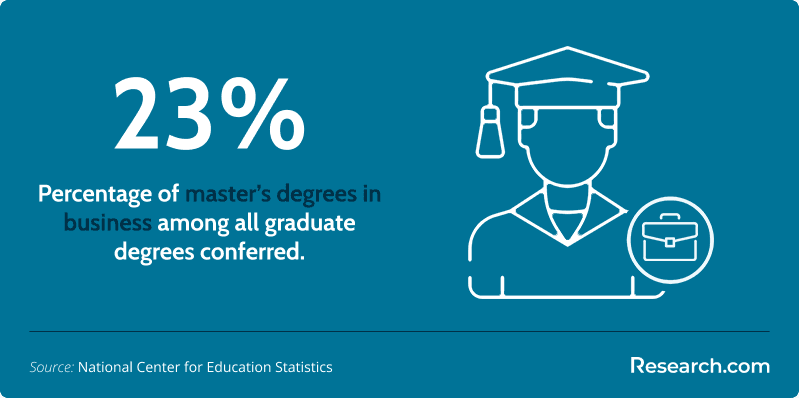
Business remains a high-demand field of study in the United States, accounting for 19% of degrees conferred in the country (Coursera, 2023a). That demand can influence program availability, competition, and pricing, although costs still vary widely by institution type, residency status, and program level.
According to the College Board’s 2025 Trends in College Pricing report, average published tuition and fees for the 2025–26 academic year were roughly $4,150 at public two-year colleges for in-district students, about $11,950 at public four-year colleges for in-state students, and approximately $31,880 for out-of-state students. Private nonprofit four-year colleges had average tuition and fees of around $45,000 per year.
When room and board and other typical expenses are included, the average total annual cost of attendance is about $30,990 for in-state public students, $50,920 for public out-of-state students, and $65,470 at private nonprofit four-year institutions.
Graduate education has its own cost structure. Master’s degrees at public institutions typically cost $9,150 per year, or $20,460 with room and board, while private institutions usually charge $30,650 annually, or $43,830 with room and board. Doctorate degrees at public institutions cost $11,860 per year, or $24,740 with room and board, while comparable private doctorate programs charge $47,500 annually, or $63,500 with room and board.
Costs at Nebraska institutions can align with or differ from national averages. For example, for the 2025–2026 academic year, University of Nebraska–Lincoln College of Business courses are listed at $360 per credit hour for in-state students and $1,155 per credit hour for out-of-state students. That pricing includes a base tuition rate and a business college differential.
| Cost factor | Why it matters | Question to ask |
| Residency status | Public universities often charge different rates for in-state and out-of-state students. | Can I qualify for in-state tuition, reciprocity, or a tuition discount? |
| Credit requirements | A program with more required credits may cost more even if the per-credit rate looks reasonable. | How many total credits are required to graduate? |
| Business college fees | Some schools charge differential tuition or program-specific fees for business courses. | Are business courses priced differently from general undergraduate courses? |
| Online fees | Online programs may have technology or distance-learning fees. | Does the online format reduce total cost, or does it add separate fees? |
| Transfer credits | Accepted transfer credits can reduce both time and cost. | How many prior credits will count toward this exact degree plan? |
Best Business Schools in Nebraska for 2027
Nebraska has several business programs that can serve different types of students. The schools below were assessed using factors such as graduation rates, academic ratings, costs, course offerings, curriculum structure, accreditation, and other program indicators. Students should treat this list as a starting point and then verify current tuition, admissions policies, and concentration availability directly with each school.
1. University of Nebraska-Lincoln Bachelor’s Degree in Business Administration
The University of Nebraska-Lincoln business administration program gives students access to a broad public university business curriculum with concentration options such as Accounting, Economics, Finance, and Supply Chain Management. Students can also use free 1:1 academic coaching and career development support while completing courses such as Foundations of Entrepreneurship, Introduction to International Economics, Decision Making Models, and Investors with Purpose.
- Program Length: 4 years
- Tracks/concentrations: Accounting; Actuarial Science; Agribusiness; Business & Law; Business Administration; Economics; Finance; International Business; Management, Marketing; Supply Chain Management
- Cost per Credit: $321 (in-state); $1028 (out-of-state)
- Required Credits to Graduate: 120
- Accreditation: Association to Advance Collegiate Schools of Business
2. Creighton University Bachelor of Science in Business Administration
Creighton University’s business administration program is a private university option with concentration areas that include Entrepreneurship, Ethics, Human Resources, Pre-Law, Military Management, and Social Entrepreneurship. The curriculum emphasizes management development, business planning, organizational psychology, and career preparation. Students interested in continuing directly into graduate study may also review the accelerated bachelor’s to master’s pathway.
- Program Length: 4 years
- Tracks/concentrations: Entrepreneurship; Business Ethics; Human Resources; Pre-Law; Military Management; Social Entrepreneurship
- Cost per Credit: $1,408
- Required Credits to Graduate: 128
- Accreditation: Association to Advance Collegiate Schools of Business
3. Concordia University Bachelor of Arts in Business Administration/Bachelor of Science in Business Administration
Concordia University’s business administration major allows students to pursue either a Bachelor of Arts or Bachelor of Science pathway. The program reports a 95% career outcome rate and a student-to-teacher ratio of 22:1. Its business core includes coursework such as Principles of Macroeconomics, Principles of Microeconomics, Financial Accounting, and Organizational Leadership.
- Program Length: 4 years
- Tracks/concentrations: no information available
- Cost per Credit: $1,651.67
- Required Credits to Graduate: 120
- Accreditation: Association to Advance Collegiate Schools of Business
4. York University Bachelor of Business Administration
York University’s Bachelor of Business Administration is available on-ground and online. The program combines business coursework with skill development in leadership, communication, technology use, and analysis. Students also learn from experienced professionals and can participate in the university’s business community to begin building a professional network.
- Program Length: 4 years
- Tracks/concentrations: None
- Cost per Credit: $720
- Required Credits to Graduate: 120
- Accreditation: International Accreditation Council for Business Education
5. University of Nebraska Omaha Bachelor of Science in Business Administration
The University of Nebraska Omaha BSBA program offers 15 concentrations, including Accounting, Banking and Financial Markets, Entrepreneurship, and Legal Studies. Qualified students may also consider the MBA Fast-Track option, which can shorten the overall route from undergraduate study to graduate business education compared with completing the two programs separately.
- Program Length: 4 years
- Tracks/concentrations: Accounting; Banking and Financial Markets; Business Analytics; Business Finance; Economics; Entrepreneurship; Human Resource Management; International Business; Investment Science and Portfolio Management; Legal Studies; Logistics & Supply Chain Management; Management & Leadership; Marketing; Real Estate and Land Use Economics; Sales
- Cost per Credit: $703.33 (in-state); $1,169.6 (out-of-state)
- Required Credits to Graduate: 120
- Accreditation: Association to Advance Collegiate Schools of Business
| School | Degree listed | Best for students who want | Accreditation listed |
| University of Nebraska-Lincoln | Bachelor’s Degree in Business Administration | A large public university with many concentration options and career support | Association to Advance Collegiate Schools of Business |
| Creighton University | Bachelor of Science in Business Administration | A private university environment with management-focused pathways | Association to Advance Collegiate Schools of Business |
| Concordia University | BA or BS in Business Administration | A choice between arts- and science-oriented business pathways | Association to Advance Collegiate Schools of Business |
| York University | Bachelor of Business Administration | On-ground or online business study with no listed concentration requirement | International Accreditation Council for Business Education |
| University of Nebraska Omaha | Bachelor of Science in Business Administration | A public university program with 15 concentration options and an MBA Fast-Track route | Association to Advance Collegiate Schools of Business |
How to choose the right Nebraska business school
A strong business school choice should fit the student’s academic strengths, financial situation, career target, and preferred learning format. Rankings and brand recognition can help, but they should not replace a close review of curriculum, outcomes, accreditation, internship access, and total cost.
1. Match the specialization to the career goal
Business is not one single career path. It includes accounting, finance, marketing, human resources, operations, logistics, analytics, entrepreneurship, management, real estate, and legal-adjacent roles. A student interested in supply chain management, for example, should not choose a school only because it has a general business major; the better question is whether the program offers relevant coursework, internships, faculty expertise, and employer connections in that area.
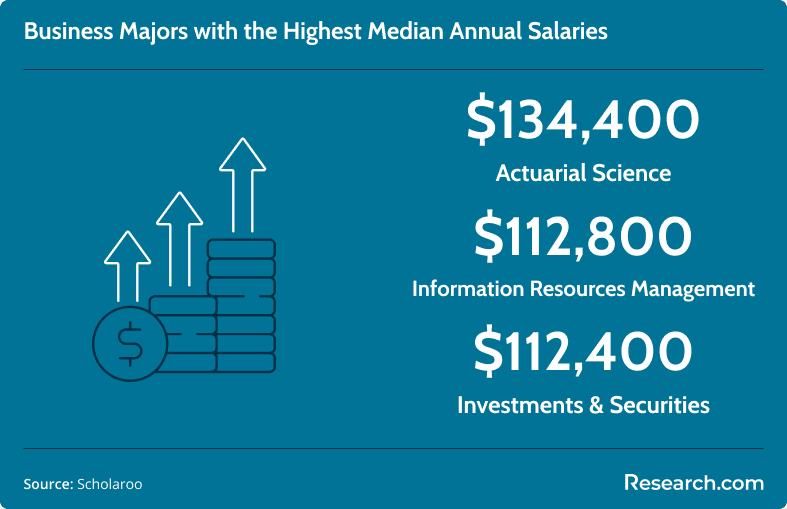
According to a 2025 report on business degree salary potential, management information systems and actuarial science were among the business majors associated with the highest average starting salaries, while business graduates overall were projected to earn an average starting salary of approximately $65,276 for the Class of 2025. Students should use figures like these as planning context rather than salary guarantees.
2. Verify accreditation before applying
Accreditation is one of the most important quality checks for a business degree. It signals that a school or program has been reviewed against recognized standards for curriculum, faculty, student support, resources, and academic quality. Accreditation can also affect transfer credit, graduate school options, financial aid eligibility, and employer confidence.
Students comparing Nebraska business programs should look for institutional accreditation and, when available, business-specific accreditation from organizations such as:
- Association to Advance Collegiate Schools of Business (AACSB)
- Accreditation Council for Business Schools and Programs (ACBSP)
- International Accreditation Council for Business Education (IACBE)
- Higher Learning Commission (HLC)
3. Look for internships and employer access
Career support should be evaluated before enrollment, not shortly before graduation. Students should ask how the business school helps them find internships, whether employers recruit on campus or virtually, how many students complete internships, and whether the career office provides resume reviews, interview coaching, networking events, and job-search support.
4. Review faculty experience
Faculty quality matters because business education is most useful when theory is connected to current practice. Instructors with industry experience, research expertise, consulting backgrounds, or employer relationships can help students understand how finance, marketing, management, operations, and analytics actually work in organizations.
5. Compare online, campus, and hybrid formats honestly
| Format | Advantages | Possible drawbacks | Best fit |
| Campus-based | More face-to-face networking, easier access to campus events, and direct involvement in student organizations. | May require relocation, commuting, or a less flexible schedule. | Traditional students and learners who want an in-person college experience. |
| Online | Greater flexibility for working adults, parents, military students, and students far from campus. | Requires strong time management and may offer fewer informal networking moments. | Students who need schedule flexibility or prefer remote learning. |
| Hybrid | Combines online convenience with some in-person interaction. | Campus visits may still be required, which can be difficult for distant students. | Learners who want flexibility but still value periodic in-person engagement. |
How do Nebraska’s business schools compare in national and global context?
Nebraska business schools may not always dominate global business school rankings, but rankings are only one way to judge value. For many students, a Nebraska program can be attractive because it offers regional employer connections, practical business education, and potentially lower costs than some programs in larger coastal markets.
The University of Nebraska-Lincoln is often viewed as a leading business education option in the state, particularly for students who want a flagship public university setting. Its business programs emphasize experiential learning, career preparation, networking, and student support. Students considering graduate study may also compare MBA formats based on flexibility, leadership preparation, and alignment with work responsibilities.
Global name recognition can matter for some careers, especially in international finance, consulting, or highly competitive corporate recruiting. However, students who plan to build careers in Nebraska or the broader region should weigh local alumni networks, internship pipelines, employer partnerships, and affordability just as carefully as national prestige.
Working professionals who want a faster graduate pathway may also compare accredited online one-year MBA programs. Accelerated programs can be useful for students who want to upgrade credentials quickly, but they require careful review of workload, accreditation, admissions standards, and employer relevance.
Accounting careers and certification paths in Nebraska
Accounting is one of the clearest career pathways for business students because it connects directly to roles in auditing, tax, corporate accounting, public accounting, compliance, finance, and consulting. Students who want the Certified Public Accountant credential should review Nebraska-specific education, exam, and experience requirements early in their degree planning. A useful next step is to review guidance on becoming a CPA in Nebraska and compare accounting-focused programs.
Students interested in accounting should also look for schools that offer CPA exam preparation, accounting internships, faculty with professional credentials, and connections to accounting firms or corporate finance departments. Professional organizations such as the Nebraska Society of Certified Public Accountants can also support networking, continuing education, and mentorship.
The CPA is not the only credential available. Depending on career goals, students may also consider the Certified Management Accountant (CMA) or Certified Internal Auditor (CIA). The right credential depends on whether the student wants to work in public accounting, corporate finance, internal audit, management accounting, or another accounting-related role.
Financial aid and scholarships for Nebraska business students
A business degree in Nebraska can become more affordable when students compare financial aid options early. Some students may also want to review the most affordable online business degree options if flexibility and cost control are top priorities.
- Federal financial aid: Eligible business students may use federal aid programs such as Pell Grants, Stafford Loans, and PLUS Loans to help cover tuition, fees, and approved education-related expenses.
- State grants: Nebraska students may qualify for state aid programs that can be need-based or merit-based, including examples such as the Nebraska Academic Scholarship and the Nebraska Opportunity Grant.
- Institutional scholarships: Many colleges and business schools award scholarships based on academic performance, leadership, financial need, major, transfer status, or other criteria. Students should check each school’s scholarship deadlines before applying.
- External scholarships: Professional associations, companies, foundations, and community organizations may offer awards for business, accounting, finance, entrepreneurship, or leadership students.
| Common mistake | Why it can be costly | Better approach |
| Comparing only tuition | Fees, housing, books, transportation, and lost work hours can change the real cost. | Ask each school for a full cost-of-attendance estimate. |
| Ignoring accreditation | Unaccredited or poorly recognized programs may limit transfer, aid, or employer acceptance. | Verify institutional and business-specific accreditation before enrolling. |
| Assuming online is always cheaper | Some online programs charge technology fees or different tuition rates. | Compare total program cost, not just per-credit tuition. |
| Waiting too long to apply for scholarships | Many awards have early deadlines and limited funding. | Create a scholarship calendar before admission decisions are finalized. |
| Choosing a major without career research | A concentration may not match the student’s desired role or local employer demand. | Review job postings, internship options, and alumni outcomes by concentration. |
How can psychology support better business leadership and decision-making?
Psychology can strengthen business leadership by helping managers understand motivation, communication, group behavior, bias, conflict, and decision-making. Business students who study emotional intelligence, cognitive bias, organizational behavior, and human motivation may become better prepared to lead teams, manage change, improve customer relationships, and make ethical decisions under pressure.
Students who want to combine business with behavioral science may benefit from exploring the best psychology colleges in Nebraska as a complementary academic path.
Is a business degree a worthwhile long-term investment?
A business degree can be a strong long-term investment when it leads to employable skills, internships, professional networks, and career progression. The value is weaker when students overborrow, choose an unfocused program, skip work experience, or assume the degree alone will guarantee a high salary.
Students should evaluate return on investment by comparing total program cost, expected debt, likely starting roles, internship availability, employer connections, and advancement options. For a deeper discussion of degree value, review whether a business degree is worth it.
How can business skills improve substance abuse counseling services in Nebraska?
Business training can help substance abuse counseling organizations operate more effectively. Skills in budgeting, staffing, data analysis, outreach, grant management, and strategic planning can support stronger service delivery and more sustainable programs. Business graduates who want to work in community health or nonprofit operations may find this intersection especially relevant.
Those considering a direct counseling pathway can review the steps for becoming a licensed substance abuse counselor in Nebraska.
How can CPA certification strengthen a business career in Nebraska?
A CPA credential can expand opportunities in public accounting, corporate finance, auditing, taxation, consulting, and financial management. It also signals technical accounting knowledge, professional ethics, and readiness for roles that require financial judgment and regulatory awareness.
Business students who want to plan for the credential should review Nebraska-specific guidance on how to become a CPA in Nebraska and align their coursework with certification requirements as early as possible.
How can legal knowledge support business careers in Nebraska?
Business professionals often deal with contracts, compliance, employment policies, risk management, corporate governance, and regulatory requirements. Legal knowledge can help graduates communicate more effectively with attorneys, identify risk earlier, and make better operational decisions.
Students interested in combining business and legal support roles can explore how to become a paralegal in Nebraska as one possible pathway.
Student resources and career support in Nebraska business schools
The best Nebraska business school for a particular student is often the one that offers the strongest support system for that student’s goals. Before enrolling, students should ask exactly what services are available and whether online, transfer, commuter, and adult learners can access them.
- Career advising: Business students should look for resume support, interview preparation, job-search coaching, internship advising, and help choosing a concentration.
- Internship programs: Schools with employer partnerships can help students gain real work experience in finance, marketing, accounting, management, analytics, or operations.
- Networking events: Career fairs, alumni panels, employer visits, business competitions, and professional association events can lead to internships and job leads.
- Mentorship: Alumni mentors and local business professionals can help students understand career paths, workplace expectations, and industry-specific skills.
- Job placement support: Strong business schools help students transition from coursework to employment through job boards, employer introductions, interview opportunities, and career planning.
How can nutrition and wellness connect with business careers?
The nutrition and wellness field needs professionals who understand operations, marketing, finance, customer experience, and program management. Business graduates may find opportunities in corporate wellness, health-focused startups, food businesses, fitness organizations, healthcare administration, or wellness program management.
Students interested in the clinical or credentialed side of the field can review how to become a nutritionist in Nebraska.
How can business skills support forensic science careers in Nebraska?
Business skills can complement forensic science in areas such as fraud investigation, compliance, internal controls, financial analysis, and organizational risk management. Professionals with business training may work alongside forensic specialists when reviewing records, identifying irregularities, or improving accountability systems.
Students interested in the scientific route can review forensic scientist education requirements in Nebraska.
What other career options can Nebraska business graduates pursue?
Business graduates are not limited to accounting, finance, or management. Their skills can apply to marketing, human resources, entrepreneurship, sales, logistics, analytics, real estate, nonprofit administration, healthcare operations, government, and urban development. Students interested in planning, economic development, or community growth can explore urban planning schools in Nebraska to understand that pathway.
The best career choice depends on the student’s concentration, internship experience, technical skills, communication ability, and willingness to build a professional network before graduation.
Is an Executive MBA worth considering in Nebraska?
An Executive MBA can be valuable for experienced professionals who want to move into senior leadership, broaden their strategic perspective, and expand their executive network without leaving the workforce. It is usually less appropriate for recent graduates or early-career professionals who have not yet built significant work experience.
Before enrolling, candidates should compare the program’s schedule, employer support, total cost, leadership outcomes, alumni network, and opportunity cost. For cost planning, review this guide to Executive MBA expenses.
How can business skills help professionals move into Nebraska’s healthcare industry?
Healthcare organizations need business skills in budgeting, compliance, operations, staffing, analytics, patient experience, and strategic planning. Business graduates may work in hospital administration, healthcare consulting, operations management, medical practice management, insurance, or healthcare supply chain roles.
Professionals who are considering a regulated clinical pathway should also understand credential requirements. For example, students can review pharmacist licensure requirements in Nebraska to see how technical healthcare training differs from business administration roles.
How can business knowledge improve social work outcomes in Nebraska?
Business skills can help social service organizations use resources more effectively, manage budgets, measure program outcomes, strengthen grant proposals, and coordinate staff and community partnerships. These skills are especially useful for nonprofit leaders, program managers, agency administrators, and social entrepreneurs.
Students who want to combine management skills with direct service can explore how to become a social worker in Nebraska.
Are double majors in business worthwhile?
A double major can be useful when two fields clearly support the same career goal. For example, pairing finance with accounting, business analytics with supply chain management, or marketing with management may strengthen a student’s profile. Some campus and online programs, including options discussed in guides to the best online business degree programs, may allow students to pursue more than one major or concentration.
However, a double major is not automatically better. It can increase workload, extend time to graduation, raise total cost, and reduce time available for internships or paid work. Students should choose a double major only when the second field adds clear career value and does not undermine grades, experience, or finances.
| Choose a double major if... | Consider a minor, certificate, or elective path if... |
| Both majors directly support the same target career. | The second field is interesting but not essential to your job goal. |
| You can finish without adding significant time or debt. | The added courses would delay graduation or increase borrowing. |
| You have enough schedule room for internships and networking. | The extra workload would prevent practical experience. |
| Your advisor confirms that requirements overlap efficiently. | The two programs have little overlap and create course sequencing problems. |
Key Insights
- Nebraska can be a practical state for business students because it combines a favorable business climate, strong workforce participation, and career opportunities across multiple industries.
- The best business school is the one that fits the student’s goal, not simply the one with the highest name recognition. Accreditation, cost, concentration options, internships, and employer access should drive the decision.
- Business degree timelines vary widely: associate programs commonly take about two years, bachelor’s programs often take four years, master’s programs may take one to two years, and doctoral study can take much longer for part-time students.
- Total cost matters more than tuition alone. Students should include fees, housing, books, supplies, transportation, online fees, transfer credits, and lost work time when comparing programs.
- Students interested in accounting should plan early for CPA requirements, while those targeting leadership may later consider an MBA, EMBA, MSBA, or DBA depending on experience and career direction.
- Internships, career coaching, alumni networks, and employer partnerships can have as much impact on outcomes as the classroom curriculum.
- A double major can help when it directly supports a specific career plan, but it can also increase cost and workload if chosen without a clear purpose.
Related Articles for Nearby States
- 2027 Best Business Schools in Kansas – Accredited Colleges & Programs
- 2027 Best Business Schools in South Dakota – Accredited Colleges & Programs
- 2027 Best Business Schools in Iowa – Accredited Colleges & Programs
- 2027 Best Business Schools in Colorado – Accredited Colleges & Programs
- 2027 Best Business Schools in Missouri – Accredited Colleges & Programs
- 2027 Best Business Schools in Wyoming – Accredited Colleges & Programs
- 2027 Best Business Schools in Minnesota – Accredited Colleges & Programs
- 2027 Best Business Schools in Oklahoma – Accredited Colleges & Programs
- 2027 Best Business Schools in North Dakota – Accredited Colleges & Programs
- 2027 Best Business Schools in Illinois – Accredited Colleges & Programs
References:
- Filson, N. (n.d.). What to Study to Become a CEO & Where to Go to College. Preply
- FRED (n.d.). Labor Force Participation Rate for Nebraska. FRED
- NCES (n.d.). Graduate Degree Fields. NCES
- University of Nebraska-Lincoln (n.d.). Undergraduate Tuition. University of Nebraska-Lincoln
- CNBC. (2025, July 10). Top states for business 2025: Nebraska. CNBC.
- Federal Reserve Bank of St. Louis. (2026). Labor force participation rate for Nebraska (LBSSA31), Dec 2025. FRED, Federal Reserve Bank of St. Louis.
- Nebraska Department of Labor. (2026, January 27). Nebraska’s December 2025 unemployment rate remains at 3.0% [Press release]. Nebraska Department of Labor.
- Graduate Management Admission Council. (2025). 2025 business master’s degrees: Candidate interest and application trends. GMAC.
- College Board. (2025). Trends in college pricing and student aid 2025: Highlights. College Board.
- Coursera Staff. (2025, November 23). Business degree salary potential: Your 2026 earning guide. Coursera.
Other Things You Should Know About Business Schools in Nebraska
Yes, many Nebraska business programs incorporate experiential learning such as internships, consulting projects, business competitions, or applied research. These experiences allow students to apply classroom knowledge in real-world business contexts.
In 2027, the University of Nebraska-Lincoln's College of Business and Creighton University's Heider College of Business are recognized for their quality education. These institutions are celebrated for their comprehensive business programs and strong emphasis on experiential learning, equipping students with skills essential for the modern business landscape.