
2027 How Much Does an Executive MBA Cost?

Co-Founder and Chief Data Scientist
An executive MBA can be a powerful career investment, but its price can be difficult to evaluate because the sticker tuition rarely tells the full story. Top MBA programs average about $203,000, while EMBA pricing can range from affordable public-university options such as Southeastern Louisiana University’s program at $20,676 to premium programs such as Wharton’s EMBA at $238,620. For working executives, the real question is not only “How much does an EMBA cost?” but also “Will this program help me advance enough to justify the expense, time, travel, and opportunity cost?”
This guide breaks down what is included in executive MBA program costs, which expenses are often overlooked, how financing works, and how to compare expensive and affordable programs. It also covers salary outcomes, career paths, accreditation, specialization choices, technology trends, alternatives such as DBA programs, and practical questions to ask before enrolling.
Quick Answer: How Much Does an Executive MBA Cost?
The cost of executive MBA programs varies widely. Some programs cost tens of thousands of dollars, while many elite EMBA programs exceed $100,000. The total cost may include tuition, required fees, books and materials, travel, lodging, meals, technology, networking events, and lost income if your work schedule changes. For top-tier international programs, travel and accommodation budgets alone can reach approximately $23,000 to $34,000.
An EMBA may be worth the cost for professionals who already have substantial management experience and can use the degree to move into senior leadership, strategy, consulting, entrepreneurship, or C-suite roles. However, candidates should compare program cost, employer sponsorship, accreditation, format, cohort quality, career support, and likely career impact before committing.
Key Things You Should Know About the Cost of Executive MBA Programs
- Executive MBA tuition can exceed $100,000, especially at highly selective business schools with extensive executive networks, global modules, and premium student services.
- Tuition may cover core courses, electives, learning resources, selected meals, residencies, networking events, and program materials, but coverage varies by school.
- Additional charges may include application, registration, administrative, technology, library, course platform, and graduation fees.
- Books, cases, software, and other required learning materials can add to the final bill, especially when they are not bundled into tuition.
- Travel, hotel stays, meals, parking, and international modules can significantly increase the real cost of attendance.
- Employer sponsorship, scholarships, fellowships, veterans benefits, loans, and payment plans can reduce the upfront burden, but funding availability differs by program.
- What is included in executive MBA program cost?
- What hidden expenses should EMBA students budget for?
- How should you evaluate tuition and financial trade-offs?
- What scholarships and financial aid options are available?
- 2027 Most Expensive EMBA Programs
- 2027 Most Affordable EMBA Programs
- What is the job outlook for EMBA graduates?
- What careers can EMBA graduates pursue?
- Which EMBA specialization may lead to stronger salary outcomes?
- How do EMBA costs compare with online MBA costs?
- Why does accreditation matter for an executive MBA?
- How much do EMBA graduates earn?
- How are EMBA programs using emerging technologies?
- Is an EMBA worth the investment?
- Should you consider a DBA instead of an EMBA?
- How do EMBA programs create value beyond coursework? and how to judge whether the value is enough
- What factors matter most when choosing an EMBA?
- Should finance professionals add another finance credential? and how to compare program fit
- What challenges should EMBA students expect?
- How should you calculate EMBA ROI?
What is included in the cost of executive MBA programs?
The published cost of an executive MBA usually starts with tuition, but a realistic budget should include every required and likely expense from application through graduation. Because EMBA students are typically working professionals, program design often includes intensive weekends, residencies, executive coaching, peer learning, networking events, and specialized support services. These features can be valuable, but they can also raise the total cost.
| Cost category | What it may include | Why it matters |
| Tuition | Core business courses, electives, leadership modules, faculty instruction, and academic support | This is usually the largest expense and can exceed $100,000 at many well-known programs. |
| Program fees | Application, registration, administrative, technology, library, platform, and student service fees | Fees are easy to overlook because they may be listed separately from tuition. |
| Materials | Textbooks, case studies, study guides, simulations, software, and online learning tools | Some schools include materials in tuition; others require students to pay separately. |
| Residency costs | Travel, lodging, meals, local transportation, and international study modules | Hybrid and global EMBA programs can become much more expensive if travel is frequent. |
| Professional expenses | Business attire, networking event costs, memberships, conferences, and commuting | These smaller expenses can accumulate over one to two years. |
| Opportunity cost | Reduced work hours, missed consulting income, unpaid leave, or slower short-term business growth | Executives should consider both cash expenses and income they may give up while studying. |
Business remains a common graduate pathway, and MBA programs, including EMBAs, continue to attract professionals looking for advancement. That popularity is consistent with broader data showing that business is a popular choice among business majors. Still, an EMBA is not automatically the right master’s-level option for every professional. If you are comparing graduate pathways beyond business administration, reviewing the best master’s degree programs online can help you understand how EMBA costs compare with other advanced degrees.
What Do Graduates Say About Executive MBA Programs?
Graduate experiences vary by school, cohort, employer support, and career stage, but many EMBA students describe the degree as most valuable when they can apply lessons immediately at work. The strongest outcomes often come from combining classroom learning with executive responsibilities, peer feedback, and strategic career planning.
- My executive MBA changed how I approached leadership decisions. The workload was demanding, but the exposure to strategy, finance, and global business issues gave me tools I could use in my role almost immediately. Alex
- The flexible format made the degree possible while I stayed employed full time. Online coursework helped me manage my schedule, and the program gave me more confidence when taking on broader responsibilities. Taylor
- The cohort was one of the biggest benefits. Learning with professionals from different industries helped me see business problems from angles I had not considered before, and those connections still matter in my career. Jordan
What are the hidden costs and additional expenses in executive MBA programs?
The most common budgeting mistake is treating tuition as the full cost. Executive MBA students should request a complete cost breakdown from each school and ask what is included, what is optional, and what has historically increased from year to year.
- Institutional fees: Application, enrollment, registration, administrative, technology, and library charges may be billed separately from tuition.
- Travel and lodging: Programs with campus residencies, global modules, or rotating locations can require flights, hotels, meals, ground transportation, and visa-related costs. For top-tier international programs, these expenses can reach approximately $23,000 to $34,000.
- Books and digital materials: Required texts, Harvard-style cases, simulation licenses, software, databases, and online platforms may not be covered by tuition.
- Technology: Some students may need a newer laptop, tablet, webcam, software subscriptions, or secure internet access for hybrid and online participation.
- Networking and professional events: Conferences, alumni gatherings, industry events, and optional global trips may require participation fees or travel spending.
- Work disruption: Even if you remain employed, you may lose billable hours, consulting time, bonus opportunities, or flexibility for major projects.
- Personal logistics: Parking, commuting, childcare, eldercare, meals away from home, and professional clothing can become recurring costs.
These additional expenses can change the affordability picture, especially for professionals choosing between a local hybrid program and a global executive format. They are also relevant when deciding what to do with their degrees in business management, because the right graduate investment depends on how much additional earning power, mobility, or leadership access the credential can realistically create.
What are the tuition fees and financial considerations in executive MBA programs?
Executive MBA tuition differs by institution, location, program length, brand recognition, cohort model, international components, student services, and included amenities. Some programs are priced for broad access, while others charge a premium for elite faculty, executive coaching, global residencies, alumni reach, and high-touch career support.
| Financial question | Why it affects your decision | What to ask the school |
| What is the total program price? | Tuition alone may not include all mandatory fees and required experiences. | Can you provide a full cost of attendance for the entire program? |
| How long is the program? | Many EMBA programs run one to two years, and longer schedules may increase living, travel, and opportunity costs. | Are tuition and fees locked in, or can they increase before graduation? |
| What does tuition include? | Some programs bundle meals, books, lodging, residencies, or international seminars; others do not. | Which expenses are included, optional, or billed separately? |
| Will your employer help pay? | Employer sponsorship can meaningfully reduce out-of-pocket cost, but it may come with work commitments. | Does the school help students prepare sponsorship proposals? |
| What is the likely career payoff? | ROI depends on your current role, advancement prospects, industry, and how you use the degree. | What career outcomes do students with my background typically report? |
Professionals should also investigate employer support before assuming they must self-fund the degree. Some organizations provide tuition reimbursement, leadership development funding, or partial sponsorship for high-potential employees. If you are exploring that route, Research.com’s guide to MBA tuition reimbursement can help you understand how employer-funded education benefits may work.
- Tuition range: EMBA tuition can span from tens of thousands of dollars to well over $100,000.
- Program design: Weekend, modular, hybrid, and global formats have different travel and time demands.
- Employer sponsorship: Some companies fund all or part of the degree when it supports leadership development or succession planning.
- Return on investment: Salary growth matters, but promotions, equity, bonuses, board opportunities, and business development contacts can also affect value.
- Hidden costs: Travel, hotels, books, technology, meals, childcare, and time away from work should be included in the budget.
- Financial aid: Scholarships, fellowships, loans, veterans benefits, and payment plans can reduce short-term financial pressure.
Financial aid can make an expensive EMBA more manageable, but applicants should compare award availability early instead of waiting until after admission decisions arrive.
What are EMBA program scholarships and financial aid opportunities?
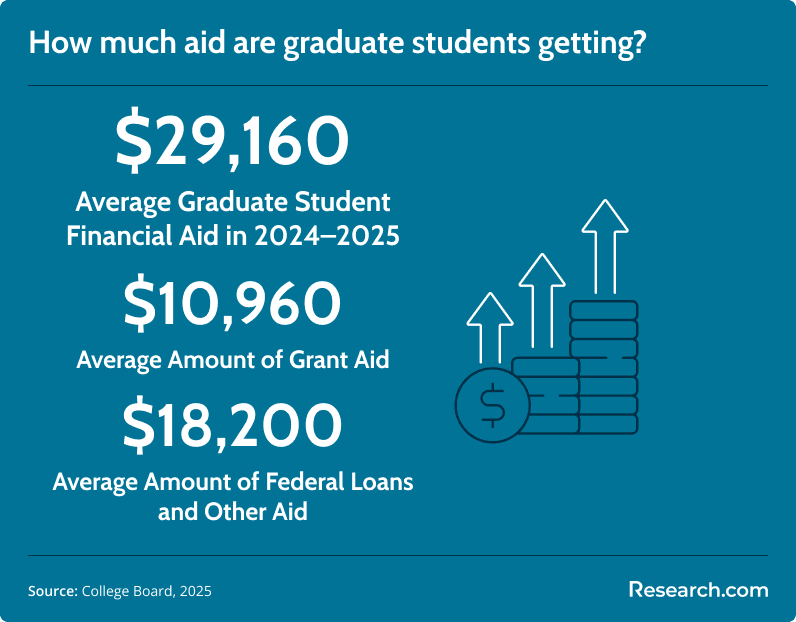
Scholarships and financial aid can materially reduce the cost of executive MBA programs, although EMBA funding is often more limited than undergraduate aid. According to the 2025 Executive MBA Council (EMBAC) Membership Program Survey, 74.3% of programs in the United States offered scholarships or fellowships. Awards may be based on leadership record, professional achievement, academic strength, industry background, diversity goals, military service, public service, or employer partnership.
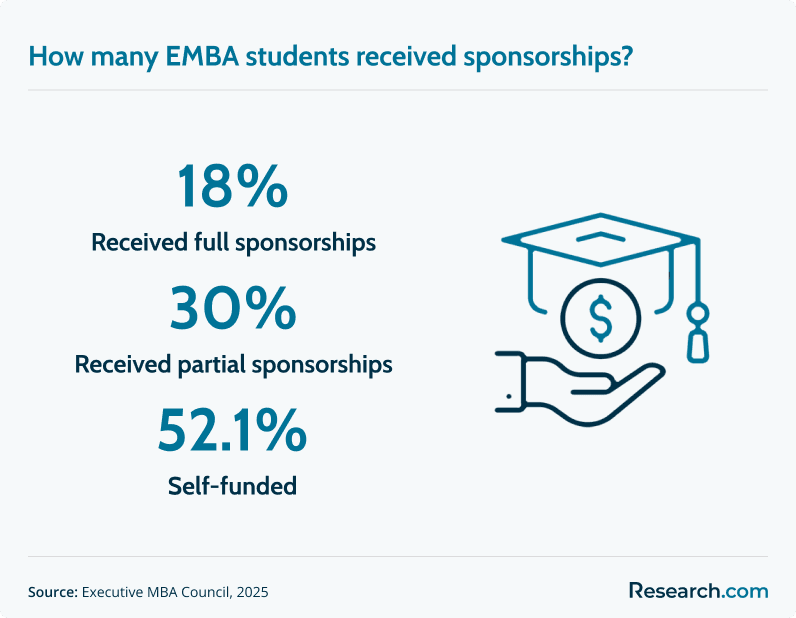
Funding patterns also show why applicants should plan early. In 2025, 18% of EMBA students received full sponsorships, 30% received partial sponsorships, and 52.1% were self-funded. That means many students still cover a substantial portion of the cost themselves, even when some aid is available. Candidates comparing EMBA prices with broader MBA options can also review affordable MBA programs to see whether a less expensive format could meet similar career goals.
| Funding option | Best suited for | Important caution |
| Employer sponsorship | Employees whose degree directly supports leadership, retention, or promotion goals | Some employers require continued service after graduation or repayment if you leave early. |
| School scholarships or fellowships | Applicants with strong leadership, academic, professional, or mission-aligned profiles | Funds may be limited, competitive, and available only by priority deadlines. |
| Federal or private loans | Students who can manage debt payments after graduation | Borrow only after comparing interest, fees, repayment terms, and total cost. |
| Veterans benefits | Eligible military-affiliated students | Benefit rules vary, so confirm eligibility directly with the school and benefits provider. |
| Payment plans | Students with cash flow but limited ability to pay a large amount upfront | Plans may not reduce cost; they only spread payments over time. |
2027 Most Expensive EMBA Programs
Some executive MBA programs cost more than $200,000 because they bundle elite faculty access, global experiences, intensive residencies, executive services, and deep alumni networks. A higher price does not guarantee a better outcome for every student, but it may be justified for professionals who can convert the network, brand, and learning experience into measurable career mobility. For a broader look at flexible executive formats, compare these options with online executive MBA programs.
How do we rank schools?
Research.com rankings are developed through research and data analysis by our team. More detail is available in our methodology. Sources used in the ranking process include:
- IPEDS database
- Peterson’s database
- Distance Learning Licensed Data Set, College Scorecard database
- National Center for Education Statistics
1. Northwestern University Kellogg $244,068
The Northwestern Kellogg Executive MBA is built for experienced professionals who want to strengthen executive judgment, strategic leadership, and applied business skills. Its model emphasizes collaboration, faculty access, global exposure, and alumni connections that can support long-term professional growth.
Available Financial Aid Options:
- Corporate sponsorship
- Federal or private loans
- Scholarships
- GI Bill and Veterans benefits
2. Columbia University $238,800
Columbia Business School offers an Executive MBA for professionals who want advanced leadership training while remaining active in their careers. The program connects rigorous coursework with real-world decision-making and gives students access to a diverse cohort, alumni community, and New York City’s business environment.
Available Financial Aid Options:
- Corporate sponsorship
- Federal or private loans
- Tuition Exemption Benefits and/or Reduced Employee Rate for university employees
- Free delivery of required textbooks
- Free meals on EMBA weekends and block weeks
- Free conference center accommodations
- Free accommodations and meals during weeklong international seminars during the second year
3. University of Pennsylvania Wharton $238,620
The University of Pennsylvania Wharton School EMBA is designed for professionals with substantial experience who want to expand their leadership range, business fundamentals, strategic perspective, and global awareness. Its high cost should be weighed against the program’s curriculum, peer network, brand value, and available funding.
Available Financial Aid Options:
- Employer financial sponsorship
- Federal Direct and Direct Grad PLUS Loans
- Private loans
- Prodigy Finance for international students
- Yellow Ribbon Program for military students
- John M. Bendheim Loan Forgiveness Fund for Public Service
- Wharton MBA for Executives Program Scholarship
- Forte Scholarship
- Financial Women of San Francisco Scholarship
- The Goldie Initiative Scholarship
- Federal and private scholarships
2027 Most Affordable EMBA Programs
Affordable executive MBA programs can be a strong fit for professionals who want leadership development without taking on a premium-school price tag. Lower cost does not automatically mean lower value; the best choice depends on accreditation, curriculum quality, scheduling, employer recognition, cohort profile, and career fit. If you are weighing schedule and cost trade-offs, Research.com’s guide to part time vs full time programs may help you compare formats.
The schools below are ranked using the same methodology applied to the most expensive EMBA program list.
1. Southeastern Louisiana University $20,676
Southeastern Louisiana University offers a Saturday-only Executive MBA that takes 17 months to complete. The format combines Saturday campus meetings with online sessions, allowing working professionals to continue their jobs while progressing through a cohort-based MBA experience that begins each January.
Financial Aid Options:
- Available upon request
2. University of New Mexico Anderson $50,510
The Anderson School of Management Executive MBA uses a blended format designed for busy professionals. Students can pursue immersive learning in areas such as global leadership, science and technology leadership, or diversity leadership while receiving academic support and access to experienced faculty.
Financial Aid Options:
- Student employment at the Anderson School of Management
- Employer sponsorship
- Anderson scholarships and fellowships
- External scholarships
- Federal loans
3. University of North Carolina at Chapel Hill Kenan-Flagler $125,589
The STEM-designated Weekend Executive MBA at UNC Kenan-Flagler is structured for professionals who want a customizable curriculum, weekend residencies, leadership development, and career coaching. It may fit students seeking advancement, role changes, global opportunities, or entrepreneurial preparation.
Available Financial Aid Options:
- Corporate sponsorship
- University student loans
- Federal Direct Unsubsidized Loan
- Federal Direct Graduate PLUS
- Private student loan
- Merit Fellowships
- Private scholarships
What is the job outlook for EMBA graduates?
Labor market data is not usually reported separately for EMBA graduates, so the most relevant indicators come from executive, management, and leadership occupations. The Bureau of Labor Statistics projects employment growth for top executives of 4%, with about 333,100 annual job openings from 2024 to 2034. This does not mean every EMBA graduate will move into a top executive role, but it provides useful context for the kinds of positions many EMBA students target.
Executive MBA Council data also suggests that many students experience career movement while enrolled. EMBAC reported that 40% of students received a promotion during the program and 55% reported increased responsibilities. These outcomes may be especially relevant for professionals using an EMBA to move from functional management into enterprise leadership, nonprofit administration, healthcare leadership, technology strategy, or consulting. Those interested in mission-driven leadership can compare the EMBA path with non profit management MBA programs.
Still, the outlook is not uniform across all executive roles. Chief executive opportunities are more competitive than many other management positions, and advancement depends heavily on industry, company size, performance record, network, and timing.
What are the career paths for EMBA graduates?
Executive MBA graduates usually pursue senior leadership rather than entry-level business roles. The degree is most useful when paired with significant professional experience, a record of managing teams or budgets, and a clear plan for advancement. Career paths can include C-suite leadership, general management, consulting, entrepreneurship, corporate strategy, operations, finance, healthcare administration, technology leadership, and board-facing roles.
| Career path | Typical EMBA advantage | When it may be a good fit |
| Executive leadership | Broader strategy, finance, operations, and leadership training | You already manage teams or business units and want enterprise-level responsibility. |
| Consulting | Stronger problem-solving frameworks, client credibility, and peer network | You want to advise organizations on strategy, operations, transformation, or growth. |
| Entrepreneurship | Business model development, finance knowledge, and access to experienced peers | You plan to launch, buy, scale, or reposition a business. |
| Technology leadership | Ability to connect technical investments with business strategy | You are moving toward CIO, CTO, product, digital transformation, or data leadership roles. |
| Healthcare or nonprofit leadership | Management training for complex, mission-driven organizations | You need executive-level business skills in regulated or service-oriented sectors. |
Specialized business knowledge can also shape outcomes. For example, an experienced technology manager who completes an MBA in management information systems may be better positioned for digital strategy or information leadership roles than a generalist candidate without that background.
Which EMBA specialization yields the best salary outcome?
No specialization guarantees a specific salary, but specialization can influence earning potential by aligning your EMBA with high-value business problems. Finance, accounting, technology management, analytics, healthcare, operations, and entrepreneurship can all be valuable depending on your industry and career goals. The strongest salary outcomes usually come when a specialization builds on your existing experience rather than pulling you into a field where you lack credibility.
For example, executives who need stronger accounting expertise may benefit from reviewing MBA in accounting salary information and comparing it with their own career objectives. A specialization is most useful when it helps you lead larger budgets, oversee more complex decisions, enter a higher-paying sector, or qualify for broader executive responsibilities.
How do costs and financing options differ between executive MBA and online MBA programs?
Executive MBA programs are often priced higher than many online MBA programs because they are designed around senior-professional cohorts, in-person residencies, executive networking, leadership coaching, premium services, and sometimes global travel. Online MBA programs generally emphasize flexibility, remote access, and lower ancillary costs, especially when students do not need to pay for flights, hotels, commuting, or extended campus stays.
| Comparison point | Executive MBA | Online MBA |
| Primary audience | Experienced managers and executives | Working professionals at varied career stages |
| Cost profile | Often higher due to residencies, cohort services, and executive programming | Often lower because travel and campus-based costs may be reduced |
| Schedule | Weekend, modular, hybrid, or residency-based | Asynchronous, synchronous, hybrid, or accelerated formats |
| Networking | High-touch peer and alumni interaction | Varies widely by school and program design |
| Financing | May include executive scholarships, fellowships, sponsorship, loans, and employer support | May emphasize lower tuition, federal or private loans, scholarships, and employer reimbursement |
If cost and flexibility are your biggest concerns, compare EMBA pricing with the cost of online MBA programs before deciding. An online MBA may be the better value if you need general management training and do not require the executive cohort, residency experience, or high-touch networking that often defines an EMBA.
What are the accreditation standards for an executive MBA?
Accreditation helps students verify that a business school or program has been reviewed for academic quality, faculty qualifications, curriculum standards, institutional resources, and continuous improvement. For executive MBA candidates, accreditation matters because employers, professional networks, and other institutions may view accredited credentials as more credible.
Common business accreditation names include AACSB, AMBA, and EQUIS. Applicants should confirm accreditation directly through the accreditor or school website rather than relying only on marketing materials. This is especially important when comparing lower-cost programs because affordability should not come at the expense of academic legitimacy. Research.com’s review of affordable EMBA programs can help you see how cost-conscious options may still meet quality expectations.
How much do graduates of EMBA make?
Executive MBA graduates often report strong compensation outcomes, but results vary by prior salary, industry, company, geography, job function, and leadership track. According to EMBAC, the average salary for EMBA graduates in 2025 was $226,428 at program completion, representing a 17.5% increase from their starting compensation. That figure can help with ROI planning, but it should not be treated as a guaranteed result for every student.
BLS data also shows high earning potential in executive roles, with median annual salaries for chief executives around $206,420. Before enrolling, compare EMBA salary expectations with other types of business degrees and salaries so you can determine whether an EMBA, traditional MBA, specialized master’s, or doctorate best fits your career and financial goals.
How do EMBA programs integrate emerging technologies to drive business innovation?
Executive leaders are increasingly expected to understand how technology affects strategy, risk, operations, workforce planning, customer experience, and competitive advantage. Many EMBA programs now address topics such as digital transformation, cybersecurity, data analytics, artificial intelligence, fintech, automation, and platform-based business models. The goal is not to turn executives into software engineers; it is to help them ask better questions, evaluate technology investments, and lead cross-functional change.
Some professionals may want deeper exposure to financial technology and distributed ledger concepts. In that case, reviewing blockchain degree programs can provide additional context on specialized technology-focused education that may complement an EMBA or help shape elective choices.
Is an EMBA worth it?
An EMBA can be worth it for experienced professionals who have a clear reason for earning the degree, can manage the cost, and are positioned to use the credential quickly. The strongest candidates usually have management experience, employer support or a clear financing plan, and a defined career target such as senior leadership, business transformation, consulting, entrepreneurship, or broader profit-and-loss responsibility.
Several data points support the potential value. EMBAC reported that the average salary for EMBA graduates in 2025 was $226,428. The BLS projects 4% growth in employment for top executives from 2024 to 2034. EMBAC also reported that 55% of students experienced increased responsibilities and 40% received promotions during their programs. These numbers suggest meaningful upside, but they do not remove the need for individual due diligence.
An EMBA is less likely to be worth it if you are early in your career, unsure about your goals, unable to attend required residencies, choosing only for prestige, or planning to take on debt without a realistic advancement plan. If you are still deciding whether graduate business education makes sense at all, Research.com’s guide on whether a business degree is worth it can help you think through the broader decision.
Is a DBA a viable alternative to an Executive MBA?
A Doctorate of Business Administration may be a better fit than an EMBA for professionals who want to conduct applied research, teach, publish, consult at a thought-leadership level, or study business problems in greater academic depth. An EMBA is typically more practice-oriented and focused on leadership, strategy, and peer-based executive learning. A DBA usually requires more sustained research and is better suited to professionals who want doctoral-level expertise rather than a managerial master’s credential.
| Factor | Executive MBA | DBA |
| Main purpose | Strengthen executive leadership and applied business decision-making | Develop advanced research capability and contribute to business knowledge |
| Best for | Managers and executives seeking advancement or broader leadership roles | Senior professionals interested in research, consulting, teaching, or thought leadership |
| Learning style | Cases, teams, residencies, strategy projects, and peer learning | Research methods, dissertation or doctoral project work, and scholarly inquiry |
| Career outcome | Executive, consulting, entrepreneurship, or general management advancement | Academic, research-intensive, consulting, or expert advisory roles |
If doctoral business study sounds more aligned with your goals, compare program structure and price with cheap DBA online options before choosing an EMBA.
How Executive MBA Programs Provide Value Beyond the Classroom
The value of an executive MBA often comes from more than the courses. Strong programs create structured opportunities to test leadership style, receive feedback from experienced peers, analyze real business problems, work across industries, and build relationships with faculty, alumni, and executives. These elements can be difficult to replicate through self-study or a collection of short courses.
Peer learning is especially important. EMBA students often bring years of experience from finance, healthcare, technology, manufacturing, government, consulting, and entrepreneurship. A well-designed cohort gives students access to practical insight from people solving different kinds of business problems. That network can lead to mentorship, partnerships, hiring opportunities, referrals, and sharper judgment.
Some professionals want the MBA credential but cannot commit to a long program. In that case, accelerated MBA programs online may offer a more flexible way to build business knowledge while continuing to work. The trade-off is that accelerated online formats may not provide the same executive cohort intensity or in-person networking experience as many EMBA programs.
What are the key factors to consider when choosing an executive MBA program?
The best executive MBA program is not necessarily the most expensive, the highest ranked, or the most famous. It is the program that fits your career stage, schedule, budget, learning needs, and target network. Use the following factors to compare programs before applying.
- Format and schedule: Determine whether weekend, modular, hybrid, online, or residency-based learning fits your work and family obligations.
- Accreditation and reputation: Confirm recognized business accreditation and assess how employers in your industry view the school.
- Cohort profile: Ask about average work experience, industries represented, leadership levels, and class diversity.
- Curriculum fit: Look for electives or concentrations that match your goals, such as finance, healthcare, entrepreneurship, analytics, or technology management.
- Career support: Evaluate executive coaching, leadership assessment, alumni access, employer connections, and career transition support.
- Total cost: Include tuition, fees, travel, lodging, materials, technology, meals, childcare, and opportunity cost.
- Financial aid: Compare scholarships, fellowships, loans, veterans benefits, payment plans, and employer sponsorship support.
- Location and travel burden: A prestigious program may lose value if travel costs or time demands make consistent participation unrealistic.
Questions to Ask Before Enrolling
| Question | Why it matters |
| What is the total cost from enrollment to graduation? | You need the complete cost, not just the tuition figure. |
| Which expenses are included in tuition? | Meals, lodging, books, and residencies may or may not be covered. |
| What percentage of students receive employer sponsorship or scholarships? | This helps you understand how realistic aid may be. |
| What career outcomes do students with my background achieve? | Overall averages may not reflect your industry or role. |
| How active is the alumni network in my target field? | Network value depends on relevance, access, and engagement. |
| Does the program require international or out-of-state travel? | Travel can raise both cost and scheduling difficulty. |
| Is the program accredited by a recognized business accreditor? | Accreditation supports credibility and quality assurance. |
Alternatives to the GMAT Requirement for Executive MBA Programs
Many executive MBA programs now give experienced applicants ways to apply without the GMAT. Instead of relying heavily on a standardized test, admissions committees may evaluate professional achievements, leadership responsibilities, academic history, interviews, employer support, essays, and recommendations.
Some schools waive the GMAT for applicants with substantial management experience, while others use interviews or internal assessments to determine readiness. This approach can make sense for executives whose work history already demonstrates quantitative ability, decision-making, and leadership maturity. If standardized testing is a major concern, compare EMBA policies with online MBA programs no GMAT to see which format offers the best combination of access, quality, and career value.
Should I Consider a Complementary Finance Degree Alongside an EMBA?
A second finance-focused credential may be useful if your career target requires deeper technical expertise than a general EMBA provides. Examples include corporate finance leadership, investment strategy, treasury, risk management, financial planning and analysis, private equity, or roles where you must evaluate complex markets and capital decisions. However, adding another degree increases cost and time, so the benefit should be clear.
Executives who need specialized finance training at a lower cost can compare options such as the cheapest masters in finance. This path may complement an EMBA if you already have broad leadership experience but need stronger analytical depth in finance-heavy roles.
What challenges might I encounter during an EMBA program?
Executive MBA students often underestimate the operational difficulty of completing a rigorous degree while maintaining a demanding career. The academic material may be manageable, but the combination of work travel, family obligations, group projects, deadlines, and residency requirements can create real pressure.
- Time compression: Work, school, family, and travel compete for the same limited hours.
- Team coordination: Group projects can be challenging when classmates are also senior professionals with intense schedules.
- Travel fatigue: Weekend residencies and global modules may disrupt recovery time and family routines.
- Digital learning adjustment: Hybrid and online platforms require comfort with virtual collaboration, learning systems, and remote presentations.
- Financial stress: Even sponsored students may face out-of-pocket costs, delayed reimbursements, or personal expenses.
- Expectation management: Promotion and salary growth are possible, but they are not automatic.
If your primary goal is business education with maximum flexibility, alternatives such as the best online school for business administration may be more appropriate depending on your current education level and career stage.
What is the ROI of an executive MBA?
The return on investment for an executive MBA depends on both measurable and non-measurable outcomes. Salary growth matters, but ROI can also include promotion, larger scope of responsibility, equity compensation, consulting revenue, board opportunities, entrepreneurial growth, and a stronger executive network. The right calculation should compare total cost against the specific career outcomes you expect to pursue.
- Compensation growth: EMBAC reported a 17.5% salary increase for graduates, but your result will depend on industry, employer, geography, and prior compensation.
- Career mobility: An EMBA can support advancement into senior management, strategy, consulting, or broader leadership roles when paired with a strong professional track record.
- Network value: Peer, alumni, and faculty relationships can produce referrals, partnerships, mentorship, and market access that are difficult to price but potentially valuable.
- Employer support: Sponsorship or reimbursement can dramatically improve ROI by lowering personal cost.
- Debt burden: A high-cost program funded mostly through loans requires a more conservative payoff analysis.
- Alternative options: If the EMBA price is too high, compare it with specialized master’s programs, online MBAs, certificates, or 1 year MBA programs online accredited by relevant organizations.
Common Mistakes to Avoid When Comparing EMBA Programs
- Looking only at tuition: Always include travel, lodging, fees, materials, meals, childcare, and time away from work.
- Assuming prestige equals ROI: A famous school may not be the best financial choice if its network does not align with your career goals.
- Ignoring accreditation: Confirm recognized business accreditation before applying.
- Overestimating salary outcomes: Average salaries do not guarantee your post-graduation compensation.
- Failing to secure employer support early: Sponsorship conversations often take time and may require a business case.
- Choosing the wrong format: A residency-heavy program may be difficult if your job or family schedule is unpredictable.
- Underestimating workload: EMBA programs are designed for working professionals, but they still require consistent time and energy.
References:
- BusinessBecause. (2025, December 28). Cost of MBA report 2025: How to manage your expenses. https://www.businessbecause.com/news/mba-cost/6978/mba-cost
- Ma, J., Pender, M., & Hu, X. (2025). Trends in college pricing and student aid 2025. https://research.collegeboard.org/media/pdf/Trends-in-College-Pricing-and-Student-Aid-2025-final_1.pdf
- Columbia Business School. (2025). Executive MBA: Tuition and fees. https://business.columbia.edu/financial-aid/costs/executive-mba
- Executive MBA Council. (2025). Research in context. https://embac.org/research-in-context.html
- INSEAD. (2025). Financing, scholarships, and fees - Global executive MBA. https://www.insead.edu/master-programmes/global-executive-mba/financing
- Kellogg School of Management. (2025). EMBA fees and financing. https://www.kellogg.northwestern.edu/admissions/financial-aid/emba-fin-aid/
- Southeastern Louisiana University. (2025). Executive Master of Business Administration. https://www.southeastern.edu/acad_research/programs/grad_bus/emba/
- UNC Kenan-Flagler Business School. (2025). Weekend executive MBA tuition & financial aid. https://www.kenan-flagler.unc.edu/programs/mba/weekend-executive-mba/admissions/tuition-financial-aid/
- UNM Anderson School of Management. (2025). Graduate cost and financial aid. https://business.unm.edu/graduate/cost-financial-aid.html
- Wharton School of the University of Pennsylvania. (2025). EMBA tuition & financial aid. https://executivemba.wharton.upenn.edu/emba-tuition-financial-aid/#tuition
- UNM Anderson School of Management. Graduate cost and financial aid. https://business.unm.edu/graduate/cost-financial-aid.html
Key Insights
- Executive MBA costs vary dramatically, from $20,676 at Southeastern Louisiana University to $244,068 at Northwestern University Kellogg among the programs listed here.
- The true cost of an EMBA includes more than tuition. Budget for fees, books, technology, travel, lodging, meals, networking, and possible lost income.
- According to the 2025 Executive MBA Council Membership Program Survey, 74.3% of U.S. programs offered scholarships or fellowships, but 52.1% of students were self-funded.
- An EMBA is usually most valuable for experienced professionals who can use the degree immediately for leadership growth, promotion, consulting, entrepreneurship, or executive mobility.
- Salary outcomes can be strong, but they are not guaranteed. EMBAC reported an average 2025 graduate salary of $226,428 at program completion and a 17.5% increase from starting compensation.
- Accreditation, cohort quality, employer recognition, schedule fit, and career support matter as much as ranking or brand name.
- If the cost or travel burden is too high, compare the EMBA with online MBA, accelerated MBA, specialized master’s, finance, or DBA options before enrolling.
Other Things You Should Know About the Cost of an Executive MBA
In 2027, the cost of an Executive MBA may be tax-deductible if it meets IRS criteria, such as enhancing skills required for your current job. Consult a tax advisor to see if you qualify for education-related deductions.
Beyond tuition fees, consider additional costs when budgeting for an Executive MBA in 2027. These include textbooks, technology fees, travel for any global programs, accommodation for residencies, and professional networking events. These factors can significantly affect the overall financial plan for the program.
Most Executive MBA programs use a flat tuition fee for the entire degree, not a per-credit charge. In 2027, many schools quote one total price for the full program, often covering tuition, course materials, and residency sessions, while travel and lodging are usually billed separately.


