2027 Cheapest Accredited Online Biomimicry Degree Programs: Tuition, Fees, and Financial Aid

Co-Founder and Chief Data Scientist
Finding an affordable accredited online biomimicry degree is difficult because the field is specialized and advertised tuition rarely shows the full bill. College Board reported average published tuition and fees of $11,610 at in-state public four-year colleges and $43,350 at private nonprofit four-year colleges for 2024-25, making cost comparison essential.
This guide is for students weighing online biomimicry, sustainability, design, biology, or innovation programs. You will learn how to compare accreditation, tuition, mandatory fees, total program cost, FAFSA eligibility, scholarships, transfer credits, and net price before enrolling.
Key Things You Should Know
- The main U.S. standalone accredited online biomimicry degree option is Arizona State University's 30-credit online MS in Biomimicry; because the market is narrow, students should verify whether any cheaper "biomimicry" option is a full degree, a certificate, or only a course sequence.
- Advertised per-credit tuition is only the starting point: a 30-credit graduate degree priced through an online tuition estimator can change materially once mandatory university fees, technology fees, books, residency requirements, and course materials are included.
- Net price matters more than sticker price because federal aid, employer tuition assistance, institutional scholarships, and transfer or prior-learning credit can reduce out-of-pocket cost, while private loans and nonrenewable awards may make a low-tuition program more expensive over time.
What Are the Cheapest Accredited Online Biomimicry Degree Programs?
The cheapest accredited online biomimicry degree search has one important limitation: biomimicry is not yet a large standalone online degree category in the U.S. The most clearly identifiable accredited online degree in the field is Arizona State University's online Master of Science in Biomimicry, offered by an institution accredited by the Higher Learning Commission. Students may find certificates, sustainability degrees, biology programs, industrial design programs, or environmental science degrees that include biomimicry content, but those should not be treated as equivalent unless the credential title, curriculum, and accreditation match the student's goal.
The table below separates the strict biomimicry degree option from related alternatives. This distinction matters because a cheaper adjacent program may be a better value for some careers, but it is not the same as earning a degree specifically titled biomimicry.
| Rank | School and program | Accreditation status to verify | Online format | Published cost signals to compare | Best fit |
| 1 | Arizona State University, online MS in Biomimicry | Institutional accreditation through the Higher Learning Commission; verify current Title IV eligibility in federal databases | Online graduate degree, commonly listed as a 30-credit program | Use ASU's current tuition estimator for program tuition, mandatory fees, and term-based charges rather than relying only on a general per-credit range | Students who want a formal graduate credential focused on applying biological strategies to design, business, sustainability, and innovation challenges |
| Not ranked as a biomimicry degree | Online sustainability, environmental science, biology, design, or innovation degrees with biomimicry coursework | Institutional accreditation varies by school; programmatic accreditation may not apply | Online or hybrid formats vary | Compare total credits, in-state pricing, online fees, and whether biomimicry is required or elective | Students who want a broader sustainability or science degree and only need biomimicry as a skill area |
| Not ranked as a degree | Graduate certificates, professional certificates, workshops, and short courses in biomimicry | May be offered by accredited universities, professional organizations, or nondegree providers | Often online and shorter than a degree | Usually lower total cost than a degree, but may not qualify for federal student aid unless attached to an eligible program | Working professionals who want targeted biomimicry training without committing to a full graduate degree |
The practical takeaway is simple: if you need the cheapest accredited online biomimicry degree, start with ASU and then verify the current all-in price. If your career goal is broader, compare accredited sustainability, environmental science, or design programs separately and ask whether biomimicry is central to the curriculum or just one elective.
How Were the Cheapest Online Biomimicry Degree Programs Ranked?
The ranking prioritizes affordability, but it does not assume the lowest tuition line is the lowest real cost. Because the U.S. online biomimicry degree market is small, the ranking method first confirms whether a program is actually an online degree in biomimicry, then evaluates cost and aid factors that change what students pay.
The criteria below show how a student should reproduce the comparison when checking current school pages and financial aid information.
- Confirm that the credential is a full degree, not only a certificate, specialization, continuing education course, or elective track.
- Verify institutional accreditation through an official accreditor-recognition source and confirm that the school participates in federal student aid if FAFSA eligibility matters.
- Calculate tuition using the program's required credits, current per-credit or term-based rate, and any residency-based pricing rules.
- Add mandatory fees, online learning charges, graduate fees, course fees, graduation fees, books, software, travel, and required materials.
- Estimate net price after grants, scholarships, employer benefits, assistantships, tuition reimbursement, and transfer or prior-learning credits.
- Review value indicators such as curriculum fit, faculty expertise, completion support, portfolio opportunities, career services, and employer relevance.
A program was not ranked as "cheapest" if it did not clearly award an accredited online biomimicry degree. That protects students from comparing unlike credentials, such as a low-cost certificate against a master's degree with different admissions rules, credit requirements, and financial aid treatment.
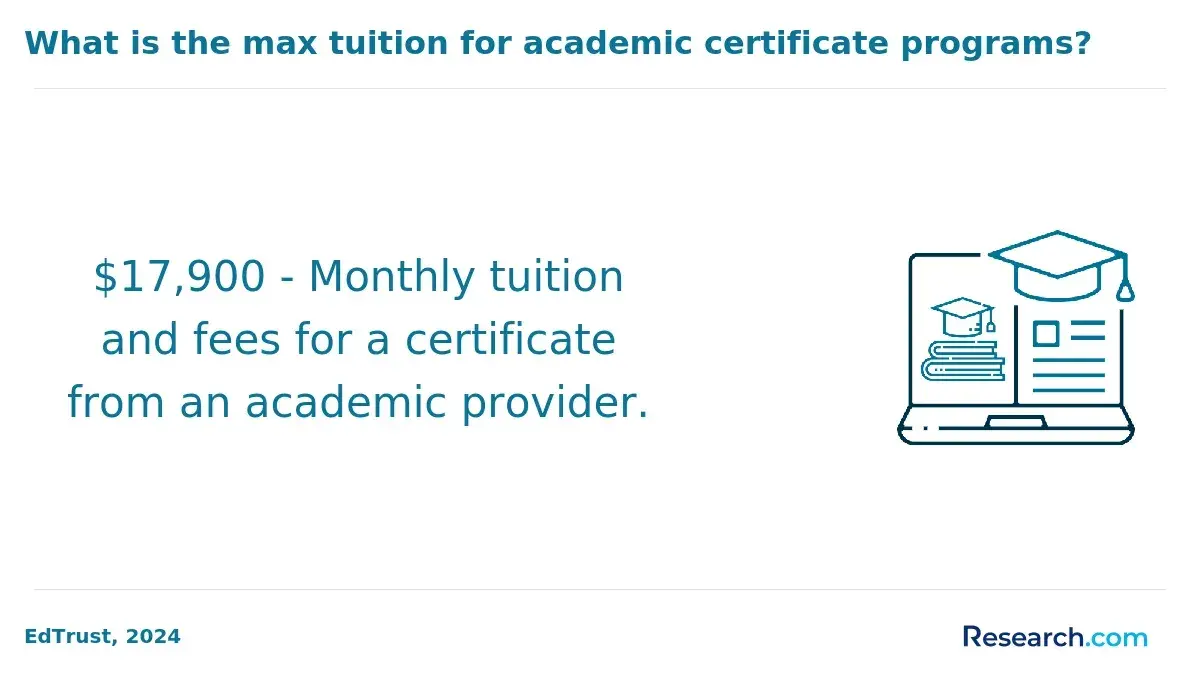
How Can You Verify the Accreditation of an Online Biomimicry Degree Program?
Accreditation is the first affordability filter because an unrecognized or ineligible program can block access to federal aid, transfer opportunities, employer tuition reimbursement, and some graduate or professional pathways. In the U.S., students should focus first on institutional accreditation, then ask whether programmatic accreditation exists or is relevant for the field.
Use this checklist before applying or paying an enrollment deposit.
- Search the school in the U.S. Department of Education's recognized accreditation database or the Council for Higher Education Accreditation database.
- Confirm the accreditor listed on the school's website matches the official database entry and is current, not historical or pending.
- Check the Federal Student Aid school search tool to confirm whether the institution participates in Title IV federal aid programs.
- Ask the admissions office whether the online biomimicry program itself is included under the institution's accreditation and financial aid approval.
- Request written clarification if the program is new, offered through a continuing education division, delivered with a third-party partner, or marketed as a certificate rather than a degree.
- Ask whether credits are transcripted as graduate degree credits and whether they can transfer into another accredited graduate program.
A common mistake is assuming that "online," "university-affiliated," or "certificate-bearing" automatically means accredited. Accreditation applies to institutions and, in some fields, specific programs; nondegree certificates may carry professional value but still have different aid and transfer rules than accredited degrees.
How Much Does an Accredited Online Biomimicry Degree Really Cost?
The real cost of an accredited online biomimicry degree is the total amount required to finish, not just the tuition rate advertised on a program page. Tuition is the instructional charge; mandatory fees are required institutional charges; total program cost adds books, software, materials, and other required expenses; net price is what remains after grants, scholarships, and other aid that does not need to be repaid.
The table below shows the cost categories students should request from each school. It is especially useful when a program uses an online estimator instead of publishing one fixed all-inclusive price.
| Cost item | What it means | Why it can change affordability |
| Tuition | The per-credit, per-course, term-based, or flat-rate instructional charge | A low per-credit price may still cost more if the program requires more credits or charges higher nonresident rates |
| Mandatory university fees | Required charges such as technology, student services, financial aid trust, graduate, or online learning fees | These fees may not appear in headline tuition and can be charged every term |
| Course-specific costs | Books, design tools, modeling software, lab kits, portfolio platforms, or special project materials | Biomimicry work may require research, visualization, or design resources beyond standard textbooks |
| Enrollment pattern | Full-time, part-time, accelerated, or stop-out enrollment | Part-time study may be easier to cash-flow, but repeated term fees can raise total cost |
| Net price | Estimated cost after grants, scholarships, employer aid, and tuition benefits | A higher-tuition program can become cheaper if it offers stronger gift aid or employer reimbursement compatibility |
Students comparing biomimicry with adjacent science and wellness pathways, such as a nutrition online degree, should use the same worksheet: required credits multiplied by tuition, plus mandatory fees, minus aid that does not need repayment. The lowest published tuition is helpful, but the lowest net price is the number that affects borrowing and cash payments.
Which Tuition Models Make Online Biomimicry Degree Programs More Affordable?
Tuition model matters because two programs with similar academic content can produce very different bills. Online graduate programs often use per-credit pricing, but some schools use flat-rate, cohort, subscription, or competency-based models in other fields, and those models can be cheaper for students who move quickly or transfer substantial credit.
When comparing online biomimicry and related programs, pay close attention to these models.
- Per-credit tuition: Usually easiest to calculate because total tuition equals credits required multiplied by the rate, but fees may still be charged per term or per course.
- Flat-rate tuition: Can reduce cost for students taking heavier course loads, but it may be expensive for part-time students if the flat rate applies above or below certain credit thresholds.
- Cohort pricing: Locks students into a set sequence and can make budgeting easier, but withdrawing or slowing down may affect cost and completion timing.
- Subscription or competency-based pricing: May reward faster progress, but students should verify accreditation, faculty support, assessment quality, and whether the model applies to graduate-level biomimicry content.
- Public in-state pricing: Often cheaper when available, though many online graduate programs charge a separate online rate that may not follow traditional residency pricing.
Students who are comparing sustainability-oriented study with management-focused career goals may also look at a healthcare management degree, where online tuition structures can differ sharply by institution. The same lesson applies: the best-value program is the one with the lowest credible net cost for the credential you actually need.
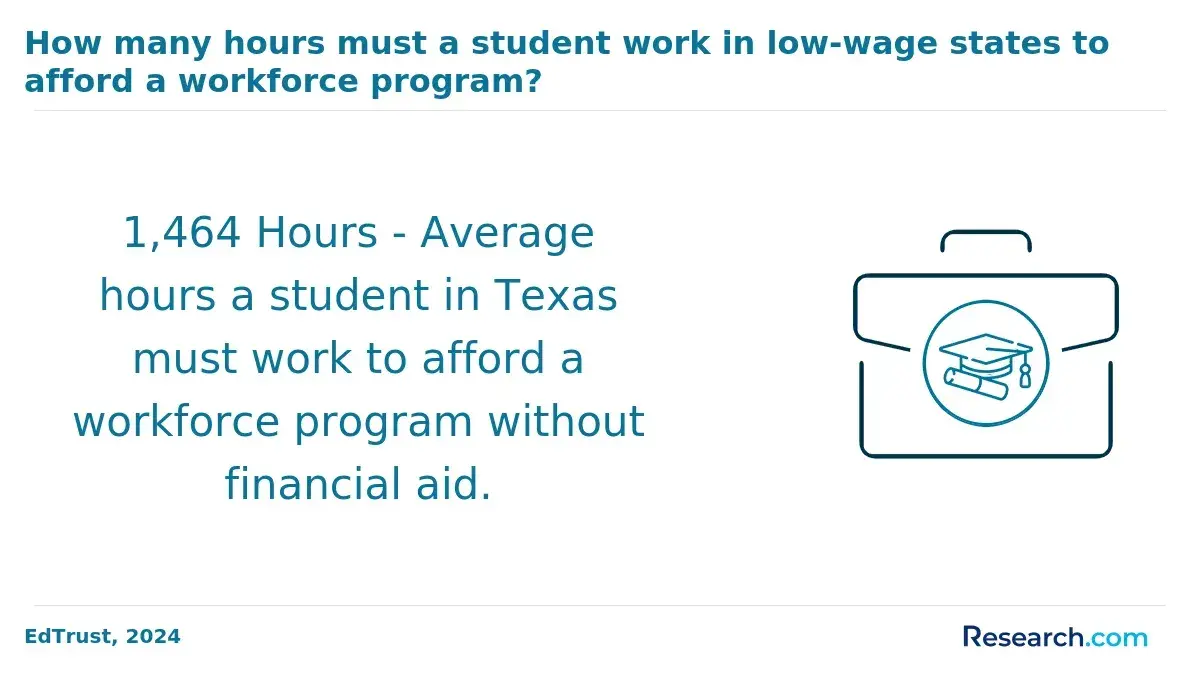
What Fees and Hidden Costs Should Online Biomimicry Degree Students Expect?
Hidden costs are not always hidden on purpose; they are often scattered across tuition pages, course catalogs, financial aid budgets, and student account policies. Biomimicry students should be especially careful with costs tied to design software, field observation, capstone work, portfolio development, and online technology.
Before choosing a program, ask the bursar, financial aid office, and program advisor to confirm the following costs in writing.
- Mandatory online learning, technology, student services, graduate, library, or program fees charged each term or course.
- Books, digital materials, research databases, ecological field guides, design software, modeling tools, or portfolio platforms required for coursework.
- Proctoring, identity verification, transcript, graduation, late-payment, installment-plan, or readmission fees.
- Travel or fieldwork expenses if the program includes optional or required residencies, field observation, conferences, intensives, or site-based projects.
- Tuition increases that may apply before a part-time student finishes the degree.
- Minimum credit, continuous enrollment, or residency rules that require students to pay for credits even after transferring prior graduate work.
A good cost estimate should show both the "academic year" budget used for aid and the "program completion" budget used for decision-making. If a school can only quote one term at a time, build your own estimate using required credits, expected course sequence, and the number of terms you expect to remain enrolled.
How Does FAFSA and Federal Financial Aid Work for Online Biomimicry Degree Programs?
FAFSA is the gateway to federal student aid for eligible U.S. students, but completing it does not automatically mean a specific online biomimicry program qualifies. The school must participate in Title IV federal aid, the student must meet eligibility rules, and the program must be an eligible degree or approved credential.
The federal aid process is similar across accredited online programs, including highly regulated professional fields such as online pharmacy schools. For biomimicry students, the key is to confirm eligibility before assuming loans or grants will cover the bill.
- Complete the FAFSA for the correct aid year using the school's federal code.
- Confirm that the biomimicry degree is Title IV eligible, not only offered by a Title IV-participating university.
- Review the financial aid offer and separate gift aid from loans that must be repaid.
- Ask whether enrollment intensity affects eligibility, especially if you plan to study part time.
- Compare the cost of attendance with the direct program cost so you understand how much aid is for tuition and how much is for living or indirect expenses.
- Borrow only what is necessary after applying grants, scholarships, employer benefits, and personal payment options.
Federal Student Aid set the maximum Federal Pell Grant at $7,395 for the 2024-25 award year, but graduate students generally do not receive Pell Grants. That means master's-level biomimicry students are more likely to rely on unsubsidized federal loans, employer benefits, scholarships, assistantships, or payment plans unless the school offers institutional grant aid.
Which Scholarships, Grants, and Tuition Benefits Can Help Pay for an Online Biomimicry Degree?
Scholarships and grants can change the affordability ranking because they reduce net price without requiring repayment. The main difference is that scholarships are often merit-, field-, identity-, employer-, or project-based, while grants are more often need-based or institutionally funded; either can be renewable or one-time.
Students in biomimicry should look beyond general graduate awards and search for funding tied to sustainability, conservation, design innovation, environmental justice, entrepreneurship, architecture, biology, engineering, and climate resilience. If you are comparing lower-cost workforce credentials in another field, resources on online schools for medical billing and coding can also show how aid eligibility and school accreditation affect short, career-focused online programs.
- Institutional scholarships: Ask whether the school offers graduate awards for online students and whether awards are renewable for every term.
- Departmental awards: Ask the biomimicry, sustainability, design, or environmental studies department about project grants, research support, and conference funding.
- Employer tuition assistance: Ask whether your employer reimburses graduate tuition, requires a minimum grade, caps annual benefits, or requires you to stay employed after completion.
- Professional association awards: Look for scholarships connected to sustainability, ecology, design, engineering, architecture, materials science, and environmental innovation.
- Military and public service benefits: Eligible students should ask about veterans benefits, public service pathways, and employer-based government tuition support.
- Payment plans: These do not reduce price, but they can reduce the need for high-interest private borrowing if fees are reasonable.
Always ask whether an award is renewable, stackable with other aid, available to online students, and contingent on full-time enrollment. A large one-term scholarship may be less valuable than a smaller renewable award that applies across the entire degree.
Can Transfer Credits, Prior Learning, and Competency-Based Study Lower the Cost of an Online Biomimicry Degree?
Transfer credit and prior learning can lower total cost only if the school accepts the credit toward required degree requirements. For graduate biomimicry programs, transfer limits are often stricter than in undergraduate programs, and schools may require a minimum number of credits to be completed in residence.
Career changers who have completed applied science, healthcare, design, or technical coursework should ask detailed transfer questions before enrolling. The same credit-audit mindset used by students researching an MA to LPN bridge program applies here: prior learning saves money only when it replaces required credits, not when it simply appears on an admissions file.
- Request an unofficial transfer review before committing to the program, especially if you have prior graduate credits.
- Ask the maximum number of transfer credits allowed and whether credits must be recent, graduate-level, letter-graded, or from a specific discipline.
- Confirm whether transferred credits reduce tuition, shorten time to completion, or only satisfy elective requirements.
- Ask whether professional experience, portfolios, military training, certifications, or employer training can count through prior-learning assessment.
- Check residency rules that require a minimum number of credits at the degree-granting institution.
- Get the approved transfer plan in writing before declining another offer or paying a nonrefundable deposit.
Competency-based study can also lower cost when students progress quickly, but it is uncommon in specialized graduate biomimicry degrees. If a school advertises competency-based pricing, verify accreditation, faculty interaction, assessment methods, and whether the credential is accepted by employers or doctoral programs relevant to your goals.
How Should Students Compare the Net Price, Quality, and Return on Investment of Online Biomimicry Degree Programs?
The best-value online biomimicry degree is not automatically the cheapest one. Biomimicry is interdisciplinary, so return on investment depends on whether the program helps you build marketable skills in systems thinking, biology-informed design, sustainability strategy, product development, architecture, engineering collaboration, research translation, and innovation leadership.
BLS reported a May 2024 median annual wage of $80,060 for environmental scientists and specialists, a related but not identical occupational category. Students should use that figure as labor-market context, not as a salary promise, because biomimicry graduates may work in design, sustainability consulting, education, research, entrepreneurship, corporate innovation, or environmental roles with different pay ranges.
Use the comparison below to avoid confusing low price with strong value.
| Decision factor | Low-cost red flag | Better comparison question |
| Accreditation | The school markets affordability but has unclear accreditation or aid eligibility | Is the institution recognized by an approved accreditor, and is the online degree included? |
| Total cost | The program advertises tuition but does not clearly show mandatory fees | What is the full cost to complete all required credits at my expected pace? |
| Curriculum fit | Biomimicry appears only as one elective in a broader degree | How much of the curriculum is specifically focused on biomimicry methods and application? |
| Career value | The program makes broad job or salary claims without evidence | What portfolios, projects, employer connections, alumni examples, and career services are available? |
| Net price | The school highlights scholarships but does not say whether online students qualify | What will I pay after renewable grants, scholarships, employer benefits, and transfer credits? |
| Flexibility | The program is cheap only for full-time students who can follow a fixed sequence | Can I complete the degree affordably while working, and will part-time enrollment add term fees? |
If your goal is not specifically nature-inspired design, compare opportunity cost against adjacent online degrees that lead to clearer professional pathways. For example, a student interested in health systems innovation may find that a healthcare management degree aligns better with employer expectations than a biomimicry degree, while a student focused on sustainable product design may benefit more from biomimicry despite a smaller program market.
Before enrolling, ask each school for a written total-cost estimate, a sample course plan, scholarship renewal rules, transfer-credit evaluation, accreditation confirmation, and examples of recent capstone or portfolio projects. The right choice is the accredited program with the strongest match between net price, curriculum depth, completion support, and your intended career direction.
Other Things You Should Know About Biomimicry
In the U.S., biomimicry is more commonly found at the graduate, certificate, or course-concentration level than as a standalone bachelor's degree. Undergraduate students often study biology, environmental science, engineering, architecture, industrial design, or sustainability first, then add biomimicry through electives or graduate study.
Many online graduate programs are designed for working adults, but workload depends on course length, project requirements, and whether classes are asynchronous. Ask how many hours students typically spend per week on readings, research, design work, and capstone projects before choosing full-time or part-time enrollment.
A biomimicry degree by itself usually does not lead to a state professional license. If your target career involves architecture, engineering, teaching, landscape architecture, or another licensed field, confirm the separate education, exam, supervised experience, and state board requirements.
Usually, yes, because certificates require fewer credits than master's degrees. However, a certificate may not qualify for federal aid, may not carry the same employer recognition, and may not support doctoral admission or advanced professional goals in the same way a graduate degree can.
References
- The Top Biomimicry Courses and Certificates of 2026 https://www.learnbiomimicry.com/blog/top-biomimicry-courses
- Cost & Financial Aid https://www.semesteratsea.org/financial-aid/
- Online Biomimicry Course | EcoTraining https://www.ecotraining.co.za/courses-experiences/online-biomimicry-course/
- Online Bachelor's Students Loans & Scholarships - Office of Financial Aid - Biola University https://www.biola.edu/financial-aid/scholarships-and-aid/online
- Tuition Fee in Poland - Study in Poland | Best Destination https://studyinpoland.biz/tuition-fee-in-poland/
- What is a Biomimicry Degree & Where Can You Get One? - NatuR&D https://naturnd.com/updates/what-is-a-biomimicry-degree-where-can-you-get-one/
- Biomimicry Professional Program - Biomimicry 3.8 https://www.biomimicry.net/what-we-do/professional-training/b-professional-certification/
- accredited programs — Biomimicry New England https://www.biomimicryne.org/accredited
- No Barriers to Education: Financial Aid at Sciences Po https://www.sciencespo.fr/en/news/no-barriers-to-education-financial-aid-at-sciences-po/