2027 Best Accredited Online Biomimicry Degree Programs: Compare Tuition, Admissions, and Career Outcomes

Co-Founder and Chief Data Scientist
Choosing an online biomimicry degree is difficult because the field is specialized and true accredited online options are limited. Biomimicry applies strategies found in nature to design, engineering, sustainability, product development, and environmental problem-solving. Demand for related skills is rising: the U. S. Bureau of Labor Statistics projects environmental scientists and specialists to grow 7% from 2024 to 2034. This guide is for working adults, career changers, and graduate applicants comparing cost, admissions, accreditation, flexibility, and outcomes so they can choose a program with realistic value.
Key Things You Should Know
- The clearest accredited U.S. online degree specifically titled in biomimicry is Arizona State University's online Master of Science in Biomimicry; many other options are biomimicry-aligned sustainability, design, biology, or engineering programs rather than standalone biomimicry degrees.
- Value depends less on the word "biomimicry" in the title and more on institutional accreditation, total tuition, capstone quality, faculty expertise, employer-relevant skills, and whether the curriculum fits your target role.
- Career outcomes are strongest when biomimicry is paired with a marketable domain such as environmental science, industrial design, architecture, product innovation, materials science, sustainability management, or UX and systems design.
Which Accredited Online Biomimicry Degree Programs Offer the Best Overall Value?
The best overall value is usually the program that combines recognized accreditation, a focused curriculum, manageable cost, flexible scheduling, and a clear connection to your intended career. Because standalone online biomimicry degrees are rare in the U.S., students should compare both dedicated biomimicry degrees and accredited online degrees that allow biomimicry-focused projects.
For most students seeking a degree with "biomimicry" in the title, Arizona State University's online Master of Science in Biomimicry is the strongest direct match. Students who want broader job flexibility may also consider accredited online sustainability, environmental science, design, engineering, or innovation programs where biomimicry can be used as a research, portfolio, or capstone focus.
The table below summarizes how the main types of accredited online biomimicry pathways compare. It is designed to help you avoid a common mistake: ranking programs only by name recognition instead of fit, cost, and career use.
| Program pathway | Best fit | Value strength | Potential limitation |
| Arizona State University Online Master of Science in Biomimicry | Students who want a dedicated graduate degree in biomimicry | Most direct match for biomimicry-specific study, online delivery, and interdisciplinary application | Best suited to students who already know how biomimicry supports their career goals |
| Accredited online sustainable design master's programs | Designers, product developers, architects, and creative professionals | Strong portfolio value when biomimicry is applied to design challenges | May not provide the same science depth as a biomimicry-specific curriculum |
| Accredited online environmental science or sustainability master's programs | Students targeting environmental consulting, conservation, climate, or ESG roles | Broader labor-market recognition across environmental careers | Biomimicry may be a project theme rather than a formal concentration |
| Accredited online engineering, materials, or innovation programs | Students focused on product systems, materials, manufacturing, or technical R&D | Can produce strong ROI when paired with technical experience | May require math, science, or engineering preparation |
In practical terms, the best-value choice depends on your starting point. A designer who wants to build a biomimicry portfolio may benefit more from a sustainable design degree than from a science-heavy program. A biologist or engineer who wants to move into innovation consulting may benefit more from a dedicated biomimicry master's program. A student seeking a broader environmental career may get better flexibility from an environmental science or sustainability degree with biomimicry-focused electives or projects.
Students should be cautious with unaccredited certificates, short courses, or professional workshops marketed as degree substitutes. These can be useful for continuing education, but they do not replace an accredited graduate degree when employers, doctoral programs, or financial aid eligibility require one.
What Accreditation Should Students Look for in an Online Biomimicry Degree Program?
Accreditation is the first filter because it affects financial aid eligibility, credit transfer, employer recognition, and admission to further study. For online biomimicry degrees, the most important credential is institutional accreditation from an agency recognized by the U.S. Department of Education or the Council for Higher Education Accreditation.
Biomimicry does not have a single required programmatic accreditor in the way nursing, pharmacy, counseling, or engineering may. That means students should focus on whether the university is institutionally accredited and whether any related programmatic accreditation applies to the discipline behind their career goal. For example, students comparing science-heavy or healthcare-adjacent graduate paths may need to evaluate accreditation more strictly, just as applicants do when reviewing online pharmacy schools.
The following accreditation checklist explains what to verify before applying. Use it before you submit an application fee or accept an admission offer.
- Confirm institutional accreditation through the school's official accreditation page and federal accreditation databases.
- Check whether the online program is included under the institution's accreditation and not offered through an unaccredited third-party provider.
- Ask whether credits can transfer into another accredited graduate program if your plans change.
- Review whether your target career requires a programmatic accreditation, license, or technical credential beyond the biomimicry degree.
- Verify whether the transcript and diploma identify the same degree as the official catalog listing.
A common red flag is a school that emphasizes "career certification" but avoids clear language about institutional accreditation. Another warning sign is a program that claims universal employer acceptance. Accreditation improves credibility, but it does not guarantee hiring, salary, licensure, or admission to a doctoral program.
How Do Tuition Costs Compare Across Accredited Online Biomimicry Degree Programs?
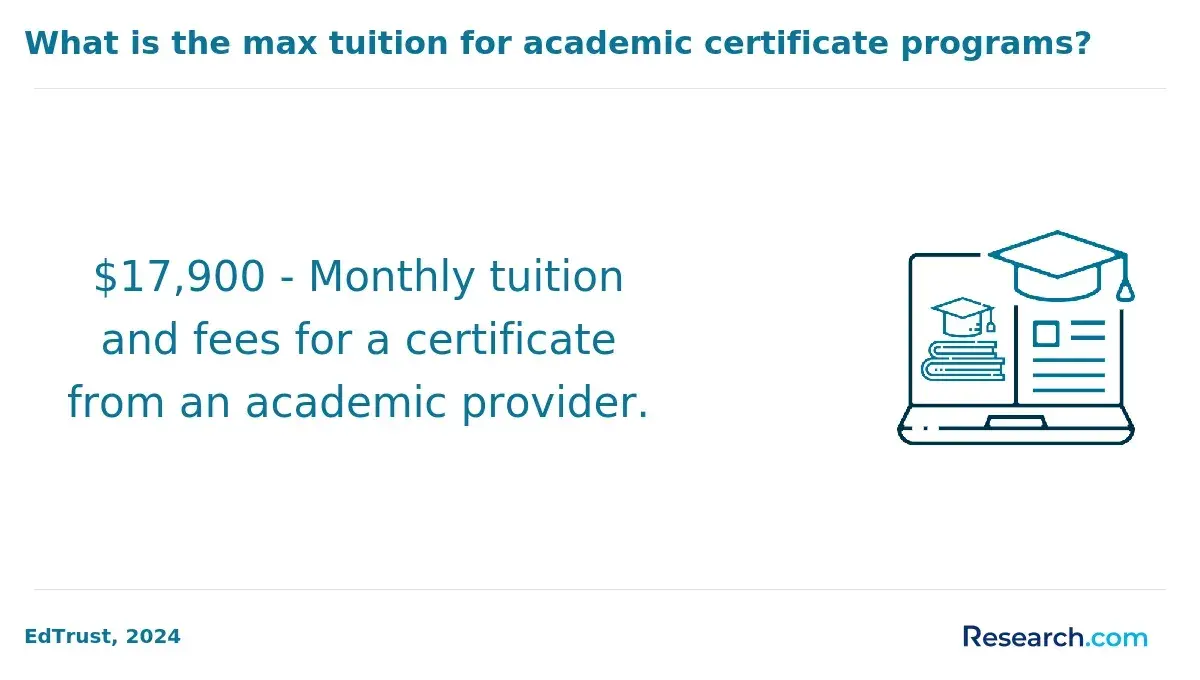
Tuition comparisons are challenging because biomimicry-specific online degrees are scarce and many universities price online graduate programs by credit, residency status, college, or program. The safest comparison is total cost of attendance, not tuition alone.
Students should ask each school for a full cost sheet before comparing offers. The cost items below are the ones most likely to change the real price of an online biomimicry or biomimicry-aligned degree.
- Per-credit tuition multiplied by the total number of required credits
- Online program fees, technology fees, graduate student fees, and course-specific fees
- Books, software, design tools, lab kits, fieldwork costs, or required professional memberships
- Residency-based tuition differences, if the school charges separate in-state and out-of-state rates
- Transfer credit limits, which can reduce cost only if the program accepts applicable graduate coursework
The table below shows how to compare tuition by program type rather than relying on advertised tuition alone. This matters because the lowest per-credit rate may not be the lowest total cost if the degree requires more credits or has higher fees.
| Cost factor | Dedicated online biomimicry master's | Biomimicry-aligned sustainability or design master's | What to ask the school |
| Credit requirement | Often structured as a focused graduate degree | Varies by discipline and capstone model | How many credits are required for graduation? |
| Tuition model | Usually program-specific online graduate tuition | May be standard graduate tuition or program-specific tuition | Is online tuition different from campus tuition? |
| Fees | May include online and technology fees | May include design, portfolio, software, or studio-related fees | What mandatory fees are charged each term? |
| Materials | May require case studies, research tools, or field observation resources | May require software, prototyping, or portfolio platforms | Which expenses are not included in tuition? |
| Employer reimbursement fit | Strong when tied to sustainability, innovation, or product development roles | Strong when aligned with current job duties | Will the school provide documentation for employer tuition benefits? |
When comparing prices, do not assume public universities are always cheaper or private nonprofit universities are always more expensive. Online graduate pricing can vary widely by program, and scholarships, employer reimbursement, transfer credits, and time to completion can change the net cost.
The most practical approach is to calculate three numbers for every program: tuition and mandatory fees, estimated total cost of attendance, and net cost after grants, scholarships, employer benefits, and tuition discounts. If a school cannot provide a clear estimate, treat that as a decision risk.
How Competitive Is Admission to Accredited Online Biomimicry Degree Programs?
Admissions competitiveness depends on whether the program is a dedicated graduate biomimicry degree or a broader sustainability, design, science, or engineering program. Most online master's pathways look for evidence that applicants can succeed in graduate-level interdisciplinary work, not just a specific undergraduate major.
A biomimicry degree may attract applicants from biology, architecture, industrial design, engineering, environmental studies, business innovation, education, and sustainability. This makes admissions less about one perfect background and more about whether your application clearly explains how biomimicry connects to your goals.
The table below outlines common admissions expectations. Requirements vary by school, so use this as a planning tool rather than a substitute for the official catalog.
| Requirement | What it usually shows | How to strengthen your application |
| Bachelor's degree from an accredited institution | You meet the baseline graduate education requirement | Confirm your prior institution is recognized and submit complete transcripts |
| Minimum GPA or academic review | You can handle graduate-level coursework | Use a statement or supplemental materials to explain upward trends or relevant experience |
| Statement of purpose | You understand biomimicry and have a realistic goal | Describe a concrete problem you want to solve using nature-inspired design |
| Resume or CV | You bring relevant work, research, design, science, or leadership experience | Highlight projects involving sustainability, systems thinking, product development, or environmental work |
| Portfolio, writing sample, or project sample | You can communicate complex ideas and apply them creatively | Include work that shows observation, analysis, design reasoning, or applied problem-solving |
Students should not assume admissions flexibility means lower academic quality. Many online graduate programs are designed for working adults and evaluate professional experience alongside academic records. At the same time, students should avoid programs that accept applicants instantly without transcripts, academic review, or clear graduate standards.
If your background is weak in science, design, or systems thinking, ask whether the school offers bridge coursework or recommended prerequisites. A short preparation plan can be more valuable than applying quickly and struggling once enrolled.
Which Learning Formats Offer the Greatest Flexibility in Online Biomimicry Degree Programs?
The most flexible online biomimicry programs are asynchronous, part-time friendly, and built around applied projects rather than frequent fixed meeting times. However, flexibility should not be confused with low structure. Biomimicry is an interdisciplinary field, so students often need feedback, collaboration, and guided practice to apply concepts well.
Online formats generally fall into several categories. The right one depends on your work schedule, learning style, and need for interaction.
| Format | Flexibility level | Best for | Trade-off |
| Asynchronous online courses | High | Working adults, caregivers, and students in different time zones | Requires strong self-management and weekly planning |
| Synchronous online courses | Moderate | Students who want live discussion and faculty interaction | Fixed meeting times may conflict with work |
| Hybrid or low-residency programs | Moderate | Students who benefit from fieldwork, studio critique, or intensive collaboration | Travel costs and schedule blocks can increase total cost |
| Project-based online programs | High to moderate | Students building a portfolio, capstone, or employer-sponsored project | Quality depends heavily on mentor feedback and project scope |
Before enrolling, students should ask how often courses require live attendance, whether group projects are scheduled across time zones, and how capstone mentoring works. A program can be fully online but still difficult for a full-time employee if deadlines cluster or live sessions are required during business hours.
A useful rule is to match the format to your career goal. If you need a portfolio, choose a program with structured critique and applied projects. If you need scientific depth, choose a program with strong research methods and faculty feedback. If you need maximum schedule control, prioritize asynchronous courses with predictable weekly modules.
What Student Support Services Improve Success in Online Biomimicry Degree Programs?
Student support can make a major difference in an online biomimicry degree because students often work across disciplines. A biology-trained student may need design support, while a designer may need help with scientific evidence and research methods.
The most valuable services are those that help students turn coursework into credible projects, portfolios, research proposals, or career transitions. Look for support that is available to online students, not just campus students.
- Faculty advising that helps students connect biomimicry coursework to a specific career pathway
- Writing and research support for literature reviews, capstones, and evidence-based design proposals
- Career coaching for sustainability, design, environmental consulting, innovation, or product roles
- Portfolio or project review, especially for students pursuing design, consulting, or innovation work
- Library access to scientific databases, case studies, industry reports, and citation tools
- Online tutoring, technical support, accessibility services, and mental health resources
A common mistake is assuming online students receive the same level of mentoring as campus students. Ask direct questions about advising frequency, response times, capstone supervision, and whether online students can access career fairs, employer events, alumni networks, and research opportunities.
Strong support is especially important for career changers. If you are moving from education, business, healthcare, or design into sustainability or innovation, you need more than course access; you need help translating your prior experience into a coherent professional story.
Which Financial Aid Options Are Available for Accredited Online Biomimicry Degree Students?
Financial aid eligibility usually depends on whether the school is accredited, whether the program is degree-granting, and whether the student meets enrollment requirements. Graduate certificates, noncredit courses, and unaccredited programs may not qualify for the same aid as accredited degree programs.
For graduate students, federal Direct Unsubsidized Loans remain a common funding source, with an annual limit of $20,500 for eligible graduate and professional students. That limit can help cover part of a program, but it also means students should compare net cost carefully and avoid borrowing more than the career outcome can reasonably support.
The main aid options below are worth comparing across schools. Students in other applied online fields use similar checks when evaluating affordability, including those comparing online schools for medical billing and coding.
- Federal Direct Unsubsidized Loans for eligible graduate students enrolled at accredited institutions
- Graduate PLUS Loans, which may cover remaining costs but can increase debt substantially
- Institutional scholarships, graduate awards, alumni discounts, or program-specific tuition grants
- Employer tuition reimbursement for students applying biomimicry to sustainability, design, engineering, or innovation work
- Military and veteran education benefits, when the institution and program are approved for participation
- Payment plans that spread tuition across a term without requiring a larger loan balance
When comparing aid offers, focus on gift aid first, then employer support, then federal loans, and finally private loans if needed. Private loans can have variable terms and fewer protections, so they should be evaluated carefully.
Before committing, ask the financial aid office whether your enrollment level affects aid, whether tuition changes by term, and whether scholarships renew automatically. The lowest advertised tuition is not always the best deal if another school offers stronger institutional aid or employer-aligned reimbursement documentation.
Which Career Outcomes Are Associated With Accredited Online Biomimicry Degree Programs?
Biomimicry is not a single licensed occupation. It is a method that can strengthen careers in sustainability, design, environmental science, architecture, product innovation, engineering, education, consulting, and organizational strategy. That means career outcomes depend heavily on the student's prior experience and the professional field where biomimicry is applied.
The strongest outcomes usually occur when students combine biomimicry with a recognizable job function. For example, a sustainability analyst can use biomimicry to evaluate regenerative systems, while an industrial designer can use it to create nature-inspired products. Students interested in organizational sustainability or operations may also compare adjacent pathways such as a healthcare management degree if they want to apply sustainability thinking in healthcare systems rather than product or environmental design.
Salary should be evaluated by target occupation, not by the degree title alone. The U.S. Bureau of Labor Statistics reported a May 2024 median wage of $80,060 for environmental scientists and specialists, a common related pathway for students applying sustainability and systems thinking. That figure is useful as context, but it does not predict earnings for every biomimicry graduate because roles vary widely by industry, location, experience, and technical skill.
The table below connects biomimicry study with realistic career directions. It is not a guarantee of placement; it is a way to match degree features to job markets.
| Career direction | How biomimicry is used | Helpful complementary skills |
| Sustainability specialist or analyst | Applies nature-inspired systems to resource efficiency, circular design, and organizational sustainability | Data analysis, ESG reporting, life-cycle thinking, project management |
| Environmental consultant | Uses ecosystem models to inform restoration, adaptation, or design recommendations | Environmental regulations, GIS, technical writing, field methods |
| Industrial or product designer | Develops products, materials, or systems inspired by biological strategies | CAD, prototyping, user research, portfolio development |
| Innovation strategist | Uses biomimicry frameworks to guide product, service, or systems innovation | Business strategy, facilitation, design thinking, market research |
| Educator or curriculum developer | Teaches biomimicry principles in science, design, sustainability, or STEM settings | Instructional design, communication, assessment, science literacy |
Students should be realistic: a biomimicry degree alone may not qualify someone for engineering roles, architecture licensure, or advanced scientific research jobs without the required technical background. The degree is most valuable when it adds a distinctive problem-solving framework to an existing professional identity.
How Do Online and Campus-Based Biomimicry Degree Programs Compare?
Online and campus-based biomimicry programs can both be credible if they are accredited and academically rigorous. The better choice depends on whether you need location flexibility, hands-on facilities, fieldwork, studio culture, or direct access to campus research networks.
Online programs are often better for working adults because they allow students to apply coursework to current jobs, local ecosystems, or employer-sponsored projects. Campus-based programs may be better for students who need labs, studios, fabrication facilities, field sites, or intensive peer collaboration.
The comparison below shows the main trade-offs. Use it to decide which format fits your life and learning needs rather than assuming one format is automatically better.
| Factor | Online biomimicry pathway | Campus-based pathway |
| Schedule | Often better for working adults and students outside major university cities | Better for students who can attend daytime classes or relocate |
| Applied projects | Can be tied to local employers, communities, or ecosystems | May offer easier access to labs, studios, and faculty research groups |
| Networking | Depends on virtual events, cohort design, alumni access, and faculty engagement | Often stronger for informal networking and campus-based collaboration |
| Cost | May reduce relocation and commuting costs | May include campus fees, housing, transportation, or lost work time |
| Learning style | Best for self-directed learners who can manage deadlines independently | Best for students who prefer frequent in-person feedback and structured routines |
Students comparing online learning in other science-adjacent fields, such as a nutrition online degree, should use the same logic: online delivery can be effective, but the program must provide the experiences, supervision, and applied practice required for the intended outcome.
A good online program should not feel isolated. Look for cohort interaction, faculty office hours, capstone mentoring, digital collaboration tools, and career services. If a program is mostly recorded lectures with little feedback, it may be convenient but less valuable for a field that depends on applied problem-solving.
How Should Students Choose the Best Accredited Online Biomimicry Degree Program?
The best accredited online biomimicry degree is the one that fits your career goal, budget, academic background, and preferred learning format. Start with accreditation, then compare curriculum, cost, faculty, applied projects, student support, and career relevance.
Use the following steps to make a practical decision. They are designed to help you avoid overpaying for a program that sounds innovative but does not support your actual next move.
- Define your target role first, such as sustainability analyst, product designer, environmental consultant, innovation strategist, or educator.
- Choose the program category that fits that role: dedicated biomimicry, sustainable design, environmental science, engineering, or sustainability management.
- Verify institutional accreditation and confirm the online degree is listed in the official academic catalog.
- Request a full tuition and fee estimate, then compare net cost after scholarships, employer benefits, and aid.
- Review the curriculum for biology, design, systems thinking, research methods, and applied capstone work.
- Ask how online students receive advising, career support, faculty feedback, and portfolio or project mentoring.
- Compare admissions requirements with your background and identify any prerequisites you may need before enrolling.
- Contact alumni or admissions staff to understand how graduates have used the degree, while remembering that outcomes vary by student.
There are also situations where a biomimicry degree may not be the best investment. If you want a licensed clinical, engineering, architecture, or healthcare role, you may need a degree with specific accreditation or licensure alignment. For example, someone seeking a direct nursing pathway would be better served by comparing a career-specific option such as an MA to LPN bridge program rather than a biomimicry degree.
The biggest mistakes are choosing a program because it sounds unique, ignoring total cost, failing to verify accreditation, overlooking career services, and assuming biomimicry by itself is a job title. The strongest applicants and graduates treat biomimicry as a specialized framework added to a clear professional direction.
If two programs both look credible, prioritize the one with the better combination of applied projects, faculty fit, affordable net cost, and career alignment. Paying more can make sense if the program provides stronger mentoring, a better capstone, or a clearer path into your target field, but higher price alone should not be treated as proof of higher quality.
Other Things You Should Know About Biomimicry
No. Biomimicry studies nature's strategies and applies them to human design challenges. Bioengineering typically uses biology and engineering to develop medical, biological, or technical systems. The fields can overlap, but they are not interchangeable.
Yes, many biomimicry students come from design, business, education, architecture, or sustainability backgrounds. However, students without science preparation may need extra effort in biology, ecology, research methods, or systems thinking.
Some design-focused programs may request a portfolio, while science or sustainability programs may prefer writing samples, resumes, or statements of purpose. A strong project sample can help show how you think, solve problems, and communicate ideas.
A certificate can be useful for professional development or exploring the field. A degree is usually better if you need graduate credentials, deeper research training, financial aid eligibility, or a stronger academic signal for employers or doctoral study.
References
- Professional Training FAQ - Biomimicry 3.8 https://biomimicry.net/professional_training_faq/
- Top Biomimicry Master Programmes for 2025/2026 https://www.learnbiomimicry.com/blog/biomimicry-master-programmes
- Online Biomimicry Course | EcoTraining https://www.ecotraining.co.za/courses-experiences/online-biomimicry-course/
- What is a Biomimicry Degree & Where Can You Get One? - NatuR&D https://naturnd.com/updates/what-is-a-biomimicry-degree-where-can-you-get-one/
- accredited programs — Biomimicry New England https://www.biomimicryne.org/accredited
- Why Employment Outcome Rates Matter | ACI Learning https://www.acitechacademy.com/blog/why-employment-outcome-rates-matter-a-guide-for-students-and-employers/
- Biomimicry Professional Program - Biomimicry 3.8 https://www.biomimicry.net/what-we-do/professional-training/b-professional-certification/
- Biomimicry as second nature: Research centers and degree programs encourage eco-friendly design https://bulletin.ceramics.org/article/biomimicry-as-second-nature-research-centers-and-degree-programs-encourage-eco-friendly-design/