
2026 Online Biomimicry Degree Programs With No Application Fee and Rolling Admissions

Co-Founder and Chief Data Scientist
Students interested in biomimicry often face a practical problem: the field is interdisciplinary, but dedicated online degrees are rare, and admissions policies are not always easy to compare. NCES data published in 2024 shows that more than half of U.S. undergraduates took at least one distance education course in the most recent national count, making online program quality and cost transparency increasingly important.
This guide is for career changers, designers, scientists, engineers, sustainability professionals, and working adults who want to know whether a no-fee, rolling-admission online biomimicry degree is truly flexible, affordable, and worth pursuing.
Key Things You Should Know
- Dedicated U.S. online biomimicry degrees that publicly advertise both no application fee and rolling admissions are extremely limited; students often need to compare biomimicry-specific programs with adjacent sustainability, design, engineering, biology, or environmental science degrees.
- A waived application fee saves only the application charge, often far less than tuition, technology fees, transcript fees, residency costs, or lost scholarship opportunities; College Board's 2024 pricing report shows published tuition and fees remain the dominant cost driver.
- Rolling admissions improves timing flexibility, but it does not mean automatic admission, unlimited seats, or no financial aid deadlines; applying early is still usually safer for course availability, aid packaging, and employer-tuition planning.
Which Online Biomimicry Degree Programs Have No Application Fee and Rolling Admissions?
Students should be cautious about assuming that there are many online degree programs specifically titled "biomimicry" that also have both no application fee and rolling admissions. In the U.S., biomimicry is more commonly offered as a specialized master's degree, certificate, concentration, design studio focus, sustainability pathway, or research area rather than as a large category of no-fee online degrees.
The table below summarizes the realistic comparison students should make before applying. It separates biomimicry-specific options from adjacent online degrees that may support biomimicry-related careers but are not the same academic credential.
| Program type | Typical online availability | No application fee? | Rolling admissions? | Best use for students |
| Online degree specifically in biomimicry | Very limited in the U.S. | Not consistently advertised | Often uses posted start terms or priority deadlines | Best for students who want the biomimicry label, nature-inspired design coursework, and a specialized curriculum |
| Online sustainability, environmental science, or systems-design degree with biomimicry electives | More common than biomimicry-specific degrees | Varies by school and term | Often available at online institutions with multiple starts | Best for students who want broader career flexibility in sustainability, consulting, design, policy, or environmental roles |
| Online certificate or graduate certificate in biomimicry | More common than full degrees | May have lower or waived application requirements | Varies widely | Best for professionals who already have a degree and want focused biomimicry training without committing to a full program |
| Online biology, engineering, architecture, or product-design degree with nature-inspired design projects | Common in related disciplines, less common with explicit biomimicry branding | Varies by institution | Some programs offer rolling or frequent admissions | Best for students whose target roles require a recognized technical discipline more than a biomimicry-specific credential |
The main takeaway is that "no application fee" and "rolling admissions" should be treated as search filters, not proof of quality. If a program does not clearly publish both policies, ask the admissions office to confirm the current fee, whether the waiver is permanent or promotional, the next available start date, and whether seats are reviewed continuously or only after a priority deadline.
How Does Rolling Admission Work for Online Biomimicry Degree Programs?
Rolling admission means a school reviews applications as they arrive instead of waiting for one fixed deadline. For online biomimicry-related programs, this can help working adults apply when transcripts, references, and employer tuition paperwork are ready, rather than waiting for a traditional fall cycle.
However, rolling admission usually still operates within academic terms. A program may accept applications continuously but assign admitted students to the next available start date, and some courses may only run once or twice per year. Students comparing biomimicry with other online health or science pathways, such as online pharmacy schools, will notice the same distinction: flexible admissions does not always mean flexible course sequencing.
Use this comparison to understand what rolling admissions actually changes and what it does not change.
| Admissions feature | Rolling admission | Fixed deadline admission | Decision impact |
| Application review | Applications are reviewed as they are completed | Applications are reviewed after a set date | Rolling admission may produce faster decisions |
| Start dates | May include several starts per year, but not always | Often tied to fall, spring, or summer entry | Start-date frequency matters more than the phrase "rolling" |
| Seat availability | Seats can fill before late applicants submit | Seats are considered after the deadline | Applying early can still improve planning options |
| Financial aid timing | Aid deadlines may be separate from admissions review | Aid deadlines may align with admission cycles | Students must verify FAFSA, scholarship, and assistantship dates separately |
A common mistake is assuming rolling admission means there is no deadline. In reality, late applicants may be admitted but pushed to a later term, miss scholarship consideration, or find that required first-term courses are already full.
How Much Can Students Save by Choosing an Online Biomimicry Degree With No Application Fee?
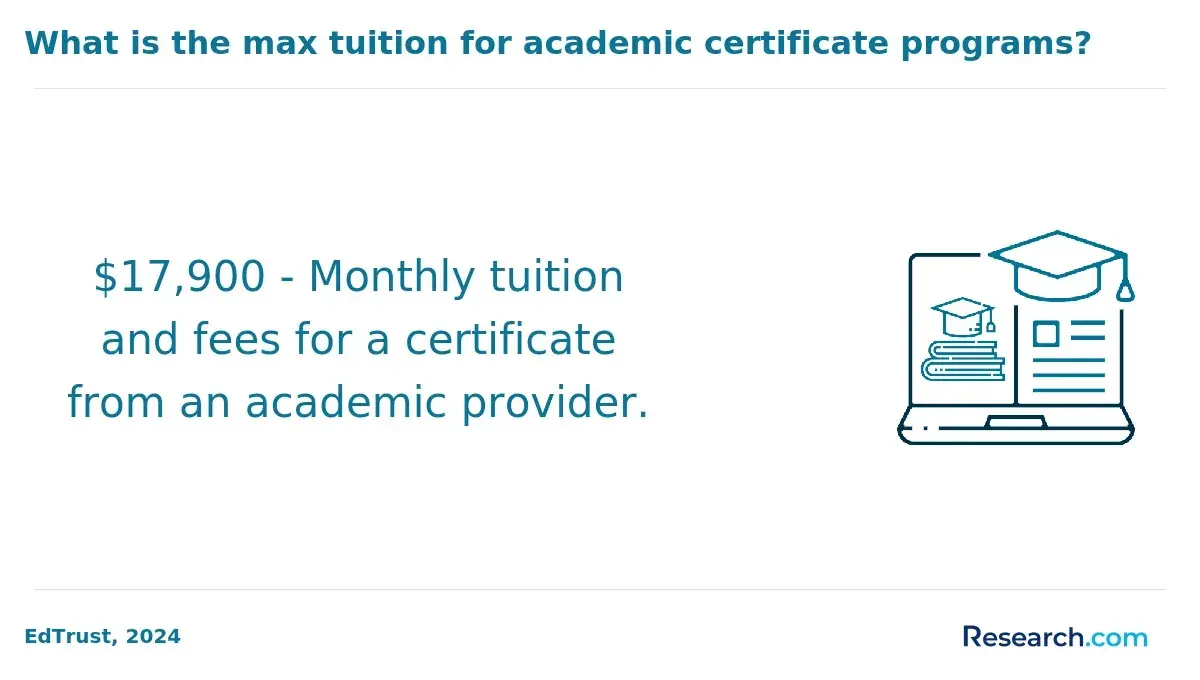
A no-application-fee policy can reduce the upfront cost of applying, especially for students comparing several programs. But it rarely determines whether an online biomimicry degree is affordable because tuition, program fees, software, books, required residencies, and time to completion usually account for far more of the total cost.
The most useful way to measure savings is to separate immediate application savings from full enrollment cost. This table shows the difference between the two.
| Cost category | What it includes | Why it matters |
| Application fee | The charge paid to submit an application | A waived fee lowers the cost of applying but does not reduce tuition |
| Transcript and test-score fees | Official transcript orders, evaluation fees, or score reports if required | These costs may still apply even when the application is free |
| Tuition | Per-credit or per-term instructional charges | This is usually the largest cost driver |
| Program and technology fees | Online learning, student services, lab, studio, platform, or portfolio fees | Fees can narrow or erase savings from a waived application fee |
| Residency or travel costs | Optional or required intensives, fieldwork, studios, or campus visits | Even one required trip can matter for working adults and out-of-state students |
College Board's 2024 Trends in College Pricing report lists published tuition and fees for four-year institutions as a major student-cost pressure point, which means applicants should view a waived application fee as a convenience rather than a full affordability strategy. A higher-tuition program with no application fee may still cost more than a lower-tuition program that charges a modest application fee.
Before treating a no-fee program as the cheaper option, run a simple comparison. This process helps prevent the common mistake of focusing on the smallest visible cost while missing the largest one.
- Multiply tuition by the total number of required credits.
- Add mandatory online, technology, student-services, course, and graduation fees.
- Add estimated books, software, design tools, field supplies, portfolio platforms, or travel costs.
- Subtract confirmed grants, scholarships, employer tuition benefits, military benefits, or transfer-credit savings.
- Compare the final estimated program cost, not just the application fee.
What Are the Admission Requirements for No-Fee Online Biomimicry Degree Programs?
No-fee online biomimicry degree programs generally do not have easier academic standards simply because the application is free. Admissions requirements depend on whether the program is undergraduate, graduate, technical, design-focused, science-focused, or interdisciplinary.
For graduate-level biomimicry and related sustainability programs, schools commonly evaluate academic preparation, professional goals, and readiness for interdisciplinary work. Students coming from adjacent fields, including those exploring a healthcare management degree, may need to explain how systems thinking, sustainability, design, or ecological problem-solving connects to their career plan.
Applicants should expect some combination of the following materials. Requirements vary by institution, so students should verify the current checklist before requesting recommendations or paying for transcripts.
- Official transcripts from prior colleges or universities, with a minimum GPA requirement for many graduate programs.
- A statement of purpose explaining interest in biomimicry, sustainability, design, biology, engineering, architecture, business innovation, or environmental problem-solving.
- Resume or curriculum vitae showing relevant academic, professional, creative, research, or volunteer experience.
- Letters of recommendation, especially for graduate programs that assess research readiness or professional fit.
- Portfolio, writing sample, design project, or technical sample when the program emphasizes applied design or innovation.
- Prerequisite coursework in biology, ecology, design, engineering, environmental science, statistics, or research methods when required by the curriculum.
A red flag is any program that markets easy admission but gives little detail about curriculum, faculty expertise, learning outcomes, accreditation, or student support. A free application is helpful only if the program still has clear academic standards and transparent completion requirements.
When Should Students Apply to Online Biomimicry Degree Programs With Rolling Admissions?
Students should apply as early as they can submit a complete and polished application, even when a program uses rolling admissions. Early application is especially important for online biomimicry programs because specialized courses may have limited seats, may follow a sequence, or may not be offered every term.
The best application timeline works backward from the desired start date. This is especially useful for working adults who need employer approval, childcare planning, workload adjustments, or time to compare financial aid packages.
- Six to nine months before the target start, identify biomimicry-specific and adjacent programs that match your career goal.
- Four to six months before the target start, confirm whether the application fee is currently waived and whether admission is truly rolling.
- Three to five months before the target start, request transcripts and recommendations, because third-party delays can make an otherwise flexible admissions process feel rushed.
- Two to four months before the target start, submit the application early enough to receive an admission decision before financial aid and registration deadlines.
- After admission, confirm course availability, transfer-credit decisions, tuition due dates, and whether the first-term courses support your intended completion plan.
The biggest timing mistake is waiting because a school says it accepts applications year-round. Rolling review may continue, but scholarships, employer reimbursement cycles, orientation dates, and course registration windows can close earlier.
How Can Students Strengthen an Online Biomimicry Degree Application?
A strong biomimicry application shows that the student understands both sides of the field: biological inspiration and practical problem-solving. Admissions committees are usually looking for evidence that applicants can work across disciplines, not just enthusiasm for nature-inspired design.
Applicants from technical, healthcare, business, or skilled allied-health backgrounds can strengthen their materials by connecting prior experience to sustainability challenges. For example, someone researching online schools for medical billing and coding may not be a traditional biomimicry applicant, but could still frame an interest in healthcare systems, waste reduction, workflow design, or patient-centered innovation if the program welcomes interdisciplinary students.
Use the application to prove fit rather than simply repeating that biomimicry is interesting. These steps make the application more specific and more persuasive.
- Define the problem you want to solve, such as low-waste product design, climate adaptation, regenerative architecture, water management, materials innovation, or organizational sustainability.
- Connect that problem to your previous coursework, professional experience, design portfolio, research, volunteer work, or independent projects.
- Show readiness for interdisciplinary study by naming relevant skills in research, ecology, design thinking, data analysis, communication, prototyping, or project management.
- Ask recommenders to discuss your ability to learn across fields, complete independent work, and collaborate with people outside your original discipline.
- Tailor the statement of purpose to the program's curriculum instead of submitting a generic sustainability essay.
Do not submit a weaker application simply because there is no application fee. A free application can encourage students to apply broadly, but rolling admissions programs still reject applicants who do not meet academic requirements or who fail to explain why the program fits their goals.
Are Online Biomimicry Degree Programs With No Application Fees Accredited and Legitimate?
Online biomimicry programs can be legitimate, but students should verify accreditation carefully because the field includes universities, certificates, professional training providers, workshops, and design consultancies. Accreditation matters most when a student wants federal financial aid, transfer credit, employer reimbursement, graduate-school eligibility, or a credential recognized by traditional academic institutions.
In the U.S., the baseline check is institutional accreditation from an accreditor recognized by the U.S. Department of Education or the Council for Higher Education Accreditation. Programmatic accreditation may be relevant if the biomimicry pathway is embedded in a regulated field such as architecture, engineering, education, or certain health professions, but biomimicry itself is not typically a licensed profession.
Students should confirm the following before enrolling. This is especially important when a program advertises flexible admissions, short completion time, or unusually low upfront costs.
- The institution has recognized U.S. institutional accreditation, not only membership in a professional association.
- The credential is a degree, graduate certificate, undergraduate certificate, or noncredit professional certificate, and the school clearly states which one it is.
- Credits can be transferred or applied to a future degree only if the receiving institution accepts them.
- The online format is authorized for the student's state, especially for programs involving fieldwork, internships, or supervised practice.
- Any advertised career outcomes are supported by transparent data rather than broad claims about sustainability jobs.
A major red flag is a provider that uses university-like language but does not clearly disclose whether students earn academic credit. Noncredit biomimicry training may still be valuable for professional development, but it should not be confused with an accredited degree.
How Do Financial Aid and Total Costs Compare Among Online Biomimicry Degree Programs?
Financial aid and total cost can vary more than application policies. A program with no application fee may still have higher tuition, fewer scholarships, limited transfer-credit options, or required intensives that increase out-of-pocket cost.
Students comparing biomimicry with other career-oriented online pathways, such as an MA to LPN bridge program, should use the same cost logic: the best-value program is not automatically the one with the easiest application. It is the one with the strongest combination of accredited coursework, manageable total cost, realistic completion time, and career relevance.
The table below shows the cost and aid factors that matter most after the application fee has been removed from the decision.
| Cost or aid factor | What to compare | Why it affects value |
| Per-credit tuition | Resident, nonresident, online, and graduate rates | Small per-credit differences compound across a full degree |
| Total required credits | Degree credits after transfer or prerequisite review | A lower tuition rate can be offset by a longer curriculum |
| Transfer-credit policy | Maximum accepted credits and review process | Accepted credits can reduce both time and tuition |
| Scholarships and grants | Priority deadlines, eligibility rules, and renewal requirements | Rolling admission does not always extend scholarship deadlines |
| Employer tuition assistance | Approved providers, grade requirements, reimbursement timing | Working adults may need admission decisions before employer deadlines |
| Federal aid eligibility | Degree-seeking status and institutional accreditation | Noncredit certificates may not qualify for federal student aid |
FAFSA timing is a separate planning issue. Federal Student Aid's current FAFSA cycle has its own annual availability and deadline rules, so students should not assume that admission timing and aid timing are identical.
Which Students Benefit Most From No-Fee, Rolling-Admission Online Biomimicry Degrees?
No-fee, rolling-admission online biomimicry degrees are most useful for students who need application flexibility but are still willing to evaluate academic quality and long-term value. These policies can reduce friction, but they should not replace a careful review of curriculum, faculty, accreditation, cost, and career fit.
Students who benefit most often include working professionals, military-affiliated students, parents, career changers, and applicants comparing interdisciplinary pathways. Someone considering a nutrition online degree, for instance, may also be drawn to biomimicry if their interests include food systems, regenerative agriculture, sustainable packaging, or human-centered design inspired by biological systems.
The fit is strongest when the student's goal requires flexibility and the program's curriculum clearly supports that goal. These examples show when the no-fee and rolling-admission features are meaningful.
- Working adults who need to apply after employer tuition-benefit approval or during a less demanding work season.
- Career changers who want to test multiple interdisciplinary options without paying several application fees.
- Students with complete transcripts and recommendations who can take advantage of faster review without rushing the application.
- Applicants who need a near-term start date but still want an accredited degree rather than informal training only.
- Professionals building skills for sustainability consulting, product innovation, environmental planning, regenerative design, education, or organizational change.
Students should be more cautious if they need a licensed profession, a highly technical engineering credential, a professionally accredited architecture pathway, or a degree with predictable placement into a specific occupation. In those cases, discipline-specific accreditation, licensure eligibility, and employer recognition may matter more than admissions convenience.
How Should Students Choose Among No-Fee Online Biomimicry Degree Programs?
The best way to choose among no-fee online biomimicry degree options is to rank programs by goal fit first, total cost second, and admissions convenience third. A free application and rolling admission can make a strong program easier to access, but they cannot fix a weak curriculum, poor accreditation status, limited faculty expertise, or unclear career relevance.
Use a structured comparison process before applying or enrolling. This keeps the decision focused on return on investment rather than marketing language.
- Define the career outcome you want, such as sustainable product design, environmental consulting, architecture support, education, research preparation, corporate sustainability, or entrepreneurship.
- Decide whether you need a biomimicry-specific credential or whether a broader sustainability, environmental science, design, engineering, or business degree would be more useful.
- Verify institutional accreditation and, where relevant, any discipline-specific accreditation or licensure implications.
- Confirm the application fee policy in writing, including whether the waiver is permanent, term-specific, employer-based, alumni-based, military-based, or promotional.
- Ask whether admissions are truly rolling, how quickly decisions are made, and which start dates are currently open.
- Compare total program cost after tuition, fees, transfer credit, scholarships, employer benefits, and required travel.
- Review the curriculum for biology, ecology, design thinking, systems thinking, research methods, prototyping, sustainability strategy, and applied project work.
- Ask about student support, faculty access, portfolio development, internship options, capstone expectations, and alumni outcomes.
The final decision should answer one practical question: would you still choose this program if it charged an application fee? If the answer is yes because the curriculum, cost, accreditation, and career fit are strong, the waived fee is a useful bonus. If the answer is no, the free application is probably distracting you from a better long-term option.
Other Things You Should Know About Biomimicry
Biomimicry can fit all three, depending on the program. Some curricula emphasize biology and ecology, others focus on product or systems design, and many connect nature-inspired strategies to sustainability, innovation, architecture, or business.
Yes. Many professionals enter biomimicry-related work through biology, engineering, architecture, industrial design, environmental science, sustainability, education, or business backgrounds. A biomimicry credential can add focus, but the best degree depends on the role you want.
Some are fully online, while others may include optional or required intensives, field experiences, studio work, or synchronous sessions. Students should confirm format details before enrolling because travel and scheduling requirements can affect total cost.
Useful skills include systems thinking, ecological literacy, design thinking, research, communication, data interpretation, prototyping, sustainability analysis, and collaboration across disciplines. Employers may also value a portfolio or applied project experience.
References
- Online Bachelor's Students Loans & Scholarships - Office of Financial Aid - Biola University https://www.biola.edu/financial-aid/scholarships-and-aid/online
- International Student Scholarship Search & International Financial Aid https://www.iefa.org/
- Online Biomimicry Course | EcoTraining https://www.ecotraining.co.za/courses-experiences/online-biomimicry-course/
- Top Biomimicry Master Programmes for 2025/2026 https://www.learnbiomimicry.com/blog/biomimicry-master-programmes
- Application for the Master’s in Bioeconomy https://dein-studium.uni-hohenheim.de/en/applying-and-enrollment/applying/application-for-the-masters-in-bioeconomy
- International Master Biomimicry and Surface Engineering | École Centrale de Lyon https://www.ec-lyon.fr/en/academics/international-master-biomimicry-and-surface-engineering
- Scholarships - Finaid https://finaid.org/scholarships/
- The Ãmile Boutmy scholarship https://www.sciencespo.fr/students/en/fees-funding/bursaries-financial-aid/emile-boutmy-scholarship/
- What is a Biomimicry Degree & Where Can You Get One? - NatuR&D https://naturnd.com/updates/what-is-a-biomimicry-degree-where-can-you-get-one/
- Biomimicry Professional Program - Biomimicry 3.8 https://biomimicry.net/what-we-do/professional-training/b-professional-certification/


