
2027 Best Online Degrees for Felons with Records

Co-Founder and Chief Data Scientist
Feeling stuck in a cycle of dead-end jobs after a conviction is a frustrating reality. It’s not just a feeling; research shows that about two-thirds of individuals are jobless at any given time after release. A college degree is the most powerful tool for breaking this pattern and building a stable, professional career.
That’s why our career planning experts, with over 10 years of experience, built this guide. We will provide you with clear, direct answers to help you find the right online degrees for felons and move forward with confidence.
What are the benefits of getting an online degree for felons with records?
- It opens the door to stable, professional careers with long-term growth, a key reason why studies show college graduates have the lowest recidivism rates.
- You can expect significantly higher earning potential, as bachelor's degree holders earn a median of $1,493 per week.
- The online format gives you the flexibility to get your education while still managing your job and family commitments.
What can I expect from an online degree for felons with records?
You can expect an online degree program to be just as challenging and respected as an on-campus one. The coursework is rigorous, the material is the same, and you'll be learning from the same expert faculty. And to be clear, your final diploma will not say "online" on it.
The biggest difference is the flexibility. You can structure your study time around your work schedule and family life, which is a major advantage. The best online degrees for felons are designed for individuals who require this level of adaptability.
However, that flexibility requires a great deal of self-discipline. Without set class times, you are entirely in charge of managing your schedule and meeting deadlines. Success depends on your ability to stay organized and motivated.
Where can I work with an online degree for felons with records?
Your best career opportunities are in fields with low licensing barriers, like technology, business administration, marketing, and communications.
Entrepreneurship is another powerful path. Earning a business degree can give you the tools to start your own company, allowing you to bypass the entire hiring process and build something for yourself.
Now, a crucial word of caution. You must be very careful with degrees that lead to state-licensed professions. Fields such as nursing, social work, or physical therapy have strict requirements, and research shows that individuals with felony convictions are often legally barred from obtaining the required license, regardless of their educational background. Choosing the correct field from the start is key to avoiding time and money waste.
How much can I make with an online degree for felons with records?
Earning a degree is one of the most effective ways to increase your income. Bachelor’s degree holders have median weekly earnings of $1,493, which is a significant increase from those with a high school diploma.
It’s essential to be realistic. Your first job out of college might start a bit lower than the median due to employer bias. However, the degree gets you on a professional career track. It unlocks a lifetime of salary growth, promotions, and opportunities that are not otherwise available. That long-term trajectory is the real financial power of your degree.
Popular College Degrees Worth Considering in 2027
Many degrees are popular and in high demand. Still, when you have a criminal record, you have to choose more strategically. The most critical factor to consider is whether the career path requires a state license to practice. A degree is worthless if you are legally barred from using it.
1. Business Administration
This is one of the safest and most versatile degrees you can earn. It provides a direct path to careers in management, marketing, and finance—fields with very few licensing barriers. Most importantly, it gives the strongest possible foundation for starting your own business, allowing you to bypass hiring bias completely.
2. Psychology
A bachelor's degree in psychology can provide a solid foundation for roles that don't require a license, such as a case manager or a human resources specialist. However, becoming a licensed psychologist or therapist is a significant challenge. This path requires an advanced degree and passing a state board's background check, which can be a considerable hurdle.
3. Social Work
While this is a mission-driven field, it is a high-risk choice. To practice as a social worker, you must obtain a state license (LSW), and this process almost always involves a thorough criminal background check. These regulations vary by state but often create a significant barrier to entry for individuals with felony convictions.
4. Nursing
Nursing is a high-demand field, but it is also one of the highest-risk educational paths you can take. Graduating with a nursing degree is not enough; you must be licensed by a state board of nursing to work. These boards have rigorous character and fitness standards, and a felony conviction can be an absolute barrier to licensure.
5. Counseling
Similar to social work, becoming a licensed professional counselor is a very challenging path. It requires a master's degree and passing a state board's background check, which is often a disqualifying obstacle. While the work is rewarding, the educational and legal hurdles are incredibly high, presenting a significant risk.
6. Artificial Intelligence
A degree in artificial intelligence opens doors to roles in machine learning, data science, and software development—fields with minimal licensing requirements. Careers in AI are primarily merit-based, focusing on skills and experience rather than state certification. This makes it a strong option for individuals with a criminal record who want to work in cutting-edge technology.
7. Nutrition
Nutrition degrees can lead to careers such as dietitian assistants, health coaches, or wellness consultants. However, becoming a licensed dietitian requires state certification, which may be restricted depending on your criminal history. Non-licensed roles still allow you to apply your knowledge in the health and wellness sectors without legal barriers.
8. Sports Management
Sports management prepares you for careers in team management, event coordination, and athletic administration. Most positions in this field do not require a state license, making it an accessible choice. It also offers opportunities to network and build a career in sports without being blocked by licensing restrictions.
9. Kinesiology, Sports Science
Degrees in kinesiology or sports science focus on human movement, exercise, and wellness. Careers such as fitness trainers, athletic coaches, or rehabilitation aides often do not require state licensure. This provides a practical path for those interested in health and sports while avoiding licensing hurdles.
10. Liberal Arts
A liberal arts degree is versatile and can serve as a foundation for careers in writing, communications, or public relations. It requires no state license, allowing graduates to pursue entrepreneurial or creative work freely. Its broad skill set also enables flexibility in switching industries if employment barriers arise.
- List of the Best Online Degrees for Felons with Records for 2027 Best Programs
- How long does it take to complete an online degree for felons with records? Completion Time
- How does an online degree program for felons compare to an on-campus program? How does an online degree program for felons compare to an on-campus program?
- What is the average cost of an online degree for felons with records? Program Cost
- What are the financial aid options for students enrolling in an online degree for felons with records? Financial Aid
- What are the prerequisites for enrolling in an online degree for felons with records? What are the prerequisites for enrolling in an online degree for felons with records?
- What courses are typically in an online degree for felons with records? What courses are typically in an online degree for felons with records?
- What types of specializations are available in an online degree for felons with records? Specializations
- How to choose the best online degree for felons with records? How to choose the best online degree for felons with records?
- What career paths are available for graduates of an online degree for felons with records program? Career Paths
- What is the job market for graduates of an online degree for felons with records program? Job Market
- How can I confirm the accreditation and quality of an online degree program? How can I confirm the accreditation and quality of an online degree program?
Best Online Degrees for Felons with Records for 2027
Choosing an online degree with a felony record is not only an academic decision. It is also a reentry, career, licensing, financial aid, and employer-screening decision. The right program can help you build marketable skills, qualify for better jobs, and move forward without relocating or explaining your background before you are ready. The wrong program can waste money, lead to a career blocked by licensing rules, or leave you without the support you need.
This guide is for people with felony records, formerly incarcerated students, justice-impacted learners, and family members helping someone compare education options. You will learn which online bachelor’s programs may be more accessible, how admissions and financial aid rules work, how to compare online and campus programs, which majors may create fewer licensing barriers, and what questions to ask before enrolling.
Quick answer: What online degrees are best for people with felony records?
The strongest online degrees for people with felony records are usually accredited, flexible, affordable, transfer-friendly, and connected to careers where hiring is based heavily on skills rather than state licensure. Business, psychology, liberal studies, sociology, accounting, cybersecurity, artificial intelligence in business, and early care and education can all be useful options, but the best choice depends on your record, state laws, career goal, and whether the field requires a background check or license.
Before enrolling, verify accreditation, ask how the school handles criminal history in admissions, compare total costs after aid, and confirm whether your target career has licensing or employment restrictions.
How Research.com evaluates schools
A degree is a major investment, so rankings should be based on verifiable information rather than marketing claims. Research.com reviews data from trusted education sources, including the U.S. Department of Education’s IPEDS database, the College Scorecard, the National Center for Education Statistics (NCES), and Peterson's database.
These sources help evaluate institutional quality, program availability, cost, and student outcomes. You can review the full Research.com ranking process in our methodology.
Best online degree options for students with felony records
| Program | Why it may fit justice-impacted students | Length | Credits | Cost per credit hour | Accreditation |
| SUNY Empire State University — Bachelor of Business Administration (B.B.A.) | SUNY’s “Ban the Box” policy removes questions about prior felony convictions from the initial application, allowing the school to review academic readiness first. | 4 years | 124 | $295 (in-state), $353 (out-of-state) | Middle States Commission on Higher Education (MSCHE) |
| University of Washington — Online B.A. in Early Care and Education | The program operates in a state with the Fair Chance Act, which prohibits employers from asking about criminal records on job applications. Students also receive coaching and online learning support. | 2-3 years | 87 | $231 | Northwest Commission on Colleges and Universities (NWCCU) |
| University of Maryland Global Campus — Bachelor of Science in Psychology | The university follows the Maryland Fair Access to Education Act, which prohibits criminal history questions on admissions applications. | 3-4 years | 120 | $330 (in-state), $499 (out-of-state) | Middle States Commission on Higher Education (MSCHE) |
| Rutgers University-Camden — Bachelor of Arts in Liberal Studies | The school provides resources for formerly incarcerated students, including job search guidance, federal handbooks, nonprofit connections, and support networks such as the Formerly Incarcerated College Graduates Network. | 2-4 years | 120 | $655 | Middle States Commission on Higher Education (MSCHE) |
| California State University-Fullerton — B.A. in Sociology | Project Rebound offers mentorship, academic counseling, and a campus-based community for formerly incarcerated students. | 3 years | 51 | $425 | WASC Senior College and University Commission (WSCUC) |
| Arizona State University — Online Bachelor of Science in Artificial Intelligence in Business | ASU’s Earned Admission program lets prospective students complete courses and demonstrate academic ability before formal admission. | 3-4 years | 120 | $763 | Higher Learning Commission (HLC) |
| Penn State World Campus — Bachelor of Science in Cybersecurity Analytics and Operations | Penn State uses a written conduct review process and states that a criminal history does not automatically disqualify an applicant. | 3-4 years | 123 | $685 | Middle States Commission on Higher Education (MSCHE) |
| University of Minnesota — Bachelor of Science in Accounting | The university’s Transformation and Reentry through Education and Community (TREC) initiative supports currently and formerly incarcerated students. | 4 years | 120 | $466 | Higher Learning Commission (HLC) |
How long does it take to complete an online degree for felons with records?
A bachelor’s degree is commonly structured as a 4-year program for full-time students. Your actual timeline may be shorter or longer depending on transfer credits, prior college work, enrollment pace, course availability, and whether the program accepts credit for professional or military experience.
Many online students study part time because they are working, supporting family, completing supervision requirements, or rebuilding financial stability. That can extend the timeline, but it may also make completion more realistic. If speed matters, look closely at transfer-credit rules, accelerated terms, year-round course options, and whether the school has a clear degree-completion plan.
Degree, certificate, or trade program: which path makes sense?
| Path | Best for | Main advantage | Key caution |
| Bachelor’s degree | Students aiming for long-term advancement in business, technology, social services, management, accounting, or related fields | Builds a broad credential that can support promotions and career changes | Takes longer and costs more than short-term training |
| Certificate or skills program | Students who need faster employment preparation or want to test a field before committing to a degree | Can focus quickly on a specific skill | May not carry the same long-term value as a degree |
| Trade training | Students who prefer hands-on work and want a practical route into employment | Can lead to job-ready skills more quickly | Some trades may have licensing, bonding, or background-check rules |
For example, short-term vocational training or focused programs such as online woodworking classes may be a better first step if your immediate priority is earning income. A bachelor’s degree is usually a longer-term strategy for career mobility.
How does an online degree program for felons compare to an on-campus program?
At accredited institutions, an online degree generally carries the same academic value as the campus version when the curriculum, faculty standards, and institutional accreditation are the same. Employers typically care more about the school’s legitimacy, the degree field, your skills, and your work history than whether you sat in a physical classroom.
For students with felony records, the online format can also reduce avoidable barriers. You do not need to apply for campus housing, relocate, arrange transportation, or navigate a campus environment before you feel ready. That matters when you are balancing work, family responsibilities, parole or probation obligations, and reentry challenges.
Online vs. campus: practical comparison for justice-impacted students
| Factor | Online degree | Campus degree |
| Flexibility | Often better for students working irregular hours or managing supervision requirements | May require fixed class times and commuting |
| Privacy | Lets students control when and how they discuss their background | May involve more in-person administrative steps |
| Support | Can be strong if the school offers virtual advising, tutoring, and reentry support | May provide easier access to in-person communities and services |
| Housing barriers | No campus housing application is needed | Housing may involve additional review or background screening |
| Networking | Requires more intentional effort through online groups, faculty, projects, and internships | More natural face-to-face networking opportunities |
What is the average cost of an online degree for felons with records?
Based on the figures in this guide, a bachelor’s degree at an in-state public university may total around $53,500 in tuition, while the full range can run from about $20,000 to over $90,000 depending on the institution. The listed price is not always what you pay. Grants, scholarships, transfer credits, employer assistance, and part-time enrollment can significantly change the net cost.
Do not compare schools by tuition alone. Ask for the total cost of attendance, including required fees, books, technology charges, prior-learning assessment fees, and any costs tied to internships or field placements.
How to think about return on investment
The return on a degree depends on completion, major, location, work experience, and whether your target career is open to applicants with your background. Still, national earnings data shows why many adults pursue a degree: median weekly earnings are $1,493 for bachelor’s degree holders compared with $899 for people with a high school diploma. That difference is over $30,000 a year.
Use that information carefully. A degree can improve earning potential, but it does not guarantee a specific salary or job offer. Your best ROI comes from choosing an accredited, affordable program connected to roles that are realistically available to you.
What are the financial aid options for students enrolling in an online degree for felons with records?
Many students with felony records can apply for federal student aid by completing the FAFSA application. Pell Grants may be available and do not have to be repaid. Rules that previously blocked people with certain drug convictions from aid have been removed from the FAFSA process, so do not rely on outdated advice or assume you are automatically ineligible.
Financial aid can include federal grants, loans, state grants, school-based scholarships, private scholarships, employer tuition assistance, and payment plans. The most important first step is to complete the FAFSA and then ask each school’s financial aid office how aid applies to online students in your program.
Second Chance Pell and changing access to education
The Second Chance Pell Initiative began in 2015 and helped reopen access to federal aid for incarcerated learners. Its expansion reflects a broader recognition that education can support reentry, employment, and long-term stability. If you are currently or formerly incarcerated, ask schools whether they participate in programs designed for justice-impacted students and whether advising is available before release or reentry.
Ways to reduce the cost of an online degree
- Transfer prior credits. Send every previous transcript, even if you attended briefly or years ago.
- Ask about credit for prior learning. Some schools evaluate work, military, technical, or professional experience.
- Choose an accredited public option when possible. In-state rates may lower tuition.
- Compare net price, not sticker price. Grants and scholarships can change the real cost.
- Avoid borrowing more than necessary. Federal loans must be repaid even if you do not finish.
What are the prerequisites for enrolling in an online degree for felons with records?
The standard academic requirement for a bachelor’s degree is a high school diploma or GED. Some programs may also ask for transcripts, placement information, minimum GPA, prerequisites, or evidence that you are ready for college-level work.
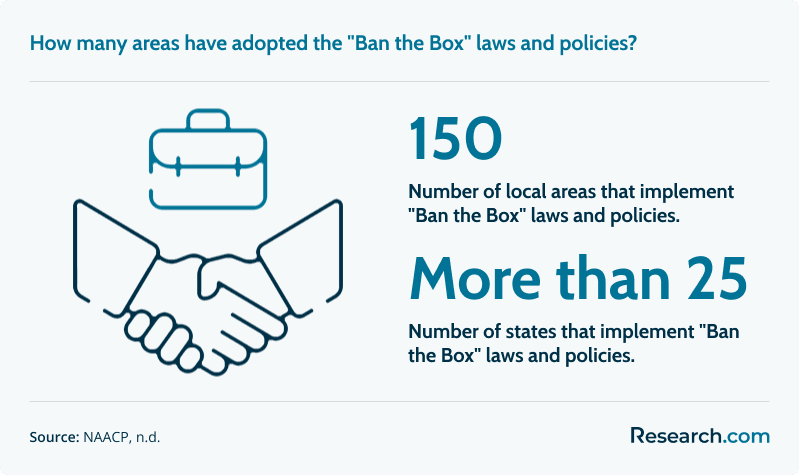
The bigger question for many applicants is whether a criminal record will affect admission. Fair-chance policies are becoming more common. The "Ban the Box" movement encourages institutions and employers to remove criminal-history questions from initial applications. More than 25 states and 150 local areas have adopted fair-chance policies.
How to address your record if the school asks
If an application requires disclosure, answer honestly and briefly. Focus on accountability, growth, stability, and readiness for college. Avoid writing a long legal explanation unless the school requests it. Admissions staff are usually trying to assess risk, honesty, and academic preparation, so your response should show maturity and a clear plan for success.
Before applying, contact admissions and ask these questions in writing when possible:
- Does the application ask about criminal history?
- Is a felony record reviewed automatically or only in specific circumstances?
- Who reviews the information, and what factors are considered?
- Can applicants submit evidence of rehabilitation, employment, education, or community service?
- Are there separate background checks for internships, clinical placements, housing, or licensure-related activities?
What courses are typically in an online degree for felons with records?
Most bachelor’s programs combine general education courses with major-specific coursework. General education classes strengthen writing, quantitative reasoning, research, communication, ethics, and critical thinking. Programs such as online social sciences degrees often include courses that help students understand institutions, human behavior, communities, and social systems.
Major courses build career-specific knowledge. A business student might study accounting, marketing, management, finance, and strategy. A cybersecurity student might study networks, threat analysis, systems security, and digital investigations. A sociology or psychology student may study research methods, social behavior, inequality, human development, and data interpretation.
| Course type | Examples | Why it matters |
| General education | English Composition, Statistics, Introduction to Psychology | Builds writing, analysis, communication, and reasoning skills employers expect |
| Business core | Principles of Accounting, Marketing Fundamentals | Prepares students for administrative, management, operations, and entrepreneurship roles |
| Technology coursework | Cybersecurity labs, analytics projects, AI business applications | Creates portfolio-ready evidence of technical ability |
| Social science coursework | Sociology, psychology, policy, research methods | Supports roles in human services, advocacy, community organizations, and research support |
Use coursework to build proof of your skills
Your transcript matters, but employers often want evidence. Treat class assignments as portfolio material. A business plan, data dashboard, cybersecurity lab report, marketing campaign, policy memo, or research project can help you demonstrate what you can do before an employer focuses on your background.
This is especially important because only about 35% of state prisons offer access to college courses. If you now have access to online learning, use every course to create practical work samples that can support internships, interviews, freelance work, or job applications.
What types of specializations are available in an online degree for felons with records?
A specialization narrows your degree toward a specific career area. For students with felony records, the best specialization is not only the one that sounds interesting. It should also lead to jobs where hiring is realistic, licensing barriers are limited, and skills can be demonstrated through projects or experience.
- Digital Marketing: Focuses on online branding, advertising, content strategy, and analytics. It can support marketing, communications, and social media career paths.
- Human Resource Management: Covers hiring systems, employee relations, training, compensation, and workplace policy. Students should understand that HR roles can involve trust, confidentiality, and employer screening.
- Entrepreneurship: Helps students learn how to plan, fund, launch, and manage a business. This can be useful for people who want more control over their career path.
- Cybersecurity or IT: Can lead to skill-based roles, but some employers and government contracts may require background checks.
- Accounting or business analytics: Builds transferable skills for finance, operations, administration, and data-informed decision-making.
Check licensing and background rules before choosing a specialization
Some fields are more complicated for people with criminal records because they require state licensing, supervised placements, childcare clearance, healthcare screening, bonding, security clearance, or access to sensitive data. Rules vary by state and employer. Before choosing a specialization, search for the exact job titles you want and ask whether a conviction affects eligibility.
| Specialization | Potential fit | Questions to ask first |
| Digital marketing | Good for portfolio-based work, freelance projects, agencies, and business roles | Can I build samples before graduation? Do employers require industry certifications? |
| Entrepreneurship | Useful for students planning self-employment or small-business ownership | Will my record affect business licenses, bonding, contracts, or financing? |
| Cybersecurity | Strong for students who can prove technical skills | Will my target employers require security clearance or sensitive-access background checks? |
| Early care and education | Meaningful for students interested in child development and education support | Will my conviction affect field placements, childcare clearance, or employment eligibility? |
How to choose the best online degree for felons with records
The best program is the one you can afford, complete, and use for a realistic career. Rankings are helpful, but they should not replace your own due diligence. A highly ranked program may still be the wrong choice if it is too expensive, not transfer-friendly, or connected to a career path with licensing barriers.
Decision checklist before you apply
- Confirm accreditation. Regional accreditation is essential for transfer credit, financial aid eligibility, and employer acceptance.
- Review total cost. Compare tuition, fees, books, technology costs, and expected net price after aid.
- Ask about criminal history policies. Find out whether the school asks about convictions and how the information is used.
- Check career restrictions. Confirm whether your target role requires a license, background check, field placement, or security clearance.
- Evaluate support services. Look for reentry programs, adult-learner advising, tutoring, career coaching, and mental health resources.
- Test the online format. Ask whether courses are asynchronous, synchronous, accelerated, or self-paced.
- Compare transfer policies. A generous transfer policy can shorten your timeline and reduce cost.
If you are exploring healthcare-adjacent careers, understand the requirements before enrolling. For example, comparing the difference between a PA and NP can help you see how education, licensure, and clinical expectations differ. If you are considering science programs, review the types of biology majors and the careers they may support before assuming every path is open without additional screening.
Common mistakes to avoid
| Mistake | Why it can hurt you | Better approach |
| Choosing a school without checking accreditation | Credits may not transfer, employers may question the degree, and financial aid may be affected | Verify accreditation before applying |
| Focusing only on tuition | Fees, books, technology, and lost transfer credits can raise the real cost | Compare full cost of attendance and net price |
| Ignoring licensing rules | You may complete a degree and then find out your target job is restricted | Check state licensing boards and employer requirements first |
| Assuming online means easier | Online courses require discipline, writing, technology skills, and time management | Ask about tutoring, advising, and course format |
| Waiting until graduation to build a resume | A degree alone may not overcome employer hesitation | Create projects, internships, volunteer work, and references during school |
What career paths are available for graduates of an online degree for felons with records program?
An online degree can support careers in business, technology, marketing, administration, human services, advocacy, entrepreneurship, and operations. The strongest options are often roles where employers can evaluate your current skills, portfolio, reliability, and references rather than relying only on past history.
- Operations Manager
- Digital Marketer
- IT Support Specialist
- Human Resources Coordinator
- Business Owner / Entrepreneur
Technology can be a practical option for some students, but the right path depends on your interests and background-check exposure. Comparing the difference between data scientist and data analyst can clarify which data role fits your skills. If you are still deciding between short-term training and a full degree, review whether a coding bootcamp or degree in computer science better matches your goals, timeline, and budget.
Use lived experience strategically
For some careers, your experience with the justice system can become a source of insight. Policy advocacy, reentry nonprofits, community programs, research support, case management-adjacent roles, and criminal justice reform organizations may value people who understand the system from the inside.
If that direction interests you, explore roles connected to criminology, policy, and community justice. Research.com’s guide to the best jobs for criminology majors can help you compare responsibilities and career options. Be sure to check whether specific roles require state certification, field clearance, or government background screening.
What is the job market for graduates of an online degree for felons with records program?
The job market is strongest for graduates who combine a legitimate degree with current, demonstrable skills. Business, technology, marketing, operations, and some nonprofit roles can be more accessible when you can show work samples, references, reliability, and job-ready training. Careers in web development, for example, often allow applicants to demonstrate ability through projects and portfolios.
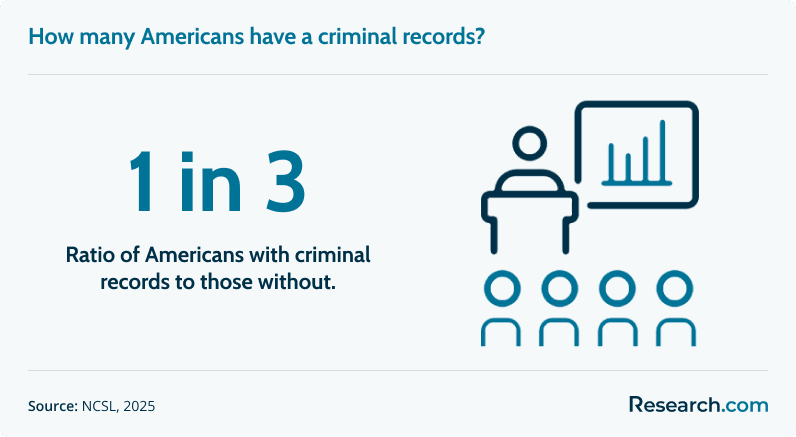
Nearly 1 in 3 Americans has a criminal record, and second-chance hiring has become a more visible workforce issue. That does not mean every employer is open to every background, but it does mean you should look for employers with fair-chance practices, transparent hiring policies, and a willingness to evaluate applicants individually.
Job search strategy for graduates with records
- Target fair-chance employers. Look for companies that publicly support second-chance hiring or have signed fair-chance commitments.
- Lead with proof. Use a portfolio, certifications, projects, internships, volunteer work, and references to show current ability.
- Prepare your disclosure. If you must discuss your record, keep it honest, brief, and focused on accountability, time passed, skills gained, and stability.
- Network before applying cold. Faculty, alumni, nonprofit reentry groups, workforce boards, and community organizations can help you reach employers more open to your background.
- Know your rights and state rules. Fair-chance laws vary. Understand what employers can ask and when they can ask it.
Realistic student scenarios: how online degrees can support reentry
- : "A student who spent years in warehouse jobs may use an online business degree to qualify for project coordination, office administration, or operations roles. The degree helps, but the strongest application also includes references, software skills, and examples of completed class projects."
- : "A student worried about employer bias may choose entrepreneurship to create more control over income. Business coursework can support planning, budgeting, marketing, and customer management, but self-employment still requires discipline, licensing research, and financial planning."
- : "A student interested in cybersecurity may benefit from online labs and technical projects because employers can review demonstrated skills. However, the student should check whether target employers require security clearance, government contracts, or sensitive-access background checks."
How can I confirm the accreditation and quality of an online degree program?
Start by confirming that the institution is accredited by a recognized accrediting agency through the U.S. Department of Education or the Council for Higher Education Accreditation. Accreditation affects federal financial aid, credit transfer, graduate school eligibility, and employer confidence. Then review program outcomes, student support, online course quality, faculty access, graduation requirements, and career services.
Be cautious with programs that pressure you to enroll quickly, refuse to explain costs clearly, make guaranteed salary claims, or lack transparent accreditation information. If you want to compare broader degree options, Research.com’s guide to online degrees that can lead to strong career paths may help you evaluate alternatives.
Questions to ask an online college before enrolling
- Is the institution regionally accredited?
- Will my credits transfer in, and how many credits will I still need?
- Does the application ask about felony convictions or pending charges?
- Are there separate background checks for internships, clinical placements, student teaching, housing, or career services?
- Does this major lead to a licensed occupation?
- What is the total cost after grants and scholarships?
- Are online students eligible for the same advising, tutoring, library, and career services as campus students?
- Does the school have reentry, adult learner, or justice-impacted student support?
Key Insights
- An online degree can be a strong reentry tool, but program choice matters. Prioritize accredited, affordable, flexible programs tied to careers where your record will not automatically block employment.
- Admissions rules are changing. Ban-the-box and fair-chance policies mean many schools no longer ask about criminal history at the first stage, but policies vary by institution and state.
- Financial aid may still be available. The FAFSA no longer blocks aid based on older drug-conviction rules, and Pell Grants may help reduce the cost of college.
- Licensing is the biggest career risk. Before choosing education, healthcare, finance, security, childcare, or government-related paths, verify whether your conviction affects eligibility.
- Online learning can reduce barriers. It can help you avoid relocation, housing checks, commuting, and scheduling problems while still earning a legitimate degree.
- Skills must be visible. Use coursework to build a portfolio, references, and work samples so employers can evaluate what you can do now.
- The best school is supportive, not just recognizable. Look for written criminal-history policies, reentry programs, adult-learner services, and advisors who understand justice-impacted students.
References:
- Bohanon, M. (2021). Restoring inmate access to Pell Grants is an important step in criminal justice reform. Insight Into Academia. Retrieved October 7, 2025, from Insight Into Academia.
- Chesnut, K., Gedeon, Y., Kiki, E., & Taber, N. (2025). The labor market for people with conviction histories. Vera Institute of Justice. Retrieved October 7, 2025, from Vera Institute of Justice.
- Melhorn, S., Hoover, M., & Lucy, I. (2024). Data deep dive: The workforce impact of second chance hiring. U.S. Chamber of Commerce. Retrieved October 7, 2025, from U.S. Chamber of Commerce.
- Mueller, A., & Kluckow, R. (2025). Prisoners in 2023 – Statistical tables. Bureau of Justice Statistics. Retrieved October 7, 2025, from BJS.
- National Association for the Advancement of Colored People. (n.d.). Fair chance hiring fact sheet. NAACP. Retrieved October 7, 2025, from NAACP.
- National Conference of State Legislatures. (2023). Postsecondary education for incarcerated individuals. NCSL. Retrieved October 7, 2025, from NCSL.
- National Conference of State Legislatures. (2025). Criminal records and reentry toolkit. NCSL. Retrieved October 7, 2025, from NCSL.
- U.S. Bureau of Labor Statistics. (2024, May). Education pays, 2023. U.S. Department of Labor. Retrieved October 7, 2025, from BLS.
- U.S. Department of Education, Federal Student Aid. (2024). 2025-2026 Student Aid Index (SAI) and Pell Grant eligibility guide. Retrieved October 7, 2025, from FSA.
- United States Sentencing Commission. (2016). Recidivism among federal offenders: A comprehensive overview. USSC. Retrieved October 7, 2025, from USSC.
- Wang, L., & Bertram, W. (2022, February 8). Beyond the ban: A closer look at the employment of formerly incarcerated people in the U.S. Prison Policy Initiative. Retrieved October 7, 2025, from Prison Policy Initiative.
Other Things You Should Know About Online Degrees for Felons with Records
Several online degrees in 2027 can aid felons in pursuing healthcare roles, especially programs in healthcare administration, medical billing, and coding. While direct patient care roles often require background checks, these fields focus on administrative aspects with fewer barriers for individuals with records.
Most online degree programs do not require a background check for admission. Applicants usually submit a transcript, application form, and identification. Programs tied to clinical placements, internships, or licensure may require a separate background check later through the school or a state licensing board.


