
2027 Best Biology Majors to Pursue: Salary, Industries & Job Opportunities

Co-Founder and Chief Data Scientist
Data shows that 70% of biology graduates land jobs that require their degree. While that's great news, it also raises the stakes for making the right choice from the start. Facing various specializations can feel overwhelming, leaving you uncertain about which path truly connects your passion to a secure career.
That's where this guide comes in. Our career planning experts, with over 10 years of experience, have built a clear roadmap. We go beyond ranking the top biology majors, offering insights on salaries, job prospects, and a clear framework to help you make an informed, confident decision.
What are the benefits of getting a biology major?
- You gain access to diverse career paths in high-demand sectors like healthcare, biotechnology, scientific research, and environmental conservation.
- The degree offers strong earning potential, with an average salary of $85,563 and a typical range of $63,000 to $114,000 based on your specialization.
- Many of the best biology majors build sharp critical thinking and data analysis skills, with flexible online programs available to fit your preferences.
What can I expect from a biology major?
You can expect a rigorous and hands-on curriculum that combines foundational lectures with extensive lab work, data analysis, and research projects. A bachelor's degree in biology typically requires around 120 credits, which most full-time students complete in four years.
The coursework builds a strong scientific foundation. You will take core classes in biology, chemistry, physics, and mathematics. This structure is designed to develop the sharp critical thinking and analytical skills that employers in scientific fields value most.
Financially, the total tuition for a four-year program can range from under $40,000 at an in-state public university to over $130,000 at a private institution. Most students, however, receive financial aid to help offset these costs.
Where can I work with a biology major?
A biology degree opens doors to a wide array of industries, many of which go far beyond traditional lab or healthcare settings. Biologists are 47% more likely to work at private companies, and 27% of them are employed by large companies with over 1,000 employees.
The data shows that graduates find opportunities across diverse and dynamic sectors of the economy.
- Professional and Government Sectors: Each of these large sectors employs 18% of the biologist workforce in roles ranging from research to policy.
- Technology Industry: This fast-growing sector employs 10% of biology graduates, often in exciting biotech and data analysis positions.
- Healthcare Field: This traditional powerhouse accounts for 9% of the workforce in roles from clinical research to patient care.
- Education Sector: About 8% of graduates work in education, from high school teaching to university-level instruction.
How much can I make with a biology major?
Salaries for biology majors are competitive, averaging $85,563 per year, but your specific earnings will depend on several key factors. Understanding these drivers is the first step to maximizing your return on your educational investment.
Here is a breakdown of what influences your potential income.
- Industry and Specialization: Salaries can range from an average of $63,498 to $114,109, with top-paying jobs like Biostatistician earning much more.
- Level of Experience: Compensation grows with experience as experts average $88,315, and overall salaries have increased 16% in the last 5 years.
- Geographic Location: States with a high cost of living and strong biotech sectors pay more, with California averaging $94,375.
- Educational Attainment: Holding a Master's degree can increase your median salary to between $79,844 and $86,813.
- Market and Economic Factors: Salaries reflect the wider economy, with the median salary shifting from $82,584 in 2023 to a projected $80,483 in 2025.
Beyond direct salary, many roles offer strong benefits packages. It's also worth noting that women in the field earn 101% of what men do, indicating excellent pay equity.
- List of the Best Biology Majors to Pursue in 2027 List of Programs
- How long does it take to complete a biology major? Completion Time
- How does an online biology major compare to an on-campus program? How does an online biology major compare to an on-campus program?
- What is the average cost of earning a biology major? Program Cost
- What are the financial aid options for students enrolling in a biology major? Financial Aid
- What are the prerequisites for enrolling in a biology major? What are the prerequisites for enrolling in a biology major?
- What courses are typically in a biology major? What courses are typically in a biology major?
- What types of specializations are available in biology majors? Specializations
- How to Choose the Best Biology Major How to Choose the Best Biology Major
- What career paths are available for graduates of a biology major? Career Paths
- What is the job market for graduates with a biology degree? Job Market
Choosing a Biology Major: What Matters Most in 2027
A biology major can lead to graduate school, healthcare preparation, biotechnology, environmental work, public health, research, science communication, and data-focused roles. The challenge is that “biology” is a broad label. A general biology degree, a microbiology concentration, a biotechnology track, and a cell and molecular biology emphasis can point to very different careers, costs, lab experiences, and graduate school requirements.
This guide is for students comparing biology majors, parents evaluating cost and outcomes, transfer students checking degree fit, and working adults considering a science-focused credential. You will learn which biology programs are highlighted here, how long the degree usually takes, what it can cost, how online and campus options compare, which specializations align with different goals, and how to avoid common mistakes when choosing a program.
Quick Answer: What Is the Best Biology Major to Choose?
The best biology major depends on your career target. Students planning for medical, dental, veterinary, or pharmacy school often benefit from a pre-health, medical biology, or cell and molecular biology track. Students interested in laboratory, biotech, pharmaceutical, or public health work should compare microbiology, genetics, biotechnology, and biomedical science options. Students drawn to conservation, fieldwork, climate-related research, or environmental consulting may be better served by ecology, evolutionary biology, marine biology, or integrative biology.
Before choosing, confirm three things: the college is properly accredited, the curriculum includes the science and math courses required for your next step, and the program offers the type of hands-on experience you need, such as lab research, fieldwork, internships, clinical exposure, or data science training.
List of the Best Biology Majors to Pursue in 2027
The programs below represent biology majors and concentrations that can support different academic and career goals, from biotechnology and genetics to microbiology, medical biology, ecology, and biomedical data science. Use the list as a starting point, not as a final decision. The right choice should match your budget, preferred learning format, transfer credit situation, research interests, and post-graduation plan.
How do we rank schools?
Because a biology degree can require a major financial and time commitment, Research.com evaluates programs using transparent data sources that help students compare colleges more carefully. The ranking process draws from the IPEDS database, Peterson's database, the College Scorecard database, and The National Center for Education Statistics.
These sources help support comparisons across institutional quality, affordability, student outcomes, and program characteristics. To understand the ranking framework in more detail, review Research.com’s methodology page.
| Rank | School and Biology Major | Best Fit | Cost Information |
| 1 | University of North Carolina at Greensboro - Biology, B.S. - Biotechnology Concentration | Students interested in biotechnology products, applied lab work, and graduate study | $19,096 (in-state); $36,070 (out-of-state) yearly tuition |
| 2 | Ball State University - Biology, B.A./B.S. - Genetics Concentration | Students focused on genetics, genomics, research, and industry roles | $346 (in-state); $1,151 (out-of-state) cost per credit |
| 3 | Minnesota State University, Mankato - Biology, B.S. - Microbiology | Students interested in public health labs, quality assurance, and pharmaceutical manufacturing | $352.70 (in-state); $758.90 (out-of-state) cost per credit |
| 4 | University of Utah - Biology, B.S./B.A. - Cell and Molecular Biology Emphasis | Students preparing for research, healthcare, biotechnology, or advanced study | $245 (in-state); $844 (out-of-state) cost per credit |
| 5 | University of Alabama at Birmingham - Biology, B.S. - Integrative Biology | Students seeking broad biology training with lab and field options | $11,640 (in-state); $28,980 (out-of-state) yearly tuition |
| 6 | Kennesaw State University - Biology, B.S. - General Biology & Human Health Concentration | Students who want a research-oriented biology degree connected to human health | $190 (in-state); $701 (out-of-state) cost per credit |
| 7 | The University of South Florida - Biology B.S., with Medical Biology Concentration | Students planning for medicine, dentistry, pharmacology, or other health-related graduate programs | $211.19 (in-state); $611.39 (out-of-state) cost per credit |
| 8 | Hamline University - Biology Major (BA) - Ecology and Evolutionary Biology Concentration | Students interested in ecology, conservation biology, environmental science, and field research | $1,045 cost per credit |
| 9 | Seattle University - Biology, BS - Biomedical Sciences & Data Science | Students combining biology with healthcare preparation, lab work, or computational biology | $19,275 quarterly tuition |
| 10 | San Francisco State University - Biology, B.S. - Concentration in Cell and Molecular Biology | Students targeting medicine, biotechnology, or molecular research | $4,553 (in-state) semester tuition |
1. University of North Carolina at Greensboro - Biology, B.S. - Biotechnology Concentration
The University of North Carolina at Greensboro offers a biotechnology-focused biology pathway for students who want to apply biological science to medicinal, agricultural, and environmental product development. The program is built around laboratory and field-based research opportunities with award-winning faculty, making it a strong option for students considering technical positions, biotechnology roles, or graduate study.
- Program Length: 4 years
- Required Credits to Graduate: 120
- Yearly Tuition: $19,096 (in-state); $36,070 (out-of-state)
- Accreditation: Southern Association of Colleges and Schools Commission on Colleges (SACSCOC)
2. Ball State University - Biology, B.A./B.S. - Genetics Concentration
Ball State University provides a biology program with a genetics concentration that emphasizes genetics, genomics, and laboratory-based learning. Its smaller classes and faculty guidance can help students shape coursework around research, biotechnology, healthcare preparation, or industry-oriented goals.
- Program Length: 4 years
- Required Credits to Graduate: 120
- Cost per Credit: $346 (in-state); $1,151 (out-of-state)
- Accreditation: Higher Learning Commission (HLC)
3. Minnesota State University, Mankato - Biology, B.S. - Microbiology
Minnesota State University, Mankato offers a microbiology concentration for students who want to understand microorganisms and their roles in human health, agriculture, industry, and environmental systems. The curriculum develops both conceptual knowledge and practical lab skills for work in quality assurance, pharmaceutical manufacturing, public health laboratories, or related graduate programs.
- Program Length: 4 years
- Required Credits to Graduate: 120
- Cost per Credit: $352.70 (in-state); $758.90 (out-of-state)
- Accreditation: Higher Learning Commission (HLC)
4. University of Utah - Biology, B.S./B.A. - Cell and Molecular Biology Emphasis
The University of Utah provides a cell and molecular biology emphasis that examines biological systems at the cellular and molecular levels. Students build critical thinking, laboratory, and analytical skills that can support careers or further study in research, healthcare, biotechnology, and related scientific fields.
- Program Length: 4 years
- Required Credits to Graduate: 122
- Cost per Credit: $245 (in-state); $844 (out-of-state)
- Accreditation: Northwest Commission on Colleges and Universities (NWCCU)
5. University of Alabama at Birmingham - Biology, B.S. - Integrative Biology
The University of Alabama at Birmingham offers an integrative biology program that combines classroom learning, laboratory work, and field experiences. With instruction from world-renowned faculty and access to state-of-the-art labs, the program can serve students preparing for healthcare, research, conservation, or other biology-related careers.
- Program Length: 4 years
- Required Credits to Graduate: 120
- Yearly Tuition: $11,640 (in-state); $28,980 (out-of-state)
- Accreditation: Southern Association of Colleges and Schools Commission on Colleges (SACSCOC)
6. Kennesaw State University - Biology, B.S. - General Biology & Human Health Concentration
Kennesaw State University offers an interdisciplinary biology degree that studies living systems from molecular structures to the biosphere. The program emphasizes research and experiential lab courses, while concentration options help students connect the degree to human health or broader biology goals.
- Program Length: 4 years
- Required Credits to Graduate: 120
- Cost per Credit: $190 (in-state); $701 (out-of-state)
- Accreditation: Southern Association of Colleges and Schools Commission on Colleges (SACSCOC)
7. The University of South Florida - Biology B.S., with Medical Biology Concentration
The University of South Florida offers a medical biology concentration designed for students aiming for medicine, dentistry, pharmacology, or other health-related graduate pathways. The curriculum emphasizes experimental design, scientific reasoning, and the academic preparation needed for competitive pre-professional tracks.
- Program Length: 4 years
- Required Credits to Graduate: 120
- Cost per Credit: $211.19 (in-state); $611.39 (out-of-state)
- Accreditation: Southern Association of Colleges and Schools Commission on Colleges (SACSCOC)
8. Hamline University - Biology Major (BA) - Ecology and Evolutionary Biology Concentration
Hamline University offers an ecology and evolutionary biology concentration centered on organisms, ecosystems, and environmental relationships. With fieldwork, experiential learning, and independent research, the program is well suited to students considering conservation biology, ecology, environmental science, or related graduate study.
- Program Length: 4 years
- Required Credits to Graduate: 128
- Cost per Credit: $1,045
- Accreditation: Higher Learning Commission (HLC)
9. Seattle University - Biology, BS - Biomedical Sciences & Data Science
Seattle University offers a biology BS with options in biomedical sciences and data science. The curriculum explores biological diversity and includes hands-on lab components in over 90% of classes, giving students a foundation for healthcare preparation, computational biology, laboratory science, or broader biological study.
- Program Length: 4 years
- Required Quarter Credits to Graduate: 180
- Quarterly Tuition: $19,275
- Accreditation: Northwest Commission on Colleges and Universities (NWCCU)
10. San Francisco State University - Biology, B.S. - Concentration in Cell and Molecular Biology
San Francisco State University offers a cell and molecular biology concentration that gives students a strong base in biological sciences while focusing on molecular and cellular processes. The program integrates multiple scientific areas and encourages research experience for students considering medicine, biotechnology, research, or graduate school.
- Program Length: 4 years
- Required Credits to Graduate: 120
- Semester Tuition: $4,553 (in-state)
- Accreditation: WASC Senior College and University Commission (WSCUC)
How long does it take to complete a biology major?
Most bachelor’s degrees in biology are designed for 4 years of full-time enrollment. Students who enter with Advanced Placement credits, dual-enrollment credits, or transferable college coursework may be able to reduce that timeline, depending on the school’s policies and how those credits apply to science prerequisites. Students attending part time usually need longer because biology majors often include sequential lab courses that must be taken in a specific order.
Your career plan can extend the total education timeline well beyond the bachelor’s degree. A master’s degree usually adds another two years, while a Ph.D. can take an additional five to seven years. Students preparing for medical, dental, veterinary, pharmacy, or other professional schools should also plan for prerequisite coursework, entrance exams, clinical exposure, and additional years of professional training.
Advanced education is common among biology students. In this field, 59% of biology majors go on to earn an advanced degree. Degree completions also show how common undergraduate study is as a starting point: 75.1% of degrees awarded in the field are bachelor’s degrees, while 12.9% are master’s degrees. The chart below shows the degree-award breakdown for biology majors.
| Timeline | Typical Path | When It Makes Sense |
| Less than 4 years | Bachelor’s degree with accepted AP, dual-enrollment, or transfer credits | Best for students who already completed applicable science, math, or general education credits |
| 4 years | Full-time bachelor’s degree in biology | Standard path for students entering directly from high school or starting a new undergraduate program |
| More than 4 years | Part-time bachelor’s degree or delayed lab sequence | Common for working students, caregivers, transfer students, or students changing majors |
| 4 years plus graduate study | Bachelor’s degree followed by a master’s, Ph.D., or professional program | Often necessary for advanced research, healthcare, faculty, or specialized scientific roles |
How does an online biology major compare to an on-campus program?
An online biology program can be a good fit if flexibility is your top priority, but an on-campus program may be better if you need extensive lab access, faculty research opportunities, fieldwork, or in-person networking. The strongest choice is usually the accredited program that gives you the right combination of academic rigor, schedule fit, laboratory preparation, and career support.
Students exploring graduate-level distance education at institutions with specific missions or histories may also compare options such as HBCU online masters programs. The key is to evaluate the specific biology curriculum, not just the delivery format.
Online Biology Degree Programs
Online biology programs are useful for students who need to work, manage family responsibilities, avoid relocation, or finish a degree with fewer campus visits. Some programs use virtual labs, mailed lab kits, hybrid lab intensives, or approved local lab arrangements. These formats can work well for certain foundational or applied courses, but students should verify whether the online lab experience will satisfy graduate school, employer, or professional program expectations.
Working professionals who do not need a full bachelor’s degree may prefer narrower credentials. For example, online biotechnology graduate certificate programs can help students add targeted biotechnology knowledge without committing to another full degree.
On-Campus Biology Degree Programs
Campus-based biology programs provide direct access to laboratories, field sites, faculty research groups, peer study networks, and campus-based advising. This format is often the better option for students who want research assistantships, intensive lab training, pre-health advising, internships connected to local employers, or close mentorship from faculty.
| Factor | Online Biology Program | On-Campus Biology Program |
| Flexibility | Stronger for working students and students who cannot relocate | Less flexible because labs and courses may follow fixed campus schedules |
| Lab access | May use virtual labs, home kits, or limited in-person lab sessions | Usually offers direct access to teaching labs and research facilities |
| Research opportunities | Possible, but often more limited or dependent on local arrangements | Typically stronger for faculty-led research and lab assistant roles |
| Best for | Self-directed students who need schedule flexibility | Students seeking immersive lab, field, research, or pre-health preparation |
| What to verify | Lab requirements, transfer policies, accreditation, and graduate school acceptance | Research access, class size, advising quality, cost, and graduation requirements |
What is the average cost of earning a biology major?
The total tuition for a biology major can range from under $20,000 to over $130,000. For a four-year degree, the average total tuition for in-state students at public universities is around $37,338. For out-of-state students, that average increases to approximately $78,748. These figures do not include other expenses such as student fees, housing, meal plans, transportation, textbooks, lab materials, health insurance, or personal costs.
Cost should be evaluated against your likely next step. A biology degree can be a strong investment when it leads to a clearly planned career pathway, graduate program, or high-demand specialization. For example, a biostatistician can earn a median salary of $134,000, while a computational biologist can earn around $117,000 per year. The chart below highlights some of the higher-paying job options connected to biology training.
Cost factors students often overlook
- Lab and course fees: Science courses may carry extra charges beyond base tuition.
- Time to graduation: A delayed lab sequence, changed major, or nontransferable credits can add semesters and increase total cost.
- Housing and transportation: A lower-tuition campus may not be cheaper if living costs or commuting expenses are high.
- Graduate school plans: Students planning for medical school, a master’s degree, or a Ph.D. should consider the cost of the full pathway, not just the bachelor’s degree.
- Unpaid or low-paid experience: Research, volunteering, and internships can improve competitiveness but may affect how much you can work while enrolled.
What are the financial aid options for students enrolling in a biology major?
Most biology students should compare multiple funding sources rather than relying on one award. Financial aid is common, as 87% of students receive some form of financial aid. At the same time, 90% of Pell Grant recipients still have unmet financial need, so students should build a realistic budget before enrolling.
The main funding options include:
- Federal Grants: These need-based funds do not have to be repaid. The usual first step is completing the FAFSA, which is used for many federal, state, and school-based aid programs.
- Scholarships: Scholarships may be awarded by colleges, foundations, employers, professional associations, and nonprofit organizations. Some are based on academic performance, while others consider financial need, research interests, identity, location, or intended career.
- Work-Study Programs: Federal work-study allows eligible students to earn money through part-time work, which may be on campus or with approved off-campus employers.
- Federal Student Loans: These government-backed loans usually offer fixed interest rates and repayment protections that are often more flexible than private loan terms.
- Private Student Loans: Banks, credit unions, and other lenders offer private loans, but these usually require a credit check or cosigner and may have fewer repayment protections.
How to reduce the cost of a biology degree
- Complete the FAFSA as early as possible and renew it each year.
- Ask each school whether biology majors qualify for department scholarships or research stipends.
- Compare total cost of attendance, not tuition alone.
- Check whether AP, dual-enrollment, community college, or transfer credits will apply to required biology, chemistry, math, and general education courses.
- Look for paid research assistant, lab assistant, tutoring, or campus science support roles.
- Avoid taking unnecessary electives that do not advance your degree plan or graduate school requirements.
What are the prerequisites for enrolling in a biology major?
Biology admission requirements vary by institution, but most bachelor’s programs expect students to show readiness for college-level science and math. Competitive programs may also review grades in laboratory sciences, academic rigor, essays, recommendations, and evidence of interest in science.
- High School Diploma or GED: Undergraduate biology programs require proof that the applicant completed secondary education or an equivalent credential.
- Strong Science Coursework: High school biology and chemistry are especially important, and physics can strengthen preparation for college-level science sequences.
- Solid Math Foundation: Algebra and pre-calculus skills help students succeed in biology, chemistry, physics, statistics, and calculus-based requirements.
- Standardized Test Scores: Many colleges are test-optional, but strong SAT or ACT results may still support an application where scores are accepted.
- Letters of Recommendation: Recommendations from science or math teachers can help demonstrate readiness, work habits, and academic potential.
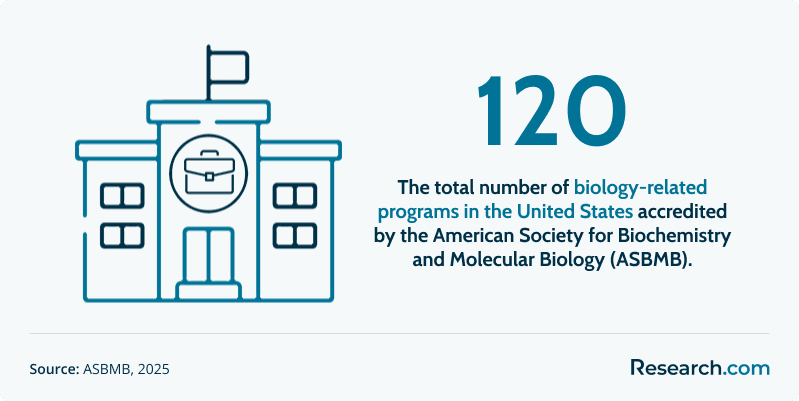
Students should also confirm institutional accreditation and, when relevant, program-level recognition. In specialized areas such as biochemistry and molecular biology, accreditation or recognition from organizations such as the American Society for Biochemistry and Molecular Biology (ASBMB) can indicate that a curriculum has been reviewed against field-specific education standards.
Questions to ask before applying
- Does the program meet prerequisites for medical, dental, veterinary, pharmacy, physician assistant, or graduate programs I may apply to later?
- How many required courses include in-person labs?
- Can undergraduates participate in faculty research?
- What happens if I enter without calculus, chemistry, or physics readiness?
- Will my transfer credits apply to the major or only to general electives?
- Are there separate admission requirements for a concentration, honors track, or research pathway?
What courses are typically in a biology major?
A biology curriculum usually combines broad scientific foundations, laboratory training, math and quantitative reasoning, upper-division biology courses, and electives tied to a concentration. The exact requirements differ by school, but most programs are structured so students build from general science into more specialized biological topics.
- General Education Core: These courses may include writing, communication, humanities, social sciences, and other university-wide requirements that support critical thinking and communication.
- Foundational Sciences: Biology majors commonly complete chemistry, organic chemistry, physics, calculus, and related quantitative courses because modern biology relies heavily on chemical, physical, and mathematical reasoning.
- Major Core Courses: Required biology courses often include genetics, cell biology, ecology, evolution, physiology, and other upper-level topics that define the discipline.
- Major Electives: Electives allow students to build toward a goal such as immunology, marine biology, neuroscience, microbiology, bioinformatics, or health-related preparation. Students seeking a shorter technical healthcare credential may also compare options such as an online sterile processing technician certificate program, though that pathway serves a different purpose than a biology bachelor’s degree.
- Capstone Project or Thesis: Many programs end with a senior research project, thesis, seminar, internship, or faculty-supervised investigation.
Biology programs are designed to build practical scientific habits, not just textbook knowledge. That emphasis shows up in the labor market: data collection is the most common skill found on biology graduate resumes, at 7.4%.
What types of specializations are available in biology majors?
Biology specializations help students connect a broad science degree to a clearer career or graduate school plan. Students should choose a specialization based on the type of work they want to do: patient-facing healthcare preparation, bench research, environmental fieldwork, biotechnology, computational analysis, or science communication. Students comparing distinctive undergraduate environments may also review the best women's colleges as part of a broader college search.
- Molecular and Cell Biology: Focuses on DNA, proteins, cellular structures, and molecular mechanisms. This track is common for students interested in biomedical research, biotechnology, pharmaceuticals, or health professional school.
- Ecology and Evolutionary Biology: Examines organisms, ecosystems, adaptation, biodiversity, and environmental relationships. It can support work in conservation, environmental consulting, wildlife management, or field research.
- Microbiology: Studies bacteria, viruses, fungi, and other microorganisms. This specialization can lead toward public health, epidemiology, pharmaceutical development, food safety, and laboratory roles.
- Marine Biology: Focuses on aquatic organisms and marine ecosystems. Students often pursue careers in marine conservation, aquaculture, environmental monitoring, and oceanographic research.
- Biotechnology: Applies biological systems to product development, genetic engineering, drug discovery, agriculture, and industrial processes. Students considering graduate study can explore masters in biotechnology careers to understand how advanced credentials may change job options.
- Neuroscience: Studies the nervous system, brain function, behavior, and cognition. It may support future study in medicine, cognitive science, neuropsychology, or biomedical research.
- Pre-Health Professions: A pre-health track helps students complete prerequisite coursework for medical, dental, veterinary, pharmacy, physician assistant, or other professional programs.
Some biology paths attract more students than others. General biology remains the most common major, followed by ecology, as shown in the chart below. Students looking at education or policy-oriented careers should note that some linked resources, such as school counseling licensure information, may involve requirements outside the biology field and should be evaluated separately.
| Specialization | Strong Choice If You Like | Possible Next Steps |
| Molecular and Cell Biology | DNA, cells, disease mechanisms, lab research | Biomedical research, biotechnology, medicine, graduate study |
| Microbiology | Microorganisms, infectious disease, lab testing | Public health labs, pharmaceuticals, quality assurance, epidemiology |
| Ecology and Evolutionary Biology | Fieldwork, ecosystems, biodiversity, conservation | Environmental science, conservation, wildlife work, graduate study |
| Biotechnology | Applied biology, product development, genetic tools | Biotech firms, pharmaceuticals, bioinformatics, advanced study |
| Pre-Health | Human biology, healthcare, clinical preparation | Medical, dental, veterinary, pharmacy, or physician assistant programs |
| Biomedical Sciences & Data Science | Biology, statistics, coding, large datasets | Computational biology, biostatistics, research, healthcare analytics |
How to Choose the Best Biology Major
The best biology major is the one that fits your long-term goal, academic strengths, budget, and preferred learning environment. A prestigious program is not automatically the best choice if it lacks the courses, labs, advising, or affordability you need.
- Clarify Your Career Direction: Decide whether you are aiming for healthcare, research, biotechnology, environmental work, teaching, data science, public health, or another field.
- Match the Concentration to Your Strengths: A student who enjoys fieldwork may thrive in ecology, while a student who likes coding and statistics may prefer bioinformatics or computational biology. Comparing the easiest and hardest science majors can help you think honestly about workload and fit.
- Read the Degree Plan Carefully: Look beyond the major title. Check required chemistry, physics, calculus, lab, research, and capstone courses.
- Verify Hands-On Opportunities: Ask about undergraduate research, internships, field courses, lab assistant positions, clinical exposure, and faculty mentorship.
- Compare Outcomes and Costs Together: A lower-cost program with strong advising and research access may be a better decision than a more expensive program with limited support.
- Check Graduate or Professional School Alignment: If you plan to apply to medical school or graduate school, confirm that the curriculum covers all required prerequisites.
Common mistakes when choosing a biology major
| Mistake | Why It Can Hurt You | Better Approach |
| Choosing a major only because it sounds impressive | The title may not match your career plan or preferred daily work | Compare required courses, labs, research options, and actual career pathways |
| Ignoring accreditation | Accreditation can affect transfer credit, financial aid, graduate school recognition, and employer confidence | Confirm institutional accreditation and review program-level recognition where relevant |
| Looking only at tuition | Fees, housing, lab costs, transportation, and delayed graduation can change the real price | Compare full cost of attendance and time-to-degree risks |
| Assuming online labs are always accepted | Some graduate or professional programs may expect in-person lab experience | Ask target graduate schools or advisors how online lab coursework will be evaluated |
| Waiting too long to get experience | Biology-related jobs and graduate programs often value research, lab, field, or clinical exposure | Seek research, volunteering, internships, and campus science jobs early |
| Choosing pre-med without a backup plan | Not every pre-health student enters professional school immediately or at all | Build transferable skills in data analysis, lab techniques, writing, or public health |
What career paths are available for graduates of a biology major?
A biology degree can support careers in laboratories, healthcare support, environmental science, biotechnology, public health, education, science writing, data analysis, and research administration. Some roles are available with a bachelor’s degree, while others require graduate school, professional licensure, certification, or specialized experience.
1. Environmental Scientist
Environmental scientists investigate environmental problems, collect and interpret data, and help develop strategies to protect ecosystems and natural resources. The work may involve field sampling, data analysis, regulatory reporting, and collaboration with agencies or private organizations.
Median Salary: $76,000 per year.
2. Microbiologist
Microbiologists study bacteria, viruses, fungi, and other microorganisms. They may work in laboratories connected to public health, pharmaceuticals, food safety, biotechnology, or disease research.
Median Salary: $83,000 per year.
3. Forensic Science Technician
Forensic science technicians collect, preserve, and analyze evidence for criminal investigations. The role requires careful documentation, laboratory precision, and the ability to communicate scientific findings clearly.
Median Salary: $64,000 per year.
4. Clinical Research Coordinator
Clinical research coordinators help manage studies involving new drugs, medical devices, treatments, or health interventions. They may coordinate participants, maintain documentation, support compliance, and communicate with researchers, sponsors, and clinical staff.
Median Salary: $62,000 per year.
5. Science Writer
Science writers explain scientific topics for general audiences, students, professionals, policymakers, or industry readers. This career path fits biology graduates who can translate complex research into accurate, accessible content.
Median Salary: $78,000 per year.
Biology graduates do not have to work only in healthcare or traditional research. Students interested in policy, law, business, education, communication, or technical roles can explore biology alternative careers that use scientific training in less obvious ways.
| Career Goal | Helpful Biology Focus | Experience to Build Before Graduation |
| Medical or health professional school | Pre-health, medical biology, cell and molecular biology | Clinical exposure, prerequisite coursework, advising, research or volunteering |
| Biotechnology or pharmaceuticals | Biotechnology, genetics, microbiology, molecular biology | Lab techniques, internships, quality documentation, data analysis |
| Environmental or conservation work | Ecology, evolutionary biology, marine biology, integrative biology | Fieldwork, GIS or data skills, internships, research projects |
| Public health or epidemiology | Microbiology, genetics, biostatistics, general biology | Statistics, coding, lab work, public health internships |
| Science communication | Any biology major with writing-intensive electives | Writing portfolio, research literacy, media or communication experience |
What is the job market for graduates with a biology degree?
The biology job market is broad, but outcomes vary by specialization, degree level, location, and experience. There are currently 5,741 active job openings for biologists, with a projected 1% growth rate in the coming years. Across the U.S., approximately 3.5 million positions are held by professionals with a biology degree, which shows that biology training is used across many industries and job types.
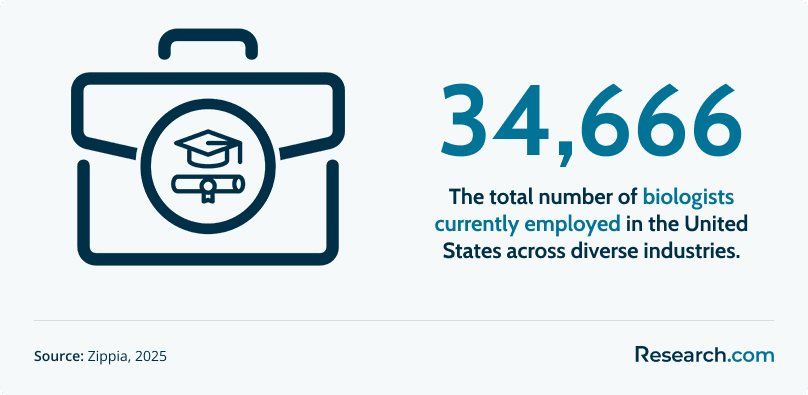
Core biology roles include 34,666 currently employed biologists. Data also shows that 15% of graduates work part-time, and 31% remain in their jobs for one to two years. These figures suggest that early-career biology graduates may move between roles as they gain experience, pursue graduate school, or shift into specialized industries. Students comparing science-related pathways may also review the current outlook and possible geoscience salary for a related field.
Current trends affecting biology majors
- More data-heavy biology work: Genetics, biomedical research, ecology, and public health increasingly rely on statistics, coding, database tools, and computational analysis.
- AI as a research support tool: AI and automation can help with pattern recognition, literature review, image analysis, and laboratory workflows, but biology graduates still need scientific judgment, experimental design skills, and ethical reasoning.
- Credential stacking: Some students combine a biology degree with certificates, minors, or graduate study in biotechnology, data science, public health, environmental science, or regulatory affairs.
- Stronger expectations for experience: Employers and graduate programs often look for evidence of lab work, fieldwork, internships, research projects, or technical skills beyond coursework.
- Graduate education remains important: Many higher-level research, healthcare, and academic roles require additional degrees or professional training after the bachelor’s degree.
Here’s What Graduates Have to Say about Their Biology Major
- Dylan: "I started college excited about biology but worried that my only realistic option would be medical school. Specializing in microbiology changed that. I discovered public health and epidemiology, and now I work for the state health department. Knowing that my daily work helps protect the community is deeply meaningful."
- Belle: "My advisor encouraged me to add statistics and coding courses to my genetics plan. At first, it felt like extra pressure, but it became the most valuable part of my degree. Being able to work with large biological datasets helped me get a computational biology job, and the starting pay was better than I expected."
- Yasmin: "Paying for another degree made me nervous, so I tracked every expense closely. The focused ecology curriculum led directly to a conservation role, and the salary made the investment feel worthwhile. It was not a casual decision, but the real-world impact of the work makes it feel like the right one."
Key Insights
- The best biology major depends on your destination. Pre-health students should prioritize prerequisite alignment, while future biotech, public health, environmental, or research professionals should choose a concentration that builds the right technical experience.
- Accreditation and curriculum details matter more than the major name. Confirm institutional accreditation, lab requirements, research access, transfer policies, and graduate school compatibility before enrolling.
- A biology bachelor’s degree typically takes 4 years, but many students continue. Since 59% of biology majors go on to earn an advanced degree, students should plan for the cost and timeline of the full pathway.
- Cost varies widely. Total tuition can range from under $20,000 to over $130,000, and the average total tuition is around $37,338 for in-state students at public universities and approximately $78,748 for out-of-state students.
- Hands-on experience is a major differentiator. Lab research, fieldwork, internships, data projects, and clinical exposure can make a biology graduate more competitive than coursework alone.
- Online biology programs can work, but lab expectations must be checked carefully. Students planning for graduate or professional school should verify whether online or hybrid labs satisfy future requirements.
- Biology is becoming more quantitative. Students who add statistics, coding, data analysis, or bioinformatics skills may have more flexibility across research, public health, biotechnology, and computational roles.
References:
- American Society for Biochemistry and Molecular Biology. (n.d.). Accredited degree programs. Retrieved from ASBMB
- Bureau of Labor Statistics. (n.d.). Biology field of degree. Retrieved from BLS
- Data USA. (n.d.). Biology. Retrieved from Data USA
- National Center for Education Statistics. (n.d.). Fast facts: College enrollment. Retrieved from NCES
- National Association of Student Financial Aid Administrators (NASFAA). (2023). Analysis: Most students face unmet need when paying for college. Retrieved from NASFAA
- Salary.com. (n.d.). Biology salary overview. Retrieved from Salary.com
- ZipRecruiter. (n.d.). Highest paying biology jobs. Retrieved from ZipRecruiter
- Zippia. (n.d.). Biologist jobs: Demographics. Retrieved from Zippia
- Zippia. (n.d.). Biologist jobs: Education. Retrieved from Zippia
- Zippia. (n.d.). Biologist jobs: Skills. Retrieved from Zippia
- Zippia. (n.d.). Biologist jobs: Trends. Retrieved from Zippia
Other Things You Should Know About Pursuing a Biology Major
In 2027, healthcare, biotechnology, and environmental science industries are anticipated to hire the most biology graduates. Demand is driven by technological advancements, an aging population, and increased focus on sustainability and environmental conservation, offering diverse career paths for degree holders.
Clinical laboratory science is the strongest route for medical laboratory jobs. Employers often require a bachelor’s degree with at least 60 semester credits in biology, chemistry, and hematology, plus ASCP Board of Certification eligibility. Many states also require separate licensing or registration before practice.


