2027 Best Online Bachelor’s Degrees in Web Development Programs

Co-Founder and Chief Data Scientist
Choosing an online bachelor’s degree in web development is no longer just a question of convenience. Students now have to weigh tuition, accreditation, employer expectations, portfolio opportunities, cybersecurity training, AI tools, transfer credits, and whether a program actually prepares them to build production-ready websites and applications. This guide is for students, career changers, working adults, and self-taught coders who want to know whether an online Bachelor’s Degree in Web Development is a practical path into tech.
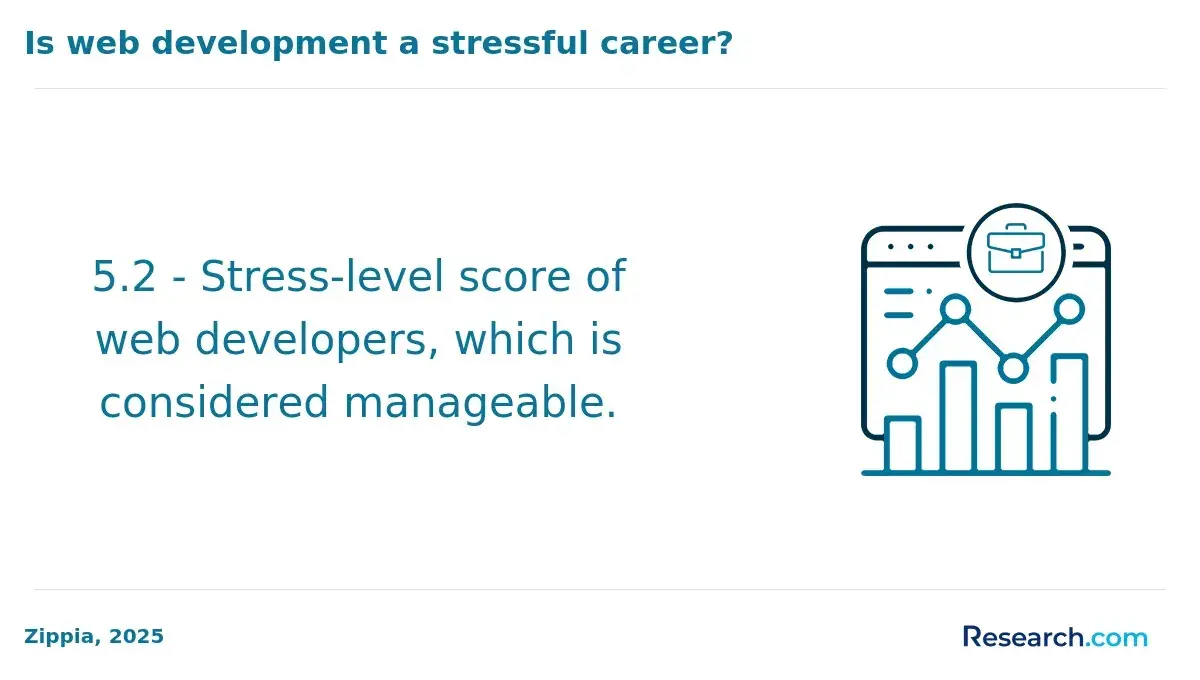
Web development remains closely tied to how organizations sell, communicate, teach, manage data, and deliver digital services. The field rewards people who can combine coding ability with problem-solving, user experience awareness, security-minded development, and continuous learning. A beginner web developer can make less than $72,000 annually, while experienced professionals with the right knowledge and experience can reach $134,500 (ZipRecruiter, 2025). However, outcomes depend on skill level, location, portfolio quality, employer needs, and specialization.
This guide explains what online web development degrees include, how online and campus programs compare, what they cost, how employers view them, what courses and skills to expect, and how to choose a program that fits your budget, schedule, and career goals.
Bachelor’s Degree in Web Development Table of Contents
- Can a web development bachelor’s degree be completed online?
- Do employers respect online web development degrees?
- Are online degrees accepted internationally?
- Online vs. campus Bachelor’s Degree in Web Development
- How much does an online Bachelor’s Degree in Web Development cost?
- What are the admission and technology requirements?
- Courses commonly included in online web development degrees
- How to choose an online web development program
- Web development degree vs. software engineering degree
- Can certifications improve your web development career?
- How online web development programs teach cybersecurity
- Should you pursue a master’s degree or certifications after graduation?
- How AI is changing online web development programs
- How to get hands-on experience in an online program
- Future trends in web development
- What to look for before enrolling
- Financial aid options for online web development students
- Career opportunities after an online web development degree
- How to get the most value from your online web development degree
Quick Answer: Is an Online Bachelor’s Degree in Web Development Worth It?
An online Bachelor’s Degree in Web Development can be worth it if the program is accredited, teaches current front-end and back-end technologies, includes portfolio-building projects, and fits your financial situation. It is especially useful for students who want a structured path into web development, need a bachelor’s credential for employer screening, or prefer flexible study while working. It may not be the best choice for students who already have strong coding skills, a strong portfolio, and access to lower-cost credentials or apprenticeships.
| Best fit | May not be the best fit |
| Students who want a broad academic foundation plus technical training | Learners who only need one short-term skill, such as React or WordPress |
| Working adults who need flexible online coursework | Students who struggle without fixed class schedules or direct supervision |
| Career changers who want a recognized bachelor’s credential | Experienced developers who already have strong portfolios and job experience |
| Students who want access to financial aid, career services, and internships | Learners who need the fastest possible job-entry route and can succeed in a bootcamp or self-study path |
Can you get a degree completely online?
Yes, many schools offer web development and technology degrees fully online, but not every program labeled “online” is 100% remote. Some programs are fully asynchronous, some require scheduled live sessions, and others are hybrid programs with campus visits, proctored exams, labs, or orientation requirements. Before applying, confirm whether the program is fully online, hybrid, synchronous, asynchronous, or self-paced.
Online learning is now common across many technical fields, including aerospace engineering degree pathways, aviation-related programs, computer science, cybersecurity, and IT. The same is true for web development, where much of the work already happens through browsers, code editors, cloud platforms, collaboration tools, and version-control systems.
Online education is not limited to lesser-known institutions. Ivy League and highly selective universities offer online courses and some fully online or hybrid programs, often at lower costs than classroom-based study. Harvard Extension School admits nearly 2,000 degree candidates and over 13,000 non-degree students every year.
The Changing Landscape of Online Education (CHLOE) report found that demand for online programs remained consistent among traditional-age undergraduates, with 60% of chief online learning officers noting sustained interest from recent high school graduates. Interest was even stronger among adult undergraduates, cited by 66% of respondents, while graduate students demonstrated the highest level of demand, at 74%.
Online education has also been discussed as a major disruption to traditional higher education. In Innovator’s University and in public appearances such as the “Innovation + Disruption Symposium in Higher Education Symposium,” Harvard business professor Chris Christensen warned: “Fifty percent of American universities will close or go bankrupt in 10 to 15 years.” His warning was tied to the idea that colleges unable to adapt to online learning and changing student needs could face serious pressure. Christensen is associated with disruption theory and the phrase “disruptive innovation.”
The broader shift is toward more flexible education. Instead of depending on a single campus for every course, students may increasingly combine credits, certificates, and specialized training from multiple providers. For web development students, this matters because employers often want evidence of both formal learning and practical skill.
What do web developers do?
Web developers build and maintain the technical systems behind websites, web applications, e-commerce platforms, portals, dashboards, and digital services. Their work can include writing code, connecting websites to databases, improving performance, fixing bugs, securing user data, testing features, and deploying applications.
Web design and web development overlap, but they are not identical. A web designer often focuses on layout, visual identity, user experience, navigation, and how information is presented. A web developer turns those plans into working digital products using programming languages, frameworks, databases, APIs, and content management systems. A student who is more interested in visual design, branding, and interface layout may want to compare web development with an online web design degree.
Web developers also need to understand responsive design because websites must work across phones, tablets, laptops, and large monitors. Students who want a practical overview of this concept can review Research.com’s guide to creating responsive web design.
| Web development path | Main focus | Common tools and skills | Best for students who enjoy |
| Front-end developer | The part of a website or app users see and interact with | HTML, CSS, JavaScript, JQuery, React, AngularJS | Visual interfaces, interaction, accessibility, and user experience |
| Back-end developer | Server-side logic, databases, authentication, and data flow | Java, PHP, Ruby and Ruby on Rails, C#, MySQL, MongoDB | Systems, databases, APIs, security, and performance |
| Full-stack developer | Both client-side and server-side development | A mix of front-end, back-end, database, deployment, and debugging skills | Building complete applications and understanding the entire development process |
Full-stack developers are often valuable because they can communicate across the entire project lifecycle. However, “full-stack” does not always mean equal mastery of every layer. In most workplaces, developers still deepen expertise over time through projects, specialization, and ongoing training.
Will employers take my online degree seriously?
Employers generally take online degrees seriously when they come from accredited, reputable institutions and when graduates can demonstrate real skills. In web development, a diploma alone is rarely enough. Hiring teams often review portfolios, GitHub repositories, technical assessments, internships, freelance projects, certifications, and the ability to explain coding decisions.
In “Educational Credentials Come of Age: A Survey on the Use and Value of Educational Credentials in Hiring,” Gallagher found that degrees still matter in hiring, but micro-credentials and new hiring practices are changing how employers evaluate candidates. Digital badges are also increasingly visible in hiring because they can document specific technical skills.
The COVID-19 pandemic accelerated acceptance of online learning. A 2025 CompTIA report showed that metro areas such as New York, Washington DC, Dallas, Chicago, and Los Angeles saw a surge in job postings requiring less than a four-year degree. At the same time, the global EdTech industry was valued at $189.15 billion in 2025 and is expected to grow by 13.45% and reach $588.72 billion by 2034.
For web development students, this means the credential is only one part of the hiring picture. A degree from an accredited program can help you pass HR screening, while certifications, projects, internships, and technical interviews show whether you can do the work. Research.com’s broader guide to online education programs can help students compare degree formats across fields.
Industry certifications from Microsoft, Adobe, Scrum, cloud providers, and other recognized organizations can add another layer of evidence. These credentials are especially useful when they match the technologies used in the jobs you want.
Are online degrees recognized all over the world?
Online degrees are widely available around the world, including in business, medicine, engineering, computer science, design, and other fields. Students interested in related technology paths can also compare a web development degree with a computer science online bachelor degree.
Recognition still depends on the school, accreditation, country, employer, and purpose of the degree. Some employers focus heavily on institutional reputation. Others care more about technical ability, work samples, and relevant experience. If you plan to work outside the United States, ask whether the degree will be accepted for employment, immigration, graduate study, or professional registration in the country where you intend to use it.
| Recognition factor | Why it matters | What to verify before enrolling |
| Institutional accreditation | Accreditation helps confirm that the school meets recognized academic standards. | Check the accreditor through recognized higher education databases, not only the school’s marketing materials. |
| Program reputation | Employers may value programs with strong faculty, alumni outcomes, and industry connections. | Review graduate portfolios, employer partnerships, internship options, and career support. |
| Country-specific rules | Some countries or employers may evaluate online degrees differently. | Ask employers, credential evaluators, or graduate schools in your target country. |
| Skill evidence | Web development hiring often depends on demonstrable technical ability. | Look for required projects, capstones, Git-based workflows, and portfolio development. |
Why online degrees have become a serious option
Online learning has expanded for practical reasons: cost pressure, flexible scheduling, student access, changing labor markets, and improved education technology. It is not automatically better than campus learning, but it gives many students a workable path that would otherwise be difficult.
Cost pressure in higher education
Traditional college costs can make degree completion difficult, especially for students who must work, support families, or avoid relocation. UNESCO’s International Commission on the Futures of Education argued that education should be strengthened as a common good and that the right to education should include connectivity and access to knowledge and information.
Growth of education technology
The expansion of learning platforms, cloud tools, video instruction, and remote collaboration has made online technology education more practical. Research.com’s overview of the growth of the education technology industry offers additional context on how online education has scaled.
Resilience during disruption
Public health disruptions, travel restrictions, and changes in campus operations showed why many students value flexible delivery. Online learning can reduce the risk that a student’s entire semester is interrupted by campus closures or commuting barriers.
Risk and access considerations
Online programs can also serve students who live far from campuses, have health concerns, manage caregiving responsibilities, or cannot attend classes at fixed times. The trade-off is that online learners must be disciplined, comfortable with digital tools, and proactive about seeking help.
Online vs. Traditional Bachelor’s Degree in Web Development
Online and campus web development degrees can cover similar academic content, but the student experience is different. The better option depends on how you learn, how much flexibility you need, what support systems you require, and how much you can afford.
| Factor | Online bachelor’s degree | Traditional campus bachelor’s degree |
| Schedule | Often asynchronous or partially synchronous, with weekly deadlines and flexible study times | Usually requires attending classes at fixed times and locations |
| Learning environment | Study from home, work, libraries, or other locations with reliable internet | Study in classrooms, labs, libraries, and campus facilities |
| Interaction | Uses discussion boards, messaging, video calls, online office hours, and virtual collaboration | Relies more on in-person discussion, office hours, labs, and campus events |
| Cost structure | May reduce commuting, housing, and campus-related expenses but can include technology fees | May include housing, food, transportation, campus fees, and other in-person costs |
| Best for | Working adults, remote learners, caregivers, self-directed students, and students seeking flexibility | Students who prefer face-to-face instruction, campus life, structured schedules, and in-person networking |
Schedule and pacing
Campus programs usually follow a weekly classroom schedule. Many students benefit from that structure because they know exactly when to attend lectures, labs, and discussions. Online programs often give students more control over when they watch lectures, complete readings, write code, and submit assignments.
That flexibility is useful, but it comes with responsibility. Students who fall behind in an asynchronous course may find it hard to recover. Strong calendar habits, weekly coding practice, and early communication with instructors are essential.
School environment and social connection
Campus students interact naturally before and after class, in labs, at events, and in student organizations. Online students have to create those connections more intentionally through discussion boards, team projects, chat channels, peer code reviews, and virtual events.
Online programs can still support meaningful interaction. Students may use messaging platforms, video meetings, shared repositories, code review tools, and virtual classrooms. For live presentations or remote workshops, students may also use tools similar to those described in Research.com’s guide on how to set up a webinar.
Teaching methods and learning materials
Campus classes often rely on in-person lectures, whiteboards, lab sessions, group work, and physical meetings. Online programs use learning management systems, recorded lectures, live sessions, virtual whiteboards, code-sharing tools, cloud documents, discussion boards, and online exams.
For web development, online delivery can work especially well when students receive frequent coding assignments, instructor feedback, access to code repositories, and opportunities to debug real applications. The strongest programs do not simply post videos; they require students to build, test, revise, and explain projects.
Time management and study-life balance
Most online students complete the required 120 credit units and earn their Online Bachelor’s Degree in Web Development within 4 years. Some finish faster depending on transfer credits, course load, program format, and prior learning.
Students should be realistic about weekly workload. Coding courses require practice, not just reading. A student working full time may need a part-time course load, while a full-time student may be able to move faster.
Additional expenses
Campus study can involve housing, food, transportation, parking, clothing, and activity fees. Yale’s School of Management estimates these other “personal expenses” to be around 30% of tuition fees. Online students may avoid many of those costs, but they should budget for technology, software, high-speed internet, textbooks or e-books, exam proctoring, and possible travel for required campus sessions.
Is an online degree cheaper?
Online programs may cost less overall, but they are not automatically cheaper. Tuition depends on the institution, residency rules, public or private status, transfer credits, and fees. Students should compare total cost, not only tuition per credit.
According to the College Board, the cost of tuition and fees in public four-year institutions during the 2025-26 academic year was $11,950 in-state and $31,880 out-of-state. Private institutions charged $45,000. Including housing and food, the costs totaled to $15,000 for public in-state, $25,850 for public out-of-state, and $60,920 for private schools.
Historically, the cost of traditional education has increased over time, although the original data notes that it decreased during the last ten years. Education Data reported that online undergraduate tuition and fees cost $12,216, while online colleges cost $6,765 less than on-campus counterparts overall.
Is an online degree as good as a regular degree?
An online Bachelor’s Degree in Web Development can be academically comparable to a campus degree when it is offered by an accredited institution, uses a rigorous curriculum, includes hands-on projects, and gives students access to qualified instructors and support services. It should not be treated as “easier” simply because it is online.
Both online and traditional web development bachelor’s programs commonly require 120 to 122 academic credits and can take about four years for full-time students. The key question is not whether the course is delivered online or in person; it is whether graduates can build secure, responsive, functional, maintainable web applications.
Students interested in adjacent technical fields may also compare web development with a cyber security degree online, especially if they are drawn to secure coding, threat prevention, and digital infrastructure.
How much does an online Bachelor’s Degree in Web Development cost?
The cost of an online Bachelor’s Degree in Web Development varies by school type, location, residency status, transfer credit policy, and fee structure. Public institutions, private nonprofit universities, and private for-profit institutions may price online programs differently. Some schools charge the same tuition for online and campus students; others use separate online tuition rates.
Students should ask for a written cost estimate that includes tuition, required fees, technology costs, books, software, exam proctoring, and any required campus visits. Some online programs look affordable at first but add per-credit technology fees or distance-learning charges.
As a general range, the per-credit cost for an online bachelor’s degree in web development would range between $300 and $700. On average, total tuition cost would be between $17,000 and $120,000.
| Cost item | Why it matters | Question to ask |
| Tuition per credit | This is usually the largest direct academic cost. | Is tuition the same for in-state, out-of-state, and online students? |
| Technology fees | Online programs may charge platform, support, or access fees. | Are technology fees charged per course, per credit, or per term? |
| Books and software | Web development students may need e-books, subscriptions, or tools. | Which software is required, and is any of it included in tuition? |
| Transfer credits | Accepted credits can reduce both cost and time to graduation. | How many credits can I transfer, and which requirements will they satisfy? |
| Required travel | Some online programs still require campus attendance. | Are orientation, exams, labs, or capstones required in person? |
Is an online Bachelor’s Degree in Web Development worth it?
It can be worth it when the program helps you gain job-ready skills, build a portfolio, access internships or career services, and earn a credential that aligns with your target roles. It is less likely to be worth the cost if the curriculum is outdated, the school lacks recognized accreditation, there are few opportunities to build real projects, or the total debt would be difficult to manage based on realistic salary expectations.
The best way to evaluate value is to compare the program’s total cost with your likely completion timeline, transfer credit options, career services, portfolio requirements, and local or remote job opportunities. Avoid assuming that a degree automatically guarantees a specific salary.
What are the requirements of an online Bachelor’s Degree in Web Development?
Admission requirements
Applicants usually need a high school diploma or equivalent and must submit transcripts. Some institutions require SAT or ACT scores, while others may use test-optional policies. Minimum GPA requirements vary by institution and often fall between 2.0 and 2.5. Additional requirements may include an application essay, placement tests, recommendation letters, or proof of English proficiency for international students.
Helpful personal traits
Students do not need to be expert coders before enrolling, but certain traits make success more likely. Strong web development students tend to be curious, detail-oriented, patient with troubleshooting, and willing to revise their work repeatedly. Communication also matters because developers explain problems, document code, collaborate with designers, and respond to client or stakeholder feedback.
- Communication skills
- Natural curiosity
- Attention to detail
- Persistence when debugging code
- Comfort learning new tools independently
Basic digital skills students should have
- Operate a computer, laptop, or mobile device confidently
- Send, receive, and organize email
- Open and upload email attachments
- Use web browsers and search engines effectively
- Download, install, and update software
- Add browser plug-ins when required
- Use word processing and presentation software
- Recognize common file types, including .pdf, .rtf, .doc, .docx, and .txt
- Scan documents or use scanning apps to create PDF files
- Follow written tutorials, video lessons, and step-by-step technical instructions
Technology requirements for online learning
Each school sets its own technology standards, and web development courses may require more capable hardware than general education courses. A typical minimum requirement may include:
- A desktop, laptop, tablet, or smartphone less than five years old, ideally with an i3 processor or equivalent at 2GHz or higher
- Windows 10 or Mac OS 10.11 or higher
- 2GB RAM
- 2GB free disk space
- Stable internet connection of at least 56K, with 10 Mbps or faster recommended
- Speakers or headphones clear enough for lectures and video content
- Microphone, either built in or through a headset
- Webcam
- Internet browser
- Adobe Acrobat Reader
- Microsoft Office, including MS Word, Excel, and PowerPoint
- Media Player
Courses to Expect in Online Bachelor’s Degree in Web Development
Online web development bachelor’s programs typically combine general education, computing fundamentals, coding practice, design principles, database work, security concepts, and capstone projects. Course titles differ by school, but students commonly study:
- JavaScript
- Databases
- Design
- Web Fundamentals
- Web Frontend Development
- Web Backend Development
- Web Full-Stack Development
- CSS
- Interaction Design
- Web media
- .NET
- User Interface Evaluation & Design
Electives may cover Information Design, Cybersecurity, Technical Teamwork, Software testing, cloud development, mobile-friendly design, content management systems, or advanced JavaScript frameworks. The strongest programs require students to complete projects that can be shown to employers.
| Course area | What students learn | Career relevance |
| Front-end development | HTML, CSS, JavaScript, responsive layouts, accessibility, and interface behavior | Prepares students for front-end and UX-adjacent development tasks |
| Back-end development | Server logic, APIs, databases, authentication, and application architecture | Supports back-end, full-stack, and application development roles |
| Databases | Data modeling, queries, storage, retrieval, and database-driven applications | Important for dynamic websites, e-commerce, dashboards, and business systems |
| Design and usability | User interface evaluation, interaction design, media, and information organization | Helps developers build sites that users can navigate and understand |
| Security and testing | Secure coding, software testing, vulnerability awareness, and quality control | Reduces defects and supports safer web applications |
What Else Should You Consider When Choosing an Online Bachelor’s Degree in Web Development Program?
Do not choose a program based only on tuition or a school’s website design. A strong online web development program should be accredited, transparent about costs, current in its curriculum, and serious about applied learning. Research.com’s list of online universities can help students begin evaluating accredited options.
Questions to ask before applying
- Is the institution accredited by a recognized accreditor?
- Is the program fully online, hybrid, synchronous, asynchronous, or self-paced?
- How many credits can transfer from previous college work?
- Which programming languages, frameworks, and tools are currently taught?
- Does the program include a portfolio, capstone, internship, or client-style project?
- How often is the curriculum updated?
- Are instructors experienced in current web development practice?
- What career services are available to online students?
- Are there extra technology, proctoring, or graduation fees?
- What percentage of students complete the program, and what support is available if they fall behind?
How does a web development degree compare to a software engineering degree?
A web development degree usually focuses on websites, web applications, user-facing interfaces, databases, content systems, and browser-based technologies. A software engineering degree is typically broader and may emphasize software architecture, algorithms, systems design, development lifecycle methods, testing, quality assurance, and large-scale application engineering.
| Degree path | Primary focus | Common career outcomes | Best fit |
| Web development | Building and maintaining websites and web applications | Web developer, front-end developer, back-end developer, full-stack developer, UX/UI-adjacent roles | Students who want to build browser-based products and digital experiences |
| Software engineering | Designing, building, testing, and maintaining broader software systems | Software engineer, application developer, QA engineer, systems developer | Students who want broader programming and software architecture preparation |
Students comparing price and curriculum in a related field can review Research.com’s guide to the cheapest software engineering degree online.
Can supplementary certifications boost your web development career?
Yes. Certifications can strengthen a web development resume when they validate specific, employer-relevant skills that your degree may not cover in depth. They are most useful when tied to current tools, frameworks, cloud platforms, cybersecurity practices, or project management methods.
Certifications should not replace a portfolio. Employers still want to see what you can build. The strongest strategy is to pair a degree with project evidence, GitHub activity, internships, freelance work, or open-source contributions. Students who want an accelerated route into broader programming topics can also compare options through a computer programming school online.
How do online web development programs incorporate cybersecurity practices?
Modern web development programs increasingly include cybersecurity concepts because developers handle user data, authentication, transactions, forms, databases, and APIs. Security is no longer a separate concern handled only after a site is built. Developers are expected to understand secure coding from the start.
Common cybersecurity topics in web development programs include vulnerability assessments, secure data management, authentication, authorization, input validation, ethical hacking concepts, and security protocols within web architectures. Students who want to specialize more deeply can explore an affordable cyber security degree online as a complementary pathway.
Should I pursue a master’s degree or additional certifications after my online bachelor’s degree in web development?
The answer depends on your career goal. A master’s degree may make sense if you want to move into advanced computing, data science, machine learning, research-oriented roles, technical leadership, or specialized fields that require deeper theory. Certifications may be better if you want faster, targeted proof of skill in a specific tool or platform.
| Post-bachelor option | Choose this if | Be cautious if |
| Master’s degree | You want deeper specialization, graduate-level theory, leadership preparation, or a pivot into fields such as data science or machine learning | You are taking on debt without a clear career reason |
| Industry certification | You need targeted validation in cloud computing, cybersecurity, frameworks, or development tools | The certification is not recognized by employers in your target roles |
| Work experience first | You need a stronger portfolio, references, and real-world development practice | You are postponing further education without a plan to keep learning |
Students considering graduate specialization can compare options such as masters data science online affordable programs to see whether further study supports their long-term career plans.
How are emerging technologies like AI integrated into online web development programs?
AI is changing how developers write, test, debug, document, and personalize web applications. Online web development programs may incorporate AI-assisted coding tools, automated testing, analytics, chat interfaces, recommendation features, and machine learning concepts. The goal is not to replace coding fundamentals but to teach students how to use emerging tools responsibly.
Students should still learn core programming logic, debugging, security, and architecture. AI tools can speed up development, but they can also produce incorrect, insecure, or poorly structured code. Developers who understand the fundamentals are better prepared to review and improve AI-generated output. Students who want deeper specialization can compare the best affordable artificial intelligence degree online options.
How Can You Gain Hands-On Experience and Industry Partnerships Through an Online Program?
Hands-on experience is one of the most important parts of a web development education. A strong online program should require students to build real projects, not only watch lectures or complete quizzes. Look for courses that include labs, team assignments, code reviews, capstone projects, internships, simulated client briefs, and portfolio development.
Some programs build relationships with employers, tech organizations, or industry partners. These connections can support internships, co-op placements, mentorship, portfolio reviews, and career networking. Programs that also expose students to advanced topics, including artificial intelligence online degrees and related technologies, can help learners understand how web development fits into a larger technology ecosystem.
What Emerging Trends Will Shape the Future of Web Development?
Web development is being shaped by AI-assisted coding, stronger cybersecurity expectations, cloud-based development, more advanced JavaScript frameworks, accessibility requirements, performance optimization, mobile-first design, and employer interest in demonstrable skills. Developers are also expected to collaborate across design, data, marketing, product, and security teams.
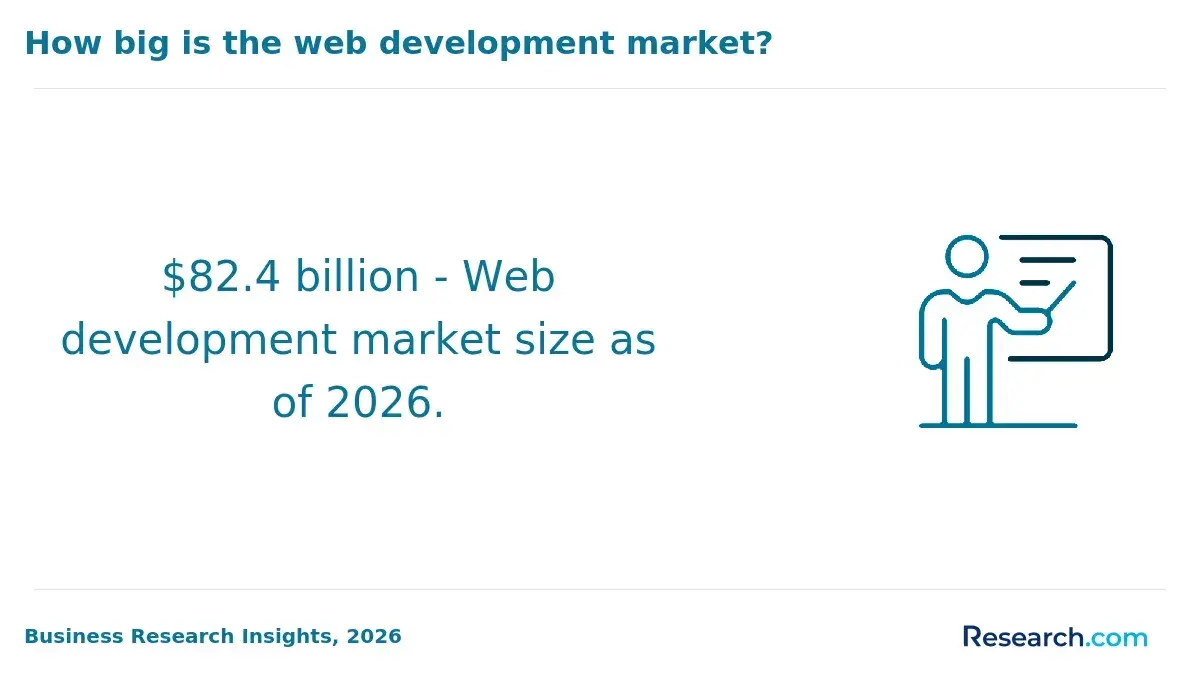
The web development market size as of 2026 is valued at $82.4 billion. That market creates opportunity, but it also creates competition. Students should graduate with more than course grades; they need a portfolio, problem-solving ability, version-control experience, and evidence that they can keep learning as tools change.
Students comparing long-term education returns across fields may also read Research.com’s separate guide on biotechnology master’s career outcomes, although web development decisions should primarily be based on technology career goals.
Things to Look for in an Online Bachelor’s Degree in Web Development Program
Availability in your location
Some schools do not accept students from every state or country. Confirm state authorization, international eligibility, time zone expectations, and whether any campus attendance is required.
Accessibility of required resources
Check whether all software, platforms, labs, and support tools are available where you live. Some services may have regional restrictions, licensing issues, or hardware requirements.
Teaching format
Ask whether the program is fully online or hybrid, and whether courses are live, recorded, self-paced, or deadline-based. Students who need structure may prefer programs with scheduled sessions and frequent instructor interaction.
Reputation
Look beyond marketing claims. Review faculty credentials, alumni work, student projects, employer relationships, graduation requirements, and independent student feedback. Check whether the school has unresolved complaints with relevant oversight organizations.
Accreditation
Accreditation is one of the most important checks. Confirm that the institution is accredited by a recognized accrediting organization. Be cautious of schools that claim accreditation from unfamiliar or unverifiable bodies. Regional accreditation has historically been common among reputable institutions and may be preferred by employers and graduate schools.
Hidden costs
Ask for a full breakdown of charges, including technology fees, online access fees, software, textbooks, proctoring, portfolio platforms, graduation fees, and any required travel. Some programs charge distance learners differently from campus students.
Technical support
Online students depend on stable platforms and responsive support. Ask whether technical help is available 24/7 or only during business hours, how outages are handled, and whether backup access is provided for exams or assignment deadlines.
On-site requirements
Some “online” programs require campus visits for orientation, exams, labs, presentations, or graduation. Confirm the frequency, cost, and timing of any required in-person activities before enrolling.
Transferability of credits
Transfer policies can affect both cost and graduation time. Ask which credits are accepted, whether technical courses expire, how prior learning is evaluated, and whether credits will transfer out if you later change schools.
| Common mistake | Why it can hurt you | Better approach |
| Choosing based only on tuition | Low tuition may hide fees, weak support, or outdated curriculum. | Compare total cost, accreditation, courses, portfolio requirements, and outcomes. |
| Ignoring accreditation | Credits may not transfer, and employers or graduate schools may question the degree. | Verify accreditation through recognized sources before applying. |
| Assuming online means self-paced | Many programs still have weekly deadlines or live sessions. | Ask how courses are delivered and how much schedule flexibility you actually have. |
| Graduating without a portfolio | Web development employers often want evidence of practical ability. | Build projects every term and keep a polished portfolio and code repository. |
| Overlooking career services | Online students may miss internships, resume help, and networking opportunities. | Ask whether career support is available specifically to online learners. |
What financial aid options are available?
Financial aid can make an online Bachelor’s Degree in Web Development more affordable, but students should understand the difference between aid that reduces cost and aid that creates debt. Start with school-based financial aid guidance and compare all options before accepting loans.
Federal student aid
- Grants: Programs such as the Federal Pell Grant provide need-based funding that does not require repayment.
- Loans: Federal Direct Subsidized and Unsubsidized Loans can help cover costs but must be repaid.
- Work-study programs: Eligible students may earn money through approved work opportunities while gaining experience.
State financial aid
Many states offer grants, scholarships, or tuition assistance for residents. Eligibility can depend on residency, income, enrollment status, institution type, and academic progress.
Scholarships
- Merit-based scholarships: Awarded for academic achievement, leadership, talent, or other criteria.
- Need-based scholarships: Designed for students with demonstrated financial need.
- Industry-specific scholarships: Offered by technology organizations, employers, or professional groups supporting future developers.
Institutional aid
Some colleges offer their own scholarships, grants, tuition discounts, transfer-student awards, or adult learner support. Contact the financial aid office directly and ask whether online students qualify for the same aid as campus students.
Employer assistance
Working students should ask their HR department about tuition reimbursement, professional development funds, or education benefits. Employer support can reduce out-of-pocket costs, but some programs require you to stay with the company for a period after receiving aid.
Private loans
Private loans can fill funding gaps, but they often have higher interest rates and less flexible repayment terms than federal loans. Treat them as a last option after grants, scholarships, employer aid, and federal options.
Students trying to limit debt can also compare cheap online college degrees designed for working adults and cost-conscious learners.
Career Opportunities and Outcomes With an Online Bachelor’s Degree in Web Development
An online Bachelor’s Degree in Web Development can lead to several entry-level and growth-oriented technology roles. Actual outcomes depend on portfolio quality, internship experience, location, technical stack, interview performance, and employer demand. Web developers earn an average salary of around $93,848 per year, with higher or lower pay depending on experience, location, and specialization.
| Career path | What the role does | How to prepare while in school |
| Web Developer | Builds and maintains websites and web applications across front-end and back-end tasks | Create a portfolio with responsive sites, database-driven projects, and deployed applications |
| Front-End Developer | Focuses on user-facing features, layouts, accessibility, and interface behavior | Strengthen HTML, CSS, JavaScript, React, AngularJS, and usability skills |
| Back-End Developer | Works with servers, databases, APIs, authentication, and application logic | Practice Java, PHP, Ruby and Ruby on Rails, C#, MySQL, MongoDB, and secure coding |
| Full-Stack Developer | Handles both front-end and back-end development tasks | Build complete projects that include user interfaces, databases, APIs, and deployment |
| Software Engineer | Works on broader applications, systems, or cloud-based solutions | Add software engineering, testing, algorithms, and architecture projects where possible |
| UX/UI Designer | Improves usability, interaction, and visual experience of websites and applications | Combine technical web skills with design, user research, and interface evaluation |
| Freelance Web Developer or Entrepreneur | Builds websites or web applications for clients or operates a development business | Create client-style projects, learn pricing and communication, and build a public portfolio |
Online students should ask whether their program offers internships, career advising, portfolio review, interview preparation, employer events, or job placement support. Students who need flexible pacing can compare accredited self-paced online colleges as part of their search.
How can you maximize your online web development degree for success?
An online degree gives you structure, but your career readiness depends on what you build while enrolled. Treat every technical course as an opportunity to create portfolio evidence.
- Build a portfolio early: Include responsive websites, interactive applications, database-backed projects, and polished explanations of your process.
- Use version control: Maintain clean repositories that show steady improvement and professional coding habits.
- Practice coding challenges carefully: Platforms such as HackerRank, LeetCode, or Codewars can strengthen problem-solving, but they should supplement—not replace—real projects.
- Network online: Join professional groups, attend virtual meetups, connect with alumni, and participate in developer communities.
- Seek internships and freelance projects: Paid or unpaid real-world experience can help you learn client communication, deadlines, debugging, and deployment.
- Track industry changes: Follow updates in JavaScript frameworks, accessibility, security, AI-assisted development, and cloud tools.
- Add certifications strategically: Choose certifications that match your target jobs rather than collecting credentials randomly.
Web development can be financially rewarding for skilled professionals, and Research.com also compares broader options among the best degrees to make money. Still, students should make decisions based on realistic costs, skills, and career fit—not only salary headlines.
The Worldwide Web Developer
A strong online Bachelor’s Degree in Web Development can help students enter a field built around problem-solving, technical adaptability, and practical output. The best programs combine accredited academic structure with modern coding tools, secure development practices, portfolio projects, career support, and enough flexibility for students who cannot attend campus full time.
Before enrolling, compare schools carefully. Confirm accreditation, total cost, delivery format, transfer credit policies, required technology, support services, and hands-on learning opportunities. Web development rewards people who do the work, test their assumptions, keep learning, and show what they can build.
Key Insights
- An online web development degree can be valuable, but only if it is rigorous and accredited. Delivery format matters less than curriculum quality, project depth, instructor support, and employer relevance.
- Portfolio evidence is essential. Graduates should leave with working projects, code samples, and clear explanations of their technical decisions.
- Costs vary widely. Online web development programs may cost $300 to $700 per credit, with average total tuition between $17,000 and $120,000.
- Online learning requires self-management. Flexibility helps working adults and remote students, but weak time management can make online study difficult.
- Employers increasingly accept online credentials from reputable schools. Degrees, certifications, micro-credentials, and portfolios now work together in tech hiring.
- Cybersecurity and AI are becoming part of web development training. Students should learn secure coding, responsible AI tool use, testing, and modern deployment practices.
- Do not choose based on tuition alone. Compare accreditation, fees, transfer credits, career services, technology requirements, and hands-on learning.
- Career outcomes depend on skill and specialization. Web developer, front-end, back-end, full-stack, software engineering, UX/UI, and freelance paths all require different preparation.
- Supplementary certifications can help when chosen strategically. The best credentials validate specific skills that match target jobs.
References:
- Business Research Insights. (2026). Web development market size. https://www.businessresearchinsights.com/market-reports/web-development-market-109039
- CompTIA. (2025). State of the Tech Workforce. https://www.comptia.org/en/resources/research/state-of-the-tech-workforce-2025
- Gallagher, S. (2018, December). Educational Credentials Come Of Age: A Survey on the Use and Value of Educational Credentials in Hiring. Northeastern University, College of Professional Studies. https://cps.northeastern.edu/wp-content/uploads/2021/03/Educational_Credentials_Come_of_Age_2018.pdf
- Fortune Business Insights. (2026). Edtech Market Size, Share, and Industry Analysis By Type. https://www.fortunebusinessinsights.com/edtech-market-111377
- Gallagher, S. (2020, September 29). The Pandemic Pushed Universities Online. The Change Was Long Overdue. Harvard Business Review. https://hbr.org/2020/09/the-pandemic-pushed-universities-online-the-change-was-long-overdue
- Hanson, M. (2025, October 27). Cost of Online Education vs. Traditional Education. Education Data Initiative. https://educationdata.org/cost-of-online-education-vs-traditional-education
- Lederman, D. (2017, April 28). Clay Christensen sticks with predictions of massive college closures. Inside Higher Ed. https://www.insidehighered.com/digital-learning/article/2017/04/28/clay-christensen-sticks-predictions-massive-college-closures?xid=PS_smithsonian
- Ma, J., Pender, M., & Hu, X. (2025). Trends in College Pricing and Student Aid 2025. College Board. https://research.collegeboard.org/media/pdf/Trends-in-College-Pricing-and-Student-Aid-2025-final_1.pdf
- National Student Clearinghouse Research Center. (2026, January 15). Final Fall Enrollment Trends. https://nscresearchcenter.org/final-fall-enrollment-trends
- Simunich, B., Garrett, R., Fredericksen, E. E., & Gay, K. (2025). CHLOE 10 | Meeting the Moment: Navigating Growth, Competition, and AI in Online Higher Education, 2025. Quality Matters. https://qualitymatters.org/qa-resources/resource-center/articles-resources/CHLOE-10-report-2025
- Stack Overflow. (2025). 2025 Developer Survey. https://survey.stackoverflow.co/2025/
- U.S. Bureau of Labor Statistics. (2025, August 28). Web developers and digital designers. Occupational Outlook Handbook. https://www.bls.gov/ooh/computer-and-information-technology/web-developers.htm
- Zippia. (2025, January 8). Web developer jobs: How to become a web developer and career outlook. Zippia. Retrieved February 9, 2026, from https://www.zippia.com/web-developer-jobs/
- ZipRecruiter. (2026). Web Developer Salary. https://www.ziprecruiter.com/Salaries/Web-Developer-Salary
Other Things You Should Know About Online Bachelor’s Degrees in Web Development Programs
It should hold regional accreditation from a U.S. Department of Education-recognized accreditor, such as SACSCOC, HLC, MSCHE, NECHE, NWCCU, or WSCUC. Many employers and graduate schools also look for programmatic approval from ABET only when a computing program carries that specific recognition.
Admission requirements for top online Bachelor's programs in Web Development in 2027 typically include a high school diploma or equivalent, a minimum GPA of 2.5, and completion of prerequisite courses in mathematics and computer science. Some programs may also require SAT or ACT scores.