
2027 Aerospace Engineering Degree: Requirements, Job Prospects & Salary

Co-Founder and Chief Data Scientist
Choosing an aerospace engineering degree is a high-stakes decision because the field is mathematically demanding, often expensive, and closely tied to safety-critical work in aviation, defense, satellites, and space systems. Students who are comparing engineering majors need to understand more than the basic definition of the discipline: they need to know what they will study, how admissions work, how much the degree can cost, whether accreditation matters, what careers are realistic after graduation, and how emerging technologies are changing the profession.
This guide explains aerospace engineering as a college major and career path. It covers degree requirements, program costs, accreditation and licensing, online and accelerated options, internships, salaries, scholarships, related engineering fields, and the skills employers increasingly expect from aerospace engineers.
What This Aerospace Engineering Guide Covers
- What aerospace engineering means
- Admissions and preparation requirements
- Typical aerospace engineering degree costs
- Degree length, accreditation, and licensing
- Top universities for aerospace engineering in 2027
- Career paths for aerospace engineering majors
- Aerospace engineering salary expectations
- Well-known aerospace engineering figures
- New and emerging aerospace career opportunities
- Management pathways for aerospace engineers
- Online aerospace engineering study options
- Internships and co-ops that strengthen aerospace careers
- Data analytics in aerospace engineering
- Professional certifications for aerospace engineers
- Soft skills aerospace engineers need
- Scholarships and financial aid options
- Other decision factors when choosing an aerospace degree
- Fast-track aerospace engineering degree options
- Artificial intelligence in aerospace engineering
- Interdisciplinary fields that can broaden aerospace careers
- Additional notable aerospace background
Quick Answer: Is Aerospace Engineering a Good Major?
Aerospace engineering can be a strong major for students who are comfortable with advanced mathematics, physics, computer-aided design, simulation, and complex technical problem-solving. It is best suited for students who want to work on aircraft, spacecraft, propulsion, satellites, defense systems, autonomous flight, testing, or systems integration. It is not the easiest engineering path, and students should compare program accreditation, lab access, internship pipelines, total cost, and career fit before enrolling.
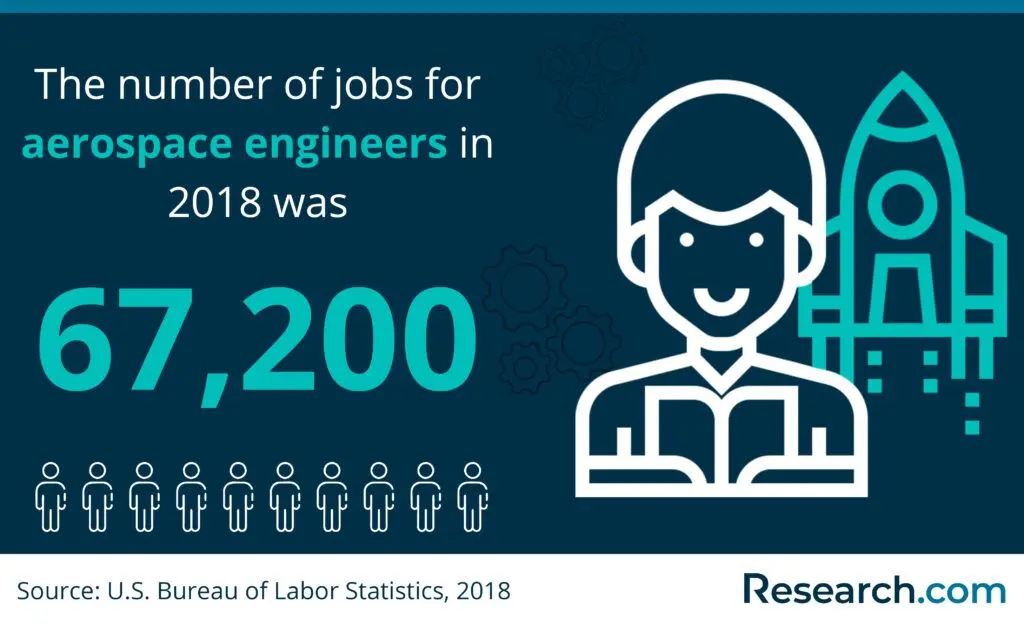
According to the U.S. Bureau of Labor Statistics, there were 67,200 jobs available to aerospace engineers in 2025. The job growth projection through 2028 is 2%. That slower-than-average projection means students should be strategic: experience, software skills, systems knowledge, internships, and specialization can matter as much as the degree title itself.
Aerospace engineering is also being reshaped by sustainability, advanced propulsion, additive manufacturing, autonomous systems, and digital monitoring. One widely discussed innovation is the possibility of a zero-fuel aircraft. Aerospace companies, government agencies, and research labs need engineers who can turn ambitious concepts like this into reliable systems.
Other developments influencing aerospace work include 3D printing, blockchain technology, smart automation, structural health monitoring, advanced materials, and data-rich simulation. These trends do not replace the fundamentals of aerospace engineering, but they do change which technical skills are most valuable.
What Is Aerospace Engineering?
Aerospace engineering is the branch of engineering focused on the design, testing, analysis, production, and performance of vehicles and systems that operate in the air or in space. It includes aircraft, spacecraft, launch vehicles, satellites, missiles, propulsion systems, flight-control systems, structures, sensors, and support technologies.
The field is commonly divided into two overlapping areas. Aeronautical engineering deals mainly with vehicles that fly within Earth’s atmosphere, such as airplanes, helicopters, drones, and military aircraft. Astronautical engineering focuses on spacecraft, satellites, launch systems, orbital mechanics, and technologies used beyond the atmosphere.
Modern aerospace engineering has roots in early flight experimentation, including the steam-powered airship in 1852 and the work of Orville and Wilbur Wright, whose powered aircraft could take off, fly, and land under its own power. In 2024, global aerospace industry revenue surpassed $875 billion, reflecting rapid technological advancements and increased demand for commercial and defense aerospace systems.
Aerospace engineers do not only work on airplanes and rockets. Their work also supports satellites used for weather forecasting, television broadcasting, mobile communications, navigation, and Earth observation. The global satellite industry is expected to reach a market value of over $52 billion by 2026 (Statista, 2026).
Aerospace Engineering at a Glance
| Decision Area | What Students Should Know |
| Main focus | Designing, testing, analyzing, and improving aircraft, spacecraft, satellites, propulsion systems, and related technologies. |
| Core subjects | Calculus, physics, aerodynamics, propulsion, structures, materials, flight mechanics, control systems, and engineering design. |
| Best fit | Students who enjoy applied math, physical systems, computer modeling, testing, and high-precision engineering problems. |
| Common employers | Aerospace manufacturers, defense contractors, space companies, government agencies, airlines, research labs, and engineering consulting firms. |
| Important credential check | Students should verify whether the aerospace engineering program is ABET-accredited when studying in the United States. |
Related Engineering Degrees to Compare
Aerospace engineering is highly specialized. Some students may find that a neighboring engineering major gives them more flexibility while still allowing entry into aerospace-related work. The best choice depends on whether the student wants to focus narrowly on flight and space systems or build a broader engineering foundation.
Electrical Engineering
Electrical engineering prepares students to work with power systems, electronics, electromagnetism, communications, sensors, control systems, and embedded hardware. In aerospace, electrical engineers may contribute to avionics, radar, satellite communications, flight-control electronics, and spacecraft power systems.
Software Engineering
Software engineering focuses on designing, building, testing, and maintaining software systems. Aerospace employers rely on software engineers for simulation tools, autonomous flight systems, mission planning, embedded systems, safety-critical software, and data platforms. Students interested in coding-heavy aerospace roles may compare this path with a traditional aerospace degree.
Urban Planning
Urban planning engineering is not a direct substitute for aerospace engineering, but it may appeal to students interested in infrastructure, sustainability, transportation systems, and climate adaptation. Its connection to aerospace is usually indirect, such as aviation infrastructure, airport planning, or regional transportation systems.
Environmental Science
Environmental science examines ecosystems, pollution, climate change, biodiversity, and resource use. Students focused on aviation emissions, sustainable fuels, aircraft environmental impact, or climate-related research may combine aerospace training with environmental science knowledge.
Engineering Management
Engineering management combines technical knowledge with leadership, budgeting, operations, and project coordination. It is especially relevant for aerospace professionals who want to lead design teams, oversee complex programs, manage suppliers, or move into executive or program-management roles.
| Degree Option | When It Makes Sense | How It Connects to Aerospace |
| Aerospace engineering | You want the most direct path into aircraft, spacecraft, propulsion, aerodynamics, or flight systems. | Direct preparation for aerospace design, testing, simulation, and systems roles. |
| Mechanical engineering | You want broader engineering flexibility while keeping access to aerospace structures, thermal systems, and manufacturing. | Useful for propulsion, materials, mechanical components, and structural design. |
| Electrical engineering | You are more interested in electronics, sensors, communications, or controls than aerodynamics. | Supports avionics, spacecraft electronics, radar, and control systems. |
| Software engineering | You want to build aerospace software, autonomous systems, simulations, or mission tools. | Important for flight software, digital twins, AI-enabled systems, and data platforms. |
| Engineering management | You already have technical experience and want to lead engineering teams or programs. | Prepares engineers for project leadership, budgeting, and cross-functional coordination. |
What Are the Requirements to Study Aerospace Engineering?
Preparation for aerospace engineering usually starts before college. Students should build a strong foundation in calculus, physics, chemistry, computer science, writing, and technical problem-solving. Admissions standards vary by country and institution, but competitive aerospace engineering programs generally expect strong math readiness.
In the United States, the University of Texas at Austin Cockrell School of Engineering uses calculus readiness as one admissions indicator. Applicants may demonstrate this through a SAT Math score of 620 or over, an Advanced Placement Calculus AB or BC score of three or over, or an official college or university transcript showing completion of college-level Calculus I or higher (Office of Admissions, n.d.).
The University of Buffalo reports aerospace engineering admissions ranges that include GPAs from 90 to 96, an ACT score between 24 and 30, and SAT scores from 1180 to 1350. The State University of New York also encourages applicants to show competency in English and writing, social studies, college-preparatory science, a second language, and college-preparatory mathematics.
In the United Kingdom, applicants are typically expected to hold at least three A levels, including mathematics or physics. They also generally need five GCSEs at grades 9-4 (A*-C) in relevant subjects such as mathematics, science, and English. Level 3 vocational qualifications in engineering may also support entry, especially as recent data indicates increasing recognition of vocational pathways in higher education (UCAS, 2026).
Additional preparation in calculus, chemistry, computer science, and computer-aided design can make the transition into an aerospace engineering curriculum easier (BigFuture, n.d.). Because admissions rules differ widely, students should always confirm requirements directly with the universities they plan to apply to.
Typical First-Year and Lower-Division Coursework
After enrollment, aerospace engineering students usually spend the first one-and-a-half to two years completing foundational engineering coursework. ABET describes this early preparation as a combination of engineering science and engineering design (ABET, 2026). Students then move into more specialized courses such as aerodynamics, propulsion, aircraft structures, orbital mechanics, controls, and aerospace systems design.
| Preparation Area | Why It Matters in Aerospace Engineering |
| Calculus | Used in flight mechanics, dynamics, control theory, optimization, and fluid mechanics. |
| Physics | Provides the foundation for motion, forces, energy, thermodynamics, and electromagnetism. |
| Chemistry | Helpful for materials, combustion, propulsion, and fuel-related topics. |
| Computer science | Supports simulation, numerical analysis, modeling, autonomous systems, and data processing. |
| Technical writing | Essential for design reports, test documentation, safety reviews, and regulatory communication. |
| Computer-aided design | Used to model parts, assemblies, aircraft components, and spacecraft structures. |
How Much Does It Cost to Study Aerospace Engineering?
Aerospace engineering costs vary widely by country, institution type, residency status, and whether the student attends a public or private university. Tuition is only one part of the total price. Students should also budget for housing, meals, books, fees, transportation, software, lab materials, and possible relocation for internships or co-ops.
Career Igniter reported that U.S. aerospace engineering tuition can be as low as $8,000 per year at public institutions and more than $45,000 at private colleges or universities in-state. According to the College Board (2026), average in-state public college tuition for engineering programs increased to approximately $11,200 annually, while out-of-state students face an average cost of around $30,600 at public institutions. Private colleges and universities, on average, now charge over $50,000 per year for aerospace engineering programs.
The Massachusetts Institute of Technology (MIT) (2026) estimated the cost of attendance for the 2025-26 academic year at $78,200. The Georgia Institute of Technology (2026) set costs for in-state students at $33,700 and out-of-state students at $55,900 for the 2025-26 school year. Freshmen had slightly lower two-semester costs of $30,400 and $50,100, respectively.
In the U.K., home and European Union students generally need at least £10,000 per year for tuition. In Wales, tuition can cost up to £9,250. Universities in Northern Ireland can cost up to £4,885 for home students, while students from other parts of the U.K. may face £10,000 per year. Students in Scotland, whether home or E.U., are expected to pay £10,000 for a year of study (Times Higher Education, 2026).
International students pursuing a bachelor’s degree in aerospace engineering in the U.K. may pay £22,500 in the first year, followed by £23,100, £23,700, and £24,300 in the second, third, and fourth years, respectively (Universities UK, 2026).
In France, a founding country of Airbus, engineering students at public institutions pay around €601 for a school year because undergraduate education is subsidized by the government. Non-E.U. students are not included in that subsidy and should prepare at least €2,770 for a year of study in the country.
| Location or Institution Type | Cost Figure Stated | What to Check Before Enrolling |
| U.S. public institution | As low as $8,000 per year; average in-state public engineering tuition approximately $11,200 annually. | Residency rules, engineering fees, lab fees, housing, and scholarship eligibility. |
| U.S. public out-of-state | Average cost around $30,600 at public institutions. | Whether merit aid or residency changes can reduce total cost. |
| U.S. private colleges and universities | More than $45,000 in-state; private colleges and universities average over $50,000 per year. | Net price after institutional aid, not just sticker price. |
| MIT | Estimated 2025-26 cost of attendance of $78,200. | Need-based aid, total annual attendance cost, and expected family contribution. |
| Georgia Institute of Technology | $33,700 for in-state students and $55,900 for out-of-state students in 2025-26; freshmen costs of $30,400 and $50,100. | Engineering-specific costs and co-op opportunities that may offset expenses. |
| United Kingdom | Figures include £10,000, up to £9,250 in Wales, up to £4,885 for home students in Northern Ireland, and £10,000 in Scotland. | Home, E.U., rest-of-U.K., or international fee status. |
| U.K. international student example | £22,500, £23,100, £23,700, and £24,300 across the first four years. | Annual tuition escalation and living costs. |
| France public engineering study | Around €601 for subsidized students; at least €2,770 for non-E.U. students. | Language of instruction, visa requirements, and eligibility for subsidized rates. |
How Long Does It Take to Become an Accredited Aerospace Engineer?
A standard bachelor’s degree in aerospace engineering usually takes four years. Some universities offer five-year combined programs that allow students to complete a bachelor’s and master’s degree together, with approximately 65% of students enrolling in such combined programs as of 2026 (National Center for Education Statistics, 2026).
A master’s degree in aerospace engineering generally requires approximately two years of full-time study (QS Top Universities, 2026). A Ph.D. usually takes three to five years. At Georgia Tech’s Daniel Guggenheim School of Aerospace Engineering (2026), a Ph.D. candidate must complete a minimum of 30 credit hours for graduation.
Accreditation vs. Licensure
Students often confuse accreditation and licensure. They are not the same. ABET accredits aerospace engineering programs, not individual engineers (ABET, n.d.). Program accreditation indicates that the curriculum meets recognized quality standards for engineering education.
Licensure is a separate professional process. In the United States, aerospace engineering graduates who pursue a Professional Engineering pathway typically need work experience and exams. The Fundamentals of Engineering exam can often be taken shortly after completing a bachelor’s degree. According to the National Society of Professional Engineers (2025), the pass rate for the Fundamentals of Engineering exam is approximately 84%, and most candidates are eligible to take it shortly after graduation.
Graduates generally need at least four years of work experience before obtaining a license. Licensure is not required for many entry-level aerospace engineering jobs, but a Professional Engineering (PE) license may be required or preferred for higher leadership responsibilities, with approximately 50% of aerospace engineers holding such a license as of 2025 (U.S. Bureau of Labor Statistics, 2026).
In the U.K. and EASA member states, aviation maintenance licensure is addressed through the Part-66 License System. Category A permits limited inspection and maintenance tasks. Category B allows license holders to issue Certificates of Release Service after maintenance. Category C allows the holder to provide certificates after base maintenance of an aircraft. As of 2024, over 60,000 licensed aircraft maintenance engineers are registered across EASA member states. Applicants should contact the relevant national aviation authority for the country or state in which they plan to work.
| Pathway | Typical Time | Best For |
| Bachelor’s degree | Four years | Students seeking entry-level aerospace engineering, testing, design, analysis, or systems roles. |
| Combined bachelor’s/master’s | Five years | Students who want advanced preparation without applying separately to graduate school. |
| Master’s degree | Approximately two years full time | Engineers seeking specialization in propulsion, controls, structures, space systems, or research roles. |
| Ph.D. | Three to five years | Students aiming for research, academia, advanced R&D, or highly specialized technical leadership. |
| PE licensure pathway | Bachelor’s degree, exams, and at least four years of work experience | Engineers seeking licensed practice, higher responsibility, or leadership in regulated contexts. |
The Best Universities to Study Aerospace Engineering for 2027
Rankings can help students identify well-known aerospace engineering programs, but they should not be the only selection tool. A highly ranked program may not be the best fit if it is unaffordable, lacks the student’s preferred specialization, offers limited undergraduate research access, or does not align with the student’s career goals.
According to U.S. News, these ten higher education institutions have leading accredited aerospace engineering programs:
- California Institute of Technology
- Massachusetts Institute of Technology
- Stanford University
- Georgia Institute of Technology
- University of Michigan-Ann Arbor
- Purdue University, West Lafayette
- University of Illinois, Urbana-Champaign
- Texas A&M University, College Station
- Princeton University
- University of Colorado Boulder
Times Higher Education also identifies the following universities among the top global institutions for mechanical and aerospace engineering:
- California Institute of Technology
- Stanford University
- University of Cambridge
- Harvard University
- University of Oxford
- Massachusetts Institute of Technology
- Princeton University
- ETH Zurich
- University of California, Los Angeles
- Georgia Institute of Technology
How to Use Aerospace Engineering Rankings Wisely
| Ranking Factor | Why It Matters | Question to Ask |
| Accreditation | Employers and licensing pathways may value an accredited engineering curriculum. | Is the specific aerospace engineering program accredited, not just the university? |
| Research areas | Programs differ in strengths such as propulsion, aerodynamics, space systems, controls, or materials. | Do faculty and labs match the specialization you want? |
| Industry connections | Internships and co-ops can be crucial for aerospace hiring. | Which companies recruit from the program? |
| Facilities | Wind tunnels, propulsion labs, simulation environments, and maker spaces support hands-on learning. | Will undergraduates have access to labs and design teams? |
| Net cost | A top-ranked program can still be a poor choice if debt is too high. | What is the actual net price after grants, scholarships, and aid? |
Possible Careers for Aerospace Engineering Majors
Aerospace engineering graduates can work in design, testing, manufacturing, systems engineering, simulation, maintenance, compliance, defense, space technology, and data analysis. They do not always begin by designing entire aircraft or spacecraft. Many start by analyzing components, running simulations, writing specifications, supporting test programs, or improving manufacturing processes. The industry is expected to grow by approximately 6% through 2034, faster than the average for all occupations.
- Aircraft or spacecraft designer: Works on the design of vehicles used in commercial aviation, defense, scientific missions, or private space activity.
- Mechanical engineer: Designs, analyzes, or improves aircraft, spacecraft, missile, and propulsion components.
- Military aerospace engineer: Develops defense-related aerospace technologies with attention to safety, mission performance, and reduced collateral damage.
- Drafter: Produces detailed drawings and specification sheets for aircraft, spacecraft, missiles, or components.
- Aerospace technician: Installs, tests, maintains, and repairs equipment used in aerospace development, testing, or operations.
- Mission or payload specialist: Supports critical mission tasks, including work involving space payloads, experiments, or onboard systems.
- Data processing manager: Uses simulation and collected test data to support research, validation, and better design decisions.
- Inspector or compliance officer: Reviews systems, procedures, and equipment to help ensure aircraft or spacecraft meet safety and operational requirements.
Career Path Comparison for Aerospace Engineering Graduates
| Career Direction | Typical Work | Good Fit For |
| Design and analysis | Modeling, simulation, component design, performance calculations, and design reviews. | Students strong in math, CAD, physics, and problem-solving. |
| Testing and validation | Lab tests, flight tests, data collection, performance verification, and failure analysis. | Students who like hands-on work and rigorous documentation. |
| Manufacturing and production | Process improvement, quality checks, supplier coordination, and production support. | Students interested in how aerospace systems are actually built. |
| Space systems | Satellites, launch vehicles, mission planning, payloads, and orbital technologies. | Students drawn to astronautics, spacecraft, and space exploration. |
| Defense and security | Aircraft, missile systems, unmanned systems, and mission-critical technologies. | Students interested in national security and regulated engineering environments. |
| Compliance and safety | Inspection, standards, documentation, risk analysis, and certification support. | Students who are detail-oriented and interested in safety-critical systems. |
How Much Do Aerospace Engineers Earn?
CollegeGrad reported that the entry-level salary for aerospace engineers is $69,041 per year. An aerospace engineer with experience can earn $118,500 yearly. These salary figures make aerospace engineering one of the higher-paying fields within engineering degrees, though actual earnings depend on employer, location, security clearance requirements, specialization, experience, and economic conditions.
For engineers seeking higher compensation, location can matter. In New York, aerospace engineers have an average hourly wage of $58.47, which translates to an annual salary of $121,513 (Bureau of Labor Statistics, 2026).
Famous People Who Studied Aerospace Engineering
Aerospace engineering has produced influential figures whose work shaped aviation, rocketry, spaceflight, and professional engineering organizations.
- Wenher von Braun: A German-American engineer often described as the father of rocket technology and space science. His pioneering work helped lay the foundation for the space systems era, with over 5,300 operational satellites currently orbiting Earth as of 2026 (United Nations Office for Outer Space Affairs, 2026).
- Neil Armstrong: Best known as the first person to walk on the moon, Armstrong remains one of the most recognizable figures connected to aerospace history.
- Robert Hutchings Goddard: Known for theorizing and building the first liquid-fueled rocket.
- Stephen Frick: A veteran of two Space Shuttle missions who completed an aerospace engineering program at the United States Naval Academy in 1986 (Ranker, n.d.).
- Jennifer Mary Body, CBE: A British aerospace engineer and former head of the Royal Aeronautical Society who received a CBE in 2019.
Emerging Career Opportunities in Aerospace Engineering
Aerospace careers are expanding beyond traditional aircraft and spacecraft design. Students entering the field now may encounter roles tied to sustainable aviation, autonomous flight, satellite networks, space commercialization, additive manufacturing, digital engineering, and advanced propulsion.
Sustainable aviation is one important area. Engineers are needed to explore lower-emission propulsion, lightweight materials, alternative aircraft architectures, and improved operational efficiency. These roles require both aerospace fundamentals and an understanding of environmental constraints.
Autonomous systems are another major growth area. Drones, pilotless aircraft concepts, and intelligent flight-control technologies create opportunities for aerospace engineers who understand software, sensing, control theory, safety, and systems integration.
Space exploration and commercial space activity also continue to broaden the career landscape. Private organizations such as SpaceX and Blue Origin have increased attention on spacecraft design, space habitats, launch systems, and propulsion technologies for more ambitious missions.
Aerospace engineers can also move into adjacent areas such as systems engineering, robotics, advanced manufacturing, research, or academia. Professionals who want to strengthen their credentials while working may compare flexible graduate options such as masters in engineering programs, especially if they need a broader technical or leadership foundation.
Aerospace Engineering for Safer Flights and Space Missions
Aerospace engineering is fundamentally a safety-critical discipline. Engineers must design systems that can perform under extreme conditions, meet strict tolerances, and protect passengers, crews, equipment, and missions. That is why aerospace work relies heavily on testing, documentation, redundancy, risk analysis, and regulatory oversight.
The field also supports environmental progress. Work on efficient aircraft, lightweight structures, better propulsion, and zero-fuel concepts reflects the pressure to reduce aviation’s environmental footprint while maintaining safety and performance.
Defense applications are another part of aerospace engineering. In military contexts, engineers may work on technologies intended to improve operational safety, mission accuracy, and protection while reducing unintended harm.
Can Aerospace Engineers Advance Their Careers With Management Expertise?
Yes. Aerospace engineers who want to lead programs, manage teams, or oversee budgets often benefit from management training. Aerospace projects involve long timelines, multiple technical disciplines, suppliers, safety requirements, and cost constraints. Technical skill alone may not be enough for senior roles.
Management education can help engineers develop skills in scheduling, budgeting, risk management, stakeholder communication, resource planning, and strategic decision-making. A focused program such as an engineering management degree online may be useful for professionals who want to move from technical execution into project or organizational leadership.
Can Aerospace Engineering Programs Be Effectively Pursued Online?
Some aerospace engineering coursework can be completed online, especially theory-heavy subjects such as mathematics, controls, simulation, programming, systems engineering, and engineering management. However, students should be cautious. Aerospace engineering is hands-on, and strong programs usually include labs, design projects, testing, and industry collaboration.
Online programs can work well for students who need flexibility, already have access to engineering workplaces, or are pursuing graduate-level study. Prospective students should look for accredited options, robust simulation tools, meaningful design projects, faculty access, and clear explanations of how laboratory requirements are fulfilled. Students comparing flexible options can review broader online engineering degrees to understand cost and delivery differences.
| Online Aerospace Study May Work If... | Be Careful If... |
| The program is accredited or clearly recognized by employers in your target field. | The school is vague about accreditation, labs, or engineering design requirements. |
| You can complete simulations, projects, and technical collaboration remotely. | The program offers mostly lectures with limited applied work. |
| You are a working professional seeking graduate specialization. | You are an undergraduate with no access to labs, teams, internships, or hands-on experience. |
| The program has industry partnerships or internship support. | Career support is weak or unrelated to aerospace employers. |
What Internship and Co-op Opportunities Can Boost an Aerospace Engineering Career?
Internships and co-ops are among the most important ways aerospace students become competitive. Classroom learning builds the technical foundation, but employers also want evidence that students can work on real engineering teams, follow safety procedures, document work, use engineering software, and solve ambiguous problems.
Students may work on system analysis, simulation, design optimization, materials testing, manufacturing support, flight-test data, quality assurance, or maintenance processes. Strong internships can also help students identify whether they prefer design, testing, software, manufacturing, research, or compliance.
Co-op programs can be especially valuable because they often provide longer work terms than a standard summer internship. The trade-off is that they may extend the time to graduation. Students should ask whether co-op participation affects financial aid, housing, visa status, or academic sequencing.
Students interested in broader analytical training can also explore interdisciplinary graduate study, including options such as bioinformatics masters online, though they should make sure any additional degree directly supports their aerospace goals rather than distracting from core engineering preparation.
How Can Data Analytics Drive Aerospace Engineering Innovation?
Data analytics is increasingly important in aerospace because modern aircraft, spacecraft, and test systems generate large volumes of performance and maintenance data. Engineers use data to improve designs, validate simulations, monitor structures, identify failures, and support predictive maintenance.
Analytics also helps teams compare design alternatives, reduce unnecessary physical testing, improve reliability, and detect patterns that would be difficult to see manually. Aerospace engineers who understand both physical systems and data methods can be especially useful because they can interpret data in context rather than treating it as an abstract software problem.
Professionals who need deeper analytical training may compare programs such as the cheapest online master's data science options, especially if they want to work with simulation, machine learning, predictive maintenance, or digital engineering.
What Professional Certifications Can Boost an Aerospace Engineer's Career?
Certifications can strengthen an aerospace engineer’s profile when they match the engineer’s role. They are not a replacement for an accredited engineering degree, but they can show targeted skill development in project management, quality improvement, systems engineering, software tools, data analysis, or safety-related processes.
Examples include PMP for project management and Six Sigma for process improvement. Software, modeling, simulation, or CAD-related credentials may also help when they align with employer needs. Engineers should avoid collecting certifications randomly. The best certification is the one that fills a specific gap between the engineer’s current role and desired next role.
As aerospace systems increasingly incorporate automation and intelligent decision-making, some professionals may also consider artificial intelligence training. Programs such as cheap online master's programs in artificial intelligence can be relevant for engineers moving toward autonomous systems, optimization, or AI-enhanced design.
| Certification Area | Potential Value | Best Fit |
| Project management | Supports planning, budgeting, scheduling, and cross-functional leadership. | Engineers moving into program or team leadership. |
| Quality and process improvement | Helps with manufacturing reliability, defect reduction, and operational efficiency. | Engineers in production, quality assurance, or supplier management. |
| Systems engineering | Supports requirements, integration, verification, and lifecycle thinking. | Engineers working on complex aircraft, spacecraft, or defense systems. |
| Software and simulation tools | Demonstrates practical ability with tools used in modeling, analysis, or design. | Students and professionals seeking technical specialist roles. |
| Data analytics or AI | Strengthens work in predictive maintenance, optimization, digital twins, and autonomous systems. | Engineers targeting data-heavy aerospace roles. |
What Soft Skills Are Essential for Aerospace Engineers to Succeed in Their Careers?
Aerospace engineering is technical, but it is not solitary. Engineers work in teams where design decisions, safety reviews, testing schedules, budgets, and documentation all affect the final system. Soft skills help technical work move from calculation to implementation.
- Communication: Aerospace engineers must explain complex technical details to other engineers, technicians, managers, clients, regulators, and stakeholders.
- Teamwork: Aircraft and spacecraft projects require collaboration across structures, propulsion, software, controls, materials, manufacturing, safety, and operations.
- Problem-solving: Engineers must diagnose design, testing, production, and performance problems under real constraints.
- Adaptability: New tools, materials, regulations, and technologies require engineers to keep learning throughout their careers.
- Attention to detail: Small design or calculation errors can create serious safety, cost, and schedule consequences.
- Leadership: As engineers advance, they may guide teams, review technical decisions, mentor junior staff, and manage high-risk projects.
What Scholarships and Aid Are Available for Aerospace Engineering Students?
Aerospace engineering can require a major financial investment, so students should pursue aid early and compare net cost rather than tuition alone. Scholarships, grants, work-study, and loans can all affect affordability, but they work differently.
Scholarships for Aerospace Engineering Students
- Aerospace engineering scholarships: Organizations may offer awards specifically for students pursuing aerospace study. The American Institute of Aeronautics and Astronautics (AIAA) Scholarships are examples of awards tied to aerospace excellence and commitment.
- STEM scholarships: Because aerospace engineering is a STEM field, students may qualify for broader science, technology, engineering, and mathematics awards. Examples include National Science Foundation (NSF) Scholarships and Society of Women Engineers (SWE) Scholarships.
- University-based scholarships: Colleges and universities may offer merit-based, need-based, or department-specific awards. MIT Scholarships, for instance, provide substantial financial aid to qualifying students enrolled in aerospace engineering programs.
Financial Aid Options
- Federal and state grants: Grants such as the Pell Grant and state-specific grants may help eligible students and generally do not require repayment.
- Student loans: Federal student loans can help cover remaining costs, but students should borrow carefully and understand repayment terms before committing.
- Work-study programs: Work-study can help students earn income while enrolled. When positions relate to engineering, they may also provide useful experience.
Ways to Reduce Aerospace Engineering Degree Costs
| Cost Strategy | How It Helps | What to Verify |
| Apply for department scholarships | May reduce tuition or fees for engineering students specifically. | Deadlines, GPA requirements, and renewal conditions. |
| Use transfer credits carefully | Can reduce time to degree if credits apply to required courses. | Whether engineering, math, and science credits transfer directly. |
| Consider public in-state options | May offer lower tuition than private or out-of-state institutions. | ABET accreditation, lab quality, and employer recruiting connections. |
| Pursue paid internships or co-ops | Can provide income and improve employment prospects. | Whether participation delays graduation or affects aid. |
| Compare net price | Shows actual cost after aid rather than advertised tuition. | Scholarship renewal rules and total living expenses. |
What Other Factors Should Be Considered When Choosing a Degree in Aerospace Engineering?
Students should evaluate aerospace engineering as both an academic commitment and a career investment. Salary can be attractive, and aerospace engineering is often discussed among majors that make the most money, but earnings are not guaranteed. Outcomes depend on school quality, student performance, internships, location, industry cycles, security clearance eligibility, graduate education, and specialization.
Questions to Ask Before Choosing an Aerospace Engineering Program
- Is the aerospace engineering program ABET-accredited or otherwise recognized in the country where I plan to work?
- Which aerospace specializations are strongest at this school: aerodynamics, propulsion, structures, controls, space systems, materials, or autonomy?
- Do undergraduate students get access to labs, design teams, wind tunnels, simulation tools, or research projects?
- Which employers recruit from the program, and how strong are internship and co-op pipelines?
- What is the total net cost after grants, scholarships, housing, travel, and fees?
- How many students graduate on time, and what support exists for difficult courses?
- Does the curriculum include modern tools such as coding, simulation, systems engineering, data analytics, or AI-related methods?
- If the program is online or hybrid, how are lab and design requirements handled?
Common Mistakes to Avoid
| Common Mistake | Why It Can Hurt You | Better Approach |
| Choosing a school only because of ranking | A famous name may not offer the best cost, specialization, or support for your goals. | Compare accreditation, labs, internships, net price, and fit. |
| Ignoring accreditation | It may affect employer confidence, graduate study, or licensure pathways. | Confirm the accreditation status of the specific program. |
| Focusing only on tuition | Housing, fees, travel, software, and lost work time can change affordability. | Calculate total cost of attendance and net price. |
| Assuming online programs are all equivalent | Some may lack hands-on design, lab work, or industry credibility. | Check lab delivery, project requirements, and employer recognition. |
| Waiting too long to seek internships | Aerospace hiring can be competitive, and experience matters. | Start building projects, resumes, and employer contacts early. |
| Underestimating math and physics demands | Weak preparation can make early engineering courses difficult. | Strengthen calculus, physics, and programming before enrollment. |
What Are the Fast-Track Options for Earning an Aerospace Engineering Degree?
Students who want to enter the aerospace workforce sooner can look for accelerated pathways, but speed should not come at the expense of accreditation, hands-on experience, or technical depth. Aerospace engineering is a safety-critical field, so employers value competence, not just quick completion.
1. Accelerated Bachelor’s-to-Master’s Programs
Some universities allow students to complete both a bachelor’s and master’s degree in aerospace engineering in five years instead of completing the two degrees separately over a longer period. These programs usually integrate undergraduate and graduate coursework.
- Advantages: Students may save time, begin graduate-level specialization earlier, and enter the job market with advanced credentials.
- Considerations: These programs can be demanding and may require strong grades, careful scheduling, and a clear academic plan.
2. Fast-Track Online Aerospace Engineering Degrees
Students who need flexibility may consider accelerated online or hybrid options. Some online bachelor’s pathways are positioned among the fastest bachelor's degree program options, but aerospace students should evaluate them carefully because engineering requires substantial technical practice.
- Advantages: Online delivery may help students balance school with work, family obligations, or location constraints.
- Considerations: Students should verify accreditation, lab access, design work, faculty support, and employer recognition before enrolling.
3. Bridge Pathways From Related Degrees
Students who already have a background in mechanical engineering, physics, electrical engineering, or another related field may be able to transition into aerospace through bridge programs, graduate study, or transfer-credit pathways. Prior coursework can sometimes reduce the time required to complete aerospace-specific requirements.
- Advantages: A strong existing math, physics, or engineering foundation can shorten the transition into aerospace coursework.
- Considerations: Students may still need prerequisite courses in aerodynamics, propulsion, flight mechanics, or aerospace structures.
4. Fastest Practical Path to Aerospace Employment
The fastest credible route is usually not just the shortest degree. A strong path combines an accredited curriculum, relevant projects, internships or co-ops, software and simulation skills, and evidence of teamwork. Students who rush through coursework without applied experience may struggle to compete for aerospace roles.
How Can Artificial Intelligence Transform Aerospace Engineering?
Artificial intelligence is becoming more relevant in aerospace design, testing, operations, maintenance, and autonomous systems. AI-enhanced tools can support aerodynamic optimization, design-space exploration, fault detection, predictive maintenance, and faster simulation analysis. These tools are most effective when engineers understand both the algorithms and the physical systems being modeled.
AI does not remove the need for aerospace fundamentals. Instead, it changes how engineers explore alternatives, monitor systems, and make decisions using complex data. Professionals who want structured training in this area can compare online AI degree programs to build skills in machine learning, data modeling, and intelligent systems.
What Interdisciplinary Fields Can Expand Aerospace Engineering Career Opportunities?
Aerospace engineering increasingly overlaps with materials science, robotics, computer science, data analytics, systems engineering, environmental science, and biomedical technologies. Students who combine aerospace depth with another discipline may qualify for more specialized roles in research, innovation, testing, or advanced systems development.
For example, materials science can support lightweight structures, thermal protection, and advanced composites. Data analytics can improve predictive maintenance and simulation. Robotics can connect to drones, autonomous vehicles, and space exploration. Biotechnology is less directly connected, but students interested in life-support systems, human spaceflight, or bio-inspired design may want to explore questions such as what can I do with masters in biotechnology before choosing an interdisciplinary path.
Additional Resources for Aerospace Engineering Students
- Accredited nonprofit online colleges: Students seeking flexible study options should compare accreditation, financial aid, engineering support, and employer recognition. More information is available through Research.com’s guide to accredited non profit online colleges.
Students should use resources like these as starting points, not final answers. The best aerospace engineering program is the one that combines academic quality, affordability, accreditation, practical experience, and a clear route to the student’s target career.
Key Insights
- Aerospace engineering is specialized and demanding: Students should expect intensive work in calculus, physics, aerodynamics, propulsion, flight mechanics, simulation, and engineering design.
- Accreditation matters: In the United States, students should verify ABET accreditation for the specific aerospace engineering program, not just the institution.
- Costs vary significantly: Reported figures range from $8,000 per year at some public institutions to more than $45,000 at private colleges, with MIT estimating $78,200 for 2025-26 cost of attendance.
- Career outcomes depend on experience: Internships, co-ops, design teams, software skills, and specialization can make graduates more competitive than coursework alone.
- Salary can be strong but is not guaranteed: Reported figures include $69,041 for entry-level aerospace engineers, $118,500 for experienced aerospace engineers, and $121,513 annually in New York based on the stated hourly wage.
- Online study can work in the right context: Online aerospace engineering options should be evaluated carefully for accreditation, labs, design projects, and employer recognition.
- Emerging fields are changing the profession: AI, data analytics, autonomous systems, advanced materials, sustainable aviation, and commercial space activity are creating new opportunities for aerospace engineers.
- The best program is not always the highest ranked: Students should compare specialization fit, net cost, lab access, research opportunities, internship pipelines, and long-term career alignment.
References:
- Bachelors Portal (2024, June 19). Aerospace career outcomes after a bachelor’s degree. BachelorsPortal.com.
- BigFuture (n.d.). Career profile for aerospace engineers. College Board.
- Careers in Aerospace (n.d.). Aircraft maintenance licensing information. Careers in Aerospace.com.
- Environmental Science (2026). Aerospace engineer career preparation. EnvironmentalScience.org.
- EASA (n.d.). Part-66 licensing guidance. European Union Aviation Safety Agency.
- Georgia Tech (n.d.). Cost overview. Georgia Institute of Technology.edu.
- Georgia Tech (n.d.). Aerospace engineering doctoral curriculum. Georgia Institute of Technology.edu.
- Kingston University London (n.d.). Aerospace engineering Meng/BEng (Hons). Kingston University London.
- MIT (n.d.). Cost and affordability information. MIT.
- MNB Precision (n.d.). Notable aerospace engineers. MNBPrecision.com.
- Office of Admissions. (n.d.). Calculus readiness. The University of Texas at Austin.
- Stanzione, K. A. (2026, January 17). Aerospace engineering. Encyclopedia Britannica.
- The University of Buffalo (n.d.). Aerospace engineering BS admissions information. Undergraduate Degree & Course Catalog. New York, NY: University at Buffalo, The State University of New York.
- QS Top Universities (n.d.). Graduate study in aeronautical engineering. TopUniversities Course Guides.
- ZipRecruiter (n.d.). Aerospace engineer salary by state. Zip Recruiter.
- International Air Transport Association. (2026). Global aviation industry report 2025.
- National Center for Education Statistics. (2026). Integrated undergraduate and graduate programs in higher education. NCES.
- National Society of Professional Engineers. (2025). Fundamentals of Engineering exam statistics. NSPE.
Other Things You Should Know About Aerospace Engineering Degrees
The expected job growth rate for aerospace engineers in 2027 is approximately 3% as per industry projections. This reflects a steady demand due to advancements in technology and increased production of aircraft and spacecraft.
Graduates can pursue careers as aircraft or spacecraft designers, mechanical engineers, military aerospace engineers, drafters, aerospace technicians, mission or payload specialists, data processing managers, and inspectors or compliance officers.
Entry-level aerospace engineers earn around $69,041 per year, while experienced professionals can earn up to $112,143 annually. In states like New York, the average salary can be even higher, reaching approximately $112,792 per year.
Internships are typically required for aerospace engineering students, providing practical experience. In 2027, many programs mandate at least one internship, often lasting 3–6 months, to graduate, and some may require additional industry placements for hands-on learning.
Aerospace engineering students should learn MATLAB, Python, CAD software such as CATIA or SolidWorks, and simulation tools like ANSYS or Siemens NX. These skills are used for design, structural analysis, fluid dynamics, and testing, and they are commonly expected in entry-level aerospace jobs in 2027.


