
2027 Best Online ABET-Accredited Engineering Degree Programs

Co-Founder and Chief Data Scientist
Choosing an online engineering program can feel overwhelming. With so many options, it’s hard to know which degrees will actually lead to a respected career and which are just digital diploma mills. This is a critical decision, as nearly 65% of engineers enter the field with a bachelor's degree, making it the standard for the profession.
That's why our team of career planning experts, with over 10 years of experience, created this guide. We'll show you how to focus on the one credential that matters most: ABET accreditation. Think of this as your roadmap to finding a top-tier online ABET-accredited engineering degree and launching a successful career with confidence.
What are the benefits of getting an online ABET-accredited engineering degree?
- An accredited degree opens the door to stable, in-demand careers designing everything from sustainable infrastructure to life-saving medical devices.
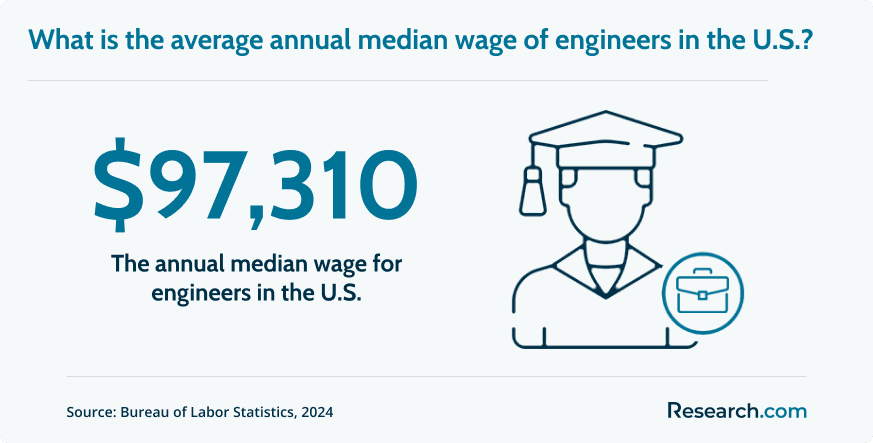
- Graduates enter a lucrative field with a median annual salary of $97,310, providing a significant return on your educational investment.
- The online format offers the flexibility to earn your degree from anywhere, allowing you to balance your studies with work or family commitments.
What can I expect from an online ABET-accredited engineering degree?
You should expect a challenging and structured curriculum that is every bit as rigorous as a traditional, on-campus program. There's a common misconception that online degrees are easier, but for an ABET-accredited engineering degree, that simply isn't true. You will cover the same foundational math and science, dive deep into core engineering principles, and complete complex, collaborative design projects.
Modern online programs use impressive technology to provide practical experience. You’ll work in sophisticated virtual labs and use the same simulation software as professionals in the field. This approach not only teaches you the theory but also ensures you develop the hands-on skills needed to solve real-world problems from day one of your career.
Where can I work with an online ABET-accredited engineering degree?
An accredited engineering degree gives you access to nearly every sector of the economy. Graduates are not limited to one specific industry. You could be developing next-generation smartphones in the tech industry, designing renewable energy systems for a utility company, or creating new medical devices in the healthcare field.
The key is that this degree qualifies you to be an "engineer"—someone who designs, analyzes, and solves complex problems. This is distinct from a "technician," who typically implements and maintains the systems engineers create. This credential unlocks long-term career mobility, allowing you to adapt and thrive as industries evolve.
How much can I make with an online ABET-accredited engineering degree?
You can expect to enter a high-paying field. According to the U.S. Bureau of Labor Statistics, the median annual wage for engineers was $97,310 in 2023. This strong earning potential is a key reason the degree has such a powerful return on investment.
Of course, salaries vary based on your specialization, location, and the industry you choose to work in. But this figure gives you a clear picture of the financial foundation an engineering degree provides as you begin your career.
- List of the Best Online ABET-Accredited Engineering Degree Programs for 2027 List of Programs
- How long does it take to complete an online ABET-accredited engineering degree program? Completion Time
- How does an online ABET-accredited engineering degree program compare to an on-campus program? How does an online ABET-accredited engineering degree program compare to an on-campus program?
- What is the average cost of an online ABET-accredited engineering degree program? Program Cost
- What are the financial aid options for students enrolling in an online ABET-accredited engineering degree program? Financial Aid
- What are the prerequisites for enrolling in an online ABET-accredited engineering degree program? What are the prerequisites for enrolling in an online ABET-accredited engineering degree program?
- What courses are typically in an online ABET-accredited engineering degree program? What courses are typically in an online ABET-accredited engineering degree program?
- What types of specializations are available in an online ABET-accredited engineering degree program? Specializations
- How to Choose the Best Online ABET-Accredited Engineering Degree Program How to Choose the Best Online ABET-Accredited Engineering Degree Program
- What career paths are available for graduates of an online ABET-accredited engineering degree program? Career Paths
- What is the job market for graduates of an online ABET-accredited engineering degree program? Job Market
Best Online ABET-Accredited Engineering Degree Programs for 2027
Choosing an online engineering degree is a high-stakes decision because accreditation, cost, transfer credit, lab format, and licensure eligibility can affect your career options for years. For many students, the main question is not simply “Can I study engineering online?” but “Will this program be respected by employers, qualify me for future engineering licensure, and fit my schedule and budget?”
This guide explains how online ABET-accredited engineering and engineering technology programs work, how they compare with campus programs, what they cost, how long they take, and how to evaluate whether a specific degree is the right investment. It is designed for first-time college students, transfer students, working adults, military-affiliated learners, and career changers who need a flexible pathway into engineering or a closely related technical field.
Quick Answer: Is an Online ABET-Accredited Engineering Degree Worth It?
An online ABET-accredited engineering degree can be worth it if the program matches your intended discipline, provides the labs and design experiences required for engineering practice, and supports your long-term goals, including possible Professional Engineer licensure. ABET accreditation matters because it signals that a program has met recognized quality standards for engineering, computing, engineering technology, or applied science education.
The best choice is not always the cheapest or most famous school. Students should first verify the exact ABET accreditation status of the program, then compare curriculum, total cost, transfer policies, online lab requirements, student support, and career outcomes.
How We Rank the Programs
Because a bachelor’s degree can be one of the largest education expenses a student takes on, our ranking approach emphasizes transparency, data quality, and practical decision-making. Research.com uses information from established education data sources, including the IPEDS database, Peterson's database, the College Scorecard database, and The National Center for Education Statistics.
These sources help evaluate online ABET-accredited engineering-related programs using factors such as affordability, institutional data, program structure, and student-relevant outcomes. For a fuller explanation of how Research.com evaluates schools and programs, see our methodology page.
Online ABET-Accredited Program Comparison
| Rank | School and Program | Program Length | Credits or Courses | Published Cost | Accreditation Listed |
| 1 | Arizona State University — Bachelor of Science in Engineering (BSE) in Electrical Engineering | 4 years | 120 credits | $754 per credit | Engineering Accreditation Commission of ABET |
| 2 | University of North Dakota — Bachelor of Science (B.S.) in Electrical Engineering | 4-5 years | 126 credits | $431.11 per credit | Engineering Accreditation Commission of ABET |
| 3 | Florida International University — Bachelor of Science in Computer Engineering | 4 years | 128 credits | $228.81 in-state; $345.87 out-of-state | Engineering Accreditation Commission of ABET |
| 4 | University of Cincinnati — Bachelor of Science in Information Technology | 4 years | 120 credits | $580 in-state; $595 out-of-state | Computing Accreditation Commission of ABET |
| 5 | Western Governors University — Bachelor of Science in Computer Science | 2-4 years | 37 courses | $4,335 per 6-month term | Northwest Commission on Colleges and Universities |
| 6 | Excelsior University — Bachelor of Science in Electrical Engineering Technology | 2-4 years | 120 credits | $550 per credit | Engineering Technology Accreditation Commission of ABET |
| 7 | Daytona State College — Bachelor of Science in Engineering Technology | 4 years, including associate degree | 128 credits | $102.48 in-state; $398.98 out-of-state | Engineering Technology Accreditation Commission of ABET |
| 8 | University of Arkansas Grantham — Bachelor of Science in Electronics Engineering Technology | Approximately 3.5 years | 121 credits | $295 per credit | Engineering Technology Accreditation Commission of ABET |
Important distinction: ABET accredits programs through different commissions. Engineering Accreditation Commission programs, Engineering Technology Accreditation Commission programs, and Computing Accreditation Commission programs may lead to different career and licensure pathways. Always verify the exact program name in ABET’s official database before enrolling.
1. Arizona State University — Bachelor of Science in Engineering (BSE) in Electrical Engineering
Arizona State University offers an online electrical engineering pathway that begins with core mathematics, science, and engineering fundamentals before moving into topics such as microprocessors, energy systems, and photovoltaic cells. Students interested in the power sector can use the optional electric power and energy systems concentration to align their coursework with utility, energy, and infrastructure careers.
- Program Length: 4 years
- Required Credits to Graduate: 120
- Cost per Credit: $754
- Accreditation: Engineering Accreditation Commission of ABET
2. University of North Dakota — Bachelor of Science (B.S.) in Electrical Engineering
The University of North Dakota prepares online electrical engineering students for technical work in areas such as power systems, aerospace, automation, and applied engineering design. The program emphasizes laboratory learning, practical problem-solving, and connections with industry so students can build experience beyond lectures and exams.
- Program Length: 4-5 years
- Required Credits to Graduate: 126
- Cost per Credit: $431.11
- Accreditation: Engineering Accreditation Commission of ABET
3. Florida International University — Bachelor of Science in Computer Engineering
Florida International University focuses its computer engineering curriculum on the intersection of hardware, software, digital systems, and engineering logic. Students study both computing and electrical engineering concepts, making the program relevant for learners who want to work on embedded systems, devices, networks, or hardware-software integration.
- Program Length: 4 years
- Required Credits to Graduate: 128
- Cost per Credit: $228.81 (in-state); $345.87 (out-of-state)
- Accreditation: Engineering Accreditation Commission of ABET
4. University of Cincinnati — Bachelor of Science in Information Technology
The University of Cincinnati offers an online information technology degree for students who want to build technical skills in programming, systems, networks, cybersecurity-related tools, or applied technology solutions. Because this program is accredited by the Computing Accreditation Commission of ABET rather than the Engineering Accreditation Commission, students should evaluate it as a computing pathway rather than a traditional engineering degree.
- Program Length: 4 years
- Required Credits to Graduate: 120
- Cost per Credit: $580 (in-state); $595 (out-of-state)
- Accreditation: Computing Accreditation Commission of ABET
5. Western Governors University — Bachelor of Science in Computer Science
Western Governors University uses a competency-based model that allows students to progress by demonstrating mastery of required material. The program includes coursework connected to areas such as artificial intelligence, machine learning, data structures, and industry-recognized credentials. Students considering this option should note the listed accreditation carefully and confirm whether the program meets any ABET-specific requirement they may have.
- Program Length: 2-4 years
- Required Courses to Graduate: 37
- Tuition: $4,335 per 6-month term
- Accreditation: Northwest Commission on Colleges and Universities
6. Excelsior University — Bachelor of Science in Electrical Engineering Technology
Excelsior University is designed for students who want a practical, application-focused route into electrical and electronic systems work. The program requires a technical concentration, allowing students to develop deeper preparation in modern electronics or power systems.
- Program Length: 2-4 years
- Required Credits to Graduate: 120
- Cost per Credit: $550
- Accreditation: Engineering Technology Accreditation Commission of ABET
7. Daytona State College — Bachelor of Science in Engineering Technology
Daytona State College uses a 2+2 structure that builds on associate-level study and prepares students for applied technical roles in engineering technology, design, manufacturing, and industrial operations. This format can be especially useful for transfer students who already hold or plan to complete an associate degree before finishing the bachelor’s curriculum.
- Program Length: 4 years (including associate degree)
- Required Credits to Graduate: 128
- Cost per Credit: $102.48 (in-state); $398.98 (out-of-state)
- Accreditation: Engineering Technology Accreditation Commission of ABET
8. University of Arkansas Grantham — Bachelor of Science in Electronics Engineering Technology
The University of Arkansas Grantham provides an electronics engineering technology curriculum covering circuit analysis, digital systems, communication technologies, and applied laboratory work. The program is aimed at students who want hands-on technical preparation for electronics-focused roles rather than a purely theory-heavy engineering pathway.
- Program Length: Approximately 3.5 years
- Required Credits to Graduate: 121
- Cost per Credit: $295
- Accreditation: Engineering Technology Accreditation Commission of ABET
How Long Does an Online ABET-Accredited Engineering Degree Take?
Most bachelor’s-level engineering programs are built around a 4-year full-time plan. That timeline usually assumes a student enters with the expected math and science preparation, follows the recommended course sequence, and takes a full course load each term.
Online students often follow a different pace. Working adults, military students, parents, and transfer students may take fewer courses at a time, which can extend completion to roughly six to eight years. Other students may finish faster if they bring in transfer credits or enroll year-round.
What Can Shorten or Extend Your Timeline?
| Factor | How It Affects Completion Time | What to Ask Before Enrolling |
| Transfer credits | Prior college coursework can reduce the number of remaining credits if it applies to the degree plan. | Will the school complete an official transfer evaluation before I commit? |
| Math placement | Starting below calculus can add prerequisite courses before engineering coursework begins. | What math level is required for first-term engineering courses? |
| Lab requirements | Some online courses use simulation tools, lab kits, scheduled remote labs, or short in-person experiences. | Are any labs synchronous, campus-based, or equipment-dependent? |
| Part-time enrollment | Taking fewer courses lowers weekly workload but usually extends the program. | Is there a recommended part-time course sequence? |
| Course sequencing | Engineering courses often have strict prerequisites, so missing one course can delay later classes. | Are upper-division courses offered every term or only once per year? |
Transfer planning is especially important because the bachelor's degree is the entry point for 65% of engineers. If you already have college credit, ask the admissions or academic advising team exactly how those credits apply to the engineering major, not just whether they count as general electives.
Online vs. On-Campus ABET-Accredited Engineering Programs
ABET accreditation evaluates programs against recognized standards, not whether the student sits in a classroom or logs in remotely. If the online program itself holds the appropriate ABET accreditation, students can generally expect a curriculum built around the same outcomes: mathematics, science, engineering analysis, design, experimentation, ethics, and communication.
The bigger difference is how students learn. Online engineering programs require strong time management, comfort with technical software, and the discipline to complete demanding coursework without the structure of daily campus attendance. Campus programs may offer easier access to physical labs, student organizations, faculty offices, and peer networks, but they also require relocation or commuting for many students.
| Comparison Area | Online ABET-Accredited Program | On-Campus ABET-Accredited Program |
| Schedule | Often better for working adults and students who need location flexibility. | Usually follows fixed class times and campus-based lab schedules. |
| Labs | May use remote labs, simulation software, shipped lab kits, or limited in-person requirements. | Typically uses campus labs and face-to-face lab supervision. |
| Cost structure | Can reduce housing, relocation, commuting, and campus living expenses. | May include additional living costs, depending on student location. |
| Networking | Requires more intentional effort through virtual events, projects, internships, and professional groups. | May provide more spontaneous access to peers, clubs, labs, and faculty. |
| Best for | Self-directed students who need flexibility and can manage rigorous technical coursework independently. | Students who prefer face-to-face learning, campus culture, and direct lab access. |
Degree, Certification, and Licensure: Why the Distinction Matters
Short-term technical credentials can be valuable in computing and IT careers, and some workers compare degree options against the potential value of an IT certification salary. Engineering is different. For students who may eventually pursue Professional Engineer licensure, the accreditation status and type of degree can matter much more than a standalone certificate.
If your career goal involves approving engineering designs, supervising work tied to public safety, or qualifying for PE licensure later, contact your state licensing board before enrolling. Requirements vary, and not every engineering technology, computing, or non-ABET pathway leads to the same eligibility.
How Much Does an Online ABET-Accredited Engineering Degree Cost?
The price of an online engineering degree depends on the institution, residency rules, transfer credit, technology fees, lab requirements, and how long you take to finish. For the 2023-2024 academic year, average annual tuition and fees were around $9,003 for public, in-state universities and $47,690 for private universities.
Program pages often advertise a per-credit price, but that does not always show the full cost. Students should also check online course fees, proctoring fees, books, engineering software, lab kits, graduation fees, and any required campus visits. Many public universities charge online students differently from campus students, and some extend in-state rates to online learners regardless of location.
Cost Factors to Compare Before You Apply
| Cost Item | Why It Matters | How to Reduce It |
| Tuition per credit | This is usually the largest direct expense and varies widely by school. | Compare public, private, in-state, out-of-state, and online-specific rates. |
| Transfer credit | Accepted credits can reduce the number of courses you need to pay for. | Request a formal transfer review and keep syllabi from previous courses. |
| Fees and materials | Engineering courses may require software, kits, textbooks, or proctored exams. | Ask for a total estimated program cost, not just tuition. |
| Time to completion | Taking longer can increase fees and delay full-time earnings. | Follow a course plan and avoid missing prerequisite sequences. |
| Scholarships | Award funding can lower out-of-pocket cost and borrowing. | Search school-based awards and external engineering scholarships. |
How to Think About Return on Investment
An online format can reduce relocation, housing, meal plan, and commuting expenses, but students should still evaluate debt carefully. The median salary of $97,310 for engineers shows why engineering can offer strong earning potential, but salary outcomes vary by discipline, employer, location, experience, licensure, and economic conditions. Do not borrow based on a guaranteed salary assumption.
Financial Aid Options for Online ABET-Accredited Engineering Students
Students in eligible accredited online programs can often use many of the same aid sources available to campus students. The key is to confirm that both the institution and the specific program meet aid eligibility requirements before assuming federal, state, or employer funding will apply.
Common funding sources include:
- Federal financial aid: Students can start by completing the Free Application for Federal Student Aid, or FAFSA, which is used to determine eligibility for federal grants, loans, and work-study programs.
- State aid: Some states offer grants or scholarships tied to residency, school location, academic major, financial need, or workforce priorities.
- Institutional scholarships: Colleges may offer merit-based, need-based, transfer, military, adult learner, or STEM-specific awards.
- External scholarships: Professional associations, engineering societies, local foundations, and employers may fund students pursuing technical fields.
- Employer tuition reimbursement: Working students should ask HR whether the company reimburses engineering, technology, or job-related coursework.
- Military and veteran benefits: Eligible service members, veterans, and dependents should confirm how benefits apply to online enrollment and engineering program fees.
Questions to Ask the Financial Aid Office
- Is this exact online program eligible for federal financial aid?
- Are online students charged different tuition or fees than campus students?
- Does the school offer engineering-specific scholarships?
- Will dropping to part-time enrollment change my aid eligibility?
- What is the average debt load for students in this program?
- Are lab kits, software, or proctored exams included in tuition estimates?
Admission Requirements and Prerequisites
Online engineering programs are flexible in delivery, but the academic expectations are still demanding. Applicants usually need strong preparation in mathematics and science because engineering coursework builds quickly into calculus-based physics, circuits, mechanics, programming, and design.
Many programs expect students to be ready for Calculus I or to complete prerequisite math before advancing into the major. Physics and chemistry are also common preparation areas. Students who have been out of school for several years may need a math refresher before beginning the full engineering sequence.
Typical Admission Materials
- High school transcripts or college transcripts for transfer applicants
- Evidence of college-ready math preparation, often through prior coursework or placement
- Science coursework, commonly including physics and chemistry expectations
- Application form and fee
- Transfer credit documentation, when applicable
- Possible standardized test scores, depending on the institution’s policy
When Prerequisites Matter Most
Prerequisites are not just admissions hurdles. They influence whether you can enter the engineering course sequence on time. For example, students pursuing an online environmental engineering degree may rely heavily on chemistry for water, air, and materials topics, while physics supports fluid mechanics, energy systems, and infrastructure design.
If you are comparing engineering with other professional programs, remember that every field has its own readiness requirements. Healthcare students, for instance, may focus on leadership preparation such as how to be a good nurse leader, while engineering students must prioritize math, science, computing, and design readiness.
Common Courses in an Online ABET-Accredited Engineering Program
Engineering curricula are intentionally sequenced. Students normally begin with math, science, and introductory engineering before moving into discipline-specific analysis, laboratories, and senior design. Skipping the foundation can make later courses much harder because advanced engineering problems depend on earlier concepts.
| Course Area | Examples | Why It Matters |
| Mathematics | Calculus, differential equations, probability, statistics | Provides the quantitative language used to model engineering systems. |
| Science | Physics, chemistry, materials science | Explains the behavior of matter, energy, motion, and physical systems. |
| Engineering fundamentals | Statics, dynamics, thermodynamics, circuits, programming | Builds the core technical base shared across many engineering disciplines. |
| Major-specific courses | Power systems, embedded systems, digital logic, manufacturing, structural analysis | Develops specialized knowledge for a particular engineering or technology path. |
| Laboratory and design work | Simulations, lab kits, remote experiments, team projects, capstone design | Shows whether students can apply theory to practical, constrained problems. |
This structure is similar to other professional fields in which education level shapes career access. For example, healthcare pathways connect specific credentials to roles such as ADN nursing jobs. In engineering, the bachelor’s curriculum is often the core preparation for entry-level engineering work and later advancement.
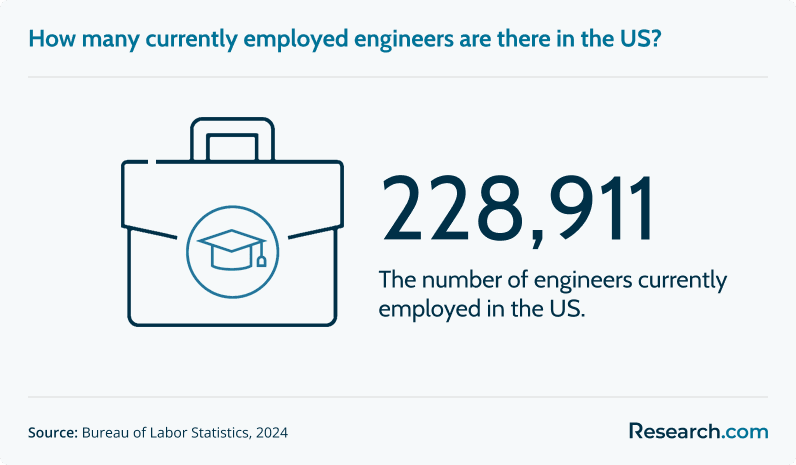
The field is large and varied. With over 228,911 engineers employed in various key roles, the curriculum is meant to prepare graduates for work across infrastructure, energy, manufacturing, computing, transportation, aerospace, electronics, and related industries.
Online Engineering Specializations: Which One Should You Choose?
Most students do not need to know their final job title before starting an engineering degree, but they should understand the differences among specializations. The best choice depends on what kinds of systems you want to work on, how much you enjoy software or hardware, whether you prefer physical infrastructure or digital technologies, and whether licensure may matter in your field.
| Specialization | Best Fit For Students Who Like | Common Career Direction |
| Mechanical Engineering | Machines, thermal systems, product design, manufacturing, robotics, and physical systems | Design, testing, manufacturing, energy systems, mechanical product development |
| Electrical Engineering | Circuits, electronics, power, signals, controls, and electromagnetism | Power systems, electronics, communications, automation, embedded systems |
| Civil Engineering | Infrastructure, transportation, water systems, buildings, and public works | Structural, transportation, geotechnical, water resources, and construction-related roles |
| Industrial Engineering | Efficiency, operations, logistics, quality, data-driven process improvement | Manufacturing, supply chain, healthcare systems, operations analysis |
| Computer Engineering | Hardware, software, embedded systems, digital design, and computing devices | Computer hardware, firmware, embedded systems, networks, hardware-software integration |
| Engineering Technology | Applied technical work, implementation, testing, systems operation, and hands-on troubleshooting | Technical specialist, engineering technologist, electronics, manufacturing, field systems support |
Electrical engineering remains one of the most common online engineering options, and students comparing career outcomes may want to review the broader electrical engineering salary outlook. However, salary should not be the only factor. Course fit, licensure goals, employer demand, and your tolerance for specific technical subjects matter just as much.
How to Choose the Best Online ABET-Accredited Engineering Program
The best program is the one that meets your career requirements, fits your academic background, offers the right specialization, and has a total cost you can justify. Rankings can help you build a shortlist, but they should not replace your own verification process.
Step-by-Step Program Evaluation Checklist
- Verify program-level ABET accreditation. Do not rely only on a school’s general accreditation statement. Check the exact degree title and commission.
- Match the accreditation type to your goal. Engineering, engineering technology, and computing accreditation are not interchangeable for every career or licensure path.
- Review the course sequence. Make sure required courses, electives, labs, and capstone projects align with your intended field.
- Ask how online labs work. Confirm whether labs use simulations, physical kits, remote access, proctored sessions, or required campus visits.
- Request a transfer credit review. Transfer students should find out which credits apply to the major, not just the total number accepted.
- Calculate total cost. Include tuition, fees, software, lab equipment, books, travel, and any repeated courses.
- Evaluate student support. Online engineering students should have access to tutoring, advising, library resources, career services, and technical help.
- Check career services and employer connections. Look for internship guidance, capstone partnerships, alumni outcomes, and engineering-specific advising.
- Confirm licensure implications. If PE licensure may matter, contact the relevant state board before enrolling.
Common Mistakes to Avoid
| Mistake | Why It Can Hurt You | Better Approach |
| Assuming institutional accreditation is the same as ABET accreditation | A school can be institutionally accredited while a specific engineering program is not ABET-accredited. | Search for the exact program in ABET’s official program database. |
| Choosing only by lowest tuition | A low per-credit price may not include fees, lab costs, transfer loss, or longer completion time. | Compare total estimated program cost and time to graduation. |
| Ignoring transfer rules | Credits that transfer as electives may not reduce major requirements. | Ask for a written degree audit before committing. |
| Overlooking lab delivery | Some students discover too late that labs require specific equipment, synchronous meetings, or travel. | Ask how every required lab is completed online. |
| Assuming every online degree supports PE licensure | Licensure rules vary by state and degree type. | Contact the state engineering board before enrolling. |
| Relying only on rankings | A highly ranked program may not offer the specialization, pace, or support you need. | Use rankings as a starting point, then compare fit. |
Look for Evidence of a Strong Online Engineering Program
A strong online engineering program should be transparent about accreditation, curriculum, faculty qualifications, lab requirements, student outcomes, and support services. It should also explain how online students complete team projects, access engineering software, receive advising, and prepare for internships or entry-level roles.
Students pursuing advanced or adjacent education pathways should apply the same evaluation discipline. For example, educators comparing online EdS to EdD programs also need to check transfer policies, program fit, and outcomes rather than relying only on name recognition.
Career Paths After an Online ABET-Accredited Engineering Degree
An engineering degree can lead to many different career directions. Some graduates stay deeply technical, while others move into project leadership, operations, consulting, product development, or management. The path you choose will depend on your discipline, internships, licensure goals, communication skills, and willingness to keep learning.
| Career Path | What the Work Often Involves | Who It Fits Best |
| Entry-level engineer | Design support, calculations, testing, documentation, troubleshooting, and project assistance | Graduates from engineering programs seeking technical professional roles |
| Engineering technologist | Applied implementation, equipment support, testing, maintenance, manufacturing, and field operations | Students from engineering technology programs who prefer hands-on systems work |
| Technical specialist | Deep expertise in a focused area such as power, controls, electronics, systems, quality, or analysis | Professionals who want to grow through technical mastery rather than people management |
| Project manager | Schedules, budgets, team coordination, client communication, risk management, and delivery | Engineers with strong organization, communication, and leadership skills |
| Engineering manager or executive track | Strategy, staffing, budgets, operations, technical direction, and cross-functional leadership | Experienced engineers who want broader business responsibility |
Some engineers later pursue graduate study in leadership or management. Students considering that route can explore the kinds of roles associated with masters in engineering management jobs.
Job Market Outlook for Online Engineering Graduates
Engineering remains a major professional field because modern economies depend on infrastructure, energy, transportation, manufacturing, electronics, software-enabled systems, and environmental solutions. The U.S. Bureau of Labor Statistics projects that some engineering fields will grow by as much as 12% over the next decade, though growth differs by specialization.
Demand is shaped by large-scale needs: rebuilding aging infrastructure, modernizing the electrical grid, expanding automation, developing sustainable technologies, strengthening cybersecurity-adjacent systems, and applying artificial intelligence in engineering workflows. These trends create opportunities, but they also raise expectations. Employers increasingly look for graduates who can combine technical fundamentals with software tools, data literacy, communication, teamwork, and ethical judgment.
How AI and Automation Are Changing Engineering Work
AI, simulation platforms, digital twins, automation tools, and advanced analytics are changing how engineers design, test, and optimize systems. These tools can speed up modeling and reduce repetitive tasks, but they do not replace the need for engineering judgment. Graduates still need to understand assumptions, safety constraints, physical limitations, regulatory requirements, and design trade-offs.
Students can future-proof their preparation by building skills in programming, data analysis, modeling software, systems thinking, and technical communication. In energy-related fields, policy and infrastructure changes can also influence opportunity, which is why some students compare engineering work with broader energy pathways such as those discussed in an energy policy salary guide.
If you are comparing engineering with other stable professional fields, Research.com also covers alternative career planning topics, including ways healthcare professionals evaluate income options such as how to make extra money as a nurse. The key is to compare requirements, work environment, licensure, costs, and long-term advancement rather than looking only at headline salaries.
Location can also matter. Engineering employment varies by region, industry cluster, infrastructure spending, manufacturing activity, defense and aerospace presence, utility investment, and technology-sector growth.
What Graduates Say About Online ABET-Accredited Engineering Programs
- Ken: "I was concerned that employers might discount an online engineering degree, but the workload was demanding and the projects gave me concrete work to discuss in interviews. The simulation tools, virtual labs, and capstone experience helped me prove that I could solve real engineering problems, not just complete online quizzes."
- Brianna: "I could not relocate for school, and there was no engineering program near me. Studying online gave me access to a degree path I otherwise would not have had. The program helped me prepare for an internship, and that experience turned into a full-time offer before graduation."
- Charles: "Starting at community college made the degree more affordable, but the transfer process was what made the plan work. Once I knew which credits applied to the bachelor’s program, I could map out the remaining courses and avoid paying for classes that would not count."
Key Insights
- ABET accreditation should be verified at the program level. Do not assume a school’s institutional accreditation means the engineering program itself is ABET-accredited.
- Engineering, engineering technology, and computing programs are not the same. Each can be valuable, but they may support different jobs, graduate pathways, and licensure options.
- Online engineering degrees can be rigorous and respected when properly accredited. The main differences from campus study are delivery format, lab structure, schedule, and student support access.
- Cost comparisons should include more than tuition. Fees, transfer credit, lab materials, software, time to completion, and financial aid can significantly change the real price.
- Transfer students should request a written credit evaluation early. Credits that count toward graduation may not always satisfy engineering major requirements.
- Licensure-minded students need extra due diligence. If becoming a Professional Engineer is part of your plan, check state board rules before choosing a program.
- The strongest applicants prepare in math and science before enrolling. Calculus readiness, physics, chemistry, and disciplined study habits can make the first year much smoother.
- Career value depends on fit. A program is worthwhile when its specialization, accreditation, cost, lab model, and employer connections align with the work you actually want to do.
References:
- ABET. (n.d.). Why ABET accreditation matters. Retrieved October 12, 2025, from https://www.abet.org/accreditation/what-is-accreditation/why-abet-accreditation-matters/
- Data USA. (n.d.). Engineering. Retrieved October 12, 2025, from https://datausa.io/profile/cip/engineering
- Indeed. (n.d.). Careers in engineering. Retrieved October 12, 2025, from https://www.indeed.com/career-advice/finding-a-job/careers-in-engineering
- Michigan Technological University. (n.d.). Average engineering salaries. Retrieved October 12, 2025, from https://www.mtu.edu/engineering/about/salary/
- National Science Board, National Science Foundation. (2024). The state of U.S. science and engineering 2024: Key takeaways. Retrieved October 12, 2025, from https://ncses.nsf.gov/pubs/nsb20243/key-takeaways
- U.S. Bureau of Labor Statistics. (n.d.). Architecture and engineering occupations. Occupational Outlook Handbook. Retrieved October 12, 2025, from https://www.bls.gov/ooh/architecture-and-engineering/
- U.S. Bureau of Labor Statistics. (n.d.). Occupational projections and characteristics. Retrieved October 12, 2025, from https://www.bls.gov/emp/tables/occupational-projections-and-characteristics.htm
- Vanderbilt University School of Engineering. (n.d.). What is the 10-year engineering job outlook? Retrieved October 12, 2025, from https://blog.engineering.vanderbilt.edu/what-is-the-10-year-engineering-job-outlook
- Zippia. (n.d.). Engineer jobs. Retrieved October 12, 2025, from https://www.zippia.com/engineer-jobs/
Other Things You Should Know About Online ABET-Accredited Engineering Degree Programs
No. ABET does not require co-op or internship credits for accreditation. Most online engineering programs require about 120 to 128 semester credits of coursework, plus lab or design components. Schools may offer optional internships, but licensure and degree completion do not usually depend on them.
To enroll in a 2027 online ABET-accredited engineering degree program, you typically need a high school diploma or GED. Some programs may require calculus and physics in high school, alongside minimum SAT or ACT scores. Check individual program requirements for specifics.





