2027 Online Electrical Engineering Degrees With Skills Employers Want Most

Co-Founder and Chief Data Scientist
Choosing an online electrical engineering degree is a high-stakes decision because the right program must fit your schedule, budget, licensure plans, and career goals. The latest BLS outlook projects 9% growth for electrical and electronics engineers from 2023 to 2033, making program quality and skills alignment especially important.
This guide is for prospective undergraduates, career changers, veterans, and working technicians who want to compare online options, understand accreditation, estimate costs, and identify the technical and workplace skills employers value most.
Key Things You Should Know
- ABET accreditation is the key quality signal for most engineering employers and state licensing boards; institutional accreditation alone is usually not enough if you plan to pursue PE licensure.
- College Board's 2024 pricing data shows published tuition and fees vary widely, from $11,610 for in-state public four-year students to $43,350 at private nonprofit four-year institutions, so total cost and transfer credit policies matter.
- BLS May 2024 wage data reports a $111,910 median annual wage for electrical engineers, but outcomes depend on industry, location, degree level, internships, licensure, and hands-on project experience.
What are online electrical engineering degrees?
Online electrical engineering degrees are college programs that teach students how to design, test, analyze, and improve electrical systems, electronics, communications devices, power systems, control systems, and embedded technologies. The "online" label usually refers to how lectures, assignments, discussion, advising, and exams are delivered; engineering labs may still require mailed lab kits, simulation software, local proctoring, short campus residencies, or approved in-person lab work.
At the bachelor's level, the most common degree is a Bachelor of Science in Electrical Engineering or Electrical and Computer Engineering. Some schools also offer electrical engineering technology degrees, which are more applied and hands-on but may not lead to the same licensure pathways as engineering degrees.
Graduate programs, including online master's degrees, usually focus on advanced topics such as power electronics, signal processing, robotics, photonics, machine learning hardware, or communications systems.
This path is a strong fit for students who enjoy math, physics, circuits, programming, problem-solving, and long-term technical projects. It may not be the best fit if you want a low-math program, a fully asynchronous experience with no lab expectations, or a quick credential that immediately replaces a full engineering degree.
Online engineering is also part of a broader shift toward flexible professional education. Readers comparing technical fields may notice similar online growth in areas such as a masters in data science online, but electrical engineering is more constrained by lab work, accreditation, and licensure expectations.
The table below compares common electrical engineering-related credentials. Use it to distinguish engineering degrees from shorter or more applied pathways before you commit time and money:
| Credential | Typical learner | Common focus | Best fit |
| Certificate | Technicians or engineers updating skills | Power systems, embedded systems, controls, or software tools | Skill-building, not a full degree replacement |
| Associate degree | Students entering technician roles or planning transfer | Electronics, circuits, instrumentation, and math foundations | Lower-cost start or applied technical work |
| Bachelor's degree | Future entry-level engineers | Engineering science, design, labs, systems, and capstone projects | Engineering careers and possible licensure preparation |
| Master's degree | Working engineers or STEM graduates | Specialized technical depth and research-oriented coursework | Advancement, specialization, or R&D-oriented roles |
Which accreditations matter for online electrical engineering programs?
The most important accreditation question is whether the program itself is accredited by ABET's Engineering Accreditation Commission, especially for bachelor's programs. ABET accreditation indicates that the curriculum, faculty, assessment methods, student outcomes, and continuous improvement processes have been reviewed against engineering education standards.
Institutional accreditation also matters because it affects federal financial aid eligibility, transfer credit, graduate school recognition, and employer trust. However, institutional accreditation does not automatically mean the electrical engineering program meets ABET engineering standards.
Before enrolling, verify accreditation directly instead of relying only on marketing language. These checks help you avoid programs that sound engineering-focused but may not support your career or licensure goals:
- Search the school and exact program name in ABET's public accredited program database.
- Confirm whether the listed program is electrical engineering, electrical and computer engineering, or electrical engineering technology.
- Check whether the online format is covered under the accredited program or whether accreditation applies only to a campus version.
- Verify the school's institutional accreditation through the U.S. Department of Education or CHEA-recognized accreditor listings.
- Ask admissions for written confirmation if you plan to pursue Fundamentals of Engineering or Professional Engineer licensure.
A common mistake is assuming "accredited university" and "ABET-accredited engineering program" mean the same thing. They do not. If your target employers, graduate schools, or licensing boards prefer or require ABET, choosing a non-ABET program can limit options later.
Can you get an electrical engineering license with an online degree?
Yes, an online degree can support engineering licensure if it meets the requirements of the state licensing board where you plan to apply. The delivery format is usually less important than the program's accreditation, curriculum, degree level, exams, work experience, and supervisor documentation.
The standard licensure route for engineers in the U.S. usually includes earning an engineering degree, passing the Fundamentals of Engineering exam, gaining qualifying engineering experience, and passing the Principles and Practice of Engineering exam. Requirements vary by state, and some boards evaluate non-ABET or technology degrees differently.
If Professional Engineer licensure is part of your plan, take these steps before you enroll:
- Identify the state board where you expect to seek licensure, not just the state where the school is located.
- Confirm whether the board accepts the specific online degree and accreditation type.
- Ask whether electrical engineering technology degrees qualify on the same timeline as engineering degrees.
- Review experience requirements, including whether work must be supervised by a licensed PE.
- Keep syllabi, lab descriptions, transcripts, and capstone documentation in case the board requests curriculum details.
Licensure is especially important for engineers who sign and seal engineering documents or work in regulated areas such as public infrastructure, utilities, and consulting. It may be less central for roles in electronics design, semiconductor manufacturing, embedded systems, defense, telecommunications, or software-adjacent engineering, though employers may still value the credential.
How do online and campus electrical engineering programs compare?
Online and campus electrical engineering programs can lead to similar academic outcomes when the curriculum, faculty standards, labs, and accreditation are equivalent. The main difference is how students access instruction, labs, peer collaboration, advising, and career support.
Online programs can be especially useful for working adults, military-affiliated students, parents, and students who cannot relocate. For example, veterans comparing benefits, transfer credits, and flexible pacing may want a specialized guide to an online electrical engineering bachelor degree for veterans before narrowing their school list.
The table below summarizes the practical trade-offs. Use it to decide whether flexibility is worth any added responsibility for self-scheduling, lab planning, and networking:
| Factor | Online program | Campus program | Decision point |
| Schedule | Often asynchronous or evening-friendly | Usually fixed weekly class and lab times | Online is stronger for students balancing work or family |
| Labs | May use simulations, kits, remote labs, or short residencies | Direct access to campus equipment and lab staff | Campus may be better for students who want frequent hands-on lab access |
| Networking | Requires more intentional outreach | Built-in peer, faculty, and club interaction | Online students should actively pursue projects and internships |
| Cost | May reduce relocation and commuting expenses | May include housing, transportation, and campus fees | Compare total cost, not tuition alone |
| Career services | May be virtual and employer-specific | Often includes on-campus fairs and labs | Ask how online students access recruiting events |
The biggest red flag is an online program that minimizes lab expectations too much. Electrical engineering is not only theory; employers expect graduates to understand measurement tools, design constraints, debugging, documentation, and real-world system behavior.
What courses are in an online electrical engineering curriculum?
An online electrical engineering curriculum usually moves from math and science foundations into core engineering analysis, design, labs, electives, and a final capstone. Strong programs build theory and application together, so students do not graduate knowing equations but lacking design judgment.
Most bachelor's programs include a sequence like the one below. These course areas matter because they map directly to the systems electrical engineers work with in industry:
- Math and science foundations: calculus, differential equations, linear algebra, physics, chemistry, and probability.
- Engineering fundamentals: circuits, digital logic, electronics, signals and systems, electromagnetic fields, and computer programming.
- Systems courses: control systems, communications, power systems, microprocessors, embedded systems, and instrumentation.
- Design and lab work: circuit design, measurement, simulation, prototyping, technical documentation, and team-based engineering design.
- Advanced electives: renewable energy systems, robotics, semiconductor devices, machine learning hardware, RF systems, photonics, or cybersecurity for connected devices.
- Capstone project: a supervised design project that requires requirements analysis, testing, iteration, presentation, and documentation.
Students should also look for modern software and design tools. Common tools include MATLAB, Simulink, Python, C or C++, SPICE-based circuit simulation, PCB design software, FPGA tools, version control, and technical documentation platforms.
A common mistake is choosing the program with the most exciting elective list without checking whether those electives are offered regularly online. Ask how often specialized courses run, whether seats are guaranteed, and whether online students can access the same design resources as campus students.

What admission requirements do online electrical engineering programs have?
Admission requirements depend on degree level, school selectivity, and whether the applicant is a first-year student, transfer student, or graduate applicant. Electrical engineering is math-intensive, so schools pay close attention to readiness in algebra, trigonometry, calculus, physics, and programming.
For bachelor's programs, applicants commonly need a high school diploma or equivalent, transcripts, placement results or standardized test scores if required, prerequisite math and science coursework, and sometimes a minimum GPA. Transfer applicants may need college-level calculus, physics, and general education courses.
Graduate applicants often need a bachelor's degree in electrical engineering or a closely related STEM field, plus prerequisite coursework if their background is in physics, computer engineering, or another technical discipline.
Use this checklist before applying so you can avoid delays, rejected credits, or unexpected prerequisite semesters:
- Request an unofficial transfer evaluation before committing to the program.
- Ask which prerequisites must be completed before upper-division engineering courses.
- Confirm whether labs from prior colleges transfer as engineering lab credit or only as electives.
- Check whether the program admits directly into engineering or requires a secondary progression review.
- Ask whether online students have the same academic advising, tutoring, and career support as campus students.
Students comparing very different online majors should be careful not to assume admissions rules transfer across fields. A flexible online degree in exercise science, for instance, may have very different lab, math, and progression requirements than an electrical engineering degree.
How long and expensive are online electrical engineering degrees?
A bachelor's degree in electrical engineering typically requires about four years of full-time study, while part-time online students may take longer depending on course sequencing and lab availability. Transfer students with completed calculus, physics, general education, and introductory engineering courses may shorten the timeline, but upper-division engineering courses often must be taken in sequence.
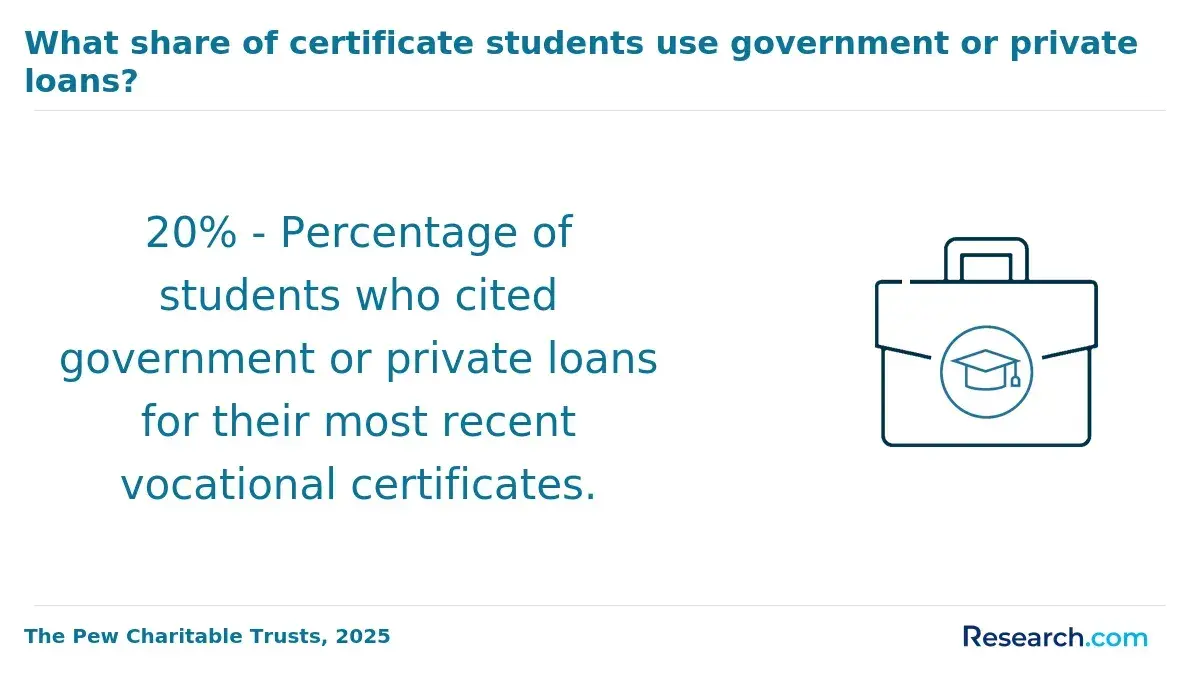
Costs vary by residency status, institution type, technology fees, lab kits, software, transfer credits, and pace. College Board's 2024 data lists average published tuition and fees for 2024-25 at $11,610 for in-state students at public four-year institutions, $30,780 for out-of-state students at public four-year institutions, and $43,350 at private nonprofit four-year institutions.
These figures are not online-specific, but they show why residency, transfer policy, and net price can change the value calculation.
The table below breaks down major cost and timeline factors. Review these items together because a cheaper per-credit program can become more expensive if it accepts fewer credits or delays required courses:
| Factor | Why it matters | Question to ask |
| Transfer credit | Accepted credits can reduce both cost and time | How many credits apply directly to the engineering degree plan? |
| Course sequencing | Prerequisites can slow part-time students | Are upper-division courses offered every term or only once per year? |
| Lab requirements | Kits, travel, or residencies can add expenses | Are lab costs included in tuition and fees? |
| Residency tuition | Public universities may price in-state and out-of-state students differently | Do online students pay in-state, out-of-state, or separate online tuition? |
| Financial aid | Federal aid usually requires eligible programs and enrollment status | What is the estimated net price after grants, scholarships, and benefits? |
| Workload | Engineering courses often require significant study and project time | What course load is realistic for students working full time? |
To evaluate return on investment, compare the total net cost against your target role, local job market, internship access, employer tuition assistance, and whether the degree supports licensure. Avoid using advertised tuition alone as your decision metric.
What jobs can online electrical engineering graduates pursue?
Graduates from credible online electrical engineering programs can pursue many of the same roles as campus graduates, especially when they have ABET-accredited preparation, strong projects, internships, and tool-based experience.
Employers usually care less about online delivery and more about whether candidates can analyze systems, solve technical problems, communicate design decisions, and work safely within constraints.
The table below summarizes common career paths. It focuses on what the work involves so you can match a program's electives and projects to your target role:
| Role | Typical work | Helpful preparation |
| Electrical engineer | Designs, tests, and improves electrical equipment, systems, and components | Circuits, power, controls, labs, CAD, and design documentation |
| Power systems engineer | Works on generation, transmission, distribution, protection, and grid reliability | Power systems, machines, relays, renewable energy, and PE-aligned experience |
| Embedded systems engineer | Develops hardware-software systems for devices, vehicles, sensors, or industrial products | C/C++, microcontrollers, digital logic, real-time systems, and debugging |
| Controls engineer | Designs automation, robotics, process control, or feedback systems | Control theory, PLCs, modeling, instrumentation, and manufacturing exposure |
| Electronics design engineer | Creates circuit boards, analog or digital devices, and product electronics | PCB design, SPICE simulation, signal integrity, testing, and prototyping |
| Test or validation engineer | Builds test plans, collects data, diagnoses failures, and verifies requirements | Measurement, statistics, scripting, lab instruments, and technical reporting |
Entry-level candidates should build evidence of readiness before graduation. Strong signals include internship experience, senior design projects, GitHub or portfolio documentation, IEEE student involvement, lab reports, simulation files, and clear explanations of trade-offs in design decisions.
Career changers should be realistic about starting points. Prior experience in IT, manufacturing, military electronics, maintenance, or drafting can help, but engineering roles usually require proof of analytical depth and design capability, not only general technical familiarity.
What salaries do electrical engineers earn?
BLS Occupational Employment and Wage Statistics reported a $111,910 median annual wage for electrical engineers in May 2024. A median is not a starting salary or a guaranteed outcome; it means half of workers in the occupation earned more and half earned less.
New graduates, technicians moving into engineering roles, and engineers in lower-cost regions may start below the median, while experienced engineers in high-demand industries may earn more.
Salary varies by industry, geography, degree level, security clearance, licensure, specialization, and experience. Power, semiconductor, aerospace, defense, telecommunications, advanced manufacturing, and automation roles may reward different skill combinations, so students should compare local employer demand instead of relying on a national number alone.
The table below explains how common factors can influence compensation. Use it to think about your likely salary range more realistically than a single national figure can provide:
| Salary factor | How it can affect earnings | What students can do |
| Experience | Entry-level salaries are usually below midcareer salaries | Pursue internships, co-ops, and project-heavy coursework |
| Specialization | High-demand niches can raise competitiveness | Choose electives aligned with power, embedded systems, RF, semiconductors, or controls |
| Location | Pay often reflects local industry concentration and cost of living | Review job postings in your target metro or remote-friendly industry |
| Licensure | PE licensure can matter in utilities, consulting, and public-facing engineering | Choose a licensure-compatible program if that path is likely |
| Portfolio | Documented design work can strengthen applications | Save capstone, lab, simulation, and testing examples you can discuss professionally |
The safest way to estimate ROI is to compare program net cost with salaries for the exact roles and regions you are targeting. If a school advertises broad salary outcomes, ask whether the data is program-specific, recent, and based on verified graduate employment records.
Which skills do employers want from electrical engineering graduates?
Employers want electrical engineering graduates who can combine engineering fundamentals with modern tools, practical testing habits, and clear communication. AI and automation are changing workflows, but they are not replacing the need for engineers who understand constraints, safety, physics, data quality, and system-level trade-offs.
The most valuable graduates can explain why a design works, prove it with data, and revise it when tests reveal problems. Build evidence in the following skill areas while you are still in school:
- Circuit and systems analysis: Ability to model, calculate, simulate, build, test, and troubleshoot electrical behavior.
- Programming and scripting: Practical use of Python, C, C++, MATLAB, or similar tools for data analysis, automation, and embedded work.
- Hardware design tools: Experience with SPICE simulation, PCB design, FPGA workflows, CAD, test equipment, and lab documentation.
- Power and energy literacy: Understanding of power electronics, grid modernization, renewable integration, protection, and efficiency when relevant to the target role.
- Embedded and connected systems: Knowledge of microcontrollers, sensors, real-time constraints, communication protocols, and cybersecurity-aware design.
- Data interpretation: Ability to collect measurements, evaluate uncertainty, analyze failures, and communicate results without overstating conclusions.
- Team communication: Clear writing, design reviews, requirements tracking, version control, and the ability to explain trade-offs to technical and nontechnical audiences.
- Professional judgment: Safety awareness, ethical reasoning, standards compliance, and willingness to ask for review when systems affect people or infrastructure.
To choose a program around employer-valued skills, look for required labs, industry-sponsored capstones, internship support, current software tools, faculty with technical expertise, and electives tied to active hiring areas. Do not choose a program only because it is fast or convenient.
It also helps to compare how different fields define professional skill. A student asking what is library science will encounter a very different mix of information organization, service, and research skills; electrical engineering employers typically expect deeper evidence of math-based design, testing, and technical problem-solving.
Other Things You Should Know About Electrical Engineering
Most programs require precalculus, calculus I and II, differential equations, and calculus-based physics before upper-division work begins. Many also expect a basic programming course and a minimum 2.5 GPA in math and science prerequisites for admission or progression.
It is possible, but the workload is demanding. Many working students take a part-time schedule because calculus, physics, labs, and design courses require sustained weekly study time.
Yes. Internships, co-ops, research projects, and industry capstones help online students show hands-on ability and build employer relationships that may not happen automatically in a virtual format.
Start by strengthening algebra, trigonometry, and precalculus before taking calculus-based engineering courses. A bridge course, community college sequence, or tutoring plan can make the degree more manageable.
References
- Electrical Engineer Salary in AU (July, 2026) – SEEK https://au.seek.com/career-advice/role/electrical-engineer/salary
- 10 skills you'll need in electrical engineering jobs at AtkinsRéalis https://careers.atkinsrealis.com/en/life-at-atkinsrealis/blogs/2025/10-skills-you-need-in-electrical-engineering-jobs
- Free Online Electrical Engineering Courses | Alison https://alison.com/tag/electrical-engineering
- 6 Best Online Electrical Engineering Degree Programs for Future Engineers https://www.myprivatetutor.com/blog/best-online-electrical-engineering-degree-programs