
2027 Illinois Psychology Licensure Requirements – How to Become a Psychologist in Illinois

Co-Founder and Chief Data Scientist
Becoming a licensed psychologist in Illinois is a long, highly regulated path, but it can lead to meaningful work in a state with serious behavioral health workforce needs. According to the Illinois Behavioral Health Workforce Center's Strategic Plan for Fiscal Years 2026 through 2028, only 22% of the state's mental health needs and 20% of the substance abuse needs are being met, which makes training, licensing, and retaining mental health professionals a major priority.
This guide is for students, career changers, master’s-level clinicians, and out-of-state psychologists who want a clear view of Illinois psychology licensure requirements. It explains the education you need, supervised experience rules, EPPP expectations, license renewal, prescribing psychologist options, career paths, job market data, and practical ways to compare psychology programs before committing years of study and tuition.
Quick answer: How do you become a licensed psychologist in Illinois?
To become a licensed clinical psychologist in Illinois, you generally need to complete a doctoral degree in psychology, meet required practicum, internship, and post-doctoral supervised experience requirements, pass the Examination for Professional Practice in Psychology (EPPP), submit documentation to the Illinois Department of Financial & Professional Regulation, and maintain the license through renewal and continuing education. The full process typically takes at least 11 years, depending on your degree path, enrollment pace, and supervised training timeline.
What are the benefits of being a psychologist in Illinois?
- Strong need for services: Illinois continues to report shortages across behavioral health professions, so psychologists may find opportunities in hospitals, clinics, schools, universities, community agencies, correctional settings, and private practice.
- Solid earning potential: Licensed psychologists in Illinois report an average annual income of $87,562, with higher earnings possible depending on setting, specialty, location, experience, and whether the psychologist moves into leadership or specialized practice.
- Community impact: Psychologists can help improve access to care in underserved communities, schools, rural areas, and populations facing barriers to mental health treatment.
- Top Psychology Programs in Illinois for 2027
- Illinois Psychology Industry Overview
- Future Trends Affecting Psychology in Illinois
- Illinois Licensed Psychologist Requirements
- Step-by-Step Process to Become a Psychologist in Illinois
- Clinical Psychologist vs. Prescribing Psychologist in Illinois
- How Long It Takes to Become a Psychologist in Illinois
- Illinois Psychologist License Renewal
- Requirements for Out-of-State Psychologists
- Advancement Options for Psychologists in Illinois
- Psychologist Job Market in Illinois
- Career Paths for Psychology Graduates in Illinois
- Affordable Education Pathways for Illinois Psychology Students
- BCBA Certification and Psychology Careers in Illinois
- Neuropsychology Specialization in Illinois
- LPC Licensure and Psychology Practice in Illinois
- Social Work Licensure Requirements in Illinois
- School Psychologist Pathway in Illinois
- Criminal Psychology Specialization in Illinois
- Ethical Rules for Illinois Psychologists
- Illinois LPC License Requirements
- Marriage and Family Therapy and Psychology in Illinois
- Substance Abuse Counseling Careers in Illinois
- Psychologist vs. Psychiatrist
- Fastest Counselor Pathway in Illinois
- Challenges of Becoming a Child Psychologist in Illinois
Top Psychology Programs in Illinois for 2027
How this program list was developed
Research.com evaluates psychology programs using a transparent methodology that considers academic quality, available program data, and student-facing information. The ranking review draws from sources such as the Integrated Postsecondary Education Data System, Peterson’s database and its Distance Learning Licensed Data Set, College Scorecard, and the National Center for Education Statistics. Use this list as a starting point, then confirm current tuition, funding, accreditation status, faculty fit, internship outcomes, and licensure alignment directly with each school.
Illinois psychology program comparison
| School | Program | Length | Credits | Cost per Credit | Accreditation |
| University of Illinois Urbana-Champaign | PhD in Psychology | Six to eight years | 96 | $2,342 (resident); $5,060 (non-resident) | American Psychological Association (APA) |
| Northern Illinois University | PhD in Clinical Psychology | Six years | 90 | $509.75 (resident); $878.99 (non-resident) | APA |
| University of Illinois at Chicago | PhD in Clinical Psychology | Six years | 92–110 | $2,120 (resident); $4,418 (non-resident) | APA |
| Loyola University Chicago | PhD in Clinical Psychology | Six years | 72+ | $1,125 | APA |
| Roosevelt University | Doctorate in Clinical Psychology (PsyD) | Five to six years | 102 | $1,668 (part-time) | APA |
1. University of Illinois Urbana-Champaign
The University of Illinois Urbana-Champaign offers a PhD in Psychology designed for students who want intensive research training alongside preparation for professional psychology careers. The program has reported a 100% passing rate for the Psychology Licensing Examination for two consecutive years and emphasizes independent scholarship, faculty collaboration, and access to research networks.
- Program Length: Six to eight years
- Tracks/Concentrations:
- Developmental and Clinical-Community Psychopathology
- Second Language Acquisition & Teacher Education
- Ecological Community Psychology
- Cost per Credit: $2,342 (resident); $5,060 (non-resident)
- Required Credits to Graduate: 96
- Accreditation: American Psychological Association (APA)
2. Northern Illinois University
Northern Illinois University runs a PhD in Clinical Psychology using the scientist-practitioner model, which means students are trained to connect clinical work with research evidence. The program has scored 100.00% on the licensing examination for two consecutive years and includes training in areas such as biopsychology, experimental social psychology, psychopathology, externship, internship, practicum, and supervision.
- Program Length: Six years
- Tracks/Concentrations:
- Developmental Psychopathology
- Trauma Psychology
- Cost per Credit: $509.75 (resident); $878.99 (non-resident)
- Required Credits to Graduate: 90
- Accreditation: APA
3. University of Illinois at Chicago
The University of Illinois at Chicago offers a PhD in Clinical Psychology that combines research, coursework, clinical training, comprehensive exams, and dissertation work. The program has also reported perfect performance on the licensing examination and uses a mentorship model that allows students to work closely with faculty in psychology subfields.
- Program Length: Six years
- Tracks/Concentrations: Clinical Psychology
- Cost per Credit: $2,120 (resident); $4,418 (non-resident)
- Required Credits to Graduate: 92–110
- Accreditation: APA
4. Loyola University Chicago
Loyola University Chicago offers a PhD in Clinical Psychology for students who want close faculty guidance and rigorous preparation in psychological theory, methodology, assessment, treatment, and research. The program admits a limited number of students each year, supporting individualized mentoring and coursework in areas such as human diversity, health psychology, and personality assessment.
- Program Length: Six years
- Tracks/Concentrations:
- Child Clinical Psychology
- Neuropsychology
- Cost per Credit: $1,125
- Required Credits to Graduate: 72+
- Accreditation: APA
5. Roosevelt University
Roosevelt University offers a Doctorate in Clinical Psychology (PsyD) built around coursework, clinical practica, internship, and a doctoral project. Its smaller learning environment may appeal to students who want practice-oriented training, placement support, and access to multiple training sites. The program reported an average 84.31% passing rate on the licensure examination, which places it among the higher-performing PsyD options in Illinois.
- Program Length: Five to six years
- Tracks/Concentrations:
- Clinical Child and Family Psychology
- Neuropsychology
- Cost per Credit: $1,668 (part-time)
- Required Credits to Graduate: 102
- Accreditation: APA
How to choose the right psychology program in Illinois
The best program is not always the one with the lowest tuition or the most recognizable name. For licensure-focused students, the most important question is whether the program supports the academic, clinical, and supervised training requirements needed for Illinois practice.
- Check APA accreditation first: Illinois licensure depends heavily on completing the right doctoral preparation, so accreditation should be verified before applying.
- Compare total cost, not just cost per credit: Factor in fees, living expenses, dissertation time, internship travel, lost income, and whether funding or assistantships are available.
- Ask about internship match outcomes: A strong doctoral program should be able to explain how students secure qualifying internships and supervised placements.
- Evaluate faculty fit: PhD students especially should look for faculty whose research interests align with their goals.
- Decide between PhD and PsyD carefully: A PhD may be a better fit for research-heavy goals, while a PsyD may appeal to students focused primarily on clinical practice.
Key Findings
- For every 100,00 Illinoisans, there are only 325 mental health professionals, including psychologists.
- Becoming a fully licensed clinical psychologist in Illinois can take more than a decade.
- Illinois became the third state to authorize prescriptive licensure for clinical psychologists.
- Psychology graduates must complete 1,750 hours, or one year, of clinical supervision before they can qualify for licensure.
- Illinois psychologists renew their licenses every even-numbered years and must complete 24 hours of continuing education.
Illinois Psychology Industry Overview
Illinois has a substantial need for psychologists and other behavioral health professionals. The state reports only 369.3 mental health professionals, including psychologists, for every 100,000 residents, placing Illinois 23rd among states for mental health provider availability. This shortage affects access to therapy, assessment, crisis intervention, school-based services, and substance abuse treatment.
The school psychology shortage is also significant. Illinois averages one psychologist for every 1,290 students, which is below the national standard of one psychologist per 500 to 1,000 students. For students interested in working in K–12 systems, this shortage may create opportunities, but it also signals heavy caseloads and high service demand.
State investment is beginning to address the gap. Illinois included a 2025 $19 million budget increase for various mental health services and treatments, and the Behavioral Health Workforce Education Center was launched to support recruitment, education, and retention across behavioral health roles.
Future Trends Affecting Psychology in Illinois
Several trends are shaping how psychologists train and practice in Illinois. The first is the continued use of telehealth. Remote therapy and assessment-related services expanded after COVID-19, and state regulators have continued refining rules for telepsychology practice. For rural and underserved communities, telehealth can reduce travel barriers and increase access, but psychologists must still follow Illinois practice rules, confidentiality standards, and documentation expectations.
Culturally responsive care is another major priority. Illinois serves diverse communities, including immigrants, refugees, LGBTQ+ individuals, multilingual families, and populations with historically limited access to mental health services. Psychology students should look for programs that treat cultural competence as a core skill rather than an elective topic.
Technology is also changing the field. Artificial intelligence, digital assessment tools, electronic health records, telehealth platforms, and data-informed care are influencing clinical workflow. These tools may support access and efficiency, but they do not remove the need for clinical judgment, ethics, privacy protection, and supervised professional training.
Students comparing programs should review the best colleges for psychology in Illinois and ask how each institution prepares graduates for telehealth, interdisciplinary care, culturally competent practice, neuropsychology, industrial-organizational psychology, and other emerging practice areas.
Illinois Licensed Psychologist Requirements
The Illinois Department of Financial & Professional Regulation (IDFPR) Clinical Psychologists Licensing & Disciplinary Board sets the requirements for becoming a licensed clinical psychologist in the state. In general, applicants must complete a Doctor of Psychology (PsyD) or Doctor of Philosophy (PhD) in Psychology from an APA-approved program.
Some students complete a master’s degree before doctoral study, but a master’s degree is not always required for licensure. Students who need flexibility can compare the best online clinical psychology programs, but they should confirm whether an online or hybrid option meets APA approval, supervised training expectations, internship requirements, and Illinois licensure rules.
Core licensure requirements in Illinois
| Requirement | What it means for applicants |
| Doctoral education | Complete a PsyD or PhD in Psychology from an APA-approved program. |
| Practicum | Complete a 400-hour practicum, which does not count toward the supervised experience required for licensure. |
| Internship | Complete at least 1,750 hours under the supervision of a licensed Clinical Psychologist within 24 months. |
| Post-doctoral experience | Complete at least 1,750 hours of post-doctoral clinical experience within 36 months under a licensed professional. |
| Examination | Pass the Examination for Professional Practice in Psychology (EPPP). |
| Documentation | Submit official transcripts, background checks, fingerprinting, supervised experience documents, and other required application materials. |
Step-by-Step Process to Become a Psychologist in Illinois
The Illinois pathway is sequential. Skipping a requirement, choosing the wrong type of program, or delaying supervised experience documentation can slow down licensure.
- Earn a bachelor’s degree and complete any prerequisite coursework needed for graduate admission.
- Complete a master’s degree in psychology if your chosen doctoral pathway requires or strongly recommends it.
- Finish an APA-approved doctoral program in psychology.
- Complete required practicum, internship, and post-doctoral supervised experience hours.
- Register for, take, and pass the EPPP.
- Submit your application for Clinical Psychologist licensure to the Illinois licensing authority.
- Wait for review, approval, and license issuance before practicing independently as a licensed psychologist.
The U.S. Bureau of Labor Statistics reports 4,930 clinical and counseling psychologists in Illinois. That employment base is important, but it does not eliminate the access gaps affecting mental health services across the state.
Licensure planning checklist
- Confirm that your doctoral program is APA-approved before enrolling.
- Keep copies of syllabi, transcripts, practicum records, internship evaluations, and supervision logs.
- Ask your program how it supports EPPP preparation.
- Clarify whether your internship and post-doctoral sites meet Illinois supervision rules.
- Budget for application fees, exam fees, fingerprinting, transcript requests, and license renewal costs.
Clinical Psychologist vs. Prescribing Psychologist in Illinois
Clinical psychologists evaluate, diagnose, and treat mental health conditions, which aligns with core goals of psychology such as understanding behavior, improving functioning, and supporting mental well-being. Most psychologists do not prescribe medication and instead coordinate with psychiatrists, physicians, and other medical providers when medication is part of a patient’s treatment plan.
Illinois allows licensed clinical psychologists to pursue additional authority as Licensed Prescribing Psychologists. According to the APA, this provides prescriptive authority and privileges (RxP) for psychotropic medications when the psychologist completes additional requirements. Those requirements include a master’s degree in clinical psychopharmacology, undergraduate biomedical coursework, a passing score on the Psychopharmacology Exam for Psychologists (PEP), and nine prescribing psychology residency rotations.
Illinois was the third state to grant this authority. Five other states—Louisiana, New Mexico, Iowa, Idaho, and Colorado—also have licensure paths for prescribing psychologists, while other states have considered similar legislation.
| Role | Primary focus | Medication authority | Best fit for |
| Licensed Clinical Psychologist | Assessment, diagnosis, psychotherapy, consultation, research, and psychological testing | Generally does not prescribe medication | Students who want to practice therapy, assessment, research, or clinical leadership |
| Licensed Prescribing Psychologist | Clinical psychology plus psychopharmacology training | May prescribe psychotropic medications after meeting Illinois requirements | Licensed psychologists who want broader treatment authority and are willing to complete additional biomedical and prescribing training |
How Long It Takes to Become a Psychologist in Illinois
Students should expect the Illinois clinical psychology pathway to take at least 11 years before they can practice independently. A bachelor’s degree often takes four years, a doctoral program commonly takes about six years, and post-doctoral clinical supervision adds another year.
The timeline can be longer if you complete a separate master’s degree, study part time, need additional dissertation time, repeat an exam, or take longer to secure internship and post-doctoral placements. Some doctoral programs require seven years of study, while accelerated or dual-degree structures may reduce time for certain students.
Before choosing a program, compare how the curriculum connects to psychology degree jobs, internship placement, supervised experience, and licensure outcomes. A faster program is not automatically better if it does not provide the training and documentation needed for licensure.
Typical Illinois psychologist timeline
| Stage | Typical time | Decision point |
| Bachelor’s degree | Four years | Choose psychology, behavioral science, or a related major that prepares you for graduate admissions. |
| Master’s degree, if completed | Two more years | Decide whether a master’s degree strengthens your doctoral application or supports an alternative counseling path. |
| Doctoral program | Six years on average | Choose between PhD and PsyD based on research goals, clinical goals, cost, and faculty fit. |
| Post-doctoral supervision | One year | Complete qualifying supervised clinical experience and keep detailed documentation. |
Illinois Psychologist License Renewal
Illinois psychologists must renew their licenses every September 30th in even-numbered years. Renewal is not only an administrative requirement; it is also how the state ensures that practitioners continue learning about ethics, legal standards, assessment, treatment, and changes in professional practice.
Psychologists must complete at least 24 hours of continuing education (CE). The CE requirement includes three to four hours focused on the ethical practice of clinical psychology. Prescribing psychologists must renew both licenses and complete 20 additional CE hours in pharmacology.
CE credits may come from in-person or remote graduate-level courses, Board-approved training programs, and teaching psychology in higher education. Psychologists should keep completion certificates and records in case documentation is requested.
Requirements for Out-of-State Psychologists
Illinois offers Licensure by Endorsement for psychologists already licensed in another state. This pathway can make relocation easier, but endorsement is not automatic. The applicant’s existing license must meet or exceed Illinois standards.
Out-of-state psychologists usually need to submit proof of current licensure, doctoral education, transcripts, supervised professional experience, references, and the application fee. Some applicants may also be asked to provide a Certificate of Professional Qualification in Psychology (CPQ) or evidence of an active license plus at least five years of independent psychology practice.
- Verification of the current out-of-state license
- Proof of doctoral program completion
- Official transcripts
- Professional experience documentation and reference forms
- Application fee
After licensure is granted, out-of-state psychologists generally follow the same Illinois renewal and continuing education rules as psychologists originally licensed in the state.
Advancement Options for Psychologists in Illinois
Psychologists in Illinois can advance by specializing, supervising, moving into leadership, publishing research, teaching, consulting, or building a private practice. Common specialty directions include community psychology, social psychology, neuropsychology, school psychology, forensic psychology, health psychology, and industrial-organizational psychology.
Specialization can also affect income expectations. For example, students interested in forensic work can review criminal psychology salary information to understand how compensation may differ from traditional clinical practice.
Experienced psychologists may become clinical directors, training supervisors, university faculty members, research leads, assessment specialists, policy consultants, or executive-level professionals in healthcare, education, business, marketing, publishing, advertising, and human resources.
Psychologist Job Market in Illinois
The Illinois psychology job market is shaped by behavioral health shortages, school-based needs, telehealth expansion, and demand for culturally responsive care. From 2024 to 2029, projections indicate a national shortfall of 89,620 behavioral health providers while demand continues to rise. O*NET OnLine reports also show high employment expectations in nearby states such as Indiana (12%), Kentucky (8%), Missouri (7%), and Wisconsin (5%), which may matter for psychologists open to cross-border opportunities.
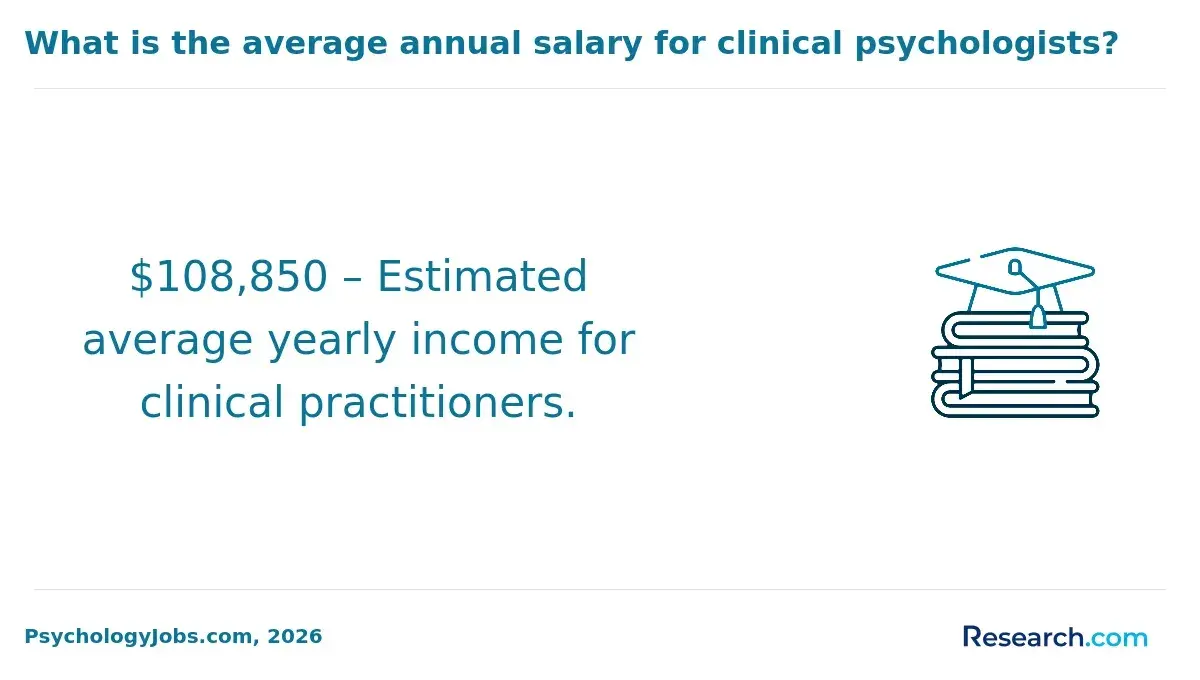
Clinical and counseling psychologists in Illinois can earn as much as $111,300 yearly, which is higher than the national wages of most psychologists. Earnings vary by employer, specialization, metropolitan area, licensure status, experience, and whether the psychologist works in private practice, healthcare, education, government, or consulting.
Top-paying metropolitan areas for Illinois clinical and counseling psychologists
- Chicago-Naperville-Elgin: $114,150
- Champaign-Urbana: $104,580
- Springfield: $94,370
- Cape Girardeau: $93,330
- St. Louis: $90,720
Career Paths for Psychology Graduates in Illinois
Students asking what to do with a clinical psychology degree should understand that psychology training can lead to both licensed clinical roles and nonclinical careers. Some positions require a doctoral license, while others may be available with bachelor’s, master’s, or research-oriented preparation.
| Career path | Reported income | What the role does |
| Industrial-Organizational Psychologists | $59,500 | Apply psychology to workplaces by improving productivity, employee well-being, training, job satisfaction, and organizational performance. |
| Sports Psychologists | $76,439 | Support athletes, coaches, and teams with performance, mental resilience, motivation, and psychological barriers that affect competition. |
| UX Researchers | $78,869 | Study user needs, behaviors, preferences, and pain points through interviews, surveys, usability testing, analytics, and product research. |
| Marketing Specialists | $79,000 | Use consumer research and strategy to promote products, services, brands, and audience growth. |
| Case Managers | $76,290 | Assess client needs, build service plans, coordinate care, monitor progress, and connect individuals with community resources. |
Affordable Education Pathways for Illinois Psychology Students
Psychology training can be expensive because the path often includes undergraduate study, doctoral coursework, practica, internship, post-doctoral supervision, exams, and licensure fees. The right affordability strategy depends on where you are in the pipeline.
Undergraduate students can reduce costs through community college transfer credits, in-state public universities, scholarships, work-study, and careful course planning. Graduate students should compare assistantships, tuition remission, funded research roles, practicum placement costs, dissertation timelines, and whether the program helps students secure qualifying internships.
Students considering advanced online study may review the cheapest online master's degrees in psychology. However, affordability should never be the only filter. Confirm accreditation, supervised experience requirements, transfer policies, licensure alignment, and whether the credential actually supports your intended Illinois career path.
Common cost mistakes to avoid
- Choosing a low-tuition program without confirming licensure alignment.
- Ignoring fees, travel, internship relocation, exam costs, and lost income.
- Assuming every online program satisfies Illinois psychology licensing requirements.
- Failing to ask whether credits transfer into a doctoral program.
- Choosing a program based only on rankings without considering faculty fit, placement support, and supervision quality.
Can BCBA Certification Strengthen a Psychology Career in Illinois?
A Board Certified Behavior Analyst credential can be useful for psychologists and psychology graduates who want deeper training in behavior analysis, especially when working with developmental, educational, or behavioral challenges. BCBA training can complement therapy, assessment, consultation, and intervention planning, but it is a separate credential with its own requirements. To compare the certification process with psychology licensure, review this guide on how to become a BCBA in Illinois.
Is Neuropsychology a Good Specialization for Illinois Psychologists?
Neuropsychology may be a strong fit for students interested in brain-behavior relationships, cognitive assessment, neurological conditions, rehabilitation, and advanced diagnostic work. It usually requires substantial clinical and assessment training, so students should evaluate whether a program provides appropriate practicum, internship, and post-doctoral opportunities. Those exploring flexible doctoral routes can compare options for an online PhD in neuropsychology.
How Can LPC Licensure Benefit Mental Health Professionals in Illinois?
Licensed Professional Counselor licensure can be a practical alternative or complementary pathway for people who want to provide counseling services but do not plan to complete a psychology doctorate. LPC training focuses on counseling theory, therapeutic techniques, supervised practice, and client-centered care. To compare this path with psychology licensure, see the guide on how to become an LPC in Illinois.
Social Work Licensure Requirements in Illinois
Social work is another regulated mental health pathway in Illinois. Entry-level roles commonly require a Bachelor of Social Work (BSW), while clinical and advanced social work roles usually require a Master of Social Work (MSW), supervised field experience, and a licensing examination. Students deciding between psychology, counseling, and social work should compare scope of practice, degree length, supervision rules, and target work settings. For details, read What degree do you need to be a social worker in Illinois?.
How Can I Become a School Psychologist in Illinois?
School psychology follows a different route from clinical psychology because the role is designed for educational settings. Candidates typically complete an approved graduate program that covers psychological services, educational assessment, intervention, consultation, and school-based practice. They also complete supervised internships in K–12 settings and meet state evaluation and continuing education requirements. A detailed pathway is available in this guide on how to become a school psychologist in Illinois.
How Can I Specialize in Criminal Psychology in Illinois?
Criminal psychology blends clinical psychology, forensic assessment, criminal behavior, legal systems, and correctional or investigative settings. Students should seek coursework and supervised experience related to forensic evaluation, legal standards, risk assessment, ethics, and correctional populations. For a focused roadmap, review how to become a criminal psychologist in Illinois.
Ethical Rules for Illinois Psychologists
Ethics are central to licensure and daily practice. Illinois psychologists must protect clients, practice within their competence, maintain accurate records, and use professional judgment when legal, clinical, and ethical duties overlap.
- Confidentiality: Client information must be protected unless disclosure is legally or ethically required, such as in situations involving risk of harm.
- Informed consent: Clients should understand the nature of services, possible risks, fees, limits of confidentiality, and their rights before treatment begins.
- Competence: Psychologists should only provide services in areas where they have appropriate education, training, supervision, or consultation.
- Boundary management: Dual relationships should be avoided when they could impair judgment, exploit the client, or create conflicts of interest.
- Cultural competence: Psychologists should recognize how culture, language, identity, community context, and lived experience shape assessment and treatment.
- Ethical decision-making: When cases are unclear, psychologists should consult ethical standards, seek supervision or peer consultation, document reasoning, and prioritize client welfare.
What Are the Illinois LPC License Requirements?
Illinois LPC applicants must complete an appropriate graduate program in counseling or a closely related field, meet supervised clinical experience expectations, pass a recognized examination, and submit required documentation such as background checks and official records. Because counseling licensure differs from psychology licensure, compare the two before choosing a graduate program. For the full counseling pathway, review the Illinois LPC license requirements.
Marriage and Family Therapy and Psychology in Illinois
Marriage and Family Therapy overlaps with psychology in areas such as relationship dynamics, family systems, trauma, child and adolescent concerns, and behavioral health treatment. However, MFT licensure has its own educational and supervision requirements. Students interested in couples or family-focused care should compare psychology, counseling, social work, and MFT pathways before enrolling. Learn more about the MFT license in Illinois.
Career Opportunities for Substance Abuse Counselors in Illinois
Substance abuse counseling is an important part of Illinois’ behavioral health workforce because addiction and substance misuse often require coordinated, evidence-based treatment. This path may appeal to students who want to enter the field without completing a psychology doctorate, although certification and supervision rules still apply. For step-by-step guidance, see how to become a substance abuse counselor in Illinois.
Psychologist vs. Psychiatrist: What Is the Difference?
Psychologists and psychiatrists both treat mental health conditions, but their training and scope of practice differ. Psychologists complete doctoral training in psychology, assessment, research, and therapy. Psychiatrists complete medical training and can prescribe medication as physicians. Illinois also has a prescribing psychologist pathway, but it requires additional training beyond clinical psychology licensure. For a detailed comparison, read about psychologist vs psychiatrist careers.
What Is the Fastest Way to Become a Counselor in Illinois?
The fastest path into counseling is usually not the same as the path to becoming a licensed psychologist. Students who want to provide counseling services sooner may compare LPC, substance abuse counseling, social work, and related mental health credentials. The right choice depends on scope of practice, required degree level, supervision hours, and long-term goals. For a focused overview, review the shortest path to become a counselor in Illinois.
Challenges of Becoming a Child Psychologist in Illinois
Child psychology can be highly rewarding, but it requires patience, advanced training, emotional resilience, and strong collaboration with families, schools, physicians, and community agencies. Before committing to this specialty, students should understand both the educational path and the realities of working with children and adolescents. Start with this guide on how to become a child psychologist.
- Lengthy education: Child psychologists usually complete a bachelor’s degree, possibly a master’s degree, and a doctoral degree such as a PhD or PsyD, followed by supervised clinical experience.
- Emotionally complex cases: Work may involve trauma, abuse, developmental concerns, family conflict, behavioral challenges, and school-related stressors.
- Ongoing professional learning: Child assessment and treatment methods continue to evolve, so continuing education is essential for safe, effective practice.
Questions to Ask Before Choosing an Illinois Psychology Path
- Do I want to become a licensed psychologist, counselor, social worker, school psychologist, BCBA, or psychiatrist?
- Is the program accredited or approved in a way that supports my intended Illinois license?
- How many years can I realistically commit to education, supervision, and exams?
- What is the total cost after tuition, fees, living expenses, internship requirements, and lost income?
- Does the program help students secure practicum, internship, and post-doctoral placements?
- What populations do I want to serve: children, adults, families, athletes, employees, court-involved clients, or people with substance use concerns?
- Am I more interested in therapy, assessment, research, teaching, prescribing authority, or leadership?
Related Articles for Nearby States
- 2027 Indiana Psychology Licensure Requirements – How to Become a Psychologist in Indiana
- 2027 Wisconsin Psychology Licensure Requirements – How to Become a Psychologist in Wisconsin
- 2027 Iowa Psychology Licensure Requirements – How to Become a Psychologist in Iowa
- 2027 Missouri Psychology Licensure Requirements – How to Become a Psychologist in Missouri
- 2027 Kentucky Psychology Licensure Requirements – How to Become a Psychologist in Kentucky
- 2027 Michigan Psychology Licensure Requirements – How to Become a Psychologist in MI
- 2027 Minnesota Psychology Licensure Requirements – How to Become a Psychologist in Minnesota
- 2027 Ohio Psychology Licensure Requirements – How to Become a Psychologist in Ohio
- 2027 Tennessee Psychology Licensure Requirements – How to Become a Psychologist in Tennessee
- 2027 Arkansas Psychology Licensure Requirements – How to Become a Psychologist in Arkansas
References:
- America’s Health Rankings. (n.d.). Health measures [interactive data]. Retrieved from https://www.americashealthrankings.org/explore/measures/MHP/IL
- Behavioral Health Workforce Center (2025). IL Behavioral Health Workforce Center Strategic Plan FY26-FY28. Retrieved from https://illinoisbhwc.org/wp-content/uploads/2025/12/IL-BHWC-Strategic-Plan_v2Final_Oct2025.pdf
- Behavioral Health Workforce Center (2025). ILLINOIS BEHAVIORAL HEALTH WORKFORCE 2025 REGIONAL ASSESSMENT OF BEHAVIORAL HEALTH WORKFORCE DATA AND EDUCATIONAL PROGRAMS. Retrieved from https://illinoisbhwc.org/wp-content/uploads/2025/08/Illinois-Behavioral-Health-Workforce-2025-FINAL.pdf and related coverage from the Chicago Sun-Times
- Illinois Department of Employment Security. (n.d.). Employment Projections. Retrieved from https://ides.illinois.gov/resources/labor-market-information/employment-projections.html
- Illinois Psychological Association. (n.d.). The state of prescribing psychologists in Illinois. Retrieved from https://www.illinoispsychology.org/information-for-rxp
- NASP (2026, February). State Shortages Data Dashboard. Retrieved from https://www.nasponline.org/about-school-psychology/state-shortages-data-dashboard. Additional Illinois context is available from the Illinois Psychological Association and WAND-TV reporting.
- PayScale. (2026). Average clinical psychologist salary in Chicago, Illinois. Retrieved from https://www.payscale.com/research/US/Job=Clinical_Psychologist/Salary/198dc2ce/Chicago-IL
- U.S. Bureau of Labor Statistics. (2025, August 28). Psychologists. Retrieved from https://www.bls.gov/ooh/life-physical-and-social-science/psychologists.htm
Key Insights
- Illinois needs more behavioral health professionals, but psychology licensure still requires a long, structured path with doctoral education, supervised experience, the EPPP, and state approval.
- APA approval matters. Before enrolling, confirm that the program supports Illinois licensure, internship requirements, post-doctoral supervision, and documentation rules.
- The typical path takes at least 11 years, and it may take longer if you complete a separate master’s degree, attend part time, or need extra time for dissertation or supervised placements.
- Illinois is one of the few states with a prescribing psychologist pathway, but RxP authority requires additional psychopharmacology, biomedical, exam, and residency training.
- Students should compare psychology with counseling, social work, school psychology, BCBA certification, MFT, and psychiatry before choosing a degree because each pathway has different timelines, costs, scopes of practice, and licensure rules.
Other Things You Should Know About Becoming a Psychologist in Illinois
Illinois psychologists must follow the rules of the Illinois Department of Financial and Professional Regulation and the profession’s ethics code. The state can discipline conduct involving fraud, boundary violations, recordkeeping failures, and misuse of a license. Licensed psychologists must also complete approved continuing education during each renewal cycle.
Licensed psychologists in Illinois must complete 24 hours of continuing education every two years to maintain their license. This includes specific hours dedicated to ethics and cultural competency, as mandated by the Illinois Department of Financial and Professional Regulation.
In 2027, to obtain a psychology license in Illinois, candidates must earn a doctorate from an accredited program, complete a specified number of supervised professional experience hours, pass the Examination for Professional Practice in Psychology (EPPP), and fulfill any additional state-specific requirements. Online degrees may be accepted if they meet accreditation standards.


