
2027 How to Become a School Psychologist in Illinois - School Psychology Programs and Certifications Online & Campus

Co-Founder and Chief Data Scientist
Becoming a school psychologist in Illinois is mainly a licensing and program-selection decision. You need the right graduate preparation, supervised field experience, testing, an Illinois educator license pathway, and a clear understanding of how school psychology differs from related mental health and education careers.
This guide is for students comparing school psychology programs, career changers considering Illinois school-based mental health roles, and graduates preparing to apply through the Illinois State Board of Education. It explains the education path, licensure steps, internship expectations, job market, continuing education, legal responsibilities, related credentials, financial aid options, and practical mistakes to avoid before you invest time and tuition.
Quick answer: How do you become a school psychologist in Illinois?
To become a school psychologist in Illinois, you typically complete a graduate program in school psychology or a closely related field, finish required practicum and internship experiences, pass the required school psychology examination, and apply through the Illinois State Board of Education’s Educator Licensure Information System. Illinois school psychologists generally practice in schools under a Professional Educator License with the appropriate school psychologist endorsement.
Because requirements can change and different sources may describe exam, internship, and renewal expectations differently, applicants should confirm current rules directly in ELIS and with the Illinois State Board of Education before enrolling in a program or submitting an application.
Key things to know before choosing this career in Illinois
- Licensing authority: The Illinois State Board of Education oversees school psychologist licensure in Illinois and sets standards for educator licenses and endorsements.
- Graduate education: Candidates are expected to hold at least a master’s or higher degree in school psychology or a closely related field from an accredited institution. Guidance commonly references at least 60 graduate semester hours and supervised internship experience.
- Testing: Applicants may encounter references to the National School Psychology Examination (NSPE), the School Psychologist Test #183, the Praxis exam, and the Test of Academic Proficiency. Verify the current exam requirement with ISBE before registering.
- Application system: Illinois uses the Educator Licensure Information System, commonly called ELIS, for licensure applications and documentation.
- Continuing education: Maintaining a credential requires professional development. Some guidance references at least 60 professional development hours every five years, while other Illinois PEL renewal guidance references 120 PDHs in a five-year period. Confirm the requirement that applies to your license type and renewal cycle.
- Education requirements for Illinois school psychologists
- Certification and licensing process in Illinois
- Internship and supervised experience requirements
- Illinois job market and career outlook
- Challenges and rewards of the profession
- Alternative career paths with a school psychology degree
- Continuing education and professional development
- Legal and ethical responsibilities in Illinois schools
- Dual licensure in school psychology and counseling
- Financial aid and scholarships for Illinois students
- Marriage and family therapy training as a complement
- School psychology vs. child psychology
- Special education certification in Illinois
- Professional organizations and resources
- Speech-language pathology insights for school psychologists
- Illinois psychology licensure updates
- School psychology vs. school counseling
- Other careers with similar licensing requirements
- Behavior analysis certification and school psychology
- Diversity, inclusion, and culturally responsive practice
- Trends and innovations in Illinois school psychology
- Career mentoring for practice and leadership
What are the educational requirements for school psychologists in Illinois?
The education path to school psychology in Illinois starts with graduate study. A bachelor’s degree alone is not enough for independent school psychology practice. Candidates generally need a master’s degree or higher in school psychology, educational psychology with a school psychology focus, or a closely related field that meets Illinois requirements.
Many students pursue a specialist-level degree, often an Ed.S., because it provides more advanced preparation than a basic master’s program and is commonly aligned with school-based practice. Doctoral study can also support roles in research, leadership, higher education, advanced assessment, or broader psychology careers, but it is not the only route into school-based practice.
| Education component | What it means for Illinois candidates | Decision point for students |
| Graduate degree | A master’s or higher degree in school psychology or a closely related field is expected. | Choose a program designed for Illinois school psychologist licensure, not just a general psychology program. |
| Graduate credit hours | Guidance commonly references a minimum of 60 graduate semester hours. | Ask the program to show how its curriculum maps to ISBE requirements. |
| Program approval | Candidates should complete a state-approved program at a regionally accredited institution. | Do not assume accreditation alone means the program meets Illinois endorsement requirements. |
| Core coursework | Programs typically include assessment, child development, intervention, consultation, ethics, and school-based systems. | Review whether the curriculum includes both mental health and learning-related assessment. |
| Field experience | Practicum and internship experiences are essential because school psychology is an applied profession. | Ask where students complete placements and whether paid internships are available. |
From undergraduate study through licensure, the overall preparation period can take approximately 6-8 years, depending on the degree route, enrollment pace, transfer credits, field placement timing, and testing schedule.
Who should choose a school psychology program?
- Students who want to work directly with children and adolescents in school settings.
- People interested in assessment, intervention planning, behavior support, consultation, and special education eligibility processes.
- Future professionals who prefer an education-centered mental health role rather than a private clinical therapy role.
- Candidates who can commit to graduate-level coursework and substantial supervised fieldwork.
Who may want a different path?
- Students who primarily want to provide long-term psychotherapy in private practice may be better served by counseling, clinical psychology, marriage and family therapy, or social work pathways.
- Those focused on academic scheduling and college/career planning may want to compare school counseling.
- Students who want to teach in special education classrooms should compare special education certification instead of school psychology licensure.
Illinois has emphasized the need for more school psychologists as student mental health concerns continue to affect schools. Before choosing a program, compare curriculum, placement support, licensure alignment, and graduate outcomes rather than relying only on reputation or convenience.
What is the certification and licensing process for school psychologists in Illinois?
Illinois school psychologists generally need a Professional Educator License with a school psychologist endorsement. The process is documentation-heavy, so the best strategy is to choose a licensure-aligned graduate program and track every transcript, test score, practicum form, and internship verification as you go.
Step-by-step Illinois licensure path
- Complete the right graduate program. Enroll in a state-approved graduate program that awards at least a master’s degree in school psychology or educational psychology with a school psychology specialization. The institution should be regionally accredited.
- Finish practicum and internship requirements. Illinois guidance includes practicum and internship expectations, including a practicum of at least 250 hours in a school or child study center and a 1,200-hour internship.
- Complete required testing. Candidates may need to demonstrate competency through exams such as the Test of Academic Proficiency, the School Psychologist Test #183, the Praxis exam, or the National School Psychology Examination, depending on the applicable requirement. Confirm the active requirement before paying for a test.
- Create or update your ELIS account. Illinois applications are submitted through the Educator Licensure Information System. Your ELIS account is where you manage the license application and related records.
- Submit documentation. Upload or request official submission of transcripts, exam results, internship documentation, and any additional materials required by ISBE.
- Monitor your application. Processing delays often happen because of missing transcripts, mismatched names, incomplete internship verification, or wrong endorsement selections.
- Maintain the license. After licensure, complete required professional development and keep records for renewal.
| Licensure task | Why it matters | Common mistake to avoid |
| Verify program approval | Licensure depends on completing a program that meets Illinois expectations. | Choosing a general psychology degree that does not prepare graduates for the school psychologist endorsement. |
| Confirm the exam | Exam names and requirements can appear differently across guidance sources. | Registering for the wrong test without checking current ISBE requirements. |
| Track field hours | Practicum and internship verification is central to eligibility. | Waiting until graduation to reconstruct hours and supervision details. |
| Use ELIS carefully | The application runs through the state system. | Submitting incomplete materials or selecting the wrong license category. |
| Plan for renewal | Professional development is required after licensure. | Saving no proof of completed PDHs or CPD activities. |
Some candidates may work in limited capacities under an Educator License with Stipulations, but this is not the same as holding the full credential generally expected for school psychologist roles. Applicants moving from another state should also ask ISBE whether prior psychologist credentials or school-based experience can satisfy any Illinois requirements.
If you are comparing state requirements before relocating, reviewing programs such as California psychology schools can help you understand how licensure preparation varies across states.
What are the internship and supervised experience requirements in Illinois?
Fieldwork is where school psychology training becomes practice. Illinois candidates should expect supervised experience in school settings, exposure to assessment and intervention work, and documentation requirements that must be completed accurately for licensure.
Available guidance describes several fieldwork expectations. It references a practicum of at least 250 hours in a school or child study center, a 1,200-hour internship, and, in some summaries, an internship component of 600 hours with at least 300 hours in a school setting. Because these descriptions differ, candidates should verify the current requirement with their graduate program and ISBE before beginning placement.
| Fieldwork item | Requirement described in guidance | What students should ask |
| Practicum | At least 250 hours in a school or child study center. | Who supervises the practicum, and how are hours documented? |
| Internship | Guidance references a 1,200-hour internship. | Does the internship meet Illinois school psychologist endorsement standards? |
| School-based hours | Some guidance references 600 internship hours, with at least 300 hours in a school setting. | How does the program reconcile these requirements for Illinois applicants? |
| Paid placements | Paid internships may exist, especially in larger districts or grant-supported programs. | Does the program help students find paid placements, and how competitive are they? |
| Prior experience | Prior experience as a credentialed psychologist in another state may substitute for the internship requirement in some cases. | What documentation does ISBE require for out-of-state experience? |
How to choose an internship placement
- Look for supervision quality first. A strong supervisor can help you build assessment, consultation, intervention, and documentation skills.
- Consider the student population. Urban, suburban, and rural districts expose interns to different service models and student needs.
- Ask about caseload and responsibilities. A placement should train you, not use you only as extra labor.
- Clarify compensation early. Paid internships can reduce financial stress, but availability varies by district and funding source.
- Keep records every week. Do not rely on memory when licensure documentation is due.
A common experience among interns is feeling excited and overwhelmed at the same time. The workload can be intense, especially when assessment timelines, family meetings, and intervention planning overlap. Strong supervision, peer consultation, and organized documentation habits make the year more manageable.
What is the job market and career outlook for school psychologists in Illinois?
The Illinois job market for school psychologists is shaped by school mental health needs, special education evaluation demands, district budgets, and regional hiring differences. The outlook is not identical across the state: large districts may post more openings, while rural regions may have fewer positions but less local competition.
| Job market factor | Illinois information available | What it means for job seekers |
| Statewide employment | Illinois has approximately 5,766 school psychologists. | There is an established workforce, but opportunities depend heavily on region and district need. |
| Regional concentration | Cook County has 2,360 positions. | Applicants wanting more openings may find stronger volume in and around Chicago-area districts. |
| Lower-employment areas | The Charleston-Effingham-Centralia region has 96 positions. | Applicants in smaller regions may need to be flexible about district type or commute. |
| Competition | The market is described as moderately competitive, especially for candidates with a doctorate in psychology. | Graduate preparation, internship quality, and specialized skills can influence competitiveness. |
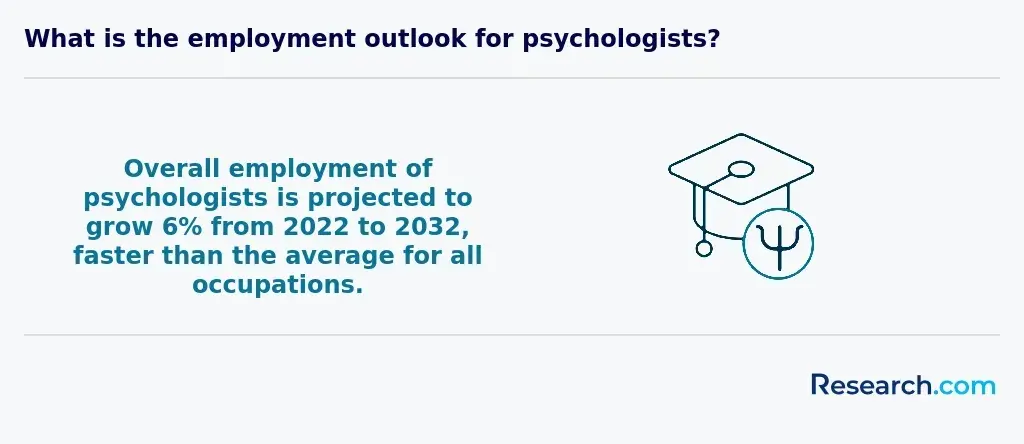
| Growth outlook | Demand is expected to grow at a slower pace than the average across all occupations. | Applicants should avoid assuming automatic job placement and should build a strong practicum and internship record. |
Where school psychologists work in Illinois
- Public school districts
- Charter schools and specialized schools
- Colleges and universities
- Regional education offices and service centers
- Nonprofit or community-based organizations connected to youth mental health and education
Skills that can strengthen employability
- Psychoeducational assessment and report writing
- Special education eligibility knowledge
- Behavior intervention planning
- Trauma-informed practice
- Crisis response and threat assessment collaboration
- Culturally responsive consultation
- Comfort with telehealth or digital assessment tools when appropriate
Advanced education may support leadership, research, or specialized roles. If you are considering doctoral training while managing cost, Research.com’s guide to affordable online psychology doctoral programs can help you compare lower-cost options.
What are the challenges and rewards of being a school psychologist in Illinois?
School psychology can be meaningful work, but it is not a low-pressure role. Illinois school psychologists often balance assessment timelines, intervention planning, crisis concerns, consultation with teachers, family communication, and legal documentation requirements. The role can be especially demanding in districts with high student needs or limited mental health staff.
The Illinois State Board of Education reports that many school psychologists manage upwards of 60 students at a time. Heavy caseloads can contribute to burnout when professionals do not have enough administrative support, consultation time, or staffing resources.
| Rewards | Challenges | How to manage the trade-off |
| Direct impact on student learning and mental health | High caseloads and urgent needs | Use structured prioritization and consult regularly with supervisors or peers. |
| Collaboration with educators and families | Conflicting expectations from parents, teachers, and administrators | Document decisions clearly and anchor recommendations in student needs and legal standards. |
| Variety in daily work | Frequent shifting between assessment, meetings, interventions, and crisis response | Build systems for scheduling, templates, and follow-up tasks. |
| Opportunities for leadership | Emotional weight of student trauma, anxiety, disability, or safety concerns | Protect time for supervision, self-care, and professional consultation. |
Practical burnout-prevention strategies
- Set boundaries around documentation time. Reports and records are part of ethical practice, not an afterthought.
- Use supervision intentionally. Bring difficult cases, ethical questions, and workload concerns to consultation instead of waiting for a crisis.
- Build repeatable systems. Templates, checklists, and recurring meeting structures reduce cognitive load.
- Maintain personal routines. Physical activity, sleep, and time away from work help sustain long-term practice.
- Stay connected professionally. Organizations such as the Illinois School Psychologists Association can provide training, advocacy, and peer support.
What alternative career paths are available with a school psychology degree in Illinois?
A school psychology degree is designed for school-based practice, but the skills can transfer to other education, mental health, research, and leadership roles. Whether those roles require additional licensure depends on the setting and services provided.
| Alternative path | How school psychology training applies | Additional considerations |
| Private practice | Assessment, consultation, and child-focused intervention skills can be useful for serving children and families. | Independent clinical services may require psychology, counseling, or another mental health license beyond school credentials. |
| Educational leadership | Experience with systems, student support, disability evaluation, and intervention planning can support district-level roles. | Leadership positions may require administrative credentials or additional experience. |
| Higher education | Graduate-level school psychology knowledge can support teaching, research, supervision, or student support roles. | Doctoral training is often preferred or required for many faculty and research positions. |
| Nonprofit organizations | Program development, youth advocacy, mental health education, and community outreach align well with school psychology expertise. | Funding structures and job stability vary by organization. |
| Educational consulting | Assessment literacy, intervention design, and school systems knowledge can support consulting with families or districts. | Clearly define services and avoid practicing outside your license or credential scope. |
If you are still early in your academic planning and want a more accessible starting point before graduate school, compare options such as easier psychology bachelor’s programs while keeping in mind that a bachelor’s degree alone will not qualify you as a school psychologist.
What are the continuing education and professional development requirements for school psychologists in Illinois?
Licensure is not a one-time event. Illinois school psychologists must continue professional learning to keep their credential active and to stay current with changes in law, assessment, intervention research, crisis response, and culturally responsive practice.
For the Professional Educator License, renewal is commonly described on a five-year cycle. Guidance in this area references both at least 60 professional development hours every five years and 120 PDHs during each five-year renewal period. Because the correct number can depend on license type, endorsement, and current ISBE policy, professionals should verify their renewal requirement in ELIS before the renewal deadline.
| Credential or renewal item | Requirement described | Best practice |
| Illinois PEL renewal | The PEL must be renewed every five years. | Check your ELIS account early in the cycle, not during the final renewal month. |
| Professional development hours | Guidance references at least 60 professional development hours every five years and also 120 PDHs during each five-year renewal period. | Confirm the current requirement with ISBE and keep more documentation than you think you need. |
| Approved providers | PDHs should come from approved providers such as universities, educational service centers, or professional organizations. | Save certificates, agendas, provider details, dates, and content descriptions. |
| NCSP credential | Nationally Certified School Psychologists must complete 75 hours of continuing professional development every three years. | Coordinate NCSP CPD activities with Illinois renewal requirements when possible. |
High-value professional development topics
- Trauma-informed school practices
- Suicide prevention and crisis response
- Threat assessment and school safety collaboration
- Culturally responsive assessment
- Evidence-based academic and behavioral interventions
- Equity in special education evaluation
- Technology-supported service delivery and telehealth where appropriate
Students who want Illinois-specific preparation can begin by comparing psychology colleges in Illinois and asking each program how it supports licensure, internship placement, and professional development planning.
What are the legal and ethical considerations for school psychologists in Illinois?
School psychologists work at the intersection of education law, disability rights, mental health ethics, family communication, and student safety. In Illinois, the role requires careful attention to confidentiality, informed consent, legally defensible assessment, mandated reporting, and professional boundaries.
| Responsibility | What it involves | Why it matters |
| Assessment and intervention | Conducting evaluations and recommending supports consistent with the Individuals with Disabilities Education Act and the Illinois School Code. | Assessment errors can affect eligibility decisions, services, and student rights. |
| Mandated reporting | Reporting suspected abuse or neglect under the Illinois Abused and Neglected Child Reporting Act. | Failure to report can endanger students and create legal risk. |
| Confidentiality | Protecting student records under FERPA and school district policies. | Student information should only be shared with appropriate consent or legal authorization. |
| Informed consent | Obtaining parent or guardian consent when required before assessment or sharing certain information. | Consent protects families, students, and practitioners. |
| Documentation | Keeping accurate records of assessments, interventions, meetings, and recommendations. | Clear records support continuity of care and legal defensibility. |
Common ethical pressure points
- Dual relationships: Working in a school community can blur personal and professional boundaries.
- Administrative pressure: Psychologists may be asked to support decisions that do not fully align with student needs or ethical practice.
- Limited resources: Staff shortages and service gaps can make equitable support difficult.
- Confidentiality conflicts: Families, teachers, and administrators may all want information, but not all information can be shared freely.
- Cultural bias in assessment: Evaluation decisions must account for language, disability, race, socioeconomic status, and educational opportunity.
Legal problems are less likely when school psychologists document thoroughly, consult when uncertain, communicate clearly with families, and provide staff training on ethical responsibilities and student support procedures.
What are the benefits of pursuing dual licensure in school psychology and counseling in Illinois?
Dual licensure can make sense for professionals who want both school-based assessment expertise and broader counseling skills. School psychology prepares practitioners for educational evaluation, consultation, intervention planning, and special education collaboration. Counseling credentials can add deeper preparation in therapeutic relationships, treatment planning, and services outside traditional school psychologist duties.
This path is most useful if you want flexibility across schools, community agencies, college settings, or private practice environments. It can also support leadership on multidisciplinary mental health teams. However, dual licensure requires extra coursework, supervision, fees, and renewal obligations, so it is not automatically the best choice for every candidate.
If you are considering a counseling pathway in addition to school psychology, compare the requirements in Research.com’s guide on how to become a therapist in Illinois.
What financial aid and scholarships are available for school psychology students in Illinois?
Graduate training in school psychology can be expensive, especially when internships limit full-time employment. Illinois students should compare total program cost, internship funding, assistantships, scholarships, loan options, and whether the program helps students qualify for state or federal aid.
| Funding option | How it may help | What to verify |
| FAFSA | Completing the Free Application for Federal Student Aid can open access to federal loans, grants, and work-study options. | Deadlines, dependency status, graduate aid eligibility, and school participation. |
| Illinois Monetary Award Program | Illinois residents may qualify for state-specific support through the MAP program. | Eligibility rules, award availability, and whether graduate study is covered in your situation. |
| Illinois School Psychologists Association scholarships | ISPA scholarships are designed for students pursuing school psychology in Illinois. | Membership requirements, application deadlines, and required materials. |
| Golden Apple Foundation scholarships | The foundation primarily focuses on teacher education but may support related fields, including school psychology. | Whether your program and career plan qualify. |
| Loan forgiveness | Illinois offers loan forgiveness options for school psychologists who work in underserved areas. | Service commitments, qualifying schools, loan types, and forgiveness amounts. |
| Internship grants | Illinois Board of Higher Education funding may help cover costs connected to internship placements. | Availability, eligibility, and whether your placement qualifies. |
The average cost of a school psychology degree in Illinois can range from $20,000 to $50,000, depending on the institution and program length. Tuition is only one part of the real cost. Students should also budget for fees, testing, background checks, commuting to placements, textbooks, lost wages during internship, and licensure application expenses.
How to reduce the cost of becoming a school psychologist
- Ask whether the program offers graduate assistantships or tuition waivers.
- Prioritize programs with strong placement relationships in districts that offer paid internships.
- Compare in-state public options against private programs using total cost, not sticker tuition alone.
- Submit the FAFSA early each year.
- Ask about scholarships reserved for school psychology students.
- Review loan forgiveness rules before choosing an internship or first job.
Students comparing flexible psychology options outside Illinois may also want to review online psychology degrees in Florida, while remembering that any program must be checked against Illinois licensure expectations if you plan to practice in Illinois.

Can cross-disciplinary training in marriage and family therapy enhance my practice as a school psychologist in Illinois?
Marriage and family therapy training can strengthen a school psychologist’s understanding of family systems, communication patterns, conflict, trauma, and home-school dynamics. This can be especially useful when student concerns are tied to family stress, caregiver relationships, grief, divorce, or household instability.
The credential is not a substitute for school psychology licensure, and school psychologists should not provide services beyond their authorized scope. Still, additional training can improve consultation with families and collaboration with community providers. If you are considering this direction, review the marriage and family therapist education requirements in Illinois before committing to another graduate pathway.
What distinguishes school psychology from child psychology in career focus and practice?
School psychology focuses on helping students succeed in educational settings. The work often includes psychoeducational assessment, special education evaluation, behavioral intervention, crisis response, teacher consultation, and schoolwide mental health support.
Child psychology is broader and may focus on emotional, developmental, behavioral, or clinical concerns across settings such as clinics, hospitals, research centers, community agencies, or private practice. If your main interest is clinical diagnosis and therapy outside the school system, compare the path to becoming a child psychologist before choosing a school psychology program.
Should I pursue special education certification in Illinois?
Special education certification can complement school psychology if you want a deeper understanding of instructional planning, disability categories, individualized education programs, and classroom accommodations. It may be helpful for professionals who want to collaborate more effectively with special education teachers or move into interdisciplinary support roles.
However, special education certification is designed for teaching and instructional roles, while school psychology focuses more heavily on assessment, consultation, intervention planning, and student mental health within school systems. If you are weighing both options, review the pathway for special education certification in Illinois.
What are the professional organizations and resources for school psychologists in Illinois?
Professional organizations help Illinois school psychologists stay current, find mentors, understand policy changes, and access continuing education. They are especially valuable for graduate students, interns, and early-career professionals who are learning how to navigate licensure and district practice.
| Organization or resource | How it helps | Best use |
| Illinois School Psychologists Association | Provides advocacy, networking, professional development, resources, and mentoring opportunities for Illinois practitioners. | Use ISPA for state-specific updates, peer connections, and Illinois-focused training. |
| National Association of School Psychologists | Offers national standards, practice resources, professional development, and information about the NCSP credential. | Use NASP to understand national expectations and evidence-based practice guidance. |
| University training programs | Provide practicum placements, internship support, faculty advising, and licensure guidance. | Ask programs how they prepare students for Illinois endorsement requirements. |
| Educational service centers | May offer professional development and regional training for school personnel. | Use them to meet PDH requirements and learn regional practice expectations. |
Questions to ask before joining or relying on a professional resource
- Does the organization provide Illinois-specific licensure updates?
- Are PDHs or CPD hours accepted for your renewal requirement?
- Are there mentor programs for interns or early-career psychologists?
- Does the organization offer legal, ethical, or legislative guidance?
- Are trainings practical enough for school-based assessment and intervention work?
If you are exploring graduate preparation in other regions, psychology schools in Arizona can provide a useful comparison, but always verify whether out-of-state training will transfer to Illinois licensure.
How can speech-language pathology insights complement my school psychology practice in Illinois?
Speech-language pathology knowledge can help school psychologists better understand how communication, language development, reading, behavior, and social-emotional functioning interact. This matters because language delays can sometimes appear as attention problems, behavior concerns, learning disabilities, or social difficulties.
School psychologists and speech-language pathologists often collaborate on evaluations and intervention teams. Understanding SLP perspectives can improve referral questions, interpretation of assessment results, and intervention planning. If you want to explore the related credential, review Illinois SLP license requirements.
How do recent updates to psychology licensure requirements in Illinois impact practice?
Licensure updates affect how professionals plan education, supervision, testing, and renewal. Even when school psychologists practice under education credentials, broader psychology licensure changes can matter for professionals considering private practice, doctoral training, clinical roles, or multi-credential career paths.
Staying current with psychology licensure requirements in Illinois helps practitioners avoid compliance problems and make informed decisions about expanding their scope of practice.
What distinguishes school psychology from school counseling in Illinois?
School psychologists and school counselors both support students, but their daily responsibilities and training emphasis differ. School psychologists are more assessment- and intervention-focused, especially around learning, behavior, disability evaluation, and school mental health systems. School counselors usually focus more on academic planning, career guidance, social-emotional support, course selection, and student development programs.
| Role | Main focus | Common responsibilities |
| School psychologist | Assessment, intervention, consultation, special education support, and mental health services in schools. | Psychoeducational testing, behavior plans, crisis response, eligibility meetings, teacher consultation. |
| School counselor | Academic, career, and social-emotional development. | Course planning, college and career readiness, classroom guidance, short-term support, referrals. |
If your interests are more aligned with counseling programs, academic advising, and student development, compare the requirements to be a school counselor in Illinois.
What other careers require similar licensing and certifications?
Students interested in school psychology often compare other licensed mental health and education careers. These roles may serve similar populations but require different degrees, supervised hours, exams, and scopes of practice.
Marriage and Family Therapists, for example, work with individuals, couples, and families on mental health and relationship concerns. The MFT licensing requirements in Illinois include a master’s degree in marriage and family therapy or a related field, supervised clinical hours, and the Association of Marital and Family Therapy Regulatory Boards exam.
Careers to compare before committing to school psychology
- School counselor
- Licensed professional counselor
- Marriage and family therapist
- Child psychologist
- Special education teacher
- Speech-language pathologist
- Behavior analyst
Can pursuing behavior analysis certification complement my school psychology practice in Illinois?
Behavior analysis training can be valuable for school psychologists who frequently support students with behavioral challenges, autism-related needs, functional behavior assessments, or intensive intervention plans. It can strengthen your ability to design measurable interventions and collaborate with teachers, families, and behavior specialists.
Certification is most useful when your role involves significant behavior consultation or when you want to expand into specialized behavioral services. It also adds responsibilities, supervision requirements, and renewal obligations. To evaluate the path, review how to become a BCBA in Illinois.
How does diversity and inclusion influence practice and outcomes in school psychology?
Diversity and inclusion are central to ethical school psychology practice in Illinois. Students differ by race, language, disability, immigration background, socioeconomic status, family structure, religion, gender identity, and access to educational opportunity. These factors can shape assessment results, behavior interpretations, family communication, and intervention effectiveness.
What culturally responsive practice looks like
- Using assessment tools carefully with multilingual learners and students from underrepresented groups.
- Considering educational opportunity, trauma, poverty, and disability before drawing conclusions from test scores.
- Partnering with interpreters and cultural liaisons when needed.
- Designing interventions that respect family context and student identity.
- Reviewing school discipline and special education referral patterns for inequity.
- Continuing professional development in cultural competence and ethical assessment.
Practitioners interested in broader child-focused roles can also explore child psychology careers to compare how diversity-centered practice appears across settings.
What are the trends and innovations in school psychology in Illinois?
Illinois school psychology is changing as schools respond to student mental health needs, safety concerns, technology adoption, and demands for more equitable services. The core role still includes assessment and intervention, but many districts now expect school psychologists to contribute to prevention, crisis planning, consultation, and schoolwide systems.
| Trend | What is happening | Why it matters |
| Mental health integration | Schools are placing more attention on mental health supports, including educator training such as the Illinois Mental Health First Aid program. | School psychologists may spend more time on prevention, consultation, and early intervention. |
| Threat assessment | In 2019, Illinois enacted legislation requiring school districts to establish threat assessment teams. | School psychologists may collaborate on safety planning and crisis prevention. |
| Technology use | Digital tools, telehealth services, and technology-supported assessment or intervention are becoming more common. | Practitioners need to understand both the benefits and ethical limits of technology. |
| Restorative practices | Some schools use restorative justice approaches to repair harm and strengthen school climate. | School psychologists can help align discipline, behavior support, and social-emotional learning. |
| Equity-focused practice | Programs and professional development increasingly emphasize culturally responsive assessment and inclusive intervention. | Better practice can reduce bias and improve student outcomes. |
How AI and technology may affect school psychology
Technology can help with scheduling, data organization, progress monitoring, teleconsultation, and access to resources. However, school psychologists should be cautious about using AI or automated tools for sensitive decisions. Evaluation, diagnosis, eligibility recommendations, and risk-related decisions require professional judgment, legal compliance, and ethical accountability.
Practical ways to prepare for the future of the field
- Build strong assessment fundamentals before relying on digital tools.
- Learn how your district handles telehealth, records, privacy, and consent.
- Seek training in threat assessment, crisis response, and trauma-informed practice.
- Develop skills in data-based decision-making and progress monitoring.
- Stay connected to ISPA and NASP for policy and practice updates.
How can career mentoring boost my practice and leadership in school psychology?
Mentoring can shorten the learning curve for Illinois school psychologists. A good mentor can help you interpret district expectations, prepare for licensure renewal, manage caseload stress, strengthen report writing, navigate ethical conflicts, and decide whether to pursue advanced credentials.
Mentoring is especially useful during internship, the first full-time job, transitions into leadership, or decisions about adding counseling, behavior analysis, or private-practice credentials. If counseling is one possible expansion route, compare the fastest way to become a counselor in Illinois before adding another credential plan.
Common mistakes to avoid when becoming a school psychologist in Illinois
| Mistake | Why it creates problems | Better approach |
| Choosing a program without checking Illinois licensure alignment | A psychology degree may be legitimate but still fail to meet school psychologist endorsement requirements. | Ask the program for written confirmation that it prepares graduates for Illinois school psychologist licensure. |
| Focusing only on tuition | Fees, internship costs, commuting, testing, and lost wages can change the real price of a program. | Compare total cost and available funding. |
| Assuming online or out-of-state programs automatically qualify | Licensure rules are state-specific. | Confirm requirements with ISBE before enrolling. |
| Waiting to document field hours | Missing or incomplete supervision records can delay licensure. | Track hours, activities, and supervisor approvals throughout practicum and internship. |
| Registering for an exam without verification | Exam requirements may be described differently across sources. | Check the current requirement in ELIS or with ISBE. |
| Assuming salary or job placement is guaranteed | Hiring varies by district, region, budget, and qualifications. | Research local postings, network during internship, and build specialized skills. |
| Ignoring continuing education until renewal year | Last-minute PDH completion can be stressful and may limit training quality. | Create a professional development plan at the start of each renewal cycle. |
Questions to ask schools and graduate programs before enrolling
- Is the program state-approved for Illinois school psychologist licensure?
- Does the curriculum include at least 60 graduate semester hours if required for my pathway?
- What degree is awarded: master’s, Ed.S., doctoral, or another credential?
- What practicum and internship placements are available in Illinois districts?
- How many students secure paid internships?
- Which exams do graduates currently take for Illinois licensure?
- What is the program’s process for supporting ELIS documentation?
- Are courses available online, on campus, or in hybrid formats?
- What are the total tuition, fees, and field placement costs?
- Does the program offer assistantships, scholarships, or loan forgiveness guidance?
- How does the program train students in culturally responsive assessment?
- What support is available for students who want dual licensure or doctoral study later?
Here's what graduates have to say about becoming school psychologists in Illinois
"Working as a school psychologist in Illinois has allowed me to make a real difference in students' lives. I remember helping a young girl overcome her anxiety about school. Seeing her smile and thrive was incredibly rewarding. The support from my colleagues and the community has been invaluable, making this journey fulfilling." — Jeremy
"Illinois offers a diverse range of schools, and I love the challenge of adapting my approach to meet different needs. I’ve worked with students from various backgrounds, and each experience has enriched my understanding of mental health in education. It’s a privilege to be part of their growth." — Greta
"The demand for school psychologists in Illinois is high, which means job security and opportunities for advancement. I was able to secure a position right after graduation, and I feel proud to contribute to a system that prioritizes student well-being. It’s a career that truly matters." — Stuart
Related Articles for Nearby States
- 2027 How to Become a School Psychologist in Indiana - School Psychology Programs and Certifications Online & Campus
- 2027 How to Become a School Psychologist in Wisconsin - School Psychology Programs and Certifications Online & Campus
- 2027 How to Become a School Psychologist in Iowa - School Psychology Programs and Certifications Online & Campus
- 2027 How to Become a School Psychologist in Missouri - School Psychology Programs and Certifications Online & Campus
- 2027 How to Become a School Psychologist in Kentucky - School Psychology Programs and Certifications Online & Campus
- 2027 How to Become a School Psychologist in Michigan - School Psychology Programs and Certifications Online & Campus
- 2027 How to Become a School Psychologist in Minnesota - School Psychology Programs and Certifications Online & Campus
- 2027 How to Become a School Psychologist in Ohio - School Psychology Programs and Certifications Online & Campus
- 2027 How to Become a School Psychologist in Tennessee - School Psychology Programs and Certifications Online & Campus
- 2027 How to Become a School Psychologist in Arkansas - School Psychology Programs and Certifications Online & Campus
References:
- school-psychologists.com (11 Dec 2020). School Psychology Requirements in Illinois: Become a School Psychologist in IL. School-Psychologists.com
- apps.illinoisworknet.com (n.d.). School Psychologists - Employment & Outlook. Illinois workNet
- psychology.org (15 Aug 2024). Alternative Careers for Psychology Majors. Psychology.org
- ilispa.org (12 Aug 2017). Resources from Illinois School Psychology Training Programs. Illinois School Psychologists Association
- nasponline.org (15 Jun 2020). 2019 State Trends in Enacted Legislation. National Association of School Psychologists
Key Insights
- Illinois school psychologists generally need graduate-level school psychology preparation, supervised fieldwork, required testing, and a Professional Educator License pathway through ISBE.
- The safest first step is choosing a state-approved, licensure-aligned graduate program; a general psychology degree may not meet Illinois school psychologist endorsement requirements.
- Fieldwork is a major part of preparation. Guidance references practicum and internship requirements including 250 hours, 600 hours, 1,200 hours, and school-based hour minimums, so students should verify current expectations before placement.
- Illinois uses ELIS for licensure applications. Missing transcripts, wrong exam assumptions, or incomplete internship records can delay approval.
- The job market varies by region. Illinois has approximately 5,766 school psychologists, with 2,360 positions in Cook County and 96 in the Charleston-Effingham-Centralia region.
- Cost planning matters. A school psychology degree in Illinois can range from $20,000 to $50,000, and students should compare scholarships, assistantships, paid internships, loan forgiveness, and total program cost.
- Continuing education requirements must be tracked carefully because guidance references both 60 professional development hours and 120 PDHs in five-year renewal contexts.
- Related credentials in counseling, behavior analysis, marriage and family therapy, special education, or speech-language pathology can expand expertise, but each adds separate requirements and should match a clear career goal.
- The best candidates prepare for more than testing and licensure: they build strong assessment skills, ethical judgment, cultural responsiveness, documentation habits, and resilience for demanding school environments.
Other Things You Should Know about Becoming a School Psychologist in Illinois
Illinois public schools require the Professional Educator License with a school psychologist endorsement from the Illinois State Board of Education. Applicants must complete an approved specialist-level program, pass the required Illinois exams, and submit verification through the Educator Licensure Information System, or ELIS.
To become a school psychologist in Illinois in 2027, candidates must earn a specialist-level degree in school psychology, complete a state-approved preparation program, and pass the National School Psychology Examination. Additionally, obtaining a Professional Educator License (PEL) with a school psychologist endorsement is required.





