2027 How to Start a Private Practice in Psychology: Tips, Best Practices & Challenges

Co-Founder and Chief Data Scientist
Starting a private psychology practice is not just a career move; it is a clinical, financial, legal, and business decision. For licensed psychologists who want more control over their schedule, client population, treatment approach, and income model, private practice can be appealing. It can also be demanding, especially for practitioners who have spent years building clinical expertise but have limited experience with billing, taxes, marketing, insurance, technology, and compliance.
This guide explains how to start a private practice in psychology, from education and licensure to business planning, startup funding, client acquisition, pricing, ethics, and patient data security. It is written for psychology students planning their long-term path, early-career psychologists considering self-employment, and licensed professionals preparing to leave agency, hospital, school, or group-practice roles. If you are still completing the requirements to become a psychologist, this guide can also help you understand what you are working toward and what business skills you may need before opening your own office.
Private practice remains a major path within psychology and related jobs and careers in counseling. According to the U.S. Bureau of Labor Statistics, 22.6% of psychologists are self-employed. That independence can raise earning potential, but it also shifts responsibility for operations, insurance, taxes, referrals, scheduling, documentation, marketing, and legal compliance onto the psychologist or practice owner.
How to Start a Private Practice in Psychology Table of Contents
- What does private practice mean for psychologists?
- Is starting a psychology private practice worth it?
- Steps to become a private practice psychologist
- Common challenges private practice psychologists face
- Education paths that can lead to private practice
- Private practice psychologist salary and income factors
- Insurance and financial safeguards for practice owners
- Tax issues for private psychology practices
- Continuing education and professional development
- Startup funding and capital planning
- Ethical issues in private practice psychology
- Patient data security and privacy protection
- Technology tools for running a psychology practice
- Marketing strategies for attracting clients
- Whether ongoing education is worth the investment
- Pricing strategies for profitability and access
Quick Answer: How do you start a private practice in psychology?
To start a private practice in psychology, you generally need to complete the required psychology education, earn a doctorate when required for psychologist licensure, complete supervised clinical training, pass state licensing exams, obtain the required business permits, secure insurance, set up compliant clinical records and billing systems, choose a business structure, create a business plan, and build referral and marketing channels. In the U.S. and Canada, licensure commonly includes passing the Examination for Professional Practice in Psychology (EPPP) with a score of at least 500, though state and provincial rules can add requirements such as jurisprudence exams, oral exams, supervised hours, and background checks.
The clinical path can take more than a decade. Students may complete a bachelor’s degree in four years, a master’s degree in two to three years, a doctorate in four to seven years, and licensing or postdoctoral training in one to two years (Cherry, 2025). Opening the practice is only the next phase: long-term success depends on clinical competence, financial planning, ethical documentation, insurance readiness, referrals, technology, and sustainable workload management.
What is a private practice in psychology?
A private psychology practice is a self-directed clinical business in which licensed psychologists provide services directly to clients, families, organizations, or referral partners rather than working solely as employees of hospitals, schools, government agencies, or healthcare systems. Services may include assessment, diagnosis, psychotherapy, psychological testing, consultation, and counseling, depending on the psychologist’s license, training, and state scope-of-practice rules. Understanding the difference between psychologist and psychiatrist is important because psychologists typically do not provide the same medical services as psychiatrists.
Private practices may operate as solo offices, group practices, telehealth-based businesses, specialty clinics, or hybrid models. Some psychologists focus on individual therapy, while others specialize in couples work, child and adolescent care, forensic assessment, neuropsychological testing, trauma treatment, behavioral health, or organizational consulting. Private practice can be part of the broader market for highest paying psychology jobs, but income depends heavily on payer mix, local demand, hours worked, fee structure, expenses, and business management.
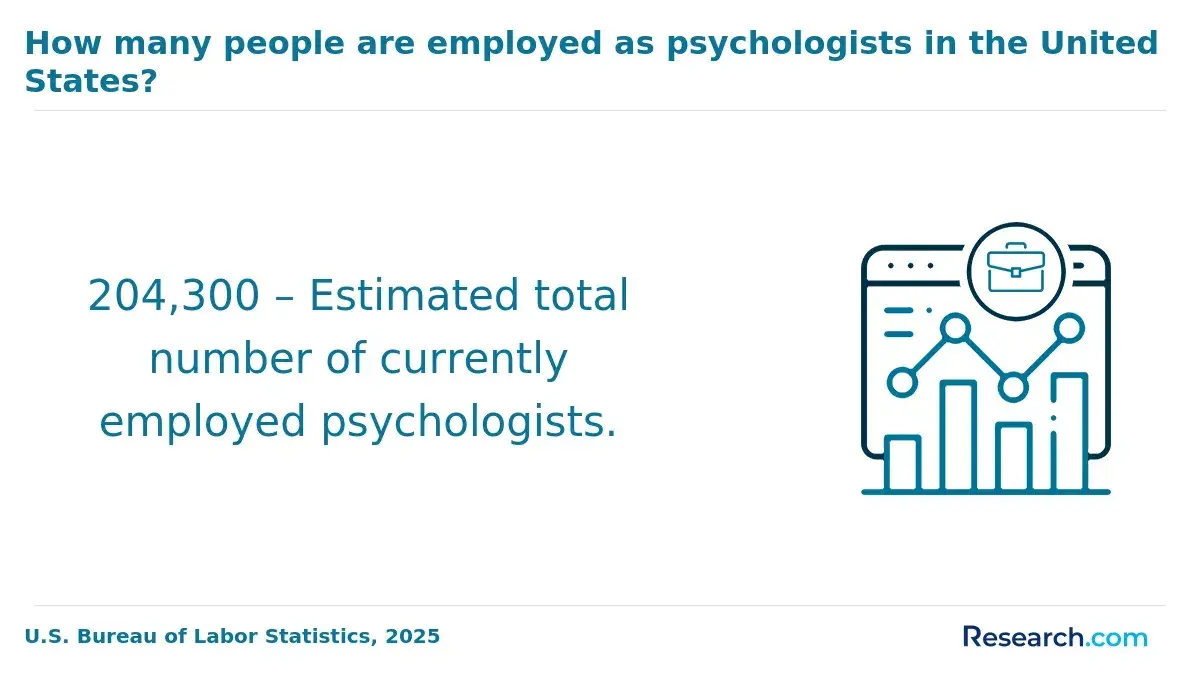
Workforce estimates vary by source. The BLS reports about 204,300 psychologists, with 22.6% self-employed. Zippia reports a different figure, showing 43% in private practice. The difference reflects how sources define self-employment, psychology roles, and practice settings. The practical takeaway is clear: private practice is a common path, but it is not automatic, and it requires preparation beyond clinical training.
Many new graduates first ask what jobs can you get with a behavioral science degree, then build experience through supervised roles, clinics, agencies, hospitals, or group practices before becoming independent. That staged approach is often safer than opening a practice immediately, especially for clinicians who still need stronger diagnostic judgment, referral networks, billing knowledge, or administrative systems.
Why start a private practice in psychology?
Private practice can be a strong fit for psychologists who want clinical independence and are willing to manage the risks of self-employment. A bachelor’s degree introduces the field, but knowing what is bachelor degree also clarifies its limits: undergraduate study alone does not prepare someone to practice independently as a licensed psychologist. Private practice usually becomes realistic after graduate education, supervised training, licensure, and practical experience.
| Reason psychologists choose private practice | What it can offer | What to consider before choosing it |
| Autonomy | You can shape your schedule, clinical niche, treatment model, office policies, and caseload. | Autonomy also means you are responsible for policies, boundaries, documentation, billing, and compliance. |
| Specialization | You can build a practice around your strongest competencies, such as assessment, trauma, couples therapy, family work, or adolescent care. | Your niche must match local or telehealth demand, referral sources, and licensing rules. |
| Income control | You can set fees, decide whether to accept insurance, manage overhead, and expand services. | Higher revenue does not always mean higher take-home pay because rent, software, insurance, taxes, staff, and unpaid administrative time reduce net income. |
| Client access | You may create more flexible availability than some institutional settings allow. | APA data show that 53% of U.S. psychologists did not have new patient openings and 17% had a waitlist of four months or longer, so demand can be high but workload must be managed carefully. |
| Entrepreneurial growth | Practice ownership can develop leadership, marketing, financial, and operational skills. | Some clinicians dislike business administration and may prefer employment or a group practice model. |
The advantages are real, but private practice is not automatically better than employment. Institutional roles may provide steadier pay, employer-sponsored benefits, administrative support, supervision, paid time off, and easier access to multidisciplinary teams. Private practice may provide more freedom and income upside, but it can also involve irregular referrals, delayed insurance reimbursements, higher personal responsibility, and limited backup during crises.
How to Become a Private Psychologist
The path to private practice usually includes academic preparation, supervised clinical training, licensure, field experience, and business setup. The steps below describe a common route, but exact requirements vary by state, specialization, and license type.
| Stage | Typical purpose | Time or cost information stated in the source article |
| Bachelor’s degree | Build foundational knowledge in psychology, research, human development, statistics, and behavior. | Typically four years. |
| Master’s degree | Develop graduate-level knowledge and begin specialization. | Usually two years; some paths take two to three years. |
| Internship or supervised experience | Apply clinical knowledge under licensed supervision and meet training requirements. | Duration depends on institution and licensing requirements. |
| Doctorate | Meet the educational requirement for psychologist licensure in many jurisdictions. | Commonly four to seven years. |
| Licensure | Demonstrate competency through required exams and state board approval. | Often one to two years when combined with postdoctoral training and licensing steps. |
| Practice launch | Create the business, secure insurance, select tools, market services, and begin serving clients. | Timeline varies by funding, location, payer model, and readiness. |
1. Earn a bachelor’s degree in psychology or a related field
An undergraduate psychology program gives students a base in psychological theory, research methods, human behavior, cognition, development, social psychology, abnormal psychology, and statistics. Students who plan to become licensed psychologists should compare programs carefully, including accreditation, research opportunities, faculty expertise, practicum exposure, advising quality, and graduate school placement.
Cost is a major consideration. For a bachelor’s degree in psychology, the average annual tuition fee for in-state students is $10,262, while out-of-state students pay $30,752 (College Tuition Compare, 2025). Students should also consider fees, books, transportation, housing, online course costs, and whether credits will transfer if they change schools.
A bachelor’s degree alone does not qualify a person to practice independently as a psychologist. It can, however, support entry-level behavioral health roles, research assistant positions, case management work, and graduate school preparation.
2. Earn a master’s degree in psychology
A master’s degree allows students to deepen their training and often choose a concentration. Common areas include clinical psychology, counseling psychology, industrial psychology, neuropsychology, forensic psychology, social psychology, developmental psychology, and sports psychology. Students interested in addiction treatment may also pursue a degree in substance abuse counseling, depending on their career goals and licensing plans.
For master’s programs in psychology, in-state students pay an average of $11,381 annually in tuition and fees, while out-of-state students pay $24,645 (College Tuition Compare, 2025). A master’s degree normally takes two years, though part-time enrollment, clinical placements, thesis requirements, and online formats can change the timeline.
Before enrolling, students should confirm whether the program aligns with their intended license, doctorate admission goals, supervised experience requirements, and state regulations. Not every psychology master’s program leads to the same professional outcome.
3. Complete supervised training or an internship
Supervised experience helps future psychologists translate classroom learning into clinical practice. This stage may involve assessment, intake, treatment planning, documentation, crisis protocols, case consultation, ethical decision-making, and professional communication under the oversight of a licensed psychologist.
The labor market context is favorable but still competitive. The BLS projects 6% job growth for psychologists from 2024 to 2034, faster than the average for all U.S. occupations, with a projected 12,900 openings each year. These openings can support early-career experience in clinics, hospitals, schools, government settings, research centers, and group practices.
The length and structure of supervised experience depend on the graduate program, internship model, state licensing board, and specialty area. Students should track hours carefully and keep documentation in the format required by their licensing jurisdiction.
4. Earn a doctorate: Ph.D. or PsyD
In many jurisdictions, independent psychologist licensure requires a doctoral degree. Students commonly choose between a Doctor of Philosophy in Psychology (Ph.D.) and a Doctor of Psychology (PsyD). A Ph.D. often emphasizes research, teaching, and scientific training, while a PsyD is generally more practice-focused and oriented toward clinical service delivery. Both can lead to practice, but program design, internship placement, faculty expertise, and licensing alignment matter more than the label alone.
Students who intend to own a clinical practice often compare PsyD programs because of their applied focus. Researching the easiest PsyD programs to get into may help applicants understand admissions accessibility, but admission difficulty should not be the only factor. Accreditation, internship outcomes, licensure pass rates, faculty supervision, practicum quality, debt load, and professional reputation are critical.
Doctoral study is typically the longest and most expensive part of the pathway. It normally takes around four to seven years, and the source article states that a PsyD degree can amount to $115,000 each year. To help manage the cost, 28.8% of doctorate learners use teaching assistantships. Assistantships may also help students strengthen communication, teaching, mentoring, and conceptual skills.
5. Obtain licensure
Licensure is the legal gateway to independent practice. After completing graduate training, supervised hours, and required internships, graduates can apply through their state psychology board or equivalent licensing authority. Students who complete graduate online psychology programs should be especially careful to verify that their program meets the requirements of the state where they plan to practice.
In the U.S. and Canada, psychologist licensure commonly requires the Examination for Professional Practice in Psychology, known as the EPPP. A score of at least 500 is required to become a licensed psychologist (Psychologist-License.com, nd). Some states also require jurisprudence exams, oral examinations, additional supervised hours, and background checks.
Licensure is not a one-time administrative step. Psychologists must maintain licensure through renewal, continuing education, ethical practice, and compliance with state rules. If you plan to provide telehealth across state lines, confirm whether you need additional authorization in the client’s location.
6. Gain experience before opening your own practice
A newly licensed psychologist may be legally qualified to open a practice, but immediate ownership is not always the best choice. Experience in hospitals, clinics, schools, government agencies, community mental health centers, or established private practices can help new psychologists build clinical confidence, understand documentation standards, learn referral patterns, and see how successful practices operate.
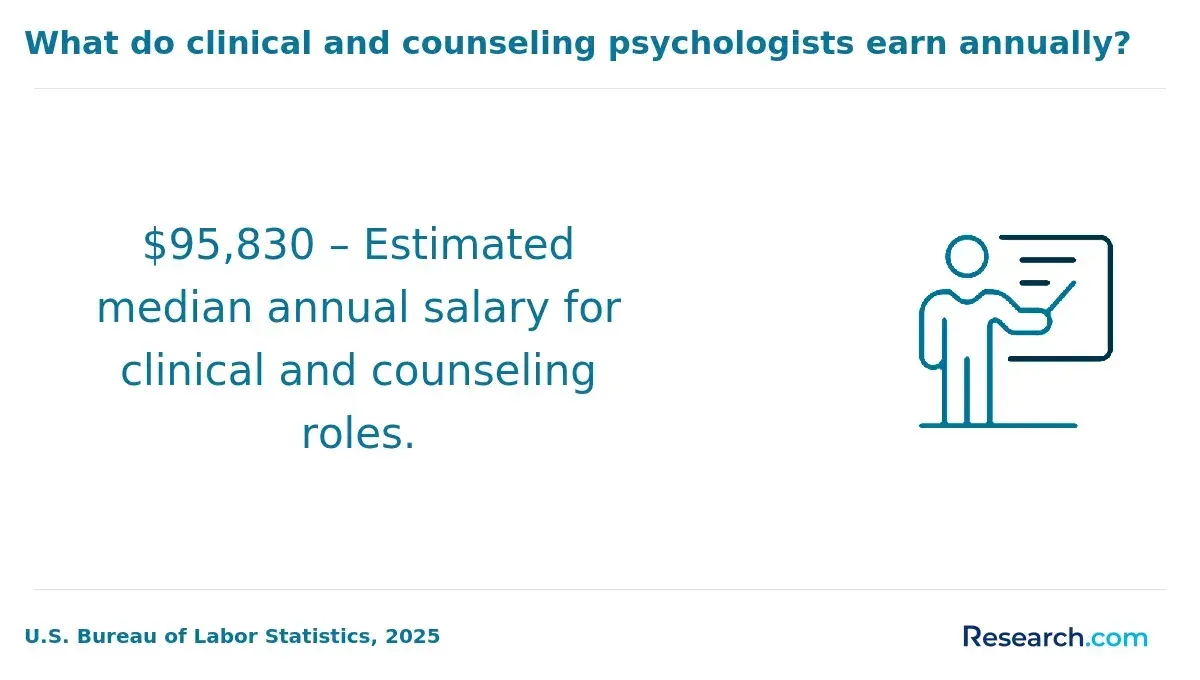
According to the U.S. Bureau of Labor Statistics, the median pay of clinical and counseling psychologists is $95,830 (BLS, 2025). The top 10% earn more than $170,150 per year, while the bottom 10% earn about $50,470 annually. Zippia (2025) lists the average pay of private practice psychologists at $97,257, or around $39 per hour.
Experience can also open higher-level roles. A senior psychologist makes $156,373 each year, while a research psychologist earns $103,911. These roles may provide financial stability and professional depth before taking on the risk of business ownership.
Clinical development also matters for outcomes. A 2020 paper titled “Effectiveness of positive psychology interventions: a systematic review and meta-analysis," published by The Journal of Positive Psychology, states that “programs were more effective if they contained multiple positive psychological interventions (PPIs), were of longer duration, contained more sessions, and were offered face-to-face in an individual or group format rather than as a self-help intervention. Second, where programs contained a single PPI, the range of dependent variables on which they had positive effects, and the size of these effects varied depending on the type of PPI (Carr et al., 2020)."
7. Build a business plan before signing a lease or accepting clients
A private practice is both a clinical service and a business. With over 40% of psychologists self-employed, many practitioners benefit from writing a business plan before launching. Some also add business training through an MBA or short business courses; for clinicians comparing cost-conscious options, cheap MBA programs may be worth reviewing if business ownership is a long-term goal.
A business plan is often described as a 20 to 40 page document, though Shopify notes that an ideal version may be about 15 to 20 pages so readers can understand it efficiently. The goal is not to create a decorative document; it is to make decisions about the practice before money is spent.
| Business plan section | Questions it should answer |
| Executive summary | What type of practice are you building, who will it serve, and what are the first major goals? |
| Company description | What services will you provide, what values guide the practice, and what makes the practice clinically distinct? |
| Market and competitor analysis | Who needs these services in your area, who else serves them, and where are the gaps? |
| Services offered | Will you provide therapy, testing, consultation, telehealth, group services, or specialty programs? |
| Marketing and referral strategy | How will clients find you, and how will referral partners learn when to send clients to your practice? |
| Operations | How will scheduling, documentation, billing, consent forms, cancellations, and emergencies be handled? |
| Financial projections | What are startup costs, monthly expenses, expected revenue, payer mix, taxes, and cash reserves? |
| Appendix | What supporting documents are needed, such as licenses, leases, insurance policies, resumes, compliance forms, and marketing research? |
8. Establish the practice and begin marketing responsibly
After planning, the psychologist must complete business formation and operational setup. This may include choosing a business structure, registering the business, securing local and state permits, setting up accounting, obtaining insurance, creating consent and privacy documents, choosing a records system, and applying for a National Provider Identifier (NPI). The NPI is a 10-digit code used in healthcare transactions.
Location and accessibility matter. A physical office should be reachable, private, professional, and appropriate for the client population. A telehealth practice needs secure platforms, clear emergency procedures, state-specific licensure compliance, and a reliable intake process. Hybrid practices must coordinate both.
Marketing should be ethical, accurate, and specific. A practice website, online directory profile, professional biography, search-optimized service pages, referral relationships, and community networking can help clients understand what the practice offers. Social media platforms such as Facebook, Twitter, and Instagram can support visibility, but psychologists must avoid giving individualized clinical advice in public channels or making claims that exceed the evidence.
What are the potential challenges of private practice psychologists?
Private practice can create freedom, but it also exposes weaknesses quickly. A clinician who is excellent in session may still struggle if the practice has no clear billing workflow, no emergency procedures, no referral system, weak documentation, poor marketing, or unrealistic caseload expectations.
Business management
Psychology training does not always teach entrepreneurship. Practice owners must understand scheduling, staff supervision, client intake, billing, collections, insurance reimbursement, documentation systems, contracts, taxes, lease terms, and marketing. Without strong systems, the practice may lose money even when the clinician is busy.
Clinical work versus administrative workload
Client care is only part of the job. Practice owners also answer inquiries, review forms, coordinate billing, update records, manage technology, respond to referral partners, and maintain compliance. APA figures show that 32% of psychologists are experiencing burnout, and the rate is higher among practitioners who have worked within 10 years of getting their PsyD (51%). A sustainable caseload and delegation plan are essential.
Legal and ethical exposure
Independent practice increases responsibility for confidentiality, informed consent, scope of practice, mandated reporting, boundaries, recordkeeping, telehealth rules, fee transparency, and risk management. Psychologists may need consultation from attorneys, accountants, compliance specialists, or senior clinicians when questions arise.
Financial uncertainty
Income may fluctuate because of cancellations, seasonal demand, insurance delays, unpaid balances, referral gaps, and overhead. Rent, software, malpractice insurance, taxes, professional memberships, continuing education, and marketing expenses continue even when client volume drops.
Client capacity and boundaries
A full schedule can increase revenue, but overloading the calendar can damage care quality and clinician health. APA data show that 32% of psychologists were unable to meet the needs of all patients. New practices should define realistic weekly capacity, emergency coverage, response times, vacation procedures, and referral options before demand becomes unmanageable.
| Common mistake | Why it creates risk | Better approach |
| Opening immediately after licensure without a support network | Clinical, legal, and business problems may be harder to manage alone. | Build consultation relationships, referral partners, and mentorship before launching. |
| Choosing software only by price | Low-cost tools may lack privacy, billing, documentation, or telehealth features needed for practice. | Compare security, workflow, support, compliance features, and long-term costs. |
| Ignoring payer strategy | Insurance, private pay, sliding scale, and out-of-network models produce different cash-flow patterns. | Model revenue and reimbursement timelines before committing to a fee structure. |
| Assuming marketing is optional | Strong clinical skills do not automatically create referrals. | Create a clear niche, referral plan, professional website, and ethical outreach strategy. |
| Setting no limits on availability | Constant access can lead to burnout and boundary confusion. | Define communication windows, crisis procedures, cancellation rules, and response expectations. |

What educational paths can support a fulfilling psychology career?
The best educational route depends on the career goal. A student who wants to become a licensed psychologist, a counselor, a behavioral health specialist, a researcher, or a business owner may need different degrees, supervised experiences, and credentials. Because private practice often requires many years of education, students should compare cost and licensing alignment early.
For affordability, some students review cheap online psychology degrees as a way to reduce debt while completing foundational coursework. Affordability matters, but it should never replace accreditation, transferability, faculty support, and graduate-school preparation. A low-cost program that does not support the next credential can become expensive later.
Students planning for private practice should also look for programs that offer practicum exposure, research training, ethics coursework, multicultural competence, assessment experience, and, when available, electives in healthcare administration, entrepreneurship, grant writing, or financial management. Business coursework cannot replace clinical training, but it can make the transition to ownership less intimidating.
How much can psychologists earn in private practice?
Private practice psychologist income varies widely. Location, specialty, fee model, payer mix, caseload, telehealth availability, overhead, years of experience, and referral strength all affect earnings. Comparing PhD in psychology salary information with other psychology salary paths can help students understand how degree choices may influence career options, but no degree guarantees a specific income.
According to the U.S. Bureau of Labor Statistics, the median pay of clinical psychologists is $95,830, with the top 10% earning more than $170,150 annually. Some private psychologists report earning over $200,000, especially when they charge higher hourly rates, manage strong caseloads, reduce overhead, or use remote consultations. However, gross revenue is not the same as take-home pay. Practice owners must account for taxes, insurance, unpaid administrative hours, office costs, software, marketing, continuing education, retirement contributions, and time off.
| Income factor | How it affects earnings |
| Client volume | More billable sessions can increase revenue, but only if workload remains sustainable. |
| Fee model | Private pay, insurance panels, out-of-network billing, and sliding scale fees create different revenue patterns. |
| Specialization | High-demand or assessment-heavy niches may support different pricing than general therapy. |
| Overhead | Rent, staff, software, billing support, insurance, and marketing reduce net income. |
| Experience and reputation | Referral networks, advanced training, and demonstrated expertise can influence demand. |
What insurance coverages and financial safeguards are essential for private practice psychologists?
Insurance protects both the clinician and the business. Professional liability insurance is central because it helps address malpractice-related claims. General liability and property coverage can protect against office-related incidents and losses. Cyber liability coverage has become increasingly relevant for psychologists who use electronic health records, digital intake forms, email, payment systems, or telehealth platforms.
Financial safeguards should also include an emergency fund, written payment policies, clear cancellation rules, accounting support, retirement planning, and regular review of insurance coverage. Practitioners exploring different career routes, including how many years to become a therapist, should understand that risk management responsibilities differ by license, setting, and scope of practice.
What are the tax implications of running a private psychology practice?
A private psychology practice creates tax responsibilities that employed psychologists may not have handled directly. The specific tax impact depends on business structure, state rules, income, expenses, and whether the practice has employees or contractors. Psychologists should work with a qualified tax professional rather than relying on informal advice.
- Business structure affects taxation: Sole proprietorships, LLCs, and S-corps can be taxed differently. The right structure depends on liability, income, administrative burden, and professional regulations.
- Self-employment tax must be planned for: Private practitioners generally must pay the employer and employee portions of Social Security and Medicare contributions because an employer is not withholding them.
- Business expenses may be deductible: Rent, utilities, professional development, malpractice insurance, software, billing tools, office supplies, and other ordinary business costs may reduce taxable income when properly documented.
- Estimated taxes are usually required: Instead of waiting until the end of the year, self-employed psychologists often need quarterly estimated tax payments to reduce penalty risk.
- Retirement planning can provide tax advantages: Self-employed practitioners may use options such as SEP IRAs or Solo 401(k)s, depending on eligibility and financial goals.
How can ongoing professional development enhance your private practice?
Continuing education helps private practice psychologists maintain licensure, update clinical methods, improve ethical decision-making, and respond to changing client needs. It can also strengthen a practice niche. Training in trauma-informed care, assessment, couples therapy, telepsychology, multicultural competence, supervision, or healthcare law may improve both service quality and professional credibility.
Some practitioners consider additional graduate education, including one year psychology masters programs, when they want structured academic growth. Before enrolling, compare tuition, accreditation, schedule, relevance to licensure, and whether the credential will actually improve your practice model. Not every additional degree produces a financial return, so the investment should match a clear clinical or business goal.
What do clients look for in private psychologists?
Clients usually choose a psychologist based on trust, fit, accessibility, specialization, and perceived competence. A polished website alone is not enough. Clients want to know whether the psychologist understands their concern, is legally qualified, offers a clear process, and is available in a way that works for them.
Specialization and clinical fit
Many clients search for help by issue, such as anxiety, trauma, grief, relationship problems, ADHD assessment, adolescent concerns, or family conflict. A practice that clearly explains its specialties can help clients self-select and reduce poor-fit inquiries.
Skills and treatment approach
Clients and referral sources often look for practical indicators of competence. Zippia (2025) identifies common skills appearing on public resumes of licensed private practice psychologists, including patient management, primary care, private practice, family therapy sessions, adolescent care, patient care, and couples therapy. These skills should be presented honestly and only when they reflect real training and experience.
Credentials and licensure
Clients want evidence that the psychologist is qualified. Practices should make licensure, degree information, training background, and professional memberships easy to verify. Credentials can be displayed on websites, office materials, directory profiles, and intake documents without exaggerating results or promising outcomes.
Availability and communication
Potential clients often value fast, clear communication. Online scheduling, secure messaging, phone consultation options, and a simple intake process can reduce friction. At the same time, practices need boundaries around response times, emergencies, and after-hours contact.
How can I secure funding and manage startup capital for my private practice?
Startup capital should cover more than the first month of rent. New practice owners may need funds for office deposits, furniture, testing materials, software, billing setup, professional liability insurance, website development, marketing, legal review, accounting, licensing fees, continuing education, and several months of operating expenses while referrals grow.
Funding options may include personal savings, small business loans, lines of credit, grants, partnerships, or staged growth through part-time private practice while still employed. A detailed cash-flow forecast can help determine how many sessions are needed each week to break even and how long the practice can operate if referrals develop slowly.
Students and early-career professionals can also reduce long-term pressure by controlling education costs where possible. Comparing programs such as the best accelerated psychology degree online may help some learners shorten timelines or manage expenses, but program speed should be weighed against accreditation, licensure compatibility, and learning quality.
What ethical considerations are specific to private practice psychology?
Private practitioners do not have the same built-in oversight as many institutional employees, so ethical systems must be deliberate. Written policies, consultation, documentation, and regular training help protect both clients and clinicians.
- Confidentiality and data security: Client records must be protected in physical and digital formats. HIPAA requirements, secure storage, encrypted systems, and controlled access are central to privacy protection.
- Dual relationships: In small communities or specialized niches, overlapping relationships can occur. Psychologists need clear boundaries to avoid conflicts of interest and impaired judgment.
- Informed consent: Clients should understand services, fees, confidentiality limits, treatment risks, cancellation policies, telehealth procedures, and how emergencies are handled.
- Cultural competence: Ethical care requires sensitivity to culture, identity, language, disability, socioeconomic context, and lived experience. Ongoing learning supports equitable practice.
- Billing transparency: Fees, insurance practices, payment timing, late fees, and out-of-network procedures should be explained before services begin.
- Telehealth boundaries: Virtual care requires secure platforms, state-specific licensure awareness, emergency planning, and clarity around client location during sessions.
Advanced study, such as a masters in psychology online, can strengthen understanding of ethics and clinical practice, but practitioners should still rely on state board rules, professional ethics codes, supervision, and legal consultation when needed.
How can private practice psychologists ensure robust patient data security?
Patient data security requires more than password protection. Private practice psychologists should use secure electronic health record systems, encrypted communication tools, strong access controls, multi-factor authentication, regular backups, and staff training. Written policies should address record retention, device use, email communication, telehealth sessions, breach response, and client access to records.
HIPAA compliance is especially important for practices that bill insurance, use electronic health systems, or provide telehealth. Psychologists should evaluate vendors carefully and confirm whether business associate agreements are needed. Training in related fields, including an online masters degree in mental health counseling, may deepen awareness of clinical operations, but privacy compliance still requires practice-specific procedures and professional guidance.
What technology tools can help streamline the operations of a private psychology practice?
The right technology can reduce administrative time, improve documentation, support telehealth, and make the client experience smoother. The wrong tools can create privacy risk, workflow friction, or unnecessary expense. Choose systems based on compliance, usability, support, integration, and total cost.
| Tool type | What it helps with | What to check before buying |
| Electronic Health Records systems | Clinical notes, client profiles, treatment history, forms, and documentation. | Security features, HIPAA support, backups, access controls, and ease of note completion. |
| Practice management software | Scheduling, billing, claims, reminders, invoices, and client communication. | Insurance billing functions, payment tools, cancellation workflows, and reporting. |
| Telehealth platforms | Secure video sessions for clients who cannot attend in person. | Privacy standards, reliability, client ease of use, and integration with scheduling. |
| Client management systems | Follow-ups, secure messaging, questionnaires, and progress tracking. | Consent process, record storage, messaging boundaries, and data export options. |
| Online payment solutions | Remote payments, saved cards, invoices, and receipts. | Fees, security, integration, refund policies, and client convenience. |
| Marketing tools | Website updates, search visibility, email communication, and social media planning. | Ethical use, privacy boundaries, accessibility, analytics, and time required to maintain them. |
Psychologists who want stronger preparation in behavioral analysis, client behavior, and applied practice may also explore a behavioral psychology degree online, depending on their background and goals.
What marketing strategies can boost client acquisition in private practice psychology?
Effective marketing for psychologists is not about hype. It is about helping the right clients and referral sources understand what you do, who you help, how to contact you, and what to expect. Ethical marketing should be accurate, evidence-aware, and aligned with professional rules.
- Define a clear niche: A focused practice is easier to explain than a general promise to help everyone.
- Build a useful website: Service pages should explain concerns treated, populations served, fees or insurance information, telehealth availability, and intake steps.
- Use search intent: Write pages that answer what clients actually search for, such as symptoms, assessment options, therapy types, and appointment availability.
- Create referral relationships: Physicians, schools, attorneys, psychiatrists, community organizations, and other therapists may refer when they understand your specialty.
- Track results: Ask how clients found you, review website analytics, and adjust marketing based on real inquiry patterns.
- Keep claims ethical: Avoid guarantees, inflated credentials, or language suggesting that therapy outcomes are certain.
Additional credentials can support credibility when they match the practice niche. For cost-sensitive graduate study, some clinicians compare the cheapest online master's degree in psychology, but the credential should be relevant to the services offered and compatible with licensing goals.
Should private practice psychologists invest in ongoing education?
Yes, but the investment should be strategic. Private practice psychologists need continuing education for licensure and professional growth, but they should choose training that improves care quality, reduces risk, or strengthens a clear specialty. Random courses can become expensive without improving outcomes or revenue.
Advanced education may be worthwhile for psychologists pursuing research-informed specialization, supervision roles, assessment expertise, or academic credibility. For those considering doctoral-level study, online accredited doctoral programs in psychology may be part of the research process. Always verify accreditation, licensure alignment, residency requirements, internship expectations, and state board acceptance before enrolling.
What pricing strategies can optimize profitability in private practice psychology?
Pricing must balance access, market conditions, cost recovery, and sustainability. Setting fees too low can create burnout and threaten the practice’s survival. Setting fees without considering the local market, client population, and payer strategy can limit access and referrals. A thoughtful pricing model starts with the actual cost of running the practice.
| Pricing option | When it may make sense | Trade-off |
| Private pay | You want simpler billing and more control over session fees. | Some clients may not be able to afford care without insurance reimbursement. |
| Insurance-based practice | You want broader access and predictable referral channels from insurance directories. | Reimbursement rules, documentation requirements, denials, and payment delays can add administrative burden. |
| Sliding scale | You want to reserve some openings for clients with lower ability to pay. | You need clear limits so discounted work does not destabilize the business. |
| Tiered services | You offer different service types, such as therapy, testing, consultation, or groups. | Each service requires appropriate training, consent, documentation, and pricing logic. |
| Premium specialty fees | You have advanced expertise in a high-demand niche. | Fees must be justified by competence and market fit, not by credentials alone. |
Advanced credentials, including options such as a cheapest online doctorate degree in psychology, may strengthen a professional profile, but pricing should still reflect competence, service value, market realities, and ethical obligations.
Is it a good idea to start a private practice in psychology?
Starting a private practice can be a good idea for psychologists who are clinically prepared, licensed, financially organized, and willing to operate a business. It is less suitable for professionals who want only clinical work and do not want responsibility for referrals, billing, taxes, compliance, marketing, records, technology, and risk management.
The educational and professional pathway can take more than a decade. Students may work in supervised roles after a bachelor’s or master’s degree, continue through graduate study, gain experience in healthcare facilities or mental health clinics, and then transition gradually into practice ownership. This staged route can reduce risk while building clinical judgment and professional networks.
Some private practices can earn well over $150,000 annually, and some professionals find the income potential attractive. Still, education costs matter. Students asking How much is a bachelor’s degree should also think about the total cost of the full psychology pathway, including graduate school, doctoral training, licensing, supervision, and business startup expenses.
Questions to ask before opening a psychology private practice
- Am I fully licensed for the services I plan to provide?
- Have I confirmed state rules for telehealth, documentation, supervision, and client location?
- Do I have a clear niche and referral strategy?
- Can I cover several months of expenses if referrals grow slowly?
- Do I understand taxes, insurance, billing, and recordkeeping well enough to operate safely?
- What technology will I use for scheduling, documentation, telehealth, billing, payments, and secure communication?
- How many clients can I see weekly without compromising care quality or personal health?
- Who will I consult when I face ethical, legal, or clinical uncertainty?
Key Insights
- Private practice is both clinical work and business ownership: Strong therapy skills are necessary, but they are not enough. Practice owners also need systems for billing, records, marketing, taxes, insurance, technology, and compliance.
- The pathway is long: Becoming a private practice psychologist commonly involves a bachelor’s degree, master’s-level training, a doctorate, supervised experience, licensing exams, and ongoing education, often spanning more than a decade.
- Income potential varies: BLS reports median pay of $95,830 for clinical and counseling psychologists, while the top 10% earn more than $170,150. Some private psychologists earn over $200,000, but overhead and taxes reduce take-home income.
- Demand does not eliminate burnout risk: APA data show limited new-patient availability among many psychologists and notable burnout rates. A sustainable caseload is a business necessity, not a luxury.
- Licensure and accreditation checks are essential: Online and affordable programs can be useful, but students must verify that programs meet graduate admission, internship, and state licensing requirements.
- Ethics and data security need formal systems: Informed consent, confidentiality, HIPAA-aware tools, telehealth rules, billing transparency, and consultation procedures should be in place before clients are seen.
- The safest launch is planned, not rushed: A business plan, financial forecast, referral strategy, insurance coverage, technology stack, and legal/tax support can make the difference between a sustainable practice and an expensive false start.
References:
- American Psychological Association. (2024, December). Barriers to Care in a Changing Practice Environment: 2024 Practitioner Pulse Survey. American Psychological Association
- Carr, A., Cullen, K., Keeney, C., Canning, C., Mooney, O., Chinseallaigh, E., & O’Dowd, A. (2020, September 10). Effectiveness of positive psychology interventions: a systematic review and meta-analysis. The Journal of Positive Psychology, 16 (6), 749-769. The Journal of Positive Psychology
- Cherry, K. (2025, November 28). How Long Does It Take to Become a Psychologist? Retrieved February 2026, from Verywell Mind
- College Tuition Compare (n.d.). Psychology Program 2025 Tuition. Retrieved February 2026, from College Tuition Compare
- Psychologist-License.com. (n.d.). Psychologist Licensing Process. Retrieved February 2026, from Psychologist-License.com
- Psychology.org. (2024). What Can You Do With A Psychology Degree? Psychology.org
- U.S. Bureau of Labor Statistics. (2025). Psychologists. BLS
- The Business Research Company. (2026). Psychologist Global Market Report 2026. Business Research Company
- Zippia. (2025, January 8). Psychologist demographics and statistics in the US. Retrieved February 2026, from Zippia
- Zippia. (2025, January 8). Psychologist, private practice demographics and statistics in the US. Retrieved February 2026, from Zippia
Other Things You Should Know About Starting a Private Practice in Psychology
The main steps to start a private practice in psychology include earning a bachelor's degree, completing a master's degree, gaining supervised experience through an internship, obtaining a doctorate degree (Ph.D. or PsyD), securing licensure by passing state-required exams, gaining professional experience, and developing a comprehensive business plan. Once these steps are completed, you can establish and market your practice.
To become a private practice psychologist, you need a bachelor’s degree in psychology or a related field, a master’s degree in psychology with a specialization of your choice, a doctorate degree (Ph.D. or PsyD), and licensure to practice psychology, which involves passing state-administered exams and completing required supervised experience.
Running a private practice in psychology in 2027 presents challenges such as navigating insurance reimbursements, maintaining client confidentiality with evolving technology, and managing business expenses. Additionally, balancing administrative tasks with clinical work can be demanding, requiring strong organizational and time management skills.
Earnings for private practice psychologists can vary widely. On average, they earn around $81,000 to $95,000 per year, but those with established practices and higher caseloads can earn significantly more, with some reporting annual incomes exceeding $200,000.
Essential skills include disciplined thinking, thorough listening, clear communication, proficiency in information technology, business management, client management, and staying updated with legal and ethical standards. These skills help in providing effective psychological services and running a successful business.
Private practice psychologists attract clients by showcasing their specializations, displaying their credentials and licensure, ensuring availability for consultations, maintaining an active online presence through social media and a professional website, and leveraging marketing strategies detailed in their business plans.
Starting a private practice in psychology offers benefits such as autonomy in decision-making, flexible work hours, and the ability to tailor services to specific client groups. However, it requires careful financial planning and understanding of business operations to ensure long-term viability.