2027 How to Become a Neuropsychologist

Co-Founder and Chief Data Scientist
Becoming a neuropsychologist is a long, highly specialized route for people who want to connect brain science with patient care. Neuropsychologists evaluate how injury, illness, development, aging, and neurological conditions affect memory, attention, language, reasoning, mood, and behavior. The career can be meaningful and financially strong, but it also requires years of graduate education, supervised clinical training, licensure, and often board certification.
This guide explains how to become a neuropsychologist for 2027, including the degree path, licensing steps, timeline, salary expectations, work settings, career trade-offs, and ways to choose the right education route. It is written for students comparing psychology and neuroscience careers, working adults considering graduate school, and future clinicians who want a realistic view of what the profession requires.
Quick Answer: How Do You Become a Neuropsychologist for 2027?
To become a neuropsychologist, you generally need a bachelor’s degree in psychology, neuroscience, biology, or a related field; a doctoral degree in psychology, usually a PhD or PsyD with neuropsychology training; a clinical internship; a postdoctoral fellowship in neuropsychology; state licensure as a psychologist; and, for many competitive roles, voluntary board certification through the American Board of Clinical Neuropsychology. The process commonly takes 10 to 12 years after high school.
- Education path: Bachelor’s degree, doctoral degree, internship, and postdoctoral fellowship.
- Typical timeline: 10 to 12 years, depending on program length, clinical training, and licensing requirements.
- Licensure: Most candidates must pass the Examination for Professional Practice in Psychology (EPPP) and meet state board requirements.
- Job outlook: Neuropsychology is projected to grow by 5% from 2023 to 2033, with 3,800 annual job openings.
- Salary: The average neuropsychologist salary in 2025 is $122,928, with reported salaries ranging from $40,000 to $178,500.
- Best fit: This career is strongest for people who enjoy assessment, clinical problem-solving, neuroscience, research-informed practice, and long-term professional training.
Key Things You Should Know About How to Become a Neuropsychologist for 2027
- Neuropsychology usually requires a bachelor’s degree followed by a PhD or PsyD in psychology with neuropsychology-focused coursework, practicum experience, internship training, and a postdoctoral fellowship.
- The career is not an entry-level psychology job. Independent clinical practice requires licensure, and competitive clinical neuropsychology roles often expect advanced supervised experience and specialized credentials.
- Demand is expected to rise by 5% from 2023 to 2033, with 3,800 annual openings, reflecting continued need for professionals who can evaluate cognitive and behavioral effects of brain-related conditions.
- The average salary for neuropsychologists in 2025 is $122,928, but earnings can vary substantially from $40,000 to $178,500 based on location, experience, employer type, specialization, and credentials.
- Women make up a large share of the field. As of 2021, 73.4% of neuropsychologists in the US were female, and 52% of those pursuing the field were women.
- Neuropsychologists work in hospitals, rehabilitation centers, academic medical centers, research organizations, government agencies, specialty hospitals, private practice, and universities.
- Steps to becoming a neuropsychologist for 2027
- What neuropsychologists do in practice
- Main types of neuropsychologists
- Education requirements for neuropsychology careers
- Licensing requirements for neuropsychologists
- How long it takes to become a neuropsychologist
- Job outlook for neuropsychologists
- Neuropsychologist salary expectations
- How to advance in neuropsychology
- How interdisciplinary expertise can strengthen practice
- Challenges neuropsychologists should expect
- Whether an online doctorate can work for neuropsychology
- Where neuropsychologists work
- Whether neuropsychology is worth it
- How CACREP-accredited counseling programs may support related skills
- How affordable online degrees can affect your education plan
- How behavior analysis certification can complement practice
- Credibility of accredited online psychology degrees
- Whether an accelerated psychology degree can shorten early preparation
- Emerging trends in neuropsychology
- How online counseling programs can complement neuropsychology careers
- How substance abuse counseling knowledge can support complex cases
What are the steps to becoming a neuropsychologist for 2027?
The route to neuropsychology is sequential: build a science-focused undergraduate foundation, complete doctoral training in psychology, gain supervised clinical experience, meet state licensure rules, and continue developing specialized competence. Skipping steps is rarely possible because clinical neuropsychologists work with high-stakes assessments that may influence diagnosis, treatment planning, rehabilitation, school accommodations, disability decisions, or legal matters.
- Earn a relevant bachelor’s degree. Start with psychology, neuroscience, biology, health sciences, or a related major. Prioritize courses in abnormal psychology, statistics, research methods, cognitive psychology, biology, anatomy, neuroscience, and developmental psychology. Research assistant experience, hospital volunteering, and psychology lab work can strengthen future graduate applications.
- Prepare for doctoral admission. Competitive applicants usually show strong grades, research exposure, clinical or volunteer experience, clear faculty fit, and a focused reason for pursuing neuropsychology. If you need more flexibility while building academic credentials, compare options such as part-time doctoral study options, but confirm that any program provides the supervised clinical training required for licensure.
- Complete a PhD or PsyD in psychology. A PhD is typically more research-heavy, while a PsyD usually emphasizes clinical practice. Either route can lead to neuropsychology if it includes appropriate psychology training, assessment experience, supervised practicum placements, and neuropsychology-relevant coursework.
- Complete internship training. Doctoral students complete a clinical internship before graduation. For future neuropsychologists, internship sites with assessment, rehabilitation, neurology, pediatric, geriatric, forensic, or medical psychology experience are especially valuable.
- Finish a postdoctoral fellowship in neuropsychology. A two-year postdoctoral fellowship is a common route for gaining advanced supervised experience in neuropsychological assessment, consultation, report writing, and treatment planning.
- Apply for state licensure. After meeting education and supervised experience requirements, candidates apply through their state psychology board and typically pass the EPPP. Some states add jurisprudence, ethics, or state-law requirements.
- Consider board certification. Board certification through the American Board of Clinical Neuropsychology is voluntary, but it can strengthen credibility for hospitals, academic medical centers, expert consultation, and specialized clinical roles.
- Maintain continuing education. Neuropsychology changes as research, testing methods, ethical standards, and clinical technologies evolve. Continuing education is required for license renewal and is essential for competent practice.
| Stage | What you do | Why it matters |
| Bachelor’s degree | Study psychology, neuroscience, biology, statistics, and research methods | Builds the academic base needed for doctoral training |
| Doctoral degree | Complete a PhD or PsyD in psychology with neuropsychology-relevant preparation | Required for psychologist licensure and advanced clinical practice |
| Internship | Gain supervised clinical experience before doctoral graduation | Develops assessment, diagnosis, treatment planning, and professional judgment |
| Postdoctoral fellowship | Complete advanced supervised neuropsychology training | Builds specialization in clinical neuropsychology and improves competitiveness |
| Licensure and certification | Pass required exams, meet state rules, and consider board certification | Allows independent practice and signals advanced competence |
Neuropsychology sits at the intersection of brain science, behavioral health, and medical care. The American Psychological Association’s neuropsychology resources describe the field as focused on relationships between the brain and behavior, which is why the training path emphasizes both scientific knowledge and clinical judgment.
What do neuropsychologists do?
Neuropsychologists evaluate how brain functioning affects thinking, behavior, emotions, and daily functioning. Their work is often used when a patient, family, physician, school, attorney, or rehabilitation team needs a clearer picture of cognitive strengths and weaknesses.
In a typical clinical role, neuropsychologists may:
- Administer neuropsychological assessments. They use standardized tasks to evaluate memory, attention, processing speed, language, visual-spatial abilities, executive functioning, reasoning, academic skills, mood, and behavior.
- Interpret cognitive patterns. Test results are compared with medical history, symptoms, developmental background, education, and behavioral observations to understand what may be contributing to a patient’s difficulties.
- Support diagnosis and care planning. Neuropsychological findings can help clarify the effects of traumatic brain injury, stroke, epilepsy, Alzheimer’s disease, Parkinson’s disease, concussion, developmental disorders, or other neurological and psychiatric conditions.
- Collaborate with medical and educational teams. Neuropsychologists often work with neurologists, psychiatrists, primary care physicians, rehabilitation specialists, speech-language pathologists, occupational therapists, teachers, and social workers.
- Provide feedback and recommendations. After testing, they explain results to patients and families and recommend treatment, rehabilitation strategies, school accommodations, workplace supports, therapy referrals, or follow-up testing.
- Conduct research or teach. Some neuropsychologists work in universities, academic medical centers, or research institutes, where they study cognition, brain disorders, assessment methods, and rehabilitation approaches.
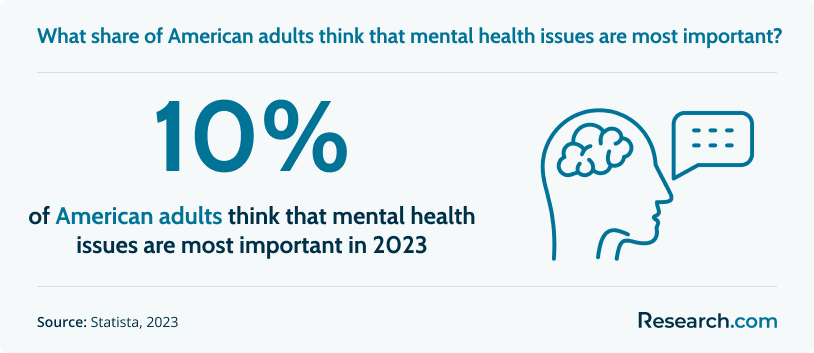
The profession is also shaped by broader mental health awareness. In 2023, 10% of American adults identified mental health issues as the most important concern. Neuropsychologists are not general therapists in every role, but their evaluations often help patients and care teams understand how neurological, emotional, and cognitive factors interact.
Gender representation is notable in this field. As of 2021, 73.4% of neuropsychologists in the US were female, and 52% of people pursuing the field were women. That representation reflects strong participation among women, although career access still depends on doctoral admission, supervised training opportunities, licensure, and employment conditions.
What are the different types of neuropsychologists?
Neuropsychologists are often grouped by whether their work is primarily clinical, research-focused, or specialized by population. The Cleveland Clinic’s overview of neuropsychologists explains that these professionals focus on how brain health affects cognition and behavior.
| Type | Primary focus | Common settings | Best fit for |
| Clinical neuropsychologist | Patient assessment, diagnosis support, treatment recommendations, rehabilitation planning | Hospitals, rehabilitation centers, private practice, specialty clinics | Students who want direct patient care and assessment-heavy clinical work |
| Cognitive neuropsychologist | Research on memory, attention, language, perception, decision-making, and brain-behavior relationships | Universities, laboratories, research institutions | Students who enjoy research design, data analysis, and theory development |
| Pediatric neuropsychologist | Children and adolescents with developmental, medical, learning, neurological, or injury-related concerns | Children’s hospitals, schools, private clinics, academic medical centers | Clinicians who want to work with families, schools, and developmental issues |
| Geriatric or adult neuropsychologist | Adults with stroke, dementia, traumatic brain injury, epilepsy, Parkinson’s disease, or age-related cognitive change | Hospitals, memory clinics, rehabilitation facilities, medical centers | Clinicians interested in aging, neurological disease, and rehabilitation |
| Forensic neuropsychologist | Assessment related to legal questions, disability, competency, injury claims, or litigation | Private practice, consulting roles, legal settings, correctional systems | Professionals comfortable with documentation, ethics, and court-related work |
Some neuropsychologists add complementary therapeutic training to broaden their work with patients who struggle to express cognitive or emotional changes verbally. For example, knowledge from graduate art therapy programs may be relevant for clinicians interested in creative, adjunctive approaches, although art therapy alone does not replace the doctoral and licensure requirements for neuropsychology.
What are the educational requirements for becoming a neuropsychologist?
Neuropsychology requires doctoral-level preparation because practitioners make complex judgments about cognition, behavior, diagnosis, function, and treatment recommendations. A bachelor’s degree may qualify you for support roles in research or behavioral health, but it is not enough for independent clinical neuropsychology practice.
- Bachelor’s degree: Choose psychology, neuroscience, biology, health science, or a related major. Add research methods, statistics, biology, anatomy, cognitive psychology, abnormal psychology, and developmental psychology when possible.
- Optional master’s degree: A master’s degree can help students strengthen their academic record, gain research experience, or clarify career goals before doctoral study. Some students compare flexible options such as affordable online master’s degrees in psychology, but a master’s degree is usually not the final credential for becoming a licensed neuropsychologist.
- Doctoral degree: Most future neuropsychologists complete a PhD or PsyD in psychology. Look for neuropsychology coursework, assessment training, practicum placements, internship outcomes, faculty expertise, research opportunities, and licensure preparation.
- Clinical internship: Internship is a major supervised training year that helps candidates demonstrate readiness for professional practice.
- Postdoctoral fellowship: A postdoctoral fellowship in neuropsychology provides advanced supervised experience and helps prepare candidates for specialized practice and possible board certification.
- Board certification: Certification from the American Board of Clinical Neuropsychology is not always legally required, but it may improve professional recognition in specialized clinical, hospital, academic, and consulting settings.
| Credential | Can it lead directly to licensed neuropsychologist practice? | How to use it strategically |
| Bachelor’s degree | No | Use it to build research experience, prerequisites, and graduate school readiness |
| Master’s degree | Usually no | Use it to strengthen preparation, explore psychology specialties, or improve doctoral competitiveness |
| PhD in psychology | Yes, if it meets licensure and clinical training requirements | Best for students who want research, academic, and clinical options |
| PsyD in psychology | Yes, if it meets licensure and clinical training requirements | Best for students focused primarily on clinical practice |
| Postdoctoral fellowship | Supports specialized practice | Essential for advanced neuropsychology competence and competitiveness |
In 2023, there were around 56,600 neuropsychologists employed in the US.
What are the licensing requirements to become a neuropsychologist?
Licensing rules are set by state psychology boards, so requirements are not identical everywhere. However, most candidates must complete an eligible doctoral psychology program, supervised clinical training, postdoctoral experience, an application process, and required exams before practicing independently.
Postdoctoral Training
- Supervised neuropsychology experience: After the doctoral degree, candidates commonly complete a two-year postdoctoral fellowship in neuropsychology. Strong doctoral programs can help students access supervised placements, so applicants should compare training outcomes when reviewing doctoral psychology program options.
Licensing Examination
- Examination for Professional Practice in Psychology (EPPP): The EPPP is administered by the Association of State and Provincial Psychology Boards and is a major requirement for psychologist licensure in many jurisdictions. It evaluates broad psychology knowledge, not only neuropsychology.
- Exam structure: The EPPP consists of 225 multiple-choice questions across areas such as biological bases of behavior, cognitive-affective bases of behavior, social and multicultural bases of behavior, lifespan development, assessment and diagnosis, treatment, ethics, and professional practice.
- Scoring: The EPPP is scored on a scale of 200 to 800, and the passing score is typically between 500 and 600 depending on the state.
- Preparation: Candidates often use structured review plans, practice tests, ethics review, and state board guidance. Because rules can change, always verify requirements directly with the licensing board where you plan to practice.
State-Specific Requirements
- Jurisprudence or ethics exam: Some states require an additional exam covering state laws, professional ethics, mandatory reporting, supervision rules, documentation, and scope of practice.
- Application documentation: Candidates usually submit transcripts, supervised experience records, exam scores, background information, and fees to the state board.
- Continuing education: Licensed neuropsychologists must complete continuing education for renewal. Requirements vary by state and may include ethics, law, assessment, cultural competence, clinical methods, or other approved topics.
A Note on Continuing Education Requirements
Continuing education is more than a renewal task. Neuropsychologists rely on current knowledge of assessment tools, legal standards, diagnostic updates, cultural considerations, technology, and treatment research. Common continuing education formats include workshops, webinars, conferences, seminars, journal-based learning, and professional association training offered by organizations such as the American Psychological Association and the American Academy of Clinical Neuropsychology.
How long does it take to become a neuropsychologist?
Becoming a licensed neuropsychologist usually takes 10 to 12 years. The timeline is long because candidates must complete graduate-level psychology education, supervised patient care, assessment training, and licensing steps before independent practice.
| Phase | Typical time | What happens during this phase |
| Bachelor’s degree | 4 years | Complete undergraduate coursework, research experience, and graduate school preparation |
| Doctoral program | 4 to 7 years | Complete coursework, research, practicum training, dissertation or doctoral project requirements, and internship preparation |
| Postdoctoral fellowship | 2 years | Gain advanced supervised neuropsychology experience |
| Licensure and certification steps | Varies | Complete applications, exams, state requirements, and optional board certification preparation |
Some students explore flexible doctoral options, including online doctoral programs in psychology. Flexibility can help with coursework access, but future neuropsychologists should be careful: licensure-oriented psychology training normally requires supervised clinical practice, internship experience, and postdoctoral training that cannot be replaced by online coursework alone.
What is the job outlook for neuropsychologists?
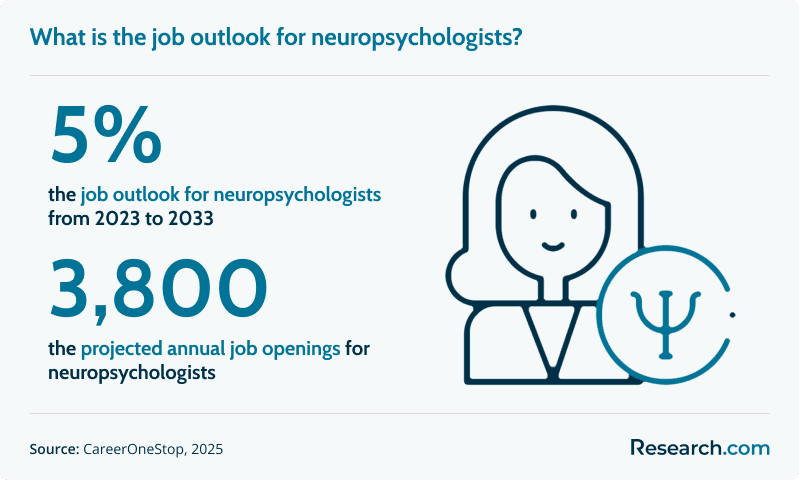
The projected job growth rate for neuropsychologists is 5% from 2023 to 2033, with 3,800 annual job openings expected. This reflects continued demand for clinicians and researchers who can assess cognition, brain injury, neurological disease, aging-related cognitive change, developmental concerns, and rehabilitation needs.
Several factors support demand: greater public attention to mental health, aging populations, increased recognition of concussion and traumatic brain injury, expanded neurological care, and the need for assessment-informed treatment planning. At the same time, neuropsychology remains a specialized field, so job availability can depend on region, fellowship training, specialty, licensure status, and willingness to work in medical, academic, or rehabilitation settings.
For students, the key lesson is not simply that the outlook is positive. It is that training choices matter. Internship quality, fellowship specialization, assessment competence, research experience, and professional network can influence how competitive you are for neuropsychology roles.
How much do neuropsychologists make?
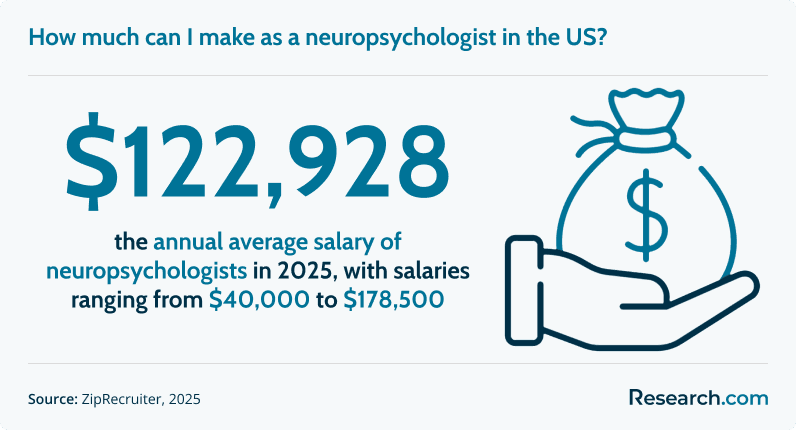
The average salary for a neuropsychologist in 2025 is $122,928. Reported salaries range from $40,000 to $178,500, which means earnings can differ widely depending on employer, state, experience, specialization, board certification, practice model, and patient population.
| Salary factor | How it can affect earnings |
| Experience level | Early-career clinicians may earn less than established specialists, supervisors, private practitioners, or academic medical center leaders |
| Work setting | Hospitals, research organizations, educational support services, government roles, and private practice can have different compensation structures |
| Specialization | Pediatric, forensic, geriatric, rehabilitation, and neurodegenerative disease expertise may affect demand and pay |
| Location | Regional cost of living, local healthcare systems, and employer demand can influence salaries |
| Credentials | Licensure is required for independent practice, while board certification may strengthen competitiveness for specialized roles |
In 2023, high-paying industries for psychologists included scientific research and development services at $131,220, educational support services at $123,260, and local government at $118,690. These figures do not guarantee individual earnings, but they show that compensation can be stronger in specialized research, education, and public-sector settings.
How can I advance my career in neuropsychology?
Career advancement in neuropsychology usually comes from deeper specialization, strong documentation skills, supervision experience, research contributions, and professional visibility. After licensure, neuropsychologists may move into senior clinician roles, hospital leadership, academic appointments, private practice ownership, forensic consulting, program development, or research leadership.
- Pursue board certification. Board certification can strengthen credibility in clinical, academic, and hospital settings.
- Develop a specialty population. Pediatric brain injury, dementia, epilepsy, concussion, stroke, forensic assessment, or rehabilitation can help define your practice niche.
- Publish or present research. Conference presentations, peer-reviewed publications, and collaborative projects can support academic and medical center advancement.
- Build interdisciplinary fluency. Understanding adjacent fields, including career paths in cognitive psychology, can improve research design and strengthen brain-behavior interpretation.
- Learn supervision and consultation skills. Senior neuropsychologists often train students, advise medical teams, and consult on complex cases.
How Can Interdisciplinary Expertise Enhance Neuropsychology Practice?
Neuropsychological cases rarely involve cognition alone. Family systems, stress, trauma, mood, school demands, work responsibilities, medical adherence, and social support can all affect functioning. Additional training in related helping professions can improve communication and treatment planning, provided it is used within the clinician’s scope of practice.
For example, coursework associated with online marriage and family therapy master’s programs may help clinicians understand family dynamics, caregiver stress, and relational factors that influence recovery or adjustment. This type of knowledge can complement neuropsychology, but it does not replace doctoral psychology training or licensure requirements.
What challenges do neuropsychologists face?
Neuropsychology can be rewarding, but students should understand the pressures before committing to the path. The profession involves long training, emotionally difficult cases, detailed documentation, changing assessment standards, and the need to explain complex results in ways patients and care teams can use.
| Challenge | Why it matters | How to prepare |
| Long education timeline | Training can take 10 to 12 years before independent practice | Plan finances early, seek funded programs when possible, and clarify career goals before doctoral enrollment |
| Competitive training placements | Neuropsychology-focused internships and fellowships can be selective | Build assessment, research, and supervised clinical experience throughout graduate school |
| Complex patient cases | Patients may have overlapping neurological, psychiatric, medical, and social concerns | Develop interdisciplinary consultation skills and strong ethical decision-making |
| Documentation burden | Reports must be accurate, useful, defensible, and often reviewed by multiple stakeholders | Practice clear report writing and evidence-based interpretation |
| Ongoing professional updates | Testing methods, technology, ethical standards, and clinical guidelines evolve | Commit to continuing education and professional association involvement |
If you are drawn to psychology but unsure about the training length, compare neuropsychology with other psychology career options before choosing a doctoral path.
Is an online doctorate in neuropsychology a viable option?
An online doctorate can be useful for some psychology students, but aspiring neuropsychologists must evaluate these programs carefully. The central question is not whether coursework is online; it is whether the program prepares graduates for licensure, supervised clinical training, internship placement, and neuropsychology-specific postdoctoral training.
When reviewing online PhD psychology programs, ask whether the program is designed for clinical licensure, whether it includes supervised practicum requirements, whether students qualify for internship placement, and whether graduates have successfully entered neuropsychology fellowships. A research-oriented online doctorate may support academic or nonclinical goals, but it may not qualify a graduate for clinical neuropsychology practice.
Where can I work as a neuropsychologist?
Neuropsychologists work wherever brain-behavior assessment is needed. Some roles are patient-facing, while others focus on research, teaching, consultation, program leadership, or expert evaluation.
- Hospitals and medical centers: Evaluate patients with stroke, traumatic brain injury, epilepsy, tumors, dementia, neurodevelopmental concerns, or complex medical histories.
- Rehabilitation centers: Support recovery planning after brain injury, neurological illness, or major medical events.
- Private practice: Provide assessments, consultation, therapy referrals, forensic evaluations, or specialty services depending on training and licensure.
- Research institutions: Study cognition, assessment methods, neurological conditions, interventions, and brain-behavior relationships.
- Universities and academic medical centers: Teach, supervise trainees, publish research, and provide specialized clinical services.
- Government agencies: Conduct evaluations, advise programs, or serve populations connected to public health, disability, corrections, veterans’ services, or local agencies.
- Specialty hospitals: Work in neurology, rehabilitation, trauma recovery, pediatric care, geriatric care, or other focused clinical environments.
Some professionals apply brain-behavior expertise outside traditional healthcare, including organizational consulting and business psychology. These paths may not be clinical neuropsychology roles, but they can draw on knowledge of cognition, decision-making, performance, and behavior.
In 2023, some of the highest-paying industries for psychologists included scientific research and development services ($131,220), educational support services ($123,260), and local government ($118,690).
Is a career in neuropsychology worth it?
Neuropsychology can be worth it for people who are comfortable investing many years in education and who want a career centered on assessment, neuroscience, patient care, and complex clinical reasoning. It may not be the best path for someone who wants a short route into mental health practice, dislikes testing and report writing, or is not interested in doctoral-level training.
| Choose neuropsychology if... | Consider another path if... |
| You are fascinated by the relationship between the brain, cognition, emotion, and behavior | You mainly want to provide talk therapy and do not enjoy assessment-heavy work |
| You are prepared for 10 to 12 years of education and training | You need a faster path into the workforce |
| You like data, testing, diagnosis, medical collaboration, and detailed reports | You prefer less documentation and fewer formal evaluations |
| You want to work with neurological, developmental, injury-related, or aging-related conditions | You are not interested in medical or neuroscience-related topics |
| You value specialized expertise and long-term career development | You are seeking a role that requires only a bachelor’s or master’s degree |
The potential benefits are meaningful: a 2025 average salary of $122,928, projected growth of 5% from 2023 to 2033, and 3,800 annual openings. But the opportunity cost is also real. Doctoral education, internship, fellowship, exam preparation, and licensure can delay full-time earnings. The best decision depends on your tolerance for long training, your interest in neuropsychological assessment, and your willingness to keep learning throughout your career.
How Do CACREP-accredited Online Counseling Programs Benefit Neuropsychology Careers?
Counseling training can strengthen interviewing, rapport-building, cultural awareness, crisis communication, and treatment referral skills. For people who are also considering counseling roles or adjacent mental health training, CACREP-accredited online counseling programs may provide structured preparation in counseling methods. However, counseling accreditation is not the same as psychology licensure preparation, and it does not by itself qualify someone to practice as a neuropsychologist.
How Can Affordable Online Degrees Impact Your Neuropsychology Career?
Because neuropsychology requires many years of education, cost planning matters. Affordable online coursework can sometimes help students complete prerequisites, earn an undergraduate degree, or explore psychology before committing to doctoral study. Options such as a low-cost online psychology degree may reduce early education expenses, but students should still verify accreditation, transfer policies, faculty qualifications, and whether the degree supports admission to future graduate programs.
How Can Behavior Analysis Certification Enhance Neuropsychology Practice?
Behavior analysis knowledge can be useful when neuropsychologists work with patients who have behavioral regulation challenges, developmental conditions, rehabilitation needs, or functional behavior concerns. Training connected to affordable online BCBA programs may help professionals understand behavior measurement and intervention principles. Still, behavior analysis certification and neuropsychology licensure are separate professional pathways, so candidates should confirm scope-of-practice rules before blending credentials.
Are online psychology degrees from accredited schools credible?
Accredited online psychology degrees can be credible when the institution and program meet recognized academic standards. The important step is verification: check institutional accreditation, program outcomes, faculty credentials, transfer credit policies, graduate school placement, and whether the degree fits your long-term licensing goals. Students comparing options can review guidance on whether online psychology degrees from accredited schools are respected.
Can an accelerated psychology degree expedite neuropsychology career development?
An accelerated psychology degree may shorten the undergraduate portion of the path, but it does not remove the doctoral, internship, fellowship, and licensure requirements for neuropsychology. It can be useful for motivated students who already know they want graduate study and can handle a compressed academic schedule. Before enrolling in an accelerated psychology degree, confirm that the program provides strong preparation in statistics, research methods, neuroscience, abnormal psychology, and graduate school prerequisites.
What are the emerging trends in neuropsychology?
Neuropsychology continues to evolve as technology, neuroscience, healthcare delivery, and patient needs change. Future professionals should expect to work in a field where assessment tools, treatment models, and interdisciplinary collaboration continue to develop.
- Advanced neuroimaging: Tools such as functional MRI and positron emission tomography are expanding understanding of brain activity, although neuropsychological assessment remains distinct from imaging-based diagnosis.
- Neuroplasticity and rehabilitation: Research on the brain’s capacity to adapt continues to influence cognitive rehabilitation, stroke recovery, brain injury treatment, and therapy planning.
- Artificial intelligence and machine learning: AI may help analyze large cognitive and behavioral datasets, identify patterns, and support clinical decision-making. Neuropsychologists still need to evaluate validity, bias, ethics, and appropriate use.
- Biomarkers for cognitive disorders: Research into biomarkers for Alzheimer’s, Parkinson’s, traumatic brain injury, and related conditions may support earlier detection and more tailored care.
- Integration of psychology and neuroscience: Neuropsychology increasingly draws on genetics, environment, development, emotion, social context, and brain science to understand behavior.
- Psychopharmacology and cognitive enhancement: Interest in medication effects and cognitive enhancement raises clinical, ethical, and practical questions for assessment and treatment planning.
- Workplace and business applications: Brain-behavior knowledge can inform employee well-being, decision-making, disability accommodation, leadership, and organizational performance.
- Aging and neurodegenerative disease: As cognitive decline and dementia remain major clinical concerns, neuropsychologists are likely to remain important in assessment, monitoring, and care planning.
Can Online Counseling Programs Complement Neuropsychology Careers?
Online counseling programs can complement neuropsychology preparation when they build practical communication, interviewing, ethics, and behavioral health knowledge. They are especially relevant for professionals who work with patients experiencing adjustment difficulties, anxiety, depression, family strain, or complex psychosocial needs after neurological illness or injury. Programs such as the most affordable online master’s in counseling options may be useful for related mental health goals, but they should not be viewed as substitutes for neuropsychology doctoral training.
How Can Integrating Substance Abuse Counseling Enhance Neuropsychology Practice?
Substance use can complicate neuropsychological assessment because it may affect cognition, mood, behavior, sleep, motivation, and medical stability. Neuropsychologists who understand addiction counseling concepts may be better prepared to recognize referral needs, interpret case histories, and collaborate with substance use treatment providers. Students interested in this related area can explore pathways for becoming a drug counselor, while remembering that addiction counseling and neuropsychology have different education, licensure, and scope requirements.
Common Mistakes to Avoid When Planning a Neuropsychology Career
| Mistake | Why it can hurt your path | Better approach |
| Choosing a psychology program based only on convenience | A flexible program may not provide clinical training, internship eligibility, or licensure preparation | Check accreditation, practicum structure, internship outcomes, and state licensure alignment |
| Assuming a master’s degree is enough | Independent clinical neuropsychology generally requires doctoral psychology training and licensure | Use a master’s degree strategically, but plan for a PhD or PsyD if clinical neuropsychology is the goal |
| Ignoring research experience | Doctoral admissions and neuropsychology training often value research competence | Join labs, assist with studies, learn statistics, and build faculty relationships early |
| Focusing only on salary | High earnings are possible, but training is long and demanding | Evaluate fit, work style, patient population, debt, and opportunity cost |
| Waiting too long to learn state licensing rules | Requirements vary and can affect program choice, supervised hours, and exams | Review state psychology board requirements before enrolling in a doctoral program |
| Assuming online means easier | Clinical competence requires supervised practice, assessment training, and often in-person experiences | Confirm how the program handles practicum, internship, supervision, and licensure preparation |
Questions to Ask Before Choosing a Neuropsychology Path
- Does the doctoral program prepare graduates for psychologist licensure in the state where I want to practice?
- Are there faculty members with neuropsychology expertise, research activity, or clinical connections?
- What practicum placements are available in hospitals, rehabilitation centers, neurology clinics, pediatric settings, or assessment clinics?
- How successful are students in obtaining clinical internships and postdoctoral fellowships?
- Does the program support PhD-level research training, PsyD-level clinical preparation, or both?
- What is the total cost of attendance, including tuition, fees, living expenses, internship relocation, exam preparation, and licensing costs?
- How much debt can I reasonably manage based on expected salary ranges?
- Will I be comfortable with assessment, testing, report writing, and interdisciplinary consultation as major parts of my work?
- Do I want to work with children, adults, older adults, forensic cases, rehabilitation patients, or research populations?
- What backup psychology careers would I consider if neuropsychology training becomes too expensive, competitive, or time-intensive?
Key Insights
- Neuropsychology is a doctoral-level clinical and scientific career focused on how brain function affects cognition, behavior, emotion, and daily life.
- The standard path includes a bachelor’s degree, a PhD or PsyD in psychology, internship training, a two-year postdoctoral fellowship, licensure, and often board certification.
- The full training timeline is usually 10 to 12 years, so students should evaluate cost, time, program fit, and career motivation before enrolling.
- The projected job growth rate is 5% from 2023 to 2033, with 3,800 annual job openings, but the strongest opportunities often go to candidates with focused fellowship training and strong assessment skills.
- The average neuropsychologist salary in 2025 is $122,928, with reported salaries from $40,000 to $178,500; compensation depends heavily on setting, geography, experience, and specialization.
- Online and accelerated psychology degrees can help with early preparation, but they do not replace supervised clinical training, internship experience, postdoctoral fellowship requirements, or state licensure.
- Before choosing this path, confirm accreditation, licensure alignment, clinical training quality, internship outcomes, fellowship opportunities, and total education cost.
- About 10% of American adults identified mental health issues as the most important concern in 2023, reinforcing the broader relevance of brain health and behavioral health expertise.
- Around 51.8% of individuals working in psychology in the US hold a bachelor's degree, while 7.02% hold a doctorate degree, showing that advanced credentials remain especially important for specialized clinical careers such as neuropsychology.
References:
- Bureau of Labor Statistics. (2024). Psychologists. Retrieved January 29, 2025, from BLS.
- CareerOneStop. (2025). Neuropsychologists. Retrieved January 29, 2025, from CareerOneStop.
- CareerExplorer. (2025). Neuropsychologist demographics in the United States. Retrieved January 29, 2025, from CareerExplorer.
- Statista. (2023). Percentage of U.S. adults that thought select health issues were most important for the U.S. as of 2019 and 2023. Retrieved January 29, 2025, from Statista.
- ZipRecruiter. (2025). Neuropsychologist salary. Retrieved January 29, 2025, from ZipRecruiter.
- Zippia. (2025). Neuropsychologist demographics and statistics in the U.S. Retrieved January 29, 2025, from Zippia.
Other Things You Should Know About Becoming a Neuropsychologist
To earn certification as a neuropsychologist in 2027, candidates must pass the Examination for Professional Practice in Psychology (EPPP) and a board-certified neuropsychology specialty examination governed by the American Board of Professional Psychology (ABPP).
After the doctorate, candidates usually complete a 1-year APA-accredited internship and a 2-year postdoctoral fellowship in clinical neuropsychology. The fellowship should provide supervised assessment, diagnosis, and treatment experience, and many states require licensure before independent practice.