2027 Accounting Degree vs. Certificate: Which Should You Choose?

Co-Founder and Chief Data Scientist
Choosing between an accounting degree and an accounting certificate is really a choice between speed, depth, cost, and long-term career flexibility. A degree usually builds a broader foundation in accounting, business, finance, taxation, auditing, and analysis. A certificate is narrower and faster, often designed to help learners qualify for entry-level accounting support roles, update specific skills, or test the field before committing to a longer program.
The best option depends on your goal. If you want a path toward staff accountant roles, graduate study, management opportunities, or CPA eligibility, a degree is usually the stronger credential. If you need practical bookkeeping, payroll, tax, or accounting software skills quickly, a certificate may be enough. Accounting degree holders earn a median wage nearly 15% higher than those with certificates, which reflects the broader education and wider range of roles available to degree graduates. This guide compares time, cost, credits, online options, admissions, accreditation, transferability, jobs, and starting salaries so you can choose the credential that fits your career plan.
Key Points About Accounting Degree vs. Certificate Programs
- Degree programs offer comprehensive accounting knowledge and higher salary potential, with graduates earning about 20% more on average than certificate holders.
- Certificates provide focused skills for quicker entry into bookkeeping or tax preparation roles, ideal for those seeking fast workforce integration.
- Degrees support long-term career growth and eligibility for CPA licensing, while certificates enhance specific competencies but usually limit advancement opportunities.
What Are the Differences Between Accounting Degree and Certificate Programs?
An accounting degree and an accounting certificate can both strengthen your resume, but they serve different purposes. A degree is a broader academic credential that can support long-term career mobility. A certificate is a shorter, more focused credential that helps learners build job-ready skills in a specific area of accounting.
- Career advancement: A degree is usually better for students who want room to move into staff accountant, senior accountant, analyst, controller, or management roles over time. A certificate is more practical for learners seeking entry-level accounting support work, career changes, or targeted upskilling.
- Depth of learning: Degree programs typically include accounting theory, auditing, taxation, business law, economics, finance, information systems, and general education. Certificate programs focus more tightly on applied skills such as bookkeeping, payroll, tax preparation, accounting software, or financial statement basics.
- Time commitment: Degrees require a longer commitment because they include more credits and broader coursework. Certificates are shorter and can be a better fit for working adults who need a credential quickly.
- Cost considerations: Degrees generally cost more because they take longer and include more courses. Certificates can be less expensive, but students should still compare tuition, fees, textbooks, software access, and whether the credits will transfer later.
- Flexibility: Certificate programs are often offered online, part-time, or asynchronously. Degree programs can also be flexible, especially online programs, but they usually require more structured planning across several terms or years.
- Best fit: Choose a degree if you want the strongest long-term credential. Choose a certificate if your priority is speed, affordability, or a specific accounting skill set.
How Long Does It Take to Complete a Accounting Degree vs. a Certificate Program?
Time to completion is one of the clearest differences between an accounting degree and a certificate. A degree takes longer because it covers more subjects and usually includes general education requirements. A certificate is shorter because it concentrates on accounting skills and avoids many broader academic requirements.
- Typical duration: A bachelor's degree in accounting usually requires about four years of full-time study and roughly 120-122 credit hours. Associate degrees take about two years, while accelerated bachelor's programs may shorten this to three years. Master's degrees add an additional one to two years. By comparison, an accounting certificate program is usually much shorter, typically lasting one to two years, with some certificates requiring as few as 36 credit hours and occasionally completing in less than a year.
- Full-time vs. part-time pace: Full-time enrollment shortens the calendar timeline but requires more weekly study time. Part-time enrollment can make school manageable for working adults, but it extends the completion date. Students should estimate weekly time for lectures, homework, accounting practice problems, exams, and software assignments before choosing a pace.
- Online and accelerated formats: Both degree and certificate programs increasingly offer online and asynchronous courses. Some students may accelerate by taking heavier course loads, enrolling year-round, or applying transfer credits. However, moving too quickly through accounting fundamentals can make advanced coursework harder.
- Factors that affect the timeline: Program structure, transfer credits, prerequisite courses, prior college experience, and work obligations all influence completion time. Students who already hold a degree in another field may finish a certificate more quickly, especially if the certificate is designed for career changers.
Students comparing accounting with other fields can review the top college majors for the future to understand how accounting fits into broader career and education planning.
Can You Complete a Accounting Degree or Certificate Entirely Online?
Yes. Many accredited U.S. colleges and universities offer fully online accounting degrees and certificates. Students can find online associate, bachelor's, and master's degrees in accounting, as well as shorter online accounting certificate courses for career changers, working adults, and professionals who need a specific skill upgrade.
Online certificates are often the fastest option because they are narrower in scope. For example, UC Berkeley Extension offers fully online certificates. Online degree programs are broader and may be better for students who want more career mobility, graduate study options, or a route toward CPA eligibility. Learners who want to compare flexible online coursework can also review easy college classes to take online for additional context on online learning formats.
Before enrolling, check whether the program is fully online or mostly online. Some accounting programs do not require campus attendance but may include internships, local placements, proctored exams, or scheduled live sessions. Some programs, such as those at Monroe University, include mandatory internships that may require local placement though no on-campus attendance.
If CPA licensure is part of your plan, do not assume that every online program will meet your state’s requirements. CPA rules vary by state and may include specific credit, accounting coursework, business coursework, and ethics requirements. Confirm requirements with your state board before choosing an online degree or certificate.
A good online accounting program should provide clear advising, access to accounting software or learning platforms, faculty support, tutoring, career services, and transparent information about accreditation and credit transfer. Convenience matters, but it should not come at the expense of credential value.
What Are the Admission Requirements for a Accounting Degree vs. a Certificate Program?
Accounting degree programs usually have more formal admission requirements than certificate programs. This is because degrees are longer, more comprehensive credentials, while certificates are often designed for faster access and skill development. Requirements vary by school, so students should always verify details with the specific institution.
Admission Requirements for Accounting Degree Programs
- Educational background: Most bachelor's degree programs in accounting require a high school diploma or GED. Applicants who already have an associate degree may be able to transfer credits, depending on institutional policy.
- Minimum GPA: Many degree programs expect a minimum GPA of 2.5, while more competitive programs may require a 3.0 or higher. Some universities also set accounting-specific standards, such as a 3.0 accounting GPA or grades of B or higher in introductory accounting classes.
- Standardized test scores: SAT or ACT scores may be requested, although many colleges have made these optional or removed the requirement.
- Prerequisite coursework: Some institutions require introductory financial and managerial accounting before admission to the major or before students can take upper-level accounting courses.
- Application materials: Degree applicants may need to submit an online application, letters of recommendation, and a resume. Requirements are usually more detailed for transfer, graduate, and competitive business school applicants.
- Language proficiency: International applicants often need TOEFL or IELTS scores, with minimum scores set by the school.
Admission Requirements for Accounting Certificate Programs
- Educational background: Most certificate programs require at least a high school diploma or GED. Some programs also accept applicants with college experience or relevant work history.
- Minimum GPA: GPA requirements are usually lower or not specified, which can make certificates more accessible for adult learners and career changers.
- Prerequisite coursework: Prior college-level accounting is often not required, although basic math, spreadsheet, or business knowledge may be helpful.
- Application materials: Certificate applications are usually simpler and may require only an application form and proof of education. Letters of recommendation and resumes are less commonly required.
- Language proficiency: Non-native English speakers may need to show English proficiency, but requirements are often less strict than those for degree programs.
In general, students who want the fastest start may find certificates easier to enter. Students planning for broader academic or professional advancement should expect the more structured admission process of a degree. Learners considering longer academic pathways can also compare options such as PhD no dissertation programs available online.
How Many Credits Do You Need to Complete a Accounting Degree vs. a Certificate?
Credit requirements determine how many courses you must complete, how long the program may take, and how much tuition you may pay. Accounting degrees require more credits because they include general education, business core, and advanced accounting coursework. Certificates require fewer credits because they focus on a narrower set of accounting skills.
- Bachelor's degree: A bachelor's degree generally requires 120 semester credits. These credits usually include general education, business courses, and specialized accounting courses that create a broad academic foundation.
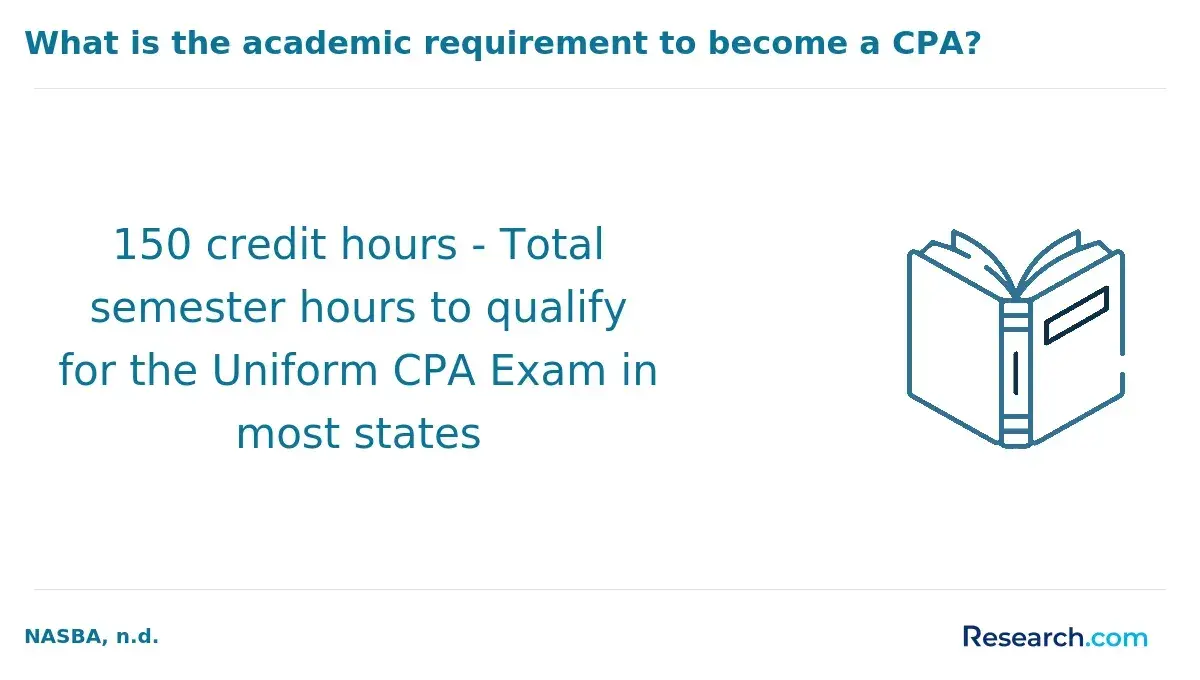
- CPA eligibility: Most states mandate 150 semester credits for CPA qualification. Many students meet this requirement by completing a bachelor's degree plus extra coursework or a master's degree.
- Certificate program: An accounting certificate typically involves 12 to 30 credits focused on core accounting subjects. Certificate programs usually do not include the same general education requirements found in degree programs.
The credit difference matters. A certificate may be the better option if you need a shorter credential and do not want to commit to a full degree immediately. A degree may be the better option if you want a credential that supports advancement, transfer to graduate study, or professional licensure planning.
A student who pursued an accounting certificate described the shorter credit load as challenging but manageable while working. He called the experience "intense but rewarding" because the coursework focused on core accounting principles instead of broader academic requirements. He added, "The certificate gave me confidence and relevant knowledge to advance my career without the years of additional classes I wasn't ready for. It felt like a tailored solution that matched my professional needs right now."
What Is the Average Tuition for a Accounting Degree vs. a Certificate?
Tuition is a major deciding factor because the cheaper option is not always the better long-term value. A certificate usually costs less in total because it requires fewer courses. A degree costs more, but it may qualify graduates for a wider range of jobs, higher salary potential, and graduate or licensure pathways.
Average Tuition for Accounting Degree Programs
- Tuition range: The average accounting degree tuition cost in the US for a bachelor's degree ranges from $10,061 for in-state students to $29,073 for out-of-state students at public universities, while private institutions often charge around $43,000 annually.
- Online degree costs: Online accounting degree programs usually cost less, with typical fees between $8,480 and $8,856 per year.
- Influencing factors: Tuition varies by public or private status, residency status, program level, and delivery format. Students comparing affordability should review total program cost, not only per-credit tuition.
- Program length: Most bachelor's degrees take four years of full-time study. Associate degrees usually take two years and have lower total costs.
- Additional expenses: On-campus programs may include books, materials, transportation, housing, and living expenses, which can add about $20,000 per year at some schools.
Average Tuition for Accounting Certificate Programs
- Tuition range: An accounting certificate program tuition comparison shows costs from $8,476 to $13,455 depending on program length and institution.
- Short-term certificates: Vocational certificate programs lasting fewer than 12 weeks generally fall at the lower end of this tuition range.
- Online certificate costs: Graduate-level online certificates typically cost between $8,476 and $10,536.
- Influencing factors: Cost depends on program duration, school reputation, undergraduate or graduate level, and whether the certificate carries college credit.
- Additional fees: Certificate programs often have fewer extra costs than degrees, but students should still check for technology fees, software fees, textbooks, and exam-related costs.
Students focused on affordability should compare in-state public options, transfer-friendly community college pathways, and online accounting programs before choosing a school. Those interested in faster credentials can also review quickest degrees that make the most money for additional program comparisons.
Can You Transfer Certificate Credits Toward a Accounting Degree Later On?
Yes, certificate credits can sometimes transfer toward an accounting degree, but transfer is never automatic. The receiving college decides whether the credits count, how they apply, and whether they meet degree requirements. Students should confirm transfer policies before starting a certificate if they may pursue a degree later.
Transfer is most likely when the certificate courses come from an accredited institution, carry college credit, match the accounting degree curriculum, and meet minimum grade standards. Regionally accredited colleges are often more likely to accept credits from other accredited schools, but each institution sets its own rules.
- Accreditation matters: Credits from accredited institutions are generally easier to evaluate and may be more transferable.
- Course match matters: A bookkeeping course may not replace an upper-level accounting course unless the learning outcomes align closely.
- Grades matter: Many schools require a C or better for transferred courses.
- Transfer caps matter: Some degree programs limit how many certificate credits can apply toward the degree.
- Articulation agreements matter: Schools with formal transfer agreements may provide a clearer pathway from certificate to associate or bachelor's degree.
The safest approach is to ask the degree-granting school for a written transfer evaluation before enrolling in or completing the certificate. Save syllabi, course descriptions, transcripts, and proof of accreditation because advisors may need these documents to determine whether credits apply.
One student who moved from an accounting certificate into a degree said the process was confusing at first. "I wasn't sure how many credits would count," she explained, "so I contacted the academic advisor early on and gathered detailed info about articulation agreements between the programs." Some courses did not transfer as expected, but early advising helped her avoid wasting time and plan the remaining degree requirements more confidently.
Are Certificate Programs Accredited the Same Way as Accounting Degrees?
No. Accounting certificates and accounting degrees are not always accredited in the same way. The school offering the certificate may be accredited, but the certificate itself may not have separate programmatic accreditation. Degree programs are more likely to be reviewed through institutional and, in some cases, specialized business accreditation.
Accounting degree programs, including associate's, bachelor's, and master's degrees, are generally offered by accredited institutions. Some are also accredited by specialized organizations such as the Association to Advance Collegiate Schools of Business (AACSB) or the Accreditation Council for Business Schools and Programs (ACBSP). This type of accreditation can matter for employer recognition, graduate admission, transfer credit, and CPA exam planning.
Accounting certificate programs are different. Many certificates are offered by accredited colleges, but the certificate itself may not go through specialized accounting or business accreditation. Some certificates award credits that can transfer into degree programs, while others are noncredit professional training programs. Their value depends on the institution, curriculum, employer recognition, and whether the credits can be applied later.
Students should verify accreditation before enrolling. Check the institution's accreditation status, ask whether the certificate carries academic credit, confirm whether credits transfer, and review whether the program helps meet any licensing or professional goals. If CPA eligibility is important, confirm requirements with the relevant state board rather than relying only on program marketing language.
What Jobs Can You Get with a Accounting Degree vs. a Certificate?
An accounting degree usually qualifies graduates for a wider range of accounting, auditing, financial reporting, and management-track positions. A certificate is more commonly used for entry-level accounting support roles or for professionals adding specific accounting skills to an existing background.
Jobs You Can Get with a accounting degree
- Accountant: Maintains financial records, prepares reports, reconciles accounts, and supports compliance with accounting standards and regulations.
- Senior Accountant: Handles more complex accounting work, supports month-end and year-end close, reviews entries, and may mentor junior staff.
- Accounting Manager: Supervises accounting staff, coordinates department workflows, and helps ensure accurate reporting and internal controls.
- Financial Controller: Oversees financial reporting, budgeting, internal controls, and accounting operations for an organization.
- Chief Financial Officer: Leads financial strategy, planning, risk management, and high-level financial decision-making at the executive level.
Jobs You Can Get with a accounting certificate
- Bookkeeper: Records transactions, maintains ledgers, reconciles accounts, and supports small to mid-sized business accounting needs.
- Accounting Assistant: Helps accounting teams with data entry, invoices, expense reports, filing, and basic reconciliations.
- Payroll Clerk: Processes payroll information, checks employee records, and supports compliance with wage and labor requirements.
- Accounting Technician: Performs technical accounting tasks such as preparing ledgers, assisting with audits, and organizing financial documentation.
- Credit Analyst: Reviews credit data and financial statements to help organizations evaluate lending or repayment risk.
The main difference is advancement potential. Certificate roles can be a strong starting point, especially for learners entering the field quickly. Degree roles typically offer more room to move into analysis, supervision, management, and professional certification pathways.
What Is the Average Starting Salary for a Certificate vs. Accounting Degree Graduates?
Starting salary depends on education level, job title, employer, location, experience, internships, and technical skills. In general, accounting degree graduates start higher because they qualify for broader and more advanced roles, while certificate holders are more likely to begin in clerical, bookkeeping, payroll, or assistant positions.
- Typical salary range for certificate holders: Graduates with an accounting certificate typically earn around $49,210 per year at entry level. These earnings often reflect bookkeeping, payroll, accounting assistant, and related support roles.
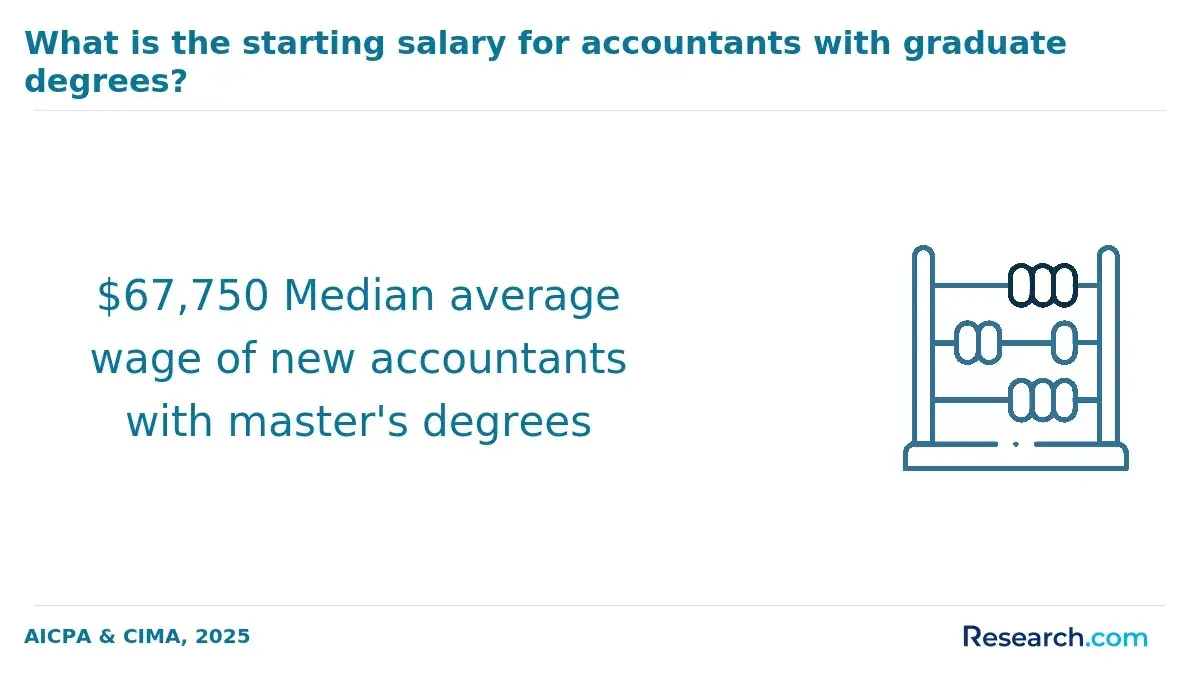
- Accounting degree graduate starting salary United States: Those with accounting degrees report a higher average starting salary, generally ranging from $60,834 to $67,750 for entry-level positions, with a median annual salary nationally close to $81,680 for accountants and auditors.
- Influencing factors: Experience, industry, and location can change earnings significantly. Internships, prior office experience, accounting software skills, and strong Excel skills can improve early job prospects.
- Education level: Degree holders are more likely to qualify for staff accountant, auditor, financial analyst, and advancement-track roles. Certificate holders may need additional education to move beyond entry-level or support positions.
- Career outlook: Degree graduates generally have more upward mobility, especially if they pursue CPA certification. Certificate holders can still build strong careers, but they may eventually need a degree for promotion into professional accounting or management roles.
- Additional resources: Students comparing short credentials can also review certification that pay well to evaluate other career-focused options.
Here's What Graduates of Accounting Programs Say About Their Degree or Certificate
- Ryker: "Pursuing the accounting certificate program was a game-changer for me because it offered a much faster path to practical skills and entry into the workforce. The focused, hands-on learning made it easier to balance school with other commitments, and the lower cost compared with a degree helped me avoid financial strain. For anyone who needs job-ready skills quickly, a certificate is worth considering."
- Eden: "Choosing the accounting degree program was an investment in my long-term career prospects, even though it required more time and a higher cost. The comprehensive curriculum gave me a stronger foundation and opened a wider range of opportunities, including management roles. It required dedication, but the personal growth and deeper knowledge were valuable."
- Benjamin: "Completing both the accounting certificate and degree programs helped me see the value of each path. The certificate gave me immediate, practical skills that helped me land my first job quickly. The degree later expanded my expertise and professional credibility, which made the longer commitment worthwhile. Balancing both paths was challenging, but it paid off for my career growth."
Other Things You Should Know About Accounting Degrees
An accounting degree often leads to broader career options, including roles as accountants or auditors. A certificate may qualify you for entry-level positions like bookkeeping. Degree holders also tend to earn higher salaries and have greater advancement opportunities by 2027.
An accounting degree typically requires a high school diploma, standardized test scores, and prior coursework in math. A certificate may only need a high school diploma. Requirements vary by institution, and some programs may ask for specific courses like introductory accounting.
References
- Degree vs. Certificate Programs: What’s the Difference? https://bachelors-completion.northeastern.edu/knowledge-hub/degree-vs-certificate/
- Types of Accreditation https://acbsp.org/page/accreditation-types
- If I Begin As an Accounting Certificate Candidate, Can I Apply the Courses Taken To a Degree Program? - Best Accounting Schools https://www.bestaccountingschools.net/faq/if-i-begin-as-an-accounting-certificate-candidate-can-i-apply-the-courses-taken-to-a-degree-program/
- Online Accounting Certificates https://www.snhu.edu/online-degrees/certificates/accounting
- Accounting Certificate Online: Undergraduate & Graduate Programs https://www.accounting.com/degrees/accounting/certificate/
- Accounting Accreditation | AACSB https://www.aacsb.edu/educators/accreditation/business-accreditation/accounting-accreditation
- Accounting Certificate vs Degree: Key Differences https://potomac.edu/accounting-certificate-vs-accounting-degree/
- Different Types of Accounting Degrees & Job Opportunities That Come With Them - Bay Atlantic University - Washington, D.C. https://bau.edu/blog/types-of-accounting-degrees/
- National Association of State Boards of Accountancy. (n.d.). How to get licensed. Retrieved January 2026, from https://nasba.org/licensure/gettingacpalicense/howtogetlicensed/
- National Student Clearinghouse Research Center. (2025). Clearinghouse Enrollment Insights Series: Final Fall Enrollment Trends. https://nscresearchcenter.org/final-fall-enrollment-trends/
- AICPA & CIMA. (2025). MAP survey executive summary. https://www.aicpa-cima.com/resources/download/map-survey-executive-summary
- BLS. (2024). May 2024 OEWS Profiles 13-2011 Accountants and Auditors. Occupational Employment and Wage Statistics (OEWS) Profiles. Retrieved January 2026, from https://data.bls.gov/oesprofile/